Roaming Around East Anglia – Newmarket Station
I went to Newmarket station for two reasons; to assess if the East West Rail Consortium’s plans for Newmarket were feasible and also to see a friend, who trains racehorses in the town, to tell him about the plans.
I should say, that I haven’t been to Newmarket for perhaps six years and it struck me that the town was much more crowded with traffic, with a lot of full car-parks. Around the station, there were lots of cars parked. How many were owned by commuters going to Cambridge.
The Plans Of The East West Rail Consortium For Newmarket
In this document on the East-West Rail Consortium web site, this is said.
Note that doubling of Warren Hill Tunnel at Newmarket and
redoubling between Coldham Lane Junction and Chippenham Junction is included
in the infrastructure requirements. It is assumed that most freight would operate
via Newmarket, with a new north chord at Coldham Lane Junction, rather than
pursuing further doubling of the route via Soham.
So would it be possible to create a double-track railway through Newmarket station?
These are pictures that I took of the station.

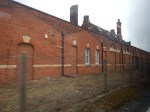
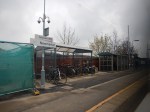
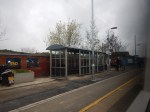
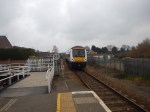

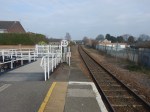
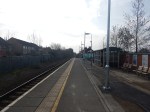

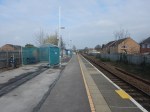
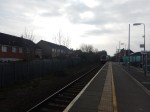
It does appear that there is space for another track on the other side of the current track to the platform.
Newmarket station has some positive attributes.
- It is in the centre of the town.
- There is enough shelter and storage for cycles.
- The platform will be long enough for Greater Anglia’s new four-car Class 755 trains.
- There is a wide, spacious platform.
But these are outweighed by these drawbacks.
- The vehicle access is terrible.
- There is no Kiss-and-Ride facility.
- Car parking is in the surrounding streets and as it’s free, the local roads will get choked, especially when Greater Anglia’s larger trains are introduced later this year.
- The East West Rail Link will introduce a two trains per hour (tph) through the station.
- Will the platform at Newmarket be long enough for the East West Consortium trains, which will be running between Ipswich and Oxford? Probably not!
- There is no coffee kiosk, shop or toilets.
But above all it is not a destination station., that gives a good impression for visitors and tourists, who could make up a proportion of travellers.
The East West Rail Consortium are planning a parkway station on the A14 to the North of Newmarket and this will surely solve the problem of traffic and parking, that blocks the local streets,
But I believe that Newmarket needs a station, that will attract visitors.
My pictures, show the previous station building still standing next door to the current station.
- This could be converted into a first-class station with excellent passenger facilities.
- There could be a large taxi rank.
- There could be passenger drop-off and pick-up facilities.
- There is space for a bus connection to the race-course on race-days.
- Limited car-parking of a short-term nature.
- A two-hundred metre long platform could be built to accommodate the longest-possible trains.
This Google Map, shows the combined site of the current and previous stations.
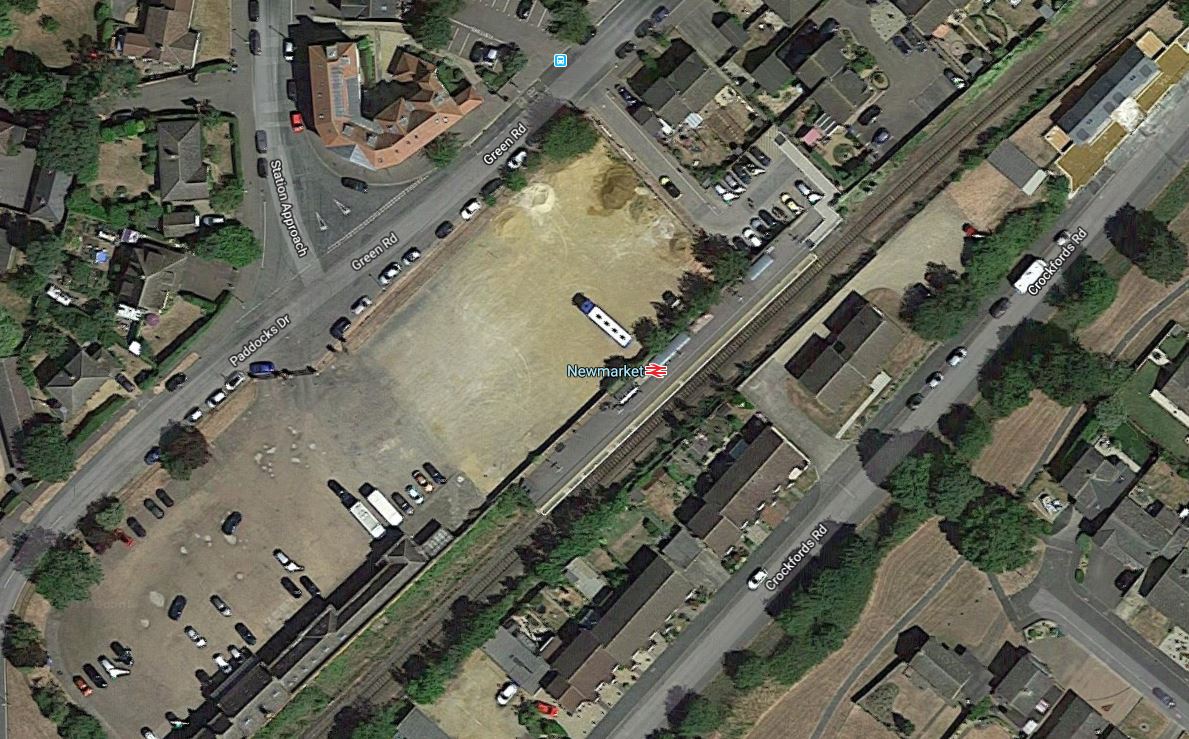
Both stations are effectively side-by-side, with the current station to the East.
The large area behind the stations is parking for horse-boxes during the numerous sales at Tattersalls. For much of the year, it is virtually empty.
I’m pretty sure, that with some management, the area could serve both its current purpose and as a forecourt to a landmark station,, that would enhance the town and the racing industry.
I don’t think that a second platform would be needed for the following reasons.
- Adding the step-free access to the seond platform would cost a seven figure sum.
- Commuters into Cambridge would be encounraged to use the proposed A14 Parkway station.
- Probably only on race days, would there be large enough numbers of passengers to need to accommodate two trains in the station at the same time..
However space could be left, if a second platform were to be needed in the future.
Conclusion And Recommendations
The current Newmarket station is totally inadequate for the current service of one three-car train per hour in both directions.
Greater Anglia’s new Class 755 trains could be a car longer and will certainly attract more passengers to use Newmarket station, as new trains always do!
I feel that in the next couple of years, possible additional trains, more passengers and lack of car parking will create problems at Newmarket station.
I would recommend the following actions.
A14 Parkway Station
Work should start as soon as is practical for the A14 Parkway station, proposed by the East West Rail Consortium.
This station would have the following Greater Anglia services.
- Peterborough and Colchester – 1 tph
- Ipswich and Cambridge – 1 tph
These two services would give the following frequencies to these places.
- Bury St. Edmunds – 2 tph direct
- Colchester – 1 tph direct and 2 tph with a change at Ipswich
- Diss – 1 tph with a change at Stowmarket
- Ipswich – 2 tph direct
- London – 1 tph with a change at Cambridge and 1 tph with a change at Ely
- Newmarket – 1 tph direct
- Norwich – 1 tph with a change at Cambridge, 1 tph with a change at Ely and 2 tph with a change at Stowmarket
- Peterborough – 1 tph direct and 1 tph with a change at Cambridge
- Stansted Airport – 2 tph with a change at Cambridge
- Stowmarket – 2 tph direct
A14 Parkway station sitting at the junction of two of the busiest roads in East Anglia; the A11 and A14, and two important rail routes,would be one of the most important stations in the East.
The station could only be named after Ancient Britain’s most famous queen, who by repute once lived in the area.
Upgrade Newmarket Station
Hopefrully, the A14 Parkway station would ease the problems at Newmarket station and this would enable work to progress on the design of an upgraded Newmarket station, that would serve the town, the racing industry and the towns tourist attractions.
Improved Train Services To/From Cambridge
Once the East West Rail Link opens between Cambridge and Oxford, the current service between Ipswich and Cambridge, could eventually be replaced with a service between Manningtree and Oxford or possibly Reading, that calls at Ipswich, Stowmarket, Bury St. |Edmunds, A14
Parkway, Newmarket, Cambridge, Cambridge South, Bedford, Bletchley, Milton Keynes, Bicester, Oxford and several smaller intermediate stations.
The three Cambridge stations of Cambridge, Cambridge North and Cambridge South will also increasingly be connected to the surrounding stations like A 14 Parkway, Bury St. Edmunds, Cambourne, Ely, Kings Lynn, March, Newmarket and Peterborough. Services will be at a frequency of at least two tph, with some as high as four tph.
In addition, there could be new services to Haverhill and Wisbech.
Newmarket will get a share of these services and I wouldn’t be surprised to see these frequencies from Newmarket station to the three Cambridge stations.
- Cambridge – 4 tph direct
- Cambridge North – 2 tph direct and 2 tph with a change at Cambridge
- Cambridge South – 2 tph direct and 2 tph with a change at Cambridge
Cambridge is becoming one of the most important cities in Europe and Newmarket can benefit by holding on to big sister’s skirts.
West Suffolk And London Services
If you look at the sizeable towns in Suffolk, the following ones that are rail connected, do not have a direct train service to London.
- Beccles
- Bury St. Edmunds
- Felixstowe
- Halesworth
- Lowestoft
- Newmarket
- Sudbury
- Woodbridge
Greater Anglia’s new Class 755 trains, will be running three trains per day, between Liverpool Street and Lowestoft, which will reduce this list to just.
- Bury St. Edmunds
- Felixstowe
- Newmarket
- Sudbury
If Felixstowe is discounted as it is on a branch line busy with freight trains and Sudbury because it is on a single track branch line, we are left with just.
- Bury St. Edmunds
- Newmarket
Add in the proposed A14 Parkway station and is it feasible to run a service between London Liverpool Street and Bury St. Edmunds via Cambridge, Newmarket and A14 Parkway.
I calculate that a round trip would be possible in around four hours, thus making three trains per day possible.
I suspect, there would be capacity problems on the Southern section of the West Anglia Main Line, but if this were to be four-0tracked as is proposed, this would ease that problem.
So a service between West Suffolk and London, is probably one for the future.
A Final Conclusion
Newmarket can benefit from East West Rail, but the two parties must agree objectives that don’t cause problems for the other.
Could There Be A Tram-Train Between Ipswich And Felixstowe?
I should declare an interest here of my teenage self, who spent some very boring summers in, what was then, the small coastal resort and dormitory town of Felixstowe.
There was only so many places you could cycle and as my school friends were all in London, I used to avoid going to Felixstowe if possible.
I can remember going from London to Felixstowe several times on the train.
I would cycle from our London house in Cockfosters to Liverpool Street station and put my bike in the guard’s van for the trip to Ipswich.
From Ipswich, I would ride the dozen or so miles along the A45 (now the A14) to Felixstowe.
I suspect, that I could have used, the two-car diesel shuttle from Ipswich to Felixstowe, but I never did.
Perhaps, it was because it was not the most frequent of services.
The frequency was certainly a lot less than the current hourly service.
A Tram-Train To Felixstowe
This report on the East West Rail web site is entitled Eastern Section Prospectus and gives full details of their proposals for the Eastern section of the East-West Rail Link.
This is said in the report.
Introduction of a tram-train service on the Felixstowe branch, with doubling between Derby Road and Felixstowe and street running through
Ipswich.
It is also said, that there will be a frequency of four trains per hour (tph) between Ipswich and Felixstowe.
So how feasible is this proposal?
The Proposed Frequency
People travel between Ipswich and Felixstowe for several reasons.
- It is an important dormitory town for Ipswich and increasingly for London,
- The Port of Felixstowe is an important employer.
- There is a large amount of leisure traffic between the two towns.
Currently, much of the travelling between Ipswich and Felixstowe is by car on an increasingly crowded A14.
Four tph seems an eminently sensible frequency.
Why Propose A Tram-Train?
If a train, like a Class 170 train or one of the new Class 755 trains were used for the route, it would mean the following.
- Four tph in the single platform at Felixstowe.
- Four tph in a dedicated platform at Ipwich.
- Four trains would be needed for the service.
- An extra six tph using the route between Westerfield and Ipswich stations.
The stations should be able to cope, but I doubt that the extra trains could be fitted into a busy route with the following services.
- Ipswich and Norwich
- Ipswich and Bury St. Edmunds, Cambridge and Peterborough
- Ipswich and Lowestoft
If you add in the up to forty freight trains per day, that will use the route, something will have to give.
The Route Od The Tram-Train
It would appear that the plan is to replace the train, with a tram-train running on the streets of Ipswich.
This could be a possible route for street running.
- Ipswich Station
- Portman Road
- Ipswich Town Centre
- Ipswich Hospital
It would then join the Ipswich-Felixstowe rail line in the area of Derby Road station or the retail parks on the East of Ipswich.
This Google Map shows Derby Road station and Ipswich Hospital.
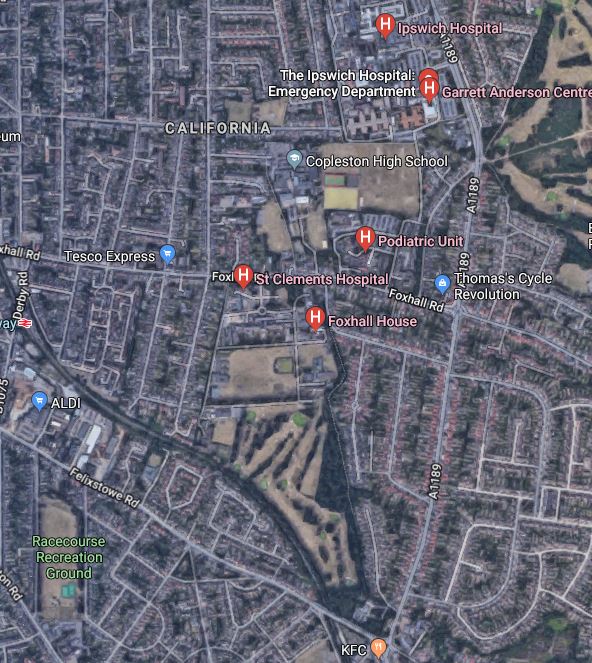
Note.
- Ipswich Hospital is in the top-right of the map.
- Derby Road station is at the left side of the map in the middle.
- The Ipswich-Felkixstowe Line can be seen going South-Easterly across the map to the well-known St. Augustine’s roundabout.
A tram-train would have the following benefits.
- It would link the town centres of Ipswich and Felixstowe.
- It would create a step-free link across Ipswich Town Centre to the all-important hospital.
- Extra stations can be added where they are needed in Ipswich without decreasing capacity on the rail line.
- It would surely encourage more people to use the trains from Ipswich station.
I suspect too, that Class 399 tram-trains could be used as they are in Sheffield and will be on the South Wales Metro.
Between Ipswich And Derby Road Stations
This extract is from the Wikipedia entry for the Felixstowe Branch Line.
The train now enters a section of double track through Derby Road station (6.10 miles (9.82 km) from Ipswich station by train, but only 1.5 miles on the map) where trains can pass.
It is very significant, that going through the houses between the two stations is a route that is shorter by eight-and-a-half miles.
Could it be that the time that would be saved by the shorter route is balanced by the slower progress of on-street running, which means that the current twenty-six minute journey time can be maintained?
Doubling Between Derby Road And Felixstowe
I’ll repeat what is said in the report.
Introduction of a tram-train service on the Felixstowe branch, with doubling between Derby Road and Felixstowe.
Doubling of about a mile of the Felixstowe Branch to the West of Trimley is ongoing and doubling further to the West looks to be fairly easy from my helicopter.
But there is one major problem.
This Google Map shows, where the rail line goes over the Ipswich by-pass.
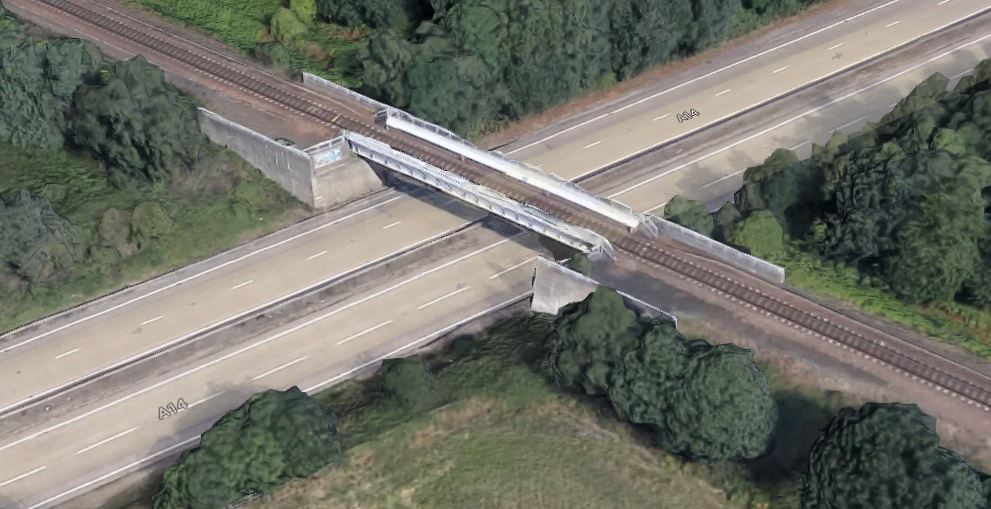
Note that provision has been made for a second track.
So hopefully, it won’t be much more expensive to add a second bridge and track, than to add points either side of the existing bridge.
There would be some extra bridge works between the A14 and Derby Road station, but doubling all the way from Derby Road station to Felixstowe doesn’t look to be the world’s most difficult railway engineering.
Extra Tram-Train Stops Between Ipswich And Felixstowe
There used to be an extra stop at Orwell station. It was little-used and closed in 1959.
Looking at the station, it is now a large private residence and I suspect there is no point in reopening, as there isn’t much housing in the area.
But there could be a case for a station at Futura Park, which is shown in this Google Map.
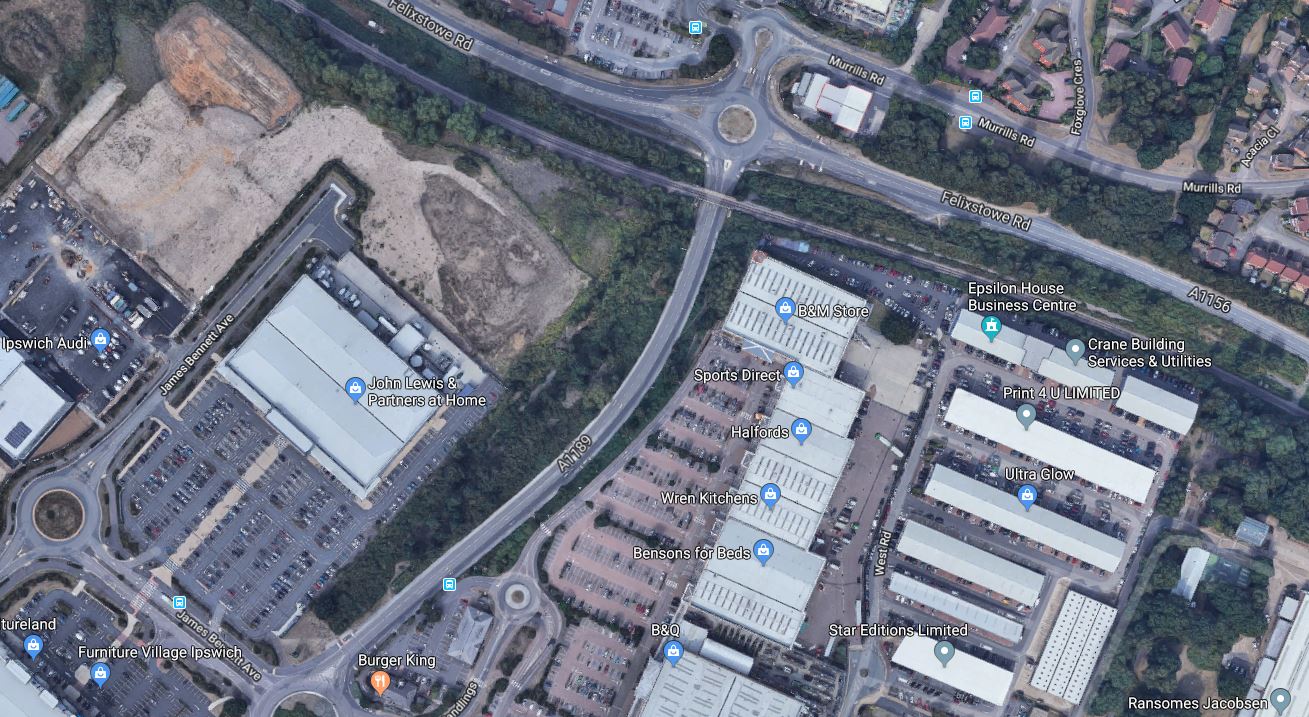
Lots of the usual out-of-town stops are there including a Waitrose and a John Lewis.
The railway runs to the South of the A1156 Felixstowe Road and there is surely the possibility of a station in this area.
There is also the possibility, that the tram-train could join and leave the Felixstowe Branch Line at this point, after and before street running to Ipswich station.
Would The Tram-Trains Go Walkabout In Felixstowe?
Felixstowe used to have two other stations; Felixstowe Pier and Felixstowe Beach. Both are now closed.
- I can remember Felxstowe Beach station, as occasionally in the 1950s, we stayed nearby at the Cavendish Hotel.
- Felixstowe Pier station was towards Landguard Fort and even served steam vessels going to Germany.
Both stations were served by trains reversing at the main station, which is impossible now as the chord has been removed.
This Google Map shows the current rail lines in Felixstowe.
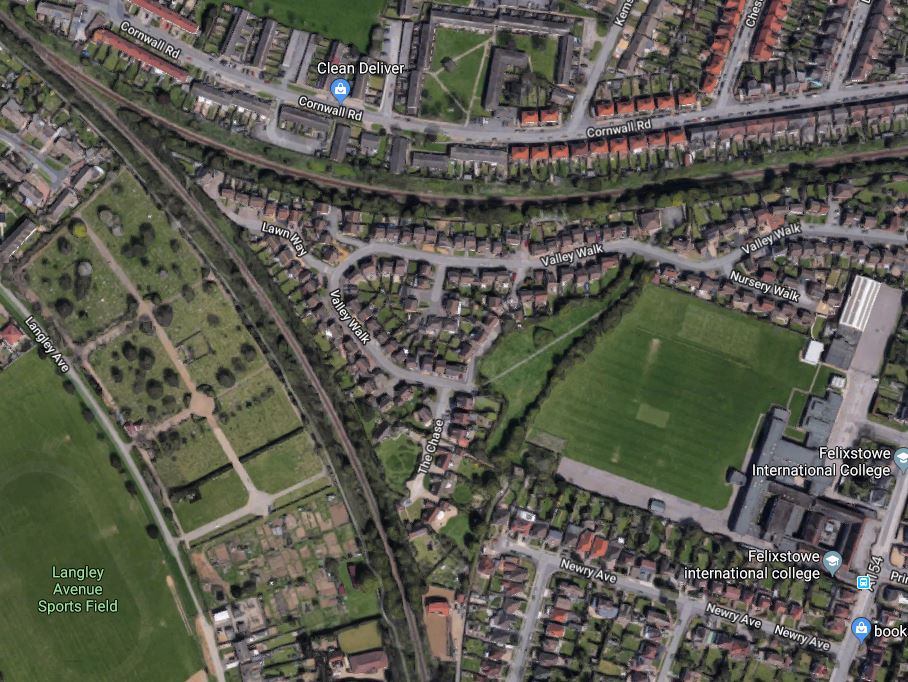
The line to/from Ipswich splits into two in the top-left corner of the map.
- The branch going East goes to Felixstowe station.
- The branch going South used to serve the two other Felixstowe stations and now serves the Port of Felixstowe.
The missing chord is visible to the West of the playing fields of Felixstowe International College.
I would rate reinstatement of the chord as highly unlikely.
- The only reason, the chord would be reinstated, would be if the Port of Felixstowe wanted to have a four tph passenger service.
- The Port wouldn’t want to have all those extra movements on what is a busy and exclusive freight line.
On the other hand, I wouldn’t rule out extension into Felixstowe Town Centre.
This Google Map shows the Town Centre.
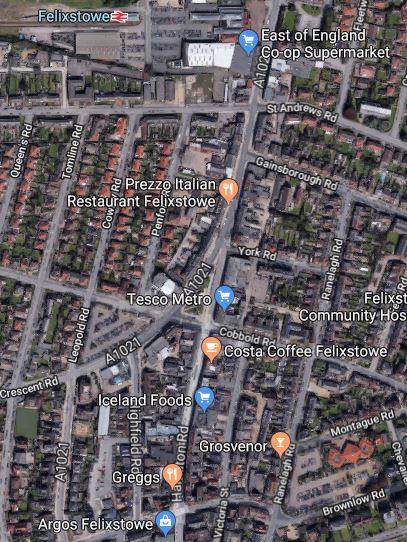
Note.
- The one-platform station is at the top of the map, behind a small Co-op supermarket and the Listed station buildings, which are now a small shopping centre.
- The High Street, which is part -pedestrianised leads down from the station to the top of the cliffs, where Bent Hill leads down to the sea-front.
- Halfway along is a triangular garden, where a local road splits off toward the Southern part of the sea-front and the Port.
- The pattern of retail shopping is changing and Marks and Spencer in the town will be closing soon.
My plan would be as follows.
- Rebuild the Co-op supermarket to allow a single-track tram line to squeeze through to the High Street.
- Trams would then continue down the High Street to the triangular garden.
- A second platform face could be added at Felixstowe station to allow trams to pass and give flexibility.
Done properly, it could improve Felixstowe’s appeal as a leisure destination.
I also think, that as the extension is only short, the current Ipswich to Felixstowe timing could be maintained.
Future Services At Ipswich Station
Listing all the services proposed at Ipswich station gives the following.
- 3 tph – London Liverpool Street and Norwich – Greater Anglia
- 1 tph – Colchester and Peterborough – Greater Anglia – Replaces current Ipswich and Peterborough service.
- 1 tph – Manningtree and Oxford via Cambridge – East West Rail – Replaces current Ipswich and Cambridge service
- 1 tph – Ipswich and Lowestoft – Greater Anglia – Some services extend to London
- 4 tph – ipswich and Felixstowe – Greater Anglia – Proposed tram-train service.
If the Felixstowe tram-train service were to terminate outside the station, as trams tend to do, there would only be a need for one bay platform at Ipswich, that would handle hourly Lowestoft services, that didn’t go to/from London.
Ipswich station would become more of a through station with the following through trains.
- Five tph going between Manningtree and Stowmarket
- Two tph between Manningtree and the proposed A14 Parkway station via Bury St. Edmunds.
This would all save the expense of rebuilding large parts of Ipswich station.
Although, there would be a certain amount of remodelling of the station forecourt to accommodate the tram-trains.
Conclusion
It is a classic application of tram-train technology and I’m sure that a good route can be devised between the two towns.
East West Rail Makes ‘Powerful Case’ For Direct Services From Ipswich And Norwich To Oxford
The title of this post is the same as that of this article on Rail Technology Magazine.
This is the first two paragraphs.
A direct rail link between Ipswich, Norwich and Oxford could unlock £17.5bn for the East Anglia community, according to a case for investment from the East West Rail Consortium (EWRC).
A new report publishing by the consortium outlines the benefits of new East West rail services, including the creation of 120,000 jobs and connecting high-value economies with fast rail links.
This report on the East-West Rail web site is entitled Eastern Section Prospectus and gives full details of their proposals.
Proposed Train Services
The East West Rail Consortium (EWRC) is proposing three phases of train services.
Initial Service Pattern
An hourly direct EWRC service to/from Ipswich, with a good connection at Cambridge to/from Norwich.
The current Ipswich to Cambridge service will be extended from Cambridge to Oxford and Reading.
Intermediate stations between Cambridge and Reading would include.
- Cambridge South for Addenbrookes Hospital
- Sandy
- Bedford
- Milton Keynes
- Bletchley
- Bicester
- Oxford
- Didcot Parkway
Selective journey times would include.
- Ipswich to Bedford – 1 hour 26 minutes
- Ipswich to Milton Keynes – 1 hour 55 minutes
- Ipswich to Oxford – 2 hours 19 minutes
- Ipswich to Reading- 2 hours 43 minutes
At Cambridge, there would be a same- or cross-platform interchange with Greater Anglia’s forthcoming service between Norwich and Stansted Airport, which will replace the current service between Norwich and Cambridge before the end of 2020, when new Class 755 trains will have entered service.
Selective journey times would include.
- Norwich to Bedford – 1 hour 22 minutes
- Norwich to Milton Keynes – 1 hour 51 minutes
- Norwich to Oxford – 2 hours 15 minutes
- Norwich to Reading- 2 hours 40 minutes
There would be a change of train at Cambridge station.
The report says this about infrastructure improvements.
Improved journey times could be provided by undertaking incremental linespeed enhancements between Cambridge and Ipswich/Norwich.
It doesn’t look like there will be too much disruption to train services, whilst the improvements are undertaken.
Interim Service Pattern
An hourly direct EWRC service to/from Norwich will be added to the Ipswich-Cambridge-Oxford-Reading service.
This will obviously mean that there will be two trains per hour (tph) between Cambridge and Oxford/Reading.,
But it will also mean.
- Two tph between Norwich and Bedford/Milton Keynes/Oxford/Reading.
- Two tph between Ipswich and Bedford/Milton Keynes/Oxford/Reading.
One of the Ipswich/Norwich trains will be direct and one will require a change at Cambridge.
I would expect that good connections would be arranged at Norwich, so that Cromer, Great Yarmouth, Lowestoft,and Sheringham had good coinnections to EWR.
Currently, East Anglia has two services to the Midlands/North
- Liverpool and Norwich- 1 tph
- Birmingham and Stansted Airport – 1 tph
These will be changed to the following.
- Liverpool and Norwich
- Birmingham and Stansted Airport
- Liverpool and Stansted Airport
- Birmingham and Norwich
All services would have a frequency of one train every two hours.
There would also be a cross-platform interchange at Peterborough between the two services, thus giving an hourly services on all four routes.
As Greater Anglia are planning to run an hourly Colchester to Peterborough service via Manningtree, Ipswich and Bury St. Edmunds, effectively this gives all these places an hourly service to Liverpool and Birmingham with a change at Peterborough.
The report recommends these infrastructure improvements.
- Additional platform capacity at Cambridge.
- Double-tracking of Trowse Swing Bridge.
- Signalling upgrades between Norwich and Brundall
- Signalling upgrades between between Ely and and Ely North Junction to reduce headways.
- Additional platform capacity at Norwich.
- Improved journey times and improved connections to/from Sheringham.
As with the initial service pattern, the infrastructure works with the exception of the double-tracking of Trowse Swing Bridge don’t seem to be major undertakings.
Long-Term Service Pattern
The long-term service pattern would be as follows.
- The hourly Reading/Oxford service to Ipswich would be extended to Manningtree.
- The hourly Reading/Oxford service to Norwich would be extended to Great Yarmouth.
There must be a good reason for not extending the Ipswich service to Colchester, as the Peterborough and Ipswich service will be extended to this terminal in 2020.
The report says this about infrastructure improvements.
A package of infrastructure enhancements across the region, building on those delivered for the interim phase.
It looks like nothing major will be undertaken.
Smaller Projects
The report details a series of smaller projects, that will be undertaken East of Cambridge. Many of these would be done even if East West Rail were not.
Chippenham Station
The report recommends building a new station at Chippenham Junction, which is to the East of Newmarket, close to the junction of the A11 and the A14 . The station is referred to in the report as A14 Parkway station.
This Google Map shows the location of the proposed station.
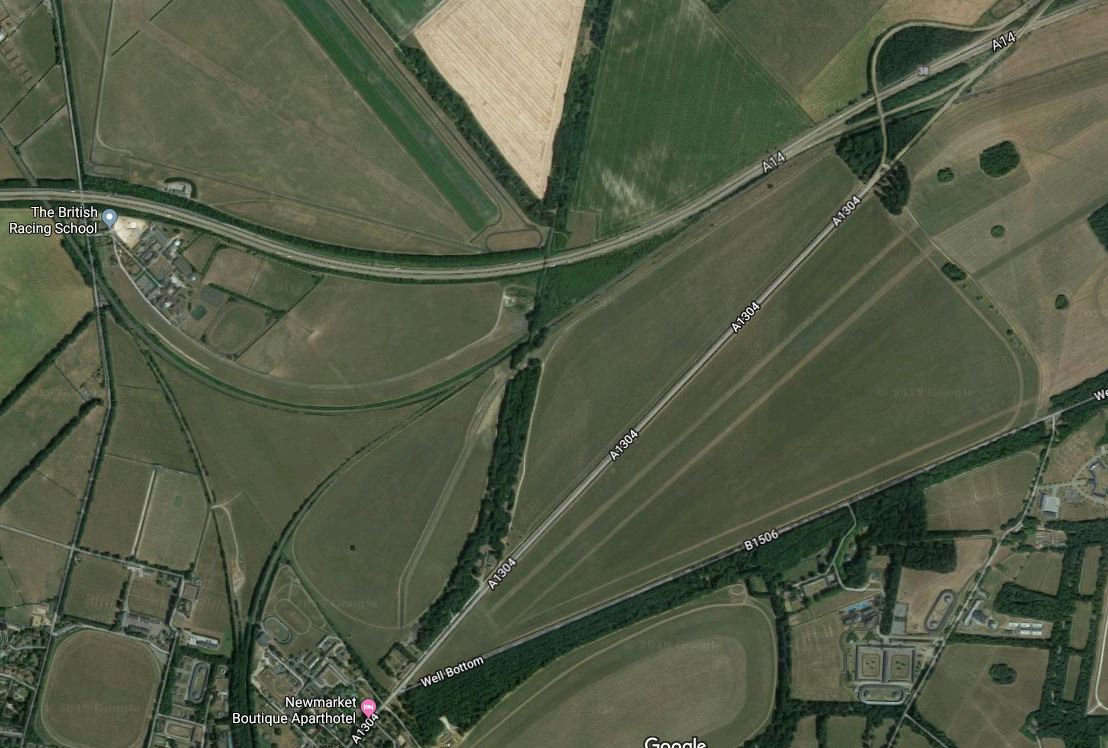
Note.
- The A14 going across the top of the map.
- The junction between the A14 and the A11 in the top-right corner.
- The triangular Chippenham Junction, pointing North to Ely, South to Newmarket and East to Bury St. Edmunds and Ipswich.
Having lived in that area for nearly thirty years, I believe that this is a much-needed station.
- Stations in the area, with the exception of Cambridge North are short of car parking.
- There would be two tph to/from Bury St. Edunds and Ipswich.
- There would be one tph to Cambridge, Cambridge North, Cambridge South , Ely and Peterborough.
I suspect that there could be shuttle trains to provide extra services to Cambridge and Ely.
A shuttle train could run between A14 Parkway, Cambridge South, Ely and back to A14 Parkway, calling at all intermediate stations.
Double-Tracking
The report says that some single-track sections may need to be converted to double-track.
The major section of double-tracking would be between Coldhams Lane and Chippenham Junctions on the Cambridge Branch of the Ipswich-Ely Line.
A new chord would be built at Colhams Lane Junction, so that trains could run between Ely and Bury St. Edmunds via Newmarket.
This Google Map shows the area.
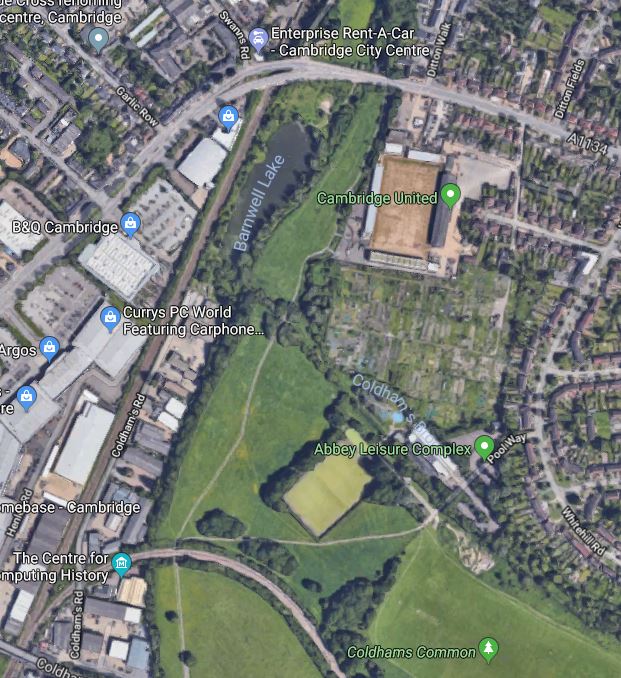
Note.
- The Cambridge to Norwich line running North South at the left of the map.
- The curve of the Cambridge Branch of the Ipswich-Ely Line at the bottom of the map.
- The extensive open space of Coldhams Common.
I have a feeling that building the chord will be a difficult planning process.
Electrification
The report says that there could be some additional electrification.
Ely North Junction
The report recommends that this junction is grade separated.
Ely North Station
The report recommends building a new Ely North station, which would be about one-and-a-half miles from Ely station.
Existing Stations
The report says this about existing stations.
Expansion of Cambridge, Norwich, Reedham, Kings Lynn and Manningtree
stations with remodelling of the station throat layouts.
I don’t think any modifications will be that difficult.
Felixstowe Tram-Train
This was said in the report.
Introduction of a tram-train service on the Felixstowe branch, with doubling between Derby Road and Felixstowe and street running through
Ipswich.
I was rather surprised. But why not?
The tram-train could even go down to the sea-front.
I explore this more in Could There Be A Tram-Train Between Ipswich And Felixstowe?.
Haughley Junction
Thr report recommends that this junction is grade separated.
This is one the most important projects to improve rail services in East Anglia.
Linespeed Increases To 100 mph
Greater Anglia’s fleet of Class 745, Class 755 and Class 720 trains are all 100 mph trains and the Great Eastern Main Line is a 100 mph route, all the way from London to Norwich.
It would seem that to improve services, that where possible linespeeds are increased to 100 mph.
- The Breckland Line between Ely and Norwich, currently has a linespeed of around 75-90 mph and is double-track and fairly straight across flat countryside.
- The Ipswich-Ely Line between Ely and Ipswich, has a linespeed of up to 75 mph, and is mainly double-track and fairly straight across flat countryside.
- The Cambridge Branch of the Ipswich-Ely Line is mainly single track and would probably be more difficult to upgrade.
Knowing the lines and East Anglia well, I suspect that these lines could be substantially given a linespeed of 100 mph.
Stansted Airport Station – Additional Platform
Stansted Airport station needs more capacity and may require the doubling of the tunnel under the runway.
Warren Hill Tunnel
The report recommends that Warren Hill Tunnel at Newmarket is doubled and that from Coldham Lane Junction to Chippenham Junction is also doubled.
This Google Map shows the Western portal of the tunnel.
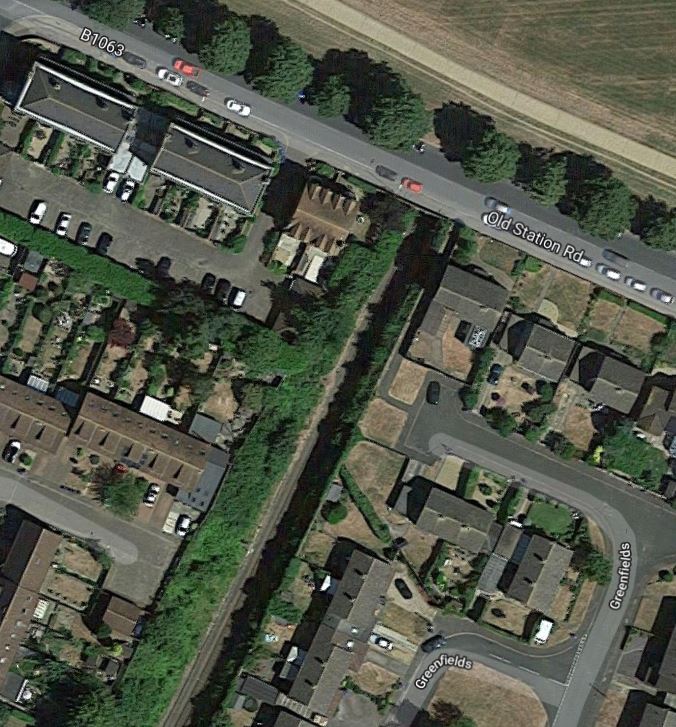
Note.
- The road across the top is Old Station Road.
- The dark shadow at right angles to the road is the cutting leading to the tunnel.
- There seems to be plenty of space to widen the cutting.
And this Google Map shows the Eastern portal of the tunnel.
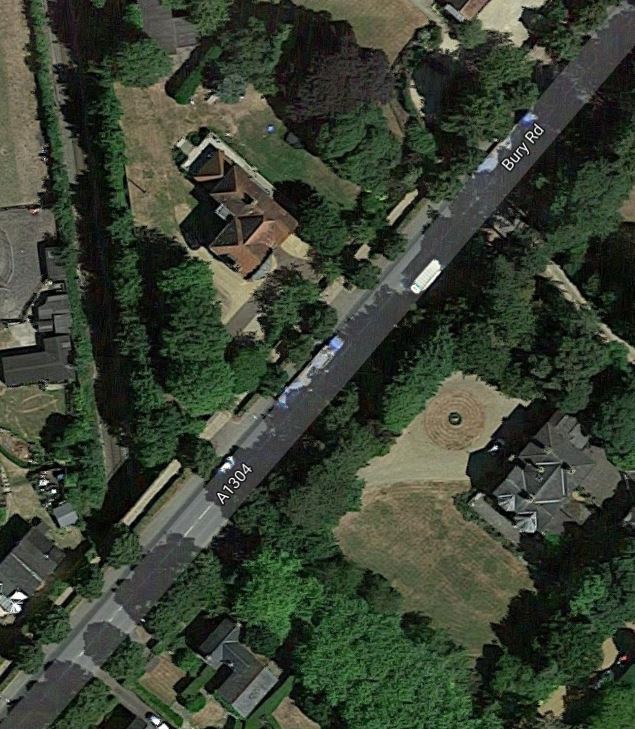
Note.
- The road is the Bury Road.
- The cutting leading to the tunnel portal is in the top left of the picture.
- The actual portal appears to be under the Bury Road.
This page on the Newmarket Local History web site, gives details about railways in Newmarket. The site says that the tunnel is exactly a kilometre in length and built on a curve.
I can see that doing these tunnel works will not be without opposition from the Racing Industry at Newmarket.
I shall talk about this more later.
The Freight Locomotive Of The Future
Before discussing freight, I will describe the freight locomotive of the future.
Rail Operations Group have just ordered ten Class 93 locomotives from Stadler.
- These are a tri-mode locomotive able to use electric, diesel or battery power.
- They will probably be able to haul the heaviest freight train at 100 mph, using electric power.
- They will be slower under diesel power, but they can use battery power for extra grunt.
- They will also find applications in hauling 100 mph passenger trains on partially electrified lines.
Other manufacturers will follow Stadler in developing similar hybrid locomotives, which will haul larger freight trains faster and with less pollution, than the current generation of locomotives.
Freight
Part of the EWRC’s freight plan is to make it easier to get the massive number of freight trains between Felixstowe and the Midlands and the North.
This is an extract from the report.
Note that doubling of Warren Hill Tunnel at Newmarket and redoubling between Coldham Lane Junction and Chippenham Junction is included in the infrastructure requirements.
It is assumed that most freight would operate via Newmarket, with a new north chord at Coldham Lane Junction, rather than pursuing further doubling of the route via Soham.
I indicated , these points earlier.
- ,Building a chord across Coldhams Common will not go down well with the residents of Cambridge.
- The plans for a double-track railway through Newmarket will not go down well with the Racing Industry.
I would also suspect that the logistics of building a second tunnel at Warren Hill, could be a nightmare, given the twenty-four hour nature of horse-racing.
So why have EWRC decided to route most freight trains through Newmarket?
Currently, freight trains going to/from Felixstowe use one of four routes.
- They go via London and cross the city on the crowded North London or Gospel Oak to Barking Lines.
- They go to Peterborough and take a cross-country route to Nuneaton, which is slow and has a notorious level crossing in the centre of Oakham.
- They go to Peterborough and take a diversion route through Lincoln.
- They go to Peterborough and up the East Coast Main Line, which is increasingly crowded.
None of these are perfect routes for freight trains.
Looking into the future, by the late 2020s, the following will have happened.
- An increasing number of freight trains will be running to/from Felixstowe.
- High Speed Two will have opened, which will release paths for freight trains on the electrified West Coast Main Line.
- Hybrid Electric/diesel/battery freight locomotives will be commonplace and hauling most long-distance inter-modal freight trains.
- The East West Rail Link will have opened between the West Coast Main Line and Cambridge.
It appears to me, that there could be a plan to create extra routes for freight trains to/from Felixstowe, using the East West Rail Link.
- Services between Felixstowe and West Coast Main Line destinations like Birmingham, Carlisle, Glasgow, Liverpool and Manchester, will use the East West Rail Link between the West Coast Main Line and Cambridge.
- Services between Felixstowe and Midland Main Line destinations like Derby, Nottingham and Sheffield, will use the East West Rail Link between the Midland Main Line and Cambridge.
- Services between Felixstowe and South Western and Western destinations like Bristol, Southampton and Wales, will use the East West Rail Link between the Great Western Main Line and Cambridge.
Services between Felixstowe and East Coast Main Line destinations like Doncaster, Edinburgh, Leeds and Newcastle will still use the traditional route via Ely and Peterborough.
It seems to me, that as many as two freight trains in every hour in both directions will need to take the route between Felixstowe and the East West Rail Link through Bury St. Edmunds, Newmarket, Cambridge and Cambridge South stations.
This number of freight trains would make it essential, that there is a double-track railway from Chippenham Junction to Cambridge.
The Coldhams Chord also seems to be an important part of the plans of the EWRC.
This is to allow freight trains between Peterborough and Felixstowe to use the upgraded double-track route through Newmarket.
Once on the electrified Fen Line at Coldhams Junction, freight trains with a hybrid locomotive could use the electrification to Ely.
At Ely, the trains would then be able to take the Peterborough-Ely Line to continue on their way.
These points should be noted.
- Currently freight trains between Felixstowe and Peterborough, have to cross the double-track Fen Line at Ely and it could be that operationally it would be easier, if they used the route via Coldhams Lane junction.
- The level crossing at Ely station is being sorted.
- The Fen Line between Cambridge and Ely is an electrified double-track and except at Waterbeach station, it would probably be relatively easy to add additional tracks.
- Cambridge North station appears to have a double-track by-pass line for freight trains.
- For some years, I’ve believed that the thirty miles of the Peterborough-Ely Line should be improved and electrified, as this would give a valuable electrified diversion route, if the East Coast Main Line were to be closed South of Peterborough.
So if a freight train were to be hauled by a hybrid locomotive, it would surely be able to use electrification between Peterborough and Coldhams Lane Junction.
The distance between Coldhams Lane Junction and Haughley Junction, where the electrification from Ipswich ends is forty miles. The terrain is also very undemanding.
I would be very surprised if in a few years, a powerful hybrid locomotive couldn’t haul the heaviest freight train on this route.
Conclusion
The East West Rail Link will have far reaching consequences for Norfolk, Suffolk and North Essex.
- Most towns and cities with perhaps a population of upwards of 30,000 will have a two trains per hour service to Cambridge, Bedford, Milton Keynes, Oxford and Reading.
- Some services will be direct, but many will involve a same- or cross-platform change at a station like Cambridge, Ipswich or Norwich.
- East Anglia will have much better hourly connections to Birmingham, Liverpool, Manchester, Nottingham and Sheffield.
- There will be much improved capacity for freight trains to/from Felixstowe.
I feel very positive about what has been said.
 The Anonymous Widower