UAE Building New Port To Bypass The Strait Of Hormuz
The title of this post, is the same as that of this article on The Times.
This is the sub-heading.
New facility on the Emirates’ east coast is past the tip of the strait but would still be vulnerable to Iranian drone and missile attacks.
These three paragraphs add more details.
The United Arab Emirates is building another port in an attempt to bypass the Strait of Hormuz, having already expedited the construction of a new oil pipeline.
The new port would join an existing facility in Fujairah along the country’s eastern coastline and past the tip of the strait that Iran closed to shipping during the war with the United States.
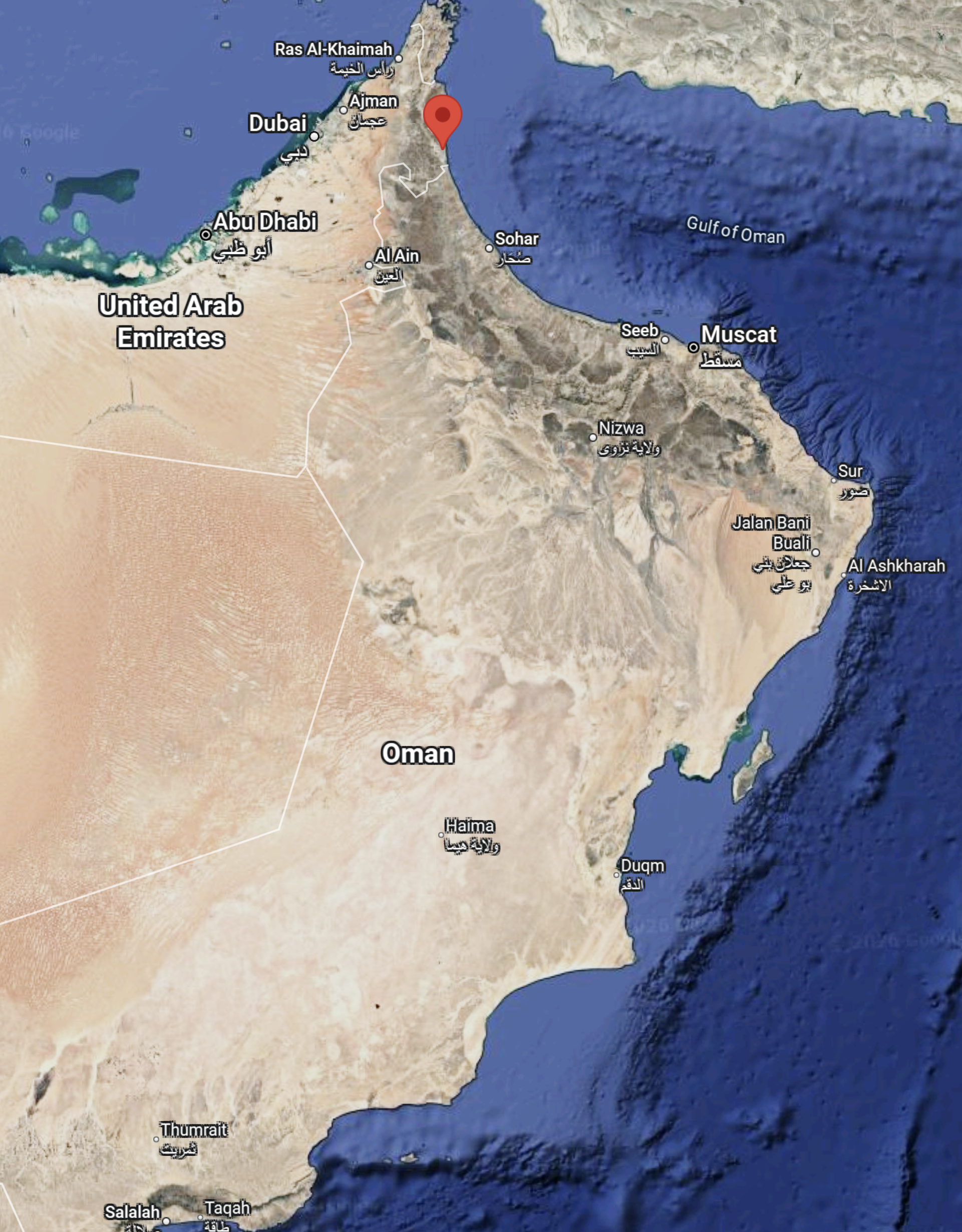
This Google Map shows the Eastern side of the Arabian Peninsular.
Note.
Fujairah is indicated by the red arrow.
Iran is the land mass in the North-East corner of the map.
The Strait of Hormuz is between the Arabian Peninsular and Iran.
As you come South from Fujairah, you pass through Muscat and then Iran.
Oman has two deep water ports at Duqm and Salalah.
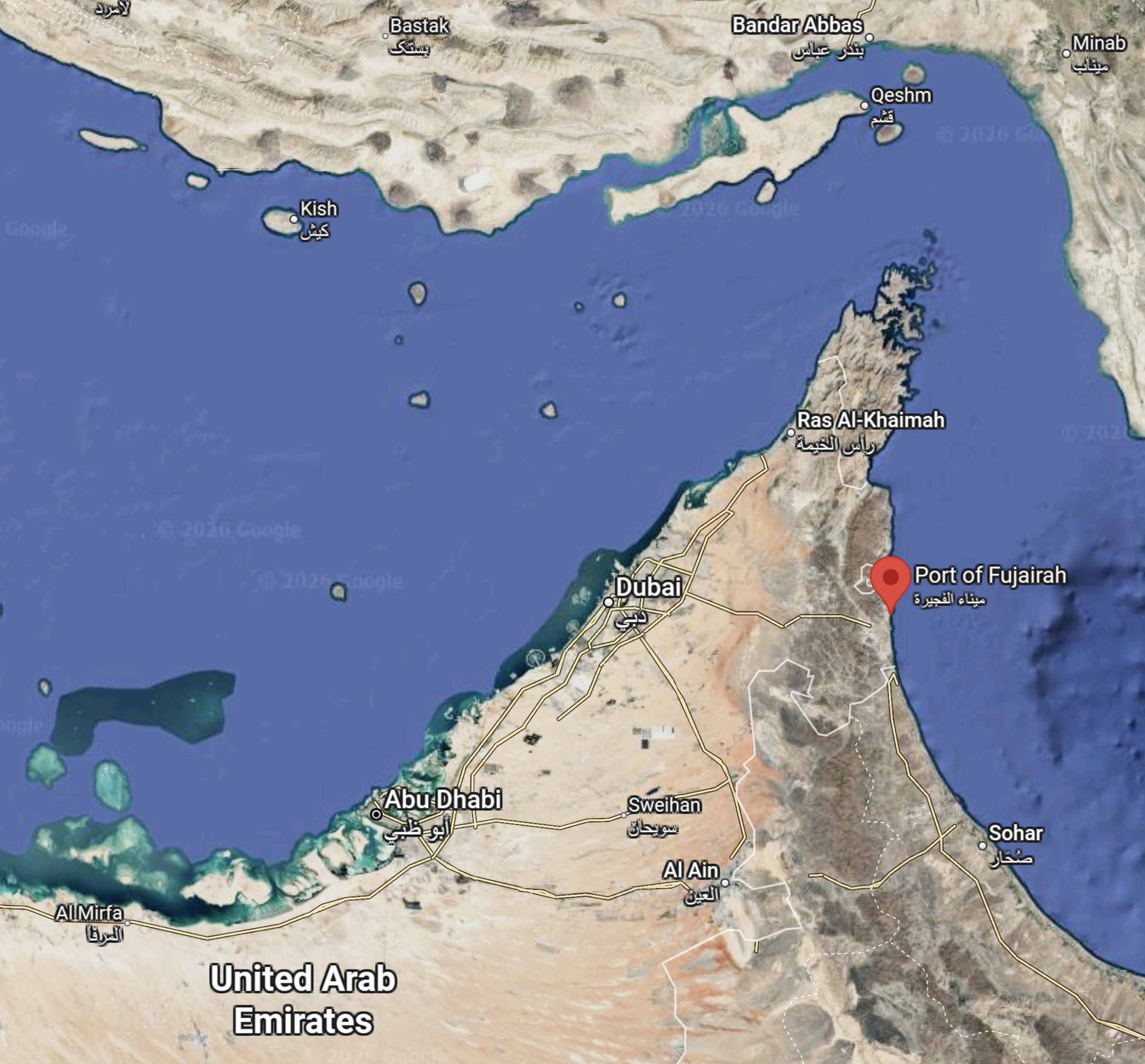
This second Google Map shows the Port of Fujairah and the Strait of Hormuz.
Note.
- The Port Of Fujairah is indicated by the red arrow.
- Dubai and Abu Dhabi are indicated on the map.
- The Strait of Hormuz is between the United Arab Emirates and Iran.
- There is a passenger train between Fujairah and Abu Dhabi that opened recently and takes an hour and 45 minutes.
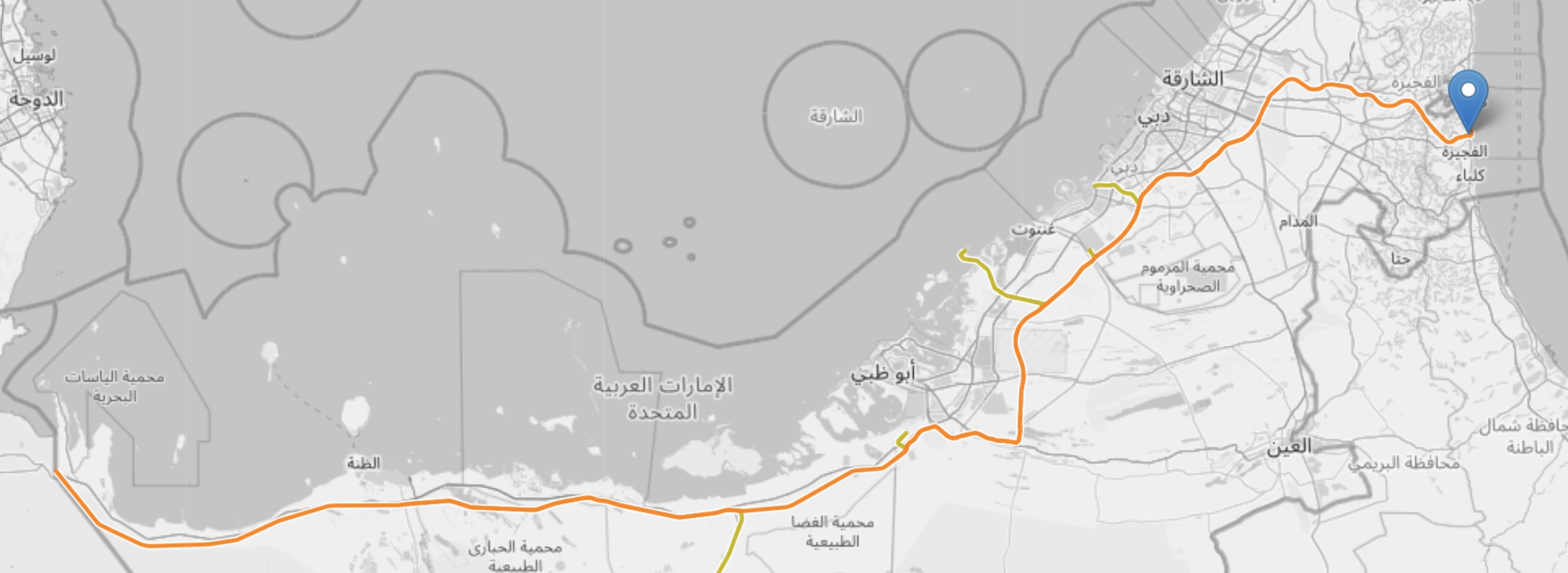
This OpenRailwayMap shows the route of Etihad Rail.
Note.
- The Port Of Fujairah is indicated by the blue arrow.
- Dubai and Abu Dhabi are on the Western coast.
- Etihad Rail has a Wikipedia entry.
- Etihad Rail has a web site.
- It is both a passenger and freight railway.
- It is 559 miles long.
It is planned to be extended to Saudi Arabia.
I can see Etihad Rail being very successful.
Could Duqm And/Or Salalah In Oman Be Developed As Oil And Gas Ports To Bypass Hormuz?
This REPEATED Google Map shows the Eastern side of the Arabian Peninsular.
The deep-water ports of Duqm and Salalah are shown on this map.
When I put the question in the title of this section to Google AI, I received this answer.
Yes, the Port of Duqm and the Port of Salalah are uniquely positioned to serve as critical oil and gas export hubs that bypass the Strait of Hormuz. Both deep-water ports are located on Oman’s open Arabian Sea coast, entirely avoiding the narrow maritime chokepoint.
Developing these ports into massive oil and gas export hubs is highly feasible but presents logistical and financial challenges:
Pipeline Corridors: Bypassing Hormuz would require constructing extensive, multi-billion dollar cross-border pipeline networks spanning over 1,800 kilometers from oil-producing hubs in Iraq, Kuwait, Saudi Arabia, and the UAE to the Omani coast.
Cost & Timeline: Estimates suggest a twin-pipeline project terminating in Duqm and Salalah—capable of moving 10 million barrels per day—would cost upwards of $50 billion and take up to seven years to complete.
Liquefied Natural Gas (LNG): Qatar and other nations could also route gas to the Omani coast, though doing so would require building multibillion-dollar liquefaction and export terminals on the Arabian Sea.
Regional Alliances: Projects at this scale require deep cross-border energy integration and substantial political consensus among the Gulf states.
Although, this route would be expensive, it would keep oil and gas for countries like China, India, Japan and Korea well away from Iran and their partners in crime the Houthis.
The Times article finished with this paragraph.
Plans now include pipelines that could run through Israel, Turkey and Syria to the Mediterranean and Europe, securing supplies to western countries but creating longer shipping times to China and India — both major consumers of Middle East oil.
Conclusion
The one common factor in all these plans is that Iran is sidelined.
And also alternative infrastructure must be better than the destructive US-Iran War.
Rolls-Royce To Power Etihad Fleet Expansion
tThe title of this post, is the same as that of this press release from Rolls-Royce.
These two paragraphs form the heart of the announcement.
Rolls-Royce (LSE: RR., ADR: RYCEY) welcomes announcement by Etihad Airways that it will expand its widebody fleet with aircraft powered by Trent 7000 and Trent XWB-97 engines.
At this week’s Dubai Airshow, the Middle Eastern carrier announced its intention to select 15 Airbus A330 Neo powered by the Trent 7000; seven Airbus A350-1000 powered by the Trent XWB-97; and 10 Airbus A350F freighter variants also powered by the Trent XWB-97.
Note.
- 32 twin-engined aircraft will need more than 64 engines, if you include spares.
- A 2014 list price of $37.9 million per Trent 7000 engine is a reference point.
- The contract would probably include a number of years of ongoing maintenance.
That is certainly what you could call a multi-billion dollar contract.
RWE Partners With Masdar For 3 GW Dogger Bank South Offshore Wind Projects
The title of this post, is the same as that of this article on offshoreWIND.biz.
This is the sub-heading.
RWE has signed an agreement with UAE’s Masdar as a partner for its 3 GW Dogger Bank South (DBS) offshore wind projects in the UK.
These three paragraphs outline the deal.
The partners acknowledged the signing of the new partnership during a ceremony at COP28 in Dubai.
Masdar will acquire a 49 per cent stake in the landmark renewables projects while RWE, with a 51 per cent share, will remain in charge of development, construction, and operation throughout the life cycle of the projects.
RWE’s proposed DBS offshore wind project is made up of two offshore wind farms, Dogger Bank South East and Dogger Bank South West (DBS East and DBS West), each 1.5 GW, which are located over 100 kilometres offshore in the shallow area of the North Sea known as Dogger Bank.
Note.
- Masdar is an energy company headquartered in Abu Dubai.
- The Chairman of Masdar is President of COP28.
Does this deal indicate that wind farms are good investments for those individuals, companies and organisations with money?
$15mn Solar Plant Funded By UAE’s ADFD Gets Capacity Boost To 15MW
The title of this post, is the same as that of this article on Utilities Middle East.
This is the sub-title.
Financing part of the Fund’s commitment of $350 million to support renewable energy uptake in developing countries.
I have read the whole article and it puzzles me. There is no mention, as to what Abu Dhabi gets in return.

