Elon Musk Goes Underground With High-Speed Trains
The title of this post is the same as that of an article in the Business section of last Friday’s Times.
This is the first paragraph.
Futuristic electric trains will soon be whizzing under the streets of Chicago at up to 150 mph after Elon Musk’s tunnelling company was chosen by the city to build a new high-speed commuter link.
Currently, the Blue Line train takes about forty-five minutes for the eighteen miles at a cost of five dollars.
Heathrow Airport is eighteen miles from the City of London and Crossrail will do the trip for thirty-three minutes when it opens, next year for a cost of under a tenner.
So what is Musk proposing?
- A journey time of twelve minutes.
- Passengers will ride in skates, which will carry up to sixteen people on concrete tracks.
- Skates will run at a frequency of 120 per hour for 20 hours a day.
- The fare would be twenty-five dollars.
- The system would cost about a billion dollars.
It is a technically ambitious proposal.
There’s more in this section called Chicago in the Wikipedia entry of The Boring Company.
A competition to build a high-speed link from downtown Chicago to the soon-to-be-expanded O’Hare Airport had been reduced to just two bidders by March 2018. The Boring Company was selected in June 2018 and will now negotiate a contract to be presented to the Chicago City Council. Construction is to be entirely financed by The Boring Company, which is subsequently to maintain and operate the link. The system will transport passengers in automated electric cars carrying 16 passengers (and their luggage) through two parallel tunnels running under existing public way alignments, traveling from block 37 to the airport in 12 minutes, at speeds reaching 125 to 150 miles per hour (200 to 240 km/h), with pods departing as often as every 30 seconds
It states it is two parallel tunnels!
Comparison With London’s Crossrail
Crossrail will effectively do the same job in London and a comparison between the two systems may produce some interesting conclusions.
Capacity
Musk’s system will have an hourly capacity of 1920 passengers per hour, based on 120 skates each carrying sixteen people.
Crossrail are talking of six trains per hour, each with a capacity of 1,500 people or 9000 passengers per hour.
I think that Crossrail will need to increase capacity, as Heathrow expands and longer trains and higher frequencies are possible.
But if Musk’s system is a runaway success, can it be expanded easily.
Journey Time
Musk’s system has a journey time of 12 minutes, as against Crossrail’s of 33 minutes
But Crossrail will stop up to ten times!
Intriguingly, the twelve minute is not the headline speed of 125 to 150 mph, but a slower 90 mph.
Routes
Little has been said of the route for Musk’s system, except that it goes between Downtown and O’Hare Airport.
Heathrow to the City of London, also goes direct to London’s major shopping area and the new business area of Canary Wharf.
It is also integrated with London’s existing Underground, Overground and rail lines at several places.
Does Musk’s system have a route structure, that won’t appeal to a lot of possible users?
Musk’s Thinking
This is an extract from the Future Goals section of the Wikipedia entry for The Boring Company.
According to Tesla, Inc. and SpaceX board member Steve Jurvetson, tunnels specifically built for electric vehicles have reduced size and complexity, and thus decreased cost. “The insight I think that’s so powerful is that if you only envision electric vehicles in your tunnels you don’t need to do the air handling for all carbon monoxide, carbon dioxide, you know, basically pollutants for exhaust. You could have scrubbers and a variety of simpler things that make everything collapse to a smaller tunnel size, which dramatically lowers the cost … The whole concept of what you do with tunnels changes.
The philosophy is not unlike that of Crossrail.
- I believe that Crossrail has been designed holistically, using the best tunnel and train technology.
- The tunnel power supply is a simple end-to-end rail.
- The Class 345 trains have batteries to make best use of electricity and provide emergency power.
- The batteries will handle regenerative braking, thus minimising heat-producing electric currents in the tunnel.
- Platform-edge doors and aerodynamic trains reduce mechanical energy losses.
- The electric trains do not emit anything into the tunnel, except perhaps a small amount of hot air.
I suspect that Crossrail’s tunnel section will be a very energy-efficient railway.
Conclusion
Summing up both systems we get.
Musk’s system is.
- A billion dollar cost.
- Twelve minute journey time.
- A vehicle every thirty seconds.
- Only for the few, who want to go from O’Hare to Downtown, who can pay a premium fare.
- Limited capacity.
A Crossrail-like solution would be.
- Perhaps a ten billion dollar cost.
- Twenty minute journey time.
- A train every few minutes.
- For everyone, who wants to travel from O’Hare to most places in Chicago with possibly a change, at a normal fare.
- Expandable capacity.
Musk’s system will appeal to the rich and those who like novelty, but I don’t think it is a long-term solution and just like London, Chicago will eventually have a modern railway linking it to the wider Chicago area.
Where Musk is right, is that he believes that tunnelling methods can be improved and become more affordable.
This will mean that more audacious railway schemes will be built.
Cargo Hub Is Latest Plan To Get Manston Airfield Off Ground
The title of this post is the same as a news item in the business section of The Times today.
This is the first paragraph.
It is the airport that refuses to take off. But the latest attempt to turn the Battle of Britain airfield if Manston into a sstainable commercial proposition could take wing this autumn.
The Plan
The plan for Manston Airport is roughly on the following lines.
- The airport becomes a passenger and freight airport.
- Help create employment in a depressed area.
- Talk of a £300 million investment.
- A potential to take air cargo out of Gatwick and Heathrow.
But I’m fairly sceptical given that so many attempts have failed in the past.
This Google Map shows the position of the airport.
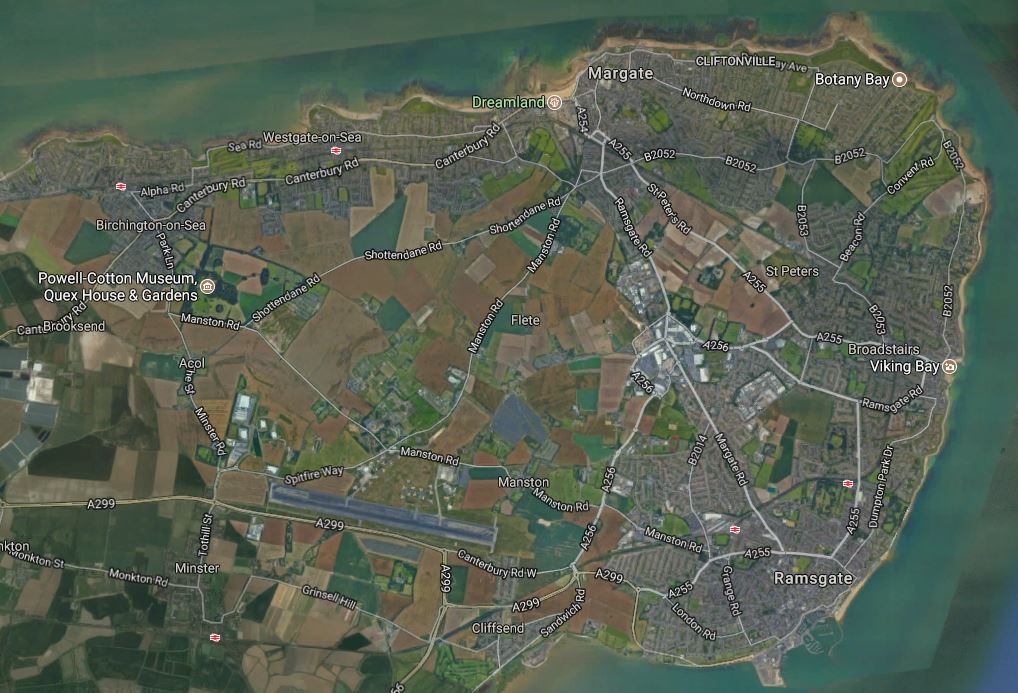
Note how the airport is ringed by the Thanet towns.
This Google Map is a close-up of the Airport.
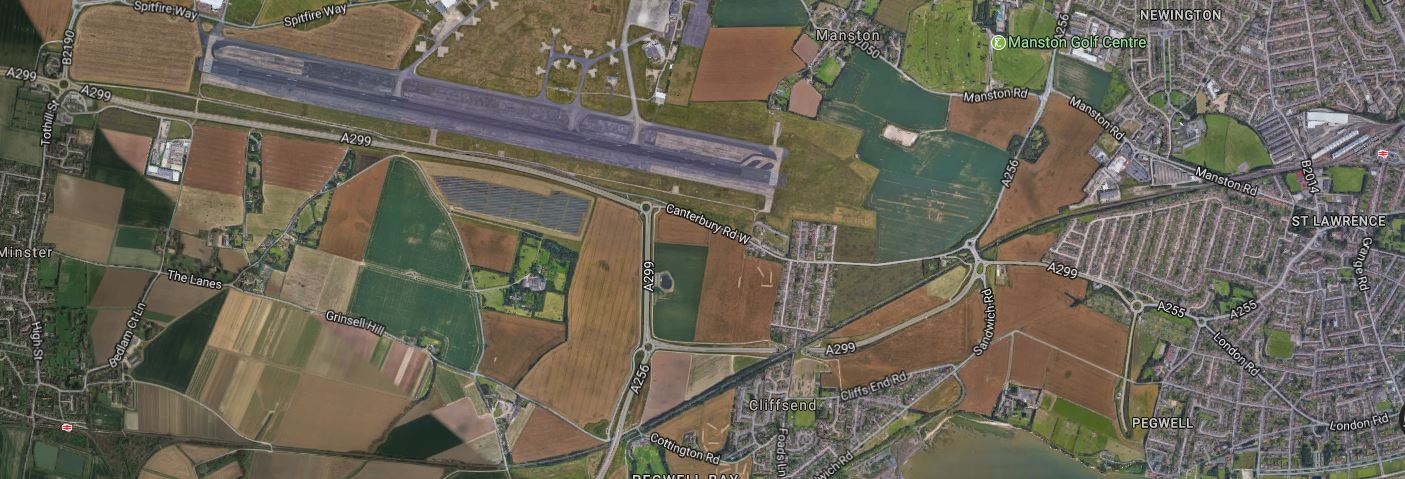
Note
- The Ashford to Ramsgate railway line running East-West to the South of the airport.
- Minster station is in the South-West corner of the map with Ramsgate station in the East.
- The A299 road runs along the South of the airport.
These are my observations.
Local Residents
The runway is roughly East-West on an alignment of 10-28.
Most take-offs and landings will probably we towards the West using Eunway 28.
I don’t know the area well, but I did get this image from Google Maps.
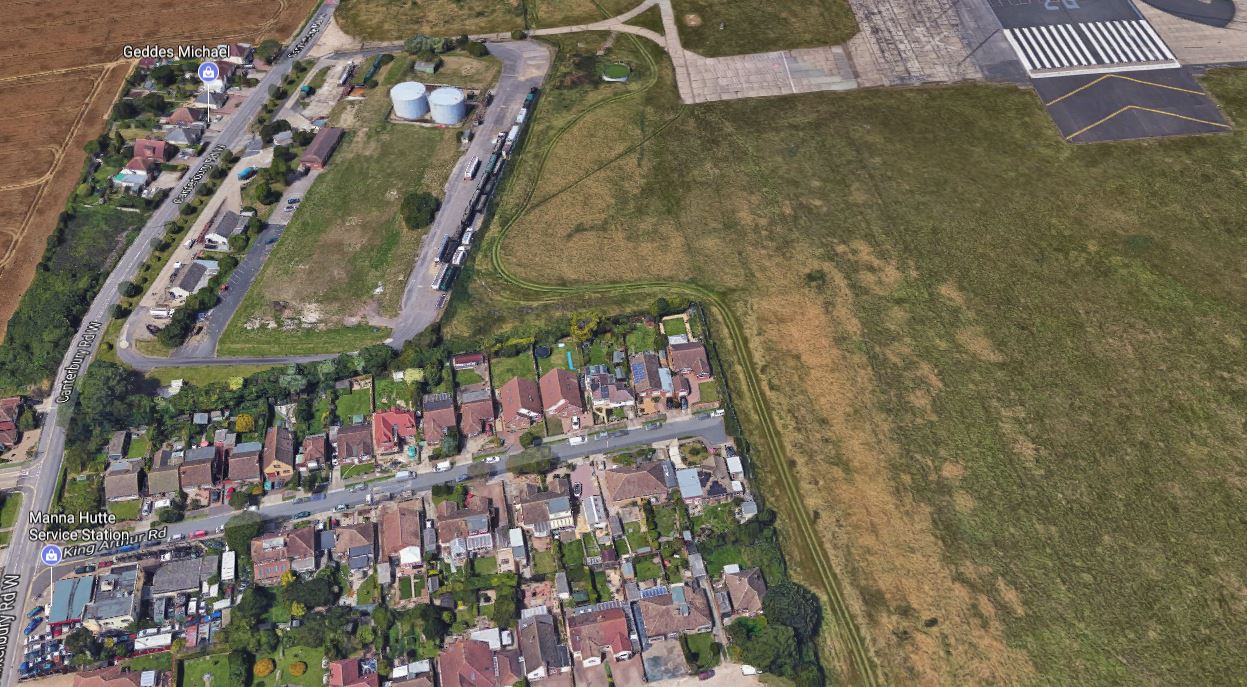
Note this housing just to the South of the final approach to Runway 28.
This Google Map shows the housing, the runway and the A299.
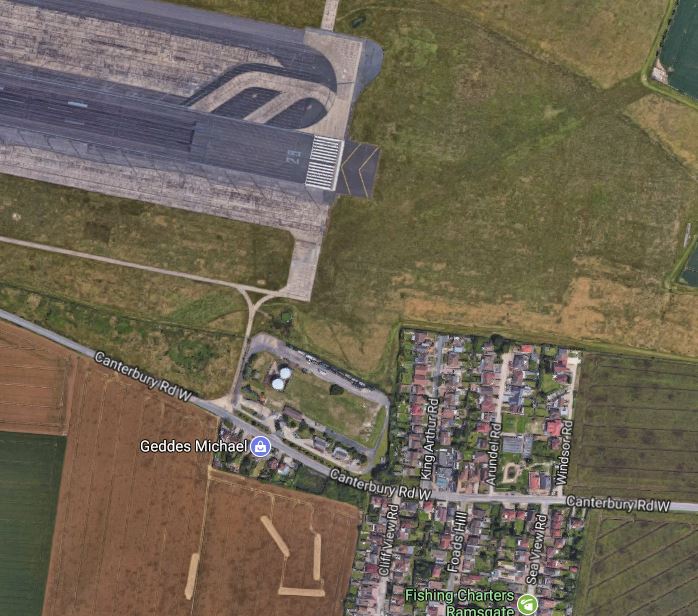
The residents can’t be too pleased of the plans.
Especially, as Google StreetView shows some of these houses to be newly-built sizeable bungalows.
Road Access
Road access to the airport would need to be substantially improved.
I can’t expect that the residents of Thanet will be pleased if a motorway is built across the countryside from the A2 South of Canterbury.
Rail Access
London’s newest airport is Southend Airport on the North bank of the Thames. The airport is growing as a base for easyJet and other low-cost airlines.
Southend Airport has several advantages, one of which is that the terminal is only a hundred metres from Southend Airport railway station, which is fifty minutes from Liverpool Street station.
In this day and age, I don’t believe that planning permission will be given for Manston Airport, unless a large proportion of freight, travellers and airport workers travel to and from the airport by rail.
Consider the current situation.
- As the Ashford to Ramsgate Line passes just to the South of Manston Airport, I would expect that the development would involve diverting this rail line, so it passed close to the airport.
- Current passenger services on the line, link to Ashford, Canterbury, Dover, Margate and Ramsgate, so at least it would be ideal for local airport workers.
- There are also a couple of trains per hour (tph) to and from London Victoria.
- Class 395 trains or Javelins also run using HS1 into St. Pancras. Currently, the fastest trains from |St. Pancras to Ramsgate take 79 minutes, so I suspect that to Manston Airport will take about 75 minutes.
The new Southeastern Franchise, which is currently being bid for will see improved access to this area of Kent, which could include.
- A second HighSpeed route opened into either Victoria or Waterloo using the route that used to be taken by Eurostar to Waterloo.
- Increase in HighSpeed services to Kent.
- Replacement of all the slow trains to speed up faster services.
I wouldn’t be surprised to see that Ramsgate gets the following HighSpeed services to London in every hour, that would call at Manston Airport.
- Two fast trains to St. Pancras.
- Two fast trains to Victoria
- Two fast trains to St. Pancras via the Medway towns.
Certainly, the frequency will be good.
Getting Passengers To And From The Airport
It is 2026 and these will be the times from Oxford Circus to the various London airports.
- Birmingham – 45 minutes – via HS2
- Gatwick – 68 minutes
- Heathrow – 27 minutes
- London City – 20 minutes
- Luton – 43 minutes
- Manston – 75 minutes
- Southend – 60 minutes
- Stansted – 43 minutes
Access from London might be by HighSpeed train, but people complain about the time it gets to Stansted now, so a time of 75 minutes may be a discouragement, when there are so many alternatives.
I believe that coupled with road access, which will be difficult to improve, that Manston Airport, will never be a significant player in the passenger market.
Getting Cargo To And From The Airport
The local residents are not going to want large numbers of trucks taking cargo to the airport.
But I believe that a lot of parcel and pallet transport, can go by train.
Doncaster-Sheffield Airport, which is also serious about cargo, is proposing to divert the East Coast Main Line, so that cargo trains can call at the airport. Manston Airport would have equally good rail access.
The interesting concept is what I call a HSPT or High Speed Parcel/Pallet train. The idea was first proposed in the June 2017 Edition of Modern Railways there is an article entitled Freight, Not All Doom And Gloom, which talks about high-value parcel carriers.
I have developed the concept, as I’m inclined to do in The Go-Anywhere Express Parcel And Pallet Carrier (HSPT).
I would use some of the soon-to-be redundant Class 321 trains and convert them into parcel and pallet carriers.
- They are four-car 100 mph dual voltage electric multiple units.
- They can run in lengths of twelve-cars if required.
- There are over a hundred of them of which the large proportion will need new caring owners.
- The trains may be thirty-five years old, but they are reliable and built out of steel to take punishment.
- They can easily be converted to bi-mode units, by adding underfloor diesel engines, so they can go anywhere in the UK.
- They could even go through the Channel Tunnel and run on the the French 25 KVAC network.
How many trucks would be taken from the UK’s crowded roads.
An Integrated Cargo Airport
An integrated cargo airport may have appeal.
Consider.
- Air cargo is increasingly containerised.
- Gatwick and Heathrow Airports are short of slots for passenger aircraft.
- Manston has a long runway, that could handle the largest cargo planes.
- The airport could easily have rail access to the |Channel Tunnel.
- The proposed HSPTs could use the Channel Tunnel with the correct signalling.
I worry that the poor road access would be a problem.
The Competition
Doncaster Sheffield Airport could be a serious competitor with equally good train and much better road access.
Conclusion
As in the past, it will be a difficult project to get working well
I also think the road access problems might kill it.
|Aberthaw Resumes Cement Dispatch
This is the title of another article in the January 2017 Edition of Modern Railways.
I wasn’t sure where Aberthaw was, so I looked it up on the Internet and this Google Map shows Aberthaw Cement Works, Cardiff International Airport and the Vale of Glamorgan Railway, that links Cardiff Central station in the East to Bridgend in the West.
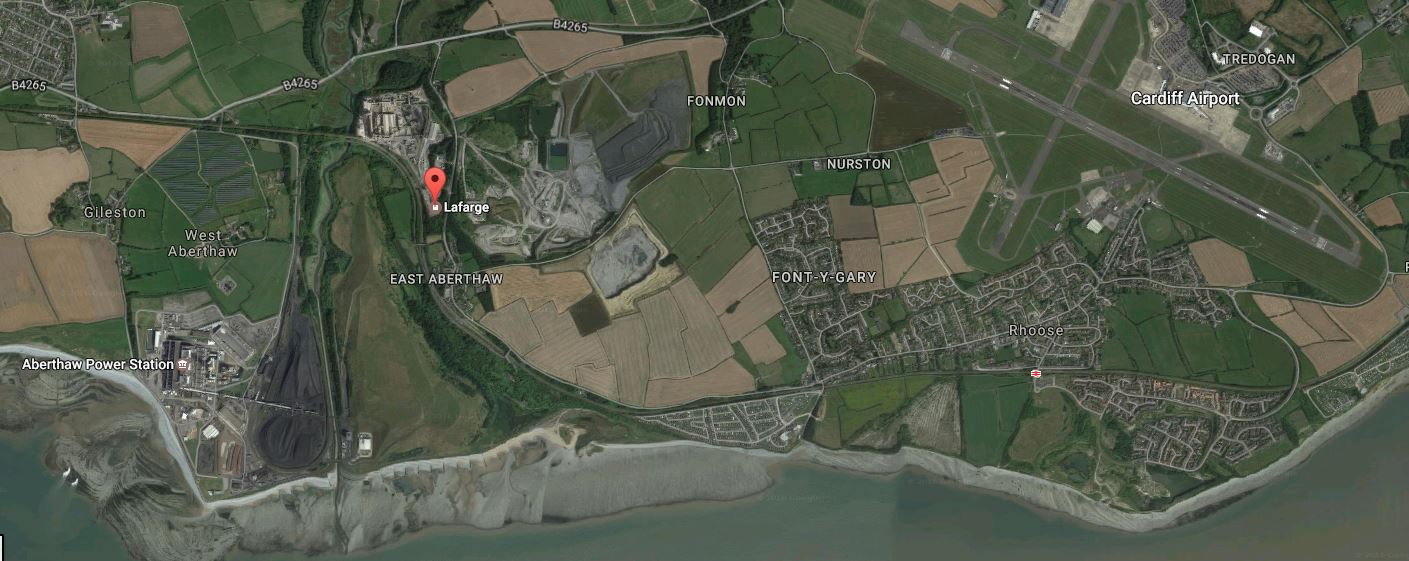
Note.
- The red arrow indicates the cement works.
- The Airport terminal is on the North side of the long runway,.
- Rhoose Cardiff International Airport railway station is on the other side of the runway and connected to the Airport by a sguttle bus.
- The line was closed by Beeching to passenger traffic in 1964, but was reopened in 2005.
Could Cardiff Airport benefit from the same sort of train-train link, that has been proposed for Glasgow that I wrote about in The Glasgow Airport Rail Link Will Be A Tram-Train?
But the map does illustrate the benefit of rail access to the cement works.
- The works is close the Vale of Glamorgan Line.
- Trains from the cement works can go East to places that need the product, including surprisingly, the South West of England.
- The rail link could cut the number of truck movements by 25%.
This would seem to be an ideal use for rail freight.
Are we doing enough to develop similar links, from other large factories all over the UK?
As the line is supposed to be electrified in a few years, could it be that a proper review of the line should be done first, to see whether any other projects should be done at the same time.
The reason I say this, is that the history of the line is much the same as that of the Grand Old Duke of York and his soldiers.
Could Old Oak Common Be London’s Super Hub Station?
Old Oak Common station is going to be a very important rail hub in the future, with all the services that various companies and organisations would like to see serving the proposed station.
This map shows some of the existing and proposed rail lines in the area.
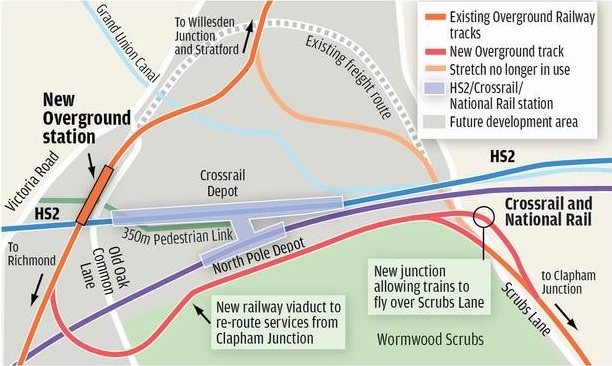
Rail Lines At Old Oak Common
Current Plans
I’ll now list the lines shown in the map or that go through the area. and are listed in Wikipedia, as having connections at the proposed Old Oak Common station.
1. Bakerloo Line
The Bakerloo Line will call
2. Central Line
The Central Line will call.
The Central Line acts as a loop from Crossrail through Central London, serving stations not on the direct route, in Central London between Stratford and Bond Street.
I wrote about the relationship between Crossrail and the Central Line in Ducking And Diving Between Crossrail And The Central Line.
3. Crossrail
Crossrail goes through the area and development of a station has been proposed.
4. Great Western Main Line
The Great Western Main Line goes through the area and local and other services may call.
5. HS2
HS2 will be building a station at Old Oak Common.
6. North London Line
The North London Line is consulting on a new station as I wrote about in Should An Overground Station Be Built At Hythe Road?
The North London Line acts as another East-West line across London and will probably have a frequency of upwards of the current 4 trains per hour (tph) between Richmond and its Eastern connection to Crossrail at Stratford.
7. West Coast Main Line
The West Coast Main Line goes through the area and local and other services may call.
8. West London Line
The West London Line will call and this line gives an easy route to Balham, Clapham Junction and East Croydon stations, which by-passes Central London.
I suspect that the frequency of trains on this route will be increased.
Eight lines is an large amount of connectivity.
Other Possibilities
If that isn’t enough connectivity, there are also these extra possibilities.
1. Chiltern Railways
Chiltern Railways have ambitions to use Old Oak Common station as another London terminus, with perhaps 2 tph.
I wrote about it in Linking Chiltern To Crossrail.
2. Dudding Hill Line
The Dudding Hill Line, runs to the West of Old Oak Common station. It could be electrified and have a station that is connected to Old Oak Common station.
For various reasons, both the Brent and Cricklewood \curves would be electrified, thus giving fully electrified access to and from North and South on the Midland Main Line.
3. Gospel Oak To Barking Line
Transport for London have published ideas to extend the Gospel Oak to Barking Line along an electrified Dudding Hill Line.
Suggestions have talked about 4 tph between Hounslow and Gospel Oak stations.
4. Heathrow Express
Heathrow Express uses the Crossrail route, so it could call.
5. Midland Main Line
If Chiltern can justify using Old Oak Common station, I suspect that services on the Midland Main Line can make the same arguments for using Old Oak Common station as a terminal.
Consider.
- Electrification of the Dudding Hill Line makes this possible.
- St. Pancras which is very much A Fur Coat And No Knickers Station, is short of capacity.
It would give passengers from the East Midlands much better access to London and the South East.
6. Thameslink
There are no plans to link Thameslink to Old Oak Common station, but why not?
I proposed this in Will The Third Runway At Heathrow Be Actually Built In The Near Future?
Under Integration With Both HS1 And HS2, I said this.
It would be possible to do the following.
- Arrange for Heathrow Express and/or Crossrail to call at Old Oak Common for HS2.
- Terminate some Thameslink services at Old Oak Common, thus linking HS1 and HS2.
- Build an easy entrance at St. Pancras to Thameslink close to Eurostar.
- It goes without saying, that Old Oak |Common will make interchange easy between the umpteen lines meeting there.
The Dudding Hill Line would be electrified.
This proposal and the related electrification of the Dudding Hill Line would do the following.
- Give Chiltern, Crossrail, GWR and Heathrow Express a connection to HS1.
- Give Thameslink a better connection to HS2 and the West Coast Main Line
- Create a fast ink between HS1 and HS2.
What could a Thameslink service to Old Oak Common station look like?
- I would terminate 4 tph trains at Old Oak Common to give an adequate level of service.
- It might be advantageous to use eight-car Class 700 trains on this route, so that all trains North of Cricklewood could be twelve-car trains.
- Could the trains going to Old Oak Common be the Wimbledon Loop trains?
- There could be advantages in having 2 tph between Old Oak Common and London Bridge.
Obviously, passenger statistics would determine the services required.
Old Oak Common As An Airport Hub
If all or some of these plans come to pass, Old Oak Common station will be well-connected to the following airports.
- Birmingham – Under 50 minutes by HS2.
- City – Under 20 minutes by Crossrail
- Gatwick – Under 50 minutes by Thameslink
- Heathrow – Around 20 minutes by Crossrail and around 15 minutes by Heathrow Express
- Luton – Under 30 minutes by Midland Main Line.
- Manchester – Around an hour by HS2.
- Southend – Around 80 minutes by Crossrail and Greater Anglia.
- Stansted – Around 55 minutes by Crossrail and Stansted Express.
The figures are very much my best estimates, as the Thameslink and HS2 web sites don’t have simple journey time calculators as does the Crossrail web site.
But these timings do show some interesting facts, that will effect the developments of airports in Southern England.
- Birmingham Airport is a practical alternative for those living with easy access to the HS2 stations at Euston or Old Oak Common.
- Gatwick access needs to be faster to compete with Heathrow and Luton.
- When HS2 reaches Manchester Aiorport, it will be a practical alternative for Middle England.
- Southend Airport will be good for those East of London, but the journey time needs to be cut, by running faster trains to London.
- Stansted Airport needs a faster connection to London and they will push for the four-tracking of the West Anglia Main Line.
There will be a massive battle for passengers and Network Rail will be under tremendous pressure to perform.
Rail Companies, Lines And Terminals, Without A Direct Connection To Old Oak Common Station
There is quite a few, even if you cut out train operators like Arriva Trains Wales, Scotrail, Northern and TransPennine, that don’t serve London.
1. Caledonian Sleeper
With all its connectivity, would Old Oak Common be the logical destination for the Caledonian Sleeper?
Could Old Oak Common, be London’s hub for all sleeper trains?
2. Circle, District And Metropolitan Lines
There are various ways to get on the Circle, District and Metropolitan Lines depending on where you want to go.
Just as the Central Line acts as a loop from Crossrail, the Sub-Surface Lines have various loops running parallel to Crossrail through Central London.
- Circle and Metropolitan Lines, running North of Crossrail, from Paddington to Whitechapel.
- Circle and District Lines, running South of Crossrail, from Paddington to Whitechapel.
- District Line, running, South of Crossrail, from Ealing Broadway to Whitechapel.
My prediction in Is Whitechapel Station Going To Be A Jewel In The East?, seems to becoming true.
3. c2c
As I said in Will c2c Push For Access To Stratford And Liverpool Street?, c2c needs a connection to a station on Crossrail.
With some reorganisation of services, I believe that it might possible to have a 4 tph service to Stratford and Liverpool Street stations, which would give passengers in the c2c area, access to Crossrail
4. East Coast Main Line
These are routes between Old Oak Common and Kings Cross station for the East Coast Main Line.
- Crossrail to Farringdon and then the Metropolitan Line
- North London Line to Highbury and Islington and then the Victoria Line.
- Bakerloo Line to Oxford Circus and then the Victoria Line.
- Crossrail to Tottenham Court Road and then a 10, 73 or 390 bus.
- Narrow boat on the canals.
- If Thameslink should in the future serve Old Oak Common, that can be taken to St. Pancras Thameslink, followed by a walk.
None of the routes are of the best.
If you had plenty of time, Tottenham Court Road station and then a bus would be a good route, as the bus drops you in the front of Kings Cross station, with totally flat access to the trains. If you’re early and it’s sunny, you can sit in the best Waiting Room at a London station.
For local services on the East Coast Main Line, there are two slower alternatives.
- Crossrail to Moorgate and then use the Great Northern Metro.
- Thameslink to St. Pancras Thameslink, cross to the other platform and take Thameslink to Cambridge or Peterborough.
The second route, would be much easier, if St. Psncras had an island platform for Thameslink. At least it’s only escalators and lifts.
There is one development, that might happen, that could improve journeys to and from Kings Cross station. That is the reopening of Maiden Lane station.
5. Jubilee Line
The Jubilee Line has interchanges with Crossrail at Bond Street, Canary Wharf and Stratford stations, with an interchange with Thameslink at London Bridge station.
It also has a step-free interchange with the Bakerloo Line at Baker Street station.
The Jubilee Line also acts as a loop from Crossrail serving stations away from the main route through Central London between Stratford and Bond Street.
6. London Bridge, Cannon Street And Charing Cross
I have grouped all these three stations together as the rebuilding of London Bridge station and the Thameslink Programme have connected these three stations in a way that will change passenger patterns dramatically for users of these three stations.
For myself, it will mean that to access any trains from Cannon Street and Charing Cross or on Thameslink going South, I will probably use a bus to the superb London Bridge station with all its escalators and lifts, rather than fight my way through Central London.
Others will also choose to go direct to London Bridge, possibly by using the Jubilee or Northern Linse. It will be interesting to see how passenger usage changes at Cannon Street and Charing Cross stations.
London Bridge shows what could have been done, if they’d spent the money wisely at the dreadful St. Pancras.
There are four main routes between London Bridge and Old Oak Common stations.
- Bakerloo Line to Waterloo and then the Jubilee Line.
- Crossrail to Bond Street and then the loop of the Jubilee Line.
- Crossrail to Farringdon and then Thmeslink
- If Thameslink serves Old Oak Common, there could even be a direct train.
I suspect there are other routes and it will all be down to personal preference and where you catch your next train in London Bridge.
Cannon Street station could almost be considered a London Bridge North station.
- It has seven terminal platforms. Try fitting more into London Bridge.
- It is within easy walking distance of much of the City of London.
- On a nice day, many might even walk from Cannon Street to Moorgate for Crossrail, as this route could be pedestrianised.
- It has access to the Circle and District Lines, which with a change at Paddington give access to Crossrail and Old Oak Common station.
- In a few years time, it will have good access to the Northern and Central Lines at Bank station.
Cannon Street station will become more important, as Network Rail and the various operators learn how to use the new infrstructure.
Sometimes, I struggle to see the point of Charing Cross station, but as it’s a very busy station others certainly see the station’s purpose.
It’s on the Bakerloo, Circle, District and Northern Lines, so getting to Old Oak Common won’t be a problem.
Transport for London are looking to take over South London inner suburban routes, so I think we’ll see changes in the management of Cannon Street and Charing Cross stations if this happens.
7. Northern Line
Both branches of the Northern Line are directly connected to Crossrail.
- Tottenham Court Road station connects to the Charing Cross Branch.
- Moorgate station connects to the Bank Branch.
Connections to the Northern Line might improve, if two separate lines are created
8. Piccadilly And Victoria Lines
The Piccadilly and Victoria Lines share three interchanges, but unfortunately they have no interfaces with Crossrail and only one poor one with Thameslink.
The best bet is to get on the Bakerloo Line and change at either Oxford or Picadilly Circus.
9. Victoria
Victoria station is another tricky station from which to get to and from Old Oak Common.
- Bakerloo Line to Oxford Circus and then Victoria Line.
- Crossrail to Paddington and then Circle or District Line.
As some services out of Victoria stop at stations served by the West London Line, it is possible to use that line to by-pass Central London.
10. Waterloo
Like London Bridge, Waterloo station is very well connected to Crossrail and the Old Oak Common hub.
- Bakerloo Line direct.
- Crossrail to Bond Street and then the loop of the Jubilee Line.
- Crossrail to Tottenham Court Road and then the Northern Line.
As some services out of Waterloo stop at stations served by the West London Line, it is possible to use that line to by-pass Central London.
Conclusions
I have come to the following conclusions.
Everybody will want to be connected to Old Oak Common station.
Groups of lines across London are emerging.
- East to West – Crossrail, Central, District, Metropolitan, North London, Gospel Oak To Barking, Dudding Hill.
- North to South – Thameslink, West London,East London, Northern.
- North-East to South-West – Crossrail 2, Piccadilly, Victoria.
- North-West to South-East – Bakerloo, Jubilee
A very strong grid with good interchanges is probably the main objective.
Looking at these groups, makes me think, that actions are suggested, that would strengthen the network.
- Build Crossrail 2
- Increase the capacity on the Bakerloo Line
- Split the Northern Line into Charing Cross and Bank branches.
London will quickly fill the extra capacity.
Inverness Airport To Get A Railway Station
This article on Global Rail News is entitled Planning application submitted for Inverness Airport station.
This Google Map shows Inverness Airport.
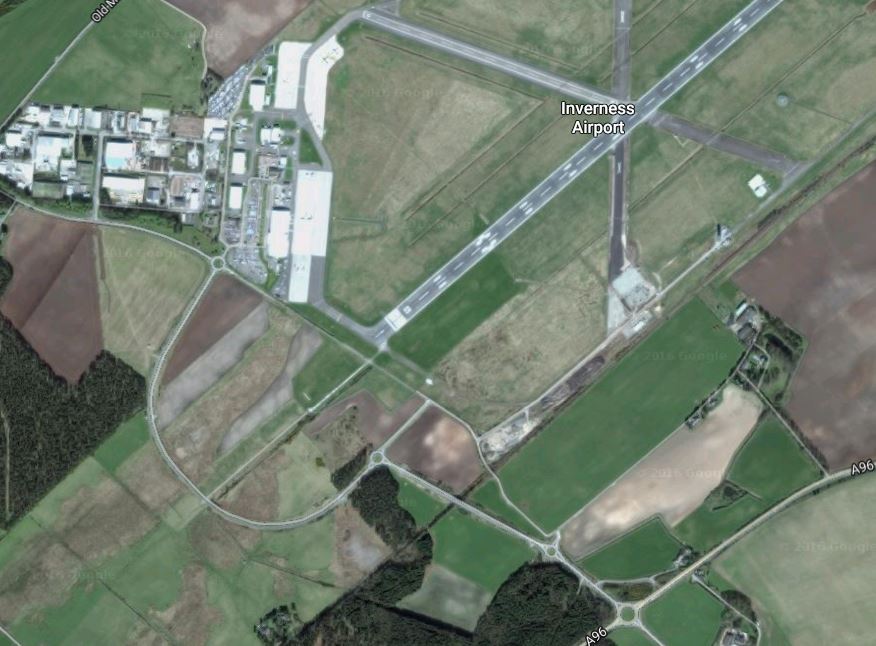
Inverness Airport
Cutting across the map, to the South-East of the Airport and parallel to the main runway is the Aberdeen to Inverness Line.
The station would be a replacement for the closed Dalcross station and Wikipedia has a section on the Proposed New Station. This is said.
In June 2006 a proposal was announced to open a new station at Dalcross, which would serve Inverness Airport and also provide park-and-ride facilities for commuters to Inverness, relieving road congestion to the east of Inverness,[9] and so helping to reduce carbon dioxide emissions. The proposal was still open in 2010, and it was specified that the station could have one platform on the north side of the line, 150 metres (490 ft) long, enough for a six-car Class 170 train.
The Aberdeen Press and Journal also has the story and says this.
The proposed location of the development is adjacent to the C1017 airport access road, between the first and second roundabouts after leaving the existing A96, at the southern corner of the airfield.
The platform will be capable of accommodating high-speed trains with five carriages and two engine cars, as proposed by operators Abellio.
So it would seem that the go-ahead has been given.
Does Brexit Mean We Need More Runways?
I ask this question, as after I wrote Changing Sides, I’ve had some thoughtful comments.
In 2015, there were seven airports that handled over ten million passengers.
- London Heathrow – 74,985,748
- London Gatwick – 40,269,087
- Manchester – 23,136,047
- London Stansted – 22,519,178
- London Luton – 12,263,505
- Edinburgh – 11,114,587
- Birmingham – 10,187,122
In addition, there are airports like Bristol, Cardiff, East Midlands, Glasgow, Leeds-Bradford, Liverpool and Newcastle, that can take a significant portion of regional traffic.
I can add these comments.
- Manchester is taking traffic from other airports in the North and Scotland.
- In a decade or so, a very high speed rail link could enable Liverpool to provide extra runway capacity for Manchester.
- Birmingham will be on HS2 within a decade.
- Manchester will get HS2 within two decades.
- Six of the top seven airports are getting improved rail links.
- Glasgow is just off the list in eighth, but does Scotland need two airports in the Central Belt?
- Cardiff is not the busiest airport and was in fact 20th.
The Airports Commission said we need another runway in the South East, but will Brexit change matters?
I have this feeling that, Brexit could mean that we actually see more air-routes opening up.
Consider.
- The British will always love their holidays in the sun.
- The UK will always be a destination for tourists and a low pound courtesy of Brexit will help.
- If the regions of the UK get more independence from London, they’ll probably look to attract more visitors.
- On past form, the City of London will survive Brexit, just as it did the Great Fire and the Blitz.
- Brexit could be an excuse for building more runway capacity.
- People love setting up airlines to lose their fortune and those of others.
- Infrastructure like railways and trams will make some airports, easier and more affordable to use.
- Travellers will get more savvy.
On the other hand, the low-cost airlines seem to be saying that traffic to and from the UK will be a lot lower and they are moving aircraft out of the UK.
I have no idea what will actually happen, but we may see some surprising things. I said this earlier.
In a decade or so, a very high speed rail link could enable Liverpool to provide extra runway capacity for Manchester.
Consider.
- The Shanghai Maglev Train has a top speed of over 400 kmh and a length of 30 km.
- Liverpool and Manchester airports are 50 km. apart.
- Liverpool Airport is alongside the Mersey.
Even if this doesn’t happen, we’ll certainly see many airports expand and be easier to use.
The debate on where the South-East gets extra runway capacity has been enlivened by Gatwick saying that if Heathrow is chosen, then they’ll build a second runway anyway.
Consider.
- Building a new runway at Heathrow will need extensive works to the M25
- Gatwick has the space for a second runway and has already shown possible runway, terminal and rail railway station designs.
- Gatwick is already a well-connected rail-hub.
- Both airports will be connected to Farringdon by modern high-capacity rail links.
- Cameron promised no third runway at Heathrow and his election still defines the make-up of Parliament.
- Most Londoners don’t like Heathrow.
- Heathrow probably couldn’t build a third runway, if Gatwick got the Government’s blessing.
We could see the Government give Heathrow their blessing, but Gatwick builds a new runway as well.
Surely two world-class airports for London, would show that a post-Brexit Britain was open for business.
I think many London residents like me, living away from Heathrow, would accept an enlargement at both airports.
You can envisage these scenarios.
Heathrow Gets A Third Runway And A Sixth Terminal
If this was the decision, the following would or could happen.
- The opposition would be vocal and possibly violent.
- Every legal experts in the field would keep the Courts going for decades.
- The moving of the M25 would paralyse the traffic to the West of London for at least a decade. Remember Terminal 5!
- All of the hassle would frighten investors away from a post-Brexit UK
Gatwick would build a second runway anyway.
Heathrow Hub
Heathrow Hub is the independent proposal shortlisted by the Airports Commission. Wikipedia describes it like this.
Heathrow Hub proposes extending both of the existing runways up to a total length of about 7,000 metres and dividing them into four so that they each provide two, full length, runways, allowing simultaneous take-offs and landings. The aim is to complete the construction within five years and with 100% private funds.
Available capacity would be doubled while keeping a percentage of the slots unused in order to alter noise levels. In addition, early morning flights could land much further west along the extended runways so reducing the noise footprint for a large area of west London.[5] Other noise mitigation techniques include using two-stage approaches, and steeper, curved climb-outs.
The Heathrow Hub concept includes a new multimodal air, rail and road interchange located approximately two miles north of Heathrow’s Terminal 5 to accommodate passenger growth. This includes a new terminal, a new railway station connecting Heathrow to the West Coast Mainline and Crossrail and direct access to the M25 motorway.
This image from the Heathrow Hub web site shows the layout with just the Northern runway extended.
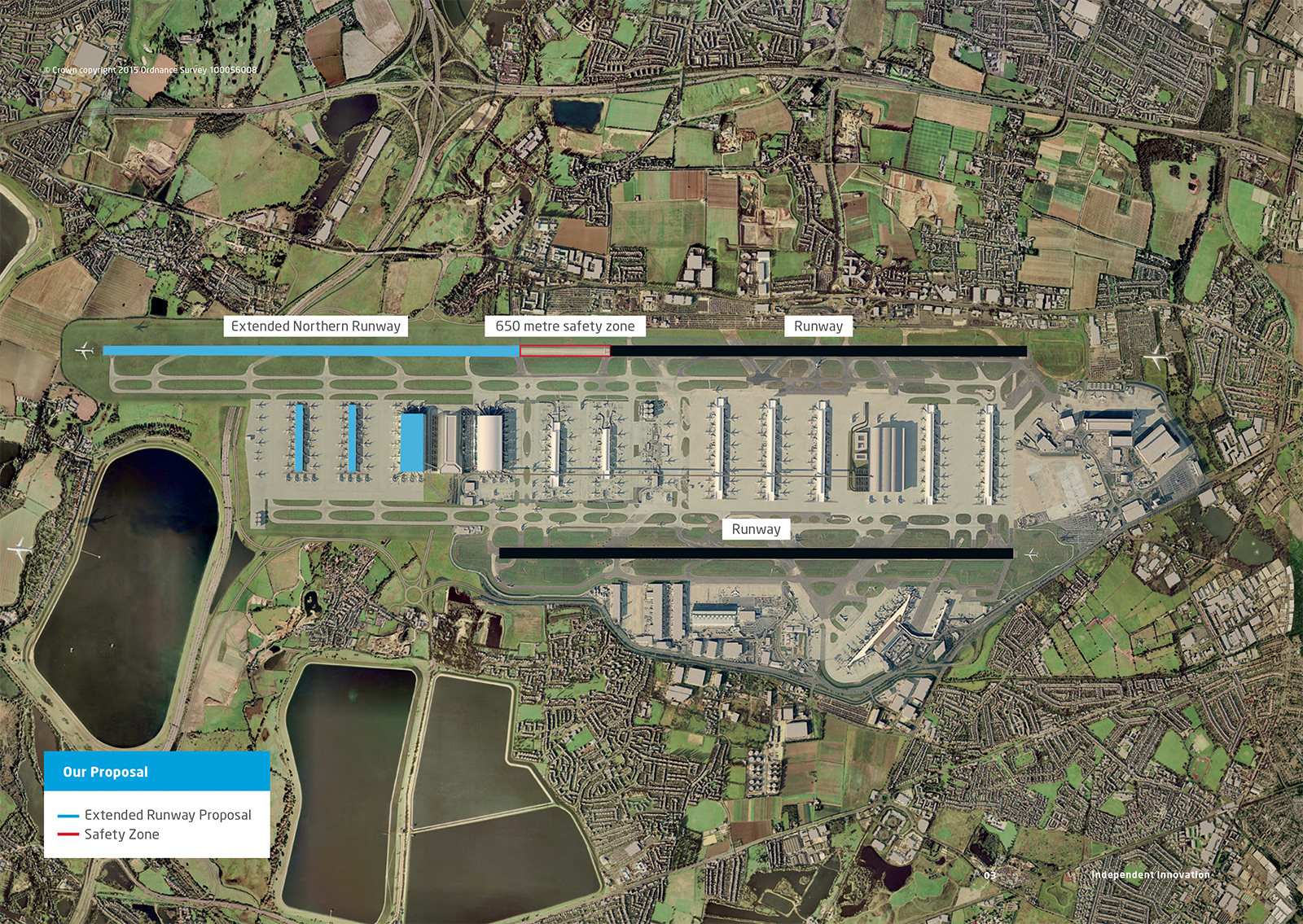
Heathrow Hub Runway Proposal
Note.
- The M25 would just needed to be put in a tunnel, as has been done at Schipol.
- The Southern runway could be expanded later to provide even more runway capacity.
- As aircraft will get smarter and be able to fly more precise paths, more noise will be kept within the larger airport boundary.
With my project management hat on, I believe that the building of the rNorthern Runway extension, a new terminal and all the connecting infrastructure could be built without disrupting the operation of the current Airport.
Heathrow Hub is the joker in the pack and it could be the surprise choice.
But I doubt it.
- The opposition would still be vocal and possibly violent.
- Every legal experts in the field would keep the Courts going for decades.
- Heathrow Airport wouldn’t like it, as they didn’t think of it.
Although, in a post-Brexit world, it could make sense.
Gatwick Gets A Second Runway
In some ways this is the option with the least amount of hassle.
- The opposition at Gatwick would be much less, than choosing Heathrow.
- There would be no traffic disruprion at Heathrow.
But Heathrow would probably fight the decision in the Courts.
I also think, that Heathrow will never give up on expansion, as there is just too much investment in the airport.
Both Airports Get An Extra Runway
This could be the Judgement of Theresa!
- Heathrow would extend the Northern runway, as detailed in the Heathrow Hub proposal, with perhaps another rail-connected terminal between the runways.
- Gatwick builds a second runway and appropriate terminals.
Consider.
- The current two-airport strategy works for London.
- Heathrow and Gatwick will soon have much-improved rail connections with an interchange in Central London.
- Both rail journeys to Central London will be around thirty minutes.
- Both runways could be built without disrupting the existing airports.
- Once the M25 is covered, Heathrow can extend the runway and gets the space for more terminals.
- Few properties would be demolished at either Heathrow and Gatwick.
- Those living around Heathrow would suffer less noise.
- A second runway fits Gatwick’s plans.
- Airlines can choose their best location as capacity increases.
- At least two runways at both airports, surely increases safety.
But the reason, I like this option best, is that it future-proofs, the airports in the South-East for a very long time.
It also creates true competition between the two airports and that can only be to the benefit of the airlines and their passengers.
This article in the Independent is entitled If Gatwick and Heathrow both build extra runways, it could mean the UK becomes future-proofed.
Add future-proofing to my list.
Conclusion
I said we should be prepared for surprises about airports.
I stand by that!
Luton Airport Goes For Light Rail
This article in The Guardian is entitled Luton airport to replace bus transfers with £200m light rail link.
Passengers will take the light rail link between Luton Airport and Luton Airport Parkway station, where they will use Thameslink and Midland Main Line trains to travel North and South.
This Google Map shows the area, where the rail link will run.
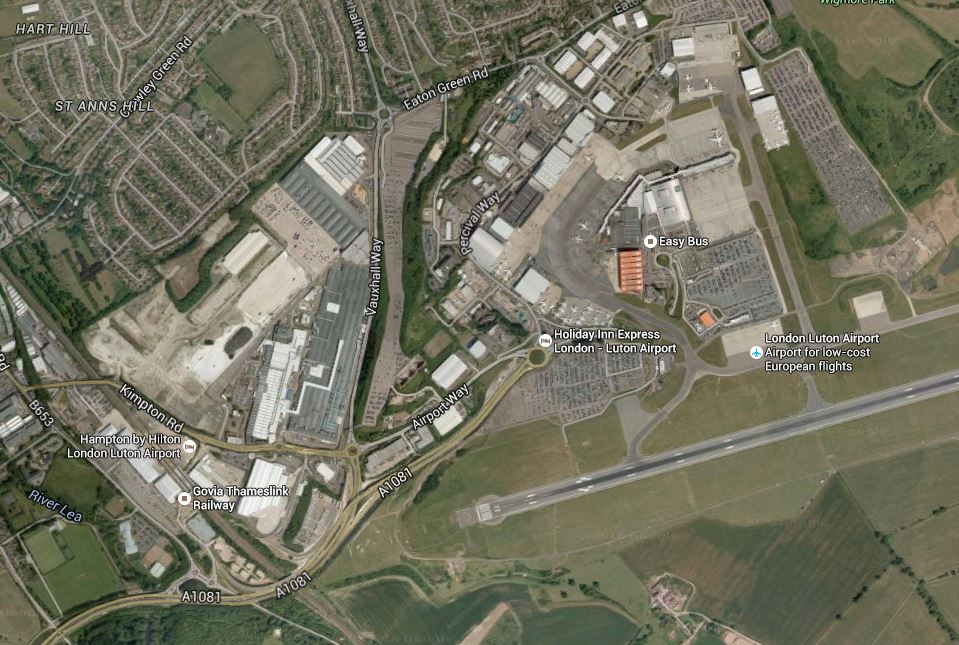
Luton Airport And Luton Airport Parkway Station
The Midland main Line and the station are close to the end of the runway.
A few months ago, an article in Railway Technology was entitled Luton Airport reveals plans for new direct rail service.
What isn’t shown from the map, but is very much obvious if you’ve piloted an aircraft out of Luton Airport, is that the end of the runway is on top of a hill and the railway is at the bottom.
I said this in Will Bombardier Develop The Ultimate Airport Train? about running trains into a Luton Airport station.
I think that railway engineers can create an elegant junction here, where trains can easily go in both directions between London and the Airport. Designing a line connecting the North and the Airport could be more difficult, but even so given the terrain and that some of the junction will be inside the airport boundary, a solution must be possible.
One thing that could help, is that if Class 387/2 IPEMUs were to be used on all Luton Airport services, then the branch would not need to be electrified.
If it was decided to run it in a tunnel under the car parks, then surely a tunnel without overhead wiring would be a smaller, simpler and more affordable proposition.
As the Railway Technology article was only published in July 2015, after promising results from the IPEMU train, could it be that this rail link is not possible with conventionally-powered electric trains?
But I now think that there are other problems with a direct rail link into the airport, even with the help of IPEMU and other recently-developed technology.
- In other documents, it is stated that Luton Airport wants four trains an hour to the capital and it has to be asked if there are enough paths available to the South.
- It probably is more difficult than I thought to run trains to and from the North to the airport.
I also wonder, if after Luton Airport Parkway station has been rebuilt for the light rail link, that this might open up other possibilities for development in this part of Luton.
I also found the original press release about the link. This is said.
The light rail link is part of a broader rail connectivity improvement plan, which aims to introduce a 20 minute express rail service with four fast trains per hour between LLA and central London as part of the upcoming East Midlands rail franchise. LLA is also currently working with Transport for London to add the airport to the Oyster network which will help ensure smooth connections for passengers travelling by rail.
Everything will hopefully become clearer, when the full plans for the link are published.
In a few months time, when Luton and Gatwick have contactless ticketing, who will be next in the queue; Heathrow or Stansted?
Transport for London have certainly started the game of contactless cards, by playing two powerful aces.
I wouldn’t be surprised to see Stansted and Southend accept contactless ticketing before the end of 2016, leaving Heathrow as the odd one out!
Crossrail In Docklands
This map from carto.metro.free.fr shows the route of Crossrail through Docklands.
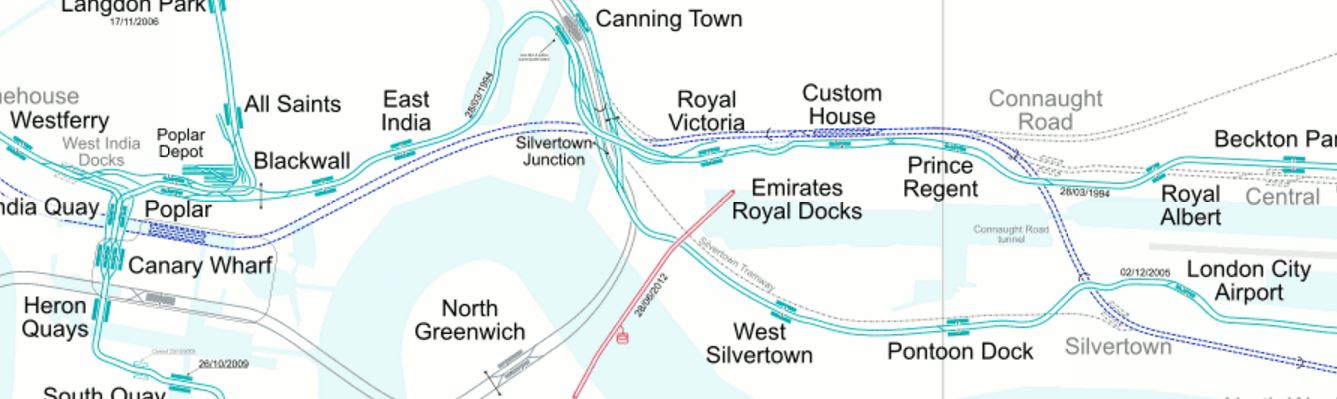
Crossrail In Docklands
Cossrail is shown in a blue-purple colour and it goes horizonrally across the map.
The Crossrail stations in the area are as follows from West to East.
Whitechapel
Whitechapel station is off the map to the west.
I have included it, as it will be Crossrail’s Jewel In The East and the most important interchange for the line in East London.
- It links both eastern branches of Crossrail to the Metropolitan and District Lines.
- It provides an interchange to London’s important but sometimes forgotten East London Line.
- An extended Whitechapel station would provide much better access to the East of the City of London.
But perhaps more importantly, Whitechapel is the reversal station for passengers travelling between one Eastern branch of Crossrail and the other.
Canary Wharf
Canary Wharf station is Lord Foster’s architectural set piece for the line, which is probably more about showing off, shopping and leisure, than transport.
I have my worries about this station, in that interchange between Crossrail and the Jubilee Line and the DLR, may turn out to be long walks interspersed with a couple of long escalators.
I also think that many passengers for Canary Wharf will prefer to come to the area on the light and airy Docklands Light Railway, rather than on a deep, dark line with no views. Cinderella always comes out on top, as that’s where she belongs.
But then this station wasn’t designed for the needs of normal passengers.
I think that when Trip Advisor and other sites, start to rate Crossrail that this station will not be liked, except by those who live and work in the area.
Custom House
Custom House station is being built primarily to serve the Excel Exhibition Centre and the surrounding area.
But it will also provide a valuable easy connection to the Docklands Light Railway, which is lacking at Canary Wharf
Silvertown
Silvertown station is not planned, but the site has been safeguarded, so that it can be built when required.
I think it will be built in the next few years.
- It would link Crossrail to the London City Airport.
- It would give London City Airport a direct connection to Heathrow and a one-change connection to Gatwick.
- It would link Crossrail to the Southern branches of the DLR.
- Hopefully connections would be better than at Canary Wharf.
But the building of this station, will be mainly driven by the developments to the south of the Royal Docks.
This is a Google Map of the area, which shows the North and South entrances to the Connaught Tunnel, which takes Crossrail under the Docks.
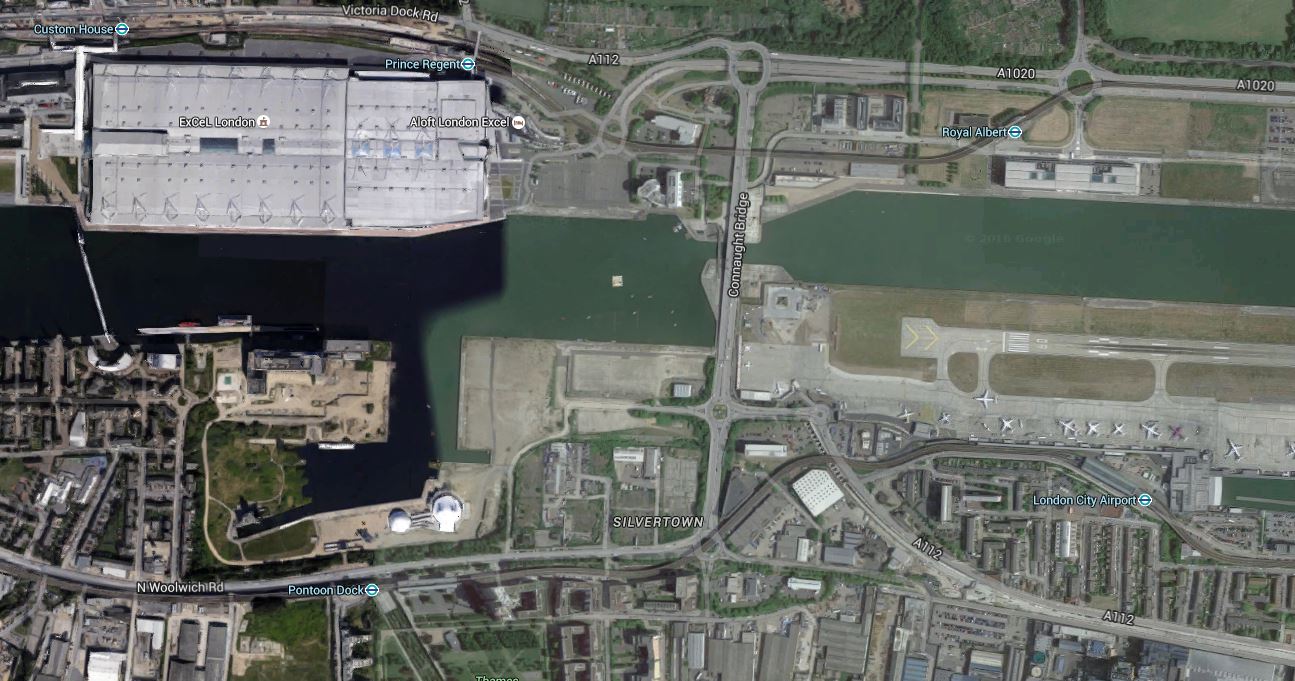
The Route Of The Connaught Tunnel
This second Google Map, shows the Southern entrance to the Tunnel in detail.
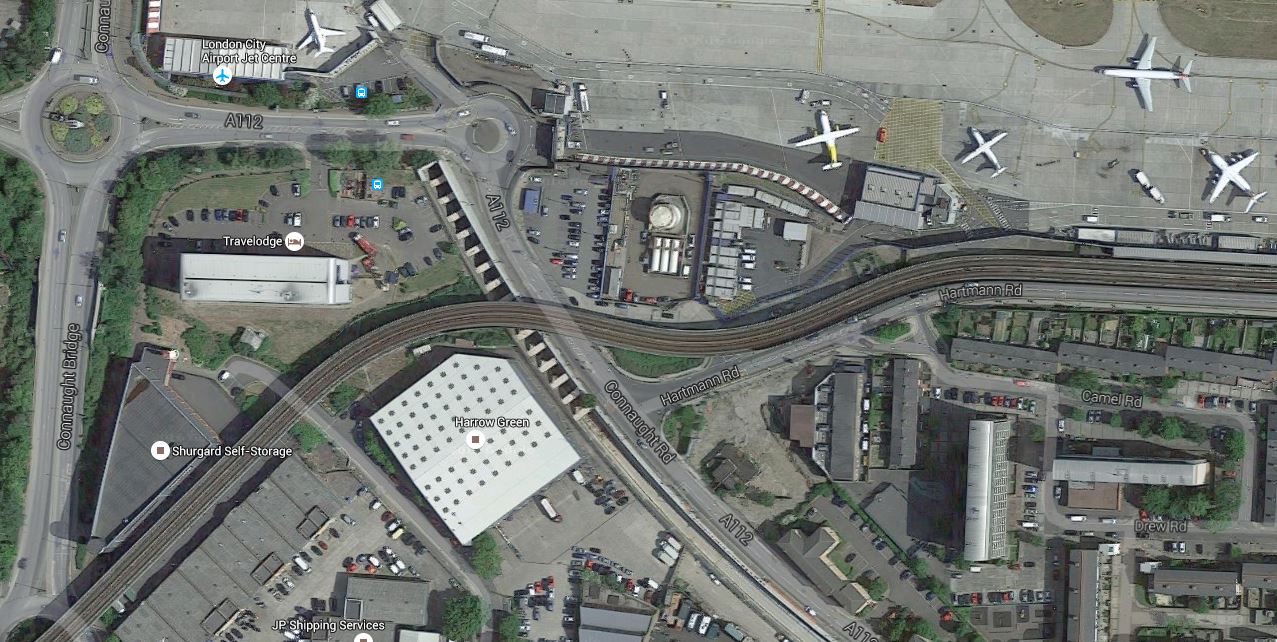
Silvertown Station Site
The proposed Silvertown station would be in this area. As to the precise location, I can’t find any information.
Woolwich
Woolwich station is to the east of Docklands on the South bank of the Thames.
It has been built solely to serve the new housing on the Royal Arsenal site and has very poor connectivity with other rail lines.
This is a Google Map of the area.
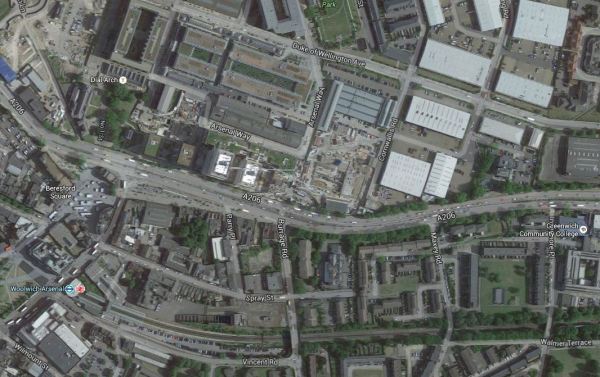
Woolwich Stations
Note Woolwich Arsenal station and the co-located DLR connection to the South West of the map.
Woolwich station is somewhere underneath the blocks to the North.
There is certainly a need to create a decent walking route in the area.
Conclusion
Looking at these stations, it strikes me that although connectivity between Crossrail and other lines is there, it is not of the best at some stations.
Scoring them out of ten, I would give scores as follows.
- Whitechapel – 10
- Canary Wharf – 4
- Custom House – 8
- Silvertown – 7
- Woolwich – 3
Obviously, when the line opens, good design may improve matters.
But I do feel that building Silvertown station would make the whole line a lot better.
New Trains On Thameslink
I had breakfast at Kings Cross and then hopped across the city on Thameslink to Blackfriars to go for a walk through the Tate Modern. I came back to Farringdon, as because the East London Line is closed, a bus from Moorgate is the best way to get home.
These were pictures I took of new trains on Thameslink.
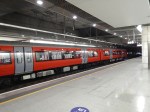
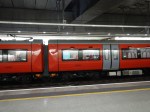
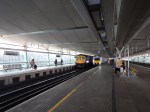
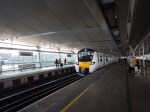
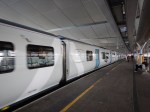
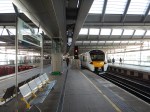
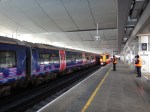
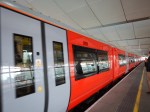

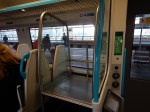
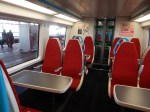
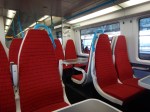
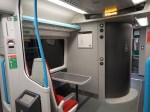
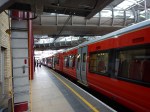
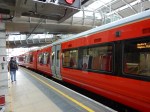

Note the following.
- The red trains with the grey doors are Class 387/2 trains destined for the Gatwick Express later this month.
- The interior shots were all taken in a Class 387/2 trains.
- The white train with the sloping front and the light blue doors, is a new Class 700 train, which will run on Thameslink.
The pictures were taken at St. Pancras International, Blackfriars and Farringdon.
The new Class 387/2 trains had a definite feel of the Class 387/1 trains about them, except they had sizeable luggage racks and possibly more tables.
There are better and more luxurious airport trains in the world, including probably the Class 332 trains of Heathrow Express. But as a train to speed you to the Airport in thirty minutes or so, with plenty of space for you and your luggage, they probably pass the first test by a good margin.
They would be very good on other Airport routes in the UK.
- Routes connecting Manchester Airport to Liverpool, Manchester, Crewe and Blackpool.
- A possible Gatwick Express route from Reading to Ashford International, which I think could happen, if an IPEMU variant were to be developed.
- To and from Airports like Cardiff, Stansted and Southend.
An IPEMU variant could be useful in developing spurs to airports like East Midlands, Luton and Glasgow, which would be built without wires from lines with full electrification. Bombardier has the technology, all they need is the orders.
Would this approach be an affordable way to create the much needed airport link at Glasgow Airport?
- A single-track spur leading from the Inverclyde Line to the Airport to a single platform station would probably have enough capacity for a two or three trains per hour service.
- No electrification would be needed, which would mean that there would be greater flexibility in the route of the line. It might even go in a single-track tunnel under taxiways.
- There would be some modification to the signalling.
- The trains would be bog standard Class 387/2 trains, except for the energy storage.
- Two trains would probably give a two trains per hour service to the airport, as Glasgow Central to Paisley \st. James takes around twenty minutes.
- The trains would just be more trains running between Glasgow and Paisley.
- It would be simpler than a tram-train and require no special rules or modified stations.
- I can’t think of any new regulatory issues, as it will be a train running on a railway.
- There would need to be some staff training.
The overall system would be no more complicated than running the demonstration Class 379 IPEMU on the Harwich branch, which seemed to work so well.
How much would it cost?
The creation of the new line to Ebbw Vale Town station and the single platform station is reported to have cost less than twelve million pounds.
According to this article in Railway Technology, Porterbrook have paid £100million for twenty Class 387 trains, so two trains would cost ten million.
I also think that provision of the track and trains in something like the Glasgow Airport Rail Link, is the sort of project that a company would provide and then lease to the train operator.
No wonder, that Bombardier have won an award for the technology and Porterbrook bought some Class 387 trains on spec.

