Blue Hydrogen Is Not Clean Energy, Says Mining Tycoon
The title of this post, is the same as that of this article on The Times.
This is the first paragraph.
Producing “blue hydrogen” from natural gas is not a clean energy source and is being wrongly promoted as one by the oil and gas industry, a billionaire mining mogul has claimed.
The mining mogul is Andrew Forrest, who is the second richest person in Australia.
I feel he is only partly right, as there are processes coming through that use a catalyst to split the hydrogen from the carbon.
But like the taxi in the picture at the top of the article with Mr. Forrest, his words are all good publicity.
Incidentally, I do believe that in a few years, we’ll have the technology to use so much carbon dioxide efficiently, that we may see gas-fired power stations used to create both energy and carbon dioxide.
Green Hydrogen Can Save Us. But Waiting For It Won’t.
I saw the title of this post on the side of a green bus.


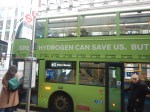

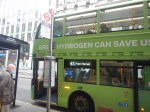



Route 43 goes between London Bridge station and Friern Barnet via Bank, Moorgate, Old Street (Silicon Roundabout) and The Angel.
So it goes right through the centre of the City of London.
Andrew Forrest is intending to get his message across to the City.
To find out more, you could always connect to the web site on the bus.
Andrew Forrest’s Fortescue Future Industries Inks Deal With Kingdom of Jordan For Green Hydrogen Study
The title of this post, is the same as that of this article on The West Australian.
I can’t read the contents without subscribing, but I assume the title says it all.
However, I have a few thoughts.
This Google Map shows the Kingdom of Jordan.
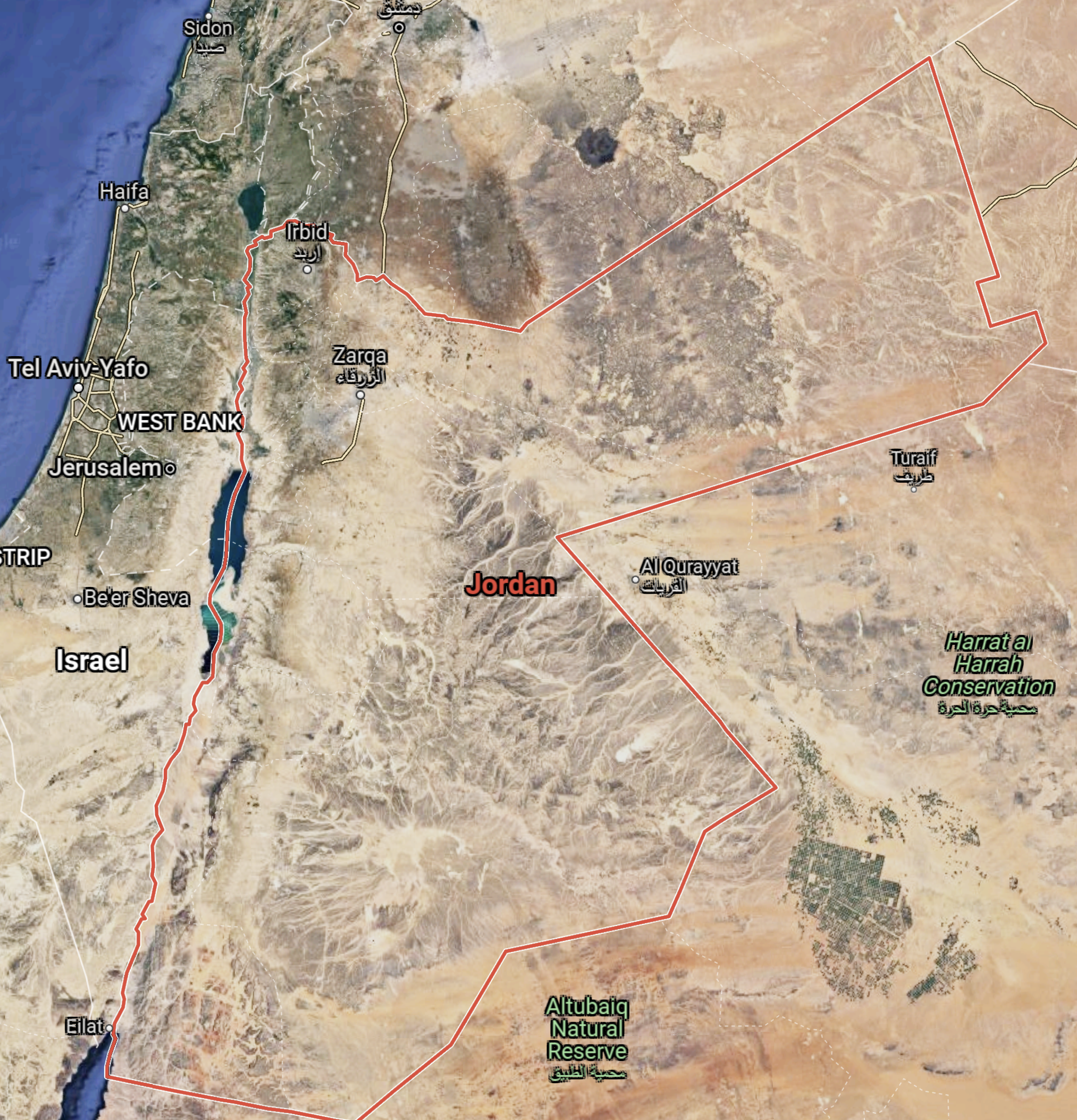
Jordan is outlined in red.
The map suggests how hydrogen could be produced.
- I would assume that there is plenty of sun in Jordan and there appears to be plenty of space for solar panels.
- What is the potential for wind energy in the desert?
- It would appear to me, that there are two routes to export the hydrogen. By pipeline across Israel to the Mediterranean Sea or by tanker from a port on the Red Sea, which just creeps onto the map in the South-West corner.
- Perhaps, a giant electrolyser and export terminal could be built near Aqaba, which is Jordan’s only seaport.
What I like about this plan, is that to the North-East and South-East of Jordan, lie the deserts of Iraq and Saudi Arabia. Could these in future be carpeted with solar panels, where the electricity is fed to Aqaba to create more green hydrogen?
Andrew Forrest is a busy man and seems to be organising a one man project to provide the world with green hydrogen.
- I wrote about his deal with Argentina in Australia’s FFI Plans $8.4 Billion Green Hydrogen Project In Argentina.
- I wrote about his deal with JCB in JCB Signs Green Hydrogen Deal Worth Billions.
He is the second richest Australian according to Wikipedia.
I wouldn’t be surprised to see some more hydrogen deals at COP26, where Andrew Forrest is involved.
Fortescue Future Industries Invests In Dutch Thin-Film Solar And H2 Firm HyET
I missed this article, when it was published, so I’m publishing it now!
The title of this post, is the same as that of this article on Renewables Now.
These two paragraphs outline the deal.
Australia’s Fortescue Future Industries (FFI) has taken a 60% stake in Dutch company High yield Energy Technologies (HyET) Group to assist in its ambition to supply 15 million tonnes of green hydrogen globally by 2030.
The green energy company of Fortescue Metals Group Ltd (ASX:FMG) has also provided the majority of financing for the expansion of the Dutch solar photovoltaic (PV) factory of HyET Solar.
Andrew Forrest certainly seems to be splashing the cash.
I first wrote about the hydrogen innovation of the HyET Group in December 2020 in New Device Separates Hydrogen From Natural Gas When The Two Gases Are Blended In Pipelines.
I finished that post, with this simple sentence.
This invention could change the world!
In the UK, there is a project called HyDeploy, which aims to blend twenty percent hydrogen into the UK’s natural gas.
- At this level, all boilers, appliances and processes would work without major changes.
- A significant amount of carbon emissions would be saved.
- Gas imports would be reduced.
Could HyET’s technology be used to piggyback a hydrogen delivery network alongside the UK’s gas network?
It might even be possible to attach hydrogen filling stations direct to the gas network.
 The Anonymous Widower