Effort To Contain Costs For Hoo Reopening
The title of this post, is the same as that of an article in the April 2022 Edition of Modern Railways.
This is the first paragraph.
Medway Council is working with Network Rail and other industry players in an effort to make restoration of a passenger service to Hoo on the Isle of Grain branch feasible. The Council was awarded £170 million from the Housing Infrastructure Fund in 2020 to support schemes to facilitate building of 12,000 new houses in the area, with £63 million of the HIF money for reinstatement of services on the Hoo Branch.
The article mentions, this new infrastructure.
- A new station South of the former Sharnal Street station.
- Works to level crossings, of which there are six between Gravesend station and proposed site of the new Hoo station.
- A passing place at Hoo Junction, where the branch joins the North Kent Line.
- A passing place at Cooling Street.
Note.
- The single-platform Bow Street station cost £8 million.
- The single-platform Soham station cost nearly £22 million, but it has a bridge.
- Reopening the Okehampton branch and refurbishing Okehampton station cost £40 million.
I think costs will be very tight.
Possible Train Services
This is said in the article about the train service on the branch.
While third rail electrification was originally proposed, this idea has been discarded in favour of self-powered trains on the branch, such as battery-operated trains. Possible destinations include Gravesend, Northfleet or Ebbsfleet for interchange with trains going to London, or extension of London to Dartford or Gravesend services over the branch, using hybrid third-rail/battery trains.
Consider.
- Merseyrail will be using battery-electric trains to provide services to the new Headbolt Lane station, as permission was not available for extending the existing third-rail track.
- Electrification would probably cost more than providing a charging system at Hoo station.
- Turning the trains at Gravesend, Northfleet or Ebbsfleet could be difficult and a new bay platform would probably break the budget.
- Both Dartford and Gravesend have two trains per hour (tph), that could be extended to the new Hoo station.
- Hoo junction to Hoo station is no more than five or six miles.
- There are also half-a-dozen level crossings on the route, which I doubt the anti-thord rail brigade would not want to be electrified.
- The Dartford services have a possible advantage in that they stop at Abbey Wood station for Crossrail.
- It may be easier to run services through Gravesend station, if the terminating service from Charing Cross were to be extended to Hoo station.
- A two tph service between London Charing Cross and Hoo stations, with intermediate stops at at least London Bridge, Lewisham, Abbey Wood and Dartford would probably be desirable.
I feel that the most affordable way to run trains to Hoo station will probably be to use battery-electric trains, which are extended from Gravesend.
It may even be possible to run trains to Hoo station without the need of a charging system at the station, which would further reduce the cost of infrastructure.
Possible Trains
Consider.
- According to Wikipedia, stopping Gravesend services are now run by Class 376, Class 465, Class 466 and Class 707 trains.
- Real Time Trains indicate that Gravesend services are run by pathed for 90 mph trains.
- Class 376, Class 465 and Class 466 trains are only 75 mph trains.
- Class 707 trains are 100 mph trains and only entered service in 2017.
I wonder, if Siemens designed these trains to be able to run on battery power, as several of their other trains can use batteries, as can their New Tube for London.
In Thoughts On The Power System For The New Tube for London, I said this.
This article on Rail Engineer is entitled London Underground Deep Tube Upgrade.
This is an extract.
More speculatively, there might be a means to independently power a train to the next station, possibly using the auxiliary battery, in the event of traction power loss.
Batteries in the New Tube for London would have other applications.
- Handling regenerative braking.
- Moving trains in sidings and depots with no electrification.
It should be born in mind, that battery capacity for a given weight of battery will increase before the first New Tube for London runs on the Piccadilly line around 2023.
A battery-electric train with a range of fifteen miles and regenerative braking to battery would probably be able to handle a return trip to Hoo station.
An Update In The July 2022 Edition Of Modern Railways
This is said on page 75.
More positive is the outlook for restoration of passenger services on the Hoo branch, where 12,000 new houses are proposed and Medway Council is looking to build a new station halfway down the branch to serve them. As the branch is unelectrified, one idea that has been looked at is a shuttle with a Vivarail battery train or similar, turning round at Gravesend or another station on the main line.
Steve White worries that this could mean spending a lot of money on infrastructure work and ending up with what would be a sub-optimal solution. ‘Do people really want to sit on a train for 10 minutes before having to get out and change onto another train? I don’t think so. Ideally what you want is through trains to London, by extending the Gravesend terminators to Hoo.’
That would require a battery/third rail hybrid unit, but Mr. White thinks that is far from an outlandish proposal; with Networker replacement on the horizon, a small bi-mode sub-fleet could dovetail neatly with a stock renewal programme. Medway Council and rail industry representatives are working on coming up with a solution for Hoo that could do what it does best; facilitating economic regeneration in a local area.
Note that Steve White is Managing Director of Southeastern.
I’ll go along with what he says!
Conclusion
I believe that a well-designed simple station and branch line could be possible within the budget.
A battery-electric upgrade to Class 707 trains could be a solution.
But the trains could be very similar to those needed for Uckfield and to extend electric services in Scotland.
Work Begins On Bristol’s First Railway Station Since 1927
The title of this post, is the same as that of this article on the BBC.
These are the first two paragraphs.
Construction work has begun on Bristol’s first new railway station in 95 years.
Portway Park & Ride will open in the Summer, linking Shirehampton with the Severn Beach railway line.
It is planned to open this Summer.
I first wrote about Portway Parkway station in DfT Names Five Winners Of Fresh £16m Stations Fund in 2017, when the stations names were as follows.
- Horden Peterlee in County Durham
- Warrington West in Cheshire
- Reading Green Park
- Bow Street in Ceredigion, Wales
- Portway Parkway near Bristol
Note.
- Portway Parkway is the last station to start construction.
- Reading Green Park station is still under construction and should open this year.
- Bow Street station opened in February 2021.
- Horden station opened in June 2020. I wrote about station after a visit, in Horden Station – 28th October 2020.
- Warrington West station opened in December 2019. I wrote about the station after a visit in January 2020, in The New Warrington West Station.
Given the pandemic, the construction hasn’t gone too badly.
The Welsh Find A Use For Japanese Knotweed
I had to laugh at a story, which is the secondary story in this article on Rail News, which is entitled New Station Opens Quietly – And Knotweed Is Useful At Last.
The main story is about the opening of Bow Street station to the North of Aberystwyth.
When the London Overground took over the Lea Valley Lines, I comforted a semi-distraught London Overground manager, who had just found that one station was totally overrun with this heinous invader. It was so bad, he couldn’t even check how bad it was!
But it does seem, that the Welsh have come up with a solution on the line of Make The Bugger Work.
This is the paragraph, which describes the solution.
Bow Street has also made use of a plant pest which had been growing in the area, because 5000 cubic metres of Japanese Knotweed was treated and re-used for fill at the site, saving 400 lorry loads which would otherwise have been taken to landfill.
It’s very innovation and totally appropropriate.
Station Reopening At Bow Street Brings First Trains For 56 Years
The title of this post, is the same as that of this article on the BBC.
Hopefully, I shall be able to visit this summer.
It must be around sixty years since I was last in that area. I can remember my father driving his MG Magnette (676 RME) on the beach at Borth, whilst we spent a few days at a B & B in Savage’s Garage in Aberystwyth.
DfT Names Five Winners Of Fresh £16m Stations Fund
The title of this post is the same as an article in Rail Technology Magazine.
It announces the five winners of funding from the Second New Stations Fund.
Stations chosen are as follows.
- Horden Peterlee in County Durham
- Warrington West in Cheshire
- Reading Green Park
- Bow Street in Ceredigion, Wales
- Portway Parkway near Bristol
Note the fund is for England and Wales only!
The stations will be described in the next few sections.
Horden Peterlee
Horden Peterlee station will be on the double-track Durham Coast Line, between Seaham and Hsrtlepool stations.
This Google Map shows the area of the proposed station close to South East View.
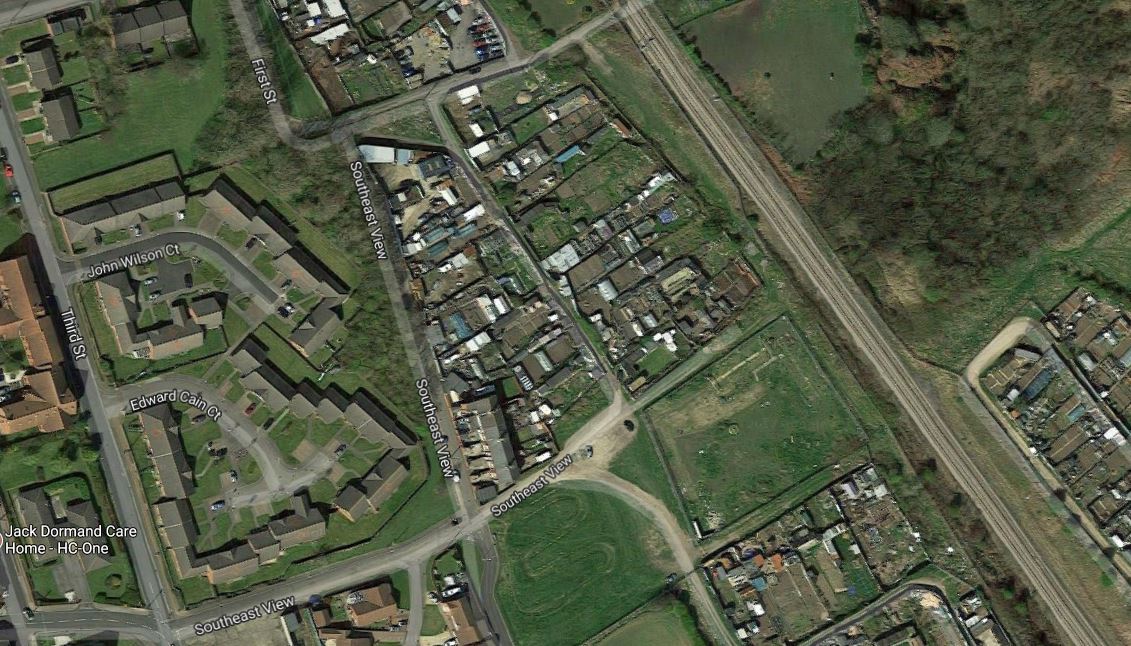
Wikipedia says this about the proposed station.
This station, if built, would have 2 platforms with waiting shelters, benches, lighting, help points and CCTV. The platforms would be linked by a covered footbridge and the station would have a car park with space for up to 100 cars as well as facilities for drop-off, taxis and bus services.
Let’s hope the lie of the land, enables the architects to design a good station.
Wikipedia also says this as the reason for building the station.
It was identified that one of the key benefits of reopening Horden station rather than any of the other closed stations on the line was its close proximity to Peterlee which has grown significantly since 1964 and thus, if constructed, a new station in Horden could allow 61,000 residents to benefit from improved access to employment opportunities across the region.
It sounds to me like this station is needed. I would hope to go when this station opens, as it could be a day to remember in Horden.
Train Services
Looking at Passenger Services in the Wikipedia entry for the Durham Coast Line, it would appear that local services between Middlesbrough and Newcastle are a bit thin, at just hourly. An important local route like this deserves to have at least two trains per hour.
Grand Central and Virgin do run trains through the area to Sunderland, but I don’t think they will stop at Horden Peterlee station.
Certainly, a smart new station deserves to have a train service to natch.
Warrington West
Warrington West station will be on the southern Liverpool to Manchester Line between Sankey and Warrington Central stations.
This Google Map shows the area of the station.
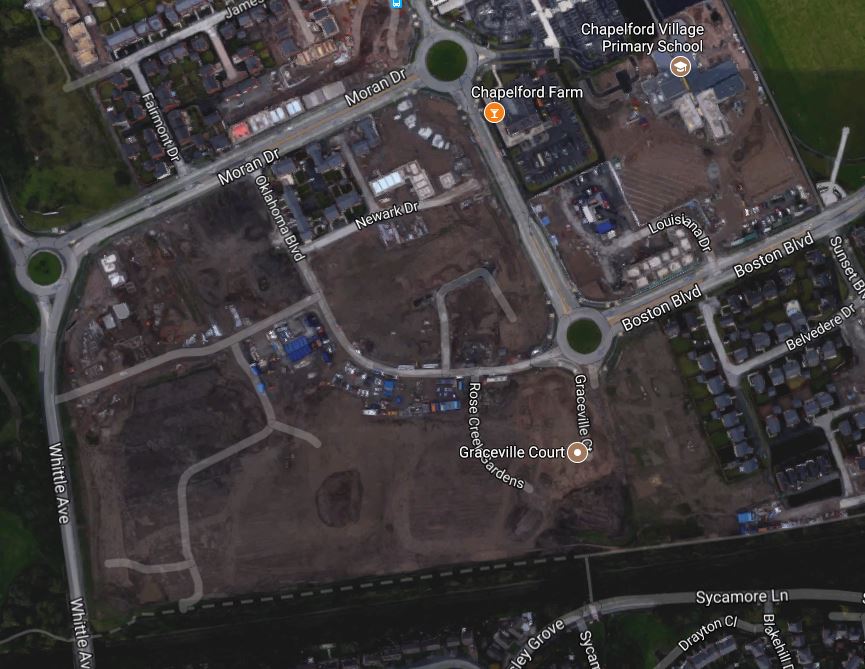
It looks like the development site in the South East corner of the map could be Chapelford urban village, with the railway running East-West across the map.
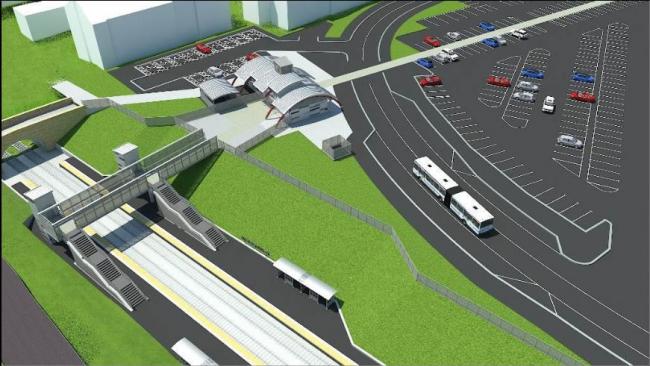
This article in the Warrington Guardian gives more details of the station.
This is a visualisation of the station.
As this station is halfway between Liverpool and Manchester, I have a feeling, this could be a very busy station.
Train Services
Services at Warrington Central station has as many as eight trains per hour passing through.
There is a lot of scope to provide a quality southern service between Liverpool and Manchester calling at Liverpool South Parkway, Widnes and Warrington Central. Warrington West station could be a part of this and I could see it getting between two and four semi fast trains per hour
Reading Green Park
Reading Green Park station will be on the Reading to Basingstoke Line between Reading West and Mortimer stations.
This Google Map shows the area.
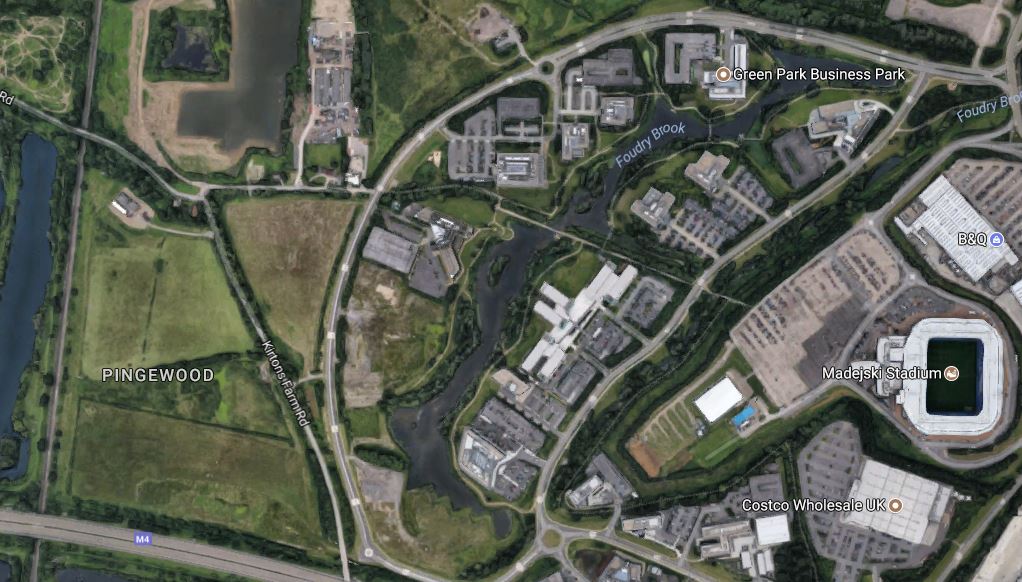
Note the Reading to Basingstoke Line down the Western edge of the map.
Train Services
It is expected that services will be at least two trains per hour at the station.
The Reading to Basingstoke Line has the following characteristics.
- It is electrified with 25 KVAC overhead at the Reading end.
- It is electrified with 750 VDC third rail at the Basingstoke end.
- It has less than fifteen miles of line without electrification,
Consequently, I feel that in a few years, this line will be within the capability of a battery powered train, charging on the short lengths of electrification at either end.
Bow Street
Bow Street station will be on the Cambrian Line between Aberwrystwyth and Borth stations.
This article on the BBC gives more details.
Train Services
The Cambrian Line has approximately pne train per hour between Aberwrystwyth and Shrewsbury.
Portway Parkway
Portway Parkway station will be a one platform station on the Severn Beach Line adoining the Portway Park-and-Ride.
Train Services
Wikipedia describes the Services on the line.
Costs Summary
This article from Railway Gazette International has a detailed summary of the costs of the five stations.
Horden Peterlee, Warrington West and Reading Green Park are medium-sized schemes to support housing and business developents and make it easier to get to employment in nearby towns and cities. But they will cost an average of £15million a station.
Certainly, where I live in Dalston and all across North London, the improved North London Line has had several positive effects.
Bow Street and Portway Parkway are small one-platform schemes, which hopefully will provide better Park-and-Ride facilities. The averae cost is a lot less at £4.5million.
Conclusion
It is well-proven that new stations are a way of increasing train usage and they are generally welcomed by train companies, passengers, residents and businesses.
But as the costs for these stations show, medium-sized full-function stations don’t come cheap.
Surely, though on the right housing or business development, designing a station into the development, as at Warrington West or Reading Green Park, must give a payback to the developer in easier sales and rentals.
The two simpler schemes would seem to be part of a trend, where well-designed one-platform stations are built for Park-and-Ride facilities, hospitals, housing developments and sporting venues.
I discuss these stations in The Rise Of One-Platform Stations.
Bow Street and Portway Parkway stations will add two more one-platform stations.
 The Anonymous Widower