How Would Opening Crossrail Affect The Covids In London?
There seems to be very little on the Internet about this, that I can find, Partly because if you search for Crossrail and Covid-19 you get lots of articles about how the virus is delaying construction.
These are a few of my thoughts.
The Class 345 Trains
Crossrail’s Class 345 trains are 205 metres long and can hold 1500 passengers.
- The passenger density is 7.3 passengers per metre, but the trains have three doors per car, as opposed to others like the Class 700 trains, which have a similar passenger density and only two doors.
- Would the space and the wide doors, make social-distancing easier at all times?
- I’ve ridden these trains several times during the pandemic and their full air-conditioning for the tunnels, would surely be ideal to help keep the trains free of the virus, by changing the air regularly.
- The trains are walk-through, which means you can walk-away from someone who looks dodgy.
There will probably be some better trains to reduce the spreading of the virus, but I doubt there will be that many.
The Stations
I’ve only been in two Crossrail stations.
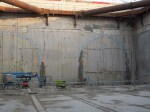
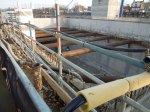
These are pictures taken in the Woolwich station box.






And these pictures were taken inside the Canary Wharf station box
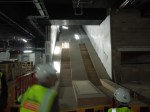
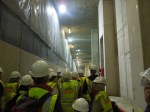


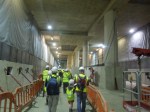


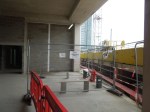
Note.
- I think we can assume that the platforms and associated station tunnels are not small.
- All underground platforms will have platform edge doors.
- The stations will be fully air-conditioned.
- Both picture sets were taken in 2013.
Will passengers be safer and less likely to contract the virus compared to the cramped stations of the Central Line?
Crossrail Will Increase Capacity On London’s Rail System
Crossrail will add nearly twenty per cent of extra capacity to London’s East-West rail network.
That will have two major effects.
- More passengers will use rail transport, rather, than buses or their own cars.
- There will be more space, that will make social-distancing easier on rail journeys.
I can’t see either increasing the spread of the covids.
Will Passengers Who Can, Swap To Crossrail From Other Lines?
Consider.
- The Central Line will have interchanges with Crossrail at Stratford, Tottenham Court Road, Bond Street and Ealing Broadway.
- Stratford and Ealing Broadway currently takes 52 minutes on the Central Line and will take 27 minutes on Crossrail.
- The Hammersmith and City Line will have interchanges with Crossrail at Whitechapel, Liverpool Street and Paddington.
- Whitechapel and Paddington currently takes 40 minutes on the Hammersmith and City Line and will take 13 minutes on Crossrail.
- The Jubilee Line will have interchanges with Crossrail at Canary Wharf, Stratford and Bond Street.
- Stratford and Ealing Broadway currently takes 32 minutes on the Jubilee Line and will take 15 minutes on Crossrail.
Looking at speed alone, there will be good reasons to change to Crossrail for many.
But there will also be journeys that currently require a change will be direct because of Crossrail.
- Slough and Liverpool Street or Canary Wharf
- Woolwich and Heathrow
- Gidea Park and Paddington,
And there will be round-the corner journeys with a cross-platform interchange at Whitechapel.
Ilford and Canary Wharf currently takes 33 minutes and will take 17 minutes after Crossrail opens.
I am absolutely sure, that after Crossrail opens, passengers will use the route for a faster journey and one because of more spacious trains and stations, a more socially-distanced one.
An Air-Conditioned Journey
The proportion of time on a typical journey in London, spent in an air-conditioned train or station will increase.
This can only be a good thing for fighting the covids.
Conclusion
It looks to my eye, that Crossrail will not increase the spread of the covids and it could be a powerful weapon to reduce the levels of the virus across London.
I think it should be opened as soon as possible.
Could Crossrail Be Opened In Sections?
Unlike some of London’s Underground lines, which were provided with below-ground turnbacks, there appears to be no turnback on Crossrail between Whitechapel and Paddington.
Compare that with the Piccadilly Line, which has turnbacks at Wood Green and Hyde Park Corner, which are near the end of the central tunnel.
Crossrail does have crossovers at Custom House, Whitechapel and between Farringdon and Tottenham Court Road, so could any of these be used to improvise a turnback.
What effects would there be if say a four trains per hour (tph) preview service were to be run between Abbey Wood and Whitechapel?
- It would allow Crossrail to test systems.
- It would improve connections to Canary Wharf.
- It would give Londoners and others a small cup of much-needed cheer.
I also doubt, it would increase the number of cases of the covids in London, if everybody behaved themselves.
It would need Abbey Wood, Woolwich, Custom House, Canary Wharf and Whitechapel stations to be certified safe to open.
- Abbey Wood station is already open for National Rail services and could surely be easy to finish and certify.
- Woolwich, Custom House and Canary Wharf are more or less independent buildings and again should be easy to open.
- Only Whitechapel looks difficult with a lot of work to do.
Perhaps the preview service should terminate at Custom House? But that doesn’t include the important Canary Wharf!
- Could trains just pass through Whitechapel station and still use the turnback? The platform edge doors would ensure safety.
- Could trains even use an improvised turnback on the Western side of Farringdon, where there is a crossover?
- As stations at Liverpool Street and Farringdon became available, they could be added to the route.
I’m sure that there’s a solution in there, that could allow Crossrail to open gradually, rather than as a big bang.
I hope Crossrail are looking at it, as the design and architecture of this railway could be a weapon in the fight against covids.
How Will Crossrail Affect The Docklands Light Railway?
When Crossrail opens, there will be a simple step-free walking link between Canary Wharf station and and Poplar DLR station.
As Poplar is the station on the DLR, where the North-South and the East-West routes cross, this is one of the better connectivity features of Crossrail.
Poplar serves a junction in four directions:
- Eastbound towards Beckton and Woolwich Arsenal.
- Northbound towards Stratford and Stratford International.
- Southbound towards the Isle of Dogs, Greenwich and Lewisham.
- Westbound towards Bank and Tower Gateway.
At present to get to Greenwich and Lewisham, you need to change at Canary Wharf DLR station, but as there is a reasonable walking route between Canary Wharf station and Canary Wharf DLR station, passengers for Lewisham could use that route.
As Crossrail will also have a reasonable link to the DLR at both Stratford and Woolwich, I wonder if we’ll see some reorganisation of services on the North-South DLR route between Lewishan and Stratford International.
Will some services go all the way between Lewisham and Stratford International?
Obviously, this will be determined by the routes travellers take after Crossrail opens.
There will also be affects due to the Law of Unexpected Consequences.
I am fairly sure, that Crossrail trains on the two Eastern branches will interface well at Whitechapel station, so passengers going between a station on the Abbey Wood branch to one on the Shenfield branch may prefer to go via Whitechapel, as it will be a simple cross-platform interchange.
How will this affect passenger numbers on the Jubilee Line and the DLR?
I suspect that passengers will use the route that is best for them and this can only mean spare capacity on the two historic routes.
As Crossrail will also be a bypass for the Central Line with connections between the two lines at Stratford, Liverpool Street, Tottenham Court Road, Bond Street and Ealing Broadway, the Greater East London area will be a big beneficiary from Crossrail.
We’ll have to wait and see how passenger numbers work out, but I think that the North-South route of the DLR could be blessed with spare capacity because of Crossrail, so there may be scope to extend the route past Stratford International and Lewisham.
Two possible extensions from Lewisham are detailed on Wikipedia.
But there is nothing past Stratford International. The DLR Horizon 2020 Study, does propose an extension up the Lea Valley to Tottenham Hale. This is the report’s summary of this route.
A DLR extension to Tottenham Hale via the Lea Valley was tested extending all services (15tph) onwards from Stratford International. The route would run alongside the Lea Valley rail route. The DLR extension is seen as serving intermediate markets (heavy rail would only stop at Tottenham Hale and Stratford) and would serve the Olympic site(s) and the Olympic legacy with additional stops at Lea Bridge and Walthamstow Marshes. Potential drawbacks are largely environmental, covering concerns over Hackney Marshes and the Lea Valley reservoirs.
I talked about it in a sub-section of The High Meads Loop At Stratford. This is a summary of what I said.
Extension of the DLR to Tottenham Hale was mooted a few years ago and a document called DLR Horizon 2020 talked about extending the system from Stratford International up alongside the Lea Valley Lines to Tottenham Hale station
It may be a worthy idea, but does it really make economic sense, when according to what you believe a lot of things may be happening in the area.
- A new Lea Bridge station has been created.
- A new Hall Farm Curve will happen.
- A rebuilt Hackney Wick station is being constructed.
- Crossrail 2 is being promoted and will serve Tottenham Hale and to the North.
- Transport for London have taken over the Lea Valley Lines.
- There will be a a major upgrade in the Tottenham Hale area, which is described in this document on the Haringey Council web site.
- Four-tracking will happen through Tottenham Hale station.
When the heavy rail expansion is sorted and the area between Tottenham and Walthamstow is developed as housing and a very large wetland and leisure area, the case for a Lea Valley Light Railway may be stronger and in need of reassessment.
What happens to the North-South route will be driven by the consequences of Crossrail and the massive need for housing in London and the transport links to serve it.
The Mayor’s Plan For A Gallions Reach Extension
The latest plan is to extend the DLR from Gallions Reach station across the Thames to Thamesmead and Abbey Wood.
I wrote about this plan in The Mayor’s Plans For East London River Crossings.
I shall repeat what I said, as I think this is a plan with legs.
A BBC article says this about this proposal.
A DLR crossing at Gallions Reach, helping support the development of around 17,000 new homes across Newham and the Royal Borough of Greenwich
It is different to the original proposal of a Docklands Light Railway extension to Dagenham Dock, which stayed on the North bank of the Thames.
This map shows the area of London from Gallions Reach to Abbey Wood.
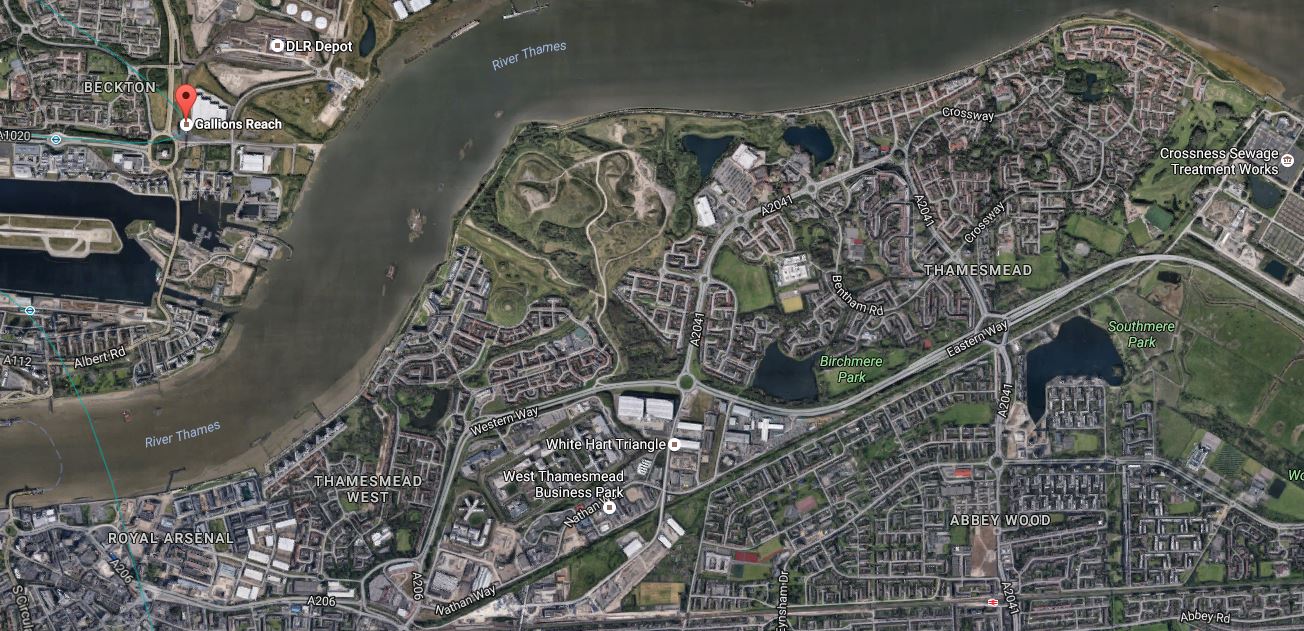
Gallions Reach To Abbey Wood
Note.
- Gallions Reach DLR station is marked with the red arrow.
- Just to the North of Gallions Reach station is the main DLR depot, which would probably be an excellent site to start a tunnel.
- The tunnel would probably emerge on the South bank of the Thames to the West of Thamesmead.
- It could then weave its way along the side of the main road.
- The North Kent Line with Abbey Wood and Belvedere stations runs along the bottom of the map.
- Crossrail could be extended to Gravesend.
- Crossrail should also be extended Ebbsfleet International for European rail services.
If the DLR extension went from Gallions Reach DLR station to Abbey Wood station it will be a loop on Crossrail serving a lot of areas ripe for quality housing and commercial development.
It certainly looks a feasible area to think about taking the DLR.
I also think if more destinations are created in the East, then this will need other developments.
- More capacity in the new trains, that are being ordered.
- Extra destinations in the West
- Expansion of the North-South route t balance the network.
The North and South extensions were covered earlier.
Extension To The West
I have written about this in Extending The Docklands Light Railway West From Bank Station.
Conclusion
The Docklands Light Railway must be one of the best stop-gap transport projects ever created.
Crossrail’s effects on the DLR will be more about providing opportunities, than creating problems.
We also shouldn’t underestimate the role of the DLR in bringing passengers to Crossrail.
London Gets A New Garden
The British on the whole love their gardens and London’s new garden over Crossrail Place, the shopping centre on top of the Canary Wharf Crossrail station has now opened under its plastic roof.





































It will be interesting to see how this station-cum-shopping centre develops. The cinema opens soon and there’s a floor and a half of shops at least to open before the station opens towards the end of the decade.
Canary Wharf Station – 22nd March 2015
It’s only a couple of months before the Shopping Centre above Canary Wharf Crossrail station opens.




It looks like it will make it!
Crossrail As A Tourist Attraction
Today, I took the Docklands Light Railway to Custom House station to see progress and then came back to see the works at Canary Wharf station.

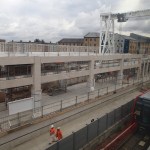
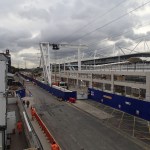
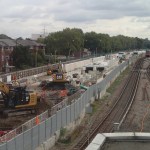

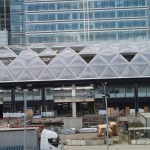
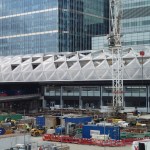

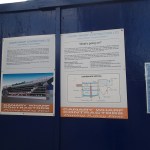

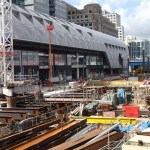
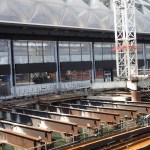
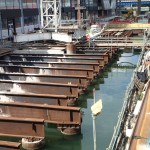


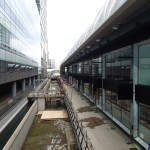
In one of the pictures of Custom House station, you can just see the portals for the Conaught Tunnel. This was a particularly challenging rebuild of an old Victorian tunnel, which was one of the subjects covered in the BBC documentary; Fifteen Billion Pound Railway.
One thing I was trying to see, was one of the trees they are planting in the gardens on top of the station, that are mentioned in this article in the Wharf.
There seemed to be others looking around and now that you can walk from Poplar DLR station over the bridge at Bank Street, there are better opportunities for looking at the sites.
Adam’s Place
Appropriately, this is one of the first places created and opened by Crossrail.
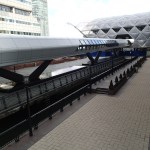
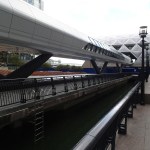
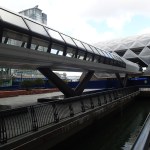
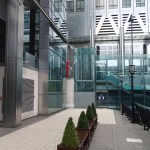
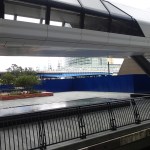

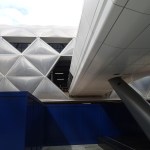


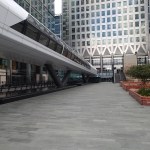
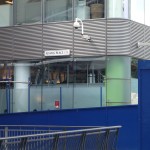


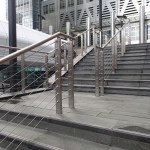

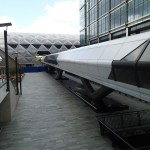
I didn’t realise it was open until today.
But it will be a superb place to meet, if you’ve come to Canary Wharf on Crossrail.
Could St. Pancras Thameslink Station Have Had An Island Platform?
St. Pancras Thameslink station is in a big box under the western side of St. Pancras station.
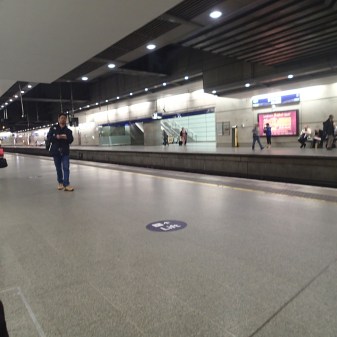
St. Pancras Thameslink Station
The picture shows the inside of the station with the two tracks running between wide platforms and the access by escalators at the side of the platforms. The escalators are joined by a bridge which has further escalators to the main station concourse.
Although step free it is not the nicest of interchanges.
Consider.
- Arriving Eurostar passengers must walk a hundred metres or so, then descend two escalators or lifts to get to a Thameslink platform.
- Departing Eurostar passengers at least have a shorter walk after they ascend to the concourse.
- Does the very independent Tante Dominique from Lille know whether she needs to go North or South on Thameslink to get to her nephew’s station of Sutton? This will get worse when the full Thameslink opens in 2018, as it will serve another 100 stations.
- Linking to the South Eastern High Speed and East Midlands services, involves a further ascent from or descent to the main concourse.
- To get to Kings Cross or the Underground, you have to walk across in one of two subways, which have steps and escalators at the St. Pancras end.
- The subteranean link from the Victoria Line to Thameslink must be the longest in London.
As the rebuilding of St. Pancras was only started a few years ago, it is a tragic case of old outdated thinking, getting in the way of modern design rules.
If you look at the design of the Crossrail station at Canary Wharf, you’ll see that the two rail lines are separated by a large island platform with escalators in the centre of that platform.
One picture in the link is a cross section of the station, which clearly shows the train lines and the stack of escalator connected floors above.
It would seem to me that St. Pancras Thameslink could have been created as a long island platform, with one set of escalators at the current location leading directly to the concourse.
The station would of course need to have platform edge doors, but London has had these for years on the Jubilee Line. As from 2018, Thameslink will be a totally Class 700 railway, the fitting of the doors could surely have waited until after the new trains had arrived. Remember that there are many busy stations in London, that work well without platform edge doors.
The central island layout gives several advantages.
- Several sets of escalators could be installed, as they will be at for instance at Canary Wharf. One could be at the Euston Road end and could speed passengers to and from that road, buses and the Metropolitan Line. Another could be in the centre to link directly to Eurostar and others might link across to the subways to Kings Cross.
- Passengers changing direction would just walk across the platform.
- It would be possible to add coffee stalls, toilets and other customer facilities as needs demanded.
- The biggest advantage would probably be the improvement in the passenger environment, by separating passengers and trains. So a rather draughty unwelcoming station would have been light and airy and much more customer-friendly.
In my view a wonderful opportunity has been missed to create the best station in the world.
All we’ve got is a second rate interchange, that means a lot of up and down, and walking down endless subterranean passageways.
St. Pancras is very much a fur coat and no knickers station!
Show on top and draughty and lacking at the bottom!
Canary Wharf Crossrail Station From The Other End
I’ve taken a lot of pictures of Canary Wharf Crossrail station, but never from the eastern end.
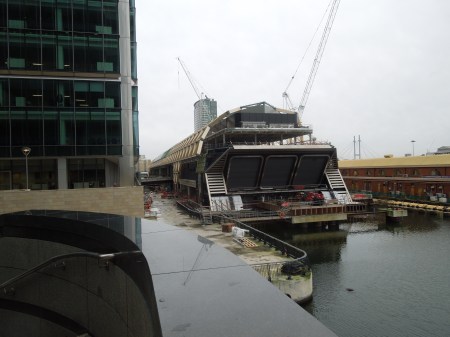
Canary Wharf Crossrail Station From The Other End
It must be the only railway station in the world, that looks like a gigantic floating ocean liner, built mainly out of concrete.
The Roof Goes On Canary Wharf Crossrail Station
If Canary Wharf Crossrail station is the taster for the standard of the stations on the new line, then we’re in for a treat.

The Roof Goes On Canary Wharf Crossrail Station
Some of our best Victorian architecture was reserved for stations, like Paddington, Kings Cross and St. Pancras. Are we repeating this in the twenty-first century?
Inside Canary Wharf Crossrail Station
This was one of the must-see events in Open House.



The areas we saw were the bottom levels of Canary Wharf station where trains and passengers go. On the top of these floors is a large retail mall.
This is the future, where stations are more than just means to access the trains. The new Birmingham New Street station has another large retail mall on top and the new Crossrail station at Woolwich, is underneath masses of flats, as is my local station of Dalston Junction. Land is expensive, but digging down or building in the sky only increases its value and hopefully gives benefits to all of us.
 The Anonymous Widower