East Midlands Railway’s New Look
The title of this post, is the same as a short article in Issue 882 of Rail Magazine.
What is interesting, is that it shows a visualisation of a Class 360 train in the new livery.
In Abellio East Midlands Railway’s Plans For London And Corby, I came to this conclusion.
I wouldn’t be surprised, if East Midlands Railway brought in Class 379 or Class 360 trains as a stop-gap and replaced them with electric versions of the bi-modes in 2022.
The best solution would be to obtain three twelve-car all-electric versions of the bi-modes by December 2020, to run the initial service.
Hitachi has a 125 mph electric Class 801 train and a 125 mph bi-mode Class 802 train.
Stadler has a 125 mph electric version of Greater Anglia’s Class 745 train and I suspect a compatible 125 mph bi-mode train.
Bombardier are working on a 125 mph bi-mode Aventra and have been quoted as saying Aventras can be stretched to 125 mph.It will be interesting to see what trains East Midlands Railway chooses.
By showing, a Class 360 train in their new livery, are they attempting to do one or all of the following.
- Get better terms for the nine interim trains they may need.
- Get better terms and earlier delivery for enough new twelve-car electric trains to run a 125 mph service between London and Corby.
- Trying to get better terms with the leasing companies to take back Class 379 and Class 360 trains, currently at Greater Anglia.
The Dutch can be tough negotiators.
Abellio East Midlands Railway’s Plans For London And Corby
This page on the Department for Transport web site is an interactive map of the Abellio’s promises for East Midlands Railway.
These are mentioned for Midland Main Line services to Corby.
Dedicated Corby – St Pancras Express Service Will Be Introduced From December 2020 With 12-car Trains In The Peaks
In 2020, the route between London and Corby will have been improved.
- It will be fully electrified.
- There will be double-track between Kettering and Corby.
- Corby station will have a second platform.
- 125 mph running will be possible in sections of the route between London and Corby.
- Twelve-car trains indicate, that the rolling stock would be modern electric multiple units.
Possible trains include.
- Class 387 trains, which are capable of 110 mph.
- Class 379 trains, which are capable of 100 mph.
- Class 350 trains, which are capable of 110 mph.
- In Issue 877 of Rail Magazine, it is rumoured that Greater Anglia’s Class 360/1 trains will be used, which are capable of 100 mph.
There must also be the possibility, for a train manufacturer to deliver enough new trains to run the London and Corby service.
To run the current hourly service, three trains are needed, so if each train was three four-car electric multiple units, nine trains would be needed.
As these electric trains will need to mix it with the 125 mph trains on the fast lines between St. Pancras and Kettering, 110 mph trains would probably be preferable.
Class 387 trains were originally mooted for this route, but they all seem to have been snapped up by other operators, who may be reluctant to let them go.
On the other hand, as I wrote in When Crossrail Opens To Reading, Will Great Western Railway Have Too Many Class 387 Trains?, Great Western Railway may have a few trains going spare.
The three other possible trains are both used in Abellio-run franchises.
- ,Abellio Greater Anglia are replacing their thirty Class 379 trains with new Stadler Class 745/1 trains in 2019.
- Abellio Greater Anglia are replacing their twenty-one Class 360 trains with new Bombardier Class 720 trains in 2020.
- West Midlands Trains have a large fleet of Class 350 trains.
Greater Anglia’s plans currently give the order of the new Stadler fleet introduction as.
- Four-car Class 755/4 trains
- Twelve-car Class 745/0 trains for London and Norwich services
- Three-car Class 755/3 trains
- Twelve-car Class 745/1 trains for London and Stansted services
All trains are to be introduced by the end of 2020.
The Bombardier Class 720 trains are also planned to be introduced by the same date, starting this Autumn.
Could this mean that it is likely that nine Class 379 or Class 360 trains could be available before the end of 2019?
If Class 379 or Class 360 trains are used to Corby, it would allow a very relaxed train introduction.
There could be at least a year, to turn the trains into perfect trains for a high-capacity London and Corby service.
I think using Class 387 and Class 350 trains wouldn’t be so simple.
As the Class 745/1 trains for London and Stansted could be the last to be delivered, which might delay the release of the Class 379 trains, could this explain the rumours for using the Class 360 trains, between London and Corby.
There is also an interesting possibility.
Suppose, Abellio decided to order 125 mph trains from Stadler identical to the Class 745/0 trains between London and Norwich on the route between London and Corby.
- Stadler probably knows how to upgrade the trains to 125 mph, as there are electric Flirts in Norway with this performance.
- Greater Anglia have invested heavily in driver simulators and training aids for their Stadler trains.
- By the end of 2019, they will be running Class 745/0 trains between London and Norwich.
With different colours and a few route-specific details, the London and Norwich Class 745/0 trains, would surely be more than acceptable for London and Corby.
Stadler would surely be able to build the extra trains before the Stansted trains. This would mean that the unwanted Class 379 trains would have to soldier on to Stansted for a few more months.
125 mph Class 745 trains would be a magnificent upgrade to the London and Corby service.
Corby – London Service Doubled To Two Trains Per Hour All Day
This would mean the need would be eighteen four-car trains. or six twelve-car trains.
There are enough Class 379 and Class 360 trains, but obtaining the originally-planned Class 387 trains could be problematic.
Building the three extra new trains would not be a problem.
Kettering, Luton And Luton Airport Parkway Services Provided With 2 Trains Per Hour for Most Of The Day
Note.
- Luton station is on the latest list of stations to be made step-free by 2024.
- Luton Airport has been agitating for more fast trains to and from London and now gets a half-hourly express.
- Luton Airport Parkway station will have the Luton DART connection to the Airport in 2021.
- Class 379 trains are designed for airport services.
It appears to be a better service for passengers.
Enhanced Sunday Service Throughout The Route With Regular Direct Sunday Services Between London And Corby
No passenger complaints here.
Refurbished Modern Express Trains From December 2020
Features include.
- Increased capacity
- More reliable service
- Improved comfort
- Passenger information system
- Free on-board Wi-Fi
- At-seat power sockets
- USB points
- Air conditioning
- Tables at all seats
- Increased luggage space
- On-board cycle storage
What more could passengers want?
Many of these features are already installed in the Class 379 trains and would be no problem.
- When I rode the BEMU Trial train between Maningtree and Harwich, the information on the Class 379 train was word perfect.
- The trains are reliable and comfortable.
- Wi-fii, power sockets, air-conditioning and increased luggage space are already fitted.
- The trains have lots of tables, but not at every seat.
These are a selection of pictures of the interior of a Class 379 train.
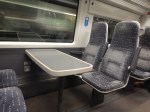
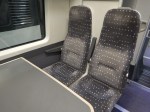
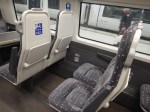
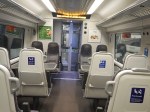
Updating the interior of the trains would not be a major problem.
Class 360 Trains Would Need A Substantial Refurbish
If Class 360 trains were to be used to Corby, they would need a substantial refurbish, but the general feeling is that this would be possible and there is a year to do it.
iNew-Build Class 745 Trains
With a small fleet of new-build Class 745 trains, the customer would get what they want! – Tables, 2+2 seating, wi-fi sockets etc.
The Greater Anglia London and Norwich specification would be a good starting point.
Will The Class 379 Trains Be Fitted With Batteries?
The BEMU Trial in 2015, showed that this was feasible. Abellio was involved in this trial and must have their own views on the technology.
- Depots are safer places.
- Electrification can be simpler.
- Regenerative braking can be handled on the train without using the overhead wires for return currents.
- Batteries increase train efficiencies.
This picture shows, the wires are going up at Corby.
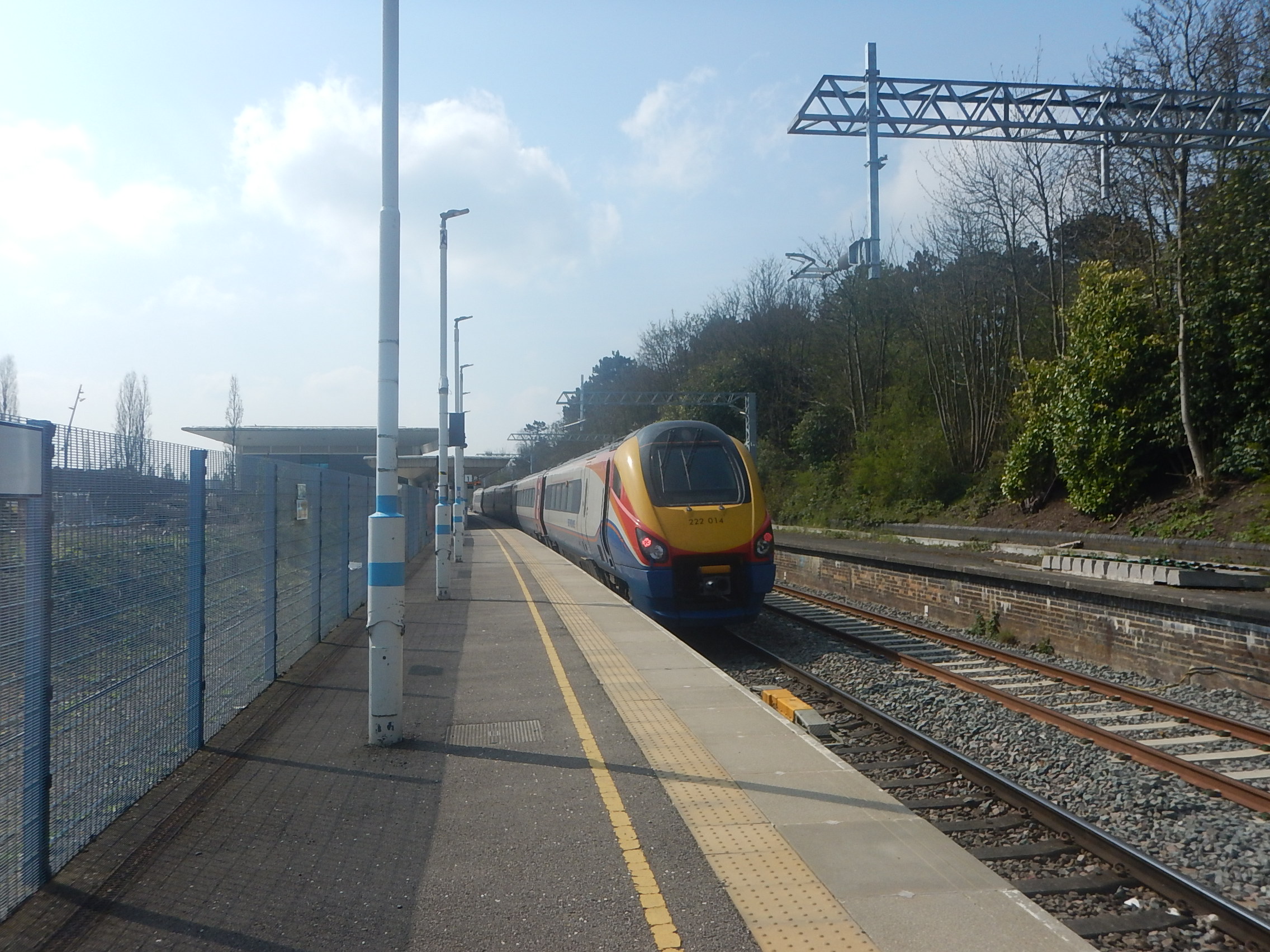
So it doesn’t look like battery power will be used to Corby.
But batteries could still be fitted for efficiency and safety reasons or possibly to power the trains to Oakham and Melton Mowbray.
What About The Rumour Suggesting Class 360 Trains Will Be Used?
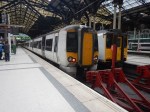
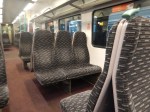
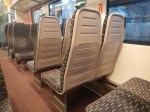
These are some pictures of a Class 360 train.


Consider.
- The Class 360 trains have a 2+3 interior with few if any tables.
- If Bombardier deliver the Class 720 trains, later than planned, availability of the Class 360 trains for Corby could be tight.
- Could they be prated to 110 mph trains, if that was felt necessary?
I feel that there would be a lot more work to prepare the trains for Corby and a higher chance, they would be late!
I think except as a stop-gap, it is unliklely that Class 360 trains will be used between London and Corby.
Will The Trains Be Replaced In A Few Years?
Consider.
- The London and Corby route is 79.5 miles long and takes 75 minutes with four stops, which is an average speed of 64 mph.
- At present, services between London and Corby are run using 125 mph Class 222 trains.
- The Class 222 trains have better acceleration than an InterCity 125 and much better acceleration than a Class 360 train.
- The London to Corby route is a less-than-125 mph route.
- Network Rail ia currently improving the electrification between London and Bedford, so that the route between London and Corby will be an electrified 125 mph route.
- None of the trains being considered for the service between London and Corby is faster than 110 mph.
Does all this mean that Corby services might be slower after electrification?
- Will the 125 mph upgrade to the track and electrification ensure the electric trains are faster, even if they are 100 mph trains.
- Well-driven 100-110 mph trains might be as fast.
However, the Derby, Nottingham and Sheffield expresses might be slowed, just as they are by the 100 mph Thameslink trains.
In the article in Issue 877 of Rail Magazine, four manufacturers are suggested for the bi-mode trains that will be used between London and Derby, Nottingham and Sheffield from 2022.
- Bombardier
- Hitachi
- Stadler
- Talgo
Hitachi are the only manufacturer with 125 mph bi-mode trains on the UK Network.
They have a near-identical bi-mode Class 802 train and an all-electric Class 801 train.
- Both are capable of 125 mph running.
- Conversion between the two trains involves changing the number of engines.
- Drivers are probably trained to drive both types of train.
Ideally, on the Midland Main Line, electric trains could run to Corby, with bi-mode trains running to Derby, Nottingham and Sheffield.
So when the 125 mph bi-mode trains are delivered in 2022, would it be sensible to run their 125 mph electric cousins to Corby?
- South of Market Harborough, all East Midlands Railway trains would be 125 mph electric trains, running on 125 mph tracks.
- One tph between London and Corby would need three twelve-car trains.
- Two tph between London and Corby would need six twelve-car trains.
If that is the case, then whatever train is run to Corby from December 2020, is only a stop-gap for a couple of years, where only nine four-car trains would be needed.
Would it be more economic in the long term to place the order for the bi-mode trains, with a manufacturer, who can deliver three all-electric trains by December 2020?
I believe Stadler could do that!
Conclusion
I’m fairly certain, that services between London and Corby could be run by refurbished Class 379 trains.
As there is plenty of time before service introduction, this could be a very relaxed and painless introduction of new trains. Unlike some others recently.
There may even be time to upgrade the top speed of the trains, so they fit in better with East Midlands Railway’s 125 mph expresses.
I wouldn’t be surprised, if East Midlands Railway brought in Class 379 or Class 360 trains as a stop-gap and replaced them with electric versions of the bi-modes in 2022.
But the best solution would be to obtain three twelve-car all-electric versions of the bi-modes by December 2020, to run the initial service.
- Hitachi has a 125 mph electric Class 801 train and a 125 mph bi-mode Class 802 train.
- Stadler has a 125 mph electric version of Greater Anglia’s Class 745 train and I suspect a compatible 125 mph bi-mode train.
- Bombardier are working on a 125 mph bi-mode Aventra and have been quoted as saying Aventras can be stretched to 125 mph.
It will be interesting to see what trains East Midlands Railway chooses.
But I think Stadler Class 745 trains are a distinct possibility.
- Abellio will have experience of running these trains and training drivers and other staff.
- 125 mph trains could be almost identical to those on London and Norwich services.
- Stadler have built 125 mph electric Flirts for Norway.
By juggling production a bit, they could be delivered on time for a December 2020 start of services.
Comparing Greater Anglia’s Old And New Electric Multiple Units
Currently, Greater Anglia has the following electric multiple units, which will be replaces by new Class 720 trains.
- 68 x 4 car trains
- Length 79.32 metres.
- 100 mph operating speed.
- Acceleration of 0.55 metre per second²
- No regenerative braking
- Capacity – 260/290 seats.
- First Class section
Note the acceleration seems to be standard for all BR EMUs
- 104 x 4 car trains
- Length 79.8 metres.
- 100 mph operating speed.
- Acceleration of 0.55 metre per second²
- Regenerative braking can be fitted.
- Capacity – 309 seats.
- First Class section
Thirty trains are being upgraded to the Class 321 Renatus
- 21 x 4 car trains
- Length 81.36 metres.
- 100 mph operating speed.
- Acceleration of 0.98 metre per second²
- Regenerative braking.
- Capacity – 280 seats.
- First Class section
These are the specifications of the two lengths of new Class 720 trains.
Class 720 Train – Five Car
89 x 5-car trains
Length 122 metres
Capacity – 544 seats and 145 standing.
Class 720 Train – Ten Car
22 x 10-car trains
Length 243 metres
Capacity – 1145 seats and 290 standing.
All trains will have the following.
- 100 mph operating speed.
- Acceleration of 1 metre per second²
- Regenerative Braking (Using batteries?)
- No First Class section.
Also, these trains are modern trains will all the features passengers, staff and train operators need and desire.
How Do Old And New Trains Compare?
Ten-Car Class 720 Trains
Note that these trains are just over 240 metres long, which is conveniently the length of three Class 321 or Class 360 trains.
When the order for the Class 720 trains was announced, this was said to have been a design criteria.
So will the twenty-one Class 360 trains, which regularly run as twelve-car trains be replaced by seven Class 720 trains?
- There will be 1145 seats in the new trains, as opposed to 840 in the old.
- There will be a Universal Access Toilet and three other toilets in the new trains, as opposed to a Universal Access Toilet in each train.
- The new trains won’t have any First Class.
- The new trains will be walk-through, with no intermediate cabs.
- Operating speed and acceleration appears to be almost the same.
- The new trains will have a lot more of the things passengers need.
It appears, that everybody could be a winner.
- Passengers have 36 % more seats and better facilities.
- On-board staff can handle the whole train without needing to get off to reach the other trains.
- Network Rail won’t need to do much work to prepare for the new trains, as they fit the current platforms.
- Maintenance of one train instead of three must be easier and less costly.
Most of these arguments also apply to replacing a three-train formation of Class 321 trains, which would give a capacity increase of 24 % more seats.
But there is one big difference.
The acceleration of Class 720 trains is nearly twice that of a Class 321 train, so there could be time savings on routes like Southend and ones with a higher number of stopss.
Destinations which the new ten-car trains from Liverpool Street station could serve include, with current frequencies in train per hour (tph)
- Bishop’s Stortford
- Cambridge – One tph
- Cambridge North – One tph
- Clacton – One tph
- Colchester
- Ipswich – One tph
- Norwich
- Southend – Three tph
With the current services and the timetable improvements, the new trains would bring could mean the following trains would be needed for
- Cambridge – 2 trains for 1 tph
- Cambridge North – 3 trains for 1 tph
- Clacton – 3 trains for 1 tph
- Ipswich – 2 trains for 1 tph
- Southend – 8 trains for 4 tph
This is a total of eighteen trains, which would mean ideas like extending some of the Ipswich services to Norwich are possible.
One of the beauties of modern train design, is that lengthening and shortening trains is a relatively easy process, that was invented by Lego and refined by Microsoft with Plug-and-Play!
Five-Car Class 720 Trains Replacing The Current Eight-Car Services
Some destinations like Braintree, Colchester Town, Harwich, Kings Lynn and Walton-on-the-Naze can’t accommodate the current twelve car trains, so they can’t be served by new ten-car Class 720 trains.
So how does a five-car Class 720 train compare with two Class 321 or 360 trains working as an eight-car train.
- There will be 544 seats and 146 standees in a five-car Class 720 train.
- There will be 560 seats in an eight-car formation of Class 360 trains.
- There will be 618 seats in an eight-car formation of Class 321 trains.
- There will be about 440 seats in an eight-car formation of Class 317 trains
- The new trains are 122 metres long, whereas the current eight-car trains are 160 metres long.
- All trains have a 100 mph operating speed.
- The Class 720 and 360 trains have an acceleration of around 1 metre per second², whereas the acceleration of a Class 321 train is only 0.55 metre per second².
Given that the Class 720 is a modern train, designed with passengers, staff and operators in mind, I can’t see any problems with replacing the current eight-car trains with a five-car Class 720 train.
I also suspect that if required, an extra car could be added to make six-car trains with a length of 146 metres, that would be shorter than an eight-car Class 321 train.
Five-Car Class 720 Trains Replacing The Current Four-Car Services
There is only one electric service on Greater Anglia, that needs to be run using a four-car train and that is the service between Wickford to Southminster stations on the Crouch Valley Line.
Under Infrastructure in the |Wikipedia entry for the Crouch Valley Line, this is said.
Only Wickford and South Woodham Ferrers have platforms long enough to accommodate 12-coach trains, while each of the other stations on the line can accommodate eight coaches, though services on the line are typically only formed of four carriages due to the short terminus platforms at Wickford being able to only accommodate one four car unit.
So it would appear that the platform at Wickford station needs to be lengthened!
Or does it?
I’ve read that Greater Anglia plan to run four tph between Liverpool Street and Southend Victoria stations, so trains will pass through Wickford station in both directions every fifteen minutes.
Helpfully, both services seem curently to be in the station at the same time.
So if this happens after the fourth train is added to the schedule, there will be a fifteen minute window, where there is no train movements at Wickford station.
So instead of using the current platform, a five-car Class 720 train could stop in one of the main platforms to discharge and pick-up passengers.
Hopefully, the better acceleration of the Class 720 trains could be able to run along the branch in well under thirty minutes to allow a genuine two tph service, as opposed to the current difficult timetable of a train every forty minutes.
Greater Anglia does run other four-car trains at times, but surely running a five-car train wouldn’t really matter and it may attract more passengers.
Conclusion
Greater Anglia seem to have made a good choice of train size.
Transport for London’s New Rail Line
Today, Transport for London have taken over Heathrow Connect, in preparation for the full Crossrail.
The service is now run by TfL Rail, just like the Liverpool Street to Shenfield service in the East of London.
It’s even shown on some of the new Underground maps.
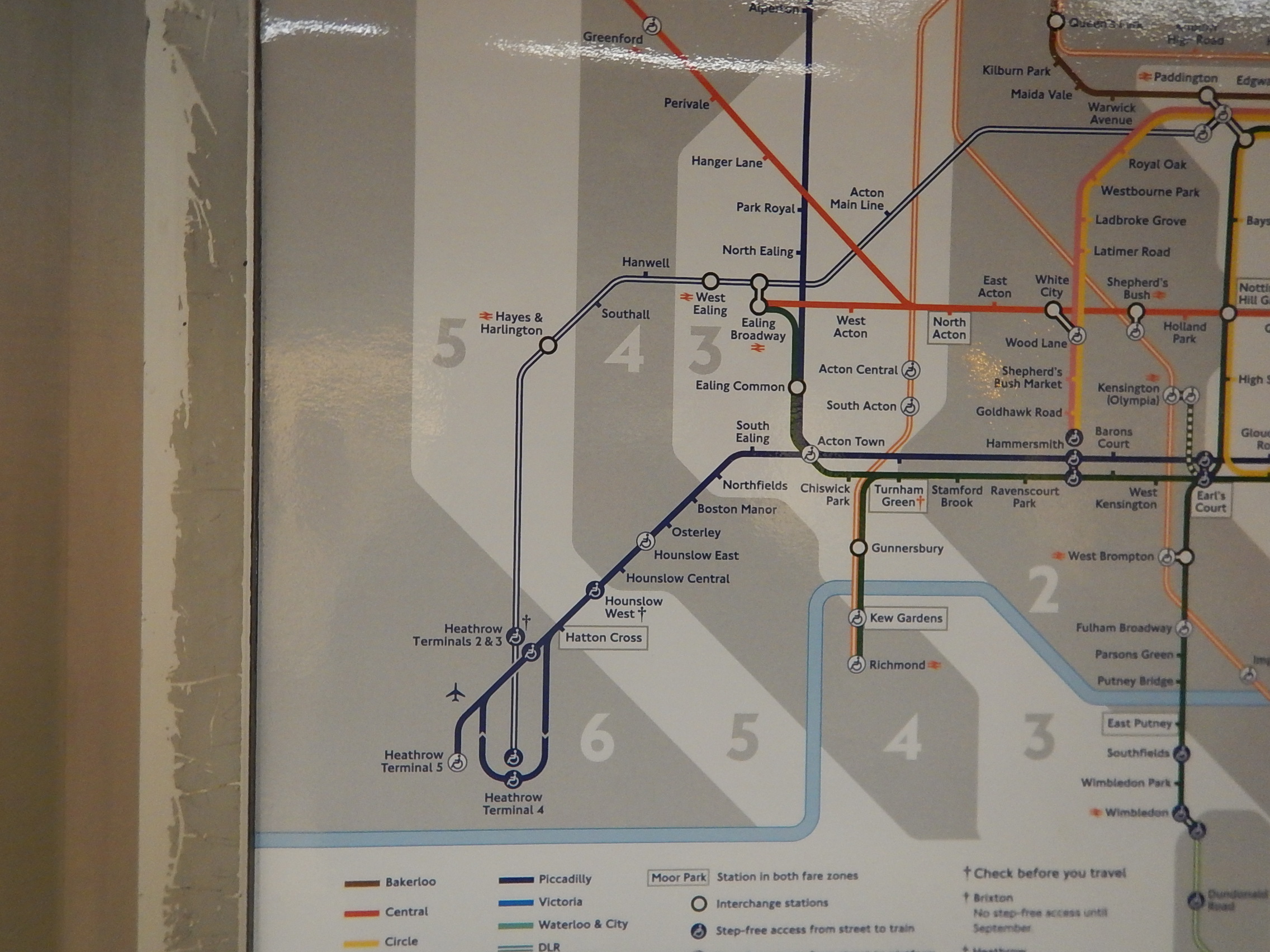
I photographed this map at Kings Cross St. Pancras.
Note the double blue line, which indicates the new route of the former Heathrow Connect, running from Paddington in the top-right corner of the map to Heathrow Terminal 4 towards the bottom-left.
The intermediate stations shown are.
- Acton Main Line
- Ealing Broadway – Change for Central and District Lines.
- West Ealing
- Hanwell
- Southall
- Hayes and Harlington
- Heathrow Terminal 2 & 3 (Heathrow Central) – Change for Piccadilly Line.
Note that TfL use Heathrow Terminal 2 & 3 for the main railway station at Heathrow and Wikipedia uses Heathrow Central.
A Trip To Heathrow From Paddington
This morning, I checked into the new TfL Rail service at Paddington, using my Freedom Pass and took the 09:11 service to Heathrow Airport.
I got out at Heathrow Terminal 2 & 3 station before returning later on another TfL Rail service to Paddington.
I took these pictures on the route.


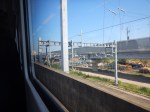
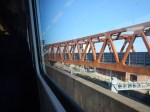

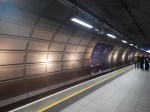
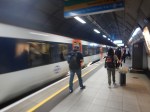

Note that the Class 360 trains are still running on the route, as there are operational issues with Crossrail’s new Class 345 trains in the tunnel to Heathrow.
Contactless Card/Oyster To Heathrow
TfL Rail also accepts contactless card or Oyster on this route.
According to TfL’s Single Fare Finder, the single fare is £10.20 in the Peak and £10.10 in the Off-Peak.
But,I’m not sure about railcards, the affect of capping or the price if you buy the ticket on line.
Freedom Passes To Heathrow
As I’d used my Freedom Pass, the two journeys cost me a big fat nothing!
It won’t be long before the many Freedom Pass holders, will realise, that Heathrow will be in their free travel area by a comfortable train and they will possibly use it more often, than the Piccadilly Line.
TfL Rail Service Frequency
Currently, the frequency between Paddington and Heathrow is two trains per hour (tph).
Provisional service details are shown under Services in the Wikipedia entry for Crossrail, when the line opens fully in December 2019.
- Four tph between Abbey Wood and Heathrow Terminal 4 stations
- Two tph between Abbey Wood and Heathrow Terminal 5 stations
All services will call at the following stations.
- All stations between Abbey Wood and Paddington stations.
- Ealing Broadway station
- Heathrow Terminal 2 & 3 station.
Plans for stopping at Acton Main Line, West Ealing, Hanwell, Southall and Hayes & Harlington stations are yet to be decided.
I suspect that TfL would like all Heathrow trains to stop at all intermediate stations, just as services do between Liverpool Street and Shenfield, in the East of London.
But Great Western Railway may have other ideas!
Speaking for myself, I’d like to see four tph on the TfL Rail route between Paddington and Heathrow, as soon as possible.
The Future Of The Class 360 Trains
When Crossrail sort out the Class 345 trains, the five sets of five-car Class 360 trains will be surplus to requirements.
They will also be joined in the sidings in a couple of years, by twenty-one similar four car trains, that are being replaced with new Class 720 trains, by Greater Anglia.
As they are modern 100 mph trains, they should find a home somewhere!
They could even be exported to Thailand, where a similar fleet operates.
 The Anonymous Widower