Gibb Report – Depot Issues
The Gibb Report, looks in detail at GTR’s depot capacity and especially the stabling for Thameslink.
The section on depots starts like this.
The way in which the train fleet has expanded in recent years has resulted in a shortage of stabling facilities. New facilities have been located away from train crew depots (e.g. Hove from Brighton) and are less efficient, involving driver time in taxis. Siemens new depot at Three Bridges is now the main centre for the Thameslink fleet, and overall the depot capacity on Southern is just about sufficient from what I have seen, although it is inflexible and inefficient.
It then goes on to list problems at specific locations.
Ashford
Perhaps the late choice of Maidstone East station, as a terminus, has meant that a site hasn’t really been found for a depot at Ashford.
Bedford
The depot is unsuitable for 12-car fixed formation Class 700 trains, which block the entrance.
Cambridge
The facility is currently unsuitable for 12 car fixed formation trains and the current trains have to be uncoupled to be accommodated.
North Kent
The original plan was to increase stabling facilities at Slade Green, but this has now been established to cost £72m and too expensive. An alternative is urgently needed.
The report sums up the depot issues like this.
All of the above issues need to be finalised before the driver recruitment plans can be commenced, as the driver recruitment strategy must be decided around the stabling locations of the trains, and driver depot facilities, including parking, must be included in the scheme
implementation.
It also goes on to say, that more trains may need to be ordered to increase capacity on the Brighton Main Line and that a new depot will be needed.
Bombardier’s Class 345 Trains For Crossrail
Before I add my fourpennyworth on depot issues, I will look at some of the features of Bombardier’s Class 345 trains.
All Trains Are The Same Length
It is intended that all trains will be the same nine-car length, although at the present time, the trains under test in East London are a couple of cars short of a full train.
This is mainly because the platforms in Liverpool Street, are not long enough for a full train and won’t be lengthened until a year or so.
I suspect too, it enables Bombardier to build the trains in a more efficient manner and test out each type of coach fully.
One of the advantages in having all trains of the same length, is that you maximise the capacity in a depot and as on both routes, the manufacturer pays for the main depots, a correctly-sized depot will reduce costs.
Note that Thameslink’s main depots don’t seem to have issues, so can we assume they were well-designed?
The Class 345 Trains Have No Toilets
There was a bit of a fuss, when this was announced, as I wrote about in Do Crossrail Trains Need Toilets?.
But given that many Crossrail stations have toilets on the platforms and trains are every ten minutes, no toilets on the train gives advantages.
- There is no toilet on the train that needs regular cleaning and fails occasionally.
- Overnight servicing of the train does not need the toilet to be emptied.
I also suspect that the modular nature of the Class 345 train would allow one to be fitted if required.
Class 345 Trains Are Designed For Remote Wake-Up
Remote wake-up is discussed in Do Bombardier Aventras Have Remote Wake-Up?.
So imagine a Class 345 train finishes its last journey of the day in a platform at Shenfield station or a convenient stabling siding.
- The driver checks the train for sleeping bankers, locks up and goes home.
- The train reports to Ilford, that a couple of light bulbs have failed.
- The servicing and cleaning team arrive and get the train pristine for the morning.
- The train shuts down fully and all power is switched off to the overhead wires, so trespassers won’t be electrocuted.
- At an appropriate time, the train is signalled to come to life and warms up ready for the day, using battery power.
- The driver arrives and when signalled joins the main line, raises the pantograph and takes the train on its way.
When I once described this process to a driver from Northern going to pick up a Class 156 train in Halifax, he had a big smile.
In some ways, it’s a bit like parking your car out on the street.
- Except that for trains, you need a convenient piece of track.
- As power will be needed to warm the train up in the morning and you don’t want 25 KVAC live wires about, the only source of power possible is a battery.
- If the train had a toilet, it would be a more complicated process.
What will the devious Derbians think of next?
Solving GTR’s Depot Problems
In my view there is one big difference between Thameslink and Crossrail.
With Crossrail, which was in part a new railway line, every component was designed so it fitted together like a giant three-dimensional jigsaw.
But Thameslink was designed by different teams over a series of decades.
As we can’t go back to square one on Thameslink we have to make the best of what we’ve been left with.
Bombardier’s remote wake-up concept is a straight steal from some upmarket road vehicles, so why haven’t Siemens stolen it? Especially, as the Derby Telegraph article dates from June 2011. Perhaps, their press cuttings agency doesn’t read that newspaper?
If they had developed the technology, it would certainly help with remote stabling of trains, as you can have a much simpler facility.
The Problem Of Cambridge
I discuss this in Cambridge Depot
The Problem Of North Kent
Chris Gibb suggest creating a new depot at Hoo Junction, which I discuss in Hoo Junction Depot
Thameslink’s Mixed Length Fleet
Thameslink also have a curious mix of eight-car and twelve-car trains, whereas Crossrail have sensibly opted for a common length, which as I said, must be much easier to store.
Intriguingly, both Greater Anglia and South Western Railway have ordered mixed fleets of five and ten-car Aventras. But most six-year-olds can tell you that 5+5=10.
The decision to buy a mixed length fleet of twelve and eight-car trains for Thameslink has caused a lot of these depot and a few other problems.
I wrote more about the problem in Has Thameslink Got The Wrong Length Of Train?.
I think in the end, Thameslink will lengthen the eight-car trains to twelve-cars and then lengthen the short platforms on the Sutton loop Line and a few other places.
This would create sixteen per-cent more capacity through the central tunnel, by making all trains twelve-cars.
But that is an expensive way to solve the problem created by not designing Thameslink as a continuous twelve-car railway.
Conclusion
It’s a bloody-great mess.
If you compare depot philosophies at Crossrail, Greater Anglia and Thameslink, the first two companies seem to have developed a comprehensive purchase and maintenance solution for all their new trains, whereas Thameslink have worked on the basis that it will be alright in the end.
These factors don’t help Thameslink.
- The choice of a mix of eight- and twelve-car trains.
- The inability to join two short trains together to make a long train.
- The design of a Class 700 train, which appears to be geared more towards a traditional depot.
I will be accused of being patriotic, but having ridden in both Class 700 and Class 345 trains, I’m coming to the conclusion, that Thameslink should have bought Aventras.
I would also have to ask, if Krefeld in Germany is a better place than Derby, for decision makers to visit.
The 10:35 From Liverpool Street To Shenfield
I took these pictures on the untimetabled 10:35 TfL Rail service between Liverpool Street and Shenfield stations and on the return to Liverpool Street.


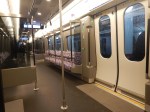
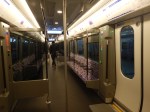


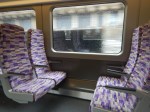
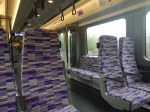

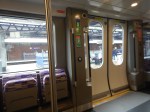


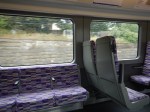
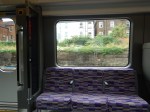


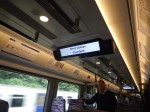


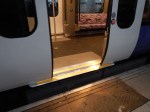

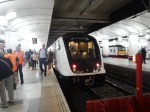
As you can see it is a new Class 345 train.
There were a lot of Crossrail and Transport for London staff about, talking to passengers.
These are my thoughts on various issues.
Ride Quality
This is up with the best or the legendary British Rail Mark 3 coach, which was designed in the 1960s.
One of the Crossrail staff was wearing stiletto heels close to four inches and she was walking up-and-down with no difficulty.
For someone who suffered a bad stroke, my balance is good and I had no difficulty walking along the seven-car train.
Cabin Height And Width
I don’t know how Bombardier have done it, but the cabin seems higher and wider than any other train I’ve ridden in the UK.
Next time, I ride one, I’ll take a couple of tall guys and a tape measure.
Information
The current on-train information is simple, but then as I suspect the screens are software driven, any degree of required complication can be added.
I don’t know whether it is deliberate but everything is large and easy to read. There is also no maps or exhortations about security.
Long may it stay that way!
Simple is efficient!
Seats
Not everybody was completely satisfied with the seats, but I found them much more comfortable than those in the Class 700 trains on Thameslink.
There were some good points.
- The sets of four seats were arranged as they were in the original InterCity 125 around a large window.
- The metro-style seating had a wide aisle in the middle, that would satisfy a basketball team.
- An amply-proportioned man, thought the seats comfortable.
- Most seats had well-designed armrests.
- There was plenty of space under the seats for airline-size carry-on baggage or a labrador.
On the other hand, there were no cupholders, tables or litter bins. But there aren’t any on the Class 378 trains or London Underground‘s S Stock.
Entry And Exit
I feel that trains should be a level step across from the platform.
This train wasn’t as good as a Class 378 train on many Overground stations, but it was better than some.
As many Crossrail stations will be one train type only there is probably scope to get this better.
I regularly see a lady in a simple wheel-chair on the Overground and I feel she would probably be able to wheel herself in and out, which she does at Dalston Junction station with ease.
It should be noted that each coach has three sets of wide double doors and a large lobby, so perhaps a mother with triplets and a baby in a buggy would find entry easier than any train on the Underground.
Walking Up And Down The Train
I found this very easy on a train that was no more than a third full, as it was an extra service to introduce the train to passengers.
There were numerous hand-holds and vertical rails in the centre of the lobbies. Unlike on some trains in France, Italy or Germany, the rails were very simple. They also borrowed heavily from the Overground’s Class 378 trains.
Wi-Fi And 4G
I didn’t try the wi-fi, as it is not something I use very often.
But I was getting a strong 4G signal all the way to and from Shenfield. Was this direct or was I picking up a booster in the train? I suspect it was the latter at some points close to Liverpool Street.
Windows
The windows on the train are large and well-positioned.
The simple seat and window layout, seems to appeal to all classes of rail user.
A Train For Families
When Celia and I had three children under three, with two able to toddle-along (they had too!) and the youngest in his McClaren, I could imagine us taking a train from Barbican station to perhaps go shopping on Oxford Street, sitting in one of those set of four seats by that large window.
A Train For Commuters
The Class 378 trains of the Overground cram them in and the metro layout of much of the Class 345 train will accommodate large numbers of commuters.
I would question, if there are enough seats, but the proof should be apparent by the end of the year, as eleven of the current seven-car trains will be in service between Liverpool Street and Shenfield.
For the full Crossrail service, they will be lengthened to nine cars and there is a possibility of adding a tenth.
A Train For Shoppers
If say, I’d been to Eastfield at Stratford and was coming back to Moorgate heavily loaded with shopping to get a bus home, I could probably put some bags under the seat. Try that on the Underground!
A Train For The Not-So-Young
From what I saw today, I couldn’t make too many observations, as the train wasn’t crowded, but the few older travellers that I did see were smiling at the experience.
A Train For The Disabled
As I’m not disabled, I can’t comment and would love to hear from those who are.
A Train For The Tall
Compared to other trains in London, the headroom seemed to be generous, but then I didn’t see anybody who was much more than six foot.
A Train For The Airport
Class 345 trains will serve Heathrow Airport. I feel they will cope, as the metro layout of the Class 378 trains, seems to accommodate large cases well!
Comparison With A Class 700 Train
The Thameslink Class 700 trains are designed for running over a longer distance at a higher speed and they have toilets.
But for a thirty minute journey through a busy part of London, there is no doubt in my mind, as to which train I would choose.
The Class 345 train, with its large windows, more comfortable seating, space for bags, uncluttered views and the appearance of more space, is undoubtedly in my view a better designed train.
Incidentally, for every metre of a nine-car Class 345 train, 7.31 passengers can be accommodated, as opposed to 7.07 in an eight-car Class 700 train.
I think we can put all this comparison down to Derby 1 – Krefeld 0!
Comparison With A Class 387 Train
The trains will be compared with Bombadier’s last Electrostar, the Class 387 train, which will be in service with GWR between Paddington and Reading, alongside the Class 345 train.
Passengers will be able to take whichever train they want on this route.
Will they choose the Class 387 train, with its tables, very comfortable seats and toilets or the Class 345 train?
I’d choose the Class 387 train, as I like to lay out my newspaper for reading.
No matter what happens Derby wins again.
Moving Forward On Approach To Liverpool Street
I was surprised how many people walked to the front as we approached Liverpool Street.
But were they only demonstrating the Londoners’ ducking and diving ability of getting to the right place for exit.
Regular passengers on regular routes will anticipate their stops and I will be interested to see how much passenger behaviour increases the capacity of the train.
Conclusion
This first Aventra feels like it is a very good train.
Consider how Bombardier improved the Electrostar since it was first produced in 1999.
So what will an Aventra be like in 2035?
Has Thameslink Got The Wrong Length Of Train?
The Train And Half-Train Philosophy
If you look at some recent train orders and one successful old one, they seem to suggest a train and half-train philosophy.
- Great Western Railway’s order for Class 80x trains.
- Virgin Trains East Coast’s order for Class 80x trains.
- Greater Anglia’s order for Aventras.
- South Western Railway’s order for Aventras.
- Southeastern’s Highspeed Class 395 trains.
In all these fleets, it would appear that two half-trains can be used to create a full length train, when needed. This coupling and uncoupling is done throughout the day and often on an automatic basis in around a couple of minutes.
This video shows Javelins at it.
Impressive isn’t it? The second train left Ashford station thirty seconds after the first.
In a few years time, all trains will be able to couple and uncouple automatically like this.
Thameslink’s Class 700 Trains
Thameslink’s Class 700 trains only come in lengths of eight and twelve cars.
The eight-car train is needed for short platforms on the Sutton Loop Line.
But eight-car trains have disadvantages compared to say a six-car train.
- Two trains can’t be joined together to make a full-length train.
- Sixteen-car trains would be just too long for operational reasons.
- An eight-car train uses one of the valuable twenty-four hourly paths through the central core of Thameslink, just as a twelve-car train does.
The train length seems to be inefficient.
I can’t think of a train operator, who has two similar train fleets longer than five-cars, where one fleet is not half the length of the other.
Maximising Capacity In The Core
The capacity of the central core of Thameslink, depends on how many trains go through in an hour.
Current proposals given in Wikipedia are as follows.
- 14 x 12-car trains
- 10 x 8-car trains
If the 8-car trains were replaced with 12-cars, this would give a sixteen percent increase in capacity in the central core.
The Sutton Loop Line
The Sutton Loop Line could be run by using six-car trains that split and join in the area of Streatham station.
This map from carto.metro.free.fr shows the track layout at Streatham, at the start of the loop.
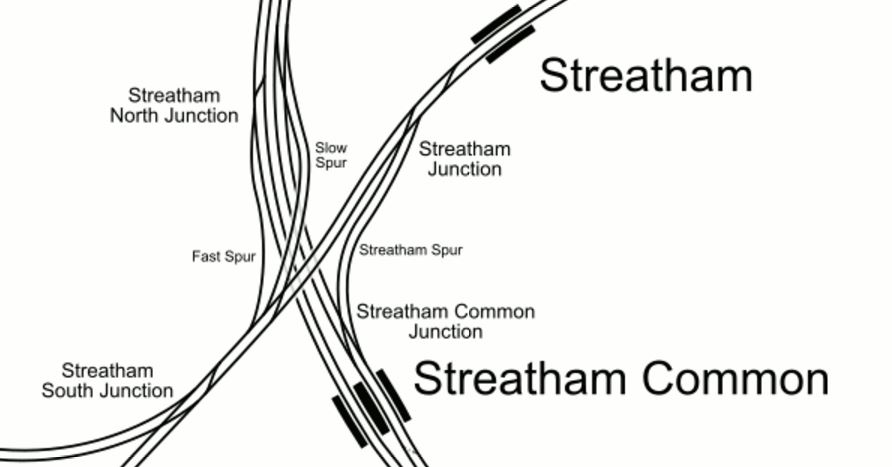
Note.
- Streatham South Junction is the gateway to the Sutton Loop, with the tracks to the West going via Tooting station and those to the South via Mitcham Eastfields station.
- There is a lot of spare land in this area.
- Transport for London keep talking about creating an interchange at this point.
I think, if and when the interchange is built, it could be designed, so that it increased traffic around the Sutton Loop Line.
- Two six-car trains running as a twelve-car could split at the interchange.
- One train would go round the loop clockwise and the other anti-clockwise.
- The trains would rejoin together at the interchange.
The same procedure could be done at Streatham, without creating the interchange, but it would block the station, if trains got delayed on the loop.
Currently, two trains per hour (tph) are proposed to run in both directions on the Sutton Loop Line.
This requires four eight-car trains and four paths through the central core.
If four six-car trains were to be used, running in pairs splitting at Streatham or a new Streatham Common interchange, there would still be two tph in both directions round the Sutton Loop, but only two paths would be needed in the central core.
Travellers to and from stations on the loop would see six-car, rather than the proposed eight-car.
If the number of six-car trains were to be doubled and four paths used in the central core, the Sutton Loop Line would see four tph in both directions.
But this might be two much traffic for Platform 9 at Wimbledon station.
Splitting Trains At The End Of A Route
It is not beyond the bounds of possibility for two six-car trains to do the following.
- Start independently in the North.
- Join at a convenient station.
- Pass through the Snow Hill Tunnel as a twelve-car train.
- Split at a convenient station.
The two six-car trains would then continue to two separate destinations.
One possibility would be to do the following.
- Start at Peterborough and Cambridge.
- Join at Hitchin.
- Split at Three Bridges
- Finish at Horsham and Brighton.
Between Hitchin and Three Bridges, the train is twelve-cars, whereas at other times they are six-cars.
Hopefully train length could be geared to passenger traffic.
I don’t think there are many opportunities at the current time.but as Thameslink develops, with perhaps more stations and electrification, the use of this technique might increase.
Although, It should be noted that the current eight-car trains are not suitable.
Eight-Car Trains Across The City
Three of the services through the core are as follows.
- Cambridge North and Maidstone East.
- /Luton(Peak)/Kentish Town(Off Peak) and Orpington
- Welwyn Garden City and Sevenoaks
All services are served by eight-car trains, with the first two services running all day.
In the May 2017 Edition of Modern Railways, there is an article entitled Kent Capacity Constraints Highlighted.
Reading this article, gives the impression that several stations served by Thameslink in the Southeastern area have platforms that are a tad short.
So perhaps this is the reason for the short trains.
But would using two six-car trains joining at a station like Bromley South, enable another twelve-car train to go through the central core.
Conclusion
Six-car trains instead of eight-car trains on Thameslink, may increase capacity.
According to Wikipedia, the formation of the two trains are as follows.
- Class 700/0 – DMCO-PTSO-MSO-TSO-TSO-MSO-PTSO-DMCO
- Class 700/1 – DMCO-PTSO-MSO-MSO-TSO-TSO-TSO-TSO-MSO-MSO-PTSO-DMCO
It would appear that the 12-car trains have two extra MSO cars and two extra TSO cars.
If all the TSO and MSO cars are identical, I wouldn’t be surprised that to lengthen the trains from eight to 12 cars, is just a cut-and-shut job, as it is with the London Overground’s Class 378 trains and Crossrail’s Class 345 trains.
With sixteen percent extra capacity by lengthening all trains to twelve cars, I would expect that this capacity will be claimed when needed.
An alternative could be to shorten the sixty eight-car trains to six-cars, which would release sixty each of MSO and TSO cars. Sixty new PTSO and DMCO car could be added and there would be another thirty six-car trains, making ninety in total.
I suspect Siemens could add automatic coupling and uncoupling.
These six-car trains would give the following.
- Twelve-car trains through the core.
- Better use of valuable paths through the core.
- Six-car trains on the Sutton Loop Line, by splitting and joining in the Stratham area.
- The ability to split and join trains to serve new destinations.
Thameslink’s train problem is not insoluble.
Where Are All The Class 700 Trains?
Yesterday, as I returned from Ilkeston station, there were large numbers of Class 700 trains in sidings along the Thameslink route from Bedford to St. Pancras.
But this morning, when I sat in the sun on West Hampstead Thameslink station for an hour and a quarter, I saw the following trains running Thameslink services.
- 12 Class 319 trains
- 7 Class 700 trains
- 1 Class 377 train
There wasn’t a reliable service due to an earlier train failure.
On a rough calculation 65% of all services are still run by the previous fleet and only 35% by new Class 700 trains.
This article in Rail Magazine, which is dated September 2016, is entitled 29th Class 700 delivered to UK.
This is said in Wikipedia about the first delivery of the Class 700 trains.
The first delivered train arrived in the UK by the end of July 2015, and was delivered to the Three Bridges depot The first test run on the Brighton Main Line took place in December 2015.
The first train in service was unit 700108 forming the 1002 Brighton to London Bridge service on 20 June 2016.
So it would appear that Siemens have delivered about two trains per month.
That would mean that since September 2016, another twelve trains have been delivered, which would make a total of 41. This works out that 35% of the Class 700 trains have been delivered.
So that means that, the proportion of services run by Class 700 trains, is the same as that of the number of trains delivered.
Perhaps not too surprising!
It will be interesting to see this percentage in say a couple of months time.
Delivery Of The Complete Fleet
This article in Railway Gazette International is entitled Thameslink Class 700 testing to begin soon, says this about the completion of the fleet’s introduction into service.
The first units are expected to enter service with Govia Thameslink Railway in spring 2016, initially on the Thameslink route and then on Great Northern services by 2017. All Thameslink services would be operated by Class 700s from 2017, with the full fleet in service by the end of 2018.
So this means that if there were 29 trains in the UK at the end of September 2015 and there will be 115 trains in service at the end of December 2018, this means a delivery rate of about three trains per month.
An increased rate of delivery is probably to be expected, as Siemens learn more about the production process.
Reliability
As to hard facts on train reliability, there is very little.
In the January 2017 Edition of Modern Railways,, Roger Ford compares the first few months of the Class 700 with the first few months if a Class 444 train.
This is said.
The lesson is clear; no matter how good your product or how many thousands of miles of test running accumulated at Wildenrath or Velim, the real world is a different matter.
Roger Ford also says the following.
- The performance of the Class 707 trains, which are Class 700 clones, will be very interesting, as they’ll have all of Thameslink’s experience.
- Put a ten pound bet on improvement.
So reliability is probably what to expect.
Comfort, Wi-Fi And Cup-Holders
If the Class 700 have a problem it is the interiors.
In By Class 700 Train To Brighton And Back, I said this.
I would describe the trains as adequate for the core route from East Croydon to West Hampstead and Finsbury Park, but they do have limitations for long-distance commuters.
- There are no tables or even anywhere to put a drink.
- There is no wi-fi.
- There are no power sockets to charge a laptop or phone.
The new Class 345 trains for Crossrail, don’t have tables either, but they do have wi-fi and 4G. But these are short-distance trains and unlike the Class 700 trains, which are taking over from Class 387 trains with tables, most of previous stock that worked from Reading to Shenfield didn’t have tables, wi-fi or power sockets.
Govia Thameslink Railway must be really pleased to get a set of trains, without some of the features their passengers demand.
To be fair it’s not their fault, as these trains were designed to fit a Passenger Focus report which can be found on the Internet, that was written in the dying days of the last Labour Government.
Read the document and draw your own conclusions.
It’ll be interesting to see how long the trains are in service, before they have a refit!
Conclusion
It looks like the trains are being delivered as promised and, their reliability could be as expected, but the interior is not what the passengers need or want.
A Design Crime – Train Platform Interface At St. Pancras Thameslink
Frank Grdner has been complaining at the problems of travelling on planes in a wheelchair.
I took these pictures of the step between platform and train at St. Pancras Thameslink station.
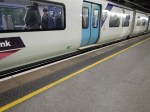


All of the trains including the 1980s built Class 319 trains seem to require the same step-up into the train.
As the Platforms at the station were built after the Class 319 trains became the most numerous trains on the route, this a real design crime of the highest order.
It would appear that Merseyrail will offer roll-across access with their new trains, so why isn’t Thameslink.
But then in an ideal world, St. Pancras station needs a substantial rebuild underground.
Will DOO Mean DOO on Thameslink?
On Thursday I took a Thameslink Class 700 train from St. Pancras to Blackfriars.
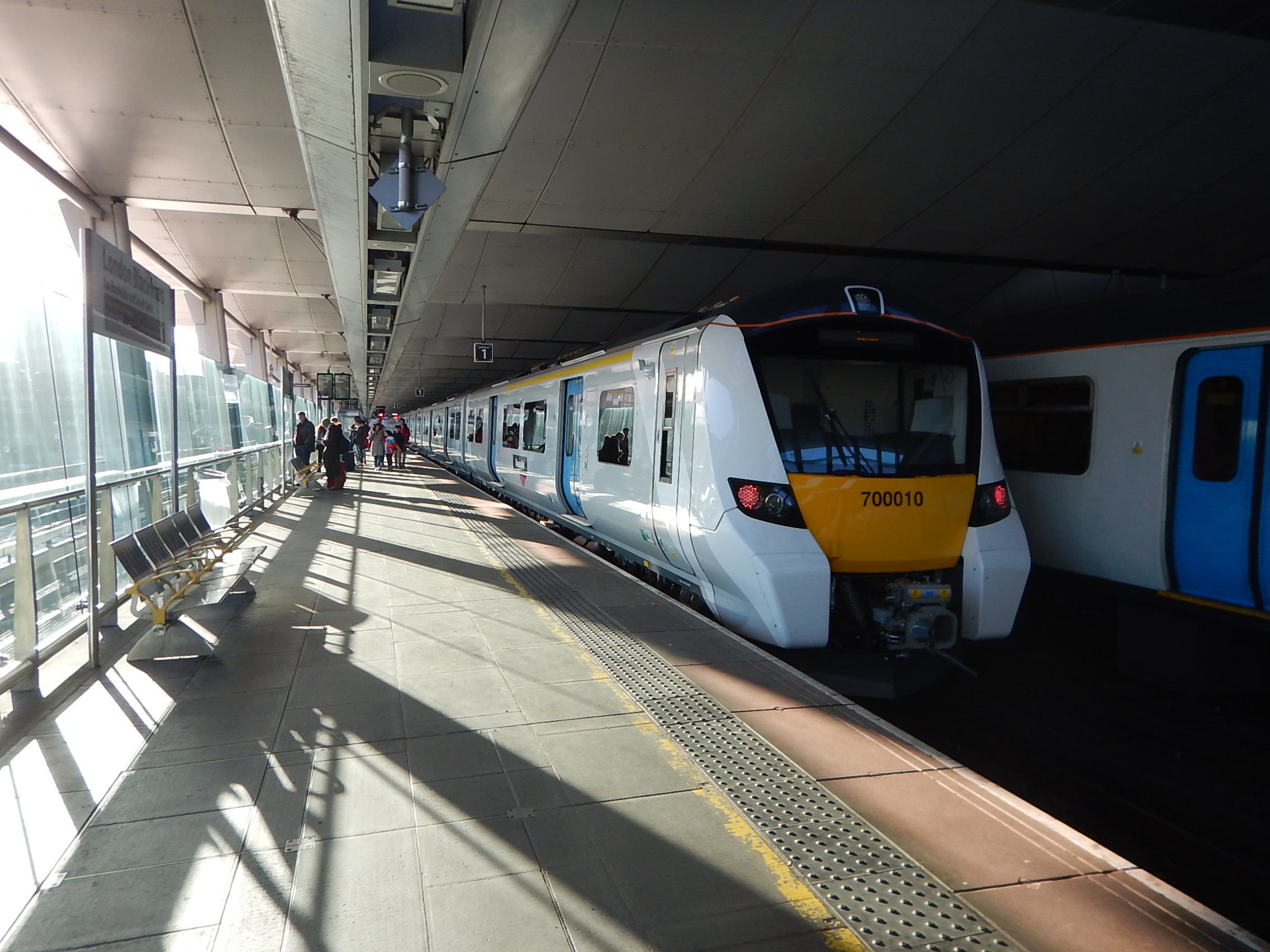
A Class 700 At Blackfriars
At Blackfriars an announcement said that the doors would open automatically.
Which they did without any of the usual intervention from passengers after the driver had released the doors.
This is how DOO works on the London Underground.
It is surely better, especially if you are getting off and your hands are otherwise engaged.
The Natives Are Getting Restless In Crofton Park
One of my Google Alerts picked up this article on Brockley Central, which is entitled You Shall Go To Blackfriars – Join The Campaign For Crofton Park Trains Every Fifteen Minutes.
This is said.
Local action groups aren’t supposed to be this successful. The Cinderella Line is a campaign to improve the frequency and quality of services that run through Crofton Park Station.
The group has had a recent success, in that there are now four more trains stopping at the station in the peak.
So I thought I’d go and have a look, getting my paper and some bits of shopping I need on the way.
I had started out, just before 0900, with the aim of getting the 0930 Thameslink train to Crofton Park station. Hopefully, it would have been running a bit late, so I could use my Freedom Pass.
But it was worse than that, as the train had been cancelled, so in the end, I had to take a train to Catford station and then come back a station to get to Crofton Park. As I couldn’t afford to wait, I had to pay for the ticket myself.
Not that I’m bothered!
But did Thameslink cancel the first train after 0930, to force people to catch an earlier train at full price, if they wanted to get to work on time?
Am I being cynical?
These pictures tell the story of my journey to Crofton Park and back via Peckham Rye station to Haggerston station, from where I walked home.



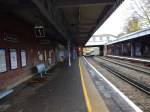
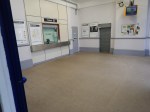
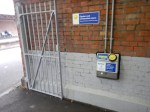
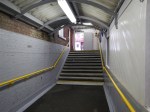

A few points.
Overcrowding
I took three Thameslink trains and one London Overground train this morning.
- St. Pancras to Catford – 8-cars and overcrowded until Farringdon.
- Catford to Crofton Park – 4-cars and crowded.
- Crofton Park to Peckham Rye – 4-cars and overcrowded
- Peckham Rye to Haggerston – 5-cars and plenty of space, with seats for those who wanted them.
Considering, that all these journeys were in the Off Peak, except for the last Overground train, it is just not good enough.
Crofton Park Station
Crofton Park station, is typical of many stations, that are South of the Thames.
- It is certainly scruffy.
- The main entrance is not step-free and the stairs are steep.
- The platforms are ready for twelve-car trains.
- There was a bad gap to mind, between train and platform.
- Staff were only noticeable by their absence.
- A fellow passenger said that announcements were unreliable.
- The information displays were not of the best.
- Typical Off peak services are 2 trains per hour (tph)
But it was certainly a station, that with the spending of some money to add lifts, could be a station of high quality and a modicum of quality.
The New Class 700 Trains
Hopefully, the new eight-car Class 700 trains will improve matters at Crofton Park, as they are better designed than the overcrowded four-car Class 319 trains, that I had to endure this morning.
This report on Brockley Central, says this about the new trains.
“We have also been pushing Thameslink to introduce new Class 700 trains, with 30% more capacity than the trains we currently have. The first of these will appear from the end of November and then replace our current trains at the rate of one per week.
So that is good news.
Extra Services To Victoria And Blackfriars
The report on Brockley Central, says this about the new services.
“From December 12th, four new trains will stop at Crofton Park between 7-9am . Three will go on to Denmark Hill and Victoria and one to Elephant & Castle and Blackfriars.
“The Victoria services currently pass through Crofton Park but don’t stop there, so they will now make the additional stop at Crofton Park.
So that is good news as well.
The interesting thing about these new train services, is that no new services are actually being introduced, but the extra service at Crofton Park is being created by getting a train that normally goes straight through to stop at Crofton Park.
The latest generation of trains, are designed to execute a stop and start in a minimum time, so I think we’ll see extra stops added on more than a few services.
This quick stop feature is achieved by several things.
- Powerful braking and acceleration.
- Wide doors.
- Level step between train and platform.
- Good information, so passengers getting on can find space.
- Good coordination between the driver and staff on the platform.
Increasingly, for some operators, a fast dwell time will be an important factor in choosing the trains to procure and providing a better service.
Here at Crofton Park station, it is being used to get extra trains to stop at the station.
Increasing Thsmeslink Frequency From 2 tph To 4 tph At Crofton Park Station
This is an aspiration for Crofton Park, but I suspect that this cannot be done at present, as there are not enough paths through the core Thameslink tunnel.
So until Thameslink is fully open in 2018, Crofton Park will probably get 2 tph.
Thameslink is consulting on the service when the full service opens.
This document on the Thameslink web site, shows two different services calling at Crofton Park.
- TL8 from Blackfriars (Welwyn Garden City in the Peaks) to Sevenoaks
- TL9 from Kentish Town (Luton in the Peaks) to Orpington.
Both have a frequency of 2 tph at all times,so this gives 4 tph through Crofton Park.
Thameslink put it like this in their proposal.
Thameslink Metro Routes TL8 and TL9 combine to provide four trains per hour (daily) between Central London, Catford, Bromley South and Bickley. During peak times these services may be supplemented by Southeastern Metro services providing six trains per hour.
That’s a well-thought out service, by any standards.
The Catford Metro
I always like calling lines like this a Metro.
As Govia Thameslink Railway have just given the name of the Great Northern Metro to the services out of Moorgate, why not call this line the Catford Metro?
It would call at the following stations.
- London Blackfriars
- Elephant & Castle
- Camberwell (if added)
- Denmark Hill
- Peckham Rye
- Nunhead
- Crofton Park
- Catford
- Bellingham
- Beckenham Hill
- Ravensbourne
- Shortlands
- Bromley South
So it looks like Crofton Park could be in the middle of a Catford Metro.
- It would have a frequency of at least 4 tph.
- It would be running new eight-car Class 700 trains.
- 2 tph would go North to each of Welwyn Garden City and Luton in the Peak
- 2 tph would go North to each of Blackfriars and Kentish Town in the Off Peak
- 2 tph would go South to each of Orpington and Sevenoaks.
- It would have a good connection to the 4 tph South London Line at Denmark Hill and Peckham Rye.
It’s a lot better than Crofton Park has at the present time!
Conclusion
Crofton Park has a big future.
Will Crossrail And Its Class 345 Trains Set Mobile Connection Standards For The UK?
Search for “Class 345 trains 4G” or “Class 345 trains wi-fi” and you find reports like this on London Reconnections about the Class 345 train.
This or something like it, is said in several of these reports.
According to the accompanying press notes both free wifi and 4G services will be delivered on board, as will multiple wheelchair and luggage spaces.
It would be very embarrassing for London’s flagship multi-billion pound project, if it wasn’t correct.
So it would appear that I could board a Class 345 train at Shenfield and watch a video all the way to Heathrow or Reading.
But where does this leave Thameslink?
Their Class 700 trains have been designed without wi-fi, 4G and power-sockets as I said in By Class 700 Train To Brighton And Back.
But at least Siemens felt that the Department for Transport, who ordered the trains, were out of step with reality and appear to have made provision to at least fit wi-fi.
This article on Rail Engineer is entitled Class 707 Breaks Cover and it describes the Class 707 train, which is a sister train to the Class 700. This is said about the two trains and wi-fi and toilets.
Thameslink (or the Department for Transport which ordered the trains) decided not to include Wi-Fi in the Class 700s, a questionable decision that has now apparently been reversed. Fortunately, Siemens had included the technology framework in the design so, hopefully, the upgrade will not require too much effort. Suffice it to say that South West Trains has included Wi-Fi in its specification for Class 707s.
Reversing the story, Thameslink Class 700s are all fitted with toilets. However, South West Trains has decided not to include toilets in its Class 707 specification given that the longest journey time is less than one hour and their inclusion would reduce the overall capacity of the trains.
So it appears that Siemens may have future-proofed the trains.
This article on the Railway Gazette describes the third fleet of the Siemens trains; the Class 717 trains for Moorgate services. This is said.
Plans for the installation of wi-fi are being discussed with the Department for Transport as part of a wider programme for the GTR fleet.
So at least something is happening.
But how close will mobile data services get to the ideal that customers want.
- 4G everywhere from the moment you enter a station until you leave the railway at your destination station.
- Seamless wi-fi, so you log in once and your login is valid until you leave the railway.
It will be tough ask to achieve, as it must be valid on the following services.
- Crossrail
- Thameslink
- London Overground
- London Underground
- All train services terminating in London.
And why not all buses, trams and taxis?
On a related topic, I believe that for safety and information reasons, all bus and tram stops and railway stations must have a quality mobile signal and if it is possible wi-fi.
One life saved would make it all worthwhile.
By Class 700 Train To Brighton And Back
Today, I went to Brighton for lunch and a walk on the promenade to get some October sun.
I hadn’t intended to go to Brighton, but just to take the short route across London from St. Pancras to East Croydon, to see if any Class 700 trains were working the route.
However a Brighton-bound Class 700 turned up and just before East Croydon station, the conductor turned up and he offered to sell me an extension ticket to Brighton for £9.95.
So why not? As the day was sunny, I accepted his offer and as he didn’t have the right change of 5p for a tenner, he gave me 10p. in change.
Perhaps, Govia Thameslink Railway’s conductors are doing a PR job to enhance their reputation.
These pictures detail the journey.
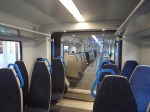
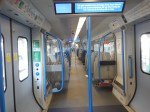
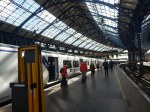
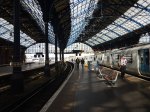
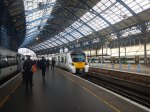
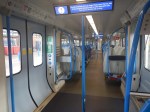
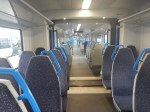
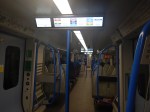
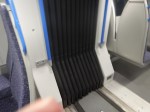
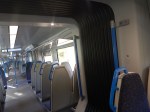
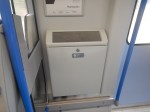
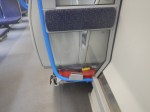

Because the journeys were deep in the Off Peak, the trains weren’t that busy.
I would describe the trains as adequate for the core route from East Croydon to West Hampstead and Finsbury Park, but they do have limitations for long-distance commuters.
- There are no tables or even anywhere to put a drink.
- There is no wi-fi.
- There are no power sockets to charge a laptop or phone.
The new Class 345 trains for Crossrail, don’t have tables either, but they do have wi-fi. But these are short-distance trains and unlike the Class 700 trains, which are taking over from Class 387 trains with tables, most of previous stock that worked from Reading to Shenfield didn’t have tables, wi-fi or power sockets.
Govia Thameslink Railway must be really pleased to get a set of trains, without some of the features their passengers demand.
To be fair it’s not their fault, as these trains were designed to fit a Passenger Focus report which can be found on the Internet, that was written in the dying days of the last Labour Government.
Read the document and draw your own conclusions.
However, all is nor lost!
This article on Rail Engineer is entitled Class 707 Breaks Cover and it describes the Class 707 train, which is a sister train to the Class 700. This is said about the two trains and wi-fi and toilets.
Thameslink (or the Department for Transport which ordered the trains) decided not to include Wi-Fi in the Class 700s, a questionable decision that has now apparently been reversed. Fortunately, Siemens had included the technology framework in the design so, hopefully, the upgrade will not require too much effort. Suffice it to say that South West Trains has included Wi-Fi in its specification for Class 707s.
Reversing the story, Thameslink Class 700s are all fitted with toilets. However, South West Trains has decided not to include toilets in its Class 707 specification given that the longest journey time is less than one hour and their inclusion would reduce the overall capacity of the trains.
So it appears that Siemens may have future-proofed the trains. To this end, when they certify the Class 707 train, they’ll certify the train for overhead electrification as well.
Looking at the way the seats are cantilevered from the side of the train, I suspect that Siemens might also have a table design in their box of delights.
I think you might have a very different usage of the trains throughout the day.
Obviously, in the Peak, the trains will be very full, but during the Off Peak, where there are obviously less passengers, perhaps a couple of tables per car, might prove to be a nice marketing feature to encourage travel.
We shall see what happens, but I can certainly see some improvement carried out to these trains in the next few years.
 The Anonymous Widower