This article on Rail Technology Magazine is entitled TfL Reveals Ultramodern London Overground Trains.
Unfortunately, we’ll have to wait until November to have a ride in the new Class 710 trains.
June 21, 2018
Posted by AnonW |
Transport/Travel | Class 710 Train, London Overground |
Leave a comment
The title of this post is the same as that of this article on City AM.
So the rumours that I talked about in New Overground Trains For Gospel Oak To Barking line Delayed… By Three Months, would seem to be correct!
According to the article, Bombardier are saying it’s due to software issues dragging out the testing, of the Class 710 trains.
All trains these days are about software and I speak from personal experience of fifty years writing extremely complex software.
Getting all of the software systems working correctly is an extremely complex task and, as this is only the second train of the Aventra family to be built, Bombardier are probably still going through a learning curve.
I feel, the problems are made worse, because of a lack of test tracks in the UK. A lot of train testing seems to be done for Hitachi’s new Class 385 trains in the Czech Republic and Germany and I find it interesting that Talgo, are thinking of building a new test track in the UK, as I reported in Talgo Explores Options For Building UK Test Track.
My experience of software writing, says that there is light at the end of this particular tunnel.
According to Wikipedia, twenty of the Class 710 trains have now been built, so when one train is approved, if the other nineteen are identical, twenty trains can surely be introduced into service fairly quickly, once enough drivers and other staff have been trained.
The City AM article finishes with these two paragraphs.
Darren Rodwell, leader of Barking and Dagenham council, said: “Coming on the back of the announcement of a delay with the Barking Riverside Overground, this is another slap in the face for the residents of Barking and Dagenham.
“Moving the completion dates of this project tells a lot about the contractors managing it and in future, may need us to look very closely into how these private sector contracts are awarded and managed.”
Does he believe, that if everything were to be nationalised, it would be much better?
If I go back to the 1960s and 1970s, my memory tells me that British Rail had lateness problems, when they did everything. Some projects like the Advanced Passenger Train never even saw service, after consuming millions of pounds.
In some ways, the real problem is the lack of testing facilities for the large numbers of new trains and the new digital signalling coming into service. Too much has to be done at the Old Dalby test track near Melton Mowbray.
Incidentally, I’ve just returned from the Aosta Valley in Italy, where their new Stadler Flirt trains have been delivered, but are yet to enter service. The new trains for the Aosta Valley Line are still not in service, as I reported in Where Are The New Trains For The Aosta Valley?.
So do the Swiss have software problems as well?
Building trains would appear to be a complex business.
June 1, 2018
Posted by AnonW |
Transport/Travel | Class 710 Train, Gospel Oak And Barking Line |
Leave a comment
The title of this post, is the same as that of this article in the Waltham Forest Guardian.
This is the first two paragraphs.
Walthamstow Central tube station has been allocated £15 million for improvements, but only if the controversial Walthamstow Mall redevelopment goes ahead.
New plans for the station include installing step-free access and a creating a new entrance.
That would surely get rid of the servere overcrowding that is experienced in Walthamstow Central station.
Overcrowding At Walthamstow Central Station
I often go to Walthamstow, at the tail end of the Evening Peak.
I have two routes.
- Take a bus to Highbury and Islington station and then use the Victoria Line.
- Take a bus to Hackney Downs station and then use the Chingford Line of the London Overground.
I always use the second route, as the two escalators at Walthamstow Central station can’t cope with the Victoria Line’s increased frequency of thirty-six trains per hour.
What makes matters worse is that all trains, except those going to and from the depot at Northumberland Park, run the whole length of the line between Brixton and Walthamstow Central stations.
Running this service on Dear Old Vicky, is one of the great engineering achievements on Metros around the world, but it means that passengers are finding some of the Victoria Line stations are inadequate. Walthamstow Central is one of them!
Another factor, that doesn’t help, is the excellent Walthamstow bus station. It is the third busiest in London and I’m sure it attracts more travellers to the rail and tube stations.
It is my belief, that the increase in train frequency and the building of the new bus station are the major cause of increasing overcrowding in the station.
It is worth noting that in 2016, the tube station handled nearly twenty-three million passengers with just two platforms and an up and a down escalator. By comparison, Cannon Street station, handled the same number of passengers with seven platforms and level access.
To be fair to Transport for London, they have sorted the gate lines at the station, but that still leaves the escalators severely overcrowded at times.
I actually can’t understand, why they haven’t replaced the middle staircase with a third escalator, as they have at Brixton, where there are also lifts.
Overcrowding Could Be Getting Worse!
Some transport improvements, that will happen in the next year or two,, will affect passenger numbers at Walthamstow Central station.
New Trains On The Chingford Line
The current Class 315 and Class 317 trains will be replaced by new Class 710 trains.
- These will have the same number of carriages, but they will have a higher capacity, due to better design and being walk-through trains.
- They will also have wi-fi and 4G available, if they follow the lead of the closely-related Class 345 trains.
- Their operating speed has not been disclosed, but that of the Class 345 train is 90 mph, which is fifteen mph faster than a Class 315 train.
- Their modern design will also allow them to save a minute or two at each of the seven stops.
The performance improvement may allow a more intense service.
The trains will certainly attract more passengers, as quality new trains always do!
- Will the new trains generate more new passengers, than any forecaster dreamt was possible?
- Will more passengers be attracted to stations North of Walthamstow Central and change to the Victoria Line?
- Will some passengers change from using the Victoria Line to the Chingford Line?
Bear in mind, that new trains on the North London Line, started in 2010 with three-car trains running at six trains per hour (tph). They are now up to five-car trains running at eight tph. This is an capacity increase of over 120%.
On balance, I suspect that some of these factors will cancel each other out. But who knows?
New Trains On The Northern City Line
The geriatric Class 313 trains working the Northern City Line are being replaced by new Class 717 trains.
- These new trains will offer higher frequencies and more capacity.
- They will use 2+2 seating.
- They will have wi-fi and power sockets.
Services on the Northern City Line have a cross-platform step-free interchange with the Victoria Line at Highbury & Islington station, so I believe the route will be increasingly used by passengers between the Walthamstow/Chingford area and the City of London.
Undoubtedly, it will increase passengers using the escalators at Walthamstow Central station.
New Trains On The Gospel Oak To Barking Line
The current two-car Class 172 trains on the Gospel Oak To Barking Line, are being replaced by four-car electric Class 710 trains.
- The new trains will double capacity.
- They will have better passenger facilities.
- They will be more environmentally-friendly.
These trains could encourage travellers to use the quieter Walthamstow Queen’s Road station, instead of the very busy Walthamstow Central station.
Stratford To Meridian Water
This project will add a third track to the West Anglia Main Line and allow a four tph service between Stratford station and the new station at Meridian Water with stops at Lea Bridge, Tottenham Hale and Northumberland Park stations.
I have no view on how successful, this new line will be and how it will affect traffic on the Victoria line.
Crossrail
When you discuss transport provision in London, there is always a herd of elephants in the room!
Crossrail will change everybody’s journeys!
Crossrail will create a high-capacity fast route between Heathrow and Canary Wharf via Paddington, the West End and the City of London.
So how will those in Walthamstow and Chingford tie into this new high-capacity line?
In my view a direct link to Stratford is needed, which could be created by reinstating the Hall Farm Curve.
The World Ducking And Diving Championships
East Londoners would undoubtedly win the World Ducking-And-Diving Championships, if one were to be held.
Network Rail and Transport for London, are creating the ultimate training ground in North-East London.
Most people do a number of common journeys over time.
They get to know the best routes for these journeys dependent on various factors, like the time of day, weather and whether they are carrying heavy shopping.
For most people though, choosing the route for a particular day’s journey will not be process that can be written down, that might be more determined by random factors.
I for instance, will often choose my route, based on the first bus that comes along, even if it is not usually the quickest route.
To make journeys easier, through a network like North-East London, you need the following.
- As many links as possible.
- As few bottlenecks as possible.
These rules will allow the passengers to flow freely.
Passengers like water automatically find the quickest way from A to B.
Improvements In North-East London
There are various improvements in alphabetical order, that are proposed, planned or under construction for North-East London
Bicycle Routes Across The Lea Valley
The Lea Valley has a lot of green space and I have seen plans mentioned to create quiet cycling routes across the area.
It should also include lots of bikes for hire.
Hall Farm Curve
I mentioned this earlier and by building it to link Walthamstow and Stratford, it would enable direct access from Walthamstow and Chingford to the the following.
- Olympic Park and Stadium.
- The shops at Eastfield.
- Crossrail
- Docklands Light Railway
- Jubilee and Central Lines
- Highspeed serevices to Kent.
- Continental services, if in the future, they stopped at Stratford.
It is a massive super-connector.
More Bus Routes
It may be that more bus routes or even stops are needed.
As an illustration of the latter, when the Walthamstow Wetlands opened, bus stops were provided.
New Stations
The new station at Meridian Water will add a new link to the transport network.
Two new stations on the Chingford Branch Line have also been proposed, which I wrote about them in New Stations On The Chingford Branch Line.
New stations are a good way to add more links in a transport network.
I shall be interested to see how many passengers the rebuilt Hackney Wick station attracts, when West Ham United are at home.
Northumberland Park Station
Northumberland Park station is being rebuilt with full step-free access, to provide better rail access to the new White Hart Lane Stadium.
Step-Free Access At Stations
Progress is being made, but there are still some truly dreadful access problems at some stations in East London.
Clapton, St. James Street, Seven Sisters, Stamford Hill and Wood Street certainly need improvement.
Tottenham Hale Station
Tottenham Hale Station is being rebuilt to give it full step-free access and a new entrance.
As this station handles well over ten million passengers a year, it is a good place to start.
Walthamstow Central Station
Walthamstow Central station is almost last in this alphabetical list.
It is probably, the second most important transport hub in North-East London and it does handle nearly thirty million passengers a year if the National Rail and Underground figures are combined.
But, is it treated last by the planners?
Walthamstow Wetlands
This massive urban nature reserve opened last year and its importance will only grow in the years to come.
Will transport links need to be added to the Wetlands?
West Anglia Main Line Four-Tracking
Stansted Airport will grow and to get proper rail access to the airport, the long promised four-tracking of the West Anglia Main Line will happen.
- There will be two fast tracks for Cambridge, Stansted and possibly Norwich services.
- There will be two slow tracks for local services up the Lea Valley to Broxbourne, Hertford East and Bishops Stortford.
Broxbourne station and the rebuilt Tottenham Hale station, will be the interchanges between fast and slow services.
Four-tracking will open up the possibility of lots more services up the Lea Valley.
There has been rumours, that Greater Anglia would like to open up a service between Stratford and Stansted. But that would be just for starters.
Liverpool Street station is full, but there is space at Stratford if the High Meads Loop under the shops and housing at Stratford is used, just like it was a few years ago.
The West Anglia Main Line could be turned into a high-capacity main line into London with two London terminal station; Liverpool Street and Stratford.
- Both termini would be connected to Crossrail.
- Liverpool Street connects to Central, Circle, Hammersmith and City and Metropolitan Lines.
- The massive Liverpool Street-Moorgate Crossrail station will connect to the Northern and Northern City Lines.
- Stratford connects to fast Kent services and Central and Jubilee Lines.
Will passengers for places like the West End get a fast train to Crossrail, rather than change for the Victoria Line at Tottenham Hale.
Conclusion
North-East London’s transport network is going to get better and better!
Note that I haven’t mentioned Crossrail 2! I doubt, this will be built before 2040!
May 29, 2018
Posted by AnonW |
Transport/Travel | Chingford Branch Line, Class 710 Train, Class 717 Train, Crossrail, Gospel Oak And Barking Line, Hall Farm Curve, Northern City Line, Stansted Airport, Walthamstow Central Station, Walthamstow Queen's Road Station, Walthamstow Wetlands, West Anglia Four-Tracking |
2 Comments
The title of this post is the same as that of an article in Issue 851 of Rail Magazine.
After a period testing at the Old Dalby test track, the first Class 710 train will move to the East Coast Main Line.
I think this could be a pragmatic decision.
- On the slow lines of the Southern part of the East Coast Main Line, there are typically four trains per hour (tph), which might be a low enough frequency for extra paths to be found for train testing.
- Trains can access the East Coast Main Line from both the Gospel Oak to Barking and the North London Lines.
- These lines give access to Willesden TMD, where some of the trains will be stabled.
- The trains could be turned back at the sidings at Welwyn Garden City station.
- The Class 710 trains are probably 90 mph units, which is faster than some of the older trains using the slow lines.
It will be interesting to see, where the testing is actually performed.
May 8, 2018
Posted by AnonW |
Transport/Travel | Class 710 Train, East Coast Main Line, Gospel Oak And Barking Line, London Overground, North London Line |
Leave a comment
The London Overground has ordered a fleet of four-car Class 710 trains.
The Gospel Oak to Barking Line is being extended to a new Barking Riverside station.
In an article in the October 2017 Edition of Modern Railways, which is entitled Celling England By The Pound, Ian Walmsley says this in relation to trains running on the Uckfield Branch, which probably has a terrain not much different to the lines in London.
A modern EMU needs between 3 and 5 kWh per vehicle mile for this sort of service.
The proposed Barking Riverside Extension is about a mile, so this could need up to 20 kWh each way.
This could easily be done with a battery, but supposing a small diesel engine was also fitted under the floor.
Would anybody notice the same 138 kW Cummins ISBe diesel engine that is used in a New Routemaster hybrid bus? I doubt it!
It is revealing to calculate the kinetic energy of a fully-loaded Class 710 train. I estimate that it is around forty kWh, if it is travelling at 90 mph.
That speed would rarely be achieved on the Gospel Oak to Barking Line.
If a Class 710 train, had only one 75 kWh battery from a New Routemaster bus, the charge levels would be as follows, as it went to Barking Riverside and back.
- Joining the new line to go to Barking Riverside and leaving the electrification – 75 kWh
- Starting braking for Barking Riverside station – 55 kWh
- Stopped at Barking Riverside station, after regenerative braking, which generates perhaps 30 kWh.- 75 kWh
- At line speed after accelerating away from Barking Riverside station – 35 kWh
- Joining the electrified main line – 15 kWh
Note,.
- I have assumed that the train needs 20 kWh for the journey, but this figure will probably be lower, as the Aventra is a very efficient train.
- Regenerative braking is not hundred percent efficient, so that explains generating only 30 kWh. But it could be more.
It would appear that the diesel engine would not need to be used.
I come to the conclusion, that there is no need to electrify, the Barking Riverside Extension!
Here are a few other thoughts.
The Size And Number Of Batteries
The total capacity of the battery or batteries must be such, that they can handle, the maximum amount of energy that will be generated in braking.
This has the following benefits.
- The train may not have any need to be fitted with resistors on the roof or other means to use the generated eectricity.
- Any electrification will not need to be given the ability to handle return currents from the train.
- The train will use less energy on a given trip.
As an engineer, I like the concept of putting a battery in all cars with traction motors.
- Each battery will have shorter cables to where energy is used and created, which will cut losses.
- More batteries probably improves reliability.
- Distributing the weight might be a good thing.
I would suspect that only unmotored trailer cars might not have batteries.
Supposing a Class 710 train had three 75 kWh batteries.
This would give a capacity of 225 kWh and the following ranges on battery against energy usage in k|Wh/per mile/per car.
- 5 kWh – 11 miles
- 4 kWh – 14 miles
- 3 kWh – 19 miles
- 2 kWh – 28 miles
- 1 kWh – 56 miles
These figures show that an efficient train is key to a longer range.
The ultimate Class 710 train might have the following.
- Two 75 kWh batteries per car.
- Energy usage of 3 kWh/per mile/per car.
This would give a range of fifty miles.
With a small and almost silent Cummins diesel engine from a New Routemaster, it could go as long as you wanted.
Should A New Routemaster Bus Diesel Generator And Battery Be Used?
Consider.
- There are a thousand New Routemaster buses on the streets of London, so the reliability of the power train must be known very accurately.
- The Cummins diesel engine and generator are very quiet and are only noticed on an empty bus, when they start and stop.
- The engine and generator are under the back stairs.
- The battery is fitted under the front stairs.
The power train doesn’t appear to be large.
Using these components would certainly be a good place to start and they could probably be easily fitted under the train.
In the rest of this post, imagine a Class 710 train with a single 75 kWh battery and a Cummins diesel and generator,
Would Be The Maximum Speed On Diesel Power Be The Same As On Electricity?
Because the battery and the diesel generator will work together, I believe this will be possible, if there is a well-programmed computer system on the train.
- Accelerating to line speed of 90 mph will take around forty kWh, as that will be the energy of the train.
- This will perhaps take thirty seconds in which time, the 138 kW Cummins generator, will produce just over a kWh of electricity, so the battery will provide 39 kWh.
- The battery will be charged by electrification where it exists and regenerative braking.
- In addition, the diesel generator could also top up the battery.
- In the cruise, energy would need to be supplied to overcome aerodynamic losses, to climb gradients and provide train and passenger services.
- Under braking, the regenerative braking would charge the battery.
You wouldn’t be able to run on a challenging line, but running on a fairly level line, which was perhaps twenty miles long with a dozen stations, would be a possibility.
Range on a real route, would be increased by adding extra batteries.
I suspect, Bombardier have created a sophisticated computer simulation of various train configurations and routes.
In this article in Rail Magazine, which is entitled Bombardier Bi-Mode Aventra To Feature Battery Power, a company spokesman is quoted as saying.
The bi-mode would have a maximum speed of 125 mph under both electric and diesel power.
So I’m pretty certain, a bi-mode version of a Class 710 train would have a 90 mph operating speed .
And for some easy routes on the similar-sized battery and diesel generator to that of a New Routemaster bus.
The Get-You-Home Train
Imagine a Class 710 train with a single 75 kWh battery and a Cummins generator.
Suppose power is cut to the electrification for some reason.
A normal electric train would just sit there, but the generator would cut in and using the residual energy in the battery, the train would go slowly to the next station.
With just 75 kWh and an energy usage of 3 kWh/per mile/per car, the train would go six miles.
Fast Station Stops
The keys to a fast stop at a station or a short dwell time are down to the following.
- Smooth, fast deceleration under regenerative braking.
- Efficient loading and unloading of passengers and their baggage.
- Fast acceleration away from the stop to regain operating speed.
Point two has nothing to do with the traction system of the train and it can be improved by good design of doors, lobbies on the train and platforms, and by better staff deployment and training.
Will the traction system be designed in a similar way to that of a New Routemaster bus?
The train’s traction, passenger, driving and other systems will be powered directly from the battery.
The battery will be charged in one of four ways.
- From 25 KVAC overhead electrification.
- From 750 third-rail electrification.
- From the onboard generator.
- From regenerative braking.
Note.
- A well-programmed computer system would control the whole traction system.
- Fast acceleration to operating speed will probably need the onboard generator or the electrification to provide a backup to the battery.
- The battery can probably supply more power for a short period, than an onboard generator or the electrification
- When the train stops in a station, the computer will ensure that the battery contain as much power as possible, so that a quick acceleration away is possible.
- A lot of power will have come from regenerative braking, but at times, the onboard generator or the electrification would be used to charge the battery.
- At each stop, because of the limitations of regenerative braking, a certain proportion of the electrical energy will not be recovered and stored in the battery. The onboard generator or the electrification would make up the difference.
Note that the train works in the same way with an onboard generator or electrification.
The West London Orbital Railway
The proposed West London Orbital Railway will connect Hounslow and Kew Bridge stations in West London to West Hampstead and Hendon stations in North London using the Dudding Hill Line.
- It is around twelve miles long.
- It is electrified at the Western End using third-rail electrification.
- There is overhead electrification in the North.
- The middle section is not electrified.
Class 710 trains, with a diesel generator and a battery stolen from a New Routemaster bus could be able to handle the routes proposed.
Conclusion
I am led to the conclusion. that if you fitted the battery and diesel generator of a New Routemaster bus under one of the cars of a Class 710 train, you would have the following.
- A train capable of 90 mph on diesel and electrification.
- A useful range without electrification.
The train would need a well-programmed computer system.
The London Overground could use these trains on the Barking Riverside Extension and the West London Orbital Railway.
April 3, 2018
Posted by AnonW |
Transport/Travel | Aventra, Battery-Electric Trains, Bi-Mode Train, Class 710 Train, Gospel Oak And Barking Line, New Routemaster, West London Orbital Railway |
Leave a comment
So far, five classes of Aventra trains have been allocated TOPS numbers and their own Wikipedia pages.
The other orders for West Midlands Trains are given as 145 kph for the Cross-City Line and 180 kph for longer distance trains, in Wikipedia.
Looking at these speeds, I think that the operating speed of the Class 710 trains, must either be the 145 kph of the Crossrail trains or the 160 kph of the suburban trains. Or they could be the 121 kph of London Overground’s Class 378 trains.
But it has not been disclosed.
As probably most Aventras use similar running gear and electrical and control systems, I wouldn’t be surprised that maximum operating speed, is just a setting in the train’s control computer.
London Overground’s Aventra Routes
Timings on London Overground’s routes, that will be run by Class 710 trains are as follows.
- Euston – Watford Junction – 47 minutes – 15 stops
- Liverpool Street – Cheshunt – 39 minutes – 15 stops
- Liverpool Street – Chingford – 27 minutes – 6 stops
- Liverpool Street – Enfield Town – 33 minutes – 13 stops
Comparing the new Class 710 trains to the current Class 315 and Class 317 and Class 378 trains, there are or may be performance differences.
- Class 315 and Class 378 are slower trains with a 121 kph operating speed.
- Class 317 trains have an operating speed of 161 kph.
- Dwell times mat be less on the new trains compared to some or all of the existing types.
So how will these differences effect the various routes?
Euston – Watford Junction
There seems to be long turnrounds on this service and I’m fairly certain faster trains could run this service more efficiently, which may mean that the same number of trains could run at a frequency of four trains per hour (tph).
Liverpool Street – Cheshunt
This service is based on a six minute turnround and I suspect could be run more efficiently, if a faster train could get each way in under thirty minutes.
Liverpool Street – Chingford
It looks like this four tph service is run pretty efficiently, but there is a ten minute turnround at Chingford.
Liverpool Street – Enfield Town
The Liverpool Street to Enfield Town service waits nineteen minutes before returning, so small savings in dwell times and a faster train, might allow a two tph service to be setup, where trains depart on the half-hour, using just two trains.
Four tph, which is planned to start on this route in 2019, would need just four trains.
Summery Of London Overground Routes
Faster trains with shorter dwell times will certainly improve the timings and frequency of London Overground’s services, that they intend to run with Class 710 trains.
I’m pretty certain, that they will enable the following.
- Four tph – Euston to Watford Junction
- Four tph – Liverpool Street to Enfield Town
They will also improve timings on Liverpool Street to Cheshunt.
Conclusion
But what will be the operating speed of the Class 710 trains?
I said it will be somewhere between 145 kph (90 mph) and 160 kph (100 mph)
Or it could be the 12kph of the current Class 378 trains.
Consider.
- I think that 145 kph, will be able to handle the two planned increased frequencies of four tph.
- 145 kph is identical to the Crossrail trains.
- 160 kph is identical to the Greater Anglia trains.
- 121 kph is identical to the London Overground Class 378 trains.
- 160 kph seems to be the speed of suburban Aventras.
It’s a difficult one to call!
March 19, 2018
Posted by AnonW |
Transport/Travel | Aventra, Class 378 Train, Class 710 Train, London Overground, Watford DC Line |
4 Comments
The title of this post, is the same as that of this article in Global Rail News.
This is the first three paragraphs of the article.
A new West London Orbital rail line has been included in a revised 25-year Transport Strategy for the city.
Its addition follows a public consultation. The document describes an extension of the Overground network connecting Hounslow with Cricklewood and Hendon via Old Oak, Neasden and Brent Cross.
The line would reinstate a regular passenger service on the Dudding Hill line, which links Acton and Cricklewood.
I like this proposal and I wrote about the railway in New Railway Line For West London Proposed.
In the related post, I said this about building the line.
This is no Crossrail or HS2, where billions need to be spent.
The three largest sub-projects would be.
Electrification of the Dudding Hill Line, if it is to be done.
Resignalling of the Dudding Hill Line.
Necessary track replacement and updating.
In addition, there are around ten station projects.
There will also be a need for up to perhaps sixteen Class 710 trains. This could be around £90-100 million.
Since, I wrote that, things have moved on.
Trains
The first order for Class 230 trains has been placed, giving them credibility.
They could do the short routes on batteries.
But if these trains can do it on batteries, why can’t Class 710 trains?
So that means no new electrification!
Stations
Some of the stations, that will need to be built or modified, like Harlesden or Neasden, sit on sizeable brownfield sites.
Surely, property developers can be persuaded to build a station underneath much-needed housing.
It’s all about good design and very much in the Mayor’s thinking and the property developers’ interests!
Project Management
Get this right and, the line could be built simply and reasonably quickly.
The West London Orbital could be built to the following specification.
- No full electrification.
- Battery trains.
- Platforms long enough for four-car Class 710 trains.
- Bay platforms with possible charging at West Hampstead, Hendon, Hounslow and Kew Bridge stations.
- Four tph on both routes.
It lends itself to a very efficient way of building the railway.
- Update the tracks and signalling as required on the route.
- Build a platform on the freight line through West Hampstead Thameslink station.
- Build a bay platform that will accept a four-car train at Hounslow station.
- Establish a four tph shuttle service between West Hampstead Thameslink and Hounslow stations calling at Acton Central, South Acton, Brentford, Syon Lane and Isleworth.
- Stations could be built at Neasden, Harlesden and Old Oak Common, where there is a generous amount of brownfield land, with lots of space for housing above the tracks and platforms.
- Add a bay platform at Hendon and Kew Bridge stations.
- Establish a second four tph shuttle service between Hendon and Kew Bridge stations calling at Neasden, Harlesden, Old Oak Common, Acton Central and South Acton.
Note.
- Batteries would be charged South of Acton Central using the existing third-rail electrification.
- About five miles of the route would not be electrified.
- Housing developments on top of a station are a property developers dream.
The service could be started using Class 230 trains, with the option to switch to four-car Class 710 trains, powered by batteries, when more capacity is needed and Bombardier have fully developed the battery Aventra.
March 6, 2018
Posted by AnonW |
Transport/Travel | Class 230 Train, Class 710 Train, West London Orbital Railway |
1 Comment
Transport for London has a cash flow problem caused by various factors.
- The reduction in grant from Central Government.
- A fall in bus revenue caused by traffic congestion.
- The freeze of fares by the Mayor.
- The need to add services to stimulate much-needed housing.
This article in Rail Magazine is entitled Vivarail’s D-Trains Confirmed For Bedford-Bletchley.
As West Midlands Trains have now confirmed the order for the Class 230 trains, does this mean that buying Vivarail’s innovative refurbished London Underground D78 Stock, is now a less-risky train purchase?
Battery Or Diesel Class 230 Trains?
Would Transport for London buy a diesel or battery version of the Class 230 train?
Transport for London will have an exclusively electric fleet in a few months, when they have passed the Class 172 trains to West Midlands Trains.
I can’t believe they’d want to buy a small number of diesel trains, so I suspect they’ll go for battery versions.
Advantages Of Class 230 Trains For Transport for London
The trains must have advantages for Transport for London.
- They are simple trains, built for remote servicing.
- In some applications, their short length of just two cars must help, in that expensive platform extensions will not be needed.
- I would suspect that one two-car train is designed to rescue another.
- Capacity can be increased by adding a third-car.
- Transport for London must also have a lot of expertise on how to get the most out of these trains.
Possible Routes
There are a handful of possible routes.
Greenford Branch Line
The Greenford Branch Line must be a prime candidate for running with two-car battery version of a Class 230 train.
Consider.
- Using a four-car train, like a Class 710 train would require the platform at Greenford to be lengthened.
- A Class 230 train would only need some form of simple electrification at Greenford and/or West Ealing stations.
- Class 230 trains, would probably fit all platforms easily and give level access for wheelchairs and buggies.
- Could London Overground’s third-rail engineers add suitable electrification to charge the batteries at Greenford station?
- The branch is only four kilometres long.
- The branch only has the two tph passenger service and the occasional freight train.
- All trains use the new bay platform at West Ealing station.
One train could obviously work the current two trains per hour (tph) timetable, but could two trains and a possible spare run a four tph service on the branch?
The advantages of using Class 230 trains over a more conventional approach using perhaps Class 710 trains would include.
- No electrification of the branch.
- No platform lengthening and possibly little platform modification.
- Only a short length of third-rail electrification would be needed to charge the batteries.
- A four tph service might be possible.
The big advantage would be that it would be a low-cost project.
Romford To Upminster Line
The Romford To Upminster Line is currently run by a single four-car Class 315 train, which was to be replaced by a new Class 710 train.
In the March 2018 Edition of Modern Railways, whilst discussing nine more Class 71 trains for the London Overground, it is said, that a Class 315 train will be retained for the Romford To Upminster Line.
Why not procure another Class 230 train and use that to shuttle along the branch?
Consider.
- The electrification can be removed from the line, to save maintenance costs.
- A short length of third-rail electrification can be used to charge the batteries at Upminster station.
- The trains could be stabled at Upminster Depot.
The line used to have a short passing loop between Romford and Emerson Park station, that could be long enough for a two-car Class 230 train. If this loop were to be reinstated without electrification, if might allow a four tph service.
It would be another low-cost project.
Bromley North Line
The Bromley North Line is currently served by Southeastern.
Reading Wikipedia for the line, I get the impression, that the line isn’t a major problem, but there are little annoyances.
- Services are not frequent enough at some times of the day and week.
- Connection to services to and from London aren’t always convenient.
- It is not the easiest branch to provide with trains and drivers.
In addition, Southeastern would appear to be amenable to pass the line to Transport for London.
The track layout for the line has the following characteristics.
- Double-track throughout.
- There is a single platform at Grove Park station.
- There are two platforms at Bromley North station.
- The intermediate station; Sundridge Park has two platforms.
It looks like the line was designed so that two trains can operate simultaneously.
- Two Class 230 trains could run a four tph service.
- Stabling and servicing could be in Bromley North station.
- Trains could be third-rail or battery.
- A spare train could be held ready if it was felt needed.
It would be a self-contained low-cost solution.
Epping To Ongar
The Epping to Ongar service on the Central Line is no more, but would it be viable now with a Class 230 train?
Brentford Branch Line
The Brentford Branch Line has been proposed for reopening.
Class 230 trains powered by batteries would be ideal rolling stock.
The trains would be charged in Southall station.
West London Orbital
This article on Global Rail News is entitled Commitment To West London Orbital rail line.
This is said.
A press release distributed by the office of London Mayor Sadiq Khan said: “This new line, delivered through TfL, the West London Alliance, boroughs and Network Rail, could potentially support the delivery of an additional 20,000 homes, as well as employment growth in west London.”
In this article on Ian Visits, this is said about the service on the proposed West London Orbital line.
Phase 1: 4 trains per hour from West Hampstead to Hounslow, calling at West Hampstead, Cricklewood, Neasden, Harlesden, OOC, Acton Central, South Acton, Brentford, Syon Lane, Isleworth, Hounslow.
Phase 2: additional 4 trains per hour from Hendon to Kew Bridge, calling at Hendon, Brent Cross/Staples Corner, Neasden, Harlesden, OOC, Acton Central, South Acton, Kew Bridge.
The track is all in place and with a new bay platform at Hounslow, Class 230 trains could work Phase 1 on batteries with ease.
The key to the intermediate stations is property development. At Neasden, Harlesden and Old Oak Common, there is a lot of spare land around the Dudding Hill Line, where the trains will run. Developers will be told to build an appropriate amount of housing with a new station underneath.
The West London Orbital could be built to the following specification.
- No full electrification.
- Battery trains.
- Platforms long enough for four-car Class 710 trains.
- Bay platforms with possible charging at West Hampstead, Hendon, Hounslow and Key Bridge stations.
- Four tph on both routes.
It lends itself to a very efficient way of building the railway.
- Build a platform on the freight line through West Hampstead Thameslink station.
- Build a bay platform that will accept a four-car train at Hounslow station.
- Establish a four tph shuttle service between West Hampstead Thameslink and Hounslow stations calling at Acton Central, South Acton, Brentford, Syon Lane and Isleworth.
- Stations could be built at Neasden, Harlesden and Old Oak Common, where there is a generous amount of brownfield land, with lots of space for housing above the tracks and platforms.
Note.
- Batteries would be charged between Acton Central and Hounslow using the existing third-rail electrification.
- About five miles of the route would not be electrified.
- Housing developments on top of a station are a property developers dream.
The service could be started using Class 230 trains, with the option to switch to four-car Class 710 trains, powered by batteries, when more capacity is needed and Bombardier have fully developed the battery Aventra.
Phase two of the project would need development of platforms at Hendon and Kew Bridge stations.
The beauty of the West London Orbital, is that the only costs for Transport for London are four new platforms, some track-work and a fleet of new trains.
Hopefully, the development of the intermediate stations would be down to property developers, as they will make a fortune out of the housing!
Conclusion
I think the answer to my original question posed in the title of this post is Yes!
March 3, 2018
Posted by AnonW |
Energy Storage, Transport/Travel | Brentford Branch Line, Bromley North Line, Class 230 Train, Class 710 Train, Epping Ongar Railway, Greenford Branch, Romford And Upminster Line, Transport for London, West London Orbital Railway |
6 Comments
This article in the Waltham Forest Echo is entitled Back On Track.
It details progress on the upgrading of the Gospel Oak To Barking Line.
This is a summary of the article.
- The electrification works will finish by Sunday, the 14th of January.
- The Class 172 trains will resume service on that day.
- Testing of the electrification will be ongoing.
- The bridge at Crouch Hill needs sorting. Probably over Easter.
- The new Class 710 trains are supposed to be arriving.
- There will be extra late night services.
I’ll believe it, when I see it!
December 29, 2017
Posted by AnonW |
Transport/Travel | Class 710 Train, Electrification, Gospel Oak And Barking Line |
5 Comments
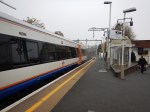
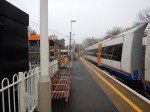
These two pictures were taken of a Class 172 train in Platform 3 of Gospel Oak station.
The two-car Class 172 trains are just over 47 metres long.
In The Aventra Car Length Puzzle, I said that the Class 710 trains for the Overground would have twenty metre long cars, which is similar to the 20.4 metres of the Class 378 trains.
For information other four-car electric units, that Aventras are likely to replace have the following car-lengths
- Class 315 trains – 19.80 metres
- Class 317 trains – 19.83 metres
- Class 319/769 trains – 19.83 or 19.92 metres
- Class 321 trains – 19.95 trains
- Class 455 trains 19.83 trains.
So it looks like the Class 710 train, has been sized as a direct replacement foe much of the Mark 3-based electric multiple units.
This would mean, that no platform lengthening work needs to be done, when the many older units are replaced with new Aventras.
It would also mean that as I talked about in Musical Trains On The Overground, that Aventras could share routes with Class 378 trains without too much trouble on the North and West London Lines.
So will a four-car Class 710 train, which will be about eighty metres long fit Platform 3 at Gospel Oak station?
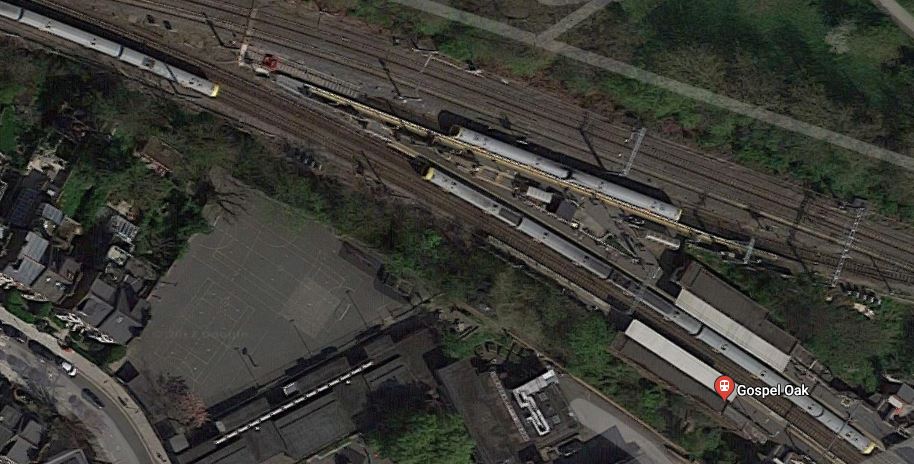
This Google Map shows the station.

Note that a Class 172 train is in Platform 3 and in Platform 2 there is a five-car Class 378 train.
The length of Platform 3 can be ascertained and it looks like that Platform 3 is already long enough for an eighty metre train.
If it isn’t Bombardier certainly have fitted Selective Door Opening to the new trains.
November 15, 2017
Posted by AnonW |
Transport/Travel | Class 172 Train, Class 378 Train, Class 710 Train, Gospel Oak And Barking Line, Gospel Oak Station, London Overground |
2 Comments
 The Anonymous Widower