The Shape Of Things To Come
Yesterday, I needed to go between Moorgate and Tottenham Hale stations.
It was just before the evening Peak and I took the escalators down to the Northern City Line platforms, where a new Class 717 train was waiting.
The increased capacity meant I got a seat and I took the train three stops to Highbury & Islington station.
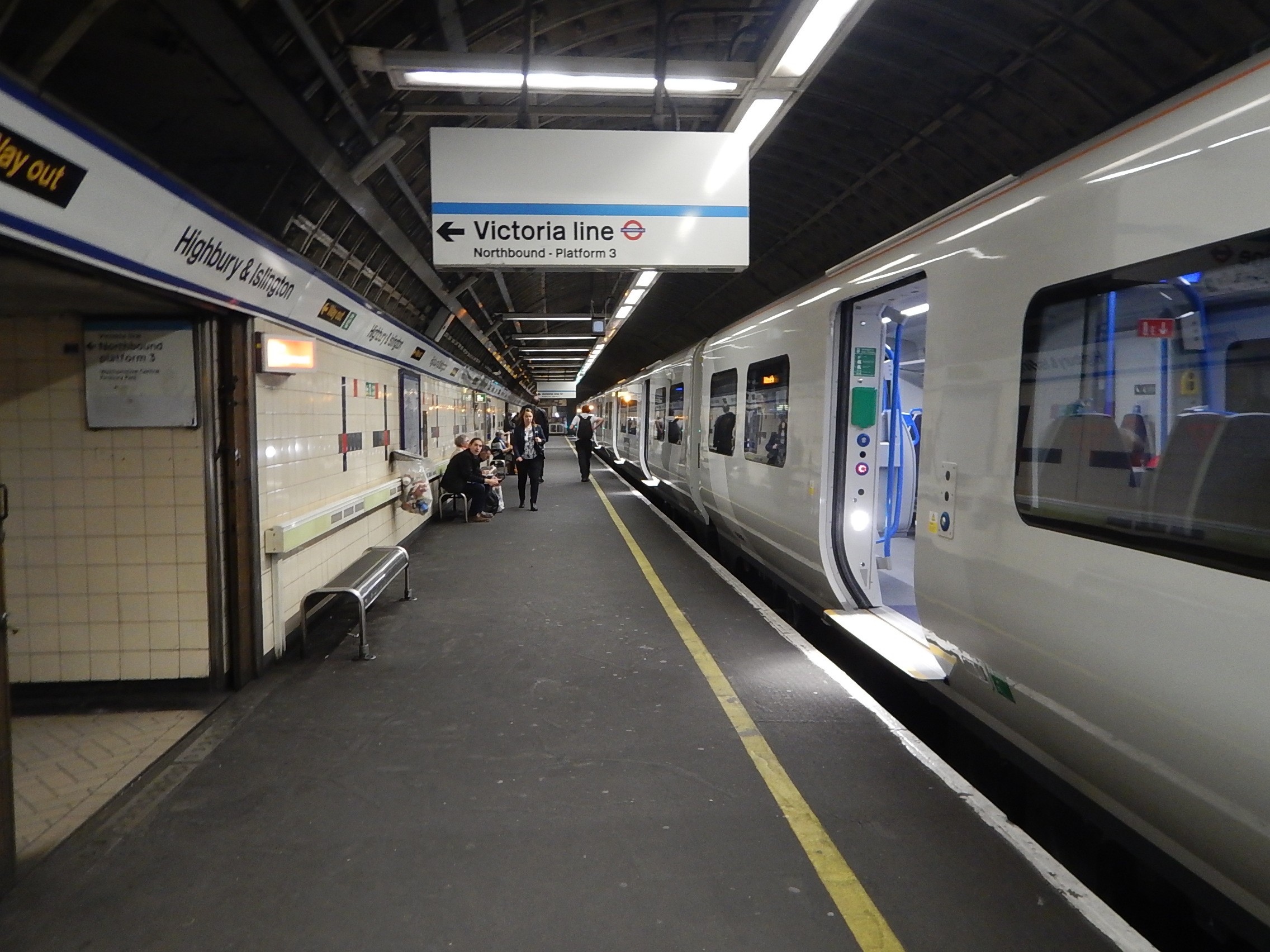
It was then just a walk through a very short tunnel to the Victoria Line and a train to Tottenham Hale.
It was so much more relaxed than squeezing into a crowded and very elderly Class 313 train.
After the timetable change in May, there will be eight trains per hour (tph), as there is now, but given the number of trains in the new fleet and signalling improvements in the pipeline, I feel that this frequency will be increased.
It should also be noted that in the Peak there are twelve tph, which in the future could be used all day.
But in the interim, trains with extra capacity will be very welcome.
From An Ugly Ducking To A Swan
These developments are either underway or planned for the next few years.
- Improved signalling on the Northern City Line.
- Full step-free interchange at Finsbury Park between Moorgate services and Thameslink, Piccadilly and Victoria Lines.
- Higher frequencies on Thameslink and the Piccadilly Line through Finsbury Park
- Full step-free access to the Northern City and Victoria Lines at Highbury & Islington station.
- Full step-free access at Old Street station.
- Hopefully, Essex Road station will be cleaned.
- Crossrail will finally arrive at Moorgate station.
North London’s ugly ducking, which has caused passengers, British Rail and London Underground, so much trouble, will finally have turned into a swan.
I always wonder if the City of London’s transport planners, wish that the Victorians had built the planned extension to a new Lothbury station, close to Bank.
What Will Be The Ultimate Frequency?
Currently the frequency between Alexandra Palace and Moorgate stations in the Peak is twelve tph.
Compare this with the following frequencies.
- Crossrail will be initially 24 tph.
- The East London Line is planned to go to 20 tph
- The Piccadilly Line is currently at 24 tph between Arnos Grove and Acton Town stations in the Peak.
- Thameslink will soon be at 24 tph
- The Victoria Line is currently at 36 tph.
I don’t think it unreasonable that a frequency of at least sixteen and possibly twenty tph between Alexandra Palace and Moorgate stations is achievable.
- Digital signalling and Automatic Train Control will be possible.
- If Dear Old Vicky can turn 36 tph at Brixton and Walthamstow Central stations, with two platforms, then surely 20 tph at Moorgate is possible, once there is better access for passengers to the platforms.
- Alexandra Palace to Moorgate is a double-track railway, that is almost exclusively used by Moorgate services.
- 16-20 tph would make the cross-platform interchange with the Victoria Line at Highbury & Islington station very efficient.
- There are two branches North of Alexandra Palace station. I’m sure each could handle 8-10 tph.
- The Hertford Loop Branch has three terminal stations; Gordon Hill, Hertford North and Stevenage stations.
- The East Coast Main Line has two terminal platforms at Welwyn Garden City station.
I could see the following frequencies.
- Moorgate and Gordon Hill – four tph
- Moorgate and Hertford North – four tph
- Moorgate and Stevenage – four tph
- Moorgate and Welwyn Garden City – four to eight tph
It will be a very high-capacity Metro into Moorgate. There could be a need for a few more trains.
But with increased speed.
Should The Northern City Line Be Shown On The Tube Map?
Increasingly, passengers will use the high-frequency Southern section of the Northern City Line between Alexandra Palace and Moorgate stations, as a new tube line.
So like Thameslink, the arguments will start as to whether this line should be on the Tube Map.
If Crossrail is to be shown, it is my view that nThameslink and the Northern City Line should be shown too!
Forest Gate Station Is Almost Ready For Crossrail
These pictures show the almost complete Forest Gate station.

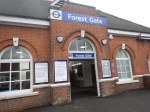


Compare them with these from 2014 in Before Crossrail – Forest Gate.
I wonder what wil happen to the pepper pot. I think it used to be a coffee kiosk.
The staff said, that one is needed.
Maryland Station Is Almost Ready For Crossrail
These pictures show the almost complete Maryland station.
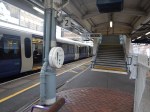


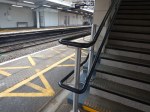

Compare them with these from 2014 in Before Crossrail – Maryland.
A sow’s ear has been turned into a silk purse.
Manor Park Station Is Almost Ready For Crossrail
These pictures show the almost complete Manor Park station.
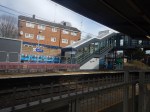


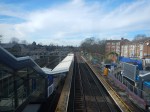


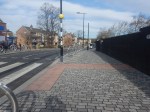
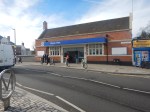
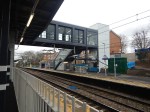


Compare them with these from 2014 in Before Crossrail – Manor Park.
The station has been through an amazing transfomation.
An Automated Shuttle Train On The Brentford Branch Line
The Brentford Branch Line
There are various proposals to add a passenger service to the Brentford Branch Line.
The Brentford Branch Line has the following features.
- It is 4 miles long.
- It is a mixture of single and double-track.
- It is not electrified.
- There is a bay platform at Southall station, that could be used, as a Northern terminal.
- Freight trains also use the line.
If the Greenford Branch can mix an automated shuttle and freight trains, then it would be very likely, that a similar approach would work on this branch.
The train (or tram-train) would have the following features.
- It would be battery-powered.
- It would be highly automated.
- Charging would be carried-out in the bay platform at Southall station.
A service of at least two tph would be provided, that would link Brentford to Crossrail.
TfL Mulls DLR And Overground Extensions To Thamesmead
The title of this post is the same as that of this article on IanVisits.
Overground
TfL’s plan for the Overground would appear to be an extension under or over the River Thames to a single station at Thamesmead and a possible connection to the North Kent Line at Plumstead, Abbey Wood or Belvedere stations.
DLR
The plan for the DLR involves more stations, including a possible one on the North Bank of the Thames. It also serves a proposed massive Peabody housing development, which will provide up to 11,500 new homes.
What Goes East Must Go West
Nothing is said in Ian’s report about train services to Thamesmead.
Overground
On the Overground, there will be four trains per hour (tph) between Gospel Oak and Barking Riverside stations.
There are problems with increasing frequency and capacity, which could be necessary.
- The terminus at Gospel Oak station is only a single platform.
- The Gospel Oak to Barking Line is used by an increasing amount of electrically-haled freight trains.
- There is little space on the line for an additional bay platform to turn trains.
- Trains can’t continue along the North London Line at Gospel Oak, as that line is busy as well.
The only alternative Western terminals are.
- Barking – A bay platform could possibly be squeezed in.
- Enfield Town – Sounds crazy, but there is a chord between Seven Sisters and South Tottenham stations.
- Fenchurch Street – Busy and possibly could be made larger with redevelopment.
- Liverpool Street – Busy and only a slight possibility.
There would also need to be platform lengthening to incorporate trains that are longer than four cars.
Although, it might be possible to run five-car trains using selective door opening on the last car.
DLR
Currently, the DLR has a Peak service of 7.5 tph between Tower Gateway and Becton calling at Shadwell, Limehouse, Westferry, Poplar, Blackwall, East India, Canning Town, Royal Victoria, Custom House, Prince Regent, Royal Albert, Beckton Park, Cyprus, Gallions Reach.
The extension to Thamesmead would branch off around Gallions Reach and the current service has the following connections.
- Shadwell – London Overground
- Canning Town – Jubilee Line
- Royal Victoria – Emirates Air-Line
- Custom House – Crossrail
Will there be enough capacity on this section of the DLR?
- Tower Gateway is a single-platform station and would need to be upgraded to handle more than 7.5 tph.
- Thirty tph run through Shadwell, Limeshouse and Westferry station in the Peak.
- Can stations be lengthened to use longer trains?
It does look to me that the only way to increase capacity would be to extend the DLR to the West, as I outlined in The Bank Station Upgrade And The Western Extension Of The DLR.
This map from TfL shows the possible extension.
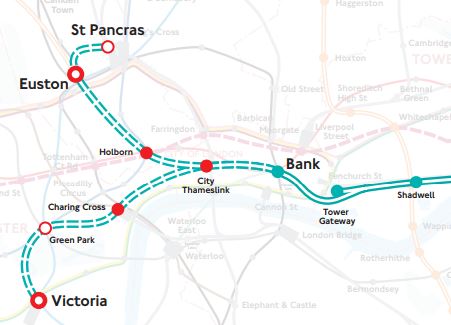
What would be the cost of this extension?
Conclusion
The logic and economics of extending either the Overground or the DLR to Thamesmead are sound for that area of South-East London, but does The Mayor have the budget to complete the other end of the transport links?
A406 North Circular Road ‘Most Congested’ In The UK
The title of this post is the same as that of this article on the BBC.
This is the first paragraph.
Motorists on the UK’s most congested road spend an average of two and a half days a year sitting in traffic.
The section of the A406 between the Hangar Lane Gyratory and Chiswick Roundabout has always been a dreadful road to drive on, as long as I can remember.
These pictures show typical traffic around eleven o’clock in the morning.
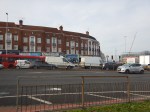

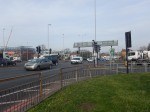




There does seem to be rather a lot of private cars and small commercial vehicles, with only a few HGVs and buses.
I would love to see an analysis of where these journeys start and finish.
Converting the road to a multi-lane dual carriageway wouldn’t be possible, as much of it is lined with private houses and even if it could be built it would just attract more traffic and would need to be widened even more.
There are circular routes further out of London like the M25 and the A412, but this road is an intractable problem.
Perhaps, it needs to be in a Congestion Charge Zone?
But is a solution at hand?
Crossrail
Crossrail, if and when it opens, will not be a direct solution, as it goes East-West and not North-South like the A406 through the area.
But it will give better access to Heathrow, which is a large traffic generator in West London.
Crossrail will link the following to the Airport.
- Canary Wharf
- The City of London
- East London and Essex
- South-East London and Kent
- West End and Paddington
It will do little to help those in North and South London to travel to and from the Airport.
Old Oak Common Station And High Speed Two
The connection of High Speed two and Crossrail could make a difference.
- Passengers using High Speed Two travelling to and from Heathrow, would have an easy route.
- North and North-East Londoners will be able to use the North London Line with a change at Old Oak Common.
- South Londoners will be able to use the West London Line with changes at Old Oak Common and Clapham Junction stations.
But Old Oak Common station won’t open under 2026 at the earliest.
It is needed now.
It also does nothing for those travellers in wide swathes of North-West London.
The West London Orbital Railway
If there is a trusty knight on an immaculate white charger, coming to the rescue, it could be the West London Orbital Railway, although as it would be stitched together from parts of existing and underused infrastructure, it has more of the Dirty Dozen about it.
There would be two routes.
- West Hampstead Thameslink and Hounslow via Cricklewood, Gldstone Park, Neasden, Harlesden, Old Oak Common, Acton Central, South Acton, Brentford, Syon Lane and Isleworth.
- Hendon and Kew Bridge via Brent Cross West, Gldstone Park, Neasden, Harlesden, Old Oak Common, Acton Central and South Acton.
The project has various advantages.
- No substantial amount of new track will be needed.
- It could be run using battery-powered trains.
- Costs would be well under half a billion pounds.
- It would connect to Thameslink and Bakerloo, Jubilee and North London Lines.
When Old Oak Common and High Speed Two open, it would have a direct connection.
I wrote about this railway in detail in New Railway Line For West London Proposed.
North Acton Station
As stated under Development in the Wikipedia entry for North Acton station, there may be reasons to rebuild the station to create a connection between the North London and Central Lines.
This Google Map shows the area around North Acton station.
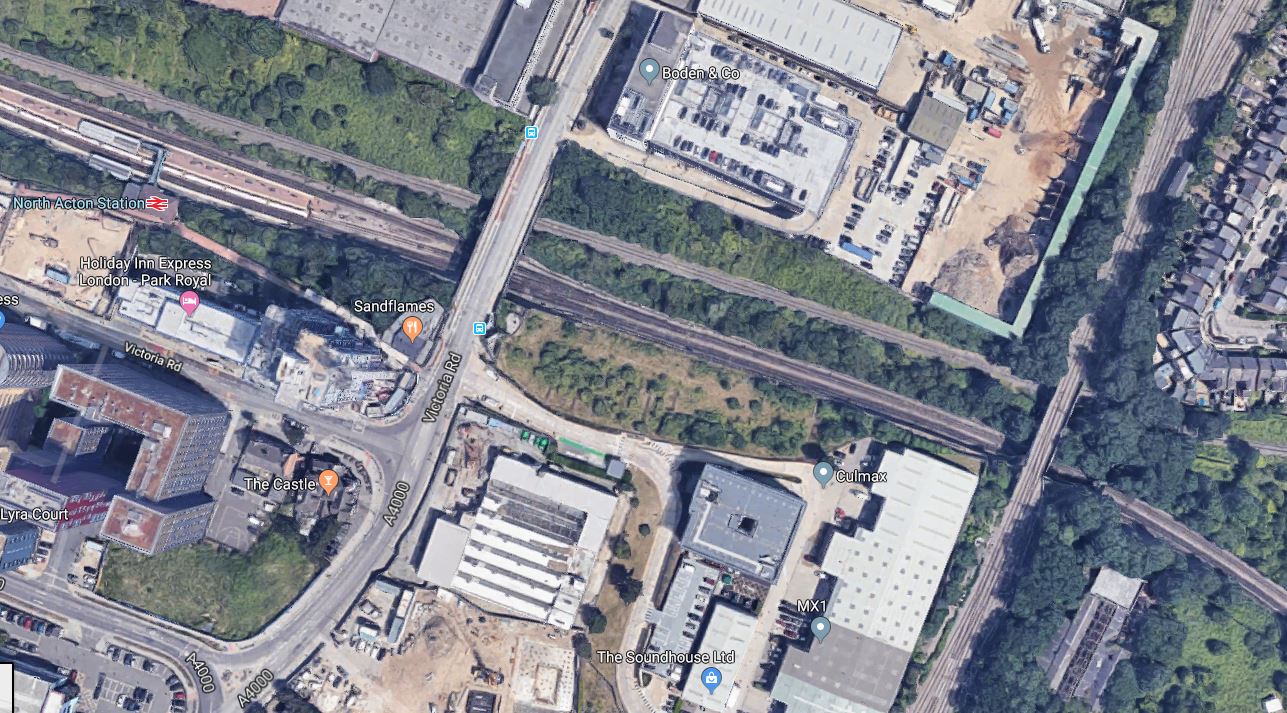
Note.
- North Acton station in the North-West corner of the map.
- The North London Line running North-South to the right of the map.
- The Dudding Hill Line branches off the North London Line at the top of the map.
- The Central Line running East-West through North Acton station and under the North London Line.
- Threading its way through North of the Central Line is the Acton-Northolt Line.
- The Acton-Northolt Line could be developed by Chiltern Railways to give access to a second London terminal at Old Oak Common.
To develop a successful station at North Acton, that tied everything together would be a hard ask.
- The bridge carrying the North London Line is very high.
- The height would make step-free access expensive.
- The frequency of trains on both the North London and Central Lines could be twelve trains per hour (tph).
- At least, there does appear to be plenty of space from the map.
On the other hand, an architect with vision might be able to create a station that was affordable and provided high benefits for passengers.
Conclusion
There’s certainly potential in West London to improve the rail routes, although I’m not sure whether rebuilding North Acton station would be viable.
But, we should start building the West London Orbital Railway immediately.
Hochtief Brought In For Crossrail Station Construction Work
The title of this post is the same as that of this article on Building.
This is the first two paragraphs.
Hochtief has been handed a £40m contract to carry out improvement works at three stations in west London that will be part of the Crossrail route when it opens.
In a deal published to the Official Journal, the German contractor has been chosen to carry out improvement work at Hayes and Harlington, Southall and West Drayton stations.
The article then goes on to give a detailed report oif the state of the Crossrail stations in the central section.
In the article, the new Crossrail boss; Mark Wild was also very forthcoming about the line’s problem.
My Project Management experience, says to me, that the standard of planning and reporting on the project wasn’t of the best.
Deep Insights Into Crossrail
London Reconnections is a web site, that often gives deep insights into rail projects in the London area.
Recently, they have published two articles about Crossrail.
I have read every word of both articles and feel that, the Project Management on Crossrail has been severely lacking.
If I go back to the days of Artemis, Project Managers were always using our innovative graphics to communicate all of the details of project costs and status to managers and stakeholders.
I can remember in one case, we were the bringers of terrible news about costs to a major company. One of our project managers had distilled a very large project to a series of graphics on a single sheet of A3 paper, so senior management couldn’t avoid our message.
Today, the company would probably shoot the messenger, but we went on to sell the company over a dozen systems.
I know nothing of modern Project Management systems, but surely they are more capable than Artemis, which was largely written by myself and others in the 1980s.
 The Anonymous Widower