Welcome to IKEA
I finally got the spice rack last night at IKEA in Croydon.
It’s quite an easy journey by public transport, as I just get the 21/141 bus to London Bridge, a train to East Croydon and then the Tramlink to Ampere Way.
In a strange way, the journey summed up one of the things I like about London; friendliness. I chatted about my troubles and travels to a pleasant guy called Duncan from the Bank of England and then as I waited for the tram, I talked to the tram driver, who was to take my tram to Wimbledon. Incidentally, Duncan doesn’t have a car, so like me he uses public transport everywhere. Perhaps, we’re ahead of our time and in a few years or so, non-driving will be the normal thing to do.
The only problem, I had on the journey down, was caused by a slight lack of signage at East Croydon, my uncertainty about how to use the tram and which one to get.
Duncan pointed me at this book; The Brain That Changes Itself. I shall check it out!
I was then presented to this at IKEA.

Welcome to IKEA
Just look at those concrete benches, that are ideally placed to bump the shins of people with limited vision. It wasn’t the easiest walk to and from the tram stop, with some roads controlled by pedestrian lights and others that worked on the cross-quickly-and-be-lucky principle.
Coming back was quite easy, in that I took the tram to West Croydon and then took the East London Line to Dalston Junction. But there is no signage at West Croydon to the Overground from the tram stop. Supposedly, plans are in place for a better connection. At Dalston, I was even lucky enough to avoid the five minute walk, by getting a convenient bus along the Balls Pond Road.
The spice rack is now on the wall.
Trains on the Western Curve
Yesterday, as I went to Stratford and was getting my train at Dalston Kingsland, I saw a train test running on the new Western Curve, which connects the East London Line to Highbury and Islington.
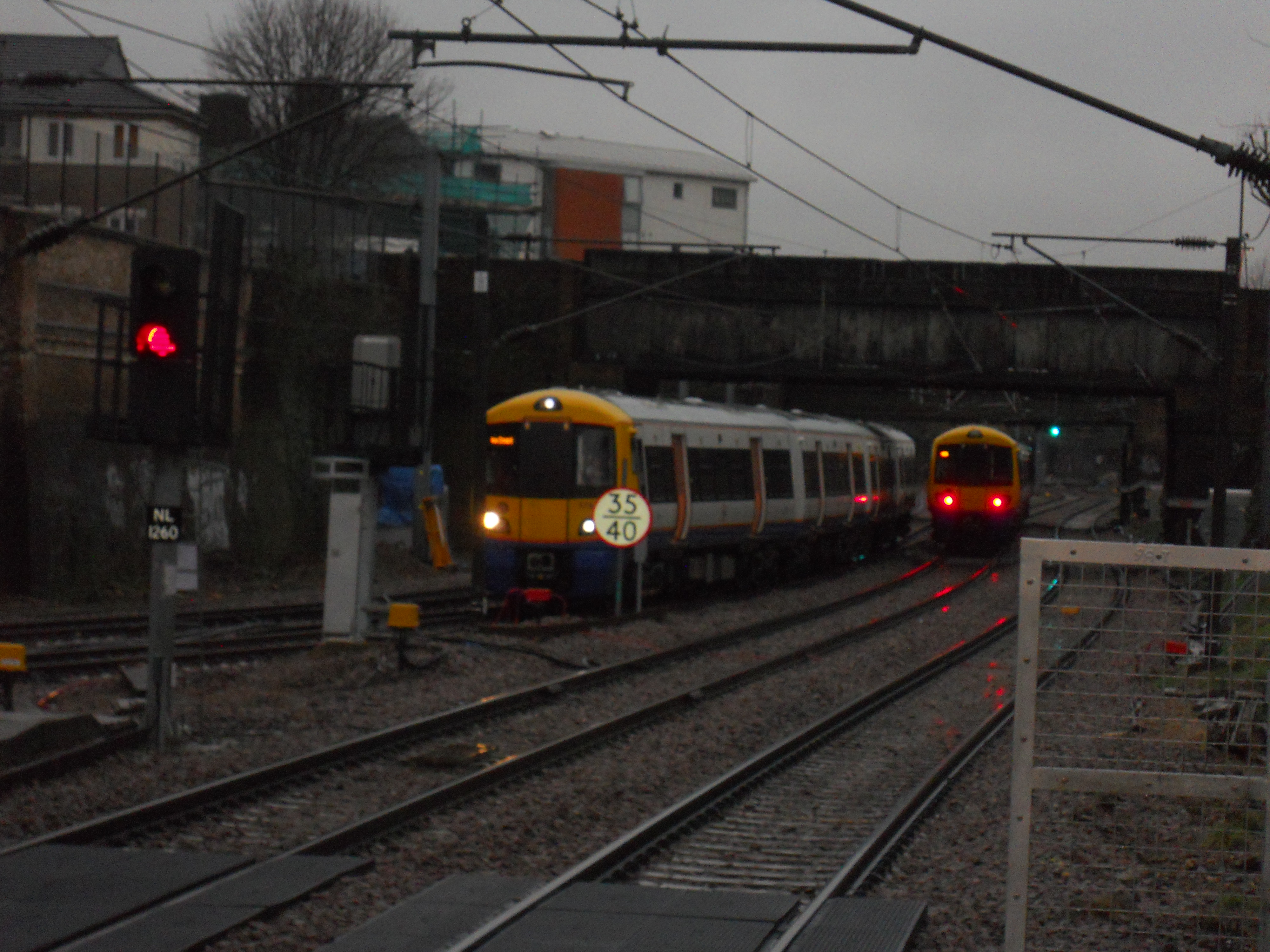
A Train on the Western Curve at Dalston
The train on the right is on the North London Line travelling towards Highbury and Islington and on to Willesden Junction and Richmond.
I think the only problem with these two London Overground lines, is that they are generating a lot of traffic and they might turn out to be victims of their own success.
The Golden Age of Tunneling
London is one of the most dug under cities in the world and has been for many years.
The first large tunnels under London were Sir Joseph Bazalgette‘s Victorian sewers, built in response to the Great Stink. In some ways it was a large and very expensive scheme, but it started the clean-up of the Thames and effectively removed cholera from the City. It was in some ways the first great project, as it did what it said in the spec, vast numbers of people weren’t killed builling it and lots of it still works today. It is all documented in an excellent book; The Great Stink of London: Sir Joseph Bazalgette and the Cleansing of the Victorian Metropolis
Then came the Underground described so well in the Christian Wolmar’s book; The Subterranean Railway: How the London Underground Was Built and How it Changed the City Forever
Since the Second World War, we have seen a few tunneling projects and the reuse of some of the old ones.
The Victoria Line, the world’s first totally automated passenger railway was built in the 1960s. We missed a trick here, as we never realised what we had built. So the automation was vacuum tube, but for well over thirty years it showed how a well-designed underground railway could perform. It is now being upgraded with new signalling and new trains and the old reliability is rumoured to be suffering. Everybody is blaming the convenient scapegoat of the old 1967 trains running in partnership with the new ones, until all the new are delivered. I don’t! I blame bad project design and management. In the 1960s they got the automation absolutely correct and created a good system. They should have replaced all the old stuff with something that was modern and compatible and then built new trains, that were compatible with the old signalling.
They should also have used the principles of the line; no junctions, totally underground, hump-backed stations to save energy, full automation to create new lines where they were needed. But they didn’t, as the Victoria Line wasn’t sexy and didn’t appeal to the vanity of politicians. But it was and still is a superb design.
The Jubilee Line was then created by splitting the Bakerloo. The extension to Stratford was built on a grand scale and has some of the most amazing stations in the world. Was it the first example of bad co-operation between bankers and politicians, designed to appeal to both their vanities? It was also designed to serve that other monument to the vanity of politicians; the Dome.
In some ways a lot of the design of the extension of the Jubilee line, with large stations and platform edge doors were an attempt to future proof the line and in some ways, this has been vindicated by the decision to stage the 2012 Olympics at Stratford and the decision to build other lines which interchange with it. Only time will tell if the original cost was worth it.
In some ways the design of the Jubilee shows just how good the design of the Victoria was and the trick we missed was not building the Jubilee to the principles of the earlier line. Even now, despite being still a relatively new line, it is still being constantly upgraded.
There was also the building of High Speed One, which tunneled into St. Pancras from East London. Did they get this right? Substantially yes and it seems to work, although the Eurostar trains have suffered reliability problems. But that’s not down to the tunnels.
Other unqualified successes are the Docklands Light Railway extensions to Lewisham and Woolwich in tunnels under the Thames. The original DLR was built down to a cost, but in some ways this has proven to be a virtue, as like Topsy it keeps growing and has earned a big place in the hearts of those who use it. It will also play a big part in getting people to the Olympics.
But two of London’s most successful tunneling projects are reuse of old tunnels; Thameslink and the East London Line.
Thameslink was originally built by connecting the suburban lines running out of St. Pancras to those running south of London to Gatwick and Brighton using the old Snow Hill Tunnel. The economic argument says that as you do away with expensive terminal platforms in London, you can spend the money to buy more trains and electrify the lines. Thameslink was a victim of it’s own success and the necessary upgrades with a new station over the river at Blackfriars and twelve-coach trains are running many years late and billions of pounds over budget. Perhaps we needed a less elaborate Julibee Line, that interfaced properly with Thameslink?
The new East London Line uses the Thames Tunnel under the Thames. In some ways, it is a modest scheme, but I believe that like the DLR, it’ll prove to be an unqualified success. It surely must be the only new railway in the world running through a tunnel built in the first half of the nineteenth century. The tunnel surely is the supreme monument to its creator, Sir Marc Brunel and his more famous son, Isambard Kingdom Brunel, who was engineer in charge for much of the building.
Now, two major tunneling projects are in progress; CrossRail, which is actually being built and High Speed Two, which is just being planned. I am dubious about the latter, as I think that the money could be better spent upgrading existing lines and trains.
But in some ways to London, the most important scheme is the creation of electrical cable tunnels under the city to carry the high voltage mains here, there and everywhere. This PDF explains the project and shows how good thinking and engineering can benefit everyone.
So perhaps the golden age of tunneling will arrive in the next few years.
The Western Curve Appears to be Going Well
At present there is no link between the new East London Line and the old North London Line, so passengers wishing to transfer have to walk down the busy road, that connects the two stations, as I did yesterday, when I needed to divert because of the snow.
But the Western Curve which connects the two lines appears to be a project that is running to time, if you read this article.
Geffrye Museum
Today I paid a visit to the Geffrye Museum, which is just a short walk from Hoxton Station on the East London Line.
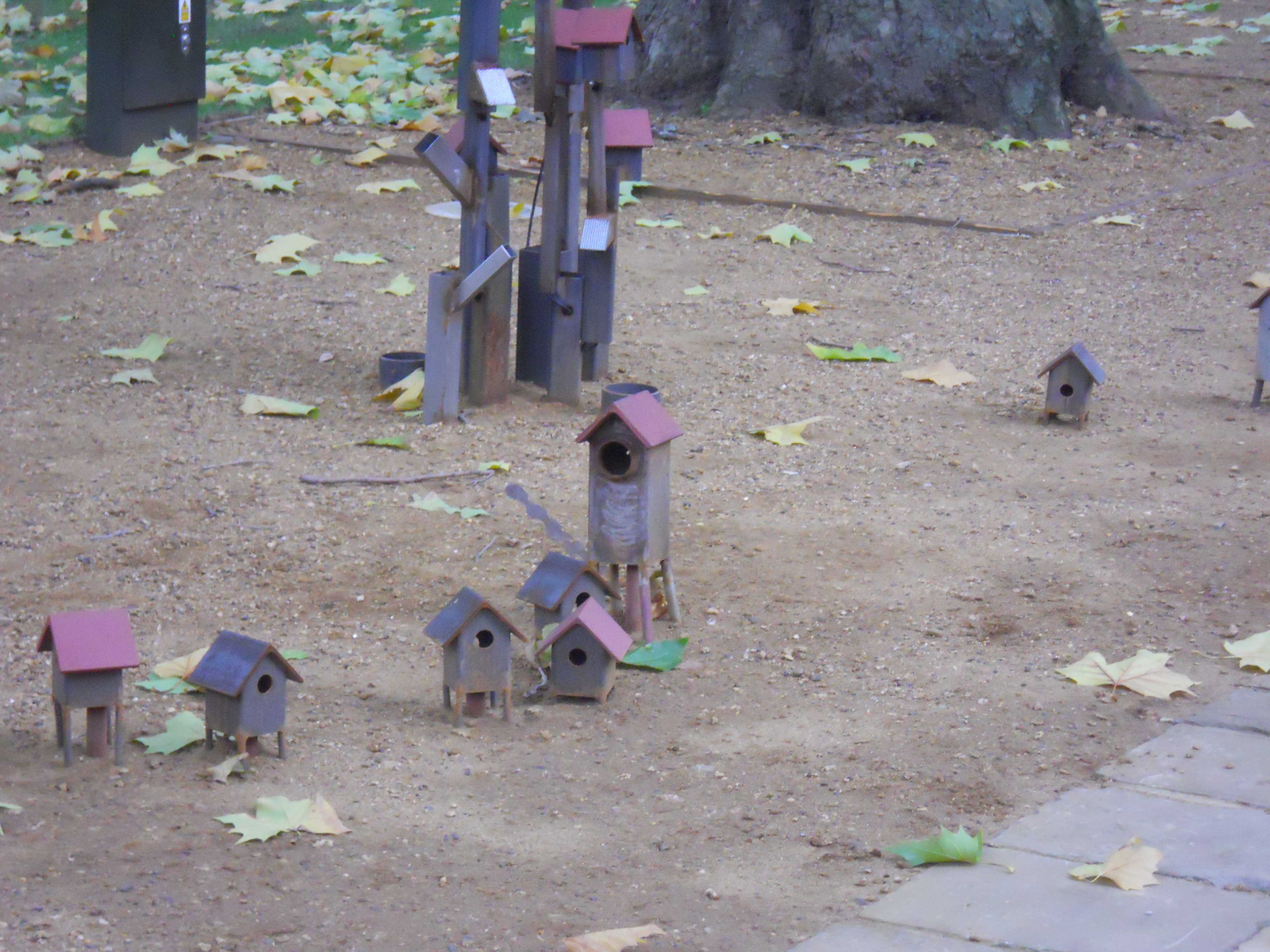

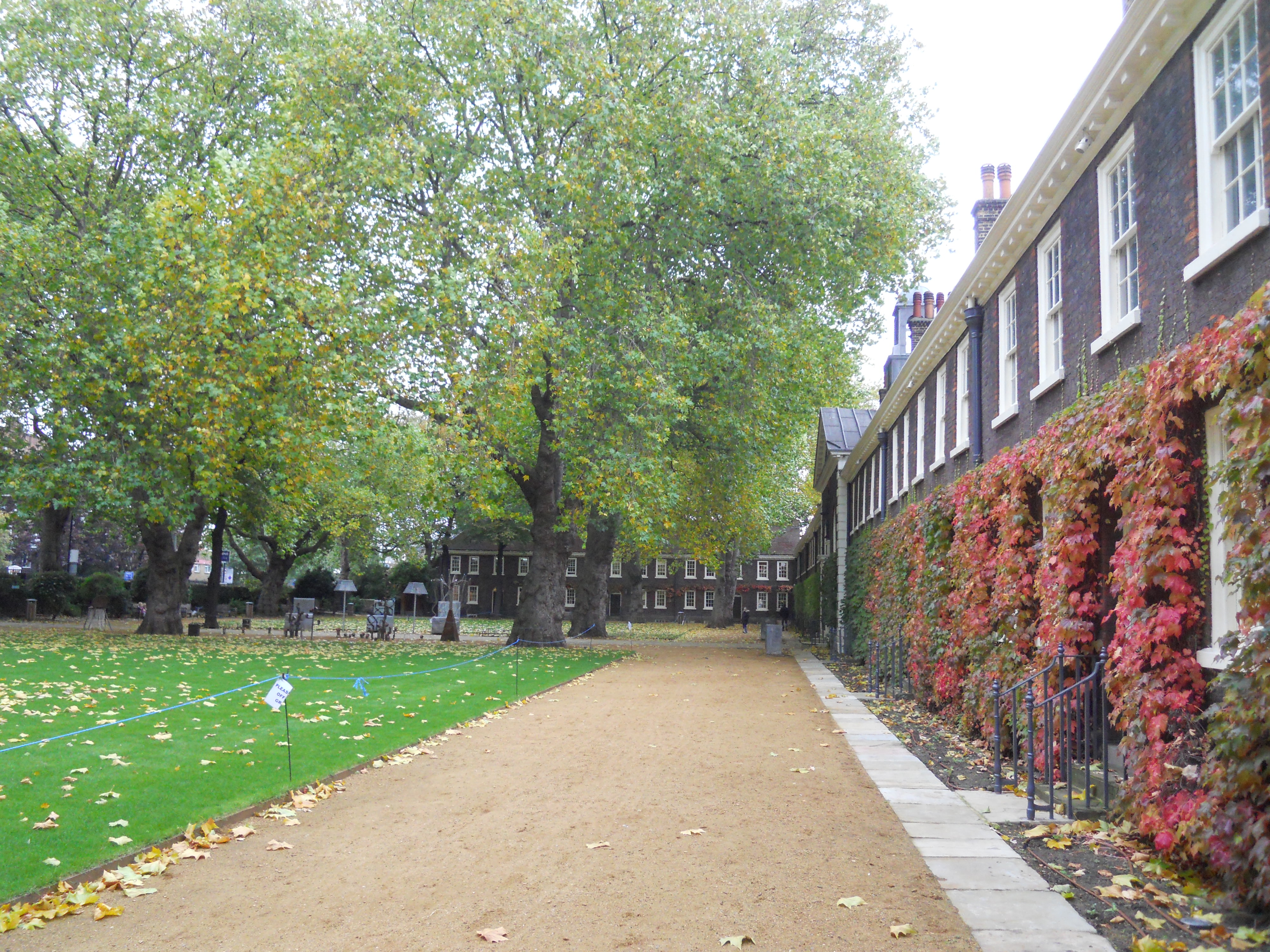
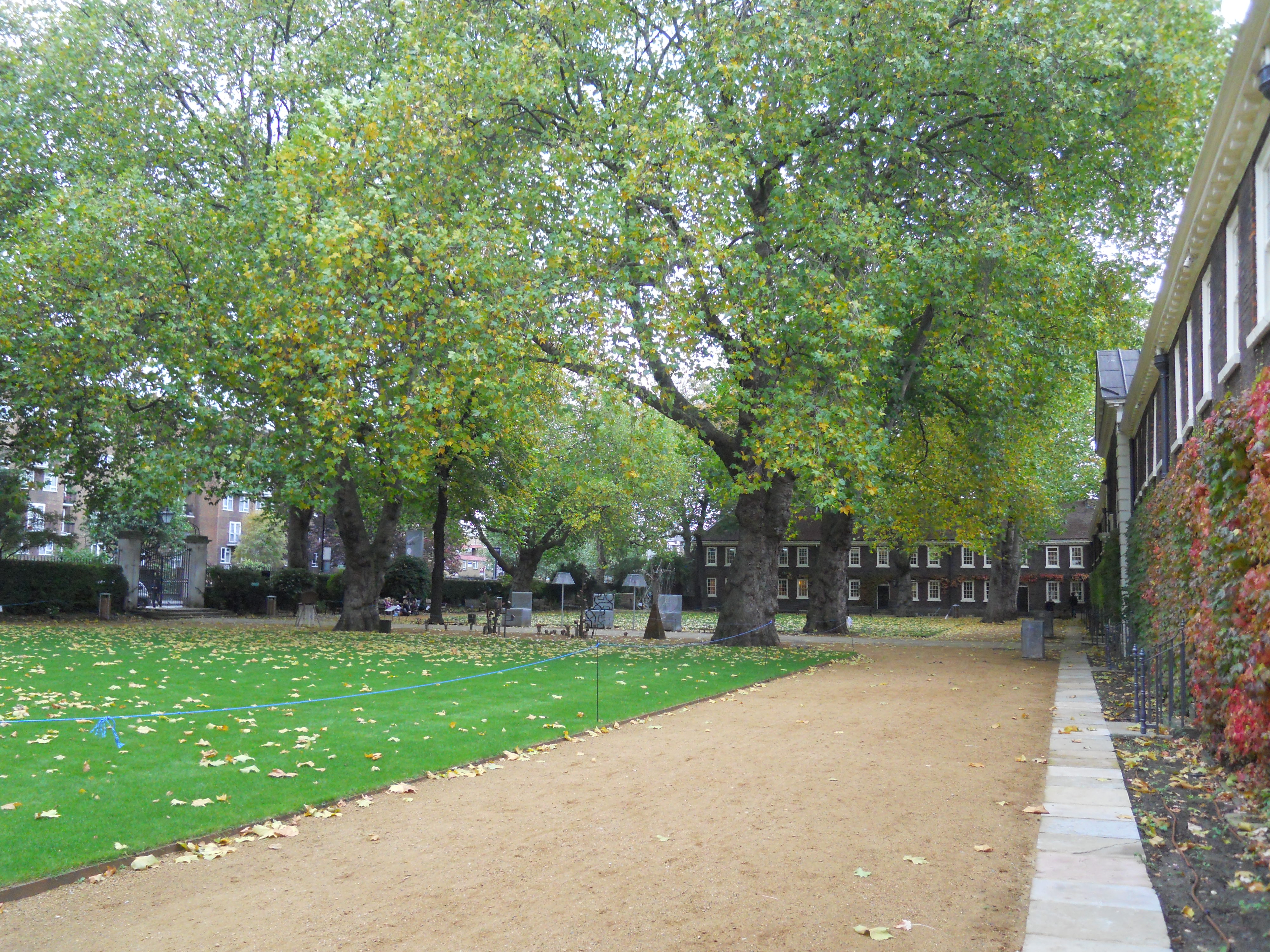
It is a charming museum, which has a succession of interiors of tytpical English houses over the last few centuries.
The museum is well worth a visit.
Towards the Match
I was mainly gpoing to London to see Ipswich play at Millwall.
I didn’t take a direct route, as I had time to spare and wanted to do one or two things before the match.
So from Tottenham Hale, I took a couple of stops on the Victoria Line to Highbury and Islington, where I took the North London Line to Canonbury.
A house I am interested in, lies betwwen there and Dalston Junction and I wanted to see which was the nearest station. The first leg took eleven minutes and the second ten, so Dalston Junction is closer and will be a couple of minutes so, when they complete the station. It’s also downhill from Canonbury and flat to Dalston Junction, which means that it is an easy walk to Dalston to travel away and another easy one to get home from Canonbury. In some ways it won’t matter too much, as from May 2011, the two stations will just be two stops apart on the East London Line.
FRom Dalston Junction, I took the East London Line south to Rotherhithe, with the aim of seeing the Brunel Museum; which is one of the many museums on the line. I took this photo of the brickwork on the entrance to the station.

Brickwork at Rotherhithe Station
I’ve always liked good brickwork and in my life, I’ve designed and had built several important brick features including a traditional crinkle-crankle wall at Debach and my round office here. Are we training bricklayers to be able to do the difficult stuff? Ralph who did the wall, used to work in rubber gloves to save his hands and spent his holidays looking at buildig techniques all over the world. His colleagues used to laugh at him, but he certainly knew how to lay bricks.
Bad Driving
There has been a lot of reports about the reasons why people drive badly today. Various solutions are being proposed including restrictions on young drivers.
I have driven for many years, but don’t now and I may never do again. But I’m happy to use buses and trains, with lifts to the nearest station.
I sometimes think that the reason we have a lot of bad driving is because people are pressured to use their cars, by lifestyle, family or jobs.
Let’s look at some categories, who get blamed for bad driving and accidents.
- Young drivers often have no other means, except a battered car to get to work or have a night out. It will be interesting to see if things like the new East London Line and the extensions to the Manchester Tram, actually cut accidents involving young drivers, as they take quality public transport instead.
- Elderly drivers who won’t give up their car, as they need it for the shops etc. You see quite a few round here, who should not drive. But there is no alternative.
- Company car drivers, who feel pressured to use the car, rather than perhaps take the train. How many companies refuse train expenses to people with company cars?
- And what about wives who are pressured to drive their husbands after a good meal out!
I have recently seen a change in that some people I know have swapped their cars for trains on longer journeys.
This needs to be encouraged, by more comfortable trains, better stations, more parking at stations, better connections and perks like free WiFi. I know of one person, who now commutes to his office in the nearest big city by bus because of the WiFi.
One thing that is accelerating change to rail and bus is Railcards and passes, as I found on my trip to Great Yarmouth.
Exchange at Whitechapel
On Friday morning, I walked from the Raj Hotel in the Essex Road through de Beauvoir Town to Dalston Junction Station to catch the East London Line. It was a pleasant walk through one of the most unusual and pleasant parts of London and I was using the train to go to the Museum of London after a change at Whitechapel to the Hammersmith and City Line for Barbican.
The simple change took me longer than it should, as in the first place, signage from the East London line to the Hammersmith and City wasn’t good, a train indicator board was broken and then I had to wait some time for a train. I did talk to someone on the platform and he was helpful and acknowledged the problem. I hope it improves, as it will become an important link between the Overground and the Underground.
I should say that I’ve used Whitechapel for years and it really isn’t any worse than it was when my granddaughter was born in the London Hospital. I suspect there’s a lot of problems because the interchange is where it is, with pavements and a street market outside and limited space inside.
I would also suspect that as Whitechapel Station is going to be a major interchange on CrossRail, that the problems I encountered will be designed out in the years to come.
Liverpool Street to Shoreditch High Street
This is a walking connection between the main-line station and the East London Line. I did it today, by walking across to Broadgate and then down the side of the station. It’s still quite long, but it is a better walk than going along Bishopsgate. There is also a convenient light-controlled crossing.
You also get this back view of Liverpool Street Station.
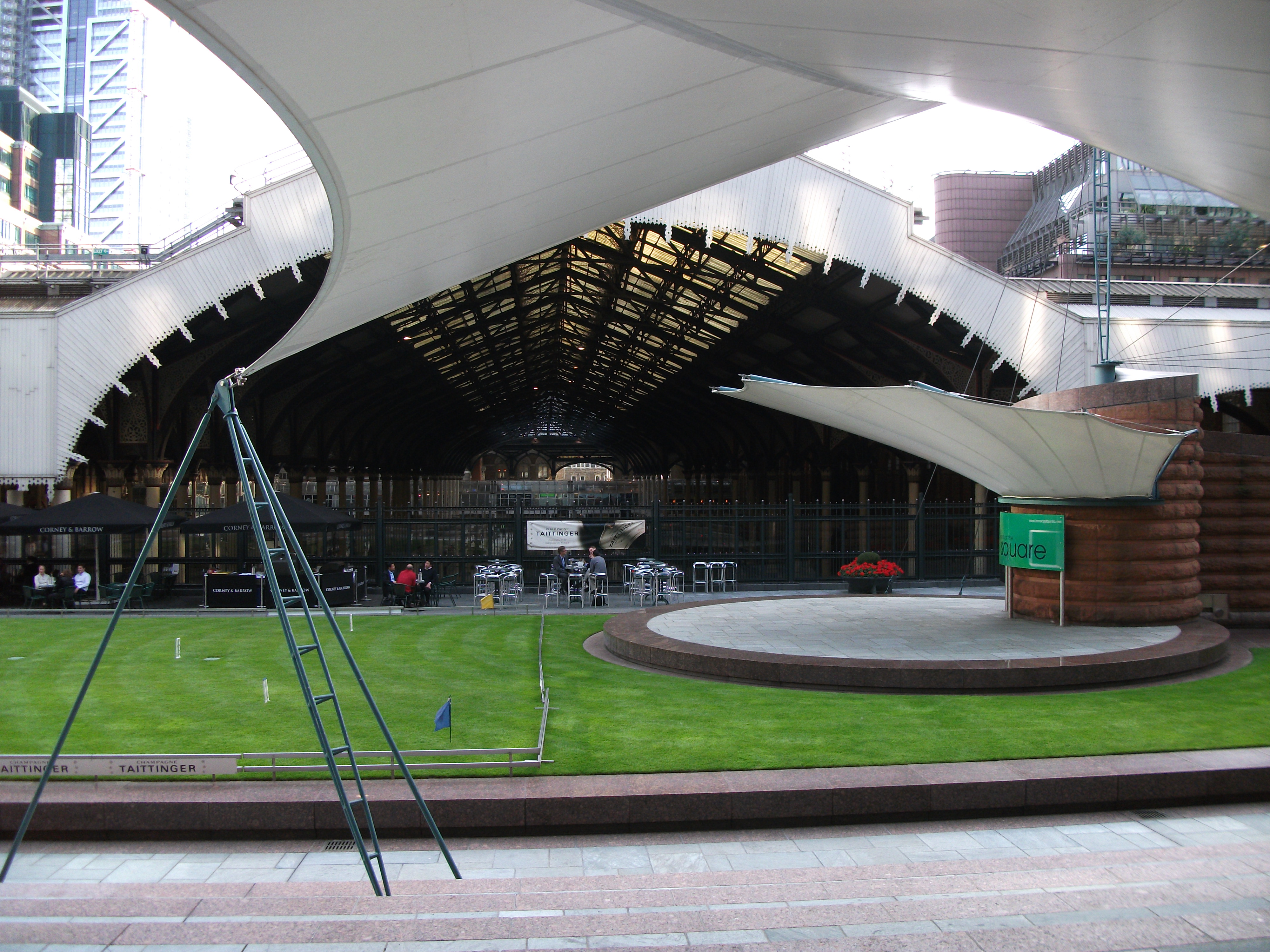
Back View of Liverpool Street Station
Whatever they do in the future, some signs are needed now!
Thoughts on the East London Line
I’ve now had three trips on the East London Line and you can see how it is fitting into the fabric of society in East and South London.
Obviously, there are things still to be done, like the connection at Dalston to avoid the short walk between the two stations. Talking to a policeman at Norwood Junction after the Crystal Palace trip, he said that people aren’t sure yet which station to use for various places. So perhaps, Transport for London need to put up similar route finders on the Overground, as they have on bus stops. This would direct football fans going to Crystal Palace to Norwood Junction for example.
What happens too, if say people from say Liverpool or Manchester arriving at Euston station ask how they get to Crystal Palace for the football or somewhere else in the area served by the East London Line. You could walk to Euston Square and take the Circle Line to Liverpool Street and walk to Shoreditch High Street, the Metropolitan LIne to Whitechapel, or the Northern to London Bridge and the Jubilee to Canada Water. The choice is yours, but not easy for a non-expert. I think this illustrates the problem outlined by the policeman at Norwood Junction; the East London Line needs time for people to get used to how and where it runs.
If I take my example to its logical conclusion, you could ask why people from the north don’t use Watford Junction and possibly Willesden Junction to change to the Overground. You wouldn’t have changed to the old North London Line, but now it’s a very much better and a lot more comfortable than it used to be. So I would feel that we’ll see some developments and changes to make this easier. It would also effectively add capacity to Euston, by removing those, who perhaps wanted to go to Richmond, Islington or South East London from the station.
I’ll end this post by looking at the positives. Everything is clean, the staff seem competent and happy in their work, the trains seem to run to time and as at present there are always staff on the trains, there seems no sign of any trouble.
Perhaps, though my journey back from Norwood Junction on Saturday summed up the line. The train was fairly full, but there were still enough seats for those who wanted one and the train was cool and well-ventilated. It was much better than doing a similar journey on the Underground.
It will be interesting to see how it performs during the Olympics. But at least we know it will probably be there!
 The Anonymous Widower