Honor Oak Park Station
Honor Oak Park station is on the East London Line and it is a station I passed through on the way to see Ipswich play at Crystal Palace this afternoon.
But why is it spelt the American way?
It is actually spelt in the proper old English way from the Latin roots, which of course Americans would have originally used. There is a discussion here. Note that the girl’s name as in, the actress, Honor Blackman is also spelt without the u.
So don’t write to London Overground and complain!
Looking at the New Junctions South of Surrey Quays
At present two lines meet south of Surrey Quays station on the East London line of the London Overground.
- The New Cross Gate/Crystal Palace/Croydon branch.
- The New Cross branch.
These pictures show how the new extension to Clapham Junction station is being threaded through.
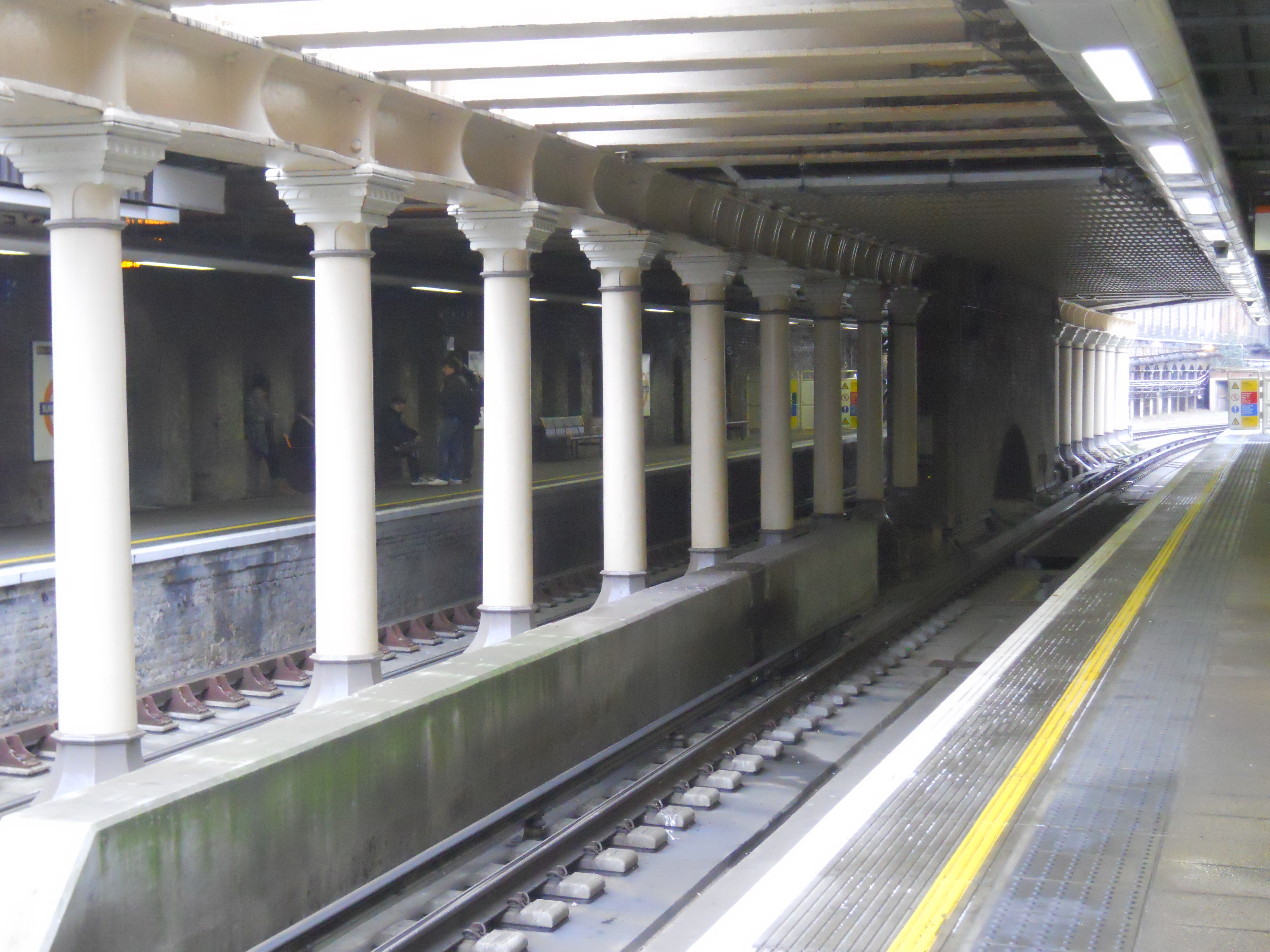
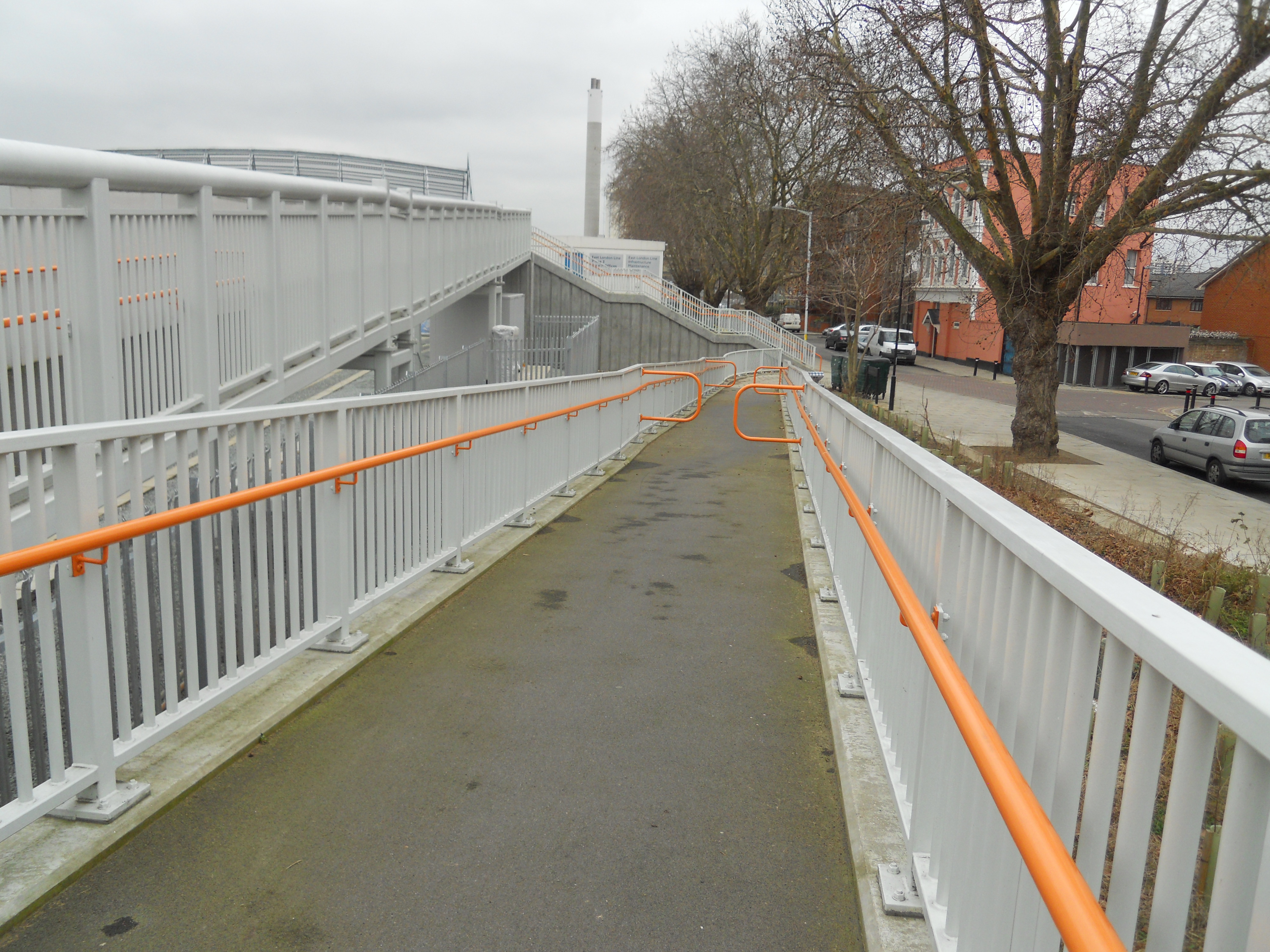
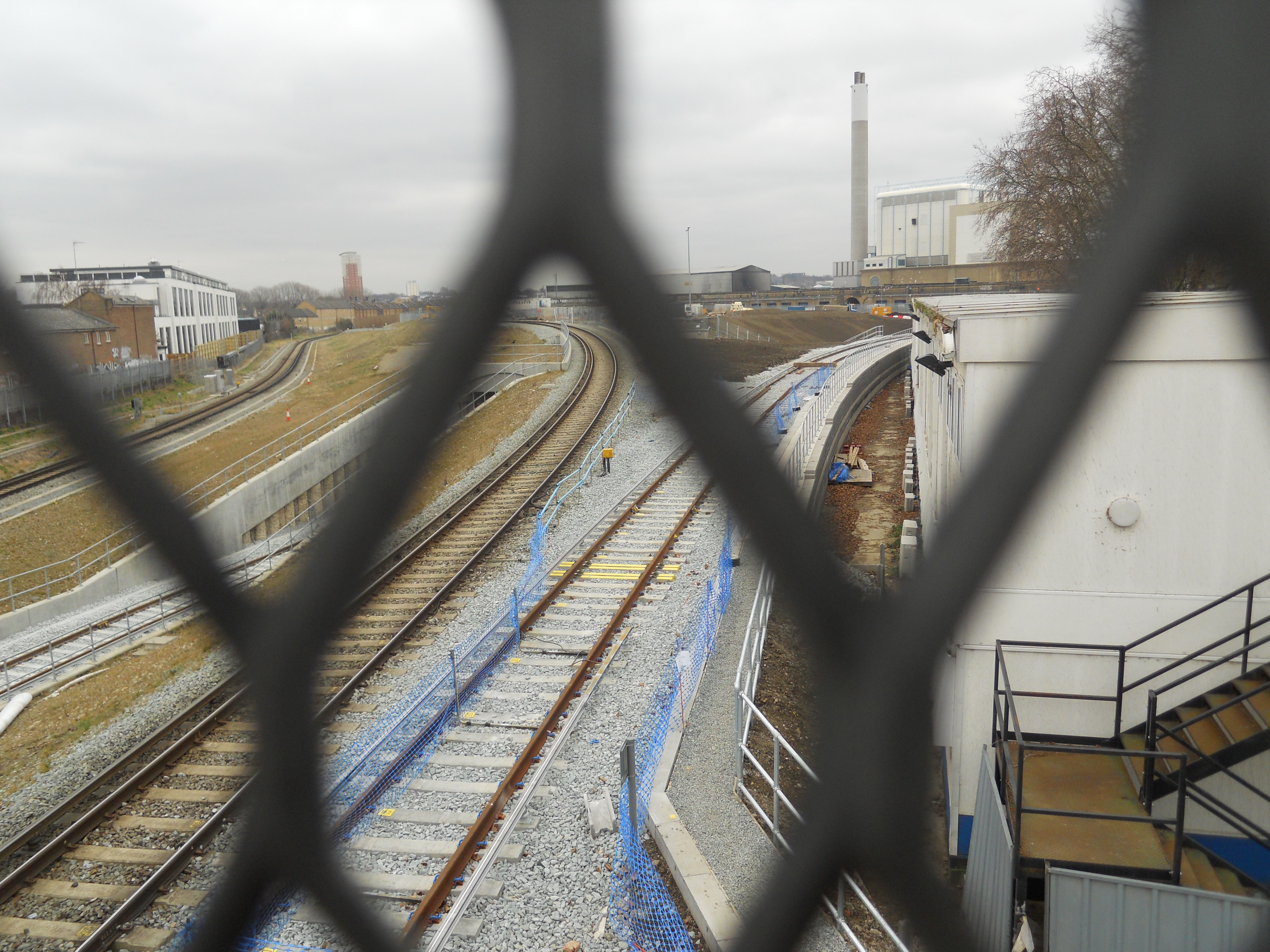
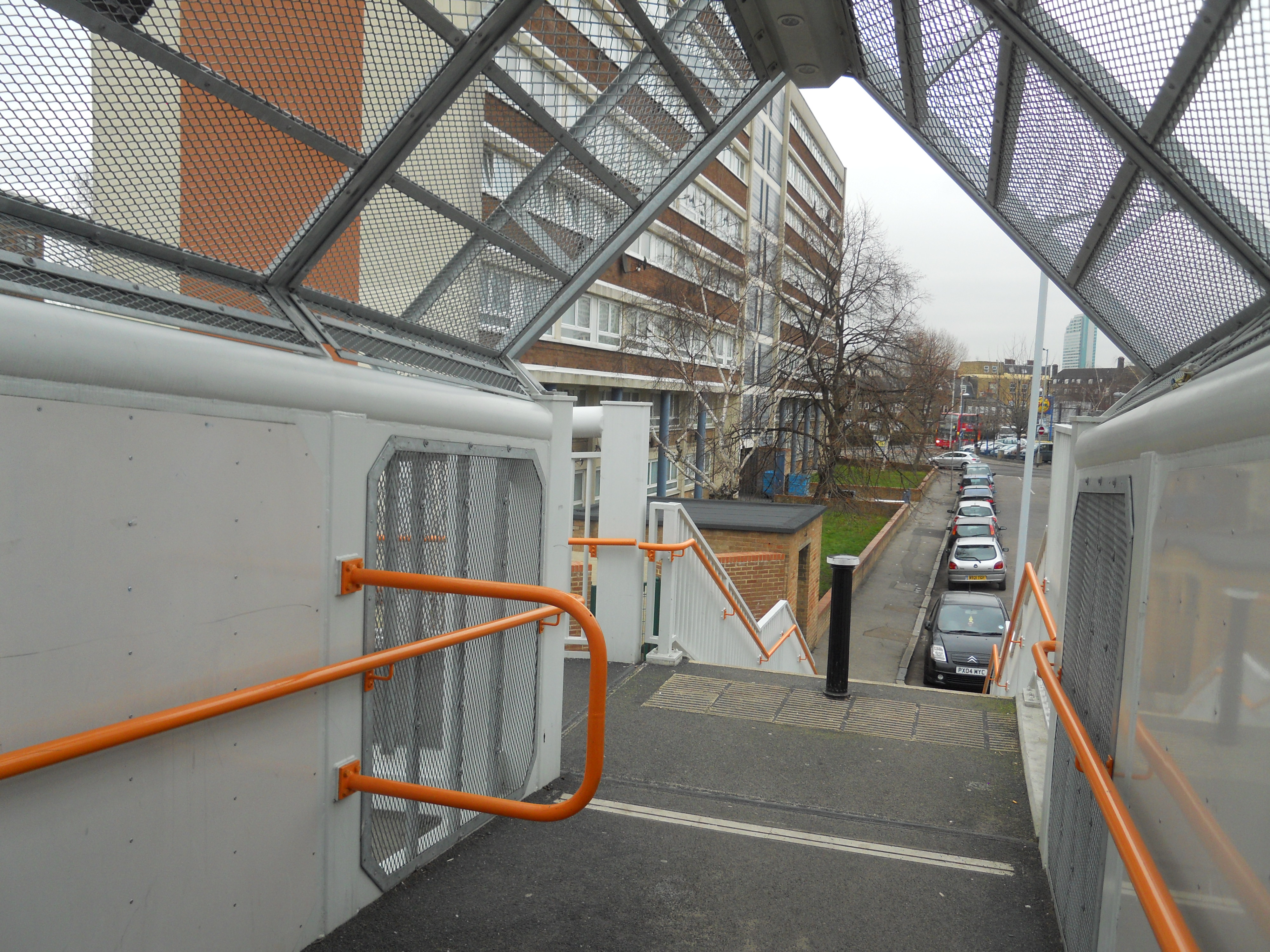
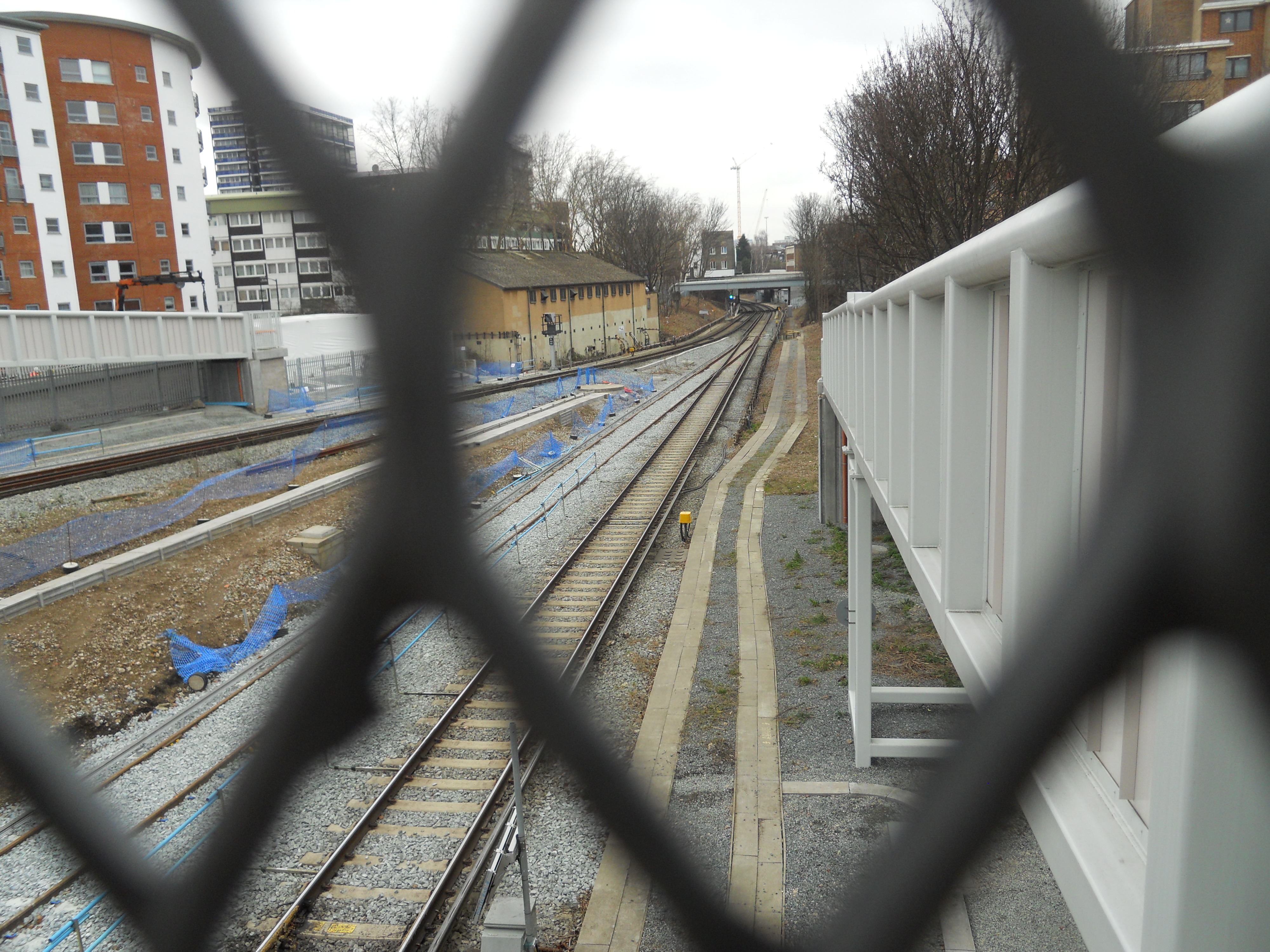
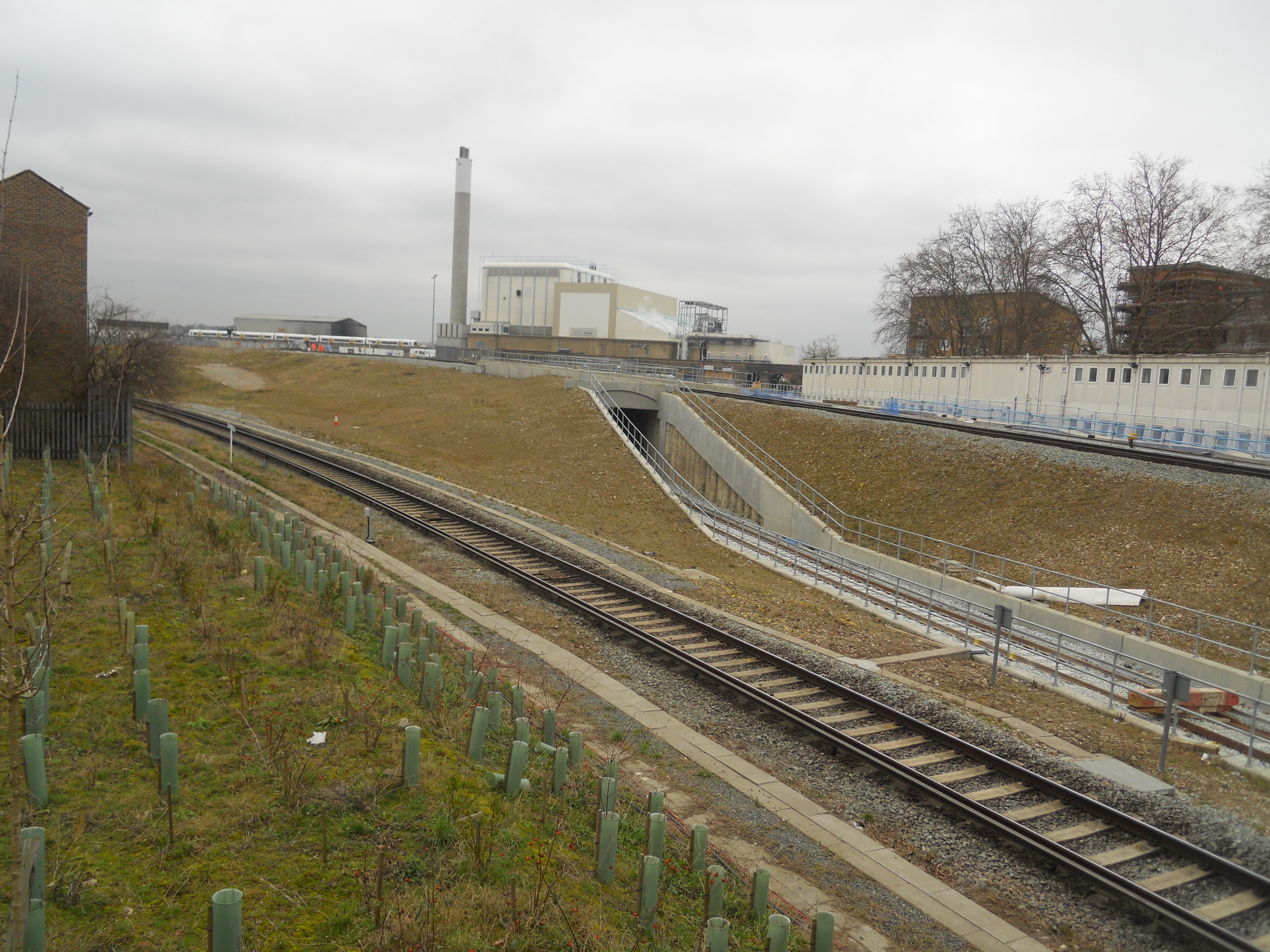
It has been reported that all the track has now been laid to connect from Surrey Quays to the southern part of the East London line.
This engineering has all been accomplished in a few months, which just shows how much better we art at this type of work, than a few years ago.
Although the bridge over the line, shown in the pictures, is rather simple, it has been designed so that no-one can throw anything onto the track, get access onto it, without completely stopping pedestrians watching the trains. Perhaps, the man who designed it, was a train spotter in his youth. It was certainly well-used in the ten minutes or so, I was there.
Missing Links on the Overground
Late this year, the extension of the East London line of the London Overground to Clapham Junction station will be opened. I say “will be opened” as given Transport for London‘s record, they usually hit their own targets.
You will then be able to do all sort of circular journeys around London, but there will still be a couple of missing links in the complete circle or if you include Stratford, the circle and stub. But it’s never been intended that you get on one train and go all the way round.
Here are the missing links.
Passing through Clapham Junction from east to north
Passing through Clapham Junction from north to east
These two have been solved by an elegant solution, where the northbound trains use one end of the platform and the eastbound the other. So passengers just walk a few metres to their next train or where it is expected.
East London line stations to Stratford
The standard way is to change from the East London line to the North London line at Canonbury or Highbury and Islington, which involves a lift-assisted bridge crossing. But you can always go to Canada Water and then take the Jubilee line to Stratford. They might rebuild the Eastern Curve at Dalston, but I think that will only happen, if they need to send significant traffic from Stratford to South London.
Stratford to East London line stations
The standard way is to change from the North London line to the Line London line at Canonbury or Highbury and Islington, which involves just a walk across the platform.
East London line stations to Richmond
Richmond to East London line stations
These two will again need a lift assisted walk over the tracks at Canonbury or Highbury and Islington. I’d take the second as you have a bigger choice of direct stations without changing when travelling from Richmond.
To show how I use it, I’ll give a simple example. Say, I’ve been to the Eastfield John Lewis at Stratford and I’m bringing home a heavy parcel, I’ll get off at Canonbury and take the first train to Dalston Junction, where I’ll often take the first bus home, to avoid carrying the parcel. It’s also step-free all the way.
The reinstatement of the Dalston Eastern Curve would save a few minutes, but then you’d probably have to wait a couple for a suitable train at Stratford. So from a passenger point of view, it’s probably not worth building, especially, as you can use the Jubilee line as a by-pass to South London. In fact the Jubilee is very much circular tube through South London.
A Video of the Thames Tunnel
I went back to the Thames Tunnel on the East London line and took a video of an approaching train.
The video was taken from the same place where I took the still images in Wapping station.
Looking At the Thames Tunnel
The Thames Tunnel is the oldest underwater tunnel in the world and was built between 1825 and 1843 by Marc Brunel and his more famous son Isambard. It is now used to carry the East London line under the Thames and you can actually look into the tunnel from the platforms at Wapping station.
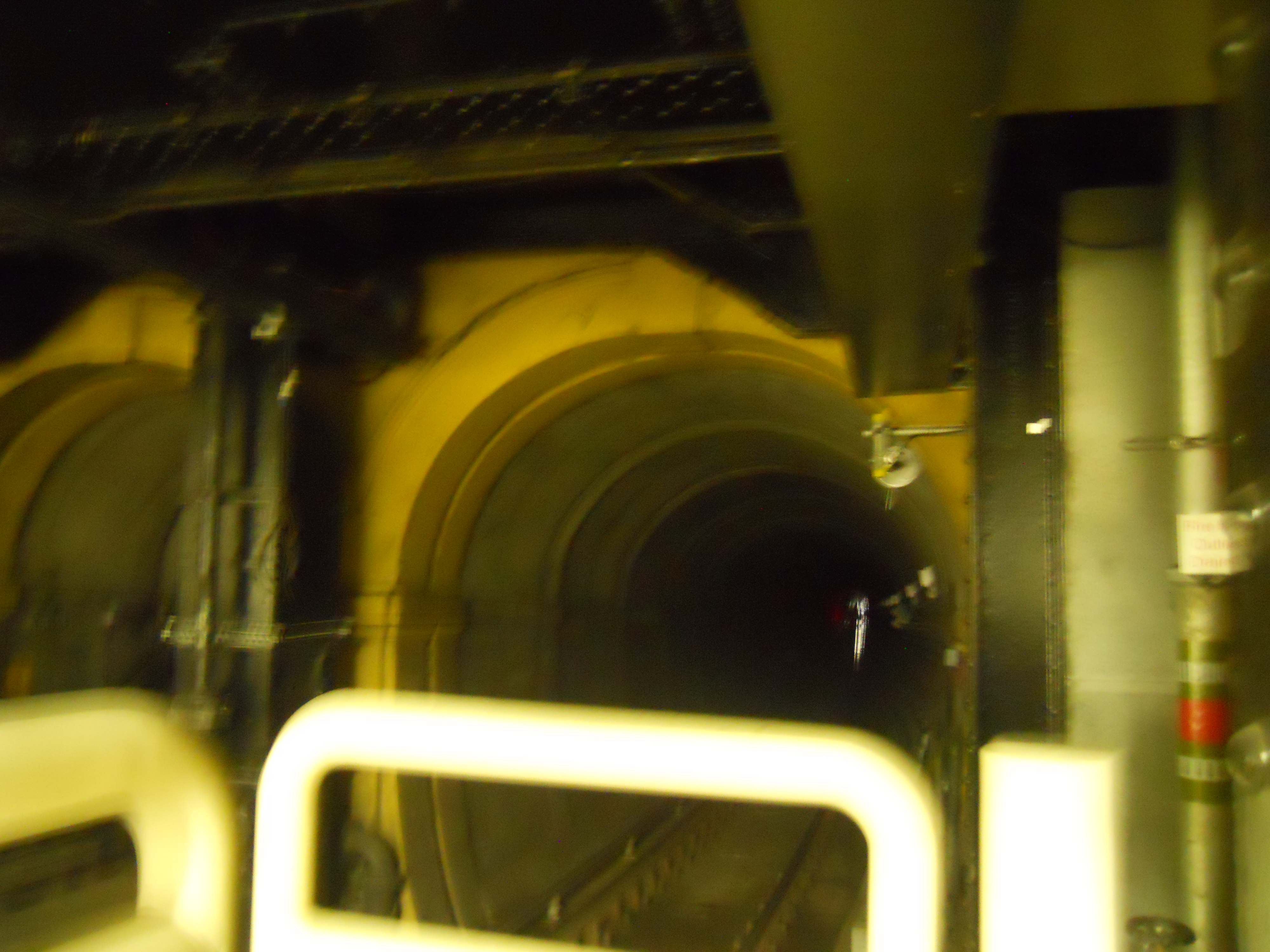
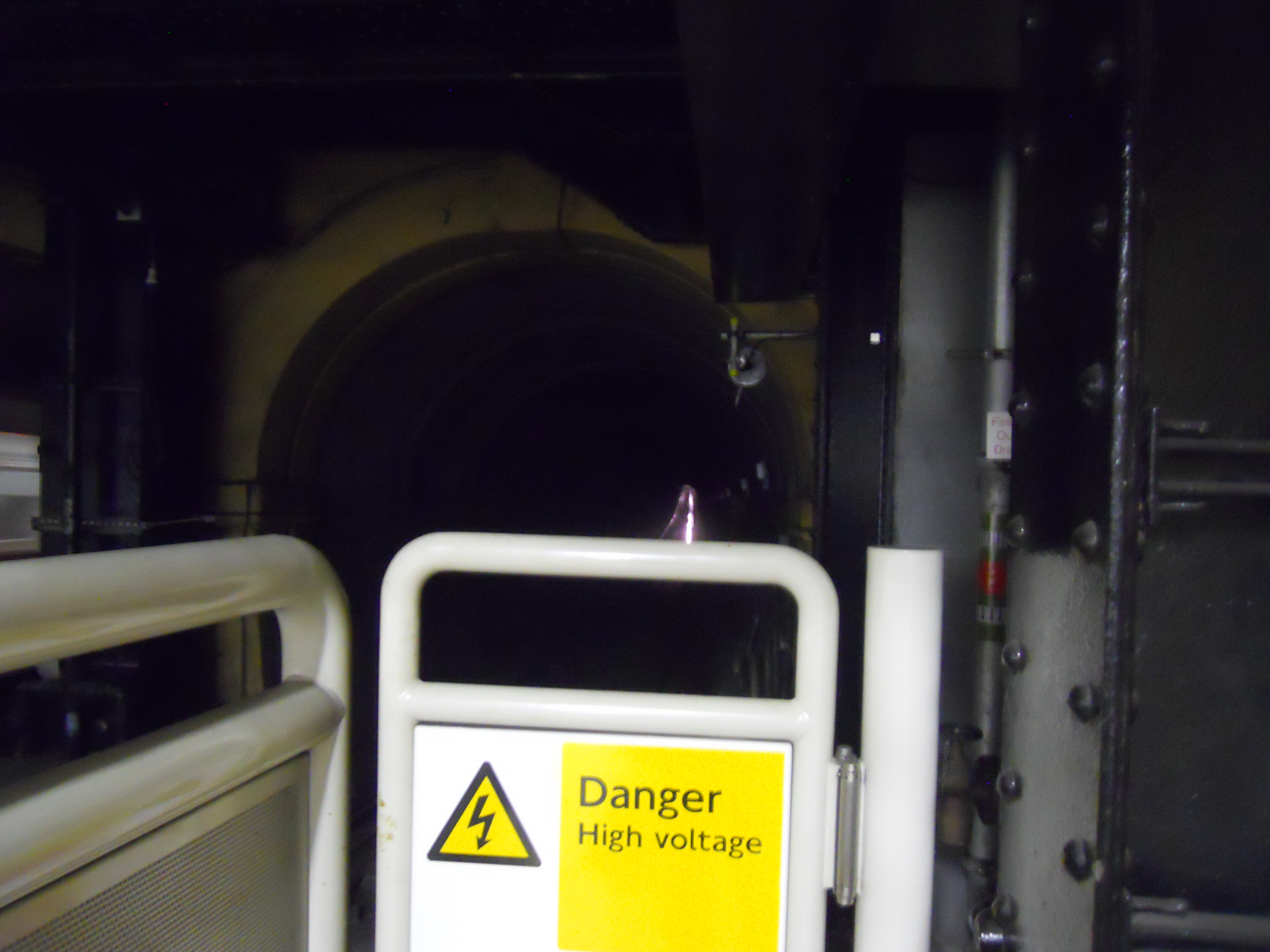
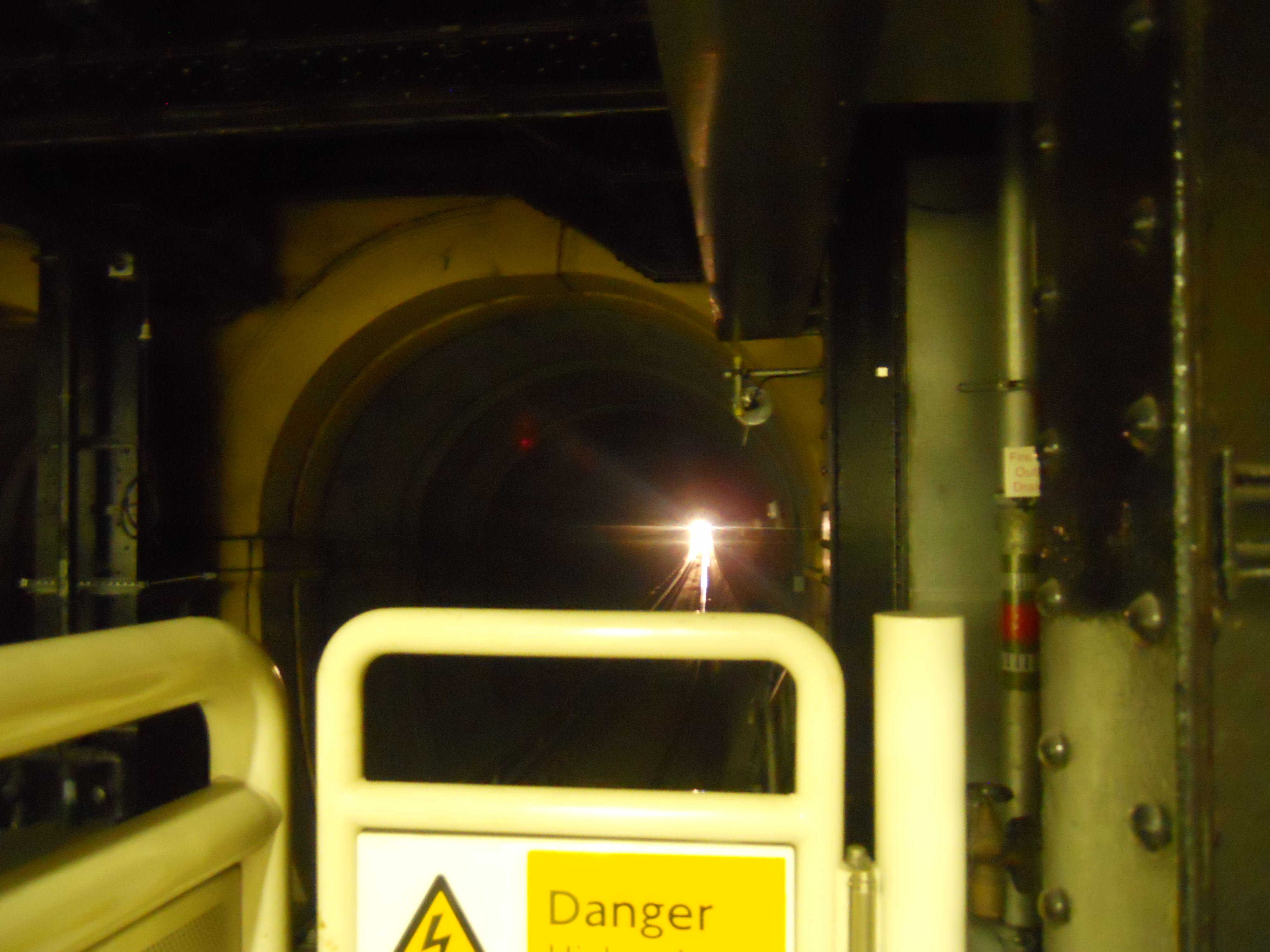
I was looking from the Northbound platform, just by the exit and the stairs that lead up to the street. When the station was designed, they decided to put protective railing to stop you failing on the line, but these do not obscure the view down the tunnel as the train approaches.
The Infrastructure’s The Star
On the one hand I watching athletics on the BBC in the centre of Newcastle amongst all of the bridges and the iconic buildings. It’s called the Great North City Games.
On the other hand, I’ve just had an e-mail describing the Sound Tracks Festival in East London, which is taking place at three main venues and you get between them on the East London line. Someone has remarked that it’s quicker to get between stages, using the train, that walking through the mud at Glastonbury. And of course there’ll be acoustic acts, including bands and a harpist on the connecting trains. I wonder what the Brunels would have said, if they’d known that their Thames Tunnel, would be transporting mobile concert halls between the two sides of the river.
We now have some fantastic pieces of infrastructure, both new and old and we should be imaginative about how we use them.
Is The London Overground a Success?
The three most important lines of the London Overground are now well established. I like it and I use the system several times a week. Admittedly, I have a station at the end of my road, but it is still about a kilometre away. The trains are comfortable, clean and I’ve only been late once.
But do others feel the same way as I do?
So I typed “London Overground success” into Google to see what I got.
I found this article, which is sub-titled, Tangerine Dreams. Here’s a flavour.
That the London Overground has been a success is difficult to deny. Whilst it has certainly had its share of delays and difficulties (such as with the rollout of the 378s), its current performance and satisfaction figures accurately portray the step change in service that has happened on the NLL and elsewhere since the Operator effectively made its debut in 2007. In a city where other Operators such as South Eastern are increasingly feeling the heat from passengers over the level of service they provide, London Overground’s performance also serves to highlight that there are effective ways to address the challenges that London’s railway infrastructure brings.
The rest of the article should be read and it is generally positive about London’s newest railway.
Politician’s of all colours will claim that the success is all down to them. In my view, given how the Overground built on successful ideas, rather than try revolutrionary new ones, I would say you’d have to be really stupid to make the project fail and be an unloved railway.
For a transport project to be successful, you have to locate it so that it takes people where they want to go. The Overground does this well, although you could argue it needs more links to the Underground, as Highbury and Islington, Whitechapel and Richmond aren’t really enough. But West Hampstead will come and possibly there will be others if the politicians decide to invest in success.
One factor that helps, is it is the least claustrophobic and most photogenic of London’s railways, with the possible exception of the DLR. I would recommend both the DLR and the Overground to visitors who want to get a different perspective of London.
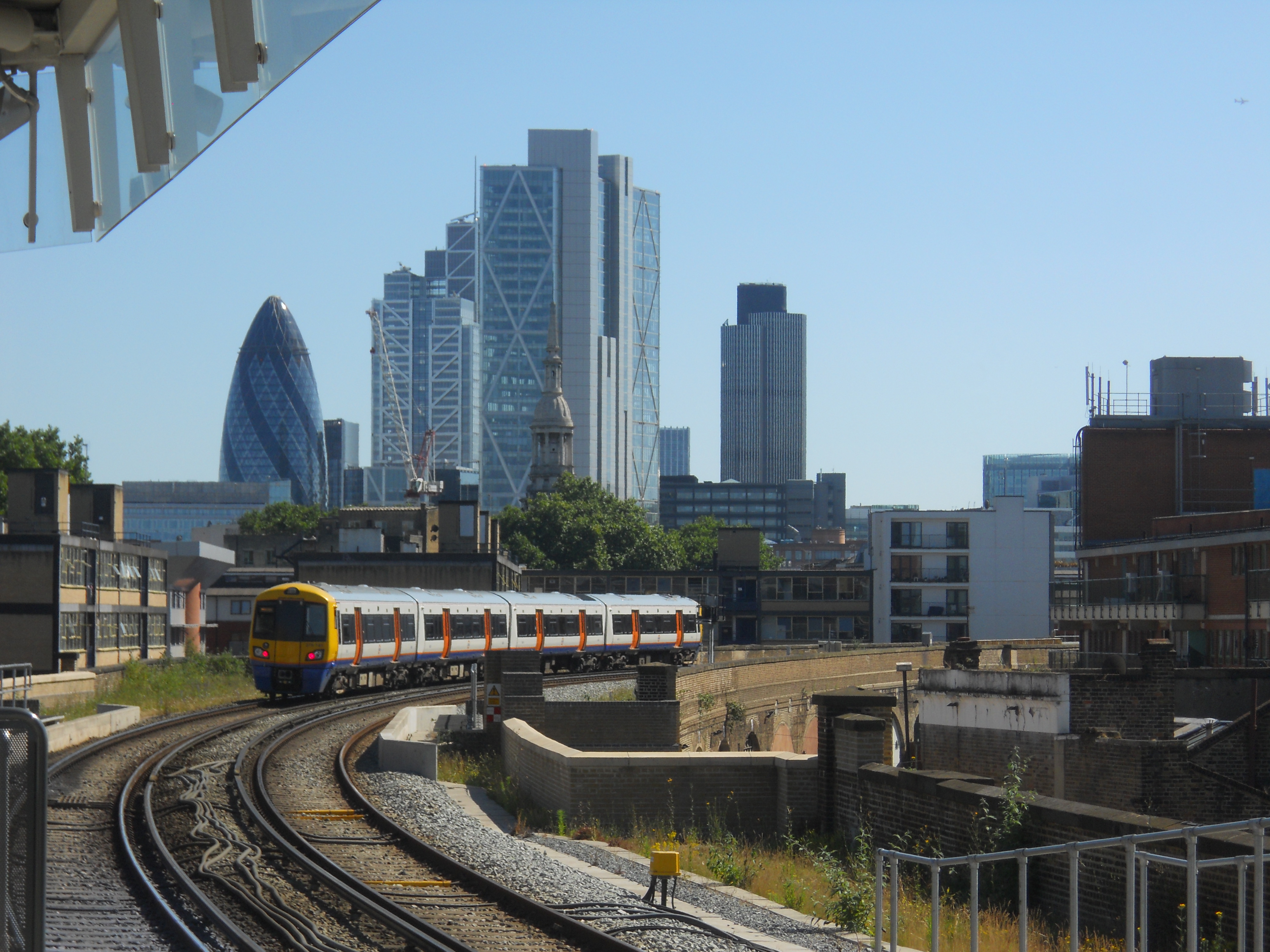
Overground Train on the Embankment South of Hoxton Station
I’ve used this picture before to show how different the Overground is. This view even ended up in Modern Railways to illuastrate an article about links between the City and transport projects.
I think the next question is can we build on this success?
Do We Mislead Tourists?
I travelled to London Bridge today and on the train I met a couple of ladies from New Zealand, who were trying to get to the Churchill War Rooms in Whitehall. But their hotel had told them to go to London Bridge to see something similar by the London Dungeon. I put them on a Jubilee Line train to Westminster.
I also met an Australian tourist and her family going to the London Dungeon. I suppose they had kids, but at least I was able to point out Borough Market and Sothwark Cathedral. Let’s hope that when London Bridge Quarter gets finished, they put up some decent information.
At least though I saw this outside the Globe Theatre a few street’s away.
I have a simple tourism rule. I don’t pay to go into anything, unless it’s National or special interest museum. I’ve never been to Madam Tussauds, the London Dungeon or any of the other places in London setup to relieve tourists of their money. These places are not an asset to London, just as others of a similar ilk aren’t in Paris, Amsterdam and New York.
Many of the best tourist sites in London are free and all some require are a London Travelcard or Oystercard. Here’s my favourite top ten.
- The front at the top of any London double deck bus. Favourites include a 24 from Victoria to Hampstead and the two heritage routes (9 and 15). I like to play bus roulette and get on the first that turns up.
- The British Museum. It’s worth going in, just to see the roof and have a nice coffee. Special exhibitions are extra, but the main museum is free, althougth they do like the occassional donation. When it’s not too busy, you can handle some of the exhibits. I’ve seen little girls, and big ones for that matter, in Roman necklaces.
- The Olympic Park. But go before June 2012, as I suspect you’ll find views will be shut off for security before the Olympics.
- The Imperal War Museum.
- The Kensington Museums; Science, Natural History and V & A. There’s even a good Carluccio’s nearby.
- The Victoria and Albert Embankments. At low tide, look for the beach at Tower Bridge.
- The North and East London Lines on the London Overground. They connect lots of small, good museums, Hampstead Heath, Kew Gardens and Crystal Palace. There is also a superb panorama of London in several places.
- The Docklands Light Railway. Take it from Bank to Canary Wharf and on to the Thames Barrier.
- St. Pancras Station. Even the French think it’s the best railway station in the world. It may not be by next year, as King’s Cross may outshine its neighbour.
- Green, Victoria and St. James’s Parks.
- The Regent’s and all the other canals that take you from Islington to Stratford and Docklands.
I suspect this list will grow.
I did like this bike though.

Mobile Low Carbon Tourist Office
Is this the first mobile low carbon tourist office?
Lopsided Timetables To Orpington
I went to Orpington this afternoon, by the easy route of an East London Line train from Dalston Junction to New Cross and then a stopping train to my destination.
Coming back at seven this evening, there were no trains from Orpington to New Cross, so I had to go via the chaos at London Bridge and get a bus.
I did notice several tents in the station car park at Orpington station. Were these people waiting ovenight and then getting the train back to New Cross in the morning?
It’s a whole new world south of the Thames. As an example at New Cross, the platforms are numbered A to D, rather than the more normal 1-4. According to Wikipedia, this is to differentiate the station from New Cross Gate. I would have thought that putting the station names up correctly, as they do, would have been enough, unless the purpose was to fool visitors from north of the Thames.
Is This The End of Train Building In The UK?
Does the loss of 1,400 jobs at the Bombardier factory in Derby mean the end of train building in Derby?
After all Alsthom has gone from Washwood Heath and the only light on the horizon is the news that Hitachi might be assembling the IEP in the North East. I say might be, as I have my doubts that the IEP will ever be built in it’s proposed bi-mode form, where an electric train hauls a diesel engine around the country for the places where there are no overhead wires. But then the IEP was always a creation of civil servants to avoid electrification, rather than a sound engineering proposal.
So what new trains do we need?
It would seem that at last we have got the message that every other country in the world got years ago and that is that trains should be powered by overhead wires carrying electricity. London to Bristol, Cardiff and Swansea now appears to be on track for completion in the next few years. It would also appear that Network Rail are developing a system to install the overhead wires using effectively a series of three factory trains. Wikipedia says this.
In an effort to minimise disruption during the electrification works, Network Rail is developing new “factory engineering trains” to facilitate the process of installing overhead lines. There will be three types of trains: the first train will be used to install pylons, followed by a train to hang the wires and finally there will be a train which will check the installation. The system is expected to be able to install 1.5 kilometres of electrification in one eight hour shift.
Why wasn’t this developed years ago, as it doesn’t seem to be the most difficult of technology to develop, especially, if you have lots of electrification to do? There is only one answer, politicians and civil servants like to do things on the cheap!
If the engneers get this right, then we should at last see a rolling program of electrification with the Midland Main line an obvious candidate.
So all of this will mean we will need more electric trains. And ones that go fast too! Wouldn’t it be a good idea if we had a unified fleet that could be run London to Swansea, London to Sheffield and London to Newcastle and Edinburgh, as surely economies of scale would mean cheaper trains, even if there are a lot of them. There is a precedent here in that the InterCity 125 ran on the same lines when it was built and because it was such a good and updatable design it still does.
We could almost be in a virtuous circle here, in that say the Great Western and Great Northern routes prove to be a great success, then there will be a clamour for more electrification, because it cuts carbon emissions and the customers like it. We might even see lines like Chester Holyhead electrified to improve connections to Ireland and Edinburgh to Aberdeen to improve links to the far north of Scotland.
Small pieces of fill in electrification will also open up possibilities. As a simple example, when I went from Liverpool to Edinburgh a few weeks ago, I went by two diesel trains, but the fill-in Network Rail are scheduled to do in that area, may mean that in a few years, it could be a new electric train.
So there will be a need for a lot of high speed electric trains, which at present will be satisfied by Hitachi and built in the North East. But it will only be an assembley job at best, with all design in Japan.
The next large batch of trains are the Thameslink and CrossRail trains for London. The first order has gone to Siemens and any sane person would use the same trains for both lines.
Other than that there are not too many orders in the pipeline.
There will be a need for more electric trains for the Liverpool, Blackpool, Wigan and Manchester services when they are electrified.
There is also a need to replace all of the ageing diesel trains, such as Pacers, all over the UK.
So looking at it sensibly, the fast electric trains will probably be built by Hitachi and the commuter electric trains will be built by Siemens.
There is just a significant number of scraps left.
One thing we’re good at though in this country is train refurbishment. We have to be as it’s the only way we can keep the railways running. But over the last year, I’ve had some memorable journeys in forty year old InterCity 125, where the standard of passenger comfort is up there with the best new trains.
So for example as the new trains arrive for Thameslink, there will be a large number of old ones that can be refurbished for the newly electrified services in the North West. If you doubt that refurbished trains are any good, just travel from London to Swansea and back in a day as I did.
Some respected commentators have argued that if you put good trains on old lines and improve the infrastructure, you create traffic and because people change from cars to trains, you cut carbon emmissions.
I’ll use two examples.
Cambridge to Ipswich was a Cinderella line with crap rolling stock and a frustrating timetable. It was given a modest improvement with some more comfortable hand-me-down trains and a better schedule and the investment was rewarded by an increase in passengers. They’ve even seen fit to put three-car trains on the line at busy times.
Where I live now, two lines, the North London line and the East London line have been upgraded and given new trains. The positive affects have been well documented and show that a not outlandish level of investment can bring a very high rate of return.
So it would appear that tactical investment can be positive.
Another scheme that is being brought forward is the improvement of the Ipswich to Lowestoft line, by putting in a passing loop at Beccles. This would mean an hourly service would be possible.
These last three schemes all use Bombardier trains, which are powered by electricity or diesel as appropriate.
Just as Ipswich to Lowestoft is showing improvement in passemger numbers, I don’t think it takes much thinking to know that there are many other lines in the UK, that could benefit from improvement.
A lot of the cross-country lines are very much overcrowded, but how many civil servants ever travel by train from say Ipswich to Birmingham? If they did they’d go from Ipswich to London and then get a Virgin train to Birmingham.
But if these lines are to be improved and the dreaded Pacers replaced, then we need more modern two, three and four coach trains. And Bombardier has the designs that work and they are available virtually off the shelf!
So perhaps we won’t see large numbers built, as after all the main UK fleet of trains is one of the newest in Europe, but we will see quite a few small orders for services that are not high speed or high density. But who’s to say that these won’t go to a cheap Chinese manufacturer as obviously a trip to Shanghai is more exciting that one to Derby.
We won’t see too many exports either, as our loading guage is so much smaller that to deliver trains even to Europe is a logistical nightmare.
So where does our future lie in the manufacture of trains?
We will probably make the high speed trains we need, but as I indicated above, will we really make any more than we need with extras for export?
One of our strengths is in the technology that goes on trains, as I indicated in this post. But then we have always been good at niche markets and in some ways there is more money in the design than the actual manufacture.
We are also very good at train rebuilding and you can argue that this has been one of the great successes of the last few decades.
So we will still be building trains, but the industry will be very different.
 The Anonymous Widower