First Great Western’s Pragmatic Large And Little Solution To The Problems Of Great Western Electrification
The electrification of the Great Western Main Line from West of Airport Junction to Bristol, Cardiff and Swansea is proving to be a difficult project to deliver.
This article on the BBC web site talks about the problems and starts with these paragraphs.
Electrifying the Great Western line is “a top priority”, the transport secretary has said, as he announces a rethink of a £38bn programme to overhaul Britain’s railways.
Patrick McLoughlin said Network Rail’s five-year plan was being “reset” as it was “costing more and taking longer”.
In an ideal world, the whole of the Great Western Main Line and its branches to places like Worcester, Gloucester, Cheltenham, Exeter,Plymouth and Penzance would be electrified.
But it was never intended to electrify the major branches and for a time InterCity 125 diesel trains will be used on these lines.
Then in February 2014, the sea wall at Dalwish was breached in a storm and much of the track and Dawlish station was washed away. Although the line was rebuilt in a few months, it is only recently that the sea wall and the walk alongside the railway has been reinstated.
The force of the storm probably put an end to thoughts for many years of fully electrifying the line from Exeter to Plymouth and Penzance
The Large Class 800 Electro-Diesel Train
The trains that will work the Great Western Main Line to Bristol and Cardiff are the Hitachi Super Express, which comes in two variants.
The two trains are very similar, but the Class 800 has on-board diesel engines to generate electricity. Wikipedia says this.
The Class 800 units will be electro-diesel multiple units, able to draw power from electrified overhead lines where available and power themselves via underfloor diesel generators outside of the electrified network. The train specification requires that this changeover can occur at line speed. The trains are able to be converted to electric only operation by removal of the diesel engines
Current plans are for 21 9-car Class 801 and 36 5-car Class 800 to replace 60 InterCity 125.
With no prospect of electrification to Devon and Cornwall and because of the nature of the line with gradients, First Great Western have taken the pragmatic decision to order twenty-nine more trains, which will effectively be a variant of the Class 800, but with uprated diesel-engines and larger fuel tanks. It’s reported in this article in the Railway Gazette International.
So the total fleet will eventually be 47 9-car trains and 39 5-car trains of all new variants to replace 60 2+7 InterCity 125 and 5 5 car Class 180 trains.
So it would appear that about 490 x 23 metre cars will be replaced by 618 x 26 metre cars. On a crude calculation that is just over a forty percent increase in capacity, with a sixteen percent increase in the number of trains.
When everything is delivered towards the end of this decade, First Great Western would seem to have available a substantial increase in capacity, with a large proportion of the fleet having a go-anywhere capability because they are electro-diesel trains.
So it looks like some of these trains will be used to extend the network, as well as increase the frequency to Devon and Cornwall.
But there will be no need to need for any extra electrification. Although of course if there were, this would only be to the advantage of the electro-diesel trains, which would run on electric power for longer.
The Little Class 387 IPEMU
If the rumours about the Class 387 trains for First Great Western in this month’s Modern Railways are true, then some or all of the eight trains on order will be IPEMUs, with an on-board battery to power the train for up to sixty miles.
Modern Railways said this about their use.
Delivery as IPEMUs would allow EMUs to make use of as much wiring as is available (and batteries beyond) while electrification pushes ahead under the delayed scheme, and in the longer term would allow units to run on sections not yet authorised for electrification, such as Newbury to Bedwyn. The use of IPEMUs might also hasten the cascade of Class 16x units to the west of the franchise.
As Newbury to Bedwyn is probably less than twenty miles, a Class 387 IPEMU could easily do the trip out and back on a battery, charged whilst running from Paddington.
There is also a small problem highlighted in a section entitled Review after May 2015 general election in an article on Wikipedia describing the Great Western electrification.
This has led to speculation that the GW electrification scheme (although it remains “top priority”) could be cut back. On 27 May 2015, the website of Theresa May, MP for Maidenhead, contained the following: “… a recent report stated that it would not be ‘technically feasible’ for electrification to go ahead on the Marlow branch, raising questions about the future of the Henley branch as well”
The Marlow and Henley branches are 7.25 and 4.5 miles long respectively and mainly run a shuttle service to the main line with occasional services to Paddington.
So would it be more cost-effective to use a Class 387 IPEMU on these branches, as there would be no need to electrify the lines?
If a Class 387 IPEMU was good enough for these branches, what about the other branches on the Great Western Main Line to Greenford and Windsor and Eton Central?
The only work that would need to be done on these branches to accept the 4-car Class 387 IPEMU would be some platform lengthening and electrifying any bay platforms they use on the main line.
There may be other places on the Great Western Main Line, where electrification can be omitted by the use of the Class 387 IPEMU.
Class 387 IPEMU Or Aventra IPEMU?
This question has to be asked.
The Class 387 train on which the Class 387 IPEMU will be based is a member of the Electrostar family of trains, that have been produced by Bombardier since 1999,
The Electrostar is being superseded by the new Aventra family and the first orders have been placed for Crossrail and the London Overground.
The improvements in the Aventra design are summed up here in Wikipedia. This is said.
The multiple units have been designed to be lighter, more efficient, and have increased reliability. They will have lightweight all-welded bodies, wide gangways and doors to shorten boarding times in stations, and ERTMS. The design incorporates FlexxEco bogies which have been used in service on Voyagers, Meridians and newerTurbostars.
The design features a gangway design that allows maximum use of the interior space and ease of movement throughout the train.
As the Aventra is a new train, that has been designed since the successful IPEMU trial with a Class 379 in 2014, I do wonder if it has been designed with the ability to be fitted with an on-board battery to make it an Aventra IPEMU! In this article on Global Rail News this is said.
AVENTRA can run on both 25kV AC and 750V DC power – the high-efficiency transformers being another area where a heavier component was chosen because, in the long term, it’s cheaper to run. Pairs of cars will run off a common power bus with a converter on one car powering both. The other car can be fitted with power storage devices such as super-capacitors or Lithium-Iron batteries if required. The intention is that every car will be powered although trailer cars will be available.
So every Aventra can be converted to an Aventra IPEMU! And as that article was written in 2011, it increasingly looks like the IPEMU trial was a test of one of the new systems for an Aventra.
It would surely be a big advantage to a train operator running a fleet of Aventras, if they could add and remove battery packs as their schedules required.
But surely, because of the fact that an Aventra is lighter and more efficient than a Class 387, I wouldn’t be surprised that the range of an Aventra IPEMU is greater than the sixty miles quoted for the prototype.
Every extra mile, that the train can complete on batteries would open up new routes.
I suspect too that the Aventra IPEMU will have more customer appeal than a Class 387 IPEMU.
No-one will believe that a train running on batteries could possibly be a viable proposition, so at least if it looks like one of the new Crossrail Class 345 trains, passengers would at least think the train was modern.
So I wouldn’t be surprised if the order for Class 387 IPEMU was delivered as Aventra IPEMUs.
Oxford
To say that Oxford station has had planning problems in the last few years would be a massive understatement. I talked about them in Network Rail’s Problems In Oxford.
According to this article on the BBC, planning permission has at last been given to extend platforms at the station, so that Chiltern Trains can run services to the city.
But there is no mention of a new platform on the South side of the station, as is mentioned in Future Expansion in the station’s Wikipedia entry.
Or any mention of electrification either!
So will Network Rail postpone the new platform and the electrification to Oxford?
If they do, then First Great Western can serve the city by Class 800 trains going along the Cotswold Line to and from Evesham and Worcester.
First Great Western could also still use the current Class 165/6 trains, but they would like to cascade them to other places on their network.
Now here’s a thing!
Didcot to Oxford is probably less than thirty miles, so once Didcot is electrified, Oxford could be easily reached by an IPEMU.
If this happened Oxford would get new 110 mph 4-car electric trains to replace 90 mph 2-car and 3-car diesel trains.
The electrification needed for the East-West Rail Link would be done later, when Oxford decided to join the twentieth century.
Rolling Stock Cascade
At present First Great Western has a fleet of diesel multiple units that work the Thames Valley Services.
- Sixteen 3-car Class 165 trains
- Twenty 2-car Class 165 trains
- Twenty-one 3-car Class 166 trains
These will be replaced by twenty-one 4-car Class 365 trains from Great Northern and twenty-nine 4-car Class 387 trains cascaded from Thameslink as the new Class 700 trains arrive.
Another order for eight 4-car Class 387 trains has been placed and it is this order that Modern Railways said could be for IPEMUs.
In terms of carriages 151 diesel carriages are being replaced by 232 electric ones.
According to this document on the ATOC web site, this will happen to the Class 165 and Class 166 trains.
Some will be displaced by electrification (and the resulting cascade) on Great Western. One option is that they remain in service, to accommodate growth and to provide a cascade of Class 15x vehicles, subject to necessary modifications and PRM-TSI.
So it looks like they will be used to replace the outdated Class 15x trains.
Cardiff to Portsmouth
Cardiff to Portsmouth is a route run by First Great Western. When I went from East London To Yeovil By The Long Way, I used a First Great Western Class 158 train from Fratton to Salisbury. I said this in the related post about the journey.
I think this journey shows up our trains in a reasonable light. The journey times are slow not because of slow trains, but because of the frequent stops and complicated route. The journey took three hours seventeen minutes from Littlehampton to Yeovil, but there was only thirty-three minutes wasted in connections.
Although some trains date from the 1980s, there wasn’t anything as bad as the dreaded Pacers that inhabit the North. The services were pretty well-used and except for the short leg from Littlehampton to Fratton, there was a catering trolley on all trains.
I do think though, that perhaps this journey might be better done in something like a 4-car Class 800. Although, there isn’t much electrification to make use of until you get to Bristol, once you’ve left Southampton.
An IPEMU wouldn’t be much help, as it’s a long way between Cardiff and Portsmouth.
So is there a need for a 4-car Class 800 train, optimised for long cross-country routes, where there is not much electrification or high-speed running?
Conclusion
The Large and Little approach by First Great Western seems to be a pragmatic way around the problems of the Great Western electrification.
The new Class 800 trains and their closely-related siblings will enable services to be expanded at the extremities of their network, without any need for full electrification.
If all or some of that future order for eight Class 387 trains, was for the IPEMU variant or were even Aventras, so long as electrification reached Newbury and Didcot, new Class 387 IPEMUs could run to Marlow, Henley, Windsor, Oxford and Bedwyn.
One side effect would be the release of Class 165/6 trains, currently used on the routes out of Paddington and the branch lines, for other services on their network.
Rumours Of Battery Powered Trains
In the September edition of Modern Railways, there is an article entitled Class 387s Could Be Battery Powered.
The Class 387 train is an electric train, where the first twenty-nine members of the class are running on Thameslink between Bedford and Brighton. Built in Derby by Bombardier, they are possibly the last variant of the numerous Electrostar family. When the new Thameslink Class 700 trains are delivered, these units will be transferred to First Great Western to run services out of Paddington on the electrified Great Western Main Line.
At present Bombardier are building twenty-seven new Class 387 trains to run the Gatwick Express out of Victoria.
When this order is complete, they will build another eight units for services out of Paddington, for delivery in late 2016.
It is these eight trains that are rumoured to be capable of battery running, using technology I saw demonstrated and talked about in Is The Battery Electric Multiple Unit (BEMU) A Big Innovation In Train Design?
If you still think these trains aren’t practical, there is a BBC video on YouTube of the Class 379 IPEMU during its tests at Manningtree.
In their article, Modern Railways says the following.
Delivery as IPEMUs would allow EMUs to make use of as much wiring as is available (and batteries beyond) while electrification pushes ahead under the delayed scheme, and in the longer term would allow units to run on sections not yet authorised for electrification, such as Newbury to Bedwyn. The use of IPEMUs might also hasten the cascade of Class 16x units to the west of the franchise.
Note that these trains are now called IPEMUs or independently powered electric multiple units.
It looks to me, like the rolling stock engineers at Bombardier in Derby are getting their fellow engineers in electrification out of trouble.
Having a small number of IPEMUs could be very useful to train companies, as they could be used tactically to perhaps extend electric services, when the wires are being installed or onto a scenic branch line, where putting up overhead wires would be strongly opposed. They could also be used for blockade busting, say when a tunnel or bridge is being rebuilt.
It would be interesting to see the cost difference between a standard Class 387 and one with batteries, as this would determine, whether to electrify say a branch or use IPEMUs.
Other Places For An IPEMU
Also in Modern Railways are three articles, where an IPEMU could be the solution.
- Hull Trains are reported looking for a bi-mode fleet to run their Hull services, as they would bridge the unelectrified seventy miles of line between Selby and Hull. A Class 387 IPEMU probably doesn’t have enough performance, but it might be capable of running the route.
- Services to Blackpool have also been approved, which if the electrification is not ready in time, is a route that could be handled by a Class 387 IPEMU.
- Roger Ford is also talking about Open Access Hotting Up. Some of the routes would be ideal for a Class 387 IPEMU, as lots of places without a decent service to London, Birmingham, Manchester, Glasgow or other large cities, are thirty or so miles off a main electrified line. Places like Yarmouth, Lowestoft, Sudbury, Cromer, Lincoln, Skrgness, Wisbech, Windermere, Chester and Burnley come to mind.
I also think, that as the years pass, IPEMU technology will get better and much more efficient with a longer range when running on the batteries. Drivers will also learn how to coax the maximum range out of the trains.
This could enable services like.
- London to Norwich via Cambridge
- London to Salisbury
- Ipswich to Cambridge and Peterborough
- Manchester to Sheffield
- Newcastle to Carlisle
In my list, there would seem to be a large number of routes in East Anglia. But then Anglia Greater Anglia were part of the trials of the test train.
Visual Intrusion Of Electrification
I think too, we shouldn’t underestimate the lack of visual intrusion if say a picturesque branch line was to be served by an IPEMU rather than by a traditional electric train. The Windermere branch and some lines in South Wales may well be better served by a more visually acceptable IPEMU.
Affordable Electrification
I have listed that these IPEMU trains would be able to run between Carlisle to Newcastle.
I don’t know the Tyne Valley Line well, but it is about sixty miles long and has electrified lines at both ends. Traditional electrification may require a lot of bridge and station reconstruction to accommodate the overhead wires, whereas a Class 379 IPEMU could use the line without any modifications to infrastructure, as it can use any line that the current Class 156 trains on the line can. There would of course be a need to make sure that at both ends of the line, there was sufficient electrification to fully charge the train for its return journey.
So the cost of replacing diesel trains on this line with modern electric ones, would be solely the cost of the new trains, and perhaps the cost of a small amount of electrification in the stations and the stabling sidings at each end of the line.
In this case, I suspect Network Rail would breathe a big sigh of relief, if they didn’t have to electrify this line, with all its logistical and possibly environmental problems.
How many lines in the UK, could be electrified this way?
Route Proving For Electrification
The lines in East Anglia from Felixstowe and Ipswich to Cambridge and Peterborough are not electrified.
They carry a large amount of freight to and from the Port of Felixstowe, so if they were to be electrified the benefits of replacing Noisy and polluting diesel locomotives with environmentally-friendly electric ones is probably easily calculated.
But how do you calculate what will happen when two and three car diesel multiple units, albeit modern Class 170 trains, with new four-car electric ones?
In the case of these East Anglian lines, you could run a Class 379 IPEMU on the line.
The only problem after the test was completed, would the passengers allow their brand-new ekectric train to be moved elsewhere.
But you would get an accurate figure to put in your costings for electrification.
Electro-Diesel Freight Locomotives
Nobody except possibly the operators, love the Class 66 locomotive, which is extensively used for freight in the UK. It doesn’t meet the latest EU regulations and it’s noisy and unloved by the drivers to whom I’ve spoken.
Electrifying freight routes like Felixstowe to Nuneaton, would allow operators to send freight trains between Felixstowe and the Midlands, North and Scotland, using electric haulage all the way.
Next year, we’ll see the first of the new electro-diesel locomotives; the Class 88, which is an electric locomotive, that can use an on-board diesel engine, where there are no overhead wires.
How will these and other locomotives using similar technology affect the costs and need for electrification?
In the case of any electrified route to a port like Felixstowe or London Gateway, overhead wires in the port can present a problem, which an electro-diesel locomotive solves, as it uses the on-board diesel, anywhere near the sidings in the port.
Class 800 Trains
The Class 800 train being introduced in a few years is an electro-diesel train, which has been designed to run at 200 kph to the farthest corners or the UK, as a replacement for the diesel InterCity 125.
The specification of the train and what they’ve seen so far of the prototype must have impressed First Great Western as they’ve ordered extra trains as Wikipedia reports.
In March 2015 First Great Western agreed to acquire 29 bi-mode Hitachi AT300 (Class 800 variant) trains as HST replacements on services in and to the southwest of England. The order consisted of 22 five-car and 7 nine-car trainsets, with an option for 30 more sets. Differences with the original design included more powerful diesel engines more suited to steeper graded line in Devon and Cornwall, as well as larger fuel tanks. A £361 million contract between FGW and rolling stock leasing company Eversholt Rail was signed in July 2015. The expected introduction date of the new trains was summer 2018.
So where else could these trains appear to provide high speed services on routes with no or only partial electrification?
The Class 800 is closely related to the Class 395 train used on High Speed and third-rail routes South of the Thames. So could we see a third-rail version of the Class 800, or an electro-diesel Class 395 variant, which could run from St. Pancras to Hastings and Eastbourne and from Waterloo to Salisbury and Exeter? This would kill any thoughts of adding more third-rail electrification.
The Class 387 IPEMU and the Class 800 are a Little and Large combination to provide a cost-effective alternative to full electrification of some routes across the UK.
Conclusions
The Class 387 IPEMU, could be a component of a series of solutions, that bring high-quality new electric or electro-diesel trains to a large portion of the UK.
My only worry about them is the battery technology of the IPEMU, which has reportedly been troublesome in some applications on buses and aircraft.
What’s Gone Wrong With The Blackpool To Preston Electrification?
On Friday this news item appeared on the BBC web site. It is entitled Balfour Beatty pulls out of Lancashire rail electrification.
The article starts like this.
The main contractor behind plans to electrify the railway line between Preston and Blackpool has pulled out.
Balfour Beatty confirmed it was leaving the scheme after a review said the work was unlikely to be on time and budget.
Network Rail insisted the electrification was still due to finish by spring 2017 and a new contractor would be “appointed shortly”.
On the Saturday, on my route from Liverpool to Preston, I took a detour up the Blackpool branch and took these pictures.


The aim was to see, if I could get a clue as to what has gone wrong.
For a start, I saw a succession of bridges that appeared to have been recently replaced or refurbished. Often with electrification, the cost of getting bridges and stations ready for electrification is a major part of the cost.
Even Poulton-le-Fylde station appeared to have acquired a cafe from when I saw it in May this year.
At Blackpool North station crowds of people were leaving, as the weather was atrocious, so I took the next train back to Preston.
As to why, Balfour Beatty have given up the contract, there were no clues.
I think there could be two reasons for the delay.. In this section on Electrification for the Wikipedia entry for Blackpool North station, this is said.
This will result in the semaphore signalling at the station being replaced by modern colour lights controlled from the WCML North Rail Operating Centre in Preston and will also see the station track & platform layout altered (the current eight curved platforms will be reduced to six on a straighter alignment than at present). Work has begun to raise many of the intermediate overbridges to accommodate the overhead wires and the project was due for completion by May 2016, with the line onwards to Manchester following by the end of the year. This has since been pushed back to March 2017 so that the track remodelling & resignalling work can be carried out at the same time as the wiring, reducing disruption to passengers (as only one period of closure will be required)
So could an over-complicated project or lack of resources be the cause?
Look at other Wikipedia entries for lines in this area and it gets more complicated with aspirations to reopen the Fleetwood Branch Line.
Or could it be that there are so many ideas about what to do in Blackpool with the trains, the planners at Balfour Beatty can’t keep pace with all the changes? So backing out is the esiest thing to do!
I think there is a need to take a long hard look at all the possibilities, like the Fleetwood Branch and linking to the Blackpool trams and the way they actually perform any track changes and electrification.
Perhaps everything from the West Coast Main Line to Blackpool and Fleetwood should be devolved to an elected mayor or someone, who gets voted out, if the project fails.
I know Blackpool reasonably well and if ever an are needs an upgraded transport system, with an electrified line to nearby cities, it is Blackpool.
Electrification Of The GOBlin
I have just found this article on the Gospel Oak to Barking Line on the Railfuture web site.
It explains the way the line will be electrified and other issues very well.
One thing it says is that the line will be electrified in two parts, so that whilst the overhead wires are erected on one part and passengers will be put on the bus, the other part can be used by four-car trains. Provided of course they lengthen the platforms.
The Railfuture article is an interesting read, as it talks about this short stretch of electrification.
1. The Line Connects Electrified Lines
It is joined to electrified lines at each end and several along its route, which will enable through electric passenger and more importantly freight trains to use the route.
It also means that getting electric power to the line shouldn’t be too much of a problem.
2. A Freight By-Pass For The North London Line
At present electric freight trains have to use the North London Line, but using an electrified GOBlin would avoid congested junctions at Stratford, Forest Gate and Camden Road.
3. More Passenger Capacity
Replacing two-car Class 172 diesel trains with new four-car Aventra electric trains, won’t just double the passenger capacity, but because electric trains have faster acceleration, they will do better than that.
4. Extended Passenger Routes
The extension of the GOBlin to a new Barking Riverside station was announced in the 2014 Budget, but the Railfuture article talks about extending services the other way to Willesden Junction, Clapham Junction or even Ealing, which probably means Ealing Broadway.
You can understand why Transport for London might want to do this, but it would need new platforms at Gospel Oak. This Google Map shows the station.
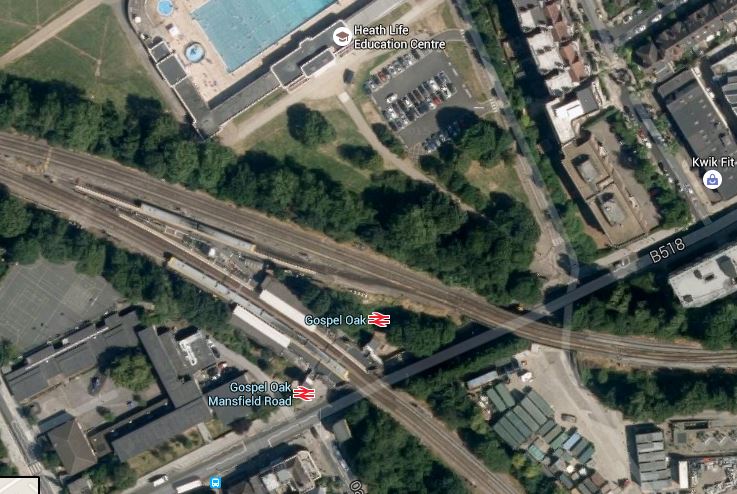
Gospel Oak Station
Note that there is a Class 172 in the platform and it looks like accommodating a train, twice that length might need a platform extension.
I suspect that Transport for London will look at other options, depending on where passengers go from Gospel Oak and the number of freight trains that have to be pathed through the area.
On a personal view, I’d like to see trains on the GOBlin terminating in Ealing, as that would give me an easy route to the area, by getting a 141 bus from outside my house to Harringay Green Lanes.
But I don’t think that is likely. After all when Crossrail opens, I can just take a 141 bus the other way to Liverpool Street/Moorgate and get Crossrail to Ealing.
Greater Electric Freight Capacity and Flexibility
Railfuture reckon that up to thirty freight trains a day will leave London Gateway and many will be electric hauled and need to make their way up the West Coast Main Line. An electrified GOBlin gives them two routes across London.
The second route will also enable services to be maintained, when say one line is blockaded.
Limited passenger services could also be run via Stratford and South Tottenham to Gospel Oak, when work is being undertaken on the North London Line.
Harringay Park Junction
Railfuture also says that this vital junction will be electrified.

Harringay Park Junction
The GOBlin runs across the image, with the junction under the bridge on the left.
It will allow eastbound freight trains to go north on the East Coast Main Line.
Carlton Road Junction
Another junction, that Railfuture believes will be electrified.
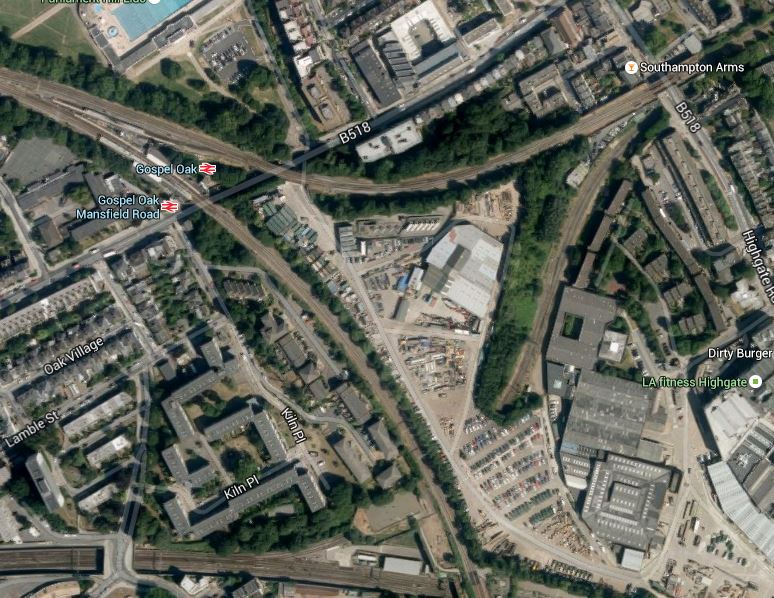
Carlton Road Junction
It will allow westbound trains to go north on the Midland Main Line, which runs across the bottom of this image
A lot will be freight going up towards the Radlett Freight Terminal or the Midlands, but a proportion will take the Dudding Hill Line to go west.
Dudding Hill Line
I think that it will not be long before the Dudding Hill Line is electrified to allow both electrified freight and passenger services to go west, by bypassing the North London Line.
Certainly Transport for London have identified this route as a possible GOBlin extension.
Before GOBlin Electrification – Walthamstow Queen’s Road
Walthamstow Queen’s Road is of a similar standard to most of the other stations on the Gospel Oak to Barking Line.

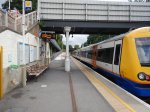


The station like Harringay Green Lanes is step-free by ramps and at some point will need lifts.
Before GOBlin Electrification – Wanstead Park
Wanstead Park station is another tidy station on the Gospel Oak to Barking Line.


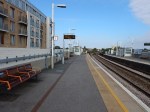
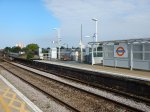



It has two steep staircases and no lifts, but the platforms can be easily extended, if needed for the new trains.
In my view the station also needs a light-controlled crossing by the entrance and better placed bus stops, so that transfer to the nearby Forest Gate station is easier.
Before GOBlin Electrification – Woodgrange Park
Woodgrange Park station is one of only two stations on the Gospel Oak to Barking Line, that is electrified.
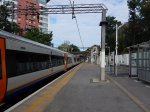
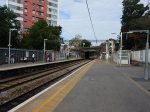
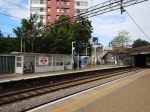

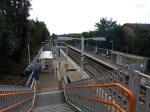

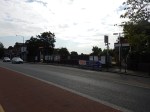
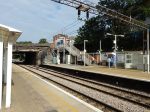

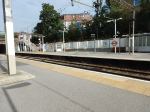

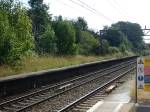
As the electrification stretches all the way to Barking, the only thing the station will need to bring it up to the standrd passengers expect, is perhaps a couple of lifts.
If the platforms need lengthening, there are abandoned sections that could probably be brought back into use. This Google Map clearly shows the usable white and disused sections of the platforms.
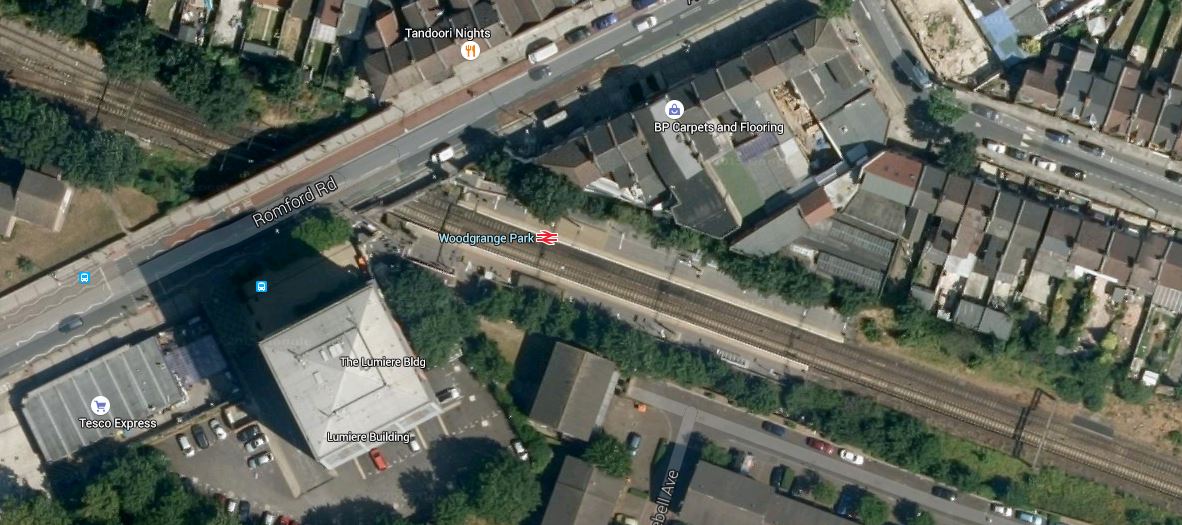
Woodgrange Park Station
I estimate from this image that the current length of usable platform is around eighty metres. So they could probably accommodate one of the new four-car trains. But should the platforms be extended to future-proof them for six or even eight-cars.
Before GOBlin Electrification – Upper Holloway
I went to Upper Holloway station on my way to Waitrose.
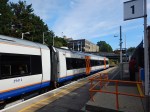
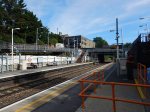
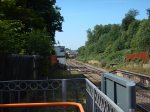
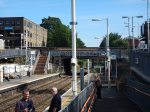
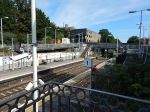
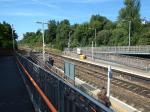
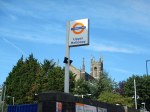
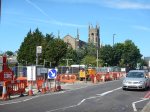
It is not a grand station, being just two ramps and staircases from the Holloway Road to two more than adequate tidy platforms. It is not unlike Crouch Hill station.
At present there are roadworks outside, as the road bridge over the railway is being replaced. I suspect that this project will have to be completed before electrification through the station is started. Obviously, when the new bridge is finished it will have sufficient headroom for the overhead line equipment.
Upper Holloway isn’t an official interchange but as the station is in middle of a slope between Archway and Holloway Road stations, which eases walking in one direction, it can sometimes be a useful interchange.
But the station will need improvements to its step-free access.
Before GOBlin Electrification – Harringay Green Lanes
To get to the Gospel Oak to Barking Line, I get a 141 bus from outside my house to Harringay Green Lanes station.

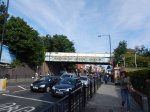
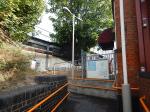


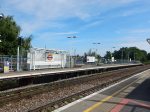
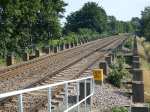
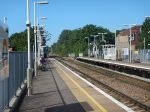
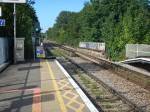
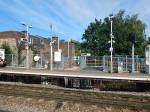


It is another tidy station serving a retail park on the site of the old Harringay stadium. Like most of the stations on the line, there are no lifts and the two platforms are served by stairs and ramps.
Other than the inadequate step-free access, note the following about the station.
- The platforms are not unduly long, but there would appear to be foundations from previous ones, that were longer.
- The bridge although obviously sound, probably needs a bit of work to bring it up to the required visual standard.
- The station is an out of station interchange to Harringay station and work could be done to make the walking route easier. I estimate that the distance is about 50% longer than the Hackney Downs/Central Link.
- There is a lot of commercial and retail use in the area, that may be redeveloped.
Note too, that the Piccadilly Line crosses underneath and there is a long distance between the stations either side on that line. No plans exist to create an interchange, but it is a station, where that should never be ruled out.
This is a Google Map showing the area around the two Harringay stations.
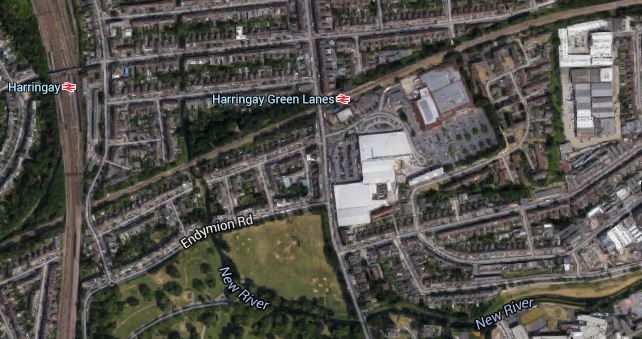
The Area Around The Two Harringay Stations
I think that by 2050, Harringay Green Lanes station will be very different.
Before GOBlin Electrification – Crouch Hill
I’d never been to Crouch Hill station before, but I went to take these pictures.


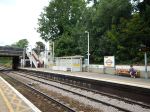

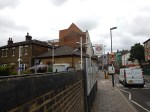
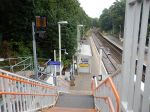

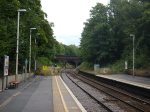


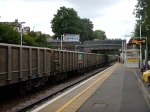
It is another tidy station with fairly long platforms, steep staircases and no lifts. Although unlike Leyton Midland Road, the station is in a cutting, rather than on a viaduct.
My pictures were as you can see interrupted by a dreaded Class 66 locomotive, with all its noise and smell passing through. After electrification, hopefully we’ll see something more environmentally-friendly like an elderly Class 90 or a brand new Class 88 locomotive. Unfortunately, I think we’ll see mainly Class 66s pulling freight trains for some years, as there are so many of them and they seem to be pretty reliable, although unloved by the drivers.
 The Anonymous Widower