Minding the Gap on the Victoria Line
The Victoria line is unusual in London’s Underground lines in that many of the stations are hump-backed. This means that the slope up into the station, slows the train and the descent out of the station, speeds it up. I took some pictures as I rode the line this morning.
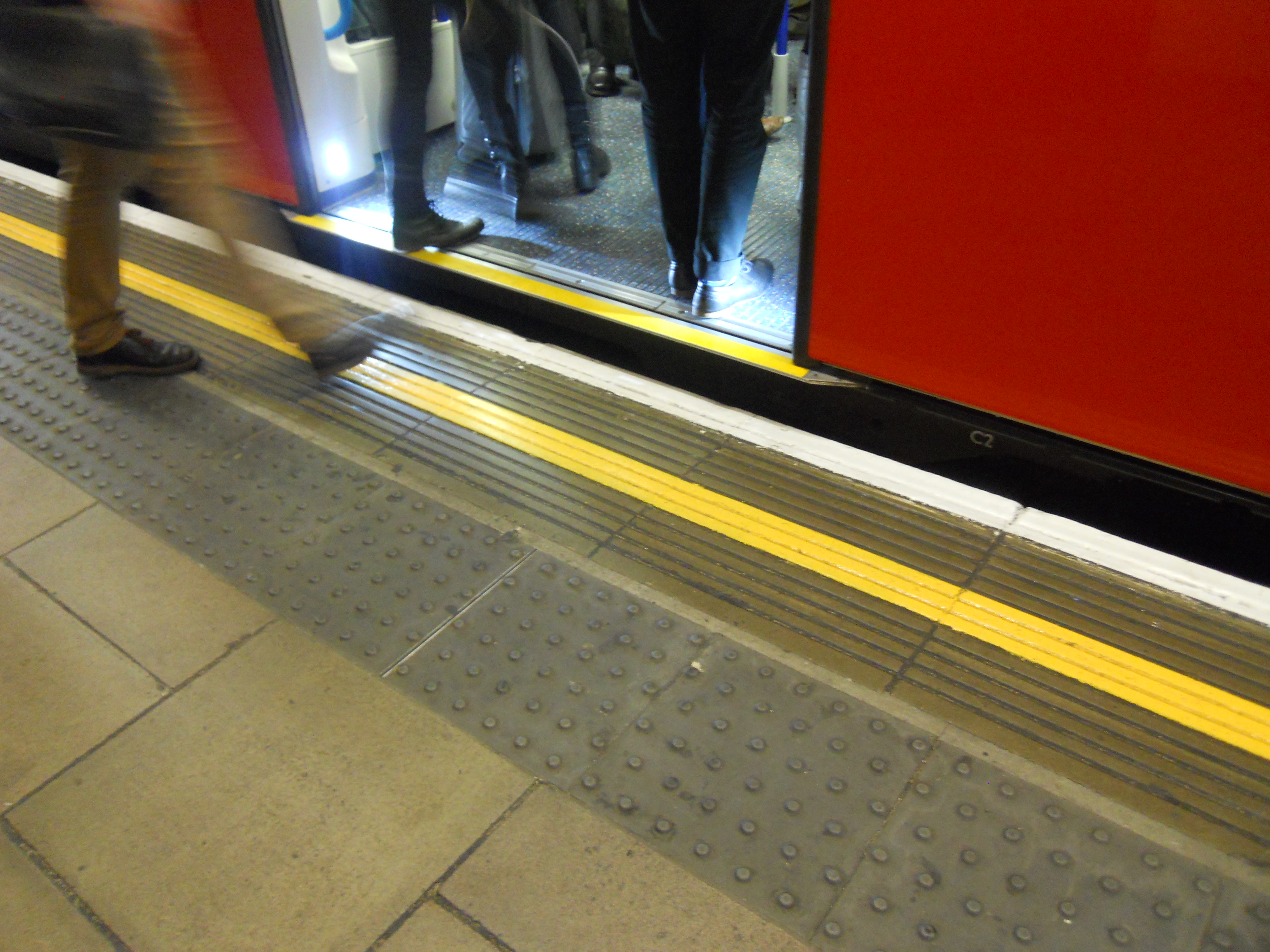
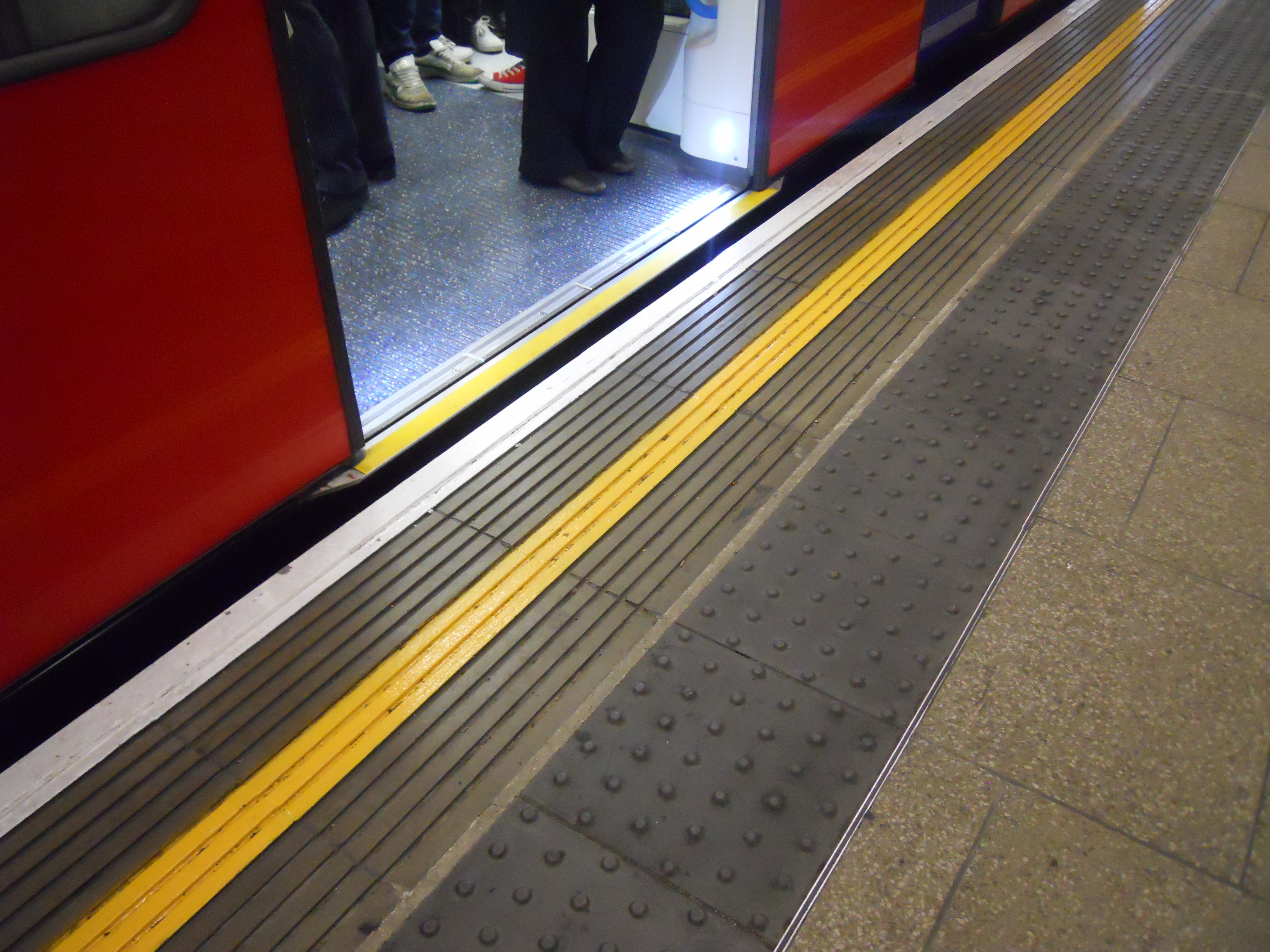
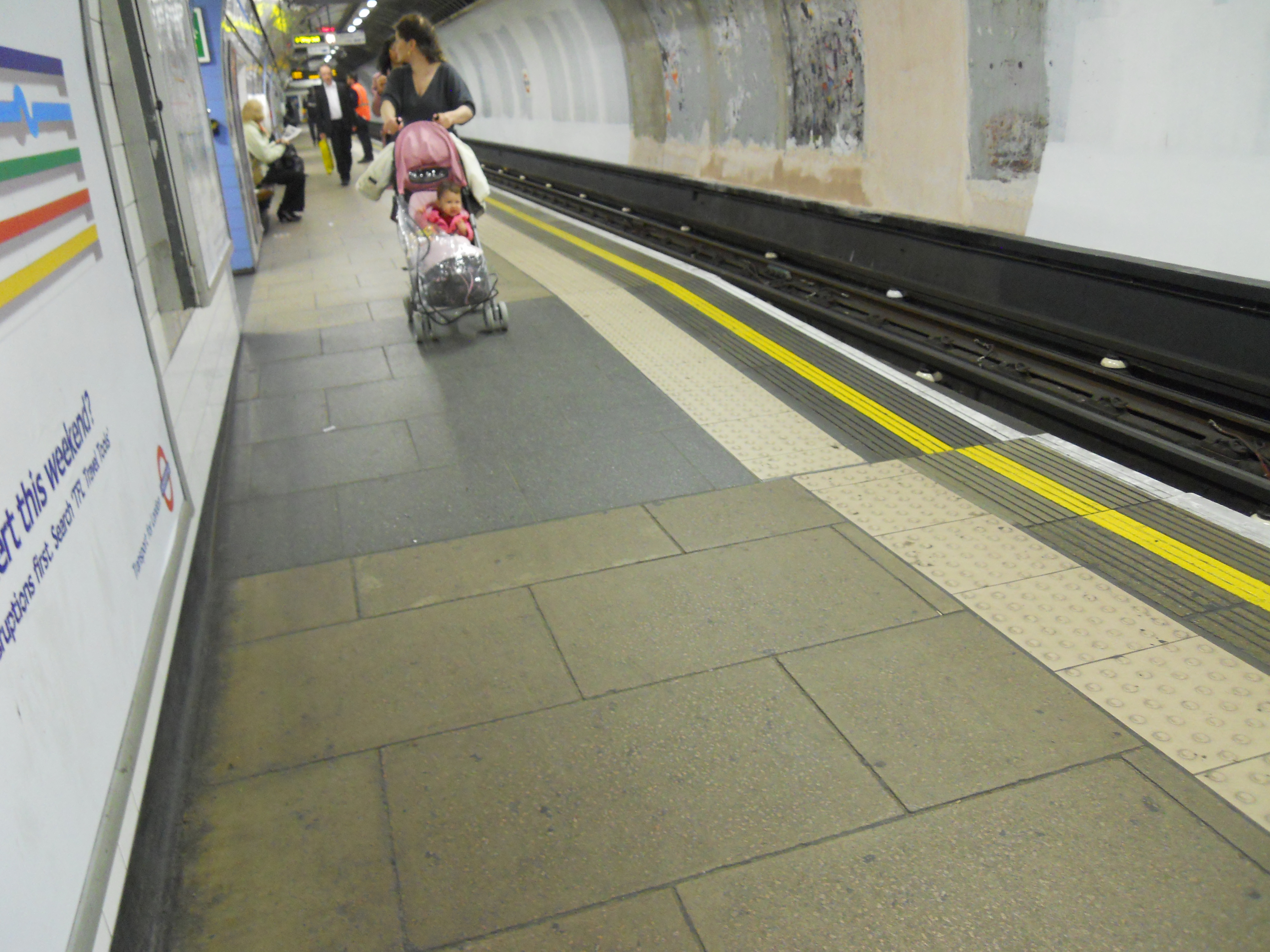
Note the variable step-up into the trains,which is also partly explained by the humped-backing of the platform, which was done a couple of years ago,to ease entry for wheelchair users and buggy pushers. All stations except Pimlico have these humps and they are at the middle of the station.
As to the hump-backed designs of the stations, this saves energy. In fact 5%, according to Wikipedia, which also says it makes the trains 9% faster. So why isn’t this simple idea used on other lines?
It’s Not Just Customers That Hate Banks
I found this article entitled Why Investors hate banks. It is a fascinating read, with the main point being that if you invest in utility shares over the past year, your return will be six times that of investing in banks.
Pay-As-You-Go Solar Electricity
This system from Eight19, got a big plug in the Sunday Times today.
I think the company has got something here, as it can provide low-cost lighting to all of those places in the world that are off-grid.
The article shows how in places like Kenya it can be used to provide lighting and mobile-phone charging at a very affordable cost, by combining good solar technology with simple systems based on scratch cards and mobile phones.
But I think it has other applications,where you need a small amount of power in a difficult to get to place. Remember that even in the UK, we have a surprising amount of sunlight most of the time. But of course not now!
Scots Put Wind Up Donald Trump
I can’t say I warm to Donald Trump and I don’t think, that I’d want to be anywhere near his golf development, as it will probably attract a lot of the sort of people, that I find odious.
So I read the report about his spat with the Scottish Parliament with interest and a small bit of pleasure. I’m not really in favour of wind turbines and especially those onshore, but offshore ones, if the economic case is there are a much better option. Let’s hope he gets a nice line of pylons across his golf course.
RSPB and Wind Farms
The RSPB is usually to be found on the list of those organisations lined up against a wind farm.
But now they are oputting up a wind farm on their headquarters site.
Can they have it both ways? It would appear they can!
I’m not a fan of wind power, as I believe there are much better methods like using tides creatively.
I’m Not Bothered If Tanker Drivers Strike
Lt is being reported that Army drivers are being trained up, to drive petrol tankers, if the tanker drivers strike.
I’m actually not bothered, as I don’t drive and use public transport most of the time. Also my gas and electricity come through pipes in the ground. It might mean that Waitrose will be a bit short-stocked, but there are other supermarkets.
This strike though could be the death throws of an industry.
Petrol and diesel usage is dropping and will drop even further, as more passengers and freight go by rail. I wonder if there is a chart, which shows how much fuel gets delivered and where? Compared to ten years ago, it’s probably very depressing for the drivers.
Could Fracking Be The Saviour of the North?
I can remember a documentary on the BBC in probably the 1960s about how a Scottish company extracted oil from shale rock. I don’t know whether they still do. I have just found this museum to the industry and it says it closed in 1962.
According to today’s Sunday Times, there is enough shale gas in the shale deposits mostly in the north of England to last 70 years.
Now I know extracting shale gas is controversial, especially, where the process of fracking is used. There was controversy in the Blackpool are, as fracking was blamed for a couple of small earthquakes. Read about it here.
But then there was controversy, when horseless carriages first arrived on British roads and they had to be preceded by a man with a red flag.
I’m not saying there is no risk from fracking, but I do think, that with proper research fracking will be safe to use in many places in the world.
And eventually, it will be used in many places in the UK, when the problems are sorted out. After all, we mined coal for years, despite the subsidence risk nearby.
And remember that for the same amount of energy coal produces forty-percent more CO2! This is because coal is pure carbon, whereas natural gas is a mixture of Hydrogen H2 and Methane, CH4, so it produces a large proportion of water when it burns.
Hopefully, I’ll know more later in the week, when I have gone to the Geological Society of London to hear a lecture.
The other thing about shale gas in the UK, is that it is located where we need jobs; in the north of England. So it becomes a vote winner for whoever wants to play the shale gas card.
Any extraction of shale gas, should be linked to two measures.
1. A local extraction tax, that goes directly to the local authorities over the extraction. This was proposed in the seventies, by someone I knew, as a means of pursuing oil extraction in places like Surrey, which in his knowledgeable view was one of the most likely places to find oil in the UK. Imagine the fuss it would create if large quantities of oil were found under say Epsom. But if Surrey got enough money to build everything they needed, the reaction of some might be different.
2. Full insurance for any buildings damaged by extraction process.
Politicians and the press will see it as a simple black and white issue. Most will be against! I see it as a multi-coloured jigsaw, that must be based on sound technology.
I would start by setting up an well–funded Institute of Fracking, at a university that has the reputation to recruit some of the best researchers in the world. It may prove that fracking is a dead end but if it showed that it was economically viable in the UK, we would reap the benefit in spades.
I have just found this article from the American Consumer Institute. It makes a lot of interesting points. Note that the United States has a local extraction tax in some or all states and this seems to push opinion in various directions.
I think the worst thing we could do is ban fracking, with the second worst being to ignore it.
Whatever we do, because we have so much of this gas, we should set up some form of research institute.
There is also a page of expert opinion to the Qradilla report on the links between fracking and earthquakes at Blackpool.
Coping With Solar Gain
I’ve now found out why it is that my health has got worse since I moved into my new house. The picture shows my south-facing windows.
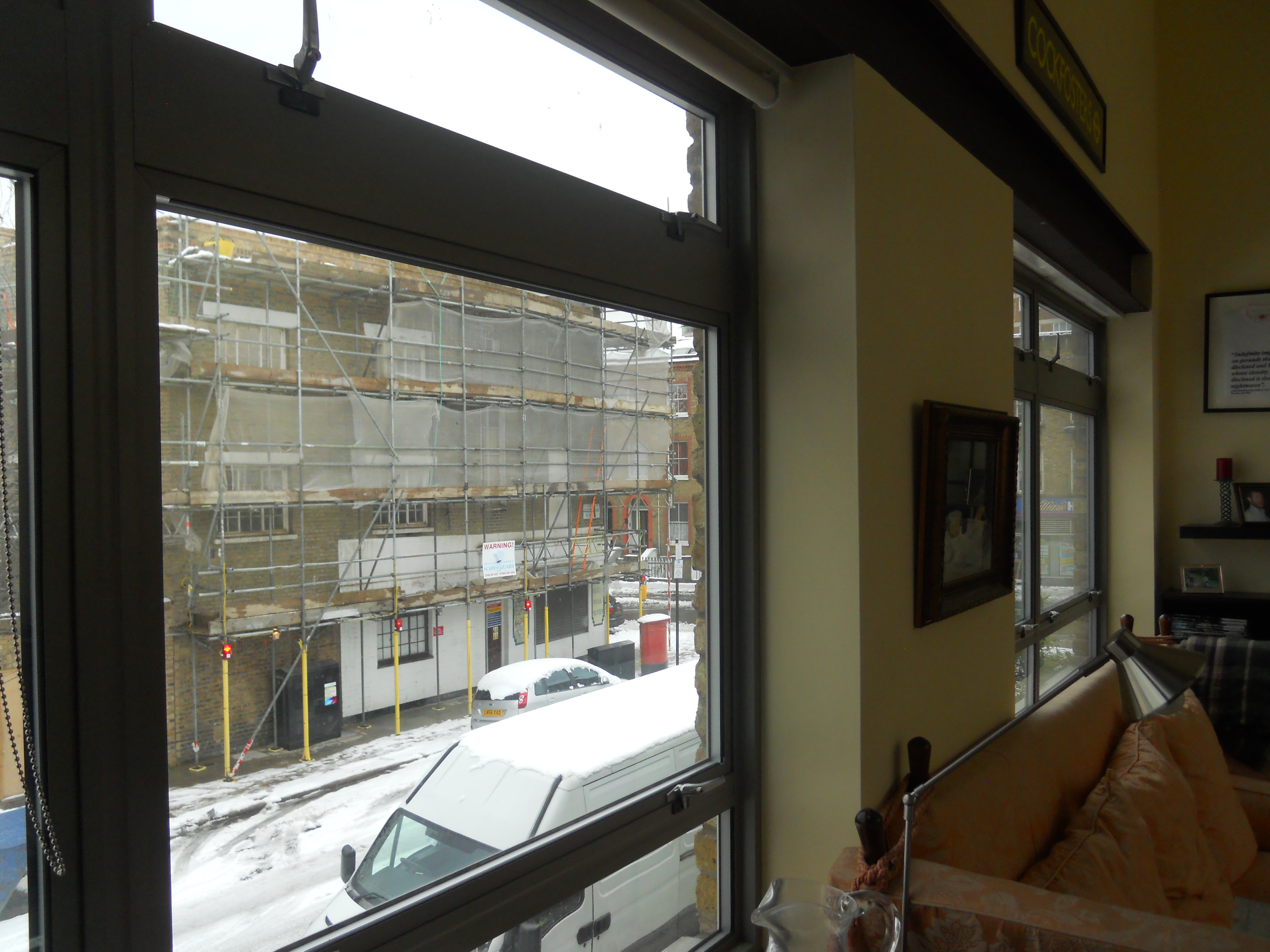
My South-Facing Windows
The house is probably highly insulated, has under-floor central heating and I suspect that the floor slab between the two floors is fairly immense and thus takes not only a long time to heat up, but a long time to cool down. At times, when I’ve been away for a couple of days in the cold, it seems that it’s almost taken another few days to get the house warm.
But when it gets hot, it gets very hot, as the light coming through the windows warms the house by the same principle used in somewhere like the Palm House at Kew Gardens. I have measured a temperature of 30 degrees.
To make matters worse, I also have a roof light.
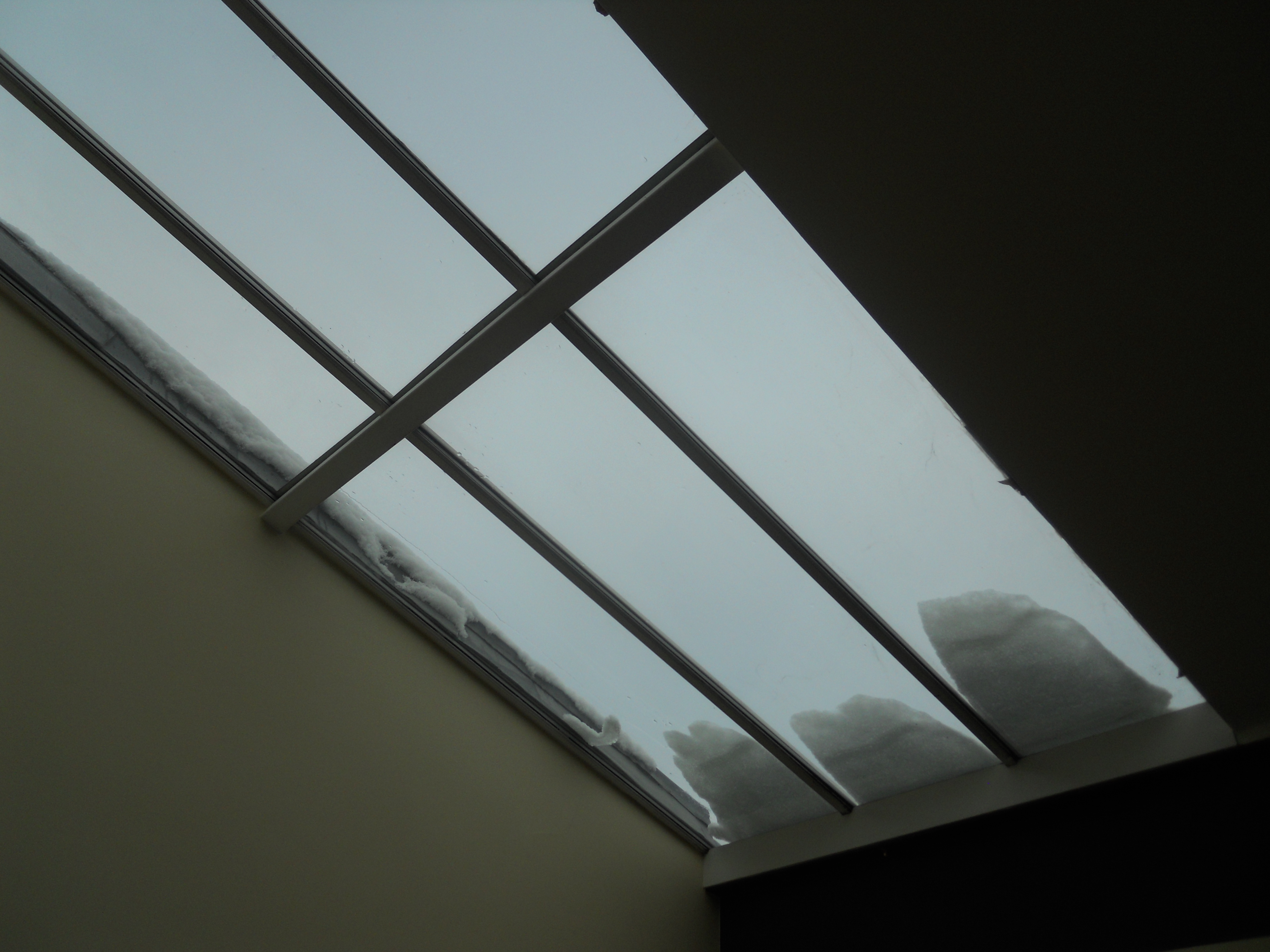
My Substantial Roof Light
Not only does the house get hot, but also the air inside gets very dry. This means that my throat, ears, eyes and skin are all very dry. This article on Dry Skin and Winter Itch led me in the direction I have gone. Firstly, I installed this simple meter on the wall.
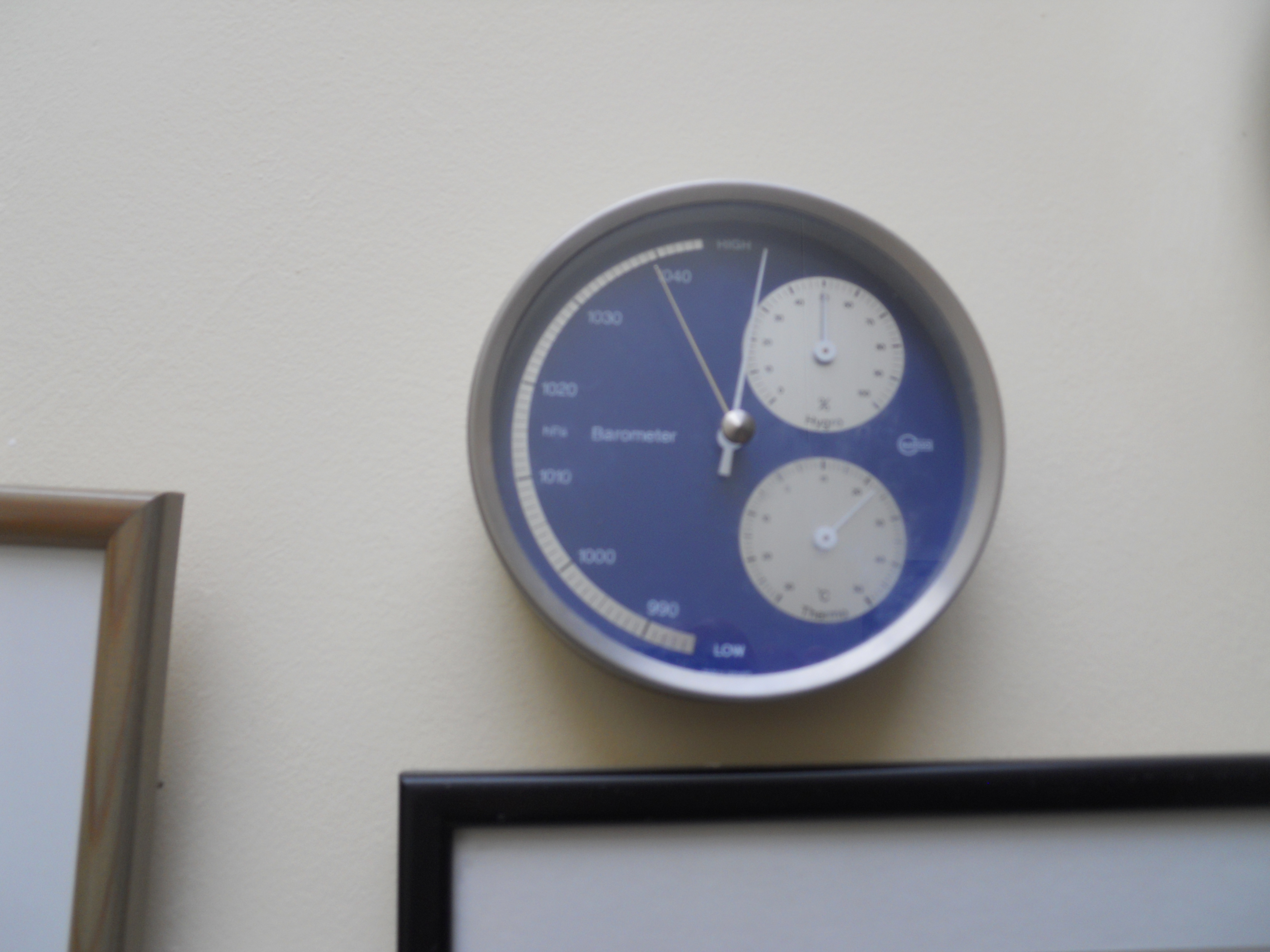
Combined Barometer, Thermometer and Hygrometer
So that I could measure everything properly.
I also purchased a humidifier from John Lewis to try to get the humidity between 50 and 55%.
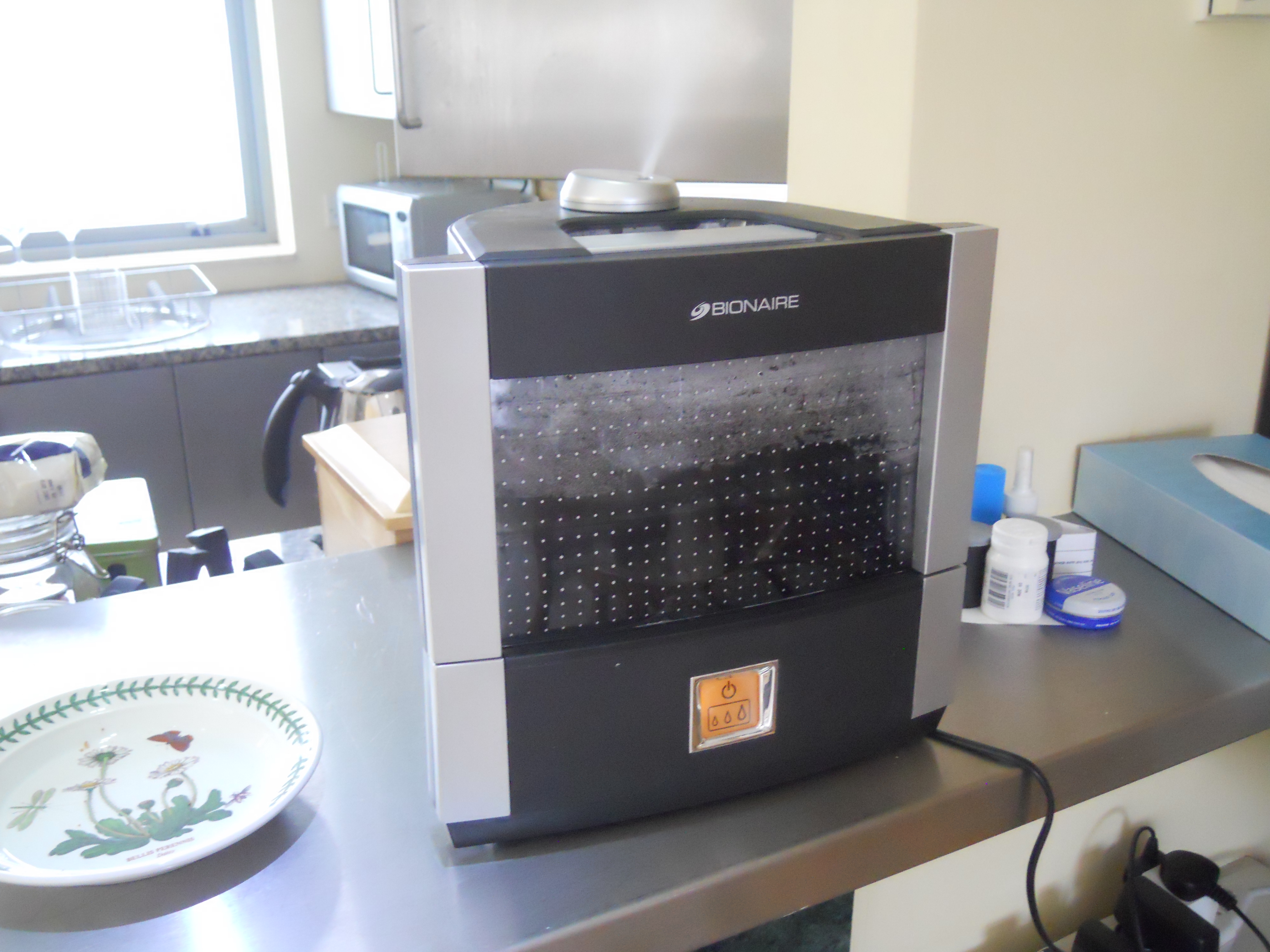
Bionaire BU7000 Humidifier
I then turned the heating down as low as it would go and still maintain a temperature of about 22-23 degrees and used the humidifier to adjust the humidity to a comfortable level.
Then I did the difficult bit and decided to have a lukewarm bath every other day to moisturise my skin. My ears and eyes have definitely got better, but my throat has only marginally improved. That could be because of the cold outside, as it’s very dry there.
I’m now trying to see if I can cut the solar gain in the room, by some simple passive method like the right blinds. This article has been a help.
So what am I going to do first.
If you read the article, it indicates that one of the best systems is to use a blind or curtain, with a pelmet and a vent. I’ve tried a simple John Lewis blind to see that it looks like.
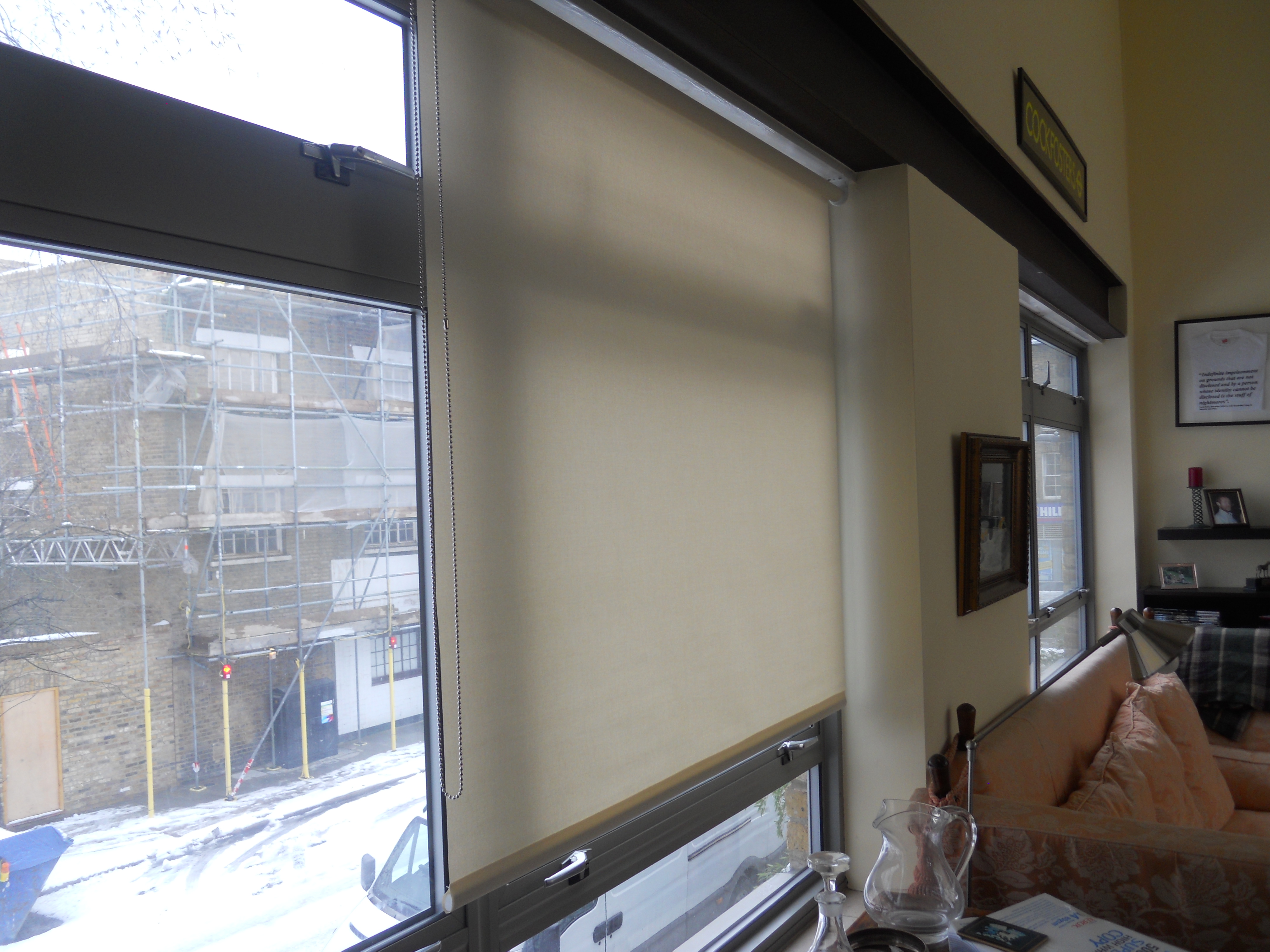
a Test Blind
Four of these cut to fit two to each window might be a good start.Note that the opening top windows can be used as the vent. And of course the blinds can be adjusted up and down for light control and visual security. For the pelmet, I might seriously consider a U-shaped one, that also acted as a shade for an LED ropelight to downlight the windows internally at night.
 The Anonymous Widower