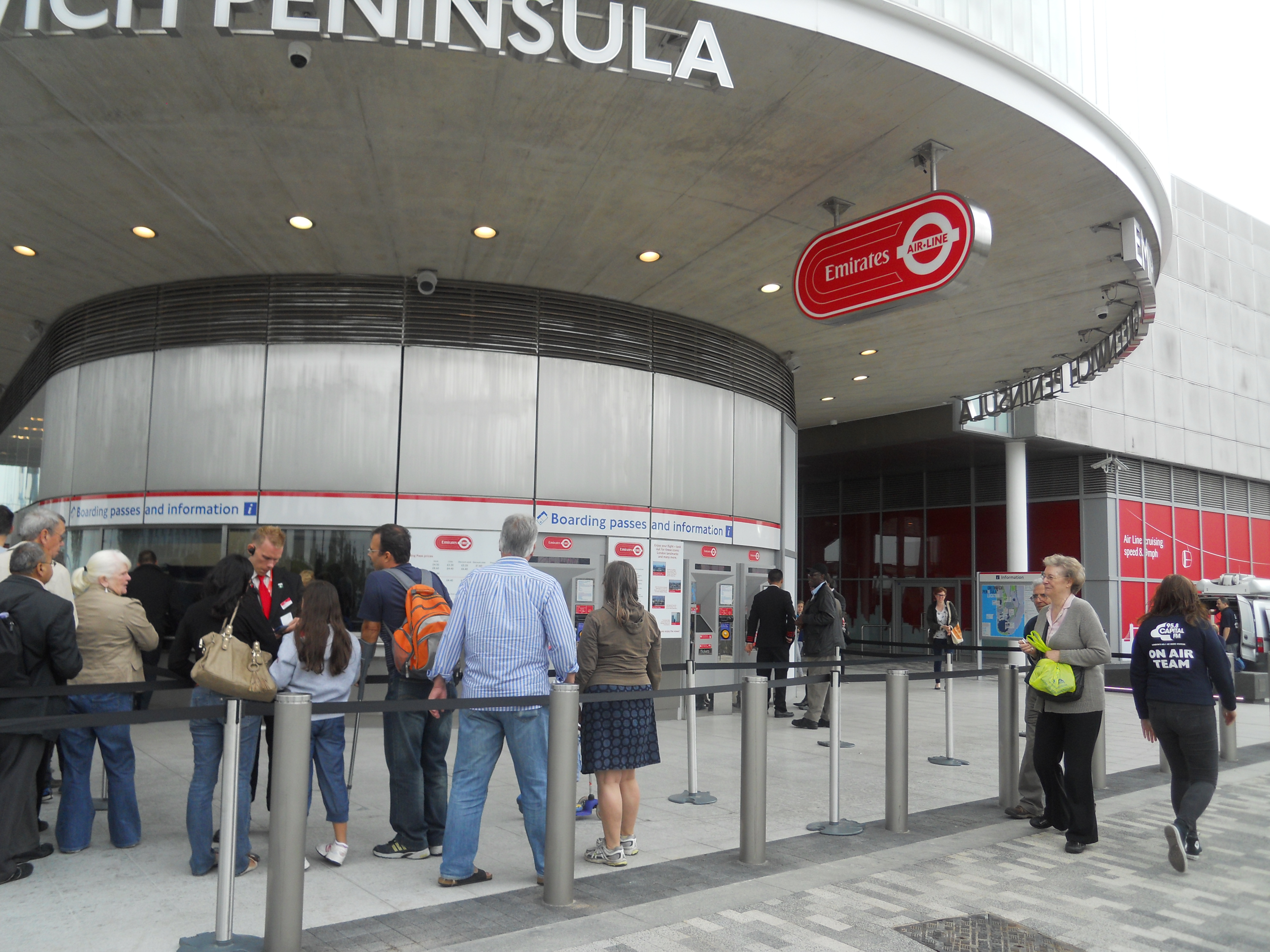
Emirates Air-Line – It Was So Good I Did It Twice
The Emirates Air-Line that is!
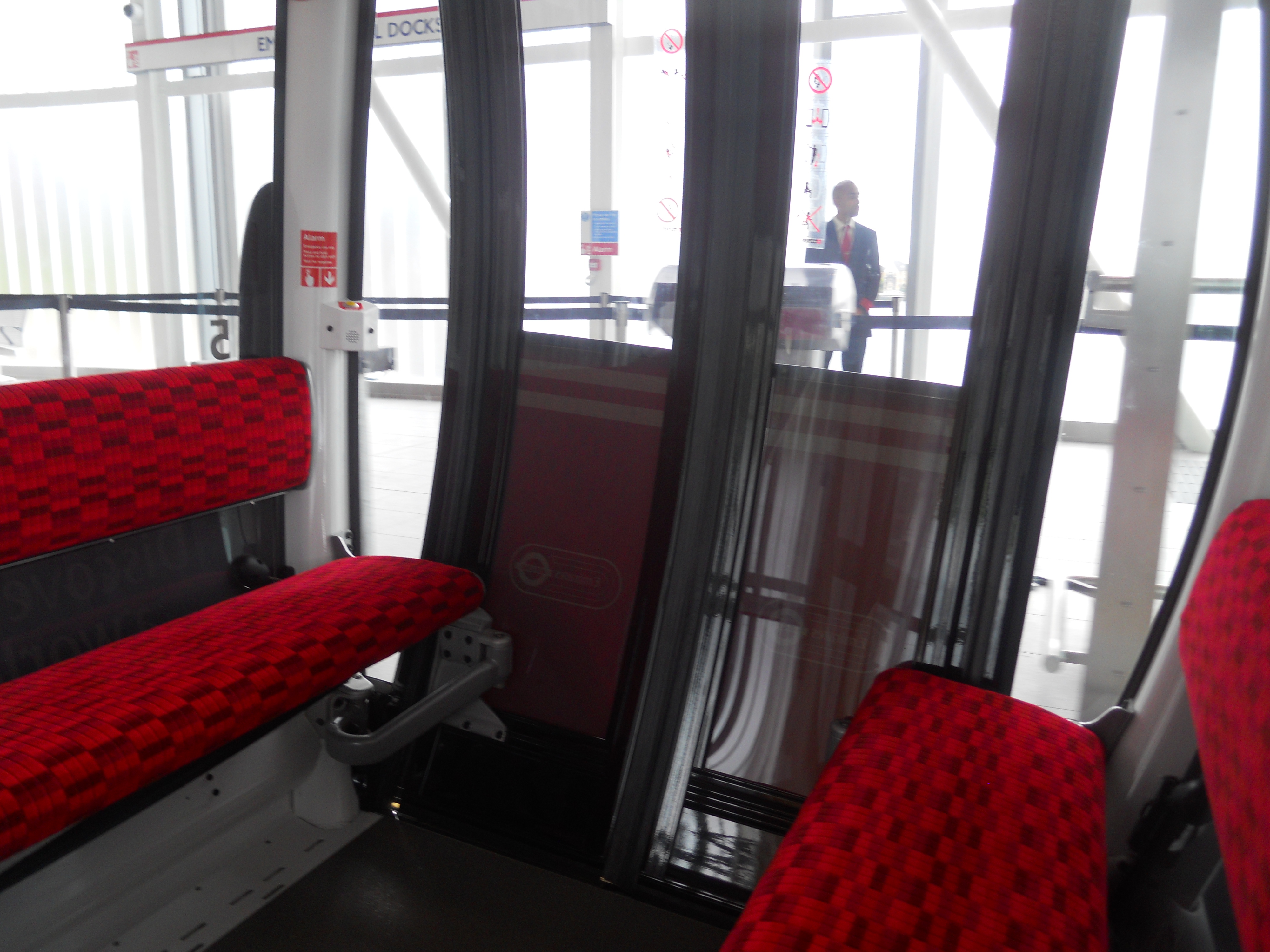
This time it wasn’t so crowded and I had a gondola all to myself.
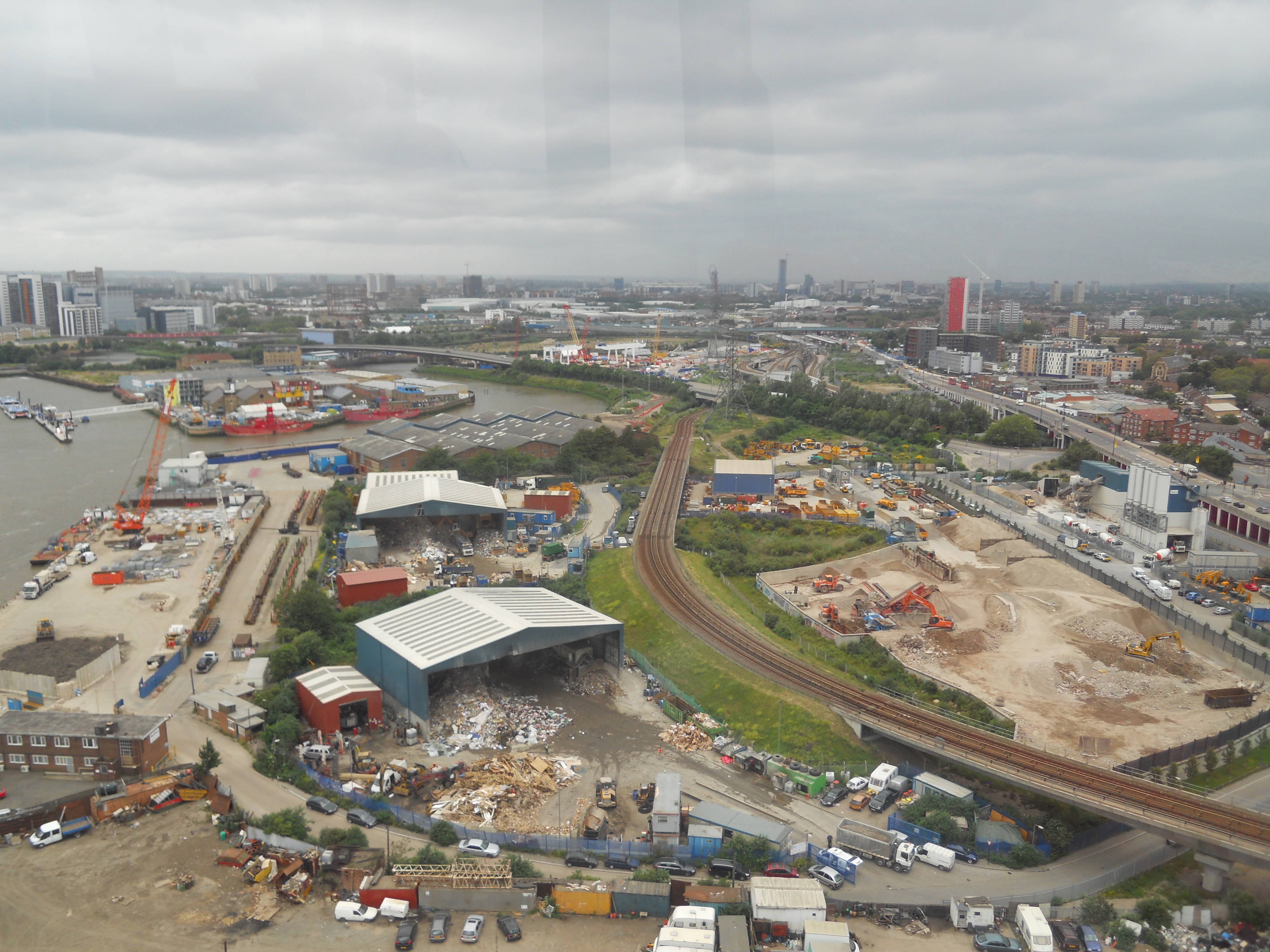
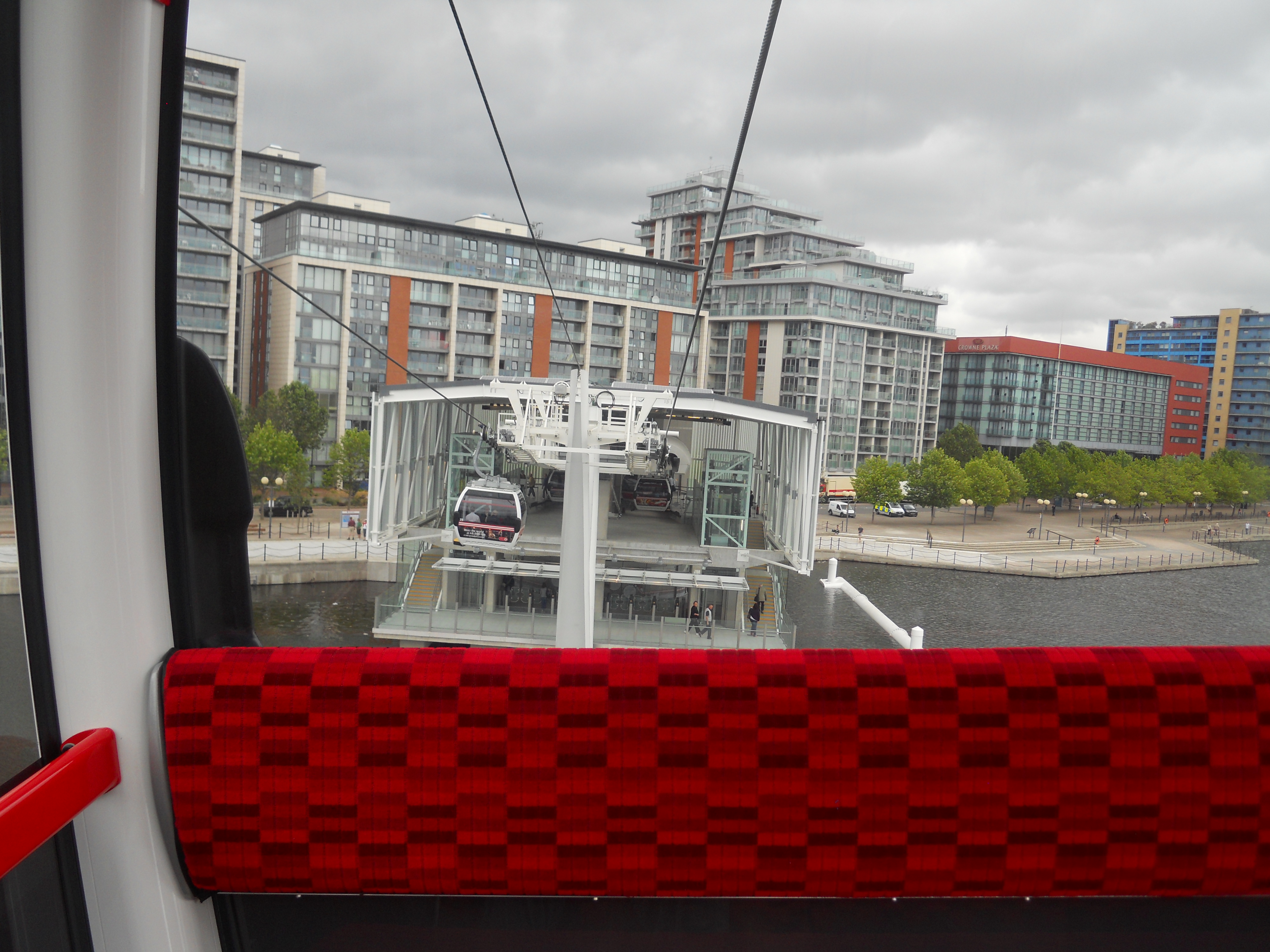
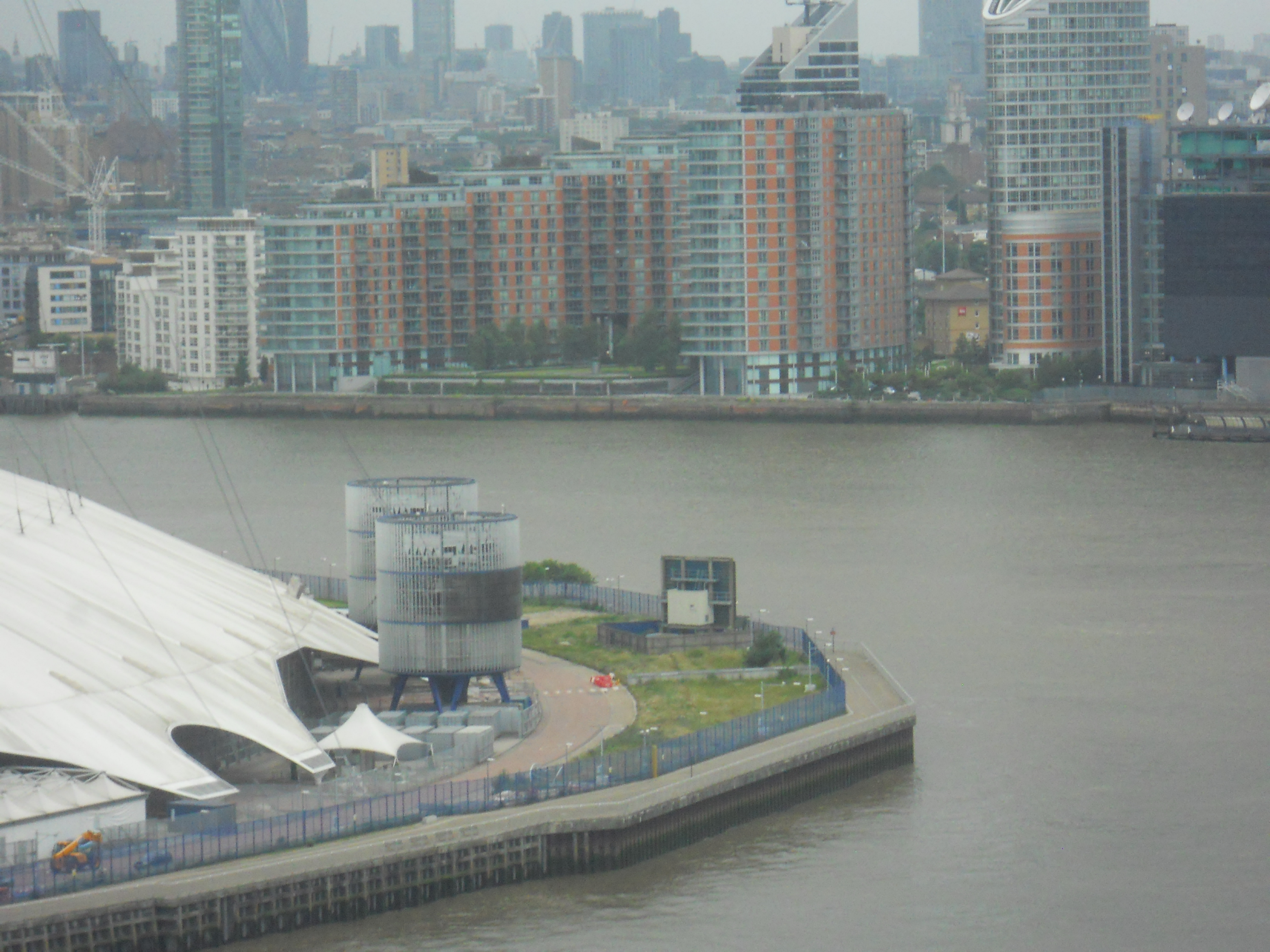
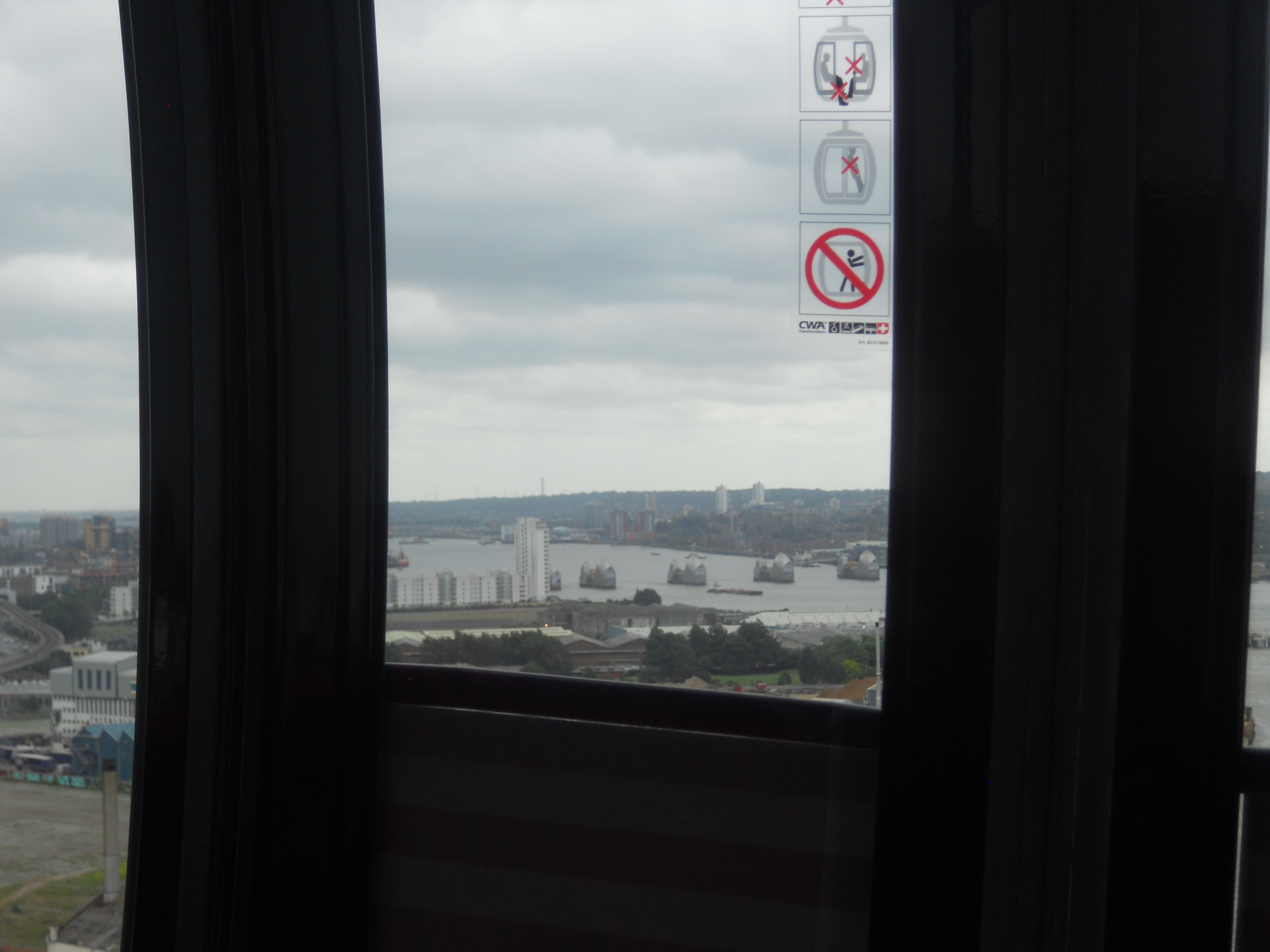

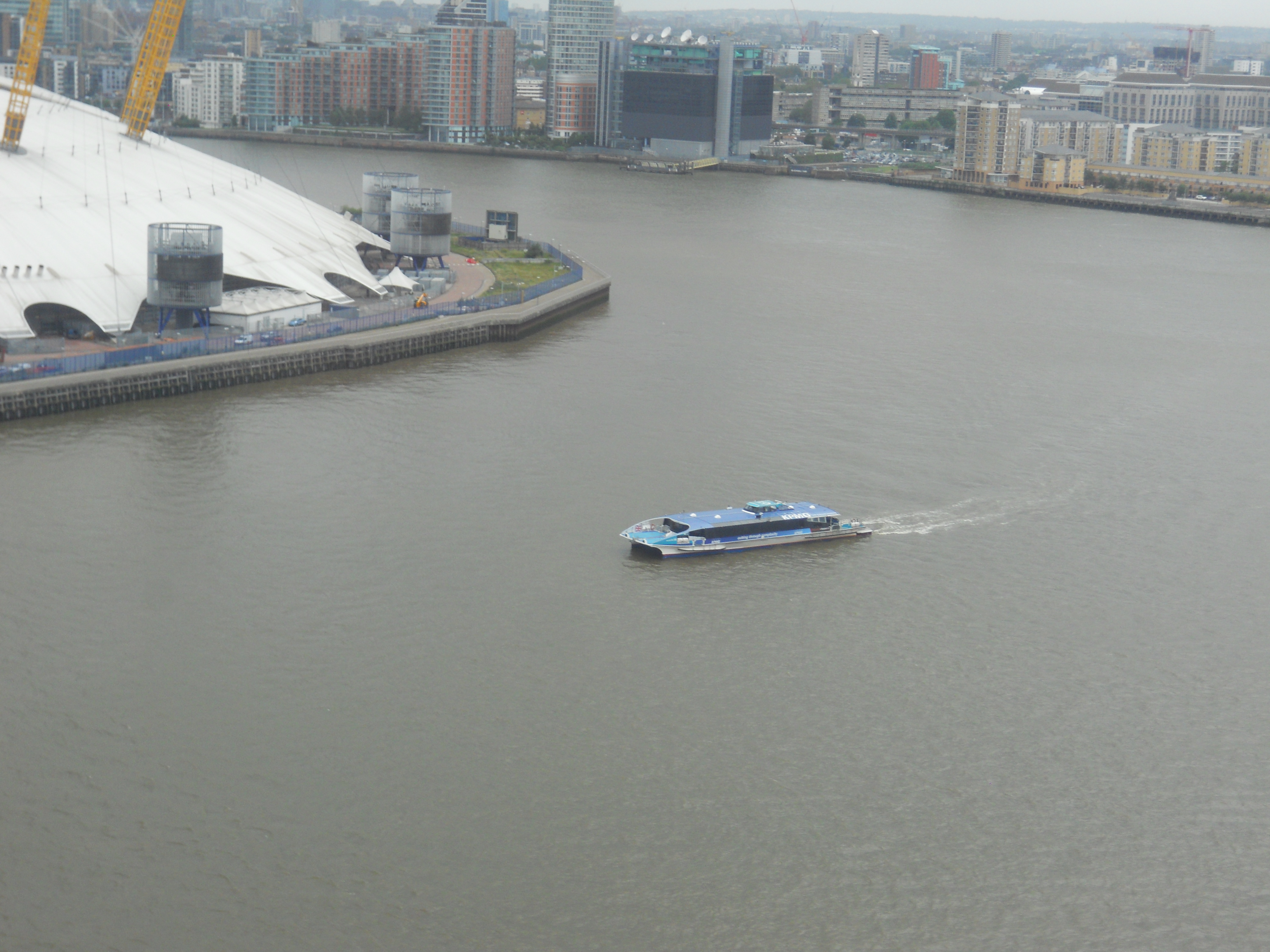

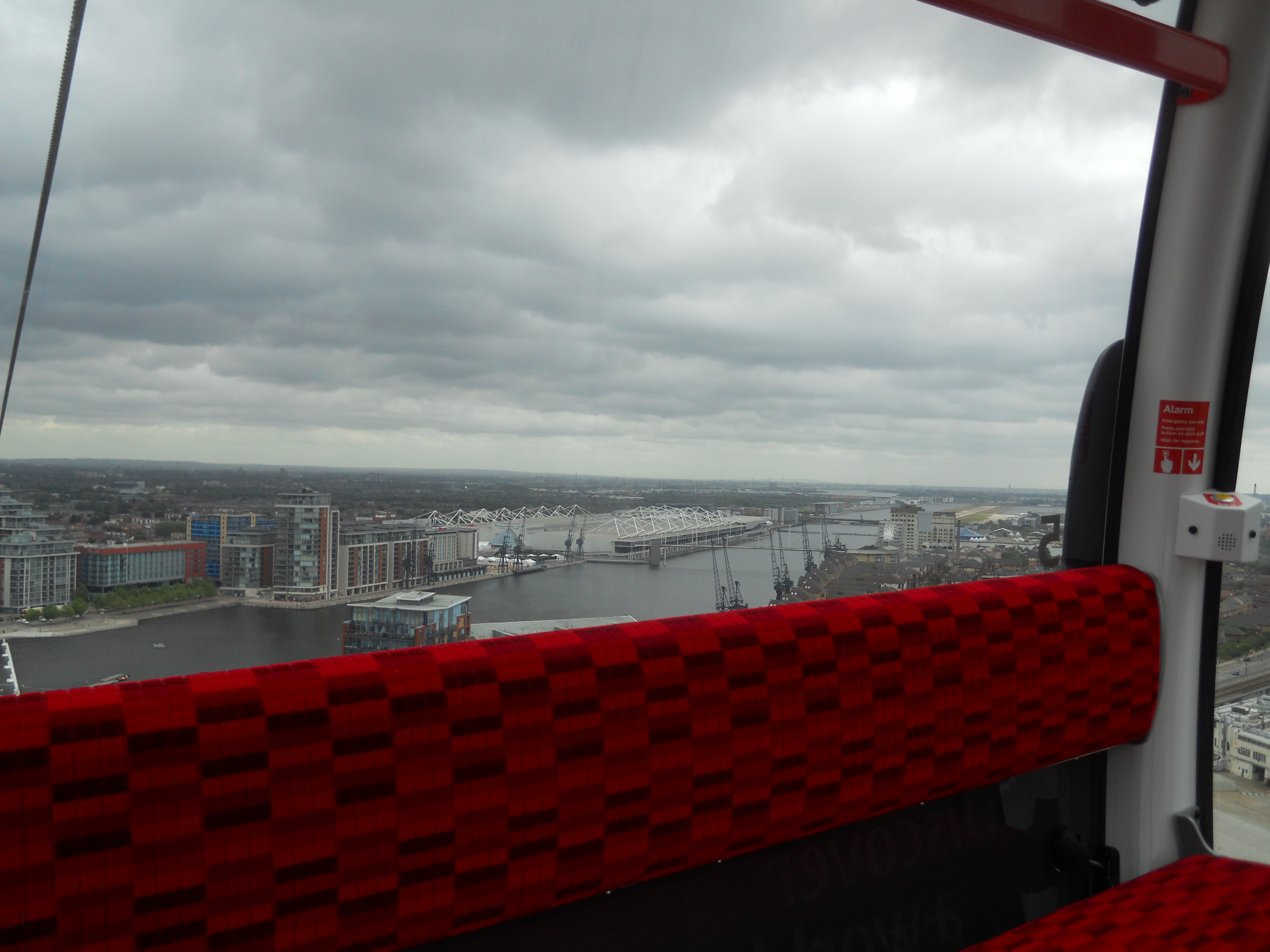
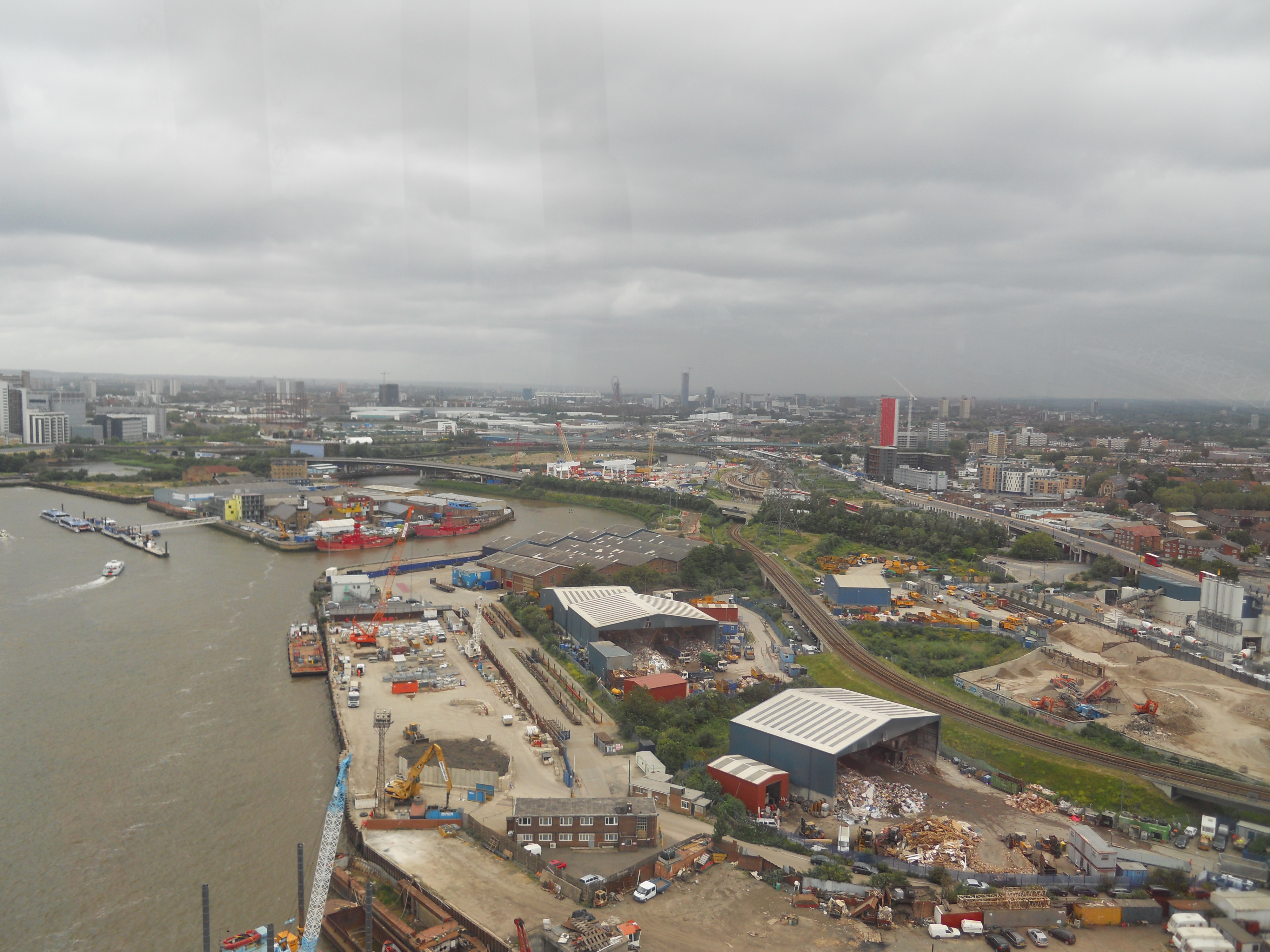
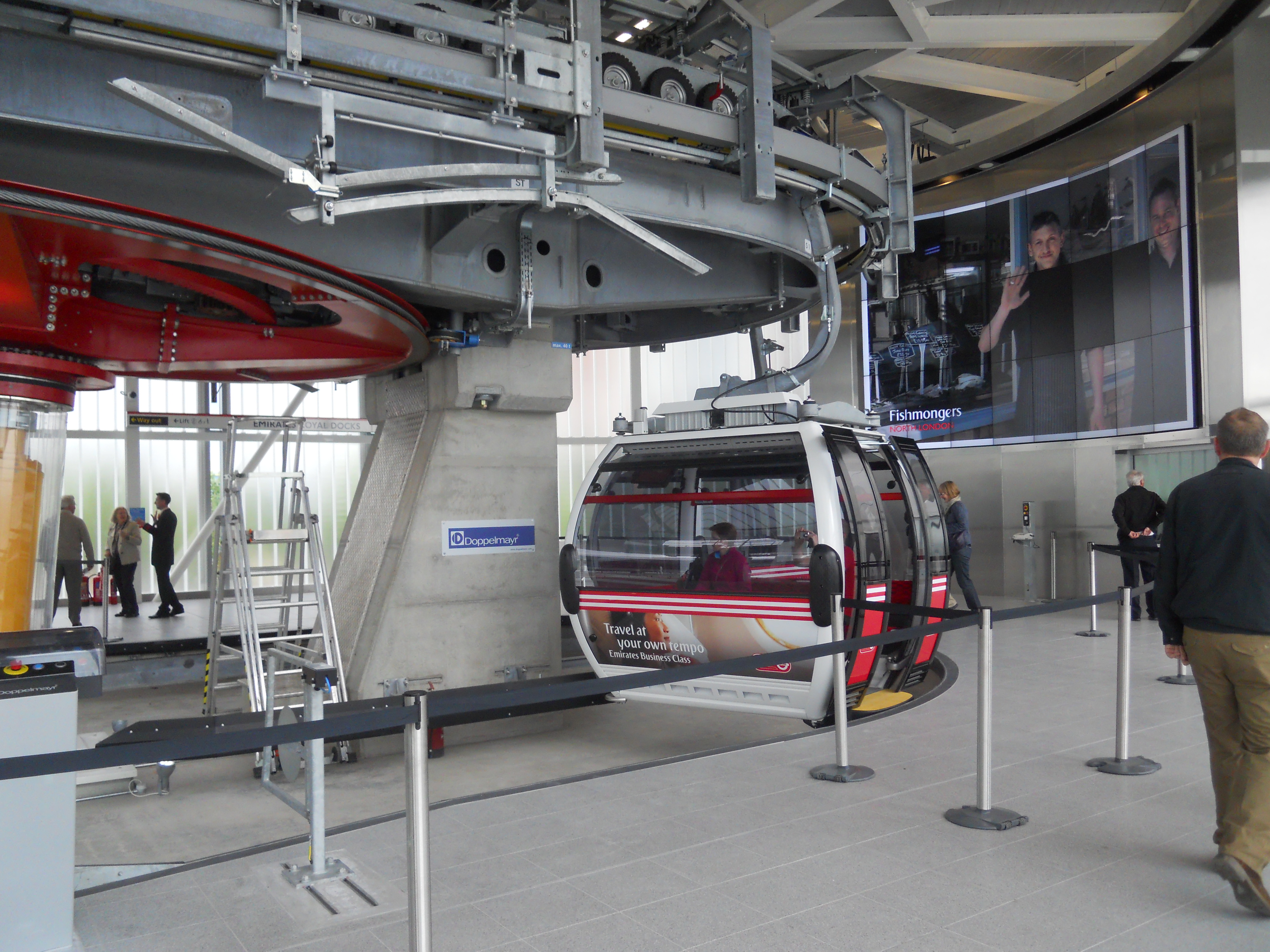
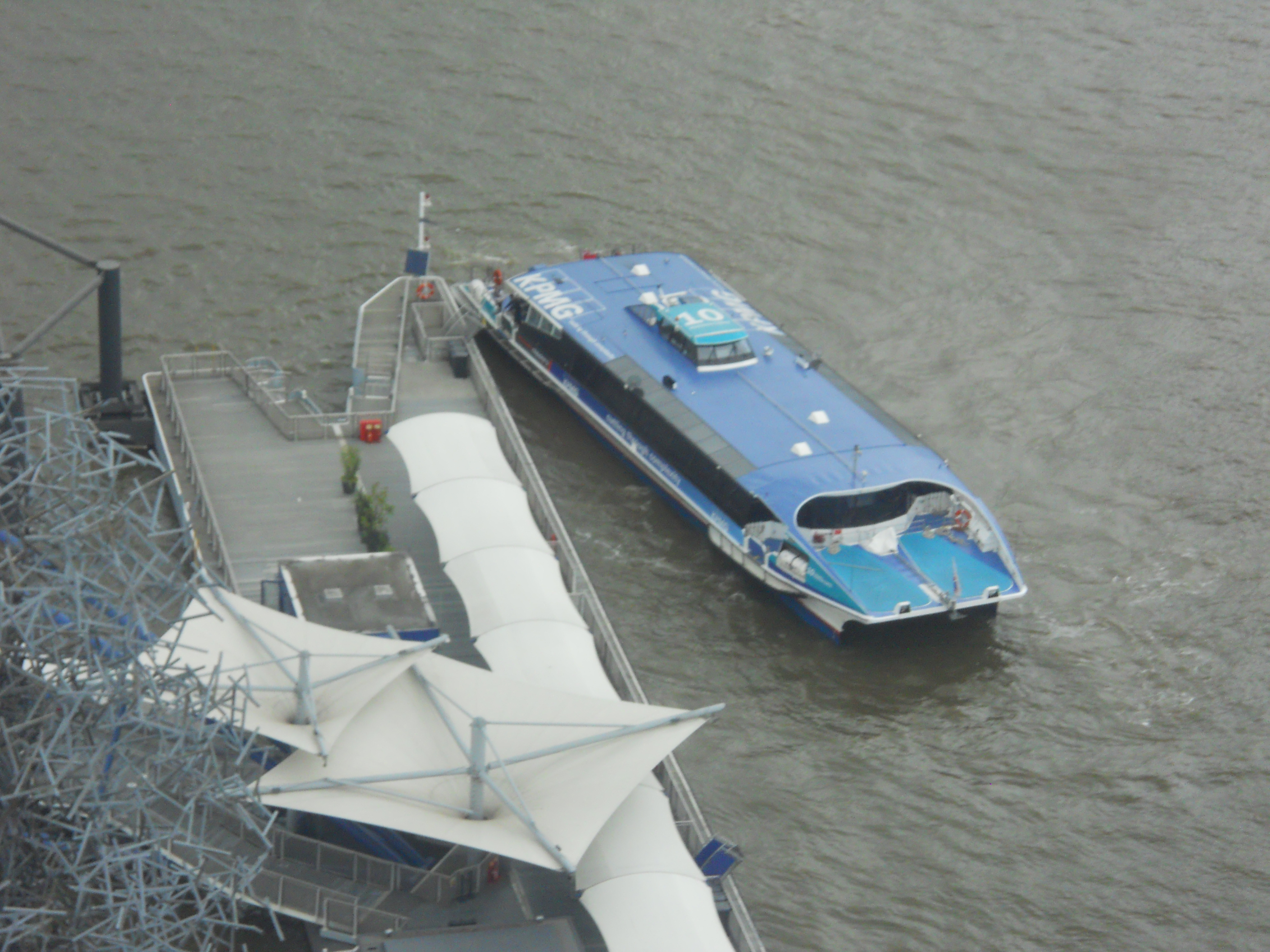
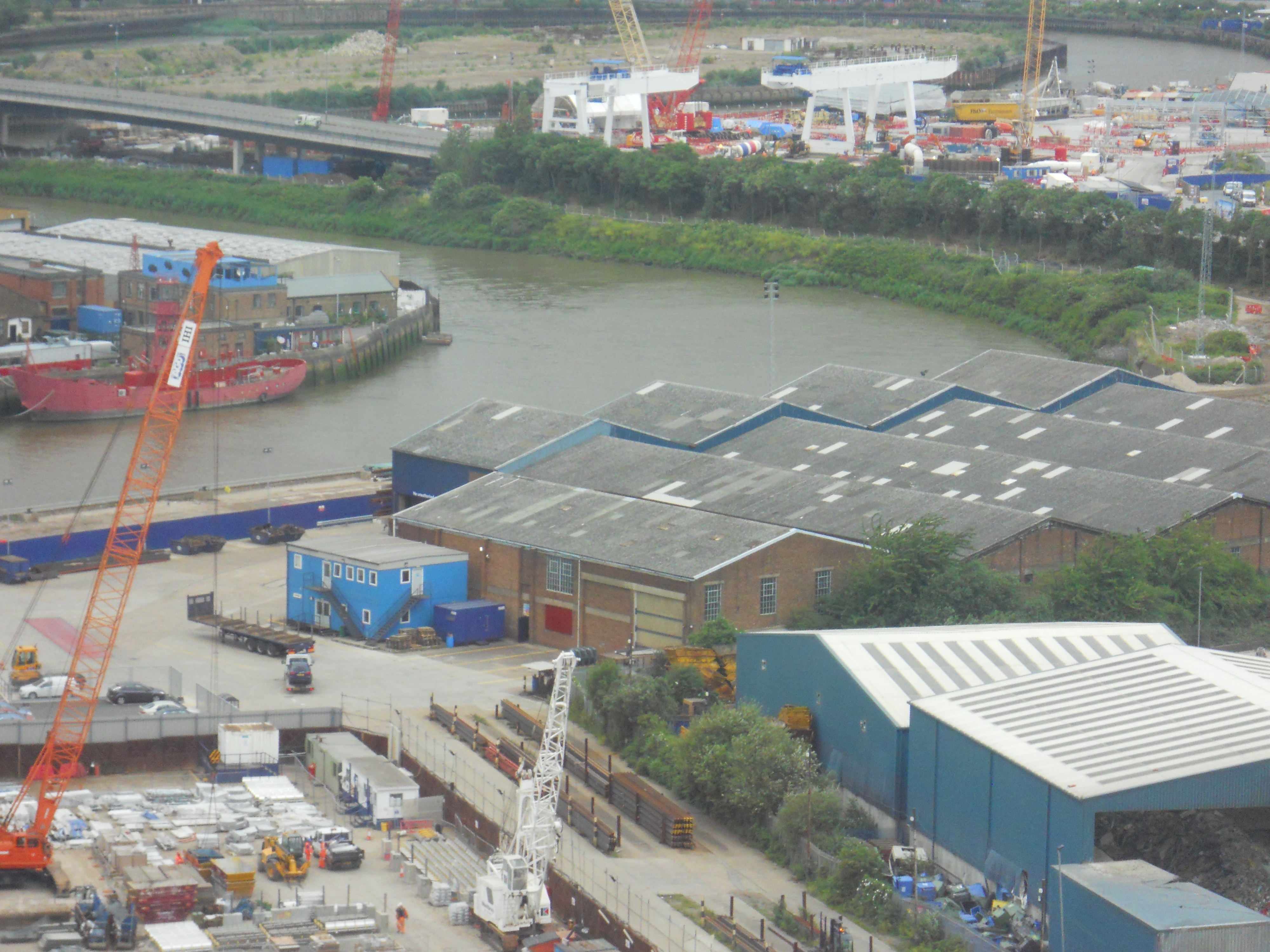
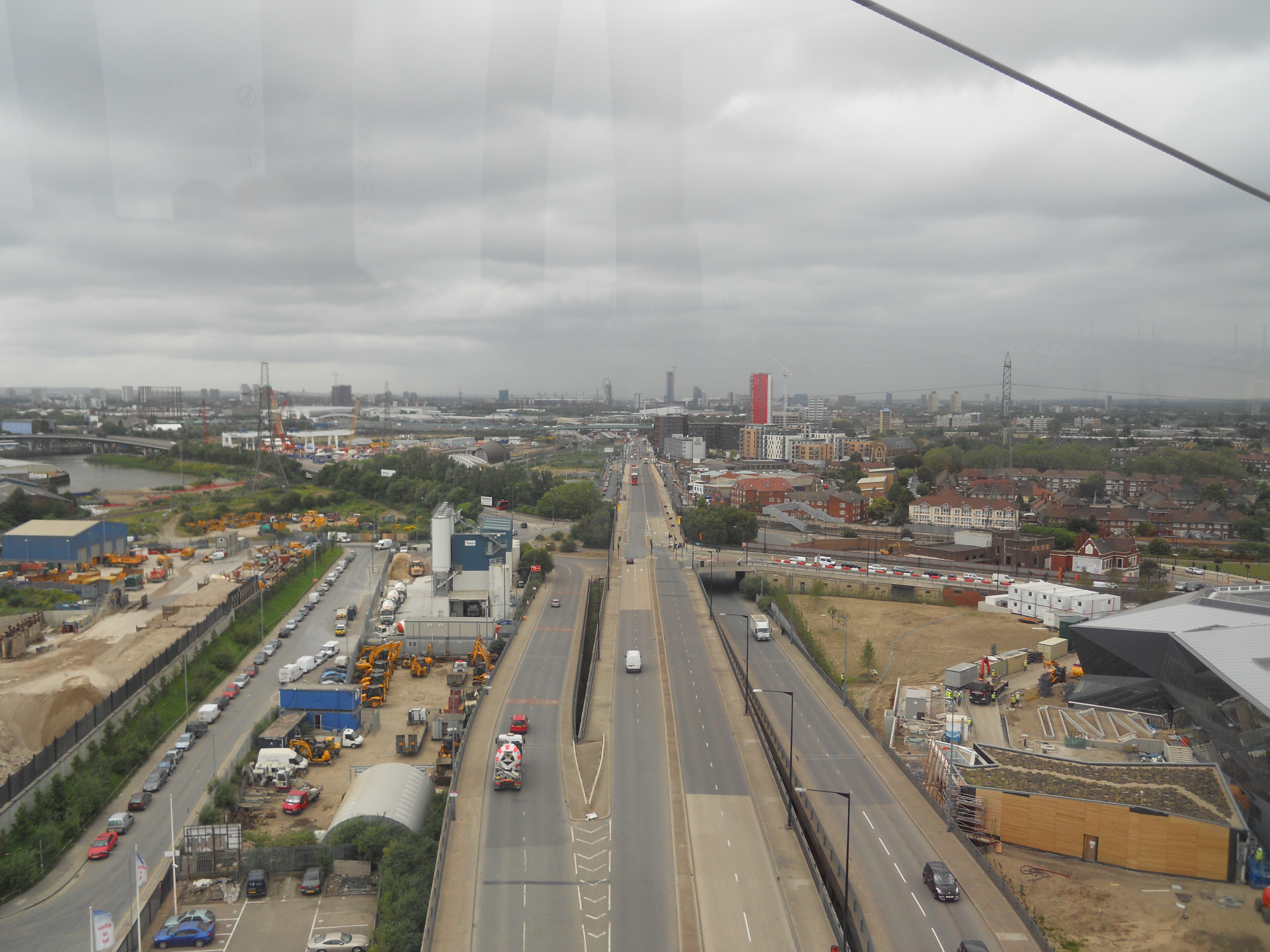
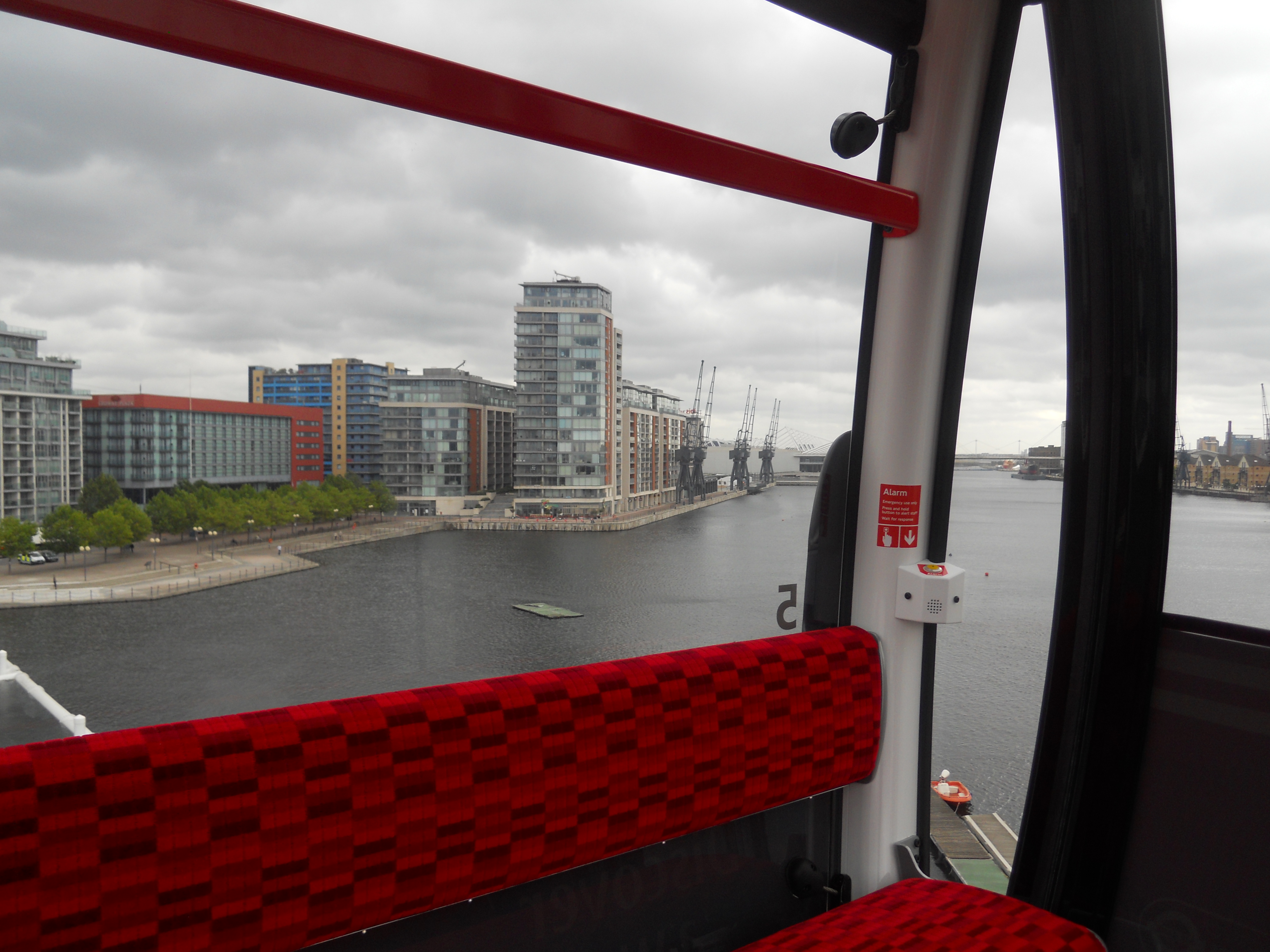
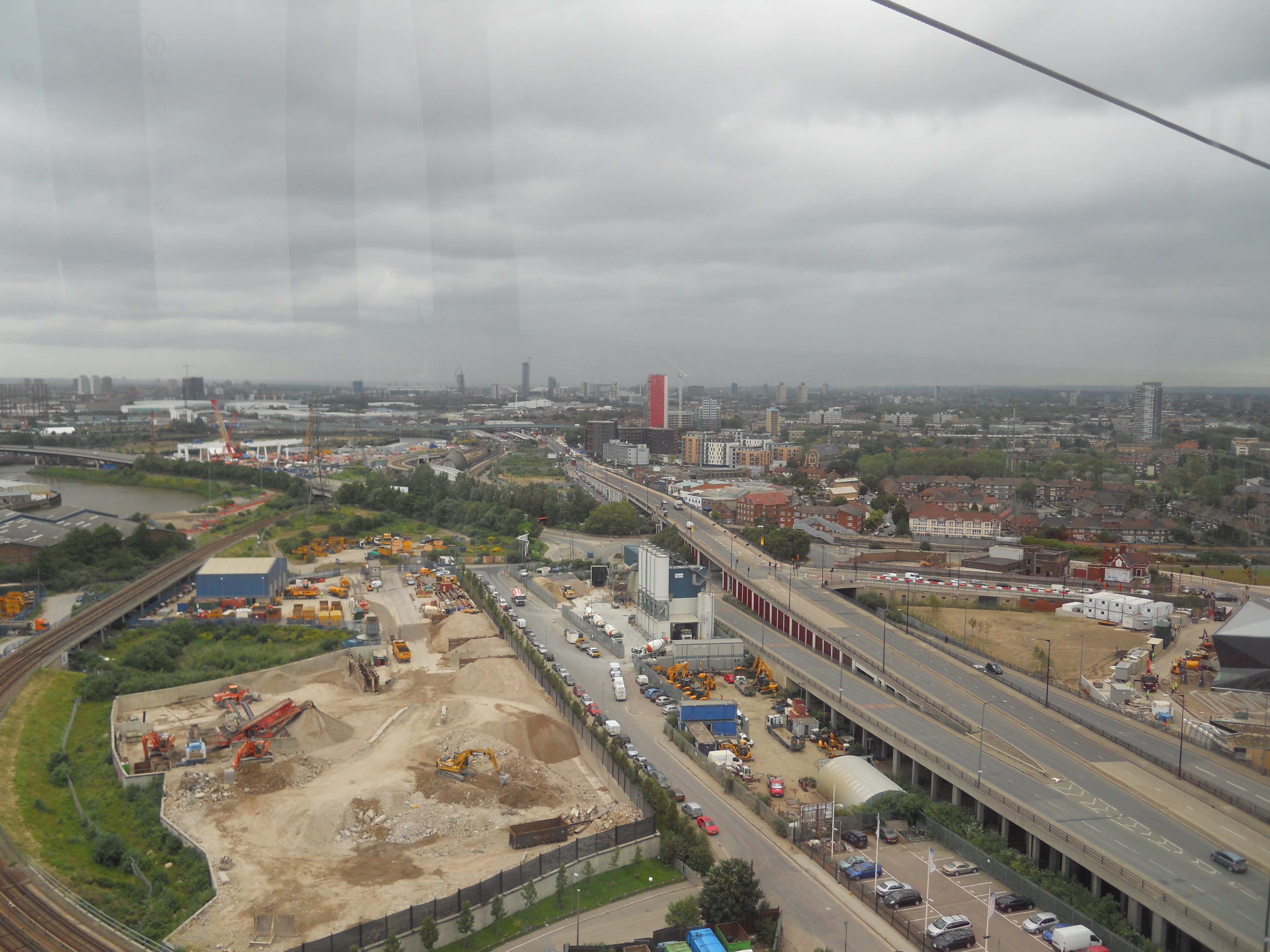
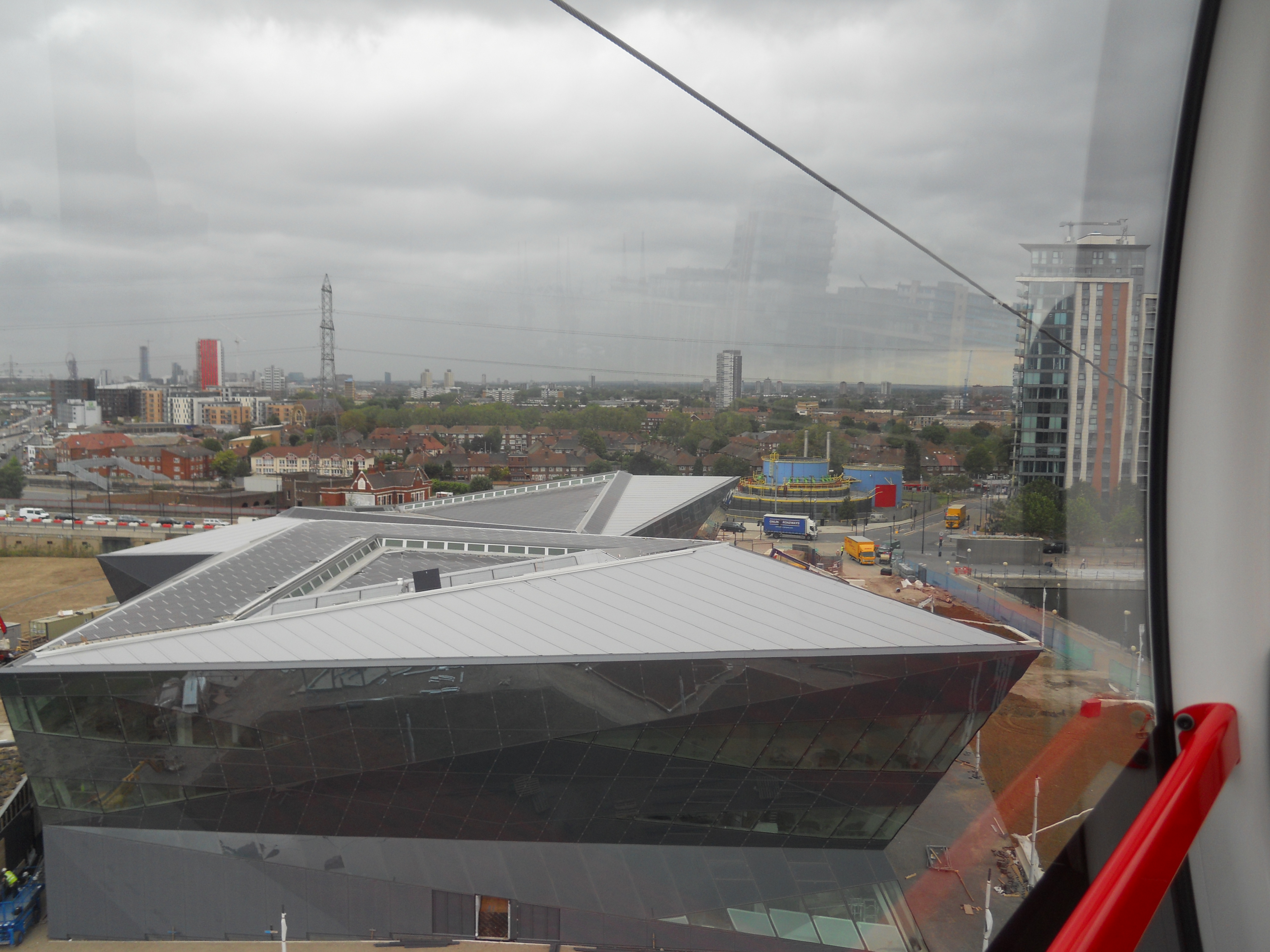
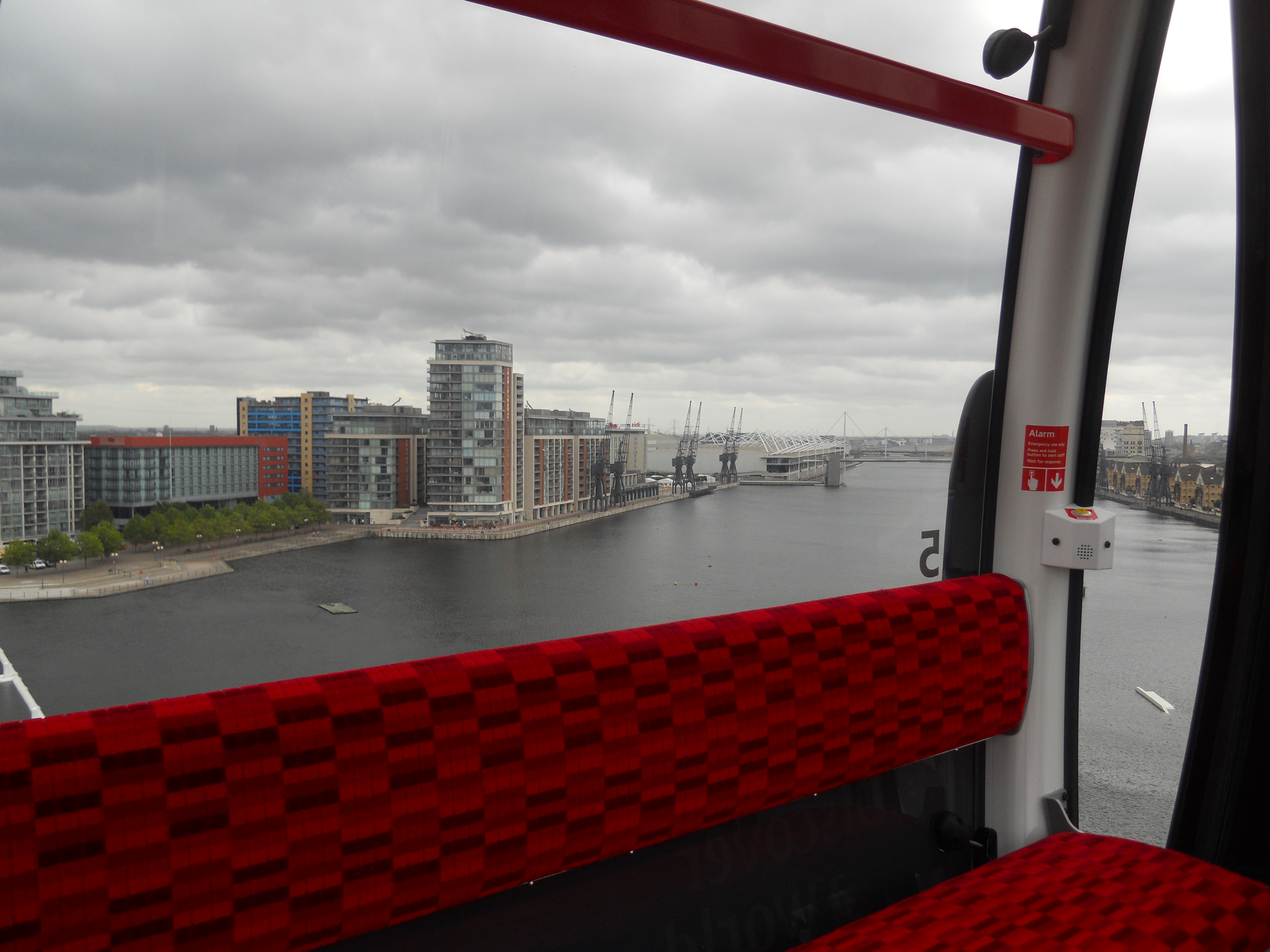
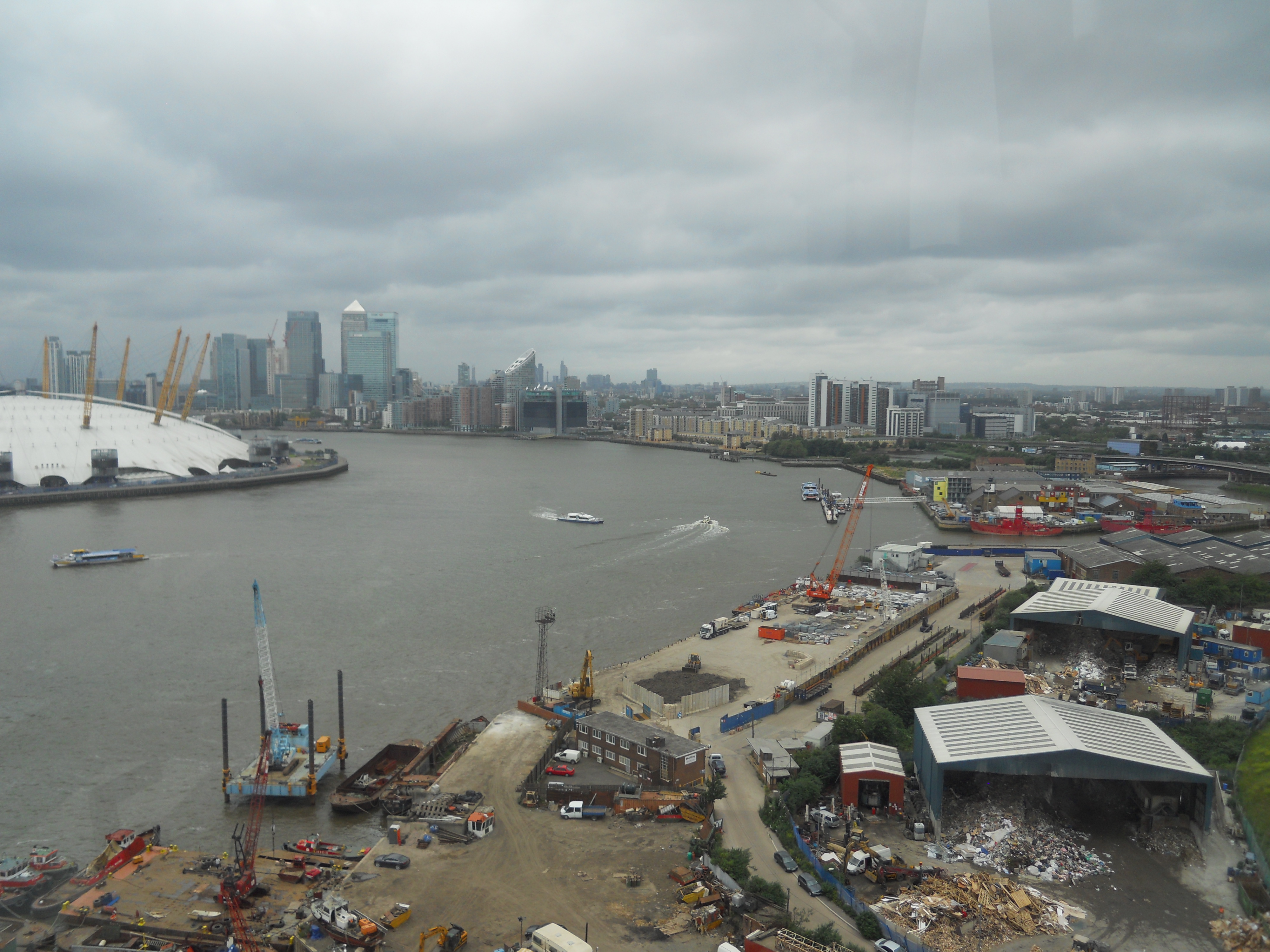

As you can see I was sitting on the City side of the gondola. Sitting on the other side should give good views of the Thames Barrier.
It really is good value at £3.20. Although, it was a bit shaky in the wind today and getting good pictures was more difficult.
Who knows, I might go back about sunset on a day it decides to show it’s face.
Robert Comes Home
I like to see old engines and other pieces of industrial history displayed at places like stations.


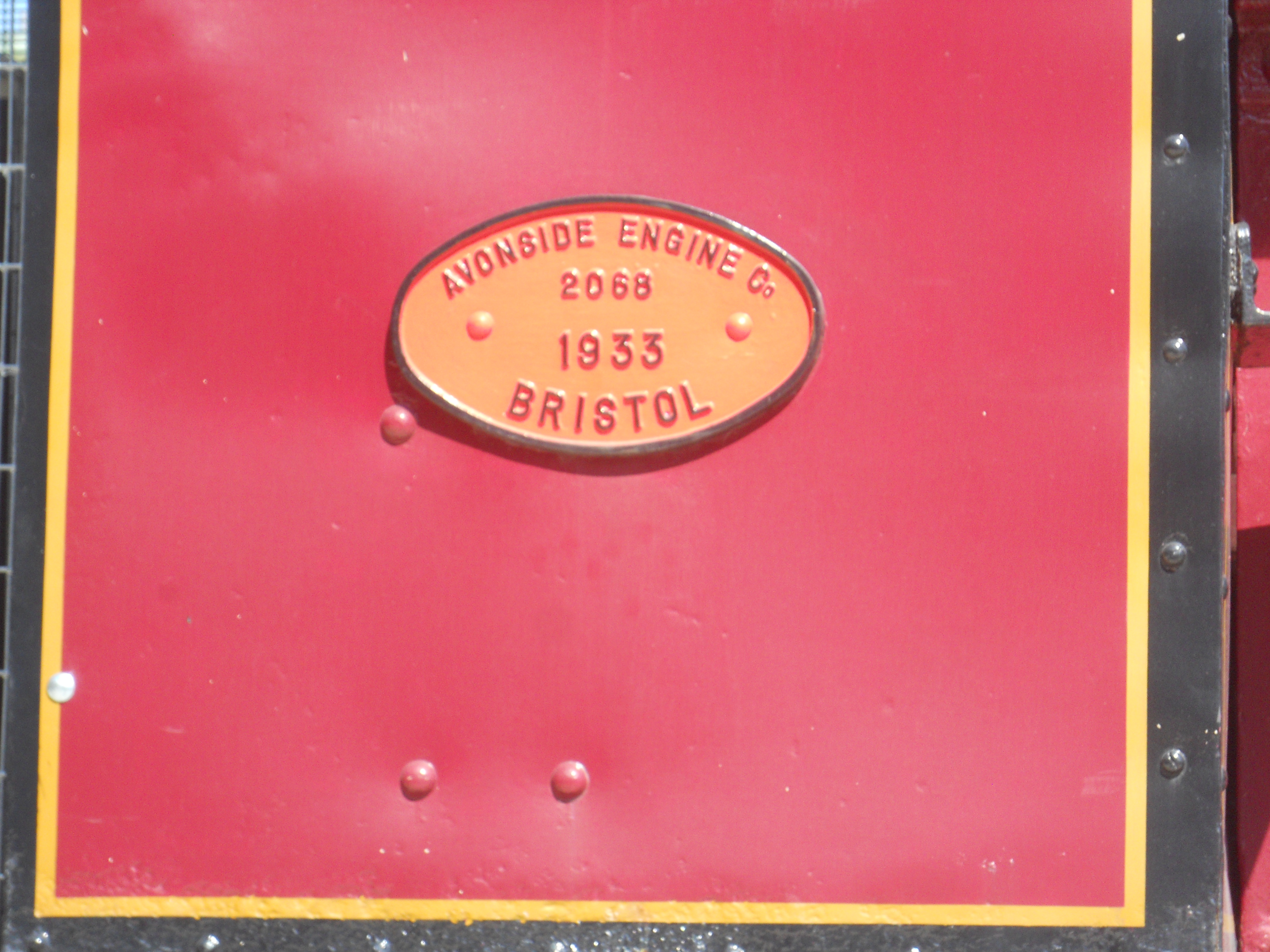
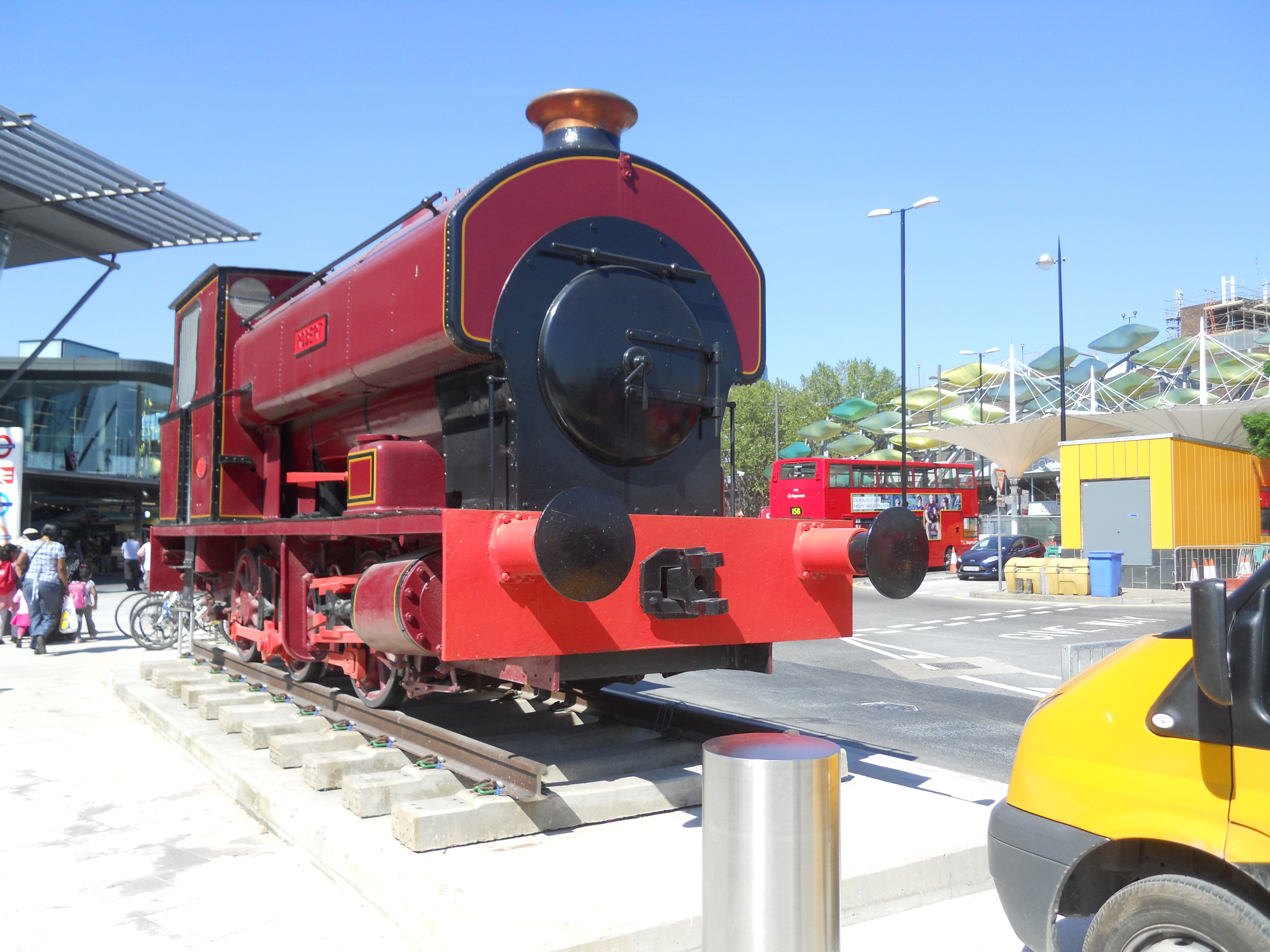
Robert has now been put back at Stratford station and as you casn see from the picture, it has a proper information board.
Some might have commissioned an expensive sculpture, but surely old engines like this are cheaper and just as interesting.
The Development of the New Bus for London
I went to a lecture last night at the Institute of Mechanical Engineers about the New Bus for London. A very good lecture, given by David Barnett, the Development Engineering Manager of The Wright Group, who build the bus.
His talk should be recorded and shown to all students, who might think they would benefit from going to University to do engineering, as it showed how innovative thinking can transform a product as everyday as a bus.
I think the lecture, also confirmed my view, that the buses we ride in ten years from now, will be even better. The current New Bus for London is just the start of the development of buses that will transform the way we get around.
I think it is worth emphasising that buses, trams and trains are only part of a transport system. They need to be backed up by all kinds of information technology from simple maps to web pages and mobile phone apps, so that passengers find their way around with ease.
Where The Great Eastern Was Built and Launched
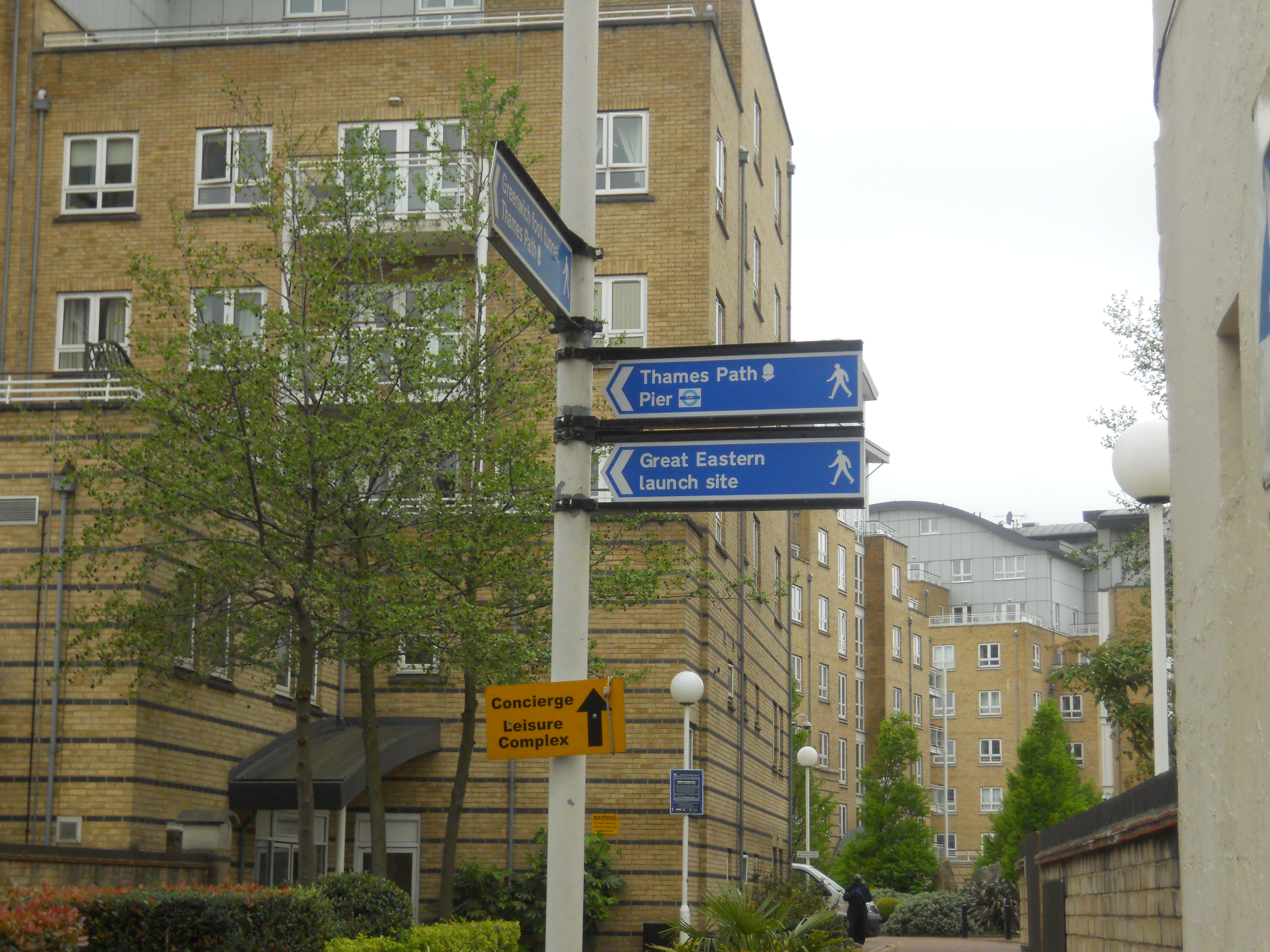
Brunel’s most famous ship, the Great Eastern, wasn’t built in Liverpool, Belfast, Glasgow or on the Tyne or Tees, but on the Thames at Millwall. If you take the DLR to Island Gardens station and then walk along the Thames Path towards the City, you’ll see a sign pointing you to the Great Eastern Launch Site. It’s shown in these pictures of the Launch Site itself.


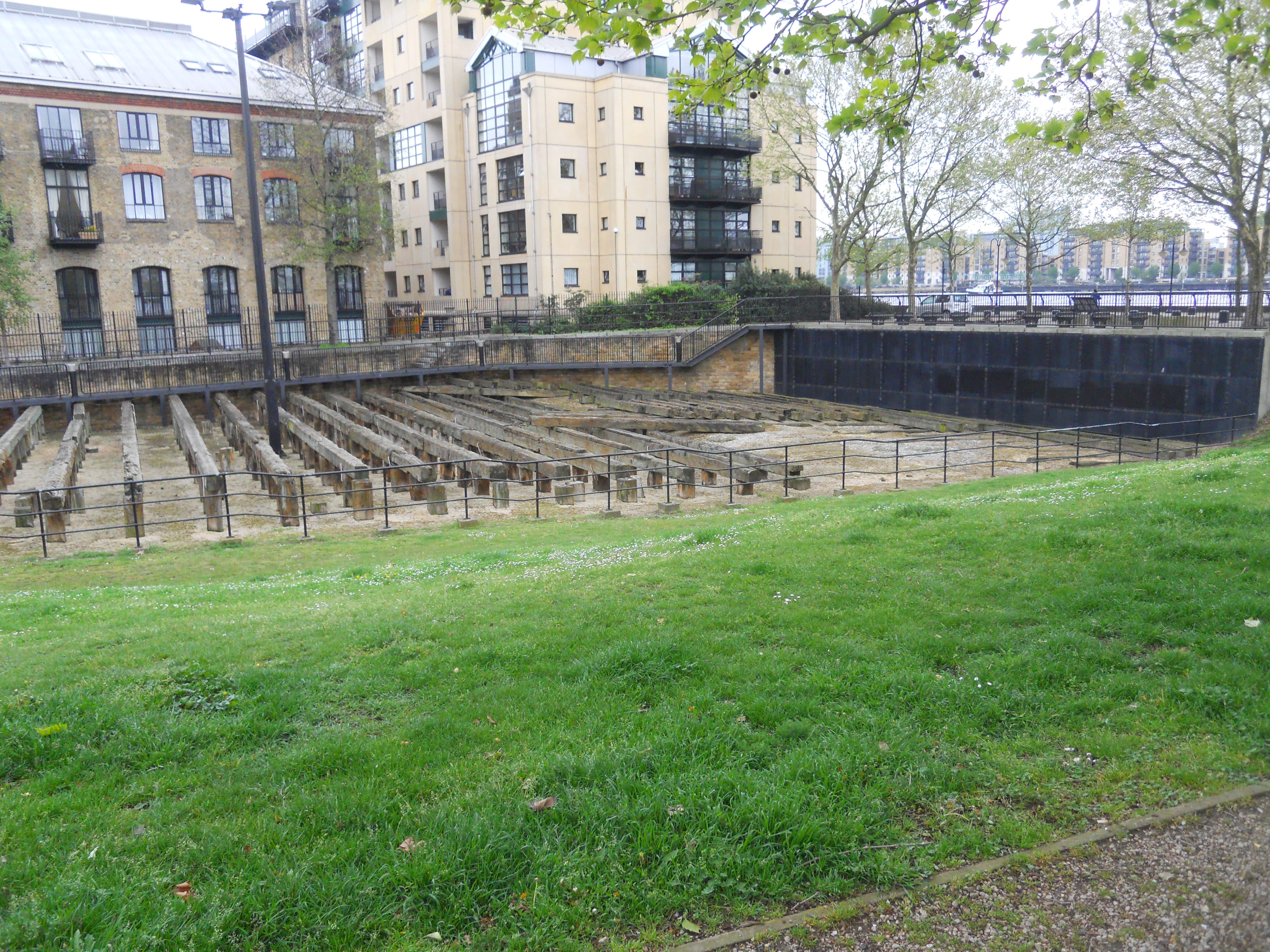
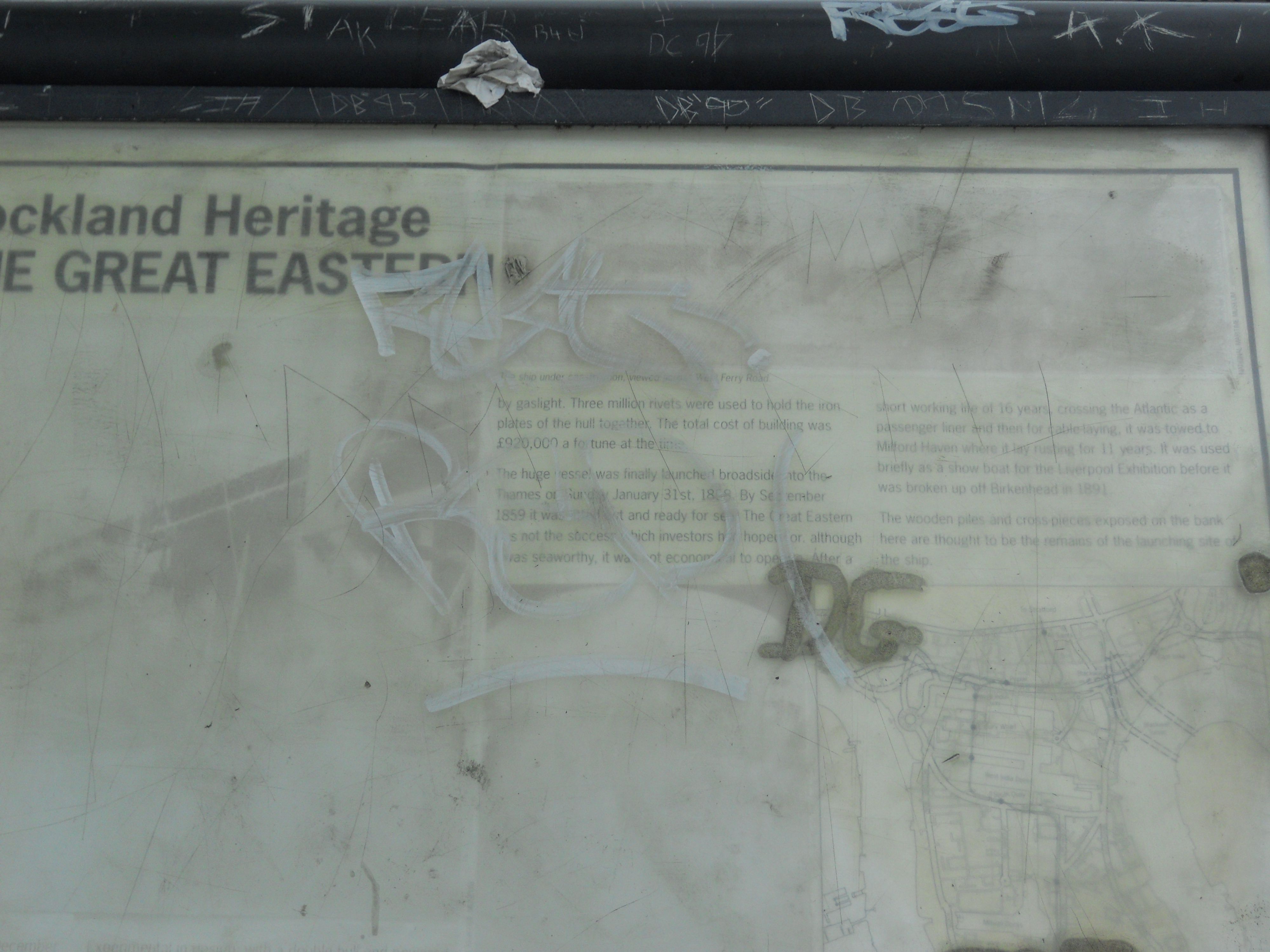
The Great Eastern was so large it was actually launched sideways, as the river wasn’t wide enough for a traditional launch. It was also pushed in by scores of hydraulic rams, as it was reluctant to move. It is said that these rams, built by Tangye, launched that company as well.
The Quality of Some A-Levels
It would appear that nothing changes here in some subjects. The main news story is that Michael Gove wants to reform A levels and give the universities more control. He states that some A levels don’t prepare some students for their University courses.
Was it ever any different?
When I went to Liverpool University in the 1960s, my maths was good, especially as I had done a Further Maths exam after my normal Pure and Applied Maths. The latter incidentally was dropped soon after I took it, despite it being the most useful to engineers.
Others though, did not have my maths skill, despite having got an A level. So a lot of my first year was spent relearning maths, so I could be a good engineer.
In fact, the problem was even worse. Until the year before me, the Engineering Department at Liverpool, got the Maths Department to teach maths. But they had found it was taught so badly, that they took to teaching it themselves.
That was sixty years ago!
I’d love to see a current Maths A level paper and see how much is within my knowledge.
Bad Mathematics on the Underground
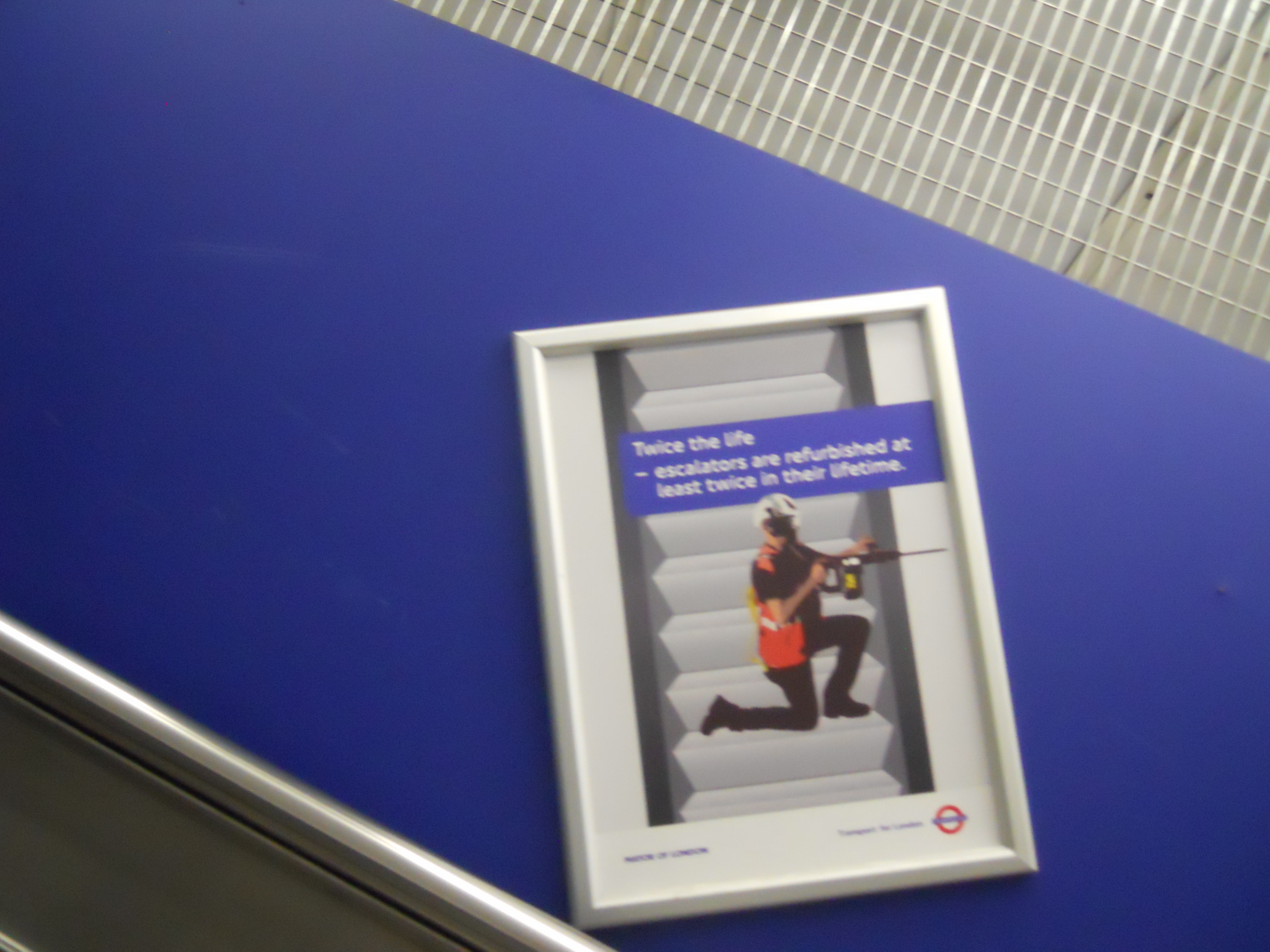
When the London Underground replaces or refurbishes an escalator, they put posters on them to amuse and inform. One says.
Twice the life. Escalators are refurbished at least twice in their lifetime.
Here’s a picture of the error, that I took later.
Bad Mathematics on the Underground
If the refurbishments make the escalator as new, surely two will treble the total lifetime.
A Better Picture
In this post, I said I might be able to get a better picture of the TBMs from a main line train. So today, I tried again.
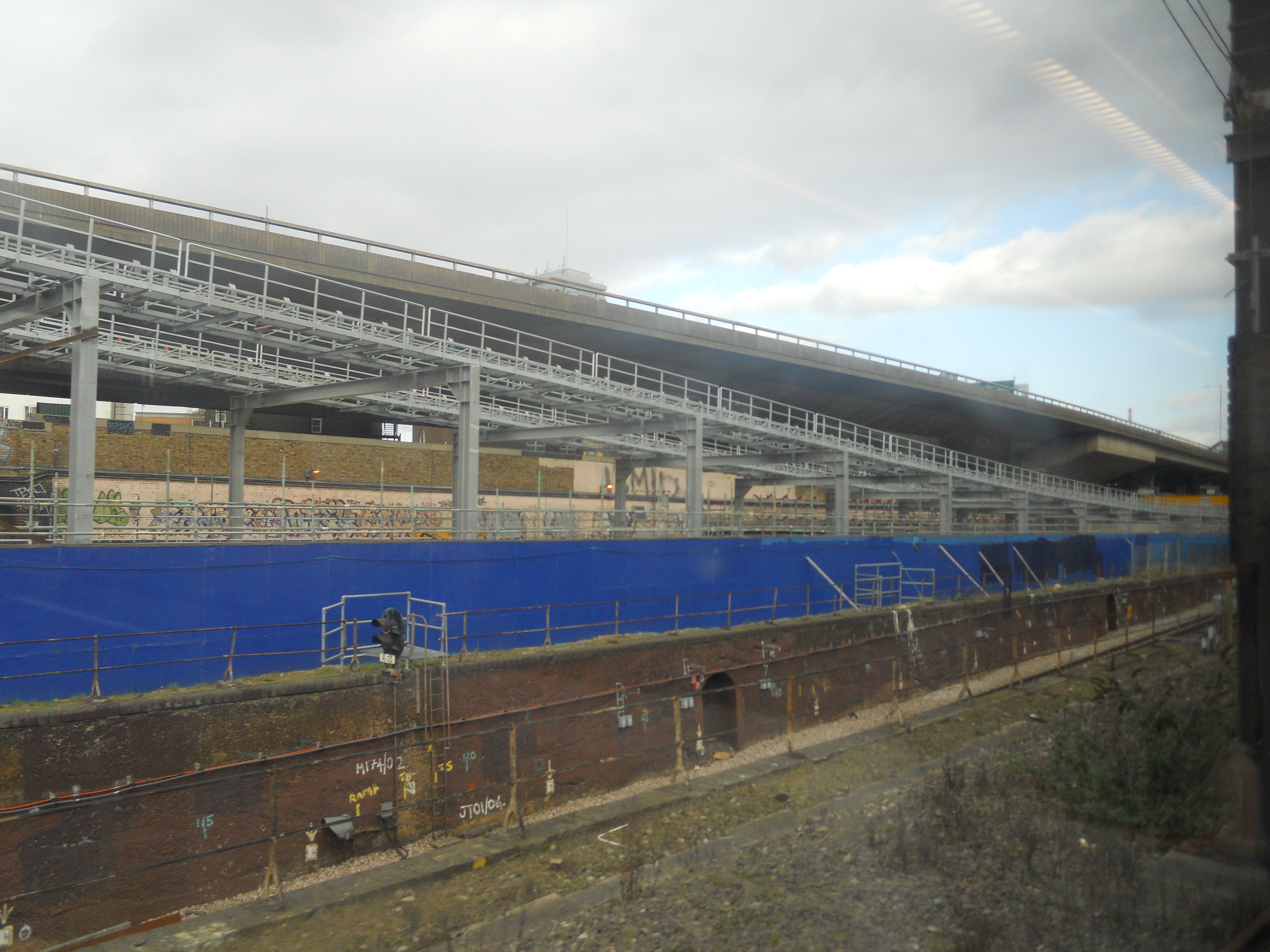
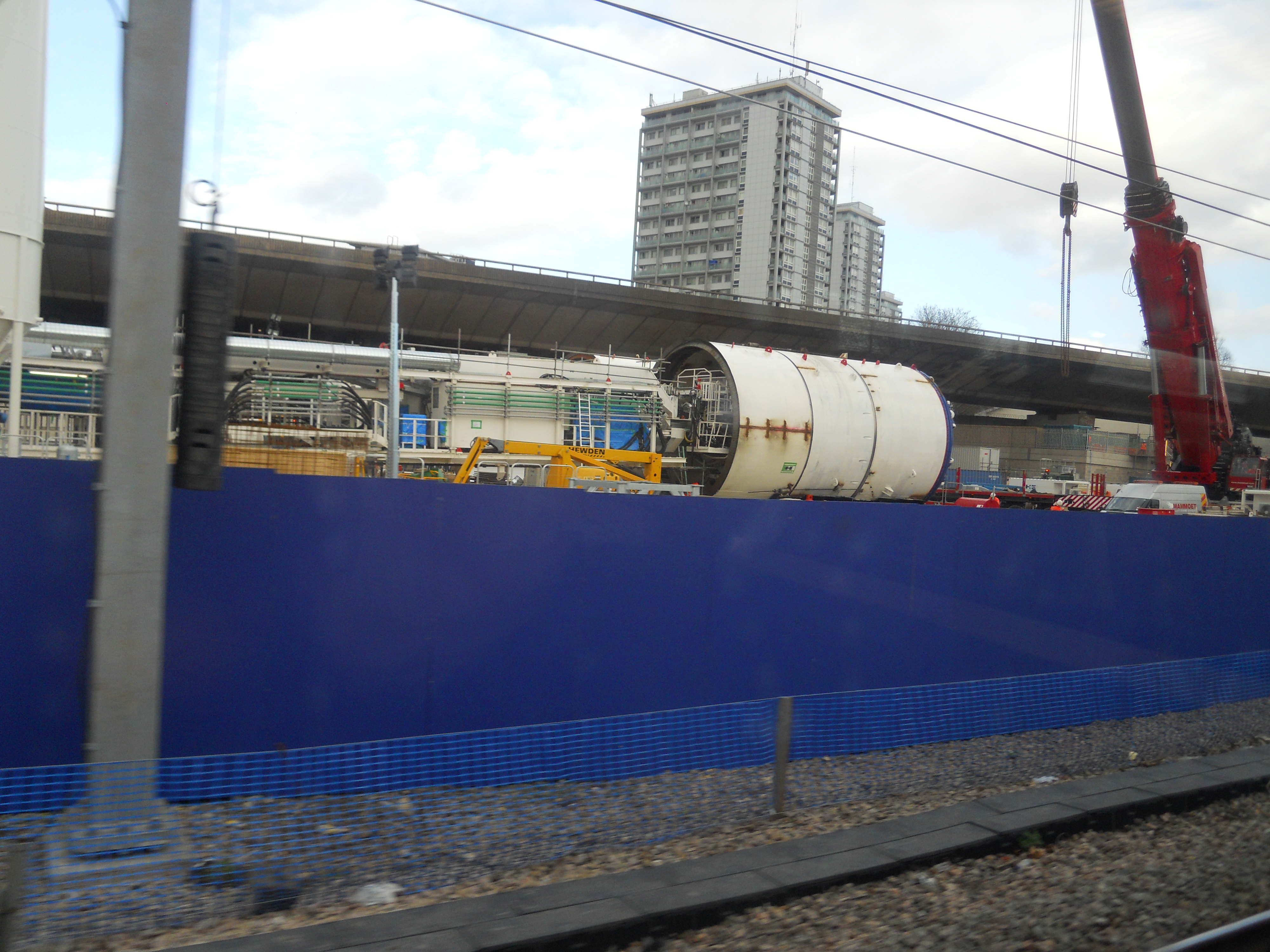
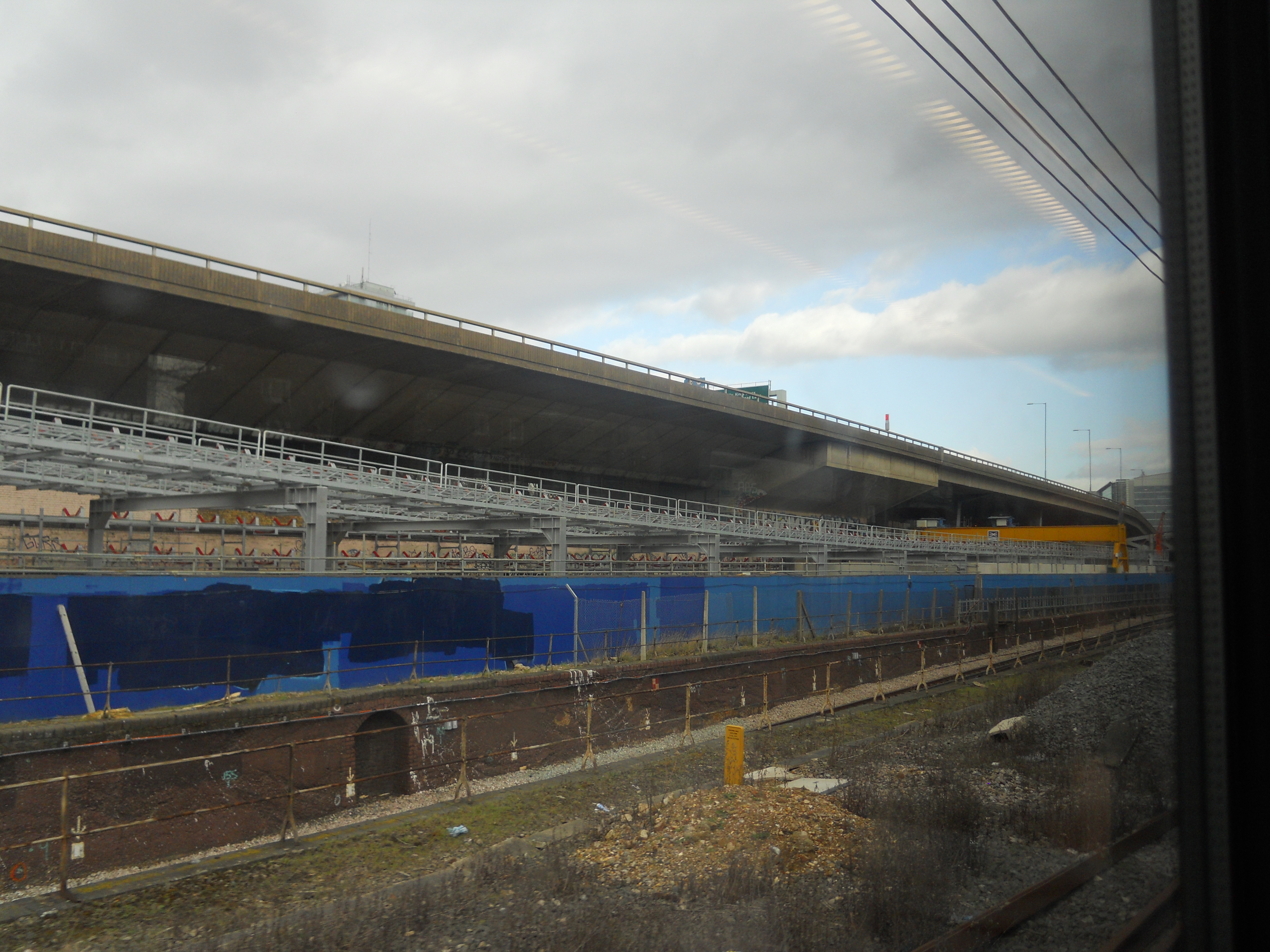
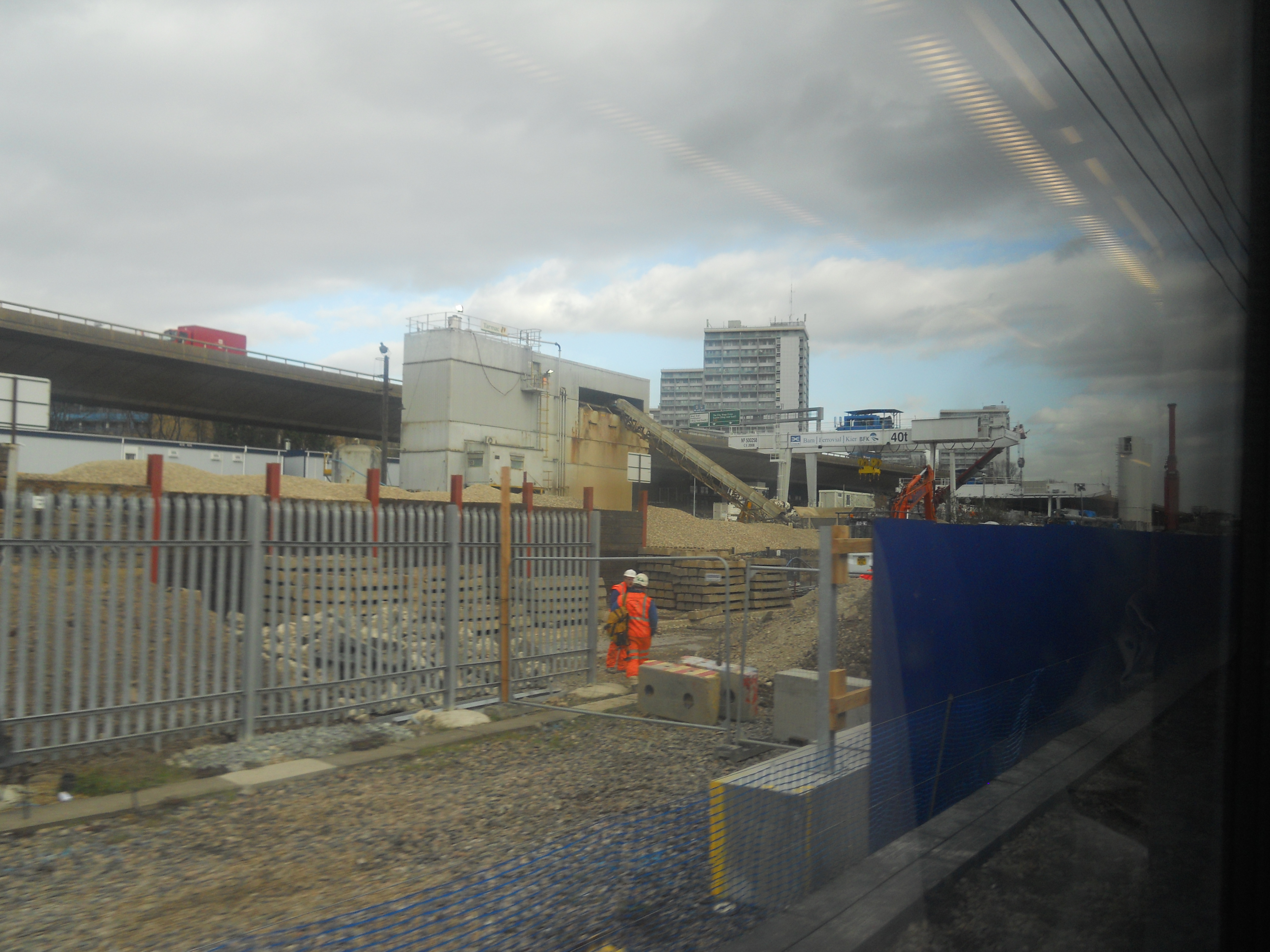
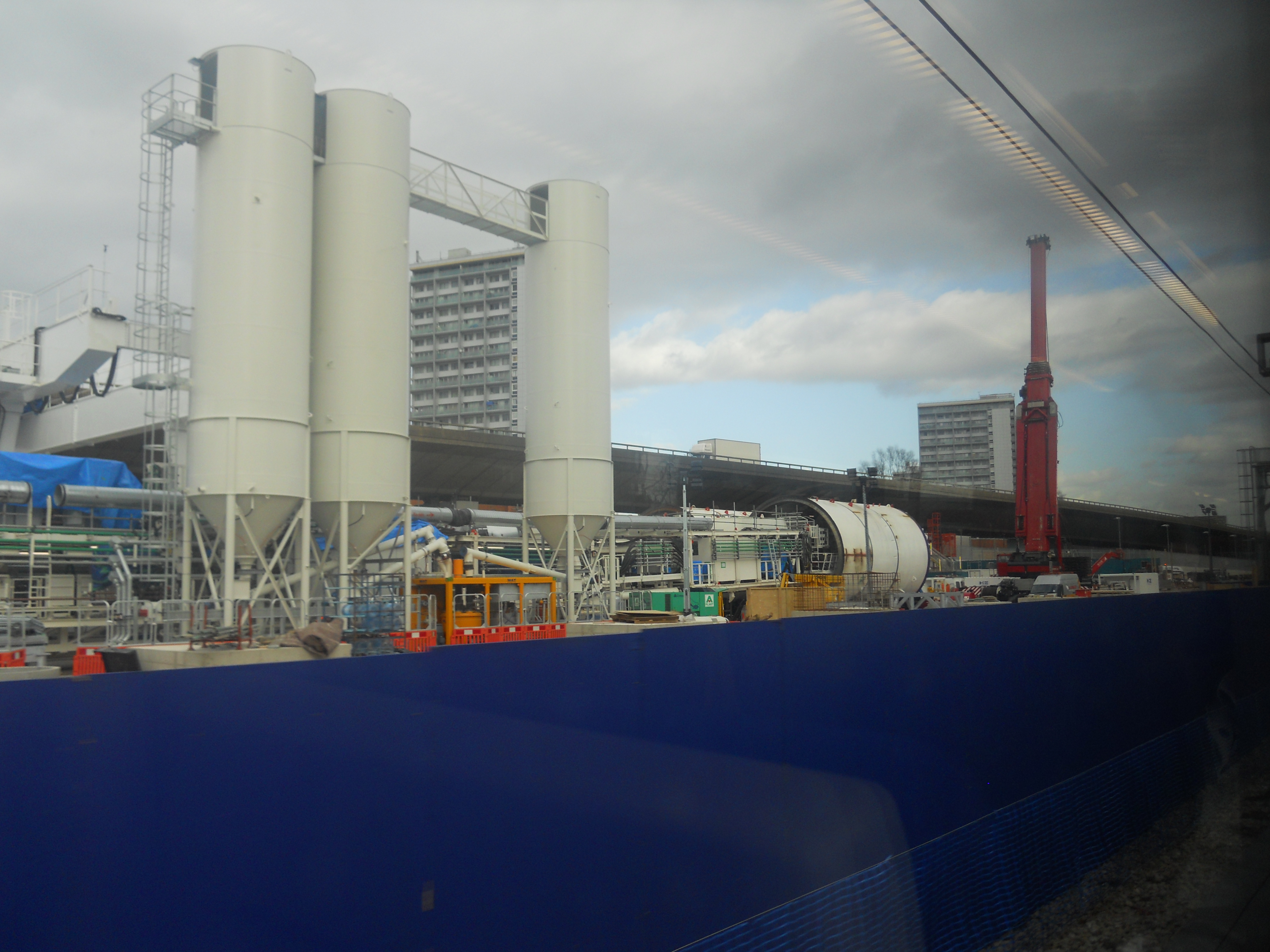
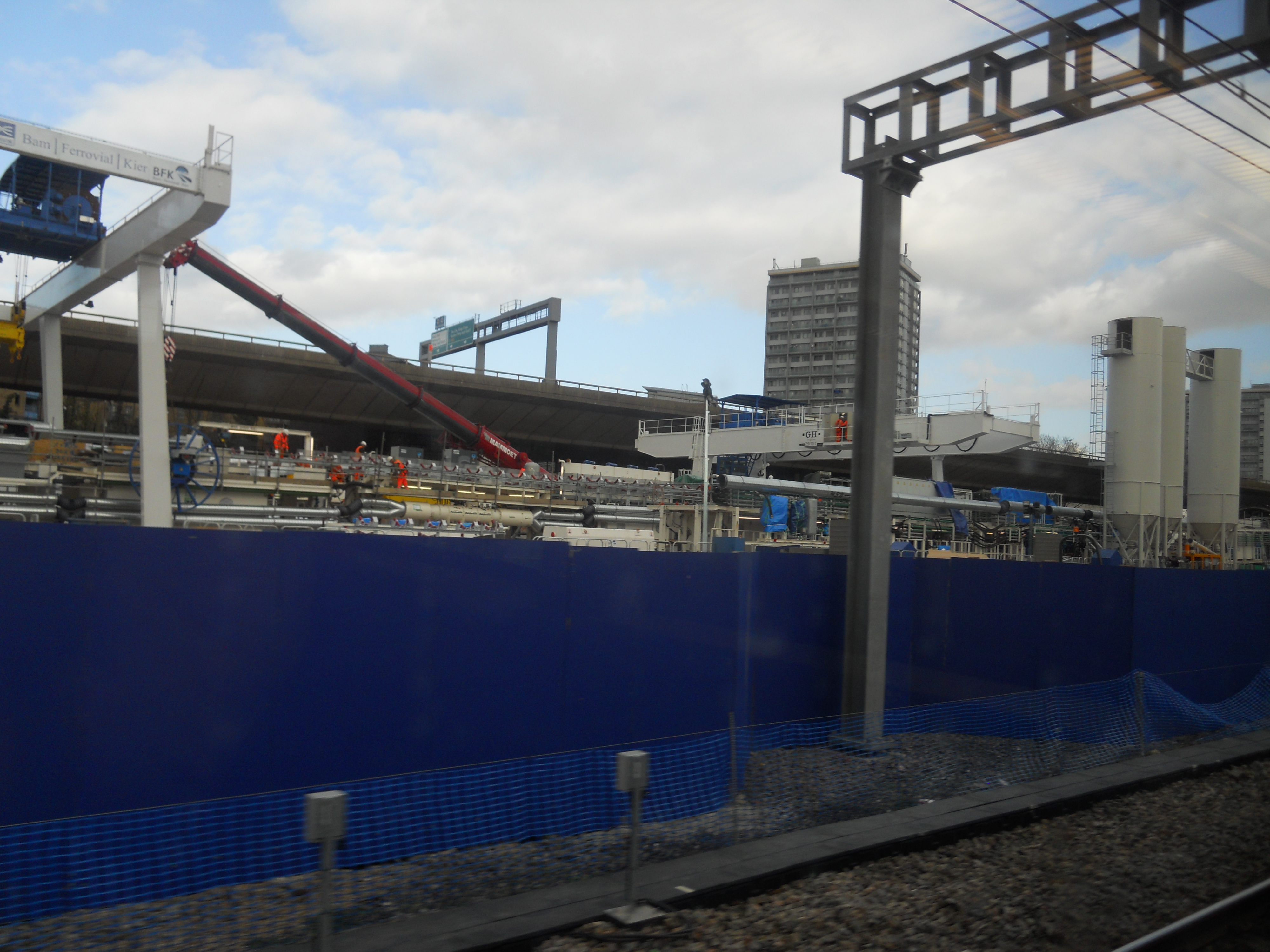
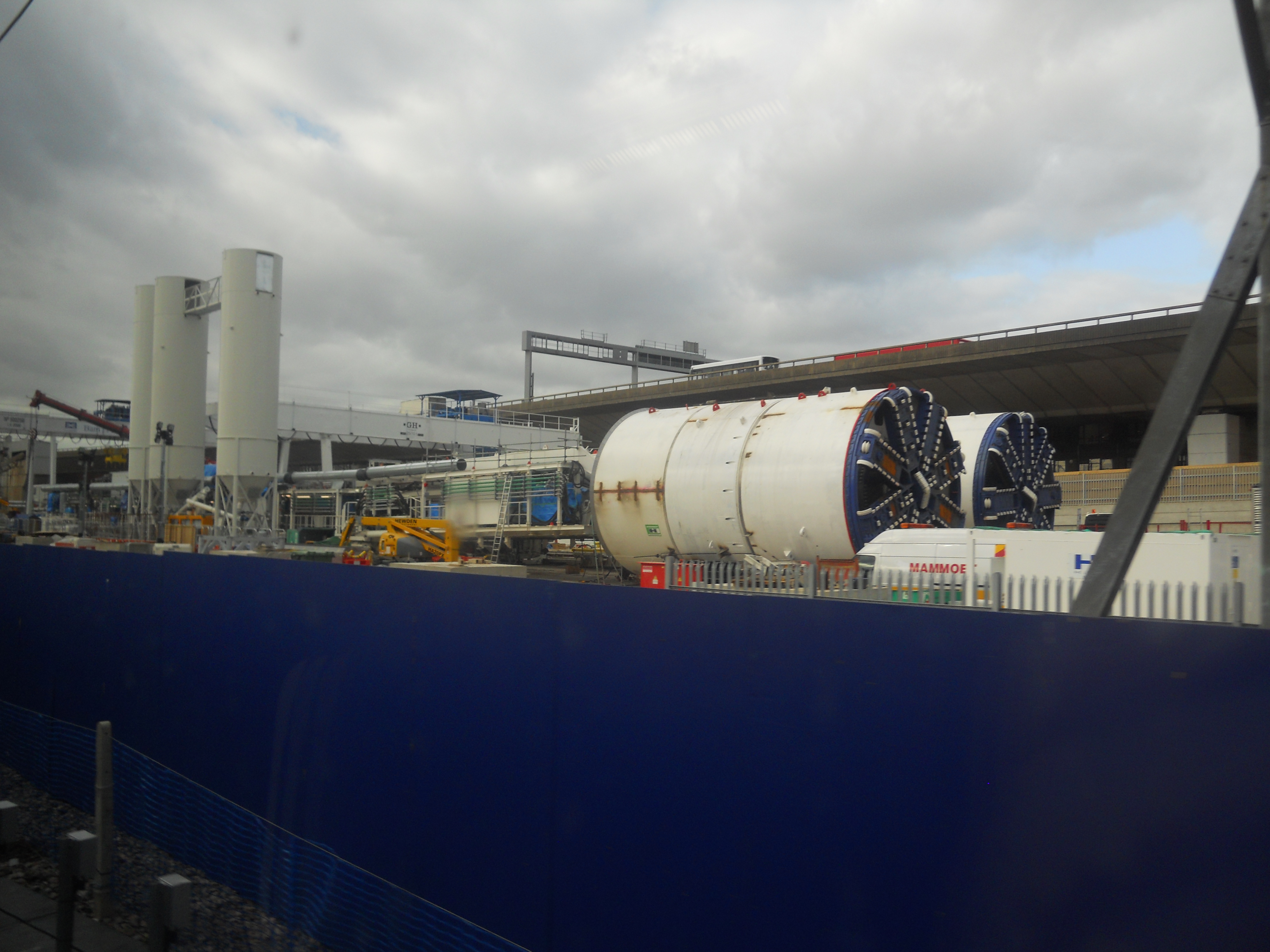
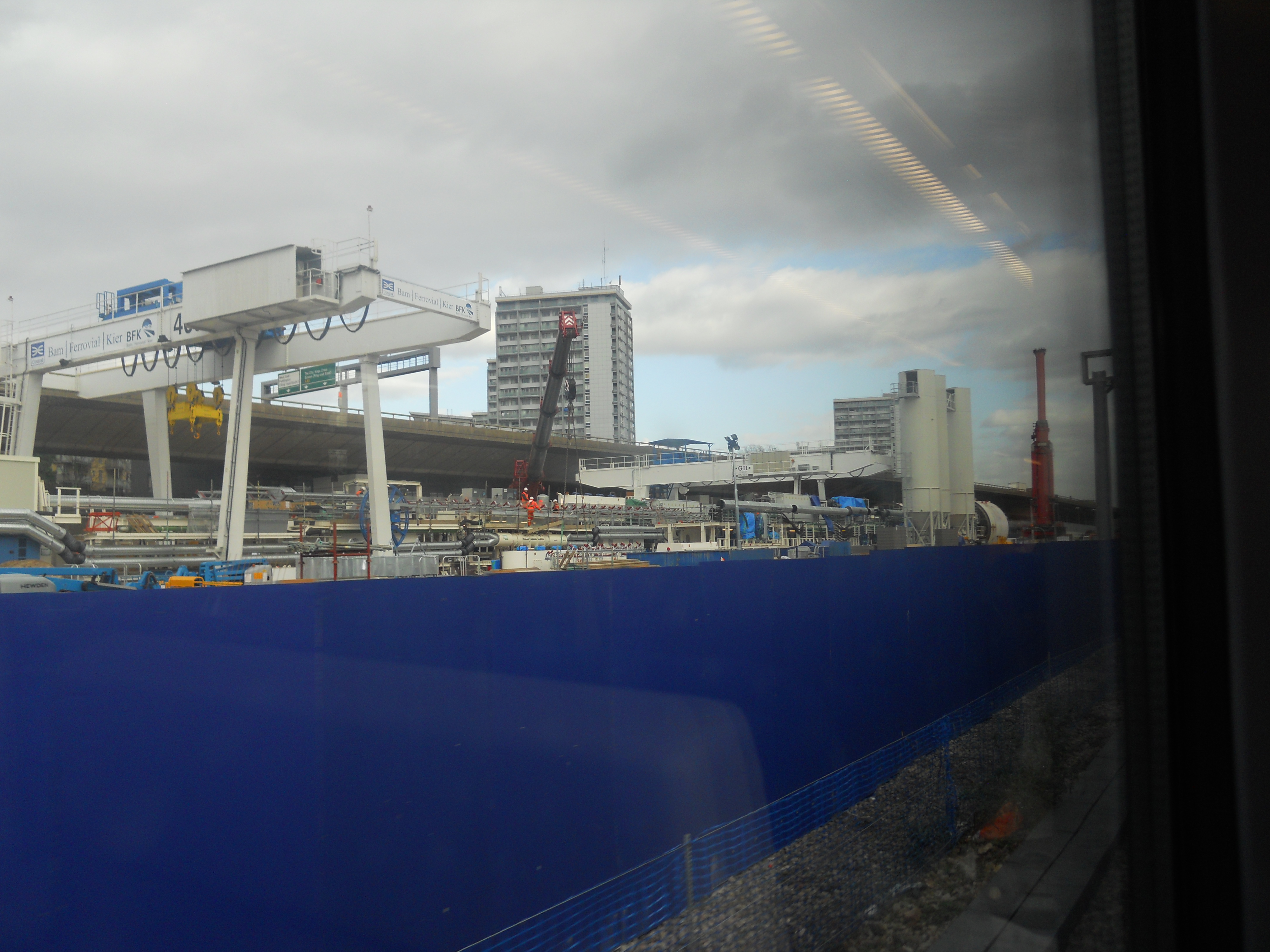
I took a train to Ealing Broadway station and back again. I actually think if you want to take pictures it might be best to actually go to Acton Main Line, as the Oxford train, I got on return, went past the tunnelling site rather fast.
Note that each of the two tunnel boring machines consist of a large cutting head, with all sorts of ancillaries trailing on behind, like some giant tadpole.
I think that the gantries will be used to lift the machines to the portal at Royal Oak and support the conveyors taking out all of the spoil.
Looking at the New Junctions South of Surrey Quays
At present two lines meet south of Surrey Quays station on the East London line of the London Overground.
- The New Cross Gate/Crystal Palace/Croydon branch.
- The New Cross branch.
These pictures show how the new extension to Clapham Junction station is being threaded through.
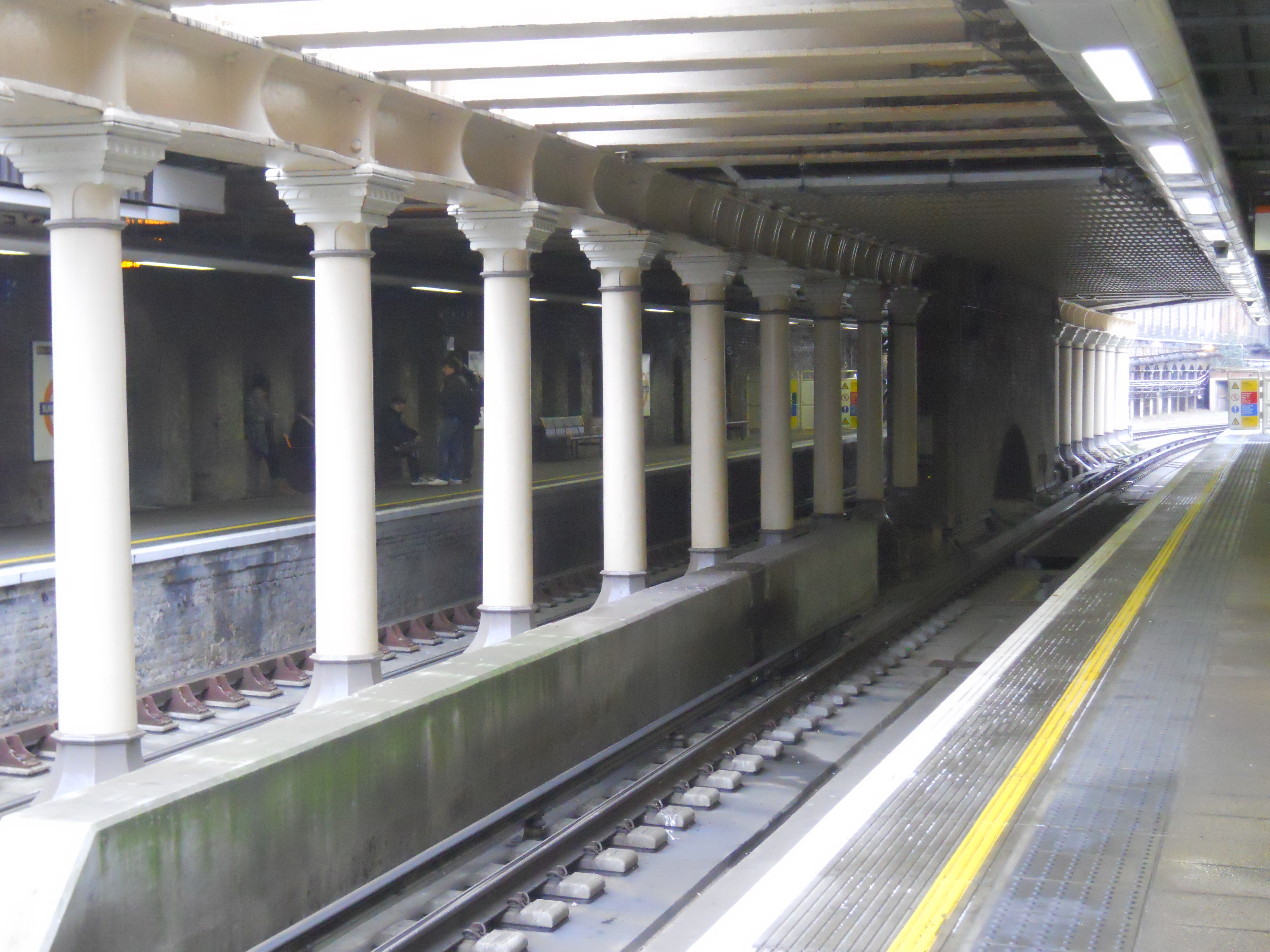
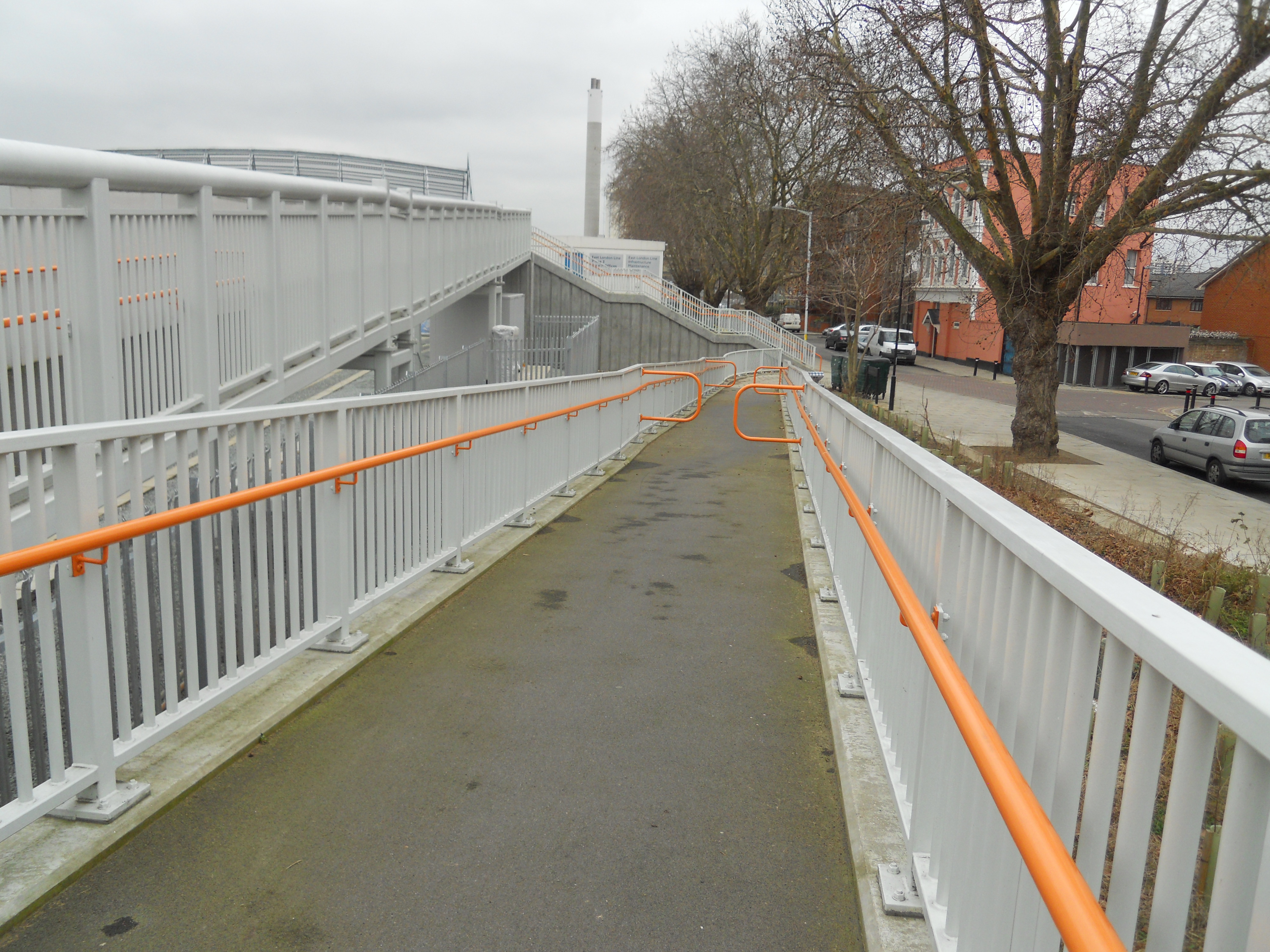
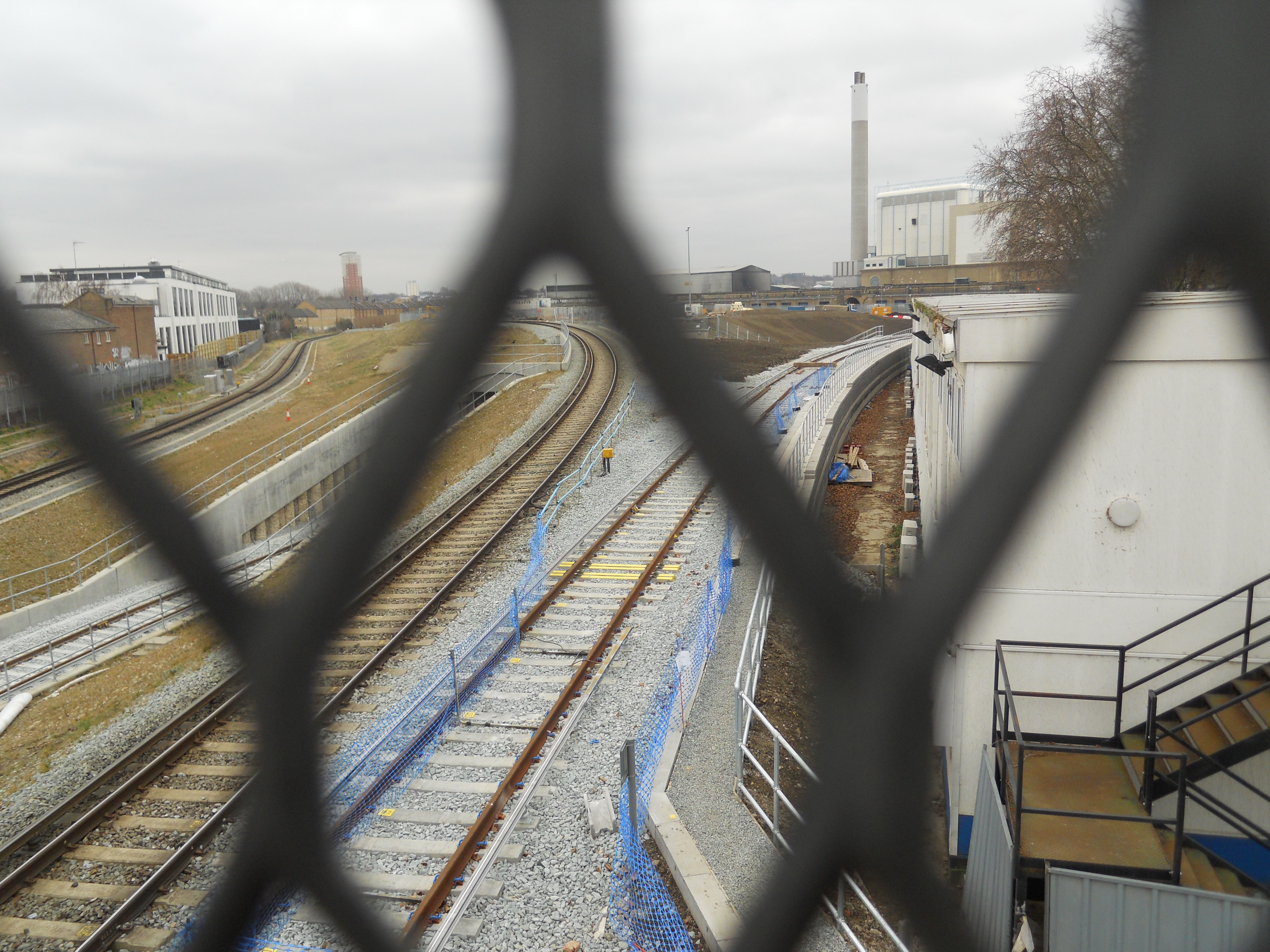
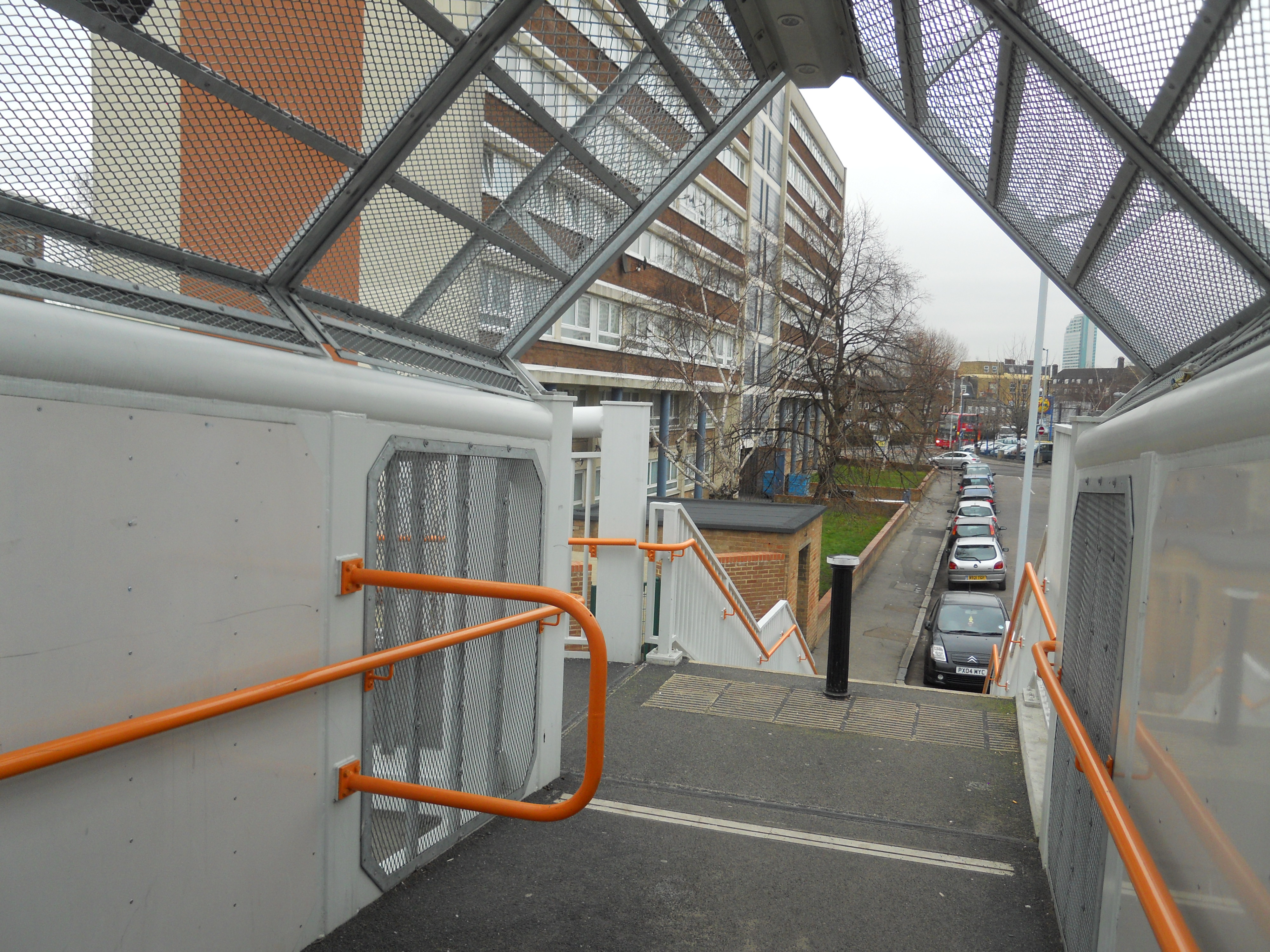
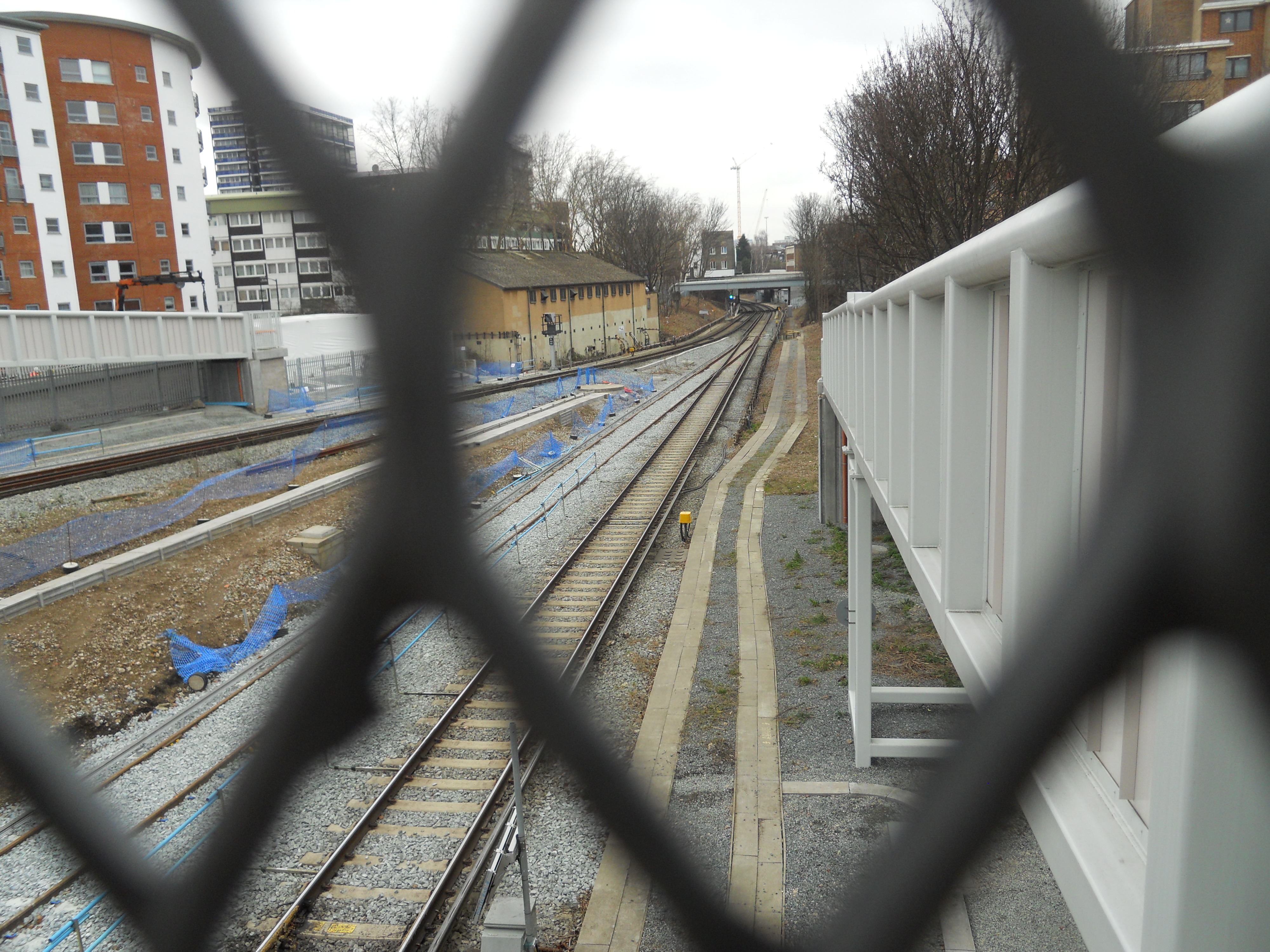
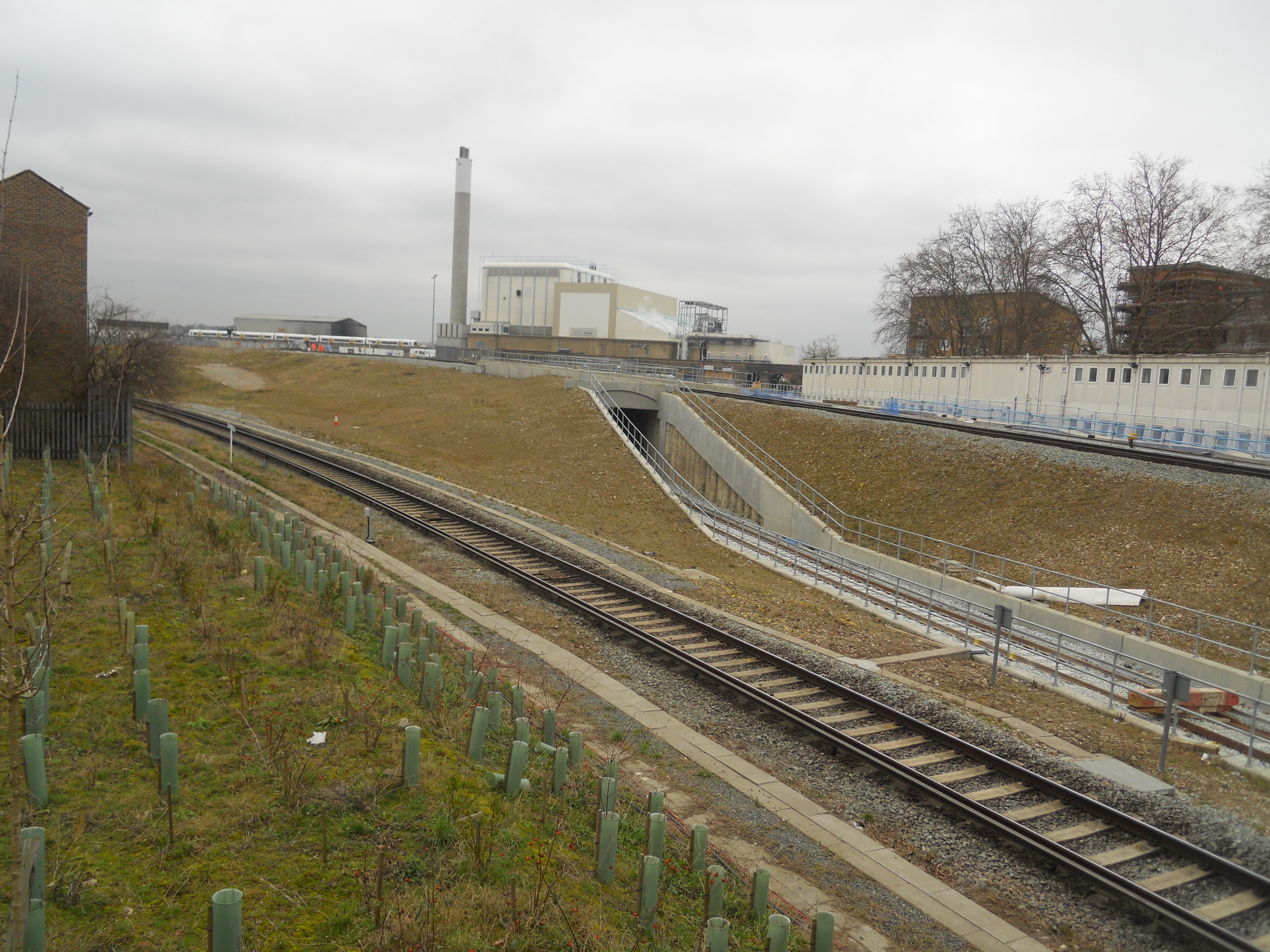
It has been reported that all the track has now been laid to connect from Surrey Quays to the southern part of the East London line.
This engineering has all been accomplished in a few months, which just shows how much better we art at this type of work, than a few years ago.
Although the bridge over the line, shown in the pictures, is rather simple, it has been designed so that no-one can throw anything onto the track, get access onto it, without completely stopping pedestrians watching the trains. Perhaps, the man who designed it, was a train spotter in his youth. It was certainly well-used in the ten minutes or so, I was there.
What Do You Get When You Cross Good Engineering With Good Financial Skills?
February’s Modern Railways magazine has an interesting article about how a whole new lengthened set of trains are being created to work the South West London services for South West Trains.
Currently these services are worked by 4-car Class 458 and Class 450 trains.
For various reasons South West Trains want to go to a 10-car railway, which would mean the simplest solution would be to lengthen the Class 450s to 5-cars and run them in pairs as required. But this would require upwards of about a hundred new carriages and typically these cost about a million pounds each.
But then Porterbrook’s engineers and managers got involved and suggested using the redundant purpose built fleet of 8-car Gatwick Express Class 460 that were surplus to requirements to lengthen the Class 458’s to 5-car trains. This is possible as both sets of trains were built by Alstom to a common design.
So South West Trains will get what they want at a lesser cost and probably earlier too.
The irony is that Porterbrook, is basically a train leasing company and not an engineering one.
So next time you ask, what have bankers done for us, look at a clever piece of work like this. But then it was probably led by engineers who understood money, rather than bankers who understood engineering.
All of the best engineers I’ve worked with always understood the monetary implications of what they did! Some also understood marketing too!
The Last of the Many
I went to Greenford station today to see the last of something that was very common on the Underground; a wooden escalator.
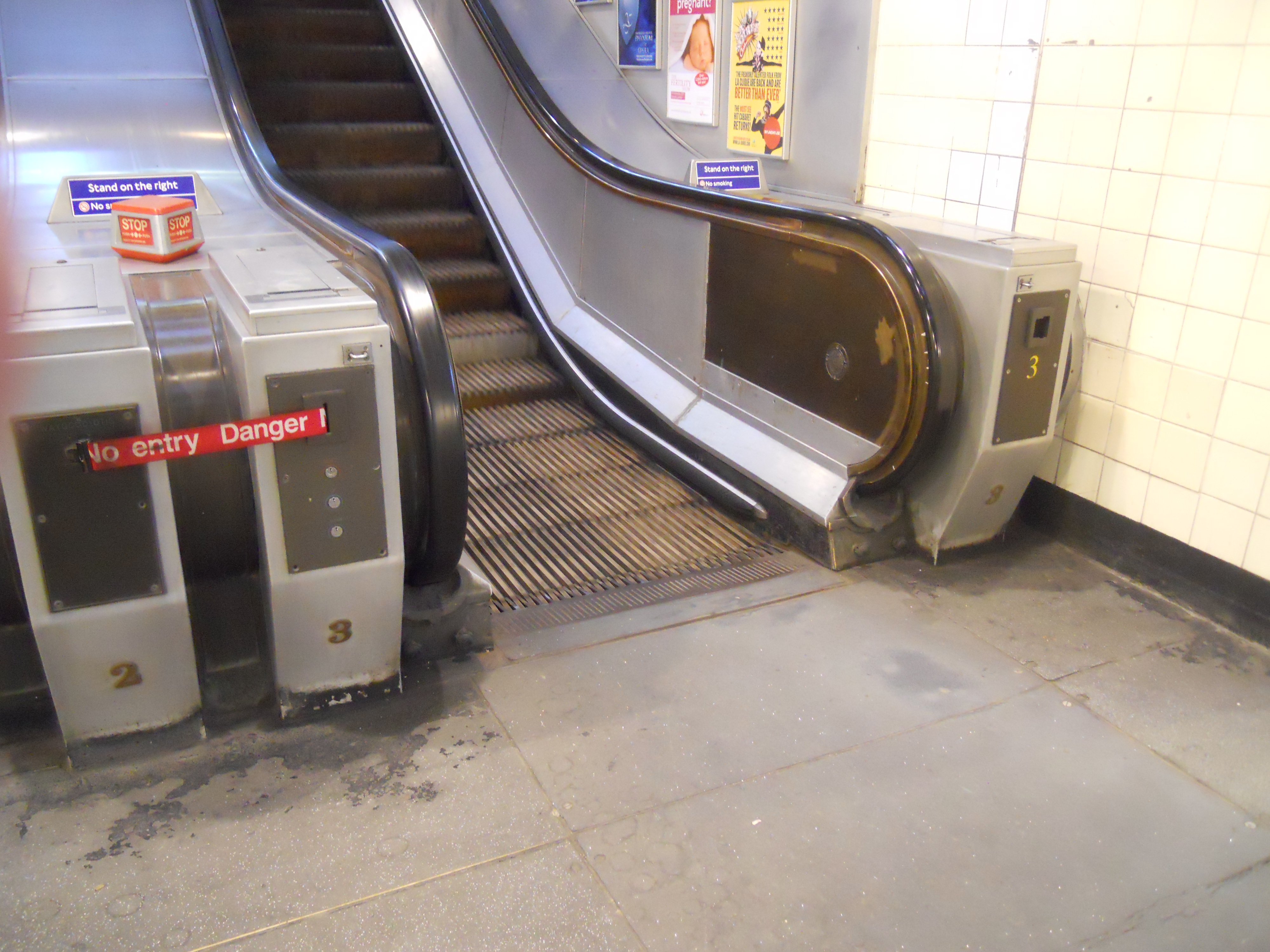
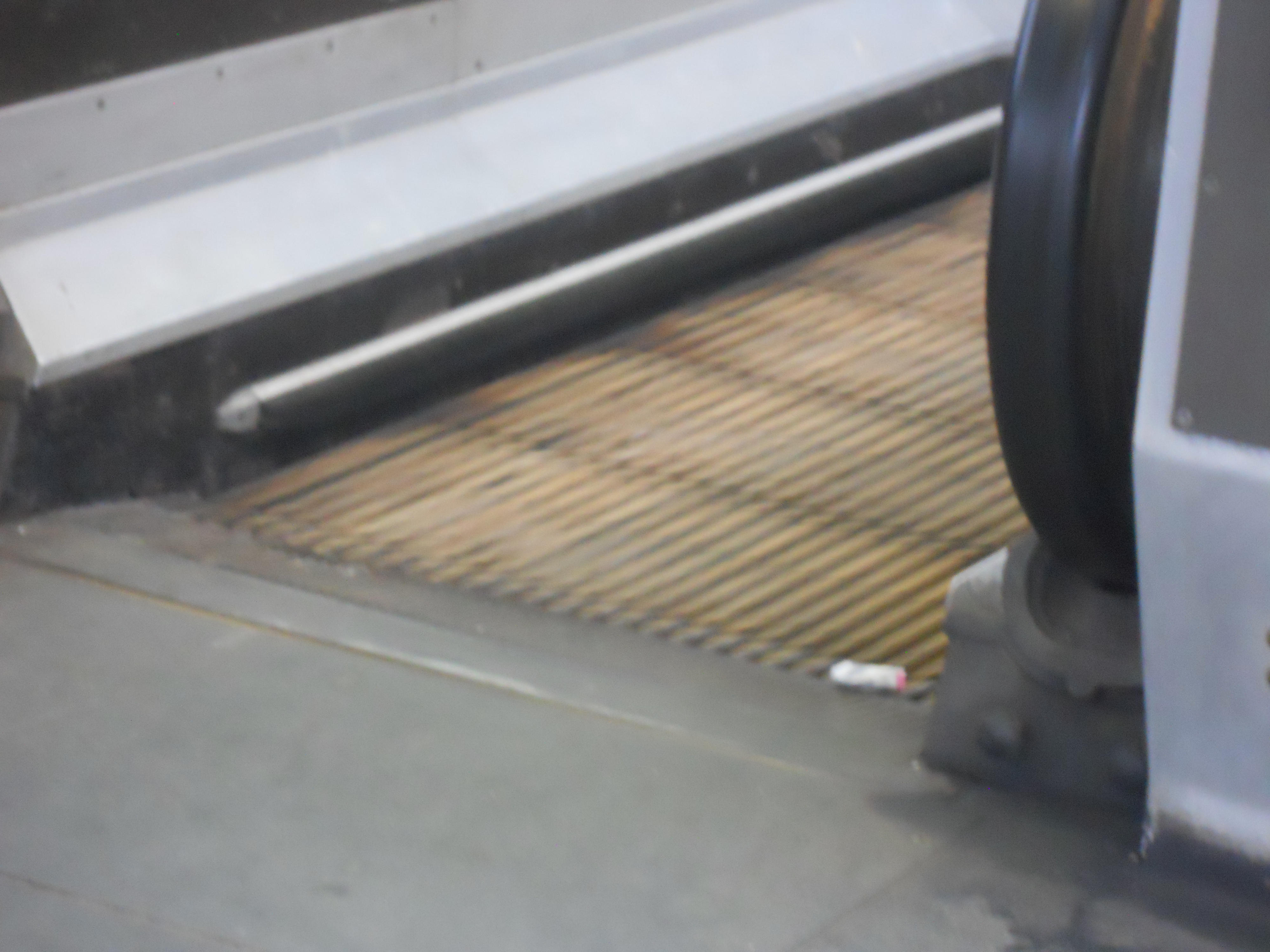
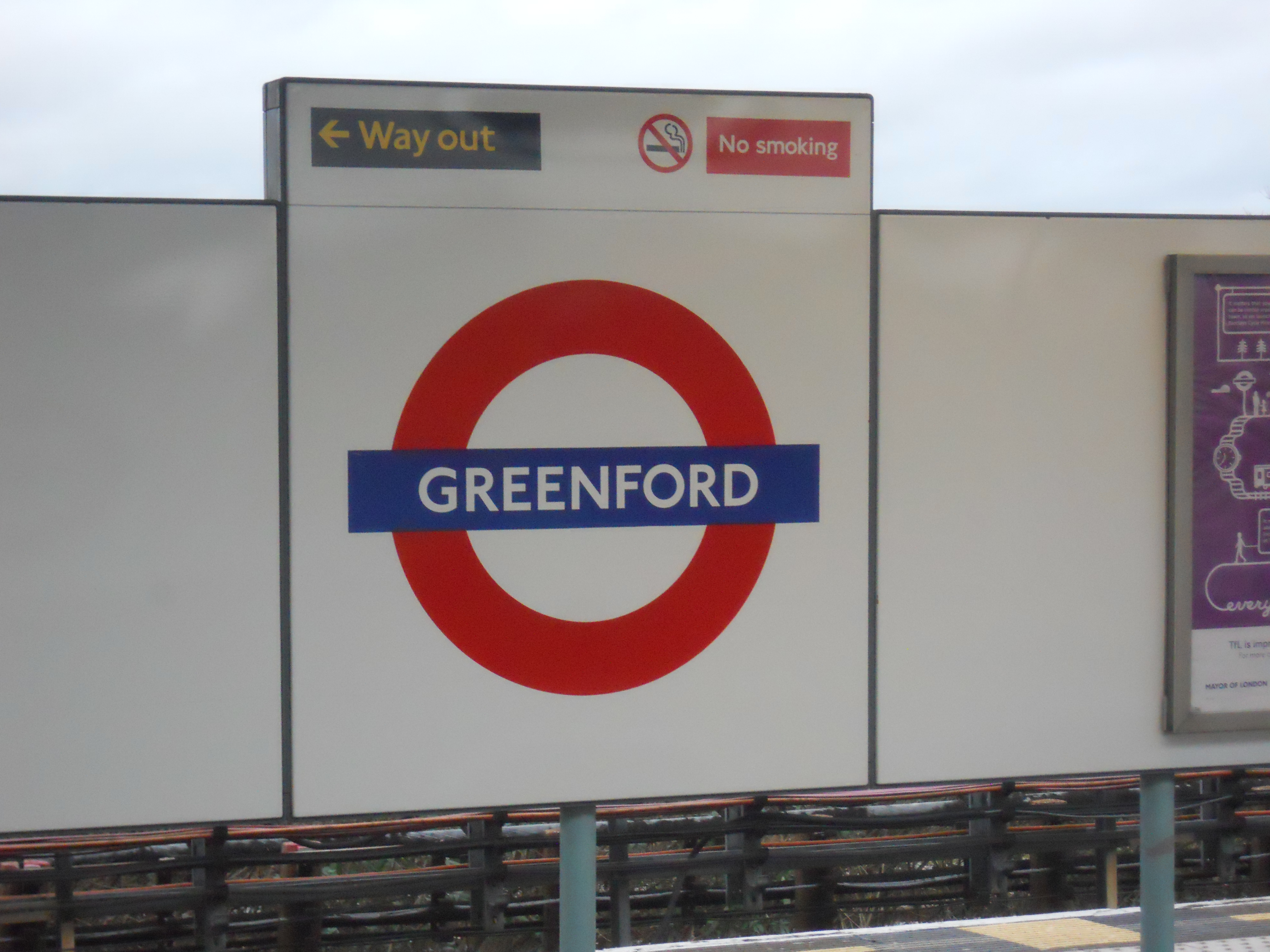
As you can see from the pictures, the escalator isn’t pristine, but being as it’s owned by London Underground, I suspect it’s mechanically perfect. And of course as they scrapped hundreds, they’ve probably got several shedfulls of spare parts.
I did also make a video, which shows it still works.
I wonder how many others are still running in the UK. When I went to Moscow in 2000, they were still going on the Moscow Metro. But the Greenford one is just a baby to the giants in Moscow.
Wooden escalators may have advantages for those who are not too good on their pins. When I ascended, I just slid off as I used to do as a child. And of course now that guide dogs are allowed on escalators, they’re probably more dog-friendly.
But these are not reasons to go back to wooden treads. I do think though, that In the next few years a better step design will evolve.
I think it is needed as we now have people with large cases, buggies and all types of dogs wanting to use them more and more. And then of course there’s fashion items like stiletto heels and long skirts, which sometimes get caught. I am also not forgetting those on crutches or in a wheel-chair, who find escalators difficult.
It’s a challenge and he or she who solves it will make a lot of money.
 The Anonymous Widower