The Value of Research
Companies are always being castigated for not doing enough research, but in this month’s Modern Railways, an example is given which shows how valuable research can be to both the company’s balance sheet and the man on the Dalston train.
When I worked in simulation using the PACE 231-R at ICI, I seem to remember reading in the literature about the problems British Rail were having with freight trains derailing as the speeds got higher. To try to solve the problems, BR Research Centre at Derby, did extensive computer simulations of wheel dynamics and probably became those with the greatest knowledge in the subject in the world. According to Modern Railways, they were then asked to design a bogie for passenger trains, that was lighter, stronger and required less maintenance.
With all of the privatisation and selling off of the railways in the 1980s and 1990s, the design could have got lost, but it ended up being commercialised and fitted to quite a few trains , including the Networkers and CapitalStars for the London Overground. The deasign team is based in Doncaster and is now part of Bombadier.
If that was the end of the story, that would have been good.
But it gets better in that the next generation of German ICE trains will be using this technology.
This article in Rail Engineer explains a bit more. under advanced bogie design, there is this section.
Whilst ELECTROSTAR is the lightest EMU in the market, weighing in at an average of just 42 tonnes per car, AVENTRA promises to be 20% lighter. This is achieved in no small part thanks to the introduction of Bombardier’s FLEXX Eco inside-frame bogie. It was designed for the UK market as part of the pioneering ‘Advanced Suburban Bogie’ project in the early 1990s. Initially tested in prototype form for two years under Class 320 vehicles (in 1991-92 using trailer bogies) and subsequently under Class 466s using motor bogies, it remains the only lightweight high-performance bogie in the world on main line passenger services.The FLEXX Eco has an extremely credible track record, having travelled 1.5 billion kilometres in the UK under Voyager, Meridian and, more recently, TURBOSTAR units. It has also been exported to Norway, with 122 bogies supplied to state operator NSB. In reducing overall vehicle weight, the bogie makes a significant contribution to the energy saving advantages of the AVENTRA. It is particularly stable at high speed – it has been tested to 275kph under a Japanese Shinkansen and 392kph beneath an ICE2 – and delivers excellent performance through curves.
So a little trumpeted small amount of money invested by British Rail has become a true success story, albeit totally hidden from the man on the Dalston train, unless he cares to look underneath a train in the station.
Sad though, that although design is still in the UK, the bogies are now made in Germany. Here‘s the brochure.
And here’s one of the bogies under a CapitalStar at Highbury and Islington Station.
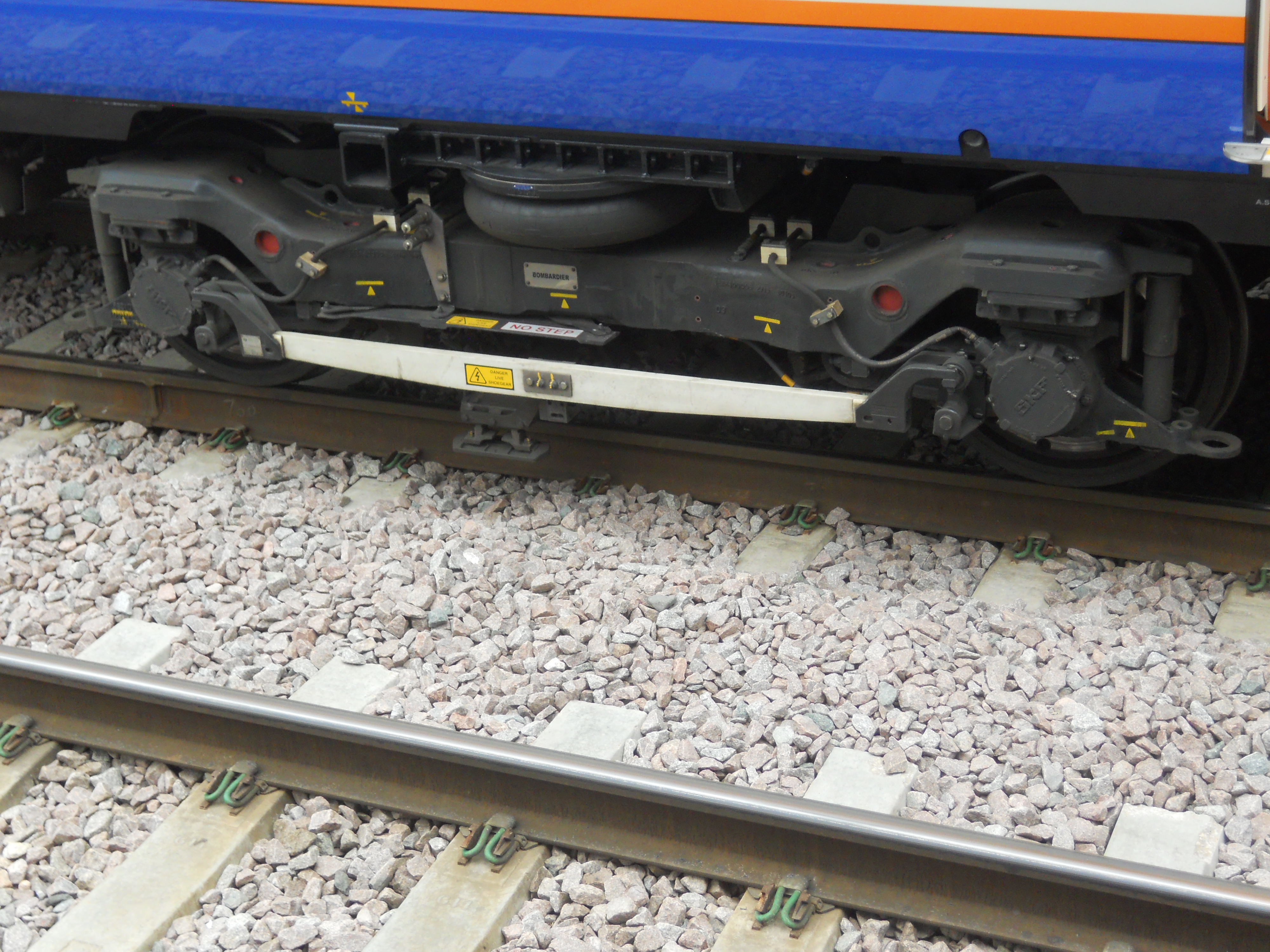
FLEXX Eco Bogie Under a Capitalstar
I use these trains a lot and can confirm that the ride quality is up with the best.
Faking It!
Jerry had a way with building; cheap and nasty.
Take this little gem of a cover over the hole where he should probably have put a bolt to secure the beam.
Another Examp;le of Jerry's Handiwork
Underneath was a hole filled with some sort of mastic. To match the nuts and bolts on the staircase, I needed to create a dome headed bolt that could be screwed or fixed into the hole.
Just as I did when I created the dome-headed bolts, I cut a small length of studding. In this case though I just cut the head off of a brass bolt.
Off With Its Head
That way, I won’t get any electrolytic effects because of dissimilar metals.
A Completed Bolt
The picture shows a completed bolt.
It was then a simple matter of gluing the bolt into the hole using No More Nails.
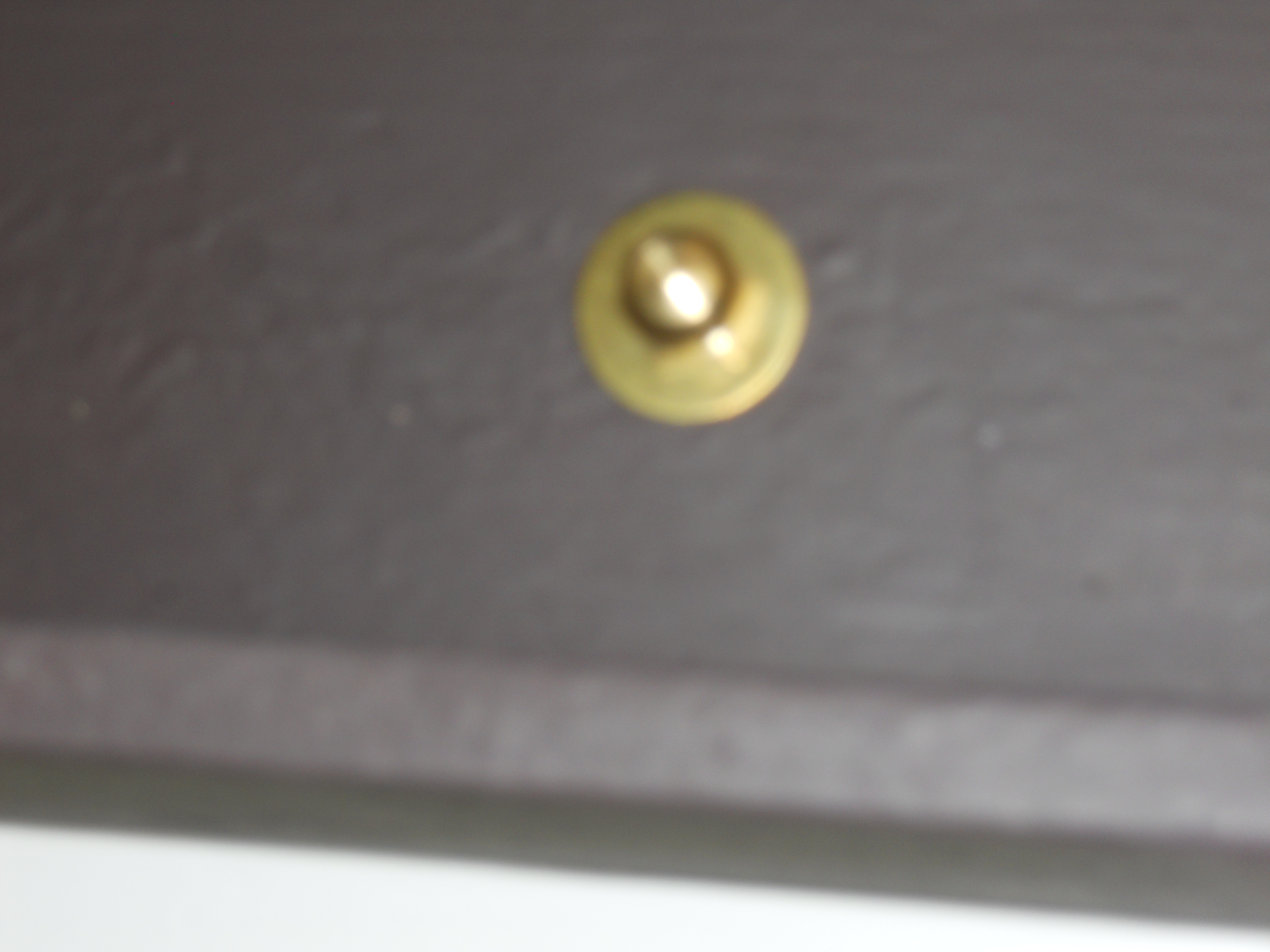
The Installed Bolt
I suppose I could have used just an ordinary brass bolt, but felt I needed to use the dome-headed theme of the staircase.
The 400th Anniversary of the Opening of London’s New River
You don’t get too many four hundredth anniversaries in the world, but in 2013, there will be an important one for London.
Melvin Bragg did a program on the 400th anniversary of the King James Bible this year and he has been on television talking about it. But where is the program about the New River, which brings fresh water to London? And has done since 1613!
I was brought up in Southgate and cycling around the area as a child it was something you couldn’t avoid. I now live near its southern end and every time I go to the Angel, I see the statue of Hugh Myddelton on Islington Green.
The story of this great undertaking gets a good mention in Wikipedia, but surely the 400th anniversary deserves something more.
For a start, how many schools along the river are doing projects or having parties to celebrate the anniversary?
In some ways, the history of the river has lessons for the modern world, where water is such a precious commodity.
Surely, this anniversary is something that should interest someone like Griff Rhys Jones or Adam Hart Davis.
A Plaque on a Bridge
This picture shows a plaque on the bridge that carries the Northern Outfall Sewer over the River Lee Navigation .

A Plaque on a Bridge
It is the only evidence in the area, that Joseph Bazalgette was responsible for the massive works, that still handle all of the sweage from north of the Thames.
Pinky and Perky in Front of the Olympic Stadium
I took this picture yesterday as the train slowed to pass the Olympic Stadium.
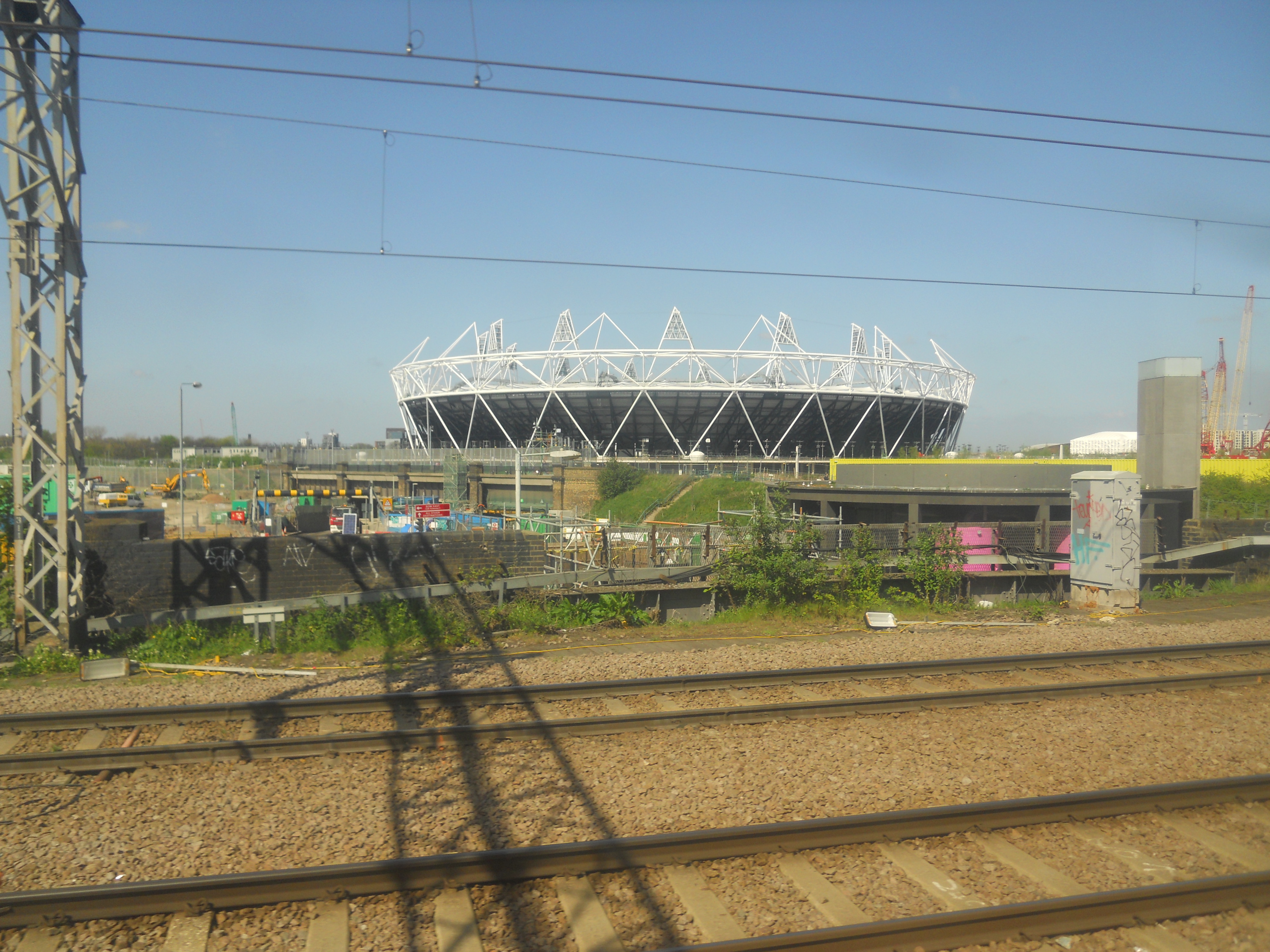
The Sewage Pumping Station at the Olympic Park
Note the two pink cylinders, nicknamed Pinky and Perky, in the pumping station, at the right of the picture. If you enlarge the picture you’ll see that the right cylinder is partly obscured by a graffiti covered signalling cable box. I hope that graffiti isn’t goig to be a problem on the Olympic site!
Government to Sponsor Engineering Prize
This has been announced in The Times today and is also reported in The Engineer.
They ask if it should be called the Brunel, Boulton, Babbage or Bazalgette Prize.
I have my view and it should be called the Blumlein Prize after Alan Dower Blumlein.
I wrote to The Times and they published my letter on the 12th. Here’s an extract.
Sir, I think we should choose the engineer who has probably had the greatest effect on everyone’s lives in the past 100 years. And that is the pioneer of electronics, Alan Dower Blumlein, who, after he perfected stereo recording and electronic television, went on to develop the electronics for radar. He was a true genius who was granted 128 patents before he died at the age of just 38, in a plane crash while testing an airborne radar in 1942.
I am an electrical engineer myself and I was horrified to see that at the new Olympic site there is no mention that it is alongside Bazalgette’s massive Northern Outfall Sewer and that this superb piece of Victorian engineering is being used as a public viewing platform for the works at the site. In due course the waste water from the site will be pumped into the sewer to continue its journey via the beautiful Moorish pumping station at Abbey Mills to the treatment works at Beckton. The Olympic site really is standing on the shoulders of a giant.
Interns
There has been a lot of talk lately in how those with power and money have got their children work experience, which is of the highest class and out of the reach of those without privelege and wealth.
It has always been thus.
Take my example.
My father was a successful letterpress printer in Wood Green. He employed half a dozen people and we lived comfortably in the days before letterpress was replaced by offset litho. Much of his work was for a company called Enfield Rolling Mills, that as the name suggests rolled metals into something useful. In their case it was non-ferrous metals, like copper, bronze and aluminium, which were turned into bars, sheets and cables.
So when I got my place at Liverpool University to read electronics, and I needed some work experience, he decided to do something about it. His business wasn’t that healthy too, and he had told me that, he wouldn’t be able to find me work for the summer.
In his usual manner, he started at the top and phoned John Grimston, the Earl of Verulam, who was the boss of his largest customer.
They found me a place in their electronics laboratory, where I had my first lesson in controlling processes. I also learned a lot about industry, health and safety, the various trades and their unions and of course life, which gave me a lot of rich anecdotes I use to this day. Only today, I related to my physio, a story about lady cricketers gleaned from one of my colleagues.
To say that internship, as we’d call it today, changed my life, would be an understatement.
But I got it because my fsther knew someone with influence. And also because he never felt anybody too grand to ask for a favour.
Happy as Pigs in Muck
This building with the two pink cylinders to the left is the primary sewage collection and pumping station for the Olympics.
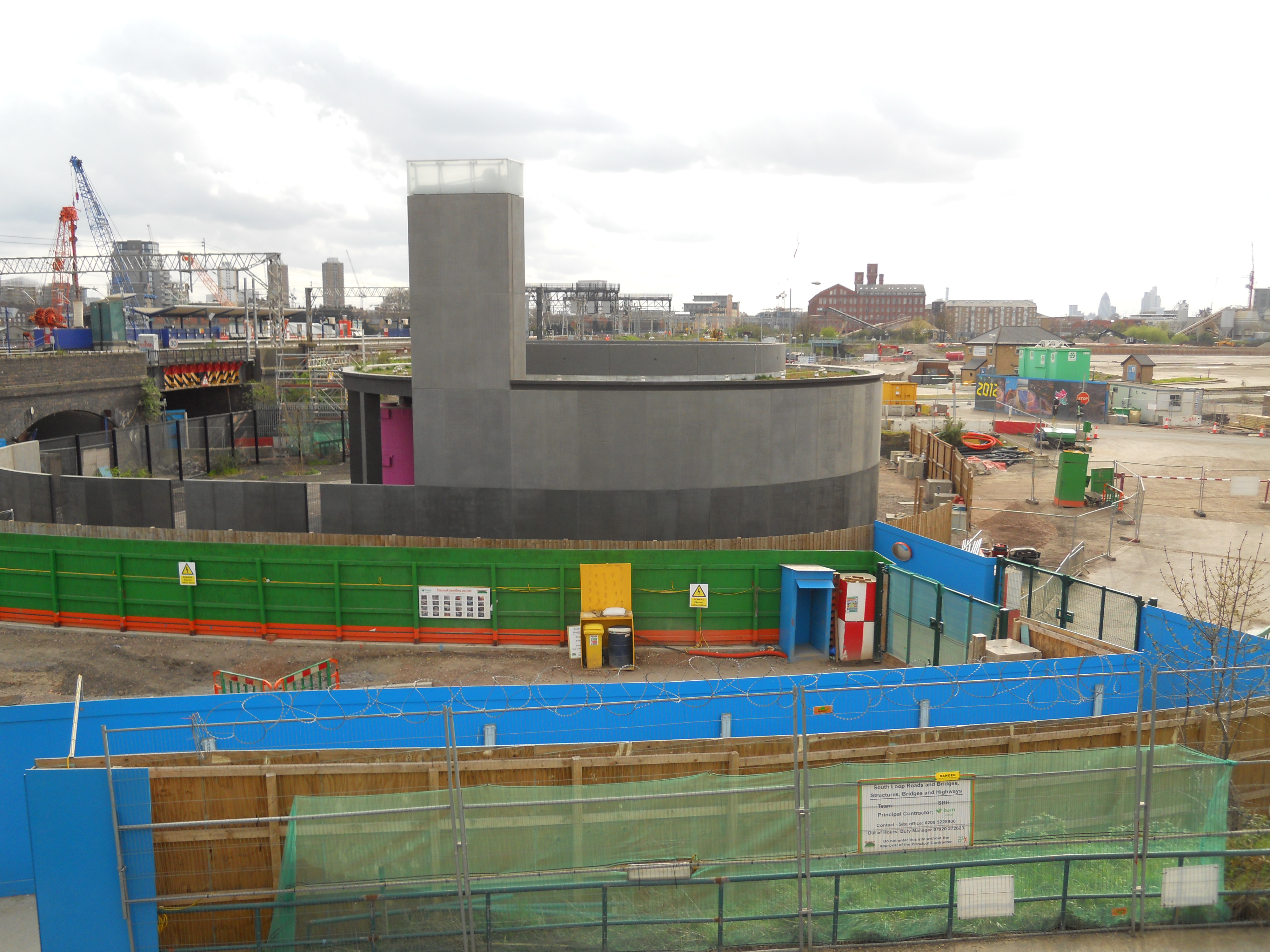
Olympic Primary Foul Sewer and Pumping Station
Inevitably, the two cylinders have been named Pinky and Perky, by the wags on the site.
Note that I took the picture from behind the ViewTube, standing on this concrete box.
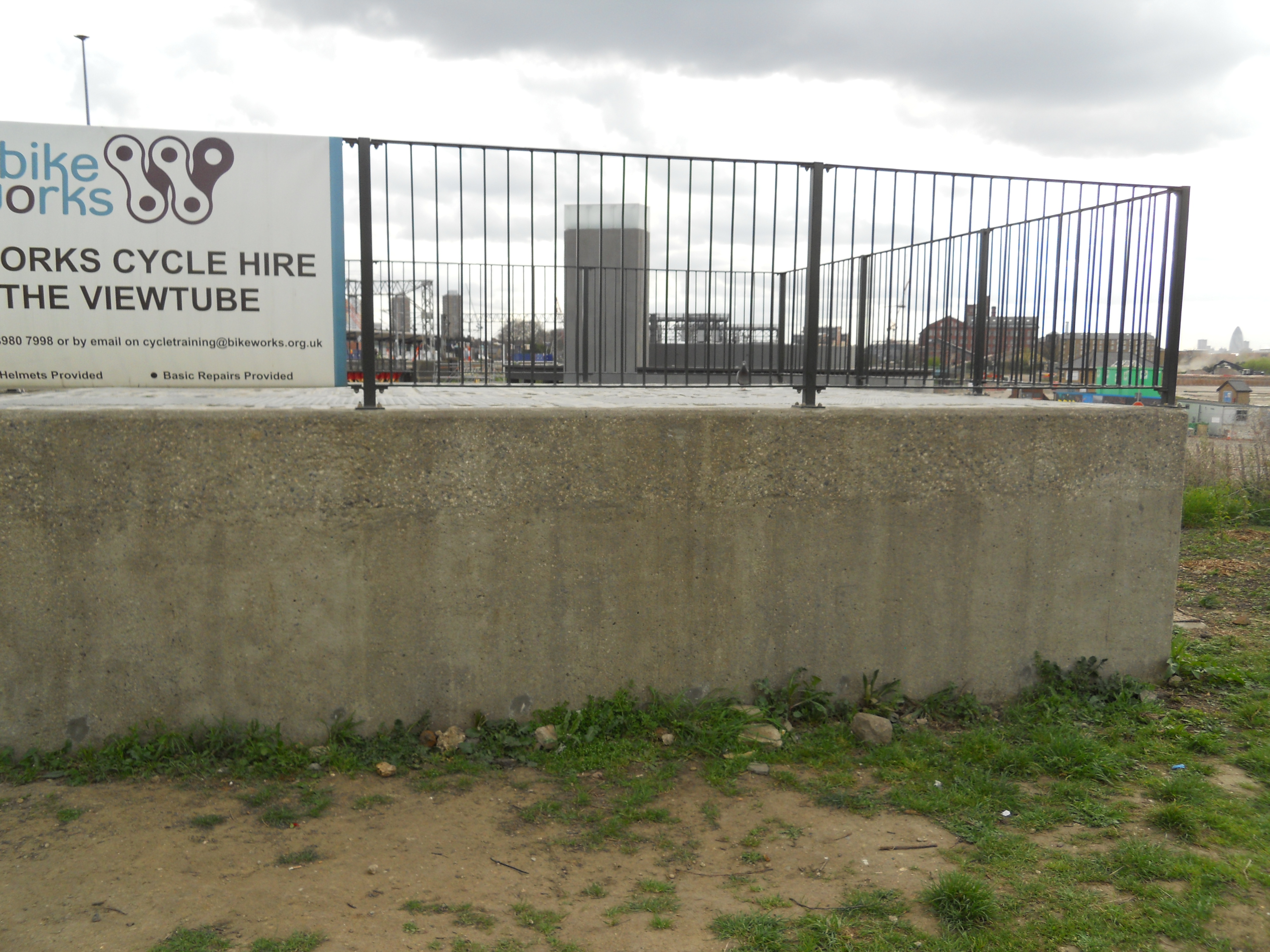
Connecting the New to the Old
I think the box is the connection between the station and Joseph Bazalgette‘s Northern Outfall Sewer. But for now it makes a good authorised viewing platform.
Nowhere in the vicinity could I find any information about the pumping station or the sewer.
I find that a serious omission.
Bazalgette Honoured with Olympic Sewage Pumping Station
The Olympic Park will create a lot of sewage and to pump it into Joseph Bazalgette‘s Northern Outfall Sewer, an elegant pumping station has been designed, which depicts Bazalgette’s Abbey Mills Pumping Station.
The new pumping station is described in the Architect’s Journal. There are also some good pictures here.
I think he would have approved of the new pumping station, as he was a man to always use the best of the technology available at the time and he merged suprb engineering with very good art. The new station appears to follow these rules.
The Cathedral of Sewage
Abbey Mills Pumping Station was built by Joseph Bazalgette to pump the sewage all the way to Beckton. It stands as a glorious monument by the side of the Greenway that leads across the Olympic Park. Although, at present due to the works for CrossRail, you can’t actually get to the park directly along the Greenway.
It dominates the skyline and can be seen from West Ham station, looking more like a mosque than a cathedral of sewage.
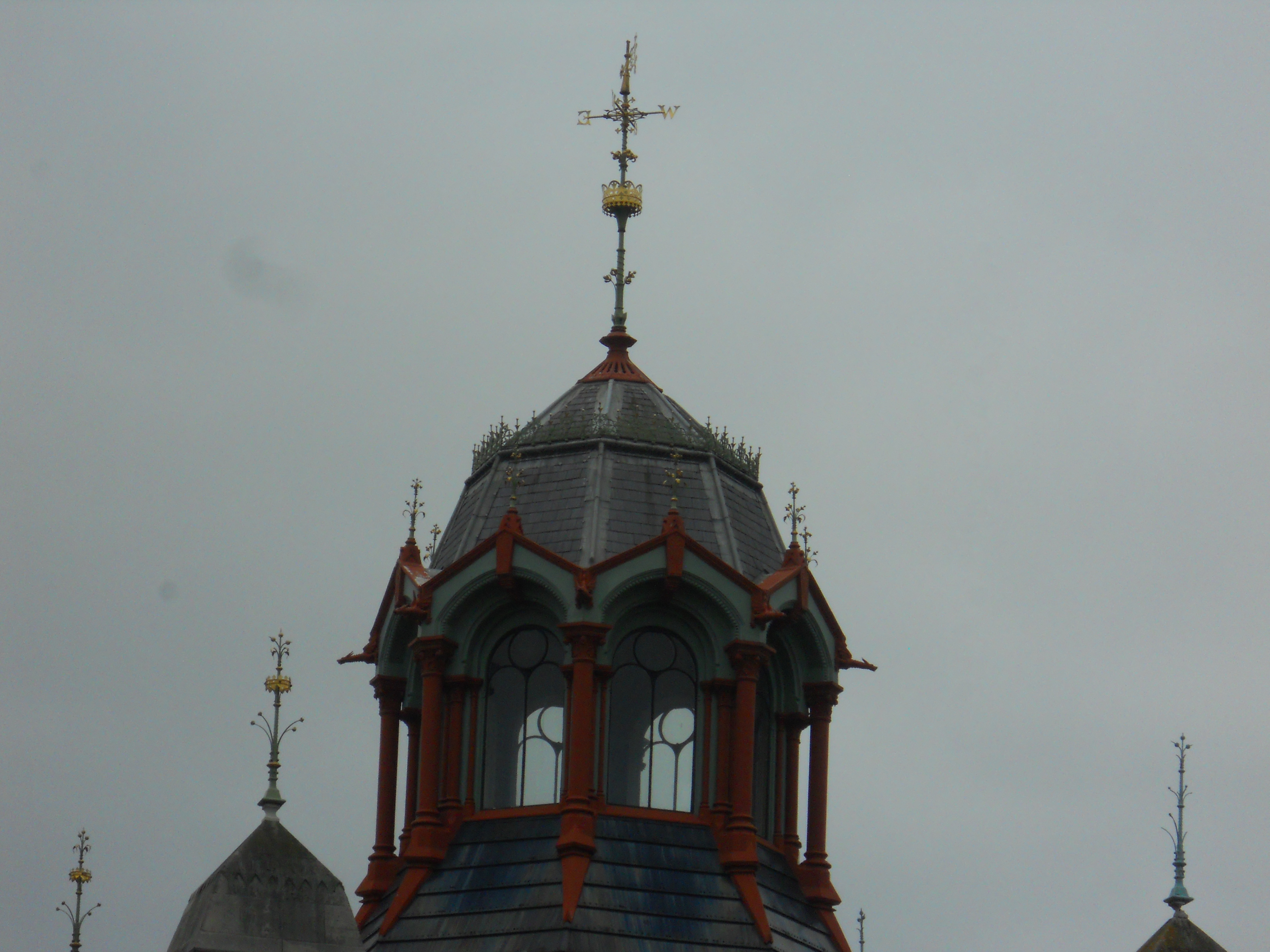
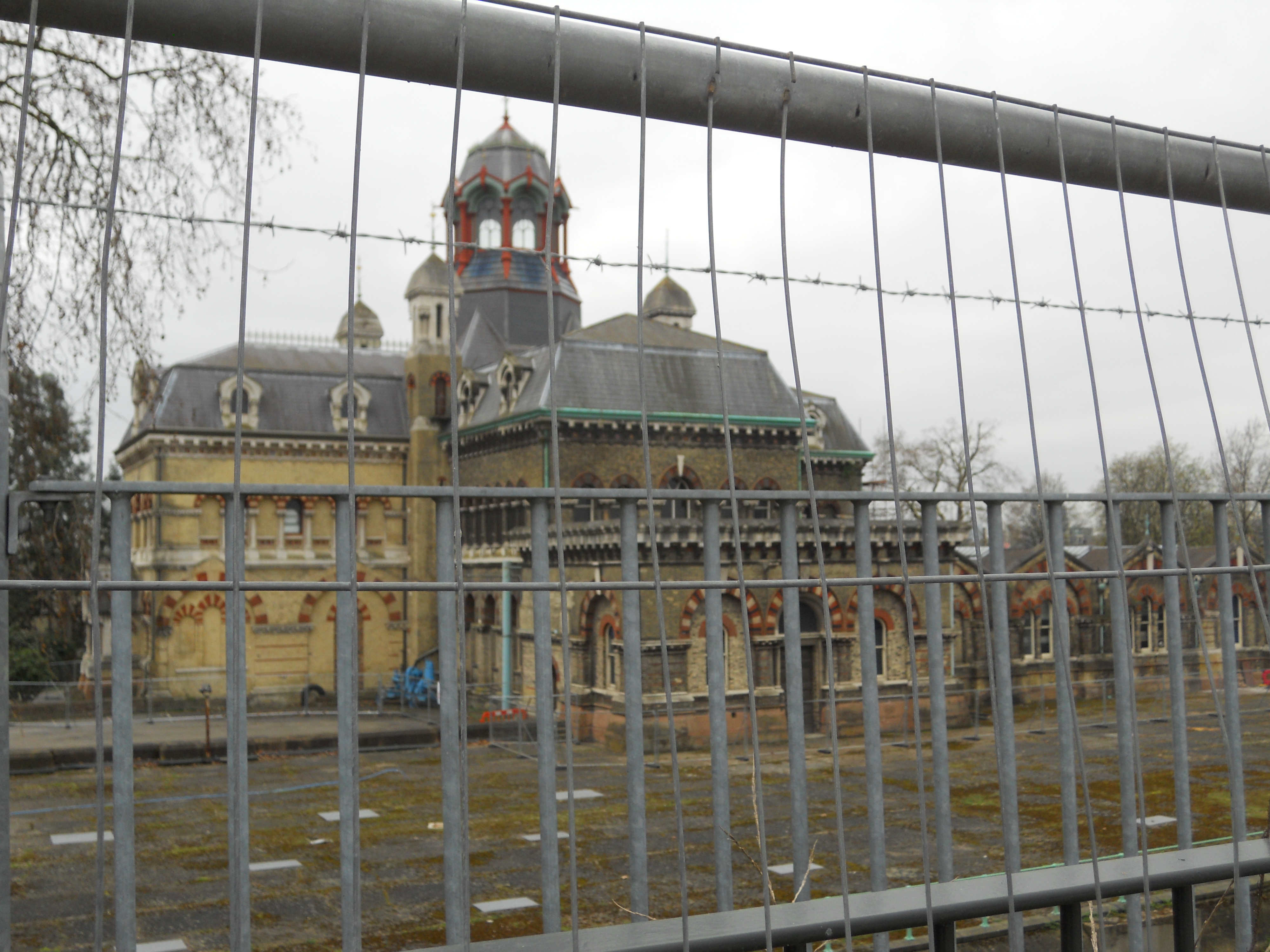
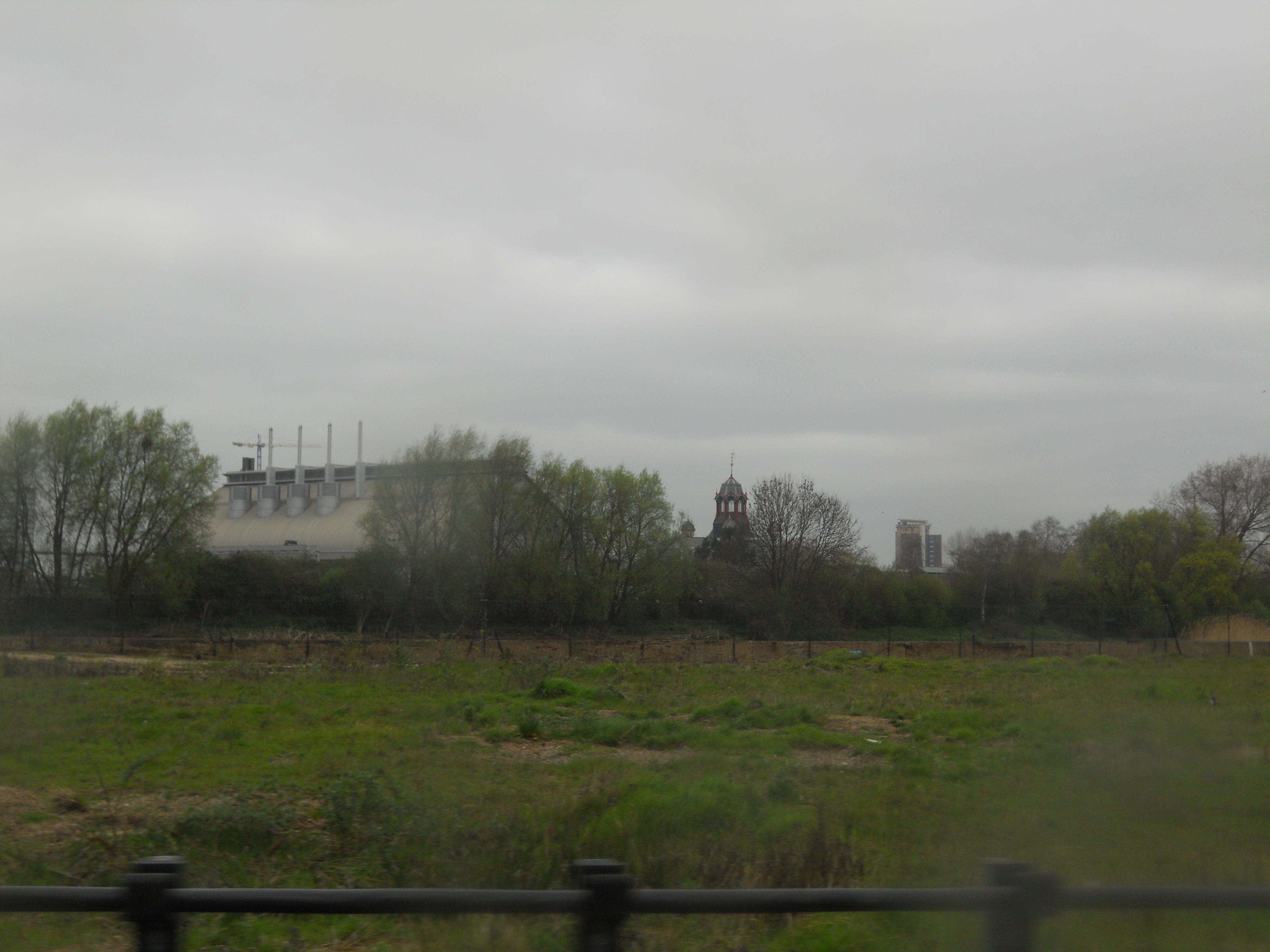


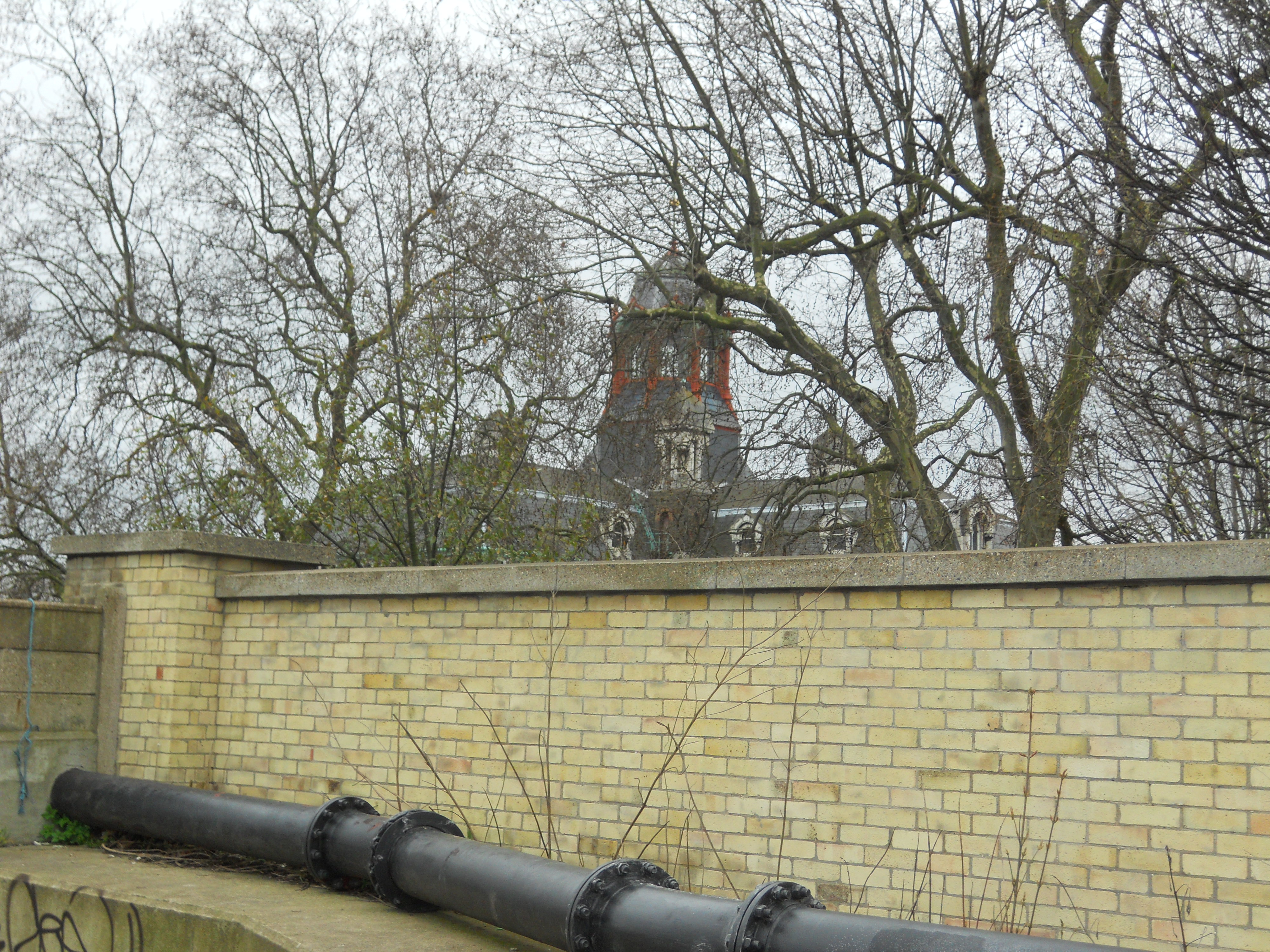

There does appear to be some tidying up going on, but surely this impressive building should look its best for the Olympics.
 The Anonymous Widower