Crossrail Will Be Making Noise On Moorgate
I received an e-mail from Crossrail today entitled Access Passage Under Moorgate.
This is said.
We are making progress with the tunnel connections between the Crossrail Moorgate ticket hall and the station platforms.
From the evening of Wednesday 9 November until Saturday 12 November 2016, we will break out the connection between the top of the escalator shaft and the access passage to Moorgate.
As we are breaking out concrete, there is likely to be some audible ground borne noise and vibration for occupants of nearby buildings and we apologise in advance for any inconvenience caused.
Hopefully, I won’t hear it a couple of miles to the North.
Seriously, though, I don’t think you can get fairer than that, especially, as the works at Moorgate so far, don’t seem to have been particularly disruptive.
The e-mail also pointed me to this cross-section of the station and the works.
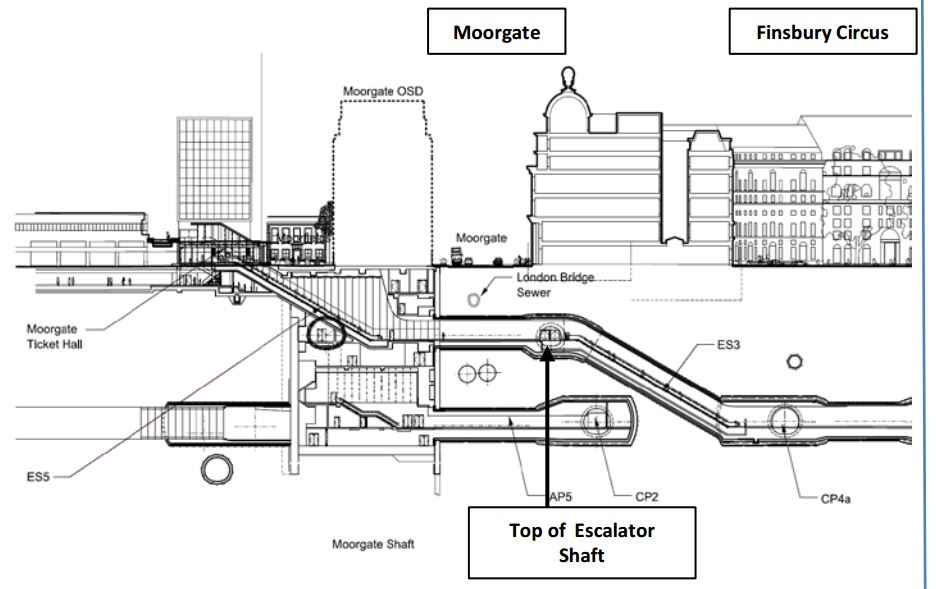
East-West Cross-Section Of Moorgate Crossrail Station
Note.
- Two banks of escalators are used to descend to Crossrail at Moorgate station.
- It is a similar arrangement at Liverpool Street station.
- If you’re walking between the two stations, a good proportion ofthe journet wil be on escalators.
- I think that the two smaller tunnels running under Moorgate and below the lower bank of escalators are the Northern Line tunnels.
It looks like the design has followed the rule of trying to keep to using only North-South and East-West routes for the tunnels.
Keeping Your Wiring Tidy
I have form in this area.
- One of my first jobs was designing and building small pieces of control electronics for industrial plant.
- I built small tuners for a company in Felixstowe.
- Later at ICI, I built instruments for installation on chemical plants.
So I learned from about sixteen, that your wiring always has to be neat and colour-coded.
I also remember at ICI, how Neil Saville developed a computerised design program in the late 1960s, to layout and colour-code the wires in a chemical plant.
So I was drawn to this article in Rail Engineer, which is entitled Safety, sustainability and security polymer cable troughing.
The article is about Trojan Services, based in Hove, who have developed various cable troughs and other products for the rail industry, made out of recycled polypropylene.
The article is very much a must-read, which shows how good design can transform the most mundane of products.
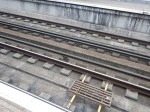

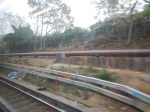
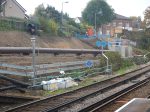
The pictures show some typical cable ducts.
Escalators In Station Design
Over the last few months, I’ve been to three brand-new stations.
- Kirkstall Forge, which I nwrote about in Kirkstall Forge Station
- Lea Bridge, which I wrote about in The People Of London Welcome Lea Bridge Station
- London Bridge, which I wrote about in Details Of The New London Bridge Station
All are well-built stations with step-free access.
But I have to ask, if Kirkstall Forge and Lea Bridge would be better stations with a more favourable financial outlook, if they had escalators instead of stairs to the bridge.
Consider.
- London Transport used escalators extensively before the Second World War and few think that was wrong.
- Escalators must surely attract more paying passengers.
- If escalators are used could we see them paired with inclined lifts. to perhaps create more compact stations.
Quite frankly, Kirkstall Forge and Lea Bridge have boring layouts. I do think, we need more innovative station designs.
In some ways the most interesting station I’ve seen in the last few months is Welwyn Garden City, where the station is on the First Floor of a Shopping Centre. The main escalators and lifts are in the Shopping Centre with individual lifts and stairs to the platforms.
The Composite Platform 1 At Tulse Hill Station
Tulse Hill station is a typical South London station, that has been upgraded several times and probably if money was no object, would be knocked down and rebuilt.
But that would be expensive, so they have replaced Platform 1 with a composite one.
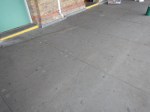
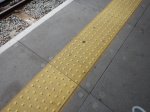
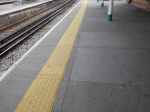

This page from the Dura Composites web site, says more about the installation. Reading about the platforms, the following advantages are mentioned.
- The platform doesn’t suffer from compaction issues.
- The surface is very passenger-friendly, with less likelihood of slips and falls.
- The yellow edge line is build into the platform.
- The stepping distance can be reduced.
- Installation of the platform is faster and needs less line closures.
- There are plans to install LED lights in the these platforms for safety reasons.
Overall the platform has a lower lifetime cost.
This to me is a classic innovation, that makes life easier and better for passengers, train companies and station builders.
My Favourite Gadgets
The pictures show some of my favourite gadgets, many of which can be classed as engineering pornography.
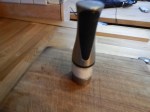

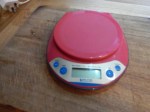

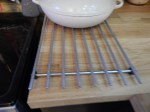



They may seem a rather odd collection, but I like to think the design is good, even if some of the gadgets are just a few pounds.
Step-Free Interchanges In East London
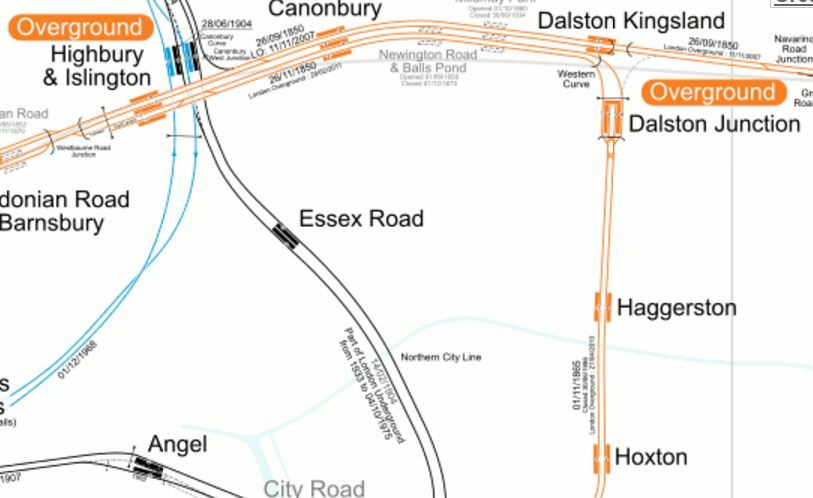
This map from carto.metro.free,fr shows the lines around where I live, which can be best described as a post code of N1.
Lines Around N1
I live halfway on the diagonal line between Dalston Kingsland and Essex Road stations. Years ago, there used to be a station at Mildmay Park, between Dalston Kingsland and Csnonbury, which if it still existed would be very useful for me, as it would be about a hundred and fifty metres away.
So my journeys often start from one of the half dozen bus routes, that have stops within fifty metres or so of where I live.
- I’ll take a 38, 30, 56 or 277 to Dalston Kingsland or Dalston Junction stations for the North London Line and East London Line respectively.
- I’ll take a 141 to Manor House station for the Piccadilly Line.
- I’ll take a 38 or 56 bus to Essex Road station for the Northern City Line
- I’ll take a 38 or 56 bus to Angel station for the Northern Line.
- I’ll take a 21 or 141 bus to Moorgate for the Metropolitan and Circle Lines
- I’ll take a 21 or 141 bus to London Bridge for main line trains.
- I’ll take a 21 or 141 bus to Bank for the Central and Waterloo and City Lines
- I’ll take a 56 bus to St. Paul’s for the Central Line
- I’ll take 30 bus to Kings Cross, St. Pancras and Euston for main line trains.
Who said the three most important things when buying a house, are location, location and location?
Strangely, I rarely go directly to Highbury and Islington station, as the station is one of the worst in London for passenger convenience, with long and crowded tunnels and no step-free access to the deep tunnels.
If I need to go North on the Victoria Line, I will sometimes go to Essex Road and then take the Northern City Line for one stop to Highbury and Islington station, where there is a step-free level interchange to the Victoria Line.
There are several of these interchanges in East London, making train and tube travel easier.
Northern City And Victoria Lines At Highbury And Islington Station
This map from carto.metro.free.fr, shows the layout of lines at the station.
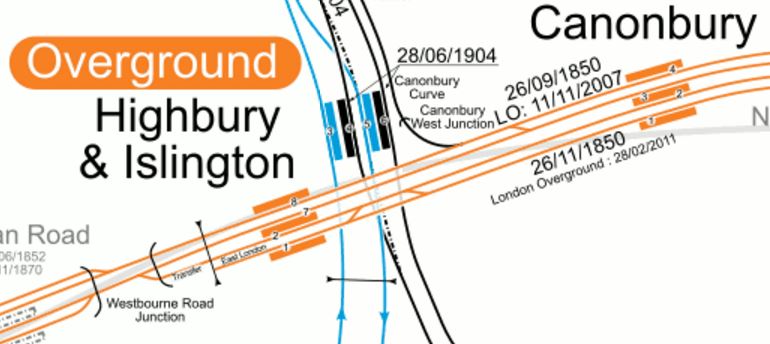
Note how the two Northbound lines and the two Southbound lines of the Victoria and Northern City Lines are paired, so that passengers can just walk through one of several short tunnels that connect the two platforms.
This connection will get more important in the future, as improvements will bring more passengers through the interchange.
- Highbuty and Islington station will be rebuilt, with access to the deep level platforms much improved.
- If traffic said it was needed, the Southbound and Northbound deep-level platforms, which are not far apart might even be connected together and to a second entrance on the other side of Holloway Road.
- The Northern City Line is getting new Class 717 trains, which will give an increase in capacity and I believe that the frequency on the Northern City Line will improve to 6, 8 or even 10 trains per hour (tph), thus making my ducking and diving easier.
- The Northern City Line will connect to Crossrail and for the first time N1 to lots of places, will be one change at Moorgate from the Northern City Line to Crossrail.
- The Victoria Line will increase in frequency to possibly 40 tph and benefit from station improvements at stations like Tottenham Hale, Blackhorse Road and Walthamstow Central.
It should also be noted how the Crossrail connection at Moorgate will help me.
When going to football at Ipswich, I may walk to Essex Road and then get a train to Moorgate, where I will take Crossrail to perhaps Shenfield for a fast train to Ipswich.
But who knows what I’ll do, as there will be several different routes, all of which will have their advantages?
East London Line To North London Line At Highbury And Islington Station
This is only from the East London Line trains arriving from West Croydon in Platform 2 at Highbury and Islington station to Westbound trains on the North London Line in Platform 7.
Although not as powerful as the double interchange at Highbury and Islington station between the Victoria and Northern City Lines, it is typical of well-thought out connections all over the Overground.
Piccadilly And Victoria Lines At Finsbury Park Station
This is a cross-platform interchange, that is heavily used as effectively it gives a simple choice of route through Central London for passengers from the Northern ends of the Piccadilly and Northern Lines. It’s a pity that the interchange between the two lines at Kings Cross St Pancras and Green Park aren’t as simple.
Metropolitan/District And Central Lines At Mile End Station
This picture gives a flavour of the interchange at Mile End station.
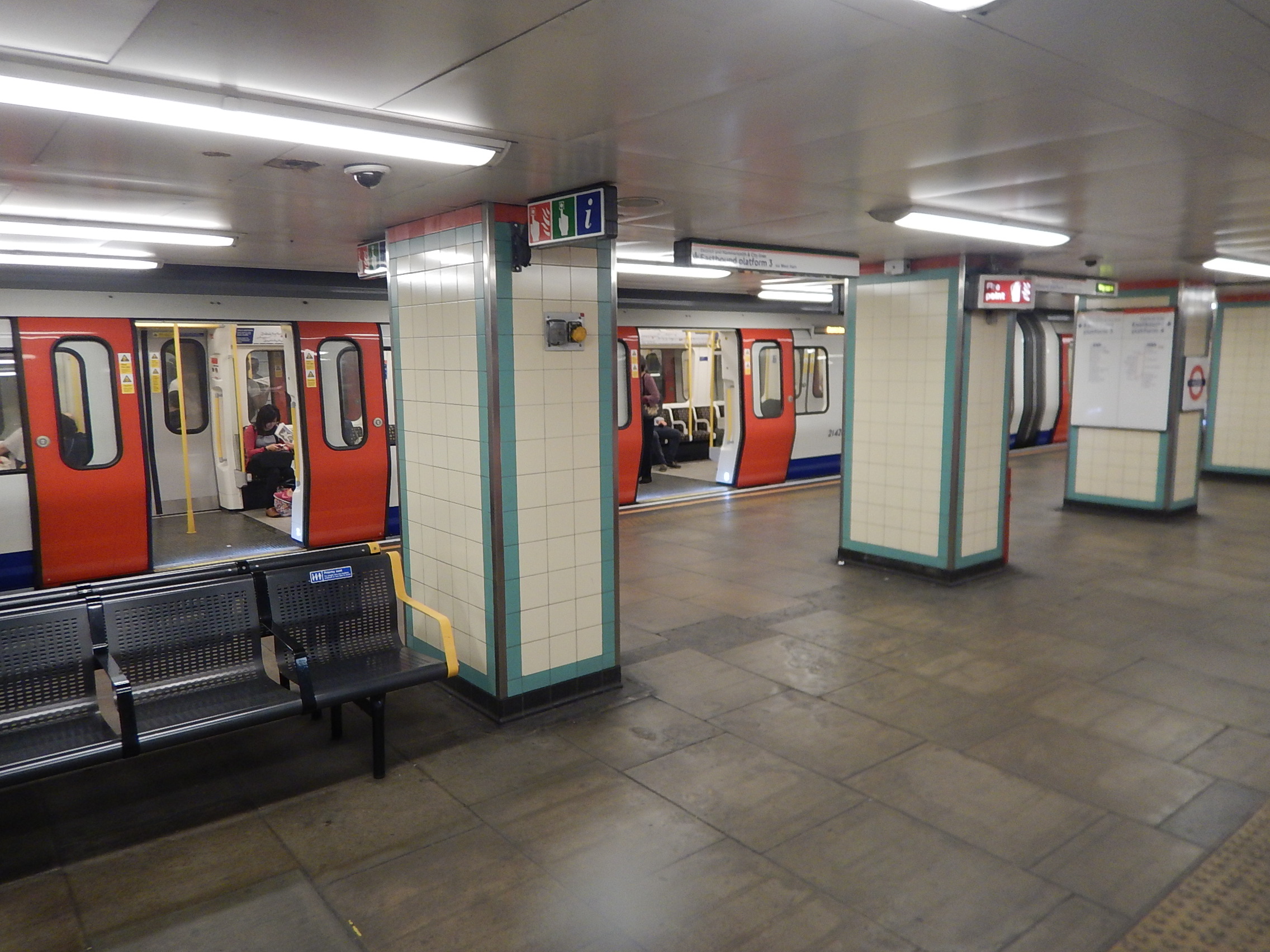
Cross-Platform Interchange At Mile End Station
It is a cross-platform interchange, that I use more and more, to go to the East on the Central Line. I usually arrive on a Metropolitan/District Line train from Whitechapel station, which is just a few stops down the East London Line.
Central Line And Shenfield Metro/Crossrail At Stratford Station
This interchange at Stratford station is going to be an integral part of Crossrail, as it will firmly connect the new line to the Central Line, with advantages to both.
This picture shows the interchange on the Eastbound platform.
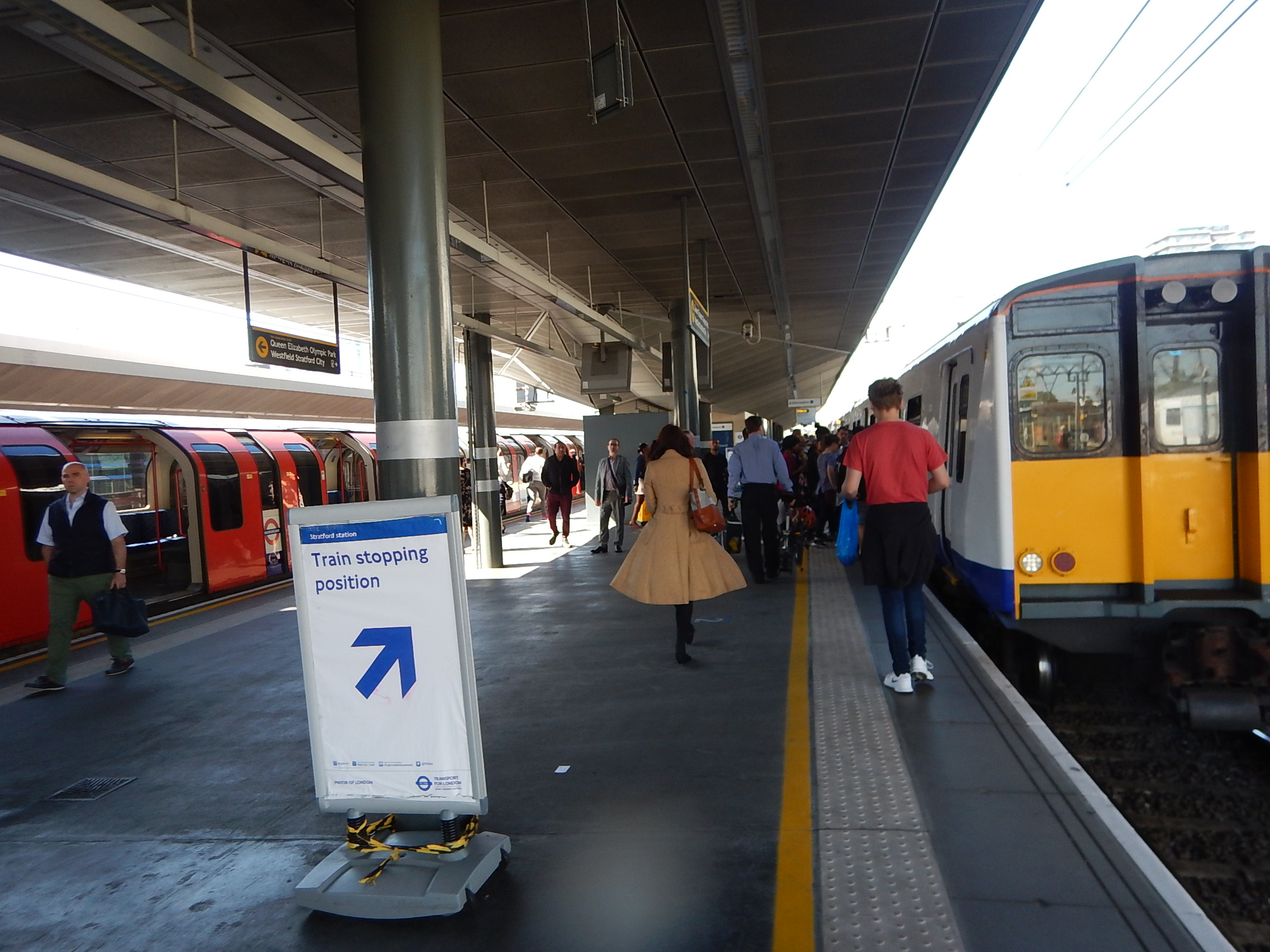
Central Line To Shenfield Metro/Crossrail Interchange
This interchange is certainly well-used and Crossrail will only increase that use.
Why Is This Not Done More Often?
These interchanges seem to work well!
But what always puzzles me, is why this layout is not used more often. And I don’t just mean in London. In all my travels, I can’t remember getting off a train in Europe and just walking across the platform to get a metro or a tram.
I suspect it could be because to get this type of interchange, you need to build some expensive railway infrastructure.
All of the examples I have given concern where a new line is being added to an existing network.
I am surprised that Crossrail doesn’t use a similar interchange anywhere else on its route.
Look at the Crossrail stations I documented in How Are Crossrail’s Eastern Stations Progressing?
In all stations, the Crossrail and fast lines are in pairs, whereas to get Cross-platform interchange between fast and stopping services, probably needs a different layout. That is not the fault of Crossrail, but the way the Great Eastern Main Line was built decades ago.
At the London end of the East Coast Main Line, the two slow lines are on either side of the two fast lines. At Stevenage, they have put two island platforms between the slow and fast lines, so that passengers have a cross-platform interchange between trains.

Stevenage Station
The Google Map clearly shows the layout.
Edinburgh Haymarket Station Gets It Right
Edinburgh Haymarket station is another example of Network Rail’s stations with a wide bridge over the tracks, like Leeds, Derby and most spectacularly Reading. London Bridge will join the club in the next couple of years.
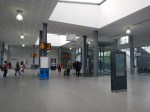
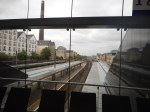

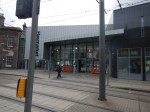
As most trains stop at both Waverley and Haymarket stations in Edinburgh, I think passengers will ask themselves, why they would ever use the truly dreadful Waverley station?
- Access to the trams at Waverley means using endless steps and escalators to get to Princes Street and then an uncovered walk to the tram.
- Trams at Haymarket are just a short level walk outside.
- Taxi drop at Waverley is difficult with more steps. It’s on the level at Haymarket.
- Tickets to Edinburgh allow you to go to either station.
- Coming from the West and needing the tram, will passengers increasingly change at Edinburgh Park station?
Don’t fall into the trap of getting off at Edinburgh Waverley, which now always seems to be called just Edinburgh.
My only reservation about Haymarket is the station’s size.
Is it big enough for an important rugby match at Murrayfield, where the savvy will arrive at Haymarket and take a tram?
And will it be big enough, when the trams are extended, as they surely will be?
Are Sainsburys Winning The Bag War?
Since the five pence charge was introduced for plastic bags in England, there has been very little innovative thinking by shops about how they could use the bags to drag people into their shops.
Summing up the shops I use and the comments of others, I would say this.
- Waitrose – Thin and useless
- Tesco – Thin and useless
- Marks and Spencer – Not too bad!
And then there’s Sainsburys!
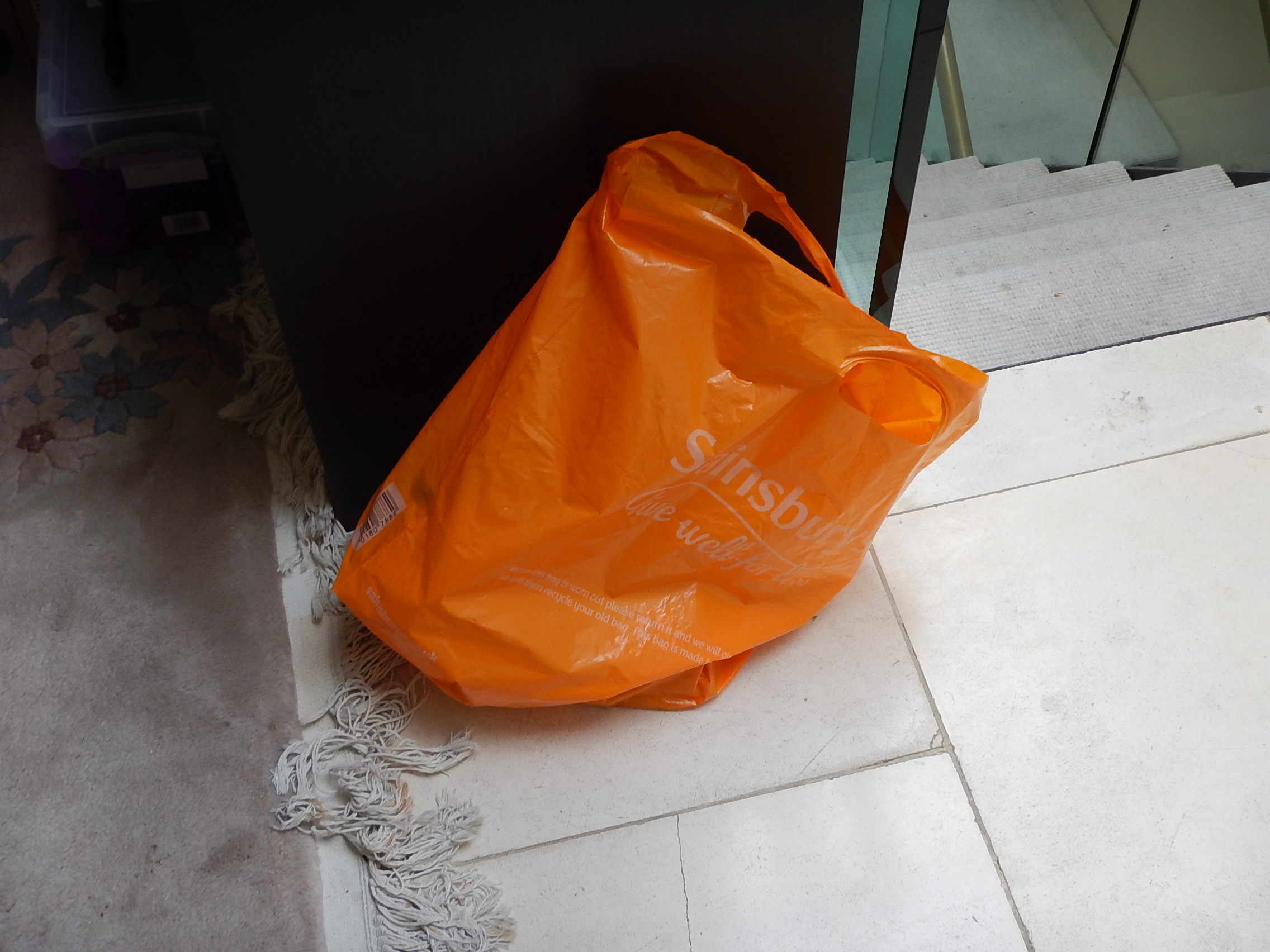
A Reuseable Orange Plastic Bag From Sainsburys
They are surely the best, as you can fold them flat and then into a size to fit in a coat pocket or bag.
The one in the picture is probably six or seven weeks old.
One day last week, I needed a few items to complete my supper like some strawberries and I hadn’t got a bag with me. So I walked past Marks and Spencer and Waitrose to Sainsburys and bought them there together with a 5p. bag.
Do you think that Sainsburys have deliberately made a 5p. bag that lasts to attract shoppers to their stores?
Judging by the number of orange bags, I see on the streets of London, I certainly think Sainsburys have been thinking this one through.
- Orange bags are easy to spot, so you always take one.
- As they’re easy to fold, some might fold them and put them in their pocket or bag after putting the shopping away.
- Seeing lots of orange bags on the street, reminds shoppers to get what they need at Sainsburys.
- Because of the quality of the bag, it makes you think well of Sainsburys and their products.
On the other hand, IKEA deliberately make their blue bags impossible to fold, so you leave them behind, when you go shopping.
Abbey Wood Station – 9th June 2016
I took these pictures at Abbey Wood station.




If you look at the various pictures I have taken over the past months of this station, the station is progressing and the builders seem to be managing to always have a working station amongst all the construction work.
Certain factors have helped in this important aim.
- The previous station was unloved by everyone and had absolutely no architectural merit.
- There are no heritage issues.
- Good design of a temporary step-free pedestrian bridge, that appears to be morphing into a permanent one, has aided passengers.
- There always seems to be cheery staff on hand for lost and puzzled passengers.
- Traffic is heavy in the area, but not unmanageably so.
But I think most importantly, the Crossrail portal is some distance away from the station, keeping the two projects effectively separate.
Compared to some station rebuilds, I’ve encountered in the past, so far it has been a textbook example of good project management.
The Canonbury Cross-Over
The picture shows two London Overground trains at Canonbury station.
I have just alighted at the station on a train from Willesden Junction, that was going to Stratford along the North London Line and have crossed to the wide centre platform on the footbridge.
The train on the right is going between Stratford and Richmond along the North London Line, in the opposite direction to my journey. The train has just called at the right hand face of this pair of platforms.
The train approaching on the left, is an East London Line train going from Highbury and Islington station to East and South London.
The frequency on the North London Line is about eight trains per hour between Stratford and Willesden and four trains per hour between Willesden and Richmond.
On this section of the East London Line, the frequency is eight trains per hour.
This means that if you are travelling either way along the North London Line and then want to travel on the East London Line, even if you just miss a connection, you have a maximum of about seven minutes to wait.
To ease matters often a North London Line train will call at Canonbury at or just before an East London Line train arrives.
Canonbury is a station with plenty of shelter and a coffee stall, so waiting isn’t the worst of experiences even on a day like today.
The original layout of this station was more complicated and you didn’t need to change trains between Stratford and Dalston Junction, as you do now!
But now, we design stations and track layouts, so that all passengers have an easy and fast journey.
It doesn’t always please everybody, as the direct train a commuter has taken for years, might have been replaced with a faster service, that has a cross-platform change in the middle.
Network Rail have published a report, where they may be reorganising the Cambridge and Peterborough to Ipswich services, by building a new platform at Newmarket.
An hourly Cambridge to Ipswich service would meet an hourly Newmarket to Peterborough service at Newmarket, where passengers between Ipswich and Peterborough would walk across the platform to get the other train to continue their journey.
We shall be seeing this type of train organisation a lot more in the future. But the passenger will get more and better services, whilst the train operator will be using the same number of trains.
Canonbury was one of the first stations, where simple cross-platform interchange was built into the design.
We shall see a lot more innovative station layouts.

