Before GOBlin Electrification – Crouch Hill
I’d never been to Crouch Hill station before, but I went to take these pictures.


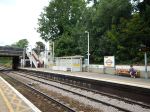

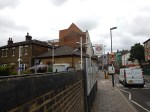
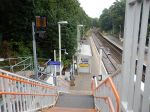

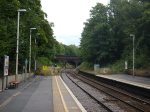


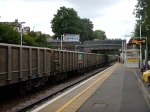
It is another tidy station with fairly long platforms, steep staircases and no lifts. Although unlike Leyton Midland Road, the station is in a cutting, rather than on a viaduct.
My pictures were as you can see interrupted by a dreaded Class 66 locomotive, with all its noise and smell passing through. After electrification, hopefully we’ll see something more environmentally-friendly like an elderly Class 90 or a brand new Class 88 locomotive. Unfortunately, I think we’ll see mainly Class 66s pulling freight trains for some years, as there are so many of them and they seem to be pretty reliable, although unloved by the drivers.
Across The North Of The Walthamstow Reservoirs
Between Blackhorse Road and South Tottenham stations, the Gospel Oak to Barking Line (GOBlin) passes between the large reservoirs of the Lea Valley that provide East London with most of its water.


This area to the south of the GOBlin is being developed into the Walthamstow Wetlands. Incidentally, I was once on one of these trains and there was a grandfather (?) with serious binoculars showing a boy of about ten, the various water birds that were visible. Today, all I could identify was a few swans.
Because of the layout of the line, I wouldn’t bet against there being a station called Walthamstow Wetlands or River Lea at the western end of this journey, just before it crosses the West Anglia Main Line.
Is there a Bird or Nature Reserve in the UK with its own rail station?
Before GOBlin Electrification – Leyton Midland Road
Leyton Midland Road station is a tidy station, but it has steep stairs and no lifts.

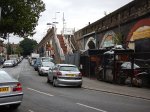
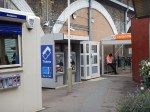


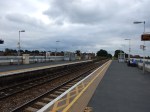
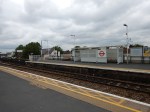
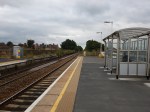
As the pictures show, the platforms are probably long enough for the new four-car trains.
Could The Gospel Oak to Barking Line Transform East London?
Two reports on the web prompted me to write this post.
The first was an article on CityMetric entitled Forget Road Bridges. TfL Should Extend The Overground To Thamesmead And Abbey Wood, which prompted me to write No To Silvertown Tunnel.
The second report was on various web sites with headlines like Enfield Council Shortlists Developers For Meridian Water.
Enfield Council is planning to build substantial numbers of new homes at a 85 ha site called Meridian Water near Lee Valley Regional Park over the next couple of dcades.
To help the development at Meridian Water, the station at Angel Road is to be improved and this page on the Meridian Water web site gives details. This extract details the development of the station and the related rail line and transport interchange.
The station will be a thriving new hub that combines rail and bus services to provide better access to Meridian Water for future residents and businesses. Meridian Water is a new £1.5 billion, 85 hectare, eco-development which will provide up to 5,000 new homes and up to 3,000 new jobs. The improvements, which will be completed in the next five years, will bring benefits for those that currently live and work in the area, as well as the new residents of the Meridian Water development. The project is being funded with £2.5 million from the Greater London Authority with a further £1 million from Enfield Council. This new station combined with additional investment in three tracking the railway, will bring forth a four trains per hour service at Angel Road Station.
All good stuff and very much about motherhood and apple pie in the manner of the way that the Metropolitan Railway used to sell Metroland.
But let’s not knock it for that, as London needs lots of new housing and the current station, Angel Road, which will be renamed Meridian Water, is one of the worst transport interchanges in the UK,. They’ve probably got better stations in many of the worst slums in The Third World.
Angel Road is just two platforms and a bridge as Before Crossrail 2 – Angel Road shows, whereas the average station in deepest Africa or South America, probably has at least someone, who’ll help you or sell you a tasty local morsel or a bottle of fizzy drink.
Whilst looking at developments in this area, it is worth looking at the wider area and investigate how transport links might develop. This Google Map shows the Lower Lea Valley from Angel Road and Meridian Water in the North to Lea Bridge Road in the South.
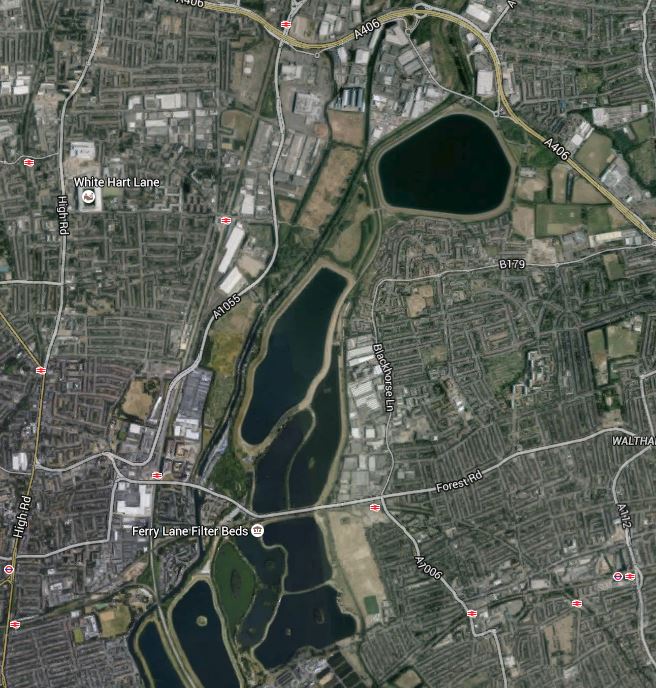
Lower Lea Valley
In addition to the housing developments at Meridian Water, more housing is being developed around Tottenham Hale station and other places in the area. But the development that will have the biggest impact on the area is not these developments but Thames Water and Waltham Forest’s massive plan to create the Walthamstow Wetlands. The project web site has this strap-line.
Transforming Walthamstow Reservoirs into a new urban wetland reserve for London
I have written about the Walthamstow Wetlands before in Before Crossrail 2 – Walthamstow Wetlands and now the project has its own web-site, I shall be following this exciting project a lot more. I believe the project has a lot going for it, but also it could be very important for Thames Water, who over the last few years haven’t exactly had the best of publicity at all times, what with our water bills and the Thames Tideway Scheme.
Because so much of London’s water is stored in the Lea Valley, it is very much in their interest to be good neighbours to the people and wildlife of the area.
The map also shows the rail links through the area.
1. The Lea Valley Lines
The Lea Valley Lines go northwards from Liverpool Street, Stratford and Hackney going up to Broxbourne, Hertford, Cambridge and Stansted Airport and as indicated earlier, extra tracks are being added and stations like Angel Road are being upgraded. A new station at Lea Bridge is also being built.
2. The Victoria Line
The Victoria Line goes underneath the area and links Central London to Tottenham Hale and Walthamstow. The line was built on the cheap in the 1960s and I have dreamed of what might have been. This August the line is closed to rectify one of its shortcomings, which will increase the capacity of the line.
3. The Chingford Branch Line
The Chingford Branch line crosses the Lea Valley Lines and the Walthamstow Wetlands as it links Chingford to Hackney and Liverpool Street. It is a line that can’t be extended, but there are plans to link it to the Lea Valley Lines by reinstating the Hall Farm Curve to allow trains to run from Stratford and Lea Bridge to Walthamstow and Chingford.
4. The Gospel Oak to Barking Line
The Gospel Oak to Barking Line (GOBlin) is the forgotten and down-trodden Cinderella, who could gatecrash the party in the Lea Valley and be a star of East London’s transport system.
Over the next few years, the following will or may happen to the line.
- Electrification
- Extension to Barking Riverside
- New four-car electric trains
- Smaller numbers of day-time freight trains.
- Increased passenger train frequency
The first three are hopefully cast in stone, as to cancel them now, would probably cost more than doing them. Especially, as the new trains have been ordered.
I am hopeful, that once the line is upgraded and electrified, this will enable freight operators to switch to electric traction, that could mean quieter services that might possibly run through at night.
As an aside, if I was standing for London Mayor, I would say I would put a limit of perhaps two non-electric trains a day on both the GOBlin and the North London Line. The freight operators would protest, but Class 66 locomotives have no business going through residential areas and crowded stations. Especially, when environmentally acceptable locomotives are available.
If the number of day-time freight trains could be reduced, this would allow more passenger services.
5. Crossrail 2
Crossrail 2 will have a big impact, when and if it arrives, as it will serve Tottenham Hale, Northumberland Park and Angel Road.
Before I finish this post, I have to ask, if we are doing enough with our transport network to serve large developments like Meridian Water, the Walthamstow Wetlands and Barking Riverside.
So what would I look at?
1. Crossrail 2
Politicians of all colours and tendencies are putting their faith in Crossrail 2.
But, I believe that the line, although surveys show it is much-needed, is a bit like the US Cavalry in a 1950s film, arriving in force after the poor settlers or ranchers have virtually been wiped out by the Indians.
We should prepare for Crossrail 2, so that all the engineering and architectural connections are there and all surface stations are upgraded over the next few years. This would mean that building Crossrail 2 would be just a matter of accurately threading the needles and then linking the tunnels to the existing stations.
Perhaps we should think of Crossrail 2 as a series of closely-related projects, rather than one huge mega-project.
- The main tunnels from Walthamstow Marshes to Wimbledon.
- The rebuilding of Central London stations to make them Crossrail 2-ready. Tottenham Court Road is already awaiting the tunnellers.
- The upgrading and rebuilding of the surface stations and rail infrastructure.
The great advantage of this, is that political responsibility for a lot of the work like the upgrading of surface stations, can be shared with the relevant Local Authority.
This post started with Enfield Borough Council and the Meridian Waters project and wandered into rail infrastructure, because Angel Road station is an important part of that project.
I doubt I’ll ever live long enough to see the opening of Crossrail 2. But I live in hope!
2. Improving Connectivity On The Gospel Oak to Barking Line
The Gospel Oak to Barking Line hasn’t got the best connectivity to other lines and it is also blessed with some difficult out of station interchanges for even strong walkers.
Walthamstow is an example, where the walk between Queen’s Road and Central isn’t that long but it is tortuous. This Google Map shows the area.
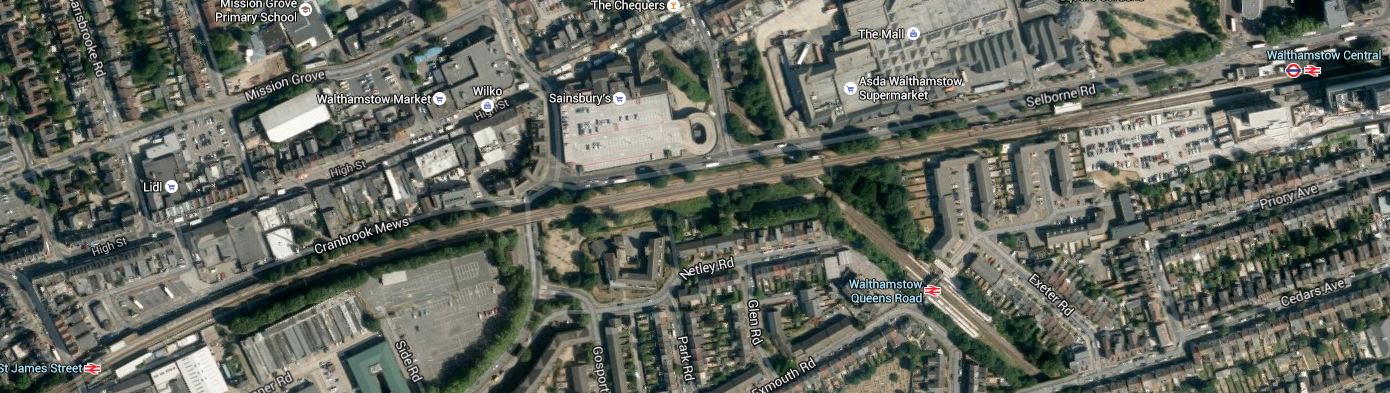
Walthamstow Stations
The East-West line is the Chingford Branch, with St. James Street station in the West and Central in the East. Croosing this line is the GOBlin with its station at Queen’s Road.
Surely something better could be done in Walthamstow. Interchange for someone pushing themselves in a wheelchair would be very difficult.
There is also an out of station interchange between Wansted Park on the GOBlin and Forest Gate on the lines out of Liverpool Street, which in a few years time will be Crossrail. This map shows the area.
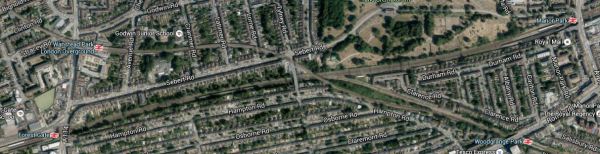
Wanstead Park And Forest Gate
It is an area, where some selected development could be of value, especially as the GOBlin passes over the Liverpool Street Lines. I’ve walked this interchange a couple of times and the following would help.
- Step-free access at both stations. Forest Gate is getting this with Crossrail.
- A light-controlled crossing at Wansted Park station
- A minor rerouting of the buses so that some passing through the area stop at both stations.
This would mean that someone pushing themselves in a wheelchair could use the interchange.
One station that needs to be improved is Blackhorse Road, which connects the GOBlin to directly to the Victoria Line. This Google Map shows the area.
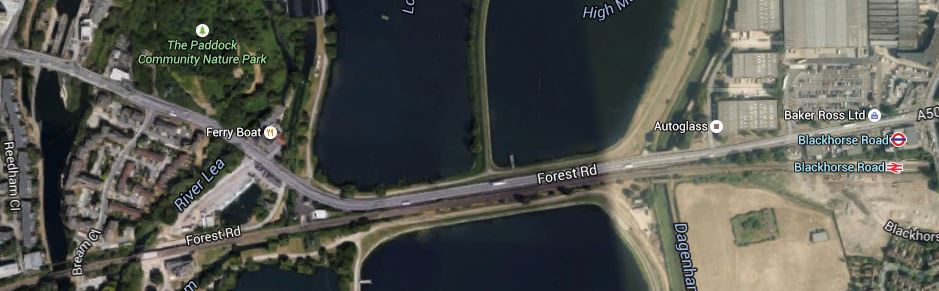
Blackhorse Road Stations
Note that the station site is not particularly cramped and it would be a not-to-difficult walk to the Walthamstow Wetlands, especially if you could hop on a bus for a couple of stops.
There is also the possibility of an improved station at Harringay Green Lanes, where a large amount of property development is possible according to this document on the Harringey Council web site. I talked about the possibilities in The Piccadilly And Victoria Lines, Manor House Station And Harringay Green Lanes Station, where I believe a flagship station could be built across Green Lanes.
This section in the Wikipedia entry for the GOBlin, lists other ideas for extra connectivity for the line.
But I believe there are three other important interchanges that will or may happen and I describe them in the next three sections.
3. Seven Sisters Interchange With Gospel Oak to Barking Line
Transport for London’s Plan for 2050, has a section in an Appendix with the heading of News links and/or Stations for Strategic Interchange. In a list of places where this might be done are the words Seven Sisters (GOB). Seven Sisters station is currently a valid out of station interchange with South Tottenham station on the Gospel Oak to Barking Line. In Crossrail 2 At South Tottenham/Sevens Sisters, I speculated as to how the two stations could be linked by a large double-ended Crossrail 2 station. This Google Map shows the two stations.
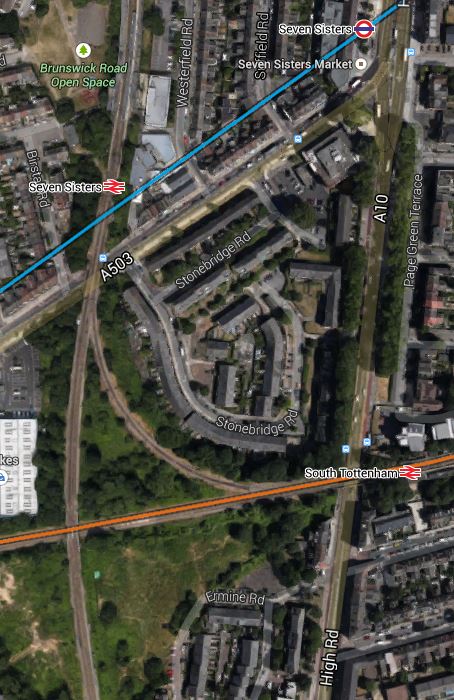
South Tottenham And Seven Sisters
There are also other possibilities here, like building a new station, housing or commercial development or allowing trains to link from the Northbound Lea Valley Lines through Seven Sisters to the Eastbound GOBlin. But whatever happens here, the GOBlin will eventually be linked to the Victoria Line and Crossrail 2.
Search the Internet and You’ll find little about this project, which is just two words buried in a TfL report.
4. Extending The GOBlin To Angel Road
This is speculation on my part, but the Meridian Water development will need more than just the one station at Angel Road. As the GOBlin goes across the southern part of the development site, is there an opportunity for an innovative connection through the development to Angel Road? This is a Google Map of the area from Angel Road in the North to Blackhorse Road in the East.
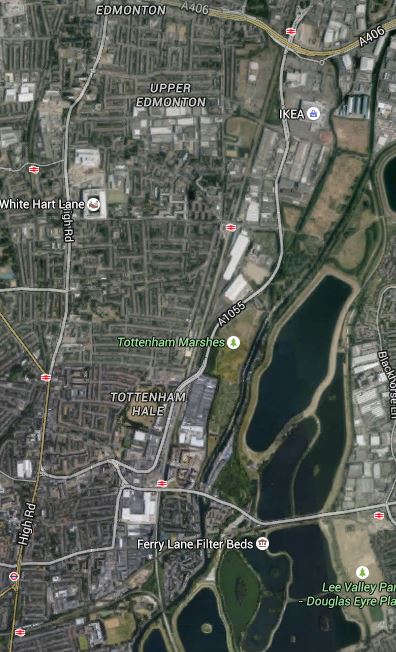
Blackhorse Road To Angel Road
The connection might be difficult for a train, but use a Class 399 tram-train and it could twist and turn its way between Blackhorse Road and Angel Road stations amongst the reservoirs and the developments to serve both those developments and the Walthamstow Wetlands.
5. Extending The GOBlin To Thamesmead And Abbey Wood
In No To Silvertown Tunnel, I examined the possibilities of extending the GOBlin from Barking Riverside over or under the Thames to Thamesmead and Abbey Wood station, where it would join up with Crossrail.
I felt that this would best be done using Class 299 tram-trains as they could go walk-about on both sides of the river giving much needed connectivity to the housing on both sides of the river. If it could be done, I felt that a bridge shared with pedestrians and cyclists would be the best way to join the two banks of the Thames.
6. The Hall Farm Curve, High Meads Loop and Dalston Eastern Curve
These three curves, if reinstated for passenger trains would create routes between the Chingford Branch and Lea Bridge, Stratford and any desirable station to the West. Reopening the Dalston Eastern Curve would give access to the East London Line for Crossrail at Whitechapel and South of the Thames.
As there could be spare capacity on the East London Line, which has been designed for twenty-four trains per hour, there could be a myriad of ways it can be used to increase the services under the Thames, so what Transport for London might do would be pure speculation on my part.
But I think they will eventually use these three curves to improve services in the Lea Valley.
7. Tram-Trains On The GOBlin
This may seem a bizarre idea, but having seen these hybrid vehicles all over Germany, I believe tram-trains are the way to add extra destinations to core electrified lines. On the Gospel Oak to Barking Line, in addition to being used to connect to Angel Road, as I showed previously, they could also be used with a tunnel or a bridge to extend the line from Barking Riverside under or over the river to Thamesmead and Abbey Wood.
People might worry that when running as trains, they may need different stations to the other trains, but the Germans seem to be able to design stations that accept both vehicles and I suspect the planned Rotherham extension of the Sheffield Supertram, will come up with solutions applicable to our standards. As to the required overhead lines, the Class 399 tram-trains can run using any of the voltages used for trams and trains in the UK.
There may be other places on the GOBlin and the other rail lines in East London, where tram-trains could be used effectively.
This will obviously be up to the planners, but I will be very surprised if tram-trains don’t infiltrate there way into many places all over the UK. At the moment transport planners, haven’t the experience of seeing a well-designed tram-train system working in the UK, but after what I believe will be a successful trial in Rotherham, I think we’ll see planners embracing the technology with open arms.
Conclusion
The GOBlin won’t be Cinderella any more!
South Tottenham Station – 6th July 2015
The rebuilding of South Tottenham station with lifts is coming on.


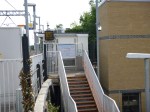
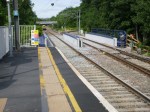
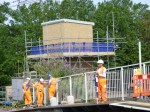
I was changing to the Victoria Line by walking to Seven Sisters station.
South Tottenham Station – 29th May 2015
The updated South Tottenham station is now recognisable as a station with two lift towers.

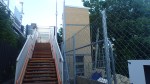


There has certainly been quite a bit of investment in the area around the station.
The High Meads Loop At Stratford
This piece started life as an investigation into a rail line connecting the North London and Lea Valley Lines at Stratford, but it ended up as more of an index to what is happening to trains around Stratford and up the Lea Valley.
If you travel on the North London Line from Hackney Wick station to Stratford station, you’ll see a rail line going off to the North side of the line under the Olympic Village.
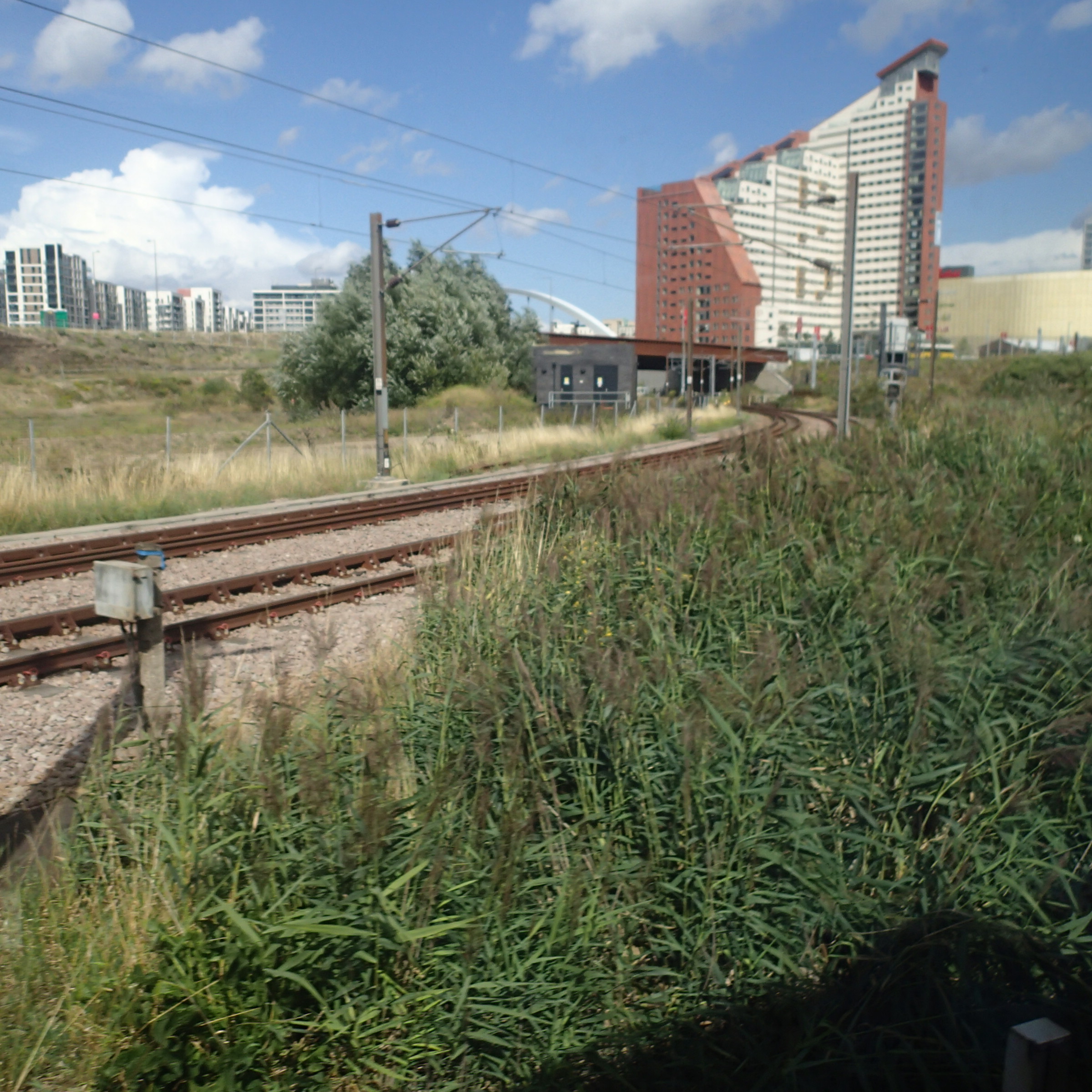
High Meads Loop At Stratford Joins North London Line
If you travel up the Lea Valley Line, you’ll see the other end of the line.
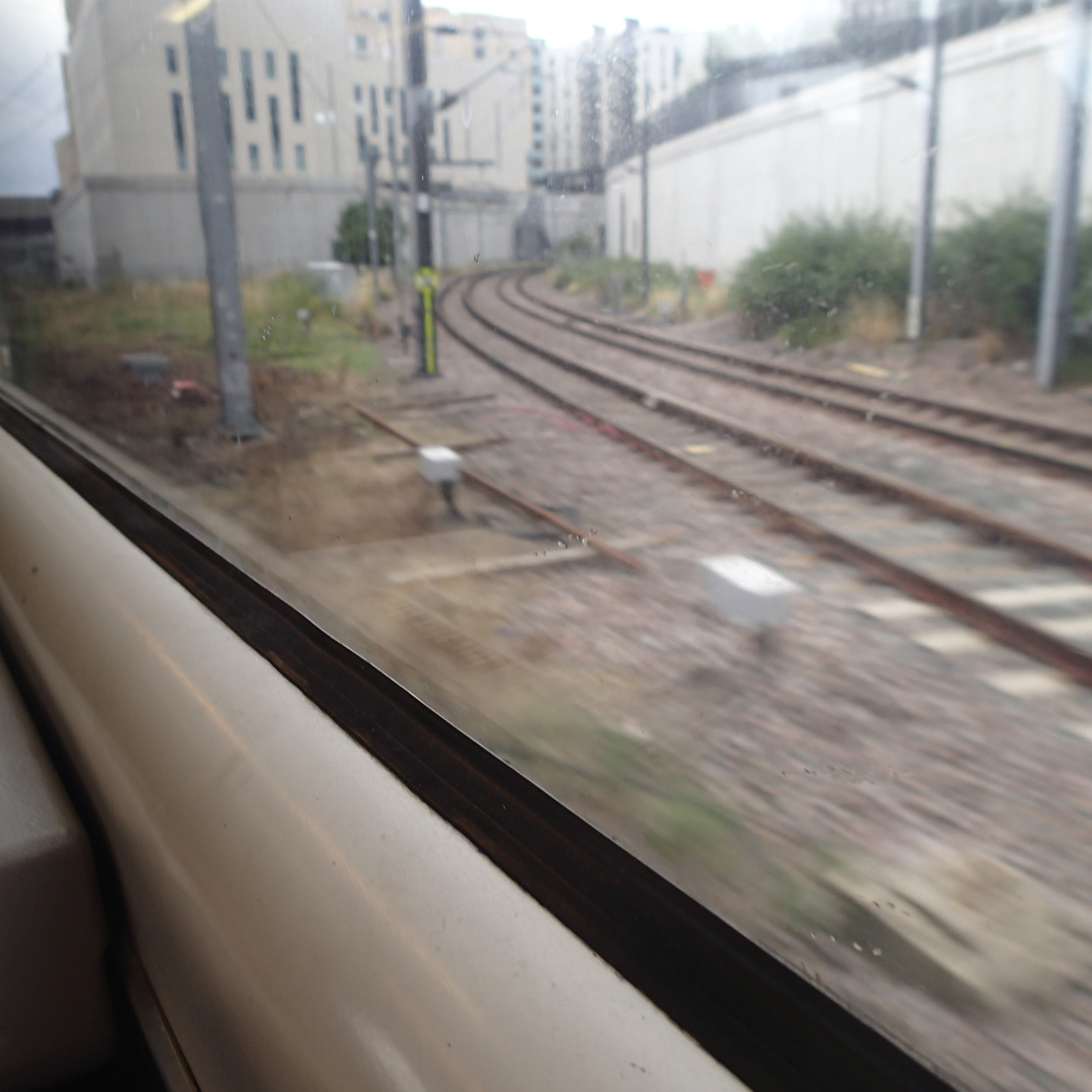
High Meads Loop At Stratford Joins Lea Valley Line
This is the High Meads Loop and it is generally used to move freight trains. You can see it on this Google Earth image, as it curls round the western side of Stratford International station, starting from the triangular junction to the east of Hackney Wick station and the River Lea and eventually joining the Lea Valley Line between Stratford and the under-construction Lea Bridge station.
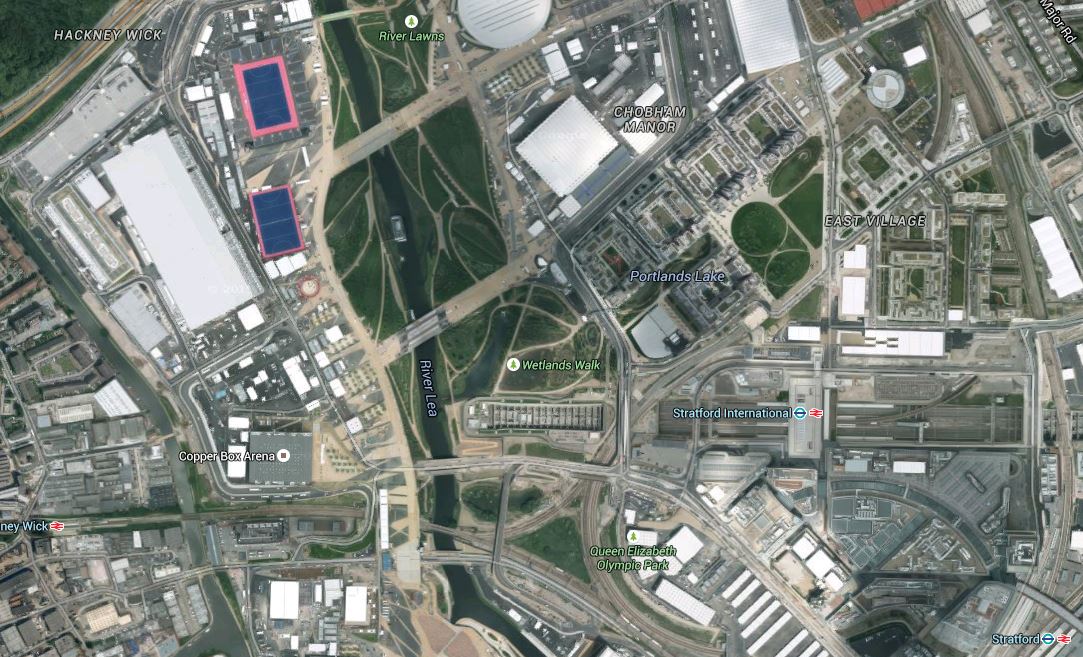
High Meads Loop
I walked around the area today starting from Stratford International DLR station and much of it is hidden under concrete in East Village.
What has always surprised me, is that this line doesn’t appear to have provision for a station, especially as it could connect to so many important places in the area.
But then it does seem to me that the design of the rail system in the area of the Olympic Park and Village didn’t put getting an efficient railway first. These questions must be answered.
1. Why was a fully-functional International station, built at Stratford International and has then never been used to run services to the Continent through the Channel Tunnel? This is answered partially in this section in Wikipedia about International services at the station. If Kent gets two stations at Ebbsfleet and Ashford International, then surely East London and Essex deserves one too!
2. Why too, is the link between the two Stratford stations, so much of an afterthought? Today, when I came back from my walk, there was the inevitable lost soul, who’d taken a train to Stratford International and needed to get a train to Romford. And his Narional Rail ticket wasn’t valid for the one-stop hop on the Docklands Light Railway. But this is East London and the Train Captain told him to ride Don’t get me wrong, I like the DLR, but surely for the Olympics we could have put a more spectacular or at least a better link between the two stations?
3. In some ways too, I often think that they used the high-speed service from St. Pancras to Stratford, just to give it something to do. For a start foreign day-trippers to the Olympics should have come straight into Stratford International on Eurostar. Why wasn’t this arranged?
4. I am pretty local to the Olympic Park and can get a train from Dalston Kingsland to Stratford. I went to the Olympic Park that way a couple of times, but to get home, the powers-that-be either sent you to Stratford International or West Ham. In one instance I walked to Clapton and got a bus home as everything was congested. The arrangements might have worked for getting to Central London, but they weren’t good for locals, who like me wanted to walk out of the Olympic Park and then probably get a bus home. One solution would have been to put more capacity on the North London Line, by extending the Class 378 trains to five cars, as is now being done. Why wasn’t this done on the North London Line in time for the Olympics? Especially, as the line has always been overcrowded compared to the East London Line.
5. Soon after the Olympics, I met a big cheese in the Docklands Light Railway on a train. He felt and I probably will agree with him, that the DLR overperformed in the Olympics and dear old Cinderella didn’t miss a beat. I suspect though that to many she has more than a touch of Minnie Mouse, but to East Londoners and knowledgeable visitors, she is the way to travel, where you get a grandstand view much of the time. So why wasn’t more use made of the DLR for the Olympics by designing it into the heart of the Olympic Park?
6. We also had the farce of if you went to the Olympics from St. Pancras, you had to go through the Eastfield shopping centre to get into the Olympic Park. Why? Was the Olympics about sport or shopping?
7. Look at this Google Earth image of the Eastfield shopping centre.
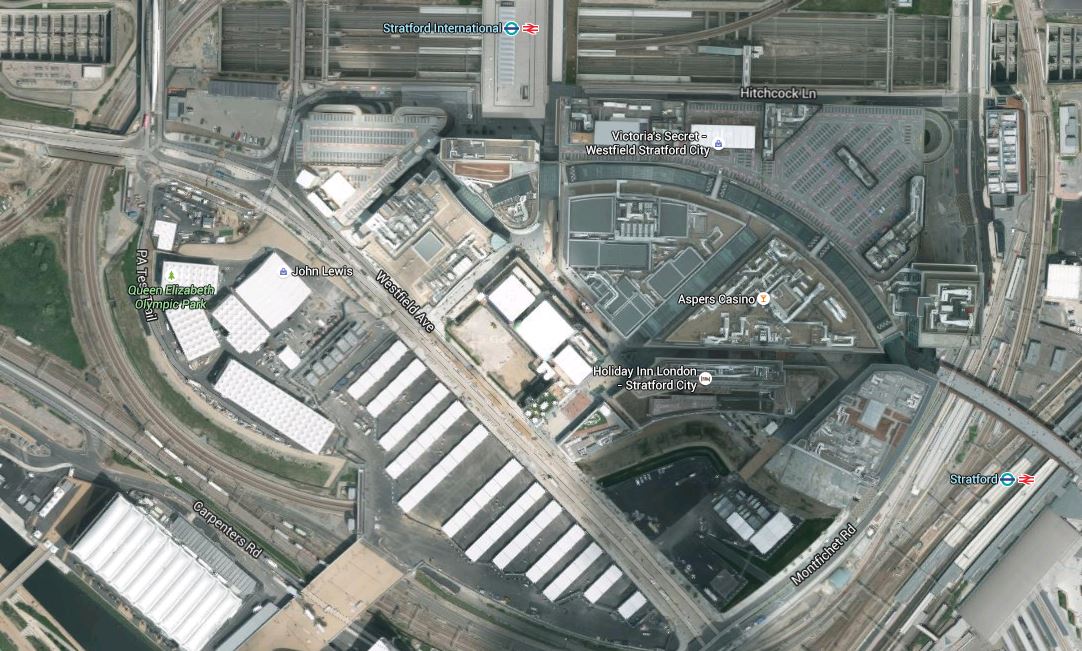
Eastfield
Notice how the DLR goes under the centre and emerges on the west side before curving round to get to the station at Stratford International. It has always puzzled me that no provision has been made for an extra station on this loop. It strikes me that the developers feel most shoppers will bring their cars or not buy anything heavy. I would use the centre more if it was easier to get home from say John Lewis with perhaps something weighing ten or twenty kilos. Why was this extension of the DLR designed to be never more than a timid link?
If I look at some of the rail designs of the last few years, I get the impression, that they are less timid and not designed to be easiest to construct. The London Overground in particular has been innovative in some of its infrastructure to design affordable and efficient railways. Look at the Clapham Kiss as just one example.
In any developments to improve Stratford, there is also a thundering herd of elephants in the room, which will probably have more effect on what happens than any politician.
And that is Crossrail!
What is planned now is only Phase 1 of Crossrail and future developments will give Crossrail a bigger share of London’s passengers and even more influence.
1. Crossrail has been designed to take slightly longer trains and with its massively long platforms, the capacity of the system is quite a bit bigger than what we’ll see when the line opens.
2. Crossrail can also take more trains through the core, so we’ll definitely see extra branches on the line. Ebbsfleet on HS1 is safeguarded and Tring on the West Coast Main Line is being seriously studied.
3. Crossrail lacks an easy and hopefully cross-platform interchange to high speed services to Europe and in the future to the North. An easy interchange to HS1 at St. Pancras and Stratford is impossible, but one at Ebbsfleet could be incorporated with the extension of Crossrail to the station.
So what do I think should be done to sort out the sins of the pre-Olympic rail system development in the Stratford area?
1. A Better Connection Between The Two Stratford Stations And To The Eastfield Shopping Centre.
Look at this Google Earth image of Stratford station.
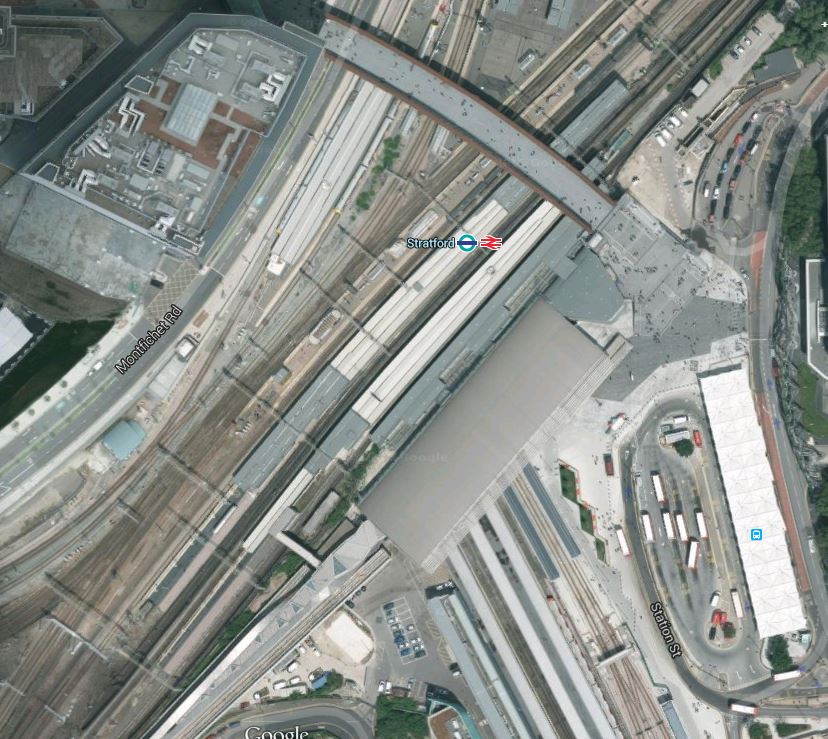
Stratford Layout
The DLR branch between Stratford International and the core system passes underneath the rail lines, including Crossrail and the Overground , and the Central Line, at right angles.
The passenger connection between the DLR and the lines passing through above is not easy, although it is step-free. If you take the wrong tunnel from the rail lines, you end up on the wrong DLR platform.
As the two subways are one each side of the DLR lines, couldn’t something better be done to make this interchange easier? For a start how about a sign saying take these stairs from the through platform to get your DLR service to Stratford International?
I also think that there should have been a station on the DLR line underneath Eastfield. It would be interesting to know what the shopping centre thinks.
2. Will We Ever See International Services From The Station That Has The Word In Its Name?
If Crossrail extends to Ebbsfleet, this will take a big chunk out of High Speed passengers to Stratford and St. Pancras. If say you lived in East Kent and worked in the City or the West End of London, why would you not take a convenient service, High Speed or otherwise, to Ebbsfleet and then change to Crossrail for where you actually needed to go?
Stratford International also lacks an easy link to all of the other services at Stratford and especially to Crossrail, even if the DLR link is improved. But any cross-platform link is impossible!
Passengers will get increasingly fed up with second-rate stations, when they see some of the modern ones that work, like Reading and Kings Cross. St. Pancras may look spectacular, but it is A Fur Coat And No Knickers Station
So Stratford International, which I find an unwelcoming place, could become a massive white elephant, that had its brief moment of fame at the Olympics.
3. The Moans In North East London
Read the various Internet forums and web pages and some of the biggest complaints are about the poor transport links to and from places in North East London and the Lea Valley, like Walthamstow, Leyton and Tottenham.
Things are improving,
The transfer of the Lea Valley Lines to an operator who cares about passengers in London and the uprating of the Victoria Line later this year, can’t be anything but positive.
But more could be done!
4. A Shoreditch High Street Station On The Central Line?
After Crossrail has bedded in, will we finally see a connection between the Central Line and the East London Line at Shoreditch High Street? I think we will as because Crossrail is an effective by-pass for the Central Line from Stratford to Liverpool Street, the Central Line could probably be shut for several months under Shoreditch High Street, whilst the link is created without causing too much inconvenience to passengers, except for those using Bethnal Green. But even those would have the new Whitechapel Crossrail station a couple of bus stops away
5. Extending the DLR to Tottenham Hale
This was mooted a few years ago and a document called DLR Horizon 2020 talked about extending the system from Stratford International up alongside the Lea Valley Lines to Tottenham Hale station. This article on London Reconnections describes the proposal like this.
Extend the DLR from Stratford International to Tottenham Hale via the Lea Valley. The route would run alongside the current Lea Valley rail lines where possible and the line would serve the Olympic site and feature additional stops at Lea Bridge and Walthamstow Marshes.
It may be a worthy idea, but does it really make economic sense, when according to what you believe a lot of things may be happening in the area.
- A new Lea Bridge station and a new Hall Farm Curve are being created.
- A rebuilt Hackney Wick station is being planned.
- Crossrail 2 is being promoted and could serve the area.
- Transport for London will be taking their first bite out of the Lea Valley Lines in the very near future.
- There could be a a major upgrade in the Tottenham Hale area, which is described in this document on the Haringey Council web site.
- According to this Future section in Wikipedia for the Tottenham Hale station, funding is being sought to add extra tracks to the Lea Valley Line so that four trains per hour can be run on the line.
When the heavy rail expansion is sorted and the area between Tottenham and Walthamstow is developed as housing and a very large wetland and leisure area, the case for a Lea Valley Light Railway may be stronger.
6. Using The High Meads Loop For Passengers
Trains can use the High Meads Loop to pass across the northern side of Stratford Intergenerational station. This Google Earth image of the station, shows the lines passing round the North-Western corner.
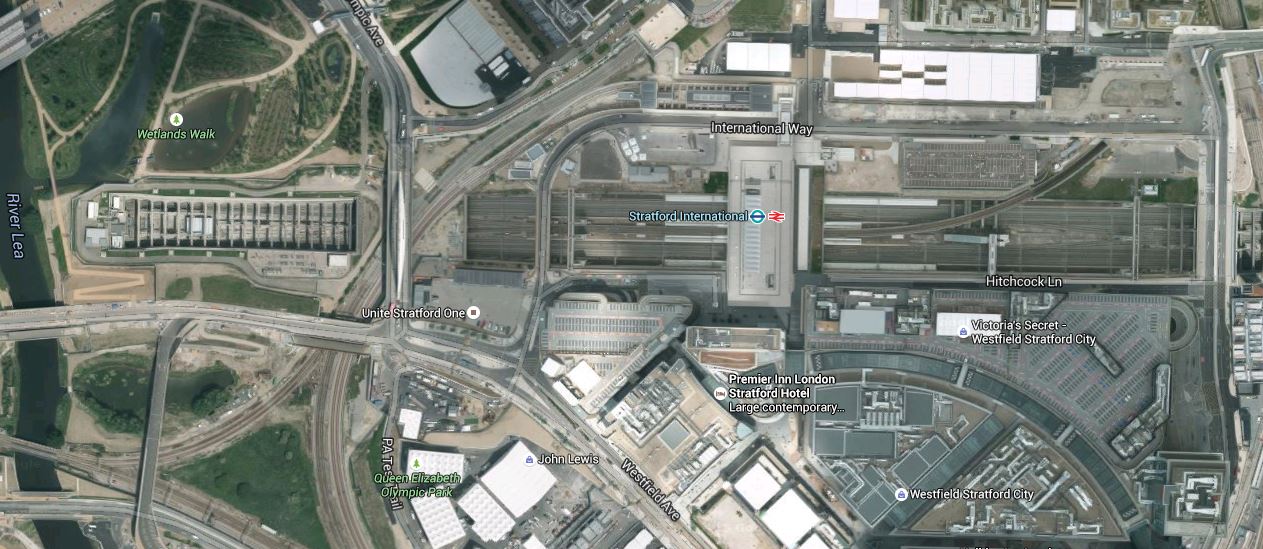
Stratford International Station
Note also the Docklands Light Railway station on the northern side of the deep station box, virtually above the DLR logo.
I think with a will a station could be built on the High Meads Loop just to the north of the DLR station, which would allow trains to travel between the North London Line and the Lea Valley Line calling at a station close to the International station and possibly a station in the East Village.
But as with extending the DLR from Stratford International would it all be worthwhile?
Unless of course some developer wants to do a mega-development and pays for the trains and the infrastructure.
7. Conclusion
I think we should leave well enough alone and accept that Stratford International station is probably a shining white elephant.
In the meantime, we should make it easier to transfer between one station too many at Stratford.
The High Meads Loop is probably best left to sort out the freight that has to travel through the area until someone does the right thing and builds a proper freight line that avoids the North London and the Gospel Oak to Barking Lines.
 The Anonymous Widower