New Trains Make Debut On Suffolk Route From Ipswich To Felixstowe
The title of this post, is the same as that of this article on the East Anglian Daily Times.
This introductory paagraph says it all.
The first new Greater Anglia train operating on Suffolk routes out of Ipswich has gone into service on the Felixstowe branch.
Frim the picture I’m sure it is a four-car Class 755 train.
Norwich To Sheringham Line Sees New Greater Anglia Trains Enter Service
The title of this post is the same as that of this article on Rail Advent.
This is the introductory paragraph.
Yesterday (6th November) saw the first of the brand new Greater Anglia trains travel on the Bittern Line, between Norwich and Sheringham.
The article also says the new trains will be phased in before the end of the year.
The New Light Freight Terminal At Liverpool Street Station
These pictures show the old cab road at Liverpool Street station, where the proposed light freight terminal will be developed.

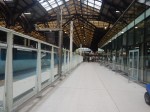


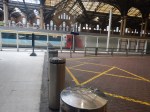


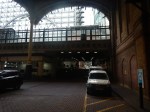
The spacious cab road shut a few years ago and was moved to its current position in front of the station. Nowadays it is used mainly for deliveries to the station and the retail units, by Network Rail maintenance vehicles and sometimes by Rail Replacement Buses.
This second set of pictures show the exit of the cab road in Primrose Street, behind the station.


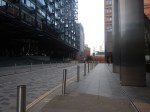

Note these points about the old cab road.
- There is some nice ironwork and a vaulted ceiling, but nothing that would be damaged if electric vans and cargo bikes used the cab road to serve freight shuttles.
- The road surface and the brickwork all appear to be in good condition.
- By removing the barrier between the cab road and platform 10, there would be no problem loading and unloading trains.
- There is also a good wide passage leading from the old cab road to the main concourse of the station.
I suspect that the only functional building in the area, which is the Left Luggage Office, will have to be moved. But it might be better placed on the main concourse.
Platform 10 Looks Very Convenient For The Freight Shuttle
The closeness of Platform 10 and the old cab road makes the platform look very convenient for the terminus of freight shuttles from London Gateway
How Will The Freight Shuttles Travel Between London Gateway And Liverpool Street Station?
The route from London Gateway to Liverpool Street station will be as follows.
- From London Gateway, the train will join the London, Tilbury and Southend Railway between Stanford-le-Hope and East Tilbury stations.
- The train will only run using diesel on the spur to London Gateway.
- The train will continue to Barking, where it will take the Gospel Oak to Barking Line.
This map from carto.metro.free.fr shows the tracks, where the Gospel Oak to Barking Line crosses over the Great Eastern Main Line.
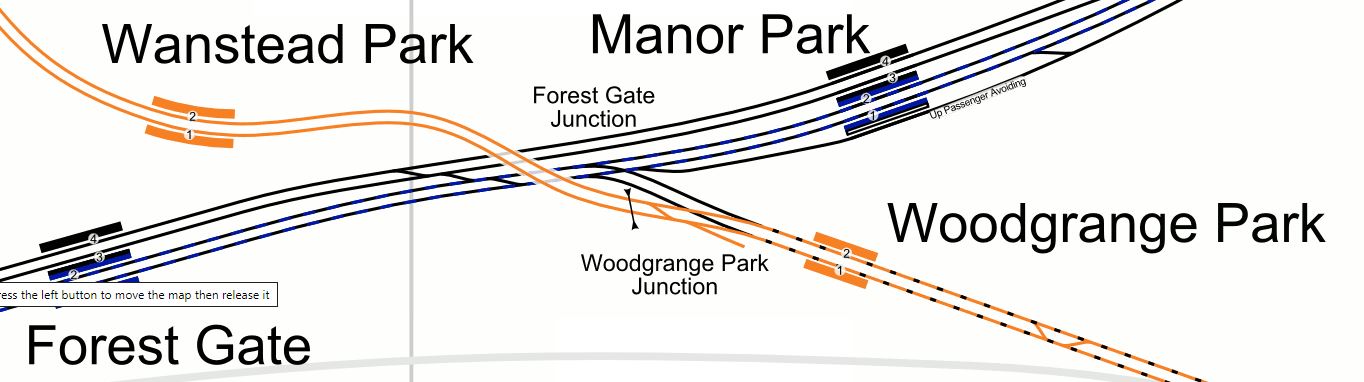
The train will join the Great Eastern Main Line here for a fast run into Liverpool Street station.
- I suspect the train will switch to the fast lines using the crossovers shown in the map.
- Note that the performance of a Class 769 train on electrified track, will be only slightly less than the expresses.
At Liverpool Street station, the train will run into Platform 10.
Will Liverpool Street Station Lose A Platform?
Currently, Platforms 9 and 10 are generally used for the London and Norwich services.
- These trains run at a frequency of two trains per hour (tph).
- They are formed of a rake of Mark 3 coaches topped sand tailed by a Class 90 locomotive and a driving van trailer.
- They call at various stations en route including Chelmsford, Colchester and Ipswich and are very heavily used at peak times.
- Entry to and exit from the trains is not of a modern standard and I suspect turnround times can sometimes must be very slow.
From next year, these trains will be replaced by modern twelve-car Class 745 trains.
- These trains have 757 seats, which I have read somewhere is more than the current trains.
- The trains will have level access between train and platform at all stations.
- I suspect turnround times will be shorter, due to the modern design.
Frequency between London and Norwich will also be increased yp three tph, by extending a service between London and Ipswich, which will be run by a Class 720 train.
Will it be possible to fit three tph into Platforms 9 and 10?
I suspect that it might be tight, as over the last few months, Norwich trains have sometimes been using higher numbered platforms like 14.
So will the proposed three tph to Colchester, Ipswich and Norwich be moved to two higher numbered platforms.
This would enable platform 10 to be used by freight shuttle trains, but will the station be able to run all the services, with one platform less?
Current Services Into Liverpool Street Station
Current services from Liverpool Street station are as follows.
- Six tph – GEML – TfL Rail – Shenfield
- Three tph – GEML – Greater Anglia – Southend
- Two tph – GEML – Greater Anglia – Norwich
- One tph – GEML – Greater Anglia – Ipswich
- One tph – GEML – Greater Anglia – Clacton
- One tph – GEML – Greater Anglia – Colchester Town
- One tph – GEML – Greater Anglia – Braintree
- Four tph – WAML- London Overground – Chingford
- Two tph – WAML- London Overground – Cheshunt
- Two tph – WAML- London Overground – Enfield Town
- Four tph – WAML- Greater Anglia – Stansted Airport
- Two tph – WAML- Greater Anglia – Hertford East
- Two tph – WAML- Greater Anglia -Cambridge
Totalling these up means the following.
- 16 tph use the double-track West Anglia Main Line (WAML)
- 15 tph use the four-track Great Eastern Main Line (GEML) as far as Shenfield.
- 6 tph use the double-track GEML to the North of Shenfield.
It looks neatly balanced.
Would moving Norwich services to a pair of the higher-numbered platforms improve operation?
All WAML services would be in platforms 1 to 9, as against platforms 1 to 8 now!
All GEML services would be in platforms 10 to 18, as against platforms 9 to 18 now!
If platform 10 is used by the freight shuttles, this would make operational sense, as the shuttle will approach Liverpool Street along the GEML after joining at Manor Park station.
Future Services Into Liverpool Street Station
From 2021 or so, these could be the from Liverpool Street station.
- Three tph – GEML – Greater Anglia – Southend
- Three tph – GEML – Greater Anglia – Norwich
- One tph – GEML – Greater Anglia – Clacton
- One tph – GEML – Greater Anglia – Colchester Town
- One tph – GEML – Greater Anglia – Braintree
- Four tph – WAML- London Overground – Chingford
- Two tph – WAML- London Overground – Cheshunt
- Two tph – WAML- London Overground – Enfield Town
- Four tph – WAML- Greater Anglia – Stansted Airport
- Two tph – WAML- Greater Anglia – Hertford East
- Two tph – WAML- Greater Anglia -Cambridge
Totalling these up means the following.
- 16 tph use the double-track West Anglia Main Line (WAML)
- 9 tph use the four-track Great Eastern Main Line (GEML) as far as Shenfield.
- 12 tph from Crossrail will use the slow lines as far as Shenfield.
- 3 tph use the double-track GEML to the North of Shenfield.
Crossrail has opened up capacity on the Great Eastern Main Line.
- Currently, there are 15 tph on the GEML using platforms 9 to 15.
- In 2021, there will be just 9 tph on the GEML using platforms 10 to 17.
There will be extra services to Lowestoft and Crossrail’s Peak Hour service to Gidea Park station.
But even so, I suspect there will be space for more services.
Did Someone Try To Steal The Electrification?
I arrived at Ipswich station to come back to London at 09:30 this morning and finally arrived home at 15:00. The journey had taken at least four times longer than it should.
This article on Railnews, which has a subtitle of Overhead Line Damage Disrupts Great Eastern, explains the problem.
The wires between Colchester and Marks Tey stations were damaged at around four in the morning and trains didn’t run again until about 1700.
This is a paragraph that adds more details.
overhead line damage was discovered between Colchester and Marks Tey. Network Rail workers reported shortly before 04.45 that overhead line equipment was tripping, and a train driver reported ‘visible damage’ to the power lines.
I eventually came home by this route.
- I took a train to Class 153 train to Cambridge.
- Another electric train took me to to Tottenham Hale,.
- It was then two buses home.
It was a completely wasted day.
What puzzles me is that the damage to the wires appears to have happened, when no trains were running. So that seems to indicate they either just fell down for no apparent reason or someone was up to no good.
Years ago, I did some work for British Rail and they talked about all sorts of groups getting up to all sorts f tricks to steal copper. signalling cable.
The crooks would even repeatedly cut fibre optic signalling cables, in the hope it would be replaced by copper, so they could nick that!
I shall await the report of what happened yesterday with interest!
Greater Anglia Were Short Of Trains
I took this picture, when I arrived at Ipswich.

It shows the Ipswich to Cambridge service that gives a good connection to the train from London. For several years, it has been a smart three-car Class 170 train. This is a rwo-car Class 156 train.
- Greater Anglia were also apologising for the connecting Lowestoft service being just a one car; Class 153 train.
- It appeared to me, that Greater Anglia has sent nearly all of their Class 170 trains to Wales.
- And yet again, Greater Anglia are looking after their Norwich customers and heaping all the inadequate rolling stock on Ipswich.
- Are the new Class 755 trains and their drivers ready?
It looks to me, to be a management cock-up.
Train For Cambridge Anybody?
This was my train to Cambridge.

As I said, it was normally a three-car Class 170 train, but this is an inadequate Class 153 train, which went they ran between Ipswich and Cambridge generally ran in pairs.

Gerald Fiennes and Delia Smith at Dullingham
At least I only had to wait ten minutes at Cambridge for my Tottenham Hale train.
Greater Anglia’s Response
The staff at Ipswich did their best, but there did seem to be a biit of bad leadership from somewhere as at one point, it was announced that a London train would be running and I don’t think it did.
To make matters worse, as we ran into Cambridge, we passed two brand new Class 755 trains in the sidings. Are they parked their ready to start the service?
This article on the East Anglian Daily Times is entitled We’re Completely Stuck – it’s A Joke’ – Rail Passengers’ Anger At Train Chaos.
It shows a large degree of management failure.
Planning For The Future
The electrification on the Great Eastern Main Line appears to be notoriously unreliable.
Network Rail must get it better! But they don’t seem to be doing a good job, as I have had pain getting to Ipswich for six years, whilst they are updating the wires!
I believe that the best insurance for the train services would be to do the following, as soon as possible.
- Increase services on the Ipswich and Cambridge route to two trains per hour (tph) using four-car Class 755 trains. One would be direct and the other would have a change at Ely.
- Increase services on the Norwich and Cambridge route to two tph using four-car Class 755 trains. One would be direct and the other would have a change at Ely.
- Start running the London and Lowestoft service using four-car Class 755 trains.
- Make sure that, it is possible to run routes with pairs of Class 755 trains.
- Ensure, that Class 755 trains can run London and Norwich via Cambridge.
As an example yesterday, a six-car Class 755 formation formed of two three-car trains shuttling between Ipswich and Cambridge, would probably have solved the problem.
But I do think that East Anglia’s rail problems might be best served by running a new direct service between London Kings Cross and Norwich.
As I have said several times, the Kings Cross and Cambridge and/or Kings Lynn service needs to be upgraded to 140 mph trains to make the most of the 140 mph running on the Southern section of the East Coast Main Line.
So why not run the following services?
- Hourly between Kings Cross and Kings Lynn via Cambridge.
- Hourly between Kings Cross and Norwich via Cambridge.
The trains could be Hitachi AT-300 trains with a battery capability sufficient to take the train North of Ely.
Conclusion
Did someone try to steal the electrification?
I will await the answer as to what happened with interest.
Haughley Junction Improvements
This article in the East Anglian Daily Times is entitled New Tracks. New Platforms At Ipswich Station. And Faster Trains. Will East Anglia’s Rail Bosses Be Able To Deliver?.
This is said about Haughley Junction.
Mr Bradley said improving Haughley junction, making it a full double-track junction, would mainly benefit cross-country services but it would reduce a potential main-line bottleneck.
This Google Map shows the junction.
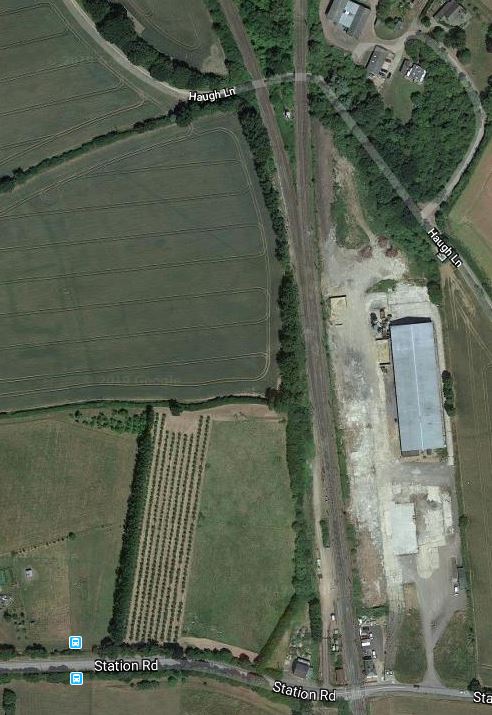
Haughley Junction is towards the top of the map.
- The track going vaguely to the North-West goes towards Bury St. Edmunds, Newmarket and Cambridge.
- The track going North goes to Diss and Norwich.
- Ipswich is to the South.
Work is eased by having a large space on the Eastern side of the junction, but where the railway crosses Station Road, there is a level crossing, which is to be removed.
It looks to me, that this is one of those projects, that can grow to be very complicated.
Consider.
- Will a flyover be built or will it be a flat junction?
- Will the main Ipswich-Norwich line be moved to the East.
- How will engineers deal with the level crossing closure?
- Will any electrification be added towards Cambridge?
With regards to the last question, it should be noted that Cambridge and Haughley Junction are forty-two miles apart.
Greater Anglia’s Class 755 trains can replace each diesel engine with a battery pack. This will be done on the South Wales Metro.
In .Battery Power Lined Up For ‘755s’, I investigate what Stadler have said about Class 755 trains running on batteries.
- Ranges of up to forty miles are quoted.
- Batteries could be fitted to Greater Anglia’s bi-mode Flirts at an overhaul.
I would expect that the electrification would be extended towards Cambridge by as much as is needed to make sure that battery operation between Ipswich and Cambridge is possible.
I have just flown my helicopter along the line, as far as Chippenham Junction.
- The line splits at Chippenham Junction, with one branch going through Newmarket to Cambridge and the other to Ely.
- Chippenham Junction is seventeen miles from Cambridge.
- The route betwen Chippenham Junction and Haughley Junction appears to have been cleared for el;ectrification.
- Electrification through Newmarket would be expensive, as there is a tunnel, a section of single track and possibly a station rebuild.
- Chippenham Junction and Haughley Junction are about twenty-five miles apart.
- Chippenham Junction and Ely are about fourteen miles apart.
If I was in charge of this project, I would certainly investigate the possibility of electrification between Haughley and Chippenham Junctions
- Class 755 trains with batteries would be able to run between Chippenham Junction and Cambridge or Ely on battery power.
- The East West Rail Consortium is proposing a Park-And Ride station, which could be called A14 Parkway.
- How much money would train operators save, if this section was el;ectrified?
- Power for the electrification would be picked up at Haughley Junction.
Would it allow tri-mode Class 93 locomotives to be able to go between Felixstowe and Ely only using a relatively small amount of diesel compared to a Class 66 locomotive?
I also think that electrifying between Chippenham and Haughley Junctions is low risk electrification.
- The route has been gauge-cleared.
- Thee new Class 755 trains can run without it.
- On the other hand they will run more efficiently when it has been installed.
- It would enable Class 93 locomotives to run on electricity.
Too many electrification projects need new trains. These are already in service.
Conclusion
There is more to this project than meets the eye.
Greater Anglia’s Norwich And Stansted Airport Service Starts On December 15th 2019
The annual December timetable change on December 15th 2019, will see Greater Anglia bringing in their new service between Norwich and Stansted Airport stations start as an hourly service.
The Route
Between Norwich and Ely stations, the route is on the Breckland Line.
- It is not electrified, except for a short section at the Norwich end.
- It is a full double-track, except for the single-track Trowse Bridge, that it shares with the Great Eastern Main Line on the approach to Norwich.
- The operating speed is between 75-90 mph.
- There are intermediate stations at Shippea Hill, Lakenheath, Brandon, Thetford, Attleborough, Spooner Row and Wymondham.
There is potential to increase the line speed, perhaps add some extra stations and remove the antiquated Trowse Bridge.
South from Ely through Cambridge to Stansted Airport, the route is a busy, fully-electrified double-track line.
The New Timetable
The Sunday journeys are as follows
- Journey time appears to be a couple of minutes over two hours both ways.
- Most services seem to leave Stansted at XX:09
- First Northbound train is 08:18
- Last Northbound train is 21:11
- Most services seem to leave Norwich at XX:03
- First Southbound train is 09:03
- Last Southbound train is 20:03
- Calling points appear to be Audley End, Wittlesford Parkway, Cambridge, Cambridge North, Ely, Brandon, Thetford, Attleborough and Wymondham.
Weekday services appear to be more-or-less similar.
- Northbound services take around 6-9 minutes less than two hours.
- Most services seem to leave Stansted at XX:48
- First Northbound train is 05:27
- Last Northbound train is 21:11
- Southbound services take around 3-9 minutes less than two hours.
- Most services seem to leave Norwich at XX:27 or XX:33
- First Southbound train is 08:33
- Last Southbound train is 19:27
- Calling points are the same.
My Observations follow.
Convenience And Capacity
It is currently actually quicker by a few minutes to use the following services.
- East Midland Railway’s service between Norwich and Ely
- CrossCountry’s service between Ely and Stansted Airport.
These two trains can be very overcrowded at times and the new four-car Class 755 trains are much better and have more capacity, than the other services, which are often just two-car Class 158 or Class 170 trains.
Two Trains Per Hour Between Norwich And Stansted Airport
It also appears that the service with the single change at Ely will still be possible after the timetable change.
Thjis means that Norwich and Stansted Airport will have a two trains per hour (tph) service.
Train Timings
It would appear that the times between Cambridge and Norwich are very similar before and after the timetable change.
So it doesn’t appear that Greater Anglia are taking advantage of the superior performance of the new Class 755 trains.
How Many Trains Will Greater Anglia Need For The Norwich And Stansted Airport Service?
The current service between Norwich and Cambridge stations has a three hour round trip, so three trains are needed to provide the hourly service.
It looks like the Norwich and Stansted Airport service has a four hour round trip, so four trains will be needed to provide the hourly service.
Extending the Norwich and Cambridge service to Stansted Airport needs just one extra train.
How many extra passengers will Greater Anglia attract?
Whittlesford Parkway Gets An Extra Hourly Service To And From Cambridge
The extended hourly service between Norwich and Stansted Airport will call at Whittlesford Parkway station, which will increase the frequency on the busy commuter route between the Parkway station and Cambridge City Centre.
When we lived near Newmarket and C was practising as a barrister, she would sometimes go to Norwich up to tyree times a week. I wouldn’t be surprised to find that travellers between Whittlesford Parkway and Norwich stations are rather more numerous than the forecast.
- The train will take about ninety minutes and driving about seventy-five.
- The Class 755 trains have wi-fi.
- There is a lot of parking at Whittlesford Parkway station.
- Will Greater Anglia put a snack trolley on the train?
C would have certainly used the service, as Whittleford Parkway station was around fifteen minutes from where we lived.
What Will Greater Anglia Do With Lakenheath And Shippea Hill Stations?
These two stations are By Request and only get a few services a week.
Consider.
- The modern Class 755 trains with their high performance and short dwell times could probably selectively stop at these stations without degrading the train timings.
- Cambridge needs satellite development to provide housing and commercial development.
- The future of RAF Mildenhall is uncertain and it could be sold for housing.
- It could be argued that Cambridge needs a new Park-and-Ride station to the North to take the pressure off Ely station.
This Google Map shows RAF Lakenheath and the Breckland Line running Easy-West between Ely and Norwich.
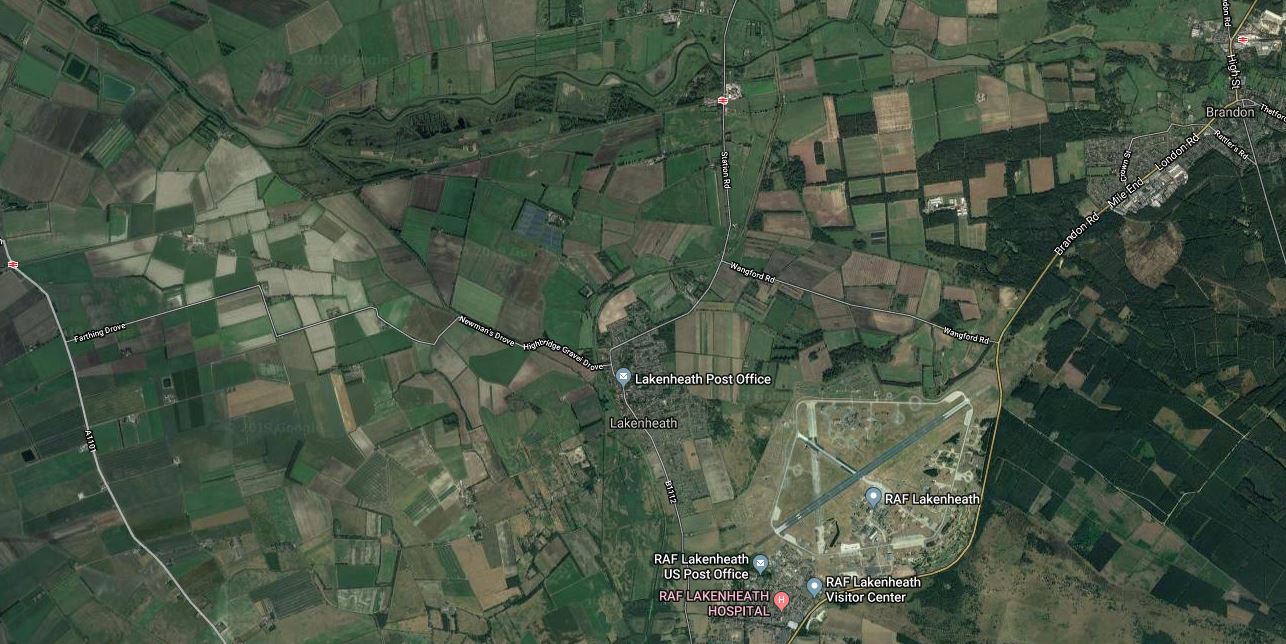
Note.
- RAF Mildenhall is to the South-West of RAF Lakenheath.
- The railway going across the North side of the map through Shippea Hill, Lakenheath and Brandon stations.
- Most of the land is aricultural and very flat.
I wouldn’t be surprised to see substantial development of the railway through the area in the next ten or twenty years.
What Will Greater Anglia Do With Spooner Row Station?
Spooner Row station is another By Request station on the Breckland Line bertween Attleborough and Wymondham stations..
Spooner Row is not a busy station, although as this Google Map shows it is just off the main A11 road.
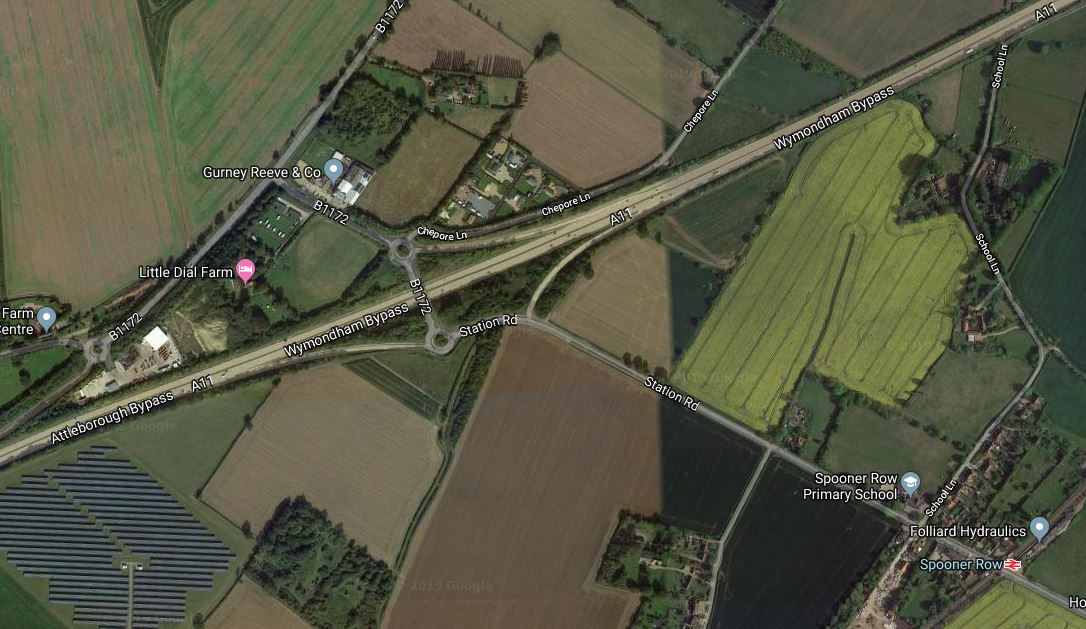
Noyr that Spooner Row station is in the South-East corner of the map.
Perhaps with more services and some increased car parking, it might pick up commuters and shoppers for Cambridge and Norwich it might become a convenient station for local residents travelling to and from Stansted Airport.
Could There Be A Norwich And Dereham Service?
Greater Anglia seems to be working closely with the Mid Norfolk Railway, which runs between Wymondham station on the Breckland Line to the town of Dereham.
- In Aerial Pictures Show New Trains Housed In Mid-Norfolk, I showed how the heritage railway was storing trains for Greater Anglia.
- According to Wikipedia, it would appear that several million pounds were spent to i8mprove the railway and its signalling, so that Greater Anglia’s new trains could be safely stored.
- The line is mainly single track and signalled for an hourly service.
- The yard at Dereham station seems to be regularly used for freight purposes, including loading damaged rolling stock on to road vehicles. It is also used by Network Rail for storage of track plant.
- Train operating companies and heritage railways are increasingly working together for their mutual benefit.
As an InterCity 125 trains has recently been beyond Dereham, I wouldn’t rule out Greater Anglia running a new service between Norwich and Dereham, with a future aim of extension to Fakenham.
Because of the limitations of the track, it could probably only be a limited service.
Can Capacity Be Increased If Needed?
Having lived near Cambridge for nearly thirty years of my life, I believe that there will come a time, when one four-car train between Norwich and Stansted Airport will not be enough.
- Two tph could be run on the route, which is relatively lightly used by other services.
- Longer trains could be created or two three-car trains could be run as a six-car train.
- The current speed limit of 75-90 mph of the Breckland Line, can probably be increased closer to the 100 mph of the Great Eastern Main Line.
Higher speeds would shorten journey times and increase capacity.
Could We See 125 mph Trains From Kings Cross To Kings Lynn And Norwich?
In Call For ETCS On King’s Lynn Route, I talked about putting digital signalling on the Kings Cross and Kings Lynn route and running 125 mph trains via Cambridge.
If the Kings Cross and Kings Lynn route were to be upgraded for faster running, this would also upgrade the proposed Kings Cross and Norwich route as far as Ely.
This would make it very feasible to run the following serrvices using 125 mph trains like Class 800 trains.
- Kings Cross and Kings Lynn
- Kings Cross and Norwich
Because of their speed these trains would help to open up capacity between Hitchin and Kings Cross.
I feel that these 125 mph bi-mode trains could do the trip between Kings Cross and Norwich in ninety minutes, which would match the time via Ipswich.
Do I Have Any Criticism?
My main criticism is that the service between Norwich and Stansted Airport, doesn’t have trains that run early and late enough.
Wil lthe service be timed to better fit the services out of the Airport?
Further Development Of The Breckland Line
This report in the Ely Standard from 2015, is entitled Could Railway Revolution See New Station Built at Ely North?.
These improvements are listed.
- A new four-platform station North of Ely would improve connectivity.
- A service between Kings Cross and Norwich via Cambridge is suggested.
- Improvements in services across East Anglia.
A cost of a billion pounds is mentioned.
125 mph Trains From Kings Cross To Kings Lynn And Norwich
In Call For ETCS On King’s Lynn Route, I talked about putting digital signalling on the Kings Cross and Kings Lynn route and running 125 mph trains via Cambridge.
If the Kings Cross and Kings Lynn route were to be upgraded for faster running, this would also upgrade the proposed Kings Cross and Norwich route as far as Ely.
This would make it very feasible to run the following serrvices using 125 mph trains like five-car Class 800 trains.
- Kings Cross and Kings Lynn
- Kings Cross and Norwich
The two services could even split and join at the proposed Ely North station to make full use of the paths into Kings Cross.
The 125 mph or more operating speed of these trains on the East Coast Main line would help to increase capacity between Hitchin and Kings Cross.
I estimate that these 125 mph bi-mode trains could do the trip between Kings Cross and Norwich in ninety minutes, which would match the time via Ipswich.
Norwich could have the following services.
- Three tph to and from London via Ipswich
- Two tph to and from London via Cambridge
- Two tph to and from Stansted Airport via Cambridge.
It sounds fantastic, but if we are to get travellers out of their cars, they must be given a high quality train service.
Conclusion
The improved Norwich and Stansted Airport service will be the first major improvement brought in by Greater Anglia.
Battery Power Lined Up For ‘755s’
In Issue 888 of Rail Magazine, there is a short article, which is entitled Battery Power Lined Up For ‘755s.‘
This is said.
Class 755s could be fitted with battery power when they undergo their first overhaul.
Stadler built the trains with diesel and electric power.
The Swiss manufacturer believes batteries to be the alternative power source for rail of the future, and is to build tri-mode trains for Transport for Wales, with these entering traffic in 2023.
Rock Rail owns the Greater Anglia fleet. Chief Operating Office Mike Kean told RAIL on September 4 it was possible that when a four-car ‘755/4’ requires an overhaul, one of its four diesel engines will be removed and replaced by a battery.
These are some thoughts.
What Is The Capacity Of A Single Battery?
This picture shows the PowerPack of a Class 755 train.

Note the two ventilated doors on the side. Currently, a diesel engine is behind each!
The PowerPack has four slots,; two on either side of the central corridor.
Each of the slots could take.
- A V8 16-litre Deutz diesel that can produce 478 kW and weighs 1.3 tonnes.
- A battery of a similar physical size.
- Possibly a hydrogen fuel-cell!
I would assume that the battery module is plug-compatible, the same physical size and similar weight to the diesel engine module, as this would make the design and dynamics of the train easier.
A 1.2 tonnes battery would hold around 120 kWh.
Kinetic Energy Of The Train
I will use my standard calculation.
- The basic train weight is 114.3 tonnes.
- If each of the 229 passengers weighs 90 kg with Baggage, bikes and buggies, this gives a passenger weight of 20.34 tonnes.
- This gives a total weight of 134.64 tonnes.
Using Omni’s Kinetic Energy Calculator gives these figures for the Kinetic energy.
- 50 mph – 9.34 kWh
- 60 mph – 13.5 kWh
- 75 mph – 21 kWh
- 90 mph – 30.3 kWh
- 100 mph – 37.4 kWh
- 125 mph – 58.4 kWh
Note.
- Class 755 trains will not be able to run at 125 mph, but I have been told by someone who should know, that the trains have probably been designed, to enable this in other versions of the trains in the future.
- The kinetic energy of the train at typical Greater Anglia service speeds is not very high.
These amounts of kinetic energy can be easily handled in a 120 kWh battery under regenerative braking, to improve the efficiency of the trains.
Range On Battery Power
Assuming that the train uses 3 kWh per vehicle mile (SeeHow Much Power Is Needed To Run A Train At 125 mph?) , this would give.
- A four-car train a range of ten miles.
- A three-car train a range of 13.3 miles.
This probably isn’t long enough given that these are Greater Anglia’s electrification gaps.
- Ely and Peterborough – 30 miles
- Ipswich and Cambridge – 41 miles
- Ipswich and Ely – 37 miles
- Ipswich and Felixstowe – 14 miles
- Ipswich and Lowestoft – 45 miles
- Marks Tey and Sudbury – 12 miles
- Norwich and Ely – 50 miles
- Norwich and Great Yarmouth – 18 miles
- Norwich and Lowestoft – 20 miles
- Norwich and Sheringham – 30 miles
It would appear that more battery capacity is needed, as the required range is around sixty miles on some routes.
In the July 2018 Edition of Modern Railways, there is an article entitled KeolisAmey Wins Welsh Franchise.
This is said about the Stadler Tri-Mode Flirts on the South Wales Metro.
The units will be able to run for 40 miles between charging, thanks to their three large batteries.
So does this mean that these Flirts have just one Deutz diesel engine of 478 kW and three batteries in the four slots of the power-pack?
Assuming that the Flirts use 3 kWh per vehicle mile, this gives these ranges.
- A four-car train a range of thirty miles.
- A three-car train a range of forty miles.
These ranges might give enough range for many the of East Anglian routes. Improvements in train efficiency and battery storage would only increase these ranges.
Class 755 Trains In Electric Mode
Being able to do this, is important, as if the Class 755 trains are to use battery power, then they will need to use 25 KVAC overhead electrification in the various electric islands around East Anglia to charge the batteries.
The article in Issue 888 of Rail Magazine, says this about running in electric mode.
GA Joint Project Manage Steve Mitchell told RAIL that the ‘755s’ can already operate on electric power between Norwich and London, but they must carry out Electro Magnetic Current testing on the Ely-Cambridge route.
When that is complete, they will operate Notwich-Ely in diesel mode, and Ely-Cambridge in electric.
At least it appears that the Northern bay platforms at Cambridge are electrified.
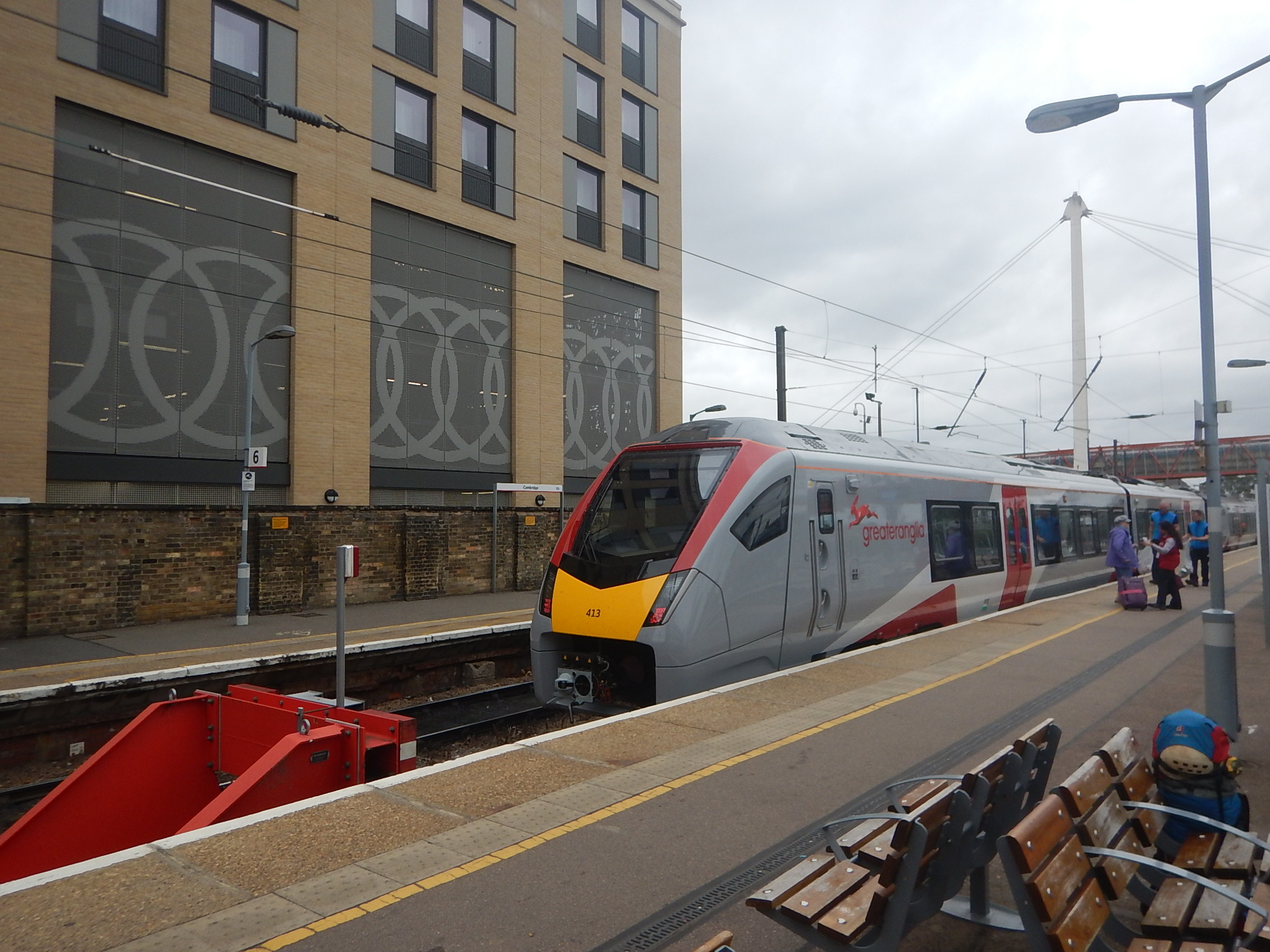
This would probably mean that no new infrastructure is needed.
As both Ipswich and Norwich stations are fully electrified, charging the batteries on hourly shuttles between the three stations, wouldn’t be a problem, if and when the trains are fitted with enough battery capacity to bridge the fifty mile gaps in the electrification on the routes.
Three-Car Trains And Batteries
The two short Southern routes; Coclester Town and Sudbury and Ipswich and Felixstowe will probably be run by three-car Class 755 trains, which have two diesel engines and two spare slots in the PowerPack.
Battery modules in both spare slots would give a twenty-seven mile range, which could enable the following.
- Running a return trip between Marks Tey and Sudbury, after charging the batteries on the main line between Colchester Town and Marks Tey.
- Running a return trip between Ipswich and Felixstowe, provided enough charge can be taken on at Ipswich.
The article in Issue 888 of Rail Magazine, also says this about the new Class 755 trains entering service.
The last line to receive them will be Sudbury-Marks Tey, will exclusively be operated by three-car Class 755/3s due to infrastructure restraints on the branch. No date has been given.
It should also be noted that the three-car trains are going to be the last to be delivered.
I feel that Stadler and Greater Anglia are following a cautious and very professional route.
Consider.
- They introduced the new trains on the Wherry Lines, which are close to the Crown Point Depot.
- Services between Norwich and Sheringham and Norwich and Cambridge were introduced next.
- All the initial services have used four-car trains
- Greater Anglia held on to the standby train of two Class 37 locomotives and Mark 2 coaches until last week.
- They have stated that training of Ipswich drivers is starting, ahead of services from the town to Cambridge, Felixstowe, Lowestoft and Peterborough.
- All the Ipswich cervices can be run using four-car trains.
- As I said earlier, the only service that needs a three-car train is Sudbury and Marks Tey.
- A three-car train could probably be thoroughly tested on one of the Norwich routes before deplayment to Sudbury.
- It should also be noted that a three-car train is only a four-car train with two less diesel engines and one less trailer car.
So far everything seems to have gone very well, with no adverse reports in the media.
Stadler have orders for further bi-mode trains for South Wales and other places in Europe. At least one of these orders, that for the South Wales Metro, includes a number of diesel/electric/battery versions.
Given the problems, that Bombardier and others have had with getting the complex software of these trains to work correctly, if I was Stadler’s Project Manager on multi-mode Flirts, I would be testing the trains and their software morning, noon and night!
So could the planned later arrival of the three-car Class 755 trains, be partly to enable Stadler to fully investigate the characteristics of a multi-mode Flirt?
After all, Greater Anglia only need a couple of three-car trains to start the service between Sudbury and Marks Tey, of the fourteen on order. And they have twenty-four four-car trains on order for the other routes.
They are also replacing twenty-four assorted diesel multiple units with thirty-eight longer new bi-mode multiple units.
I do wonder, if there is a cunning plan being hatched between Greater Anglia and Stadler.
- Stadler finalises the design and the software for a PowerPack, that contains both diesel and battery modules.
- Stadler thoroughly tests the design using a Greater Anglia three-car train in Switzerland.
- Stadler shows the concept to other prospective customers.
- Greater Anglia certifies the three-car Class 755 bi-mode train in the UK.
- Greater Anglia runs three-car 755 trains between Colchester Town and Sudbury, using the electrification between Marks Tey and Colchester Town, as they have planned for some time.
- When ready, Class 755 trains with batteries are introduced between Sudbury and Colchester Town.
Greater Anglia would be running the first battery-electric service using bi-mode battery-electric trains in the UK.
Class 755 Trains Are Now Serving Cambridge
Greater Anglia are now running Class 755 trains on services between Cambridge and Norwich.
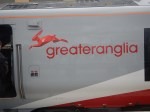
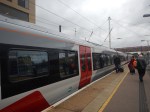


The first picture shows Greater Anglia’s new logo of a red hare.
- To my knowledge it is the only logo of a UK train company, that is not just a neutral graphic.
- Greater Anglia use it on posters in other forms.
I quite like it, as if any animal sums up speed in East Anglia it is the brown hare.

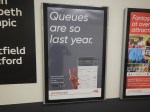

These pictures show some of Greater Anglia’s posters.
.
‘Digital Twin’ To Support More Robust Timetable Planning
The title of this post is the same as that of this article on Railway Gazette.
When I saw the title of this post, I was surprised that it was a newsworthy story.
I have been doing scheduling of people, machines and other resources since the late 1960s and creating print outs and graphs to help people to manage businesses from the early 1970s.
In so many cases, I’ve found digital models have given a great insight into the interactions between factors affecting the system.
So I would have expected train companies to all have a digital twin from at least 1980, especially as I know BT and other phone companies had digital models of their networks by that time.
If they don’t have a digital model of their network, how do train companies plan their timetables?
By trial and error!
Or do they start with marketing ideas like four trains per hour and then fit the timetable together like a jigsaw?
 The Anonymous Widower