Canal Water To Heat Some Of Liverpool’s Most Famous Buildings In Hi-Tech Carbon-Cutting Scheme
The title of this post is the same as that of this press release from Liverpool City Region.
These five bullet-points act as subheadings.
- Energy generated from Leeds and Liverpool canal by one of the UK’s largest water source heat pumps
- Announcement comes as Mersey Heat Energy Centre officially opens
- Scheme to connect Georges Dock, Cunard and the Museum of Liverpool buildings to Mersey Heat Network
- Joint project between Combined Authority, Liverpool City Council and National Museums Liverpool
- Key part of Combined Authority plan to reach net zero by 2035
These introductory paragraphs add more detail.
Three major public buildings on Liverpool’s waterfront are to slash carbon emissions by joining a heat network driven by energy from canal water.
Under the plan, an extended pipeline will connect Georges Dock building, the Cunard building, and the Museum of Liverpool, part of National Museums Liverpool (NML), to the Mersey Heat network.
The newly opened Mersey Heat Energy Centre is already supplying the Liverpool Waters site, the Titanic Hotel and the Tobacco Warehouse apartments.
It uses one of the UK’s largest water source heat pumps to extract energy from the Leeds and Liverpool Canal to power a network of heating pipes.
The project is the latest in the Liverpool City Region’s five-year carbon action plan and journey to reach net zero. The Combined Authority has recently secured an additional £35m to decarbonise dozens of other public buildings from the Department of Energy Security and Net Zero.
This map of the Liverpool Waterfront shows the canal and some of the buildings mentioned.
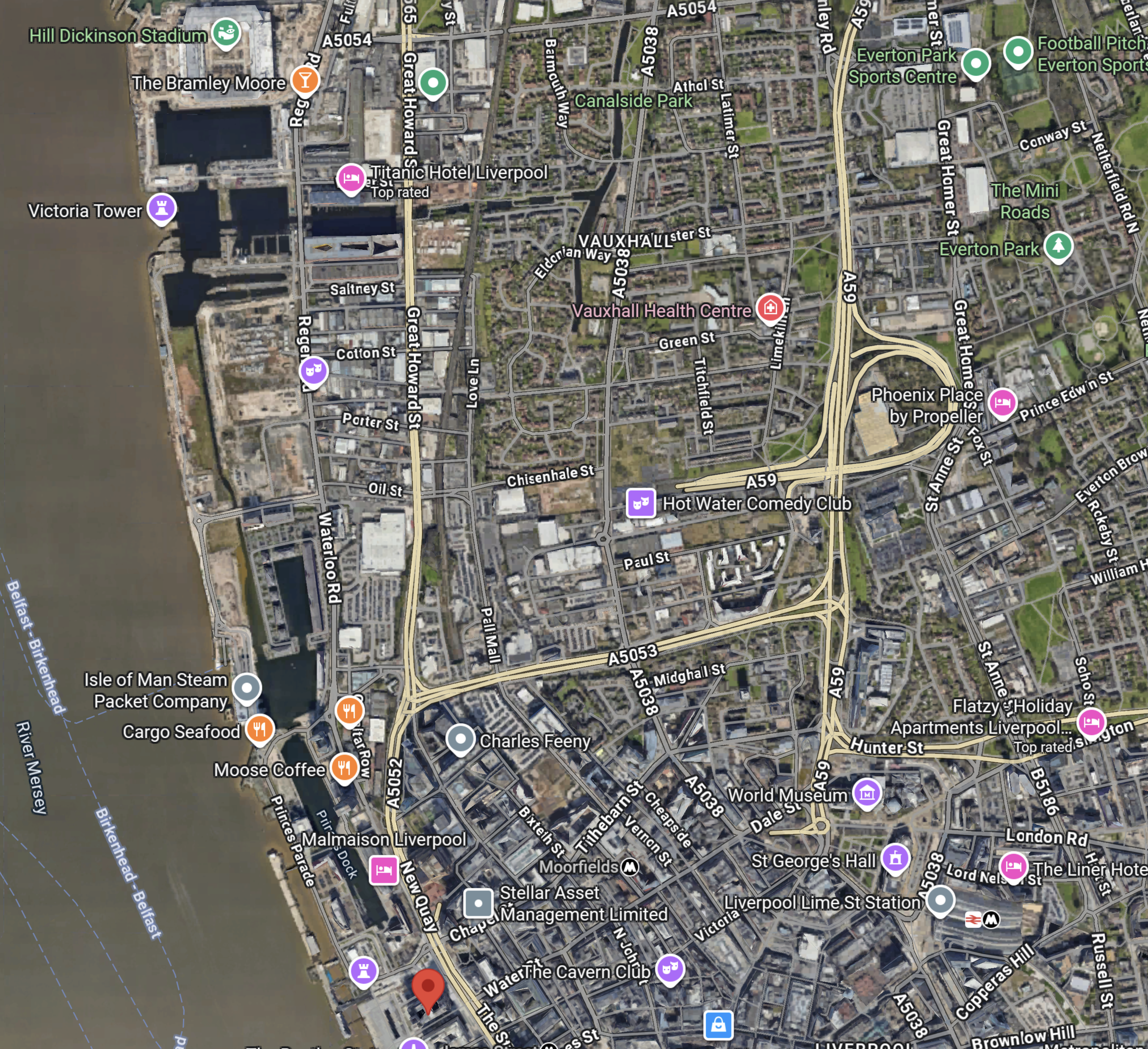
Note.
- In the top-left corner is Everton’s new Hill-Dickenson Stadium, which at the time of this map was under construction.
- The pink arrow to its right indicates the Titantic Hotel.
- The Leeds and Liverpool canal passes on the South side of the hotel.
- On the other bank of the canal is the Tobacco Warehouse.
- The canal goes East and then turns North before going all the way to Leeds. The Wikipedia entry gives full details of the canal.
- From the Titanic Hotel, the Leeds and Liverpool Canal also turns South and boats can go along Liverpool’s famous Waterfront to Canning Dock, in front of the Tate Liverpool.
- The red arrow marks the Liver Building.
- Georges Dock building, the Cunard building, and the Museum of Liverpool are just to the South the Liver Building.
- To the East of the Liver building, there is Liverpool City Centre, with beyond it Liverpool Lime Street station, with another collection of important buildings including St. George’s Hall, the Picton Library, World Museum and the Walker Art Gallery.
The Combined Authority will not have a shortage of buildings to decarbonise with the £35m from the Department of Energy Security and Net Zero.
These are my thoughts.
What Is A Water Source Heat Pump?
I asked Google AI this question and received this answer.
A water source heat pump (WSHP) is a highly efficient, low-carbon renewable energy system that extracts heat from a nearby water source like a lake, river, or canal to provide heating and hot water for a building, and can also be used for cooling. It works by using electricity to transfer this thermal energy into the building’s heating system, offering a more efficient alternative to traditional boilers and reducing energy bills. There are two main types: closed-loop systems, which circulate a fluid through pipes submerged in the water, and open-loop systems, which directly pump and then discharge the water.
Is Mersey Heat Energy Centre A Closed Or Open-Loop Water Source Heat Pump?
I asked Google AI this question and received this answer.
The Mersey Energy Heat Centre uses an open-loop water source heat pump system. It abstracts water from the Leeds and Liverpool Canal, extracts heat from it, and then returns the water back to the dock system.
As the Leeds and Liverpool Canal is 127 miles long, and there appears from the map to be a lot of water in the docks at the Liverpool end, I would expect that Liverpool will have more than enough water to extract heat from.
Where Exactly Is The Mersey Heat Energy Centre?
In this article on Place North West, which is entitled Work Begins On Peel’s Mersey Heat Energy Centre, has this image, which is labelled as the Mersey Heat Energy Centre.
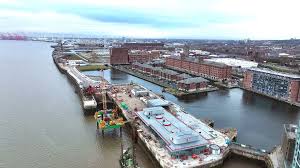
Note the large building in the foreground with the circular objects on the roof. Could these be fans or vents?
This Google Map shows the area.
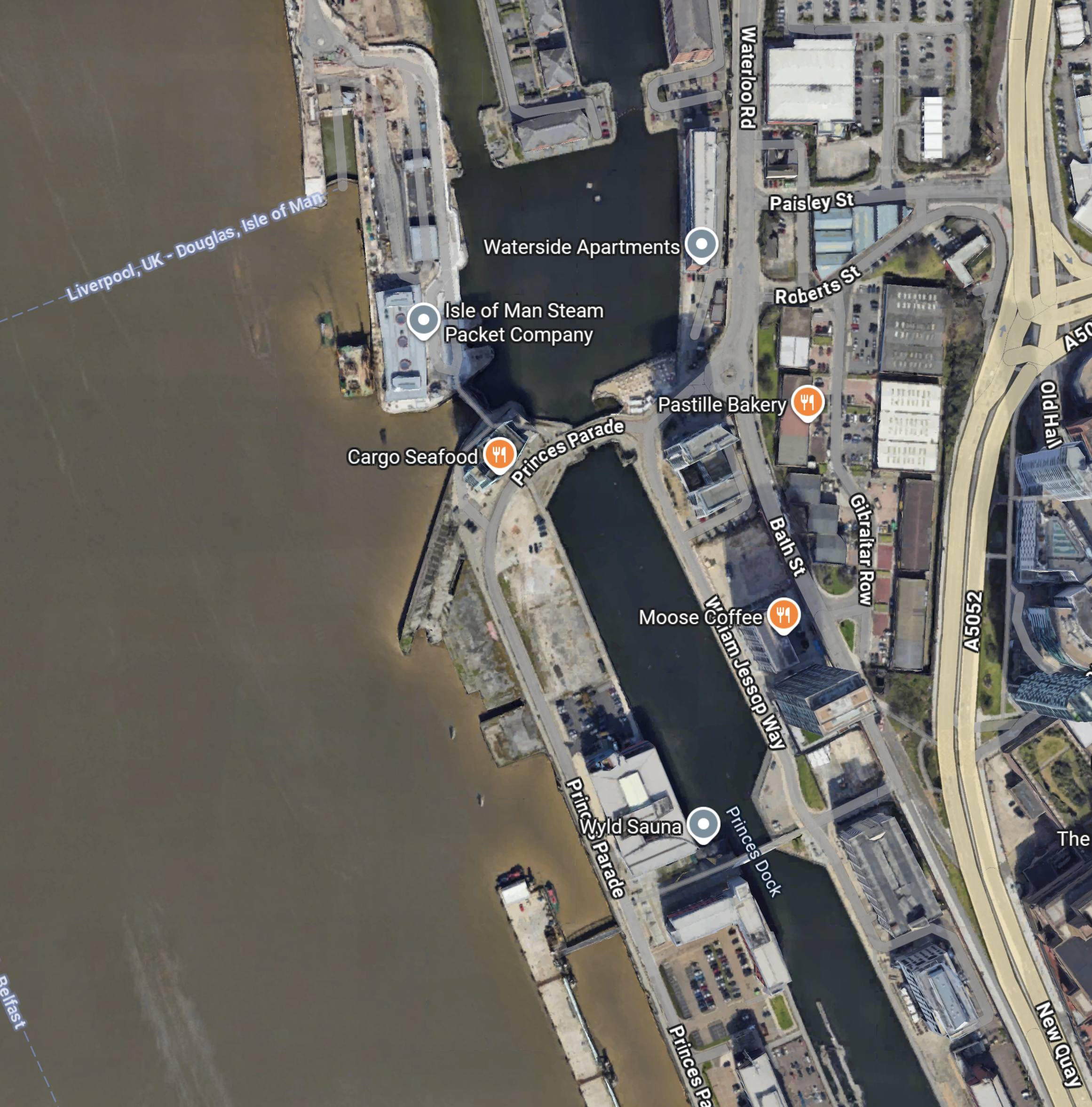
Note.
- The two docks at the top of the map can be picked out in the image.
- The main breakwater on the left, which is marked Isle of Man Steam Packet Company, looks very similar to the one shown in the image.
- The bridge between the two docks on the left appears to be the same in both map and image.
I am fairly sure, that the large building on the breakwater with the three circles on the roof, is the Mersey Heat Energy Centre.
It certainly looks to be a building, that could provide a substantial amount of heat and power .
What Is The Output Of The Mersey Heat And Energy Centre?
I asked Google AI this question and received this answer.
The Mersey Heat and Energy Centre produces low-carbon heat for up to 6,700 homes and 1.3 million square feet of commercial space, aiming to deliver around 20GWh of heat per year. The project is also planned to expand to supply around 45GWh annually. This heat is delivered to buildings for their heating and hot water needs through the Mersey Heat network.
This article on Place North West, also has this similar answer.
Led by district heat network specialist Ener-Vate, the Mersey Heat Energy Centre will feature two 3MW water source heat pumps that would work on an ‘open loop’ system to take heat from water from the Leeds-Liverpool canal. This heat would be used to warm surrounding homes and businesses within six kilometres.
Plans form the first phase of Peel NRE’s Mersey Heat network. The initial project could supply 20GWh of heat every year, with planning permission secured to expand to supply around 45GWh – the equivalent of supplying heating and hot water to 17,000 homes.
It looks like we’re getting similar answers from different sources.
Does the Merseyside Area Have Enough Green Electricity To Power A Large Water Source Heat Pump?
In Could Liverpool Develop A Massive Zero-Carbon Data Centre?, I calculated the operational and planned offshore wind power in Liverpool Bay and got these results.
- 2509 MW has been commissioned.
- 3980 MW is being planned.
That is a total of 6489 MW or about twice the output of Hinckley Point C nuclear power station.
This map shows the existing wind farms in the sea between Liverpool, Lancashire and the Isle of Man.
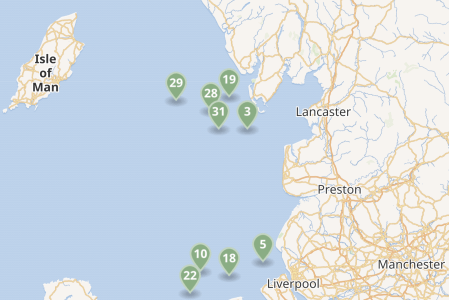
Note.
- Each green arrow is a wind farm.
- There is the 2452 MW Heysham nuclear power complex near Lancaster.
- The Western HVDC Link is a 2250 MW connection between Hunterston in Western Scotland near Glasgow and Connah’s Quay on the Wirral.
- I also suspect more space in Liverpool Bay could be developed with wind farms.
Spinal Tap turned the power up to 11, Liverpool, being Liverpool, they have enough power to go to at least sixteen.
Will Merseyside Have Lots Of Data Centres?
Consider.
- It has the power.
- It has the water.
- The locals speak a form of English.
- Merseyside will be two hours from London by train.
- There are two Premier League football teams.
- The golf courses are good.
- It is a city that is famous all over the world.
I am sure the number of data centres will grow.
Bruce Grove Station Restored To 1872 Glory
The title of this post, is the same as that of this article on the BBC.
This is the sub-heading.
Renovations at Tottenham’s Bruce Grove Station have breathed life into its disused rooms and paid homage to its Victorian history.
These three paragraphs outline the project.
Following structural repairs, the London Overground station now has a new community space and waiting room.
Haringey Council has worked in partnership with others to improve the station and its accessibility.
Work was completed in December 2023 and arrangements for using the community space will be finalised soon.
These are pictures I took this morning.


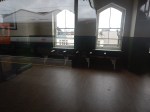
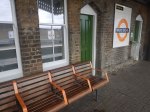
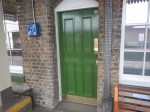

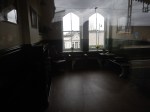
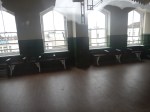
Note.
- The work is to a very high standard.
- Two rooms have been refurbished.
Other stations probably have rooms like these, that could be refurbished.
London Underground: Platform Phone Boxes Given Listed Status
The title of this post, is the same as that of this article on the BBC.
This is the sub-heading.
Four classic phone boxes on London Underground platforms have been Grade II-listed, Historic England has announced.
This is the first paragraph.
The K8 model, which came after the traditional red-panelled box, was designed to have a “modern and minimalist” appearance.
These are the four boxes.
Chalfont & Latimer Station
This box is at Chalfont & Latimer station.
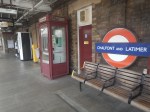
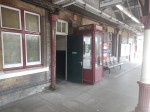
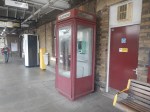

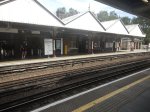
Why is it maroon?
Chorleywood Station
This box is at Chorleywood station
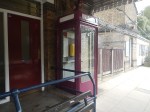
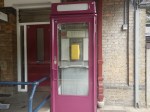
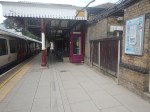
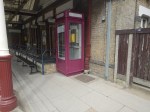
It is maroon like the nearby one at Chalfont & Latimer station. Is it maroon for Metropolitan?
This box is next to a defibrillator. Could the K8 phone boxes be used to protect the defibrillators from the elements?
High Street Kensington Station
The box is on the platform at High Street Kensington station.
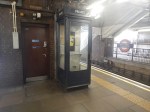
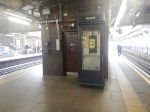

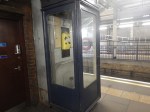
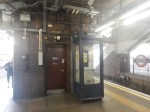
Why is it in dark blue? Dark blue is not Circle or District.
Northwick Park Station
The box is on the island platform at Northwick Park station.

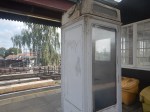
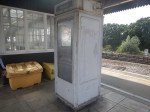


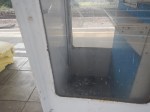

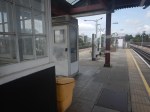
I think it needs a bit of tender loving care, rather than listing.
Findlater’s Corner At London Bridge – 11th February 2023
This restoration was shown on the BBC London news in a story, which was entitled London Bridge: Derelict Railway Arches Restored To Past Glory, and I thought it was worth a visit.






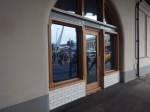


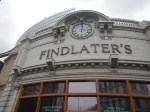
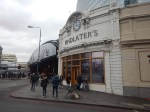
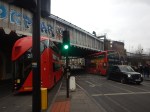
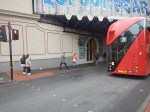



Note.
- It is a fine restoration.
- I shall be interested to see, the tenants it attracts.
- The railway bridge needs an appropriate repainting, to eliminate the graffiti.
I think, that with the right tenants, the tea room could be a gem.
The BBC article says this about the tea room.
The project team also made a surprise discovery when removing a section of plaster from a wall to another of the arches; a glass mosaic for an Express Dairy Tea Room dating back to the early 1900s.
Railway stations were a popular location for tea rooms because at the time they had access to the freshest milk, often transported from farms on trains before being sent to urban milk dairies.
“The tea rooms were one of the first places that ladies, who couldn’t necessarily go and eat in bars or eat in chop houses, could come, get together as single women and meet their friends, so this is perhaps an important part of the emancipation of urban woman in London”, said Mr O’Looney.
Mr. O’Looney is the architect of this project, who is the gloriously named; Benedict O’Looney.
He featured in this blog before in It’s Not April The First, where I wrote about his restoration of the waiting room at Pekham Rye station.
The Grade II Listed Next-Train Indicators At Earl’s Court Station Are Back
This page on Rail News has a section, which is entitled Heritage Train Indicators Return To Service, where this is said.
Vintage train describers have returned to the platforms of Earl’s Court District Line station, which is Grade II listed. First installed in 1905 when London’s District Railway was electrified, they have been renovated and given replica destination name plates, which are highlighted as required by an illuminated arrow. The indicators had been switched off while they were connected to a new signalling system. Modern information panels showing the destination and the number of minutes before the next train is due from each of the four platforms have also been installed.
I went Earl’s Court station to have a look this morning and took these pictures.
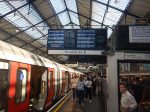
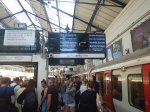


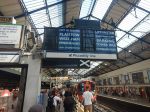
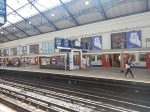
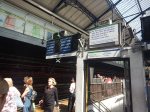
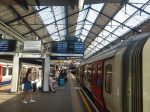
They all seemed to working as they should.
Earl’s Court station is a Grade II listed London Underground station and Wikipedia says this about these indicators.
On each platform is an old-fashioned “next train” indicator board which had various routes shown, of which one is usually highlighted by an arrow to indicate that this is the route of the next train. As of March 2022, these have been temporarily disabled while signalling is upgraded to CBTC signalling, as part of the 4LM improvement works to the subsurface lines, although are expected to return in June the same year. These have not been replaced by modern electronic equivalents as they are Grade II listed.
There can’t be many next train indicators in the world, that are listed or given the local equivalent.
This does take me all back to the 1960s, when for two summers, I worked in the Electronics Laboratory at a company called Enfield Rolling Mills. The Electronics Laboratory developed control systems for the many machines in the factory. At that time, a lot of the work involved replacing relays and electronic valves with then-modern transistors. I learned a lot about industry in those two summers and it wasn’t all about automation and electronics.
Would a fifteen-year-old be allowed to do a job like that, these days?
I suspect that on that Earl’s Court indicator board, there is some interesting electronics connecting it to the CBTC signalling.
Travelling Along Peak Rail
Whilst at Matlock, I took a trip on Peak Rail to Rowsley South station.
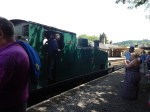























The heritage line has a very professional feeling.
It makes me think that their aim to expand the railway to Bakewell, is feasible on an engineering basis, given enough money.
But it is the politics and other interests.
In Connecting The Powerhouses, I said this.
But there are possible problems.
- The A6 has to be crossed.
- One local landowner didn’t allow consultants access to the line for an inspection.
- Severn Trent Water are digging a large pipe into the track-bed.
It sounds to me that everybody should find a good hostelry and thrash out a comprehensive co-operation agreement on the backs of engineering envelopes, fuelled by some excellent real ale.
The landowner lives between the current end of the line and Bakewell.
After my visit, I still feel optimistic, that the route can be restored.
It was talking to several local people, both on and off the Peak Rail train, who recalled times when they they would use the line for days out in Manchester, Derby and Nottingham. One guy had even used the line to go to Scotland with a change in Manchester.
Tornado Chasing
I’m going Tornado chasing this morning. Not of the weather variety, but the steam engine, will be passing through North London around ten o’clock this morning, all being well. It’s hauling a Christmas shopping trip from Ipswich to Bath and should pass West Hampstead station at 10:00, where it’s stopping to pick up passengers.
It returns at 21:00 tonight.
Margate’s Roller Coaster
According to news reports, it’s now on English Heritage’s At Risk Register. Read about it in the Telegraph here.
It’s funny, but it’s the only roller coaster I’ve ever been on.
 The Anonymous Widower