A Trip To Highams Park Station
I went to Highams Park station, as the Internet rumoured, that there could be gluten-free jam doughnuts near the station, at a shop called the Community Larder.
I took these pictures.

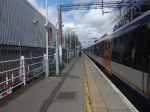

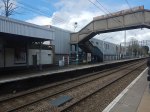
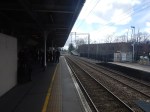
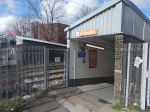
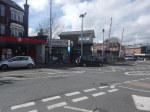



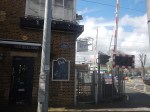
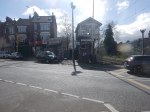
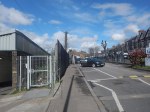
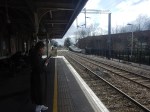
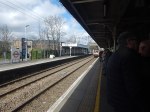
Note.
- The restored signal box, that I talked about in An Unusual Office Property has been used as a creperie. Unfortunately, it appears to have gone out of business.
- The Community Larder had a good selection of cakes, including some that were gluten-free, but no gluten-free jam doughnuts, as they are delivered on Saturdays.
- Crossing the roads by the level crossing is a nightmare.
- The station needs a step-free bridge.
The 3D Google Map shows the level crossing looking from the East.
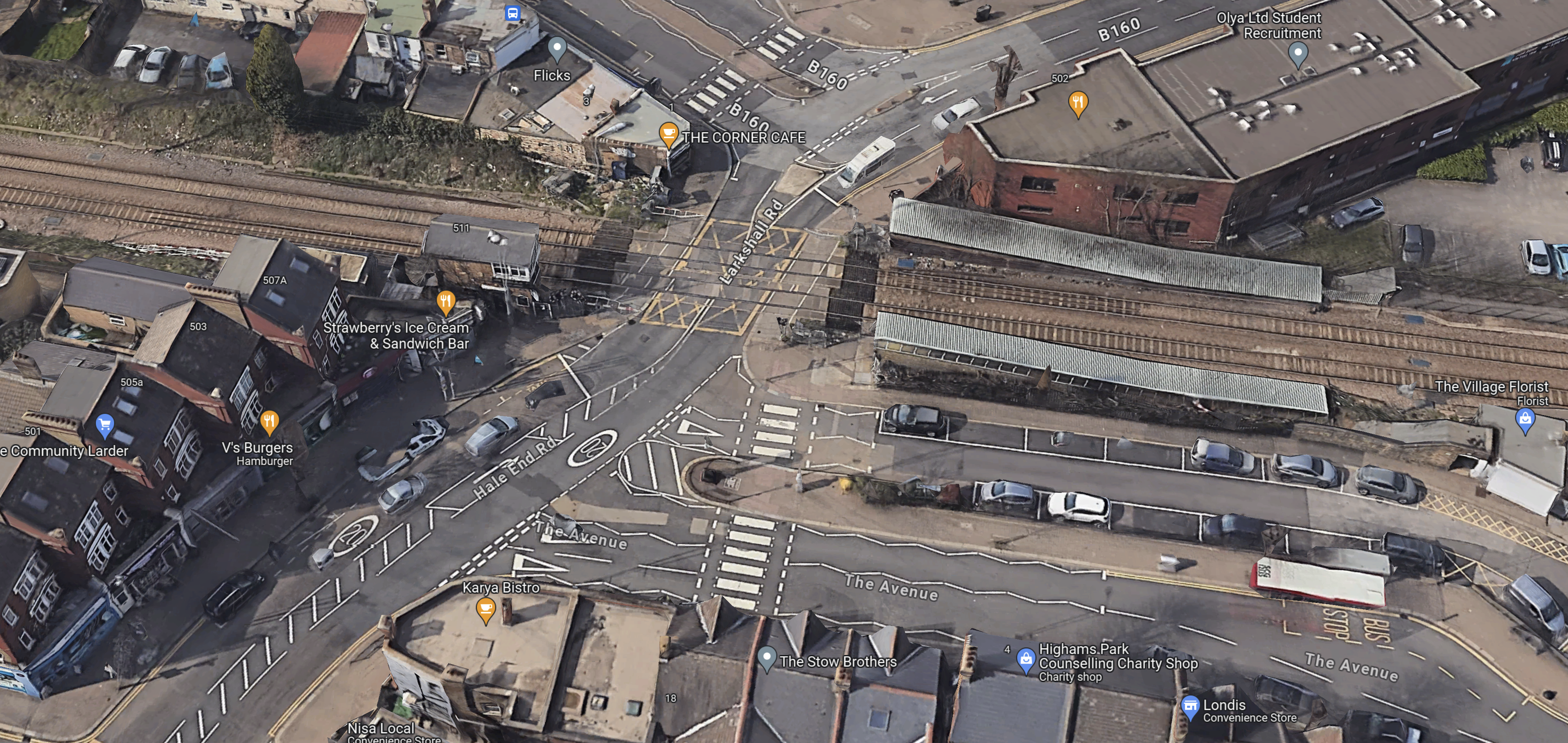
Note.
- The railway runs North-South through the station, with South to the left.
- The signal box is on the South-East corner of the level crossing.
- Hale End Road runs East from the level crossing.
- The Community Larder is on the South side of Hale End Road.
Sorting the road traffic out will be difficult.
Extending the Elizabeth Line – Stratford To Walthamstow and Chingford
A lot of people in Walthamstow and Chingford would like a direct rail connection to Stratford with its shopping, sporting, entertainment and employment opportunities.
The Hall Farm Curve used to provide this connection, but it was removed in 1968, despite having been electrified in 1960.
This map from cartometro.com shows the curve.

Note.
- The Chingford branch line is shown in orange.
- The triple-track Stratford branch of the West Anglia Main Line crosses the Chingford branch line at right angles.
- Lea Bridge station reopened in 2016.
It has been stated that the Hall Farm Curve would be reinstated as an electrified single track.
There would probably be a need for a crossover to the North of the former Hall Farm junction to enable trains from Lea Bridge to get to the Chingford-bound track.
The Hall Farm Curve would also give access to Elizabeth Line and Greater Anglia services at Stratford. But it may be that when the Elizabeth Line opens fully in November, travellers get used to going into Liverpool Street and changing there.
Services Between Stratford and Chingford Via Walthamstow
Providing this service might be difficult, but not impossible.
- Trains could use the High Meads Loop at Stratford.
- Digital signalling may allow more trains to be squeezed in.
- Chingford could certainly handle eight trains per hour (tph)
But there is always the problem of the level crossing at Highams Park station.
Changing Between The Elizabeth And Chingford Branch Lines At Liverpool Street Station
Consider.
- At present Liverpool Street station on the Lizzie Line has sixteen trains per hour (tph).
- Eight tph go to both Eastern termini at Abbey Wood and Shenfield.
- In the West two tph go to each of Heathrow Terminal 4, Heathrow Terminal 5, Maidenhead and Reading, with the other eight tph reversing at Paddington.
- If you travel in the Eastern end of a Lizzie Line train, you should enter Liverpool Street station opposite to where all London Overground services including those to and from Chingford terminate in the station.
- The walking route between the Elizabeth And Chingford Branch Lines At Liverpool Street is step-free.
Some passengers will use this route to places like Walthamstow Central, but others moan, that there is no direct connection between the Victoria and Lizzie Lines.
Stations Without Step-Free Access On The Chingford Branch Line
These stations on the Chingford Branch Line do not have full step-free access between train and street.
- Bethnal Green
- Cambridge Heath
- London Fields
- Hackney Downs
- Clapton
- St. James Street
- Walthamstow Central
- Wood Street
Only Hackney Downs and Walthamstow Central have been mentioned with respect to installing some form of step-free access.
Increasing Capacity Between Liverpool Street And Chingford
The Chingford Branch Line can handle pairs of four-car trains and running these all day, would surely be the best way to increase capacity.
Conclusion
If money was no object, the Chingford Branch Line could be improved to make it a much better feeder line for the Elizabeth Line.
I also have a feeling, that a lot of people living in North-East London will switch their travelling from the Victoria Line to the Chingford Branch Line and the Lizzie Line.
London Bus Crash: Children Injured As Double-Decker Hits Shop
The title of this post, is the same as that of this article on the BBC.
These are the first three paragraphs.
Three children and two adults have been taken to hospital after a double-decker bus hit a shop in north-east London.
The crash happened on Selwyn Avenue, Highams Park, at about 08:20 GMT, the Metropolitan Police said.
London Ambulance Service (LAS) said 14 other people were treated at the scene, near Highams Park Overground station, but did not need hospital treatment.
The driver is quoted as saying, that his brakes failed.
This Google Map shows the route of the 212 bus route through Highams Park.
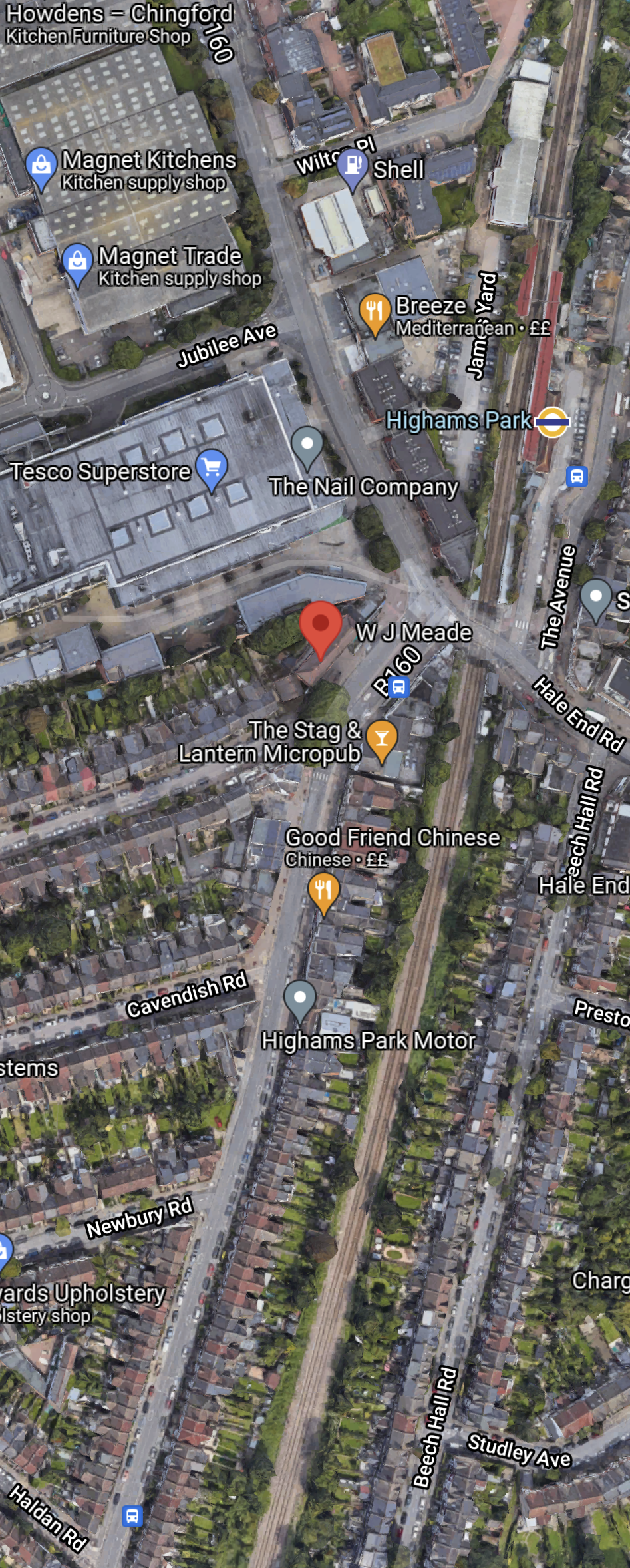
Note.
- The red arrow in the middle of the map shows the location of the crash.
- The bus route runs North-South on the map to the West of the railway line.
The pictures in the article show that the bus was going to Chingford, which is in the North.
In May las year, I took a ride on a 212 bus,which I described in A Trip On An Electric Double Deck Bus On Route 212 Between Chingford And St. James Street Stations.
This is an extract from that post.
I know someone, who used to manage this route and they called it a basket case.
I can certainly understand that.
- The route is narrow in places with cars parked on both sides of the road. This must delay services.
- I was lucky with the level crossing at Highams Park station, but at busy times it could be a nightmare.
Will the new Class 710 trains on the parallel Chingford Branch Line improve matters, by attracting passengers away from their cars in the area and the buses?
There has also been talk of a new station at Chingford Hatch, which could also be served by the 212 bus.
I can’t help feeling that the level crossing was something to do with the crash. Especially as a train went through just before the crash.
Interestingly, a few months ago, I used a black cab driven by a guy, who lives near Highams Park station. He felt the level crossing could be closed and drivers could use other routes. He also said, that since the new trains had started running, more were using the trains.
Perhaps improving the railway, with a couple of new stations, would also take the pressure of the buses.
A Trip On An Electric Double Deck Bus On Route 212 Between Chingford And St. James Street Stations
I took these pictures on the route between Chingford and St. James Street stations.


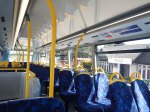

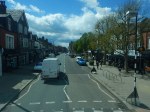
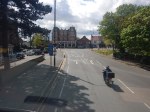
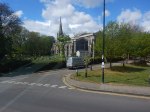



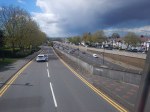
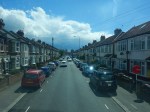
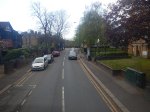


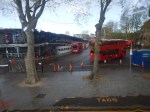
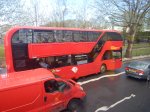
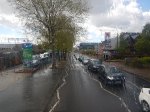


Note.
- The bus is an Alexander Dennis Enviro 400 EV, which is built on on BYD Auto‘s K10 chassis, powertrain and batteries.
- Wikipedia quotes a performance of 303 km service range from a 320kWh lithium iron phosphate battery and two 150 kW motors.
- This range would be comparable with a diesel bus, that typically does 200 miles per day.
- It certainly handled the route from Chingford well. But then it was very much downhill, so it got help from Newton’s friend.
- I rode on the top deck up the front and the ride was as I’d expect from a quality busin the UK.
As there wasn’t any sign of charging equipment at either end of the route, I suspect that the route is well-suited for the buses.
I know someone, who used to manage this route and they called it a basket case.
I can certainly understand that.
- The route is narrow in places with cars parked on both sides of the road. This must delay services.
- I was lucky with the level crossing at Highams Park station, but at busy times it could be a nightmare.
Will the new Class 710 trains on the parallel Chingford Branch Line improve matters, by attracting passengers away from their cars in the area and the buses?
There has also been talk of a new station at Chingford Hatch, which could also be served by the 212 bus.
Could Electrification Be Removed From The Chingford Branch Line?
This article in Rail Engineer also quotes Jon Shaw of Bombardier on onboard energy storage in the new Aventra trains, like the Class 710 trains that will work the Chingford Branch Line.
As part of these discussions, another need was identified. Aventra will be an electric train, but how would it serve stations set off the electrified network? Would a diesel version be needed as well?
So plans were made for an Aventra that could run away from the wires, using batteries or other forms of energy storage. “We call it an independently powered EMU, but it’s effectively an EMU that you could put the pantograph down and it will run on the energy storage to a point say 50 miles away. There it can recharge by putting the pantograph back up briefly in a terminus before it comes back.
I believe that once the concept of onboard energy storage is accepted, that Network Rail and operators, will question whether there is a need for so much electrification.
In a few years time, all trains, except perhaps a few engineering ones, on the Chingford Branch Line North of St. James station will be new Class 710 trains with the following characteristics.
- Enough onboard energy storage to handle regenerative braking and handle the twenty mile out-and-back trip on the branch.
- By using onboard energy storage, the trains have a remote wake-up facility, as discussed in Do Bombardier Aventras Have Remote Wake-Up?.
- The ability to raise and lower a pantograph quickly.
So would it be possible to remove electrification, North of Clapton Junction.
This map from carto.metro.free.fr shows the area of Coppermill junction, with the Chingford Branch Line shown conveniently in orange.

Coppermill Junction
I will now list the advantages of removing the electrification between Clapton Junction and Chingford.
Maintaining The Overhead Wires
Overhead wires get damaged, vandalised and stolen at a surprisingly high frequency.
Network Rail would love to see the wires come down.
The only objectors would be the thieves, who nick the wires to sell.
The Sidings At Chingford Could Be Without Electrification
As all the trains stored there would have their own onboard energy storage, they would move in and out under their own power.
The Chingford sidings could thus be without electrification.
This would.
- Reduce maintenance costs for the sidings.
- Enable track layouts to be changed without changing the electrification.
- Increase safety levels for everybody working in the sidings.
The only electrification needed at Chingford might be a short stretch of overhead wire to top up trains low on electricity.
All Height Restrictions Could Be Removed At The Highams Park Level Crossing
After the recent accident on the M20, reported in this story on the BBC,, which is entitled M20 motorway shut after lorry crash causes bridge collapse, I don’t think it is wise to underestimate the stupidity of some drivers.
So if there were no overhead wires at the Highams Park level crossing, it might avoid a serious incident.
Easing Station Rebuilding and Building
Wood Street station needs to be rebuilt to make the station step-free and it would be much easier and less disruptive to train services, if there were no overhead wires to get in the way.
If any new stations are added to the line, then the cost of building must be more affordable, if there are no overhead wires to get in the way.
Less Visual and Noise Intrusion
Obviously, removal of overhead wires will reduce the visual intrusion.
But, it will also reduce the noise, as overhead wires are a source of noise from electric trains.
Note too, that as the new trains will use regenerative braking at most times, there will be much less noise from wheel-brakes.
A Safer Railway
There is no doubt, that a railway without electrification is a safer railway, as there is no electricity, except for points and signals.
Conclusion
It would be advantageous for several reasons if electrification could be removed from the Chingford Branch Line.
Related Posts
Improving The Chingford Branch Line
Could Reversing Sidings Be Used On The Chingford Branch Line?
Could The Hall Farm Curve Be Built Without Electrification?
New Stations On The Chingford Branch Line
Rumours Of Curves In Walthamstow
Will Walthamstow Central Station On The Victoria Line Be Expanded?
Improving The Chingford Branch Line
The Chingford Branch Line has a four trains per hour (tph) service between Liverpool Street and Chingford via Hackney Downs and Walthamstow Central stations.
Those that I know who live in the area, have a few simple wishes.
- New trains with wi-fi and other passenger-friendly features.
- More trains to improve services and take the pressure off the Victoria Line.
- A service from Chingford and Walthamstow to Stratford and Crossrail.
- Perhaps some new stations.
- Step-free access at St. James Street and Wood Street stations.
The following sections tackle these wishes in more detail.
New Class 710 Trains
The biggest change to the line will come with the new Class 710 trains in a couple of years time.
Thirty new four-car Class 710 trains will replace the same number of Class 315 and Class 317 trains, that currently work the Cheshunt and Chingford services.
- As the number of trains and their length is the same, the service frequency and capacity will be no worse than at present.
- The trains will be modern and have air-conditioning and all the features that passengers now expect.
- The trains will be fitted with various driver aids to ensure accurate timekeepers.
- Nothing has been said about wi-fi, but most other new Aventras will have free wi-fi fitted, so I suspect it will be fitted or there will be a big argument.
- I am of the belief that all Class 710 trains will be fitted with enough onboard energy storage to handle regenerative braking and short movements not connected to the overhead wires.
- Onboard energy storage would also mean the trains could be fitted with remote wake-up, so that trains stabled overnight at Chingford, can be driver and passenger ready before the driver arrives to start the service in the morning.
It should be noted that London Overground has taken an option for another twenty-four trains. So could some of these trains be added to the fleet on the Chingford Branch to increase capacity and service on the Branch?
The Highams Park Level Crossing
In an ideal world, more services would be provided on the Chingford Branch to Liverpool Street for the following reasons.
- The Victoria Line from Walthamstow Central now has the trains to handle passengers to Central London, but the station doesn’t have the capacity to handle them, due to its cheapskate 1960s design.
- The Chingford Branch has direct access to Crossrail at Liverpool Street whereas the Victoria Line doesn’t connect to London’s new train line.
- The Chingford Branch has direct access to the North London Line at Hackney Downs and the new Class 710 trains, will mean that North London Line services will be increased.
- Crossrail could release extra platform space at Liverpool Street for more London Overground services.
But there is one major problem to increased services on the current Chingford Branch. They must all go through the level crossing at Highams Park Station.
- There is only long detours, if the crossing is closed.
- Extra trains would cause significant traffic congestion.
- Extra trains would mean the crossing would be closed for a large proportion of every hour.
As it is unlikely that the money could be found for a bridge or tunnel at Highams Park, the only thing that can be done, is make sure that all train services be at maximum length, which is probably eight cars.
Obviously, longer trains would help, but in the long term, I’m certain that London Overground would want to run more frequent services between Liverpool Street and Chingford.
I think it is true to say that the train frequency of the Chingford Branch through Highams Park is probably limited by a maximum of eight closures per hour of the Highams Park level crossing, unless the level crossing could be closed or by-passed.
But is maximum use being made of the level crossing closures now?
At present in the Off Peak.
- Trains arrive at Highams Park from Chingford at 14, 29, 44 and 59 minutes past the hour.
- Trains leave Highams Park for Chingford at 08, 23, 38 and 53 minutes past the hour.
I don’t think that this means that a Northbound and a Southbound train can share a single closure of the level crossing. This page on the National Rail web site, shows live departures at Highams Park.
If they could, then that would cut the number of times the crossing closed in the Off Peak by half.
Things that will help, is that the Class 710 trains will have extensive driver aids and probably onboard signalling, so the precise timekeeping that would be required, so two trains shared a level crossing closure, could be a lot easier.
Eight trains per hour in the Off Peak in both direction through Highams Park station is a distinct possibility.
This 8 tph frequency could be continued through the Peak, as it’s probably better than the current timetable.
Eight Trains Per Hour From St. James Street To Chingford
So it looks like that modern Class 710 trains running to a precise timetable could mitigate the problems of the Highams Park Level Crossing and allow eight trains per hour between St. James Street and Chingford.
|As there is no other trains using the branch, except moving empty and some engineering trains to and from the sidings at Chingford, there is probably little to interfere with an 8 tph schedule.
South From St. James Street
South from St. James Street station, the trains go through the Coppermill Junction area and cross the West Anglia Main Line.
The Chingford Branch then joins the line from Tottenham Hale to Hackney Downs, as this map from carto.metro.free.fr shows.
Coppermill Junction
The map shows Coppermill Junction, where the Chingford Branch Line crosses the West Anglia Main Line, that runs North from Liverpool Street to Tottenham Hale, Bishops Stortford, Stansted Airport and Cambridge.
I suspect that there would be a problem fitting another four tph through Hackney Downs station and on to Liverpool Street.
In Rumours Of Curves In Walthamstow, I talked about how two curves would be rebuilt, based on information from an informant with detailed knowledge.
- The Hall Farm Curve would be rebuilt as a bi-directional single-track connection between St. James and Lea Bridge stations.
- The Coppermill Curve would be rebuilt to give a connection between St. James and Tottenham Hale stations.
The Hall Farm Curve is the significant one for passenger services on the Chingford Branch Line, as it would mean that the current service of 4 tph between Chingford and Liverpool Street would be augmented by a second 4 tph between Chingford and Stratford.
- Waltham Forest would get an 8 tph metro service between St. James and Chingford stations.
- There are extensive bus connections at Chingford, Walthamstow Central and Stratford.
- The line has good connections to the Victoria Line, the Jubilee Line, the Central Line and Crossrail.
The only infrastructure needed would be the single-track Hall Farm Curve. If the Class 710 trains were to be fitted with onboard energy storage, this curve would not even need to be electrified.
Conclusion
By using the features of the new Class 710 trains, Chingford can be given four trains per hour to Liverpool Street and 4 trains per hour to Stratford, if a new single-track Hall Farm Curve without electrification is built between St. James and Lea Bridge stations.
Related Posts
Could Electrification Be Removed From The Chingford Branch Line?
Could Reversing Sidings Be Used On The Chingford Branch Line?
Could The Hall Farm Curve Be Built Without Electrification?
Crossrail 2 And The Chingford Branch Line
New Stations On The Chingford Branch Line
Rumours Of Curves In Walthamstow
Will Walthamstow Central Station On The Victoria Line Be Expanded?
Wikipedia – Chingford Branch Line
Before Overground – Highams Park
A Station With A Garden – Rating 7/10
Highams Park station, is one of those that doesn’t need a great deal of work to make it one of the best stations on the Overground.
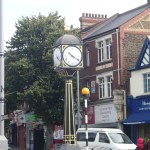

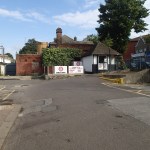
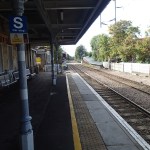
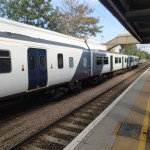
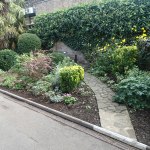
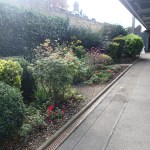
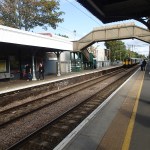
It is one of the few stations, where because there are three ways to cross the tracks, step free access isn’t the greatest of problems. Although, when the new trains come, it might not be a bad idea to make sure that the platform edge is matched to the train.
 The Anonymous Widower