Three New Battery-Only Revolution Very Light Rail Vehicles
This title of this post, is the same as that as this press release from Eversholt Rail Group.
These are the three bullet points.
- Eversholt Rail funding three brand-new Revolution Very Light Rail vehicles for passenger trials and ongoing operation.
- Manufactured in the UK by Transport Design International.
- Battery-only propulsion, providing zero-emissions operation.
These three paragraphs fill out the story.
Innovative new lightweight passenger trains that will help decarbonise Britain’s railways are to be trialled after a new deal was announced this week.
The new Revolution Very Light Rail vehicles will run entirely on battery power and could be carrying passengers within three years. A new system of lineside fast charging will mean the whole operation has zero emissions.
Some of Britain’s major rail operators are already showing interest in the RVLR vehicles as they seek to fulfil promises to make rail ‘cleaner’.
This is also said about looking for routes, to trial the new vehicles.
Eversholt Rail and TDI are working with key stakeholders across the UK rail industry to agree routes and services where operators can run passenger-carrying trials using these new vehicles. These trials will generate actual passenger demand data to support business cases for long-term deployment of RVLR vehicles as well as providing further passenger and operator feedback on their design and capabilities.
I have some thoughts and questions.
What Is The Top Speed?
A lot of questions like this are answered by this article on Rail Engineer, which is entitled Very Light Rail – A Revolution.
These can be ascertained from this comprehensive article.
- Top Speed – 65 mph
- Seats – 56
- Wheelchair space
- PRM TSI accessibility compatible
- Tare Weight – 24.8 tonnes
- USB Charging
For comparison these figures relate to a PRM-compliant Class 153 diesel train.
- Top Speed – 75 mph
- Seats – 59
- Tare Weight – 41.2 tonnes
This picture shows one of the Class 153 trains at Matlock Bath station.
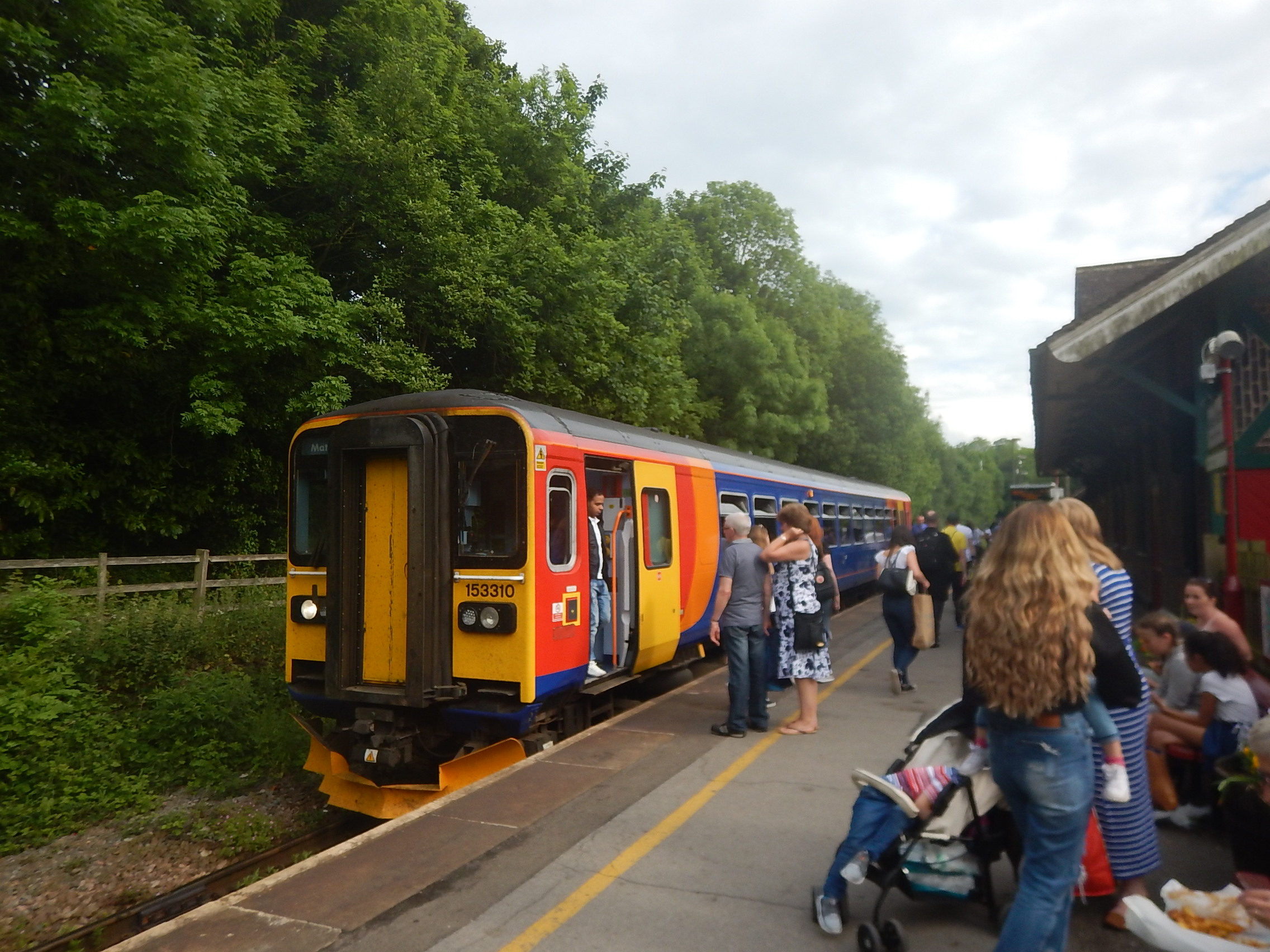
There are still around thirty in service in the UK.
Can Two Revolution VLRs Run As A Two-Car Train?
From the pictures on the web, the trains have buffers and space for a coupler, so until someone says they must always run as single units, I’ll assume they can at least run as a pair.
Can A Revolution VLR Recharge Its Batteries Using Conventional 25 KVAC Overhead Electrification?
One route, that is a possibility for running using Revolution VLR must surely be the Greenford Branch, which connects to the electrified Great Western Main Line at West Ealing station.
In this and at several other places on the network, it could be easier to charge the trains using the existing overhead electrification or an extension of it.
Another possibility; the Marston Vale Line is also electrified at both Bedford and Bletchley.
In New Mobile Rail Charging Facility For Long Marston, I talked about how Siemens are developing a mobile charger, which initially will be deployed at Long Marston.
It could be very useful for efficient operation, if the batteries on a Revolution VLR could be charged in a number of places, which included conventional electrification.
If charging only happened, whilst trains were stationary, a lightweight pantograph and appropriate electrical gubbins might be sufficient.
Can A Revolution VLR Replace A Class 153 Train?
I suspect on some routes this will be possible, but on others, the speed or hill-climbing requirements might be too stiff for the lightweight train.
But, if I was designing a train like the Revolution VLR, I’d make sure it fitted as many markets as possible.
The picture was taken at Matlock Bath station on the Derwent Valley Line, which is a single track with a fifty mph limit and an uphill climb. I suspect that the Revolution VLR would be designed to handle the uphill part of the route, but would the train be able to handle the speed of the Midland Main Line to Derby.
The Revolution VLR would probably attract more passengers, so it might be necessary to double up the service by running a pair.
Can A Pair Of Revolution VLRs Replace A Class 150 Train?
I don’t see why not!
Could The West London Orbital Use Revolution VLRs?
This might be a proposed route that could use Revolution VLRs.
The two routes would be.
- West Hampstead and Hounslow.
- Hendon and Kew Bridge.
Both services would use the Dudding Hill Line and serve Neasden, Harlesden, Old Oak Common and Acton, with a frequency of four trains per hour (tph).
Although this service could be run using conventional multiple units, it might be more affordable to use Revolution VLRs charged on sections of line that are already electrified.
Could the Greenford Branch Use Revolution VLRs?
The Greenford Branch would be a classic application and trains could be charged by fitting a charger in the bay platform at West Ealing station.
In An Automated Shuttle Train On The Greenford Branch Line, I did a rough calculation to see if an automated shuttle could achieve four tph.
Four tph might be too ambitious, but automatic trains shuttling along a branch line might be an affordable way to provide zero-carbon trains with an adequate capacity.
- The driver would drive the train using the sort of remote control used for drones.
- The driver would sit in a convenient place on the train, with CCTV to help them see everything.
- When the train was ready to leave, the driver would push a button to tell the train to move to the next station.
- On arrival at the next station, the doors will open.
- The process would repeat along the line.
If this method of operation sounds vaguely familiar, the Victoria Line has used it since 1067.
Although the Victoria Line drivers always sit in the front.
But on a line with no other trains running at the same time, all they need is a good view of the doors.
Branch lines that could be run in this way could include.
Bodmin Parkway and Bodmin General
Brockenhurst and Lymington Pier
Grove Park and Bromley North
Lancaster and Morecambe
Liskeard and Looe
Lostwithiel and Powey
Maidenhead and Marlow
March and Wisbech
Par and Newquay
Plymouth and Gunnislake
Romford and Upminster
Sittingbourne and Sheerness-on-Sea
Slough and Windsor Central
Southall and Brentford
St. Erth and St. Ives
Truro and Falmouth Docks
Twyford and Henley-on-Thames
Watford Junction and St. Albans Abbey
West Ealing and Greenford
Wickford and Southminster
Wymondham and Dereham
London Overground: Design Work For West London Orbital Route Begins
The title of this post, is the same as that as this article on the BBC.
This is the sub-heading.
Plans for a new London Overground link in west London are progressing, London’s mayor Sadiq Khan has said.
These paragraphs outline what will happen.
Engineering consultants who worked on the Elizabeth line have been chosen for the West London Orbital service.
“This engineering design will help determine the cost of delivering the scheme, which is currently unfunded,” Transport for London (TfL) said.
It hopes the scheme, which would connect Hounslow with Hendon and West Hampstead, could start next decade.
My feeling, is that they should get on with it.
- There would be no major construction like tunnels.
- Four stations would need to be built.
- I doubt there will be any demolition.
- It wouldn’t need more electrification, as the route is electrified at both ends and battery-electric trains could be used.
- It would create more connections to Old Oak Common for High Speed Two.
But if it does for North West London, what the Overground has done for North and East London, it will be very much worth it.
These are a few thoughts and observations.
The Route
This is a schematic of the route from the BBC article.
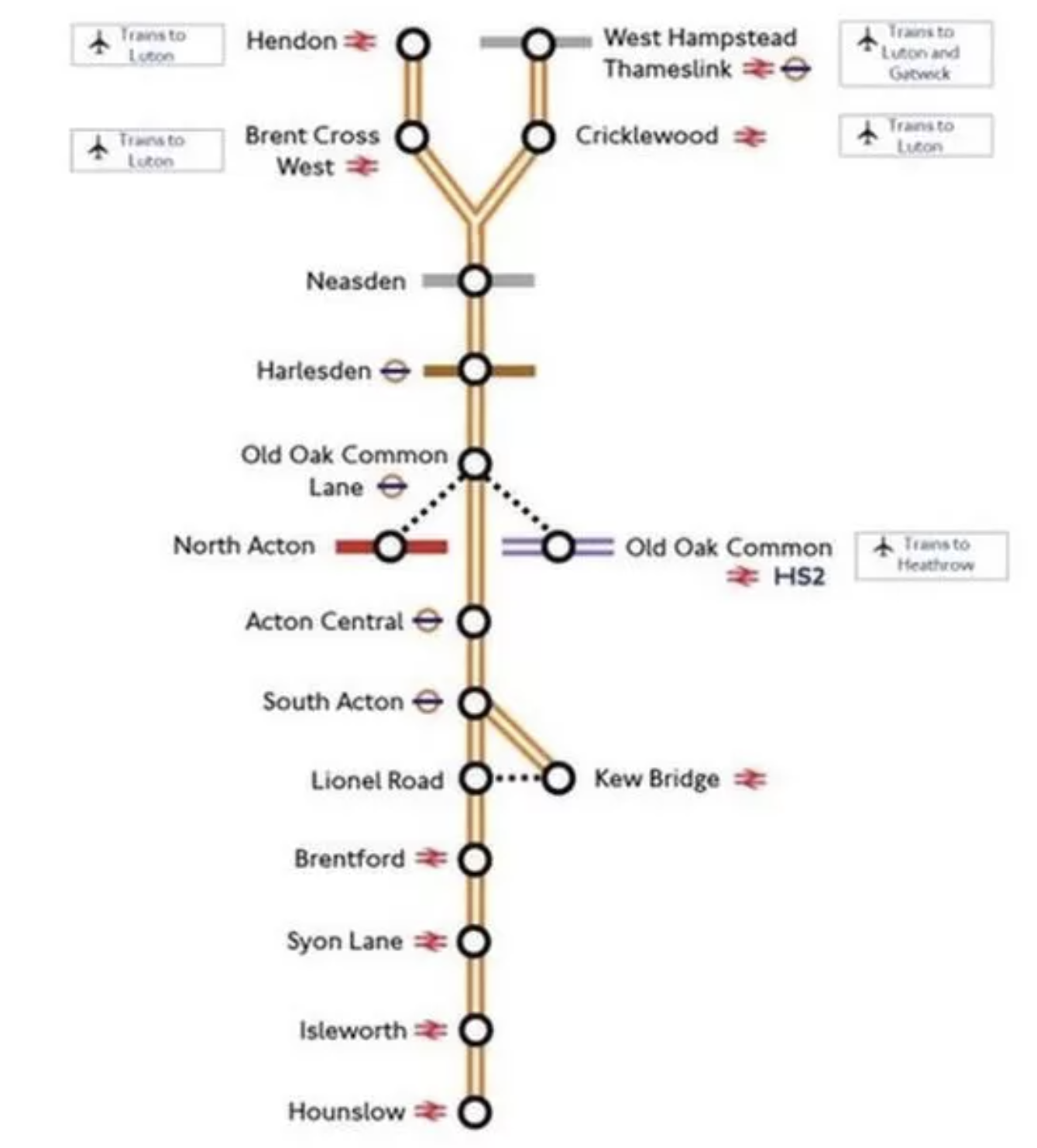
Note.
- Services will be between West Hampstead Thameslink and Hounslow stations and between Hendon and Kew Bridge stations.
- If services follow the London Overground frequency, they will be four trains per hour (tph).
- The new stations are Neasden, Harlesden, Old Oak Common Lane and Lionel Road.
- Acton Central, Brentford, South Acton, Syon Lane and West Hampstead Thameslink are step-free and Isleworth is on the way.
- The fully step-free Brent Cross West station will open soon.
- Lionel Road station will serve the new Brentford stadium.
- Old Oak Common Lane will serve High Speed Two, the Elizabeth Line and the North London Line.
They look to be a useful set of stations.
Kew Bridge Station
There’s been a lot of development at Kew Bridge station, since I was last there.

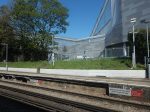
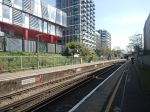
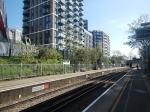
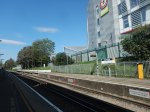
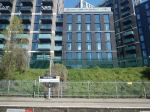
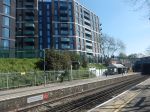
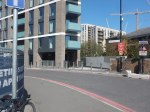

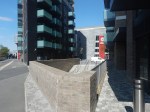
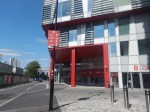
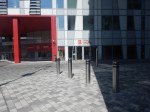
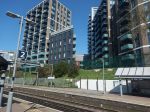
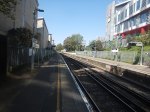
There are lots of flats and Brentford’s new stadium.
I suspect all the stations between Kew Bridge and Hounslow will see similar levels of development.
Electrification Issues On The Dudding Hill Line
The Dudding Hill Line forms the Northern section of the route between the Midland Main Line and the North London Line at Acton Wells Junction.
This map from OpenRailwayMap shows the junction between the Dudding Hill and Midland Main Lines.
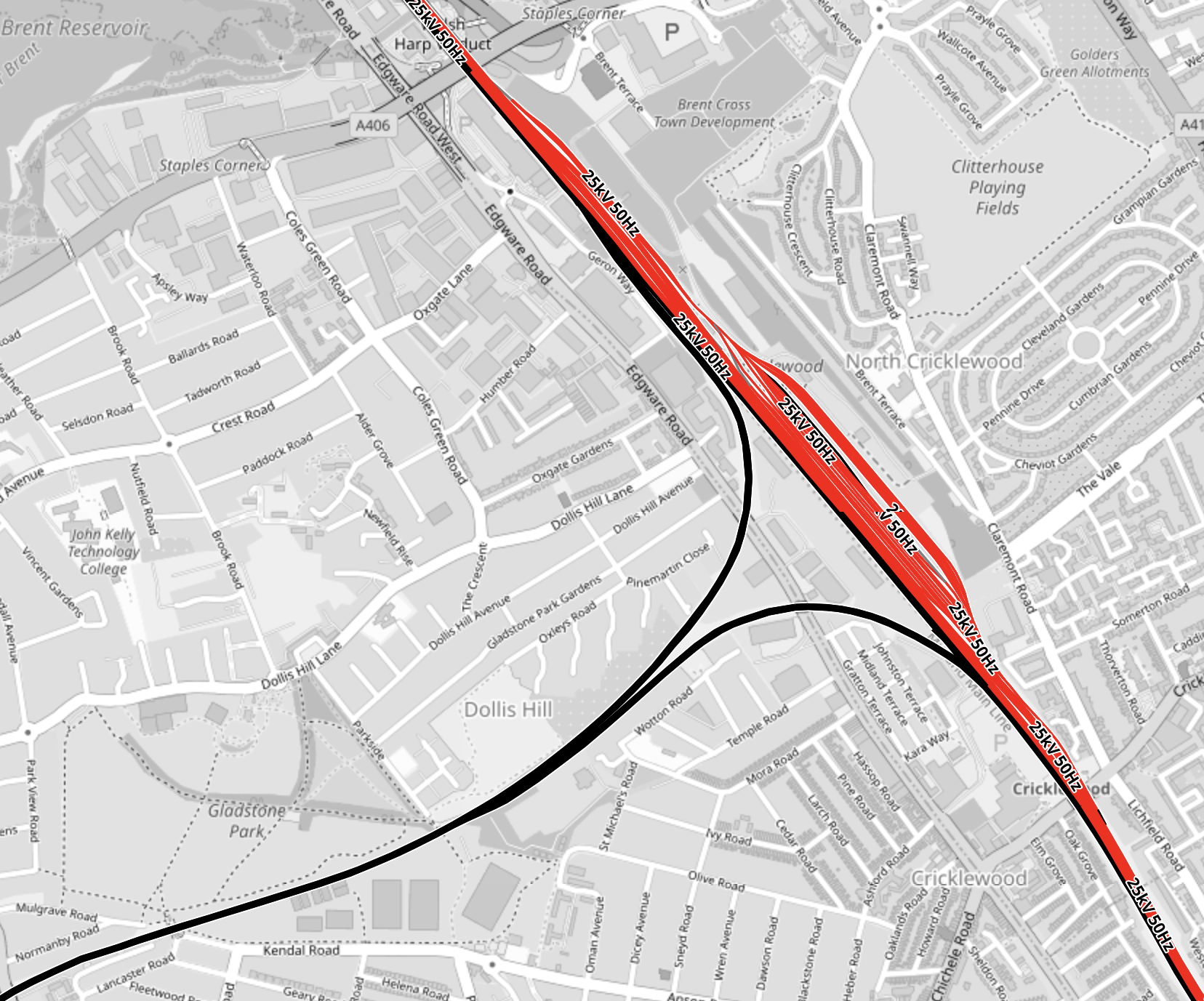
Note.
- The Midland Main Line is shown in red as it is electrified with 25 KVAC overhead wires.
- The Dudding Hill Line is shown in black, as it isn’t electrified.
This second map from OpenRailwayMap shows the junction between the Dudding Hill and North London Lines at Acton Wells junction.
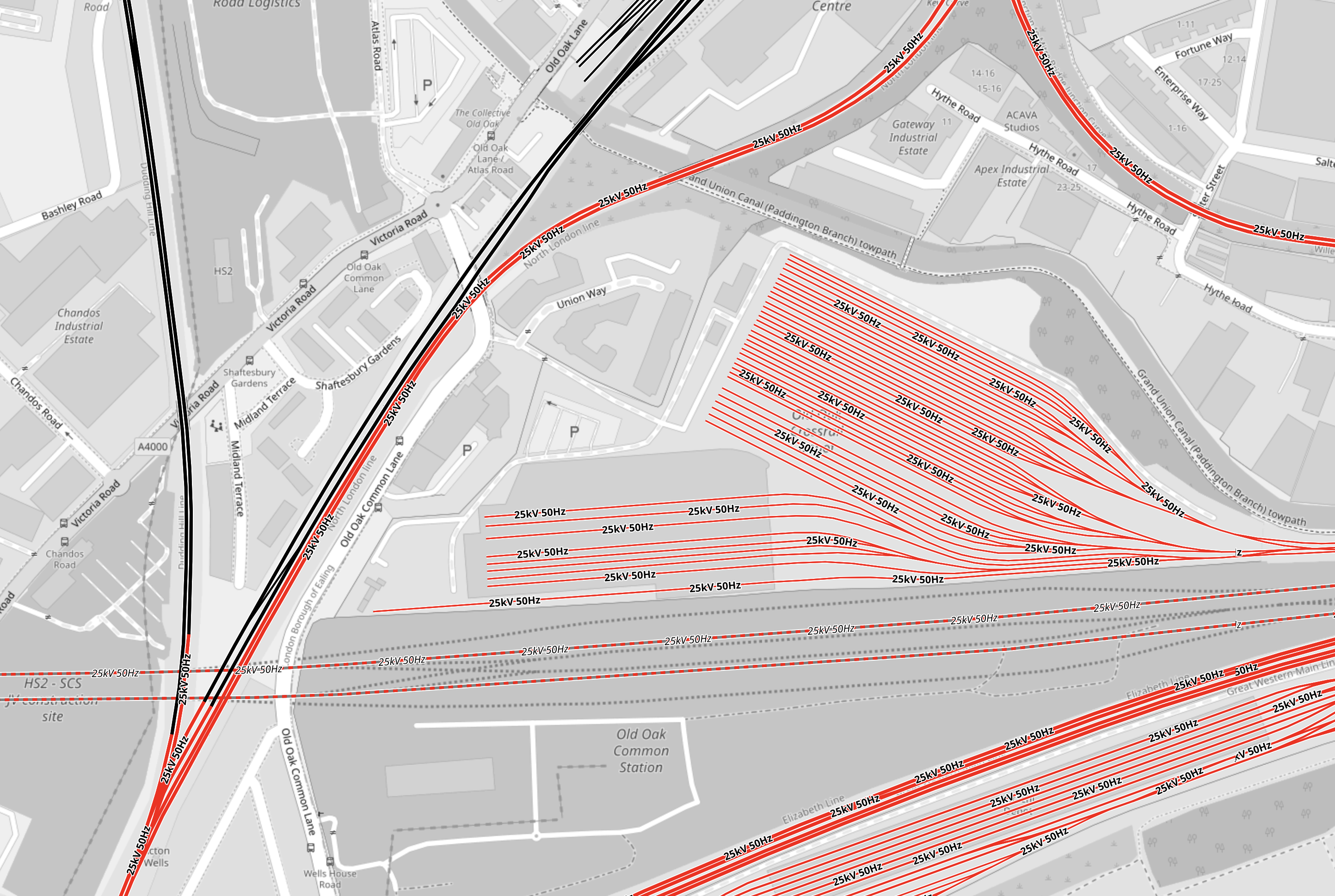
Note.
- As before red tracks are electrified with 25 KVAC overhead wires and black tracks have no electrification.
- The Dudding Hill Line is the black track running North-South at the West of the map.
- Acton Wells junction, where the Dudding Hill and North London Lines join is in the South-West corner of the map.
- The North London Line is shown in red running across the North-West corner of the map.
- The Great Western Main Line is shown in red running across the South-East corner of the map.
- High Speed Two will run East-West across the map and is shown dotted in red.
- The red lines in the middle of the map is the Elizabeth Line depot.
With all the 25 KVAC overhead electrification at both ends of the Dudding Hill Line, it would appear, that if this section is ever electrified, it will be electrified with this form of electrification.
There may be a problem, in that there are three or four bridges over the line.
Electrification Issues At Kew
This map from OpenRailwayMap shows the triangular junction by Kew Bridge station.
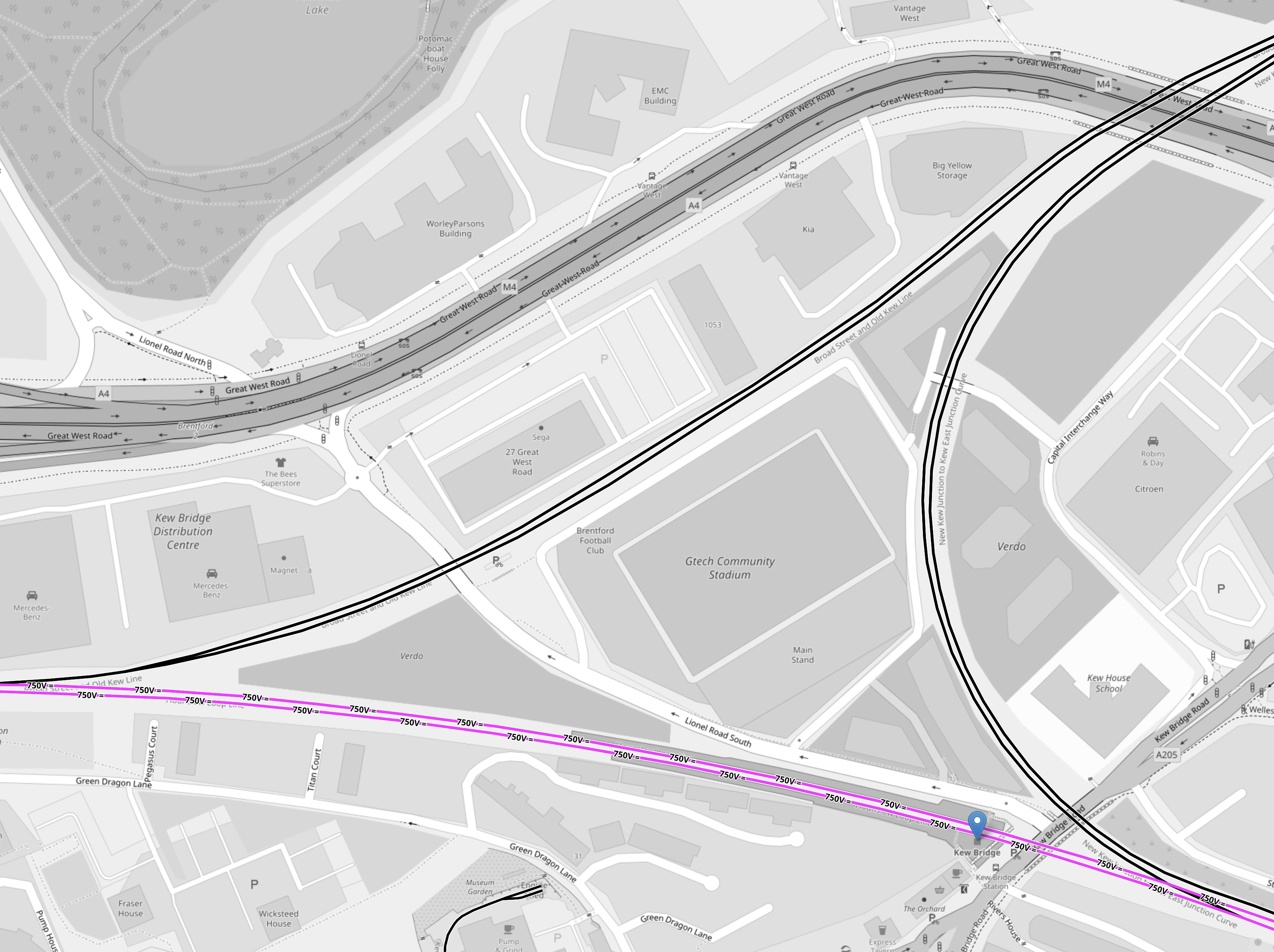
Note.
- As before black tracks have no electrification.
- Mauve tracks are electrified with 750 VDC third-rail electrification.
- Kew Bridge station is indicated by the blue arrow at the Eastern point of the junction.
- Trains to Hounslow will arrive in the North-East corner of the map and go diagonally across the map to leave in the South-West point of the junction.
- Trains to Kew Bridge will arrive in the North-East corner of the map and take the Eastern chord of the junction to a new platform in Kew Bridge station.
Brentford’s new stadium and a lot of housing are in the middle of the junction.
It would seem to be obvious to electrify the triangular junction using 750 VDC third-rail electrification.
But not to the ORR it isn’t, as they won’t allow any new third-rail electrification to be installed on Health and Safety grounds.
Charging Trains At Kew Bridge Station
Consider.
- It looks like trains from Hendon will terminate in a new platform on the chord without electrification to the North of the current Kew Bridge station.
- A short length of 25 KVAC overhead electrification could be used to charge trains.
It may be sensible to build two platforms on the chord, as this could allow more flexible operation of the London Overground during engineering works.
Charging Trains At Hounslow Station
A short length of 25 KVAC overhead electrification could be used to charge trains.
Project Management Issues
I believe this could be one of those projects, where by careful selection of the order of the sub-projects, time and money can be saved and passengers will see benefits earlier.
For example.
- Early delivery of Old Oak Common Lane station would also connect the North London Line to High Speed Two and the Elizabeth Line.
- Early delivery of step-free access at Kew Bridge station would help passengers going to the new Brentford stadium.
There may be other projects, that need an early delivery.
The Feltham And Wokingham Resignalling Programme
The Feltham And Wokingham Resignalling Programme is currently underway and there are pairs of new and old signals everywhere between Kew Bridge and Feltham and also between Feltham and Richmond.
These are digital signals and according to Network Rail, they will increase the capacity, which must surely allow the extra trains between Kew Bridge and Hounslow stations.
This signalling project finishes in mid-2024, so I suspect by then the Southern part of the West London Orbital Railway will not have any problems with interaction with other services.
The Feltham And Wokingham Resignalling Programme could be considered an important enabling sub-project of the West London Orbital Railway, that is being performed early.
Richmond Station
As I came through Richmond station, there was an Overground train in Platform 3 and I noticed that Platforms 3 to 5 were allocated to the Overground.
Has the new signalling given Network Rail and train operators more flexibility and extra capacity at Richmond?
Currently, the London Overground runs four trains per hour (tph) between Stratford and Richmond.
The increased flexibility may allow the following.
- An increase in frequency of trains to Stratford.
- An increase in frequency of District Line trains, if Ealing Broadway station swaps from being a District to a Piccadilly Line terminus, as I wrote about in Extending The Elizabeth Line – Piccadilly Line To Ealing Broadway.
- Could Richmond also act as a terminal of the West London Orbital Railway during construction and engineering works?
Another benefit that could be arranged is to run the current four tph London Overground services into Platform 3.
These pictures show a Waterloo-bound South Western Railway train in Platform 2 and a Stratford-bound London Overground train in Platform 3.
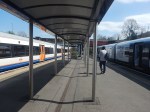
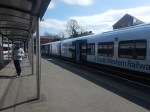
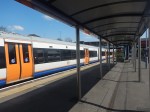
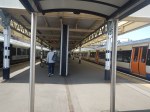
As there are 8 tph between Richmond and Waterloo via Clapham Junction, this could be quite a useful cross-platform interchange for passengers going from say Staines or Windsor to Hampstead.
Trains
Consider.
- The three most likely Northern termini are Brent Cross West, Hendon and West Hampstead Thameslink.
- There could be other terminals on the North London Line or the Gospel Oak and Barking Line.
- All possible Northern terminals have 25 KVAC overhead electrification.
- The two most likely Southern terminals are Hounslow and Kew Bridge.
- There may be other possible Southern terminals like Twickenham or Richmond.
- All possible Southern terminals have 750 VDC third-rail electrification.
- The sections without electrification of the route are less than twelve miles.
- The ORR won’t allow any new third-rail electrification.
It looks like the trains will need to be dual-voltage with a battery capability.
In this article in Global Rail News from 2011, which is entitled Bombardier’s AVENTRA – A new era in train performance, gives some details of the Aventra’s electrical systems. This is said.
AVENTRA can run on both 25kV AC and 750V DC power – the high-efficiency transformers being another area where a heavier component was chosen because, in the long term, it’s cheaper to run. Pairs of cars will run off a common power bus with a converter on one car powering both. The other car can be fitted with power storage devices such as super-capacitors or Lithium-ion batteries if required. The intention is that every car will be powered although trailer cars will be available.
Unlike today’s commuter trains, AVENTRA will also shut down fully at night. It will be ‘woken up’ by remote control before the driver arrives for the first shift
This was published over twelve years ago, so I suspect Bombardier or Alstom have refined the concept.
In an article in the October 2017 Edition of Modern Railways, which is entitled Celling England By The Pound, Ian Walmsley says this in relation to trains running on the Uckfield Branch, which is not very challenging.
A modern EMU needs between 3 and 5 kWh per vehicle mile for this sort of service.
So for a four-car running for twelve miles, the train would need a battery capacity of between 144 and 240 kWh.
These are not large batteries.
I suspect that the best trains for the route, will be dual-voltage Class 710 trains.
- The Class 710/2 variant used on the Gospel Oak and Barking Line is dual-voltage.
- London Overground has 54 Class 710 trains.
- I am certain, that the batteries needed can be fitted to the trains.
- Aventras are still in production in Derby.
A test battery-electric version could probably be created and tested on the short Romford and Upminster Line.
There may be other places in London and the rest of the UK, where a four-car battery-electric Aventra would be the ideal train.
Is There Progress On The West London Orbital Railway?
This short news item is being shown on Railnews under a sub-heading of Overground Plan.
The Mayor of London Sadiq Khan is reported to have predicted that a new London Overground route in west London could be open by the early 2030s. The link had been proposed by the Mayor in his 2018 Transport Strategy. It would run from Hounslow to Acton Central and the new HS2 station at Old Oak Common. From there it would continue to Acton Wells Junction and then along the Dudding Hill line, which is presently used only for freight, via the existing stations on the Euston-Watford Overground route at Harlesden and the Jubilee Line station at Neasden. Trains would continue from Neasden along the Midland Main Line in both directions to West Hampstead Thameslink and Hendon. It is understood that engineering consultants are being chosen to develop a detailed design.
So is there progress at last on what I feel is a much-needed and affordable addition to London’s railway network?
The West London Orbital Railway
In TfL Advances Plans For DLR And Overground Extensions, I said the following about the West London Orbital Railway.
I have written extensively about this railway and you can see my posts here.
This map from the Mayor’s Transport Strategy shows the route.
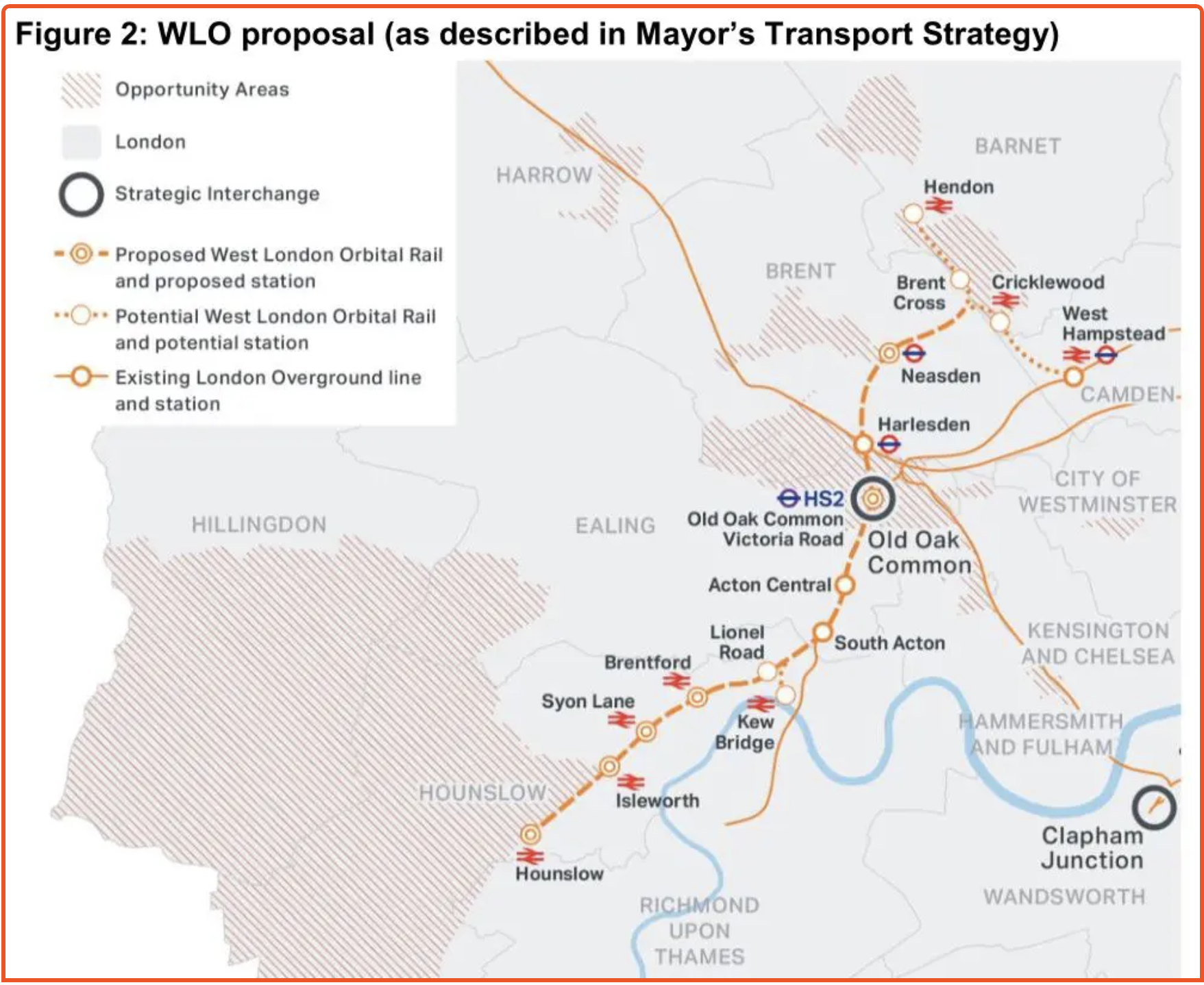
I believe this railway could do the following.
- Level-up much of North-West London.
- Provide better access to Heathrow.
- Link West London to High Speed Two and the Elizabeth Line.
It would also provide better links to Brentford’s new stadium.
The New Civil Engineer says this about funding.
TfL now confirms that the West London Alliance has commissioned feasibility work for the scheme. Meanwhile, TfL is considering options for a Borough Community Infrastructure Levy to help pay for it and has been investigating development opportunities on the route that could unlock funds via Section 106 planning obligations and Carbon Offset funding.
Conclusion
It does appear there are ways and means to fund these schemes, without expecting the rest of the UK to fund London’s transport network.
TfL Considers Replacing Over Half Of London Overground Trains Within The Next 4 Years
The title of this post, is the same as that of this article on MyLondon.
This is the sub-heading.
The trains were specially built for the dimensions of the Overground network
This paragraph outlines, why the trains may be replaced.
The 57 Class 378 ‘Capitalstar’ trains which provide the majority of services on London Overground could disappear as soon as June 2027, as Transport for London (TfL) officials decide what to do with them as their leases expire. The five carriage walkthrough trains have helped revolutionise the Overground network, being built to special dimensions to fit the unique profile of the suburban routes they run on – notably the East London line, where trains use the narrow single-bore Thames Tunnels.
Note.
- The Class 378 trains, which I use regularly, still seem to be performing well!
- They could do with a lick of paint and a tidying up in places.
- Would it be too much to ask for power sockets and wi-fi?
- The other London Overground trains, the Class 710 trains can’t run through the Thames Tunnel on the East London Line, as they have no means to evacuate passengers in the tunnel in an emergency.
- More Class 378 trains are needed for the East London Line to increase services, but these can be obtained by transferring trains from the North London Line and replacing those with new Class 710 trains.
I live near the two Dalston stations on the London Overground and the thing we need most is more capacity.
I have some thoughts on London Overground’s future trains.
Increased Services On The Current Network
Plans exist to increase the frequency on various London Overground services and this graphic sums up what was planned a few years ago.
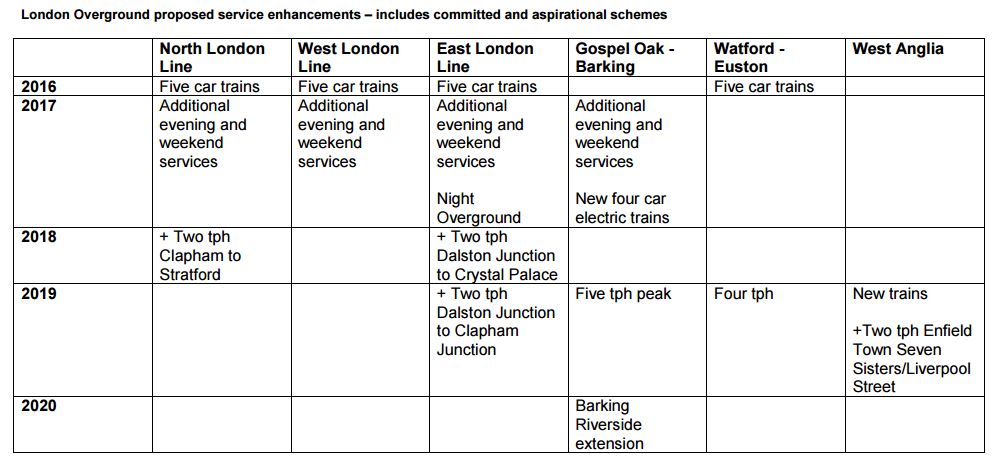
Note the extra two trains per hour (tph) between the following stations.
- Clapham Junction and Stratford
- Dalston Junction and Crystal Palace
- Dalston Junction and Clapham Junction
- Enfield Town and Liverpool St. via Seven Sisters
I think only Route 1 services have been increased.
I know signalling updates are holding up the extra trains on the East London Line, but are more trains needed to fully implement the extra services?
- Routes 2 and 3 services will need Class 378 trains because of the tunnel and these would be transferred from the North London Line.
- Route 4 would need Class 710 trains, as the service already uses them.
So there may be a need for more Class 710 trains.
West London Orbital Railway
The graphic doesn’t mention the West London Orbital Railway.
- There would be two routes between West Hampstead and Hounslow and Hendon and Kew Bridge using the Dudding Hill Line.
- The tracks already exist.
- Some new platforms and stations would be needed.
- The route would probably need improved signalling.
- Four tph on both routes would probably be possible.
- The West London Orbital Railway would connect to the Great Western Railway, the North London and Elizabeth Lines and High Speed Two at Old Oak Common station.
I believe it could be run by battery-electric versions of either the Class 378 or Class 710 trains. This would avoid electrification.
As some commentators have suggested that the West London Orbital Railway and the Gospel Oak and Barking Line would be connected, I would expect that new battery-electric Class 710 trains would be used.
Adding On-board Energy Storage To The Class 378 Trains
In Will London Overground Fit On-board Energy Storage To Class 378 Trains?, I asked whether it would be worthwhile.
I finished with these two sentences.
I have no idea how much electricity would be saved by regenerative braking on the London Overground, but various applications of regenerative braking technology talk of electricity savings of between ten and twenty percent.
I think it is only a matter of time before the technology is proven to be sufficiently reliable and the numbers add up correctly for the Class 378 trains to be fitted with on-board energy storage.
What would be the advantages from fitting on-board energy storage?
- There would be the savings of electricity by the use of regenerative braking to the batteries.
- Trains could be rescued from the Thames Tunnel, if there was a power failure.
- Hotel power would be maintained, if there was a power failure.
- Trains can be moved in depots and sidings without power.
- Trains would be able to move in the event of cable theft.
- Short route extensions might be possible.
- Could battery power be used to serve Euston during the rebuilding process for High Speed Two?
- Do Network Rail want to remove third-rail electrification from Euston station for safety or cost reasons?
There could be a saving in train operating costs.
We know the trains are coming up for a new lease.
Suppose the leasing company fitted them with new batteries and some other customer-friendly improvements like new seat covers, better displays, litter bins, power sockets and wi-fi.
- The leasing company would be able to charge more, as they have added value to the trains.
- TfL would be saving money due to less of an electricity bill.
- The passenger numbers might increase due to the extra customer-friendly features.
- Electrification might be removed from places where theft is a problem.
- Third-rail electrification could be removed from Euston station. It’s only 2.8 miles to South Hampstead station, where third-rail electrification already exists.
Get it right and passengers, TfL, Network Rail and the leasing company would all be winners.
Thoughts On Hounslow Station
These are my thoughts in no particular order.
Step-Free Access
There are only eight railway stations in the London Borough of Hounslow and only Chiswick and Hounslow stations are not step-free and no plans have been published about creating fully-accessible stations.

This is the rather old-fashioned footbridge at Hounslow station.
Current Train Service
The main current Off Peak train service is four trains per hour (tph) using the Hounslow Loop Line, which conveniently pass each other in the station.
There are also two tph between Waterloo and Weybridge, which means the station has a six tph service.
There are also a couple of extra services in the Peak.
Hounslow Track Layout
This map from carto.metro.free.fr shows the track layout at Hounslow station.

The crossovers on either side of the station probably allow trains to be turned back at the station.
A train arriving from London, which is to the North East would do the following.
- Stop in the Southern Platform 2.
- Wait whilst the driver changes ends.
- Return to London using the North Eastern crossover to change to the correct track.
It would probably take between three and four minutes.
West London Orbital
Hounslow station has been proposed to be one of the terminals of the new West London Orbital Railway.
It will have four tph from West Hampstead Thameslink via the Dudding Hill Line.
How will these trains be trains be turned?
Use The Existing Track Layout
There appears to be almost fifteen minutes gaps between trains through the station, so would it be possible to use the existing North-East crossover and the Southern Platform 2 to turn the trains?
When you consider, that London Overground generally allow between five and twelve minutes to turn a train, timing could be tight. Especially, if the driver needed to take a toilet break!
And what would happen, if a train failed or there were several passengers of limited mobility to unload from or load on the train?
I feel, that this current method would only be used as a little-used fallback.
A Turnback Siding
This Google Map shows the station and the track to the South West.
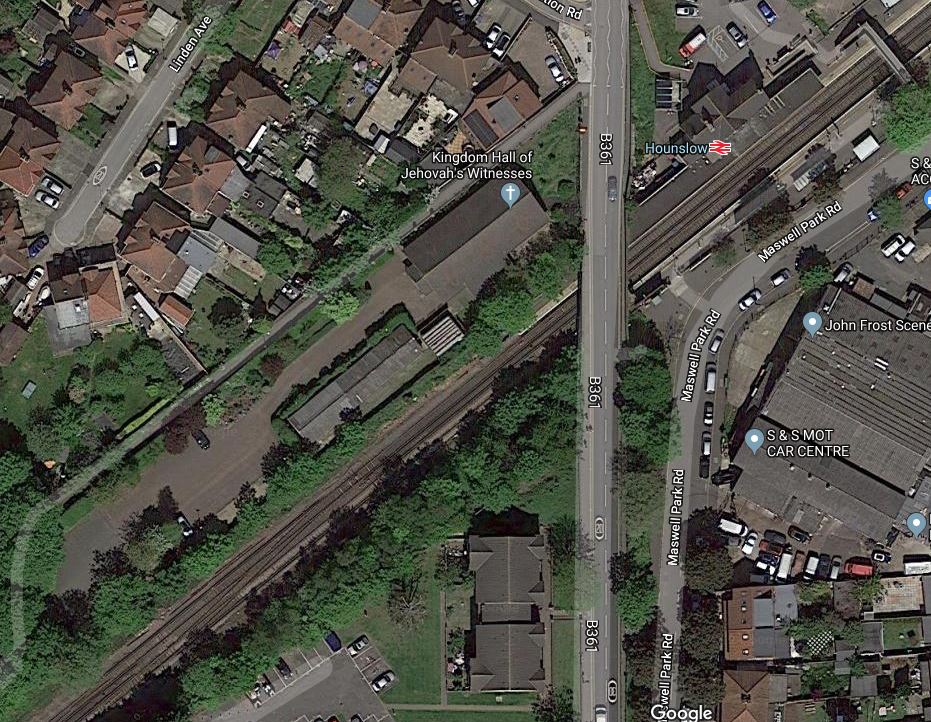
Note that there is probably enough space to put a turnback siding to the South West of the station, with some realignment of the tracks.
This method was used at West Croydon station by services on the East London Line, but recently, the service has started to use the bay platform at the station.
- The train would stop in Platform 2 and unload the passengers.
- It would move to the turnback.
- At the appropriate time it would move into Platform 1 and load passengers.
It would then be ready to start the service to West Hamstead Thameslink.
A Bay Platform
This Google Map shows the North-Eastern (London) end of the station.
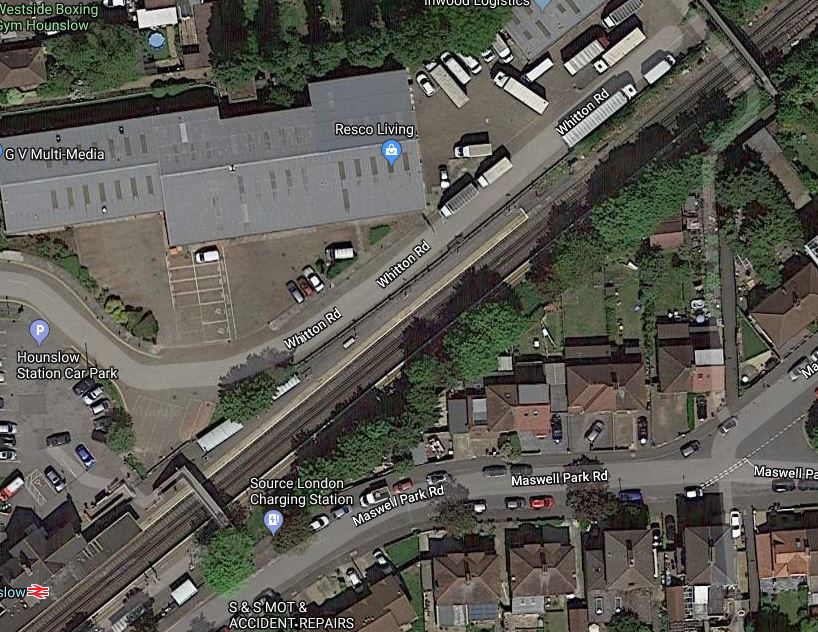
There is a road called Whitton Road alongside the station, where a London-facing bay platform would be built. The crossover would need to be rebuilt to allow trains from London to cross into the bay platform.
But operationally, it would be easier.
- Returning trains to West Hampstead Thameslink would not block the Hounslow Loop Line.
- Passengers using the West London Orbital would only cross the line, if they were continuing their journey from Platform 2..
- I doubt many passengers arriving in Platform 2 would want to use the West London Orbital.
- Passengers with reduced mobility changing between the West London Orbital and bus, car or taxi at Hounslow station would have a step-free route between street and train.
- Drivers would have time for a comfort break.
I will be very surprised if a bay platform is not built to handle the West London Orbital.
A Rebuilt Station
If the West London Orbital is built, which I feel would be highly sensible, the station will probably need to be remodelled to incorporate a bay platform to turn trains.
The footbridge at the station will also need to be replaced with a fully-accessible one.
So Hounslow station will probably need to go through a thorough refurbishing, if not a full rebuild.
 The Anonymous Widower