Japanese Trains With Batteries
If Bombardier in Derby and the Germans in Chemnitz (Karl Marx Stadt to Jeremy and the Corbedians) are addressing battery technology, you could be sure that the Japanese would have ideas and there is this article in Railway Gazette, which is entitled Emergency batteries for Tokyo Metro trains.
This is said.
Nippon Sharyo Series 1000 trainsets operating on Tokyo Metro’s Ginza Line have been fitted with Toshiba onboard emergency batteries so that they can reach the next station under their own power in the event of a traction supply failure.
Toshiba says the SCiB lithium-ion battery is well-suited to emergency use, being resistant to external shock, internal short circuits and thermal runaway. It recharges rapidly, has a long life and a high effective capacity over a wide range of environmental conditions.
The battery draws power from the third rail during normal operation, and can supply the traction system in the event of power outage or other emergency. It can also be used for train movements within depots.
I also said this in Bombardier’s Plug-and-Play Train,
I wouldn’t rule out that all Class 345 trains were fitted with some form of onboard energy storage.
The main reasons are all given in the article about Japanese trains.
German Trains With Batteries
One of my Google alerts found this article on Rail Journal, which is entitled DB to convert DMUs to bi-mode hybrid trains.
This is said.
GERMAN Rail (DB) has announced it is working with technical universities in Chemnitz and Dresden to develop bi-mode (diesel and electric) trains with lithium-ion battery storage. Between 2017 and 2021 DB intends to convert 13 existing Siemens class 642 Desiro Classic DMUs to hybrid bi-mode configuration.
It seems the Germans share my belief that trains with batteries are the future.
Comparing An Aventra IPEMU With An Electrostar IPEMU
The Concept Of An IPEMU
This article in Rail Engineer, which is entitled An Exciting New Aventra, quotes Jon Shaw of Bombardier on onboard energy storage.
As part of these discussions, another need was identified. Aventra will be an electric train, but how would it serve stations set off the electrified network? Would a diesel version be needed as well?
So plans were made for an Aventra that could run away from the wires, using batteries or other forms of energy storage. “We call it an independently powered EMU, but it’s effectively an EMU that you could put the pantograph down and it will run on the energy storage to a point say 50 miles away. There it can recharge by putting the pantograph back up briefly in a terminus before it comes back.
I believe that once the concept of onboard energy storage is accepted, that Bombarduier’s engineers have found other ways to use it to the benefit of passengers, operators and Network Rail.
- Regenerative braking energy can be stored on the train and used for a restart or other purposes, rather than just burning it off or returning it to the grid, through complicated transformers.
- Onboard energy can be used to move a train to the next station, if the overhead or third rail power should fail.
- Depots and stabling sidings don’t need to be fully electrified.
- Onboard energy storage enables train features like remote wake up, which I discussed in Do Bombardier Aventras Have Remote Wake-Up?.
- Trains can safely pass over short sections without electrification. Third rail trains can do this with contact shoes at both ends of the train.
Trains with onboard energy probably need to have intelligent current collection, so that pantographs and contact shoes can be intelligently deployed and retracted.
Take the simple example of a passing loop on a single track electrified branch line, which is needed for two trains per hour. The passing loop could be built without electrification and without altering the existing electrification, with just a set of points and appropriate signalling at each end.
- Trains using the existing line and electrification would travel as now.
- Electric trains using the loop would lower the pantograph a safe distance before the loop, go along the passing loop using onboard energy and then once on the main line, raise the pantograph.
This technique could probably be used to simplify building of new stations or adding new platforms to existing ones.
Network Rail are going to love trains with onboard energy storage.
Electrostars and Aventras
Bombadier have shown that onboard energy storage is possible in an Electrostar and there is various articles on the web saying it can be fitted to the new Aventra.
As both Aventras and Electrostars seem to come in four- and five-car versions, I’ll do the calculations for both lengths of trains.
I’ll use these assumptions.
- Electrostar cars weigh 40 tonnes and Aventra cars 32.5 tonnes.
- Each car has 50 passengers weighing an average of 80 kilos.
The various types of IPEMU are shown in the next four sections.
Four-car Electrostar
This would have the following characteristics.
- A mass of 160+16 = 176 tonnes.
- A formation of DMOS+MOS+PTSO+DMOS
- Braking from 100 kph would release 18.9 KWH.
- Braking from 200 kph would release 75.5 KWH.
- Onboard energy storage could be placed in probably the MSO or PTSO cars.
This could be created from a train like a Class 377, Class 378, Class 379 or Class 387 train.
We know that in the demonstration using a Class 379 at Manningtree, that that train could do 18.2 km. on the Mayflower Line, just by the use of battery power.
Five-car Electrostar
This would have the following characteristics.
- A mass of 200+20 = 220 tonnes.
- A formation of DMOS+MOS+PTSO+MOS+DMOS
- Braking from 100 kph would release 23.6 KWH.
- Braking from 200 kph would release 94.3 KWH.
- Onboard energy storage could be placed in probably the MSO or PTSO cars.
Four-car Aventra
This would have the following characteristics.
- A mass of 130+16 = 146 tonnes.
- A formation of DMOS+MOS+PMSO+DMOS
- Braking from 100 kph would release 15.6 KWH.
- Braking from 200 kph would release 62.6 KWH.
- Bombardier have stated that the MOS car is ready for onboard energy storage.
This could be created from a train like a Class 710 train.
Five-car Aventra
This would have the following characteristics.
- A mass of 162.5+20 = 182.5 tonnes.
- A formation of DMOS+MOS+PMSO+MSO+DMOS.
- Braking from 100 kph would release 19.6 KWH.
- Braking from 200 kph would release 78.2 KWH.
The five-car Aventra could have two sets of batteries or onboard energy storage.
Note this about all Aventras.
Bombardier have stated that the MSO car is ready for onboard energy storage, if the customer desires.
The MSO and PMSO cars can be considered a fixed pair of cars handling the electrical power for the train.
Can a PMSO and two MSOs be considered a trio on the five-car Aventra?
Aventras have a lot of motored cars, with lots of traction motor/generators.
The trains can have a remote wake-up feature, that would probably need some form of onboard energy. After all, your smart-phone doesn’t work if the battery is not fitted.
Can I draw any conclusions?
- The Aventra with its pair of electrifical cars has been designed to have onbosrd energy storage.
- The energy that needs to be handled is less with the lighter weight Aventra.
- Stopping from 200 kph releases a lot more energy. Four times more than from 100 kph in fact.
- The energy storage needed for 100 kph stop and restart operation, are within the battery size range of the battery in an electric car like a Nissan Leaf.
- There could be advantages concerning reliability and battery size with the five-car Aventra with its possible two sets of energy storage.
Obviously, the weight of the battery would need to be factored into the calculations, but if say it was a tonne, it would only increase energy figures by less than one percent.
The Definitive IPEMU
I said that two two sets of energy storage in the five-car Aventra could give advantages.
- Each set could be smaller.
- Two sets will be more reliable than one.
- The weight of the storage is shared between two MSO cars.
- The two MSO cars in the five-car Aventra IPEMU would probably be identical.
In the extract from the Rail Engineer article that started this post Jon Shaw of Bombardier is quoted as saying this.
it will run on the energy storage to a point say 50 miles away.
Two sets of onboard storage would obviously help this, with each set needed to keep the train going for 25 miles. This is not the onerous task it could appear. Especially in an Aventra.
- The train is designed to minimise aerodynamic losses.
- The train is designed to minimise the very small rolling losses of steel wheel on steel rail.
- All passenger systems like wi-fi, lighting and air-conditioning are designed to use minimum electricity.
- Driving aids on the train will help the driver to drive in an energy efficient way.
- When the brakes are applied, the energy is recovered and stored in the onboard energy storage.
- The train will stop at a station using much less energy than a conventional train.
But the most important thing, is that the train has been designed from the wheels up as an efficient package.
Conclusions
I believe the following.
- Five cars will be one of the most common lengths for Aventras. Abellio have already ordered eighty-nine.
- The range on energy storage of a five-car Aventra with two sets of energy storage will be at least fifty miles.
- Aventras with an IPEMU-capability will be used to reduce electrification work.
- Aventras with an IPEMU-capability will be used to develop new electrified routes.
- As the IPEMU technology develops, Bombardier will develop a solution, so that later Electostars will be able to store their own braking energy and travel a limited distance away from electrification.
- All train manufacturers will look seriously at energy storage on trains.
If I was asked what would be the ultimate range of a train using this technology, I would say, that trains with an IPEMU-capability will within a few years be running the whole route between Waterloo and Exeter.
I
Slow Line Traffic Into Paddington
I was thinking today, as I came back from my trip from Paddington, that I described in A Low Key Launch Of New Electric Trains, that when all of the new trains are running on Crossrail and the GWR, the slow lines will be very busy.
According to Wikipedia, Crossrail will be running.
- 4tph Abbey Wood – Heathrow Terminal 4
- 2tph Abbey Wood – West Drayton – Peak Hours Only
- 2tph Shenfield – Reading
- 2tph Shenfield – Maidenhead
In addition there will be non Crossrail services on the line.
- 4 tph Heathrow Express
- 2 tph Paddington Main Line – Bedwyn
- 2 tph Paddington Main Line – Oxford
- 2 tph Paddington Main Line – Hayes and Harlington
So that gives eighteen services an hour, with probably all except the Heathrow Express on the slow lines.
As the Shenfield Branch of Crossrail is going to handle 16 tph, 14 tph would seem to be within the capacity of the slow lines to Reading, even leaving some space for freight.
I do wonder that as GWR has ordered forty-five Class 387 trains, which in view of today will probably be run mainly as eight-car trains, for where they are going to add services to the network.
So how many trains will they need for current services?
- 2 tph to Hayes and Harlington – Under half an hour, so 2 trains, or 4 if running as a pair.
- 2 tph to Oxford (stopping) – Two hours, so 8 trains or 16 if running as a pair.
- 2 tph to Bedwyn – 90 minutes, so 6 trains or 12 if running as a pair.
Oxford and Bedwyn will also be served by fast Class 800 long distance trains.
This gives a total of 32 Class 387 trains.
So what happens to the other thirteen trains?
There has been talk of giving some of the trains an IPEMU-capability, which I reported in Rumours Of Battery Powered Trains to run the branch lines to Henley, Marlow and Windsor and the Reading to Gatwick service.
I just wonder, if the Electrostar might have made a good demonstrator for the IPEMU technology, but that an IPEMU based on an Aventra is so much better, that there is little point in creating an Electrostar IPEMU.
Or are Bombardier wanting to get the Aventra fully designed in all its variants before they tackle creating an Electrostar IPEMU?
So how many trains with an IPEMU-capability would be needed for the branch lines and Reading to Gatwick?
- Gatwick to Reading takes 90 minutes, so 6 trains could provide 2 tph.
- 4 tph on the Greenford Branch, would need 2 trains charging at West Ealing.
- 2 tph on the Henley Branch, would need 1 train charging at Twyford.
- 2 tph on the Marlow Branch would need 2 trains charging at Maidenhead. – By a bit of fiddling, the trains might pass at Bourne End or there could be a passing loop.
- 2 tph on the Windsor Branch, would need 1 train charging at Slough.
This adds up to the missing thirteen trains, if you add in a spare. In Modern Railways for June 2016, one paragraph in a larger article gives some news about the progress of Bombardier’s IPEMU technology. This is said.
Industry sources confirm that options for some of the GWR order to be produced as independently powered EMU (IPEMU) variants fitted with batteries for operation away from electrified routes are still being explored. This would enable GWR services to Gatwick Airport and on some of the Thames Valley branches to be worked by ‘387s’ prior to electrification. Any decision to look seriously at this proposal will depend on final electrification timescales being confirmed by Network Rail.
Ordering the number of trains they have means that GWR can offer a workable solution on all routes in the Thames Valley, depending on what Network Rail deign to deliver and if Bombardier come up with an affordable IPEMU solution.
- No electrification, no IPEMU – Use refurbished diesel multiple units.
- Electrification – Use Class 387 trains as electric multiple units.
- No electrification, IPEMU – Use Classs 387 trains in IPEMU mode.
Obviously, if Network Rail decide to electrify any part of the network later, the trains can be driven and controlled accordingly.
I’m also sure, there will be routes in the Bristol area, where a Class 387 train with an IPEMU-capability could be very useful.
Could Beckenham Junction To Birkbeck Be Run On The Zwickau Model?
Look at this map from carto.metro.free.fr, which shows the lines to the west of Beckenham Junction station.
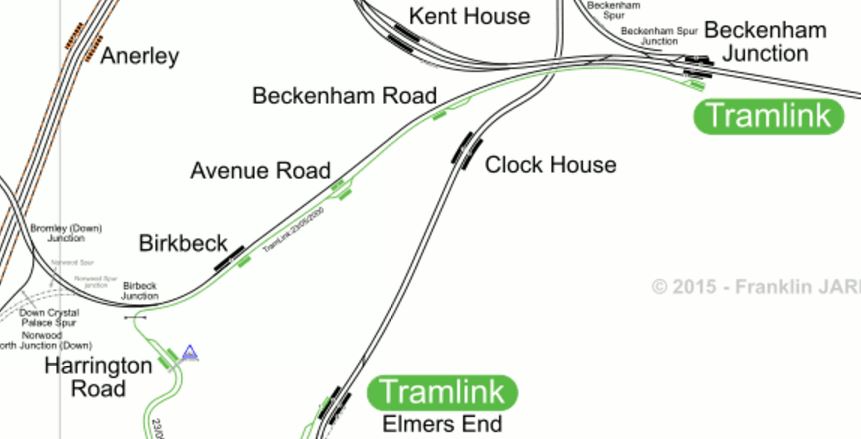
Lines To The West Of Beckhenham Junction Station
At Beckenham Junction station, there are the following platforms.
- Two through platforms.
- Two Westward-facing bay platforms for trains.
- Two Westward-facing bay platforms for the Tramlink.
But the real problem of operation of the section of line through Beckenham Junction station is that, both the main line and tram line to Birkbeck station are bi-directional, which must limit capacity.
Running Under The Zwickau Model
After what I saw at Zwickau and wrote about in Riding The Vogtlandbahn, I feel that a similar solution could be applied to this section of line.
The following would be done.
- The current Tramlink line would be for all Westbound trams and trains.
- The current heavy rail line would be for all Eastbound trams and trains.
- Both lines would have no third rail electrification and would be electrified for trams only.
- All trams using the line would be identical to now.
- All trains using the line would need to have onboard energy storage. I suspect some Class 377 trains could be modified to work the required services.
- All platforms would need to be adjusted to give step-free access to the two type of vehicles.
- There would need to be adjustment to the crossings and tram electrification at Beckenham Junction.
The whole plan is very similar to that carried out and working successfully between Zwickau Hbf and Zwickau Zentrum, except that the Germans have the problems of different tram and train gauges and use diesel multiple units.
The Current Services
The typical off-peak service frequency is:
- 4tph (trains per hour) to London Victoria (Southeastern)
- 2tph to London Bridge via Crystal Palace (Southern)
- 4tph to Orpington (Southeastern)
The Orpington to Victoria trains would be unaffected, as they don’t use the changed section of line.
The London Bridge to Beckenham Junction stations would need to be operated by an IPEMU or a train with onboard energy storage, as they’d need the power between Beckenham Junction and Birkbeck stations.
The tram services would be generally unaffected, although they would need to cross over from the Eastbound line into Beckenham Junction, as trains do now.
Advantages
I can’t believe that creating a double-track railway, that can be used by both the current trams and say Class 377 trains with an IPEMU capability, doesn’t have advantages.
The passing loops on the tram line would not be needed, as Eastbound and Westbound trams would be on different lines.
The double-tracking should reduce train delays.
It would allow the tram frequency to Beckenham Junction to be increased., which might enable a whole lot of possibilities.
I do feel though that the biggest advantages might be enabled, if Birkbeck, Avenue Road and Beckenham Road became single island platforms between the tracks. This would enable.
- Same platform interchange.
- Train passengers going East could change to a tram going West and vice-versa.
- A single lift could be installed at Birkbeck, Avenue Road and Beckenham Road stations for step-free access.
The New Trains Arriving In East Anglia
This article in the Derby Telegraph is entitled Derby workers on tenterhooks over contract worth BILLIONS. (Note the newspaper’s capitals!)
It states that the new East Anglian Franchise could be announced tomorrow, as it is supposed to be settled in June, and that the order for new trains is between Bombardier and Siemens.
I can’t believe that given the current Euro-turmoil in the country, that Siemens will be given this order.
I think that we can assume that based on London Overgroun’s contract for Class 710 trains, where this is said.
In July 2015 TfL announced that it had placed a £260m order for 45 4-car Bombardier Aventra EMUs
That a new four-car Aventra train will cost around £6million. I would suspect that Siemens Desiro City would probably be around the same price.
So for a billion pounds, you would get around a hundred and thirty trains.
As I said in Could Class 387 Trains Do Norwich In Ninety And Ipswich In Sixty?, one twelve-car Class 387 train, could fulfil the franchise requirement of two fast trains a day on the Great Eastern Main Line in both directions. It might even be possible to deliver it, early in 2017, now that it appears production of Class 387 trains might be able to continue.
The Derby Telegragh article talks about Aventra trains, but unlike Class 387 trains, these would not be available until probably 2019, at the earliest.
But Aventras for the flagship London-Ipswich-Norwich route could be delivered with all or part of this specification.
- Up to twelve-cars.
- Walk-through capability. Thameslink’s Bedford to Brighton serrvice will be like this, so why not?
- A specially-design business- and commuter-friendly interior.
- 125 mph capability to give all services Norwich in Ninety and Ipswich in Sixty.
- A buffet car could be provided.
- An IPEMU capability, so a direct Yarmouth service could be introduced.
Some might mourn the passing of the much-loved and well-used Mark 3 coaches, but the Great Eastern Main Line would have one of the best commuting trains in Europe.
I estimate that six sets would be needed to provide two trains per hour in 90 minutes between Norwich and London.
Currently, they have sixteen sets with eight coaches.
If the trains had an IPEMU-capability, which is possible, but of course hasn’t been announced, these trains could also work Norwich to London via the Breckland Line and the West Anglia Main Line, serving Thetford, Ely, the new Cambridge North, Cambridge and Tottenham Hale. Currently, this route would take just under three hours with a change at Cambridge. What time a 125 mph electric train could manage, is pure speculation, but a time of two and a half is probably possible, with some track improvements on the route.
So could we see the current hourly, Norwich to Cambridge service on this route, serving Cambridge North and extended to London? It would give advantages to passengers, the operator and Network Rail.
- The improved connectivity between Cambridge and Norwich would spread the benefits of the Fenland Powerhouse to Norwich and Norfolk.
- Norfolk would get a third direct route to the capital, after the Great Eastern Main Line and the Fen Line.
- Norwich services would have a same platform interchange to Thameslink at one or possibly both Cambridge stations.
- One of the Northern bay platforms at Cambridge would be used more efficiently, as most Norwich services would be through trains.
- The trains could be identical or very similar to those serving the Great Eastern Main Line.
- The route would be available as a diversionary route between Norwich and London, should the |Great Eastern Main Line be closed.
- There would be no major electrification needed.
To provide an hourly service, I think that three trains will be needed.
The Great Eastern Main Line to Ipswich and the western route to Ely, have platforms long enough for twelve-car trains. North from Ipswich, they can certainly take ten-car trains, as that is the effective length of the current stock.
So will the stock be eight- or twelve-car trains? It could be either, with perhaps some platform lengthening on the western route.
The minimum number of trains would be six for the Great Eastern Main Line and three for the western route. It would probably be prudent to call it ten trains.
I think adding in a bit extra for 125 mph and IPEMU-capabilities and a custom interior, that prices could be of the order of.
- £20million for an eight-car train or £200million for ten.
- £30million for a twelve-car train or £300million for ten.
That’s not billions!
Shorter units of perhaps four-car or eight-car formations with an IPEMU-capability, could run the following routes.
- Ipswich to Cambridge
- Ipswich to Ely and Peterborough.
- Ipswich to Lowestoft, if some form of charging could be provided at Lowestoft.
Four trains of eight-cars for these Ipswich-based routes, would be another £80million.
Still not billions!
This leads me to the conclusion, that a large number of other electric trains in the franchise will be replaced.
- I believe for Norwich in Ninety, all trains north of Colchester need to have a 110 mph-capability or better.
- Some trains are very tired, dated and lack capacity.
- Some could have an IPEMU-capability for working the branch lines that don’t have electrification.
In the present franchise there are the following trains working the Great Eastern Main Line and the West Anglia Main Line
All are of four cars.
If all except the nearly-new Class 379 trains, were replaced with Aventras, that would cost about £950million including the IPEMUs for the branch lines.
I think that if they can develop a sensible way of charging trains at Lowestoft, Sherringham and Yarmouth, this would give the following advantages.
- Every train would be a new or nearly-new electric multiple unit.
- Some trains would have an IPEMU capability to handle lines without electrification.
- Every train would be able to use regenerative braking to save energy.
- There would be a large increase in capacity.
- Most services would be faster and not just Norwich and Ipswich to London.
- New trains into Southend to compete with c2c.
- Trains would be available to serve the new Cambridge North station.
- A possible London to Lowestoft service could be run.
- .Services between Cambridge, Ipswich, Norwich and Peterborough could be increased.
- March to Wisbech could be added to the network.
- Diversionary routes from Ipswich, Norwich and Peterborough to London have been created.
- No new electrification of a substantial nature.
- Some quality diesel trains would be released to other operators.
As I indicated earlier, if it was decided to fulfil the requirements of Norwich in Ninety and Ipswich in Sixty, early in the franchise, this could be done with some Class 387 trains.
If this happens, it will be a substantial improvement on the current service.
East Anglia will have been totally-electrified for passenger services, with all the electrification being done in a new, modern factory in Derby.
I don’t know what will happen, but unless something like this does, I can’t see how Bombardier will get the order for billions of pounds of new trains, as reported in the Derby Telegraph.
Engineering is the science of the possible!
Never On Sunday
There have always been things that were banned on Sundays or because of personal reasons, you never did on that day.
- A Welsh friend at Liverpool University called David Roberts didn’t use to drink on Sundays when I first met him. But we soon cured him of that!
- My late wife, who had been a Sunday school teacher in her time, wouldn’t go to the cinema on Sunday, as her mother thought it ungodly.
- For myself, I don’t think I went to a football match on a Sunday until I was about forty, as they were never staged on Sundays.
I also remember the first day, that C and myself went to the first 1000 Guineas at Newmarket on a Sunday. Now horse racing and most other sport on a Sunday is considered normal, just as it is in the rest of the world.
It also used to be that the Northern City Line didn’t run at weekends, despite having three stations that served The Emirates Stadium.
This morning before it rained, I took a trip to Harringay station to view the Wightman Road Bridge, by taking a 38 bus to Essex Road station and then going three stops to the North.
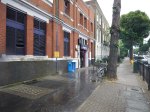


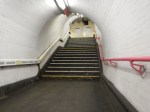

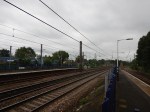
The line is getting new Class 717 trains, but I do feel that some work to improve the stations might not be a bad idea.
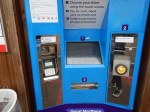
I actually wanted to buy a ticket on that dreadful machine from the Zone 6 boundary to Guildford, but unlike London Overground and some other companies ticket machines, it doesn’t sell such a useful ticket, which I wrote about in The Price Of Freedom.
More details of the Class 717 trains are given in this article in Rail Magazine, which is entitled New Govia Thameslink Railway trains to be Class 717s. This is said.
They are similar to the Class 700s being built by Siemens for GTR (of which 16 are in the UK), but they must have end doors as per safety regulations due to their operation in the Moorgate Tunnels. The design of this is at an advanced stage, with construction due to start this year.
I have felt that the Northern City Line, would be a classic application for an IPEMU for some time, as this would enable the Moorgate tunnels to be electrically-dead, as the trains would use batteries between Drayton Park and Moorgate stations. This would have the following effects.
- The third-rail electrification could be deactivated or even removed.
- The trains could also be 25 VAC only, if they wouldn’t be going into any other third-rail territory.
How would this impact tunnel safety regulations?
Whatever happens to this line, running a seven day a week service, will make the Northern City Line a valuable rail line in my part of London.
On a personal note, the line and Essex Road station in particular, will help me cut-out the dreaded Highbury and Islington station, with its long passageways and lack of lifts.
Could Tramlink Use The Heavy Rail Lines In South London?
Look at these pictures, I took at Birkbeck station, where one track is for heavy rail and the other is for London Tramlink.
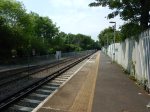
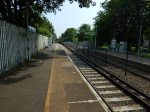


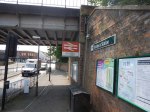
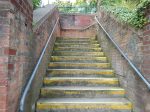
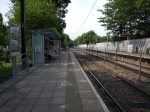

When I took these pictures, I wondered, if it would ease the expansion of the Tramlink network, if trains and trams could share lines.
I am not talking about tram-trains, but more a useful approach to benefit both types of transport.
So lets list the problems.
Rail And Wheel Profile
One of the problems in Sheffield with the introduction of tram-trains is that the rail profile needs to be changed to one that is compatible with the existing trams and the new Class 399 tram-trains.
But to be fair it is a trial and problems will be thrown up.
Platform Height
As someone, who has travelled all over Europe on trams, trains and tram-trains, one of the biggest problem is getting the platform height right, so that everybody including those in wheel-chairs can get on and off easily.
On a scale of five, we generally score about four, but we mustn’t be complacent and I think it will get better.
Some continental countries have problems as their trains have a low step and you step up into the train. This is because traditionally, they had low platforms, whereas for some time, we’ve been aiming for step across.
Karlsruhe has been running tram-trains on their Stadtbahn for over twenty years and are putting in a tunnel to take the tram-trains under the city.
This is said about platform height.
In addition, the platforms of the station’s tunnel will have pedestals that are about 15 metres long with a height of 55 cm above the rail so that the first two doors of Stadtbahn trains will have step-less entry. This will make possible stepless entrance on lines S 4 / S 41 and S 5 / S 51 / S 52 in Karlsruhe for the first time, reflecting a trend that has long been standard elsewhere. The platforms cannot consistently have a height of 55 cm, because the tunnel will be used by trams and DC services of the Stadtbahn, which have an entry level on the modern lines of 34 cm.
If the Germans have to go to that sort of solution, with all their experience, then platform height must be difficult to get right.
I have not heard anything about the platform design at Rotherham Central station, where the platforms must accept trains as different as Pacers and Class 399 tram-trains.
Power Supply
The current trams need overhead power, which with most tram systems is 750 VDC.
So if you want to run Tramlink trams on third-rail lines in South London, you’ll need to put up overhead wires or fit the trams with contact shoes.
It is my view, that for Health and Safety reasons and some design ones too, that running trams using third-rail power will not be practical.
Remember, passengers know they can walk across the tram lines and frequently do, so whatever happens, you don’t want live rails under the trams.
So any rail route, that will be running trams will have to have the 750 VDC overhead supply.
In the Sheffield trial, to extend the Sheffield Supertram, a freight route to Rotherham is being electrified at 750 VDC, rather than the main line standard of 25 KVAC.
Signalling Systems
Rail and tram signalling are different. But after a successful tram-trial in Sheffield, the problems of trams and train sharing the same track, should have risen to the surface.
Rules Of The Tracks
Trams and trains run under different rules.
One main difference is that trams have a maximum speed of 25 mph, whereas trains run at whatever speed the line permits.
So for safety and other reasons, if trams and trains were sharing a length of track, they would have to run under the same set of rules.
I suspect this would mean that the maximum speed would be 25 mph.
In some ways the problems are the equivalent of managing traffic at an airport like Southend, where light aircraft share the runways and airspace with Airbus-319s.
I don’t think it is an insurmountable problem, as two-car diesel multiple units have shared tracks with 125 mph expresses and hevy freight trains for years.
An Ideal Mix Of Trains
So is an ideal solution to use 750 VDC overhead wires for the trams and diesel trains?
Possibly!
But you could always use IPEMUs or EMUs with an on-board battery.
Supposing there is a chord or link line, that would be ideal to be used by trams and say the ubiquitous Electrostars that are popular in South London.
Wires would be put up and all Electrostars using the line, would have to have enough battery capacity to bridge the gap in the track with no electrification.
West Croydon Station
A possible application might be at somewhere like West Croydon station.
The map from carto.metro.free.fr, shows the heavy rail lines through the station and the tram lines around it.
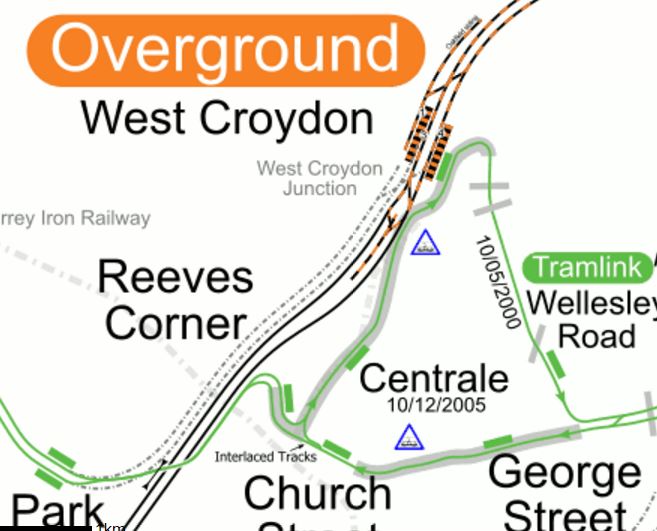
Lines Around West Croydon Station
I’m sure that the engineers in Karlsruhe would have had the trams going through the station to give same-platform interchange to and from trains.
Conclusion
Network Rail has a lot of tools in the box and I think that as technology develops, we’ll see some interesting ideas.
A Tram-Train Between Skipton And Colne
Skipton station is a station at the western end of the electrified lines to and through Leeds. There are several plans for the future, involving direct trains to London and more frequent services to and from Leeds. There is also an aspiration of the Embsay and Bolton Abbey Railway to extend into Skipton.
Colne station is at the eastern end of the partly single-track East Lancashire Line, with services all the way to Blackpool South station via Burnley, Blackburn and Preston.
The two stations used to be connected until 1970, when it was closed, despite not being recommended for such by Beeching.
An organisation called Skipton-East Lancashire Rail Action Partnership is pressing for the line to be reopened. This map shows the rail lines in the area.
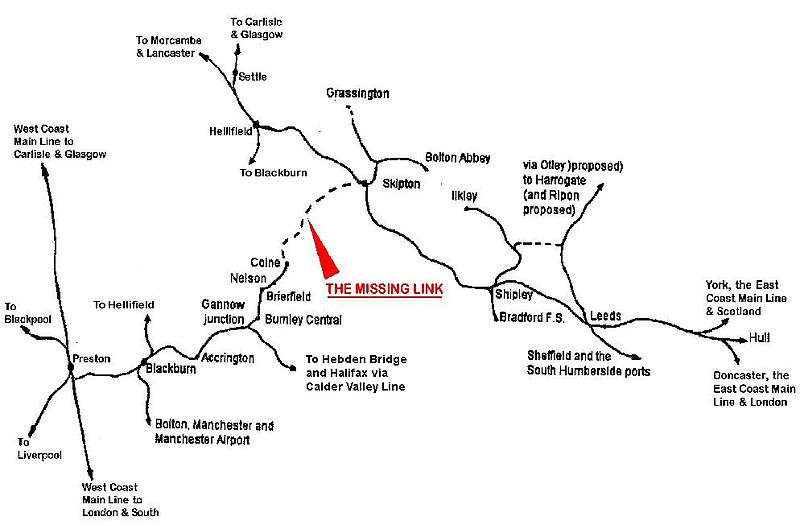
Skipton To Colne
Reopening this just under twelve miles length of track could bring a lot of benefits.
Most of the trackbed hasn’t been built on, but look at this Google Map of Colne station.
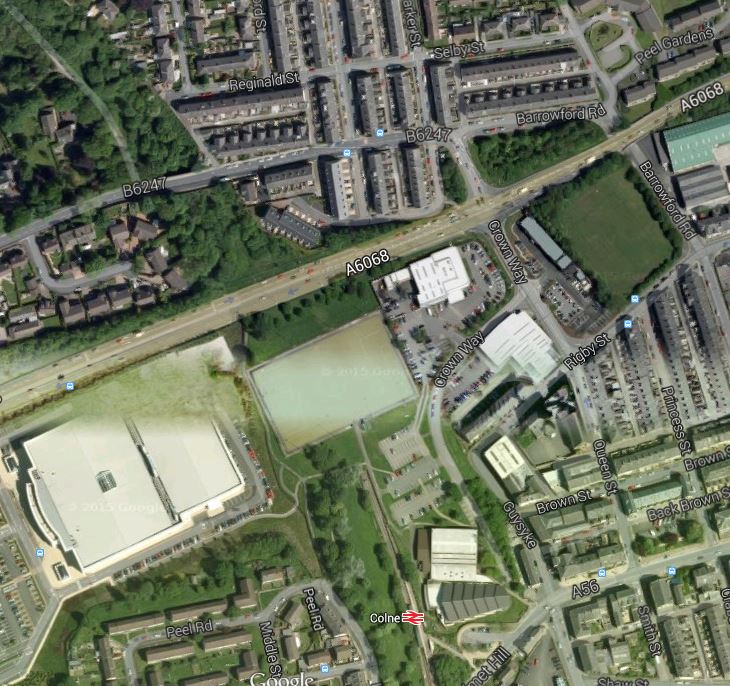
Colne Station
Note how the dual-carriageway, A6068 and a football pitch have been built, where any link from Colne would probably go.
So there would be a need for an expensive bridge. But as the line to Colne is only single-track, I suspect that the bridge could get away with one track, providing there was a passing loop at Colne station.
Having seen tram-trains in Germany, I know what the Germans would do and that is run tram-trains from the Blackpool tramway across Lancashire as trains and then over a tramway to Skipton. The advantage would be simpler infrastructure and lower costs.

The Tram-Train At Karlsruhe Station
The picture shows one of Karlsruhe tram-trains at the Hauptbahnhof. The tram-train is essentially the same as those that will be trialled between Sheffield and Rotherham in the near future.
The advantages of tram-trains would be simpler infrastructure and lower costs. Once the Calder Valley Line is electrified between Preston and Burnley Manchester Road station, a tram-train could start at either Leeds or Bradford Forster Square stations, go via Keighley, Skipton and Colne and then reach Blackburn and Preston, after joining an electrified Calder Valley Line at Rose Grove. From Skipton to Rose Grove, the line could be single track with passing loops and the electrification would be 750 VDC, like all trams in the UK. But of course, Skipton to Leeds and the Calder Valley would be to the main line standard of 25 kVAC.

An Outwardly Normal Class 379 Train
But we have our own British solution in the shape of the IPEMU. The picture shows the prototype, which I rode as a paying passenger in early 2015.
These trains have batteries or some other form of energy storage, which is charged whilst running on electrified lines.
An IPEMU could charge its batteries at Skipton and Preston and use batteries on any line without electrification in between.
The advantage would be no wires and possibly only a single track across the Pennines.
But if it is decided to create a link between Skipton and Colne, the railway technology developments of the last few years, could make the link more affordable and much less of an intrusion into some of our most beautiful countryside.
Sorting Out The Late Great Western Electrification
I could have added something like And Other Issues to the title of this post.
An article in the June 2016 Edition of Modern Railways entitled GWR To Order More ‘387s’ starts with the statement.
Govia Thameslink Railway’s fleet of 29 Class 387/1 EMUs is to be retained by the operator and will not be transferred to Great Western Railway, according to industry sources.
It seems that not only do GTR have trouble with their staff and the new Class 700 trains, but also with other train operators too.
So GWR have snapped up the other fourteen ordered by Porterbrook and supplemented this with an order for fifteen new build units.
This means they have got their required 29 trains to go with the eight they ordered some time ago.
Unfortunately, building more Class 387 trains, which would probably help the rolling stock shortage caused by the non-working Class 700 trains, especially as it appears Bombardier has spare capacity, is not on, as changes to crashworthiness regulations mean that these trains can’t be produced after September 2016.
So it’s probably very lucky, that the Great Western doesn’t have much working electrification.
One paragraph in the article gives some news about the progress of Bombardier’s IPEMU technology. Thios is said.
Industry sources confirm that options for some of the GWR order to be produced as independently powered EMU (IPEMU) variants fitted with batteries for operation away from electrified routes are still being explored. This would enable GWR services to Gatwick Airport and on some of the Thames Valley branches to be worked by ‘387s’ prior to electrification. Any decision to look seriously at this proposal will depend on final electrification timescales being confirmed by Network Rail.
Using IPEMUs on the routes mentioned would be a sensible move.
It would also appear from the article that GWR is going to order more Class 800 bi-mode trains from Hitachi.
There is also this article in Rail Technology Magazine entitled Perry Confirms New GWR Class 801 Will Be Bi-Mode.
As the Class 801 electric train and the Class 800 bi-mode train are more of less identical except for the diesel engines, conversion between the two types is possible.
 The Anonymous Widower