Happy as Pigs in Muck
This building with the two pink cylinders to the left is the primary sewage collection and pumping station for the Olympics.
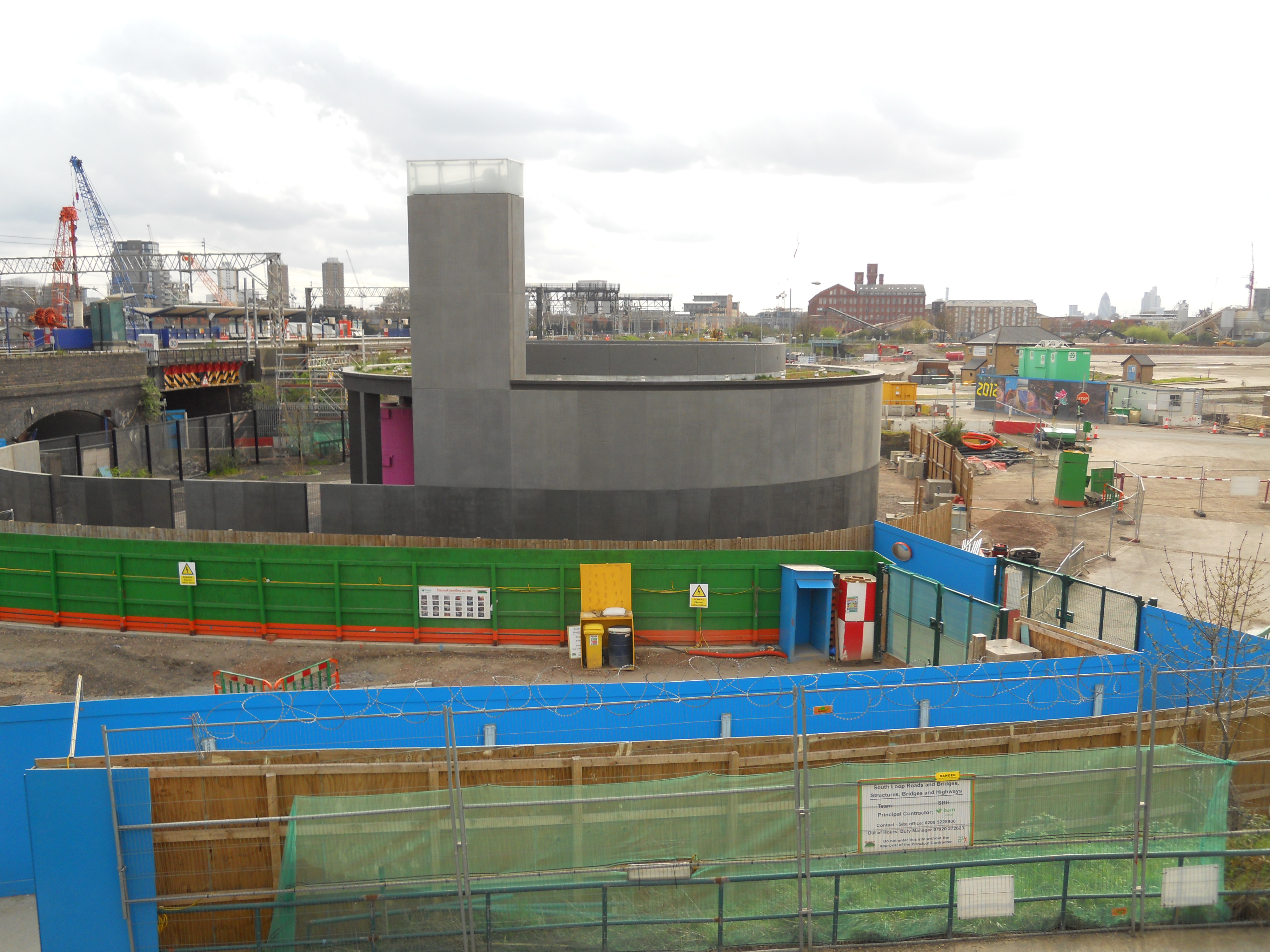
Olympic Primary Foul Sewer and Pumping Station
Inevitably, the two cylinders have been named Pinky and Perky, by the wags on the site.
Note that I took the picture from behind the ViewTube, standing on this concrete box.
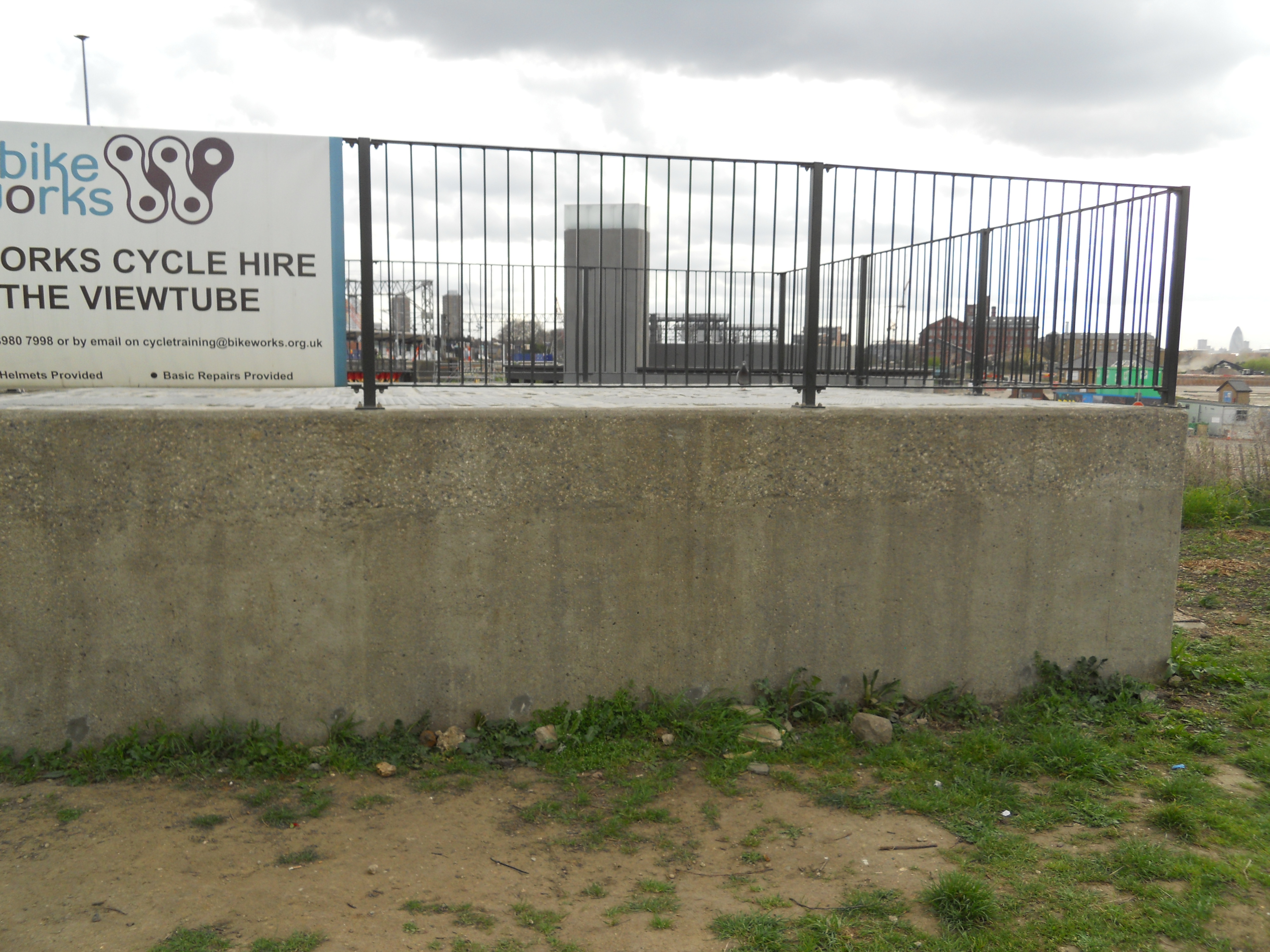
Connecting the New to the Old
I think the box is the connection between the station and Joseph Bazalgette‘s Northern Outfall Sewer. But for now it makes a good authorised viewing platform.
Nowhere in the vicinity could I find any information about the pumping station or the sewer.
I find that a serious omission.
Bazalgette Honoured with Olympic Sewage Pumping Station
The Olympic Park will create a lot of sewage and to pump it into Joseph Bazalgette‘s Northern Outfall Sewer, an elegant pumping station has been designed, which depicts Bazalgette’s Abbey Mills Pumping Station.
The new pumping station is described in the Architect’s Journal. There are also some good pictures here.
I think he would have approved of the new pumping station, as he was a man to always use the best of the technology available at the time and he merged suprb engineering with very good art. The new station appears to follow these rules.
The Cathedral of Sewage
Abbey Mills Pumping Station was built by Joseph Bazalgette to pump the sewage all the way to Beckton. It stands as a glorious monument by the side of the Greenway that leads across the Olympic Park. Although, at present due to the works for CrossRail, you can’t actually get to the park directly along the Greenway.
It dominates the skyline and can be seen from West Ham station, looking more like a mosque than a cathedral of sewage.
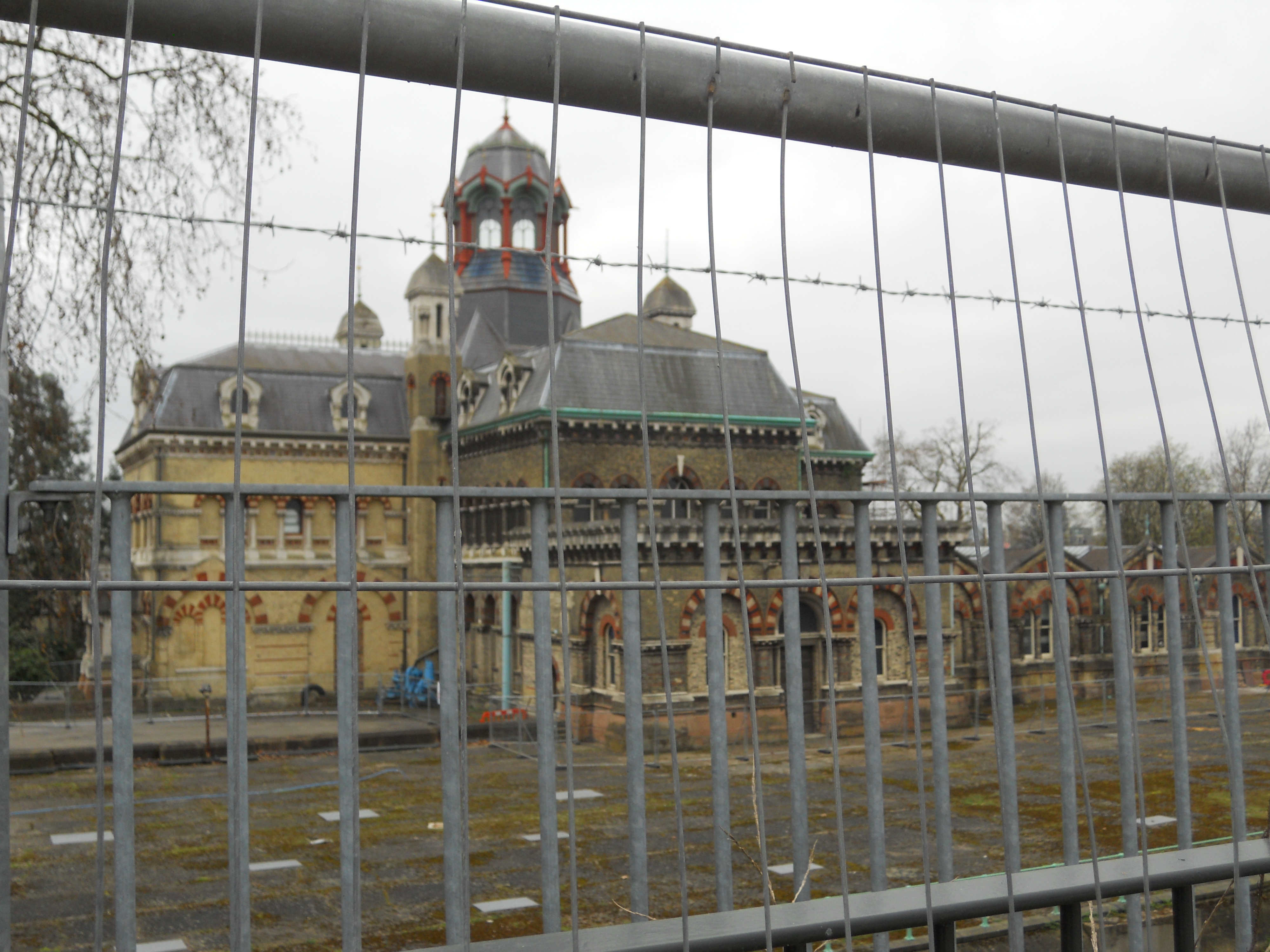


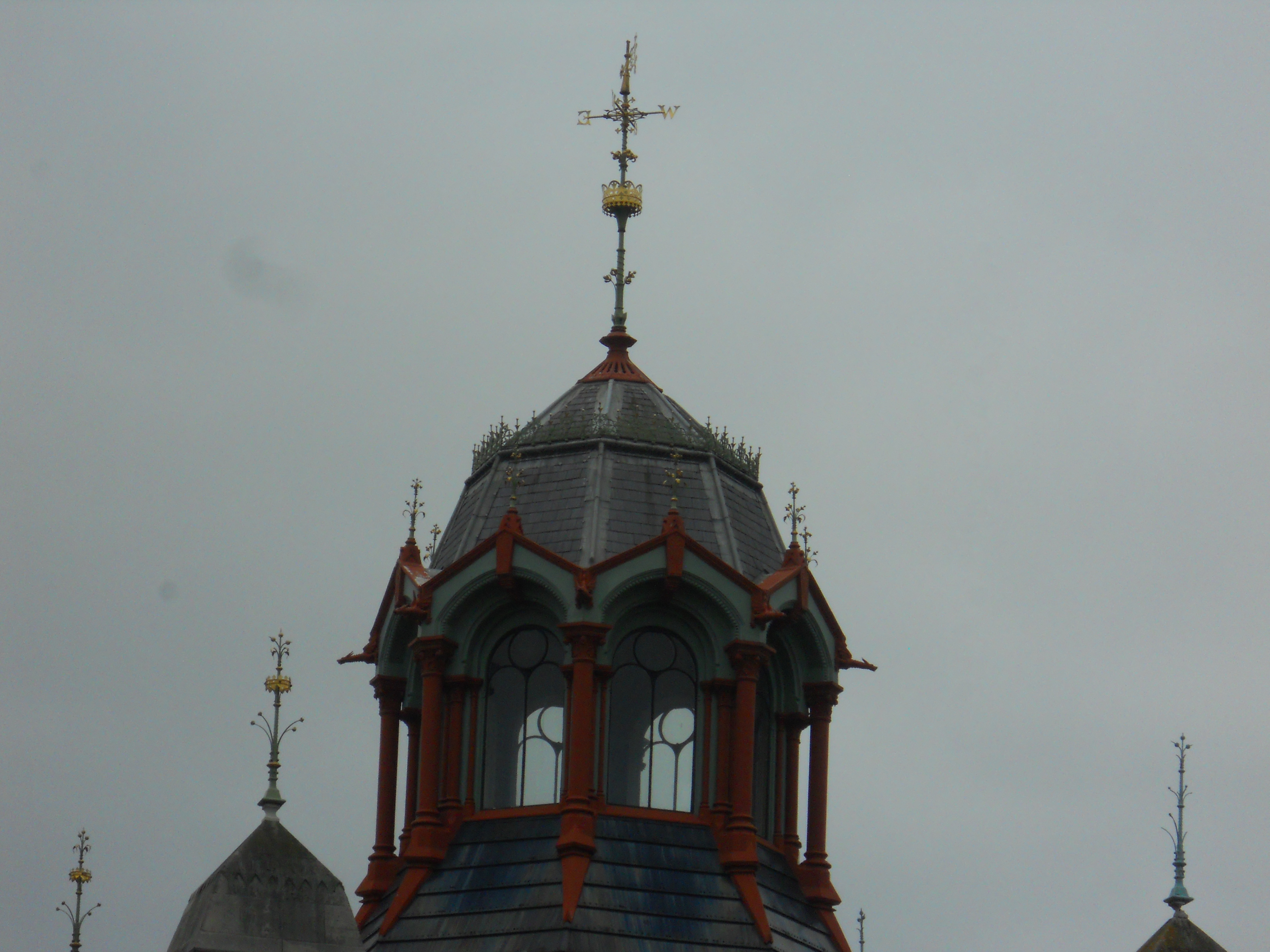
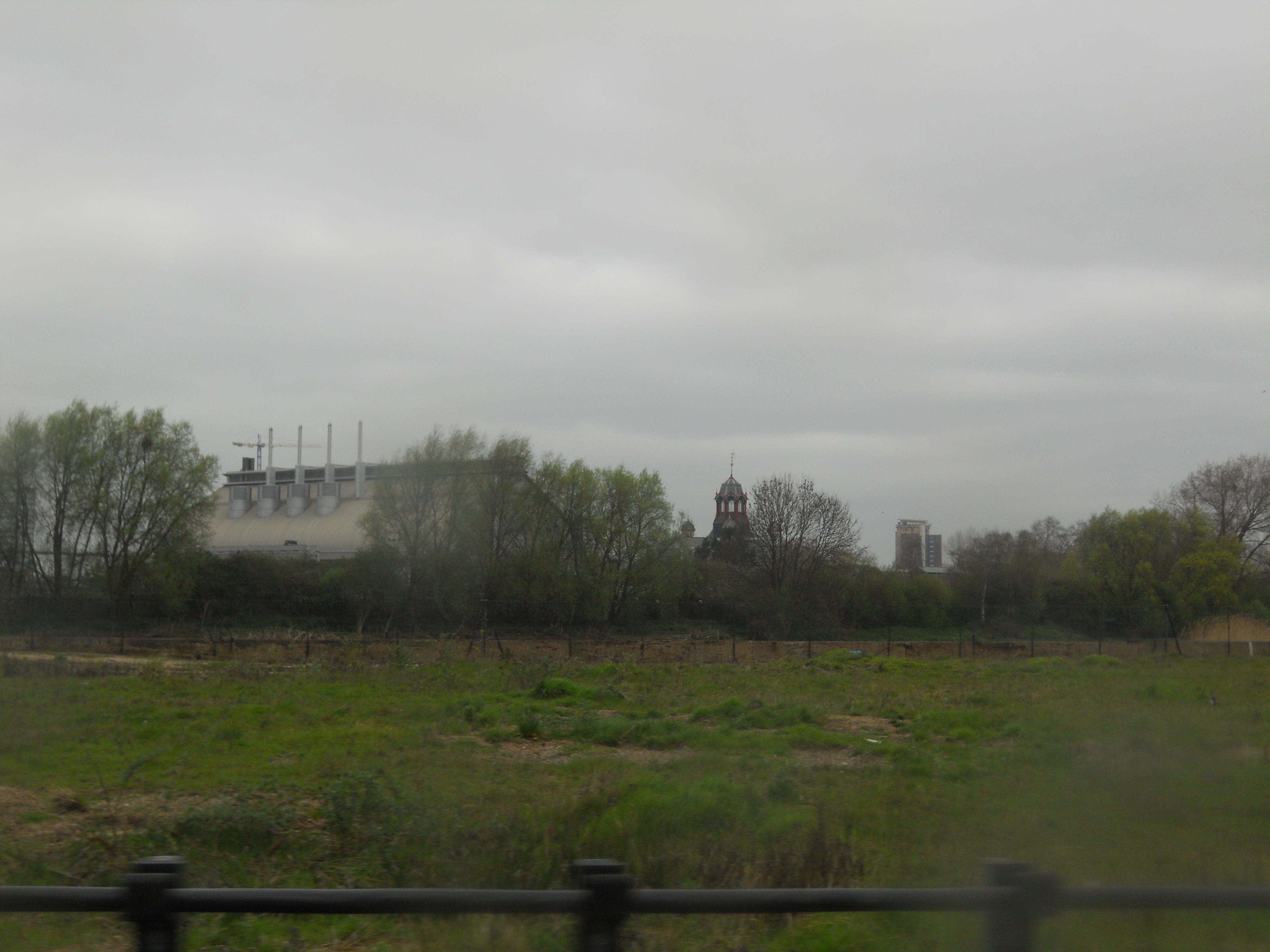
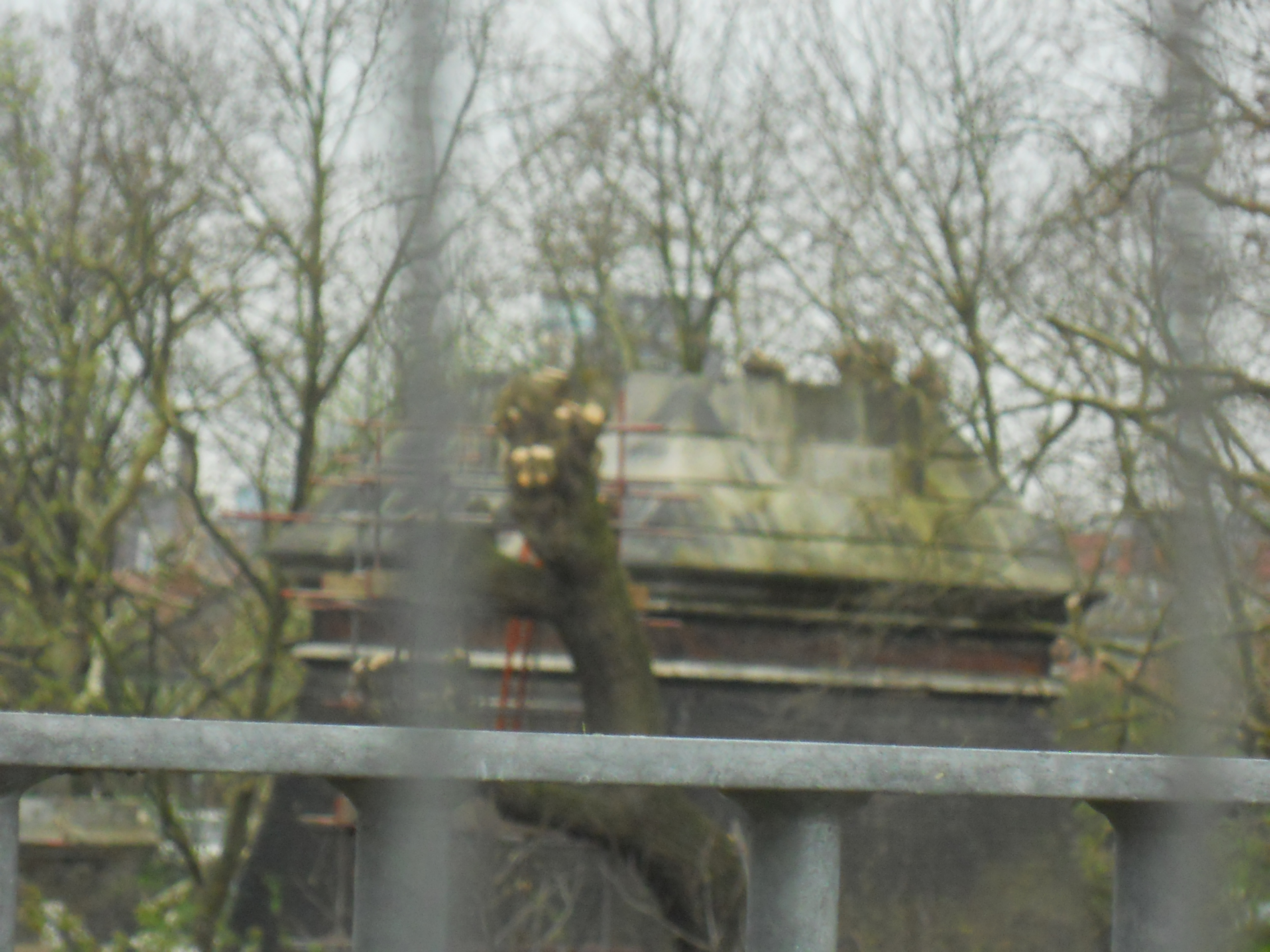
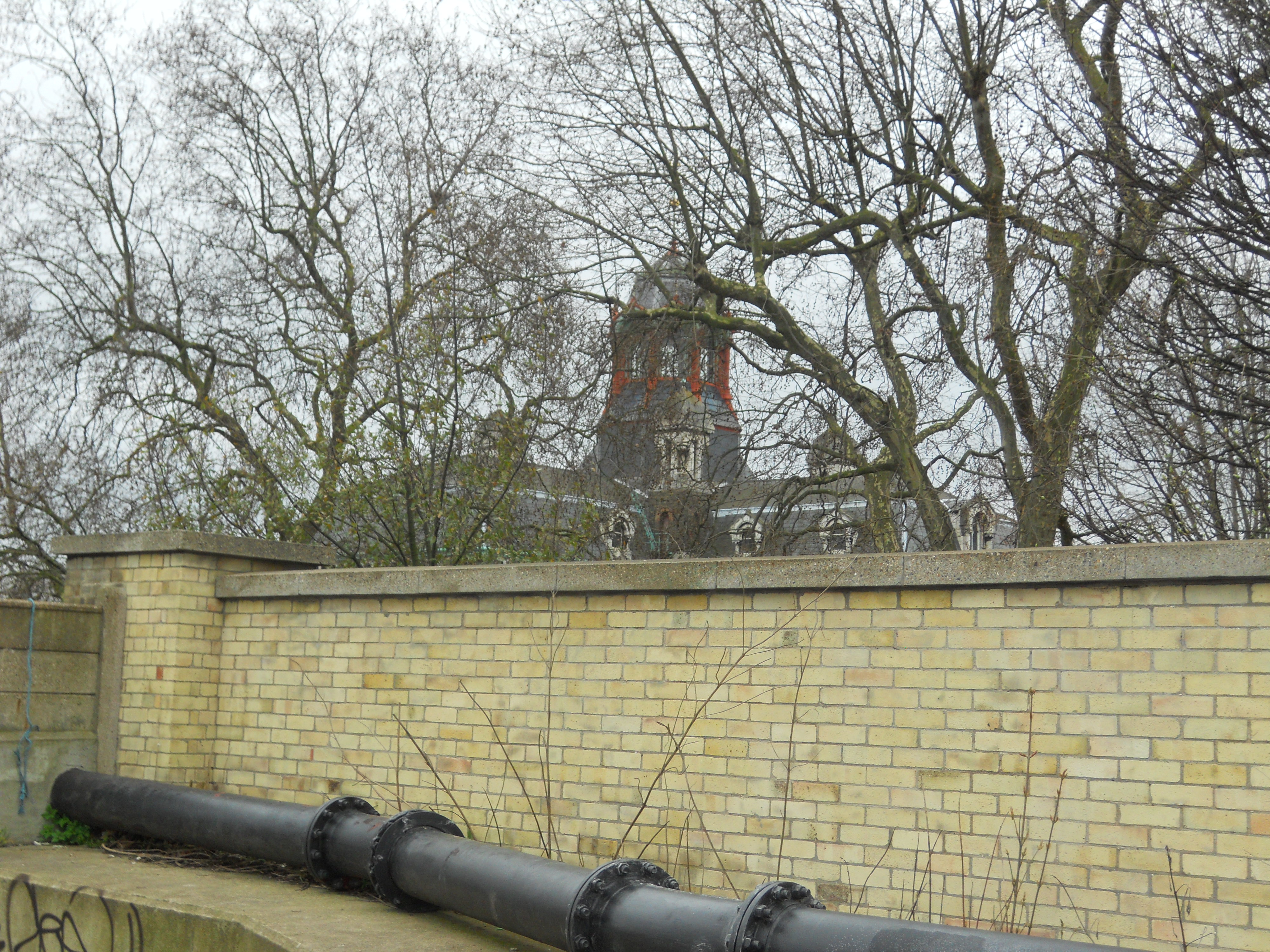

There does appear to be some tidying up going on, but surely this impressive building should look its best for the Olympics.
Do We Need WikiPlates?
I think I know London and its various sites very well. And as I have read the excellent book; The Great Stink of London: Sir Joseph Bazalgette and the Cleansing of the Victorian Metropolis
But I was caught out on Wednesday, when I went to the Olympic Park, in that I hadn’t realised that the Greenway sat on top of Bazalgette’s Northern Outfall Sewer.
But there was nothing to tell me, that I was walking on the creation of a giant!
Obviously, a proper information board would be best, but these get damaged and if you made them from metal, then scrap thieves will take them.
But surely in this age of the Internet, all that is needed is a simple plate, which points you to the relevant place on the web.
If they linked to Wikipedia, through say a reference number, they could be called WikiPlates.
The possibilities for a simple system are endless, especially if you bring in smart phones and SMS messages.
Through the Olympic Park on the Greenway
From the Top of the Morning, I had two choices. I could either walk to Hackney Wick station on the North London line, or try to find the Greenway that continued through the Olympic Park to Pudding Mill Lane on the Docklands Light Railway.
I chose the latter more in hope than expectation, as I felt that building or security considerations on the Olympic Park might mean the Greenway would be closed.
About a hundred metres south of the pub, I found this welcoming sign.

Entry to the Greenway
So I’d made the right choice.
Incidentally, the Greenway is built on top of the eastern end of the Northern Outfall Sewer, which was built in the mid-1800’s by Joseph Bazalgette, to take London’s sewage to the works at Beckton.
The Greenway gives good views of the Olympic stadium of which this is typical.
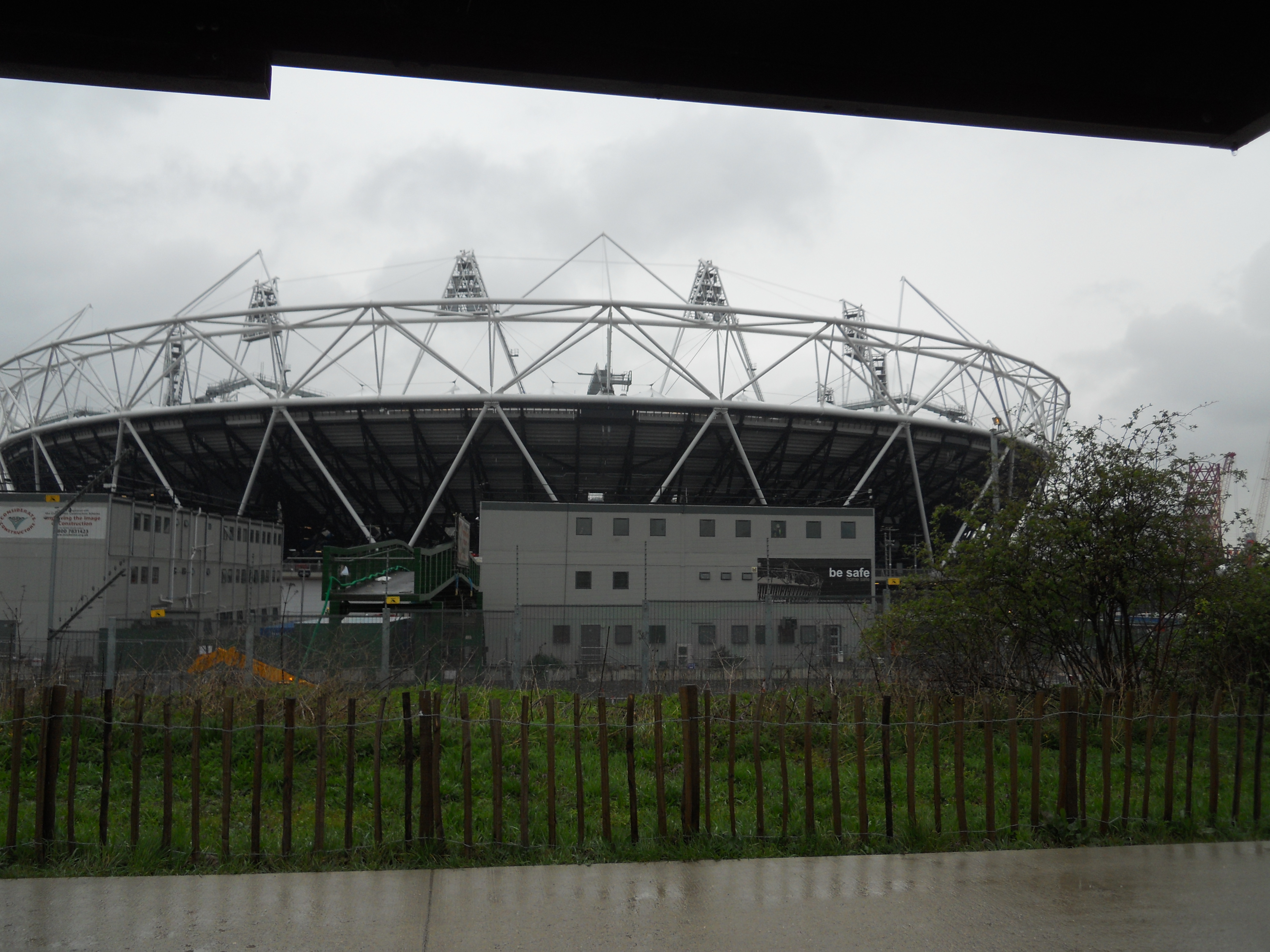
The London Olympic Stadium
Obviously, landscaping and a few other things need to be done, but it is now virtually complete.
You can also see the ArcelorMittal Orbit and the Aquatics Centre.
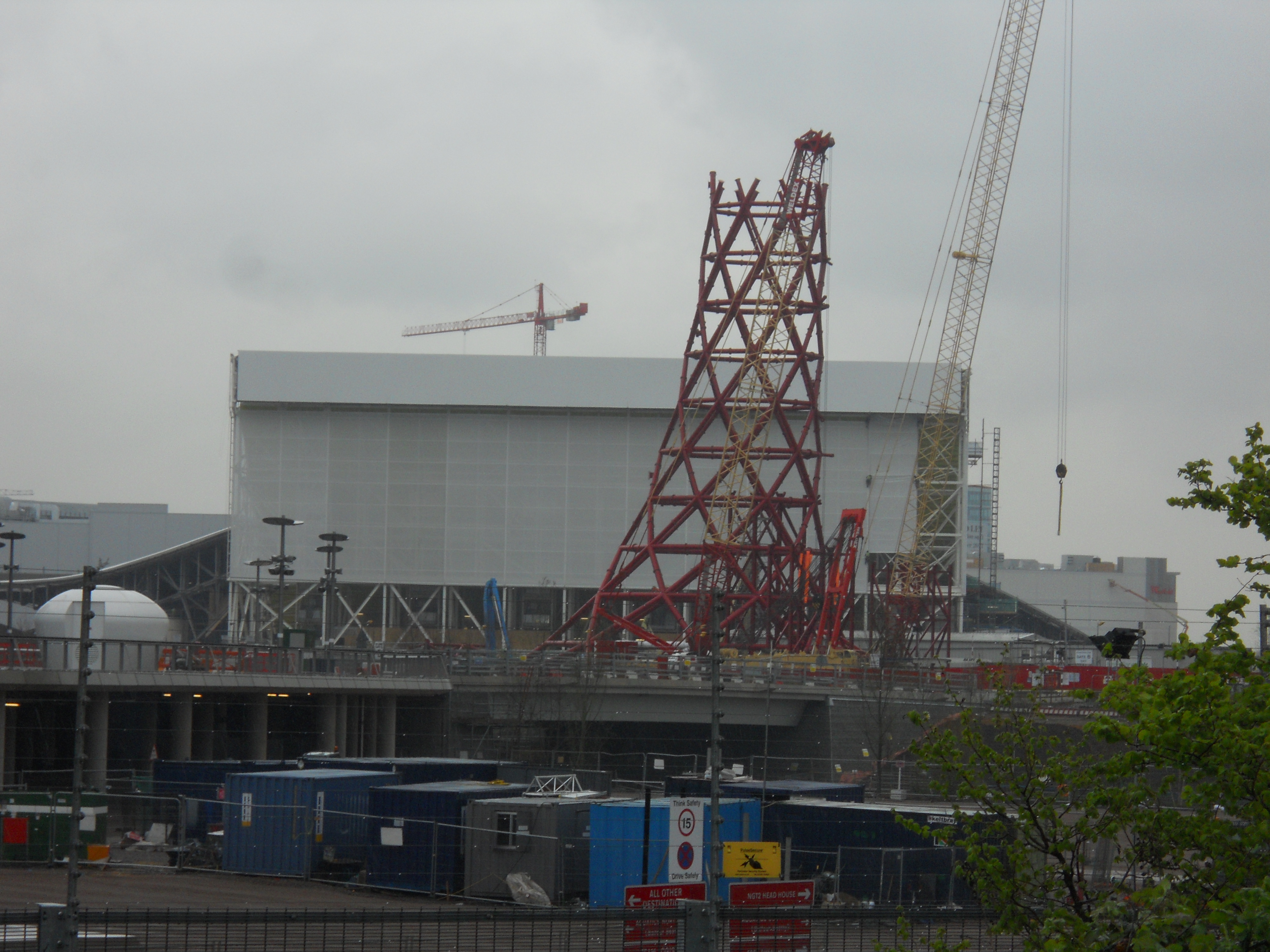
ArcelorMittal Orbit and the Aquatics Centre
The Orbit structure has aroused controversy, but seeing it close to, I found it rather fascinating. You can also see all of the bits lined up like groups of acrobats ready to climb into position in the tower.
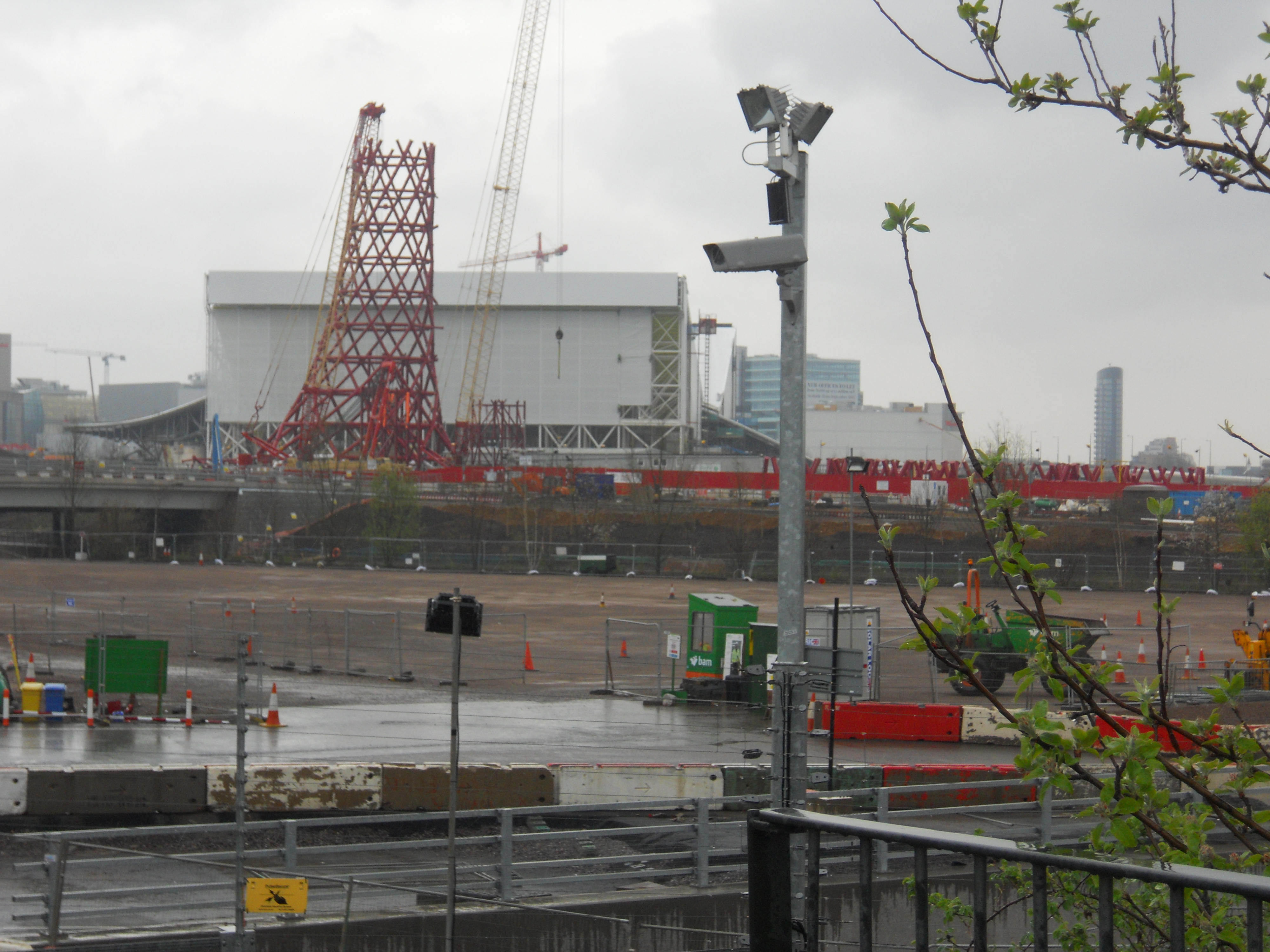
I’m Ready to Ascend!
I suspect that like the Eiffel Tower has for Paris, it might end up as an icon of East London after the Games.
The one think you can’t say about it, is that it is boring! The only things that should be boring are some machine tools and tunnelling machines.
One thing that has been got right is the information for visitors, as this picture shows.
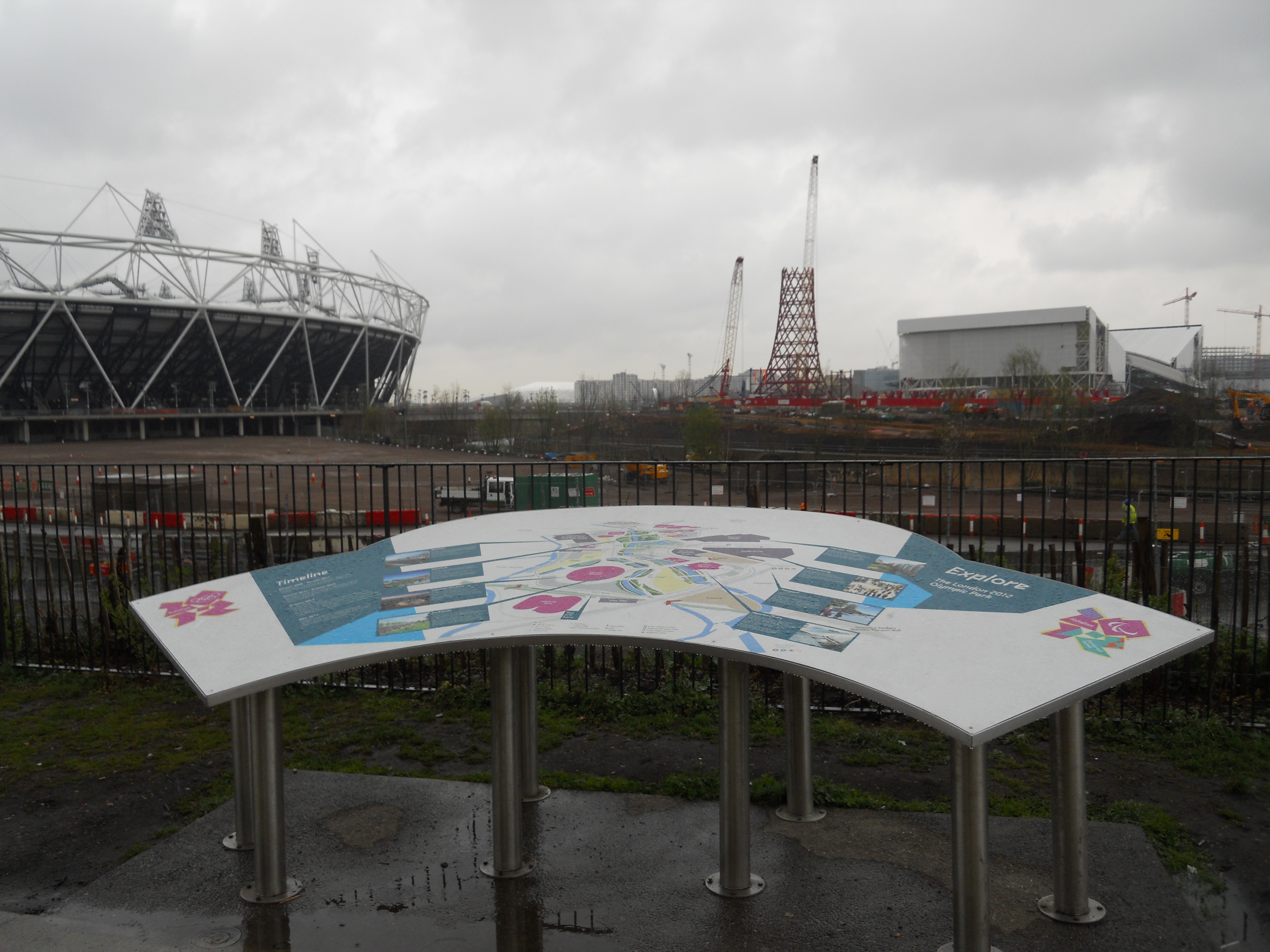
Olympic Park Panorama and Information
Do you think that the far-sighted Joseph Bazalgette had realised that his enormous sewer would one day be used as a grandstand for a construction project, of which I’m sure he would have proud? Obviously not, but with so many things he did, he got them absolutely right. And right for possibly a thousand years!
No walk is complete without a cup of something and at the south end of the portion of the Greenway that crosses the Olympic Park, there is this cafe and viewing point called ViewTube.

The ViewTube, Olympic Park, London
I had a good cappucino and a rest before walking on to Pudding Mill Lane and the DLR, where I took this final picture.

The Olympic Park from Pudding Mill Lane, DLR Station
All in all, this walk took about two hours including refreshments. On a good day, it should easily be possible to do it in the same time from the Angel at Islington to the ViewTube cafe.
But I suspect it’ll get busy!
The Golden Age of Tunneling
London is one of the most dug under cities in the world and has been for many years.
The first large tunnels under London were Sir Joseph Bazalgette‘s Victorian sewers, built in response to the Great Stink. In some ways it was a large and very expensive scheme, but it started the clean-up of the Thames and effectively removed cholera from the City. It was in some ways the first great project, as it did what it said in the spec, vast numbers of people weren’t killed builling it and lots of it still works today. It is all documented in an excellent book; The Great Stink of London: Sir Joseph Bazalgette and the Cleansing of the Victorian Metropolis
Then came the Underground described so well in the Christian Wolmar’s book; The Subterranean Railway: How the London Underground Was Built and How it Changed the City Forever
Since the Second World War, we have seen a few tunneling projects and the reuse of some of the old ones.
The Victoria Line, the world’s first totally automated passenger railway was built in the 1960s. We missed a trick here, as we never realised what we had built. So the automation was vacuum tube, but for well over thirty years it showed how a well-designed underground railway could perform. It is now being upgraded with new signalling and new trains and the old reliability is rumoured to be suffering. Everybody is blaming the convenient scapegoat of the old 1967 trains running in partnership with the new ones, until all the new are delivered. I don’t! I blame bad project design and management. In the 1960s they got the automation absolutely correct and created a good system. They should have replaced all the old stuff with something that was modern and compatible and then built new trains, that were compatible with the old signalling.
They should also have used the principles of the line; no junctions, totally underground, hump-backed stations to save energy, full automation to create new lines where they were needed. But they didn’t, as the Victoria Line wasn’t sexy and didn’t appeal to the vanity of politicians. But it was and still is a superb design.
The Jubilee Line was then created by splitting the Bakerloo. The extension to Stratford was built on a grand scale and has some of the most amazing stations in the world. Was it the first example of bad co-operation between bankers and politicians, designed to appeal to both their vanities? It was also designed to serve that other monument to the vanity of politicians; the Dome.
In some ways a lot of the design of the extension of the Jubilee line, with large stations and platform edge doors were an attempt to future proof the line and in some ways, this has been vindicated by the decision to stage the 2012 Olympics at Stratford and the decision to build other lines which interchange with it. Only time will tell if the original cost was worth it.
In some ways the design of the Jubilee shows just how good the design of the Victoria was and the trick we missed was not building the Jubilee to the principles of the earlier line. Even now, despite being still a relatively new line, it is still being constantly upgraded.
There was also the building of High Speed One, which tunneled into St. Pancras from East London. Did they get this right? Substantially yes and it seems to work, although the Eurostar trains have suffered reliability problems. But that’s not down to the tunnels.
Other unqualified successes are the Docklands Light Railway extensions to Lewisham and Woolwich in tunnels under the Thames. The original DLR was built down to a cost, but in some ways this has proven to be a virtue, as like Topsy it keeps growing and has earned a big place in the hearts of those who use it. It will also play a big part in getting people to the Olympics.
But two of London’s most successful tunneling projects are reuse of old tunnels; Thameslink and the East London Line.
Thameslink was originally built by connecting the suburban lines running out of St. Pancras to those running south of London to Gatwick and Brighton using the old Snow Hill Tunnel. The economic argument says that as you do away with expensive terminal platforms in London, you can spend the money to buy more trains and electrify the lines. Thameslink was a victim of it’s own success and the necessary upgrades with a new station over the river at Blackfriars and twelve-coach trains are running many years late and billions of pounds over budget. Perhaps we needed a less elaborate Julibee Line, that interfaced properly with Thameslink?
The new East London Line uses the Thames Tunnel under the Thames. In some ways, it is a modest scheme, but I believe that like the DLR, it’ll prove to be an unqualified success. It surely must be the only new railway in the world running through a tunnel built in the first half of the nineteenth century. The tunnel surely is the supreme monument to its creator, Sir Marc Brunel and his more famous son, Isambard Kingdom Brunel, who was engineer in charge for much of the building.
Now, two major tunneling projects are in progress; CrossRail, which is actually being built and High Speed Two, which is just being planned. I am dubious about the latter, as I think that the money could be better spent upgrading existing lines and trains.
But in some ways to London, the most important scheme is the creation of electrical cable tunnels under the city to carry the high voltage mains here, there and everywhere. This PDF explains the project and shows how good thinking and engineering can benefit everyone.
So perhaps the golden age of tunneling will arrive in the next few years.
The Train that Won’t Go Quietly!
There are very few engineering projects in the world, that last a long time, as the technology gets replaced. To me some of the best in the UK are :-
The New River – Built in 1613 to supply London with fresh water, It is still used in part for that purpose nearly four centuries later. Will there be a celebration in 2013?
The Thames Embankments and Bazalgette‘s Sewers in London – These transformed the city and also laid down the basic quality control standards for large construction projects. I seem to remember reading that only one person died in the construction of the sewers, which was a major achievement for the ninteenth century.
The Forth Bridge – Probably the best known bridge in the world. Opened in 1890, it still carries nearly 200 trains a day.
The Thames Tunnel – The first tunnel under a navigable river, that now carries the East London Line under the Thames.
St. Pancras Station – The head of SNCF described it as the finest station in the world. I’ll agree with him. It was originally opened in 1868 and a lot of the original design is still intact.
Welwyn Viaduct – An extraordinary structure in Hertfordshire, that still carries the East Coast Main Line over 150 years after it was built.
We may have structures that last for years but actual vehicles that last more than a four decades or so are rare indeed.
The Mersey Ferries have been around for centuries, but the current three boats are all over fifty years old. I remember them with affection from my days at Liverpool University in the mid-1960s.
The London Routemaster bus was launched in 1956 and although most were replaced by 2005, their are still two heritage routes in central London. I rode on one in September.
The Victoria Line in London has two distinctions. It is the oldest fully-automated railway in the world and it still has some trains dating from 1967. I have travelled on some quite recently and they are still in good condition. at 43 years old.
And then there is the Inter-City 125 or High Speed Train. It may not be as venerable as the other three examples, but then they don’t travel at 200 km/hr or 125 mph over routes that measure hundreds rather than tens of miles. It was also designed as a stop-gap design after the failure of British Railways to get the tilting APT to work.
Now over thirty five years since the trains were introduced, they are being refurbished, re-engined and are still in front-line service all over the country.
On my trip north from Edinburgh to Inverness in the cab of HST, 43313, talked about some of the problems with the trains and added to my knowledge.
The old rather smoky diesel engines have now been replaced in many power cars with modern units.
The rather draughty and noisy doors in the cab have now been replaced to make the working environment second-to-none.
But the slam doors of the Mark 3 coaches with their rather quaint traditional windows are a worry.
But that is now being addressed by sound engineering according to Modern Railways.
Who’s to say when we’ll see the last of the HSTs. I wouldn’t be surprised if some are still running in 2030 or even 2040, as they are classic Darwinian train, that evolves to beat every attempt to kill it off.
In the same magazine, it was also announced that one of the HSTs had run from Plymouth to Paddington non-stop in just two hours forty minutes. That is an average speed of 84.375 mph. London to Paris by Eurostar is 307 miles and takes two hours fifteen minutes at an average speed of 136.444 mph.
So Eurostar is quicker, but it runs on a line virtually without curves and it isn’t thirty five years old.
As Modern Railways said, the Plymouth to Paddington run wasn’t bad for a thirty-five year old, British Rail-era diesel train dismissed as obselete by Labour transport ministers almost a decade ago!
I could talk about pots and kettles, but in a way isn’t the HST a superb two-fingered salute to the bunch of NuLabor morons, who almost bankrupted this country, by their idiotic policies?
 The Anonymous Widower