A Look At Bond Street Station
Bond Street station is double-ended.
This visualisation shows the knitting that connects it to the current Bond Street station.
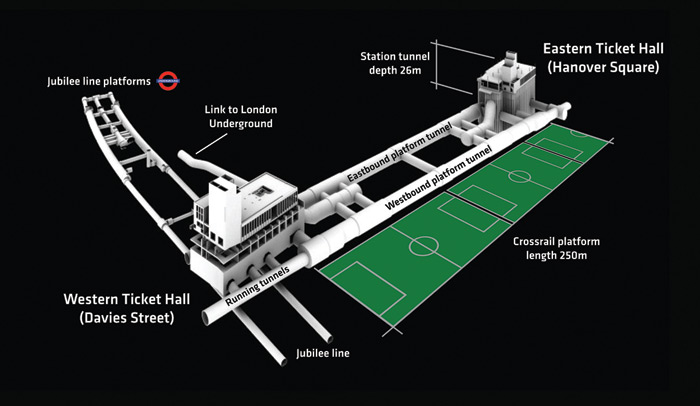
Note.
- The station has two entrances; Davies Street and Hanover Square.
- The length of the Crossrail platforms.
- It looks like the Western interchange between Crossrail and Jubilee Line is easy.
- It could be quite a walk between Crossrail and the Central Line at Davies Street.
- If you’re a strong walker, some will use the Hanover Square entrance to access the Central and Victoria Lines.
On this quick look, I have a feeling that at Bond Street station, it will pay to know your entrances and make sure you’re at the right place on the train.
Will c2c Push For Access To Stratford And Liverpool Street?
On Sunday in An Excursion To Shoeburyness, I indicated how instead of coming back the way I came via West Ham, I got off at Stratford and did some shopping at Eastfield.
But would c2c like to serve Stratford and Liverpool Street more?
The Current Weekend Service From Shoeburyness To Stratford And Liverpool Street
Currently two trains per hour (tph) run from Shoeburyness to Stratford and Liverpool Street at weekends, when there is no conflicting engineering work.
Incidentally, with my excursion, I think that I had to come back by c2c as the Great Eastern Main Line was closed for Crossrail work.
If nothing this engineering disruption shows the value of Southend being served by two independent rail lines.
The Stratford Effect
The Queen Elizabeth Olympic Park and the Shopping Centre at Stratford will have a porofound effect on the operation of c2c’s trains.
This page on the c2c web site is entitled Christmas shoppers get direct c2c trains to Stratford.
This is said.
c2c will run two trains an hour on both Saturdays and Sundays that divert to Liverpool Street instead of Fenchurch Street. These will provide direct access to the Westfield Stratford City shopping centre plus easy access to London’s West End. This is in addition to the two trains an hour that run to Chafford Hundred, for the Lakeside shopping centre, as part of c2c’s existing service.
I think the news item dates from 2014, but it does show a level of intent.
There is also this article in the Southend Echo, which is entitled Extra trains planned as West Ham’s stadium move puts added pressure on c2c network.
This is said.
TRAIN operator c2c are running extra and longer trains for fans travelling to West Ham matches at the club’s new stadium in Stratford.
This won’t be a problem for weekend matches, but what about matches on weekday evenings?
c2c’s spokesman went into more detail.
When asked about direct trains running from Southend to Stratford to make the journey as quick and simple as possible for fans, c2c said they already run direct trains to Stratford from Southend and Basildon,but not Grays, and there will be two trains per hour direct to Stratford most weekends – and two more trains per hour to West Ham.
From Grays, all four trains an hour go to West Ham.
For weeknight games and during weekend engineering work, all trains run to West Ham.
At present, the weekend trains between Shoeburyness and Stratford, satisfy the weekend sopping and football, but what about other events at the Olympic Park? The Queen Elizabeth Olympic Park is only going to get busier.
So are the current services really what c2c and its customers want and need?
Car parking is fairly comprehensive at the outer stations according to this page on the c2c web site.
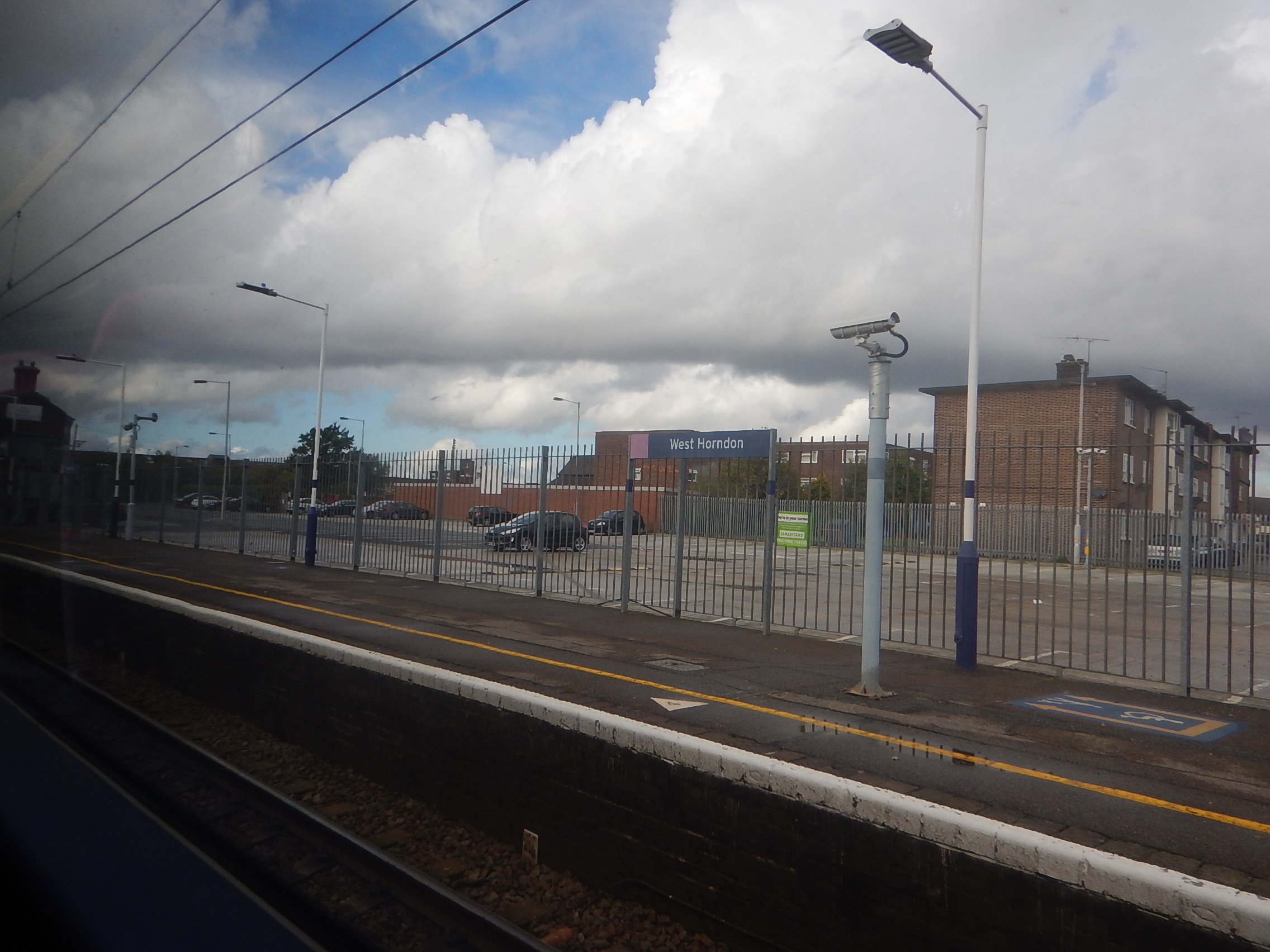
It wasn’t very busy on the Sunday I took this picture at West Horndon station, but for encouraging weekend leisure trips, the availability of car parking must be an asset.
I would imagine that c2c are pushing the authorities for permission to run evening services into Liverpool Street via Stratford.
The Crossrail Effect
When you talk about any of London’s railways, this herd of elephants, with its 1,500 passenger capacity Class 345 trains, always bursts into the room.
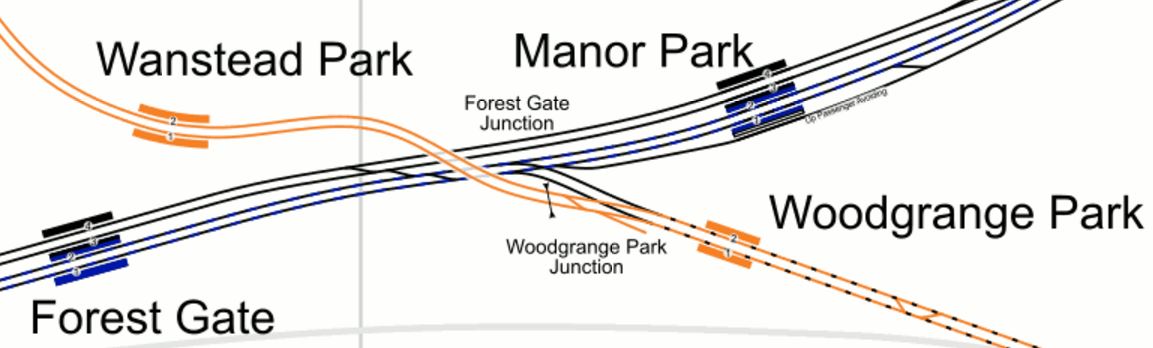
For c2c trains to get to Stratford, they need to take the Gospel Oak to Barking Line (GOBlin) between Barking and Woodgrange Park, where they join the slow lines into London.
This map from carto.metro.free.fr shows the lines around Woodgrange Park station.
As the GOBlin is currently being electrified and improved, I suspect that there will be no operational problems on the short stretch of shared line.
Will there be problems though, after Crossrail opens and there are increased frequencies of trains to and from London?
In the Peak, Crossrail will be running 16 tph to and from Shenfield, so as they are only running 8 tph in the Off Peak, I suspect that at weekends, there will be capacity for c2c’s 2 tph to Stratford.
It is interesting to look at Crossrail’s proposed Peak service on the Shenfield branch.
- 8 tph between Shenfield and Paddington
- 2 tph between Shenfield and Reading
- 2 tph between Shenfield and Maidenhead
- 4 tph between Gidea Park and Liverpool Street
This says to me, that there are probably paths in the timetable to squeeze 4 tph in the Off Peak into Liverpool Street, as the Gidea Park service is Peak-only.
Access To Liverpool Street
Liverppool Street station has two problems.
- There are not enough platforms – This is a difficult one to solve, although Crossrail might only need a single platform to handle the limited number of services not going through the core tunnel. London Overground regularly turns 4 tph in a single platform.
- The platforms are too short – This will be remedied once Crossrail trains are using the core tunnel.
I’m certain, that in a few years Liverpool Street in the Off Peak, will be able to handle 2 tph with a length of 12-cars for c2c.
It is interesting to note, that my train on Sunday was only eight-cars. Was this because of limitations at Liverpool Street?
Should c2c Stop At Woodgrange Park?
Currently, they don’t, but after the GOBlin is reopened would it be a good idea to create a step-free change to get to and from a lot of stations across North London.
The change at Barking between the two lines is not easy and the alternative is to improve it.
c2c Needs Access To Crossrail
c2c’s current route structure has no connection to Crossrail.
As an example to go from West Horndon to Heathrow Airport, you’d need to change twice.
- At West Ham onto the Jubilee Line.
- At Stratford onto Crossrail.
Neither change is a short walk, but both are step-free in busy stations.
If however, it’s a Saturday or Sunday, you could take a train to Stratford and I suspect when Crossrail opens, just wait on the same platform until a Heathrow train arrives.
It should be remembered, that c2c runs an all-Electrostar fleet and I suspect that these are Crossrail compatible with respect to platform height, so the change at Stratford would be easy with heavy cases, buggy or even a week-chair.
What Will The Future Hold?
From what I have written, it would certainly be possible for there to be two 12-car trains every hour in the Off Peak between Shoeburyness and Liverpool Street calling at Basildon, Upminster and Stratford.
But this would have limitations and possible problems.
- Passengers from stations like Grays would want the Crossrail connection too!
- If it is needed in the Off Peak, is it needed in the Peak?
- Would passengers changing at Stratford cause congestion?
There would also be the mother of all battles between the train companies involved, to make sure they kept market share.
My ideal world scenario would be something like.
- 4 tph all day go into Liverpool Street.
- 2 tph on both c2c routes through Basildon and Grays go into Liverpool Street.
- Chafford Hundred is served from Liverpool Street
- Ticketing is such, that Stratford to Southend can use either route and either Southend station.
- c2c trains to and from Liverpool Street, call at Woodgrange Park for the GOBlin.
My wish list may not be possible, but there is certainly tremendous scope for improvement.
We could even see, a station like Grays, Pitsea or Southend becoming a Crossrail terminus.
Who knows? I don’t!
Improving Services To Cannon Street And Charing Cross Stations
Platform Changes At London Bridge Station
The Thameslink Programme will change the platform layout at London Bridge station considerably.
In 2012, the platform layout at London Bridge was as follows.
- Platform 1 – From Cannon Street
- Platform 2 – To/From Cannon Street
- Platform 3 – To Cannon Street
- Platform 4 – From Charing Cross
- Platform 5 – From Charing Cross and Bedford
- Platform 6 -To Charing Cross and Bedford
- There was also a through line to Charing Cross without a platform.
I can’t remember much about those days, except that the platforms were very crowded.
When London Bridge station and the Thameslink Programme is completed, the new platform layout will give opportunities to create new services through London Bridge to both; Cannon Street and Charing Cross stations.
The platform layout at London Bridge station will be as follows.
- Platform 1 – From Cannon Street
- Platform 2 – To/From Cannon Street
- Platform 3 – To Cannon Street
- Platform 4 – From Thameslink
- Platform 5 – To Thameslink
- Platform 6 – From Charing Cross
- Platform 7 – From Charing Cross
- Platform 8 – To Charing Cross
- Platform 9 – To Charing Cross
So, six through platforms and seven lines have been replaced by nine through platforms. This is a 50% increase in platforms and a 28% increase in tracks. The Borough Market Viaduct was the major engineering in creating the extra two tracks across the South Bank.
Other factors help capacity in the area include.
- The Bermondsey dive-under sorts out all the lines South of London Bridge station and will present trains to the right platforms at London Bridge. |Spaghetti Junction is so 1960s!
- Effectively, there are now three parallel and probably separate railway systems virtually from Bermondsey through London Bridge station, that split after the station; a pair of lines for Cannon Street, another pair for Thameslink and two pairs for Charing Cross.
- There has been a lot of work on track and signalling.
- The Tanners Hill Fly-Down has been built to improve capacity between London Bridge and Lewisham, which must help Cannon Street and Charing Cross services.
- The design of London Bridge station with its wide through platforms and more escalators than a science-fiction fantasy, could mean that passengers are there in time for their trains.
- The electrification changeover for Thameslink has been streamlined.
- The Class 700 trains must be better at changing voltages in the Thameslink tunnel.
All of these factoras must have positive affects on the capacity of the system.
I also think that one of the major benefits of the new layout, is what happens if something goes wrong.
If say a train breaks down on Thameslink at Blackfriars, because it is a separate railway, this doesn’t affect Cannon Street and Charing Cross services in the way it did before the new layout. There would still be the problems of fixing the train and what to do with those following behind, but the new design of London Bridge station means that passengers can be handled safely in all the space.
I’d love to see Network Rail’s thinking for handling all problems, but the design of London Bridge and its tracks could be one of those designs, that in a hundred years, engineers will look at and copy.
I can’t believe that the new layout won’t allow more trains to go to and from Cannon Street and Charing Cross, just as it allows more trains to go through the core Thameslink tunnels.
Thameslink is going from something like fifteen trains per hour (tph) to 24 tph or an increase of 60%. So what sort of increase will we see into Charing Cross and Cannon Street?
Services To Charing Cross
In 2012, Charing Cross to London Bridge was handled on three tracks between the two stations and three platforms at London Bridge. Two of the platforms were shared with Thameslink running 15 tph through them.
These three tracks and platforms have been replaced with four tracks, each with its own platform at London Bridge and possibly Waterloo East stations.
The tracks must have been fitted with a higher-capacity signalling system and an efficient track layout.
I am surprised that the four lines to and from Charing Cross share a platform at London Bridge with the other line going the same way.
Surely, it could be better if the Thameslink and Charing Cross services shared an island platform, when they were going in the same direction.
This would give a same-platform interchange between Thameslink and Charing Cross services, which the 2012 layout had.
I suspect that sharing is not possible, as it would mean that services would have to cross other lines to get there and the track doesn’t and can’t allow it.
But if the current service level of fourteen tph to and from Charing Cross station, can be achieved with just two platforms at London Bridge station as they are in the half-completed station, then there must be potential to increase the number of services to and from Waterloo East and Charing Cross, by a worthwhile margin.
Compared to some places in the UK, Charing Cross station already has an intense level of services to stations in South East London and beyond.
These are some example of trains out of Charing Cross between eleven and twelve in the morning.
- Abbey Wood – 2 trains
- Ashford International – 2 trains
- Dartford – 6 trains
- Gravesend – 4 trains
- Greenhithe – 4 trains
- Hayes – 4 trains
- Lewisham – 7 trains
- Orpington – 6 trains
- Rochester – 2 trains
- Sevenoaks – 8 trains
- Tonbridge – 6 trains
- Woolwich Arsenal – 2 trains
If this is increased, I can’t see any complaints from passengers, especially as most trains appear to have ten-cars or more.
I do think though that there will be a need to improve capacity, onward connections and walking routes at Waterloo East and Charing Cross stations.
I say more about these two stations in A Look At Charing Cross Station and Around Waterloo East Station.
It’s just that all these passengers will need somewhere to go.
Services To Cannon Street
Cannon Street station will be getting the same number of lines in 2018, as it did in 2012.
So I doubt, that the service will be any less intense, than it was in 2012.
Currently, in the Off Peak, there is a sixteen tph service, to and from Cannon Street station, which compares well with the current fourteen to and from Charing Cross station.
There is also going to be improvement at Cannon Street station with respect to onward connections and walking routes.
- Bank tube station is getting two new entrances, which are closer to Cannon Street.
- The connection between Cannon Street station and the Central Line will be improved with a travelator running North-South between the two Northern Line tracks at Bank station.
- The connection between Cannon Street station and the Northern Line will be improved with triple escalators directly down from Cannon Street, perhaps a hundred metres from Cannon Street station.
- The link to the District and Circle Lines is already excellent and those lines will be improved and get higher frequencies in the next few years.
- The City of London has ambitions to pedestrianise a lot of the area around Bank station.
Cannon Street station will certainly become one of London’s better-connected terminal stations.
There are more observations in Improvements At Bank Station.
Interchange At London Bridge Station
Effectively, London Bridge station has four sets of services.
- Those that terminate in the station.
- Through services on Thameslink
- Through service to and from Charing Cross station.
- Through service to and from Cannon Street station.
I’ll leave out the Underground, as the entrance to that hasn’t been fully opened yet!
All the current sets of services have their own set of platforms.
Interchange between the various services is a matter of taking an escalator down from the platform on which you arrive and then take another escalator up to your departure platform.
At present, they seem to be using the rebuilt through platforms flexibly as follows.
- Platform 7 – From Charing Cross
- Platform 8 – To/From Charing Cross
- Platform 9 – To Charing Cross
As trains out from Charing Cross seem to pass through London Bridge on either platform 7 and 8, there does seem to be a degree of flexibility in the track. But then there are no Thameslink services needing to be accommodated.
I do wonder if at some time in the future, they will arrange the lines at London Bridge, so that there is some cross platform interchanges. But I suspect that given the complex layout of the tracks, changes will only be limited.
So passengers will continue to go down and up the escalators. But they don’t seem to be complaining!
The Southeastern Metro
This map shows Southeastern Metro services, which are close to the London termini and fall within the Oystercard area.
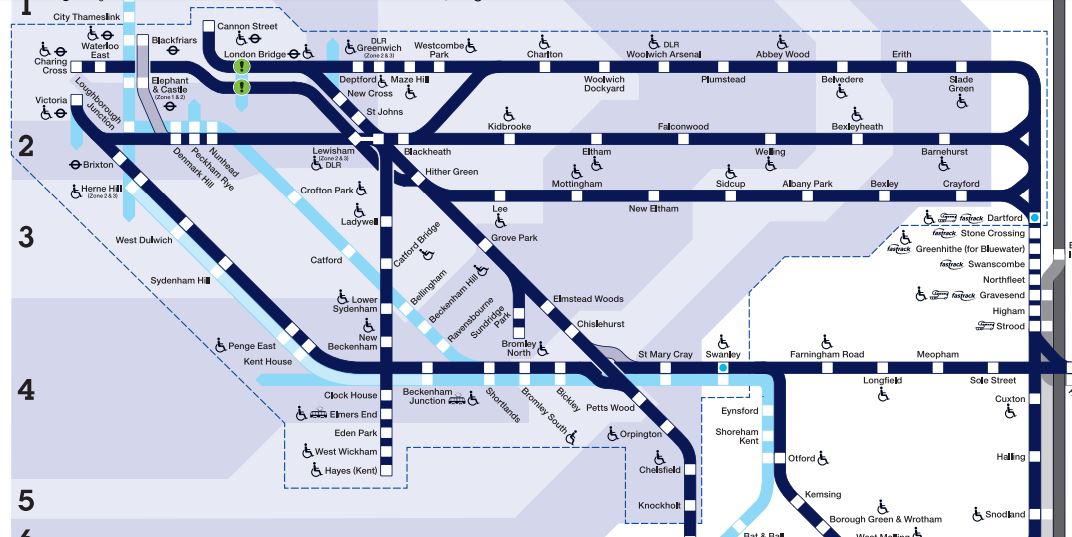
Southeastern Metro
If nothing else the map shows why Transport for London want to get control of Southeastern Metro services and paint them orange, as it is a ready made network that compliments the current Underground and Overground services.
The network has five Central London termini and stations; Cannon Street, Charing Cross, London Bridge, Victoria and Waterloo East.
It also connects to the following other lines.
- Several Underground Lines including the Bakerloo, both branches of the Northern Line, the District Line and and the Circle Line.
- The Overground at Denmark Hill, New Cross and Peckham Rye
- The Docklands Light Railway at Greenwich, Lewisham and Woolwich Arsenal.
- Tramlink at Elmers End.
- Crossrail at Abbey Wood.
- Thameslink at Dartford, Greenwich, London Bridge and Orpington.
In addition, many of the stations have step-free access..
These are the services from a selection of stations close to London.
- Dartford has six tph to Charing Cross and two tph to Cannon Street and Victoria.
- Greenwich has six tph to Cannon Street.
- Hayes has two tph to Charing Cross and Cannon Street.
- Lewisham has eight tph to Cannon Street, 4 tph to Charing Cross and 2 tph to \Victoria.
- Orpington has four tph to each of Cannon Street, Charing Cross and Victoria
- Woolwich Arsenal has six tph to Cannon Street and 2 tph to Charing Cross.
So in some ways it’s an all-places-to-all-terminals Metro.
Transport for London must look at the Southeastern Metro and have all sorts of ideas about how they could use the network to the benefit of London.
These are some Off Peak service levels.
- Sixteen tph between London Bridge and Cannon Street.
- Fourteen tph between London Bridge and Charing Cross.
- Ten tph between New Cross and Cannon Street.
- Eight tph between Orpington and London Bridge.
- Eight tph between Dartford and London Bridge
- Twelve tph between Lewisham and London Bridge.
Also consider.
- Would more services be possible after Thameslink is completed between London Bridge and Charing Cross.
- Could more use be made of an interchange at New Cross to get passengers to Canada Water for Canary Wharf and Witechapel for Crossrail?
- Could better use be made of Orpington station?
- Could Lewisham be improved?
- Will Brockley Lane station be rebuilt and a connection to the East London Line created?
- How would the area be affected by an extended Crossrail to Gravesend?
- How would New Cross cope with more than four tph on the East London Line?
I think that TfL could have lots of fun!
For instance, with a bit of reorganisation of services, it might be possible to create a ten tph or upwards set of lines across South London.
As an example Lewisham to Charing Cross via New Cross, London Bridge, Waterloo East could easily be ten tph.
No new trains, track or signalling would be needed, but the bottleneck of London Bridge must probably be removed before it is possible. And the Thameslink Programme is doing that!
Effects On The Jubilee Line
I don’t have any figures on passengers, but the section of Jubilee Line from London Bridge, will get a high-capacity by-pass on the surface.
But if we assume the current 14 tph on the rail line and 2019 frequency of 36 tph on the Jubilee Line, these are the numbers of carriages going between London Bridge and Charing Cross/Waterloo.
Heavy rail – 14 tph x 12 cars = 168
Jubilee Line – 36 tph x 7 cars = 252
Incidentally, the seats per hour figures are 10206 for Class 377 trains and 8424 for the S Stock on the Jubilee Line.
So will passengers choose to travel on the surface, thus freeing up capacity on the Jubilee Line?
Consider.
- Changing from say Thameslink after travelling up from Brighton to a Charing Cross service at London Bridge will be down and up two escalators and fully step-free.
- How many passengers will walk or take a bus to and from London Bridge to complete their journey?
- Some connections to the Underground at London Bridge require lots of walking.
- Going between London Bridge and Waterloo by a train rather than the Jubilee Line may well be a more pleasing experience.
- There are people like me, who prefer not to use a deep-level Underground Line, if there is an alternative.
Remember though that the the Charing Cross platforms at London Bridge are paired with 6/7 handling trains from Charing Cross and 8/9 trains the other way. Both pairs will share an island platform, escalators and a lift. So it may be quicker if you’re going to say Waterloo station, Trafalgar Square or Covent Garden to take a train.
Every so often, various plans are put forward as to what to do with the closed Jubilee Line platforms at Charing Cross. This is said about the platforms in Wikipedia.
As the Jubilee line platforms and track are still maintained by TfL for operation reasons, they can can also be used by film and television makers requiring a modern Underground station location. While still open they were used in the 1987 film The Fourth Protocol, and after closure in numerous productions, including different episodes of the television series Spooks.
I can envisage someone coming up with a plan, whereby these platforms are used as a second Southern terminus for the Jubilee Line. By 2019, it is intended that 36 tph will be running from North Greenwich to West Hampstead.
But there could be a problem, in that depending on what you read, there may not be enough trains for this increase in service.
But if, the uprated service between London Bridge and Charing Cross takes passengers from the Jubilee Line between London Bridge and Waterloo could the service be split into two?
- Most Jubilee Line trains would run as now and provide sufficient service between North Greenwich to West Hampstead.
- A small proportion of trains, perhaps 10 tph, would divert into the closed platforms at Charing Cross station.
It would give some advantages.
- There would be improved Underground connections at Charing Cross station.
- Trafalgar Square would gain another Underground Line.
- Charing Cross would have a two-stop link to Crossrail and the Central Line at Bond Street station.
Unlike most new station and interchange projects, the infrastructure is already there and maintained.
Consequences For Southern Crossrail
If everything works out with the Thameslink Programme and the rebuilding of London Bridge station, I can see no point to Southern Crossrail.
However, there idea of rebuilding Waterloo East station, is probably a good idea, to improve connectivity to the Underground and Waterloo station.
Waterloo East station could be handled a lot more passengers in the near future.
Conclusion
It looks to me, that Thameslink has been well-thought out and if the trains, track and signalling performs from London Bridge along the South Bank, as everybody hopes it should, we will see a world class Metro service across South-East London.
But I do feel that if the service along the South Bank is a quality one, then it will take passengers from the Jubilee Line and this line could be open for development.
Around Waterloo East Station
In Southern Crossrail, Idiscussed the possibility of creating a direct link from Waterloo across London to London Bridge. The proponents of Southern Crossrail also take about rebuilding Waterloo East station.
So I went to look at the station and took these pictures.
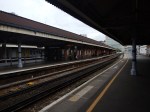



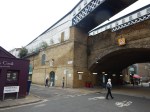
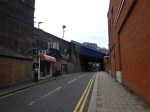


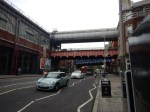


Note.
- The complex arrangement of high bridges.
- The highest white bridge is the pedestriain link between the two stations.
- The red bridge is what remains of the former rail link.
- It’s about a hundred metres between the two stations, with a slope down to the platforms at Waterloo East station.
This Google Map gives a view from above.
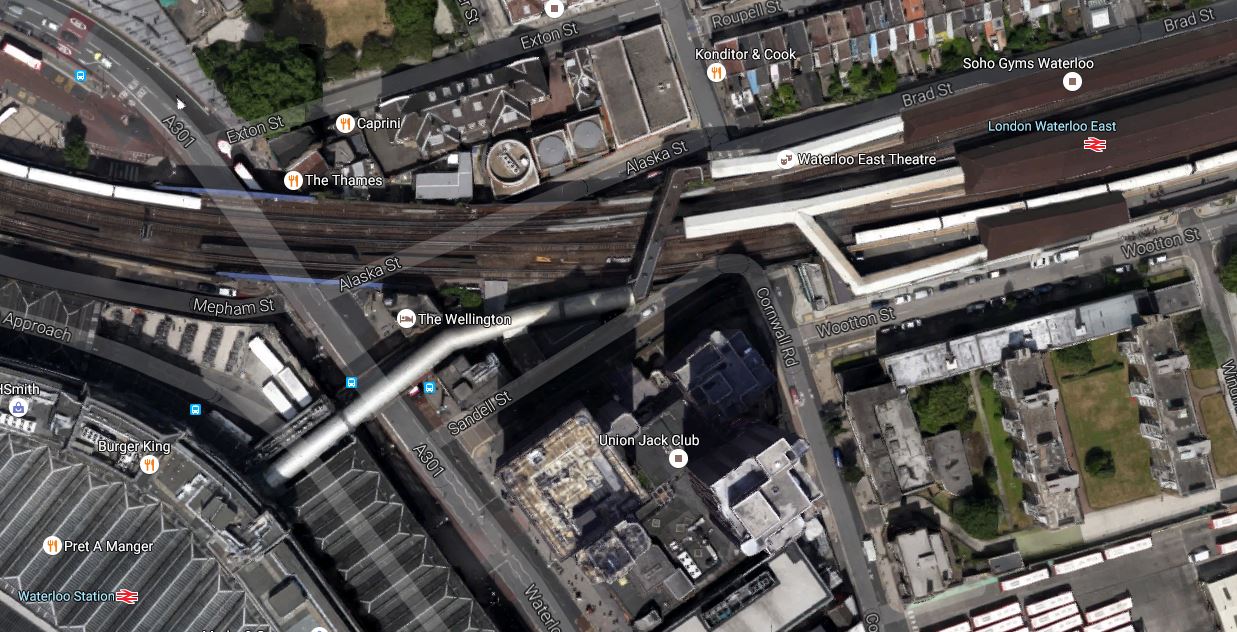
The Link Between Waterloo And Waterloo East Stations
The link is the white-coloured link that goes between the two stations. Don’t confuse it with the two trains in the map.
In the previous post, I said that rebuilding this station could be a project that a quality developer would relish.
But I do think that Southern Crossrail’s dream of connecting Waterloo East and Waterloo stations with a rail link is an impossible dream.
- There is now a retail balcony at Waterloo station, which was built in 2012 at a cost of £25million. It would need to be demolished.
- The lift and a couple of escalators to Waterloo East station are in the middle of where the new track would go at Waterloo station.
- The residents of the area probably wouldn’t like to have trains trundling through at height.
In the previous post, I said that rebuilding this station could be a project that a quality developer would relish.
Consider.
- Waterloo East station could be replaced with a better station.
- There is probably space around and above the station to add some sympathetic development.
- Escalator and lift connections could link Waterloo East station to the Northern, Bakerloo and Jubilee Lines.
- A full step-free connection could be built between the two Waterloo stations.
- The current connection to the Jubilee Line at Southwark is poor.
- The Waterloo and City Line will soon be getting a very good connection at Bank, so why not build a good one one to both Waterloo and Waterloo East.
This is one of those pedestrian links, that can benefit the around seven million or so passengers, who go through Waterloo East station every year.
Given the right financial figures, I think that there could be a developer, who would create the sort of development that residents, passengers and visitors to the area would like.
My ideal station would have the following.
- Four platforms to match the four platforms 6-9 at London Bridge station.
- Sympathetic over-site and surrounding development, preferably with affordable housing.
- Escalator and lift connections to the Underground and Waterloo and City Line.
- Full step-free access to Waterloo station, which would probably use the current entrance on the balcony.
- Better passenger facilities at Waterloo East station.
- A proper passenger entrance on Waterloo Road for Waterloo East station.
- The ability to handle an increased number of trains from the current fourteen trains per hour between London Bridge and Charing Cross stations.
All of this would probably be more affordable, than rebuilding Waterloo station.
Southern Crossrail
I noticed that Southern Crossrail has appeared in the list of proposed UK rail projects on Wikipedia.
There is a Southern Crossrail web site.
An Outline From History
Basically through tracks at Waterloo station would go straight on and take over the lines from Charing Cross station, through Waterloo East station.
This is said in the Wikipedia entry for Waterloo East station.
Formerly a rail connection ran across the concourse of the main station. This saw little service, although H.G. Wells’s novel The War of the Worlds describes its use to convey troop trains to the Martian landing site. The bridge which carried the line over Waterloo Road subsequently accommodated the pedestrian walkway between the two stations until replaced by the current high level covered walkway. The old bridge remains and is now used for storage.
So it’s not science fiction courtesy of Mr. Wells.
Shutting Stations And Joining Up Services
Charing Cross station could be shut or reduced in size, Waterloo East could be moved over Southwark tube station and the services into Charing Cross would run back-to-back with some into Waterloo.
This Google Map shows the stations and the lines.
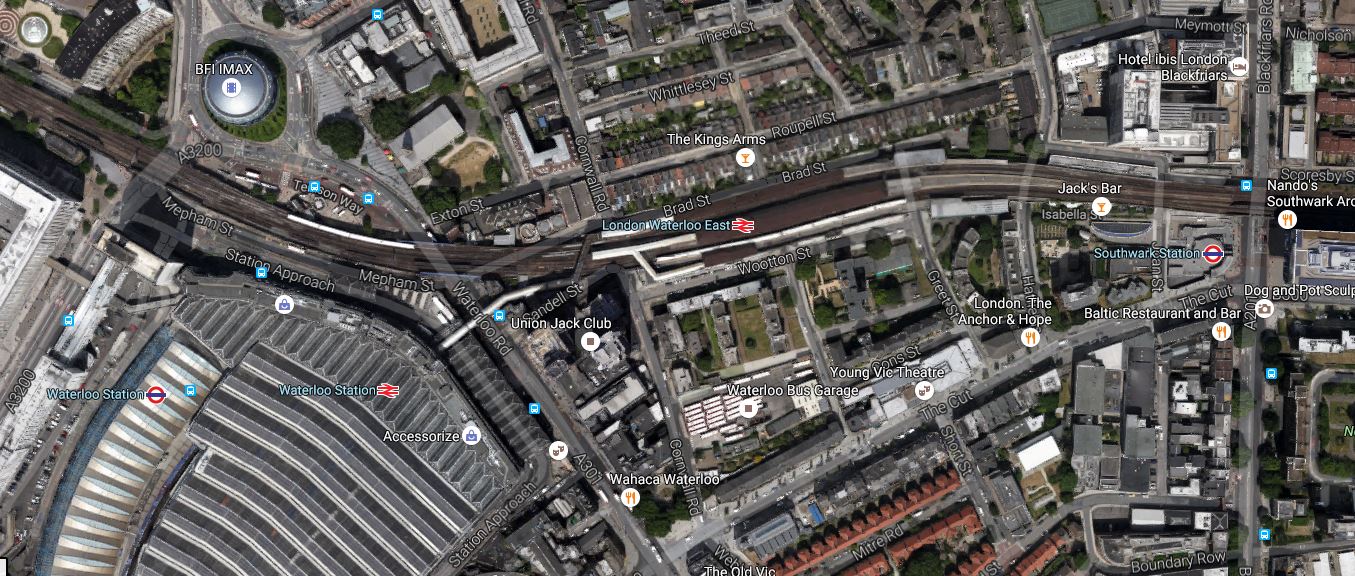
Southern Crossrail
Destinations Served
Destinations in the West could include.
With the following destinations in the East.
At least it does something useful with the Hayes Line.
Building Southern Crossrail
Southern Crossrail say this about the engineering required.
The minimum engineering requirement would be for the centre part of the concourse at Waterloo to rise up over four through tracks. There would need to be lifts and escalators.
A new bridge, alongside the old one, would be required to carry three new tracks over Waterloo Road.
The old bridge referred to is the one that is referred to in Wikipedia, as being used for storage.
The engineering involved is probably no more difficult than that used to update Thameslink at London Bridge, with the new viaducts over Borough Market.
But I can remember , that when that project was mooted, there was a lot of local opposition.
Given the farce of at times, when London Bridge station was being rebuilt, I think passenger groups will be against the changes.
Southern Crossrail give these additional changes on their web site.
- Signalling changes to increase the throughput
- Flyovers between Battersea and Waterloo thus allowing the local, suburban and express lines to be segregated on the approach to Waterloo, would increase throughput further
- Waterloo East Station would close releasing some land and a new station above the new Southwark station on the Jubilee line could be opened for interchange with Thameslink
- Closing the line up to Charing Cross would allow for greater throughput. Commuters travelling to the west end can change at London Bridge using the Jubilee line. This will have the added advantage of opening up the front of Waterloo through to the South Bank.
My views on these changes and other points follow.
Signalling And Flyovers
The signalling and flyovers probably need to be done anyway, whether Southern Crossrail is built or not.
Certainly, both Thameslink and Crossrail provoked a bit of a track sort-out on the approaches to London.
A sort-out of the lines into Waterloo would probably need to be done for Crossrail 2 anyway.
Rebuilding Waterloo East Station
I rarely use Waterloo East station, but it has a terrible connection to Southwark tube station and a tortuous walk to Waterloo station, unless you’re going to the balcony for lunch or to meet someone.
The map from carto.metro.free.fr shows the Undserground lines beneathe Waterloo East station.
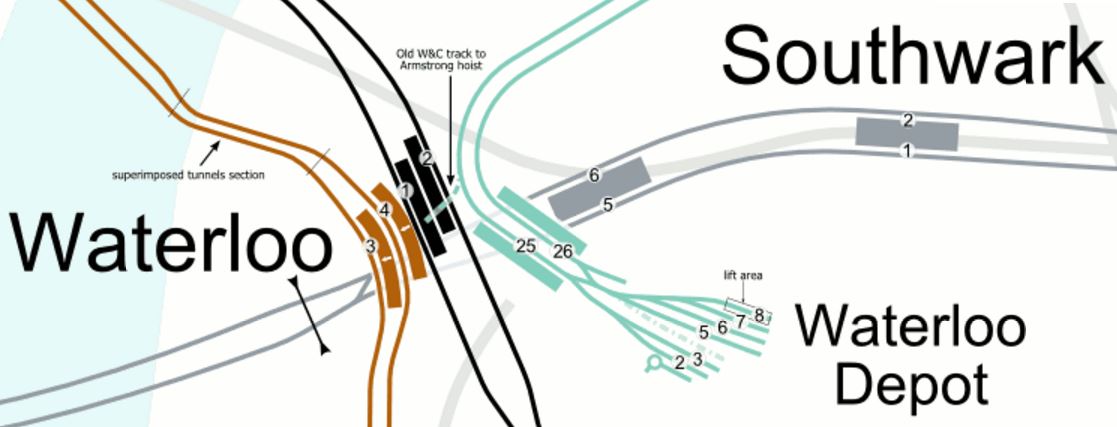
Lines Underneath Waterloo East Station
A new Waterloo East station could be built that had better connections to all of the Underground Lines in the area.
- Bakerloo Line – Very useful for the West End and Crossrail.
- Jubilee Line – Double-ended with connections to both Waterloo and Southwark stations.
- Northern Line (Charing Cross Branch)
- Waterloo and City Line
If rebuilding Waterloo East station would allow building on released land and above the station, together, then surely it is a project a quality developer would relish.
Decent pedestrian links could also be provided into Waterloo, as they should be anyway.
I think that there could be a strong case for the redevelopment of Waterloo East station, whether Southern Crossrail is built or not.
Improving The Waterloo And City Line
One of the side effects of rebuilding Waterloo East station would be improved access to the Waterloo and City Line.
A new entrance is being built at the Northern end and if the Southern end were sorted, London would have got a useful short new Unerground line, with a lot of the money provided by property development.
Serving Charing Cross Station
I believe that a rebuilt Waterloo East station would give better connections to the Underground, than does Charing Cross.
What Waterloo East lacks is connection to the District and Circle Lines and good walking routes to Whitehall. And you mustn’t annoy the Sir Humphries in their commute from Sevenoaks or Petts Wood!
Providing you didn’t close Charing Cross completely, there would be a same platform interchange at London Bridge.
But I suspect that an innovative solution could be found to get passengers from Waterloo East station to the North Bank of the Thames.
Properly done, it would enable passengers using the trains at Waterloo to get easily across the river .
Why are we wasting millions on the Garden Bridge, when a proper cross river connection further West would give benefit to millions of travellers?
At present these are the services that serve Charing Cross in the Off Peak.
- 2 trains per hour (tph) Dartford via Bexleyheath
- 2 tph Gravesend via Sidcup
- 2 tph Gillingham via Lewisham and Woolwich Arsenal
- 2 tph Hayes avoiding Lewisham
- 2 tph Sevenoaks via Orpington
- 2 tph Hastings via Tunbridge Wells
- 1 tph Dover via Ashford International
- 1 tph Ramsgate via Ashford International and Canterbury West
Obviously, there is a lot more in the Peak.
As it looks like the limit of trains through London Bridge to Waterloo East and Charing |Cross is somewhere around or above 20 tph, it could be that if Southern Crossrail is built, then there is a logical split.
- Suburban services go through to Waterloo and into the South West suburban network.
- Long distance services go to Charing Cross.
Platform arrangements at London Bridge and Waterloo East could be designed, so that if you’re on a train going to the wrong destination, you step off and step on the next one.
The Jubilee Line By-Pass
Now that we can see the new London Bridge station emerging and Charing Cross services are calling at the station again, I think we’ll see some interesting ducking-and-diving alomg the South Bank of the Thames.
Suppose you arrive at London Bridge on perhaps a train from Uckfield and need to go to Waterloo to get to Southampton. Until about a month ago, you would have to struggle across London on the Underground. Now you could take a frequent Charing Cross service to Waterloo East and just walk into Waterloo.
We mustn’t underestimate the effects that a fully rebuilt Thameslink and London Bridge station will have on passengers getting across South London.
If Southern Crossrail was built, it would be an alternative for the Jubilee Line between London Bridge and Waterloo.
Southern Crossrail might even lead to a rethink about how the Jubilee Line operates.
Positive Points
- Terminal platforms are released in Waterloo station, as services are joined up.
- No infrastructure changes would be required at London Bridge station.
- No tunnelling
- Southern Crossrail can be built before Crossrail 2.
- Southern Crossrail can be built to be compatible with Crossrail 2.
- The Tramlink connects Wimbledon in the West to Elmers End in the East.
But it will exceedingly difficult to convince the powers-that-be that it is a viable project.
Conclusion
I think it could be one of those projects that is so bizarre and wacky it might just be feasible.
But if it is built or not, London could benefit tremendously, by a quality rebuild of Waterloo East station.
In a phased building of Southern Crossrail, the order of construction could be.
- Rebuild Waterloo East station.
- Upgrade the lines into Waterloo with flyovers and signalling.
- Rebuild the concourse at Waterloo, so that the connecting tracks could go through to Waterloo East.
- Put in the bridges between Waterloo and Waterloo East.
- Connect up the services one-by-one.
It is the sort of project, that a good project management team, could push through with little disruption to services and passengers.
London Bridge Station Will Be A Game-Changer For Many Passengers
After my first glimpse of the new London Bridge station, which I posted in London Bridge Station Wakes Up, I have a feeling that the station could be a gam-changer for many passengers.
These are a few of the ways the new station will help. Some are very specific for me, as I live in Dalston, without direct access to the Underground.
London Bridge Station Is Bus-Friendly
Ever since the new bus station at London Bridge has opened, it has been easier for those like me in Islington, Hackney and Tower Hamlets to get to the station, as there are several buses between our area and London Bridge.
But now the top entrance under the Shard is now complete, you can take one escalator to the concourse under all the tracks.
You can also still walk through direct to platforms 10-15, which I often do, as these platforms are the terminals for trains to and from Freedom Pass territory. There’s also a convenient M&S Simply Food, which I regularly use.
I also think that, as the concourse,has better access to and from Tooley Street, this will help those wanted to use buses on Tooley Street.
This visualisation from this page on the Thameslink Programme shows what Tooley Street will look like.
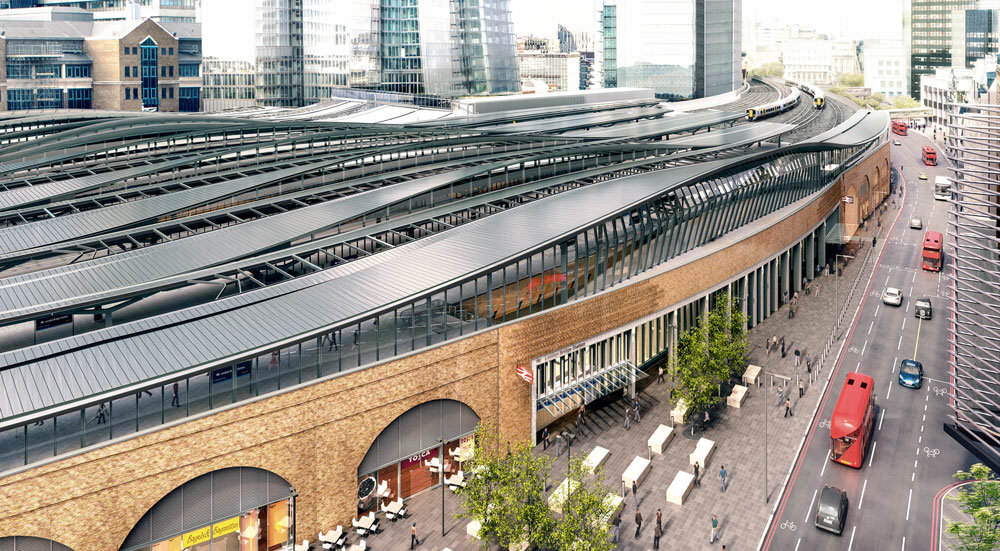
London Bridge Ststion And Tooley Street
There seems to be a wide pavement between the traffic and the station.
London Bridge Station Is Reasonably Tube-Friendly
The main London termini serving the South, are not as far as I’m concerned the easiest to get to by Underground, especially from East London.
Victoria and Waterloo are a long way to the West and Cannon Street and Charing Cross are downright difficult to get to.
However, the Northern and Jubilee Lines probably make London Bridge, the easiest terminal for the South for many to use.
Will Thameslink Be Considered Part Of The Tube?
Since it opened in the 1980s, I’ve always considered that Thameslink should have been considered to be another Underground line.
Although, I really haven’t used Thameslink seriously, until I moved back to London in 2010.
I believe that the following things should be done to make Thameslink better for passengers and increase ridership on the line.
- Show all Thameslink routes and stations on the Tube map.
- Allow Oyster and contactless bank card ticketing at all Thameslink stations.
- Have the same Freedom Pass rules as Crossrail.
- Run Thameslink stations under TfL design, information and operational rules.
- Thameslink stations should be manned from first to last train.
- Disabled passengers should be able to just turn up and ask for assistance.
- Thameslink should be part of the Night Tube.
As I suspect that as these conditions will apply to Crossrail, surely both lines running under the same rules would be very passenger friendly.
I look forward to the day, when I touch in with my bank card at Finsbury Park and touch out at Cambridge or Brighton.
London Bridge Station Will Be An Easier Walk To The City
I’ve walked across London Bridge in late afternoon on a sunny day and the pedestrian traffic to London Bridge station from the City is large.
It would appear that all the work being done on the Tooley Street side of the station, will open up routes to the concourse under the tracks and create better walking routes to and from the City.
Unfortunately, it’s probably not possible to totally pedestrianise Tooley Street, as there is nowhere for the traffic to go.
London Bridge Station For Cannon Street And Charing Cross Avoidance
Before work on the station started, you could always avoid going to Cannon Street or Charing Cross stations to get a train, by catching it as it passed through London Bridge
But it wasn’t the easiest of connections.
Now though with the new platforms 8 and 9 open, you can see how Cannon Street and Charing Cross services will be handled at London Bridge station.
London Bridge Station And Thameslink
If I needed to use the old London Bridge station to access Thameslink services, it wasn’t the easiest.
But now that I can see how I will access the Thameslink platforms at London Bridge, I will probably use a 141 or 21 bus through the City.
I have a feeling that London Bridge will see a bigger increase in passenger use of the Thameslink platforms, when they reopen, as the interchange at London Bridge will be so much easier than say St. Pancras.
In fact, London Bridge station, just amplifies how bad the passenger-friendliness is at St. Pancras station.
Island Platforms And Thameslink
On Crossrail all Central London stations between Woolwich and Paddington, would appear to be island platforms or ones where you can walk across between the Eastbound and Westbound platforms without any steps.
If you look at some of the classic Underground stations, built over the last hundred years, like Angel, Bermondsey, Gants Hill, Pimlico, Regents Park and Southgate, then they are all built to this simple design.
- Escalators and/or lifts are probably easier to provide, as these can descend to the central space to serve both lines.
- A large circulation space can be built between the tracks.
- When staff are provided on the platforms, it probably means they can be more efficiently provided.
- Passengers can easily reverse direction, either deliberately or because they’ve got on a train going in the wrong direction.
- The layout might be better for health and safety reasons, if say power fails on one track and passengers need to be evacuated.
It is for these and other reasons, that I think island platforms, should be built wherever possible.
But on the central section of Thameslink, only London Bridge has an island platform.
To make matters worse the idiots, who designed St. Pancras Thameslink station, inexplicably chose to build it with two separate platforms.
Thus, they made say New Barnet to Luton Airport with heavy bags, much more difficult than it should be.
You actually wonder, if that journey will be more convenient, when London Bridge is fully connected to Thameslink, by doing the extra stops to London Bridge and changing trains there.
Probably not, as the extra stops would take twenty minutes or so!
But if they had a good coffee stall and kiosk on the platform at London Bridge, you might think about it.
The Connection From Waterloo East Station To Southwark Tube Station Is Only For The Young, Fit And Agile
My mother’s advice as a Ponders Plonker (her words) from North London, advised me never to go South of the Thames as you’d get lost or have trouble.
Today, I wanted to do a bit of shopping, as one does, and thought I’d go to Bluewater for a change, as I needed a John Lewis, a big Marks and Spencer, and preferably a Carluccio’s for a pit stop. Westfield doesn’t have a John Lewis, Eastfield is a gluten-free desert and Oxford Street is often crowded.
So Bluewater seemed a good idea at the time! It was as I got all I needed and the Shopping Centre was very quiet.
For Bluewater, you go to Greenhithe station and get a bus, but today there had been a derailment on the North Kent Line at Charlton as reported in this article in the Standard, so my preferred route to Greenhithe via the Overground and the DLR to Greenwich or Woolwich Arsenal was blocked. So I had to go to Charing Cross station to get a direct train to Greenhithe via Sidcup or some such place in the wilderness that is South London.
I got to Greenhithe and Bluewater with just the odd delay and after a successful shop, I returned to Greenhithe with a bag from M & S, to be told that there were still delays, but a direct train to Charing Cross would be arriving in six minutes.
So I took it and was treated to a tour of places I didn’t know. I had hoped the train would stop at Lewisham, so I could cut off the corner using the DLR to Shadwell and then the Overground to Dalston Junction for a bus home.
But it didn’t!
So I decided that as Waterloo East station has an interchange with Southwark station on the Jubilee Line, that it would be easier to change there and go to Canada Water for the Overground.
Southwark station was built for the Jubilee Line Extension in 1999, so I assumed that it would be an easy modern connection with a full spectrum of stairs, escalators and lifts.
First, I had to walk to the far end of the platform and then descend a long flight of fairly steep steps to a concourse below. I’ve certainly been on worse flights of steps in the Underground, but it didn’t prepare me for what I would encounter. Instead of an escalator from the concourse to the Jubilee line platforms, I found that the down escalator was under repair and I would be expected to descend a set of steps you’d more likely find in the Swiss Alps.
There wasn’t even a warning like there is at Hampstead tube station, but it was certainly more difficult than the steps there.
So I turned back and asked the guy on the gate, where the Way Out was. But there isn’t one! He told me, you had to go back to the platform and then use the bridge to Waterloo. So I had to climb back up the first set of stairs and in the end got a train to Charing Cross to come home by means of the District Line and the Overground.
My company, Metier Management Systems supplied Artemis software to do the project management for the Jubilee Line Extension. I have heard some odd stories about this project which had to be finished before the Millennium, so that the Great and Good could get to the Dome.
The guy on the gate did tell me that Transport for London tried to get an entrance to the concourse, but the residents objected. Whoever heard of a train station without a Way Out to the street?
At the present this interchange is an accident waiting to happen and there are no signs discouraging those who are not of a supreme fitness level from taking the route.
There are signs pointing to the Jubilee Line on the platforms at Waterloo East and after going through the barriers for those at Waterloo East, you are opposite the barriers for Southwark Tube station, which is only accessible by the extremely steep stairs.
Something needs to be done!
I could have probably managed it, if I wasn’t carrying my bag from Bluewater.
But I am a person, who doesn’t take unnecessary risks.
Jubilee Line Vent Shaft At Durand’s Wharf
The pictures show the ventilation and access shaft at Durand’s Wharf for the Jubilee Line.









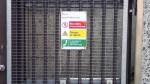


It is certainly a much more subtle and smaller design than the shafts for the Channel Tunnel Rail Link.
This Google Earth image shows that it fits well into the small park.
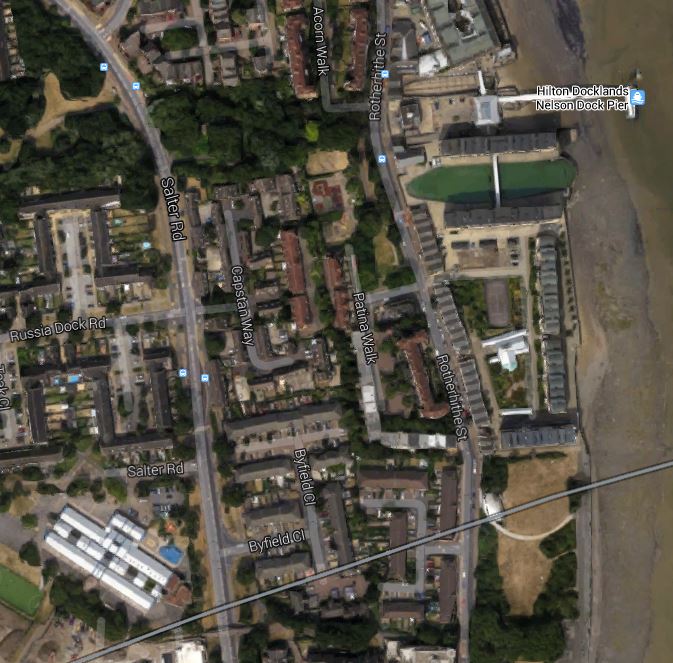
Durand’s Whaft Vent Shaft
It’s just by the silver line, which marks the Jubilee Line.
The Jubilee Line Bites London Again!
According to this article in the Evening Standard, the Jubilee line is being shut by the wrong kind of water.
The Jubilee line is to be shut for more than 30 days over the next two years in central London because acidic water is eating into the cast iron linings of the tunnel walls.
Services will be halted in both directions between Finchley Road and Waterloo for major repairs costing £40 million.
Why has the Jubilee line got it in for London, as when a line goes berserk, it is often that line, which was opened for the Millennium? When I use the line, there seems to be a higher chance of trouble compared to the other lines.
It would appear that the problem is in the first section of the Jubilee line that was built in the 1970s. The tunnels seem to use iron linings and it is interesting that Crossrail is manufacturing all of its linings out of concrete.
I do wonder what other problems will turn up on London’s most troublesome Underground line!
At least on the BBC News tonight, they showed how the repair techniques were being tested in the old Charing Cross platforms, which were last used for Skyfall. So hopefully, they’ll find a way to cut the closure of the line to a minimum.
The Two-Minute Rule On The Jubilee Line
This poster illustrates the two minute rule superbly.
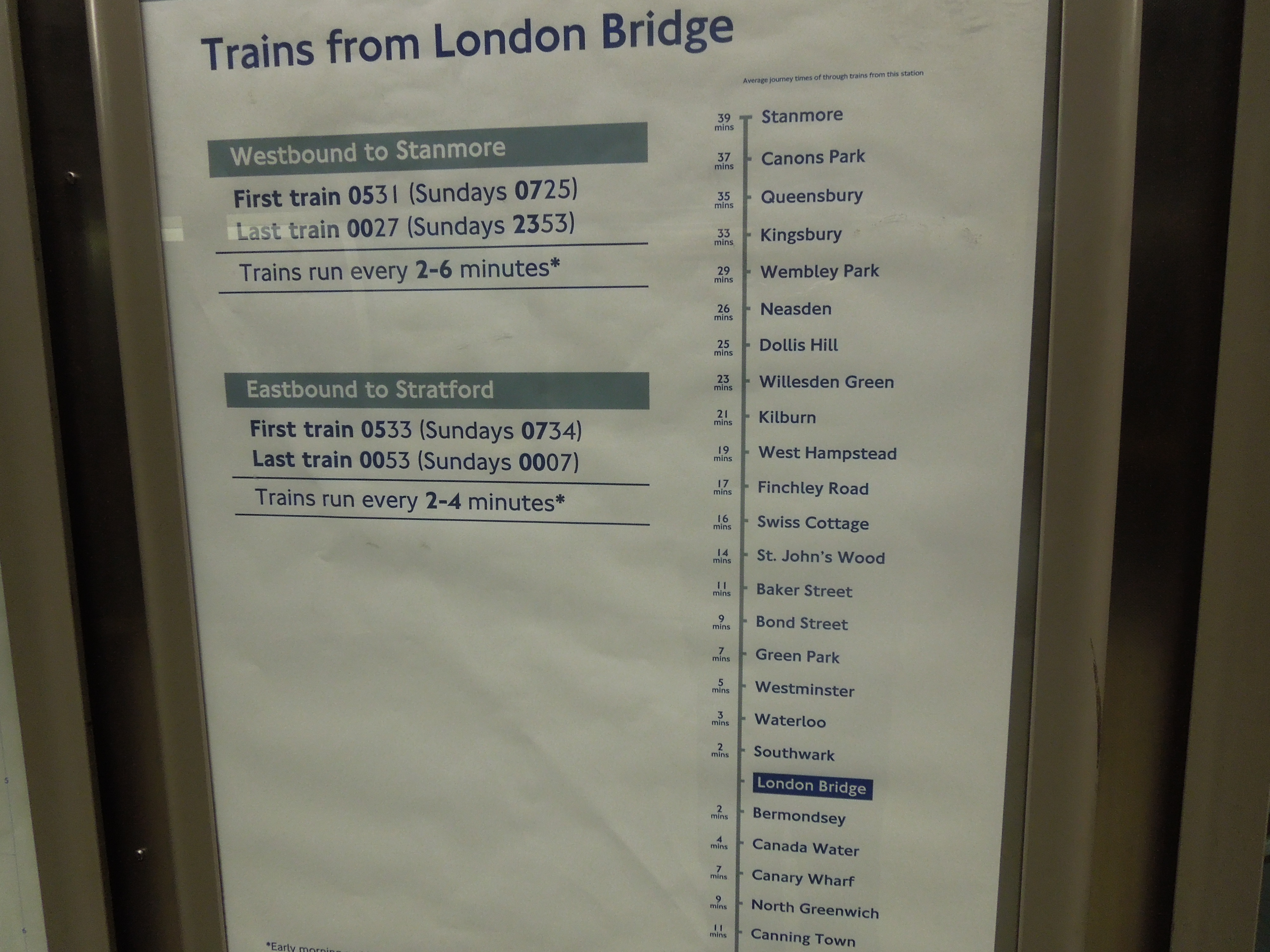
The Two-Minute Rule On The Jubilee Line
Stanmore station takes 39 minutes from London Bridge station and that is nineteen stations, which is roughly two minutes a station.
I wonder when these time diagrams were introduced.
 The Anonymous Widower