The Penistone Line And Rotherham Tram-Train Trials
The Penistone Line Tram-Train Trial
The Penistone Line from Sheffield to Barnsley, Penistone and Huddersfield was the line originally selected for the tram-train trial.
In the Wikipedia entry for the line, this is said about the tram-train trial.
On 18 March 2008, the Department for Transport released details of a proposal to trial tram-trains on the Penistone Line, the first use of such vehicles in the UK. The trial was to start in 2010 and last for two years. Northern Rail, the operator of passenger services on the line, asked potential manufacturers to tender for the design and construction of five new vehicles, which Northern Rail would subsequently lease. In addition, Network Rail planned to spend £15m modifying track and stations to make them compatible with the new vehicles.
However, it was announced on 15 September 2009 that a city tram-train trial between Rotherham and Sheffield would replace the Penistone Line scheme.
More about the trial is said in this article on Rail News, which is entitled Penistone Line Is Chosen For £24m Tram Trains Trial. In particular, this is said.
One of the biggest initial tasks is to set a specification for the building of the five diesel-electro hybrid tram trains at a cost of £9 million. The trains will have to be equipped with braking systems suitable for on-street running and a Train Protection Warning System which is required for running on lines with ‘heavy’ rail passenger and freight trains.
The article was written in 2008 and Chemnitz hybrid Citylink tram-trains didn’t enter service until 2016.
So was the trial on the Penistone Line a disaster before it even started?
It had the following problems.
- It was expecting a diesel-electric hybrid tram to be designed and built before 2010.
- A long distance was involved.
- The track-work needed to connect to the Sheffield Supertram could have been incredibly complicated.
- The first all-electric Citylink tram-trains weren’t delivered to Karlsruhe until May 2014, which was seven months late.
For these and other reasons, I think that the decision of the trial to be delayed and to use Rotherham, was a prudent decision.
The Rotherham Tram-Train Trial
Consider these characteristics of the current trial, between Cathedral and Rotherham Psrkgate.
- The tram-trains are virtually standard Karlsruhe Citylink tram-trains, adapted for UK 25 KVAC and painted blue!
- A simple chord connecting the two systems.
- A few miles of electrification, that could be powered by either 750 VDC or 25 KVAC.
- Modification of the recently-built Rotherham Central station.
- Building of a new terminal tram stop at Rotherham Parkgate.
It’s a simple plan, but one that covers a lot of design possibilities and has few, if any, risky elements, that haven’t been done in the UK or Karlsruhe.
The following can be tested.
- The Class 399 tram-trains on the Sheffield Supertram network and an electrified main line.
- Passenger entry and exit at Rotherham Central station and all over the Supertram network.
- Operation under both 750 VDC or 25 KVAC.
- Signalling systems on both tram and main line networks.
The one thing that can’t be tested is a diesel hybrid tram-train as they have in Chemnitz, as they haven’t ordered any!
But if they did want to order some, they could easily be tested between Cathedral and Rotherham Parkgate.
Conclusion
The original plan to use the Penistone Line and diesel-electric tram-trains was impossible.
Network Rail might have got this one right at the second attempt.
They could even run a UK version of the Chemnitz hybrid tram-train on the test route between Sheffield and Rotherham.
London To Karlsruhe Via Paris
I took Eurostar and a TGV to Karlsruhe, using these trains.
- Eurostar – St. Pancras 08:19 – Paris Nord 11:47 – £115 from Eurostar
- TGV – Paris Est 13:55 – Karlsruhe 16:25 – £69.19 from Voyages SNCF
I took these pictures on the way.

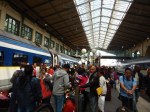

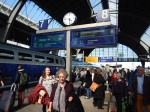




Note.
- I bought both tickets on-line.
- Premium Economy in the new Eurostar trains is more cramped than the old ones.
- Eurostar’s Premium Economy gluten-free breakfast more than filled a hole.
- Paris Nord to Paris Est is just a Metro.
- I took a diversion via Republik, which was a good place to wait in the sun.
- I stayed in the Schlosshotel in Karlsruhe, which was one of several acceptable ones by the station.
I could probably have done the journey cheaper by flying, but it would have had more hassle.
The Great Sheffield Tram-Train Mystery
An article on the BBC web site is entitled Sheffield to Rotherham tram-train pilot delayed further.
The article says that a full review is taking place and a new start date will be announced in the summer.
On my recent trip to Karlsruhe, I rode the German version of the Class 399 tram-train and wrote The Latest Citylink Tram-Trains In Karlsruhe. I said this.
Note that the trams I photographed are only some of the latest batch of twenty-five tram-trains of this type in Karlsruhe. So the basis of the Class 399 tram-train, must surely be well-proven on the streets of a city about the same size as Sheffield.
Incidentally, all of the new tram-trains that I saw, were running on tram routes, just as the first Class 399 tram-trains will in Sheffield, when they start running in a few months.
If the second paragraph is right and all the Sheffield-style trams in Karlsruhe are running as trams, could there be a problem with operating them as trains?
I have no idea and this is just pure speculation.
However this page on a German web-site has pictures of the tram-trains of Karlsruhe. There are twenty-five of the latest Sheffield-style tram-trains delivered from 2014-2016.
But according to this article in Global Rail News, Karlsruhe has just ordered twelve additional Flexity tram-trains from Bombardier.
Is this that some routes can’t be worked by the Citylink and need the other type? Or is it because of a problem with the Citylink?
I don’t know!
But somebody, somewhere must know the truth!
As an engineer, it all puzzles me.
Karlsruhe have been running tram-trains for some years now and surely, the track design rules are pretty well-established. They’ve also been running the Sheffield-style trams for at least several months.
Surely, Network Rail’s engineers must have been to Karlsruhe and just copied, what the Germans are doing.
So why haven’t they got it right first time?
- Not Invented Here?
- Someone in the Department for Transport giving a new twist to EU regulations?
- Refusal to talk to the Germans?
It could of course be sheer incompetence!
Another related mystery, is why are there no reports of the lone Class 399 tram-train in Sheffield testing on the existing track as a tram?
At great expense, all track in Sheffield has been changed to accept the wheel profile of a tram-train, so surely this new tram could at least be testing in the middle of the night!
Could it be that the tram-spotters of Sheffield, are lazy and don’t like getting up in the middle of the night to photograph tram movements? But then there were pictures of night-time tram testing in Birmingham and Nottingham, so I have to conclude testing is not happening.
Summing Up Karlsruhe’s Tram-Trains
Karlsruhe invented the tram-train and running them under the Karlsruhe model.
It’s a bit like having a vehicle that can go anywhere in your city carrying a couple of hundred people, where there is a railway or tram track.
The only other vehicle that offers a similar flexibility is a bus, but buses are less eco-friendly and they are difficult to make all electric.
Karlsruhe incidentally, only seems to have a few buses and you will notice in Building A Tram-Train Tunnel In Karlruhe, how few cars and taxis there are. So are all the people on foot or in the tram-trains?
Surely, the great thing about a tram-train network like Karlsruhe, is that once the main tracks are laid and electrified, as they will be in Karlsruhe, once the tunnel is open, your biggest improvements come by adding more and better vehicles to the routes.
I went to Karlsruhe to see The Latest Citylink Tram-Trains In Karlsruhe, as they are similar to those being introduced in Sheffield.
According to this article in the Internation Railway Journal, the city has just ordered another twenty five of these tram-trains.
On return from Dubrovnik I found this article on Global Rail News, which says that they’ve also ordered another twelve Flexity Swift tram-trains from Bombardier.
If you want to see what a low-floor Flexity-Swift looks like, go to Croydon. I don’t think that the London Tramlink could use tram-trains, as all the rail lines in South London are third-rail, but don’t underestimate engineers. You probably couldn’t have the automatic voltage changeover that you get with overhead wires.
Both these batches are low-floor, so expect one of the developments over the next few years in Karlsruhe is that more trams become low-floor. Obviously, some stations won’t be able to be modified, so the network probably won’t become 100% low-floor.
Are Karlsruhe playing this network expansion in a very canny way?
They now have a specification for a vehicle than can work all lines in its network.
- Dual voltage of 750 VDC and 15 kVAC.
- Low floor or adapted to railway and tram stations.
- A defined loading gauge.
- A preferred seating layout.
It strikes me that there will be several manufacturers, who would like to supply Karlsruhe, as they obviously know what works, as they invented the standard.
Karlsruhe also has the advantage in that the tram-trains they don’t want probably have a good residual value, as if say a city wants to built a tram-train network, provided that they obey Karlsruhe’s rules, then the tram-trains can be delivered and after testing, start a service.
The only problem is that Germany’s non-standard 15 kVAC may need to be changed to perhaps 25 KVAC. But that would probably be more affordable than buying a whole fleet of new tram-trains.
From Karlsruhe To Cologne
A lot of this section was along the side of the River Rhine, as rhe pictures show.
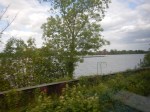

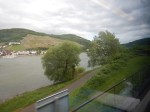
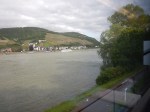


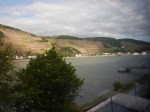
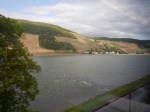

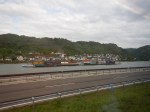
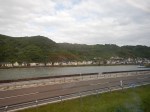
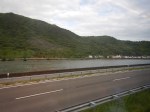


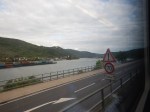
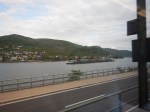
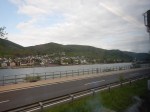



The train was running on the West Rhine Railway, which is described in Wikipedia like this.
The West Rhine railway (German: Linke Rheinstrecke, literally ‘left (bank of the) Rhine route’) is a famously picturesque, double-track electrified railway line running for 185 km from Cologne via Bonn, Koblenz, and Bingen to Mainz. It is situated close to the western (left) bank of the river Rhine and mostly aligned to allow 160 km/h operation between Cologne and Koblenz and between Bingen and Mainz. Line speed between Koblenz and Bingen is restricted by themeandering nature of the Rhine.
It is effectively a 100 mph line, like say the Great Eastern Main Line between London and Norwich.
It is certainly one of those lines where you might pay the extra to go in First and make sure you sit on the river side of the train.
I had deliberately chosen a hotel close to Cologne station, so it was just a short walk to the hotel.
Tram-Trains From Karlsruhe-Durlach Station
Karlsruhe-Durlach station is the second station in Karlsruhe. Wikipedia says this.
Karlsruhe-Durlach station is the second largest station in the city of Karlsruhe in the German state of Baden-Württemberg after Karlsruhe Hauptbahnhof. It is used by services of the Karlsruhe Stadtbahn and the Rhine-Neckar S-Bahn, regular regional services and occasional long-distance trains.
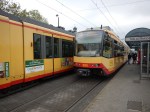
I went there, as I thought it might be an interesting place to see the yellow and red tram-trains on the Karlsruhe Stadtbahn working.
I was not disappointed and took these pictures in the station and as the tram-train I caught climbed up to the main tram line through the city, that eventually goes through the main shopping street.


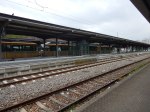


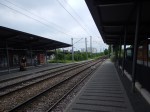


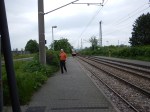



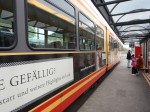
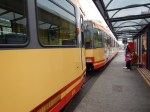

I got off at Tullastrasse and hoped to catch one of the new tram-trains to the city centre. In the end I caught an older one.
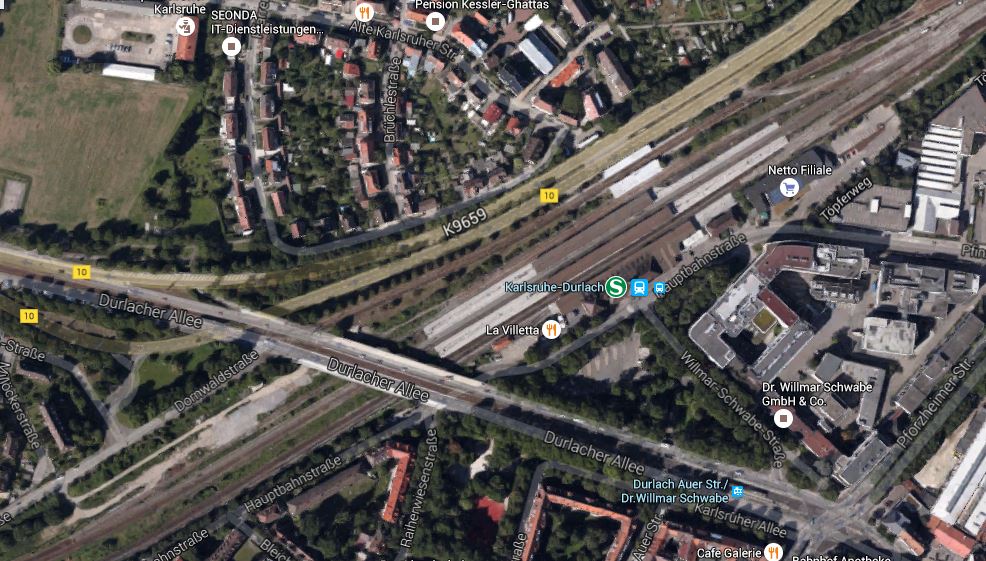
This Google Map shows Karlsruhe-Durlach station.
Karlsruhe-Durlach Station
Note the two Stadtbahn platforms on the North-West side of the station and how they curve up to join the main tram route through the city.
The Latest Citylink Tram-Trains In Karlsruhe
These pictures show some of the latest batch of NET2012 Citylink Tram-Trains in dervice In Karlsruhe.

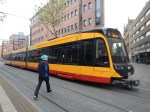
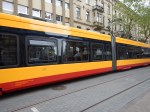
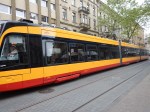
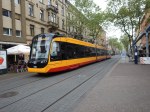

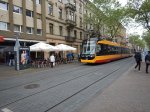

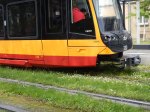
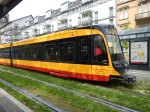
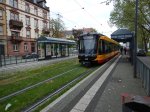
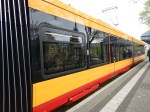
They are closely related to the Class 399 tram-trains for Sheffield, that I wrote about in My First Pictures Of A Class 399 tram-train.
They were good trams and rode well on the streets of Karlsruhe.
Note that the trams I photographed are only some of the latest batch of twenty-five tram-trains of this type in Karlsruhe. So the basis of the Class 399 tram-train, must surely be well-proven on the streets of a city about the same size as Sheffield.
Incidentally, all of the new tram-trains were running on tram routes, just as the first Class 399 tram-trains will in Sheffield, when they start running in a few months.
But their profile and nose section is slightly different between the two variants. Compare the pictures from Karlsruhe, with this visualisation of a Class 399 tram/train from the Stadler data sheet.
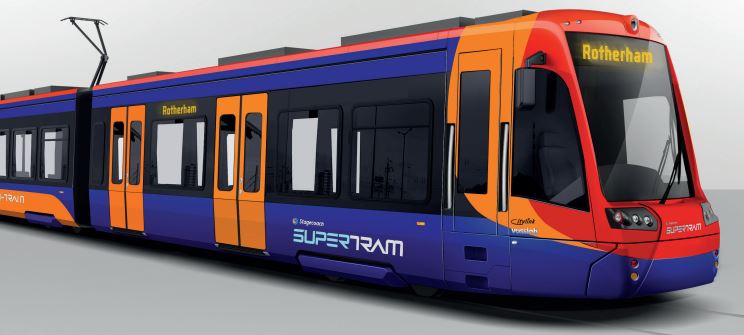
Class 399 Tram/Train Visualisation
Note the lack of a coupling, as I don’t think Sheffield’s trams will work in pairs.
This second gallery was taken as I rode another of the new trams back to Karlsruhe station?


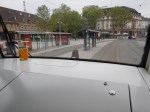
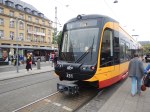
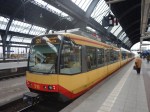
Note that the non-driving end of the tram converts into four seats with panoramic views to the rear of the tram.
Will we be seeing this feature in Sheffield?
I think it is too radical and although the design is common in Germany, I can’t see the Department of Transport allowing this passenger friendly feature.
But if it is possible and built into the tram-trains delivered to Sheffield, why shouldn’t it be used? Surely, as the tram-trains go there merry way around Sheffield and Rotherham, there must be some entertaining things to look at, out of the back of a tram!
Overall, I can see the Class 399 tram-train becoming a very popular vehicle in the UK.
- It is a modern, low-floor tram.
- It is a capable, electric multiple unit.
- It has a comfortable, if rather crowded at times, ride.
- The newer tram-trains are wheelchair-accessible.
- The passengers I spoke too, seemed to like the tram-trains.
- Longer trains can be created, by coupling units together.
- It is not an unproven concept on the streets and tracks of several German cities.
- Seventy-five tram-trains of this type and earlier variants, run in Karlsruhe alone.
- The major difference is that the Germans use 15 kVAC overhead wires for their trains and we use a more-standard 25 kVAC.
- Karlsruhe seems to have developed extensive solutions to make the train-platform transition an easy one for all passengers.
All it needs is for a successful trial between Sheffield and Rotherham.
Building A Tram-Train Tunnel In Karlsruhe
Karlsruhe has quite a few tram–trains routes in the Karlsruhe Stadtbahn. This is said as an introduction to the system in Wikipedia.
The Karlsruhe Stadtbahn is a German tram-train system combining tram lines in the city of Karlsruhe with railway lines in the surrounding countryside, serving the entire region of the middle upper Rhine valley and creating connections to neighbouring regions. The Stadtbahn combines an efficient urban railway in the city with an S-Bahn (suburban railway), overcoming the boundary between trams/light railways and heavy railways. Its logo does not include the green and white S-Bahn symbol used in other German suburban rail systems and the symbol is only used at stops and stations outside the inner-city tram-operation area.
It works according to the Karlsruhe model.
A typical tram-train route could start on say the west of the city running on a typical suburban railway electrified to the German standard of 15 kVAC. It might share the tracks with any passenger or freight train, just like any EMU in the UK shares the heavy rail tracks.
For passing through the centre of the city, the tram-train takes to the tram tracks with their electrification of 750 VDC and runs like a normal tram. Provided the platforms are of a compatible height and the gauge is acceptable, Karlsruhe’s tram-trains can go anywhere a normal tram could go in the city. But in Karlsruhe, there doesn’t seem to be any normal trams any more so all the lines in the city are full of tram-trains, running at typical tram frequencies.
After passing through the city centre, they would take to the heavy rail system again. Some routes even go quite large distances into the surrounding countryside.
I didn’t actually find a place where voltages change, but it looked to be automatic, with ceramic rods isolating the different voltages.
This is a map of the system.

Karlsruhe Stadtbahn
I think that Harry Beck would have approved of this map, as it certainly has a touch of the Londons about it!
Note the east-west line of routes across the map. These run along Karlsruhe’s equivalent of Oxford Street in London or Lord Street in Liverpool.
So they have decided to build a tunnel using cut-and-cover methods from one end to the other. A section in the Wikipedia entry for the Karlsruhe is called New Tunnel In Karlsruhe, and gives more details. This extract gives some objectives of the new tunnel.
The tunnel will shorten the travel time for the Stadtbahn through the pedestrian zone and the stability of the timetable will improve. In addition, the platforms of the station’s tunnel will have pedestals that are about 15 metres long with a height of 55 cm above the rail so that the first two doors of Stadtbahn trains will have step-less entry. This will make possible stepless entrance on lines S 4 / S 41 and S 5 / S 51 / S 52 in Karlsruhe for the first time, reflecting a trend that has long been standard elsewhere.
These pictures show the current state of the project, as I first walked in an easterly direction down the main street and then approached it from the East in a tram..
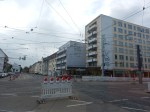




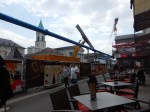
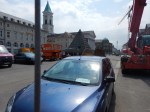
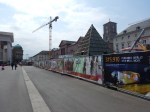

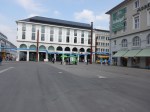


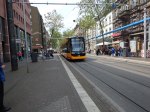
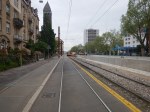


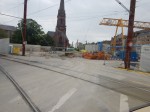
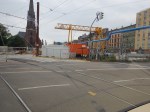

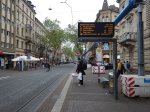


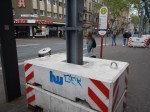
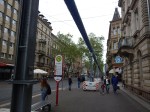

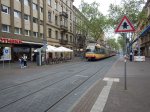

When I wrote Exploring Karlsruhe And Its Trams And Tram-Trains, it was in a much worse state.
But I don’t think the digging of the tunnel has been without problems. Note the blue pipe running along the street, which wasn’t there last time I visited. One of the locals told me it was all due to the wasser and gave flooding actions.
It would certainly appear, that they’ve had a lot more tunnelling problems than Crossrail.
I do think that the Karlsruhe tram tunnel, is one of the most significant transport ideas of recent years.
I shall be visiting the city of Karlsruhe again, when it opens.
Just imagine what Manchester would be like, if instead of its current tram system, they’d used a tunnel. Perhaps something like this could have been built.
- A double track tunnel was built under the city from Piccadilly to Victoria.
- The tunnel would be able to take Karlsruhe-style tram-trains.
- There would be sensibly placed underground stations at places like Arndale Centre and Piccadilly Gardens.
- Tram-trains were used on the various suburban routes, would connect back-to-back.
Unfortunately, the technology to create such a system has probably only existed for ten years and it was only developed after Manchester’s tram system was built.
But that doesn’t stop a tram-train route being created across the city, if the tracks were connected at the two main stations. After all the Class 399 tram-trains, which are UK versions of The Latest Citylink Tram-Trains In Karlsruhe, will be running through the centre of Sheffield.
So will we see them running through Manchester? Don’t underestimate the engineers!
I don’t know the Tyne and Wear Metro very well. Regarding the system and the trains.
- The trains are very elderly and there is talk of replacement.
- If say Pelaw Junction to Sunderland or any other part of the network needed to be electrified at 25 kVAC, Class 399 tram-trains would take it all in their stride, just as they do in Karlsruhe.
- The Leamside Line could be reopened to Washington for the Metro and as a diversionary route for freight. It would need electrification of some sort, but surely 25 kVAC would be better, as it would allow electric haulage of freight trains. Class 399 tram-trains wouldn’t care, so long as there was volts and amps!
- Extensions up the East Coast Main Line might be easier.
- If the Durham Coast Line is electrified, the Metro could go all the way to Middlesbrough.
- The Tyne and Wear Metro is based on the Karlsruhe model.
So could the trains be replaced directly by Karlsruhe-style Class 399 tram-trains?
I have no idea, but I do foresee some problems.
- The Metro runs on 1500 VDC. But I suspect any decent electrical engineer with rail transport experience could modify the design of the Class 399 tram-trains, so they ran on 1500 VDC and 25 kVAC.
- Is the platform height compatible? I suspect that if they aren’t then it could be quite easy to build the new fleet of trains to fit the current platforms.
Any Geordie with a little bit of imagination must be able to see the opportunities that would be created, by changing the rolling stock with what I believe could become Europe’s standard tram-train.
And then there’s Sheffield!
I can’t wait to ride the new Class 399 tram-trains in the city!
Note.
- The layout of Sheffield station is similar to Karlruhe-Durlach station, that I wrote about in Tram-Trains From Karlsruhe-Durlach Station.
- Sheffield will need to add to or replace its fleet of trams in the near future.
- Connections at Sheffield station between the two rail systems, would allow tram-trains to go to places like Manchester, Barnsley and Worksop, once the main lines are electrified.
I saw the future in Karlsruhe and it will come to Sheffield.
I can envisage a day, when I catch a Class 399 tram-train at Sheffield Cathedral and after running along the picturesque Hope Valley Line, I will alight at the Piccadilly Gardens tram stop in the centre of Manchester.
If you think that is fantasy look at the reality of Karlsruhe, where tram-trains go between the centre of the city and places further away than Manchester is from Sheffield.
From Munich To Karlsruhe
This was very much an uneventful leg on rather a full train.
As it was raining for the first part, I didn’t take many pictures worth publicising. This is perhaps the only one worth showing.
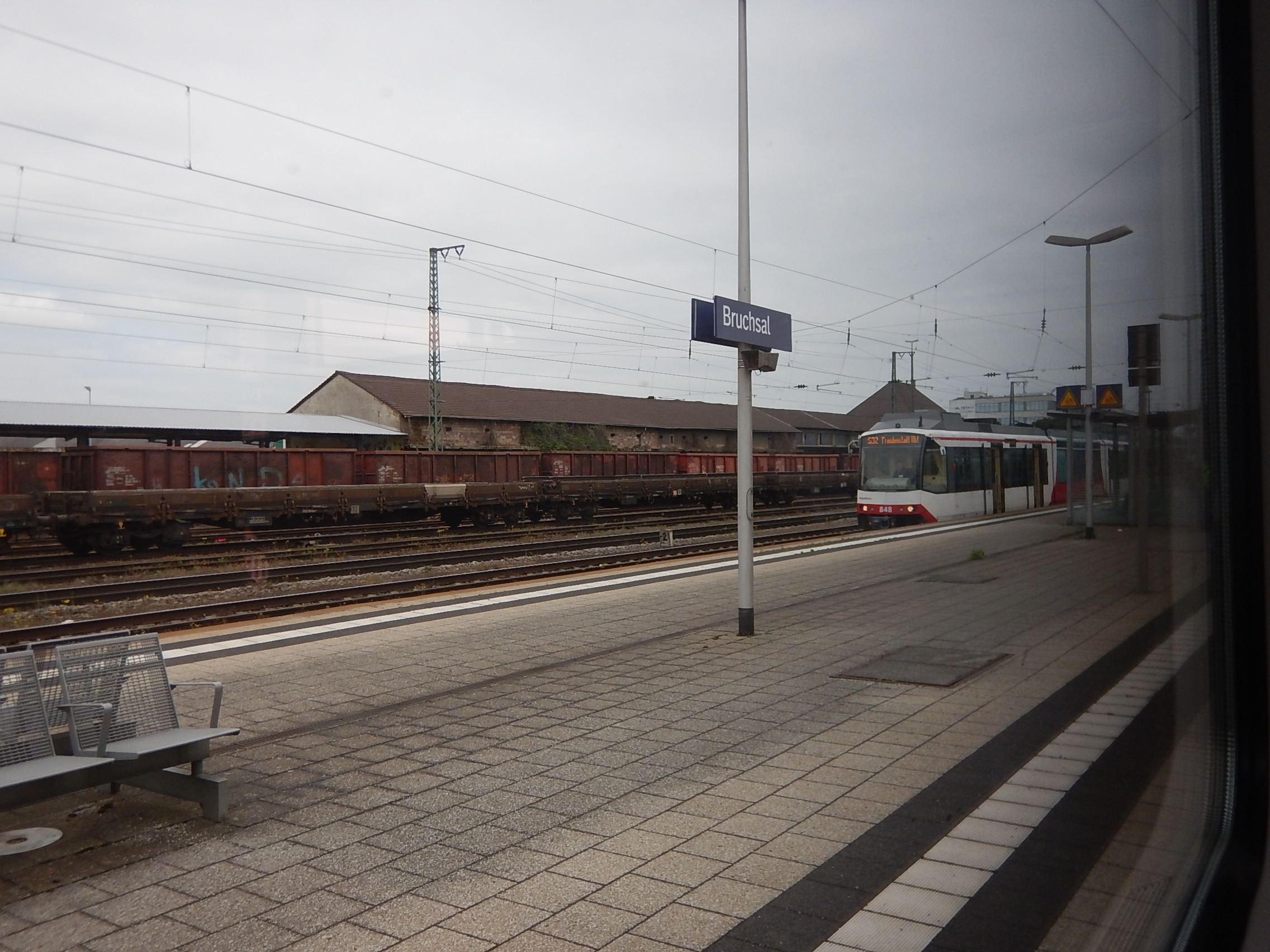
A Karlsruhe Tram-Train At Bruchsal Station
It shows an tram-train, probably on the run from Karlsruhe at Bruchsal station.
It is actually an S32, which has a route of.
Achern – Baden-Baden – Rastatt – Muggensturm – Hauptbahnhof – Durlach – Bruchsal – Menzingen
I reckon that’s a total distance of nearly a hundred kilometres, which goes right across Karlsruhe, although it goes via Duurlack and Hauptbahnhof, rather than along the main street.
Karlsruhe’s tram-trains certainly have strong invasion tendencies.
Phase Two Of The Nottingham Express Transit Opens Today
The Nottingham Express Transit is in my view one of our better tram systems.
As a regular user of tram systems in the UK and Europe and a Londoner, I actually think that the London Tramlink is the best, but that is because of the ticketing, which is based on the London contactless system and I just touch-in and go. Both Nottingham and Croydon systems are low-floor systems.
Nottingham Express Transit (NET) has also proved to be reasonably commercially successful. Wikipedia says this.
The new line proved successful, leading to an increase of public transport use for the Nottingham urban area of 8% in the five years to 2008, together with a less than 1% growth in road traffic, compared to the national average of around 4%. Nottingham has exceeded the most optimistic predictions, carrying 9.7 million people in 2005. This bolsters the case for the construction of new lines.
In my view other than the non-contactless ticketing, NET major problems are that it is not big enough, doesn’t connect properly to the rail station and doesn’t serve the two football and the major cricket grounds at Trent Bridge, which are all clustered together a twenty-minute walk south of the rail station.
The size problem is being rectified today with opening of Phase 2 of the system. According to this article on Global Rail News, it is happening today.
I think that this could turn out to be a significant day in the history of modern tramways in the UK, as if it proves out to be a successful extension to a proven system, it will be a wonderful advert for trams and light-rail in general.
It is just a pity, that the tram system still doesn’t serve the three sports grounds. Nottingham County Cricket Club, does at least say this about using trams to get to the ground on this page of its web site.
The nearest tram stop, Station Street, is a 20 minute walk from the ground, and anyone travelling from outside the city can take advantage of NET’s free park and ride facilities.?As an added incentive to take the tram, NET will be running a £2 return ticket for all match and season ticket holders.
Nottingham Forest give no information on how to use the tram, although Notts County would seem to run a similar scheme to the cricket.
This Google Map shows the layout of the station, the River Trent and the three sports grounds.

Nottingham Station, The River Trent And Sports Grounds
Note the bridge at the left hand side of the map over the River Trent. This is the Wilford Toll Bridge, which the NET uses to cross the river.
I suspect though that many meetings about transport in Nottingham have concluded that crossing the River Trent is the biggest transport problem in the area.
When I used to drive to Nottingham from Suffolk to either see a client or watch football or racing, getting away from the city to the East was always difficult, as the river always seemed to get in the way.
The simplistic solution to solve the sports ground problem of running a tram route over Trent Bridge or Lady Bay Bridge, which are the two bridges near the grounds would probably be the sort of measure that would be terribly unpopular with motorists.
I have searched for stories about a possible new crossing across the Trent to the East of Nottingham and there is certainly a lot of studies and speculation. This report in the Nottingham Post talks about a fourth road crossing and this one in the same paper talks about a foot and cycle crossing.
My feelings are that this is a classic problem, that should be sorted locally by a local Nottingham-wide Mayor or Transport Commissioner, responsible to a lkocal electorate.
If the extension to the NET are successful and take traffic off the roads, this might give impetus to expand the tram to the east and south-east of the city coupled with a new route to get cars and trucks over the river. This is a Google Map of the East of Nottingham.
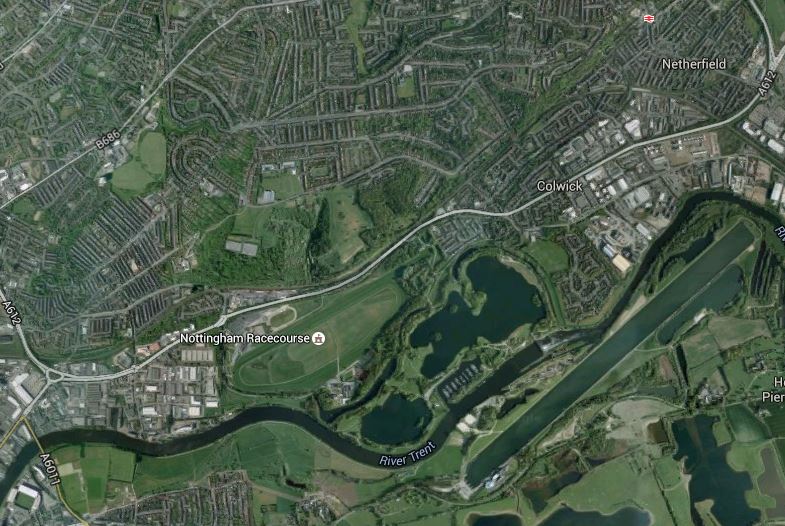
East Nottingham
Note Lady Bay Bridge and the City Ground in the bottom left-hand corner and the Holme Pierrepoint National Watersports Centre to the right. I bet the Watersports Centre would love a tram from the centre of Nottingham.
Also in this map in the top right hand corner is Carlton station on the Nottingham to Lincoln rail line. After what I’ve seen in Germany, this line would be one, they’d not hesitate to use for tram-trains. Little modification except for electrification would be needed outside of the city. At Nottingham station, the tram-trains would become trams and use the tram network to get to their final destination. I hope that Nottingham’s great and good visit their twin city of Karlsruhe and see how tram-trains working on the Karlsruhe model combine trams and trains in the city.
One thing that would make connecting tram-trains to the new tram stop at Nottingham station is that Nottingham station is not on a cramped site and a lot of the land surrounding the station is surface-level car parking.
I can envisage tram-trains arriving at Nottingham station from places like Grantham, Mansfield and Newark and then transferring to the NET tracks to go north or south from the station. You could even run tram-trains to Sheffield, so that the two tram systems are connected.
Compared to similar lines around Liverpool, Birmingham, Leeds and Cardiff, the frequencies on all these rail branches out of Nottingham are not high enough. Nottingham to Sheffield, as an example is only twice an hour, when four should be a minimum for cities of this size.
I suspect that Nottingham is watching the result of Sheffield’s tram-train trial to Rotherham with interest.
One way or other the Nottingham Express Transit will be key to solving the transport problems in Nottingham.
 The Anonymous Widower