Ørsted Greenlights 2.9 GW Hornsea 3 Offshore Wind Farm
The title of this post, is the same as that of this article on offshoreWIND.biz.
This is the sub-heading.
Ørsted has taken the final investment decision (FID) on what the company says is the world’s single largest offshore wind farm, the 2.9 GW Hornsea 3, which is expected to be completed around the end of 2027.
These are the two introductory paragraphs.
In July 2022, Ørsted was awarded a contract for difference (CfD) for Hornsea 3 at an inflation-indexed strike price of GBP 37.35 per MWh in 2012 prices.
The CfD framework permits a reduction of the awarded CfD capacity. The company said it will use this flexibility to submit a share of Hornsea 3’s capacity into the UK’s upcoming allocation round 6.
With all the work, that Ørsted have done to protect kittiwakes, which I wrote about in Kittiwake Compensation, the company seems to have been taking the development of this wind farm carefully and this statement from the wonderfully-named Mads Nipper, Group President and CEO of Ørsted indicates that the UK Government has been persuasive in times, that are not totally favourable to wind farm developers.
Offshore wind is an extremely competitive global market, so we also welcome the attractive policy regime in the UK which has helped secure this investment. We look forward to constructing this landmark project, which will deliver massive amounts of green energy to UK households and businesses and will be a significant addition to the world’s largest offshore wind cluster.
But the article also has this paragraph.
According to Ørsted, most of Hornsea 3’s capital expenditure was contracted before recent inflationary pressures, securing competitive prices from the supply chain, adding that the larger wind turbines and the synergies with Hornsea 1 and 2 lead to lower operating costs.
It looks like Ørsted, may have taken advantage of Siemens well-publicised financial woes and got a good price for the over two hundred turbines.
This page on the Hitachi web site, describes their part in Hornsea 3, where this is said.
Hitachi Energy has supported Ørsted with the grid connection of Hornsea One and Hornsea Two, but Hornsea 3 will be the first phase to use HVDC application in the Hornsea cluster.
The overall HVDC system, including the offshore platform, is delivered in partnership with Aibel. Hitachi Energy will supply two HVDC Light® converter systems, while Aibel will deliver two HVDC offshore converter platforms. The platform is based on Hitachi Energy’s modular HVDC system including its advanced control and protection system, MACH™. As the HVDC offshore market grows and becomes more complex, Hitachi Energy will continue to develop solutions with its customers and partners to enable a more flexible offshore grid of the future.
Hitachi Energy is supplying four HVDC converter stations, which convert AC power to DC for transmission in the subsea cables, then reconvert it to AC for integration into the onshore grid. Two of the converter stations will be installed on offshore platforms and two at mainland grid connections.
Note.
- Hitachi are pushing their electrical innovation hard.
- Hitachi and Ørsted have worked together on Hornsea 1 and 2.
- What better place is there for Hitachi to test their new modular HVDC system, than on one of the world’s largest wind farms?
- Hitachi appear to say, they like to develop with customers and partners.
It looks to me, that Ørsted may well have got new improved technology at an advantageous price.
This is the last paragraph of the article.
The Hornsea zone will also include the Hornsea 4 project, which could have a capacity of up to 2.6 GW. The wind farm received its development consent order from the UK government earlier in 2023 and is now eligible for forthcoming CfD allocation rounds.
So will Hornsea 4 be a slightly smaller version of Hornsea 3 using the same suppliers?
- There could be savings in the design and manufacturing of the electrical systems, foundations, sub-stations and turbines.
- Could for instance, Hitachi’s modular HVDC result in savings in converters and sub-stations, if the two wind farms shared infrastructure?
- I’m sure that Siemens, Hitachi and the other suppliers will be happy to just keep rolling.
- It would be an ideal follow-on.
It looks to me, that by using good design and management, and established suppliers, Ørsted have managed to get the costs of Hornsea 3 and Hornsea 4 to a level, where the venture is profitable.
Kittiwake Compensation
The title of this post, is the same as that of this page of Ørsted’s Hornsea Three web site.
The first section of the page gives the background.
Hornsea 3 Offshore Wind Farm received planning permission in December 2020. As part of our Development Consent Order, a requirement was included for ecological compensation measures for a vulnerable seabird species whose populations could be affected by wind farms – the Black-legged kittiwake (Rissa tridactyla).
Our compensation plan focusses on providing artificial nesting structures for kittiwake along the east coast of England. This project is the first of its kind and we are working on new and innovative designs for the artificial nesting structures. Each structure will be purpose-built, bespoke and specific to the landscape characteristics of each location. The structures also present an educational opportunity, allowing researchers to better understand kittiwake.
Developing effective environmental compensation measures is essential to ensure the UK Government’s targets for offshore wind can be realised, to deliver a net zero-carbon future.
So kittiwakes are not being paid compensation, as I don’t suspect many have bank accounts.
But they are being built a few new nesting structures.
Wikipedia has an entry on kittiwakes.
It notes that all European kittiwakes are of the black-legged variety and this is a picture, I took of some on the Baltic in Newcastle.
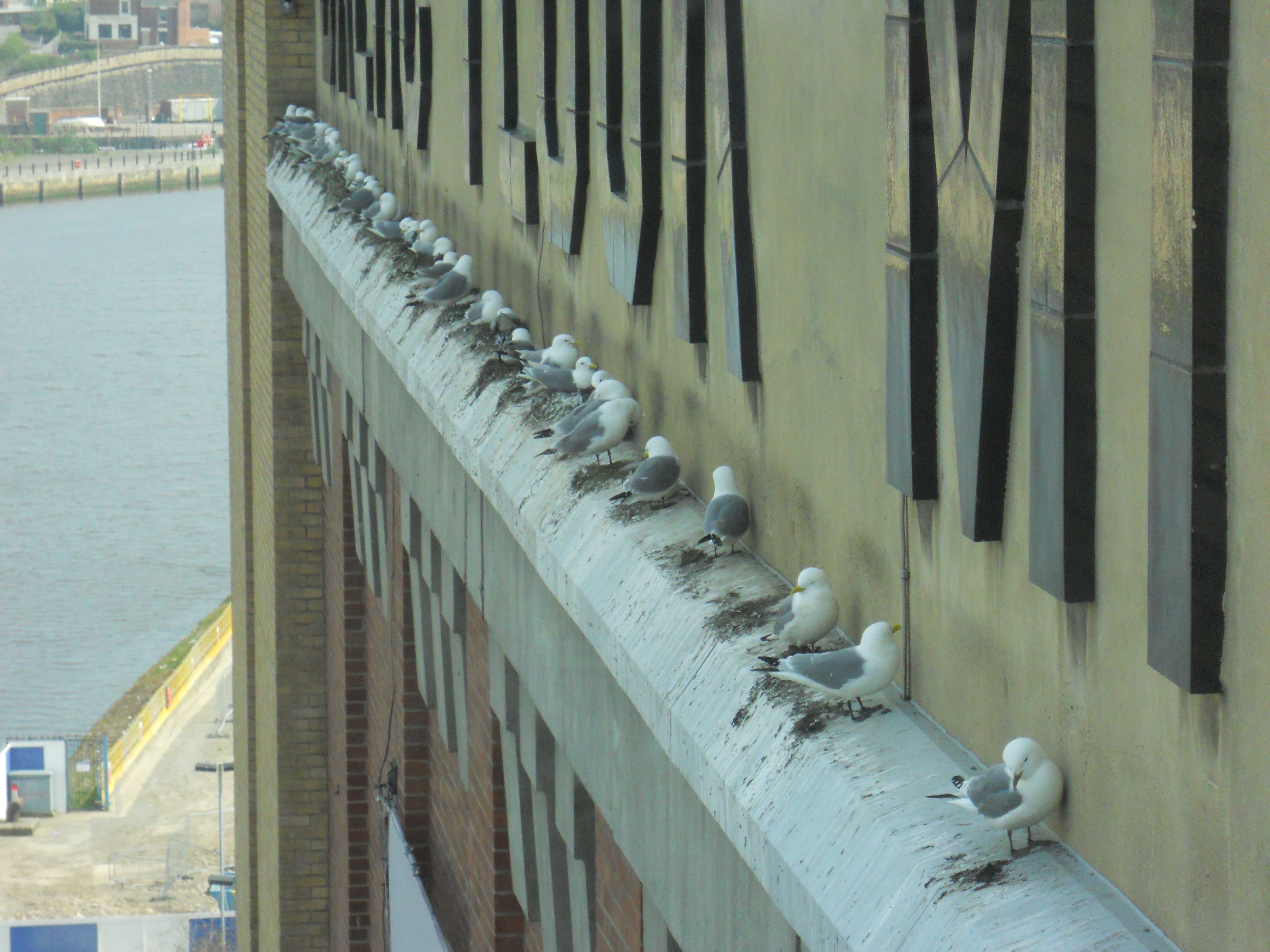
I’ve seen several pictures of kittiwakes lined up like these.
The document goes on to describe the work being done for the kittiwakes and this is said about work in East Suffolk.
Lowestoft and Sizewell are the only locations between Kent and Humberside with thriving kittiwake colonies. Kittiwake normally nest on steep cliffs with narrow ledges. East Anglia doesn’t have these natural nesting spaces, so kittiwake have reverted to colonising urban areas, for example on windowsills and ledges of buildings. Kittiwake breeding for the first time are most likely to find artificial structures that are situated close to these urban areas. They are less likely to find structures in places where there are not already kittiwake. Lowestoft and Sizewell are therefore two of the few places in East Anglia where artificial structures could be colonised quickly. These purpose-built nesting sites would improve breeding conditions for kittiwake, whilst successfully achieving our compensation requirements to unlock the world’s biggest offshore wind farm.
I took this picture of kittiwakes at Sizewell.
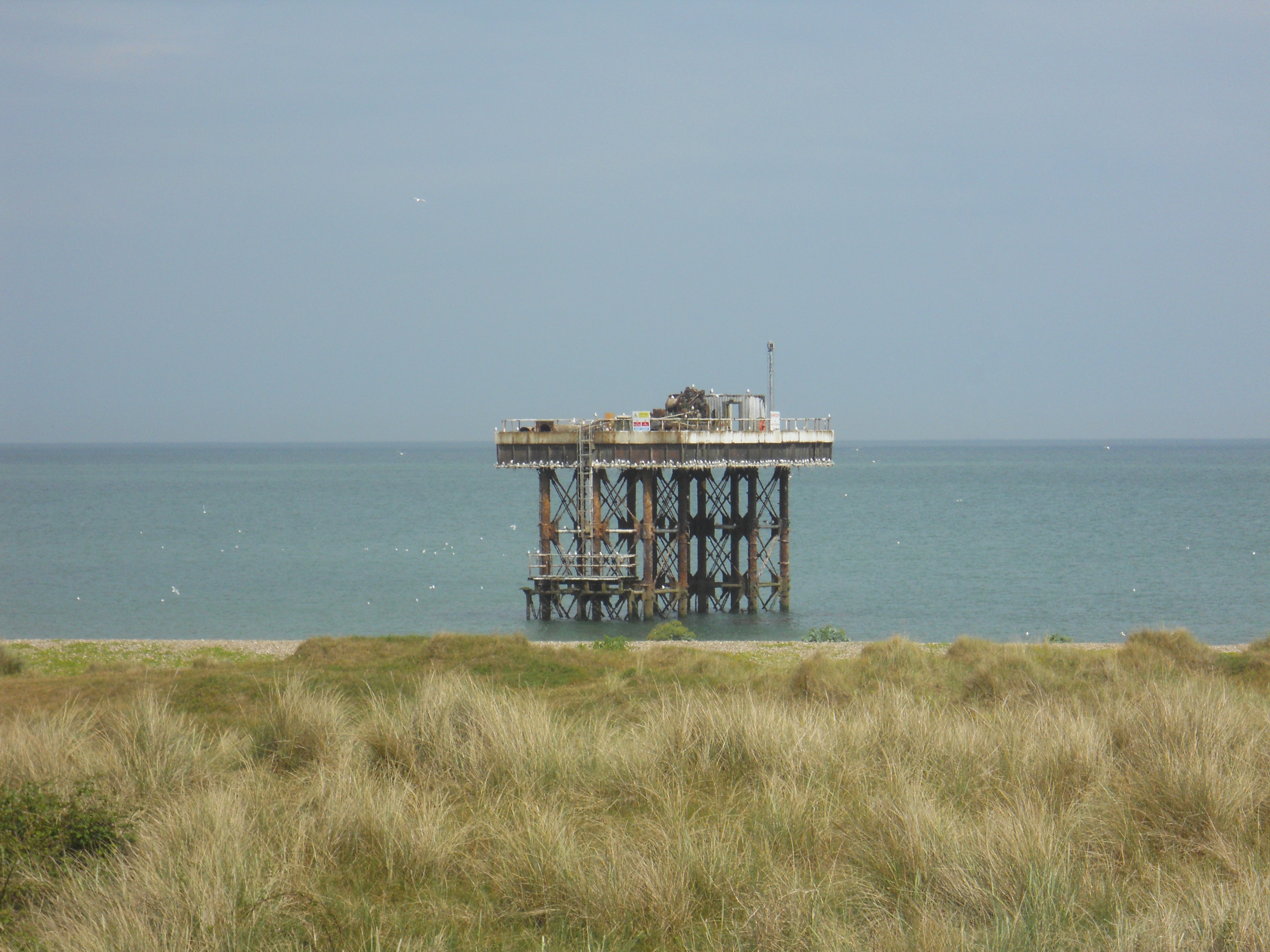
It doesn’t seem too unlike the structure on the Hornsea 3 web site.
The Car Park at the End of the World
Or should I say the end of Suffolk?

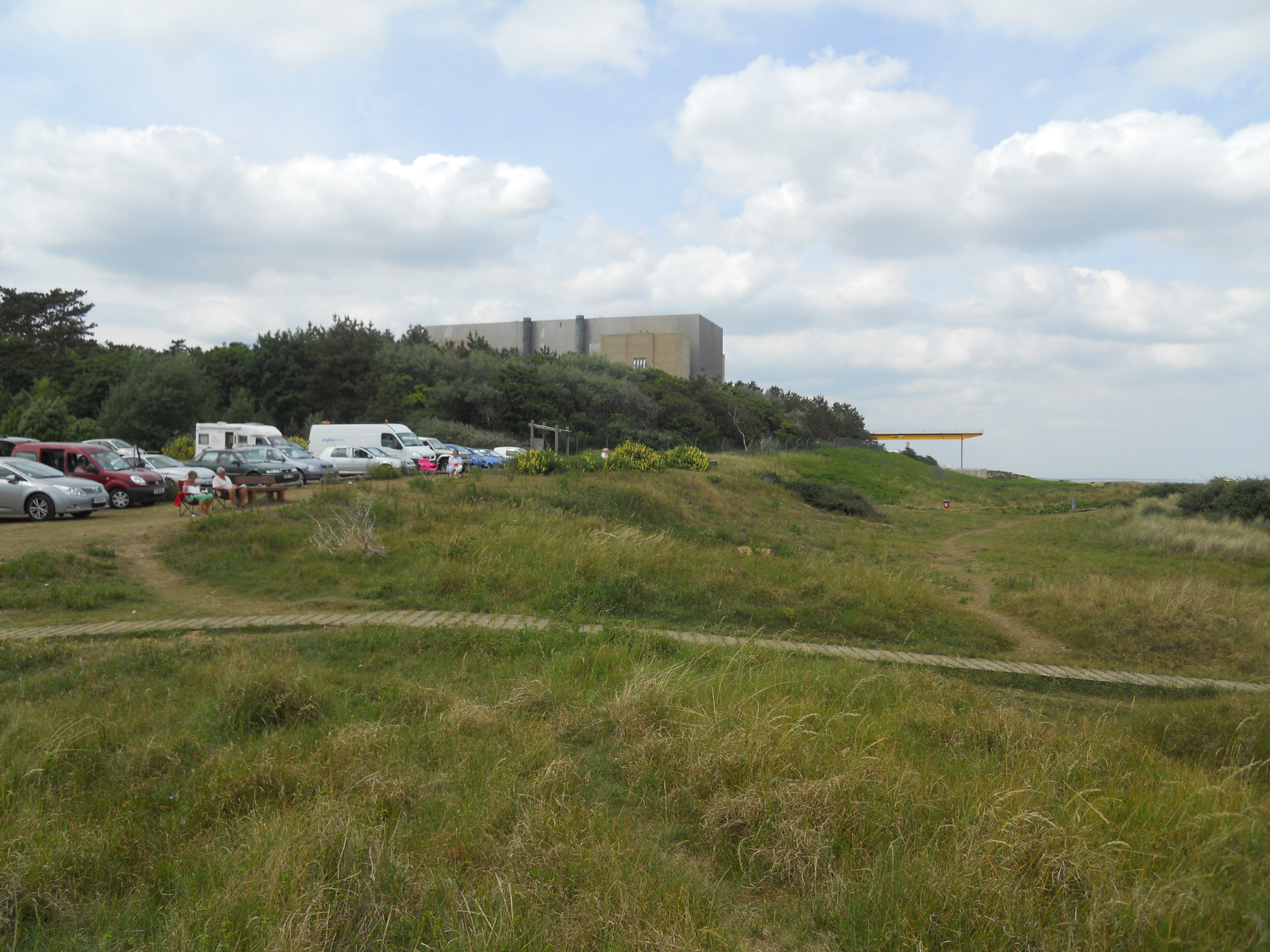
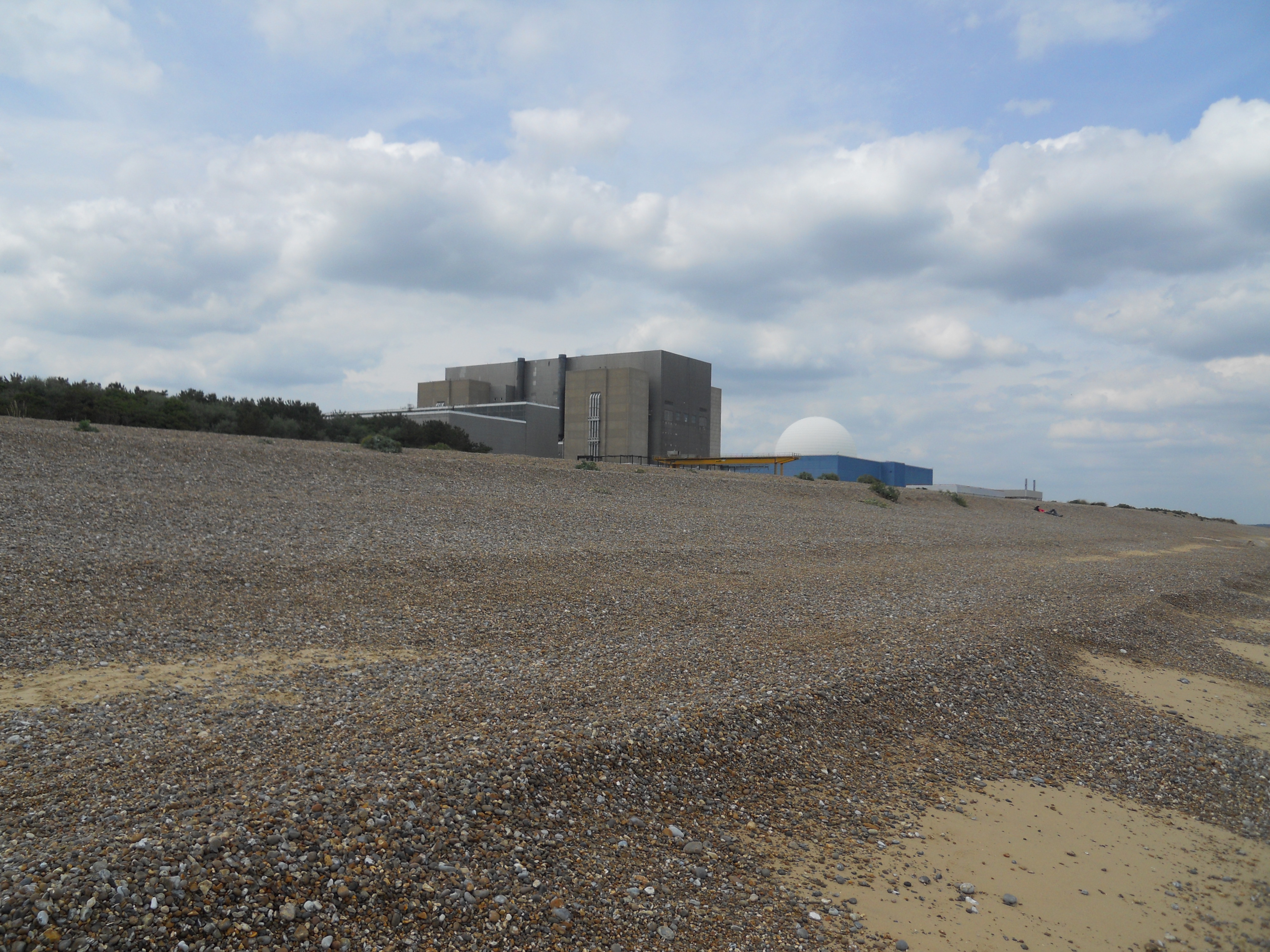
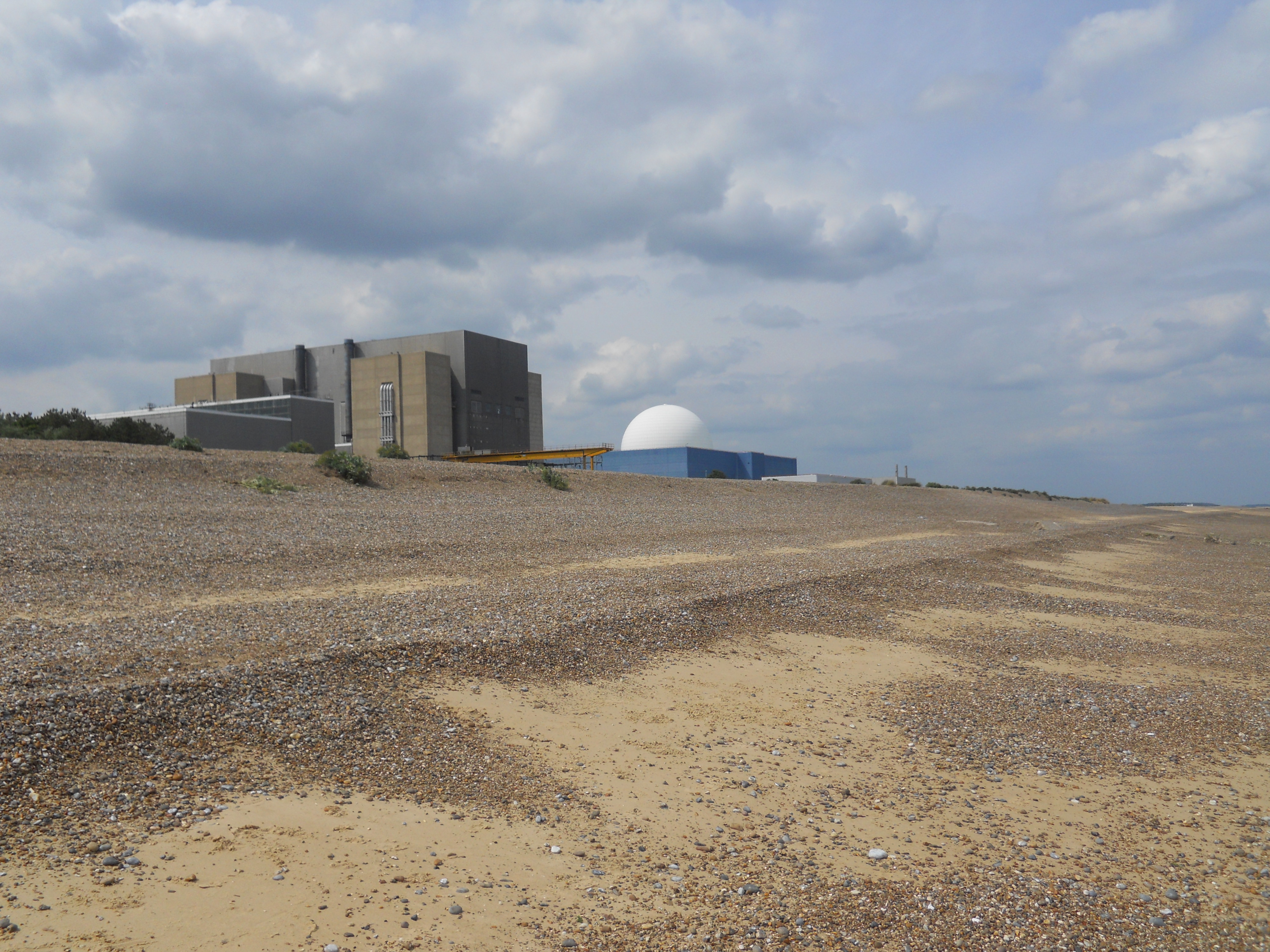
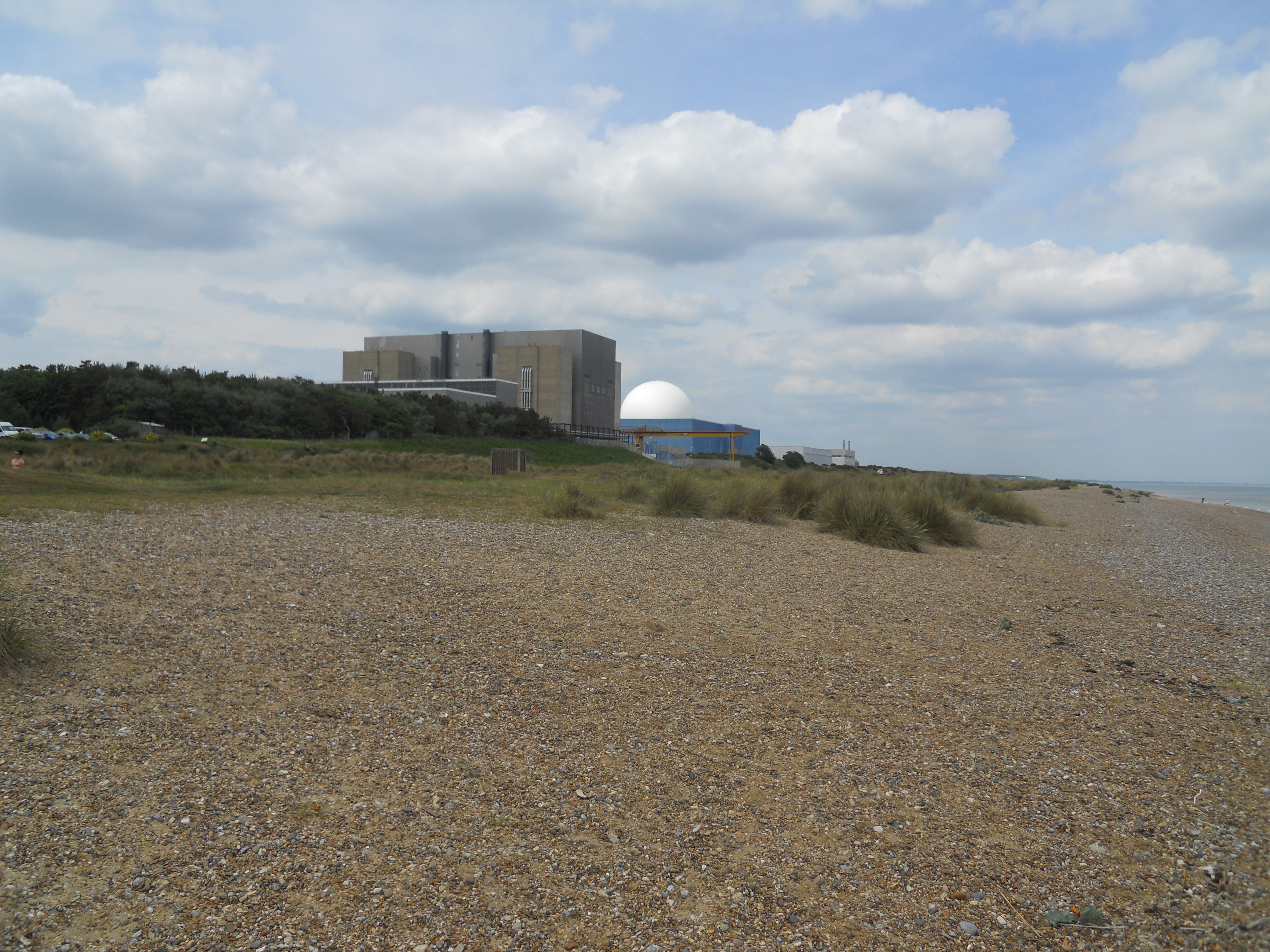
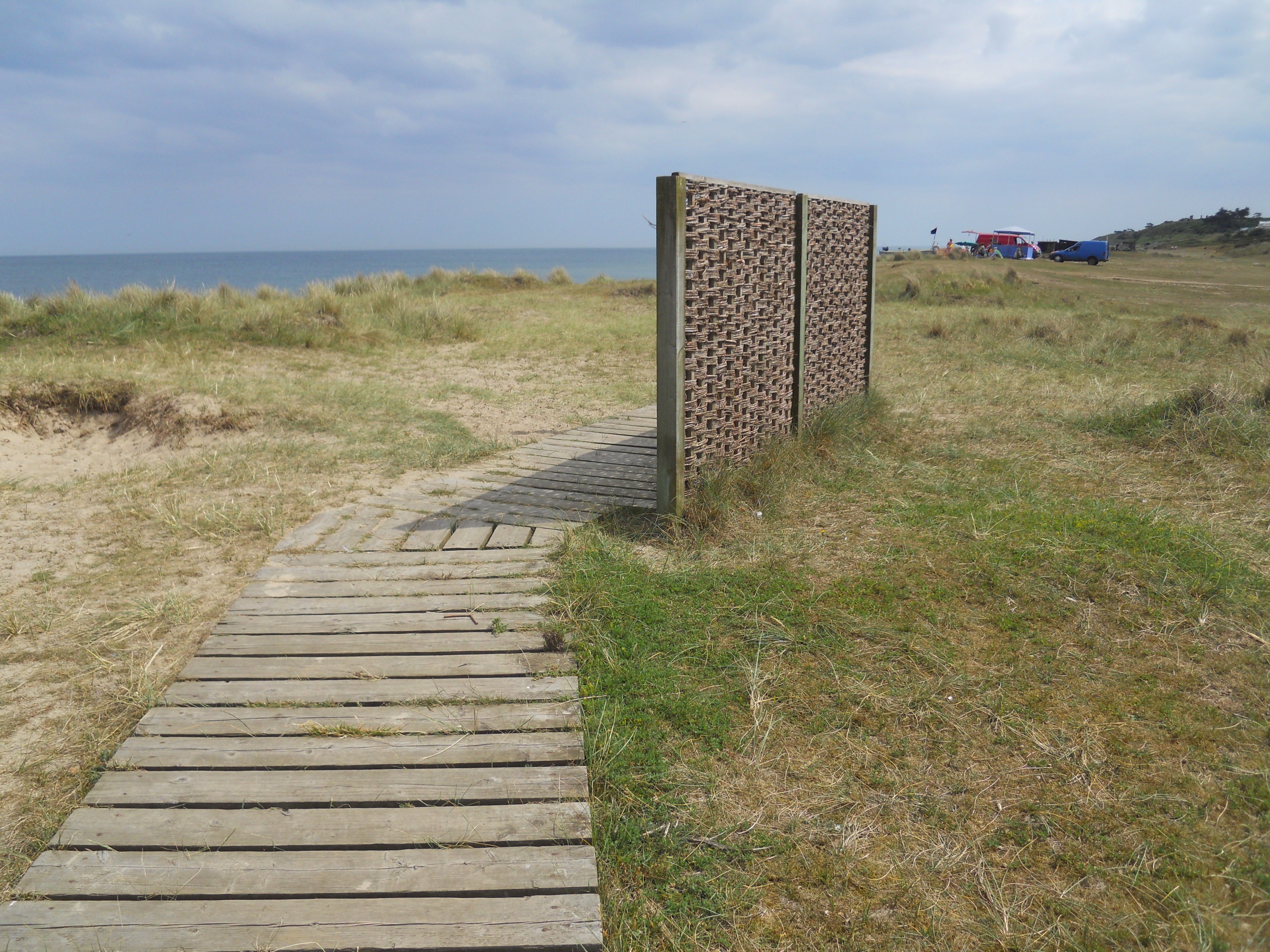

To many it would be an odd place to go for a walk. But the beach is pleasantly part-sand, you have lot of birds, including kittiwakes nesting on the rigs, interesting plants and protection from the wind because of the dunes. There is also a nice cafe and toilets.
Who would have expected it all, in the shadow of two nuclear power stations?
In the 1980s, I went over Sizewell A, which is the square station in the front. It is a Magnox station, was built in the 1960s and will soon be completely decommisioned. To plan their annual shutdown, they had one of the best planning systems, I have ever seen. It was a long white perspex wall, where the critical path network was drawn and updated. Different colours meant different things and through the months before the shutdown, all information was added in the correct place. Like everything I saw on that visit, it was all very professional.
I must relate a hunting story about Sizewell. We were hunting from Knodishall Butchers Arms and were about a couple of kilometres from the sea with Sizewell A in the distance. You might think that we were all against the station with its environmental implications. But being on the whole practical people we realised that you have to get electricity from somewhere and that the plant was a large local employer in an area of the country, that had suffered large job losses with the closure of Garretts of Leiston. But what really annoyed us, was the fact that the local farmer had grubbed out all of the trees and hedges. It was like riding in a lifeless desert.
I feel that we must build more nuclear power stations, but perhaps more importantly, we should be more economical with our energy use. Incidentally, as Sizewell is well connected to the electricity grid, from works we saw yesterday, it is being used as a ditribution point for the electricity generated by offshore wind farms. But I for one would not mind seeing Sizewell C and possibly D added to the Suffolk coast
Kittiwakes at the Baltic
Kittiwakes are a bird that normlly nests on cliffs. But they have nested at the Baltic for many years.
Kittiwakes on the Baltic
They may like it, but I don’t think I’d like to raise a family there!
 The Anonymous Widower