Could Virgin Run A Double Shuttle?
Coming back from Manchester today, I didn’t book a ticket, but then I never do when returning to London.
Suppose I’m going to a football match or a meting at a place like Huddersfield, which is a single change at Manchester Piccadilly or Liverpool Lime treet station.
Going North, I’ll choose a train that gives me about an extra hour to get me to the stadium in time for the match. This means that if the trains are running to time, I will have time to buy a gluten-free lunch at Carluccio’s in Piccadilly station or Liverpool before doing the second leg to the destination.
I might book a First Class Advance, but usually on a Saturday, I’ll book an Off Peak ticket in Standard Class and pay the Upgrade on the train.
Coming home, I’ll always use an Off Peak ticket, as from many places, you can never guarantee to be able to get to the station to catch a booked train. Especially, if it’s a wekend and there are Rail Replacement Buses.
I use similar booking tactics to places like Birmingham, Cardiff, Leeds, Liverpool, Sheffield and York.
It is a tactic that works well and I’ve never needed to buy a new ticket to get home, because I’ve missed a booked train.
Today got me thinking, as I came home from Manchester.
Would it be more profitable, if Virgin ran the service between London and Manchester as a turn-up-and-go Shuttle?
- Passengers would be able to book the trains in the normal manner.
- It would also be possible to turn up at Euston or Manchester and just by touching in and touching out with contactless technology at your destination to get on the train.
- Perhaps it could all be done on a simple terminal where you choose your class and destination, paying for the ticket with contactless technology using ApplePay, AndroidPay or a bank card.
- At Manchester Piccadilly, I had plenty of time today, so taking ten minutes to buy a ticket wasn’t a problem.
- Surely, the quicker you can buy a ticket, the more passengers will travel.
- Three trains an hour would run in both directions always starting from the same platforms.
It could get very interesting, if it was made into a double shuttle, with Euston to Liverpool services.
I suspect there’s a pattern, that perhaps has six trains an hour to Crewe, with some trains going to Manchester and others to Liverpool.
IPEMU Trains And Terminal Tunnels
The strongest hint about purchasing trains with an IPEMU capability has come from Merseyrail.
I wrote about these trains in a Merseyside context in Is Liverpool Planning To Invade Manchester By Train? This is an extract from the post, which details their declared interest in IPEMUs.
In the October 2015 edition of Modern Railways, there is an article about Merseytravel looking for a new fleet of trains for their 750V DC network, which is entitled New Trains For Liverpool. This is said.
Merseytravel has indicated that it will be seeking ‘innovative proposals’ from manufacturers, with considerable emphasis being placed on the overall cost of operating the fleet rather than just the basic cost of the trains themselves. Options such as regenerative braking and onboard systems to store energy under braking to be used for acceleration will attract particular interest. The independently-powered EMU (IPEMU or battery train) concept evaluated earlier this year on a modified Class 379 in East Anglia ,might see an application here.
I thought that the main reason for the IPEMU capability would be to connect Preston to Liverpool via Ormskirk and Manchester Victoria to Liverpool via Kirkby.
But does Merseyrail have other reasons? Type “Merseyrail power supply problems” into Google and you get a lot of matches, especially concerning Kirkdale depot.
To emphasise this in Liverpool City Region Long Term Rail Strategy, this is given as an objective.
Future proofing the power requirements of the Merseyrail network by undertaking a full power upgrade.
This question has to be asked – If all trains had an IPEMU capability, could the power supply to the tracks be simplified?
Perhaps the tunnels under Liverpool could be worked on battery power, with the trains charging on the surface. Would it be an advantage, for maintenance and safety reasons not to have any electrical power supply in the tunnels?
So are there any other lines that end in tunnels in other parts of the UK?
I can only think of one – The Northern City Line, which terminates at Moorgate station.
This is said, under Current Roling Stock in the Wikipedia entry for the line.
The line is electrified with 25 kV AC overhead line from Finsbury Park to Drayton Park, and 750 V DC third rail from there in tunnel to Moorgate. Services are operated by dual-voltage Class 313 electric multiple units(EMUs), the only units certified for use on the line. In keeping with regulations for trains operating in single-bore tunnels, they have emergency doors at the end of each unit, and when operating on 750 V DC the two motor coaches are electrically separate as far as the traction supply goes. Unlike other contemporary units, there are no DC traction supply jumper cables between carriages. All Class 313 units operating over the NCL have their Driving Motor B vehicle at the London end, and whilst on DC are electronically limited to 30 mph,[8] which is the maximum line speed. All stations are long enough to accept six car trains.
The Class 313 units are amongst the oldest still operating on the National Rail network. As a consequence, when it took over the Thameslink/Great Northern franchise, Govia Thameslink Railway announced that it would procure a total of 150 new carriages to completely replace the Class 313 fleet operating services to Moorgate
So it would appear that an IPEMU capability on the trains, which would use battery power south of Drayton Park, could be an alternative to a dual-voltage train, with an unusual configuration to meet the regulations.
But as I reported in One Of North London’s Forgotten Lines Is Awakening, Siemens have already received an order for twenty-five six-car Class 700 trains, to run on the line.
So IPEMUs won’t be used there!
Will Merseyrail Rescue Croston?
Like everybody, I have been watching the news and in particular the floods in the North.
There have been several reports from the village of Croston, which has suffered particularly badly!
I don’t know the village, but I looked it up on Wikipedia and found that there is a Croston station serving the village.
This Google Map shows the village and the station.
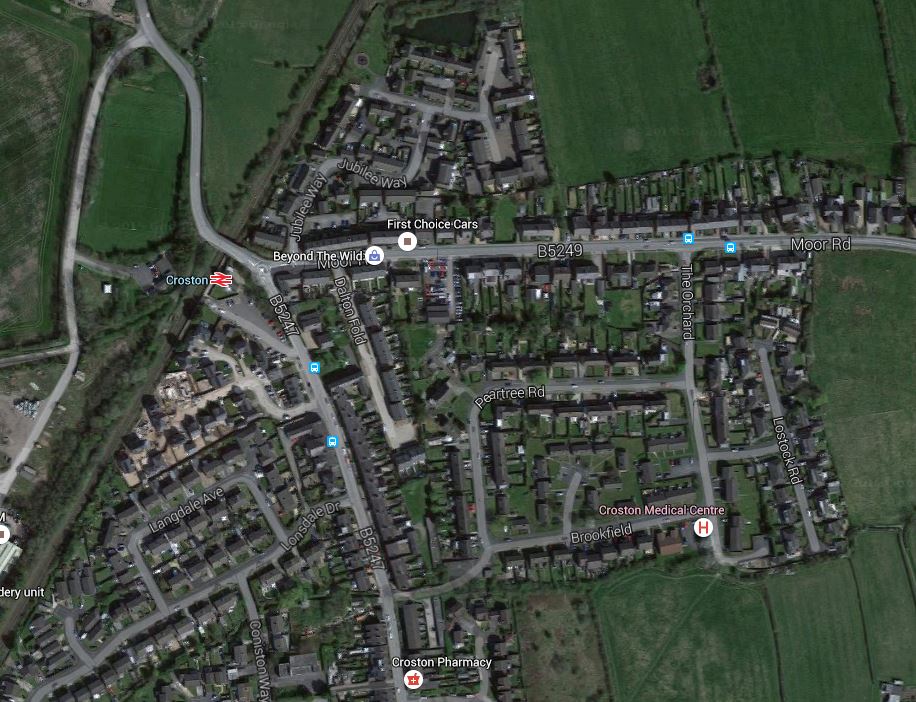
Croston Station
Croston station lies on the Ormskirk Branch Line, which connects Ormskirk on the Mersetrail network around Liverpool, to Preston and the the West Coast Main Line. The Ormskirk Line one of those terrible and neglected pieces of infrastructure, left behind after the cuts of the 1960s and 1970s,
Merseyrail have ambitions to connect Liverpool to both Preston via Ormskirk and Manchester via Kirkby with new electric trains. I wrote on this in Is Liverpool Planning To Invade Manchester By Train? I said this.
———-
In the October 2015 edition of Modern Railways, there is an article about Merseytravel looking for a new fleet of trains for their 750V DC network, which is entitled New Trains For Liverpool. This is said.
Merseytravel has indicated that it will be seeking ‘innovative proposals’ from manufacturers, with considerable emphasis being placed on the overall cost of operating the fleet rather than just the basic cost of the trains themselves. Options such as regenerative braking and onboard systems to store energy under braking to be used for acceleration will attract particular interest. The independently-powered EMU (IPEMU or battery train) concept evaluated earlier this year on a modified Class 379 in East Anglia ,might see an application here.
It does appear on a quick look, that a version of the new Aventra train, which comes with an IPEMU capability as standard might be suitable for Merseyrail, as it could connect Preston to Ormskirk and Manchester to Kirkby, without any more electrification.
———-
Some of my thoughts in the Invading Manchester post, is based on this document, which is entitled Liverpool City Region Long Term Rail Strategy, so it is not idle speculation.
A half-hourly four-car service through Croston and other stations in the area linking to Liverpool and Preston using IPEMU trains, would not help directly with the floods, but would get people into and out of the area without needing to use a vehicle on flooded roads.
I’m sure that the engineers from Bombardier and Network Rail will ensure that an IPEMU can operate some kind of service in conditions as we’ve experienced over the last few days.
Intriguingly, I have just been reading this article in Rail Technology Magazine, which is entitled Bombardier enters key analysis phase of IPEMU. In a section entitled Market Applications, this is said.
Bombardier has started assessing potential customers for battery-powered trains, looking first at branch line applications. Batteries could be a solution allowing non-continuous electrified infrastructure, and emergency rescue and last-mile opportunities.
Although emergency rescue is probably more about power loss than floods, Bombardier obviously feel that an IPEMU has some genes inserted from a cross-country vehicle.
Knowing the way Liverpudlians think, I suspect that what was said about IPEMUs for Merseyrail in the October 2015 edition of Modern Railways will happen.
Reaction In The North To Rail Franchise Awards
I have been browsing the local papers in the North, to see the area’s reaction to the award of the new Northern and TransPennine franchises.
This article in the Liverpool Echo is entitled 4,000 more seats in £1.2bn boost for North West trains, which seems a very positive headline. This is the first paragraph.
Nearly 4,000 more seats on Liverpool and Manchester services during the morning peak and a new, direct Liverpool to Glasgow service were among the promised benefits of a trains package announced today.
They use a lot of positive language and only have a slight worry about what it will mean for fares.
This extract from another article, may be a bit parochial, but it is proud of Liverpool’s involvement in formulating the winning bids.
Merseytravel – who were involved in drawing up the specifications for the bidders – said there was a commitment to four fast services an hour between Lime Street and Manchester and two per hour between Liverpool, Leeds and York, as well as more services to Preston.
There will also be an early Northern service from Lime Street to Manchester Airport (arriving no later than 4.45am), and daily services to Manchester Airport via both Newton-le-Willows and Warrington Central.
It is also positive and just as I found in the city, when they introduced the Class 319s electric to Manchester Victoria, Merseysiders seem to be looking forward to better services.
Coverage on the Manchester Evening News, like this article entitled Hundreds of new carriages promised as Arriva and FirstGroup win Greater Manchester rail franchises, seems to be more cynical and snipes at Arriva for other issues. It doesn’t have the practical tone of the Liverpool reporting.
For instance, the Liverpool reporting stresses the much better service to Glasgow, Edinburgh and Newcastle, but despite Manchester will get a doubling of Scottish services, it isn’t given the same prominence.
Across in Leeds, the Yorkshire Post has an article entitled December 10: New age of the train – or not? This said.
Unlike previous deals which did not foresee the untapped potential of this region’s railways, Transport Secretary Patrick McLoughlin has used this opportunity to insist that the new franchise-holders invest in new rolling stock to help ease overcrowding on rush-hour trains. Yet it remains to be seen whether these operators, and their partners, can deliver the “world class rail service” envisaged by Mr McLoughlin and which is so integral to the much-vaunted Northern Powerhouse which aims to improve connectivity between major cities.
It looks to me that the Yorkshire character is shining through.
So on this quick look Liverpool is more positive and Manchester and Leeds are a tad negative.
Could it be that of the three cities, Liverpool is very proud of its locally-managed franchise, Merseyrail and are those in the area bigger train users than people to the East?
I also suspect, that at present, Liverpool with the electric trains to Manchester, has benefited most from rail dvelopment in the last few years.
Will The Canny Glaswegians Back Tram-Trains?
This article on Global Rail News is entitled Glasgow Planning Airport Tram-Train. This is said.
A tram-train, which would operate between Glasgow Central Station and Paisley Gilmour Street before moving onto a new light rail line to the airport, is the preferred option.
This Google Map shows the relationship between Paisley Gilmour Street station and the airport.
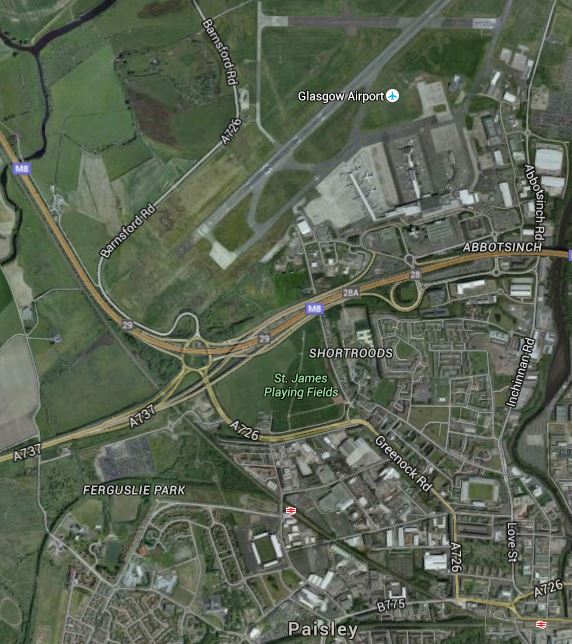
Glasgow Airport Tram-Train Link
Paisley Gilmour Street station is in the bottom right corner of the map and the Inverclyde Line runs past the Airport alongside the M8 Motorway, after passing through Paisley St. James station.
The article gives some interesting figures on the costs of the .link between Glasgow Central station and the Airport.
- A conventional rail link would cost £317million.
- A tram-train link would cost £144million
- A light rail rapid transit, which would need a change of vehicle at Paisley Gilmour Street would cost £102million.
These costs probably explain, why the Germans are building as many tram-train systems as they are!
Having seen tram-trains working in a number of German cities, I would choose a tram-train tomorrow.
These points should be noted.
- The tram-train trial between Sheffield and Rotherham should highlight the changes that would need to be made to existing stations, signalling and operation.
- The Class 399 tram-train, would probably be used. It is a standard German tram-train modified to run on our overhead line electrical voltage. Surprisingly, it is the Germans, who are non-standard.
- When running as trams, tram-trains have all of the tram’s agility to go round tight curves and sneak into cramped sites.
- When running as trains the performance of the Class 399 tram-trains is only marginally slower than the Class 314 trains, that current work the Inverclyde Line. So they would be able to mix it on the train line.
- Passengers will probably think that they’re on a train, that is perhaps a bit different.
- Liverpool are seriously thinking of using tram-trains to connect to Liverpool Airport.
The only unusual thing in the proposed Glasgow and Liverpool tram-train systems, is that tram-trains are running as trains for most of their routes, except for the branch into the airport.
Normally tram-trains run as trains outside of the City Centre and as trams inside it. But then both Liverpool and Glsasgow don’t have any other tram system.
Boxing Day Trains On Merseyside
The title of this post is the title of an article in Rail Magazine.
Running trains on Boxing Day for one of the busiest shopping and sporting days of the year, is a logical thing to do.
But where are my trains to Ipswich on that day?
Significant Documents
When I wrote Increased Frequencies On The East London Line, I relied on this document from Transport for London (TfL) entitled London Overground and Docklands Light Railway Growth.
The document was significant because of its openness and the way it laid out how the London Overground and the Docklands Light Railway will cope with growth.
I think the document also shows how a properly planned public transport project attracts users, that are a precursor to the growth.
After all, in the last few months, I’ve seen the extension of the Nottingham Express Transit and the opening of the Borders Railway, neither of which have attracted substantial amounts of negative comment.
So perhaps we’re now getting rather good at planning these types of projects.
Over the last few months, I’ve read some significant documents, that look to the future.
- Transport for London’s London Infrastructure Plan for 2050
- Liverpool City Region Long Term Rail Strategy
- Greater Manchester Rail Policy
All are quality documents and are superb starting points for the development of railways in their area.
Is Liverpool Planning To Invade Manchester By Train?
There is no love lost between the two North-Western cities of Liverpool and Manchester.
I must admit, that I do use the correct feelings towards Manchester, when I’m in Liverpool, as Liverpudlians like it!
In the October 2015 edition of Modern Railways, there is an article about Merseytravel looking for a new fleet of trains for their 750V DC network, which is entitled New Trains For Liverpool. This is said.
Merseytravel has indicated that it will be seeking ‘innovative proposals’ from manufacturers, with considerable emphasis being placed on the overall cost of operating the fleet rather than just the basic cost of the trains themselves. Options such as regenerative braking and onboard systems to store energy under braking to be used for acceleration will attract particular interest. The independently-powered EMU (IPEMU or battery train) concept evaluated earlier this year on a modified Class 379 in East Anglia ,might see an application here.
It does appear on a quick look, that a version of the new Aventra train, which comes with an IPEMU capability as standard might be suitable for Merseyrail, as the size and speed of the current Class 507 and 508 trains, don’t seem to be unusual like some trains of their age.
The trains would need to be dual voltage, so they could work on both electrical systems on Merseyside. But then Bombardier can handle that!
Surely, if the trains were IPEMUs, I can’t believe that Merseyrail would not use their capabilities to provide extra services to new destinations.
Ormskirk to Preston
In my meanderings yesterday, I twice passed the bay platform at Preston, which is the terminus of the Ormskirk Branch. This branch is about twenty miles long and is a monument to the British Rail Crap Design School and is detailed in the line’s History section in Wikipedia. This picture shows how I once changed trains at Ormskirk a couple of years ago.
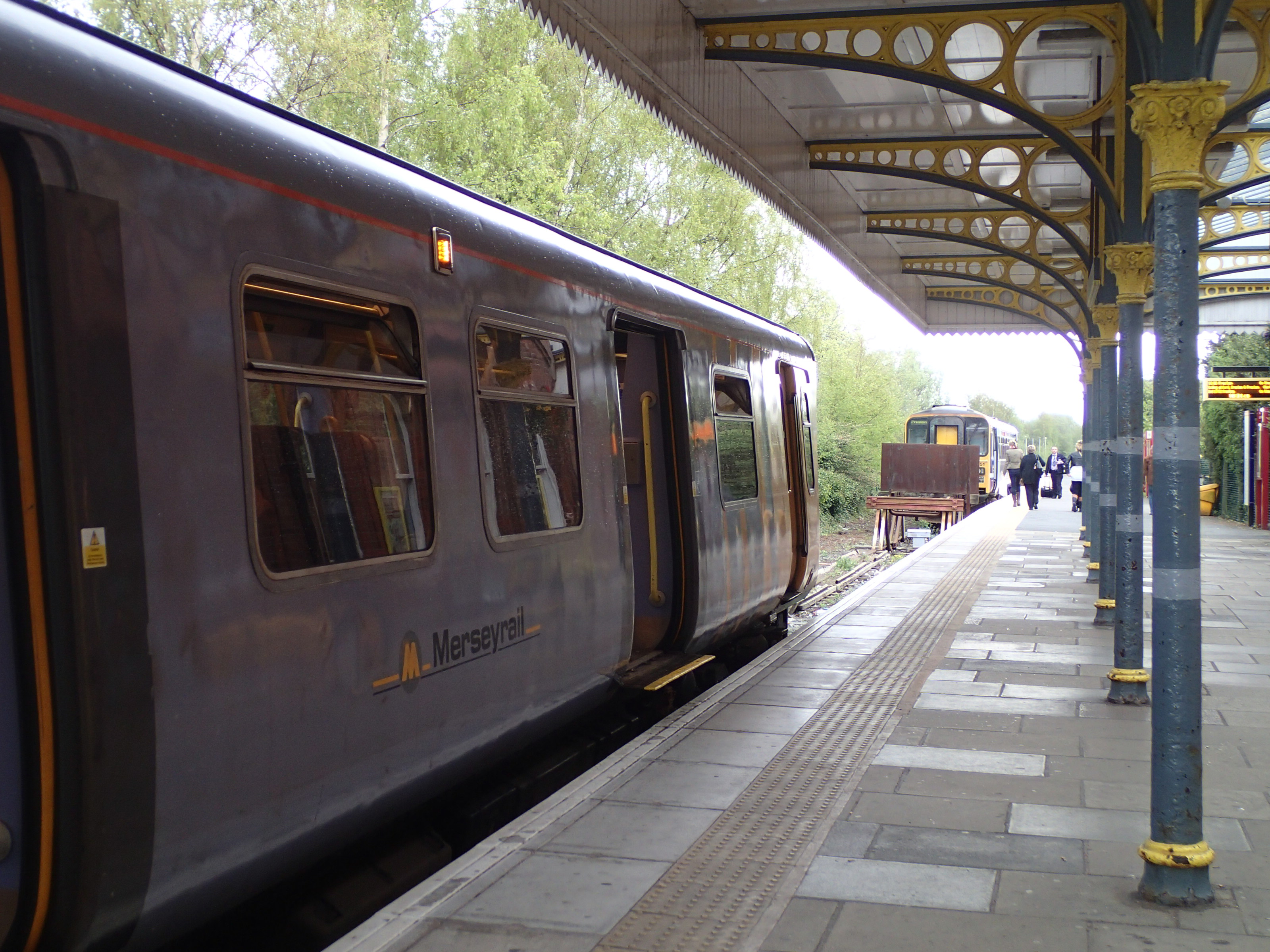
Changing Trains At Ormskirk
Note the barrier between the two trains.
If Merseytravel’s new trains, were IPEMUs, they would be able to provide a continuous Liverpool to Preston service via Ormskirk.
Dual voltage trains would be needed so they could use the different power systems at the two ends of the line.
Kirkby to Wigan, Bolton and Manchester
The British Rail Crap Design School were not satisfied with one bad interchange, but they did the same at Kirkby station, thus cutting the Manchester to Liverpool route via Kirkby in half and necessitating a change of train for anybody going this way.
Just as at Ormskirk, where IPEMUs can extend the Ormskirk branch of the Northern Line to Preston, dual-voltage IPEMUs could be used to create an extension of the Kirkby branch to Wigan, Bolton and Manchester.
IPEMUs would also enable the construction of a new station at Headbolt Lane between Kirkby and Rainsford, which is an aspiration of Merseytravel.
So IPEMUs would enable Liverpool to have another direct service to Manchester for invasion.
New Services to the North
Which services from Ormskirk and Kirkby get developed, would all be down to the traffic statistics.
But the engineering wouldn’t be much, that a competent small station builder couldn’t handle.
I’ve done the change at Ormskirk a couple of times, where in both cases I waited over thirty minutes.
In this modern age, that is as acceptable as piles!
New Services to the South
At its Southern End, the Northern Line joins the City Line at Hunts Cross station., so IPEMUs could travel to Manchester via Warrington Central, if that was what Merseytravel felt they should do.
I do feel that having another terminus like Warrington Central or even Chester might be worthwhile to increase capacity in the tunnel under Liverpool, where trains have to turn back at Liverpool Central.
But IPEMUs would be very helpful in this area, as apart from the line to Crewe, nothing is electrified.
Expanding the Wirral Line
There are various lines that are not electrified that connect to Merseyrail’s Wirral Line. The operation of IPEMUs has been proposed on one line; the Borderlands Line to improve connectivity between Wrexham and Liverpool. In a Proposed Battery Train section in the Wikipedia entry for the Borderlands Line, this is said.
A trial of an overhead-wire and battery powered converted Electrostar train was undertaken in January and February 2015 on the Mayflower Line. The train can travel up to 60 miles on energy stored in the batteries and also recharges the batteries via the overhead-wires when on electrified track, at stations and via brake regeneration. A month later in March 2015, the introduction of battery powered trains was proposed for the Borderlands Line by Network Rail.
The document suggested that consideration had been given to electrification and to running services further into Birkenhead ceasing termination at Bidston for greater connectivity. However these options were expressed as offering low value for money. They proposed that using battery powered rolling stock precluding full electrification of the line, providing a cheaper method of increasing connectivity into the electrified Birkenhead and Liverpool sections of the Wirral Line.
So if Merseytravel decides not to invade Manchester, they can always invade Wales.
Conclusions
I would feel that Merseytravel have got some planned uses for IPEMUs in mind.
I suspect that some of the uses will be rather surprising, but then the concept of an IPEMU does give transport planners a lot of flexibility and a go-anywhere capability.
This document on the Merseytravel web site is their plan of what they would like to do.
There’s certainly a lot of scope for IPEMUs, tram-trains, clever architects and capable construction companies to give Liverpool a world-class local railway network. For a start, they’re looking at stations in all these places.
Anfield
Beechwood
Carr Mill
Chester-Crewe Line
Deeside Industrial Park
Ditton
Edge Lane
Headbolt Lane
Ledsham
Maghull North
Skelmersdale
St James
Tarbock Interchange (or Halewood South)
Town Meadow
Tuebrook
Vauxhall
Warrington West
Woodchurch
That is a large number of stations for only a small part of the UK.
It’s when I read documents like the Merseytravel report, that I think that local areas, should have more control of their transport infrastructure, as local people and their politicians often know the best way to spend the money.
Also when a new station or line is built in an area and most people are in favour, they think of it as their infrastructure and use it!
Meandering Around Lancashire
Yesterday, I went to Ipswich Town’s disastrous match at Blackburn.
I went via Liverpool, as I had at one point intended to get a flight from Liverpool Airport to Poland on the Sunday to start one of my Home Runs.
But circumstances intervened and so I was left with only the first leg of my trip – A First Class ticket to Liverpool.
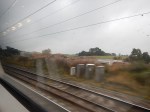
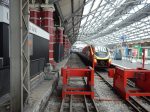
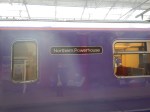
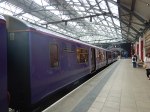
These pictures tell the story of my journey.

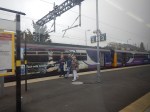


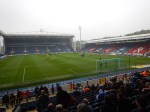
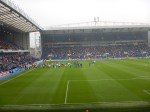

Note :-
- Norton Bridge Junction is The Two Hundred Million Pound Railway Project Of Which You’ve Probably Not Heard.
- Where were all the Class 319 trains in Liverpool? Only Northern Powerhouse was sitting forlornly in Platform 1! Normally, there’s half a dozen!
- The New Platform 7 at Liverpool Lime Street has been planned for years. And still nothing is happening.
- Blackburn station had no information on buses.
I’d actually taken six trains during the day.
- A Virgin Pendelino from Euston to Liverpool
- A Northern Rail Class 156 train from Liverpool to Wigan North Western
- A Virgin Pendelino from Wigan North Western to Preston
- A Northern Rail Class 156 train from Preston to Blackburn
- A Northern Rail Class 142 train from Blackburn to Preston
- A Virgin Pendelino from Preston to Euston
The trip up was by a roundabout route, but in some ways it illustrates the problems of trains in the area.
- Liverpool to Preston is fully electrified, but the service is run by diesels, although from Monday, it will be run by Class 319 electric trains on a half-hourly basis.
- As Preston to Blackpool is not electrified, usually the onward journey is a tired diesel.
- Preston to Blackburn and Burnley is not electrified and is generally run by antique Pacers and a few Class 156 trains.
- At the moment due to the Farnworth Tunnel problems, Manchester to Preston is not a journey for the faint-hearted.
Hopefully, it’ll all get better, when the Manchester to Preston via Bolton electrification is complete, but that won’t do anything from Preston to Blackpool, Blackburn and Burnley.
Whoever wins the new Northern Rail franchise is going to be mandated to buy 120 new carriages.
Surely, these should be Aventra IPEMUs and they should be used on these lines from or through Preston.
- Blackpool North to Hazel Grove
- Blackpool South To Colne
- Preston to Barrow
- Preston to Blackpool North
- Preston to Leeds via Blackburn, Bolton, Halifax and Bradford
- Preston to Manchester Victoria via Blackburn, Burnley and the Todmorden Curve.
- Preston To Ormskirk
- Preston to Windermere
They would probably be used on other lines in the area.
- Liverpool to Manchester via Warrington Central
- Manchester to Southport
These services might only need some platform lengthening, adjustments to track and signalling and a small amount of extra electrification.
The longest section that is not electrified is that between Preston and Bradford, which is probably less than sixty miles. If necessary the gap could be shortened by electrifying between Preston and say Rose Hill, where the Colne branch divides.
What surprises me, is that Bombardier haven’t created another demonstrator to prove the concept, just as they did at Manningtree.
Memorials On The Liverpool Pier Head
Liverpool is proud of its maritime heritage and the Pier Head on the Mersey is part of a UNESCO World Heritage Site called the Liverpool Maritime Mercantile City.
When Celia and I met in Liverpool in the 1960s, it was a simpler place, where we would walk to take the ferry across the Mersey.
These pictures show the Pier Head today.
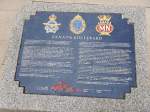

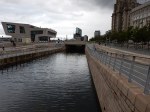
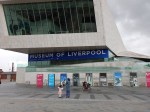
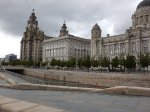

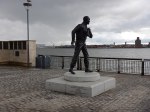

I’d never realised that the road across the Pier Head, had been named Canada Boulevard in honour of Canadians, who lost their lives in the Battle of the Atlantic or the war against German U-boats.
Shown in the pictures is the memorial to Captain Johnnie Walker, one of the leading British commanders in the battle.
The scale of the battle is shown by the fact that according to Wikipedia the Allies lost over 70,000 sailors, 3,500 merchant ships and 175 warships, whereas the Germans lost 30,000 sailors and 783 submarines.
One thing that wasn’t there in the 1960s is the canal that links the Leeds and Liverpool Canal to the Stanley Dock, so narrow-boats can visit the city centre.
 The Anonymous Widower