An Island Gets Lost
The Australians have also proven that an island has got lost. The story is here on the BBC. Wikipedia has an explanation, in that it thinks Sandy Island might be a copyright trap.
Lost In Leicester
I left the match at half-time and then tried to walk to the station, by reversing the route shown to me by two Leicester supporters. Signage was non-existent near the stadium and the first one I found was this outside the hospital.
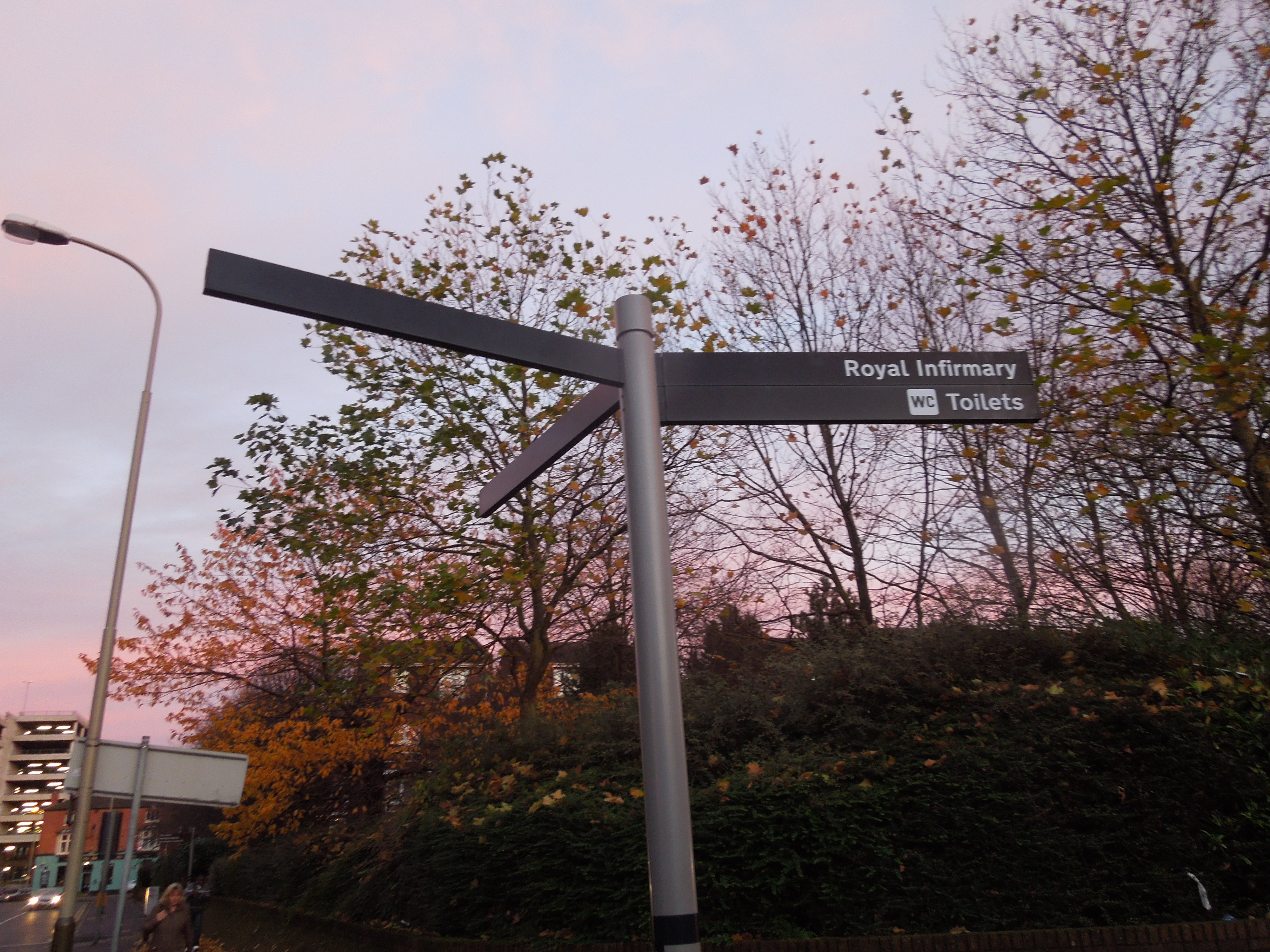
A Useless Sign In Leicester
Chocolate teapots come to mind. I eventually found this map at the station.
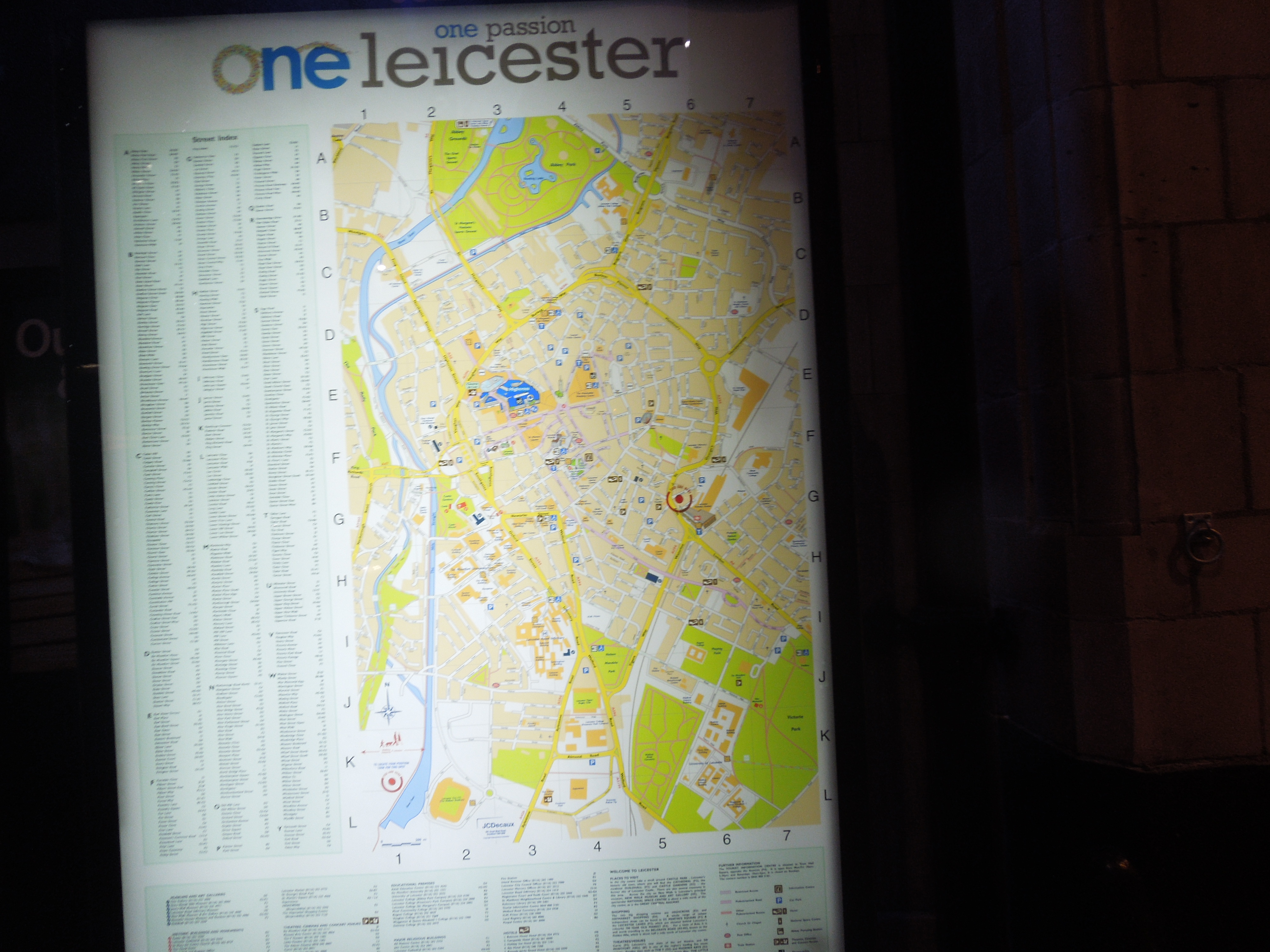
A Useless Map In Leicester
It doesn’t show either the football or rugby stadiums.
A Stray Airliner?
In my exploration of the Gospel Oak to Barking line, I decided to follow the line on Google Maps. All went well and I was able to see where the electrification stopped and kicked in around South Tottenham. And then I found this image, as the railway passes south of Seven Sisters station.
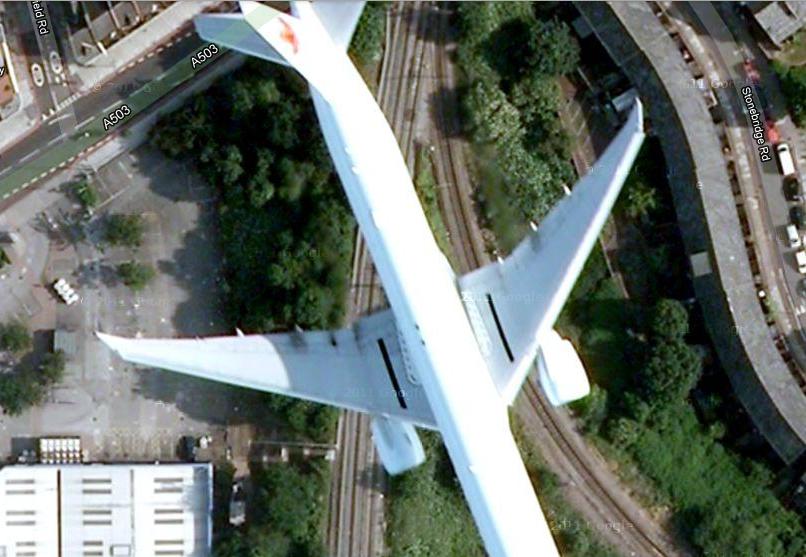
I wonder how many stray planes are available to view on Google Maps?
Can anybody identify the tail to determine the airline? Judging by the silhouette, it looks like it’s some variant of Boeing 737.
If you want to find it, type “Seven Sisters station” into Google and then select maps. The plane is just south of the station.
As someone, who has over a thousand hours in command of an aircraft, you are taught under Visual Flight Rules to fly with the line feature on your left. So it could be they’ve taken off from Stansted and they’re following the railway. But then, they wouldn’t be under these rules over London, except in very special circumstances.
Identifying the airline would help solve the puzzle!
The Development of the New Bus for London
I went to a lecture last night at the Institute of Mechanical Engineers about the New Bus for London. A very good lecture, given by David Barnett, the Development Engineering Manager of The Wright Group, who build the bus.
His talk should be recorded and shown to all students, who might think they would benefit from going to University to do engineering, as it showed how innovative thinking can transform a product as everyday as a bus.
I think the lecture, also confirmed my view, that the buses we ride in ten years from now, will be even better. The current New Bus for London is just the start of the development of buses that will transform the way we get around.
I think it is worth emphasising that buses, trams and trains are only part of a transport system. They need to be backed up by all kinds of information technology from simple maps to web pages and mobile phone apps, so that passengers find their way around with ease.
City of Lost Tourists
I’ve said before that tourists seem to get lost in London.
Today it was a Dutch couple, I encountered at Shadwell in the mezzanine level above the Overground, who were trying to get to the British Museum. I was pretty sure, they’d seen the tube map and thought they could get to Bank on the DLR to get a train nearer their destination. So I led them through the gates to the nearby DLR station and up in the lift to the platforms for Bank. Some of these interchanges to and from the DLR are tricky, to say the least. But that is more to the nature of the DLR, which has grown like the proverbial Topsy.
My nominations for bad interchanges to and from the DLR include.
- Canary Wharf, where the DLR and the Jubilee line are two separate stations.
- Canning Town, where there are two DLR lines and the Jubilee line on various levels.
- Poplar, which is a major DLR interchange and a good place to get lost.
- Shadwell, where the DLR and the Overground are two separate stations.
- West Ham, where the DLR and the Underground meet haphazardly, nowhere near West Ham United Football Club.
Note that three involve my least-favourite Underground line; the Jubilee line.
I suppose one of the DLR’s problems is that most of the stations are unmanned and most of the maps only show the DLR and its interfaces. So the system assumes a certain amount of knowledge amongst the passengers. On the other hand, every train has an excellent Train Captain, who can usually give you the information you require.
Perhaps what is needed is a Route Finder at each station, similar to those on the bus spider maps. It would give a list of major attractions and the route to take.
The Anagram Tube Map
The title says it all. But if you must look at it, it’s here.
It’s just a pity, it’s not up to date.
The Curse of Sat-Navs
The government is having a summit to get sat-navs correct.
In my view the problem goes deeper, in that some companies, organisations and individuals, now think that everybody has one, and that is how they’ll find a particular place. I found that some football clubs, just put a sat nav address on their website to guide visiting fans, with no information on public transport. I won’t give an example, as hopefully they have corrected the omission.
I don’t even have a smart phone, as I don’t need one, so the only maps I rely on in new areas, are those provided by the city, or a small atlas or a page printed from the Internet, I can keep in my pocket. I tend to travel as light as possible and at the moment, if I can’t get it in my pockets or small bag, I don’t take it.
After all, if towns or cities want to attract visitors, they should provide signs, maps and other information. Some cities like Manchester are so badly served, I will only go if I can’t possibly avoid the trip. But if places like Exeter, Norwich and Ipswich can get it right, surely anybody can.
If we assume that everybody has an electronic navigation device, we are making a very bad mistake.
A Good Sign In Morpeth
I have various Google Alerts setup and one found this story from Morpeth in Northumberland.
Let’s hope it works and improves footfall to the shops.
As I found on my trip around all 92 League clubs, in many places signs are non-existent or downright useless. Many seem to have been designed by those, who have no idea what a visitor wants to do.
A Proper Map at Ipswich Station
I’ve never really checked out Ipswich as to how easy it is to get around by walking or public transport, so I checked on Saturday.

A Proper Match at Ipswich Station
There is no excuse for maps of this quality and size to not be displayed at the railway station. And probably several other places in the town or city as well.
Note that the map has a five minute walking ring and an index to all the streets. The tourism information office is also properly shown.
About the only thing not on the map is the hospital, which is some way on the other side of the town from the station. To be fair to the hospital, they have a page, which describes how to get there by train.
One thing that is different at Ipswich station to many I’ve visited in the last few weeks, is that you walk out of the station and you can see the town in front of you.

Ipswich Town Centre from the Station
The picture, shows the bridge over the River Gipping, the council offices and the football group. You are naturally drawn the right way towards the town centre.
I know, I know Ipswich well, but few towns I’ve visited draw you in in a purposeful way from the station. Birmingham, Leeds, Liverpool and Wolverhampton do to a certain extent. One of the best was Huddersfield, which also had a free town centre bus. But others such as Bristol, Manchester and most of the new towns haven’t got their acts together. Burnley was one of many places where a simple map, some fingerposts and a bit of thought could really improve things.
How To Draw An On-Board Map
I took this picture on the tram between Wolverhampton and Birmingham.
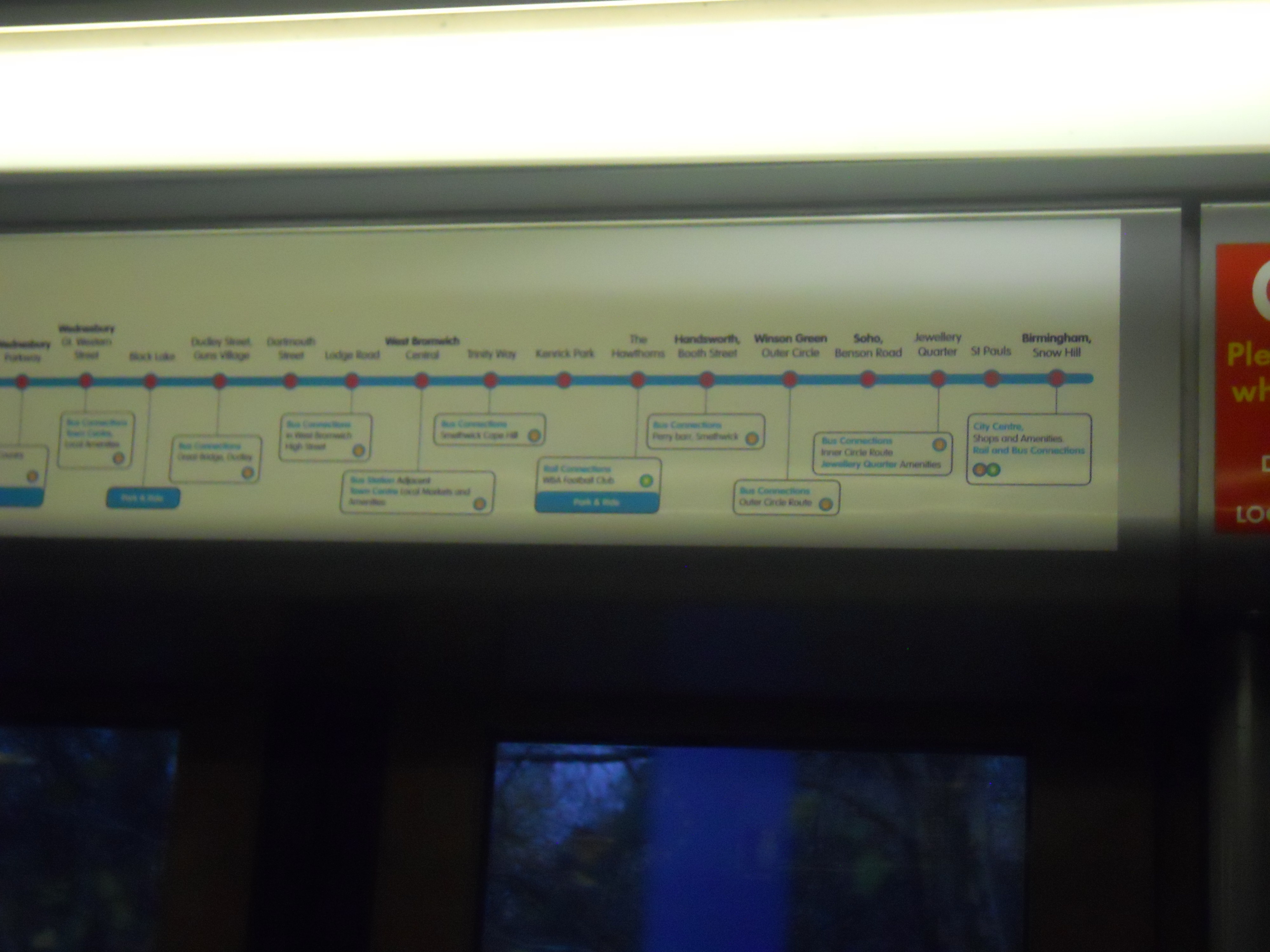
An Excellent Route Map
It shows how with a bit of thought, you can make maps on trains, trams and buses really useful. Note how all the destinations are annotated with what is near to the stop.
 The Anonymous Widower