TransPennine Express To Stop Using Loco-Hauled Push-Pull Trains In December
The title of this post, is the same as that of this article on Railway Gazette.
This is the sub-heading.
TransPennine Express has confirmed that it will cease using its push-pull sets of Class 68 locomotives and MkVa coaches, previously designated Nova 3 sets, from the December 2023 timetable change.
These are my thoughts.
The Nova 3 Trains
Currently, the Nova 3 trains are made up from the following.
- 14 – Class 68 locomotives
- 52 – Mark 5a coaches
- 14 – Driving Van Trailers
Note.
- There have been complaints about the noise of the Class 68 locomotives at Scarborough and also at Marylebone with Chiltern Railways.
- The Class 68 locomotives could be switched to freight duties.
- The coaches are capable of 125 mph.
- A maximum of thirteen sets can be created.
- I suspect CAF wouldn’t object to being asked to build some more Mark 5a coaches and driving van trailers.
- The current fleet has a spare locomotive and a spare driving van trailer to allow for servicing.
All locomotives and coaches are a maximum of seven years old, so will have plenty of life left.
The Class 93 Locomotive
Rail Operations Group have ordered ten Class 93 locomotives, with twenty options, which have an impressive specification.
- Built by Stadler in Valencia.
- Same family as a Class 68 and 88 locomotive.
- Electric, diesel and battery power
- 110 mph operating speed
- Ability to pull passenger and freight trains.
- Delivery scheduled for 2023.
I believe that if the Class 68 diesel locomotive of a Nova 3 train, were to be replaced with a Class 93 locomotive, a very useful train would be created.
- It would be ten mph faster, than a Nova 3 train.
- It could use the diesel engine and the batteries to bridge gaps in electrification.
- By adding extra carriages it could be tailored to the needs of a route.
- In Vegetable Oil Fuelling Chiltern Railways Trains In UK First, I discuss how it might be possible to run all these locomotives on HVO to cut emissions.
- It could be quieter.
Could it be a simple way to reduce carbon emissions on a route?
The Successor To The Class 93 Locomotive
Stadler keep innovating in their designs for locomotives and are already building hydrogen-powered multiple units.
I can see Stadler coming up with a hydrogen-powered locomotive, with the following specification.
- In the same family as Class 68, 88 and 93 locomotives.
- Ability to do everything that Class 68, 88 and 93 locomotives can do.
- Ability to use 25 KVAC overhead electrification, where it exists.
- Ability to be able to be fitted with third-rail equipment, so it can use 750 VDC third-rail electrification, where it exists.
- At least a 110 mph operating speed.
- Range of at least 200 miles on hydrogen.
Stadler would sell a lot of these locomotives to decarbonise railways all over the world.
Possible Routes
These are possible routes for a rake of Mark 5a coaches hauled by a Class 93 locomotive or its zero-carbon successor.
Hull Trains
Consider.
- Hull Trains is an open access operator.
- Hull Trains currently have a fleet of five Class 802 trains, each of which have five-cars.
- A Class 93 locomotive has a power of 900 kW on diesel, whereas the Class 802 train has 2100 kW.
- The Class 802 train has nearly ten percent more capacity.
- In Ten-Car Hull Trains, I saw two Class 802 trains working as a pair. Does this indicate they have a capacity problem?
- Between Hull and the East Coast Main Line is only 36.1 miles and isn’t very challenging and I suspect could probably be easily handled by a Class 93-hauled rake of Mark 5a coaches.
- Adding extra coaches would not be difficult and would probably be less costly than with the more complex Class 802 trains.
- Hull Trains need to have a plan to decarbonise.
- HVO could be used to cut down emissions.
A Class 93-hauled rake of Mark 5a coaches could be an intermediate step to full decarbonisation with a hydrogen locomotive.
Would other operators of Class 802 trains like to increase their fleets, by adding Hull Trains’s five Class 802 trains?
TransPennine Express
Consider.
- TransPennine Express currently have four different fleets of trains, so it must cause problems with the allocation of drivers.
- The Class 397 trains are confined to the West Coast Main Line.
- So that leaves the bi-mode Class 802 trains and the diesel Class 185 trains to work the TransPennine routes.
The Wikipedia entry for the Class 802 train, gives more details of the plans for the Class 802 trains.
During October 2021, it was announced that TransPennine Express, Hitachi, and Angel Trains had agreed to convert one of the former’s Nova 1 trainsets into a battery hybrid train on a trial basis with the aim of supporting the technology’s further development. If successful, Hitachi and Angel Trains have proposed the retrofitting of the entire fleet. In January 2022, reports emerged that the Nova 1 fleet was operating under diesel power even when operating on entirely electrified sections of the East Coast Main Line on account of the insufficient power supplies present along the line; national railway infrastructure owner Network Rail is reportedly set to complete upgrades to the power supplies within two years.
The fleet is also set to benefit from the rollout of electrification under the Transpennine route upgrade scheme. The company’s management has noted that, in the event of largescale electrification being funded and implemented, the Class 802s could have some of their engines removed to reduce roughly 15% of their weight and thus raise their efficiency. Furthermore, Leo Goodwin, TPE’s managing director, has observed that while the Class 802s have an initial maximum speed of 125 mph (201 km/h), they have the capability of being modified for operating at 140 mph (230 km/h) if infrastructure upgrades were to permit such speeds at a future date.
Could an augmented fleet of battery-electric Class 802 trains handle the bulk of the TransPennine routes, with the shorter and unelectrified ones still being handled by the Class 185 trains?
These shorter routes are.
- Leeds and Huddersfield
- Manchester Piccadilly and Huddersfield
- York and Scarborough
Plans only exist to electrify Leeds and Huddersfield.
I suspect a few more battery-electric Class 802 trains would be needed.
Great Western Railway
Could a Class 93-hauled rake of Mark 5a coaches be used as a replacement for the GWR Castles or short-formation InterCity125s?
- They both have four passenger coaches.
- They are both 125 mph trains.
- A Class 68 locomotive could be used on routes without electrification.
- HVO could be used to cut down emissions.
- The Mark 5a coaches would probably be quieter, as they only have one diesel engine.
A Class 93-hauled rake of Mark 5a coaches could be an intermediate step to full decarbonisation with a hydrogen locomotive.
Alternatively, five-car Class 802 trains could be used as replacements for GWR Castles.
Great Western Railway also have the problem of decarbonising services between Bristol/Gloucester and Weymouth/Southampton/Portsmouth.
Great Western Railway look like they’re needing some innovative thinking.
I also suspect a few more battery-electric Class 802 trains would be needed for other routes.
Transport For Wales Rail
Transport for Wales Rail run a Premier Service between Holyhead and Cardiff using Class 67 locomotives and Mark 4 coaches.
According to the Wikipedia entry for Transport for Wales Rail, they have seven sets of 4/5 coaches to run this service.
If Transport for Wales Rail wanted to decarbonise this route, they would need to replace the locomotives for a zero-carbon unit.
Perhaps, their best solution, would be to wait until a suitable hydrogen-powered locomotive is available and buy seven rakes of new coaches with driving van trailers.
Grand Union
Grand Union has a detailed Wikipedia entry, where this is the first paragraph.
Grand Union is a prospective open access operator who are proposing to operate train services in the United Kingdom from England to Wales and Scotland. Grand Union is headed by Ian Yeowart, who founded previous open access operators Alliance Rail Holdings and Grand Central before selling both to Arriva.
That seems a sound foundation.
- They have permission to run trains between Paddington and Carmarthen starting in December 2024.
- They have also applied to run trains between Euston and Stirling.
- They are now backed by Spanish companies; Serena Industrial Partners and Renfe.
- They are proposing to use nine Mark 4 coaches hauled by Class 93 locomotives.
Consider.
- CAF has a factory in Wales.
- CAF has sold trains to Transport for Wales.
- The Mark 5a coaches will definitely be available by December 2024.
- Mark 5a coaches could easily be arranged as a rake of eight coaches and a driving van trailer.
- Grand Union is backed by Spanish companies.
I wouldn’t be surprised if Grand Union were to use sets of CAF-built Mark 5a coaches for their Carmarthen service. And later for their Stirling service.
A Class 93-hauled rake of Mark 5a coaches could be an intermediate step to full decarbonisation with a hydrogen locomotive.
Grand Central
Consider.
- Grand Central is another open access operator.
- Grand Central has a mixed fleet of twelve five-car diesel trains.
- These trains run under electrification on the East Coast Main Line.
- According to the Wikipedia entry for Grand Central trains, they have plans for expansion across the North and to and from London.
- Grand Central need to have a plan to decarbonise.
- HVO could be used to cut down emissions.
A Class 93-hauled rake of Mark 5a coaches could be an intermediate step to full decarbonisation with a hydrogen locomotive.
South Western Railway
South Western Railway have an excellent fleet of new or nearly new trains, with the exception of the diesel Class 158 and Class 159 trains, that work services between Waterloo and Exeter trains via Basingstoke and Salisbury.
- Waterloo and Exeter is 172 miles.
- Only the 47.7 miles between Waterloo and Basingstoke is electrified with 750 VDC third-rail electrification.
- Train lengths vary between five and eight cars.
- The current trains date from around 1990 and must need replacing soon.
I wouldn’t be surprised that if after a rebranding with new trains, this could be a popular route.
A version of Hitachi’s ubiquitous bi-mode Class 802 could be used.
But.
- They would need to be ordered and built.
- The third-rail gear, would need to be developed and tested.
- Passengers would be travelling for over two and a half hours with underfloor diesel engines.
An alternative could be a Class 68-hauled rake of Mark 5a coaches.
- These trains would be available after release from TransPennine Express.
- They would run in TransPennine Express formation.
- Length could be adjusted by adding or removing coaches, if required.
- The noise is all in the locomotive, which is isolated from the passengers.
At some point in the future, the route could be decarbonised by swapping the locomotive for a hydrogen-electric locomotive with the ability to handle third-rail electrification.
ScotRail
ScotRail have a similar problem to Great Western Railway with their short-formation InterCity125s.
- They have 52 Class 43 locomotives and 120 Mark 3 coaches, which is probably enough for 24 trains.
- Scotland has substantial amounts of electrification.
- I feel that a Class 68-hauled rake of Mark 5a coaches would be a more than adequate replacement.
- Class 93 locomotives could be used where routes are partially electrified.
- Scotland is not going to be short of green hydrogen.
When a suitable hydrogen-electric locomotive is available, these trains can be decarbonised.
CrossCountry
CrossCountry have a fleet consisting of the following trains.
- 5 – 2+7 InterCity125 trains
- 7 – two-car Class 170 trains
- 22 – three-car Class 170 trains
- 34 – four-car Class 220 trains
- 4 – four-car Class 221 trains
- 20 – five-car Class 221 trains
Note.
- The fleet is all diesel.
- I’ll ignore the Class 170 trains in this analysis.
- The Class 220 and 221 trains often work in pairs to provide the required capacity.
So how could these trains be decarbonised?
- The InterCity125s and the Class 220 and 221 trains could be replaced by a locomotive-hauled rake of Mark 5a coaches of an appropriate length.
- Motive power could be provided by an appropriate Class 68 or 93 locomotive.
When a suitable hydrogen-electric locomotive is available, these trains can be fully decarbonised.
Decarbonisation Of UK Main Line Services
It is generally assumed that the railways of the UK will need to fully decarbonise if the UK and the constituent nations are going to meet their decarbonisation targets.
I believe that my analysis shows that decarbonisation of main line passenger services can be achieved by the purchase of two types of trains.
- Five-car bi-mode Class 802 trains or similar.
- Locomotive-hauled rakes of Mark 5a coaches of an appropriate length.
Note.
- The Class 802 trains would be mainly to augment existing Hitachi fleets.
- Some Class 802 trains would be fitted with batteries instead of diesel generators to handle gaps in the electrification.
- The rakes of coaches would be powered by an appropriate locomotive.
- The lengths of the rakes of coaches would be adjusted to meet the demand of each service.
Initially, the following locomotives would be used.
- Class 68 locomotives would be used on unelectrified lines.
- Class 93 locomotives would be used on full or partially electrified lines.
When the hydrogen-electric locomotives become available, these would take over the routes, which couldn’t be decarbonised by full electrification or by using a Class 93 locomotive.
My First Ride In A Nova 3 Train
Nova 3 is the name that TransPennine Express have given to their new fleet of Mark 5A coaches hauled by Class 68 locomotives.

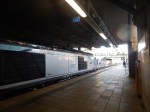
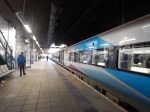
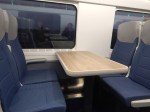
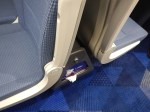
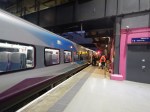
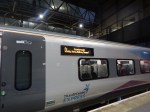
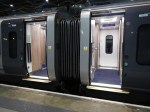
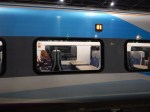
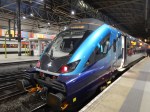
The first few pictures were taken, when I saw a Nova 3 at Manchester Victoria station and the ither during and after a ride between Manchester Victoria and Leeds stations.
These are a few of my thoughts.
Comfort, Noise And Vibration
It was certainly good and up there with the best.
Tables For Four
There were quite a few tables, but not everyone got one.
Ride And Performance
There was nothing wrong with the ride, but we were only doing 75 mph across the Pennines.
Next time, I’m in the North, I’ll take one of these trains up the East Coast Main Line to Scarborough or Redcar to feel them at a faster speed.
Conclusion
I wouldn’t object to having these coaches with a Class 88 electric locomotive running between London and Nowich via Ipswich.
TPE Pledges Capacity Boost With Class 68/Mk 5A Sets
The title of this post is the same as that of an article in Issue 851 of Rail Magazine.
It adds a few extra details to those, that I wrote about in Nova 3 On The Test Track.
This information is revealed.
The Route
The TransPennine Express fleet will run on the Liverpool Lime Street-Manchester Airport-Scarborough/Middlesbrough Routes, replacing three car Class 185 trains.
Train Length
Each Mark 5A car has a length of 22.2 or 22.37 metres.
Adding on the Class 68 locomotive gives a train length of 131.84 metres.
This compares with a train length for the Class 185 train of 71.276 metres.
It means that two Class 185 trains working together, which is current practice, are longer than the new fleet.
This must limit platform and depot modifications.
The Capacity
The number of seats on the two trains are as follows.
- Class 185 train – 15 First Class – 165 Second Class
- Class 68/Mk 5A sets – 30 First Class – 261 Second Class
This gives twice as many seats in First Class and nearly sixty percent more in second.
Both trains seem to have around sixty seats in each car.
Technical Characteristics
The Rail Magazine article gives several technical characteristics.
- Each coach has two passenger doors, except the First Class coach which has one.
- There is Selective Door Opening controlled by GPS.
- Door controls are in the Driver Trailer and Class 68 cans, which the driver controls.
- Two door control panels are in every vehicle for usde by the conductor.
- Wheel Slip Protection is fitted.
- Automatic passenger counting is provided.
- Wi-fi is fitted.
The trains have a high specification.
Nova 3 On The Test Track
The title of this post is the same as that of an article in the May 2018 Edition of Modern Railways.
Nova 3 is the name that TransPennine Express (TPE) have given to their thirteen new rakes of Mark 5A coaches, that are being built by CAF in Spain and will be hauled by Class 68 locomotives.
These are my thoughts on what we know about the trains.
The Test Phase
Testing is being performed on the Velim test track in the Czech Republic.
Increasingly, it seems that a lot of testing of trains is done on this track and I do wonder if one of the problems al our trains seeming to be late, is a lack of the suitable testing facilities in the UK.
Spanish train manufacturer; Talgo, seem to have noticed this gap and I wrote about their plans for a UK test track in Talgo Explores Options For Building UK Test Track.
Modern Railways, states that there was trouble getting the two test locomotives to Velim, because of industrial action in France.
Perhaps in parallel with the ordering of large numbers of trains, we should have built a test track!
Buying New CAF carriages Enabled Faster Deployment, Than Converting Spare Mark 3 carriages
I think that the main problem of converting Mark 3 carriages, which Chiltern have shown is very possible, is that until Greater Anglia release their carriages, after receiving their new Class 745 trains, the fifty-two coaches needed by TPE could be difficult to find. There are plenty of driving van trailers in store, that just need refurbishing.
The Modern Railways article says that most if not all, of the new Mark 5A coaches will be in service by early 2019.
I suspect that Greater Anglia won’t release their Mark 3 carriages until late 2019.
So to get the required number of Mark 3 coaches could be difficult!
I also suspect that going the CAF route means that if any extra sets re needed or the current ones need lengthening, that CAF would oblige. Whereas starching around for spare Mark 3 coaches might be more difficult.
Transpennine’s New Fleet Of Coaches
TPE have ordered the following.
- Fifty-two coaches, of which thirteen are First Class and the rest Second Class
- Fourteen driving van trailers (DVT). A spare seems prudent, as surely train ends are more likely to hit something.
- Fourteen Class 68 locomotives, two of which are spare.
- These are formed into thirteen fixed rakes of four coaches and DVT, which are hauled by a single Class 68 locomotive.
The Modern Railways article says that the idea is to have twelve sets in service and one in maintenance.
Flexible Length
The rakes appear to have been designed, so they can be lengthened to six or seven coaches.
The article also says that extension beyond six would need infrastructure work at some stations.
Changing The Power Unit
These twelve rakes are powered by a Class 68 diesel locomotive.
But I suspect, they could be powered by any suitable locomotive for the route.
I would be interesting to find out how an electro-diesel locomotive live a Class 88 locomotive, performed with a rake of five Mark 5A coaches.
What is probably needed in the future is an electroc-diesel locomotive with the following characteristics.
- Ability to haul a rake of five coaches at 125 mph on electricity.
- Ability to haul a rake of five coaches at 90 mph on diesel.
In a few years time, such a locomotive could handle some of TPE’s routes as electrification progresses.
Wheelchair Users Travel First Class
The First Class vehicle is next to the engine.
- A small kitvhen is provided.
- It seats thirty passengers.
- It has the only accessible toilet on the train.
Because of the last feature, TPE have taken the pragmatic decision, that all wheelchair users will be able to travel in First.
I’m not disabled or a wheelchair user, but that is probably down to luck more than anything else. So there but for luck, go I!
I travel on trains a lot and it is very rare for me to see more than one wheelchair user on a train.
Obviously TPE have statistics and adding everything up, they find that one accessible toilet is enough provided those needing it can sit close.
By not providing a second accessible toilet, but three ordinary toilets, they probably get another six seats they can sell to passengers.
I do wonder, if other train operating comp will adopt a similar philosophy.
Other Orders
The fleet appears to have been designed, so it can be adjusted to a train operating company’s needs.
I would suspect, that after two orders for their Mark 5 coaches, CAF are expecting more, from the next round of franchise renewals.
I also think, that TPE’s concept of a rake of five coaches with a locomotive could appeal to Open Access Operators like Grand Central Trains, especially if a 125 mph electro-diesel locomotive can be built.
One great advantage that CAF have is that once the TPE fleet is operating successfully, there would not be a large testing phase for a new operator.
Conclusion
It appears that CAF and TransPennine Express have thought long and hard about these trains and I’m looking forward to riding in one.
 The Anonymous Widower