Funding Nemo: £600m Power Cable Connects UK And Belgium
The title of this post is the same as this article in The Guardian.
This is the first paragraph.
A £600m cable connecting the UK and Belgium’s energy systems is about to be switched on, becoming the first of a new generation of interconnectors that will deepen the UK’s ties to mainland Europe just as it prepares to leave the EU.
It runs between Richborough in Kent and Zeebrugge in Belgium and is the fifth interconnector to be connected to Great Britain.
Other interconnectors connect to Ireland, Northern Ireland, France and the Netherlands.
In Large Scale Electricity Interconnection, I discuss the rest of the interconnectors, that are being constructed or planned.
We could see up to fifteen in operation in a few years.
As to Nemo, it was originally thought that the UK would be importing energy from Belgium, but as Belgium needs to service its nuclear power stations and will be shutting them in the next few years, the power will sometimes be flowing the other way. Especially, as more large wind farms come on stream in the UK!
It is my view that Icelink could change everything and Belgium’s possible future power shortage, makes Icelink far more likely.
Wikipedia describes the interconnector between Iceland and Scotland like this.
At 1000–1200 km, the 1000 MW HVDC link would be the longest sub-sea power interconnector in the world.
As more interconnectors are built between the UK and the Continent, including a possible link between Peterhead in North-East Scotland to Stavanger in Norway, which is called NorthConnect, the UK will begin to look like a giant electricity sub-station, that connects all the zero-carbon power sources together.
- Denmark will supply wind power.
- France will supply nuclear power.
- Iceland will supply hydro-electric and geothermal power.
- Norway will supply hydro-electric power.
- The UK will supply nuclear and wind power.
Other sources like wind power from France and Ireland and tidal and wave power from the UK could be added to the mix in the next decade.
The Consequences For Gas
Our use of gas to generate electricity in Western Europe will surely decline.
If projects, like those I discussed in Can Abandoned Mines Heat Our Future?, come on stream to provide heat, the role of gas in providing heating in housing and other buildings will decline in the UK.
We also shouldn’t forget the role of hydrogen, which could also replace natural gas in many applications. It would be created by electrolysis of water or as a by-product of some industrial processes.
Hydrogen could also become a valuable way of storing excess electricity produced by tidal, wave and wind power.
It is unlikely, we will develop a totally gas-free economy, as methane is a valuable chemical feedstock to produce other chemical products we need.
Conclusion
Not many people will be sorry, except for President Putin and a few equally nasty despots in the Middle East.
What Are Greater Anglia Going To Do With A Problem Like The Crouch Valley Line?
This post is effectively a series of sub-posts describing the problems of the Crouch Valley Line.
Platform 1 At Wickford Station
These pictures show Platform 1 at Wickford station, where services on the Crouch Valley Line terminate.
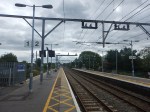

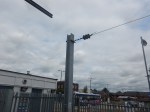

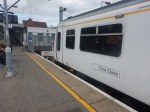
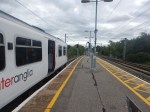


The train in the platform is a four-car Class 321 train, which is almost exactly eighty metres long.
After Greater Anglia has renewed the fleet, the shortest electric train they will have will be a five-car Class 720 train, which is over one hundred and twenty metres long.
I don’t think one of these shiny new trains will fit into the current platform.
Electrification
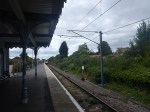
These pictures show the electrification at Burnham-on-Crouch station.



And these show Southminster station.


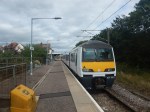
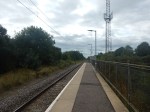
The overhead electrification on the Shenfield to Southend Line is being renewed and this section is supposedly finished. But it does look very similar to pictures I took in 2016, that are posted in Wickford Station. As the 25 KVAC overhead electrification was installed in 1979, when the line was converted from 6.25 KVAC, I do wonder about the age of some of the gantries.
On the trip, where I took these pictures staff were still complaining about the unreliability of the wires, as they have done before.
There doesn’t appear to have been any work done on the Crouch Valley Line, although the conductor did say that the route was being closed at times for work in the near future.
I do question, whether the overhead wires on the Crouch Valley Line are of a sufficient high and modern standard to be both reliable and easy and affordable to maintain.
Can the electrification handle regenerative braking?
The Timetable
The timetable East of Shenfield is as follows.
- Three trains per hour (tph) between Liverpool Street and Southend Victoria stations.
- A train every forty minutes between Wickford and Southminster stations.
- There are also some direct services between Southminster and Liverpool Street in the Peak.
Every time, I go use the line it seems, I always have a long wait at Wickford station.
Current services take thirty minutes between the two end stations with generous turnround times of about ten minutes at each end of the route.
Two trains are needed for the service, which are single-manned with a conductor checking and selling tickets appearing to float between the trains.
A New Nuclear Power Station At Bradwell
There is a possibility of building.of a new nuclear power station at Bradwell.
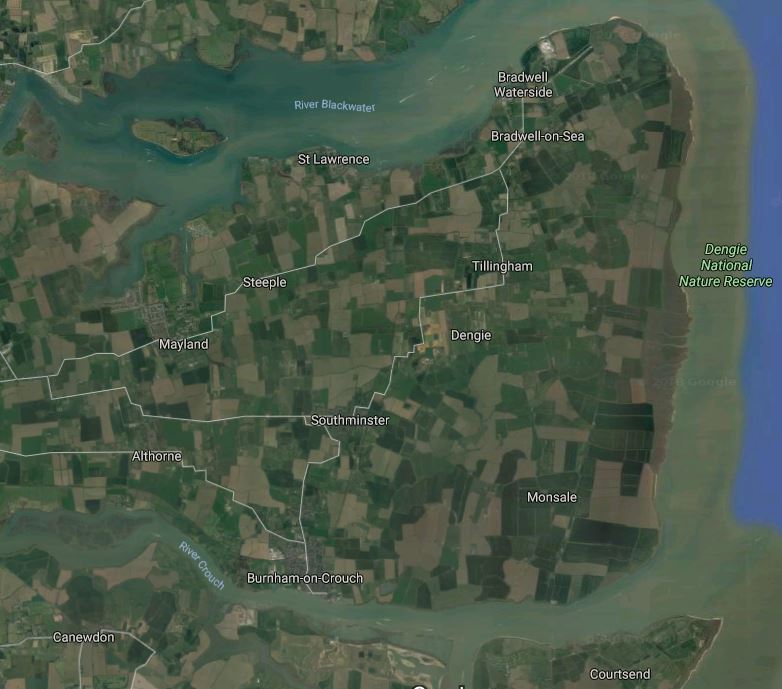
This Google Map shows the area.
Note.
- Burnham-on-Crouch is the large village on the North Bank of the River Crouch.
- Southminster is a couple of miles to the North of Burnham on Crouch.
- Bradwell is in the North-East corner of the map alongside the River Blackwater.
- You can just see the World War 2 airfield, which was the site of the original Bradwell nuclear power station.
If a new power station is built at Bradwell, I doubt that it will require rail freight access at Southminster, as did the original station.
Transport technology has moved on and heavy goods will surely be taken in and out by barge from the River Blackwater.
But a new station or more likely ; a cluster of small modular reactors will require transport for staff, contractors and visitors.
Although, on balance, with the growth of renewable energy, I don’t think that many more nuclear power stations will be built.
A Battery Storage Power Station At Bradwell
I also wouldn’t rule out the use of Bradwell for a battery storage power station for the electricity generated by wind farms like Gunfleet in the Northern section of the Thames Estuary.
The number and size of these wind farms will certainly increase in the coming years.
Battery storage power stations are ideal partners for wind farms, as they help turn the intermittent wind power into a constant flow of electricity.
Currently, the largest battery storage power station is a 300 MWh facility that was built in 2016, at Buzen in Japan.
Energy storage technology is moving on fast and I would not be surprised to see 2000 MWh units by the mid-2020s.
Bradwell could be an ideal place to put a battery storage power station.
Passenger Numbers
Passenger numbers on the line over the last few years seem to have been fairly level although there appears to have been a drop in the last year or so. But this drop has happened in lots of places!
Various factors will effect the passenger numbers on the Crouch Valley Line in the future.
- New housing along the route.
- A large energy-based development at Bradwell will atract passengers.
- New trains will attract passengers.
- Will the Internet and new working practices affect passenger numbers?
- A two tph clock-face service will attract passengers.
- Faster and more frequent services between Liverpool Street and Wickford will make the line easier to access.
There is also the possibility of more visitors and tourists to the area. The RSPB have spent a lot of money developing Wallasea Wetlands, which is opposite Burnham-on-Crouch.
In future years, how many people will reach Wallasea, by ferry from Burnham-on-Crouch?
Adding up all these factors, I come to two conclusions.
Predicting the number of passengers will be difficult..
There will always be passengers who need this rail service.
It looks to me that Greater Anglia will have to plan for all eventualities from very low numbers of passengers to a substantial increase.
New Trains
Shenfield-Southend services and those on the Crouch Valley Line will be run using new Class 720 trains.
Bettween Liverpool Street And Southend Victoria
Currently, this service on the route is as follows.
Trains have a frequency of three tph.
- Each train takes an hour for the journey.
- All trains stop at the seven stations between Shenfield and Southend Victotria, Shenfield and Stratford.
- One train in three has an extra stop at Romford.
The new trains have a faster acceleration of 1 metre per second², as opposed to the current trains which can only manage 0.55 metre per second².
This property and their modern design, probably means that the new trains, can do a complete round trip between Liverpool Street and Southend Victoria stations in under two hours.
- The journey time between the two stations will be around fifty minutes.
- A three tph frequency will need a fleet of six trains.
- A four tph frequency will need a fleet of eight trains.
This service will be faster than the fastest services between Fenchurch Street and Southend Central stations.
I can certainly see a time, when the frequency between Liverpool Street and Southend Victoria stations is increased to four tph.
Passenger numbers are rising strongly at Southend Victoria station.
Southend Airport have big expansion plans and would welcome a better rail service, to and from their very convenient station.
At present times to their London termini from various airports are as follows.
- Gatwick Airport – 31 minutes (Express)
- Luton Airport – 28 minutes
- Southend Airport – 53 minutes
- Stansted Airport – 46 minutes
I think that Southend Airport times with the new trains could be about 43 minutes or less, which because of the closeness of the station to the terminal building could allow Southend Airport to claim faster times to Liverpool Street than Stansted Airport.
If the service does go to four tph, there will be a massive increase in capacity.
There will be 1145 seats in the new trains, as opposed to 927 in the current Class 321 trains.
With four tph. this would mean an increase in capacity of 40%.
I don’t think anybody in Southend will be complaining.
Between Wickford And Southminster
As I said earlier, the new longer Class 720 trains will have difficulty running the current service, as they don’t fit into Platform 1 at Wickford station.
Working the same timetable the new trains with their 544 seats will offer a 76% increase in train capacity.
Trains take thirty minutes with five intermediate stations.
Given the better acceleration and modern nature of the new trains, I wonder, if they will be able to do a round trip in an hour.
If they can do this, then it would be possible to run a two tph service on the route.
But it will be a tough ask!
That still leaves the problem of turning back the trains at Wickford.
Currently, trains between Liverpool Street and Southend Victoria going in opposite directions, pass at Wickford station.
If this could be arranged with four tph, then there would be up to fifteen minute windows, where no train was passing through Wickford station.
Suppose the Liverpool Street and Southend services passes through at XX:00, XX:15. XX:30 and XX:45.
Would it be possible for the Southminster trains to leave Wickford at XX:10 and XX:40 and arrive back at XX:05 and XX:35, thus giving five minutes for the driver to get to the other end.
As I said, it would be a tough ask!
But I suspect there is a plan to get two tph between Wickford and Southminster.
- The track could be improved.
- Some level crossings could be closed.
- Operating speed could be faster.
- Better step-free access could probably be arranged at the intermediate stations.
- A step-free bridge could be built at Wickford.
If two tph can be achieved, then this would increase capacity on the route by 134 %.
The Passing Loop At North Fambridge Station
This Google Map shows the station and passing loop at North Fambridge station.

Measuring from the map, I estimate the following.
- The length of the platforms are 160 metres.
- The length of the passing loop is in around 400 metres.
I also suspect that to save money was the line was singled in the 1960s, British Rail made the passing loop as short as possible to cut costs.
The current loop can handle eight-car Class 321 trains, so it can certainly handle a five-car Class 720 trains.
I do wonder if the passing loop were to be lengthened, this would ease operation on the line.
There might even be a length, that enable a two tph service with the current four-car Class 321 trains.
Thoughts On Speed Limits
The speed limit on the line is 60 mph between Battlesbridge and North Fambridge stations and 50 mph at both ends of the line.
Summarising sections of the line, their length and speed limits give.
- Wickford and Battlesbridge – 2 miles 38 chains = 4356 yards = 3983 metres – 50 mph
- Battlesbridge and North Fambridge – – 5 miles 67 chains = 10274 yards = 9395 metres – 60 mph
- North Fambridge and Southminster – 8 miles 15 chains = 14410 yards = 13177 metres – 50 mph
This gives totals of 17160 metres with a 50 mph limit and 9395 metres with a 60 mph limit.
- At 50 mph, the train would cover the 17160 metres in 12.8 minutes
- At 60 mph, the train would cover the 17160 metres in 10.7 minutes
- At 75 mph, the train would cover the 17160 metres in 8.5 minutes
Increasing the speed limit to 60 mph would save two minutes.
Network Rail must have all the figures and costs, but this could be a cost-effective way to save a couple of minutes.
But it does seem if the operating speed of the line were to be increased, time saving could be achieved, that would make a two tph timetable a reality.,
Could Electrification Be Removed From The Crouch Valley Line?
If the track is going to be improved with respect to line speed, level crossings and passing loops, then there will have to be changes to the layout of the overhead electrification.
Most of the serious changes that could be carried out, would be to the East of North Fambridge station.
Would it be sensible if the Class 720 trains have a battery capability, to remove the electrification to the East of North Fambridge station?
- 13.2 km. of single-track would have the electrification removed.
- Some of this electrification will need replacing soon.
- Trains could swap between power sources in North Fambridge station.
- The batteries would be charged between Wickford and North Fambridge stations.
- Only 16 miles in each round trip would be on batteries.
Removing some electrification would cut the cost of any works.
Conclusion
I’m sure Greater Anglia have a solution and it’s probably better than my rambling.
Canada Envisions Small Nuclear Reactors Producing Power And Hydrogen In Remote Towns
The title of this post is the same as that of this article on Forbes.
The concept is you put small modular nuclear reactors of around 300 MW in a remote town or industrial site to provide electrical power, alongside wind and solar
Any excess power will be used to create hydrogen to power transport like vehicles and trains, so no power is wasted.
These reactors will be built in a factory and transported to site.
It may seem to be fantastical thinking, but I believe small modular reactors are a viable concept and used with hydrogen in remote locations could be application, that gets them started and acceptable.
Two years ago I wrote Small Modular Nuclear Reactors.
My views haven’t changed, except that adding the hydrogen generation improves the reasons to build them.
OVO Offers Solar Panels And A Battery
There are a couple of reports on the Internet, that the smaller energy supplier; Ovo Energy, is now offering deals on solar panels and a battery.
I have been thinking of adding a battery for some time, but I don’t think the time is quite right yet, as the price of batteries is becoming more affordable.
However, I do think that Ovo’s move is the first of many we will see in the next few months and years.
This march towards solar and batteries could have various consequences for the UK.
- Many house builders will add solar panels and a battery to new houses.
- Domestic electricity needs will reduce.
- Solar panels and batteries may have some interesting effects on the property market.
Battery owners could also charge up overnight on low-price electricity, so the daily operation could be something like.
- Overnight the battery is charged on low-price electricity.
- Morning ablutions and breakfast, thus uses low-price electricity.
- Hopefully, the sun charges the battery during the day.
- Evening electricity would in part be what has been stored during the day.
One overall effect of the battery is to smooth the energy needs of a property.
So as the proportion of houses with batteries increases, the National Grid will see a reduction in the spikes of electricity demand, as evetybody makes a cup of tea in the advert breaks.
But the biggest effect will be on how the UK would generate its electricity.
I am not against nuclear power for any technical or environmental reasons, but I do think that the cost of new nuclear power stations like Hinckley Point C are not good value for money compared with other methods of generation. On the other hand, if we are going to have much smoother electricity needs, then we do need the nuclear power station’s ability to produce a steady baseload of power.
I am against inappropriate on-shore wind in many locations, but I am not against off-shore wind or perhaps a few large turbines in an industrial estate.
I feel that solar, batteries and off-shore wind could give the UK very affordable electricity, but they need to be backed by some form of baseload power stations, which at the moment can only be nuclear.
Conclusion
Following my logic, I believe, that as more batteries are installed in the UK, the following will happen.
- Those who install a battery will save money whether they have solar panels or not!
- Batteries will be allowed to be charged on low-cost overnight electricity.
- As more batteries are installed in the UK, the UK power needs will be smoother.
- Overnight off-shore wind could be used to charge all these batteries.
This leads me to the conclusion, that the Government should create incentives for homes to install batteries, which would be charged with low-cost overnight electricity or solar panels.
Where Is Moorside?
Moorside is the name given to NuGen‘s new nuclear power complex in Cumbria.
I was drawn to write this post, by this article in Construction News, which is entitled Network Rail and Moorside nuclear power plant developer Nugen are putting together a business case for rail investment in Cumbria that could be worth as much as £400m.
four hundred million pounds could buy a lot of rail infrastructure.
But where exactly is Moorside?
This map was taken from the Our Site page on the NuGen web site, showsthe Moorside site outlined in red.
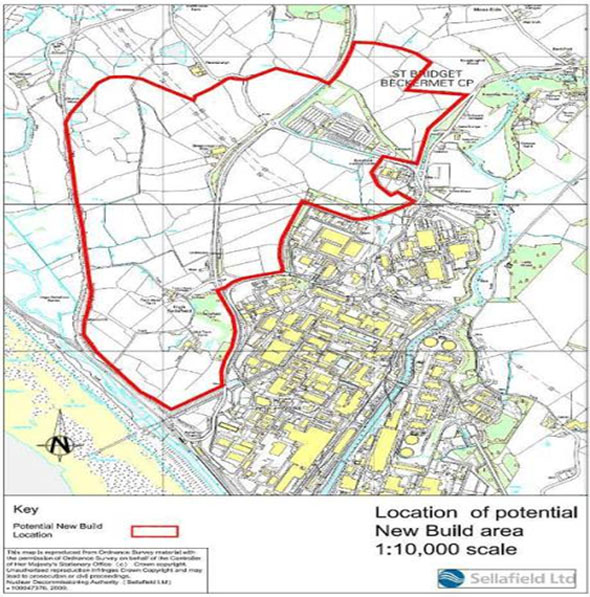
Note the development with the yellow-shaded areas to the South-East of the red-lined area. This is Sellafield.
And this is a Google Map of the coast around the nuclear reprocessing complex.
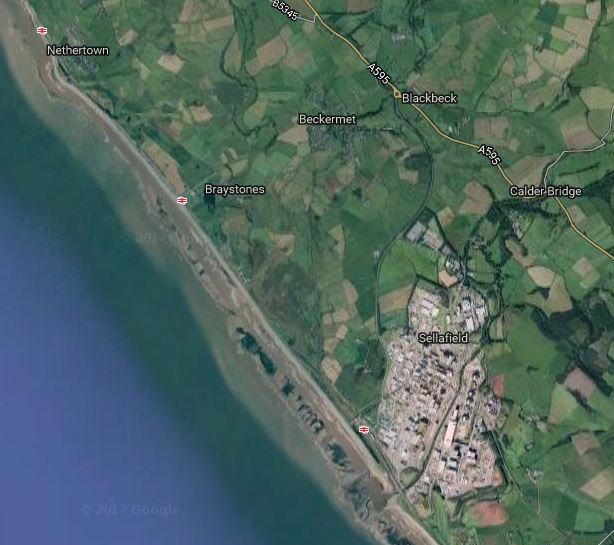
Note the railway stations along the coast. Sellafield station is by the nuclear complex, with Braystones and Nethertown to the North.
All three stations are on the Cumbrian Coast Line, which in addition to the passenger service, is used to transport freight, including nuclear waste to and from Sellafield.
Overlaying the NuGen map on the Coogle Map shows that Moorside will be to the North-West of Sellafield.
The Cumbrian Coast Line and the related Furness Line curve around Cumbria from Carlisle to Carnforth via Workington, Whitehaven, Sellafield and Barrow-in-Furness.
- The line is mainly double track, but with sections of single-track.
- The line is not electrified.
- Most of the trains are elderly diesels.
- The train service is vaguely hourly, but patchy in places.
The nuclear power complex is a ten billion pound project and will require large amounts of heavy equipment and construction materials to be transported the site. Also on a daily basis, large numbers of engineers and construction workers wilol need to get to one of the largest construction sites in the North of England.
Is Network Rail’s £400 million proposed vdevelopment, a reconstruction of the Cumbrian Coast and Furness Lines to the following standard.
- Double track.
- Electrification
- 100 mph line speed where possible.
- Build a new station at Moorside and any other places, where they are needed.
- Step-free stations
- At least two trains per hour in both directions.
- Full wi-fi and 4G on all trains and in stations.
Upgraded to a high standard, it might do more than help construction at Moorside and Sellafield and those that work in the two complexes.
- It might increase quality tourism.
- It could be a diversion route for the West Coast Main Line.
- It might make a London service to Barrow-in-Firness via HS2 a possibility.
Network Rail’s project could do a lot more than service the twin nuclear sites.
I explored the Cumbrian Coast Line in April 2015.
Hitachi To Power Up Before Hinckley
This is the title of a small article in the Sunday Times, which talks about Hitachi’s plans to build a new nuclear power plant at Wylfa on Anglesey.
Hitachi would build a proven commercial reactor, that could be built by 2025.
Why are we bothering to still even think about the gold-plated Franco-Chinese dead elephant at Hinckley Point?
Hitachi is a private company and have to live from good designs, technology and engineering, whereas those behind Hinckley Point are governments or their agencies.
When you consider that the last big project of Hitachi in the UK, was to build a factory at Newton Aycliffe to construct trains and it would appear that that has gone to the plans, I suspect that going for Wylfa and putting Hinckley Point out of its misery, would be a pair of decisions, that have the much lesser risk.
Small Modular Nuclear Reactors
My objections to nuclear power plants like Hinckley Point C, is very much like my objections to giant aircraft carriers like HMS Queen Elizabeth,enormous 4×4 Chelsea tractors and massive houses, where one billionaire lives with just his trophy wife.
It’s just that they satisfy the ego of a class of men (and it’s usually men!), who like to show off, that they have more money or power than others.
There are generally much more efficient and affordable ways of achieving the same aims.
As a small example, I remember having a chat with a General in the British Army, who had very low opinions of heavy tanks and felt that there were better ways of spending the money to achieve the same objectives.
I also remember some of the arguments about the aluminium frigates after the Falklands War. A lot of these were amplified, by a friend, who’d gone to the islands as an officer on a British Rail ferry.
This is said about Hinckley Point C in Wikipedia.
Hinkley Point C nuclear power station is a much-delayed proposal to construct a 3,200 MWe nuclear power station with two EPR reactors in Somerset, England. The proposed site is one of eight announced by the British government in 2010,[5] and on 26 November 2012 a nuclear site licence was granted. In October 2014, the European Commission adjusted the “gain-share mechanism” so that the project does not break state-aid rules.[7] Financing for the project will be provided “by the mainly [French] state-owned EDF [and Chinese] state-owned CGN will pay £6bn for one third of it”.[8] EDF may sell up to 15% of their stake. Financing of the project is still to be finalised.
I have a feeling that any sane woman, who’s lived with a man with bad shopping habits, would cancel it tomorrow.
After all, it’s supposed to cost £18billion and there is still no date yet for when it will produce a watt of electricity.
As a reaction to these enormous costs, the Small Modular Nuclear Reactor is being proposed. Wikipedia says this.
Small modular reactors (SMRs) are a type of nuclear fission reactor which are smaller than conventional reactors, and manufactured at a plant and brought to a site to be fully constructed.
Small reactors are defined by the International Atomic Energy Agency as those with an electricity output of less than 300 MWe, although general opinion is that anything with an output of less than 500 MWe counts as a small reactor.
Modular reactors allow for less on-site construction, increased containment efficiency, and heightened nuclear materials security.
I recommend reading the full Wikipedia article.
I feel that SMRs have a lot of advantages.
- Much more of the building can be in a factory, not on a bleak remote site.
- They are particularly suited to remote locations, where there is a shortage of construction workers.
- An SMR may be a much less risky project cost-wise than a conventional large plant.
- Containment is more efficient.
- Proliferation concerns are lessened.
- Say you are building a plant that needs a lot of electricity, like say an aluminium smelter. The SMR could be built alongside, so there would be no need for massive transmission lines, between the smelter and its power source.
- They could be built underground, lessening the visual impact.
- High energy use industries like steel-making could be paired with an SMR.
- Large office complexes like Canary Wharf could be linked to an SMR deep underneath for their massive energy use.
- Build time is much less.
I like the concept and think that this type of reactor, perhaps arranged in groups around a country or region, will kill off the traditional large nuclear reactor.
This section on safety features illustrates the innovative thinking behind the reactors.
Since there are several different ideas for SMRs, there are many different safety features that can be involved. Coolant systems can use natural circulation – convection – so there are no pumps, no moving parts that could break down, and they keep removing decay heat after the reactor shuts down, so that the core doesn’t overheat and melt. Negative temperature coefficients in the moderators and the fuels keep the fission reactions under control, causing the fission reactions to slow down as temperature increases.
I suspect we can now design a reliable reactor, that say it received a direct hit from a tsunami or three simultaneous crashes from Jumbo jets, would fail-safe.
There are certainly a lot of groups and companies trying to design the ultimate SMR.
There is even a concept being developed at the Universities of Manchester and Delft in the Netherlands called a u-Battery. That concept may not work, but something like it will produce electricity for a lot of people and industry around the world.
The dinosaurs like Hinckley Point C are hopefully a mistake of the past.
Along The Marshlink Line
After writing Will We See IPEMUS in Hastings?, I thought it would be a good idea to see, if there were any other reasons, why running longer IPEMUs on the Marshlink Line would be a good idea.
So I took a Class 395 train from St. Pancras International station to Ashford International station along High Speed One.
From Ashford International, I took the Marshlink Link to Hastings station, in one of the services run by Southern using Class 171 trains.
These are my observations from the trip.
Class 171 Trains
These are two-car modern diesel multiple units with a top speed of 160 kph and they can be coupled together to make longer trains.
They are totally adequate for the current service between Ashford International and Brighton via Hastings, Bexhill, Eastbourne and Lewes.
Class 387 Trains With An IPEMU Capability
I believe that if battery trains or IPEMUs are used to provide an electric service on the Marshlink Line, that only Class 387 trains can be delivered in a reasonable timescale.
- The Class 387 train is a cousin of the Class 379 train, which was used to create the demonstrator.
- The Class 387 train is a four-car 175 kph train, that can be run in 4, 8 or 12 car formations.
- The capability of the train on battery power, would be more than adequate to go between Ashford International and Hastings.
- There are over twenty Class 387 trains in service, that will start to be replaced this year with new Class 700 trains.
- Another twenty trains are on order for Porterbrook.
- Because of the late delivery of the Great Western electrification, quite a few trains have no home to go to.
- Southern are very familiar with Class 387 trains.
The main thing that would need to be done, would be to add an appropriate battery pack to the number of trains needed for a Brighton to Ashford or St. Pancras service.
As a battery pack was designed over a year ago, I’m sure Bombardier have this under control.
This article in Rail Technology Magazine, talks about how Bombardier are doing extensive tests on battery systems in Mannheim.
Ashford International Station
This Google Map shows the various lines through Ashford International station.
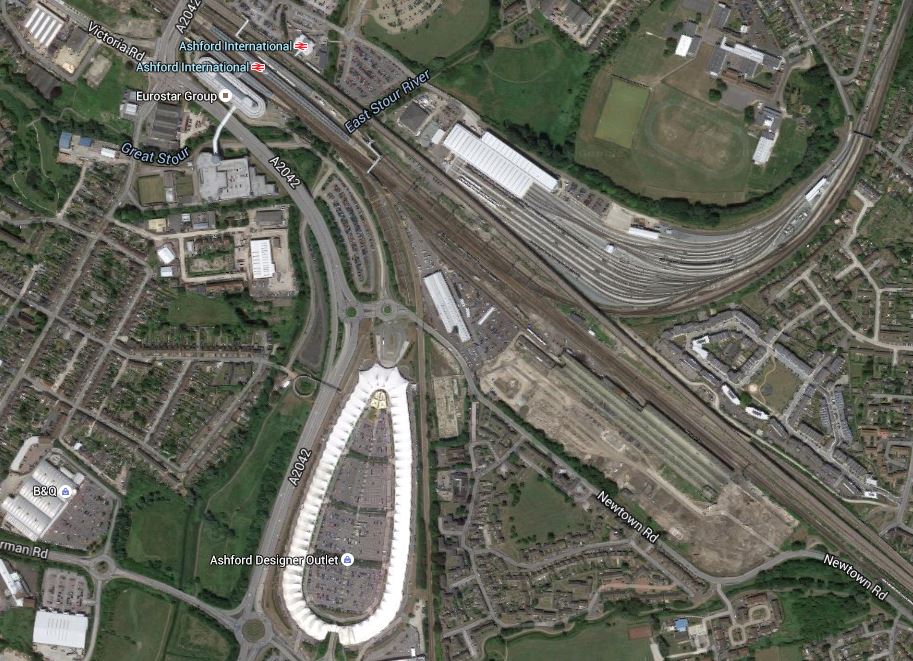
Lines Around Ashford International Station
Note.
- High Speed One goes through the station calling at the long island platforms 3 and 4, or on the flyover, as appropriate.
- The Ashford to Ramsgate Line goes off to the North East.
- The Marshlink Line goes south alongside the white teardrop, which is the Ashford Designer Outlet.
There are three alternatives for Marshlink Line trains.
- Currently, trains from the Marshlink Line terminate in Platform 1. This could continue.
- Trains could go to and from London on High Speed 1
- Trains could go to and from London on classic lines.
I suppose there could be a mixture of all three.
I don’t know if it is possible to run trains between High Speed One and the Marshlink Line, but I can’t believe that it would be impossible to arrange, as Network Rail have mentioned Hastings to St. Pancras services via High Speed One in some of their reports.
Ham Street Station
Ham Street station is a simple affair on a double-track section, with two staggered platforms.
I took these pictures of the station.



This is a Google Map of the station.
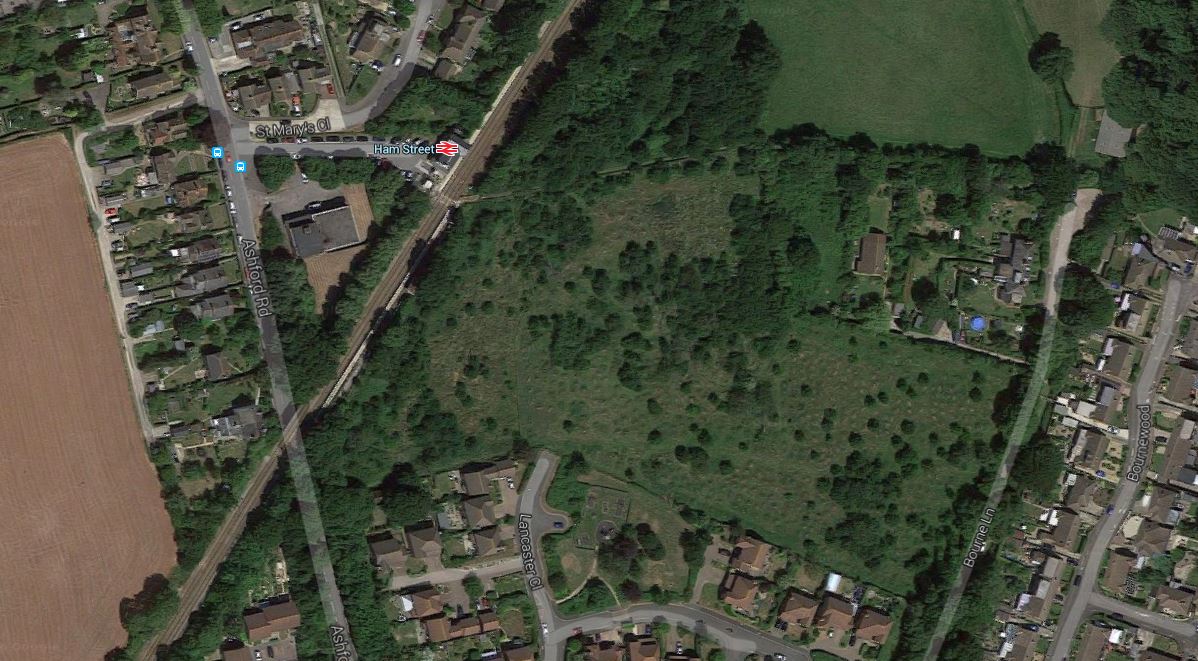
Ham Street Station
it would appear that quite a few houses have been built recently.
The station doesn’t appear to be of the same quality as the houses.
Appledore Station
This Google Map shows the Appledore station.
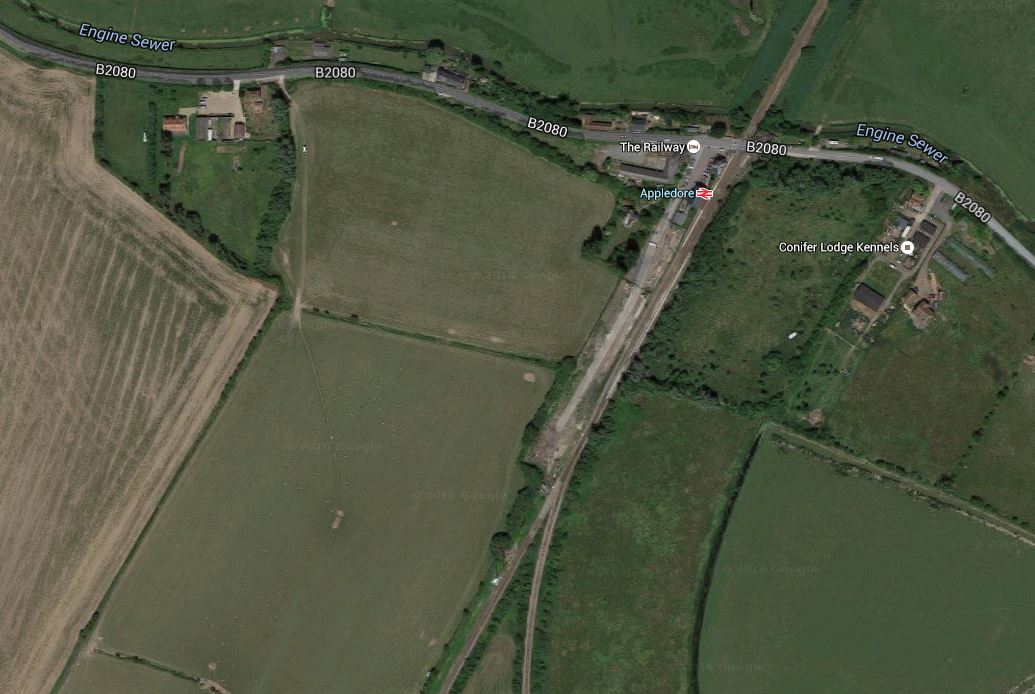
Appledore Station
It is simple affair, with very few houses locally.
- Appledore itself is two miles away.
- It has two staggered platforms.
- There is a level crossing.
- There is no footbridge.
South of the station the line becomes single-track and the Dungeness Branch goes off to Dungeness and Lydd.
Dungeness
A proportion of the freight traffic on the Marshlink Line serves the Dungeness Nuclear Power Station using the Dungeness Branch.
The Google Map shows the area of Dungeness.
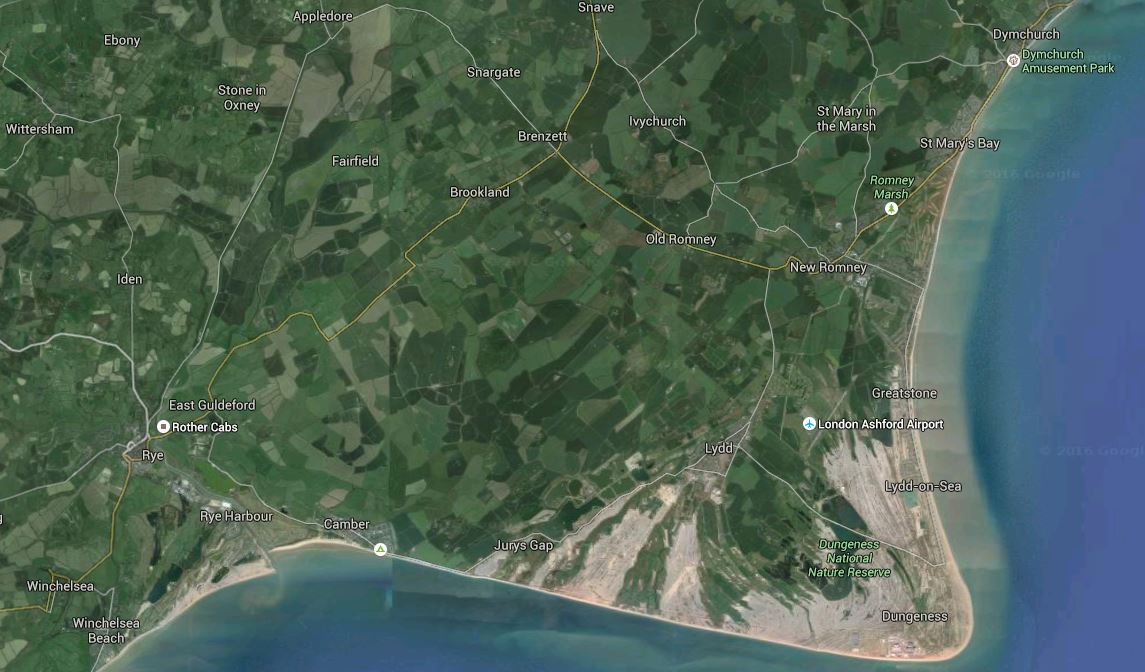
Dungeness
At one time, the line had several stations including one at Dungeness.
Other than the power station, there is just a few houses, Lydd Airport, a nature reserve and a few tourist attractions like the iconic Romney Hythe and Dymchurch Railway.
The only other things that could effect the area, is a possible building of Dungeness C Nuclear Power Station and other energy related developments, like a cross-Channel energy link or support for wind turbines.
So to say that the Dungeness Branch will never be developed with a passenger train service, is a bit like saying human beings will never set foot on Mars.
I’ve never been down to Dungeness, although C flew to Beauvais near Paris in the 1960s from the Airport using an airline called Skyways (?).
Rye Station
Rye station is the only substantial station on the unelectrified part of the Marshlink Line.
This Google Map shows the station.
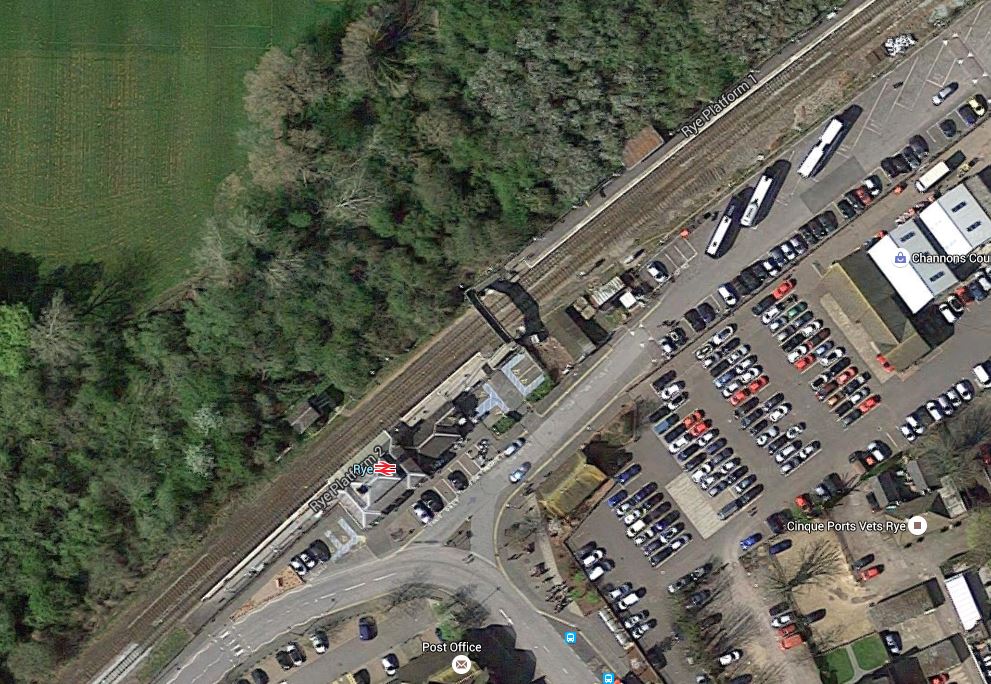
I visited Rye in 2015 and wrote Lunch At Rye, where I found it a charming little town, lacking in information.
The station has a passing loop, a footbridge and a booking office, and it probably would need little work for longer trains.
However, there was evidence of general tidying up and the relaying of track.
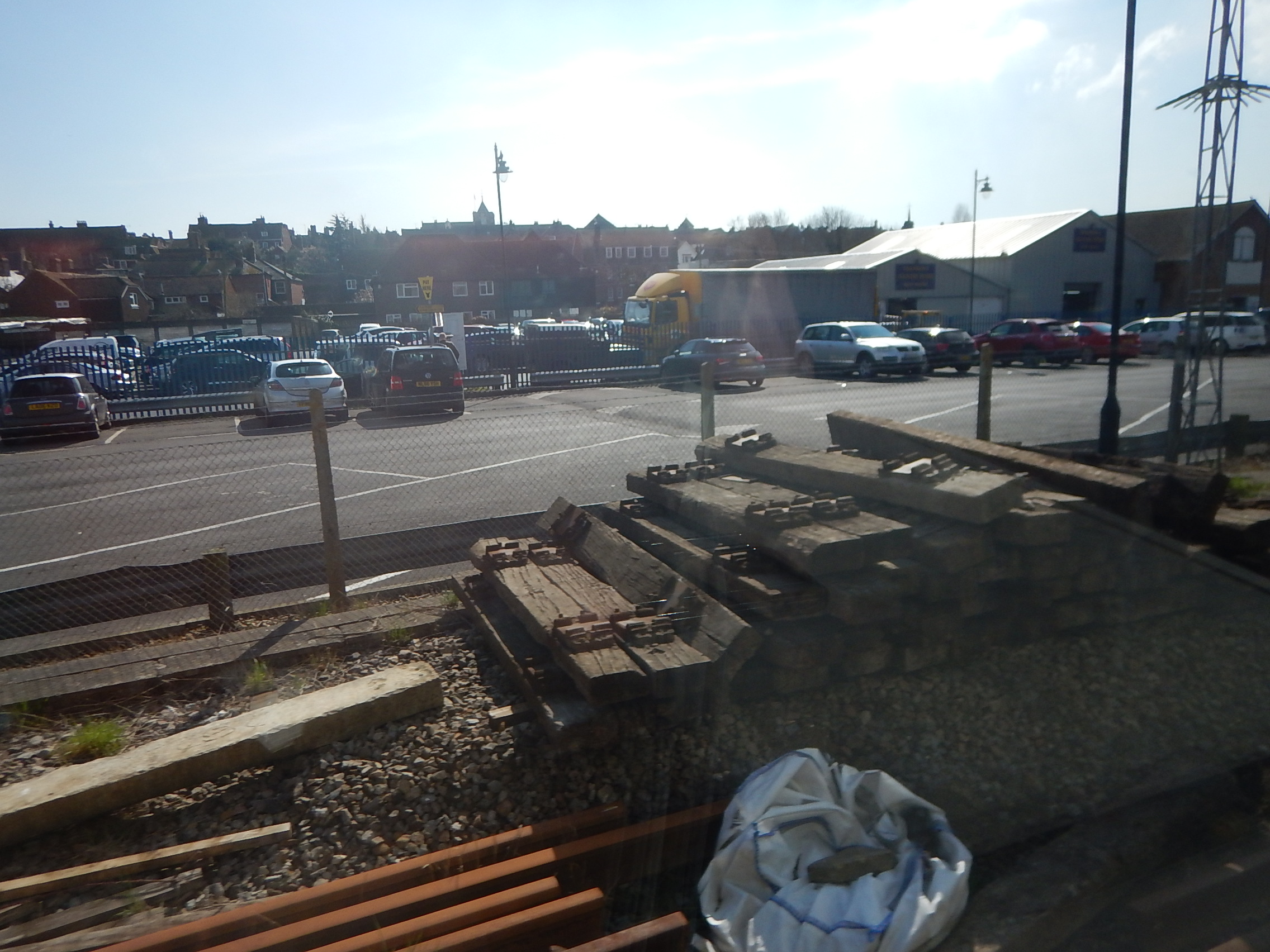
Evidence Of Work At Rye
In fact, this was virtually the only work, that I saw anywhere on the Marshlink Line.
Winchelsea, Doleham And Three Oaks Stations.
Of these three stations, we only stopped at Winchelsea station.
Except for well-maintained single platform, there is not much there.
Doleham and Three Oaks stations are also fairly basic, with Three Oaks only able to handle a single carriage.
From Ore To Hastings
Ore station is the next station after Three Oaks and it is fully electrified from the station all the way to Eastbourne and Brighton.
An Article In Rye News
This article in Rye News is entitled More give than take on Marshlink, was written by Stuart Harland who is chairman of the Marsh Link Action Group.
It gives a summary of the work needed to allow Class 395 trains to Bexhill.
As we know from the Network Rail presentation to MLAG last year, the physical issues to be resolved are:
- electrification of the Marshlink line
- signalling at Bexhill;
- remodelling of the track layout at Ashford;
- the dualling/ passing loop at Rye
- the two level crossings at East Guldeford where input is awaited from the Highways Agency to remove the need for two level crossings on the A259
All of this needs funding, as do the additional Javelin units built by Hitachi.
So how does using Class 387 trains with an IPEMU capability affect this list.
- Electrification of the Marshlink Line would not be needed.
- The signalling at Bexhill, can already handle eight-car Electrostars, like the Class 387 train, so I would assume modifications would be simpler, if at all.
- The remodelling of the track layout at Ashford would only need to connect Platforms 1 and 2 to High Speed One.
- The passing loop at Rye seems capable of accepting two four-car Class 171 Turbostar trains, which are closely related to Class 387 Electrostar trains.
- The level crossing problems would remain, but the speeds could be kept to those used now.
- New trains would not need to be purchased from Hitachi.
In addition, there would need to be work done to make sure that all stations and signalling on the Marshlink Line could accept the length of train, that Southern want to run between |St. Pancras and Hastings.
Conclusion
Class 387 IPEMUs could easily provide service on the Marshlink Line and the cost of the work would be very much reduced compared to using Class 395 Javelin trains, with the biggest expense probably being adding the battery packs to the Class 387 trains.
Is HS2 At Risk Of Derailing?
There is an article in The Telegraph entitled HS2 at risk of derailing at top speeds, report finds.
I have read the article and the report by Professor Woodward at Heriot-Watt University is obviously, based on sound mathematics and enginering principles.
We have a problem with HS2, which is not unlike the problem with the new Hinckley Point nuclear power station.
There is a big need for extra capacity, but it will cost an awful lot of money.
In both projects too, there is a lot of opposition.
Professor Woodward’s research has one serious consequence, even if the high design speed of the line doesn’t make the trains derail.
It is that if you reduce the speed of the line, the economic case for HS2 is shot to pieces.
If you decide that there could be a safety problem with the embankments, you have to strengthen them and that ruins the economic case too.
If we look at Hinckley Point C nuclear power station, not building it, is not as serious as not building HS2.
We have several other ways to generate power and also lots of ways to save it. Also, the widely quoted strike price of £92.50/MWh would make a lot of other much cheaper schemes like tidal power viable.
But this doesn’t solve the problem of creating more capacity on the rail lines between north and south for both passengers and freight.
HS2 doesn’t carry freight, but hopefully, it will free up paths on traditional routes to the north, that could be used by freight trains.
If you think we don’t, travel between Euston and Glasgow on Virgin Trains and look at the passenger loading.
At present, Network Rail are carrying out various schemes to squeeze more capacity out of the current lines and it is hoped that in the short term, this will help.
But in some ways all it will do is create more demand for travel on the routes.
So at some time we’re going to have to build a new line, which will allow faster speeds than the current lines.
If you look at Phase 1 to the West Midlands, this will have the following effects.
- Extra capacity between London and the West Midlands.
- Journey times of around fifty minutes.
- Making Birmingham Airport, a viable one for those living in North London.
- Paths released for freight on the West Coast Main Line.
- Reorganisation of traditional services on the West Coast Main Line to serve more places.
In Phase 1, there would probably be no more than half-a-dozen trains in both directions on the southern section of HS2, south of Birmingham International station.
On the other hand, when Phase 2 to Manchester and Leeds opens there will be upwards of twenty trains per hour both wayson the same southern section.
I can understand, why those in the Chilterns are getting angry.
So to the protesters, Professor Woodward’s research could be manna from heaven.
For some time, my view has been that we need new tracks between London and the North via Birmingham, as even if all existing lines were upgraded, there wouldn’t be enough capacity.
I think we’re going to need some radical thinking.
For instance, suppose you made Birmingham International a hub, where the lines from the North met a line to London and one into Birmingham city centre.
This might help in the design of HS2 to the north of Birmingham, but that is not the area, where there is major opposition to the line. That is between Birmingham International and London, where land is limited and wherever you build it, you’ll annoy someone.
I suspect, a lot of people working on the project, sometimes feel like going and working elsewhere.
But whatever we do with HS2, we must improve the traditional routes.
- Electrify the Midland Main Line to Derby. Nottingham and Sheffield,
- Electrify the Chiltern Main Line to Birmingham.
- Electrify the routes across the Pennines from Preston and Liverpool to Hull, Leeds and Newcastle via Manchester.
- Sort out the Digswell Visduct on the East Coast Main Line.
- Improve speeds to as high as possible on all routes to the North.
The only trouble, is that the more we improve traditional routes, the more people will travel by train and the need for HS2 will become more urgent.
My Kind Of Energy Company
I found this article on edie.net entitled Ovo Shuns Coal And Nuclear.
I am very much against using coal as a fuel for various reasons, but as I get older and hopefully wiser, I feel that nuclear energy is non-viable economically.
The cost of the new station at Hinkley Point doesn’t look good value for money, when compared to some of the new developments in the pipeline.
Tidal, such as the Swansea Bay Tidal Lagoon, personal solar and linking the UK to Iceland with an undersea cable, might well prove to be better long term investments.
So I applaud OVO for their stance and will continue to use them as my energy supplier.

