Denmark Exploring Multiple Platforms As Alternative To Building Artificial Island
The title of this post, is the same as that of this article on offshoreWIND.biz.
This is the sub-heading.
After concluding that the current concept of its North Sea Energy Island would be too expensive for the State, the Danish government, the transmission system operator (TSO) Energinet, and other relevant agencies are now looking into the concept for the island to be established on several large platforms.
I feel this could be a sensible decision, as it would fit well with a modular approach to the building of offshore wind farms.
Suppose, the floating turbines used by a company like Ørsted were all similar. This would surely simplify management of their portfolio of wind farms.
If it works for floating wind turbines, surely, it would work for substations, electrolysers and other offshore hardware.
Conclusion
Artificial energy islands may seem an impressive way to go, but I suspect that the modular approach using standard components, that either sit on the sea bed or float may be a more affordable and faster way to build offshore wind farms.
Take A 360° Tour Of World’s Largest Offshore Wind Farm In Operation
The title of this post, is the same as that of this article on offshoreWIND.biz.
This is the sub-heading.
Located some 89 kilometres off the Yorkshire Coast, the UK, the 1.3 GW Hornsea Two comprises 165 Siemens Gamesa 8 MW wind turbines and is currently the world’s largest fully commissioned offshore wind farm.
The article has a link to an excellent Ørsted video, about they access and service the wind farm.
Ørsted Posts All-Time High Offshore Wind Earnings
The title of this post, is the same as that of this article on offshoreWIND.biz.
This is the sub-heading.
World’s leading offshore wind developer, Ørsted, has reported DKK 6.9 billion (EUR 926 million) operating profit (EBITDA) for the first quarter of 2023, DKK 2.5 billion less compared to the same period a year earlier.
For those, who are sceptical about offshore wind, these results must surely pour cold water on your views.
The profits also appear to have in part been driven by the commissioning of the Hornsea Two wind farm.
Highview Power And Ørsted Collaborate To Unlock Greater Value From The Next Generation Of Wind Farms
The title of this post, is the same as that of this press release from Ørsted.
This is the sub-heading.
Highview Power and Ørsted have signed a Memorandum of Understanding aiming to prove the feasibility and economic value of co-locating long duration energy storage with offshore wind.
This first paragraph indicates how the two companies will work together.
The two companies will carry out detailed technical analysis and an economic assessment during 2023 that will investigate how combining Ørsted’s wind technology with Highview Power’s liquid air energy storage can deliver a stronger investment case for future offshore wind projects by reducing wind curtailment, increasing productivity, and helping the move to a more flexible, resilient zero carbon grid.
This all good stuff and as a Control Engineer, I know, there is a very good chance, it will bring forward worthwhile benefits.
Siemens Gamesa, Ørsted Link Up With UK Universities To Boost Wind Turbine Efficiency
The title of this post, is the same as that of this article on offshoreWIND.biz.
This is the sub-heading.
A major collaboration between universities and energy companies has made “vital” improvements to offshore wind turbines, which could help them generate more renewable energy and reduce the UK’s reliance on fossil fuels.
This paragraph outlines the research.
The GBP 7.7 million partnership between the Universities of Sheffield, Durham, Hull, and two global energy companies, Siemens Gamesa Renewable Energy and Ørsted, could help offshore wind turbines run for longer periods of time – boosting the amount of energy each wind farm generates.
We may not manufacture a large proportion of wind turbines, but companies do turn to UK universities, when they need important research to be done.
Ørsted Joins Global Offshore Wind Alliance
The title of this post, is the same as that of this article on offshoreWIND.biz.
This is the sub-heading.
Ørsted has become the first energy company to join the Global Offshore Wind Alliance (GOWA) to support a faster deployment of offshore wind and create a global community of action.
These two paragraphs outline GOWA.
GOWA is a new global organisation that brings together governments, the private sector, international organisations, and other stakeholders to accelerate the deployment of offshore wind power.
The alliance was launched last year at COP27 by the International Renewable Energy Agency (IRENA), the Global Wind Energy Council (GWEC), and the Danish government.
For more information look at the GOWA web-site.
Kittiwake Compensation
The title of this post, is the same as that of this page of Ørsted’s Hornsea Three web site.
The first section of the page gives the background.
Hornsea 3 Offshore Wind Farm received planning permission in December 2020. As part of our Development Consent Order, a requirement was included for ecological compensation measures for a vulnerable seabird species whose populations could be affected by wind farms – the Black-legged kittiwake (Rissa tridactyla).
Our compensation plan focusses on providing artificial nesting structures for kittiwake along the east coast of England. This project is the first of its kind and we are working on new and innovative designs for the artificial nesting structures. Each structure will be purpose-built, bespoke and specific to the landscape characteristics of each location. The structures also present an educational opportunity, allowing researchers to better understand kittiwake.
Developing effective environmental compensation measures is essential to ensure the UK Government’s targets for offshore wind can be realised, to deliver a net zero-carbon future.
So kittiwakes are not being paid compensation, as I don’t suspect many have bank accounts.
But they are being built a few new nesting structures.
Wikipedia has an entry on kittiwakes.
It notes that all European kittiwakes are of the black-legged variety and this is a picture, I took of some on the Baltic in Newcastle.
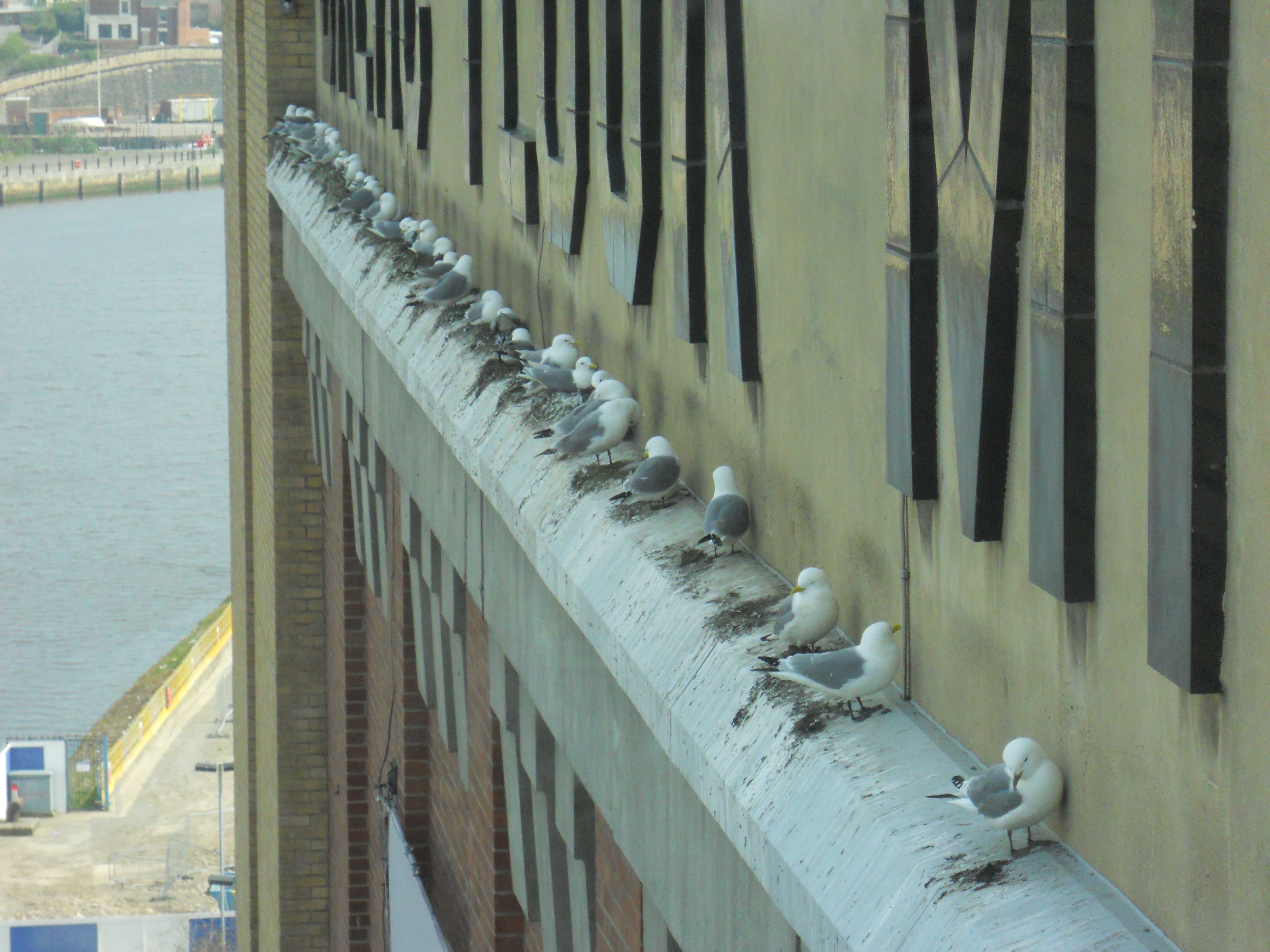
I’ve seen several pictures of kittiwakes lined up like these.
The document goes on to describe the work being done for the kittiwakes and this is said about work in East Suffolk.
Lowestoft and Sizewell are the only locations between Kent and Humberside with thriving kittiwake colonies. Kittiwake normally nest on steep cliffs with narrow ledges. East Anglia doesn’t have these natural nesting spaces, so kittiwake have reverted to colonising urban areas, for example on windowsills and ledges of buildings. Kittiwake breeding for the first time are most likely to find artificial structures that are situated close to these urban areas. They are less likely to find structures in places where there are not already kittiwake. Lowestoft and Sizewell are therefore two of the few places in East Anglia where artificial structures could be colonised quickly. These purpose-built nesting sites would improve breeding conditions for kittiwake, whilst successfully achieving our compensation requirements to unlock the world’s biggest offshore wind farm.
I took this picture of kittiwakes at Sizewell.
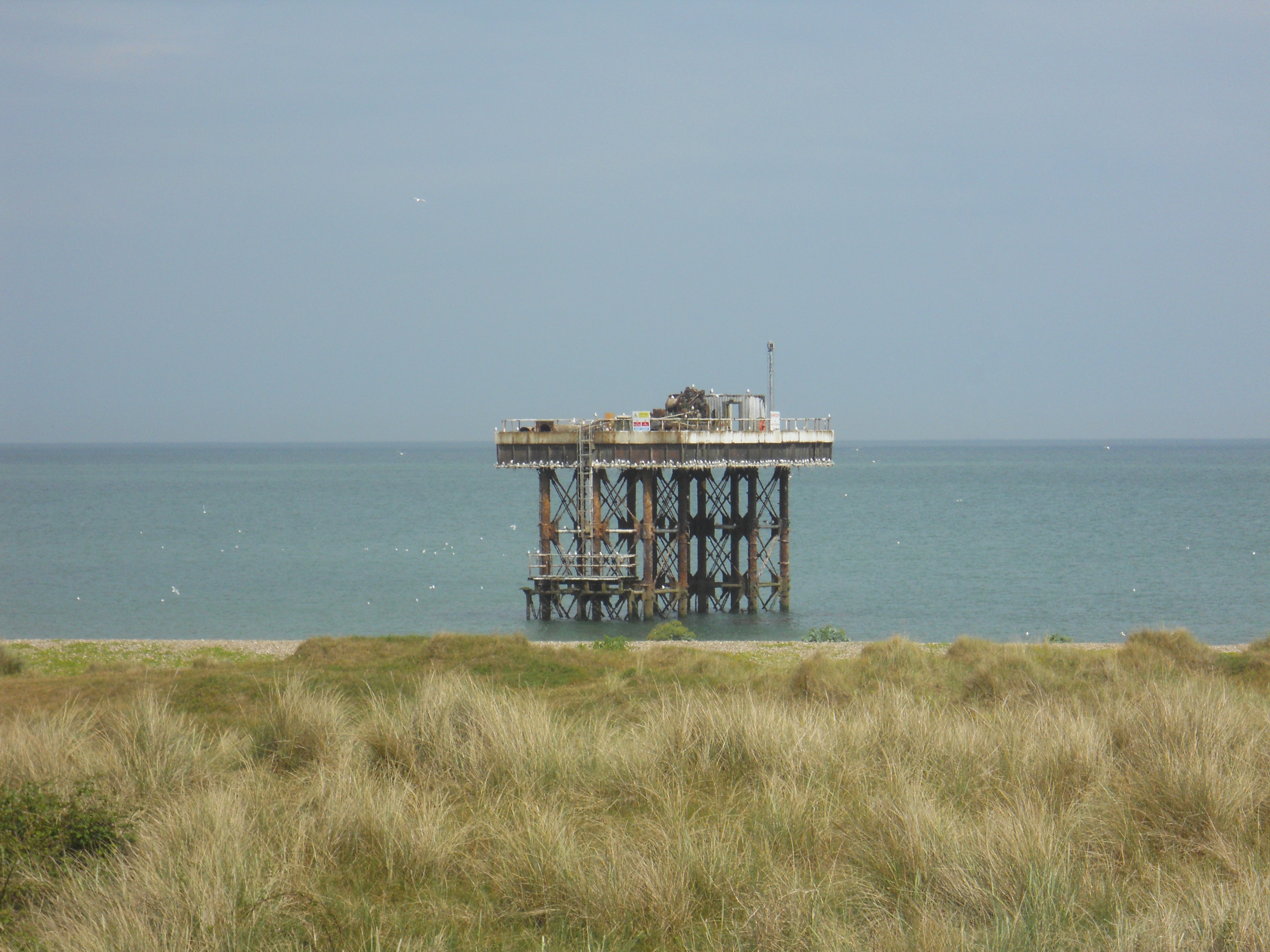
It doesn’t seem too unlike the structure on the Hornsea 3 web site.
ERM To Lead EIA For Salamander Floating Project Offshore Scotland
The title of this post, is the same as that of this article on offshoreWIND.biz.
This is the sub-heading.
A joint venture (JV) between Simply Blue Group, Ørsted, and Subsea7 has selected ERM Group company MarineSpace to lead the environmental impact assessment (EIA) for its Salamander floating offshore wind project in Scotland.
Note.
- The Salamander floating offshore wind farm is going to be a 100 MW wind farm 35 km. North of Peterhead.
- It is likely to be a pathfinder, in the development of new facilities to build wind farm structures and components in the North of Scotland.
- I talked about the floaters in Ocergy Floaters Selected For 100 MW Project Off Scotland.
- I suspect that it could be an INTOG project.
Salamander seems to be progressing at a decent pace.
Ocergy Floaters Selected For 100 MW Project Off Scotland
The title of this post, is the same as that of this article on Splash247.com.
These two paragraphs outline Ocergy’s OCG-Wind foundation technology.
The Salamander floating offshore wind project, a joint venture between Simply Blue Group, Ørsted and Subsea 7, has awarded the pre-FEED (front-end engineering design) deal to Ocergy for its OCG-Wind foundation technology.
The US-based Ocergy has developed a novel semisub floater called OCG-Wind, to support turbines larger than 10 MW, designed for the development of large-scale wind farms. It is targeting a levelised cost of energy (LCOE) that can start to drive reductions in floating offshore wind farms to eventually be competitive with fixed offshore wind farms.
Note.
- There is a picture showing two turbines on OCG-Wind floats.
- Salamander is intended to be an INTOG project of 100 MW.
- The floaters are expected to be fabricated at Global Energy Group’s Port of Nigg.
- ERM’s Dolphyn electrolysis, desalination and hydrogen production concept is also planned for the project.
The Salamander project is certainly going for a lot of innovation.
The Salamander Project
The Salamander project may be a strange name for a proposed Scottish offshore wind farm, but that is what it is.
It is being developed by Ørsted and the Simply Blue Group.
There is a web site, which has this bold mission statement.
Helping To Unlock Scotland’s Floating Offshore Wind.
These paragraphs outline the project.
The Salamander project will utilise innovative and cutting-edge floating offshore wind technologies to produce zero-carbon electricity. The development aims to be a stepping stone to help Scotland and the UK to progress towards a net-zero future.
With a proposed 100 MW pre-commercial size project, the Salamander project which is located off Peterhead in the East coast of Scotland, is in an advanced planning stage. Salamander has a strong focus on supply chain development and will provide an opportunity for the local supply chain to gear up for commercial scale opportunities in Scotland, as well as de-risking floating wind technologies for the future commercial projects in Scotland and beyond. This will allow Scotland to maximise the financial benefit of its strong offshore wind resource and generate long term jobs for its local communities.
The project will contribute to the Scottish government’s target of 11 GW of installed offshore wind by 2030, as well as the UK government’s target of 5 GW of operational floating offshore wind by the same date.
There is also a video, which is very much a must-watch.
Floating offshore wind is a relatively new technology and will become the major generator of the world’s electricity within the next decade.
Note this phrase in the first paragraph.
The development aims to be a stepping stone to help Scotland and the UK to progress towards a net-zero future.
This philosophy is shared with other projects.
In DP Energy And Offshore Wind Farms In Ireland, I said this.
They are also developing the Gwynt Glas offshore wind farm in the UK sector of the Celtic Sea.
- In January 2022, EDF Renewables and DP Energy announced a Joint Venture partnership to combine their knowledge and
expertise, in order to participate in the leasing round to secure seabed rights to develop up to 1GW of FLOW in the Celtic Sea. - The wind farm is located between Pembroke and Cornwall.
The addition of Gwynt Glas will increase the total of floating offshore wind in the UK section of the Celtic Sea.
- Blue Gem Wind – Erebus – 100 MW Demonstration project – 27 miles offshore
- Blue Gem Wind – Valorus – 300 MW Early-Commercial project – 31 miles offshore
- Falck Renewables and BlueFloat Energy – Petroc – 300 MW project – 37 miles offshore
- Falck Renewables and BlueFloat Energy – Llywelyn – 300 MW project – 40 miles offshore
- Llŷr Wind – 100 MW Project – 25 miles offshore
- Llŷr Wind – 100 MW Project – 25 miles offshore
- Gwynt Glas – 1000 MW Project – 50 miles offshore
This makes a total of 2.2 GW, with investors from several countries.
It does seem that the Celtic Sea is becoming the next area of offshore wind around the British Isles to be developed.
These Celtic Sea wind farms include Erebus, which like Salamander is a 100 MW demonstration project.
Salamander And Erebus Compared
Consider.
- Both are 100 MW floating wind demonstration projects.
- Salamander and Erebus are 27 and 21 miles offshore respectively.
- Salamander and Erebus are close to the deepwater ports of Peterhead and Milford Haven.
- Both are described as stepping-stone projects.
- Both projects talk about developing supply chains.
- The developers of Salamander and Erebus include Ørsted and EDF Renewables respectively, who are both big beasts of the offshore wind industry.
Both wind farms are in areas, where the UK, Scottish and Welsh governments want to develop massive offshore wind farms, that will eventually total over 50 GW. I believe that Salamander and Erebus will indicate any problems, that will be likely to occur in the building of these massive offshore floating wind farms.
It is a very sensible plan and could lead to an energy rich future for the UK.
How Long Will It Take To Assemble A Floating Wind Turbine?
Each floating wind turbine requires these major components.
- A wind turbine, which in the Kincardine Wind Farm have a capacity of 9.5 MW, is obviously needed. Some proposed floating offshore wind farm are talking of turbines between 14 and 16 MW. These turbines will be very similar to onshore turbines.
- A float, usually made out of steel or possibly concrete. Various designs have been built or proposed. The Wikipedia entry for floating wind turbine gives several examples.
- The anchoring system to keep the float with its turbine in the desired position.
- The electrical system to connect the wind turbine to the offshore substation, which could also be floating.
Note that the designs for the float, anchoring and electrical systems will rely heavily on technology proven in the offshore oil and gas industry.
Principle Power are the designer of the WindFloat, which is one of the first floats to be used in floating offshore wind.
Their home page has a continuous full-screen video, that shows a WindFloat being assembled and towed out.
The video shows.
- The completed float being floated alongside a dock, which obviously has an appropriate water depth.
- The dock has a large crane.
- The turbine tower and then the blades being lifted into position and securely fixed.
- Finally, a tug tows the completed turbine/float assembly to its position in the wind farm.
This would appear to be an assembly operation, that could flow just like the production in any world-class vehicle factory.
- There would need to be just-in-time delivery of all components.
- The weather would need to be cooperative.
- Lighting might be needed to work in poorer light levels.
- This method of assembly would be turbine and float agnostic.
- Multiple shift working could be employed.
My project management involvement tells me, that it would not be unreasonable to assemble, at least one complete turbine and its float and accessories in a working day.
I can do a small calculation.
The average size of turbine is 15 MW.
One turbine is assembled per day.
There are 300 working days possible in a year with multiple shift working, ignoring Bank Holidays and bad weather.
Just one site could produce 4.5 GW of floating wind turbines per year.
How Many Production Sites Could There Be?
These are surely the best possibilities.
- Barrow
- Belfast
- Clyde
- Devon/Cornwall
- Forth Estuary
- Great Yarmouth
- Haven Ports
- Holyhead
- Humber
- Liverpool
- Milford Haven
- Peterhead
- Southampton Water
- South Wales
- Teesside
- Thames Estuary
I have named sixteen areas, that could be suitable for the assembly of floating wind turbines.
So let’s assume that eight will be developed. That could mean as much as 36 GW of capacity per year.
The Energy Density Of Floating Wind Farms
In ScotWind Offshore Wind Leasing Delivers Major Boost To Scotland’s Net Zero Aspirations, I summarised the latest round of Scotwind offshore wind leases.
- Six new fixed foundation wind farms will give a capacity of 9.7 GW in 3042 km² or about 3.2 MW per km².
- Ten new floating wind farms will give a capacity of 14.6 GW in 4193 km² or about 3.5 MW per km².
Returning to the earlier calculation, which says we could have the ability to create 36 GW of wind turbines per year, with 15 MW turbines, this means with a generating density of 3.5 MW per km², the 36 GW would take up around a hundred kilometre square of sea.
Conclusion
We will become Europe’s powerhouse.
 The Anonymous Widower