Abraham Cruzvillegas At The Tate Modern
I took these pictures at the new Abraham Cruzvillegas installation in the turbine hall at the Tate Modern. It is called Empty Lot




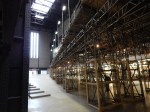


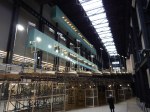

I quite like it and it’ll be interesting to see if it grows on the visitors!
I shall be going back!
Up Close And Personal With Kings Cross Station Roof
I was walking on the balcony at Kings Cross station to board my train to Stirling, when I took these pictures of the roof.
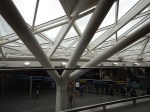


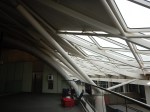
Did the architect design the building, so that passengers could look at the intricacies of the roof?
Could The Various Lines At Brixton Be Connected?
In their Transport Infrastructure Plan for 2050, Transport for London are proposing a Brixton High Level station.
As they have also proposed interchanges at also Brockley and Penge in the plan, I suspect they have found expertise and equipment to create multi-level stations, where lines cross, in an affordable manner.
The problem at Brixton is best explained in this Google Map.
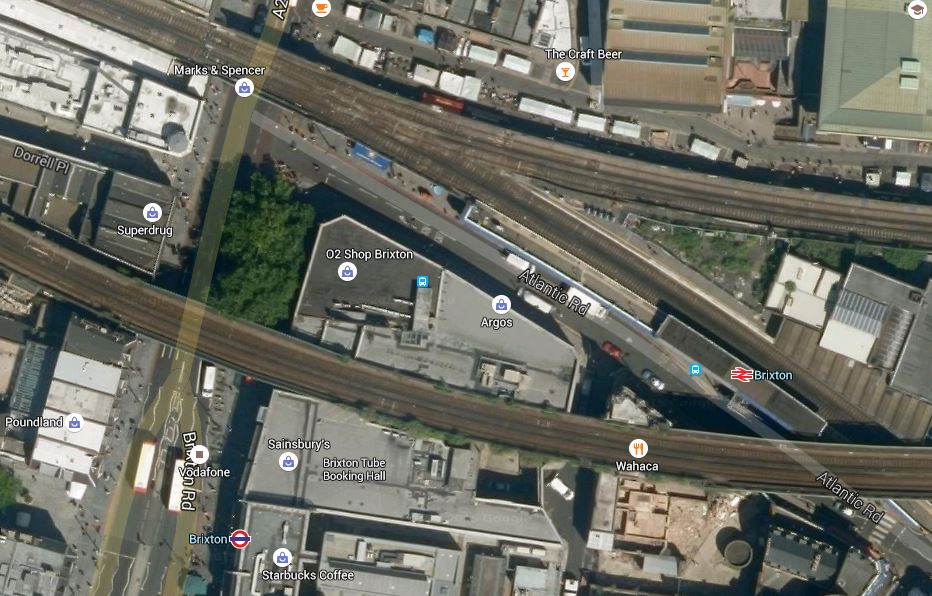
Brixston Station
The line across the middle of the map carries Overground services to and from the terminus at Clapham Junction, whereas the two merged lines go off roughly north-westerly towards Victoria. The southerly of the branches goes south towards Herne Hill, whilst the northernly branch going towards Loughborough Junction. This schematic from Wikipedia may explain it better.

Lines Through Brixton
The Overground, Thameslink and the Victoria Line are shown in orange, pink and blue respectively.
The only conclusion that is worth saying is that it’s all very complicated. The big advantage that they now have compared to a few years ago, is that much better 3D design software is available.
In TfL’s plan a rough estimate of £25million is given for each of these interchange stations. Some will cost less and some will cost more.
I think Brixton will not be one of the more affordable stations, although it could be one with a high return.
There are various options for connections at Brixton and TfL will probably limit the interchanges to the ones that are most used.
For instance, would there be much point in linking the Victoria Line to the services between Victoria and Orpington, as they both serve Victoria?
Also, as after this summer, the big constraint on frequency on the Victoria Line will be the reversing of trains at Brixton. Under Future Projects for the Victoria Line, Wikipedia says this.
For many years there have been proposals to extend the line one stop southwards from Brixton to Herne Hill. Herne Hill station would be on a large reversing loop with one platform. This would remove a critical capacity restriction by eliminating the need for trains to reverse at Brixton. The Mayor of London’s 2020 Vision, published in 2013, proposed extending the Victoria line “out beyond Brixton” by 2030.
I would suspect this will be done in the near future, as it both increases Victoria Line capacity and it gives an alternative link between the Victoria Line and services between Victoria and Orpington.
Brixton Underground station has recently been refurbished and is pretty-much step-free from the street.
So it would appear that substantial improvement at Brixton could be achieved by creating a High Level station linking the various lines together and perhaps using an iconic lift tower to the ground.
Brixton needs an iconic creation to go with the vibrancy of the area, that doesn’t destroy everything. This could be the High Level station. Having seen the way that the walkway was threaded through at Hackney, I think there are at least one set of engineers and architects up to the challenge.
Brixton doesn’t need a boring station, but one that is exciting, bold and supremely practical for passengers and staff.
Whitechapel Station – 20th July 2015
I hadn’t intended to go to Whitechapel station, but I did this morning and got a very pleasant surprise.
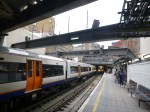
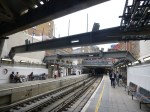
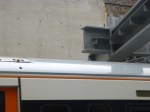
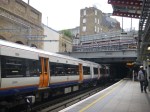
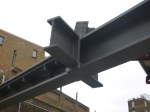
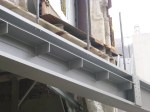
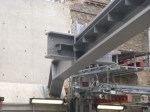
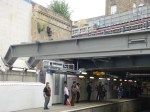
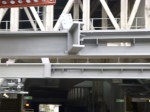
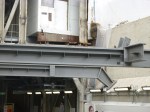
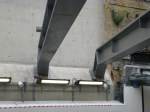
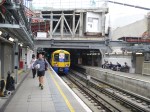
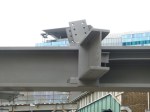
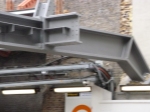
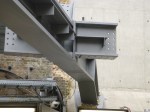
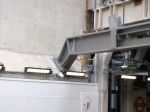
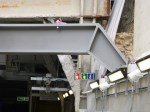
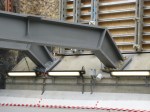
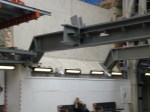
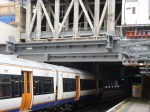
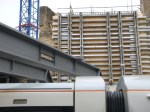
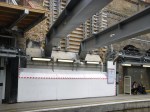
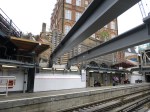
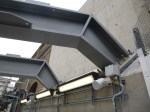
As the picture gallery shows, what I thought were bearing plates undoubtedly are!
An Impressive Structure In Dresden
It may only be a shelter for a number of lines at a tram interchange in Dresden, but I like it.



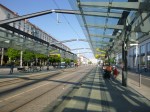
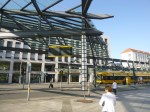

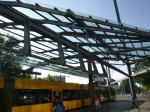
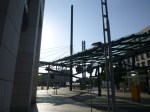
We should create more structures like this that combine engineering, art, beauty and practicality in suitable proportions.
The Bridges At Blackfriars
There are actually three bridges at Blackfriars; a road bridge, a rail bridge with a station on top and between them the remains of an older rail bridge. This Google Earth image shows the three bridges.
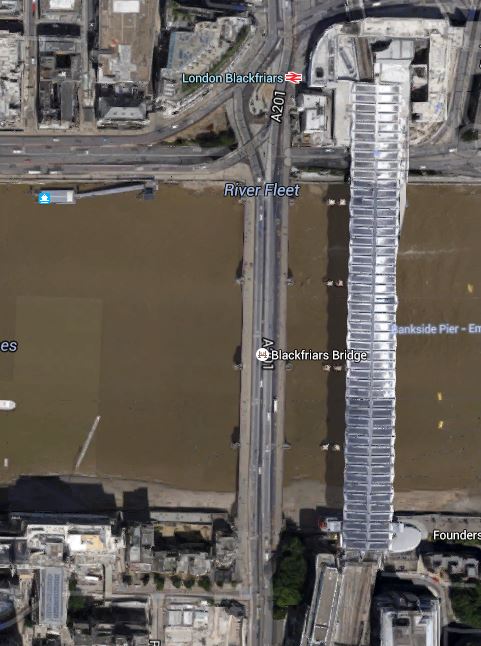
Blackfriars Bridges
From the East or right, they are in order.
1. This is the newer Blackfriars railway bridge, with its station, covered in a solar room, on top.
2. The pairs of dots beside the station are the columns of the older Blackfriars railway bridge, which has been demolished.
3. This is the Blackfriars Bridge.
These pictures were taken as I walked past the bridges from east to west.

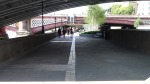
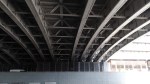




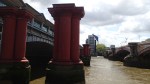


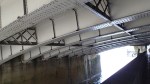

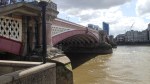
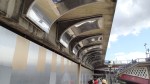
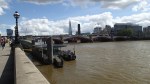
Note how the two bridges in use are impressive structures.
I’ve often thought that the redundant piers must have a sensible use. But what?
Structures At Whitechapel Station
I believe that Whitechapel station, will be Crossrail’s Jewel In The East and over the Easter weekend the East London Line was closed to allow Crossrail work. These pictures show the station after the weekend.
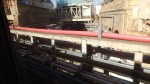
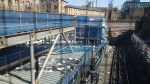
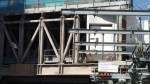
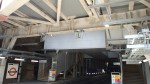
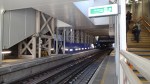
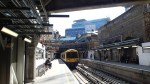


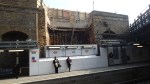
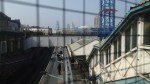
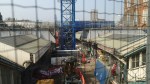
It does seem that more big structures are going up.
This Google Earth image shows the station.
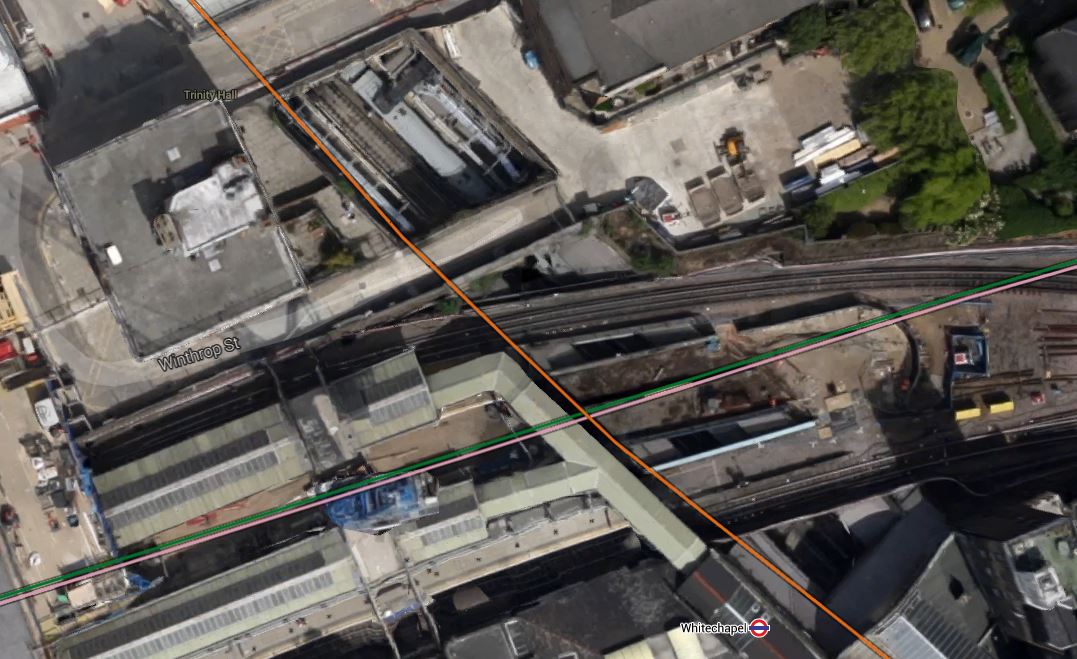
Whitechapel Station
The image was taken some time ago, but it does show the layout of the station.
Note the orange line determining how the East London Line passes through and how the Metropolitan and District Lines go either side of the works. When the station is completed, there will be one large platform between these lines, from which escalators will descend to the Crossrail platforms about thirty metres beneath.
Flimsy It’s Not!
Some of the overhead electrification installed in recent decades has been rather less than robust. These pictures show some of the structures on the Great Western Main Line and Crossrail.



If you compare these pictures with those that I took at Eccles in October 2013, they do seem to be of a similar standard.
Hopefully, this current electrification won’t have some of the problems of projects that were done earlier.
Steel Flying Arches At Shadwell Station
These pictures show the steel flying arches at Shadwell station on the East London Line. They appear to be similar in form to the brick arches at Chorley.

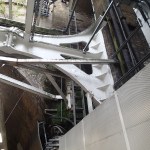
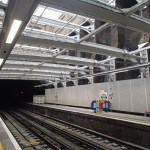
The purpose of these structures is to stop the walls of the cutting collapsing inwards.
They’re not pretty or elegant, but they seem to work!
An Unusual Picture
I have cut this picture out of Google Earth of the railway north-west of Chorley.
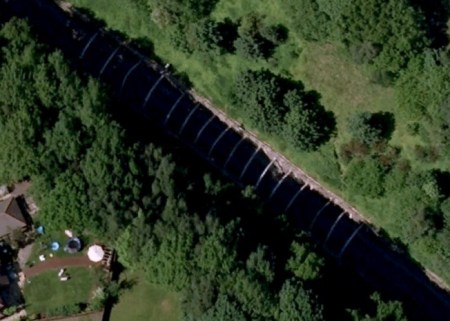
Sixteen Butresses
There would appear to be sixteen buttresses over the twin track railway.
They are actually some of the last examples of flying arches on UK railways. There’s more about the Chorley Flying Arches here.
I’m posting this, as the line through Chorley has just reopened after the related Chorley Tunnel has been expanded to allow for electrification. That is reported here on Modern Railways. It says this about the arches.
As well as upgrading the tunnel, the 16 historic Chorley flying arches – Grade II listed structures on the approach to the tunnel which are the only remaining examples on the British rail network – were refurbished following co-operation and consultation with English Heritage.
On the 22nd of this month, I’m going to see Ipswich play at Wigan. I think, I’ll go and look at these unique structures.
How many countries would actually restore te arches, rather than replace them with modern steel structures?
 The Anonymous Widower