By Steam Between Eisfielder Talmühle And Drei Annen Hohne Stations
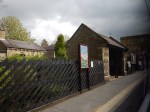
At Eisfielder Talmühle station, we changed from the diesel rail-car to a steam-hauled train.
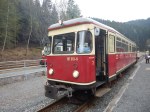
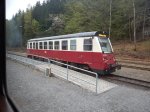
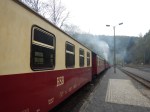

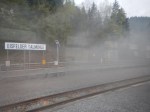
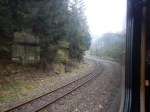



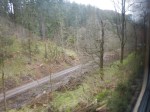



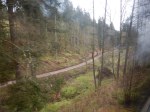



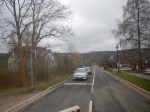
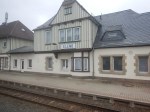
Note.
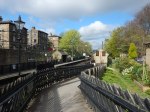
- I sensed that the train climbed quite a bit.
- There were a lot of level crossings.
It’s certainly a spectacularly railway.
By Diesel Rail-Car Between Nordhausen Nord And Eisfielder Talmühle Stations
I travelled between Nordhausen Nord And Eisfielder Talmühle stations in a vintage diesel rail-car.
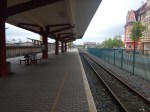
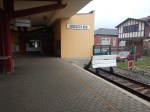
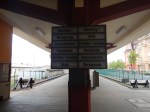

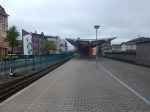
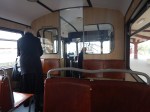
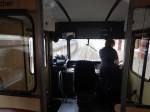

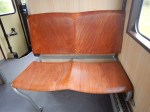
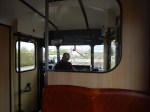

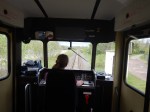

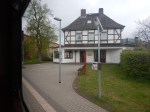
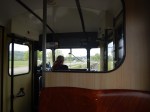
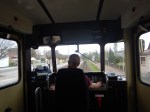
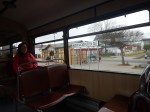
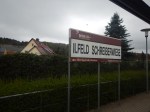


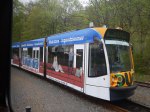

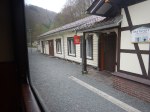
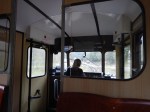
I got the impression that this train was used by locals to come into town for work or shopping.
Note the rather unusual hybrid tram that duplicates part of the route.
Along The South Harz Railway
Getting from Göttingen to Nordhausen for the Harz Narrow Gauge Railways was not the simple process it should have been.
My first attempt was to take a train changing at Eichenberg totally failed, as I wrote about in A Wasted Journey To Eichenberg.
After getting back to Göttingen, I took a direct train along what is known as the South Harz Railway.
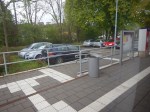

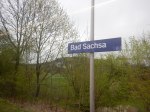
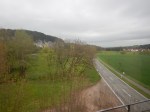

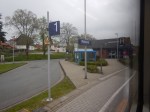
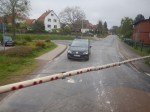
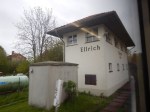
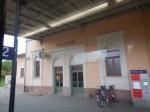
The route is not electrified and it looked like it had been improved since the reunification of Germany.
A Wasted Journey To Eichenberg
This journey illustrated a lot of the problems of Deutsche Bahn.
They may have some good trains, but they use methods, that if a train company used in the UK, would see them featuring heavily in the pages of the tabl;oids.
I wanted to get from Göttingen to Nordhausen and I just missed the hourly direct train. So the ticket machines suggested I change at Eichenberg.
These pictures show Eichenberg station.
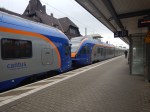
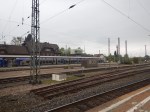
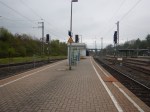
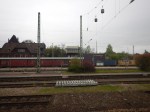
The train didn’t arrive and there was no announcement about what was happening. But there wasn’t any. Even the bahn.de web page gave no information on lateness. Eventually, as it was cold on the platform, I went looking for help, but the station was unmanned and totally devoid of any useful information. Whilst, I was away, the train turned up unannounced.
I then had a choice of wait two hours for the next train on a cold station or catch another train to civilisation. Luckily, it was Göttingen and I was able to restart my journey.
The moral of this story, is that if there is a direct train in Germany, then make sure you catch it. Even if you have to wait for an hour in the warm.
London To Karlsruhe Via Paris
I took Eurostar and a TGV to Karlsruhe, using these trains.
- Eurostar – St. Pancras 08:19 – Paris Nord 11:47 – £115 from Eurostar
- TGV – Paris Est 13:55 – Karlsruhe 16:25 – £69.19 from Voyages SNCF
I took these pictures on the way.

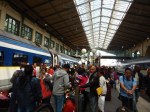

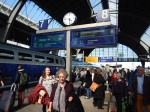




Note.
- I bought both tickets on-line.
- Premium Economy in the new Eurostar trains is more cramped than the old ones.
- Eurostar’s Premium Economy gluten-free breakfast more than filled a hole.
- Paris Nord to Paris Est is just a Metro.
- I took a diversion via Republik, which was a good place to wait in the sun.
- I stayed in the Schlosshotel in Karlsruhe, which was one of several acceptable ones by the station.
I could probably have done the journey cheaper by flying, but it would have had more hassle.
Why Can’t A Train Be More Like A Tram?
This is the title of a two-part article by Ian Walmsley in the May 2017 edition of Modern Railways.
Part 1 – How Hard Can It Be?
In the First Part, which is entitled How Hard Can It Be?, he contrasts tram operation with typical heavy rail operation.
He starts the First Part with this paragraph.
After a career in trains, I wish they could be more like trams, at least for the short-distance commuting market. Big windows, low-back seats, super-cool looking front ends, terrific acceleration and braking, all at half the price. Meanwhile commuter trains are bogged down with legislation, defensive driving and restrictive practice.
He also compares trams and heavy rail with the London Underground, which has the frequency and speed of a tram to get the needed capacity. This is another quote.
Heavy-rail’s answer to capacity is to take a few seats out or declassify a First Class compartment, going faster is too difficult.
These points are also made.
- A turn-up-and-go frequency is made possible by a continuous stream of trams doing the same thing, uninterrupted by inter-city or freight intruders.
- Frequent stops on a tram mean rapid acceleration is essential, so a high proportion of axles must be motored.
- In many heavy rail services, the culture of caution has removed any urgency from the process.
- Separation of light from heavy rail is essential for safety reasons.
- Trams can take tight corners which helps system designers.
- Trams save money by driving on sight.
- Lots of safety regulations apply to heavy rail,but not trams.
He also uses a lot of pictures from the Bordeaux trams, which I wrote about in Bordeaux’s Trams. These trams run catenary-free in the City Centre.
High-Cacapity Cross-City Heavy Rail Lines
It is interesting to note that cross-city heavy rail lines are getting to the following ideals.
- High frequency of upwards of sixteen trains per hour (tph).
- High-capacity trains
- Heavy-rail standards of train and safety.
- Slightly lower levels of passenger comfort.
- Step-free access.
- Several stops in the City Centre.
- Interchange with trams, metros and other heavy rail services.
- Separation from freight services.
- Separation from most inter-city services.
Have the best features of a tram line been added to heavy rail?
Worldwide, these lines include.
- Leipzig – S-Bahn Mitteldeutschland
- Liverpool – Merseyrail Northern Line
- London – Crossrail
- London – East London Line
- London – Thameslink
- Paris – RER
There are obviously others.
Crossrail with up to 30 tph, platform edge doors, fast stopping and accelerating Class 345 trains, and links to several main lines from London could become the world standard for this type of heavy rail link.
30 tph would be considered average for the London Underground and modern signalling improvements and faster stopping trains, will raise frequencies on these cross-city lines.
All of these lines have central tunnels, but this isn’t a prerequisite.
Manchester is achieving the same objective of a high-capacity cross-city rail link with the Ordsall Chord.
Part 2 – Tram-Train, Are You Sure You Really Wnt |To Do This?,
In the Second Part, which is entitled Tram-Train, Are You Sure You Really Wnt |To Do This?,
Ian starts the Second Part with this paragraph.
Anyone with a professional interest in public transport must have been to Karlsruhe in Germany, or at least heard of it.
He then wittily describes an encounter with the diesel tram-train in Nordhausen, which I shall be visiting within a week or so.
He was not impressed!
I like the concept of a tram-train, where the same rail vehicle starts out in the suburbs or the next town as a train, goes through the City Centre as a tram and then goes to a destination on the other side of the city.
But you could also argue that Merseyrail’s Northern Line and London Underground’s Piccadilly and Central Lines achieve the same purpose, by running at all times as a rail line, with the centre section in a tunnel under the City.
The Sheffield Tram-Train Project
Ian then goes on to talk about the Sheffield Tram-Train Project. He says this about the route extension from Meadowhall to Rotherham.
This route extension runs just over three miles and after a series of delays, it will not open until 2018, 10 years, after the first proposal, six after the scheme approval. The cost is £58million. That’s 21 million Rotherham – Meadowhall single fares, for which the existing journey time is six minutes. Bargain.
He also says that because Nick Clegg was a Sheffield MP, the project should stay in Sheffield.
I will add some observations of my own on the Sheffield -Rotherham tram-train.
- The Class 399 tram-train is a variant of the tram-trains used in Karlsruhe – Good
- The route, doesn’t connect to Sheffield station – Bad
- The frequency is only a miserly three tph – Bad
- The route is too short – Bad
Hopefully, the bad points don’t result in a system that nobody wants.
The Expert View Of Rotherham’s Problems
There is an article in the Yorkshire Post, which is entitled Rotherham could get new rail station, which gives detail from a consutant’s report of how to improve services in the town.
- Rotherham Parkgate station should be developed as an inter-regional station, at a cost of up to £53.2 million
- Rotherham Central station would be be more about local services.
- Rotherham should have one tph to Leeds and Manchester, three tph to Doncaster and six tph to Sheffield.
The consultant’s estimate was that this investment could benefit the area by up to £100million.
Ian’s Conclusion
Ian says this and I am coming to agree with him.
I, like many others, have been a fan of tram-train, but a little knowledge is a dangerous thing.
The more I think about it, the more I think trams and trains have their place and mixing them up is fraught with problems.
As I said earlier, I’m off to Karlsruhe ad I’ll see how they’re getting on with the enormous hole in their budget; the new tunnel on the Karleruhe Stadtbahn.
Imagine building a cut-and-cover down Oxford Street in London.
Train Like A Tram
Ian finishes with two further sections, the first of which is Train Like A Tram.
He says this.
Heavy rail needs to recaspture a sense of urgency and realise that more speed = more trains = more capacity. Risk analysis should allow the use of low-back seats and plastics; based on the lower average speeds. All axles need to be motored for tram-like acceleration and lots of regenerative braking.
I agree with what he says, but I’m surprised that he doesn’t mention Zwickau.
In that German town, an extension was built from the Hauptbahnhof to a new station in the town centre. I wrote about Zwickau’s unique system in Riding The Vogtlandbahn
Standard two-car diesel multiple units, run alongside Zwickau’s trams on a dedicated route according to similar operational rules on the three kilometre route.
Surely, there is scope to do this in the UK, on existing and new branch lines or spurs.
- The route must be short.
- All stops would be built like tram stops.
- Trains would be independently-powered by diesel, battery or fuel cell.
- Signalling would be heavy-rail.
In my view this sort of system would be ideal for serving Glasgow, Leeds-Bradford and Liverpool Airports, where off main line running would be done across open country that could be appropriately fenced.
Tram Like A Train
Ian finishes his final section, where he talks about the likelihood of more tram-train systems following Sheffield, with this.
I suspect that the number of follow-on vehicles in the foreseeable future will be about the same as the number of battery EMUs based on the last research trial.
Don’t feel too bad though; do we really want the national rail system full of 50 mph-limited trams?
I feel that Ian and myself would have different views about battery EMUs.
What Do You Do With A Problem Like Rotherham?
I mentioned a consultant’s report earlier and the easiest way to get their recommended frequency of trains through Rotherham would be to expand the electrification network, by wiring the following lines.
- Sheffield to Doncaster
- Leeds to Colton Junction
- Leeds to Selby
- Fitzwilliam to Sheffield
As some of these lines were built or rebuilt recently for the Selby Coalfield, I suspect electrification would be starting from decent documentatyion.
Until the electrification is complete Class 319 Flex trains could work the routes.
From Leeds To Rotherham
This was not what you would call a quality journey.
By train it took 56 minutes, which is about nine minutes longer than it would take in the average car according to various web sites.
There are also nine stops in another Cook’s Tour of Yorkshire.
It was also in a Class 142 train or Pacer.
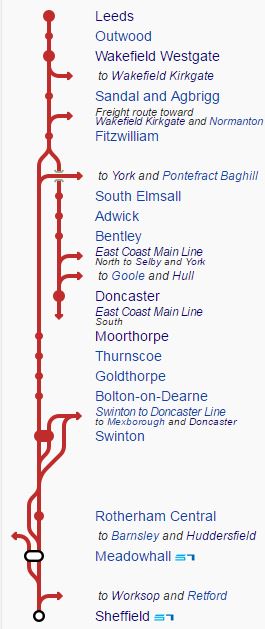
The map clipped from Wikipedia shows the Wakefield Line, which is the route the train took.
These pictures were taken on the journey.
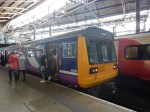


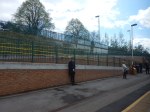
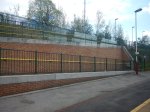
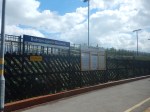
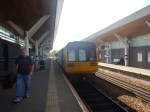
In this day and age for a journey of an hour a better train is needed, especially as the two end points are Leeds and Sheffield,where the two cities have a joint population of about 1.3 million.
The fastest trains between Leeds and Sheffield are run by CrossCountry and take forty minutes using the Wakefield Line.
As the fastest Rotherham Central to Sheffield trains take 14 minutes, I think it is reasonable to assume, that the right train could do Leeds to Rotherham Central in 26 minutes.
This route could become a Northern Connect route, run by new Class 195 trains.
As the route is electrified between Leeds and Fitzwilliam station, I wonder if this could be a route for a Class 319 Flex train.
Both trains are 100 mph units, as against the 75 mph of the Class 142 train, which probably defines the timetable.
From my observations, the route is not particularly arduous and I suspect that either train could do the journey in just over forty minutes, even with all the stops.
Certainly, the current service is truly dreadful and inadequate.
It appears that the overhead wires are going up for the tram-train to Sheffield. Or at least the gantries!
Shipley Station
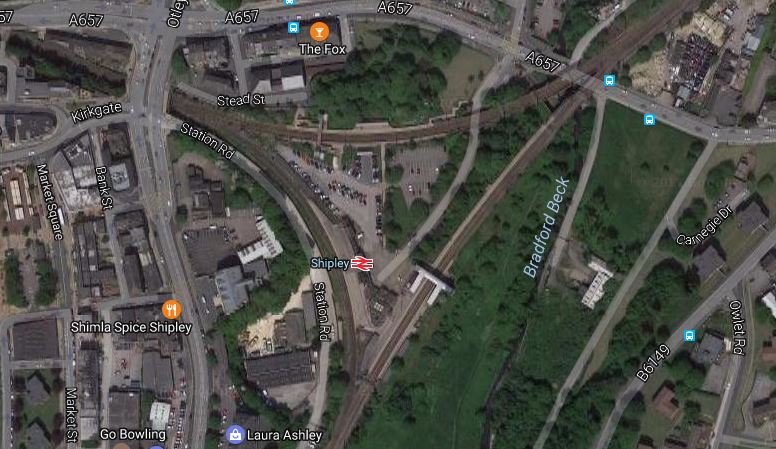
Shipley station is one of the few triangular stations in the UK, as this Google Map shows.
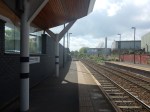
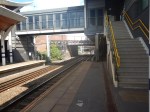
As I passed through, I took these pictures.
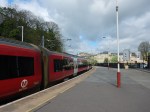


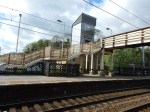

It certainly, is a station, that needs more information and better sign[posting.
But mainly, it shows how building a station in a triangular junction is a complicated affair.
Breakfast At Saltaire
On my way back from Skipton station, I stopped off for breakfast at Saltaire.
















I ate in Salts Diner and as you can see, I had a large gluten-free full-English breakfast with tea and juice for £9.95.
The Importance Of Speed On A Railway
I have just looked at the suburban services out of Waterloo and written Increasing Capacity On Waterloo Suburban Services.
In the Conclusion of that post I said this.
This calculation shows that you can sometimes replace a large number of 75 mph trains with a significantly smaller number of 100 mph units and still attain the same service frequency.
Effectively, the faster journey time, enables the train to go out and back on a route in a shorter time, which means that to do a given service frequency.you need less trains.
If a service takes 35 minutes with eight stops in a 75 mph Class 156 train, this would mean to go out and back would take around 90 minutes, if it took 10 minutes for the driver to change ends.
So the 07:00 train, would be back at the start to run the 08:30 service.
To run two trains per hour (tph) would require three trains, starting their diagrams at 07:00, )7:30 and 08:00.
Suppose the 75 mph train is replaced by a faster modern 100 mph train, that can perform very quick stops at a station, due to powerful brakes and strong acceleration, which can save a minute at each stop.
The faster train might be able to do the complete out and back journey in under an hour, which would mean only two trains could run the same 2 tph service.
This would give the following benefits.
- Passengers wold get a faster journey.
- The operator would need one train less to run the same service.
There are also several smaller benefits to the operator, like less crew and smaller depots.
Since the turn of the century, increasingly, there has been efforts to squeeze more and more services onto rail lines.
In the following sections, I’ll discuss how various factors affect capacity.
Faster Trains
On a simple out-and-back route, the faster a train can get to the destination and back again, the better.
- In the 1980s, suburban trains like a Class 455 train had a speed of 75 mph.
- In the 2000s, a train like a Class 377 train have a speed of 100 mph.
- In the 2010s, a modern train like a Class 387 train have a speed of 110 mph.
Trains are certainly getting faster.
Trains Stop Quickly At A Station
Train manufacturers are spending a lot of time, shaving seconds off the time it takes a train to do the following.
- Brake from line speed.
- Stop precisely in the station.
- Drop off and board any passengers.
- Accelerate back to line speed.
Techniques employed include.
- Better brakes
- Wide lobbies and doors
- Fast door-opening systems.
- Step-free train access
- Fast acceleration.
- Automation and better systems.
- Staff on the platform from first to last train.
In the next few years, stops will get even quicker.
- Regenerative braking using batteries to store energy on the train for a fast getaway, will also cut energy use.
- CCTV systems for door opening and closing on the train, rather than the platform.
- Automatic stopping of the train at the correct place, after the driver presses a stop button perhaps two hundred metres from the station.
- Automatic acceleration of the train back to line speed.
Victoria Line trains have been using the last two since 1967.
Modelling And Analysis
We’ll also be seeing a lot more Modelling of systems and analysis of performance, to find how perhaps small amounts of investment can provide a better service.
Conclusion
Trains are going to get faster.
 The Anonymous Widower