The New Hackney Wick Station Opened On Time
This morning and I was up early to catch the first train train from Dalston Kingsland station to the new Hackney Wick station.


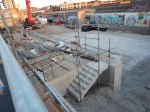

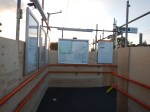




The train was precisely on time at 06:23.
Note that the herd of mammoths, that I photographed on Thursday are still underneath the new embankment.
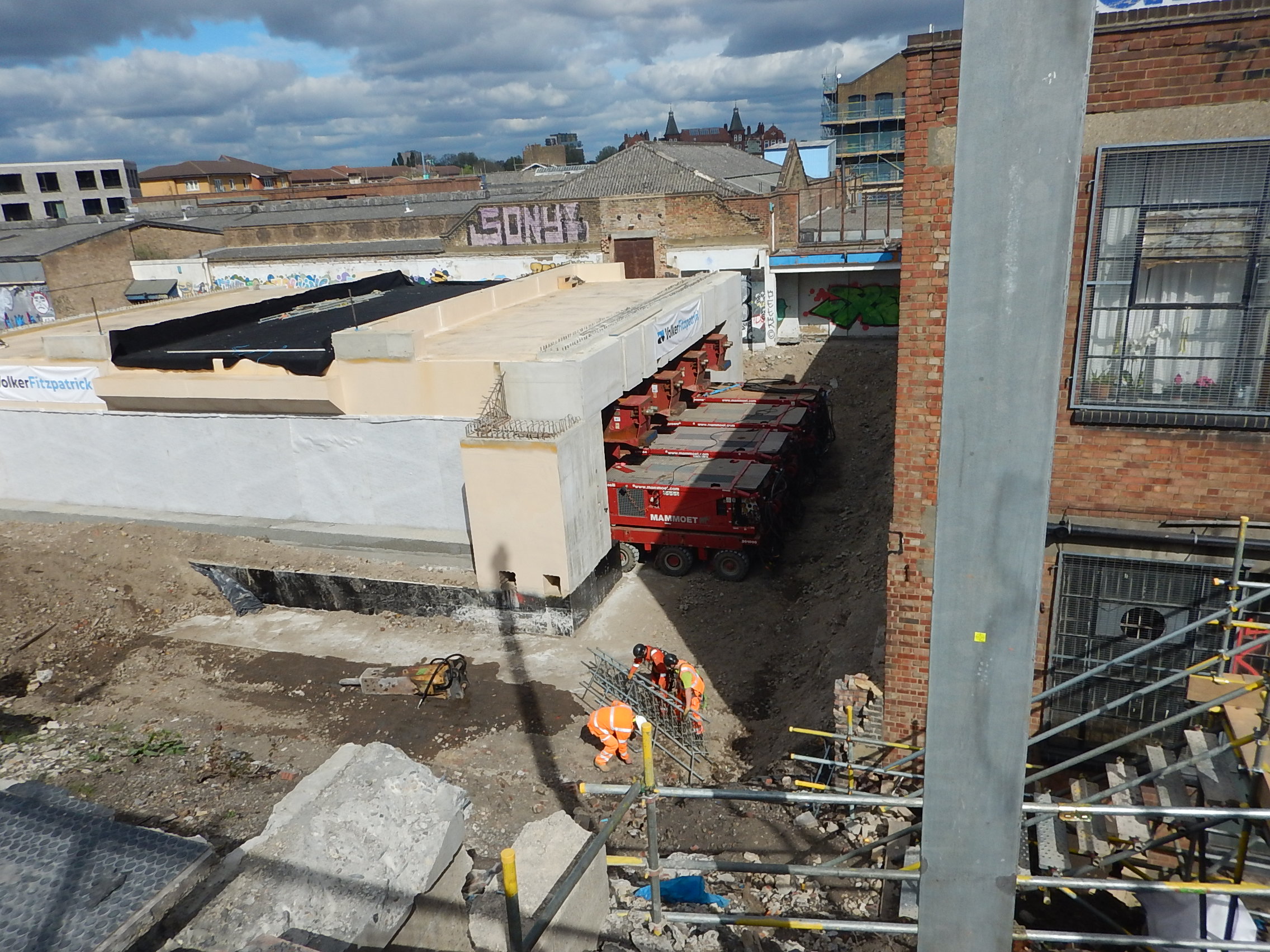
This is a previous picture from Thursday.
From the pictures it would appear that they have picked up the station subway and given it a twirl.
It has certainly been an impressive project to demolish a railway on an embankment, insert a new subway and then rebuild and reopen the embankment, all in four working days.
I feel that they got the project nmanagement spot-on for this project, witn not a minute of wasted time.
But the biggest factor was surely, that the only work they did with the electrification was switch it off at the start and switch it on and test it, at the finish. They also probably used the most careful digger and crane operators they could find!
I wonder, if we’ll be seeing similar robust construction techniques to create and rebuild stations in double-quick time!
The Class 319 Flex Train And A Railbaar
When I wrote Could There Be A Battery-Powered Class 319 Flex Train?, not much information had been published on the Railbaar, but a Railbaar could be another tool to use with a Class 319 Flex train.
This is a paragraph from the advance copy I have of Porterbrook’s brochure for the Class 319 Flex train.
By way of an example, Porterbrook determined that the most arduous route would be Manchester Piccadilly to Buxton, which has a steep gradient and multiple stops along its 25 mile route (8 miles of which is electrified). This analysis was included to give confidence that the Class 319 Flex would be comparable to existing Diesel Multiple Unit (DMU) technology across a range of different routes, stopping patterns and gradients.
Elsewhere in the brochure, they say this.
A large battery option was shown to be heavy, would require a lot of space and have long recharge times.
On the other hand, they have stated that batteries could be used to augment diesel power.
Challenging Rail Lines Up Steep Gradients in the UK
Lines like the Buxton Line are not unusual in the UK. The following challenging.
- Bromsgrove to Barnt Green up the infamous Lickey Incline – non-stop
- Bolton to Blackburn up the Ribble Valley Line – 4 intermediate stops
- Blackburn to Clitheroe up the Ribble Valley Line – 3 intermediate stops
- Rose Grove to Colne up the East Lancashire Line – 5 intermediate stops
- Exeter St. Davids to Barnstaple up the Tarka Line – 10 intermediate stops
- Plymouth to Gunnislake up the Tamar Valley Line – 7 intermediate stops
- Cardiff Central to Aberdate up the Aberdare Branch of the Methyr Line – 13 intermediate stops
- Cardiff Central to Ebbw Vale Town up the Ebbw Valley Railway – 5 intermediate stops
- Cardiff Central to Merthyr Tydfil up the Merthyr Line – 13 intermediate stops
- Cardiff Central to Rhymney up the Rhymney Line – 16 intermediate stops
- Cardiff Central to Treherbert up the Rhondda Line – 16 intermediate stops
Our Victorian engineers never let a steep gradient get in the way of where they wanted to build a railway.
Could These Lines Be Electrified?
Only the Lickey Incline (1) is currently being electrified. This is a description of the incline from Wikipedia.
The Lickey Incline, south of Birmingham, is the steepest sustained main-line railway incline in Great Britain. The climb is a gradient of 1 in 37.7 (2.65% or 26.5‰ or 1.52°) for a continuous distance of two miles (3.2 km)
Youtube has a great deal of modern and historic video of the Lickey Incline. Some recent footage shows freight trains climbing the incline with the assistance of a banking engine at the rear.
I doubt if the two lines in Devon (5 and 6) will ever be electrified, The Campaign for the Protection of Rural England will never allow overhead wiring gantries to despoil the landscape along the routes, some of which is in a National Park.
If the Class 319 Flex train does a good job with the three Lancashire Lines around Blackburn (2,3 and 4), the decision to electrify will be pushed a decade or more into the future. I could certainly see, Bombardier, Stadler and perhaps a couple of other companies building a train based on the experience with a Class 319 Flex train, as a replacement.
Politicians will decide whether the Cardiff Valley Lines (7 to 11) are electrified, but I have a feeling that someone somewhere will have a better alternative to full traditional electrification.
The Cardiff Valley Lines
Consider these facts about the rail service on the Cardiff Valley Lines
- The lines are a vital lifeline to those that live in the South Wales Valleys.
- The area is not without its attraction, for those who like to be in the hills.
- Traffic on the lines varies throughout the day.
- Traffic up the Valleys is highest in the evening commuting Peak and after a big sporting event in Cardiff.
- Four-car trains are needed on the route.
- The current diesel trains are elderly and unreliable.
- There are plans to open new lines and stations and extend some of the existing lines further to the North.
But above all jobs and business and housing developments are needed in the Valleys.
An improved rail service could benefit a large number of people and interests.
The Class 319 Flex Train
The Class 319 Flex train started operational service thirty years ago as a 100 mph express commuter train running on the Thameslink route from Bedford to Brighton.
It may be a comparatively old train, but it has the following characteristics.
- It is based on the legendary Mark 3 coach, as used on the InterCity 125.
- It is four-cars.
- It is a dual-voltage train.
- Two rail-proven MAN diesels and an ABB alternator provide electric power away from electrification.
- It is a 100 mph train on an electrified main line.
- It has a speed of around 90 mph on diesel power.
- Drivers have told me, that the brakes are superb.
- It has a good reputation for reliability.
- It meets all the current disabled regulations.
But about all, like all Mark 3-based stock, it scrubs up well to any desired standard. In What Train Is This?, I showed the interior of a refurburbished thirty-year-old Class 150 train. Unrefurbished examples are typical of the stock that work the challenging lines.
Use Of A Railbaar With A Class 319 Flex Train
Porterbrook have said that the train’s electrical layout with a DC busbar connecting all xars, lends itself to adding a battery, which could be charged using the diesel power.
A typical layout of the Class 319 Flex train could be as follows.
- DTOC – A driving car with a diesel engine/alternator set underneath.
- PMOS – A motor car with a pantograph.
- TOSL – A trailer car with a toilet.
- DTOS – A driving car with a diesel engine/alternator set underneath.
I suspect that the battery would go under the TOSL.
The connection points for a Railbaar would be on the uncluttered roof of this car.
Railbaar would be a good add-on for a Class 319 Flex train, working an extension or branch line from an electrified line.
Possible Class 319 Flex Train Problems
The Class 319 train has two possible problems; the body is made of steel and the braking is not regenerative.
Despite being steel, their weight at 140 tonnes is lighter than many aluminium bodied trains, but they don’t have all the equipment like air-conditioning.
On the other hand, a similar train to a Class 319, survived the Oxshott Incident, where a 24-tonne cement mixer truck fell off a bridge onto the roof of the train.
Some Class 321 trains, which are similar to the Class 319 train, have been rebuilt with regenerative braking, so if that becomes a necessity for the Class 319 Flex train, I suspect an engineering solution is possible. Especially, as there is over a hundred Class 321 trains, which will be coming off-lease soon.
The Class 319 Flex Train And The Cardiff Valley Lines
There are eighty-six Class 319 trains, so there would be no problems finding a donor train to convert into a trial train for the Cardiff Valley Lines, if the Class 319 Flex train performs successfully on the Buxton Line.
- On the Buxton Line, trains climb 150 metres in 15 kilometres from the electrified station at Hazel Grove to Buxton.
- On the Merthyr Line, trains climb 168 metres in about 30 kilometres from Cardiff to Merthyr Tydfil.
So it looks like Buxton is steeper, but the Merthyr Line is longer.
I suspect that a Class 319 Flex train will go into service on a trial basis in South Wales, to test performance and customer reaction.
If nothing, it will help define the specification for the trains that can work the Cardiff Valley Lines.
Energy Needed To Raise A Train To Merthyr Tydfil
I will make these assumptions.
- Merthyr Tydfil has an altitude of 179 metres.
- Cardiff Central station has an altitude of 11 metres.
- The train must be raised 168 metres
- A Class 319 train has a weight of 140 tonnes.
- A Class 319 train has a seated capacity of 319.
- A suitable battery would weigh about 2 tonnes.
Raising an empty four-car train similar to a Class 319 train, from Cardiff Central to Merthyr Tydfil will require 23,856,000 Kg-m or 65 KwH of energy.
Assuming a full load of 319 passengers at 80 Kg a time and that adds another 4,287,360 Kg-m or 12 KwH of energy.
My calculations are very rough.
The passengers get out at the top, so they are not energy that will be regenerated on the way down.
An Electrification Scheme For The Cardiff Valley Lines
The Cardiff Valley Lines were built with the main purpose of bringing coal from the valleys to the port of Cardiff for distribution and export by ship.
Now passengers are much more important, with commuting , leisure and tourism prominent.
Coming down is never a problem and a battery electric train with good brakes could handle a full load of passengers with few problems.
Going up is the problem, as the evening peak or a big rugby match in Cardiff can result in a full train having to be hauled up the valleys.
Similar problems are encountered on all the lines in my list to a certain extent, but without seeing the figures, I suspect the Cardiff Valley Lines are some of the most challenging.
Porterbrook have said, that they are not against using batteries on a Class 319 Flex train as a boost on difficult climbs.
So I think that a Class 319 Flex train fitted with an appropriate-sized battery could be a starting point.
But there is one big problem with a Class 319 Flex train. The Class 319 trains do not have regenerative braking, which could be used to charge the batteries on the way down from the valleys.
However, the very similar Class 321 train is being fitted with regenerative braking, so a possible Class 321 Flex train could charge the batteries on the way down.
When the train arrived in Cardiff, it could attach to a Railbaar to make sure that when it left to climb up into the valleys, the batteries were fully charged.
I think that in all these ramblings, there will be a solution, where all the various technologies come together in a bespoke solution.
- Four-car train.
- Electric drive.
- 25 KVAC overhead to work electrified routes on the South Wales Main Line, at 100 mph.
- Onboard rail-proven diesel engines and alternators, which would be used accordingly and probably automatically!
- Two diesel power units would be used, so that one failure wouldn’t leave a stranded train.
- Batteries with a capacity of around 100 KwH
- Powerful regenerative braking
- Railbaars in Cardiff and other low-altitude terminal stations, could be used if diesel charging can’t be used.
- Well-driven trains to an energy efficient timetable.
Obviously, any electrification of the Cardiff ends of the routes would be welcome and less diesel-power would be needed.
Conclusions
Railbaar would be a good add-on for a Class 319 Flex train, working an extension or branch line from an electrified line.
A Class 319 Flex train with a battery and regenerative braking could be very useful on challenging routes like the Cardiff Valley Lines.
With these applications, strategically placed Railbaars could add to the resilience and efficiency of the system.
The bespoke solution, that I have outlined, is very close to the specification of a Class 319 Flex train with a battery and regenerative braking.
I can’t wait to ride a Class 319 Flex train on a proving run to Merthyr Tydfil.
The Lymington Branch Line
Whilst I was in Southampton, I took a look at the Lymington Branch Line from Brockenhurst station.
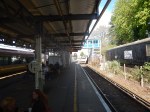
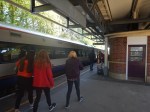







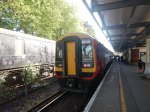
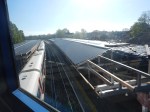
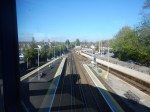
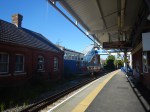
It runs through the typical New Forest landscape to the two stations of Lymington Town and Lymington Pier.
The Lymington Branch Line is only a short line of a few miles and it is run by a shuttle train every thirty minutes.
Running an increased frequency is probably not needed and would be difficult with the single-track, so the branch will probably continue to be run using the single Class 158 train or a Class 450 train at weekends.
Southampton – A City Built For Cars
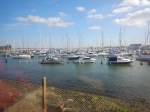
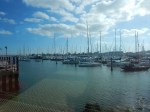
These pictures show Southampton as I walked between Southampton Central station and the Town Quay for the ferry to Hythe.
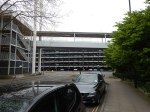




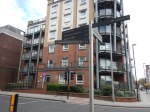
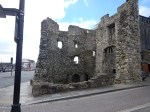
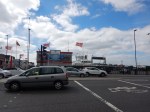




The last few pictures are when I walked back.
This Google Map shows the layout of Southampton
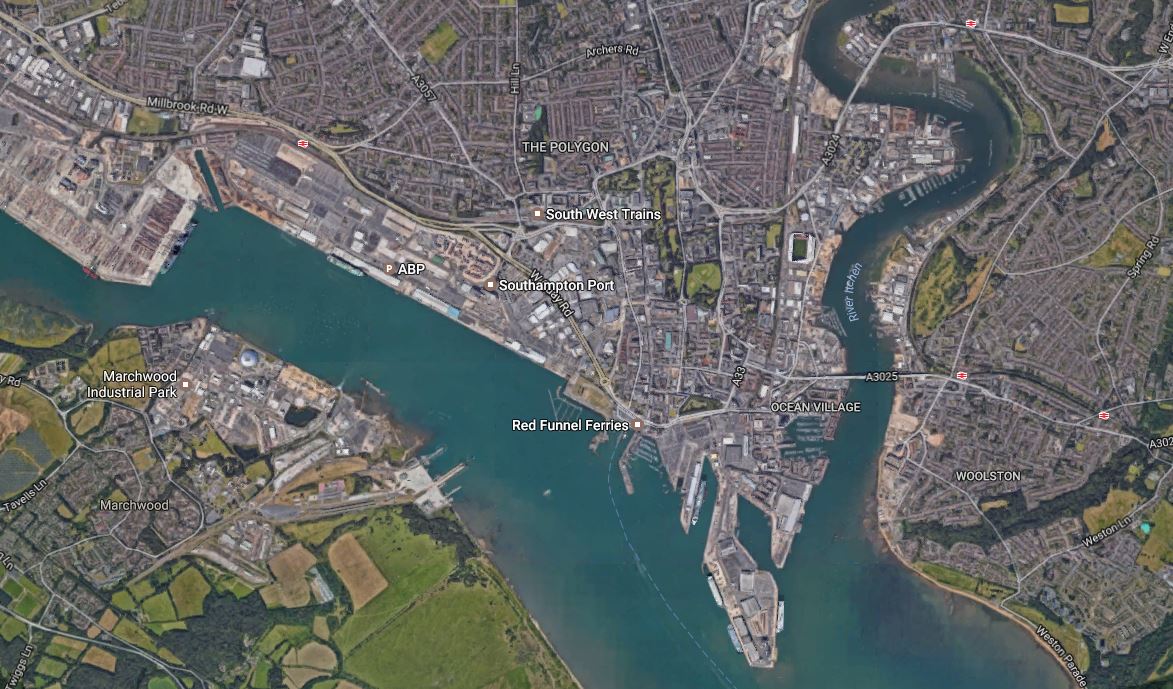
Note how the city sits between the two rivers; the Itchen in the East and the Test going to the West.
Crossing the Itchen is a modern Itchen Bridge, which was built in 1977, that takes the A3025 into and out of the City.
, To the East of the bridge two stations; Woolston and Sholing on the West Coastway Line can be seen.
From Woolston station, the West Coastway Line, curves Northwards and follows the East bank of the River Itchen through Bitterne station, which can be picked out at the top of the map, East of the River Itchen.
The West Coastway Line then joins the South Western Main Line at St. Denys station.
This Google Map shows Bitterne and St. Denys stations.
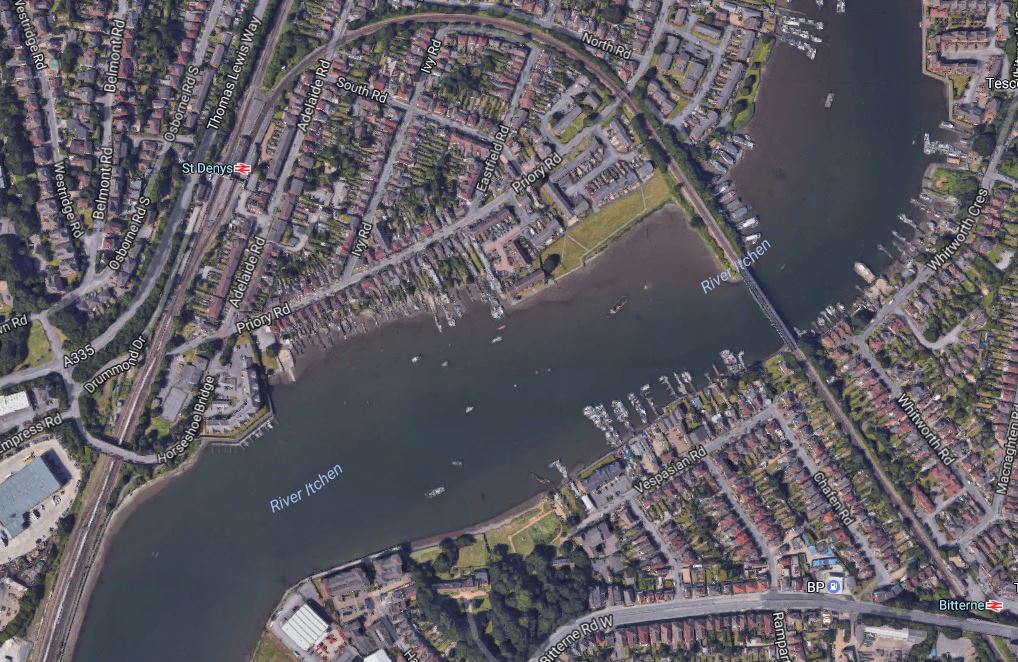
After going along the river for a short distance and passing Northam Depot, the line splits, as this Google Map shows.
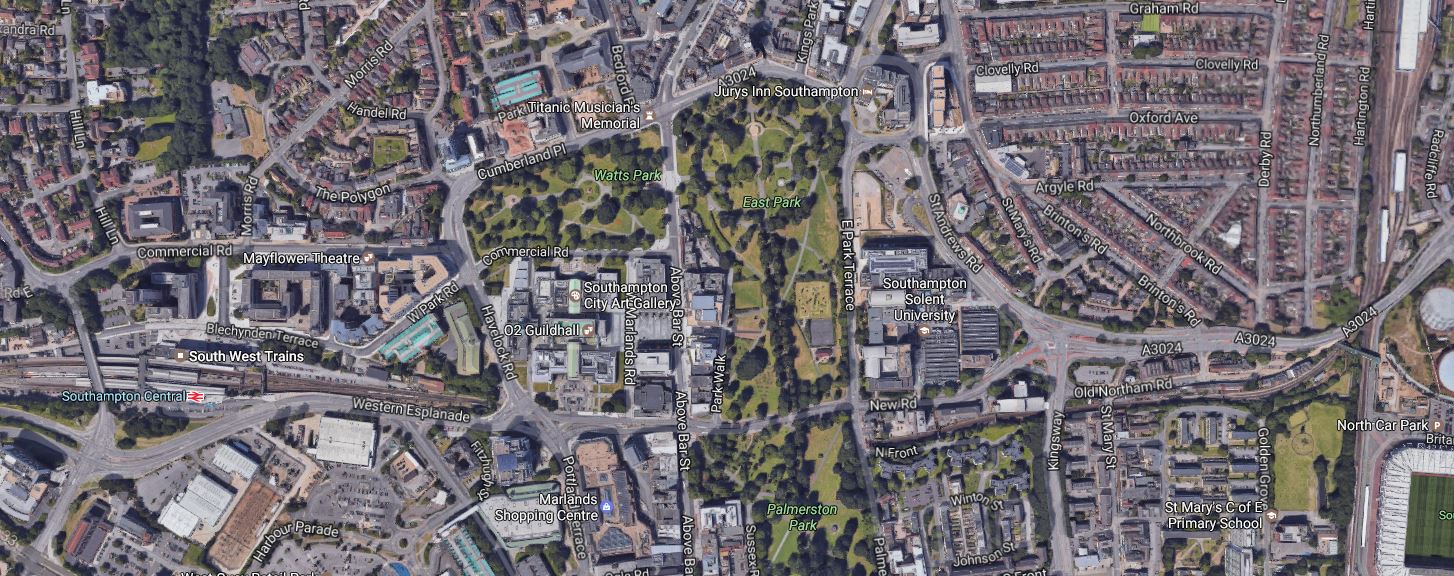
One branch goes South past St. Mary’s stadium and the other turns West and takes Southampton Tunnel to Southampton Central station.
I wrote about the upgrading of Southampton Tunnel in Boxing Clever, where I said this about how the project was performed.
I particularly liked the way that the 1847 Southampton Tunnel was made larger. Rather than use the traditional approach and closing the tunnel for two to three months, as they did when they upgraded Ipswich Tunnel, they did it a track at a time closing for only three weekends and over Christmas 2009, saving a year on the project.
It is my belief that we can save a lot of money on infrastructure projects, like roads, railways, hospitals ands schools by thinking things through with a great deal more innovation, enterprise and by borrowing good and proven ideas and methods from other countries and industries.
The Wikipedia entry for Southampton Tunnel, has a section called Tunnel Development, which says this about those works.
During the period Sunday 27 December 2009 to Sunday 3 January 2010, the tunnel closed for the track to be lowered to achieve W10 (freight container) route clearance. Previously, Hi Cube intermodal container traffic had to be carried on special low wagons with areas which could not be loaded, resulting in both traffic planning issues and lower train capacity. Additionally, all container trains were restricted to 20 mph when passing through the tunnel because of the limited clearances at the top edges of the loaded containers. Since rebuilding no speed or loading restrictions apply to the tunnel and container trains can travel at up to the line speed of 40 mph, the limit for the tunnel. The work meant containers could be transported more easily by rail from the Port of Southampton.
In some ways the Southampton Tunnel sums up the problems with the UK’s railways. The Victorian layout doesn’t really support the needs of modern transport. And especially freight transport!
The railways will have to live with the updated Southampton Tunnel, as I doubt there is an alternative route to get intermodal container traffic between Southampton Container Terminal and the rest of the UK.
I will finish my East-West journey across Southampton by showing this Google Map, which shows Southampton Central station and the Docks that lie to its West.
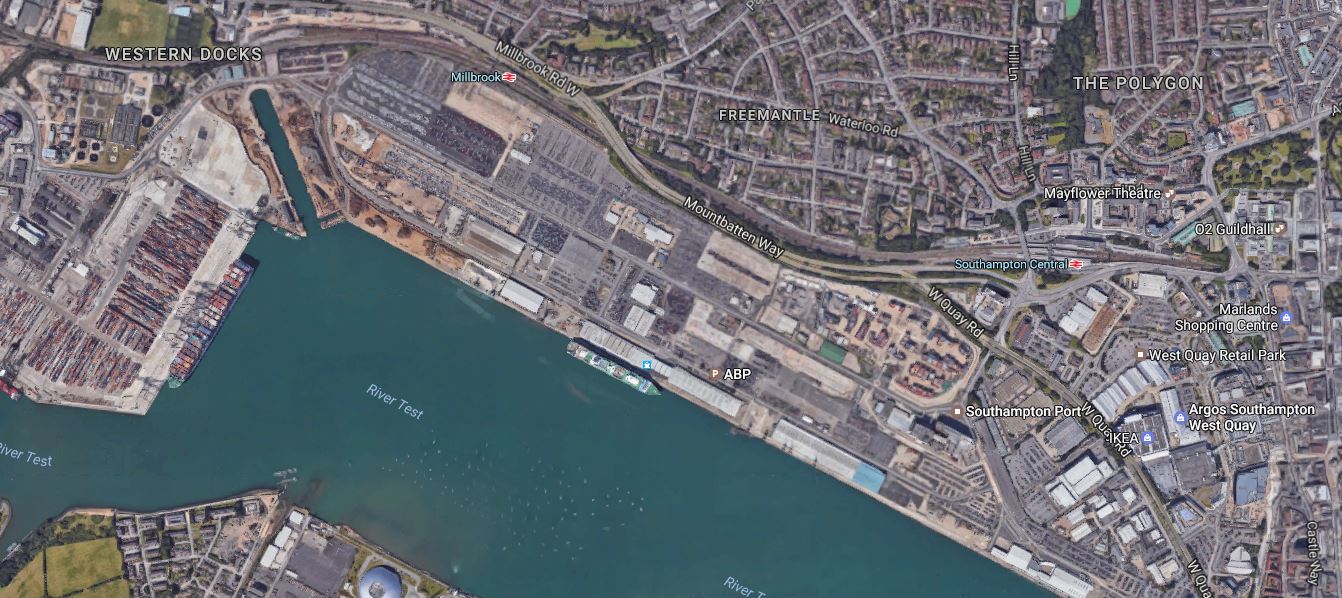
Note Millbrook station to the North of the Docks. It doesn’t appear to be a very busy station.
I shall now return to the Itchen Bridge along the Waterfront.
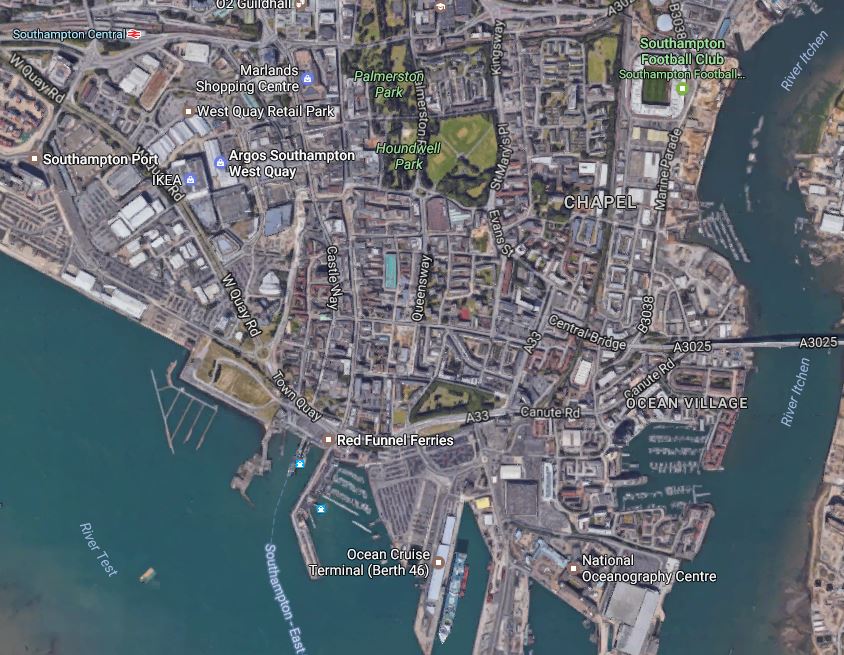
Note the following can be seen on this map.
- The Itchen Bridge
- St. Mary’s Stadium
- Southampton Central station.
- Red Funnel Ferries on Town Quay
- The Ocean Terminal.
- The West Quay Shopping Centre
There are also vast areas of surface car parks.
A Metro For Southampton
Southampton is a city, where I believe that too much emphasis has been placed on access to the City by car.
But the skeleton of an urban railway is still there, as this map of the railway lines through Southampton shows.
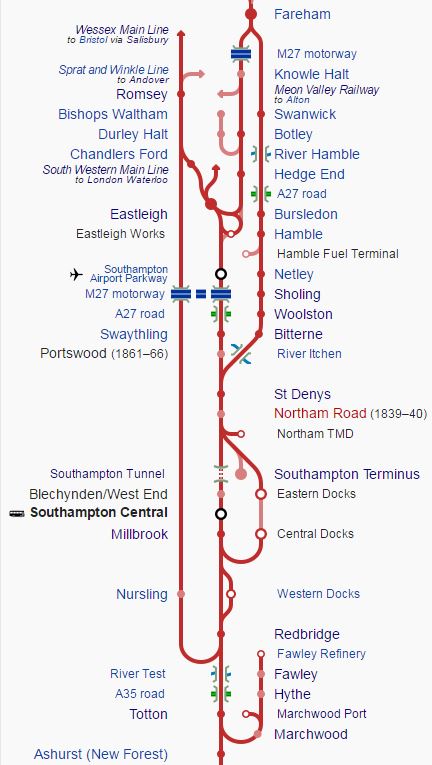
To be fair, the chance may have been missed when the Itchen Bridge was built in 1977. I suspect that at that time in Germany for example, the bridge would have been future proofed for trams to be added at a later date.
But the thoughts at the time in the UK, were that trams were of the Past and not of the Present.
This Google Map, which shows the Itchen Bridge, with St. Mary’s Stadium on the West Bank and Woolston station on the East.
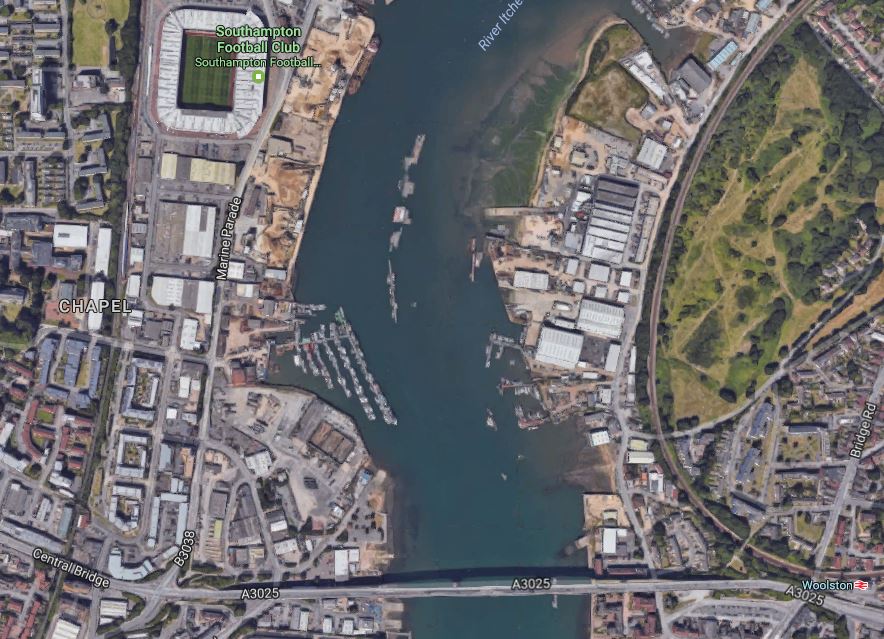
If you look at this map carefully, the rail corridor to the old Southampton Terminus station is still there and about two hundred metres North of the station, a train in South West trains livery can be seen. The line is obviously used for some purpose by Northam Depot.
If I look at various rail systems, I’ve seen all over the UK, it would appear that the following could be done.
Reopen The Rail Line To Southampton Terminus
The line from St. Denys station to Southampton Terminus station could be reopened with possible stations at Northam and St. Mary’s Stadium.
St. Denys is a four-platform station and it could act as a cross-platform interchange between services going to and from Southampton Terminus and Central.
Run West Coastway Services To Southampton Terminus And London Waterloo Services To Southampton Central
Consider.
- The South Western Main Line is at capacity with freight and passenger services.
- The West Coastway Line is less busy.
So why not run West Coastway services to Southampton Terminus?
Remodel St. Denys Station
St. Denys is a four-platform station and it could act as a efficient cross-platform interchange .
- Platform 1 – Services from Southampton Central to London
- Platform 2 – Services to Southampton Central
- Platform 3 – All services between the West Coastway and Southampton Terminus
Note.
- By making Platform 3 bi-directional, this means that trains using the West Coastway Line don’t have to cross the main line if they terminate at Southampton Terminus.
- Travellers going West would just walk across the platform, whereas those going East would use the bridge.
- Provision would be made to allow services to go between the West Coastway Line and Southampton Central.
- Provision would be made to allow trains to access Northam Depot.
There is probably a better layout, but by careful design and the opening up of Southampton Terminus, Southampton would be given extra capacity.
A Cross-City Tram
Every time, I’ve gone to Soiuthampton, I’ve always seemed to walk halfway across the City.
Looking at the map, there must be scope for a tram route.
This article in the Romsey Advertiser is entitled Plans for multi-million pound tram project in Romsey are being investigated.
This is said about the route.
Phase one of the “Solent Metro” network would see trams run from Eastleigh past the airport, down to a new station at Southampton St Mary’s, on to an interchange at Royal Pier, then back up to Westquay and Southampton Central railway station.
The plan also envisages the network – which could be trams or a light railway – being extended west to Romsey and from there back to Eastleigh, and eastwards to Segensworth.
Southampton certainly needs something that connects the Waterfront to the West Quay Shopping Centre and Central station, hopefully with a good connection to St. Mary’s Stadium.
Tram-Trains
My preference would be for a tram-train system, where tram-trains started at places like Bournemouth, Eastleigh, Fareham, Fawley, Lymington, Portsmouth and Romsey as trains and then went walkabout as trams in the City Centre.
At the East, the tram trains would change mode in the vicinity of the old Southampton Terminus station and proceed to St. Mary’s and St. Denys stations as third-rail electrified trains
This Google Map shows the old Southampton Terminus station, which is now a casino.
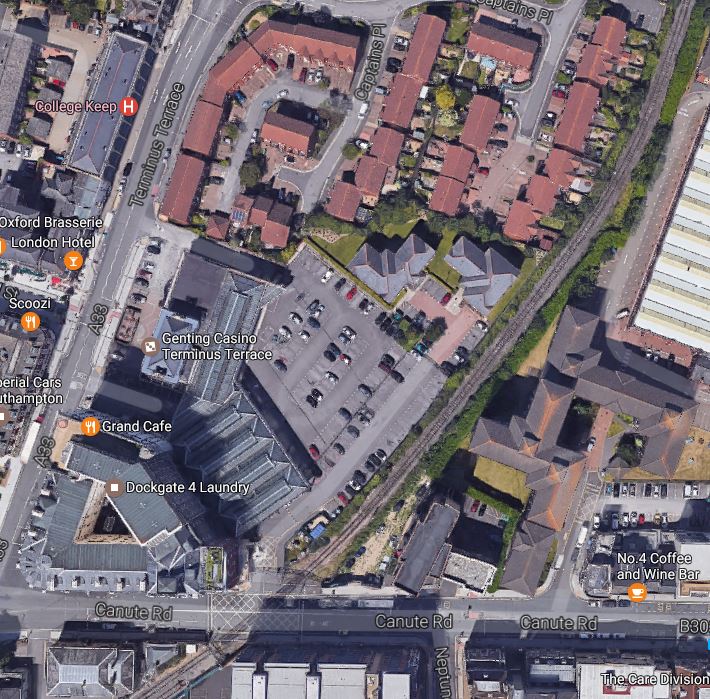
The rail line goes North to St. Mary’s Stadium, Northam Depot and St. Denys station. To the South it goes as far as the Waterfront, where it finishes just to the East of the Ocean Terminal.
In the West they would need to join the South Western Main Line in the area of Southampton Central station.
The Google Map shows the area.
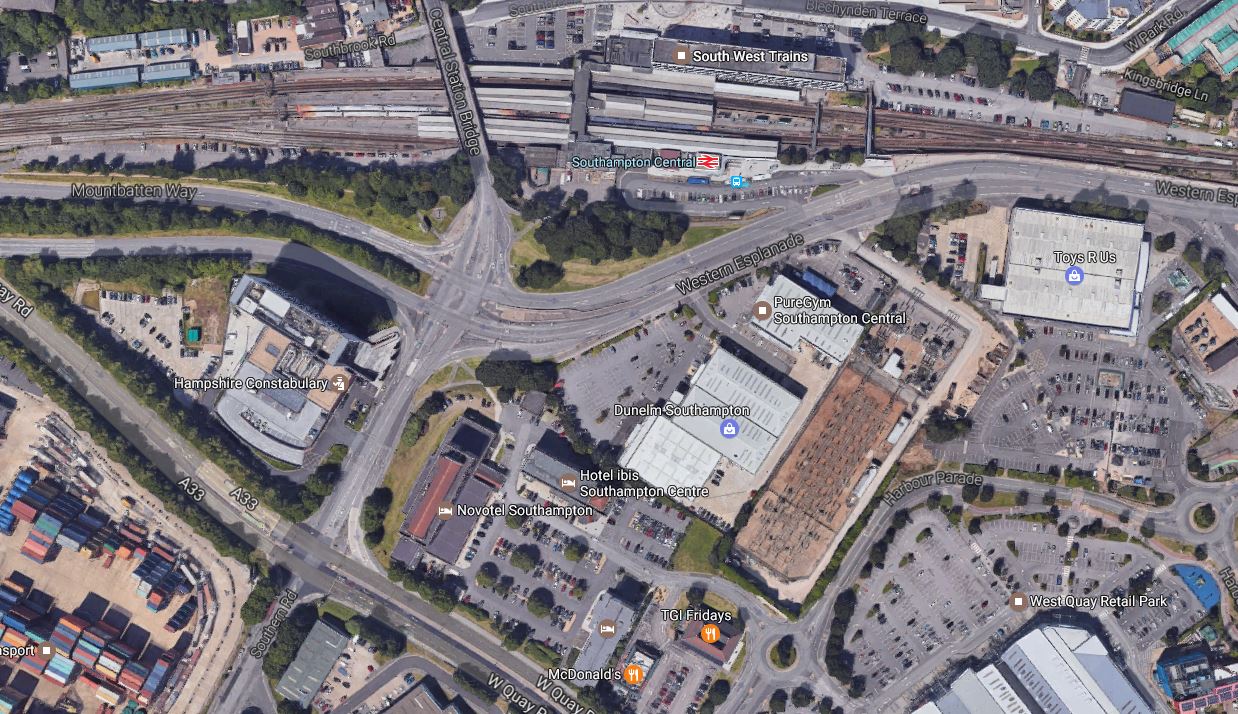
I’m sure that a more than adequate connection could be arranged after what I have seen in places like Karlsruhe.
There would of course be only one way for the the tram-trains to cross between Southampton Terminal and Southampton Central stations and that would be on battery power. I’m certain if Birmingham do it across a City with much more of a gradient, as they intend, then Southampton could do it across the Waterfront.
Serving The Cruise Ships
The plan from the Solent Local Enterprise Partnership detailed in the Romsey Advertiser mentions running the trams or light rail service to the Royal Pier, where they would reverse.
This Google Map shows the Ocean Terminal, with a handy cruise ship alongside.
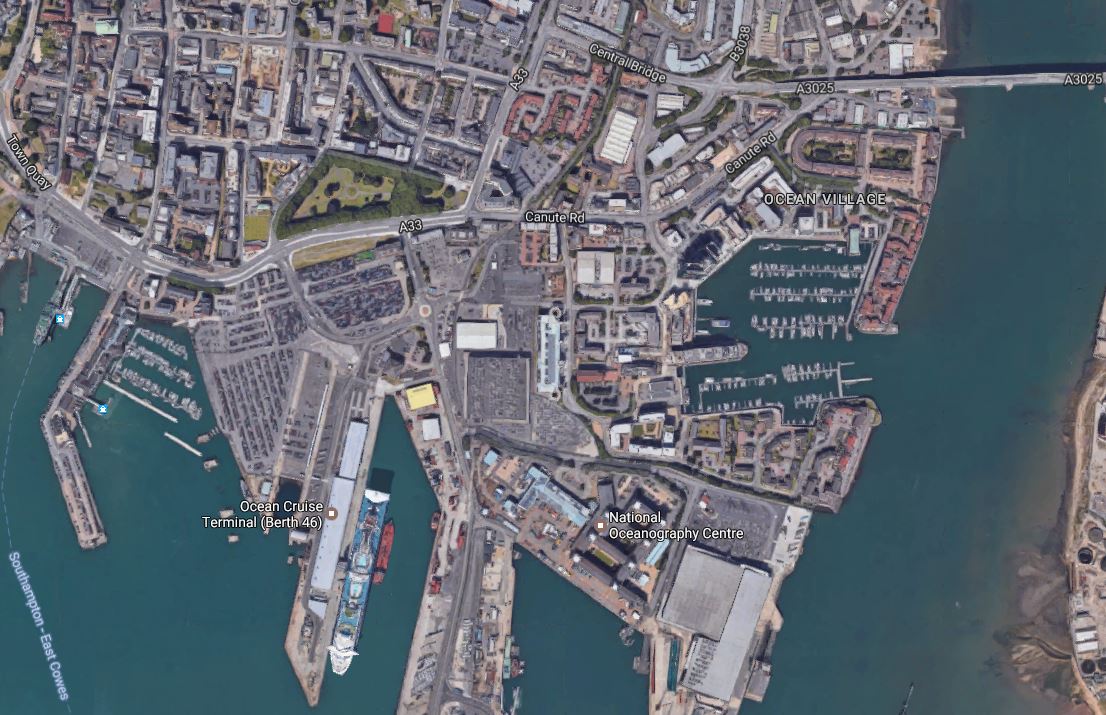
Note how the rail line that runs down behind St. Mary’s stadium continues to the dockside, just to the East of the Ocean Terminal.
If tram-trains were working the routes around Southampton, they could all terminate by the Ocean Terminal and thus give cruise passengers access to tourist attractions like Bournemouth, The New Forest and Portsmouth, in addition to the whole of Southampton City Centre.
I’m sure those clever engineers from Stadler can come up with a third-rail version of a Class 399 tram-train, that had enough battery power to traverse across Southampton. Especially, if a charge station like a Railbaar was installed at the Ocean Terminal to charge waiting tram-trains.
Conclusion
The possibilities at Southampton to improve public transport in the City are endless.
Borders Railway Extension Prospects Studied
This is the title of a news item on the BBC web site.
This is the first two paragraphs.
A new study is to look at the possibility of extending the Borders Railway beyond Tweedbank to Carlisle.
Transport Scotland has announced it intends to award the contract to look at wider transport issues across the south of the country to Jacobs UK Ltd.
I have this belief, that it would be in everybody’s interest to see Carlisle developed as an interchange between all the lines meeting in the city.
In September 2015, I wrote If Manchester Victoria And Birmingham New Street Were The First Two Courses, Is Carlisle The Third?, which details how Network Rail are spending £14.7million to improve Carlisle station.
Rail Services From Carlisle
Carlisle has its fair share of touristic rail lines in addition to the West Coast Main Line between Glasgow and the South.
- Barrow-in-Furness via the Cumbrian Coast Line
- Glasgow via the Glasgow South Western Line.
- Leeds via the Settle to Carlisle
- Newcastle via the Tyne Valley Line
The Settle and Carlisle has recently been rebuilt and Northern are providing better services on all the English routes, they service.
What is missing is a connection to Edinburgh via the Borders Railway!
What would it do for Carlisle’s position as a tourist destination to have a connection to the Borders and the Scottish Capital?
HS2
In any discussion of rail services North of London, HS2 always makes an appearance. I reckon that the journey time from London to Carlisle will drop by at least thirty minutes, so will be under three hours.
Conclusion
I come to the conclusion, that extending the Borders Railway to Carlisle is not solely a Scottish project, but an English one as well!
Along The Avocet Line
I took these pictures on a trip from Exeter to Exmouth and back on the Avocet Line.
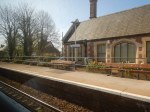





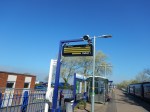
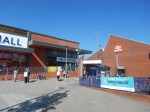


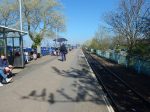

These are my thoughts under various topics.
Exmouth
Exmouth reminded me of the seaside town, where I spent a fair bit of my childhood; Felixstowe.
- They are both coastal towns.
- Exmouth has the larger population of 34,400 to Felixstowe’s 23,000.
- Both have adequate shopping centres, although Exmouth has a large Marks and Spencer Simply Food by the station.
I didn’t get to the beach.
The Starcross And Exmouth Ferry
There is a ferry between Starcross station and Exmouth, which seems to be well used.
Exmouth Station And The Train Service
Exmouth station was rebuilt in 1986 and it is a one-platform station with facilities and a large Marks and Spencer Simply Food.
The only problem is the trains themselves, as their frequency, which is generally two trains per hour, is acceptable.
But two Class 143 trains coupled together is inadequate, for a summer’s day when passengers have buggies, bicycles and lots of young children.
Monkerton Station
Monkerton station is a proposed new station on the Avocet Line, that would be built between Polsloe Bridge and Digby & Sowton.
The Seaside Special
Exmouth station and the Avocet Line powerfully makes the case for a Seaside Special train.
- Four cars.
- Independently-powered by diesel or perhaps batteries in the future.
- A range of perhaps thirty miles.
- Lots of space for buggies, bicycles and large suitcases.
- Step-across access between platform and train.
I’m sure Greater Anglia and Great Western Railway, with help from other train operating companies could come up with workable specification.
Get the specification right and it might be the short distance commuter train, where a proportion of passengers want to bring bicycles.
With the current developments in train refurbishment, the new Class 319 Flex and Class 230 trains might be the place to start.
An Excursion To Axminster
My Devon Day Ranger allowed travel to Axminster, so I took a trip.



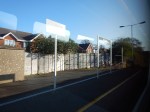


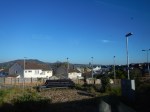

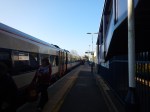
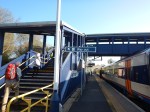
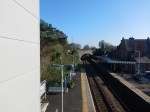
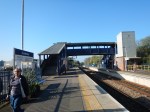




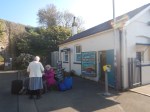
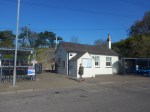
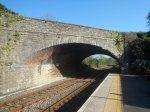
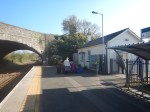
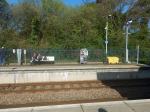


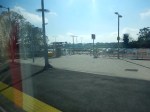

These are my comments on various topics.
Peninsular Task Force
According to the June 2016 Edition of Modern Railways, the Peninsular Task Force has made recommendations about this route.
- An improved line.
- An enhanced South Devon Metro
- A better diversion route.
- Speeding up of services between London Waterloo and Exeter by 36 minutes.
It will be interesting to see what actually happens.
Axminster Station
I was surprised to find that Axminster station is quite a sophisticated one as the pictures show.
It also had an excellent cafe that made me a fgluten-free bacon sandwich.
Class 800/802 Trains On The West Of England Line
The West Of England Line is currently certified for InterCity 125s, so it would probably allow Class 800 and Class 802 electro-diesel trains to use the route.
It might need some updating to some of the connecting routes East of Yeovil Junction.
Speeding Up Services Between London Waterloo And Exeter
Most of the services on this route are run by 90 mph Class 159 trains, which are well-matched to the 90 mph West Of England Line.
The current trains are diesel, which means they can’t take advantage of the electrified section of the line between London and Basingstoke.
In the June 2016 Edition of Modern Railways, this is said about services between London Waterloo and Exeter.
Journey time improvements of up to 36 minutes between Exeter and London Waterloo are forecast through a combination of linespeed improvements and trains calling only at Salisbury between Clapham Junction and Yeovil Junction.
The described stopping pattern would cut seven stops, at how many minutes a stop?
I have read that cutting a stop saves around three minutes a stop, but the amount will depend on a large number of factors.
- Braking for the stop.
- Accelerating back to line speed.
- The ease with which passengers can enter and exit, which is helped by wide doors and large lobbies.
- The quality of the driving.
Looking at the timetables various stops can take between three and seven minutes.
As an example, the Class 159 trains take 52 minutes between Basingstoke and Waterloo with stops at Woking and Clapham Junction, but a 100 mph electric train does it in 45 minutes with just a stop at Clapham Junction.
Without the actual figures, I can only take an educated guess.
An average of four minutes would mean finding eight minutes from linespeed improvements.
But there would be one simple way to speed up the trains.
Running Class 802 trains would certainly reduce journey times.
- They are electro-diesel trains, so could use the electrification between London Waterloo and Basingstoke.
- They have a 100 mph speed on diesel power, if speed limits allow.
- They have a 125 mph speed on electrified lines, if speed limits allow.
- Their undoubted power would get them quickly up to linespeed, thus reducing stop time.
- They have probably got better braking performance, than the current Class 159 trains.
But also consider.
- If linespeed is increased from the current 90 mph to perhaps 100 mph, the Class 159 trains can’t take any advantage.
- Running on electricity between London and Basingstoke, could also save a few minutes and some carbon emissions.
- Upgrading the line West of Basingstoke to allow higher speed where possible.
- Adding some more passing loops, at stations like Whimple.
- Any extra electrification past Basingstoke would be welcomed.
This could realise savings of perhaps fifteen to twenty minutes.
I am assuming the following.
- The more powerful Class 802 variant of the Class 800 train will be used, as speed on diesel power will be important.
- The trains can be fitted with third-rail shoes, like the closely related Class 395 train.
- I wonder, if it would be prudent to make all Class 802 trains dual-voltage.
Operationally, the trains may offer other advantages.
- If they are closely related to the Class 802 variant used by GWR for Peninsular services, this must be beneficial, as FirstGroup is involved in both train operating companies.
- It appeared to me at Exeter St. Davids that the Class 159 trains need a lot of refuelling, so the large fuel tanks of the Class 802 trains might save refuelling time.
- The joint fleet could be serviced at the same depot in perhaps either Exeter or Plymouth.
- Running similar trains on both routes from Exeter to London might give a marketing advantage.
- Five-car and nine-car Class 802 trains could be used as appropriate.
- It might be economic to extend some Waterloo services past Exeter.
A quick calculation shows that to provide an hourly service needs the following number of trainsets.
- Class 159 trains with a round trip of 7 hours – 7 trainsets of two trains.
- Class 802 trains with a round trip of 6 hours – 6 trains.
This could make the smaller Class 802 fleet easier to manage.
A South Devon Metro
The Modern Railways article has a brief reference to an enhanced South Devon Metro.
Currently, between Yeovil Junction and Exeter, there is generally one train per hour (tph).
This is not enough.
So in addition to the current service could the South West be seeing a modern diesel service from perhaps Yeovil Junction or Salisbury to Plymouth, at perhaps one tph.
But ideally, there should be four tph on the route to provide a Turn-Up-And-Go service.
New Stations
The stations at Axminster, Cranbrook and Whimple have recently opened, reopened or rebuilt.
There is also this article on DevonLive, which is entitled Second Cranbrook station still in the pipeline.
So could the eco-village of Cranbrook, get a second station called Cranbrook East?
I suspect that development of the line West of Salisbury could see some more and better stations.
Conclusions
The recommendations of the Peninsular Task Force should probably be followed.
I think we’ll see the following on the West of England Line.
- An enhanced service of at least 2 tph from Yeovil Junction to Exeter, with some extended to Plymouth.
- London Waterloo to Exeter in under three hours.
- A variant of Class 800 trains working the route.
- New and improved stations.
One great advantage is that First Group are at least part-owners of the two train operating companies in the region.
An Integrated Bus And Train Information Point
I saw this information point in the middle of Exeter.
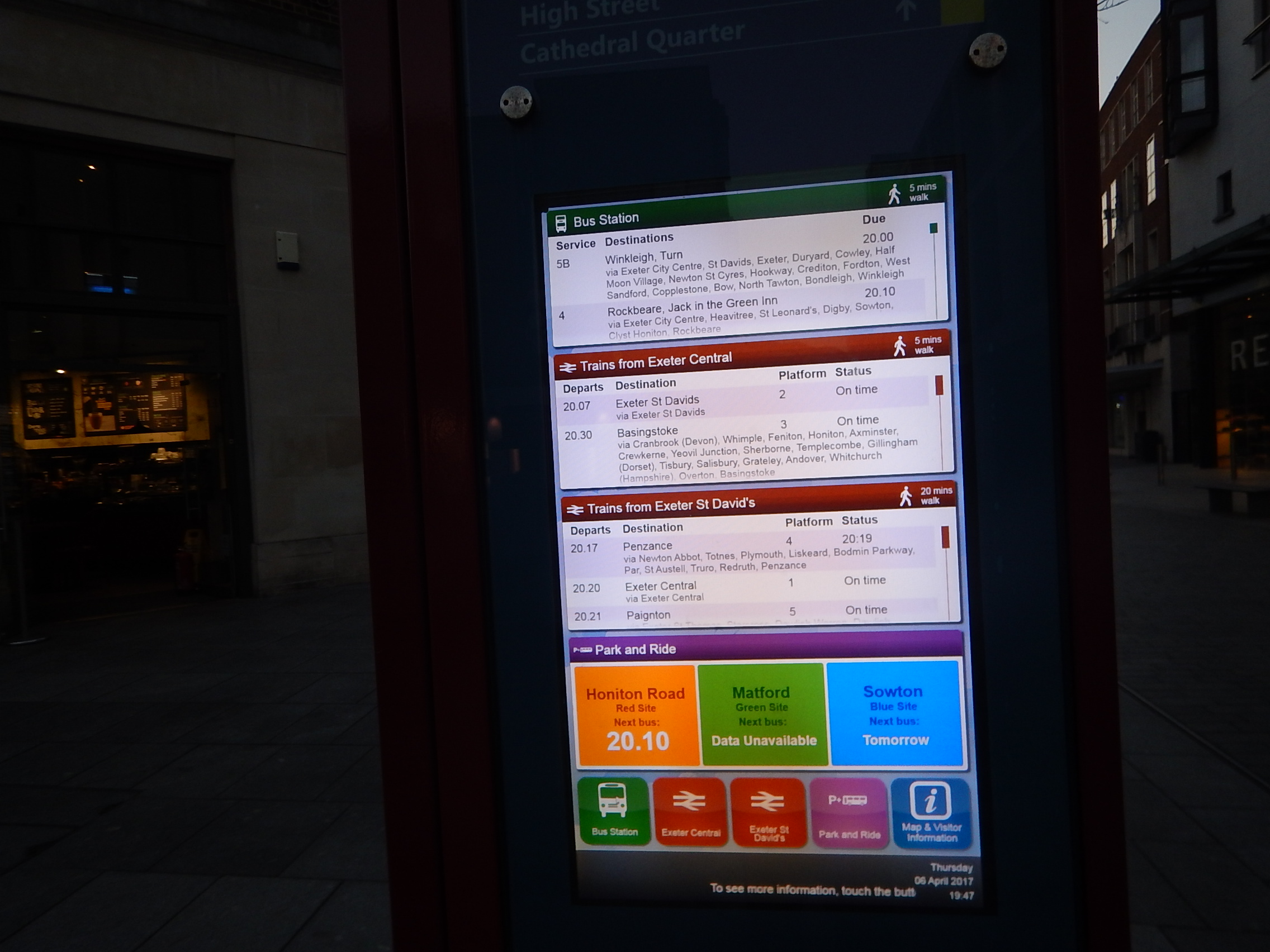
Buses at the top, Exeter Central station in the middle and Exeter St. Davids station underneath.
Why aren’t there more in other cities?
Walking Between Dawlish And Dawlish Warren Stations
The article on the BBC is entitled Dawlish storm damage rail closure ‘to cost millions’.
It certainly shows why the Plymouth to Exeter Line through Dawlish is so important.
Network Rail threw literally every kitchen sink, they could find at the problem and when the Book Of Heroic Projects is written Dawlish will feature prominently. I wrote about the work in A Job Well Done.
So three years and a day after I wrote that post what does it look like now?
I walked between Dawlish and Dawlish Warren stations taking these pictures.


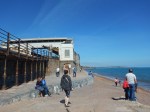
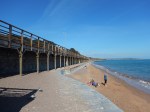
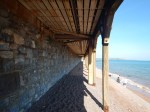
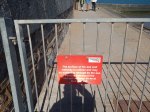
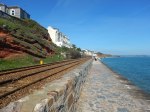
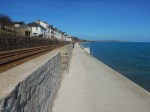
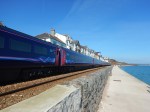

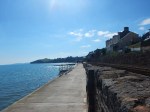
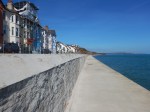
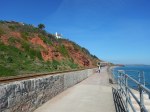
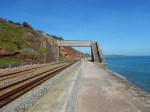

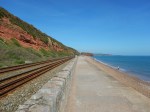
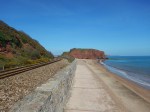
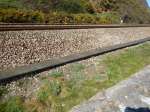


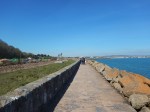
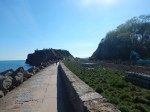


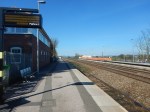

Some work at Dawlish Warren station is being completed, but it looks as if it could last for hopefully a few years.
Exploring The Tamar Valley Line
The Tamar Valley Line runs up the Tamar Valley between Plymouth to Gunnislake stations, the latter of which is over the border in Cornwall.
These pictures show the journey.

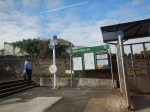
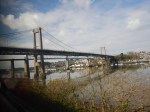



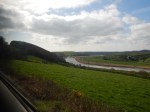

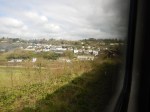
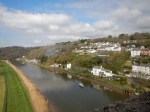
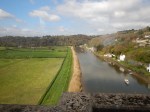

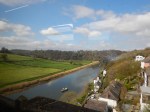
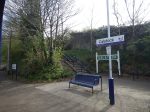
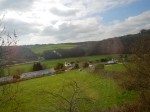
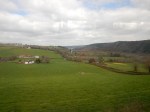



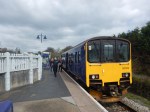
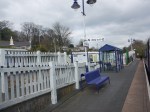
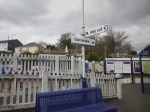
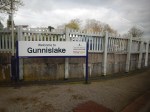


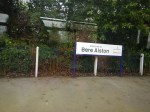
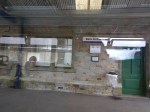
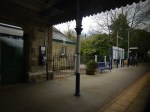
The following sections are my thoughts on the journey.
The Scenery
Rarely, have I travelled on a railway with such spectacular views.
Calstock
This Google Map shows Calstock.
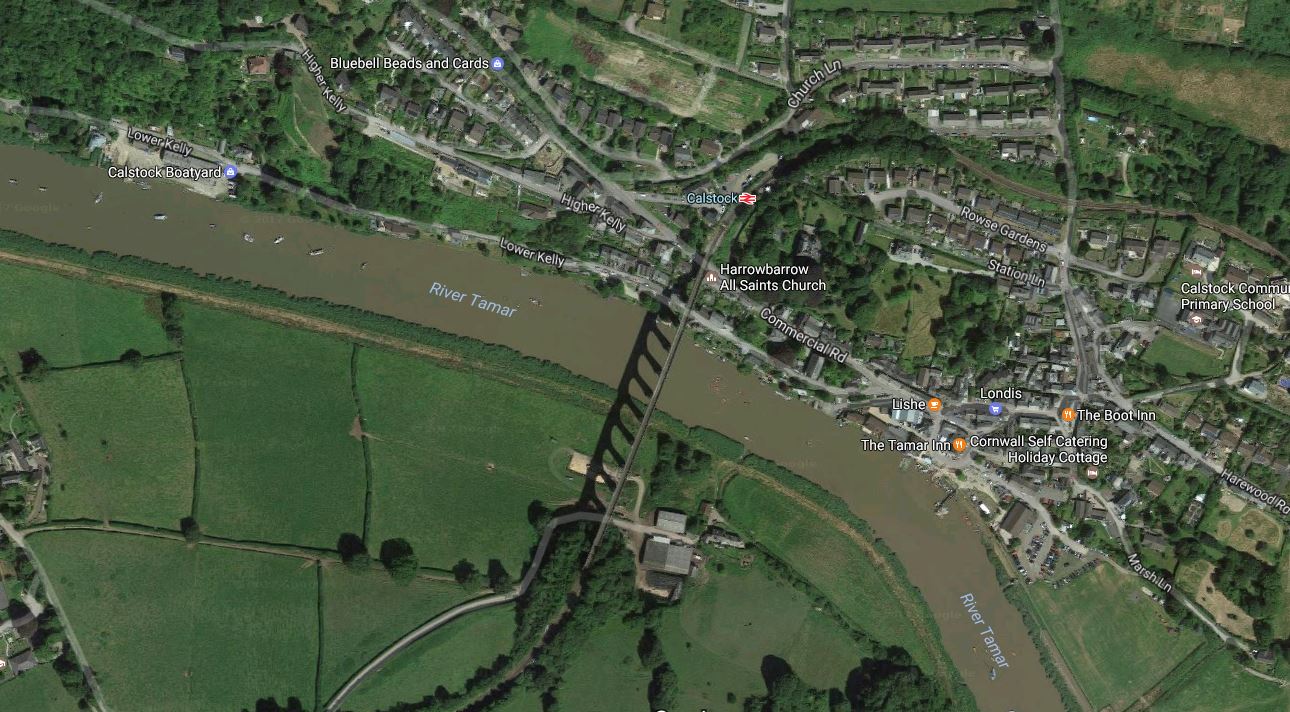
Note the Grade II* Listed Calstock Viaduct as the railway crosses the Tamar and the station on the Northern side of the river.
I suspect that if the railway ceased to run to Calstock and over the viaduct, there would be a revolution.
But having lived at the end of the then-erratic Felixstowe Branch line in the 1960s, I can see how if the service would be improved to hourly with a decent train, customers mysteriously appear. I suspect too, that road connections between Felixstowe and Ipswich are a lot better than between Calstock and Plymouth.
Bere Alston
This Google Map shows Bere Alston station.
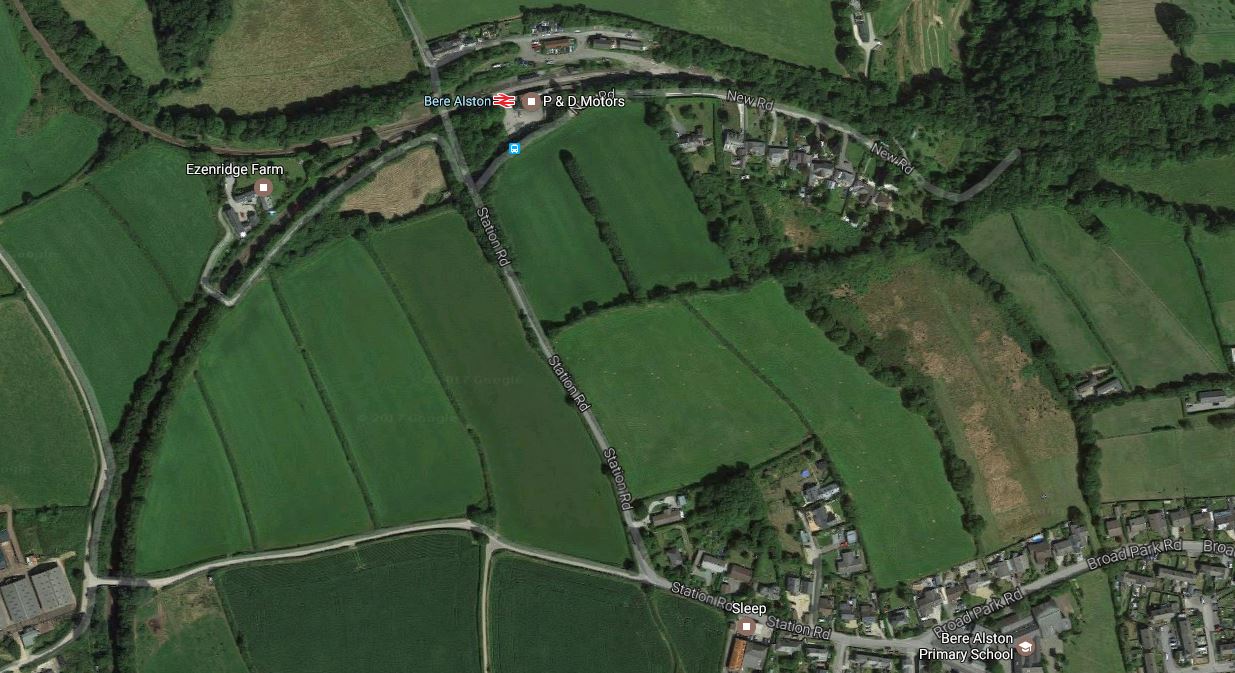
Note the two lines leading from the station, with one going South to Plymouth and the other going North to Gunnislake.
The line that used to go to Tavistock can also be seen going East.
I have followed this in my helicopter and you can see much of track bed.
The Train Service
I just went up and came back on the same train, as a fellow passenger said there was nothing at Gunnislake. He was actually walking down from Bere Alston station.
So as I had other things to do rather than wait two hours on a Cornish hill for the next train, I may have taken the right decision. Or not as the case may be!
If you look at the way the train service is organised, currently one Class 150 train is dedicated to the route.
As it takes 45 minutes to go up from Plymouth to Gunnislake and then after a wait of typically six minutes, it comes down in a further 45 minutes, the train service is not the easiest to run efficiently.
Looking at the timings of the individual sections of the line we get the following going up.
- Plymouth to St. Budeaux Victoria Road – 10 minutes
- St. Budeaux Victoria Road to Bere Alston – 14 minutes
- Bere Alston to Gunnislake – 20 minutes
Coming down we get the following times.
- Gunnislake to Bere Alston – 18 minutes
- Bere Alston to St. Budeaux Victoria Road – 13 minutes
- St. Budeaux Victoria Road to Plymouth – 11 minutes
The following also complicate the train scheduler’s problem.
- The line is single-track with no passing loops.
- The driver has to change ends for the reverse at Bere Alston station.
On the other hand, a more powerful train could probably save time on the climb and if it had good brakes, it could save time of the descent.
At least St. Budeaux Victoria Road station is where the driver organises the signalling. Wikipedia says this.
Trains heading towards Bere Alston must collect the branch train staff from a secure cabinet on the platform before proceeding, as the line is operated on the One Train Working system with only a single unit allowed on the branch at a time. Conversely the staff has to be returned to the cabinet by the driver on the return journey before the unit can leave the branch and return to Plymouth.
If trains could climb up from St. Budeaux Victoria Road to Gunnislake and return within the hour and they could pass somewhere South of Bere Ferrers station, then an hourly service would be possible, with modern signalling!
But it would need two trains! And trains are something, that GWR doesn’t have in abundance.
The Two Stations At St. Budeaux
This Google Map shows the two stations at St. Budeaux.
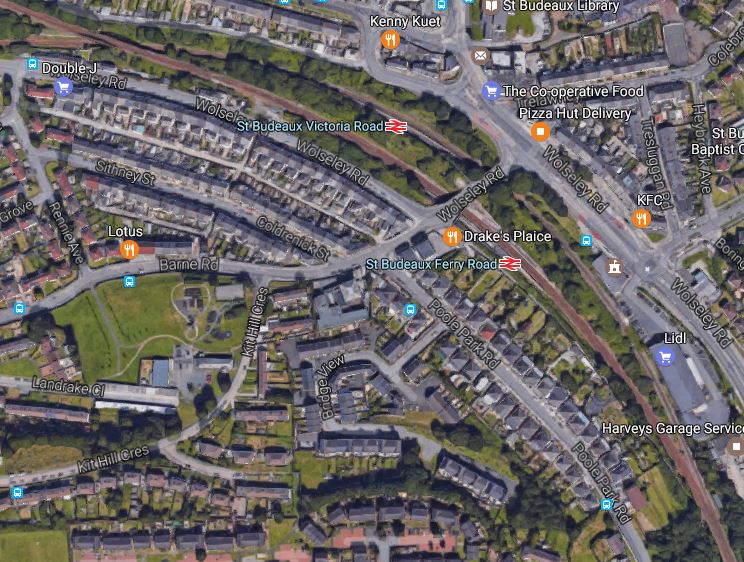
According to this except from Wikipedia, the two stations; St. Budeaux Victoria Road and St. Budeaux Ferry Road were once connected.
A connection to the Great Western Railway was installed east of the station on 21 March 1941 to offer the two companies alternative routes between Plymouth and St Budeaux should either line be closed due to bombing during World War II. On 7 September 1964 the original line into Devonport was closed, and all trains use the former Great Western route and the wartime connection to reach St Budeaux, renamed St Budeaux Victoria Road to differentiate it from St Budeaux Ferry Road, opened by the Great Western Railway on 1 June 1904.
The line from St Budeaux to Bere Alston was singled on 7 September 1970, services having ceased beyond there (towards Tavistock North and Okehampton) in May 1968.
I would suspect that as there appears to be a fair amount of space in the area and with some innovative trackwork Network Rail could design something, that allowed an hourly service to Gunnislake from Plymouth and/or St. Budeaux Victoria Road.
Sort the two stations at St. Budeaux and it would surely allow extra stopping services from Plymouth along the Cornish Main Line. An hourly stopping train would give stations between Plymouth and Bt. Budeaux, a much friendlier two trains per hour (tph).
Onward To Tavistock And Okehampton
There is a Future Options section in the Wikipedia entry for Okehampton station. This is said.
Both Railfuture and the former MP for Totnes, Anthony Steen, have in the past proposed the reinstatement of the line between Okehampton and Bere Alston, thereby reconnecting the station with Plymouth. The reopening of the link would restore the continuous circuit of railway linking the towns around Dartmoor. On 18 March 2008 Devon County Council backed a separate proposal by developers Kilbride Community Rail to construct 750 houses in Tavistock that includes reopening part of this route from Bere Alston to a new railway station in Tavistock.
Whether this happens at any time in the future, will depend on various factors.
- The need for housing developments in the area.
- Tourism.
- Quarrying and the transport of stone.
- Commuting from Okehampton and Tavistock.
With the link to the Tarka Line, it would deliver an alternative route from Plymouth to Exeter and London, if the weather attacks Dawlish again.
A Dawlish Diversion
It sounds all well and good for a diversion for between London and Cornwall, should Dawlish be closed by the weather or for engineering work.
But after looking at what has been created at Dawlish and writing about it in Walking Between Dawlish And Dawlish Warren Stations, I teel that something has been created, that should be able to stand up to what happened in 2014.
But even if the line is never broken, as it was in 2014, there will always be a need to have a diversion for important engineering works, that might mean the line is closed for a couple of days.
So I think that Network Rail’s plan, which was reported about in the June 2016 Edition of Modern Railways, that I wrote about in Common Sense Between Exeter And Plymouth, could happen.
In the post I said this.
The Modern Railways article also says.
- The line’s function would be to provide a modest service serving local stations and to offer diversionary capability.
- Eight new stations would be provided.
- The line would be unlikely to be electrified.
- To help funding new housing would be built along the line.
A double-track railway with diesel trains would do the following.
- Improve the economy of Devon around the fringes of Dartmoor.
- Help in the development of much-needed housing in the area.
- Provide a much-needed freight route to and from the peninsular.
- Provide sufficient capacity in the event of problems at Dawlish.
But knowing Murphy’s Law, if the line were to reinstated, the sea at Dawlish would behave itself.
Could the line even be built as a single track, but big enough, so that it would allow five-car or perhaps even longer Class 800 trains to run between Plymouth and Exeter in an emergency or when the main line is closed for other reasons?
The timings for Class 150 trains on the line are as follows.
- Plymouth to Bere Alston – 24 minutes
- Okehampton to Exeter St. Davids – 44 minutes
I would estimate that Bere Alston to Okehampton could take about forty minutes, via Tavistock.
I think we can safely say that a modern train like a Class 172 train could do Exeter to Plymouth in under two hours.
As Exeter to Plymouth takes around an hour, I think it should be possible for something like a 100 mph Class 165 train to go round the complete circle in under three hours.
This would mean that to run a Devon Circular service with one tph in both directions would need.
- A rail link between Bere Alston and Okehampton via a new Tavistock station.
- Three trains in both directions or six trains in total.
- 100 mph diesel trains.
- One or more passing loops or lengths of double-track
- A solution that allows two different services at Bere Alston.
Additional services would also be provided in both directions..
- Between Exeter and Yeoford, there would be two tph instead of one tph.
- Between Plymouth and Bere Alston, there would be two tph instead of one tph.
- One extra tph between Exeter and Plymouth.
A lot of stakeholders should like it.
Conclusion
I’ve just posted what I have seen and what I have read from trusted sources.
It would appear there is a lot of potential to improve the railways in Devon.
It also strikes me that a lot of what Network Rail are proposing doing is only undoing what was done by British Rail engineers in the 1960s.
At least, BR engineers didn’t follow Beeching’s recommendation of closing the Tamar Valley Line.
 The Anonymous Widower