Lunch In Buxton
These pictures show my time in Buxton.

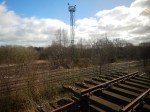
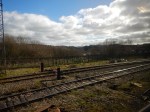
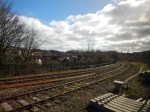
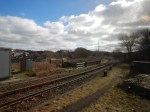


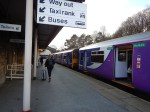








The lunch in the Hydro Cafe was excellent.
Onward From Buxton
There are lines that branch off to the left as you reach Buxton. This the closed Ashbourne Line, which still carries stone and other quarried products from Hindley.
I wouldn’t be surprised that some of this route and others in the area, were reopened to passenger traffic.
Down The Buxton Line
On the return from Buxton, I took these pictures.
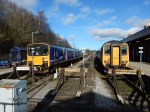
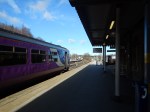
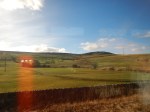

I sat on the wrong side of the train, as the views are better on the left-side going up and the right-side going down.
Could A Class 172 Train Run As A Tram?
I am using a Class 172 train as an example, but it could equally well be any two or three-car train capable of running on the UK network.
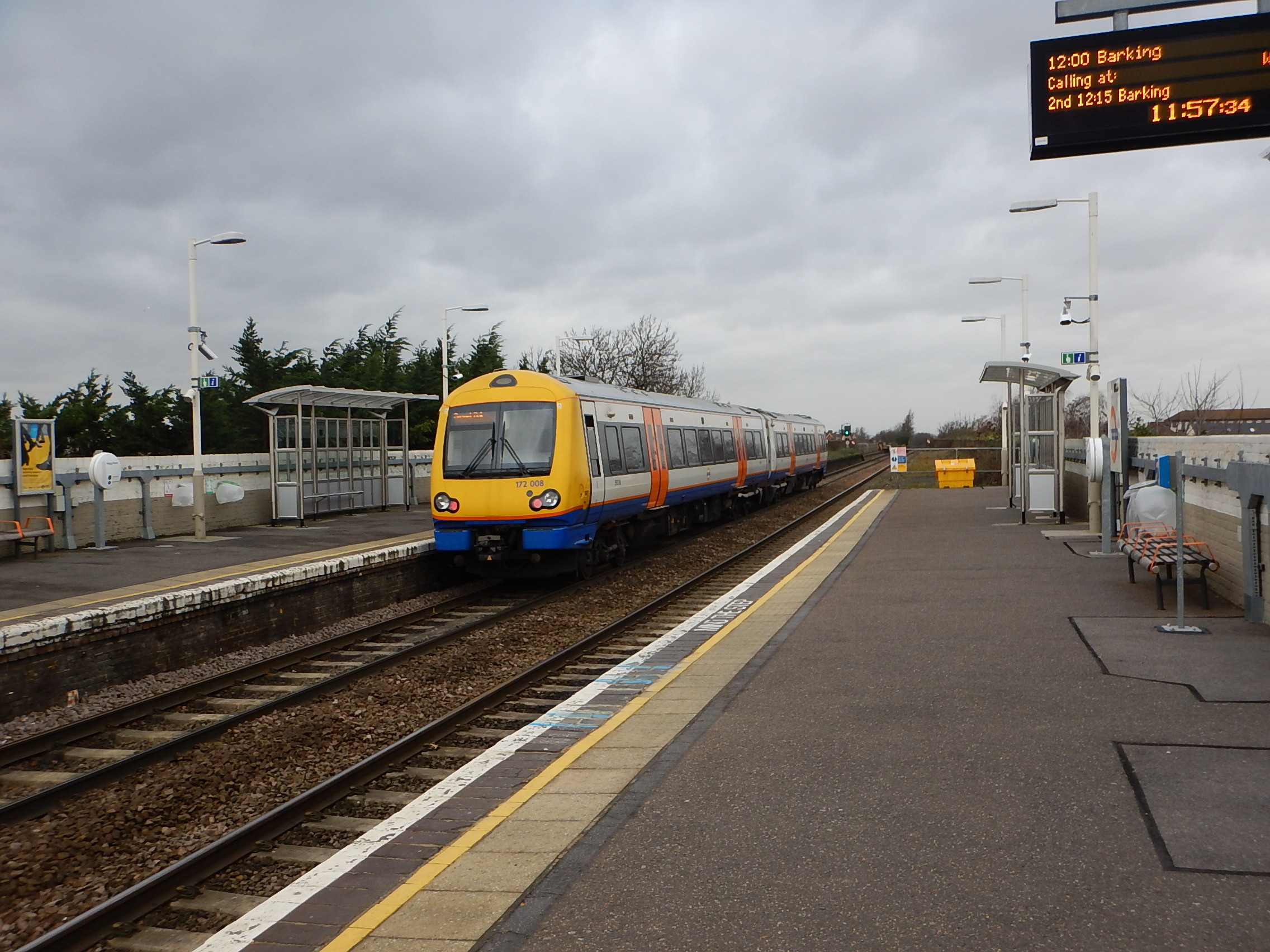
This Class 172 train on the Gospel Oak to Barking Line is probably only a tiny bit bigger than your bog-standard modern tram, that you’re starting to see all over the UK. This train is.
- Modern
- Diesel-powered.
- Two cars.
- Good passenger access.
- The driver has good visibility.
But it could be better, if a train like this was to be built today.
Consider what an ideal rail line for a train of this type, perhaps to run between Saxmundham and Aldeburgh would look like.
- Only one train would be allowed on the line at any one time.
- Freight trans to Sizewell would be allowed under very strict rules.
- Slow speed limit.
- Single or double track.
- Clear colour light signalling, that every passenger understands.
- Platform-train access would be step-free.
- Step-free ramp access to the platforms.
- Passengers can walk across the tracks.
Imagine how Ipswich to Aldeburgh service would work.
- The train would run to Saxmundham under normal rail rules.
- From Saxmundham to Aldeburgh and back, the train would proceed at a slow tram-like speed, with the driver keeping an extra vigilant look out
- Once back at Saxmundham, the train would return to Ipswich.
I can’t see why, it wouldn’t work on lots of branch lines.
It would of course be better with an electric train, so could we see a dual-voltage 25 KVAC/1500 VDC three car train, that could use tram style electrification on the tram-style section?
But it is effectively a small train, that can just run slowly like a tram.
The Class 172 train would do the job, but it would be better if it was a modern version
Something like Stadler’s train with the engine in the middle might do it.
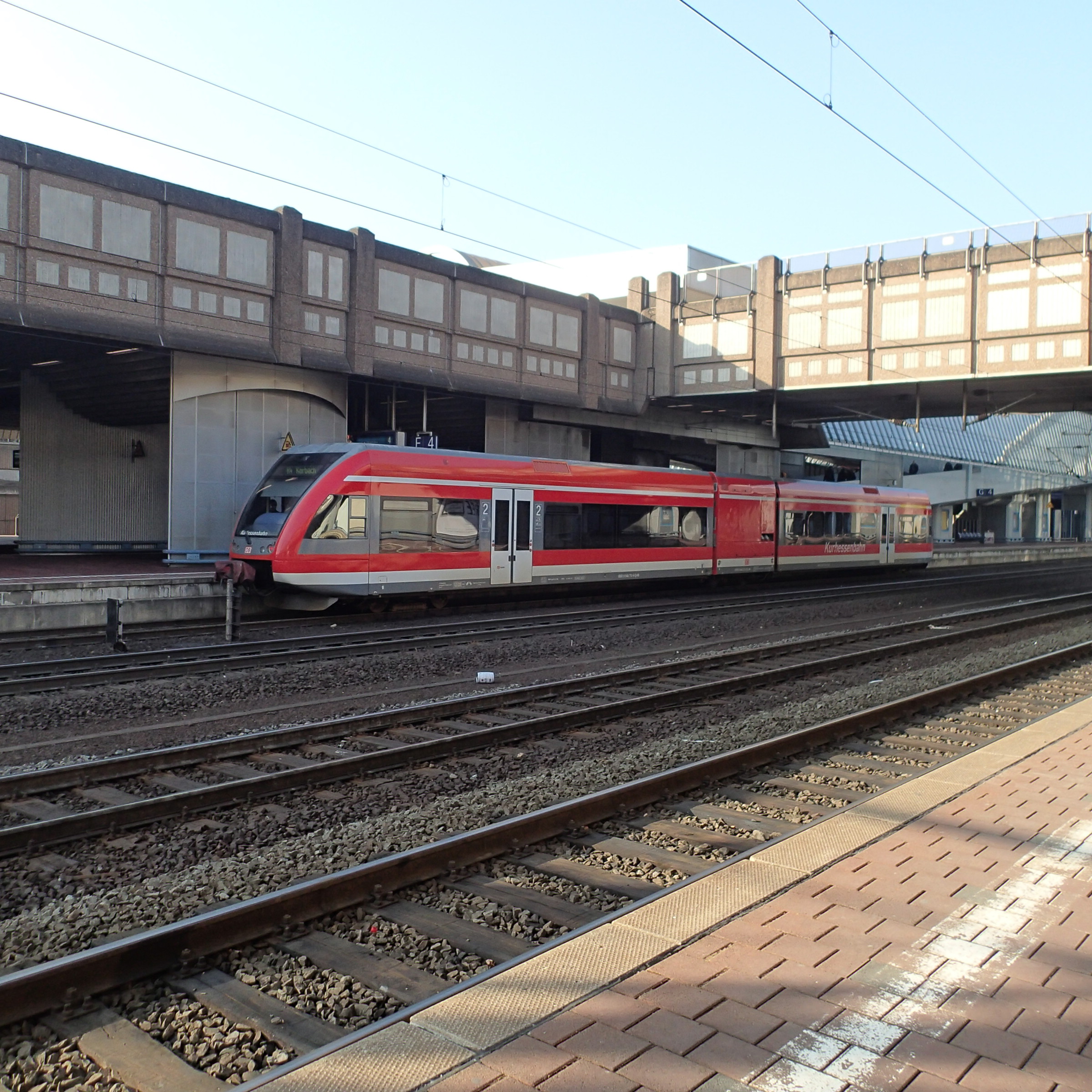
Looks like a tram! Goes like a tram! o it must be a tram! Wrong! It’s a train!
Our small and sometimes annoying loading gauge has its advantages.
Who needs a specialist tram-train?
Class 319 Flex Trains And Reopening Newcastle To Ashington
In Reopening Newcastle To Ashington, I suggested that Class 319 Flex trains might be useful in reopening the Northumberland Line to passenger trains.
This map is taken from on the South East Northumberland Rail User Group (SENRUG) web site.

The East Coast Main Line is shown in red, with the proposed reopened line in a thick orange.
I have since heard from SENRUG and this is a summary of their e-mail.
- The line from Newcastle to Ashington takes freight along its entire length.
- The route between Newcastle and Bedlington and the Choppington Branch is a diversionary route for HSTs.
- The new Hitachi Class 800 trains will be able to use the Bedlington-Choppington route.
- SENRUG are promoting Ashington to Butterwell as an extension to the route and a further HST diversion.
The e-mail finishes with this sentence.
Northern tell us the reason why they don’t want electric trains on the Morpeth branch (which is wired) is because they need to consolidate maintenance expertise at Heaton Depot and need flexibility to switch units around from route to route. Thus any new stock for the Ashington route also has to travel on the 3 other routes, all of which also take freight and inter-city type services.
Come in the Class 319 Flex train, the Teessiders, Tynesiders and Wearsiders need you!
- Newcastle-Morpeth would be run using electric power, with all other lines from Newcastle using two 390kW rail-proven MAN diesel engines.
- The trains have a performance as good if not better than a Class 156 train.
- The trains are four-car and meet all regulations.
- Back-to-back services through Newcastle, such as Ashington to Sunderland or Middlesborough and Morpeth to Hexham, would be possible.
- The trains could also work Middlesbrough – Newcastle – Hexham – Carlisle via the Leamside Line, if Northern wanted to open the line in 2019.
- Northern get their route flexibility from Newcasstle, as the trains could work any route from the city.
- The standard Class 319 trains have mixed it with big freight trains for thirty years on the Bedpan (Bedford to Brighton via St. Pancras).
- They can go anywhere that an HST or a Class 156 train can go. So does that include some lines of the Metro?
- When on the East Coast Main Line, they can up pantograph and cruise at 100 mph, just as they do on the West Coast Main Line now.
- If any lines have steep gradients, the trains are designed for the 1-in-60 climb up to Buxton after a United-City Derby.
But the biggest advantage of the train, must be that as planners have ideas for new services, so long as the track and signalling are up-to-scratch, it’s just a case of Have Track, Will Travel!
As Northern were part of the writing of the specification for the Class 319 Flex train, I can’t believe that they didn’t take what they could do in the North East into account.
Consider.
- Northern are developing a similar network using a mix of Class 319 and Class 319 Flex trains linking Blackpool, Liverpool, Manchester and Preston, based at Allerton Depot in Liverpool.
- There have been proposals for new stations on the East Coast Main Line between Newcastle and Berwick-on-Tweed. 100 mph Class 319 trains would be ideal for a stopping service between Newcastle and Berwick.
- Are there possibilities to run services into North Yorkshire?
- Class 319 Flex trains could work Newcastle to Carlisle.
- Bishop Auckland, Northallerton, Saltburn, Sunderland and Whitby could be worked from Midlesbrough.
Northern could stable an appropriate mix of Class 319 and Class 319 Flex trains at a convenient depot, deploying as required using the electrified East Coast Main Line.
Could Northern be developing an electric hub concept, as what could happen in the North East could mirror what is happening in the North West?
- Central depot on an electrified main line, with good high-speed electrified connections to all routes served.
- A number of four-car 100 mph electric trains- At present they have a total of thirty Class 319 trains.
- A number of four-car 100 mph bi-mode trains. – At present they have a number of Class 319 Flex trains in development.
- New routes could be developed using the bi-mode Flex trains.
- If electrification happens on a route, the electric trains might take over.
But Northern have forty-three Class 331 electric trains on order.
These are three and four car 100 mph trains.. Northern probably have plans for these trains, but they could supplement the fleet at either hub, as routes get more numerous and passenger numbers increase.
A similar electric hub could develop at Leeds.
It looks to be a very flexible philosophy.
At some point in the future, it could happen that all Class 319 trains are the Flex variant and they work in tandem with a bog-standard four-car 100 mph electric multiple unit.
So Where Will Greater Anglia’s Old Trains Go?
The title of this post is the title of this article in the East Anglian Daily Times.
It is a good question to ask, as when all Greater Anglia‘s new trains have arrived in 2020 or so, there will be a lot of trains needing good homes.
The article comes to these conclusions.
- Class 90 Locomotives – Freight operators.
- Mark 3 Coaches – Some heritage operators, but mainly scrap.
- Class 153 trains – Might survive a few years with another operator, before being scrapped.
- Class 156 trains – Might survive a few years with another operator, before being scrapped.
- Class 170 trains – These should have a long term future with other operators.
- Class 317 trains – Least likely to find a new use.
- Class 321 trains – Likely to go to other operators.
- Class 360 trains – Likely to go to other operators.
I don’t disagree greatly, but I do feel that because of the continued fast growth of the UK rail network, that other outcomes could happen.
Mark 3 Coaches
Passengers like the Mark 3 coach and Chiltern Railways have shown that the coaches can be refurbished to a very high standard, that meets all current and future regulations.
I feel that at least some coaches will get the Chiltern treatment, as there are routes, where they could work economically, between a locomotive and a driving van trailer (DVT). The key to this could be that Greater Anglia will release sixteen DVTs in good condition.
Class 321 Trains
Greater Anglia has over a hundred of these four-car trains and thirty of these will have been upgraded under the Renatus project.
If the Class 319 Flex train is a success, could we see some of these trains given the same treatment as I talked about in Could There Be A Class 321 Flex Train?
If the Class 321 Flex train were to possess the same hill-climbing ability that is proposed for the Class 319 Flex train, then there could be a whole fleet of trains suitable to work the Valley Lines from Cardiff, without any further electrification.
It will come down to a political decision, as to whether to electrify the Valley Lines and use new rolling stock or appropriately refurbished cascaded Class 321 trains.
Who Would Want An Electric Train Powered Only By Diesel?
I have just seen a an early copy of Porterbrook’s brochure for their new Class 319 Flex train.
From one statement, it appears that a diesel-only version of the train is going to be delivered to one operator.
If this is a prototype, this is eminently sensible as the train could be used for the following.
- Full testing of the diesel power generators and all non-standard systems.
- Performance Assessment
- Driver training.
- Route Proving.
- Customer reaction.
The prototype could even be run on the example route from Manchester Piccadilly to Buxton and back to validate the route could be handled by the train.
Strangely, it would probably have the capability to do the route faster than the current Class 150 and Class 156 trains, as it is more powerful.
But a diesel-only version could have other uses in the long term.
Route Proving And Testing
Surely, a diesel-only Class 319 Flex train, must have uses, where an operator wants to run a service to check a new route or test a market.
Occasional Services
Events like the Open Golf and Glastonbury create a big demand for travel, often to difficult to access places. A refurbished diesel-only Class 319 Flex could have uses to serve events like these. Or it could be used as a blockade buster or train to by-pass difficulties or cover for rolling stock shortages.
The interior could even be tailored for the use.
Have Direct Rail Services done their sums and found that instead of using two new Class 68 locomotives and a few clapped-out Mark 2 coaches, a diesel-only Class 319 Flex train is better value for themselves and the train operator?
Direct Rail Services certainly seem to be good niche market spotters, as their purchase of the Class 68 locomotives shows!
Small Measurement Train
Would a diesel-only Class 319 Flex train make a smaller version of the New Measurement Train?
- It’s diesel powered, so can check all routes and those with power switched off.
- It can probably run on routes, where the HST-based New Measurement Train can’t.
- It has a 100 mph capability, so could deploy to an area, where problems have occurred quickly.
- It’s even got a pantograph well.
Currently, it takes the New Measurement Train about a couple of weeks to check all the lines it can.
From what I’ve read, Network Rail seem to keep adding capability and with the need to check more lines, there must be a need for at least a second train to help the current one.
Would Network Rail do what they have done with other complex specialist equipment and base several around the UK, so that if a possible problem occurs or some new work on the track or overhead wires has been done, engineers can check the line quickly?
Affordable Quality Four-Car Diesel Multiple Unit
There are lines in the UK, like the Heart of Wales Line and the Far North Line, which will never be electrified and need a modern diesel unit with everything customers expect at an affordable price.
Most suitable units like the two-car Class 158 trains and three-car Class 159 trains could be too small for some routes and their current operators have uses for them.
So is a niche for a reliable four-car diesel multiple unit to work all sorts of routes?
Conclusion
When I saw that Porterbrook were going to produce a diesel-only version in their brochure, I was mildly surprised.
But then I was surprised, when I saw Vivarail‘s proposal for the Class 230 train based on old London Underground D78 Stock.
So did one of the operators interested in the Class 230, see the Porterbrook announcement for the Class 319 Flex train, put two and two together and say, a four-car Class 319 Flex would do us just fine. But forget the electrification gubbins!
The Class 319 Flex Train And Third Rail Routes
In writing The Electrical System Of A Class 319 Flex, I came to the conclusion, that the designers of the Class 319 Flex had taken great care that the train would perform to a high standard on lines with third-rail electrification..
There are three routes that could be given an improved service using a third-rail bi-mode train.
Ashford to Brighton on the Marshlink Line.
Oxted to Uckfield on the Oxted Line.
Reading to Tonbridge via Gatwick Airport on the North Downs Line.
Note.
- From Ashford, trains on the Marshlink Line could go to London, but probably not on High Speed 1.
- The East Coastway Line between Hastings and Brighton can accept eight-car trains, and is a 90 mph line, that has recently been resignalled.
- From Oxted on the Oxted Line trains could go to London.
- The Uckfield Branch has been updated to accept twelve-car trains.
- Tonbridge to Gatwick Airport was electrified as a Eurostar diversion route.
For operational reasons on the Uckfield Branch and along the South Coast, it would probably be a good idea, if the ability to run as eight- and twelve car formations was developed for the Class 319 Flex.
The South Coast Express
The East Coastway Line could be connected to the West Coastway Line to Southampton Central station with a reverse at Brighton.
At present because the Marshlink Line is not electrified and the two Coastway Lines are run independently, you can’t travel between stations on the West Coastway Line to any station on the East Coastway Line without changing trains at Brighton.
Consider creating a South Coast Express between Ashford and Southampton using bi-mode trains.
- The Class 800 train, which is the only current bi-mode train, comes as a five-car train, but doesn’t have a dual voltage version, although its cousin the Class 395 train can work on third rail networks.
- The Class 319 Flex train could do the whole route and would only need to use diesel power for twenty-six miles.
- The speed limit along the two Coastway Lines could probably be upgraded to 100 mph.
- A new Eastbourne Parkway station could be created on a reopened direct line between Polegate and Pevensey & Westham stations, to avoid all trains reversing at the current Eastbourne station and hence save time.
- It would be a feeder railway to Thameslink services at Brighton and Eurostar services at Ashford.
- Eight-car or even twelve-car formations could work through Falmer station on match days at The Amex.
- Southampton have plans to develop the railway to serve St. Mary’s Stadium and the Waterfront, which could be part of an upgraded West Coastway Line.
Currently, with a change at Brighton, Southampton to Ashford takes three hours forty-seven minutes. With a 100 mph train on an updated 100 mph line, the service could surely be a lot faster.
If an hourly service was required, then you get this table of trains required to run the service against the journey time between Ashford and Southampton.
- Three hours needs six trains.
- Two and a half hours needs five trains.
- Two hours needs four trains.
Southern use more trains than that now to provide a slower service, with a change at Brighton.
West Of Basingstoke
The West of England Main Line is only electrified as far as Basingstoke station, which is just under fifty miles from London.
Distances from Basingtoke are approximately.
- Salisbury – 35 miles
- Yeovil Junction – 70 miles
- Honiton – 100 miles
- Exeter St. Davids – 120 miles.
Could a Class 319 Flex carry enough fuel to serve this route?
I have seen an early copy of the brochure for a Class 319 Flex and Porterbook say that the train is designed to handle ten round trips from Hazel Grove to Buxton, which is a seventeen mile trip, where the steep gradients up are probably balanced by the coming down.
This would indicate that the Class 319 Flex could do a round trip without refuelling.
The route is currently worked by eleven two-car Class 158 trains and thirty three-car Class 159 trains and they take three and a half-hours for each hourly service between London Waterloo and Exeter St. Davids.
The Class 319 Flex train has a comparable speed to the Class 158/159 trains on diesel and is ten mph faster, when running on electricity.
I don’t think that the trains would be used all the way to Exeter, as they are not really designed for a journey of that length, but there may be other places where they could be ideal.
- Running between London Waterloo and Salisbury to increase the frequency, where they might save upwards of fifteen minutes between Basingstoke and Waterloo, as they are faster than the diesel Class 158/159s.
- Running the hourly circular service from Salisbury to Chandlers Ford via Southampton, which has sections of electrified line, where they could replace Class 158/159s.
- Existing lines like the Lymington Branch, where they could replace Class 158/159s
- Reopened lines like the Fawley Branch, Ludgershall Branch and the Swanage Railway.
- New services like Portsmouth Harbour to Salisbury via Southampton and Romsey.
It could be that some selective electrification like Southampton to Romsey could be very beneficial.
Could There Be A Class 321 Flex Train?
I took these pictures of a Class 321 train at Ipswich station.
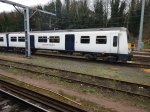
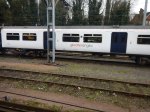
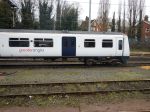
Like the Class 319 train currently being updated to a bi-mode Class 319 Flex train, I wonder if the same bi-mode upgrade could be applied to a Class 321 train.
Look at this picture of a Class 319 train.
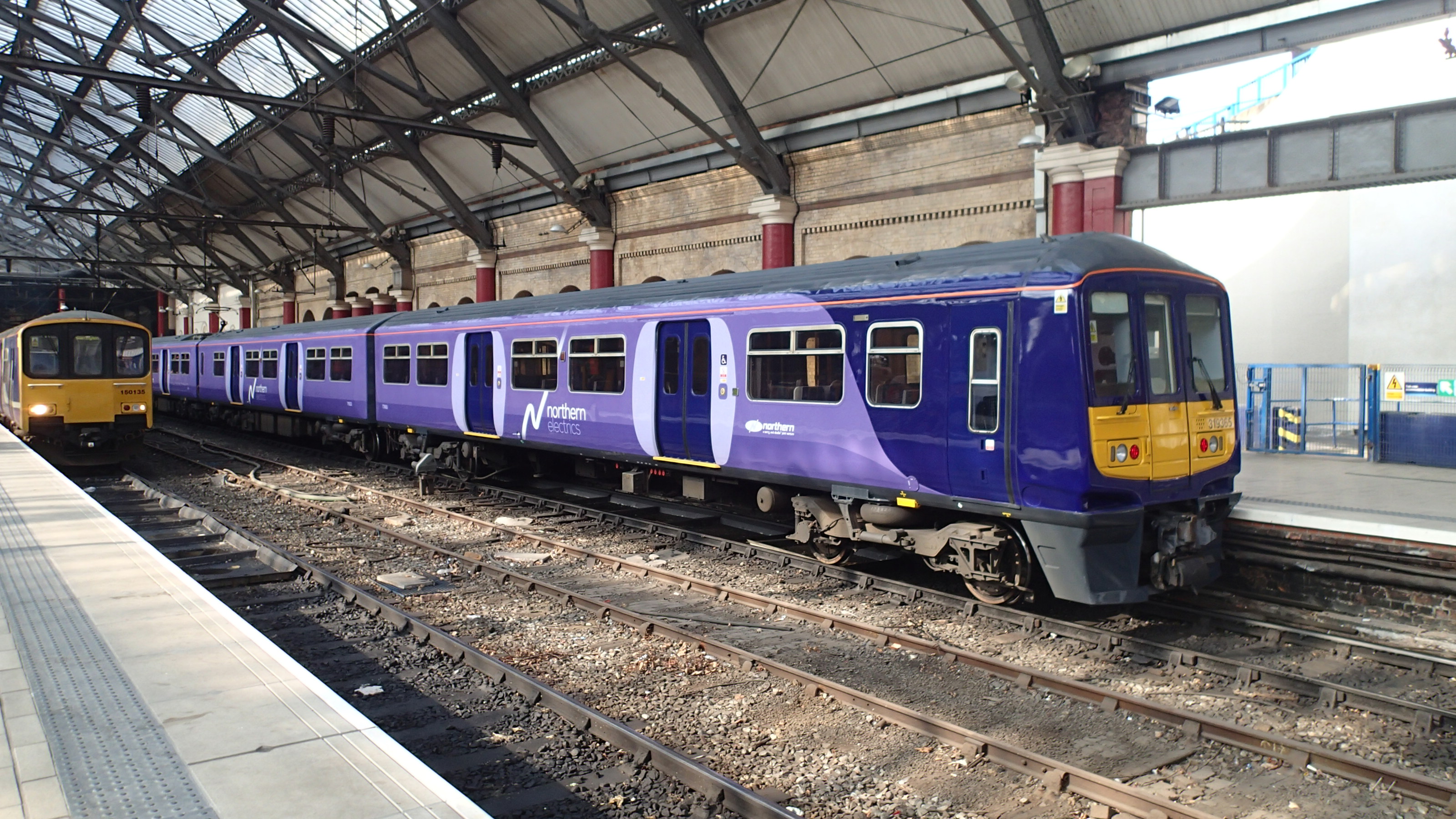
A Class 319 At Lime Street
Both trains do seem to have generous space underneath.
Consider.
- Both trains are 100 mph four-car trains based on Mark 3 coaches.
- Ten Class 321 trains are being given the Renatus treatment by Eversholt Leasing for Greater Anglia with air-conditioning and new interiors.
- The Class 321s were built after the Class 319s.
- The Class 321s are 25 KVAC overhead operation only.
- There are 117 Class 321 trains.
- As the two trains were launched within a year of each other, they can’t be that different under the skin.
It should also be remembers that train companies have a lot of experience about running both type of train.
Porterbrook Versus Eversholt
Could we be seeing a strong commercial battle, where the two leasing companies; Porterbrook and Eversholt, fight it out to sell the best four-car bi-mode train to the train operating companies?
This could only be of benefit to train companies and passengers.
The Electrical System Of a Possible Class 321 Flex
The only problem, I can envisage is that as I wrote in The Electrical System Of A Class 319 Flex, the DC electrical bus of the Class 319 train makes the design of the Class 319 Flex train easy. If the Class 321 Train doesn’t have a similar layout, then it might be more difficult to create a Class 321 Flex!
On the other hand Vossloh Keipe have received a contract to upgrade the traction systems of thirty Class 321 trains to give them.
- AC traction motors and the associated control systems.
- Regenerative braking.
This work is fully described onb this page of the Vossloh Keipe web site.
Probably, with a suitable alternator from ABB and some quality electrical engineering, I would think that a Class 321 Flex could be created.
Conclusions
Each train will have their own big advantages.
- The Class 319 Flex train will work third rail routes.
- The Class 321 Flex train will have regenerative braking on electrified routes.
But in the end, if two bi-mode fleets can be created, there will probably be a lot of conviviality in hostelries in Derby and York, where the probably long-retired engineers, who designed the Mark 3 coach and its various derivative multiple units, will be laughing loudly into their beer.
The Electrical System Of A Class 319 Flex Train
This press release from Porterbrook, which is entitled Porterbrook and Northern to introduce bi-mode Class 319 Flex trains, says this about the electrical system of the the Class 319 Flex train.
The Class 319 Flex concept is designed to create a bi-mode train by fitting two diesel powered alternators, one under each of the driving trailer cars. The diesel alternators provide power to the existing traction and auxiliary equipment to allow the EMU to operate without an overhead or 3rd rail supply. The systems will provide power through the train’s DC bus, avoiding any significant changes to the existing equipment and creating a unit capable of operating from a number of different power sources whilst maintaining its full capabilities on electrified routes.
As an electrical engineer, it looks to me, that British Rail’s original design of the dual-voltage Class 319 train with a DC bus has actually helped in creating an easy-to-design and build interface between the new diesel powered alternators and the train’s current systems.
I have seen an early copy of the brochure for the Class 319 Flex train and can add the following statements.
- The train is powered by two MAN D2876 LUE631 diesel engines, which each generate 390kW of power. This page on the MAN web site shows MAN’s range of engines for rail applications. This page shows the data sheet for the engine.
- The engines are Stage IIIB compliant with respect to emissions and use Selective Catalytic Reduction technology to achieve this.
- The proposed alternator is from ABB. This page on the ABB web site, shows their wide range of alternators.
- A new negative return bus line will be added throughout the unit to prevent return current flowing through the vehicles or rails.
- The design uses a power-pack raft. This should ease maintenance and replacement.
- Obviously various modules and controls are added to enhance the uses of the system and allow the driver to control the new systems.
- Great care seems to have been taken that the Class 319 Flex train will perform well on third rail lines.
I do have a feeling that the direction of technology over the last few years has certainly helped to enable a better design.
- The major components have probably got smaller and more reliable.
- Control system technology has moved on substantially.
- Adding batteries to the train should be relatively easy, given the DC bus and the large amounts of experience from hybrid road vehicles.
- 3D CAD systems must help in a space-critical installation.
Combined with all the statements about design and testing in the brochure, I have no reason to suspect that the train designers are doing anything other than a comprehensive and professional job. Their choice of engines and alternators is certainly picking some of the best available and the brochure states that long-lead components have already been ordered.
An Extension To TransWilts
This article on Rail Technology Magazine is entitled Maynard visits proposed Westbury-Salisbury extension to TransWilts line.
This is said.
The proposed site of a new station at Wilton that would connect Westbury and Salisbury was visited by rail minister Paul Maynard yesterday, as the MP travelled on a special GWR 1005 Swindon to Salisbury service to mark the role that community rail was playing in the region.
I like the concept of TransWilts, which I wrote about in A Trip Around Wiltshire.
I think it just shows how rail can be developed in rural counties. According to the article, TransWilts carried 20% more passengers last year.
 The Anonymous Widower