An Interloper At Euston
I took these pictures as I came through Euston on Saturday night, as I returned from Blackburn.
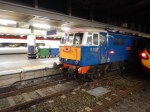


The engine is an immaculate Class 86 locomotive, which was built in the 1960s.
According to Wikipedia, Freightliner still have ten upwards of the locomotives in service and I recently saw two working together on a long intermodal freight service through Dalston Kingsland station.
They may have been bog-standard electric locomotives in their day, but surely if they can be restored and kept running, they are probably a lot more affotdable for main line use by charters, than anything else.
I would assume that E3137 had been hauling a charter into Euston. Long may it continue to do this.
c2c’s Class 387/3 Trains On Test At Crewe
I took these pictures of two Class 387 trains destined for c2c at Crrwe, as my train passed through on the way to Liverpool.
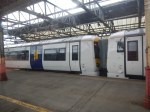
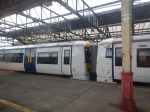
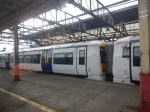
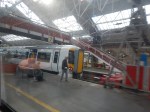
They were numbered 387301 and 387302 and their destination boards said they were going to Wembley Central.
Now that would make an interesting route for c2c!
Why Number The Trains As Class 387/3?
Seriously, though, I’m curious why the c2c trains are numbered as Class 387/3 trains, whereas the trains for Great Western Railway are all numbered as Class 387/1 trains.
This is said in Wikipedia about these trains.
In April 2016, c2c announced that it would operate six of the 20 additional units ordered by Porterbrook until a fleet of 68 new carriages are delivered in 2019.
So as they are a short term fleet, that will do the rounds of various operators, who are short of trains, perhaps starting a new group of numbers is good for housekeeping purposes at Bombardier?
On the other hand if c2c and its customers and staff like the new trains and c2c see that an all-Electrostar fleet has advantages for operational reasons, perhaps the extra 68 new carriages will be Class 387/3 trains.
After all, the highest number for a Class 387/1 is 387174, which only allows for another 25 trains in the sequence, before the numbers interfere with the Class 387/2 numbers.
Which all points to sensible housekeeping, as there is nothing on the Internet, to say there is any differences between the Class 387/1 and Class 387/3 trains.
Could The Class 387/3 Trains Have Batteries?
There are several well-publicised reasons for adding batteries to an electric multiple unit.
- Handling regenerative braking.
- Depots and stabling sidings without overhead wires.
- Train recovery in case of overhead power failure.
- Remote train start-up, ready for the driver.
- Extending routes over lines without electrification.
Note.
- The current Class 357 trains and all Class 387 trains have regenerative braking, so c2c routes can obviously handle it.
- c2c’s depot at Barking is crowded, but would they want the expense of building a second depot anyway.
- Train recovery could be very valuable, especially if a whole fleet was fitted.
- Remote train start-up is available for Aventras and I’ve met a couple of drivers, who would love it!
c2c likes to take a strong green stand as this page on their web site shows.
So the main serious reason we have left is route development.
A Big Step For Rail Baltica
This article on Railway Gazette is entitled Rail Baltica procurement agreement signed.
Rail Baltica is a large project to create a standard gauge railway from Tallinn in Estonia to Bialiystok in Poland via Riga in Latvia and Kaunus in Lithuania.
One extra part of the plan is to build a rail tunnel between Helsinki and Tallinn, to connect Finland to the European railway network.
This Google Map shows the Gulf of Finland.

The Gulf Of Finland
Helsinki and Taillinn are in the West on the North and South coasts respectively, with St. Petersburg in the East.
I would think, that a Taillinn to Helsinki Tunnel, would be feasible, but at probably sixty kilometres it would be the longest undersea tunnel in the world.
Now that the various parties have agreed to proceed, we might see some progress on building the main route from Tailinn to Bialystok, which hopefully will be finished in 2025.
Brexit – Signalling Implications For The UK
The title of this post is that of an article on Rail Engineer.
It looks at how rail signalling will be affected by Brexit.
It is an article worth reading.
Remember that signalling is the instructions that keeps a railway functioning, just like the operating system does on your computer.
The article starts like this.
With Britain on a course to leave the EU, how might the plans for signalling (control and communications) be affected? In short, nobody really knows, but a number of factors might now change the policy that had existed hitherto. Not having to comply with EU rules on interoperability, the non-inclusion of TEN routes and the advertising of large contracts in the European Journal might all lead to a different (or modified) approach.
So will it lead to different approach?
I don’t know either, but if you read the article we have gone a long way to creating a signalling system, that is some way along the path to meeting the ultimate EU aims.
ERTMS
The article says this about ERTMS or \European Rail Transport Management System.
ERTMS, and its constituent parts of ETCS and GSM-R, has been a corner stone of European signalling policy for over two decades. Both have taken far too long to come to maturity, with ETCS Level 2 just about at a stable level and GSM-R, whilst rolled out throughout the UK, facing an obsolescence crisis within the next ten years.
ETCS or European Train Control System is not fully deployed, but in the UK, we have made some progress.
- The Cambrian Line has been equipped as a learning exercise.
- Significant testing has been performed on the Hertford Loop Line
- ETCS is being installed and has been tested in the central core of Thameslink.
- Crossrail will be using ETCS.
- ETCS is being implemented on the Southern part of the East Coast Main Line.
GSM-R is the communication system from train to signallers.
Looking at this , shows that although the UK fully implemented a GSM-R network by January 2016, not many countries have got as far as the UK.
Surely, you need decent communications to run an efficient and safe railway.
I think it is true to say we’ve not been idle.
The article talks about alternatives and shows a few cases where an alternative approach has been taken.
- Norwich-Ely and Crewe-Shrewsbury have been resignalled using a modular system.
- Scotland has decided to go its own way in the Far North.
- The article talks about CBTC or Commuincations-Based Train Control, which is used on several systems around the world including London’s Jubilee and Northern Lines.
The article also says this about CBTC
The endless committees to discuss and agree how the standards will be implemented do not get in the way. Whilst not suitable for main line usage (at least in the foreseeable future), there could be suburban routes around cities (for example Merseyrail) that could benefit from CBTC deployment.
Could CBTC be a practical system without the bureaucracy?
But these alternatives all smell of pragmatism, where the best system is chosen for a particular line.
But we have one great advantage in that we have imnplemented a comprehensive digital network covering the whole network.
This is no Internet of Things, but an Internet of Trains.
Software
As a computer programmer, I couldn’t leave this out of the signalling recipe.
You can bet your house, that somewhere there are programmers devising solutions to get round our problems.
And they will!
Conclusion
I can’t believe that other industries are not giving the same opportunities to the disruptive innovators of the UK.
Brexit might be good for us, in a surprising way!
Nothing to do with politics or immigration and all to do with innovation!
Will Crossrail And Its Class 345 Trains Set Mobile Connection Standards For The UK?
Search for “Class 345 trains 4G” or “Class 345 trains wi-fi” and you find reports like this on London Reconnections about the Class 345 train.
This or something like it, is said in several of these reports.
According to the accompanying press notes both free wifi and 4G services will be delivered on board, as will multiple wheelchair and luggage spaces.
It would be very embarrassing for London’s flagship multi-billion pound project, if it wasn’t correct.
So it would appear that I could board a Class 345 train at Shenfield and watch a video all the way to Heathrow or Reading.
But where does this leave Thameslink?
Their Class 700 trains have been designed without wi-fi, 4G and power-sockets as I said in By Class 700 Train To Brighton And Back.
But at least Siemens felt that the Department for Transport, who ordered the trains, were out of step with reality and appear to have made provision to at least fit wi-fi.
This article on Rail Engineer is entitled Class 707 Breaks Cover and it describes the Class 707 train, which is a sister train to the Class 700. This is said about the two trains and wi-fi and toilets.
Thameslink (or the Department for Transport which ordered the trains) decided not to include Wi-Fi in the Class 700s, a questionable decision that has now apparently been reversed. Fortunately, Siemens had included the technology framework in the design so, hopefully, the upgrade will not require too much effort. Suffice it to say that South West Trains has included Wi-Fi in its specification for Class 707s.
Reversing the story, Thameslink Class 700s are all fitted with toilets. However, South West Trains has decided not to include toilets in its Class 707 specification given that the longest journey time is less than one hour and their inclusion would reduce the overall capacity of the trains.
So it appears that Siemens may have future-proofed the trains.
This article on the Railway Gazette describes the third fleet of the Siemens trains; the Class 717 trains for Moorgate services. This is said.
Plans for the installation of wi-fi are being discussed with the Department for Transport as part of a wider programme for the GTR fleet.
So at least something is happening.
But how close will mobile data services get to the ideal that customers want.
- 4G everywhere from the moment you enter a station until you leave the railway at your destination station.
- Seamless wi-fi, so you log in once and your login is valid until you leave the railway.
It will be tough ask to achieve, as it must be valid on the following services.
- Crossrail
- Thameslink
- London Overground
- London Underground
- All train services terminating in London.
And why not all buses, trams and taxis?
On a related topic, I believe that for safety and information reasons, all bus and tram stops and railway stations must have a quality mobile signal and if it is possible wi-fi.
One life saved would make it all worthwhile.
Three Of The Worst Stations In England
On my trip home from Swansea via the Heart of Wales Line and an overnight stop with friends in Ludlow, I came through three of the worst stations, I have encountered in England; Craven Arms, Ludlow and Shrewsbury.
Craven Arms
Craven Arms station has minimal facilities to say the least.
It certainly fails the Gert and Daisy Test.
Gert and Daisy are two elderly and very independent, travel-savvy sisters, who live in different parts of the country. Neither drives and they have arranged to go to see their first great-granddaughter, whose parents live a few miles from the station. Train times mean that they arrive within fifteen minutes from different directions and their grandson has arranged to pick them up when they’ve both arrived.
The one problem in this plan is the station, as there is no comfortable place to wait and there is no mobile signal to send a text message to their grandson to announce their arrival.
Luckily it’s a warm and sunny summer’s day.
I would like to see a law, that every station and bus stop in the country has a decent mobile signal.
In my case, I had to wait half-an-hour on a draughty station with nothing to do, as I had read the paper and there was no mobile signal to use for entertainment.
Ludlow
Ludlow station isn’t that much higher up the facilities league table.
All I needed was a taxi and the information was a set of cards on the counter in the Ticket Office.
But there was no mobile signal and eventually a passing taxi-driver took pity on me.
The station was very much an information-free zone, with not even any signs as to how to find a bus.
But surely, the most serious thing about Ludlkow station was that in the morning, the train informastion displays weren’t working, as I suspect the mobile signal they needed wasn’t available.
My phone certainly wasn’t working and it didn’t work until I got to Shrewsbury.
Shrewsbury
Shrewsbury station may have seven platforms and a few trains, but it is definitely short on facilities as I said in Shrewsbury Station.
What Is To Be Done
I have to admit, that I’ve seen stations like these treated with contempt before.
When I moved back to London in 2010, some of the stations like Rectory Road, Clapton and Manor Park, to name just three were a disgrace.
In those days, they were managed by Abellio Greater Anglia from Norwich and any complaints were put down to whingeing Londoners.
Now that these stations are all managed by Transport for London, things have got much better.
All of the three stations are run by Arriva Trains Wales, so I suspect any complaints about the stations are filed under whingeing English.
Probably too, with trains devolved to the Welsh Assembly, Arriva Trains Wales are probably under close control from their paymasters in Cardiff.
I think that the most important thing to be done would be to put the management of these stations under control of Shropshire County Council.
Incidentally, all of the trains, I rode in the area were busy and my scheduling experience probably says that the area needs more services with more carriages.
Wolverhampton To Shrewsbury
Perhaps the solution at Shrewsbury is to up the frequency of trains between Shrewsbury and Wolverhampton to create better access between the fast-growing West Midlands and Shropshire.
The service at the moment looks to be about two trains per hour (tph), but it is by no means clock face, which has been shown to increase passenger numbers.
Hereford
Going South from Ludlow, the first major city and station you come to is Hereford.
It is much better served by trains than Shrewsbury, with services to London and Birmingham.
In addition to Arriva Trains Wales, services are provided by London Midland and Great Western Railway.
I also think, that now that a new station has been created at Bromsgrove, that London Midland or the new franchisee might have plans to develop services from Birmingham to Worcester and Hereford.
Hereford, Shrewsbury And The Welsh Marches Line
The services between Hereford and Shrewsbury to Birmingham are vaguely similar , with about 2-3 tph, with trains taking between an hour and ninety m,inutes.
But neither service is clock-face and likely to attract customers on the trurn-up-and-go principle. They are more likely to drive to Birmingham or perhaps a Park-and-Ride station like Bromsgrove.
But on the Welsh Marches Line connecting Hereford and Shrewsbury, the service is less frequent and if my experiences at Ludlow and Craven Arms are typical, the information systems and the trains, are not conducive to attracting passengers.
- The trains are fine, but infrequent, crowded and managed by the Welsh Assembly.
- Mobile phone coverage is not much better that the 1980s in Suffolk.
- Broadband is not the best.
Perhaps the solution to the trains is to run a loop service from Wolverhampton to Birmingham via the following stations.
- Telford
- Wellington
- Shrewsbury
- Craven Arms
- Ludlow
- Leominster
- Hereford
- Worcester
- Bromsgrove
If it were run by London Midland, it would be a partial solution to the transport problems of those English towns along the Welsh Border.
From Swansea To Ludlow
There is a direct train, but I preferred to take the scenic route via the Heart of Wales Line with a change at Craven Arms station.
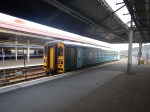


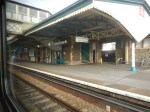

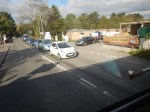















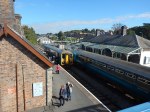







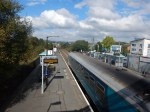


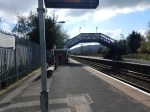
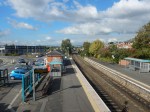
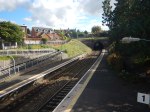
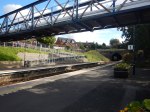
It certainly is a good alternative, even if like I did, you have an extra change of trains at Llandrindod.
From Carmarthen To Pembroke
From Carmarthen stastion I went on to Pembroke station before returning on a train an hour later, taking these pictures.
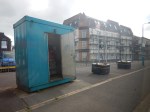


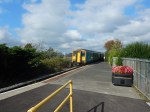


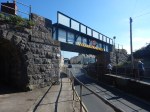
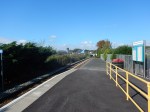
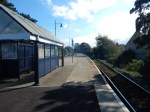






Pembroke and Tenby are certainly worth a visit and you could probably arrange the journeys, so that you did it all using one return ticket breaking the journey at Tenby one way.
The conductor suggested I do it, so if you’re uncertain if it’s possible, ask them.
Changing Trains At Carmarthen Station
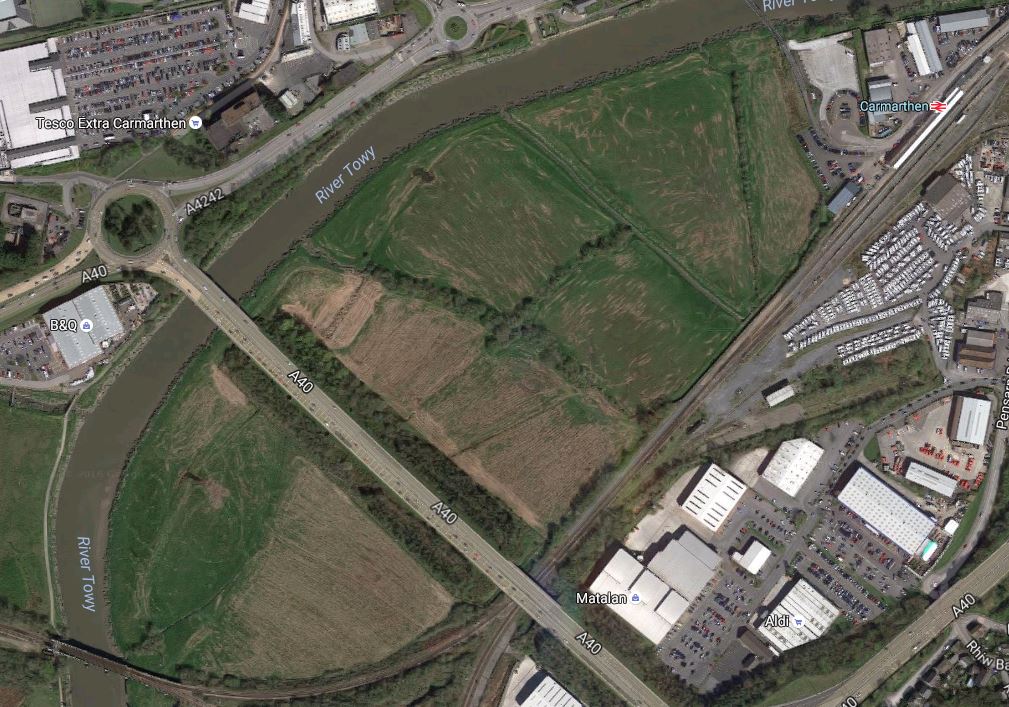
Carmarthen station is on a spur from the West Wales Line from a triangular junction.
This Google Map shows the station and the junction.
Carmarthen Station
My train from Swansea arrived in the station and I crossed the tracks to the other platform to get my onward train to Pembroke.
These are some pictures of the station.
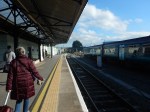
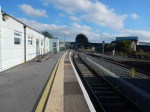

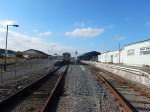
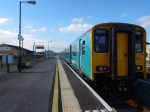
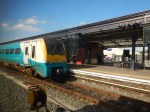

There aren’t many stations, where passengers are allowed to cross the lines.
This Google Map shows the station layout in detail.
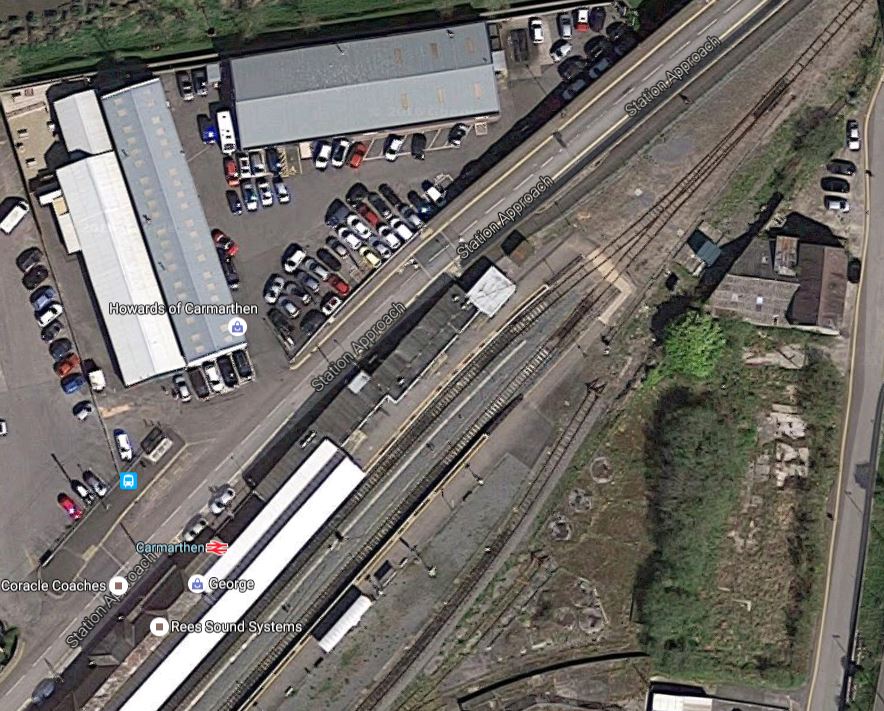
Carmarthen Station Layout
It is a good example of how a reversing siding works.
Note in the larger map, the railway crosses over the River Towy, as it goes to the West.
There is a lifting bridge over the river called Carmarthen Bridge.
This web page on Movable Bridges, describes the bridge and has a picture.
The bridge was built in 1911 and hasn’t worked since about 1956.
Are Crossrail Developing A Philosophy For Linking With Other Lines?
I have now written some posts about rail lines that have strong connections to Crossrail.
- In The Great Northern Metro, I described how a Great Northern Metro was being developed that had a very strong connection to Crossrail at Moorgate.
- In Extending Crossrail To Gravesend, I showed how Crossrail was having multiple effects along the North Kent Line.
- In The Future At Shenfield Station, I reprinted some comments, which said that Shenfield will become an important interchange.
All are different solutions, individually designed for the interchange.
Crossrail At Reading
If you look at the Reading station page on the Crossrail web site, nothing of substance is said, except the obvious.
Reading station requires relatively little work to prepare for the new Elizabeth line service.
But then you’d expect that as Reading station was only reopened after a complete rebuild in 2014. If the station hadn’t been designed to accept Crossrail efficiently, it would have been a design disaster of the highest order.
If say you are travelling from Bristol and want to go to say Bond Street you will have two possible routes.
- Stay on the train to Paddington and change to Crossrail there.
- Change to Crossrail at Reading.
I would appear that the change at Paddington is a short walk and an escalator down, but I have read nothing about how you will change trains at Reading.
Will it be a walk across a platform at Reading or an escalator up to the bridge and then another one down?
Judging by the London Bridge experience, I suspect it’ll be the escalator route.
As you have two options for the interchange, I doubt it will take long for passengers to work out what is their best route. They would also have the option to change their mind en route.
Some of the biggest winners will be passengers between say Bristol and stations between Reading and London, as they will probably have a relaxed change at Reading, rather one in a busy Paddington.
Crossrail At Shenfield
A lot of the reasoning at Reading for long-distance passengers applies at Shenfield, as you can change at Shenfield, Stratford and Liverpool Street for many services.
Crossrail At Abbey Wood
Passengers to and from North Kent only have one station to interchange with Crossrail, unlike those from the East and West.
Some information says that it will be a cross platform interchange at Abbey Wood station, but it could be a double escalator transfer.
It should be clear next year, when Abbey Wood station, is more complete.
The High-Frequency Interchange
If you look at stations and the frequency of Crossrail trains to and from Central London in trains per hour (tph) you get.
- Abbey Wood – 12 tph in Peak, 8 tph in Off Peak
- Shenfield – 24 tph in Peak, 16 tph in Off Peak
- Paddington – 24 tph in Peak, 16 tph in Off Peak
- Shenfield – 12 tph in Peak, 8 tph in Off Peak
So certainly going into Central London, you probably won’t have long to wait for a train.
Coming out, you might develop a philosophy if you need to catch a specific train out of Paddington or Liverpool Street.
The tube-like frequency of Crossrail will be a great help to passengers.
Interchange Between Crossrail And The Central Line At Stratford
This double cross-platform interchange is working at Stratford, where the Shenfield Metro and the Central Line have shared a platform, as long as I can remember. It actually dates from 1946.
At present there are 6 tph on the Shenfield Metro and 24 tph on the Central Line.
Crossrail will introduce other high-frequency interchanges like this.
Interchange Between Crossrail And The Great Northern Metro
At Moorgate, the frequencies of the two lines will be.
- Crossrail – 24 tph in the Peak and 16 tph in the Off Peak
- Great Northern Metro – 14 tph in the Peak and 10 tph in the Off Peak
The longest time you are likely to wait in the Peak is about four minutes, with six minutes in the Off Peak.
Obviously, you’ll still have to walk between the two platforms and the first train that comes might be going to the wrong destination.
I think Irene’s Law, that works so well for the Underground, could work equally well for Crossrail and lines linked to it, like the Great Northern Metro.
Interchange Between Crossrail And The Victoria And Piccadilly Lines
There is no direct interchange between Crossrail and the Piccadilly and Victoria Lines.
But there is cross-platform interchange between the Great Northern Metro and the \Victoria Line at Highbury and Islington station.
So will passengers going between Crossrail and the Nortern reaches of the Victoria Line do the double change at Moorgate and Highbury and Islington stations? I think East Londoners with their honorary degrees in ducking and diving will!
And then to get on the Piccadilly Line going North, it’s just another cross-platform interchange at Finsbury Park.
It won’t be a route on the tube map, but I’ve just calculated that if you’re going from Oakwood to Heathrow Central, it’ll be twenty minutes quicker than taking a direct run on the Piccadilly Line.
Interchange Between Crossrail And The Northern Line
Crossrail has interchanges with both branches of the Northern Line.
- City Branch at Moorgate
- Charing Cross Branch at Tottenham Court Road
As both branches are 20 yph now and will only increase, the longest wait to chanmge to the Northern Line will be little more than three minutes.
Interchange Between Crossrail And Thameslink
Both lines have a frequency of 24 tph, where they meet at Farringdon station.
If the interchange is an easy one, this one must work with the minimum of delay.
Interchange Between Crossrail And The East London Line
At Whitechapel, the frequencies of the two lines will be.
- Crossrail – 24 tph in the Peak and 16 tph in the Off Peak
- East London Line – 20 tph from 2019 all day.
The longest time you are likely to wait is about four minutes.
As the interchange will be a couple of escalators, it will be an easy one.
Conclusions
I said this earlier.
All are different solutions, individually designed for the interchange.
But until proven otherwise, they would appear to be easy and fast.
One factor that seems to fall out, is that if you have an interchange between two high-frequency lines, the interchange can be easy and fast.
Interestingly, train services at stations served by Crossrail are slated to be increased.
- Abbey Wood is getting extra Thameslink services and possibly other services made possible by Thameslink’s unblocking of London Bridge.
- Liverpool Street is getting more services because of new trains on the London Overground.
- Liverpool Street, Shenfield and Stratford are getting more services because of the new Abellio franchise and a billion pound purchase of new trains.
- Moorgate is getting more services because of the creation of the Great Northern Metro.
- Paddington and Reading are getting more services, courtesy of the Great Western Electrification.
I don’t think we’ve seen the last of the positive affects of Crossrail.
 The Anonymous Widower