Stourbridge And The Parry People Mover
I went to Stourbridge to see the Parry People Mover that is used on the branch line between Stourbridge Junction and Stourbridge Town.
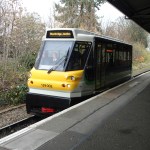
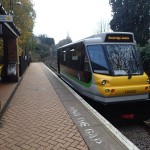
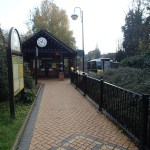
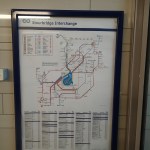
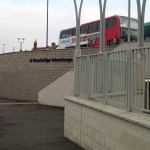

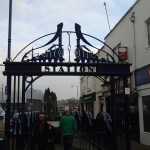

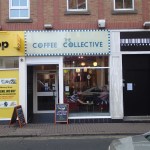

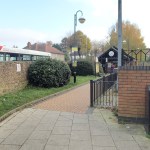
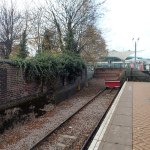

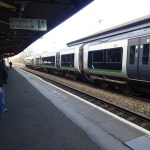
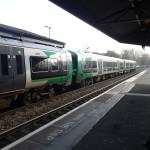
But as the pictures show, I also found a well-thought-out solution to the problem of how do you create an integrated transport hub in a town.
It was one of the first bus interchanges I’ve found outside London, where if you’d been dropped to get to X, you could have found the way without asking anybody.
One thing the pictures don’t show, is that on both trips the number of people on the train was more than you generally see on the Class 153 between Ipswich and Felixstowe.
I would also recommend the Coffee Collective. It is a short walk from the bus station and is obvious, when you exit the subway.
But having ridden in the Parry People Mover or Class 139, what do I think of it?
The first thing I would say, is that if you look at the pictures, you’ll see it is a genuine step-free entrance and exit. A lady pushed a baby in a buggy into the people mover, when I travelled, and it was as easy as any train I’ve ever seen.
You could say, wouldn’t it be cheaper to use a quality bus at Stourbridge to link Stourbridge Junction with the bus station in the town. Obviously, London Midland hasn’t done this. But, when they did this in the past, they brought back the Class 153, so perhaps this connecting train is a great traffic generator for services to Birmingham.
Other than that, it just did what you would expect a train would do and transported the around twenty passengers to the other station without fuss. The vehicle had a feel somewhat like the Docklands Light Railway, although it was a lot smaller.
As it is powered by a flywheel driven by a small internal combustion engine, this type of vehicles could have a range issue, but it won’t be as severe as that of a battery-powered one. In this section on the future of the Class 139 in Wikipedia, this is said.
This will entail an articulated unit, with a pair of PPM60 variants at either end of a fixed passenger unit—the whole unit will be capable of accommodating up to 220 passengers and travelling at up to 60 miles per hour (100 km/h) on railways or 50 miles per hour (80 km/h) on tramways.
If a double vehicle could move even 100 passengers over a distance of fifteen miles, then the branch line I know best; Ipswich to Felixstowe, could be run by such a people mover. It probably isn’t much slower than the Class 153, so it shouldn’t give too many problems with scheduling amongst the freight trains.
Two vehicles would probably be needed for the line, but it would seem likely that the frequency of passenger trains could be increased.
A special version of the vehicle could be designed for tourist branch lines such as the one at St. Ives, with space for bicycles.
How much extra traffic would shiny new trains, running more often, generate?
Having seen this first use of a simple energy-efficient people mover, I think that in a few years time, vehicles based on similar principles will become commonplace. Just as London’s new Routemaster, has shown that buses should be hybrid with flat floors and lots of entrances/exits, we will see a series of rail vehicles, where flywheels or batteries are used to create efficient hybrid drive systems and stylish modern vehicles sized to the traffic.
Eventually, I think we’ll see this type of train on a branch like Romford to Upminster, which is only about six kilometres long and has a speed limit of only 30 mph. If they are the only traffic on such a branch, this would remove the need for electrification. You probably wouldn’t take it down, but you’d switch it off. On the other hand this would make it easier to nick!
But because this type of vehicle doesn’t need electrification or other expensive infrastructure, it also opens up the possibility of adding new services and even lines. Go back to Felixstowe. The town used to have a station at Felixstowe Beach, which is close to the port and still served by the Felixstowe branch. It might at some point be thought to be a good idea to restart this service. It would be so much easier to do this with a vehicle like a Class 139 or a successor.
There are also quite a few heritage and freight-only branch lines connected to the main UK rail network. Could vehicles like this be used to run commercial services to connect passengers to the network? It would all depend on the branch line, but some companies are looking at possibilities.
Once one scheme is successfully up and running, I feel others will quickly follow.
Are There Any Other Places Where A Loop Extension With Stations Can Be Built?
I said this in my piece on the Northern Line Extension.
Reversing loops with stations are not unknown in the UK. Terminal 4 at Heathrow is served by the Piccadilly Line in this way and the Merseyrail Loop Line, is a larger example, that reverses and provides several stations for the Wirral Line. It could also be argued that Bank station on the Docklands Light Railway is two platforms on a reversing loop.
But are there any other places, where a loop extension with stations could be built to advantage?
The great advantage of the reversing loop layout for an extension, is in the construction phase.
1. Only one continuous tunnel needs to be built, which can be built with one tunnel boring machine (TBM).
2. Crossrail has shown that TBMs can be controlled to a high-degree of accuracy, which enables optimal loop tunnels to be created, going deeper than traditionally if necessary.
3. Simple stations can be built by connecting the out and return legs of the loop together and then adding lifts and escalators to the surface.
4. Simple one-platform stations could be built on the outer reaches of the loop.
5. It might be possible to reduce the number of shafts dug to the working tunnel. This would surely help in a crowded city.
6. There is only minimal disruption to existing infrastructure during the construction.
These are some places, where the loop extension with stations might be used.
Bakerloo Line Extension
There have been lots of proposals for the route of the Bakerloo Line Extension. Some are just simple ones taking the line to Camberwell and some envisage the line taking over the Hayes branch.
I have seen discussions about the latter and some have flagged up all sorts of problems, like how do you provide a service during the construction period.
So the design of this is going to be difficult. But I wouldn’t rule out an out and return loop going via Camberwell.
This links to my proposal.
Extending The Docklands Light Railway Westwards From Bank
There have been two proposals for this.
Would these best be served by extending the loop tunnel at Bank appropriately?
Possibly, but does the DLR have enough capacity for either of these services?
Extending The Docklands Light Railway Southwards From Lewisham
There have been two proposals for this.
Perhaps an underground loop could be used to turn trains at Lewisham, that served several stations, south of the current terminus.
Jubilee Line
Extending the Jubilee Line eastwards from its orignal terminus of Charing Cross could have used the reversing loop technique to take in stations in the eastern parts of the city in a wide loop. But in the end the Jubilee Line Extension was built to Stratford.
Extending The Jubilee Line To Thamesmead
In the design of North Greenwich station on the Jubilee line, provision was left for a branch to Thamesmead.
It is not in any plans at the moment, but a reversing loop could be built covering Charlton, Plumstead, Thamesmead and Abbey Wood.
Extending the Gospel Oak to Barking Line from Barking Riverside To Abbey Wood
This is an aspiration of Transport for London. But could it be dug in a single extended loop from Barking Riverside? The biggest advantage would that incorporating a single underground platform at Abbey Wood, would be a lot easier and affordable, than creating a full terminus there.
Extending The Victoria Line Southwards To Herne Hill
This is mentioned under Possible Future Projects on Wikipedia for the Victoria line. This is said.
For many years there have been proposals to extend the line one stop southwards from Brixton to Herne Hill. Herne Hill station would be on a large reversing loop with one platform. This would remove a critical capacity restriction by eliminating the need for trains to reverse at Brixton. However, it would be expensive and cannot currently be justified on cost-benefit grounds. Because the current line is heavily overcrowded this is considered to be the only extension proposal with any realistic prospect of coming to fruition; but to have any hope of being built, it would have to be seen to be effective in reducing overcrowding (by enabling trains to run more frequently) and not to increase it.
But it strikes me that if TfL’s engineers find better ways of building these loops and their stations, perhaps it could be built to increase capacity on the Victoria line.
Outside Of London
Outside of London, I don’t know the railway infrastructure, like I do in London, but I’m sure that the concept could be used elsewhere.
Expanding The Manchester Metrolink
In my view the Manchester Metrolink has not grown as fast as it should have done. A good proportion of the system opened in the early 1990s and nothing really seemed to open until the last few years.
For a lot of that twenty year gap, the government was one that you’d think would be sympathetic to expanding public transport in areas, where they could count on the vote. Perhaps, though Blair and Brown were more interested in war abroad than looking after the North!
There have been various plans to extend the Metrolink to places like Middleton, Salford, Stalybridge, Stockport and Trafford Park, but strangely not Bolton. Only the extension to Trafford Park has been funded.
Now I don’t know Manchester politics, but I do feel that if there had been a Manchester mayor for say the last ten years, I suspect with someone batting for Manchester, some of these extensions would have been progressed. Now that one should be there in 2017, hopefully progress will be quicker.
On this post there are comments about the non-extension of the tram from East Didsbury to Stockport.
So can this line be easily built, as it seems to me, as someone who only knows the area from the 1960s and a good map, that it would be of benefit to a lot of people?
Also if the Metrolink went to Stockport rail station, it would surely give an alternative Manchester station for those living on the tram network, just as Watford, Stratford, Ealing Broadway, Wimbledon and others do for the London Underground/Overground. Travellers should be given the choice of as many different routes as possible.
So I looked up how this line would get from East Didsbury to Stockport and found this article, which describes a route as proposed in 2004.
Reading the article, the route seems to be rather complicated and expensive, as it crosses the River Mersey several times and it doesn’t go to the rail station.
So perhaps if Stockport, is ever linked to the Metrolink, it will use a different route.
It all illustrates that extending the Metrolink isn’t as easy as it might first appear. I hope Manchester has got some good transport planners, who know the city well.
As an aside here, it is worth thinking about how the Northern Hub and in particular, the Ordsall Curve linking Manchester Piccadilly and Victoria, will indirectly affect the Metrolink. There could be at least four trains per hour both ways between the two stations and six going towards Bolton and Preston according to Wikipedia. So as some of these services will go south towards Stockport and the Airport, Manchester will probably see a high-frequency service between Piccadilly, Victoria, Bolton, Stockport, Salford and other places in the Greater Manchester area. The trains will all be electric and probably something like the ex-Thameslink Class 319. These trains will extend journeys all round the area to Blackpool, Huddersfield, Leeds, Liverpool, Preston, Warrington and Wigan. With not a lot more electrification, places like Blackburn, Burnley, Sheffield and Southport could be brought into an electrified network, where high-capacity trains run at least four times an hour on all routes.
One thing that would need to be done is improve the interchange between the Metrolink and some of the central Manchester rail stations. Victoria is showing glimpses of being superb, Piccadilly needs to be a much shorter walk and perhaps Salford Crescent needs to be linked to the tram.
I don’t drive and suspect will never do so again, but one thing that always worries me about city transport systems is, are there enough Park-and-Ride spaces and especially close to the motorways? I know London lacks badly in this area and suffers because of it. So how does Manchester stack up?
By the end of this decade, Manchester could be getting the transport system it needs and deserves.
An Advantage Of Eurostar’s New Trains
I’ve stood on the unwelcoming platforms at Stratford International station waiting to catch a fast train to Kent, as Eurostar’s trains thunder by on their way to Europe.
The current Class 373 trains are not the quietest, to say the least.
This morning, Nicola Shaw, the boss of HS1, said on BBC Breakfast, that the new e320 or Class 374 trains are a lot quieter.
So at least twenty years of development has brought another advantage, to those living along the route.
Hopefully, the trains for HS2 will be even quieter.
Do You Like It, Sir John?
Eurostar showed off their new e320 train this morning and the celebration was in full swing, when I popped into the St. Pancras station for a cup of tea.
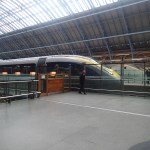
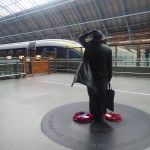
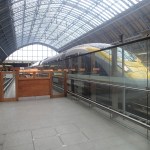
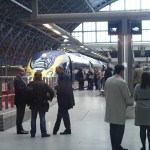

I wasn’t the only person with a camera, who took photos from behind Sir John Betjeman. So expect this image in the papers!
It’s All Go On The Manchester Metrolink
According to this article in Global Rail News, work has now started on the Second City Crossing or 2CC. But it is the last paragraph that shows how the Manchester Metrolink is developing.
November has seen several significant milestones ticked achieved for the Metrolink system, with funding confirmed for the Trafford Centre extension and the opening of the system’s new airport line.
More projects like this should be promoted if we are going to create a powerhouse across the North.
Incidentally, with my project management hat on, I don’t think the upgrading of Manchester Victoria station and the Metrolink has been planned as the partially joint project they so obviously are.
On my travels around Manchester in the last couple of years, I have sometimes found it extremely difficult to get between the two main stations; Victoria and Piccadilly. That would have been eased by making sure there was always one reliable easy-access properly-signposted link at all times.
Is This A New Economic Indicator?
I have just read this article in Global Rail News, which states that the rail freight section will recruit and train over 200 new drivers in the current year.
It would seem likely that the more freight moved by rail, the greater the economic activity.
I’ve chatted with a few drivers on trains and most seem happy with their jobs, even if some do moan about some of the cabs on certain freight locomotives.
How Many Diesel Multiple Units Might We Need?
in this post, I said that I wouldn’t be surprised if some new Class 172 diesel multiple units were ordered.
But how many might we need.
It is best to list all the smaller diesel multiple units that are running on the UK railways, with a few comments and thoughts.
Class 142
There are 96 two-car Class 142 trains. They were built in 1984 and Wikipedia says this about their use.
They were initially built for use on rural branch lines. However, as of September 2011 they are mainly used on busy commuter routes in the major cities in the north of England, with some also in use on local services around Cardiff and on Devon branch lines.
Regular readers of this blog, will know that I don’t have a very high opinion of these trains.
But their biggest problem is that they must be withdrawn by 2020 because of the disability regulations.
However because of the Liverpool-Blackpool-Manchester electrification and the possibility of electrification in the Welsh Valleys by the cut-off date, some of them might find other uses as scrap metal.
Currently Northern Rail has 79 and Arriva Trains Wales has 15, so some may need to be replaced by new diesel multiple units, as electrification won’t probably replace them all.
Class 143
There are 25 two-car Class 143 trains. They were built in 1985 and were refurbished in 2000. Like the Class 142, they will have to be withdrawn because of the disability regulations.
Arriva Trains Wales has 15 working the Welsh Valleys and therefore could be replaced, but the seven ran by First Great Western in the Exeter area, don’t have that happy conclusion.
As electrifying the Exeter local routes is probably a never-never, some new or cascaded stock must be found for these lines.
Class 144
There are 13 two-car and 10 three -car Class 144 trains. They were built in the late 1980s and also will have to be withdrawn.
All work for Northern Rail in the Leeds area on commuter routes. Some of the lines may be electrified by 2020, thus allowing some to proceed quietly to the scrapyard, but others might have to be replaced by new or cascaded trains.
Class 150
There are 135 two-car and 2 three-car Class 150 trains. They were built in the mid-1980s and can spruce up remarkably well, as this one has on the St. Ives branch. But I have been delayed by an unreliable Class 150.
A well-planned refurbishment of these trains could probably limp them on for a few years, provided they all receive the TLC that the unit on the St. Ives branch gets. Moving them to low-traffic routes would also help, as in some instances I’ve been on Class 150s, where two are needed.
Some in the Welsh Valleys and around Liverpool and Manchester, may also be released by electrification, so after updating, they might even be used to send the truly dreadful Class 142, 143 and 144 to the scrapyard.
Class 153
There are 70 of these 1-car Class 153 trains, which were created from Class 155 in the early-1990s.
Their main problem is capacity. When I lived in Suffolk, they used to work Ipswich to Cambridge and still work Ipswich to Felixstowe. But some like this unit on the Transwilts are reasonable transport if there aren’t many passengers.
I’m sure a lot of operators would like a nice refurbished Class 150 instead.
Class 156
There are 114 two-car Class 156 trains, which were built in the late 1980s.
In my view they are a better train than the Class 150 and 153 and there is only one serious problem with them. British Rail didn’t build enough!
Some are now being refurbished, with new disabled toilets.
Class 158 and Class 159
The classes 158 and 159 trains will soldier on for a couple of decades until they are replaced by electrification.
Some might even be replaced on long-distance services by that cavalry of the UK rail network, the InterCity 125.
Conclusion
If I come to a conclusion after all this, it is a complicated problem to decide how many trains are needed.
I think we can assume that the Class 15x will not be directly replaced, except possibly some Class 153. But many, perhaps displaced by electrification, will find themselves replacing 14x Pacers elsewhere.
I can’t do a detailed calculation, as I don’t have all the information. But it does seem that an order for say ten or twenty Class 172 trains from Bombardier could start the biggest game of musical trains ever seen.
Because of all the links, if say five sets were to be delivered before the May 2015 General Election, this could mean that many hard-pressed commuters and train passengers had greatly improved trains around the same time.
My Nineteenth Letter In The Times Since 2005
I had a letter published in The Times yesterday in a whole group of letters under the general heading of Don’t deny drivers a glimpse of Stonehenge. It said.
Sir, I have just taken a train to Cornwall and eaten lunch on the way. It was Britain at its best, on a British Rail-era, but well-refurbished high-speed train with superb locally sourced food and the best service.
Who in their right mind would want to drive all the way on the A303, even after the Stonehenge tunnel has been built?
If you want to have a memorable journey like me, see here.
Incidentally, I’m not counting my letters, but someone else is and in the on-line comments to the letter publishes the statistics of all the writers’ letters. As that is nineteen in just under two years, I wonder if I’ll be here long enough to reach my century.
Unlikely!
Rail Minister Hints At More Diesel Multiple Units
In this article in Rail Magazine, Claire Perry, a rail minister, hints that there may be some more new build diesel multiple units (DMUs). This was said.
Rail minister Claire Perry has dropped a strong hint that the Government is prepared to look again at the possibility of ordering diesel multiple units to beat overcrowding and plug a short-term gap.
It would seem to be logical, if you look at the UK rail network in say 2030 or even a couple of decades after that.
I think it is unlikely that all the small branch lines in the UK, like St. Ives or those in North Norfolk will either be electrified or closed. The only permanent solution will be some form of battery or flywheel two or three coach train with a small on-board diesel engine, which has a range of say forty or fifty kilometres.
So as the dreaded Pacers can’t be made compatible to the new disability regulations and should have been scrapped years ago, unless you employ the Bulgarian and Rumanian Armies to put up electric wires all over the country, something else needs to be done.
If an order for enough two and three car Class 172 trains, were to be announced soon, the closet trainspotter that is George Osborne, will be able to show many diverse parts of the country that he means business. Incidentally, in The Times yesterday, there is a long article by Janice Turner about spending two days following George Osbourne. This is the last paragraph.
Approaching St Pancras, Osborne frowns out of the window. “One of these,” he says, “is the Francis Crick building, a medical research institute, the first thing we approved when we took office.” Down on the concourse, he points to a half-built skyscraper. “There, that’s it,” he says, with satisfaction. And I realise this is how he wants to see himself in the story, striding off back to the Treasury with his brown government box, a man of glass and concrete, if not human hearts.
So does this partly explain, why under the Cameron Government we’ve seen such a spurt in infrastructure, with quite a bit of that for rail? All politicians like to leave a legacy, but it’s just that some leave much better legacies than others.
An order for Class 172 trains, would tick an awful lot of boxes.
- As on the Gospel Oak to,Barking Line (GOBlin), they make an excellent stop-gap train prior to electrification, in that they create good publicity and ridership for the line. It could be argued that the GOBlin wouln’t have been slated for electrification, if London Overground and the Class 172s hadn’t done such a good job on what was one of the worst communter lines in the UK.
- The trains are British-built in Derby by Bombardier.
- As they are already designed and built, the design and certification doesn’t feature on the critical path.
- There is a lot of expertise already in their operation and maintenance.
- They are an easy replacement operationally for a lot of the Pacers and Sprinters.
- If we make a mistake and order too many two-car sets, I suspect they can be easily lengthened to three-cars.
- At the present time, a lot of engineers are working hard to keep the old trains running and trying to get them updated. Ordering new Class 172 trains, would mean that they could do more worthwhile jobs for which there are skill shortages in the UK rail industry.
- In 2018, hopefully London Overground won’t need their eight sets, so those lines currently served by Pacers and Sprinters, will be getting some Class 172s anyway.
The only problem, is unlike Ford Escorts, you can’t just whistle them up immediately. But according to Wikipedia, there has been a lot of talk about potential orders, so hopefully Bombardier at least have a plan to start production in a timely manner. Given too, that the extra carriages for London Overground, are now being manufactured and delivered, Bombardier may have no capacity constraints.
One of the great advantages of at least creating a few standard Class 172s, is that they could be used initially on the worst lines for overcrowding and service, or to promote new services. But say if you put a a set on Burnley to Manchester via Todmorden, would the new route and trains cause overcrowding, just as it has on the Overground?
I wouldn’t be surprised if George Osborne announces some of these trains in his Autumn statement on December 3rd. Even a small number could have a significant effect!
The new Bacon Factory Curve may have had a significant effect on train services in the Felixstowe area, but a new two-car class 172 between the seaside town and Ipswich would probably have more perceived effect on the people of the area.
So will George’s legacy be in fifty years time, the railway commentators and bloggers of that time complaining about the ancient stop-gap Class 172 trains still trundling up and down the branch lines? And will these commentators be praising them, just like I and so many commentators today, praise the nearly fifty-year-old stop-gap Inter-City 125s, still speeding us to Wales, the West |Country, Nottingham and Scotland.
 The Anonymous Widower