Small Annoyances In Travel
I have some big things, that annoy me, but in my travels, I constantly come across small things that can be improved.
1. Beggars Selling Tissues
A complete pain and an annoyance to train companies too!
One day, an annoyed drunk, will tell one to get lost very forcibly!
2. Bi-Lingual Signs
If the Welsh want to have station signs in Welsh that’s for them to decide, but having everything in Welsh and English just clutters the station and makes doing simple things like finding toilets difficult.
3. Bus Information Outside London Is Mainly Useless
London’s bus maps and text Countdown system, sets a very high standard for bus information.
But why is it, that no area of the UK, or few in Europe for that matter, has a system that works as well for visitors?
4. Bus Pass Restriction In Other Countries Of The UK
Today, I was in Cardiff and had to buy a ticket. I had no small change, so I held everybody up and in the end a kind Welshman paid.
I believe that if all bus passes worked all over the UK, it would be a self-financing scheme, as more of us would travel to the other three countries and probably spend money which would generate VAT and other taxes.
Supposing too, we also allowed those from other countries over sixty-five or disabled to use buses for free. Would this encourage tourism and create revenue?
It certainly would be an experiment that would be worth trying.
5. Buses With Only One Door
All of London’s buses, except for the very smallest have two or more doors. It speeds loading and unloading, especially for those in wheelchairs or pushing buggies, so the buses go faster.
6. Cities And Towns With Two Disconnected Main Stations
Some cities and large towns have two main stations. Birmingham, Blackpool, Glasgow and Manchester come to mind.
If they can’t be connected by a proper rail connection, then at least there should be a ticketless way of getting between the stations.
Several times a year, I do journeys, where I have to go across Manchester between Victoria and Piccadilly stations. I have to buy a ticket on the tram, but if say I have a ticket from Euston to Burnley or Blackburn, the tram should be included.
It is not a system designed for the real needs of travellers.
7. East Croydon Station
East Croydon Station is the ideal changing point for journeys to Surrey and Sussex.
But despite the rail lines being in place, it is not easy to get there from East London. You use one of these routes.
- Bus or Bus/Tube to London Bridge station and then use Thameslink.
- Bus or Bus/Tube to Victoria station and then use a direct train.
- East London Line to West Croydon station and then a tram
The last method can’t be used coming north, as the trams don’t serve West Croydon when going west.
At present, you can take the East London Line to New Cross Gate or Norwood Junction stations and change, but this will be stopped, when the full Thameslink opens.
8. Ordsall Chord
I fear that due to the persistent opposition of one misguided and obstinate individual, that the Ordsall Chord will never be built.
9. Paddington Station
For those of us in East London, Paddington station is a very difficult station to get to. Unless you’re happy to crawl along the Hammersmith and City Line and walk a long way to your train.
10. Stations With No Information On How To Use Local Buses
Manchester Piccadilly station is particularly bad and in many cases you have to walk to Piccadilly Gardens to get the bus you need.
Some towns and cities like Sheffield have the main bus station by the train station.
If this is not possible, then at least have comprehensive information.
11, Stations Without A Marks & Spencer Simply Food
Paddington and Nottingham stations annoy me, as these two important stations don’t have a Marks & Spencer Simply Food store, which is the only one I trust for gluten-free sandwiches, snacks and ready meals.
12. Stations Without Ticket Machines
Most stations have them these days, but I’ve come across a couple recently which don’t.
They should also be as close to the platforms as possible, under a shelter from the weather.
13. Taxi Drivers That Are Incompetent
In London we’re spoilt as our black cab drivers know where they’re going and everything is on a meter.
I think because of this, all the mini-cabs seem to work to a very good standard of knowledge.
But I’ve had some very incompetent taxi drivers in parts of the UK! One was even a black cab!
14. Toilets That Need Money
I know that providing toilets is expensive and that there are other reasons to charge, but why can’t someone develop a toilet that can be entered using a contactless bank card.
15. Urban Area Ticketing
If I wasn’t old or infirm enough for my Freedom Pass, I could use any contactless bank card to pay my fare on all of London’s transport.
But why can’t I do this in places like Birmingham, Edinburgh, Glasgow, Leeds, Liverpool, Manchester and Newcastle?
Are these transport authorities worried that if passenger numbers rise like they have in London with contactless ticketing, that they couldn’t afford the extra buses, trains and trams?
Manchester’s Nineteenth Century Ticketing
On Wednesday from my hotel by the Reebok Stadium at Horwich Parkway I had to get three tickets to get to Manchester Piccadilly station.
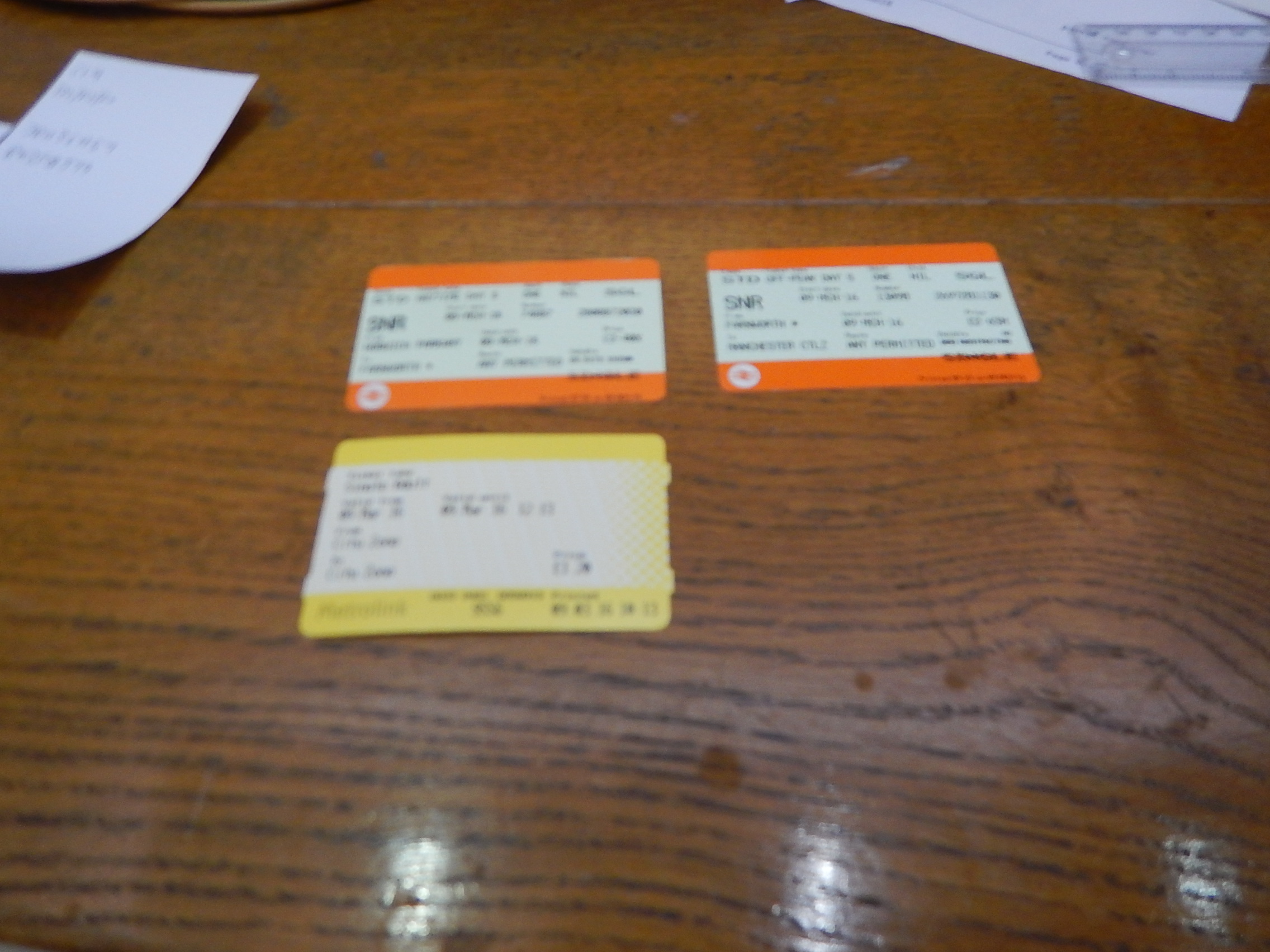
Three Tickets To Ride
The first took me from Horwich Parkway to Farnworth with a change at Bolton.
The second then took me from Farnworth to Manchester Victoria
The third was the tram ticket across the city.
As there were not even any ticket machines at Horwich Parkway and Farnworth, I had to use the Ticket Office.
It’s all so very nineteen-century!
At Farnworth, I got talking to a couple of fellow passengers, who were local and probably over ten years older than I am.
One had just visited his granddaughter in Bromley and said he’d been impressed with using his bank card as a ticket in London.
Mancunians seem to understand London’s simple ticketing concept, so why haven’t the transport authorities embraced contactless ticketing?
It might encourage a few more visitors and commercial activity, if all the great cities of the North allowed contactless ticketing with bank cards.
It will happen, if only because American Express, AndroidPay, ApplePay, Mastercard and Visa will insist it does for their own commercial interests.
And We Thought Bendy Buses Were Long
Londoners didn’t get on well with articulated or bendy buses and a major complaint about the Mercedes-Benz Citaro was their length of eighteen metres which blocked junctions and turns for other road users and crossings for pedestrians.
A friend told me the only reason they were bought was the length and the three entrances, allowed people to get on without paying.
Our two bendy routes here in Dalston; the 38 and 73 have been replaced by New Routemasters and I think it is true to say, that three entrances don’t encourage fare-dodging, but they do speed up loading and unloading.
So it was with a bit of trepidation I read this article in Global Rail News, which is entitled Approval For World’s Longest Tram. This is said.
BKK has received approval to operate the first of its new 56-metre Urbos 3 trams in Budapest – thought to be the longest trams in the world.
It is a version of CAF‘s Urbos 3, that are used in Birmingham and Edinburgh. Those trams are just 33 and 42.8 metres long respectively.
They are over three times the length of London’s hated bendy buses.
What Is Happening On The Midland Metro?
I am looking forward to taking a train to Birmingham and then getting on a tram of the Midland Metro at New Street station.
This article in Construction Enquirer is entitled Balfour months late on £127m Birmingham Metro and gives some details of the delays.
But surely, this project should have been delivered some months ago?
The article also says that the trams will reach Centenary Square in 2019. As these will be battery operated trams, it does seem a rather long time to create just a few stops without any catenary.
Compare the progress of expansion in Birmingham to that in Manchester, where a much more complicated Second City Crossing is being built and you come to some interesting conclusions about Birmingham and the delivery of projects for the Midland Metro..
Will We Get Trams On The Isle Of Wight?
The Island Line on the Isle of Wight, is an oddity in that it is part-tourist attraction, part-commuter link and part-important railway, run using old London Underground tube trains. I wrote about my only ride on the line in A Trip On The Island Line.
According to this report on Rail Magazine, which is entitled Garnett report advises trams for the Isle of Wight, it would be better if the line was redeveloped using trams or light rail, and probably run under much greater local control.
I agree, but I can already hear moans from people who want to keep the line as it is. But it must be a maintenance and operational nightmare! All credit should probably go to South West Trains and their partners, who keep this museum piece running.
I also feel that there could be some innovative form of light rail, run on this difficult line, using a mix of all the new technologies now coming in to the mainstream.
- Ability to run on a well-laid standard gauge track, without electrification.
- Battery/flywheel and electric operation with charging at end and interchanges to give a range of five to ten miles between charging stations.
- Spacious, step-free and enough vehicles, with the capacity of probably a three-car tram.
- Street running capability.
- Totally automatic or semi-automatic one-man operation.
- Tramway-style infrastructure and rules, so stops would be safe and simple.
- Several trips an hour frequency
- Contactless bank card ticketing.
In some ways the nearest form of transport at present is a Parry People Mover. But these are just not big or automated enough. However a modern tram run with more automation and on batteries could be a solution.
I think there is an opportunity on the Isle of Wight to create the prototype of an advanced form of self-contained, environmentally-friendly transport system.
The Island Line is unique in the UK at the moment, but I can think of several places, where this form of automatic light rail people mover might be a solution.
- Chessington South to Chessington World of Adventures
- Greenhithe to Bluewater
- Ipswich to Felixstowe – It could even extend to the seafront along pedestrianised streets.
- Romford to Upminster – Surely, running a four-car Class 710 train is an expensive solution!
- St. Erth to St. Ives
There must be many places in the UK and around the world, where a simple standard drop-in automatic light rail system can be applied.
Many could even be built by local commercial interests or authorities.
Brummies Go For Battery Trams
The Midland Metro has several extensions in the planning stage and this article in Global Rail News is entitled Approval for catenary-free trams in Birmingham.
So the Metro’s Urbos 3 trams will be fitted with batteries to allow them to travel without the need for overhead wires on extensions to the current system.
It is not new unproven technology as the trams’ builder; CAF have buuilt battery-powered Urbos 3 trams for Seville some years ago. They are also used in Cadiz and Zaragoza.
The article in Global Rail News says this.
Birmingham will be the first city in the UK to use the technology. The batteries will be fitted to the roof of the vehicles and recharge when the tram moves back under the wires.
Routes identified for catenary-free operation include the entire Birmingham Centenary Square extension, the Birmingham-Edgbaston extension, the Birmingham Eastside extension, which will stop at the future Curzon Street HS2 station, and the Wolverhampton city centre extension.
Removing the need for overhead lines on these routes will save £650,000, ITA has said. However, the cost of procuring and installing the batteries isn’t yet known.
As Edinburgh Trams also use the same Urbos 3 trams, I wonder if Edinburgh will use similar technology to extend their tram system. The city had a lot of trouble putting up the wires, so surely a system without them may save money and time on the construction.
after the order for Arriva Rail North’s New Trains, CAF seem to be doing well in the UK.
Where will their battery trams be seen next?
It would have to be on a new system, rather than an update to an existing one.
But I do think, that Blackpool’s proposed extension to Blackpool North station could use Bombardier’s version of the battery technology.
This video on YouTube shows Bombardier’s Primove system. It’s probably more advanced than the CAF system.
Exchange Square Metrolink Stop
The new Exchange Square Metrolink stop on the Metrolink Second City Crossing has opened.



Where’s the map at the stop?
I don’t know Manchester City Centre that well, so I need help, without getting my smart phone out.
Bombardier’s Battery Technology
I have just found this timely article in the Rail Engineer entitled Battery-Powered Tram Record.
It is a detailed technical article about batteries and their application to Bombardier’s new trams in Germany.
Is it a case of trams today and trains tomorrow?
A New Route To The City Ground, Nottingham
Ipswich Town went to play Nottingham Forest at the City Ground today.
Usually, I walk from Nottingham station using Trent Bridge to cross the Trent.
But today, I decided to use the extended tram route to go to the stop at Meadows Embankment, from where I walked along the river to the ground.
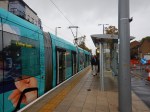
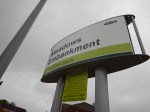























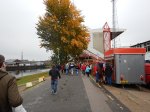



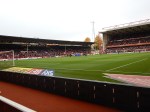
I did cross the Trent once on the Wilford Suspension Bridge that carries utilities over the river, but it is a much more pleasant route, that is less crowded and away from the traffic.
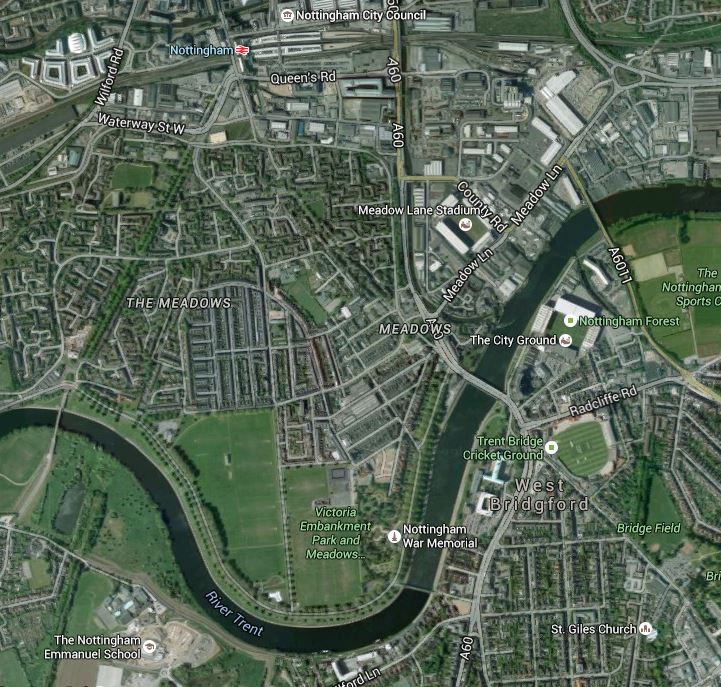
This Google Map allows a comparison of the distances.
Walking To The City Ground
The Wilford Toll Bridge, where the trams cross the Trent, is the westernmost bridge on this map, whilst the Wilford Suspension Bridge is just South of the Nottingham War Memorial.
As an aside the Wilford Toll Bridge, is the only bridge which says it is a toll one, but doesn’t even allow vehicles to cross, let alone charge them for it?
If you are driving to a match at any of the three grounds by Trent Bridge, you can go to the Park and Ride at Clifton South and then get a tram to Meadows Embankment and walk. I think that the Park and Rid could be free if you use the tram.
I walked the obvious route from the tram to the ground, but there may be a shorter route that cuts out the bend in the river or cuts through the houses after crossing the suspension bridge.
Perhaps, Nottingham City Council should signpost the best route!
Significant Documents
When I wrote Increased Frequencies On The East London Line, I relied on this document from Transport for London (TfL) entitled London Overground and Docklands Light Railway Growth.
The document was significant because of its openness and the way it laid out how the London Overground and the Docklands Light Railway will cope with growth.
I think the document also shows how a properly planned public transport project attracts users, that are a precursor to the growth.
After all, in the last few months, I’ve seen the extension of the Nottingham Express Transit and the opening of the Borders Railway, neither of which have attracted substantial amounts of negative comment.
So perhaps we’re now getting rather good at planning these types of projects.
Over the last few months, I’ve read some significant documents, that look to the future.
- Transport for London’s London Infrastructure Plan for 2050
- Liverpool City Region Long Term Rail Strategy
- Greater Manchester Rail Policy
All are quality documents and are superb starting points for the development of railways in their area.
 The Anonymous Widower