Getting My Bearings In Krakow
After settling in to the hotel, I decided that I had better get a travel ticket, so I walked back to the station and had a general look around.



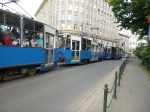

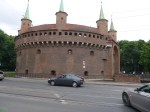


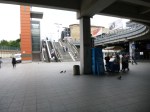

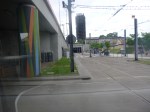


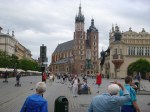











In some ways, I should have queued up for the ticket, when I passed through the bus station the first time. But I was able to buy a 48-hour ticket for the trams and buses, which would suit my purposes in Krakow almost to the hour.
But if like me, you get a hotel between Rynek Główny and the combined bus/train station, and you are prepared to walk, it is an easy city to navigate as there are maps of all types everywhere.
Something should be said about the Trams of Krakow. The system is pretty old and there are still a few vintage trams of the Communist era, that are gradually being replaced. However, it seems to run well, reliably and frequently. The information is very good and about half the trams have modern electronic displays, so they are not difficult to use and probably rate for usability, with say the London Tramlink or the Manchester Metrolink.
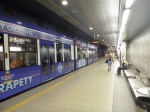
Krakow doesn’t have a Metro, but they have created a fast tram instead. The line runs in a tunnel shared with pedestrians under the main railway station and is a very simple way to integrate a high-capacity tram into the rail system. The same idea, should have been used at Stratford, where the DLR platforms for the Stratford International branch, should be in the two passenger subways. I have discussed this before.
Quiet Flows The Don
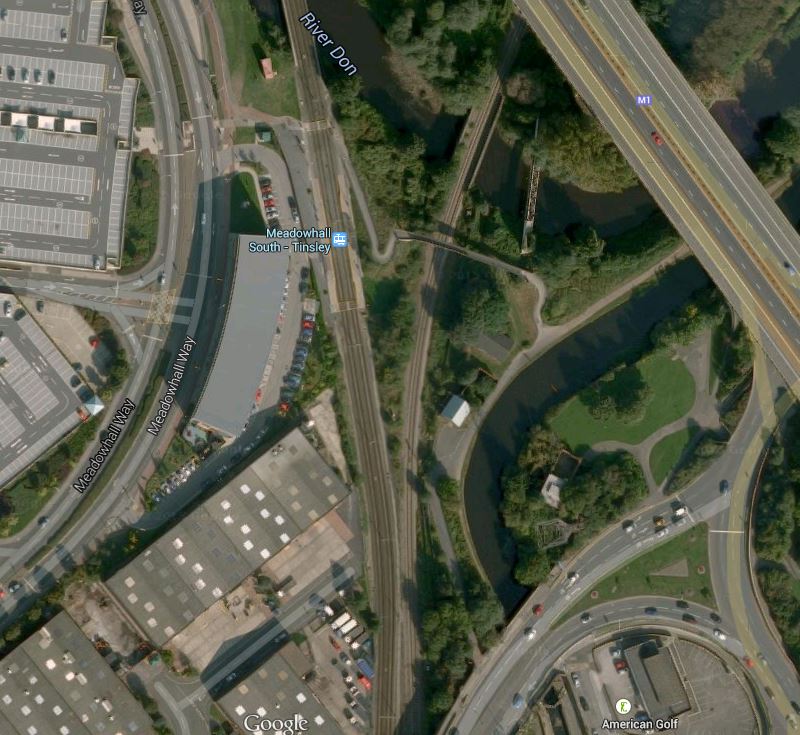
The tram-trains between Sheffield and Rotherham will join up to the Sheffield Supertram in the area of the Meadowhall South/Tinsley tram stop.
This Google Earth image shows the area.
Tinsley Area
Note the tram line marked by the blue symbol which shows the Meadowhall South/Tinsley stop, running down the map, with the single-track Tinsley/Masborough South Junction-Rotherham freight railway, splitting off to the right. Note the footbridge that rises from the tram stop and crosses the freight line, which you can see in the pictures. You can also see Meadowhall at the left and the M1 at the right and the various roads leading to and from Sheffield.
I took these pictures of the area.
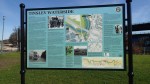
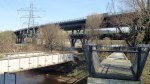
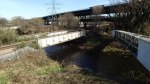


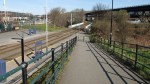
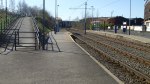
Believe it or not, in the midst of all this chaos is a quiet area by the River Don.
For the eagerly awaited tram-train, a connection will need to be made between the tram line and the single-track freight line. There is little detail at present about how the connection will be made, but the freight line will have to be provided with some form of overhead electrification at either 750 V DC or 25kV AC. However, the Class 399 tram-trains will be able to use any handy voltage.
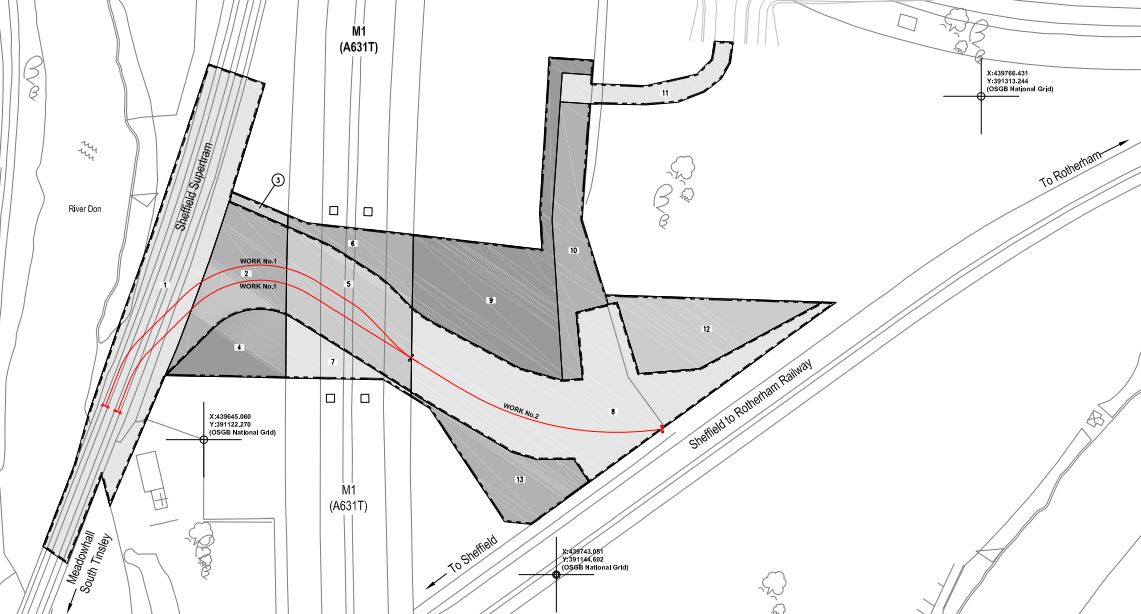
I’ve just found this page on the Network Rail web site, which is their home page for the creation of the Tinsley Chord which will connect the tram line to the freight line. I was able to create this map of the chord from one of their published documents, from the impressive and comprehensive site.
The Tinsley Chord
The new chord is shown in red and curves between the tram line at the left and the freight line, which goes off to the right.
Note that the Meadowhall South/Tinsley tram stop is the Sheffield side of the chord, so passengers going between Rotherham and Meadowhall could enter the Meadowhall Centre via Debenhams, as I did after my walk by the River Don.
Incidentally, Network Rail and their contractors will like working on this one, as sixty percent of the work is virtually indoors, as it is underneath the massive Tinsley Viaduct that carries the M1 over the area.
If you want to know how this chord underneath the M1 will effect the local bats, hedgehogs and newts it’s all laid out in this document.
Perhaps the best news of the project is contained in this recent report from the Sheffield Star, which is entitled Construction work planned for long-awaited £60m Sheffield to Rotherham tram-train scheme.
The article hopes that tram-trains will be running in 2017.
Threading The Midland Metro Through Birmingham City Centre
I’ve been wanting to take this set of pictures for some time.
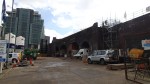
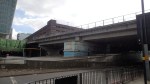
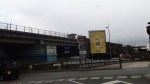




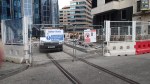

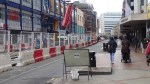




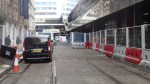
So on my way to Coventry, I took the train to Birmingham Snow Hill station and then followed the Midland Metro construction back to Birmingham New Street station.
According to Wikipedia, the Line One Extension of the Midland Metro, should connect Snow Hill and New Street stations in 2015. This may still happen, but to my untrained eye, there seems to be a lot of work to be done.
But when completed, it will be an invaluable asset to the City of Birmingham.
Birkbeck Tramlink Stop
Birkbeck is a stop on the Croydon Tramlink and I took these pictures this morning.

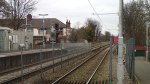
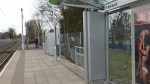
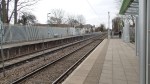
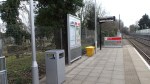
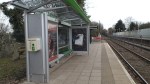
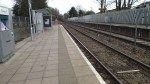
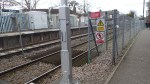
It is a rather unusual stop in that a double-track Crystal Palace Line has been turned into a bi-directional single track railway and a bi-directional tram line. Both lines have stops on the outside.
Note the wire fences to stop people and animals straying onto the electrified railway line.
The tram stop is very much a typical tram stop for Tramlink, with a platform the right height for entry to and exit from the low-floor trams that run on the line, a rudimentary shelter, information and maps and a well-presented ticket machine.
Because of the bi-directional nature of the line, passengers use it to go to either Croydon or Beckenham Junction. Provided they know where they intend to go, I suspect passengers don’t have too much trouble getting on the right tram.
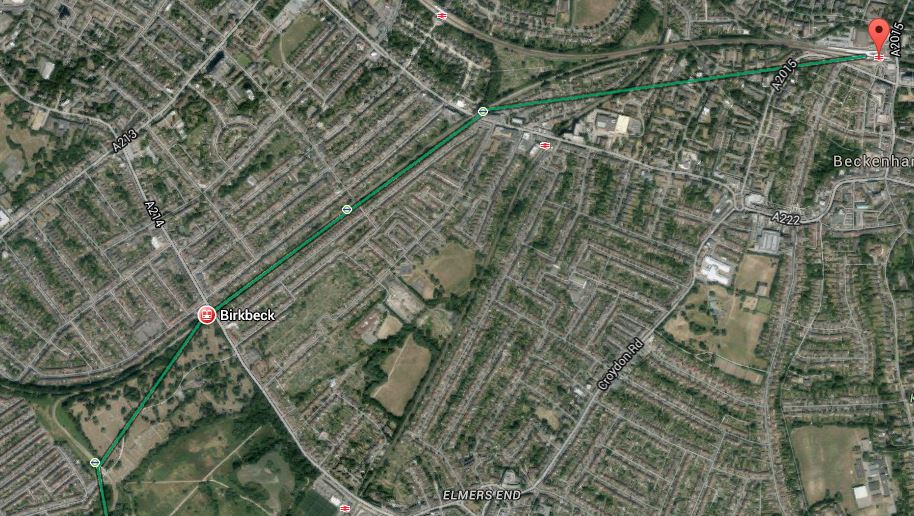
This Google Earth image shows the layout of the lines between the junction where the lines join and Beckenham Junction station.
Birkbeck To Beckenham Junction
Beckenham Junction is shown by the red arrow and the green line is the rough direction of Tramlink Line 2. Note the sharp cyrve at the far left of the image, where Tramlink joins the Crystal Palace Line.
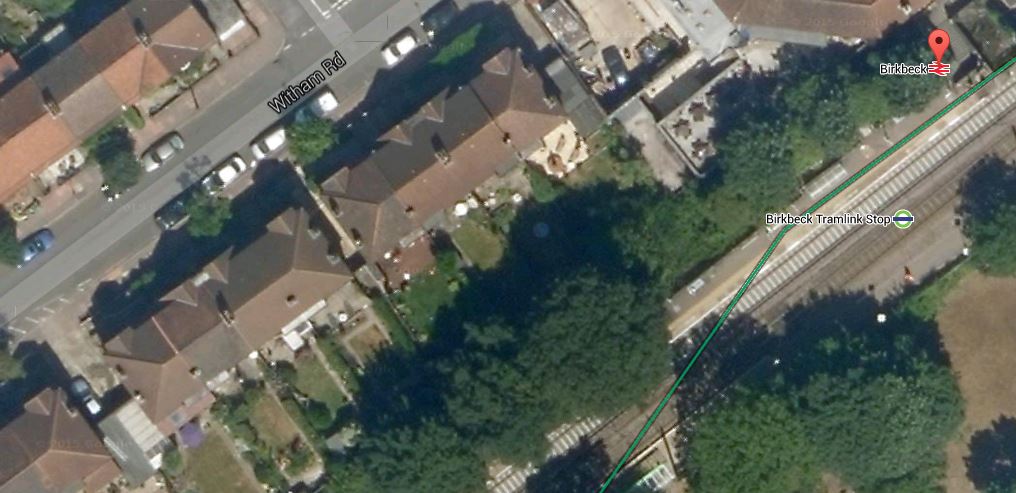
This second Google Earth image shows an enlarged view of the rail station and tram stop.
Birkbeck Station
Note the two platforms and two single-track lines with a fence between them.
I think it is true to say, that if the Tramlink was being designed today, they would seriously look at using tram-trains on this branch, as these could just join the main lines at the junction and then proceed to the station at Beckenham Junction, where there is even a bay platform, that could be used to turn the trams back to Croydon,
But the system they use at Beckenham has been proved to be very safe.
Could Tram-Trains Be Used To Advantage In Croydon?
The Croydon Tramlink has been around since 2000 and doesn’t get mentioned very often with respect to either expansion or tram-trains.
Tramlink Route 1
The Tramlink Route 1 to Elmers End, does not give much scope for tram-trains as Elmers End is the only station with a rail connection, other than East and West Croydon.
That is unless you wanted to run tram-trains up the Hayes Line to perhaps Lewisham or even Cannon Street.
These pictures show how the tram interfaces to the rail line at Elmers End.

It would appear to my untutored eye, that trams might be able to connect northwards, but southwards looks difficult. This is probably confirmed by this Google Earth image of the station.
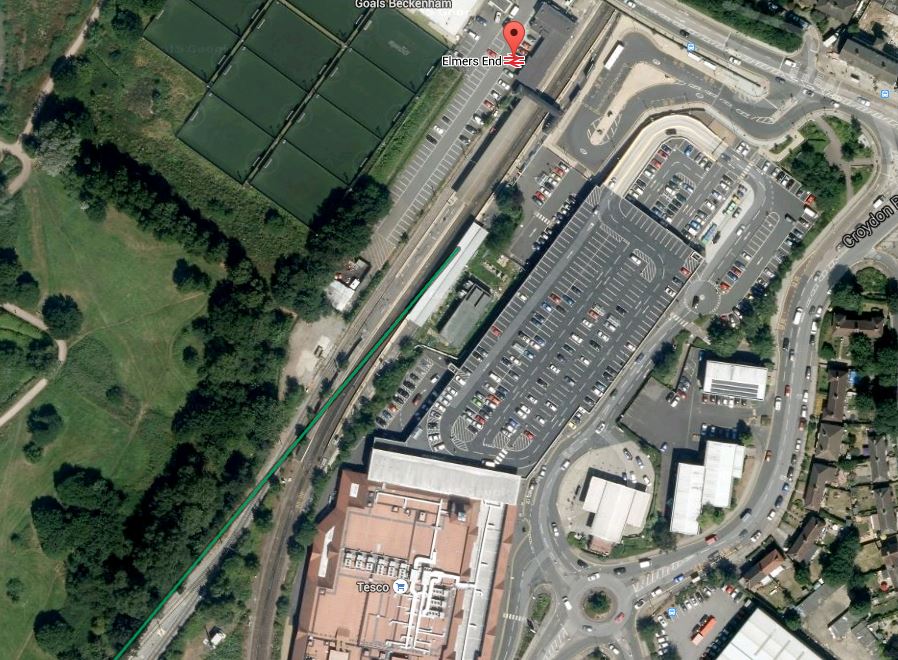
Elmers End Station
If Route 1 was run by tram-trains, that continued after Elmers End, this would not cause any problem at the Croydon end, as they’d just go round the loop and back to the east.
So it looks like there is little scope to put tram-trains on Route 1 and then run them up and down the Hayes branch.
Tramlink Route 2
The Tramlink Route 2 to Beckenham Junction actually runs alongside the electrified railway between that station and Birkbeck. If that line had been built in France or Germany in the last few years, I think they would have used tram-trains to provide the service.
It is in the area of Birkbeck station, shown here in a Google Earth image that tram-trains could be used to advantage.
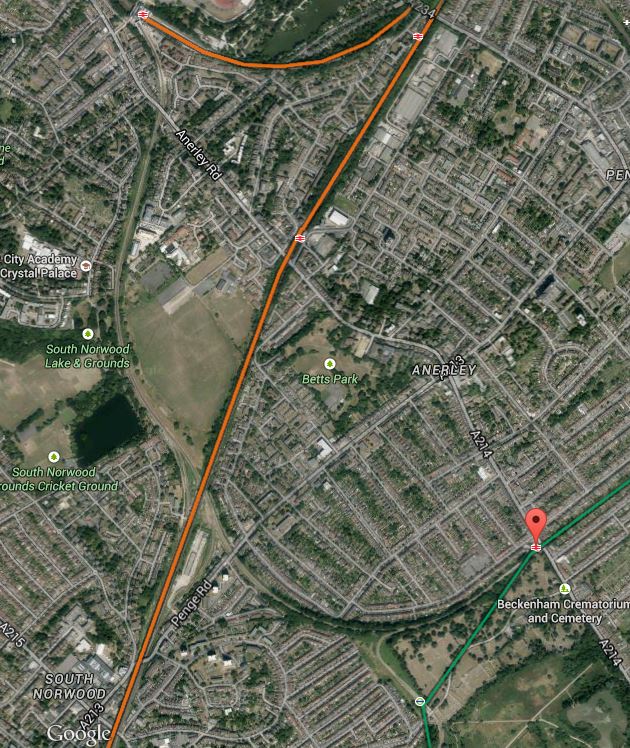
Birkbeck To Crystal Palace
Note the red arrow pointing out Birkbeck station, the orange lines denoting the East London Line and the green line denoting Tramlink Route 2.
The Crystal Palace Line and Tramlink Route 2 are both single-track lines from west of Birkbeck most of the way to Beckenham Junction, with the railway carrying just two trains an hour each way.
It has been a long-term ambition of Tramlink to run the trams on-street to Crystal Palace, but with tram trains you only need a small piece of infrastructure.
At the bottom of the image, there is a blue roundel at a kink on the green line denoting Harrington Road tram stop. From here, the line goes northwards and turns to run alongside the railway to Birkbeck station.
The line goes to Crystal Palace station if you could turn left. That station is at the end of the topmost orange line on the map.
Here’s a large scale Google Earth image of the area, where Route 2 joins the main line railway.
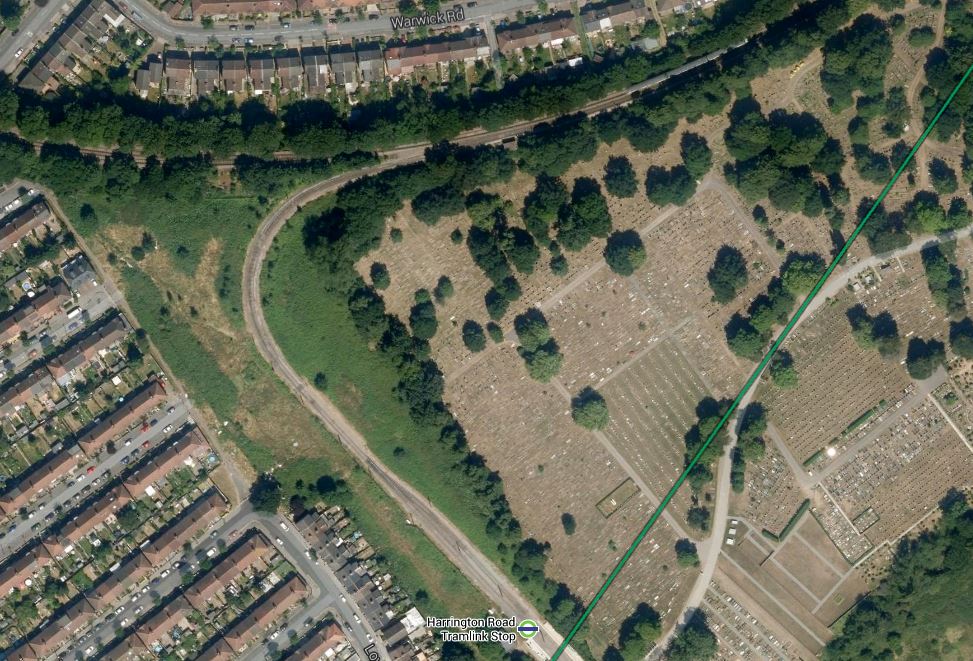
Tramlink Route 2 To Crystal Palace
There is probably enough railway land where the lines meet to create a simple triangular junction that would allow tram-trains to go from Harrington Road to Crystal Palace. As tram-trains are in effect normal trains on the main line, they would use the normal platforms.
The only problem is to decide where they reverse and go back to Croydon.
Looking at the Crystal Palace Line, the tram-trains could even be run all the way to and from Victoria or London Briodge, but that probably wouldn’t give enough capacity. So a bay platform will have to be brought into use somewhere. This is Platform 1 at Crystal Palace station, where it might be possible.
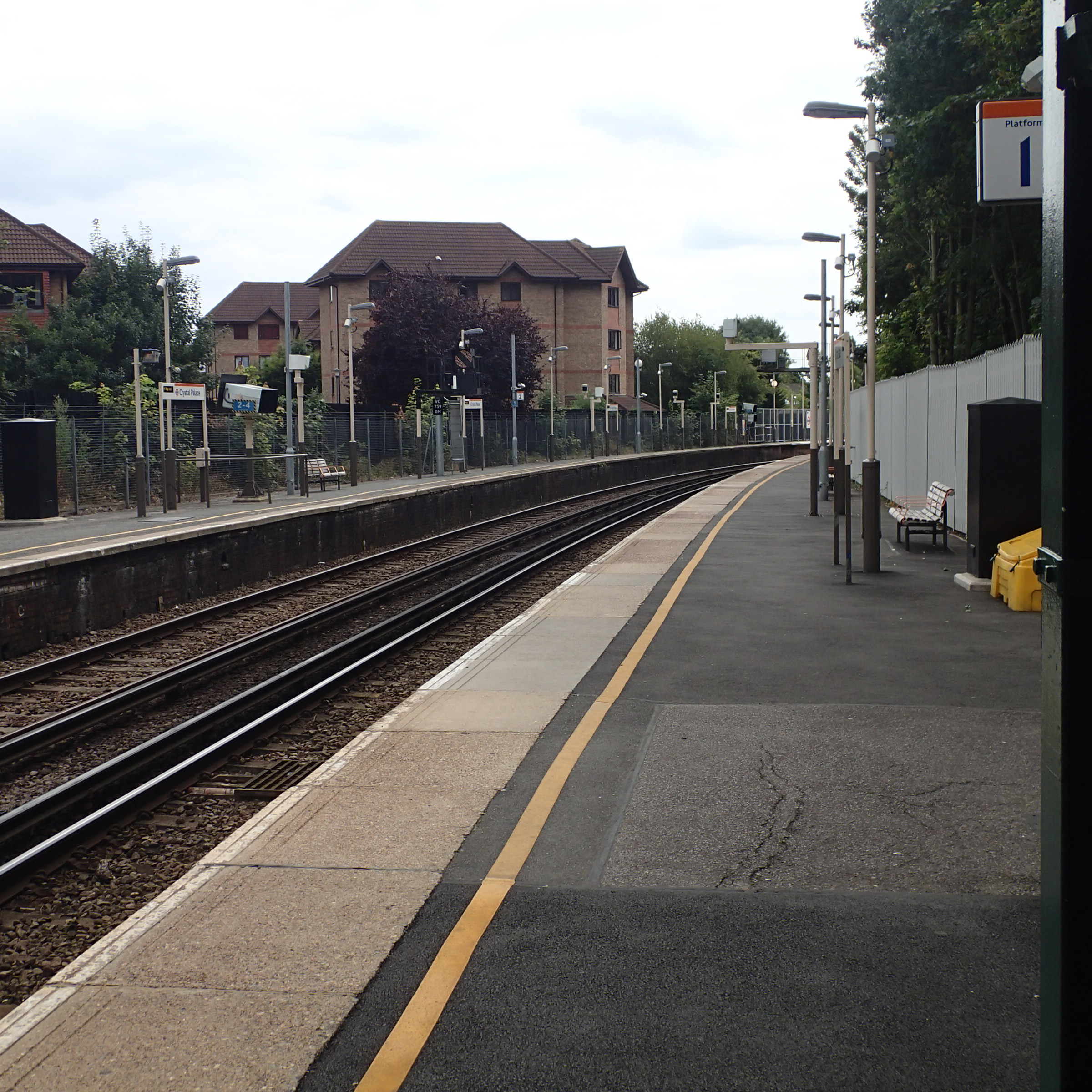
But it would need some good architecture and clever engineering.
Incidentally, the line has an operating speed of sixty miles an hour, so the Class 399 tram-trains would not interrupt any traffic, if they went all the way.
Where the tram-trains terminate will also be determined by passenger statistics.
If a variant of Route 2 was run by tram-trains, that continued to Crystal Palace, this would not cause any problem at the Croydon end, as they’d just go round the loop and back to the east.
The Hayes Line
Closely related to Tramlink Routes 1 and 2 is the Hayes Line.
I get the impression that it is a bit of a nuisance to train operating companies, as it’s always being talked about as a possible new terminus for the Bakerloo Line. Withdrawal of passenger services from the line have also been proposed and rejected in the recent past.
This Google Earth image shows how it crosses the Crystal Palace Line to the west of Beckenham Junction.

Hayes Line Crossing The Crystal Palace Line
The Hayes Line crosses from north to south, but it is not a complete junction, where tram-trains coming from Crystal Palace could access the line. But there would appear to be the space for the necessary infrastructure.
As I said in the section on Tramlink Route 1 it could also be linked to that route at Elmers End.
There may also be advantages in running tram-trains as trams on the Hayes Line.
Remember that if you ran tram-trains from Victoria to Beckenham Junction and/or from Cannon Street to Hayes, you don’t necessarily have to stop running the current trains.
But overall, I have my doubts about tram-trains on the Hayes branch, without some radical thinking.
Perhaps it is extended to the south past Hayes station as a tram route or Elmers End could be developed as a full interchange for trams and tram-trains, working the two routes.
But as there are more urgent proble,s and proposals on Tramlink, I think nothing much will happen on the Hayes branch.
Tramlink Route 3
The Tramlink Route 3 to Wmbledon has two connections with the rail network; Mitcham Junction and Wimbledon.
I am not knowledgeable about routes and traffic levels in that part of London, to postulate if tram-trains would be any advantage and give better connectivity for rail passengers.
However one of the proposed extensions of Tramlink is to Sutton station. Look at the layout at Mitcham Junction in this Google Earth image.
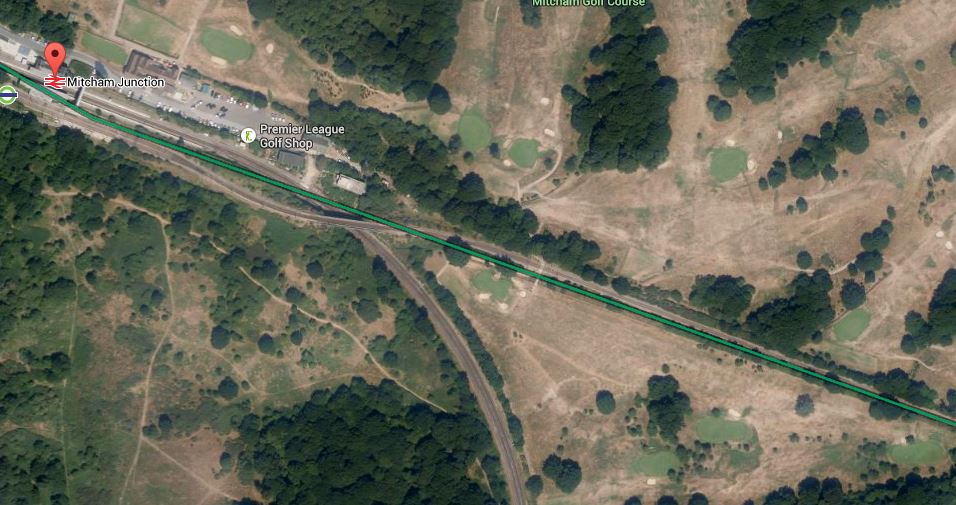
Mitcham Junction
It might be possible to put a curve between Tramlink Route 3 and the Sutton and Mole Valley Lines that go south to Sutton and Epsom. According to Wikipedia Sutton station used to have a bay platform for local services from Mitcham. Could it be reinstated?
Tramlink Route 4
The Tramlink Route 4 to Elmers End is a partial dupication of other routes.
Proposed Routes
There are several proposed routes for the Tramlink.
I have already dealt with the extensions to Crystal Palace and Sutton and how tram-trains might help.
But could tram-trains help with other extensions. I also think that if anybody suggests more street running of trams, this might get short-shrift from car drivers, so a lot of the proposed extensions might be difficult to get planned.
As to getting to Mitcham Town Centre from Mitcham Junction, they probably won’t help unless another station is added to the line between Mitcham Junction and Mitcham Eastfields. But as the latter station was only opened in 2008, I can’t see that happening.
The route south to Purley would probably be liked by passengers, but it would probably be difficult to fit into Croydon’s crowded town centre.
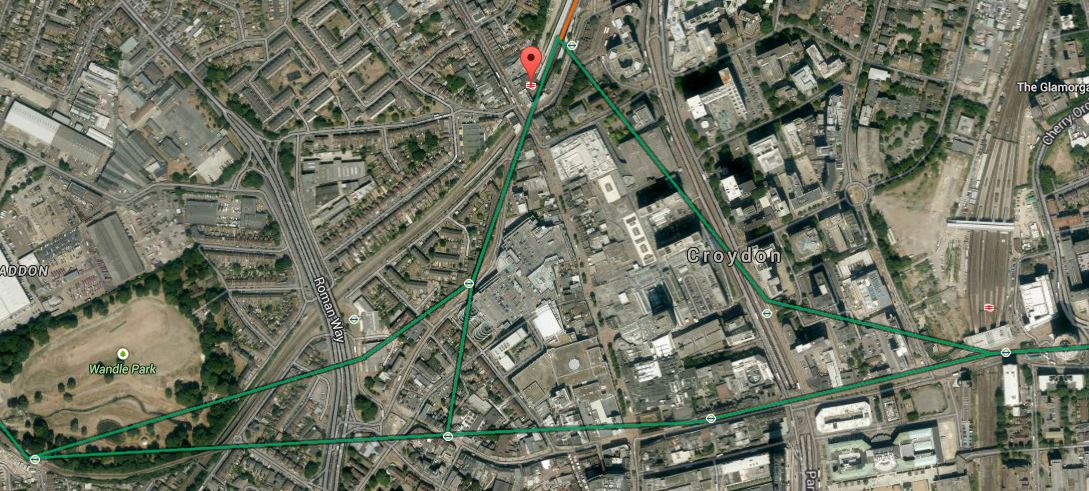
Croydon Town Centre
The red arrow points to West Croydon station, with East Croydon station at the right, with the green lines showing the current tram routes.
The only way to go south would probably be with a lot of unpopular street running.
However, a route to Brixton could be fairly easy for a tram-train, by going via either Mitcham Junction or Crystal Palace.
The Tram-Trains Go Anywhere Capability
I am assuming that the tram-trains chosen are something like the Class 399, with the following characteristics.
1. Ability to use third rail or overhead 750 V DC.
2.Double-ended and able to use both tram and train platforms.
3. 110 kph and main line crash protection.
4.ERTMS
A tram-train with this level of capability could go virtually anywhere in South London, provided the track layout allowed it to get on the full-size railway.
So where could a tram-train go from Croydon?
Brixton – Via Crystal Palace, Gypsy Hill, West Norwood, Tulse Hill and Herne Hill
If the Victoria Line was extended to Herne Hill, this would give South London a very useful tube connection. You could also build a decent station at Brixton to link all the lines together.
Bromley South – Via Beckenham Junction
Epsom – Via Mitcham Junction and Sutton
Clapham Junction – Via Mitcham Junction, Balham and Wandsworth Common
Lewisham – Via New Beckenham, and Catford Bridge
This would link the Tramlink to the DLR
Orpington – Via Beckenham Junction and Bromley South
New Cross – Via New Beckenham, Catford Bridge and Lewisham.
This route actually extends the New Cross branch of the East London Line to Hayes.
Whatever happens in Croydon, I think it would be a good idea if perhaps four trains per hour of the eight extra that could be sent down the East London Line were to be sent to the Hayes Branch or Orpington via Lewisham. It would connect that part of South London to Crossrail at Whitechapel.
Are Tram-Trains A Good Idea?
After my trip around Germany and France, have I come to any conclusions about the concept of tram-trains?
I must admit, I was sceptical when I set out, as some of the claims about the advantages of tram-trains seemed too good to be true!
So what are their strengths? And how would they fit the planned test route to Rotherham that will extend the Sheffield Supertram?
Dual Voltage
In both Mulhouse and Paris, the tram-trains are dual voltage and can run on both 750 V DC and 25kV AC. This type of tram-train will become the standard as main lines are increasingly electrified with the higher AC voltage.
In the case of Sheffield, which will be electrified to London, Doncaster and other places in the next decade or so, dual voltage Class 399 tram-trains will be essential to future proof the system.
Standard Gauge
All except one of the tram and tram-train systems I used or saw were standard gauge systems. The exception was Darmstadt, where trams were of a narrow gauge. Any standard gauge system could be used by tram-trains of the same gauge. In the UK, France and Germany that means to incorporate tram-trains on a tram network, that the tram network must be standard gauge.
There are no tram systems in the UK, that are not standard gauge.
Tram-Trains Can Be Low Floor
Buses and trains are moving towards totally flat and low floors, where to enter you just step or wheel yourself across.
The Mulhouse and Paris Siemens Avanto tram-trains achieve this and it has been stated that the Class 399 tram-trains for Sheffield will be low-floor.
Tram-Trains Are Larger Than Trams
Generally tram-trains are larger than trams. I don’t know for sure, but this could be for crash-worthiness reasons when running as trains.
With Sheffield this is an advantage as the Sheffield trams are bigger than most of those in other systems.
Tram-Trains Are Faster Than Trams
I don’t know at what speed the tram-trains that I rode ran, but it was certainly faster than the average tram.
Tram-Trains Are Almost As Fast As Pacers
A Class 142 Pacer has a top speed of 120 km/hr, whereas the Siemens Avanto used in Mulhouse and Paris has a top speed of a hundred and the Class 399 tram-trains for Sheffield have a top speed of 110 km/hr.
I suspect though that the electric vehicles have better acceleration and braking, so they might even be quicker over a route like the Hope Valley Line. I won’t comment on the passenger experience, but I will say that they probably have a slightly higher capacity of over two hundred, if you count standing passengers.
Tram-Trains Release Platforms In City Centres
This was well-illustrated in Kassel, where the Hauptbahnhof has been effectively released for other uses after the building of two underground island platforms.
By joining services together it might also be possible to release platform needs, just as Thameslink and Crossrail will do in London.
I’ve spent a lot of time waiting for local train services in Sheffield, so is there any scope for joining more services together.
Acting Like Trams In A City Centre
This was impressively shown in Kassel, where except for the colour and size, you couldn’t tell which vehicles were trams and which were tram-trains.
Sheffield’s tram line layout is very like Kassel with a shared centre section.
Acting Like Trains On Train Lines
Once on a railway line, the trams must be able to use the voltage of that line, have the same crash protection and signalling of a train and have the performance not to interfere with all other traffic.
Tram-Trains Can Have Alternative Power Sources
Around the world, there are several examples of tram-trains that have on-board diesel engines as well. Kassel has ten for a start.
And there are of course the battery trams in Nice and Seville.
Tram-Trains Don’t Need Lines To Be Converted
If tram-trains need to use a line they don’t stop other traffic like freight trains and express passenger services using that line. In some places in the UK, tram lines have been created by ripping up heavy rail tracks, which might need to be used again.
Tram-Trains Can Create An Extensive Network
The Manchester Metrolink has a network of around ninety kilometres, whilst Sheffield’s Supertram has a length of around thirty.
Compare this to Kassel at over a hundred and eighty kilometres and Karlsruhe at over two hundred and sixty.
The two German cities are substantially smaller than the two major English ones.
Tram-Trains And Sheffield
Tram-trains are not some difficult concept, but any competent group of railway, tram, electrical and control engineers should be able to create a system that works pretty well.
At least in choosing the line to Rotherham, they haven’t set themselves too difficult a task. Sheffield also has a very good layout in the area to the east and north of the main line station.
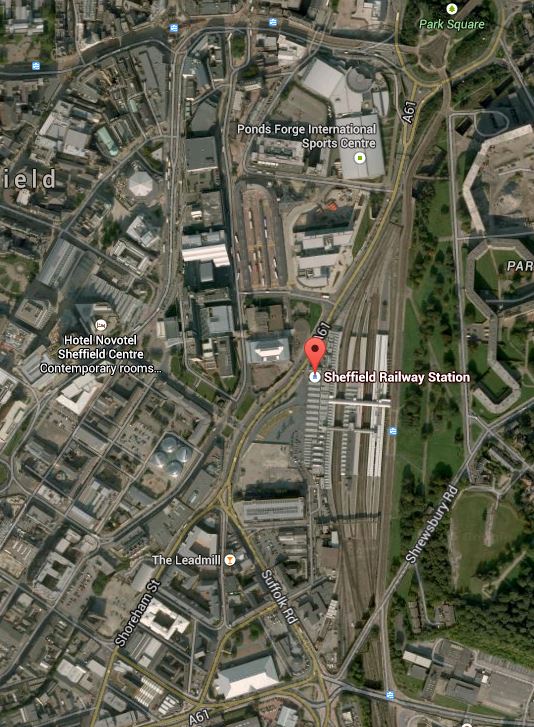
The Trams Around Sheffield Station
There are some things to note in this Google Earth map.
1. At the top right of the map, the three branches of the system meet in a triangular junction. The northern branch goes to Meadowhall and in the future Rotherham, the southern branch goes past the rail station and the western branch goes through the city centre. I don’t think that services use this junction in every posible direction, but it appears to have been future-proofed to cater for all eventualities.
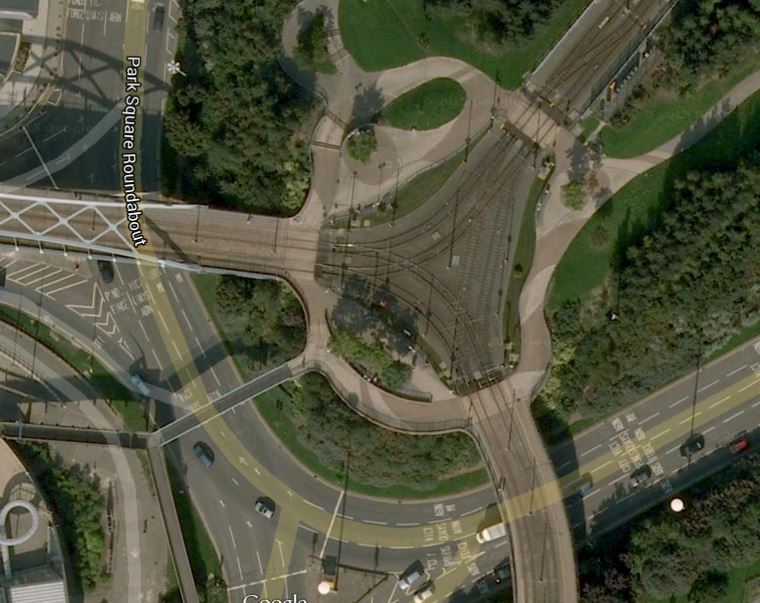
In this enlargement, the tracks and wires are clearly shown.
2. The southern branch past the station runs parallel to the rail lines.
3. There is quite a bit of space to put in extra tracks.
I also think, that after seeing the systems in Kassel and Karlsruhe, Sheffield could incorporate tram-trains fairly easily. Not being the first is a definite advantage, as ideas, designs and technology have moved on, as the Mulhouse system showed.
At some point in the future a lot of rail lines in the Sheffield area are going to be electrified to the main line standard of 25 kV AC and this might mean that the line used by the tram-trains to get to Rotherham in future may have this voltage. The Class 399 tram-trains themselves will be bought with a dual voltage capability, so they won’t care, but it seems a pity to put up one set of wires and then rip them down for another. Perhaps, you put up main line catenary initially and use it to provide a 750 DC supply! I’ll leave that one to the engineers.
An Extension To Dore
Plans have existed in the past to extend the Sheffield Supertram to Dore and some reports state that Dore will be linked to Meadowhall to improve HS2 connectivity. This Google Earth map shows Sheffield and Dore and Totley stations.
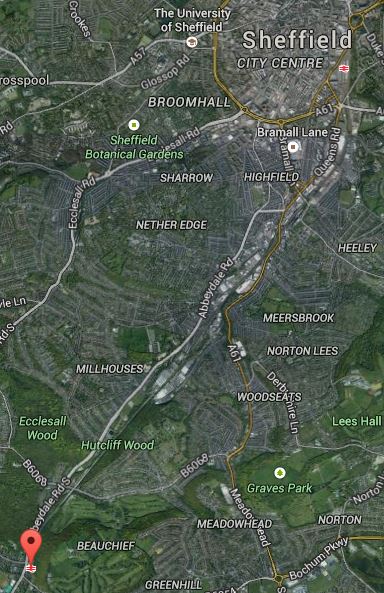
Sheffield To Dore
Dore and Totley station is on the Hope Valley Line, which will probably be electrified in the next ten years or so.
So could tram-trains come past Sheffield station and then go down an electrified Hope Valley Line?
I know little of the area, but because plans have been drawn up in the past, others must have a good idea. This document from Sheffield University written in 2003, gives a summary of what might happen.
But it predates any thought of tram-trains in Sheffield.
Could The Hope Valley Line Run Tram-Trains To Both Sheffield And Manchester?
This section in Wikipedia’s article about the Hope Valley Line, talks about proposals to to extend the Manchester Metrolink to Rose Hill Marple station on a spur off the line. Tram-trains could be used.
As Dore and Totley station is at the Sheffield end of the Hope Valley Line, could we see tram-trains going to both Manchester and Sheffield?
And What About Manchester And Sheffield?
I can remember reading in my Meccano Magazine in the 1950s about the ground-breaking electric-hauled Woodhead Line between the two cities.
This is said about tram-trains in the Wikipedia section for extensions to the Manchester Metrolink.
Metrolink and the TfGM Committee have prepared five costed proposals for extending Metrolink using tram-train technology over the existing heavy rail network in the region; along the Mid-Cheshire Line (between Stockport and Hale), the Hope Valley Line (between Manchester and Marple), the Glossop Line (between Manchester and the dual termini at Hadfield and Glossop), the Manchester to Sheffield Line (between Manchester and Hazel Grove), and along the Manchester to Southport Line (between Manchester and Wigan via Atherton), with an estimated total funding requirement of £870 million as of 2013.[197] TfGM intend to proceed to the identification of potential rail industry funding options, subject to a review of lessons from a tram-train pilot scheme in Sheffield.
So could we see the opening up of routes between the two cities using tram-trains, if the trial in Sheffield to Rotherham is successful.
The old Woodhead Line is just over sixty kilometres long, which means that from what I saw in Karlsruhe and Kassel, tram-trains could easily handle the distance between Manchester and Sheffield.
An interesting possibility for which the technology exists is a dual voltage tram-train leaving Manchester and taking the Hope Valley Line, which is electrified at its western end, which then travels over the Pennines to Dore, using either diesel or battery power, from where it becomes a tram on Sheffield’s network.
It won’t happen soon, but it is no fantasy, as I’ve seen all the technology needed in Kassel, Karlsruhe and Essex.
So will we see, heresy-of-heresies, an operational merging of the tram systems across the Pennines?
But imagine two, three or even four new tram-trains an hour on each of the routes between Manchester and Sheffield, that would extend their journeys into the city-centres, rather than need valuable platform space at Sheffield or Manchester Piccadilly stations.
I don’t know the lines well, so this might be pure speculation, but as the systems in Germany showed, if you get the track, power and signalling working, then good tram-trains can go virtually anywhere they’re needed.
A Vision For The North?
Let’s assume that the tram-train experiment from Sheffield to Rotherham is a success, which after my German and French experiences, I wouldn’t bet against.
So what happens next?
That is very much in the hands of the politicians, at both a national and local level, but from Sheffield and Manchester I could see tram-trains getting used on the numerous local lines that fan out from Manchester and Sheffield.
1. At present many of these lines are served by dreaded diesel Pacers, so the new tram-trains would be very welcome.
2. Some lines like the Hallam Line between Sheffield and Leeds via Barnsley could probably be just electrified with 750 V DC, to allow tram-trains to run.
3. As at Kassel not all lines would need to be electrified, as other technologies exist.
Everybody needs to have a bit of vision and if the Class 399 tram-trains, do what it says in the specification, we could be seeing them all over a dense network of lines in the north.
If all of these lines were upgraded, there is one thing that will happen for certain. The areas will improve in all ways, with better housing, more jobs and business and leisure opportunities.
Conclusion
To answer my original question, tram-trains are not a good idea, but a brilliant affordable solution to the big problem of urban transport all over the world.
In the UK, we must prove that the technology will work in a UK environment and I suspect there are many councils, tram and train operators eagerly awaiting the outcome.
Exploring Strasbourg
I didn’t have much time in Strasbourg before I needed to catch the TGV Est, so I used the excellent tram system to explore the city.



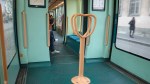











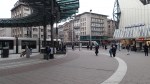
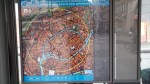
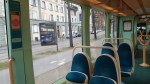


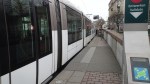
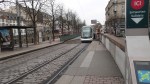
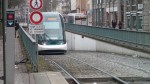






The trams are all low floor, which as a Londoner, you appreciate, as all the buses are going that way. The New Rputemasters are totally flat and no-one should have to accept anything less.
Strasbourg’s successful introduction of trams has been credited with helping to start the tram-revolution in France. Like Nottingham, which was an instant success in the UK, both networks are 100% low-floor. This doesn’t apply tro all UK tram networks.
As a Londoner, you appreciate this, as all the London’s buses are going that way. The New Routemasters are totally flat and no-one should have to accept anything less.
Exploring Darmstadt
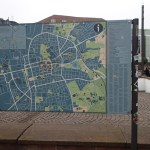
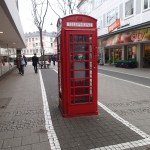
I love exploring towns and cities in trams or regular buses, as you see the city from an intimate and personal angle. If like I did this in Darmstadt, alighting when I saw something that took my interest. These pictures show a history of my short visit to the city.
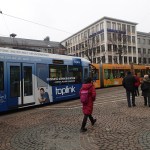
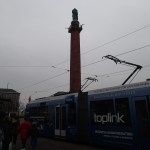
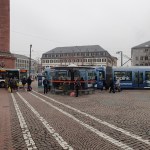
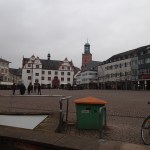
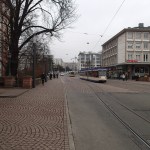
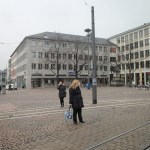
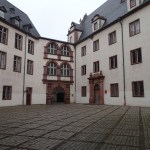


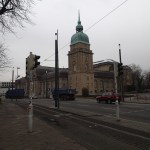

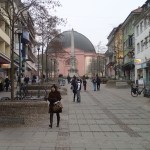
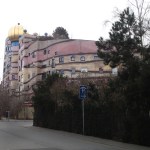

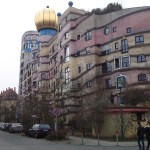

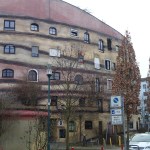
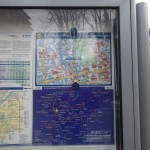
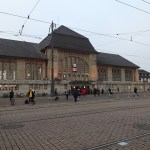
I started by going to the main square called Luisenplatz with its column and statue of Ludwig 1. I finally found a cappuccino in a rather pleasant Italian cafe.
I then walked to the castle and then back to another main square by the old town hall. On a better day, it would have been a pleasant walk and there were a couple of museums that seemed to be closed because of rebuilding. At least I found a very good tourist map of the city, which was magnitudes better than anything found in Frankfurt.
I also came across a BT phone-box, which appeared to enclose a working German telephone. Does anybody use them any more? And especially in a smaller city in Germany!
I then went to see Waldspirale, which is one of Friedensreich Hundertwasser amazingly mad buildings. Another in this blog is at Spittelau in Vienna. One other work of his, I must see is the station at Uelzen in Germany. Some might think Hundertwasser completely bonkers, but he certainly created buildings that entertain.
I wonder what it’s like to live in one of those eccentric flats in Darmstadt.
A Design Crime – Crap Station Design In Kassel
Some parts of Kassel’s urban tram system might well have been good, but these images of some of the stations, show the crap level of some of the design.

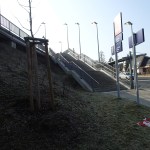
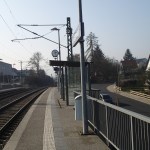
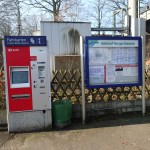
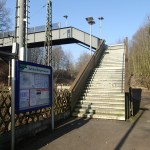
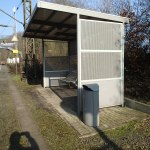
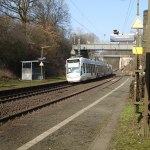
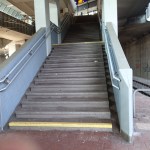
One thing that surprised me was the crudeness of some of the stations I visited, which just had steep steps and no lifts. This certainly wouldn’t be acceptable in the UK for a new station and I’m surprised that German disability rules allowed such a station design.
I nominate their stations as a Design Crime.
The Trams And Tram-Trains Of Kassel
Kassel’s urban tram system mixes both regular trams and larger tram-trains on lines that cross the city. I took these pictures as I sat in a cafe on the Königsplatz in the centre.
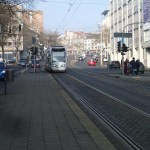
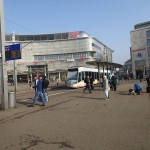

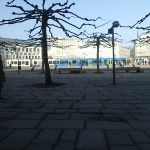
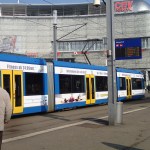
The smaller generally blue ones are trams, whereas the larger silver ones are the tram-trains, which have routes that reach far into the suburbs.
The passengers could be seen alighting, boarding and transferring between the various trams, very much as they do in Piccadilly Gardens in Manchester, East Croydon and Fitzalan Square in Sheffield. It is interesting to note that the current Sheffield Supertrams are more the size of Kassel’s tram-trains, rather than their trams. Comparing Sheffield to Kassel, it is a bigger city, but its tram network, is nowhere near the size of that in Kassel, which is about six times as large.
After sitting for half-an-hour or so, I decided to explore the outer reaches of the system on a tram-train.
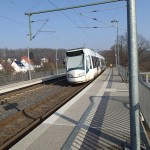
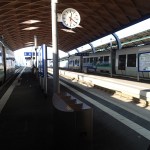

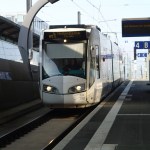

One thing that surprised me was the crudeness of some of the stations I visited, which are shown separately in this post.
There also only seems to be a train in places only once every thirty minutes.
On the core section of the East London Line near where I live it’s sixteen trains per hour, and limbs of the line to places like West Croydon and Clapham Junction, there are four trains per hour. Like much of the transport in London, these trains are also step-free from the platform, which I think a modern transport system should be. As the picture shows there was a protected gap in Kassel, which would have been difficult in a wheel-chair.
Kassel seems to have about half London’s frequencies. This low frequency and the poor street access probably explains, why in the middle of a Monday, there wasn’t a large number of passengers about.
 The Anonymous Widower