BP Launches Plans For Low-Carbon Green Hydrogen Cluster In Spain’s Valencia Region
The title of this post is the same as that of this press release from BP.
These are the four bullet points.
- Aims to make Valencia region a leader in green hydrogen production
- Cluster to include world-scale green hydrogen production at bp’s Castellón refinery of up to 2GW of electrolysis capacity by 2030
- Supports transformation and decarbonization of the refinery, together with tripling biofuel production
- Transformation of Castellón could see bp invest up to €2 billion
This is the first paragraph.
bp today launched the green hydrogen cluster of the Valencia region (HyVal) at its Castellón refinery. Led by bp, this public-private collaborative initiative is intended to be based around the phased development of up to 2GW of electrolysis capacity by 2030 for producing green hydrogen at bp’s refinery.
It certainly is a big hydrogen-friendly project and is a roadmap of how to decarbonise an oil refinery.
This massive commitment to hydrogen makes me more certain, that bp’s offshore 50 MW wind farm twenty miles from Aberdeen, is designed to produce hydrogen for the granite city.
Are bp putting together a strategy to bring hydrogen to the world?
After all hydrogen is the only zero-carbon fuel, that can directly replace fuels like natural gas, diesel and many hydrocarbon fuels in a large number of applications.
Exploring Metrovalencia
Metrovalencia is a Metro, that uses both trains and trams with a proportion of the network in tunnels.
I took these pictures.

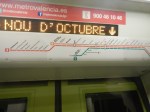
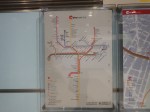
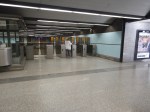












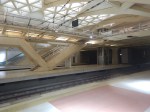



It is in many ways, a typical modern Metro with good and sometimes spectacular architecture, spacious, clear trains and a ticketing system, that relies on a plastic card.
To my mind there are two major problems.
It Doesn’t Go To The City Of Arts And Sciences
The City of Arts and Sciences, is a place that many tourists want to see.
But the Metrovalencia doesn’t go there and I couldn’t find how to get there from the information at various stations.
It would be as if the London Underground didn’t go to Stratford or the Manchester Metrolink didn’t go to Salford Quays.
Finding Stations Is Difficult
Valencia doesn’t have a way-finding system and finding the stations of the Metro can be difficult. Unlike say Berlin, Bilbao, London, Stockholm and many other cities, where stations have a big logo or feature, you can see from a couple of hundred metres, you can walk past stations without seeing them.
I walked a lot farther than I intended to.
The map I had was one that came with my good value 48-hour travel card, which cost eighteen euros.
It wasn’t the easiest to understand, as there was no symbols for Metro stations on the map.
The Citylink Trains Of The Metrovalencia
The Citylink trains of the Metrovalencia were built in Valencia in 2007 and are very different to their cousins; the tram-trains of Karlsruhe and Sheffield.


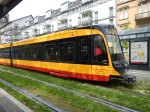
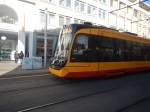
Sheffield is in blue, Karlsruhe in yellow and Valencia in white.
They are metre gauge, have larger bodies, are four or five cars long and I didn’t find one working as a tram-train.
Happy Memories
I’m just watching the Grand Prix in Valencia on the television.
It brings back happy memories of a weekend in Valencia, that my late wife and I spent just a few months before she died. It was our last holiday together.
It rained and rained and rained. But we did have some fabulous food and all of it was gluten-free.
We actually stayed in the Las Arenas Hotel close by where the Grand Prix is taking place. It was good and excellent value.
 The Anonymous Widower