Is There A Plan To Increase The Capacity Of the Elizabeth Line?
On Sunday, when I came back from West Ealing station to Moorgate station on Sunday after taking the pictures, that I used in West Ealing Station – 1st February 2026, I was at the wrong end of the train for getting out at Moorgate.
So I had to walk from one end to the other of one of the most crowded Elizabeth Line trains, I’ve ever been on.
If it was as crowded as that on a Sunday morning, then it would appear, that the capacity of the line needs to be increased.
So I asked Google AI, the title of this post and received this reply.
Yes, there is a firm plan to increase the capacity of the Elizabeth line, driven by high demand and to support the future opening of the HS2 station at Old Oak Common. Transport for London is producing 10 new Class 345 trains to boost service, with expected delivery in 2026-2028.
But is 2026-2028 going to be early enough?
West Ealing Station – 1st February 2026
Because of the confusion of WordPress yesterday, I had to go back to West Ealing station to take more pictures today.
These are the pictures that I took.
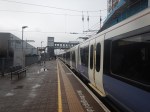
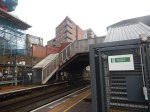


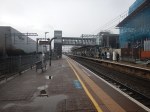
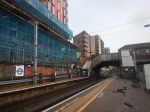
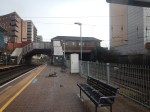

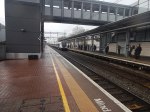
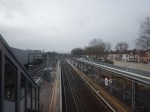
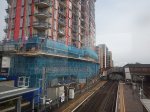
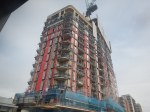


These are some of my thoughts.
The High-Density Transport-Hub Cluster
This seems to be coming on with several blocks now visible and the Waitrose site to be developed.
There also seems to be some useful shops, which include a pleasant Italian cafe on the North side of the rail lines.
The Fast-Charge System Contacts
Note.
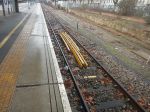
- These are shown in Pictures 16-17!
- There are two contacts, which are in yellow for safety reasons.
- I wonder how many can be installed?
- Is it one per battery and one battery per car?
I suspect by duplicating cables and putting them underneath and between the tracks, the Fast-Charge system could handle a train like a Class 800 train.
Will Other High-Density Transport-Hub Clusters Be Developed Along The Elizabeth Line?
This is one for the nimbys, planners, politicians and residents, but I don’t see why some councils will try.
The Ultimate Recycled Electric Local Train
This morning, I took a ride across London to ride in the first Class 230 train in public service in London.
I took these pictures of the new block of flats going up at West Ealing station, the charging system for the train and the train.
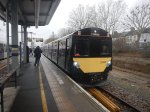
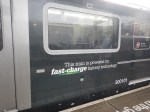
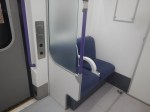
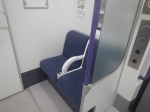
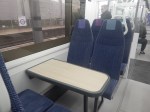
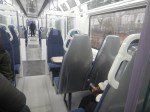
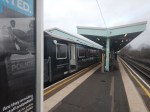
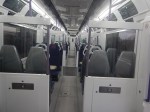

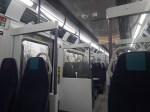
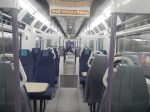
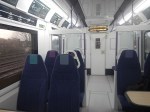

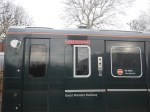
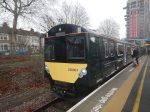
Note.
- The train is three-cars with a toilet to suit everybody, except possibly Donald Trump, who’d want it in gold.
- The single train is shuttling between West Ealing and Greenford stations.
- Each journey 2.5 mile journey takes eleven minutes.
I was surprised at the number of tables and the quality of the seats.
These are some extra thoughts.
The Blocks Of Flats
Google AI gave me this.
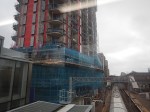
Several new developments around West Ealing station feature tall blocks, with major proposals ranging from 4 to 26 storeys. Key projects include a 26-storey tower, proposed 19–22 storey towers on Manor Road/Waitrose site, and 7–21 storey student accommodation blocks. These, along with other 9-storey developments, are transforming the area into a high-density “transport hub” cluster.
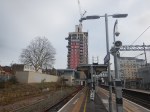
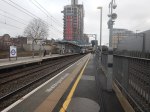
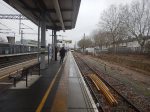
I think the 26-storey West 55 Tower is shown in the first two pictures.
Google AI also says some of the natives are not happy about all the towers.
But I like the “high density” transport hub.
Integrating The Railway And The Housing
Note.
- This would appear to be a good example of integrating the railway and the housing.
- The second picture appears to show a walkway between the station and Tower 55.
- I met a property developer on a train once and he told me, that housing on top of stations without car parking, had better numbers all round, with more flats, less cost and good profit.
- I wonder, if Tower 55, is one of his? He was certainly enthusiastic about the concept.
- Would a Fast-Charge system be easier and very much safer to squeeze in than traditional overhead wiring?
If the flats all don’t have garages, there must be space for other uses.
The Charger At Work
Note.
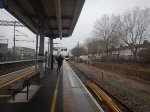
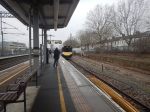
- The third to the sixth pictures, show the train coming into the station and charging ready for a trip to Greenford.
- The train acts as a heavy safety guard during the process.
- Anything electrical or dangerous is underneath the train.
I would expect that a health and safety expert, would rate the train no more dangerous than a normal train.
There Seems To Have Been A Lot Of Innovative Recycling On The Train
This certainly seems to apply to the seats, which in some cases are the originals remodeled.
A Stylish And Well-Built Train
This phrase would sum up my overall view of the train.
I have a Korean son-in-law and I know a bit, how Koreans think about design.
I would think, that he would like this as it is a stylish and practical train, so it wouldn’t embarrass you or your Korean boss, if you told him to use this train in the UK, to get to your offices.
Using my Korean example, I suspect, that this train could be one that endears itself to its passengers, with its quirky and practical feel, just like the original Mini did.
Adrian Shooter Would Be Pleased
Most Certainly!
I wish all the team well, as I believe this technology and a few trains like 230001 will make their mark on the world.
A Practical Hundred Mile Battery-Electric Route
The Sheffield and Scunthorpe Line is a Parliamentary Service.
- It is 71.6 miles over 1 hour and 48 minutes, through seven stations of the Lincolnshire countryside, at an average speed of 40 mph.
- Currently, it runs once per day, which is not very ideal for a job, education, training, shopping or visiting grandchildren.
- A two-car version of 230001 could be ideal to perhaps do four round or five trips a day and level-up some of the poorer parts of the UK, that don’t even have a decent bus service.
- A similar two-car train could also serve the 45-mile round-trip Cleethorpes and Barton-on-Humber service.
I am sure that this train could start the right sort of rural or urban revolution.
Rail Vehicle Dispensation: Great Western Railway Class 230 Fast Charge Unit
The title of this post, is the same as that of this page on the UK Government web site.
The page is an interesting read, but I do feel, that it marks a big step on introducing the Class 230 trains on the Greenford Branch between West Ealing and Greenford stations.
I should say, that I’ve used the Class 230 trains several times and there are trains and platforms with worse passenger access problems on the UK network.
GWR Battery-Powered Trains Could Be Used In Future
The title of this post, is the same as that of this article on the BBC.
This is the sub-heading.
Battery-powered trains could be used more frequently after a successful trial by Great Western Railway (GWR).
These three paragraphs give more details.
The rail company says using former underground trains and a rapid-charging system has shown the technology could replace its existing diesel fleet.
The year-long trial was held in west London but the trains will eventually be rolled out in the Thames Valley.
GWR says it can now prove the concept works and hopes to take the initiative to government.
A couple of weeks ago, I used similar trains between Wrexham Central and Shotton stations, which I wrote about in Vivarail Trains And Wrexham Central Station – 6th June 2025.
The Bay Platform At Greenford Station
These pictures show Greenford station.
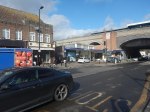
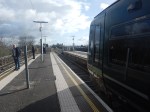

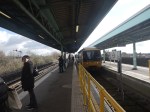
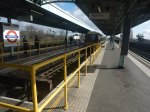
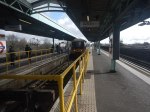
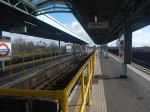
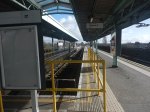
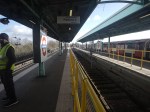
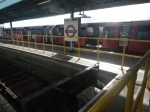
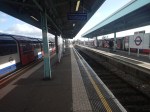
I have some observations to make.
Electrification
Tests for the new battery-electric train would appear to be taking place soon, but there is no electrification or Vivarail/GWR Fast Charge system.
This leads me to the conclusion, that all charging will be done at West Ealing station.
What Length Of Train That Can Be Accommodated In Platform 2 At Greenford Station?
Consider.
- The two-car Class 165 train shown in the pictures is 47 metres long.
- FirstGroup’s test Class 230 train appears from a GWR video, to be three-cars, which would make it 54.663 metres long.
- The test Class 230 train would appear to be nearly eight metres longer, than the current train that works the route.
From the pictures it appears that there is sufficient space in the platform to accommodate the longer train.
GWR Trialling Transformative Ultra-Rapid Charging Train Battery
The title of this post is the same as that of this article on Rail Technology Magazine.
This is the sub-heading.
Great Western Railway (GWR) has begun trialling a potentially groundbreaking battery innovation called FastCharge. If the trial is successful, it is hoped that the technology could transform branch line services and accelerate the decarbonisation of the network.
This is the first paragraph.
This innovative system, which has been developed over three years, eliminates the need for diesel trains on branch lines by powering battery-operated units with ultra-rapid charging. The system boasts an impressive 2,000kW charging capacity, eight times more powerful than a Tesla Supercharger, allowing trains to fully recharge in just 3.5 minutes at West Ealing station, the trial’s first real-world location.
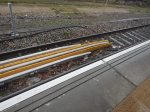
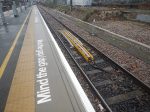
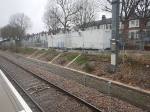
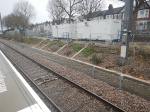
I took these pictures of the trial installation at West Ealing station, this morning.



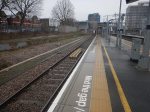
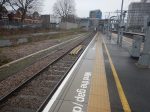
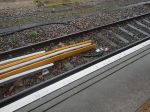
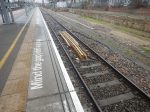
Note.
- Platform 5 is used by the trains to and from Greenford station.
- Two sets of charging rails have been installed between the rails, in Platform 5.
- The rails in the charging rails could be aluminium. This would not be surprising, as it is a good electrical conductor.
- The two shorter outside charging rails could be connected together.
- The yellow parts of the charging rails are plastic, so are probably for warning purposes.
- Two white containers have been installed alongside the track.
In Great Western Railway Updates EHRT On Its Upcoming Operational Trial Of Fast Charge Tech, I described the components of the Fast Charge system in this paragraph.
The Fast Charge system consists of three key components: retractable charging shoe gear, which is mounted to the underframe of the train; short (4m) charging rails mounted between the underframe of the train; and the Fast Charge Battery Bank (FCBB) installed beside the track, acting as an energy buffer between the train and the grid.
The charging rails are clearly visible in my images and the Fast Charge Battery Bank is probably in the white containers.
These are my thoughts.
The Engineering Is Of A High Quality
Or it certainly appears so from the platform and in the pictures, that I took.
How Much Energy Will Be Taken On Board at Each Charge At West Ealing?
According to the Rail Technology Magazine article, the Fast Charge Battery Bank will have to supply 2,000 KW for 3.5 minutes to fully-charge the train at West Ealing station.
This is 7,000 KW-minutes or 117 KWh.
In D-Train Order For Marston Vale Confirmed, this is said about the batteries on a Class 230 train.
- The train has four battery rafts, each with a capacity of 106 kWh
- Range is up to fifty miles with a ten minute charge at each end of the journey.
- Range will increase as battery technology improves.
I wonder if the Class 230 train, that will run between West Ealing and Greenford, will only have one 106 kWh battery.
- This will be less weight and therefor better acceleration.
- 117 kWh in the Fast Charge Battery Bank will be sufficient to fully-charge the single battery.
- The route is only five miles for a round trip.
I can see costs dropping.
What Batteries Will Be Used In The Fast Charge Battery Bank?
I think there are four main possibilities.
- New lithium-ion batteries
- Refurbished second-hand electric vehicle batteries
- New lead-acid batteries.
- It might be possible to use supercapacitors
Note.
- Lead-acid batteries can lose charge in cold weather.
- Supercapacitors don’t care about the weather.
- The weight of lead-acid batteries would not be a problem in a stationary application.
If there is only one battery on the train, I can see the supercapacitors handling it.
What Voltage Is Used In The Charging Rails?
Consider.
- The Vivarail Class 230 trains are built from redundant London Underground D78 Stock trains.
- The D78 Stock trains were built to run on London Underground lines, when that had voltages of 0 and 630 VDC.
- So I wouldn’t be surprised if the trains were designed around this voltage.
- If the charging rails worked at 630 VDC, then to have a 2,000kW charger, this would mean a charging current of 3175 Amps.
This would explain the fat cables connecting the charging rails to the Fast Charge Battery Bank.
An alternative voltage to use could be 3,000 VDC, as some trains are built to this voltage and therefor the electronics and transformers must be available. This would reduce the charging current to 667 Amps, which might be able to use smaller cables.
It may come down to what is convenient for the output voltage of the batteries.
Why Are There Two Sets Of Charging Rails?
They are both shown in this image.
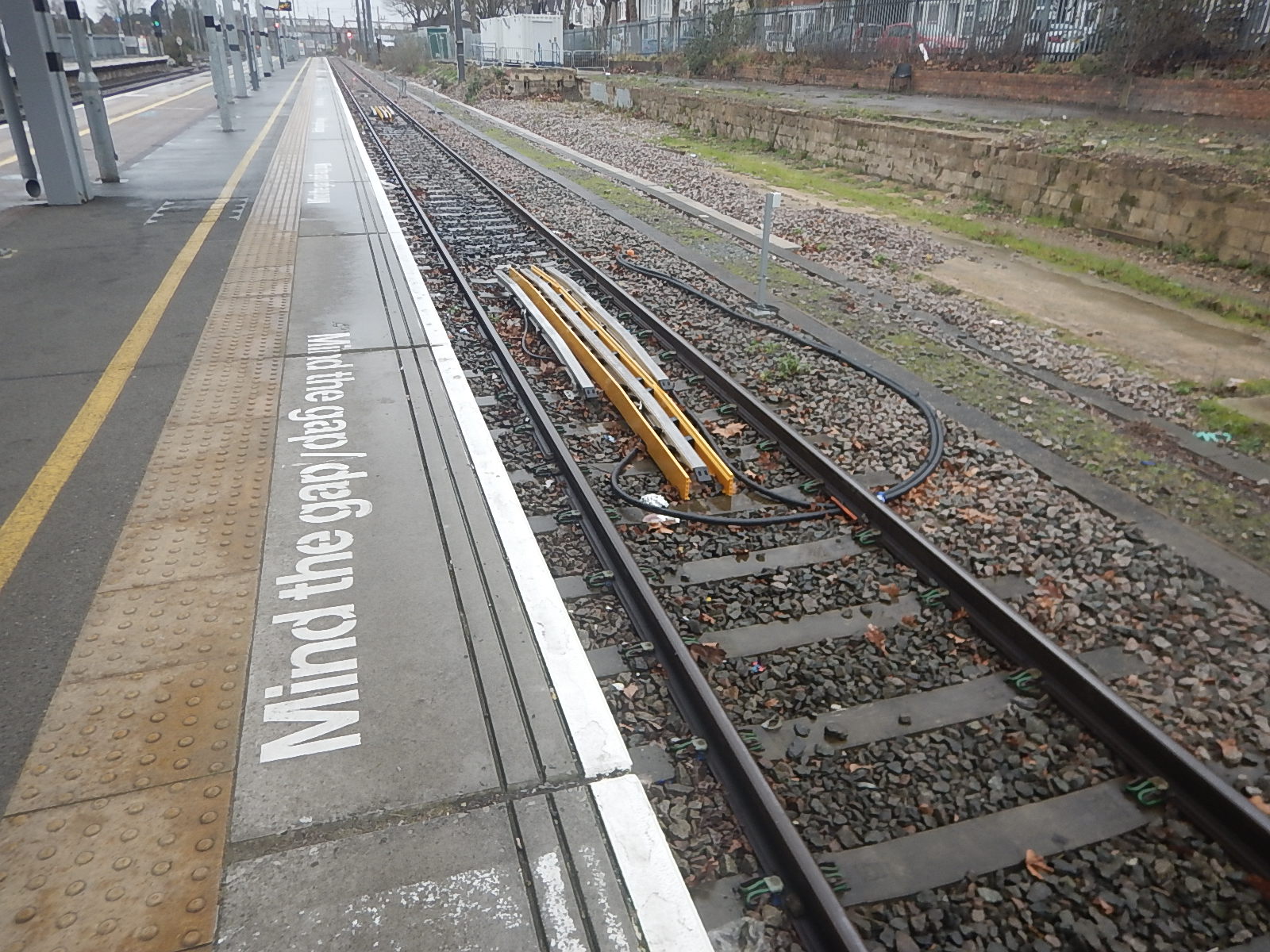
Note.
- The two sets of charging rails are about forty metres apart.
- The Fast Charge Battery Banks are another twenty metres further on.
It’s not the layout you’d expect for running a single two-car train running every half hour.
But could it be that two separate sets of charging rails can operate a more frequent service with this layout of charging rails?
Great Western Railway Updates EHRT On Its Upcoming Operational Trial Of Fast Charge Tech
The title of this post, is the same as that of this article on Electric and Hybrid Rail Technology.
This is the sub-heading.
Great Western Railway’s senior program manager, Sonya Johns, speaks to Electric & Hybrid Rail Technology about the firm’s progress on developing ex-Vivarail Fast Charge technology for battery-powered trains, ahead of operational trials due to commence in 2024.
The article is a must-read as it describes the progress since First Group, acquired the assets and intellectual property of Vivarail and its Fast Charge battery train technology.
This paragraph describes the components of the Fast Charge technology.
The Fast Charge system consists of three key components: retractable charging shoe gear, which is mounted to the underframe of the train; short (4m) charging rails mounted between the underframe of the train; and the Fast Charge Battery Bank (FCBB) installed beside the track, acting as an energy buffer between the train and the grid.
This paragraph outlines the benefits of the system.
The Fast Charge system has several benefits, according to Johns, including high charging power, enabling the train to be recharged in around 10 minutes; a standard DNO connection, avoiding costly power supply upgrades; full automation, with no driver interaction required; low safety risk (the charging rails are never live unless fully covered by the train); and minimal disruption during installation, as the FCBB is manufactured offsite and the charging rails are attached to existing sleepers.
This sounds like a system, that has been designed by someone fed up with regulators saying no to innovative ideas.
Other points from the article include.
- The shoe gear has been designed to be easily installed on any rolling stock.
- The one-year trial of the Fast Charge technology and the Class 230 battery train on the West Ealing and Greenford line will commence in spring 2024.
- GWR will capture and analyze data during the trial to understand how the technology performs in different conditions.
The article finishes with this paragraph.
The work, according to GWR, is part of its commitment to reduce the carbon emissions of its train fleet with a view to removing all diesel-only traction from the network by 2040, in line with the Government’s Transport Decarbonisation Plan.
Adrian Shooter would have been pleased if he was here to see it.
Three New Battery-Only Revolution Very Light Rail Vehicles
This title of this post, is the same as that as this press release from Eversholt Rail Group.
These are the three bullet points.
- Eversholt Rail funding three brand-new Revolution Very Light Rail vehicles for passenger trials and ongoing operation.
- Manufactured in the UK by Transport Design International.
- Battery-only propulsion, providing zero-emissions operation.
These three paragraphs fill out the story.
Innovative new lightweight passenger trains that will help decarbonise Britain’s railways are to be trialled after a new deal was announced this week.
The new Revolution Very Light Rail vehicles will run entirely on battery power and could be carrying passengers within three years. A new system of lineside fast charging will mean the whole operation has zero emissions.
Some of Britain’s major rail operators are already showing interest in the RVLR vehicles as they seek to fulfil promises to make rail ‘cleaner’.
This is also said about looking for routes, to trial the new vehicles.
Eversholt Rail and TDI are working with key stakeholders across the UK rail industry to agree routes and services where operators can run passenger-carrying trials using these new vehicles. These trials will generate actual passenger demand data to support business cases for long-term deployment of RVLR vehicles as well as providing further passenger and operator feedback on their design and capabilities.
I have some thoughts and questions.
What Is The Top Speed?
A lot of questions like this are answered by this article on Rail Engineer, which is entitled Very Light Rail – A Revolution.
These can be ascertained from this comprehensive article.
- Top Speed – 65 mph
- Seats – 56
- Wheelchair space
- PRM TSI accessibility compatible
- Tare Weight – 24.8 tonnes
- USB Charging
For comparison these figures relate to a PRM-compliant Class 153 diesel train.
- Top Speed – 75 mph
- Seats – 59
- Tare Weight – 41.2 tonnes
This picture shows one of the Class 153 trains at Matlock Bath station.
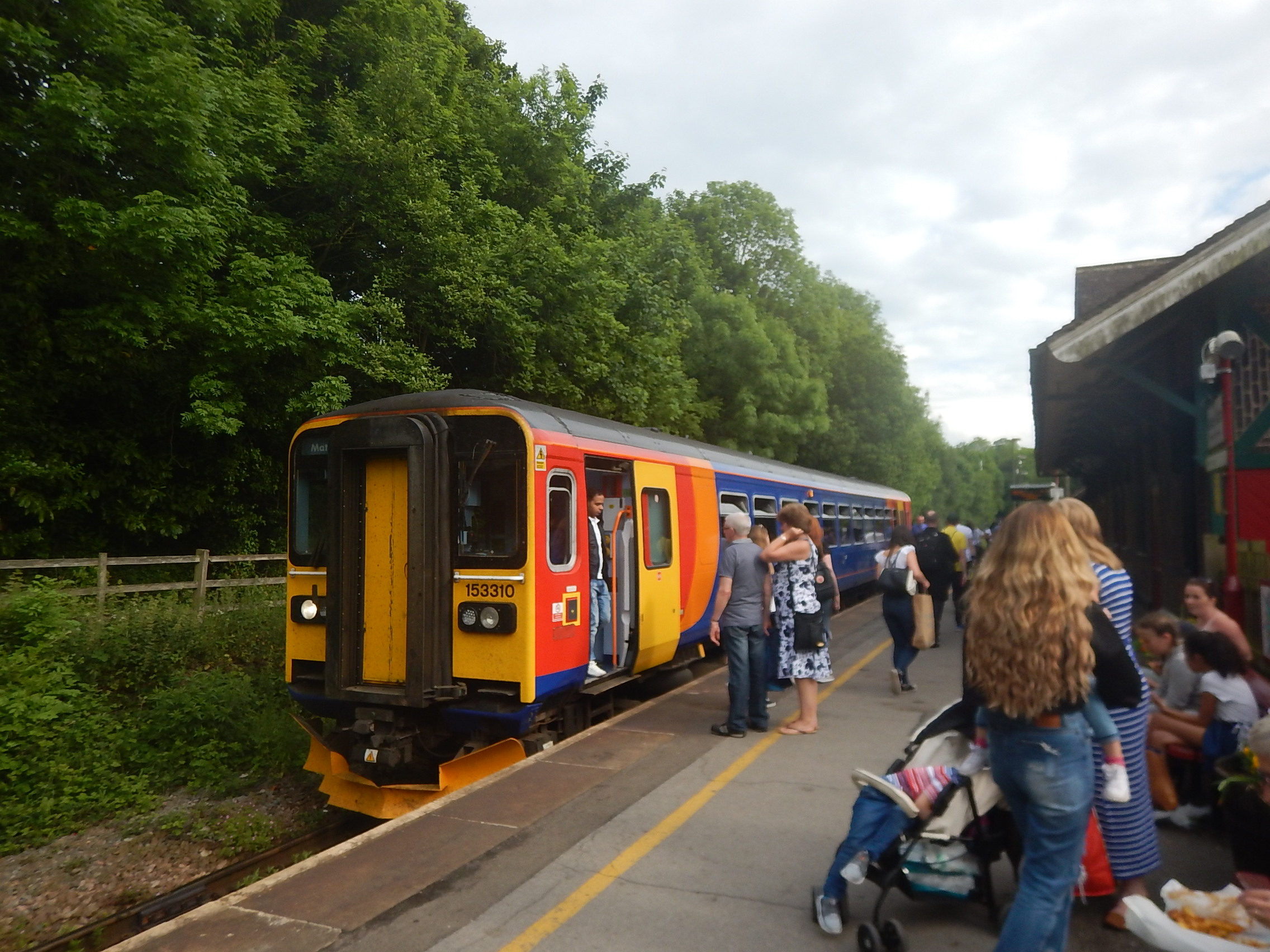
There are still around thirty in service in the UK.
Can Two Revolution VLRs Run As A Two-Car Train?
From the pictures on the web, the trains have buffers and space for a coupler, so until someone says they must always run as single units, I’ll assume they can at least run as a pair.
Can A Revolution VLR Recharge Its Batteries Using Conventional 25 KVAC Overhead Electrification?
One route, that is a possibility for running using Revolution VLR must surely be the Greenford Branch, which connects to the electrified Great Western Main Line at West Ealing station.
In this and at several other places on the network, it could be easier to charge the trains using the existing overhead electrification or an extension of it.
Another possibility; the Marston Vale Line is also electrified at both Bedford and Bletchley.
In New Mobile Rail Charging Facility For Long Marston, I talked about how Siemens are developing a mobile charger, which initially will be deployed at Long Marston.
It could be very useful for efficient operation, if the batteries on a Revolution VLR could be charged in a number of places, which included conventional electrification.
If charging only happened, whilst trains were stationary, a lightweight pantograph and appropriate electrical gubbins might be sufficient.
Can A Revolution VLR Replace A Class 153 Train?
I suspect on some routes this will be possible, but on others, the speed or hill-climbing requirements might be too stiff for the lightweight train.
But, if I was designing a train like the Revolution VLR, I’d make sure it fitted as many markets as possible.
The picture was taken at Matlock Bath station on the Derwent Valley Line, which is a single track with a fifty mph limit and an uphill climb. I suspect that the Revolution VLR would be designed to handle the uphill part of the route, but would the train be able to handle the speed of the Midland Main Line to Derby.
The Revolution VLR would probably attract more passengers, so it might be necessary to double up the service by running a pair.
Can A Pair Of Revolution VLRs Replace A Class 150 Train?
I don’t see why not!
Could The West London Orbital Use Revolution VLRs?
This might be a proposed route that could use Revolution VLRs.
The two routes would be.
- West Hampstead and Hounslow.
- Hendon and Kew Bridge.
Both services would use the Dudding Hill Line and serve Neasden, Harlesden, Old Oak Common and Acton, with a frequency of four trains per hour (tph).
Although this service could be run using conventional multiple units, it might be more affordable to use Revolution VLRs charged on sections of line that are already electrified.
Could the Greenford Branch Use Revolution VLRs?
The Greenford Branch would be a classic application and trains could be charged by fitting a charger in the bay platform at West Ealing station.
In An Automated Shuttle Train On The Greenford Branch Line, I did a rough calculation to see if an automated shuttle could achieve four tph.
Four tph might be too ambitious, but automatic trains shuttling along a branch line might be an affordable way to provide zero-carbon trains with an adequate capacity.
- The driver would drive the train using the sort of remote control used for drones.
- The driver would sit in a convenient place on the train, with CCTV to help them see everything.
- When the train was ready to leave, the driver would push a button to tell the train to move to the next station.
- On arrival at the next station, the doors will open.
- The process would repeat along the line.
If this method of operation sounds vaguely familiar, the Victoria Line has used it since 1067.
Although the Victoria Line drivers always sit in the front.
But on a line with no other trains running at the same time, all they need is a good view of the doors.
Branch lines that could be run in this way could include.
Bodmin Parkway and Bodmin General
Brockenhurst and Lymington Pier
Grove Park and Bromley North
Lancaster and Morecambe
Liskeard and Looe
Lostwithiel and Powey
Maidenhead and Marlow
March and Wisbech
Par and Newquay
Plymouth and Gunnislake
Romford and Upminster
Sittingbourne and Sheerness-on-Sea
Slough and Windsor Central
Southall and Brentford
St. Erth and St. Ives
Truro and Falmouth Docks
Twyford and Henley-on-Thames
Watford Junction and St. Albans Abbey
West Ealing and Greenford
Wickford and Southminster
Wymondham and Dereham
The Vivarail Fast Charge System At West Ealing – 7th November 2022
I went to West Ealing station today and took these pictures.
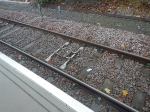
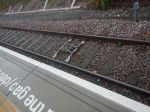
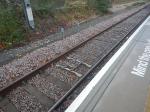
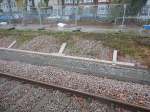
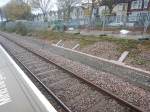
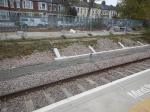
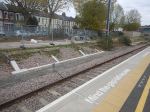

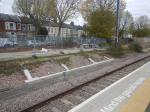
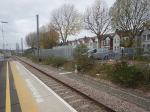
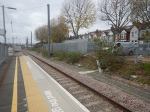
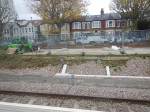
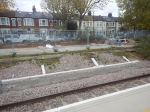
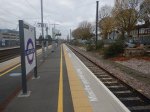
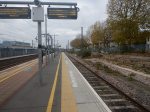
At last, it seems something is happening.
Note the concrete pads on the other side of the track for the bay platform. There appear to be eight pads, which could be to support the containers that will hold the Vivarail Fast Charge System.
 The Anonymous Widower