An Experiment In Serial Cooking
According to many people I’ve met, including my secretary, Jane, men are not good at multi-tasking. She put it down to the caves, where the man had to be single-minded enough to go off and kill that buffalo, so they didn’t all starve. The woman meanwhile was left at home with all the problems, like the kids, collecting firewood, nuts and berries, and perhaps trying to grow some crops.
I am not the best multi-tasker, although with tasks I used to do in the past, like software bug-fixing, I would do them in related groups.
One of the problems in this house, is the small, but extremely-badly designed kitchen. I deliberately have a smaller two-oven Zanussi cooker, but the kitchen has only one sink with a low tap, cupboards you need a torch to get things out of and no freezer.
So often if I cook something, I get piles of washing up everywhere and have nowhere to put anything.
Some recipes I use, like Cinty’s French Fish Pie are what I could call serial cooking, in that they are a series of tasks. That recipe also has the advantage that you can make it in the morning, leave it in the fridge all day and cook it in the evening. I usually, make two, when I’m cooking for myself and leave one for the supper after next.
So as an experiment, I decided to see if one of my favourite meals, Lindsey Bareham’s sausage and bean casserole could be cooked as a series of tasks. Normally, it needs a casserole and a frying pan to cook the sausages, so instead of that, I cooked the sausages first in the casserole and then started the meal in earnest.









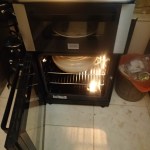


I was also able to leave the casserole on top of the cooker all day, before I cooked it in the evening.
Battersea Gets Its Tube
The extension of the Northern Line to Battersea has been given the go ahead.
Construction will begin in spring 2015 and it is hoped the line, which will be extended from Kennington to Battersea, will open by 2020.
Two new stations will open – Nine Elms to the east and one at the heart of the Battersea Power Station development.
The full cost is expected to be up to £1bn, which will be funded by developments in the area.
I think one of the most significant parts of the report is the last line of that extract.
According to Wikipedia, the original proposal was put together in May 2010, and I certainly saw an exhibition about the extension in December 2012,
I know it’s only a short extension, but to go from proposal to construction start in two years is some sort of record for London.
Surely, all big infrastructure projects should be started like this. And of course financed if possible in a local manner or by developers.
The one question about what is proposed, is when is it going to be extended to Clapham Junction.
I suspect that if they did this, it would be so successful, it would swamp the Northern Line and throw Battersea back to the 1960s, with respect to transport links.
This is the schematic of the route.

The Route
And this is what the area looks like in Google.
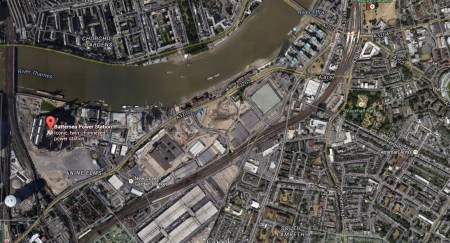
The Google View
I couldn’t quite align the two maps, but you can just see the Kia Oval at the right in the Google view.
A Good Helping Of Turner
Yesterday, I went to see the Late Turner at the Tate Britain. I followed it up by seeing the film, Mr. Turner at the Barbican Cinema.
It was a good idea and I would recommend both the exhibition and the film to everyone.
It’s All Go On The Manchester Metrolink
According to this article in Global Rail News, work has now started on the Second City Crossing or 2CC. But it is the last paragraph that shows how the Manchester Metrolink is developing.
November has seen several significant milestones ticked achieved for the Metrolink system, with funding confirmed for the Trafford Centre extension and the opening of the system’s new airport line.
More projects like this should be promoted if we are going to create a powerhouse across the North.
Incidentally, with my project management hat on, I don’t think the upgrading of Manchester Victoria station and the Metrolink has been planned as the partially joint project they so obviously are.
On my travels around Manchester in the last couple of years, I have sometimes found it extremely difficult to get between the two main stations; Victoria and Piccadilly. That would have been eased by making sure there was always one reliable easy-access properly-signposted link at all times.
Is This A New Economic Indicator?
I have just read this article in Global Rail News, which states that the rail freight section will recruit and train over 200 new drivers in the current year.
It would seem likely that the more freight moved by rail, the greater the economic activity.
I’ve chatted with a few drivers on trains and most seem happy with their jobs, even if some do moan about some of the cabs on certain freight locomotives.
Viewing The Poppies In The Rain
I went to The Tower today to see the poppies.





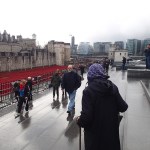







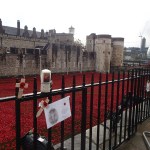





















Seeing them in the rain, might have made the whole thing more poignant in a way.
But certainly rain or not, the field of ceramic poppies is truly spectacular.
How Many Diesel Multiple Units Might We Need?
in this post, I said that I wouldn’t be surprised if some new Class 172 diesel multiple units were ordered.
But how many might we need.
It is best to list all the smaller diesel multiple units that are running on the UK railways, with a few comments and thoughts.
Class 142
There are 96 two-car Class 142 trains. They were built in 1984 and Wikipedia says this about their use.
They were initially built for use on rural branch lines. However, as of September 2011 they are mainly used on busy commuter routes in the major cities in the north of England, with some also in use on local services around Cardiff and on Devon branch lines.
Regular readers of this blog, will know that I don’t have a very high opinion of these trains.
But their biggest problem is that they must be withdrawn by 2020 because of the disability regulations.
However because of the Liverpool-Blackpool-Manchester electrification and the possibility of electrification in the Welsh Valleys by the cut-off date, some of them might find other uses as scrap metal.
Currently Northern Rail has 79 and Arriva Trains Wales has 15, so some may need to be replaced by new diesel multiple units, as electrification won’t probably replace them all.
Class 143
There are 25 two-car Class 143 trains. They were built in 1985 and were refurbished in 2000. Like the Class 142, they will have to be withdrawn because of the disability regulations.
Arriva Trains Wales has 15 working the Welsh Valleys and therefore could be replaced, but the seven ran by First Great Western in the Exeter area, don’t have that happy conclusion.
As electrifying the Exeter local routes is probably a never-never, some new or cascaded stock must be found for these lines.
Class 144
There are 13 two-car and 10 three -car Class 144 trains. They were built in the late 1980s and also will have to be withdrawn.
All work for Northern Rail in the Leeds area on commuter routes. Some of the lines may be electrified by 2020, thus allowing some to proceed quietly to the scrapyard, but others might have to be replaced by new or cascaded trains.
Class 150
There are 135 two-car and 2 three-car Class 150 trains. They were built in the mid-1980s and can spruce up remarkably well, as this one has on the St. Ives branch. But I have been delayed by an unreliable Class 150.
A well-planned refurbishment of these trains could probably limp them on for a few years, provided they all receive the TLC that the unit on the St. Ives branch gets. Moving them to low-traffic routes would also help, as in some instances I’ve been on Class 150s, where two are needed.
Some in the Welsh Valleys and around Liverpool and Manchester, may also be released by electrification, so after updating, they might even be used to send the truly dreadful Class 142, 143 and 144 to the scrapyard.
Class 153
There are 70 of these 1-car Class 153 trains, which were created from Class 155 in the early-1990s.
Their main problem is capacity. When I lived in Suffolk, they used to work Ipswich to Cambridge and still work Ipswich to Felixstowe. But some like this unit on the Transwilts are reasonable transport if there aren’t many passengers.
I’m sure a lot of operators would like a nice refurbished Class 150 instead.
Class 156
There are 114 two-car Class 156 trains, which were built in the late 1980s.
In my view they are a better train than the Class 150 and 153 and there is only one serious problem with them. British Rail didn’t build enough!
Some are now being refurbished, with new disabled toilets.
Class 158 and Class 159
The classes 158 and 159 trains will soldier on for a couple of decades until they are replaced by electrification.
Some might even be replaced on long-distance services by that cavalry of the UK rail network, the InterCity 125.
Conclusion
If I come to a conclusion after all this, it is a complicated problem to decide how many trains are needed.
I think we can assume that the Class 15x will not be directly replaced, except possibly some Class 153. But many, perhaps displaced by electrification, will find themselves replacing 14x Pacers elsewhere.
I can’t do a detailed calculation, as I don’t have all the information. But it does seem that an order for say ten or twenty Class 172 trains from Bombardier could start the biggest game of musical trains ever seen.
Because of all the links, if say five sets were to be delivered before the May 2015 General Election, this could mean that many hard-pressed commuters and train passengers had greatly improved trains around the same time.
Heathrow and Gatwick Will Cost More
Surprise! Surprise! The BBC is reporting that the proposals for a new runway at either Heathrow or Gatwick will cost more!
The Airports Commission says a second runway at Gatwick would cost £2bn more than the bid suggests.
Two separate plans to expand Heathrow are predicted to cost £3-4bn more.
T’was, ever thus! The first real estimate of the cost of a large project is inevitably more than the back-of-a-fag-packet estimate.
Only when the designers and project engineers work out how the project is to be realised do we get a figure for the actual cost. Usually, in construction projects, this figure can generally be relied upon.
But as I’ve believed for some time, I don’t think we’ll ever build a new runway in the South East.
My Nineteenth Letter In The Times Since 2005
I had a letter published in The Times yesterday in a whole group of letters under the general heading of Don’t deny drivers a glimpse of Stonehenge. It said.
Sir, I have just taken a train to Cornwall and eaten lunch on the way. It was Britain at its best, on a British Rail-era, but well-refurbished high-speed train with superb locally sourced food and the best service.
Who in their right mind would want to drive all the way on the A303, even after the Stonehenge tunnel has been built?
If you want to have a memorable journey like me, see here.
Incidentally, I’m not counting my letters, but someone else is and in the on-line comments to the letter publishes the statistics of all the writers’ letters. As that is nineteen in just under two years, I wonder if I’ll be here long enough to reach my century.
Unlikely!
Payday Loans Get A Cap and a Kicking
This morning the Financial Conduct Authority has imposed a cap on payday lenders. The BBC report starts like this.
Payday loan rates will be capped at 0.8% of the amount borrowed a day,said the Financial Conduct Authority (FCA).
In total, no one will have to pay back more than twice what they borrowed, and there will be a £15 cap on default charges.
I do hope that this type of loan quickly becomes a blip on the history of finance.
If you might at some time need to borrow money, make sure that you can get the best credit rating you can, by behaving responsibly. This should help to give you access to finance at a reasonable rate when you need it.
But we can all help to get rid of these high cost loans.
I believe that if we put our savings in a peer-to-peer lender that lends to others, this will put more money in the hands of responsible lenders, who can lend to those that need to borrow, who fit their lending requirements.
So you’ll be helping yourself and also helping others.
But do choose a peer-to-peer lender that is or will be regulated under the FCA.
Zopa, who are regulated, say this about their relationship with the FCA
 The Anonymous Widower