Hydrogen-Powered Railway Electrification
This may seem rather bizarre, but I’m not talking about electrifying whole lines.
There appears to me to be a need for small power sources to power railway electrification and other rail-related equipment and facilities, that are not connected to the electricity grid.
Opportunities could be.
- Electrifying tunnels.
- Boosting supply on third-rail systems, which need a connection every two or three miles.
- Electrifying short branch lines.
- Powering level crossings.
- Powering drainage pumps.
- Powering isolated stations.
But anywhere close to a railway that needed a reliable electricity source would be a possibility.
Hydrogen As A Source Of Electricity
If hydrogen is used in a fuel cell to generate electricity, the only by-product is water.
Hydrogen is already used to power buses in London
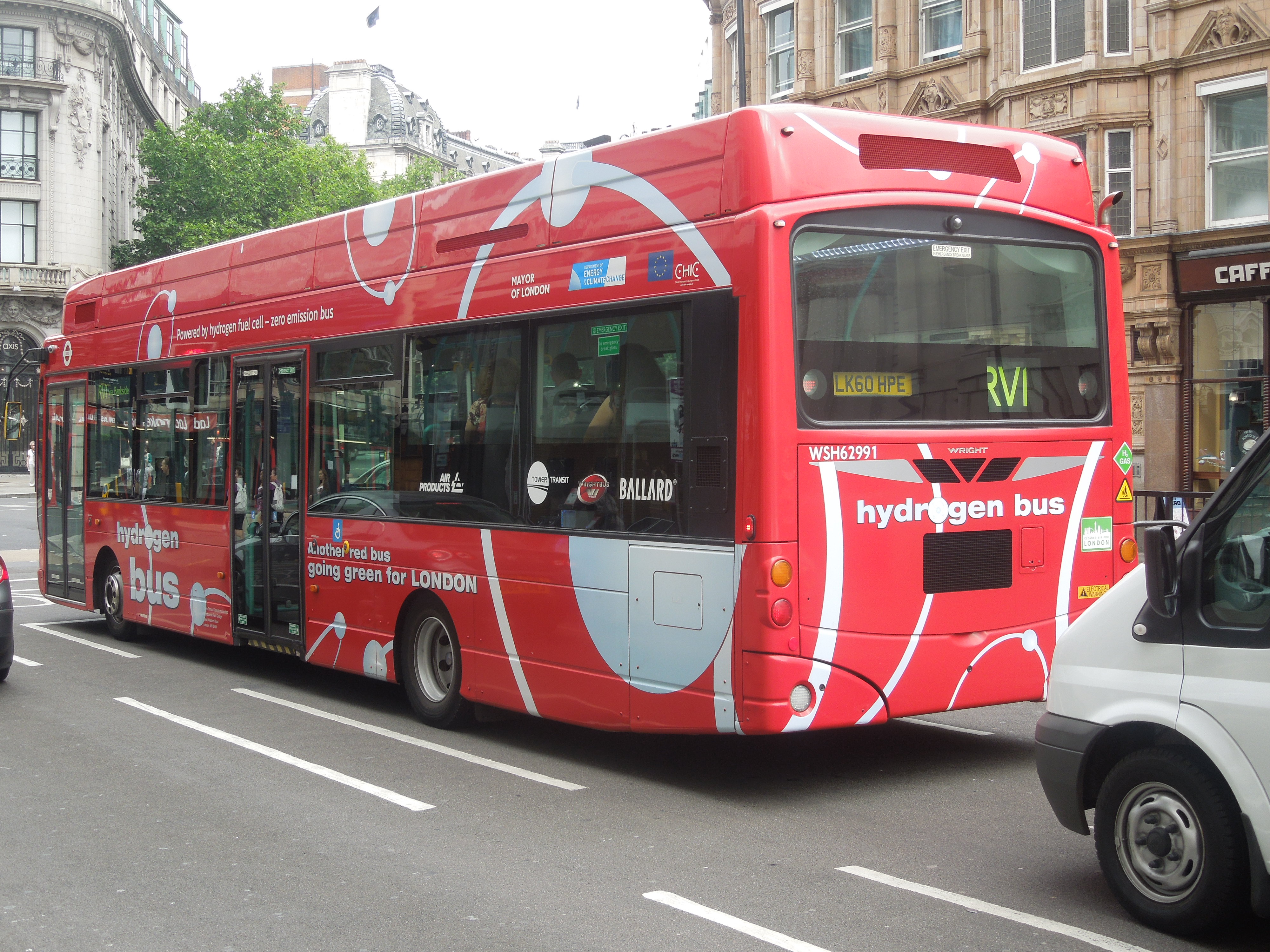
It obviously works, but I’ve always been puzzled about why it isn’t used in more road vehicles. It could be that the logistics problems of refuelling are too complicated and expensive.
Could it be less complicated with trains?
Alsthom have recently launched a hydrogen-powered train, which I talked about in Is Hydrogen A Viable Fuel For Rail Applications?. So they must think it is a viable fuel for trains.
According to the Alsthom video in my related post, the Alsthom Coradia iLint train uses a combination of a hydrogen-powered electricity generator and batteries to provide continuous power and handle regenerative braking.
So why not use hydrogen-power to generate electricity at locations alongside the railway?
Suppose the small power station was providing power to a 750 VDC third-rail electrified railway. In a remote area, the small power station could be using solar panels or wind turbines coupled with batteries to provide a continuous electricity supply.
Intelligent Control System
The power station would be controlled so that it was efficient.
Ensuring Safety
People worry about the safety of hydrogen, as we’ve all seen film of the Hindenburg.
I would design a hydrogen-powered electricity generator for rail use to be buried at the side of the track, with only necessary connections above the surface.
The hydrogen-powered generators would also be contained within the railway security fencing.
What Trains Could Be Powered?
Using hydrogen at track-side means that any unmodified electric or bi-mode train can benefit from zero-carbon hydrogen-power.
Distributing The Hydrogen
The obvious way to distribute the hydrogen would be by train. It would surely be possible to design a hydrogen-powered locomotive and tanker, which could deliver the hydrogen between the production source and the various generators.
Hydrogen Availability
Hydrogen is variable around the UK, but in certain areas there are large amounts of the gas created in chemical plants with rail access.
Conclusion
I won’t be consigning this idea to the bin.
Improving The Train Service Between Rose Grove And Colne Stations
The East Lancashire Line is the line that runs across the town of Burnley on the spectacular Bank Top Viaduct.
- One train per hour in each direction runs between Blackpool South station on the coast and Colne station in the hills.
- The five stations on the route; Burnley Barracks, Burnley Central, Brierfield, Nelson and Colne, are all single-platform stations.
- Only Burnley Central station is more than rudimentary.
- All station have platforms long enough for two Class 150 trains working as a four-car unit.
- The line joins the cross-Pennine Calder Valley Line at Gannow Junction to the East of Rose Grove station.
In the Wikipedia entry for Colne station, this is said.
The remainder of the branch from Gannow Junction (near Rose Grove) to Nelson was also reduced to single track in December 1986 and so the entire line from there is now operated as a 6 1⁄2 miles (10.5 km) “long siding” with no intermediate passing loops (this restricts the service frequency that can operate along the branch, as only one train can be on the branch at a time).
It would thus appear that without track and/or signalling works, the service along the line will be restricted to an hourly train.
Track Improvements
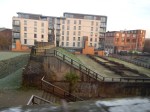
To make improvement of the line more difficult, the line crosses Burnley town centre on the High Bank Top Viaduct.
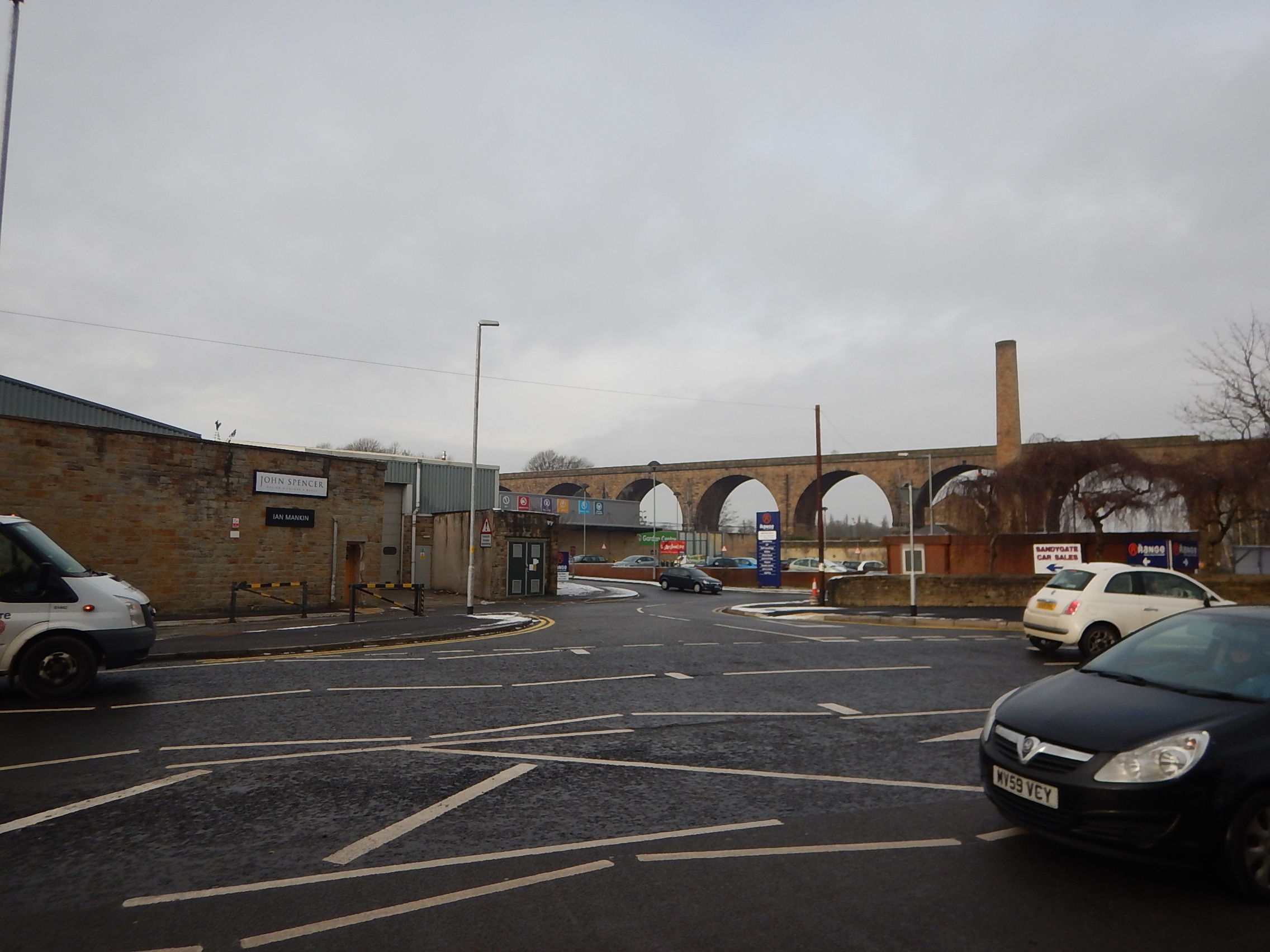
This second picture was taken from a train crossing the viaduct.

North of Burnley Central station, the terrain gets more rural and if needed the installation of a passing loop would be easier, than on the Bank Top Viaduct.
Station Improvements
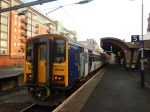
I have been in a four-car train on the line, so I feel it could be theoretically easy to double the capacity by running four-car trains instead of the current two-car Class 150 trains.
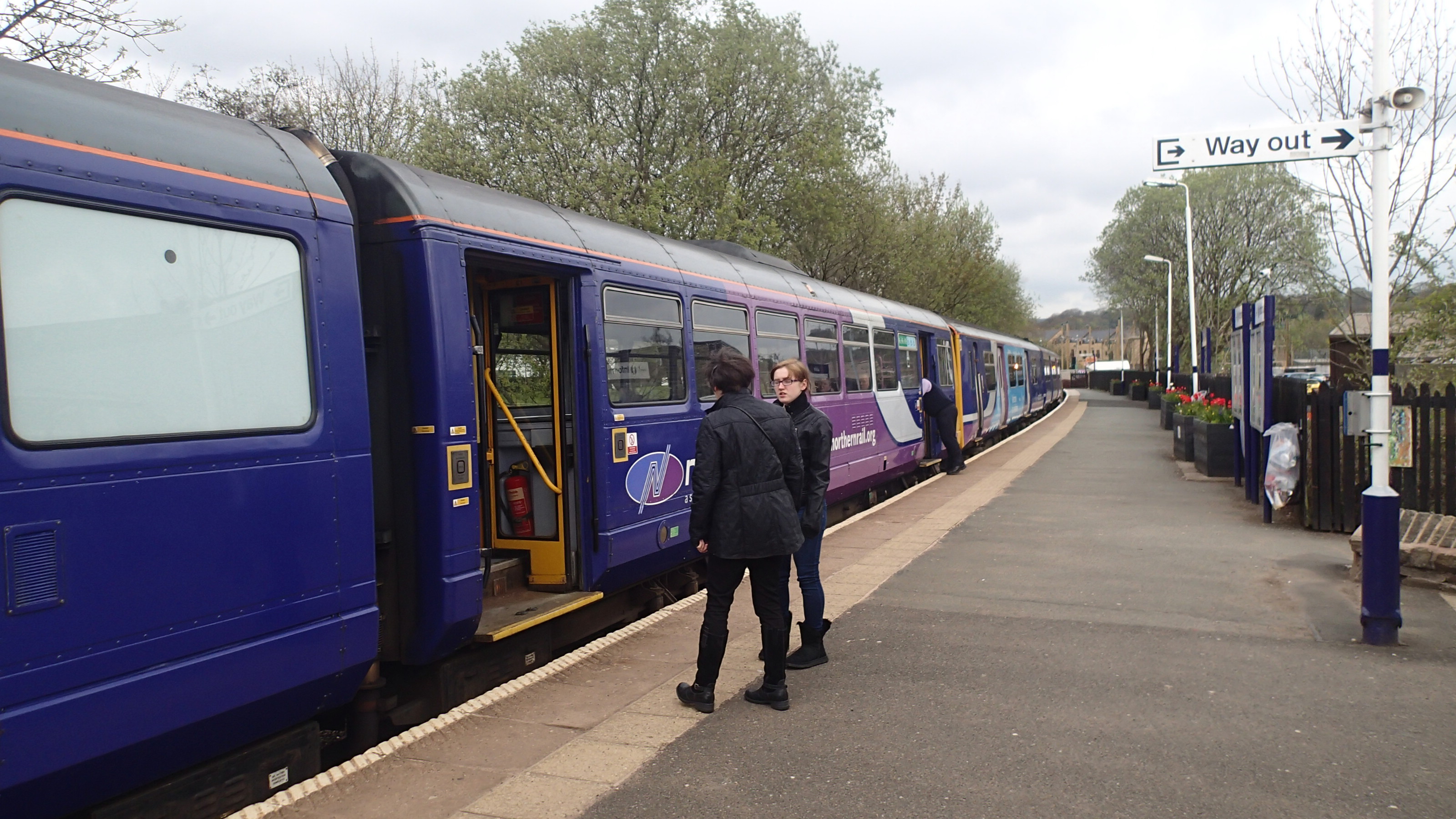
This picture was taken of a pair of two-car diesel units, that took me between Colne and Blackpool South stations.
- Most platforms seem to be long enough, but more shelters and ticket machines are needed.
- Only Burnley Central station has booking office and a warm waiting room.
- By hint of the simplicity of the stations, several are step-free.
Improvements to the stations are needed, but no station needs substantial rebuilding.
Signalling Improvements
The signalling of the line between Rose Grove and Colne stations would appear to rely on only one train being on the line at any one time.
In order to have more than one train on the branch a more sophisticated signalling system is needed.
Service Improvements
The November 2017 Edition of Modern Railways indicates that the Sunday service on this line will increase from two-hourly to hourly.
I was on the line on a sunny Sunday a few years ago and the four-car train was packed with families going to Blackpool for the day.
If anything this Sunday improvement will hasten the need for the doubling of service frequency between Blackpool South and Colne.
Could Two Trains Per Hour Work Between Rose Grove And Colne Stations?
The signalling would have to be improved for safety reasons, as the current safety system of one train on the branch would be inadequate.
If trains left Rose Grove and Colne stations on the half hour, then trains would call at Burnley Barracks station at the following times.
- xx:03 – Service U1 going up
- xx:17 – Service D1 going down
- xx:33 – Service U2 going up
- xx:47 – Service D2 going down
Time for Burnley Central would be as follows.
- xx:06 – Service U1 going up
- xx:14 – Service D1 going down
- xx:36 – Service U2 going up
- xx:44 – Service D2 going down
Times for Brierfield would be as follows.
- xx:09 – Service D1 going down
- xx:11 – Service U1 going up
- xx:39 – Service D2 going down
- xx:41 – Service U2 going up
Times for Nelson would be as follows.
- xx:06 – Service D1 going down
- xx:14 – Service U1 going up
- xx:56 – Service D2 going down
- xx:44 – Service U2 going up
Times for Colne would be as follows
- xx:00 – Service D1 starts to go down
- xx:20 – Service U1 arrives
- xx:30 – Service D2 starts to go down
- xx:50 – Service U2 arrives
Note.
- The trains take twenty minutes for the trip.
- U1, U2 are two services going up to Colne.
- D1, D2 are two services going down from Colne.
It would appear that a passing loop would be needed between Burnley Central and Brierfield stations. Looking from my helicopter at this section of line, a lot is in open country and there would appear to be space for a long passing loop.
Rolling Stock Improvements
The current rolling stock is inadequate and staff and passengers on the line have told me, that the route between Blackpool South and Colne stations, needs four-car services at times.
Because the Western end of the route will be electrified between Preston and Blackpool and Liverpool, there is a strong case for bi-mode trains, be they refurbished ones like Class 769 trains or new trains. Northern has new Class 195 trains on order, but they are pure diesels.
Given that the route may get extra electrification between Preston and Blackburn, if the Calder Valley Line is improved, Class 195 trains are probably not an ideal solution.
Class 769 Trains Between Blackpool South And Colne Stations
Current plans will see electrification of the route between Preston and Kirkham and Westham stations.
This would mean that nearly ten miles of the Blackpool South to Colne route will be electrified.
So would it be sensible to call for Bedpan Specials or Class 769 trains, which could make use of the electrification?
Consider.
- According to a technical specification that I’ve seen, the trains have been designed to handle the Buxton Line, which is stiffer than the hill up to Colne.
- The trains are four cars.
- I believe, that three Class 769 trains would replace the current trains, which could then be appropriately scrapped or refurbished.
- If more electrification is added between Blackburn and Blackpool South, the trains will take advantage.
I also believe that with a passing loop and modern signalling, that the extra performance of the Class 769 trains might make it possible to run two trains on the route with careful planning and precise driving.
But above all, the Class 769 trains are affordable and are probably available within a year.
An interesting observation, is that Northern have increased their order by three trains recently. So have they decided to use them on the Blackpool South to Colne service?
How Would A Re-Opened Skipton To Colne Rail Link Affect The East Lancashire Line Services?
There has started to be increased speculation lately, that the rail link between Skipton and Colne will be reopened. Chris Graying even mentioned this line in the House of Commons.
If the rail link were to be reopened, it would create another route across the Pennines between Lancashire and Yorkshire.
- It would be unlikely to be a high-capacity or high-speed link.
- There is electrification at both ends.
- The line would be ideal for bi-mode trains like a refurbished Class 769 train or a new Class 755 train.
- Colne could be upgraded to a single-platform through station.
Two trains per hour between Leeds and Preston through a scenic part of the Pennines would be a major development and tourism asset.
It could actually improve services on the Lancashire side of the border,, as services would no longer have to be turned back at Colne, but would do this at either Skipton or Leeds.
A Walk Between Burnley Manchester Road And Burnley Central Stations
This is another walk in Burnley to go with A Walk Between Burnley Barracks And Burnley Manchester Road Stations.
Burnley Manchester Road and Burnley Central stations are not that far apart.
This Google Map shows Burnley’s three stations in relation to the Town Centre and Turf Moor.
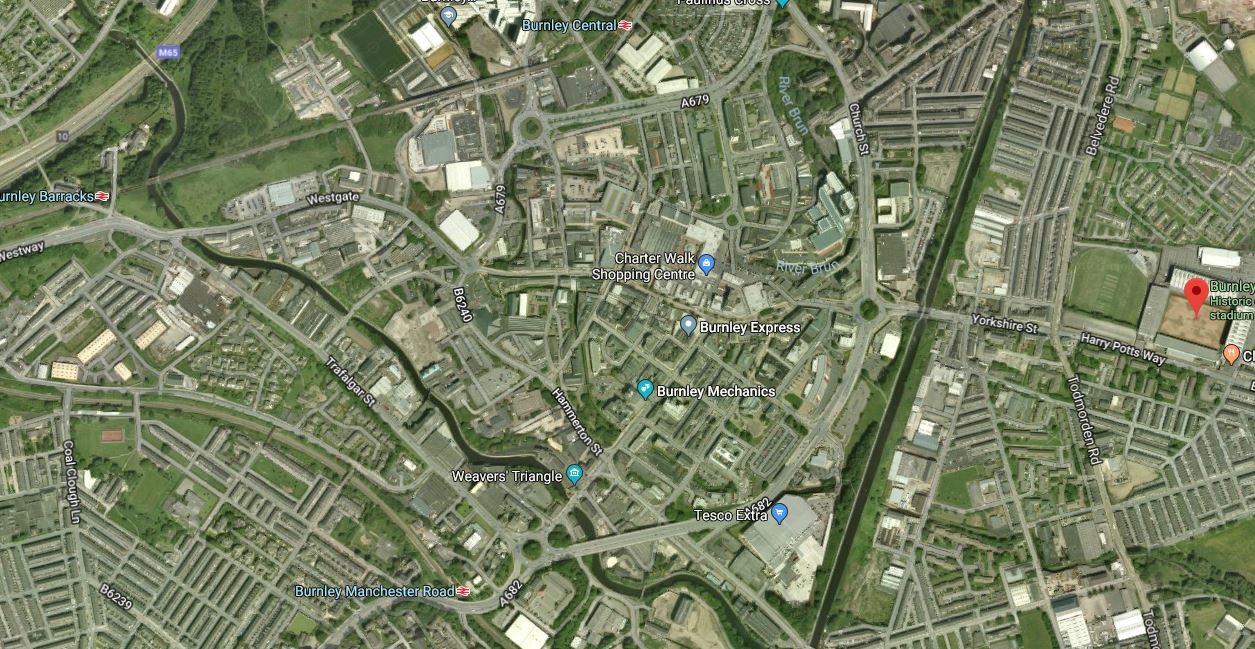
The various locations are as follows.
- Turf Moor is indicated by the red arrow in the East.
- Burnley Barracks station is in the North-West corner.
- Bunley Central is at the North.
- Burnley Manchester Road is at the South.
- The Leeds and Liverpool canal weaves its way through the town passing close to Burnley Barracks station.
What the map doesn’t show is the terrain. The main station at Manchester Road is on one stretch of high ground and Central station and Turf Moor are on another.
So I walked down the hill from Manchester Road station, through the Shopping Centre and up the hill the other side to Central stion.

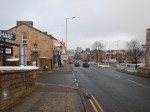
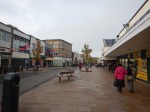

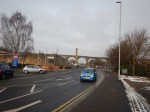
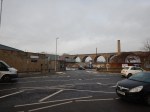

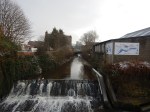
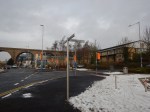

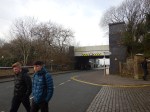
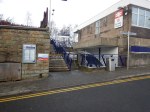
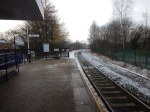

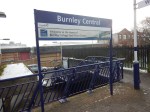

It was an easy walk down the hill followed by a stiffer one up to Central station.
Improvements to the East Lancashire Line.
In A Walk Between Burnley Barracks And Burnley Manchester Road Stations, I concluded the post with the following.
If new four-car Class 769 trains replace the current two-car scrapyard specials on the East Lancashire Line, the following will happen.
- Capacity on the route will be doubled.
- The service will be faster, due to the increased speed and power.
- No expensive platform lengthening will be required.
- An hourly service between Blackpool South and Colne will have no problems operating seven days a week.
- Some stations, like Burnley Barracks, will need improvements to handle the extra passengers.
Two trains per hour will need track work to add passing loops and modern signalling, and a few more trains.
The big question has to be asked, if stations like the single-platform Burnley Central can handle two trains per hour in both directions.
I discussed this in Improving The Train Service Between Rose Grove And Colne Stations and came to the conclusion, it was possible with a passing loop between Burnley and Brierfield stations, modern signalling and Class 769 trains.
It could all come together very nwell for the residents of East Lancashire.
Between Hebden Bridge And Burnley Manchester Road Stations In The Snow
I took these pictures from a train between Hebden Bridge and Burnley Manchester Road stations on the Calder Valley Line.



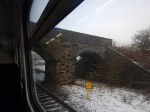




I believe that the area has some of the most scenic rail lines in the UK.
Electrification
It runs between the hills with lots of bridges and viaducts.
There are four tunnels; Weasel Hall , Castle Hill , Horsfall and Millwood on this section of the route.
It would not be an easy line to electrify with 25 KVAC overhead wires, from an engineering, political or environmental point of view.
This is a route though that needs to be improved.
I travelled on a Class 158 train, which are a 90 mph diesel multiple unit. But it was struggling to do 40 mph in the conditions.
Conclusion
Electrification may be an ideal, but Network Rail should first improve the line, so that the current trains and the future 100 mph Class 195 trains can realise their full potential.
Hebden Bridge Station
Hebden Bridge Station is Grade II Listed and is a busy station in West Yorkshire on the Calder Valley Line.
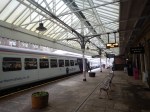
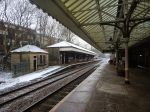
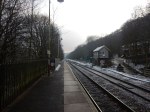
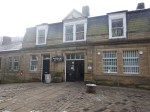
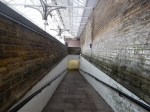
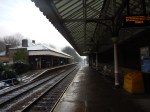
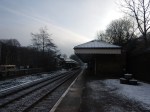
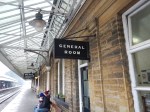
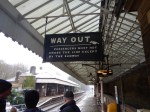
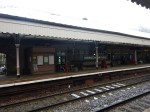
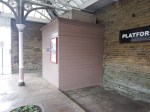
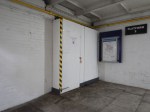
The service through the station is being improved.
The Wikipedia entry for the station has a section called Future Improvements. This is said.
The station will see a variety of improvements to facilities and train services from March 2017 onwards, as part of an investment package for the Calder Valley line as a whole. New lifts are finally to be installed to make both platforms fully accessible, whilst track and signalling upgrades will help reduce journey times in both directions and allow more trains to run to/from Bradford. This will result in the closure of the listed signal box here by October 2018, with control passing over to the Rail Operating Centre at York. New rolling stock and timetable improvements will then follow, with regular through trains to Liverpool Lime Street, Manchester Airport and Chester by late 2019.
Note the parcel lifts in the pictures, which will be converted for passenger use.
Turnback Facility
The pictures also show the turnback facility at the station, which allows trains to arrive from the West in the Westbound platform and then changeover to the Eastbound platform to go back to Manchester or Preston or perhaps other destinations in the future.
Electrification
When I first saw this Victorian station, I came to the conclusion, that it would be difficult to electrify in a sympathetic manner with 25 KVAC overhead wires, without upsetting English Heritage.
Now the Government has decided that there will only be selective electrification, I suspect Network Rail will file Hebden Bridge station in the tray marked Too Difficult.
But I also think that the station could be electrified using innovative methods to improve the passenger service in terms of frequency and times.
Consider.
- Modern bi-mode trains can switch between power sources automatically.
- Modern electric trains can raise and lower the pantograph quickly and automatically.
- Most modern electric trains made for the UK, can be fitted with third-rail contact shoes.
- To the West of the station, there are a succession of tunnels, that might be possible to electrify using overhead rails.
- Zero-carbon power sources for short lengths of electrification exist, as I wrote about in Solar Power Could Make Up “Significant Share” Of Railway’s Energy Demand.
- Although solar power might not be appropriate here, short lengths of third-rail electrification may be suitable.
- The turnback facility could also be electrified with third-rail to charge trains fitted with batteries.
Somewhere in my ramblings, I’m sure a solution exists to make Hebden Bridge an environmentally-friendly power station in the heart of the Pennines.
The Ordsall Effects
There is now a large brown steel elephant in the North, in the shape of the Ordsall Chord in Manchester, that connects most of Central Manchester’s stations together and to the Airport.
- Hebden Bridge is between thirty and forty-five minutes from Manchester Victoria station, depending on if you get a semi-fast or stopping train.
- Northern have plans to extend these Manchester Victoria to Leeds services all the way to the Airport.
- In fact from Monday, some of these services now terminate at Manchester Oxford Road station.
- When I mentioned to the lady in the cafe, that services would go to Manchester Airport within months, she was surprised and very pleased.
I suspect that Hebden Bridge will be one of the tourism centres of the North that will substantially benefit from a direct link to Manchester Airport created by the Ordsall Chord.
But this could only be the start.
To maximise the benefits of the Ordsall Chord, Northern and Network Rail will want to connect services that go North and South of Manchester, back-to-back across the City.
Northern have already said, that they’ll be trains going from Hebden Bridge to Chester and Liverpool by late 2019.
But I suspect these two cities won’t be the only ones getting a quality service from Hebden Bridge.
If the service ran directly over the Ordsall Chord, then historic Buxton and well-connected Crewe must be possibilities.
That turnback facility is starting to look important, as not all services will be needed to cross the Pennines.
Westwards To Preston, Blackpool and Liverpool
Currently, the only Westbound service is an hourly train to Preston and Blackpool North.
It is not enough.
The proposed Liverpool service from Hebden Bridge, that starts in late 2019, can either go via Manchester or Preston.
If it were to be the latter, a second fast train every hour, connecting Burnley, Blackburn and Preston would certainly be welcomed on what can be a very overcrowded line.
As all Calder Valley Line services stop at Hebden Bridge, the Ordsall Chord and Northern’s plans seem to be giving the town, a more than worthwhile economic boost.
A Double Crossing Of The Ordsall Chord
I caught the first morning train from Manchester Victoria station across the Ordsall Chord to Manchester Oxford station, where after buying hot chocolate, I took the same diesel multiple unit back to Hebden Bridge station.







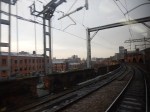

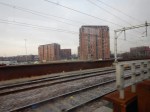
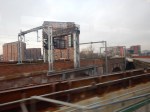
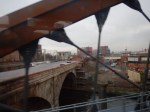





A few points about the Ordsall Cord and its effects.
Mancunians Have Been Quick To Use The Chord To Their Advantage
It was only the second weekday of this Ordsall Chord service, but what surprised me was that quite a few of the early travellers went to the extra two added stations on the service.
This bodes well for the future in that when Piccadilly and the Airport are added, the passengers will surely travel.
Manchester Victoria Is An Inadequate Station For The Number Of Passengers
The station may have improved in recent years, since the new roof, better tram access and more retail facilities have been added, but it is still a rather poor station for passengers to walk around, compared to others with similar amounts of trains.
I took this picture as the train before mine unloaded passengers at Victoria station.
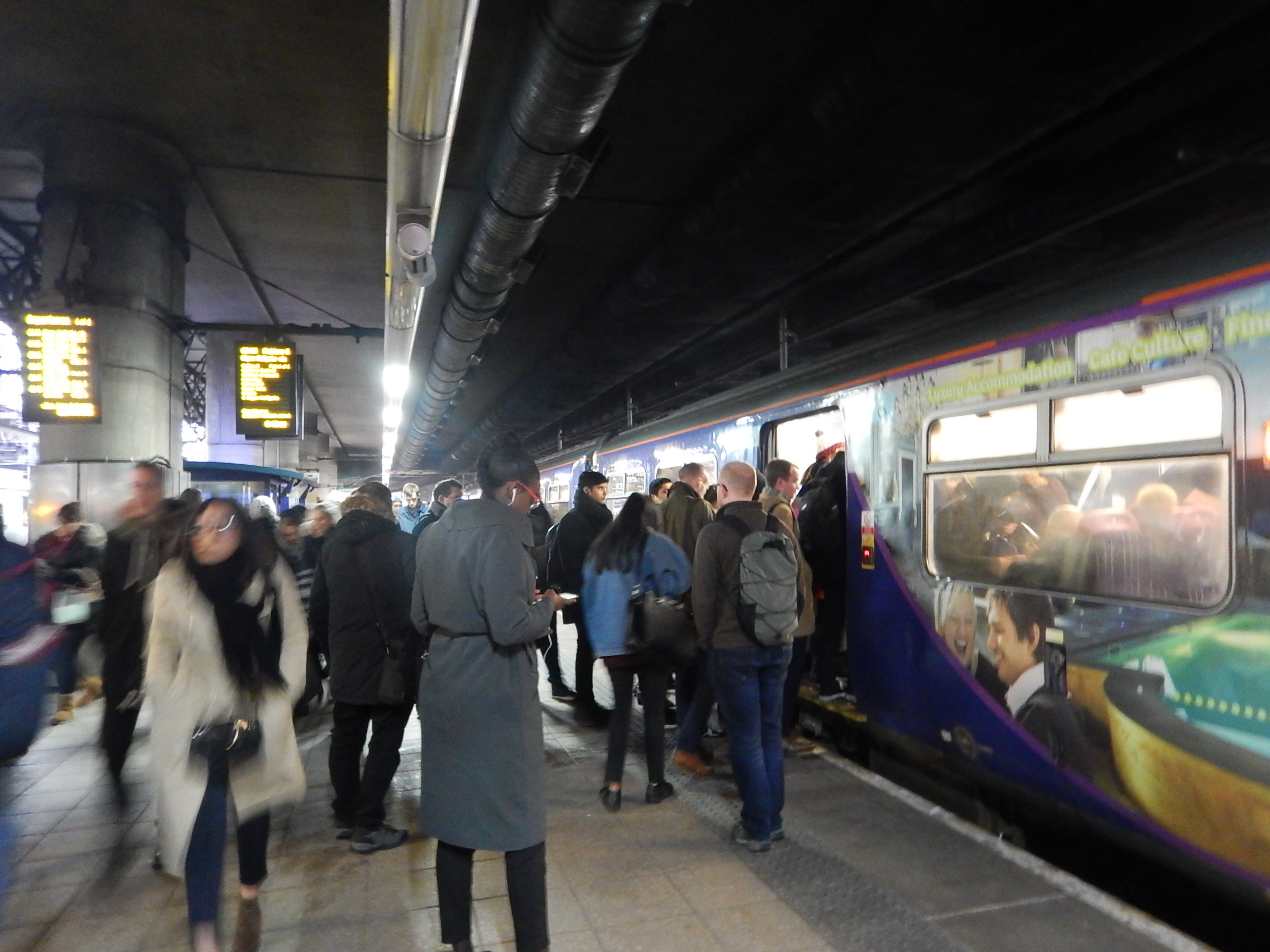
It is the typical scrum that you get at busy stations in the North.
The Ordsall Chord will affect Victoria in the following ways.
- There will be more trains passing through. This will increase the number of passengers entering and leaving the station.
- Passengers will change trains but not platforms at Victoria. This will mean that passengers will regularly wait for 15-30 minutes on the platform.
- Ideally services like Liverpool to Leeds and Newcastle, should have same or cross platform interchange with local services using the Ordsall Chord.
So what needs to be addressed?
Platforms
The Ordsall Chord is currently served by Plstforms 5 and 6.
These platforms are totally inadequate for the extra numbers of passengers and especially the extra passengers, who will wait on the platform, whilst changing trains.
- A coffee kiosk is needed on both Ordsall platforms.
- The platforms are not wide enough.
- There are not enough seats.
Both platforms are used to terminate services, which is totally against the philosophy of the Ordsall Chord. This must and hopefully will stop.
Ideally, Ordsall Chord services and important cross-Manchester services should have a platform layout, that means as many changes as possible are level.
Take the case of the elderly passenger with their presents in a bulky case going from say Liverpool to perhaps Rochdale for Christmas. They will not want to negotiate the bridge at Victoria, even by lift to change trains. And neither will staff.
But a cross or same platform interchange would be ideal for everyone.
The layout would all depend on how many services are going through the station..
Currently, the station has the following services.
- Five tph terminating at the station going West
- Six tph terminating at the station going East
- Three tph cross-Manchester services stopping at the station.
If these services could be simplified by joining East and West services back-to-back, we are looking at perhaps ten tph.
As there are many stations in London that handle fourteen to sixteen tph on two platforms, the following would surely be possible.
- Use one platform for all Westbound cross-Manchester and Ordsall Chord services.
- Use one platform for all Eastbound cross-Manchester and Ordsall Chord services.
Platform 5 and 6 would not be ideal for this, as the services should be on either side of a wide island platform, to allow passengers to reverse direction without changing level.
Lighting
I know it was early in the morning, but the picture shows how dark and dingy the station still is. Surely, just on the grounds of Health and Safety, the lighting levels must be improved.
The Overbridge
Surely, if the rebuilt Reading and Leeds stations can have escalators for their overbridges, then the equally important. but smaller Manchester Victoria, should have some on the busy overbridge.
The Interchange Between Tram And Train At Deansgate
Did people get off the train at Deansgate station to use the Metrolink?
Changing from train to tram at Victoria, involves a fight through crowds to get up the stairs to the bridge and then another another set of stairs to get to the Metrolink.
But at Deansgate station coming from Victoria, it is just a level walk across to the major Deansgate-Castlefield Metrolink interchange.
It would appear that 2015 redevelopment of the tram stop and its link to the station were designed for the extra passengers, that the Ordsall Chord will surely bring.
Deansgate-Castlefield with its three platforms, also has a comprehensive list of services.
- 5 trams per hour to Altrincham
- 5 trams per hour to Ashton-under-Lyne
- 5 trams per hour to East Didsbury
- 5 trams per hour to Eccles via MediaCityUK
- 5 trams per hour to Etihad Campus
- 5 trams per hour to Manchester Airport
- 5 trams per hour to Rochdale Town Centre
Avoiding Piccadilly
Manchester Piccadilly station is one of my least favourite stations in the UK for using the trains.
- I always travel to and from Manchester in Standard Class, to avoid the crowded walk up and down the platform at Piccadilly.
- I know there’s a bridge at the London end of the train, but it is not directly connected to the Metrolink underneath.
- Buying a ticket for the Metrolink is a tiresome business, when I should just be able to touch in and out with my bank card.
- The forecourt of the station is always crowded.
- Only the above average food offerings for a coeliac give me any cheer.
Hopefully, when the services across the Ordsall Chord are fully developed, a lot of places I want to go will be available by changing trains at Crewe or Stockport.
Manchester’s Third City Crossing
In some ways the nearest London has to the Ordsall Chord is the railway across the South Bank connecting London Bridge, Blackfriars, Waterloo East and Charing Cross stations, which carries in excess of twelve tph. It appears to me and staff I have talked to, that passengers are using this route between Westminster and London Bridge, instead of the Jubilee Line. Especially, if they have bicycles!
Will Mancunians use the frequent service on the Ordsall Chord across the city, as a Third City Crossing?
Platforms At Salford Central Station
I hope the planned extra platforms at Salford Central station are built in the near future, as this would surely increase the use of the Ordsall Chord
Tickets To Manchester Stations
My ticket to Manchester from Euston was to Manchester Stns, which means i can get out at Deansgate, Oxford Road, Piccadilly or Victoria.

Surely, it should include Salford Central station.
Platforms At
There’s Still A Few Snags
In my trip, I went across the Orsall Chord four times.
Each time, the train waited a minute or so before proceeding over the bridge. Were there signalling issues, the trains were not quite to time or were the drivers just being cautious.
Conclusion
Now that the difficult phase is complete, it will be interesting to see how the swervices build up.
A Side-Effect Of Northern’s Plan To Use Class 769 Trains Across Manchester
It would appear that Northern will use some Class 769 trains on routes across Manchester’s electrified core to connect two lines without electrification.
I think that one route could be to connect Clitheroe on the Ribble Valley Line to Buxton on the Buxton Line.
These two branches could be connected by an electrified line between Hazel Grove and Bolton stations, outside of which they’d generate their own power using on-board diesel alternators.
Pacers, Class 150 trains or Class 156 trains currently work the two lines without electrification, but if it was designed to create a North-South cross-Manchester service, Class 769 trains could easily handle the extended route.
Northern have around a hundred Pacers and have pledged to remove all of them from service. Probably, most will go to the scrapyard, but some might end up with enthusiasts or masochists, or in strange export markets.
- A 75 mph two-car train like a Class 150/156 train or a Pacer would be replaced with a 90 mph four-car train. Which must speed up and improve the service.
- Capacity would be increased by at least one car in each replacement train.
- If a Pacer is replaced on the route, it goes out of service.
- If a Class 156 train is replaced it goes elsewhere to kick a Pacer out of service.
- If a Class 150 train is replaced, it probably gets a good refurbishment to kick a Pacer out of service.
So as each new Class 769 train enters service, it can push a Pacer out of service and replace it with a better train.
The same probably occurs when a Class 319 train enters service on the Northern network, if it directly replaces another train.
Passengers on their local line, might not see a new electric train, but their Pacers will gradually be replaced with better stock.
Then as the brand-new trains from CAF get introduced in a couple of years, everybody will see better trains.
In some businesses, you might think it a way to con the customers. But here, they’ll just see a process of continuous improvement of the rolling stock on their regular journeys.
Trains Are Timetabled Between Leeds And Manchester Oxford Road Station This Week
I have been looking at the National Rail timetables and it appears that certainly on Monday and possibly tomorrow, trains are timetabled to run between Leeds and Manchester Oxford Road stations, stopping at Manchester Victoria station.
This means that weather permitting, the Ordsall Chord is expected to be open. Weather permitting of course!
It’s now Sunday morning and according to the National Rail train departures system, the 08:57 train from Manchester Oxford Road to Leeds is ready to rumble.
The article in The Independent is entitled Six Minute Rail Link Promises To Transform North West Train Services.
It gives this precise explanation of what the Ordsall Chord is all about.
Network Rail, which has created the £85m link, says: “Congestion currently seen at Manchester Piccadilly will reduce by a quarter with some services being rerouted through Manchester Victoria.
“There will be more capacity on the railway, meaning more frequent trains to run.”
By connecting Victoria and Oxford Road stations for the first time, the Ordsall Chord will provide a link from Leeds to Manchester airport which does not require trains to reverse, and free up space by reducing the number of services terminating at Victoria.
I would assume that this short length of railway, has been built so that it can handle a high frequency of trains across the City. So if it has been traditionally signalled like the East London Line of the Overground train frequencies of upwards of twelve trains per hour (tph) will certainly be possible.
But modern signalling using ERTMS, will give this route a frequency up there with Crossrail and Thameslink of twenty-four tph.
Manchester’s Crossrail
Manchester has got its Crossrail, a year before London.
I don’t think Manchester knows what is going to hit the City!
A lot of local services at Manchester Victoria are arranged so that they run back-to-back connecting pl;aces like Blackburn, Kirkby, Southport, Stalybridge, Todmorden and Wigan.
Now services will run back-to-back through the core of Victoria, Salford Central, Deansgate, Oxford Road, Piccadilly and the Airport.
- Manchester has gained a Third City Crossing!
- It needs a frequency of at least twelve tph or one train every five minutes.
On the section between Deansgate and Piccadilly, there will be even more trains.
- Piccadilly to Liverpool Lime Street and Warrington services
- Piccadilly to Blackpool, Bolton, Preston and Southport services via Salford Central and the Windsor Link Line.
Summing this spaghetti up, you get destinations to the North of the Irwell.
- Barrow/Lancaster/Windermere
- Blackburn
- Blackpool *
- Bolton *
- Clitheroe
- Glasgow/Edinburgh *
- Halifax
- Kirkby
- Leeds
- Liverpool *
- Preston *
- Rochdale
- Southport
- Stalybridge *
- Warrington
And these to the South
- Buxton
- Crewe *
- Glossop/Hadfield *
- Hazel Grove *
- Manchester Airport *
- Stockport *
Note.
- The stations marked with asterisks (*) will be fully electrified by the end of 2018.
- Piccadilly is not included in the list of stations South of the Irwell, as it is not a station, where trains can be reversed to go North.
- Oxford Road can be used to reverse trains and it is significant the the first Ordsall Chord services are between Oxford Road and Leeds.
There is a lot of scope for back-to-back services across the Irwell using the current Class 319 trains, that work Liverpool to Manchester, Preston and Wigan services.
Thinking about what Manchester has now got, it’s more like Thameslink than Crossrail, as it has a lot of branches on both sides of the Irwell.
So perhaps it should be called IrwellLink?
The Arrival Of the Class 769 Trains
Northern have another train up their sleeve! Or should I say, under construction in Loughborough?
At least eleven of the Class 769 bi-mode train are coming!
On paper these trains seem a bizarre but simple idea! You take a nearly thirty-year-old British Rail Class 319 train and fit two diesel alternator sets underneath, so that it can generate its own electric power on lines without electrification.
But in practice, it appears Northern will be getting a train that can do the following.
- Bridge all the electrification gaps in the North-West of England.
- Work the very stiff Manchester to Buxton route.
- Do 100 mph under the wires and 90 mph on diesel.
- Meet all the regulations with respect to Persons of Reduced Mobility.
- Deputise for and augment Class 319 trains when required.
- Give a performance improvement over Pacers and Class 150 and Class 156 trains.
- Work into most stations, where Pacers and Class 150/156 trains currently work, without station upgrades.
All this comes in a strong Mark 3-based design, that drivers seem to like.
I think that Northern said a lot about their confidence in these trains, when they increased the order from eight to eleven, around the time serious testing started.
If more than eleven Class 769 trains are needed, there are a total of 86 Class 319 trains of which 32 are the Class 319/4 variant, which would be the preferred conversion, as they have a better interior.
Class 769 Train Routes
The Class 769 trains could work between Leeds and Oxford Road stations, as soon as they receive certification.
But surely, one of their main uses will be to link destinations on lines without electrification on either side of the electrified core lines in Manchester.
This map from Wikipedia shows the layout of the main lines and stations in Central Manchester.
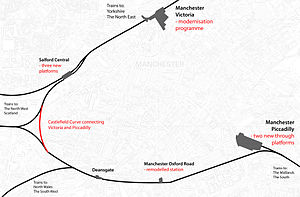
Starting at the top and going anti-clockwise the stations are as follows on the lin, which is fully electrified.
- Manchester Victoria
- Salford Central
- Deansgate
- Manchester Oxford Road
- Manchester Piccadilly
The Ordsall Chord is shown in red.
Note that most of the lines radiating from the cross-city line can be joined to the others.
This leads to services such as.
- Buxton to Clitheroe via Piccadilly, Salford Cresent, Bolton and Blackburn
- Crewe to Blackburn via The Styal Line, Piccadilly, Victoria, Todmorden and Burnley.
- Southport to Manchester Airport.
- Sheffield to Liverpool via the Hope Valley Line, Stockport, Piccadilly and Warrington.
- Kirkby to Stalybridge
Feel free to add any route you feel convenient.
Add in a few extra platforms at perhaps the two Salford and Oxford Road stations and Manchester could have a rail network, that would be second-to-very-few.
There are also a lot of opportunities around Leeds and along the East Coast Main Line.
Sheep In The City
I took this picture outside the South Place Hotel, just off Moorgate in the City of London.

I can’t remember ever seeing fleeces on outside seats.
But it was bitterly cold.
Chilled Marks and Spencer’s 0.5% Southwold Pale Ale
I took this picture of Marks and Spencer’s 0.5% Southwold Pale Ale in the fridge of their store on Finsbury Pavement in the City of London.
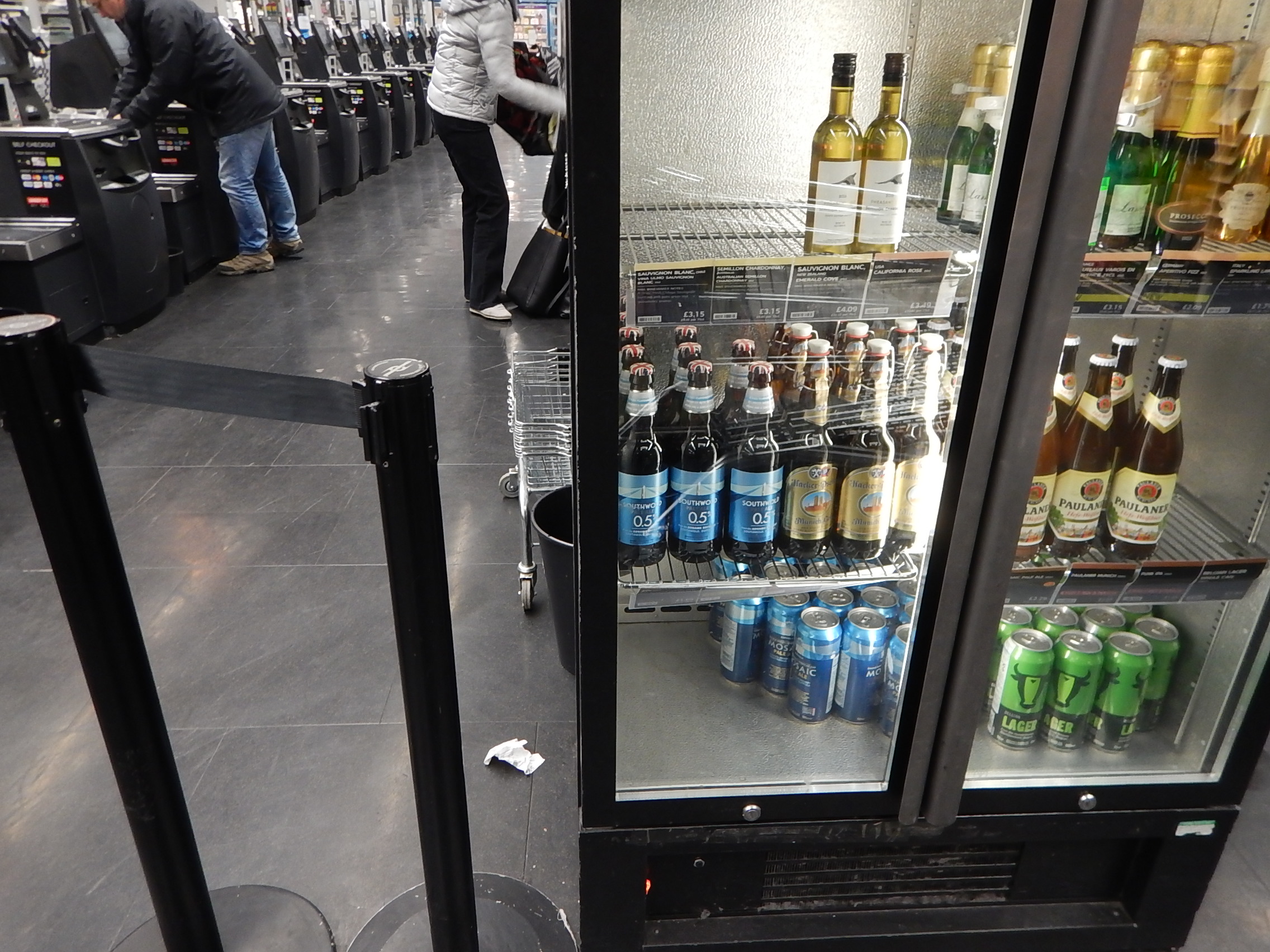
Not that it needed to be cooled today, as it was real bass monkey weather.
 The Anonymous Widower