Wigan Wallgate To Headbolt Lane – 10th May 2025
I was now running late and decided to go back to Liverpool via the Kirkby Branch Line, with a change of train at Headbolt Lane.
I took these pictures along the route.






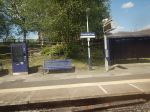







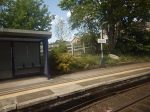







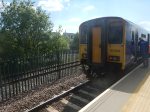




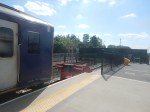
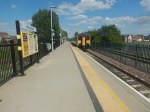
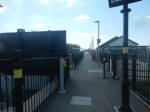


Note.
- Wigan Wallgate station could be refurbished into a quality station.
- Manchester to Wigan Wallgate is likely to be electrified, as I wrote in Bolton-Wigan £78m Rail Electrification Project Announced.
- Headbolt Lane station is a new station.
- The other stations on the line are fairly rudimentary affairs.
- Only Headbolt Lane station is step-free, as all platforms are on the same level.
The Kirkby Branch Line runs across the flat Lancashire countryside.
This Google Map shows the unusual layout of Headbolt Lane station.
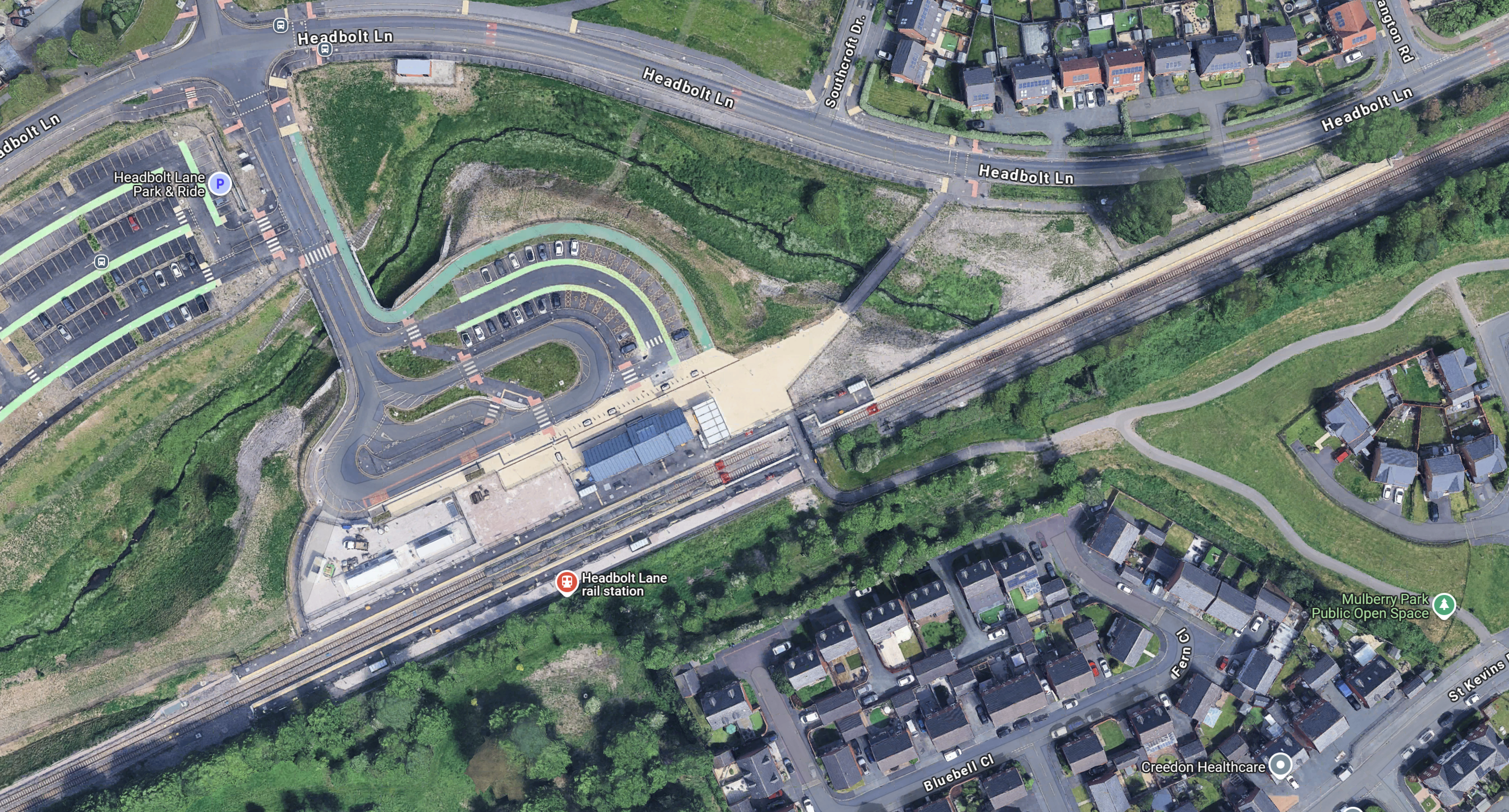
Note.
- Liverpool is to the South-West.
- Wigan and Manchester are to the North-East.
- The station buildings and the car parks are on the North side of the tracks.
- There are two platforms pointing towards Liverpool.
- There is a single platform pointing towards Wigan.
- There is a second track pointing towards Wigan, that has no platform.
- None of the tracks are electrified.
- Three red buffer stops can be picked out.
- Trains to Liverpool are run by battery-electric Class 777 multiple units.
- Trains to Wigan and Manchester are run by diesel multiple units.
All platforms are the same level and you can walk from one side of the station to the other between the buffer stops.
It is effectively a step-free three-platform station without lifts or escalators.
I have never seen another station like it!
Modernising The Route Between Wigan Wallgate And Headbolt Lane
Consider.
- With the exception of Headbolt Lane station, there is no step-free access on this line and that needs to be addressed.
- Wigan Wallgate station has an island platform, with steps to the street.
- With the exception of Headbolt Lane station, there is very little parking.
- The Class 150 diesel multiple units are forty years old.
The distance between Wigan Wallgate and Headbolt Lane stations is about 15 miles.
Equinor May Ditch Empire Wind 1 ‘In Coming Days’ Unless Stop-Work Order Lifted – Reports
The title of this post, is the same as that of this article on offshoreWIND.biz.
This is the sub-heading.
Equinor could abandon the Empire Wind 1 offshore wind project “in the coming days” if the stop-work order, issued by the US government soon after the project started offshore construction work, is not lifted, president of Equinor Renewables Americas, Molly Morris, recently shared in an interview.
These are the first three paragraphs.
Morris told Politico that the standstill was costing the company millions each day and USD 50 million (around EUR 45 million) per week but that a lawsuit would take too long as the work offshore needs to get off the ground again soon.
Last month, Anders Opedal, CEO and President of Equinor, called the US government’s order to stop construction activities on Empire Wind 1 “unlawful” and said the company was seeking to engage directly with the US administration to clarify the matter and was considering its legal options.
AP reports that Morris said the project was now at risk of missing the summer construction window as it began this month and would be set back a year if that happens. This is why the company is pushing for the order to be lifted by the government as that would allow for the work to be resumed while legal action could get the project tied up in courts, according to AP’s report.
When this project is late and inevitably loses money, it will be Trump’s fault.
I’ve seen it all before with housing and railway projects in the UK and other countries.
But Trump is bringing pointless political interference for a whole new stupid level.
How
The Future Of HS2 Could Lie In Its Original Vision
The title of this post, is the same as that of this article on Railway Gazette.
This is the sub-heading.
High Speed 2 should be rescoped to run from London Euston to Crewe, taking advantage of the lessons learned and supply chain foundations established during Phase 1, says Dyan Perry, Chair of the High Speed Rail Group.
The article has been written by Dyan Perry, who knows her railways and especially high speed ones well.
These two first paragraphs introduce her arguments.
High Speed 2 stands at a defining crossroads. Phase 1 from Old Oak Common to Birmingham has the green light, and under the new leadership of HS2 Ltd CEO Mark Wild the project is undergoing a positive and much needed ’reset’. With around 31 000 jobs currently supported, more than 75% of tunnelling completed and construction underway on two-thirds of HS2’s viaducts, momentum is building again.
This fresh injection of energy is welcome after years of shifting goalposts and cuts to the project’s scope. However, while Phase I pushes ahead, the handbrake has been pulled on the next critical phases of the project: the route from the West Midlands to Crewe and Old Oak Common to London Euston.
In the short term, this may appear fiscally sensible. However, as with all infrastructure investments, the project and potential returns must be viewed through a long-term lens. After all, a half-built railway moulded by short-term decision-making risks squandering investment to date and losing billions of pounds of taxpayers’ money.
The High Speed Rail Group (HSRG) has these recommendations.
- A “Euston to Crewe” Core.
- West Midlands to Crewe must be given the go-ahead before the powers to do so run out. This would provide much needed capacity on the West Coast Main Line.
- Use the lessons learned on Phase 1 to build West Midlands to Crewe more effectively.
- Build a streamlined, cost effective station at Euston.
- HSRG believes a concession let for a London to Birmingham and Crewe railway line, one that takes learning from the High Speed One financing model, could generate between £7·5bn and £10bn in concession value, a significant return for taxpayers.
High Speed Two needs a cohesive long term plan.
I very much agree with what Dyan and the HSRG are saying.
I also have some related thoughts.
High Speed East Coast
I am a Control Engineer by training and I’ve felt for some time, that the some of the bottlenecks on the East Coast Main Line to the South of Doncaster could be solved by intelligent digital signalling.
I believe that the major cities of the North-East of England and Eastern Scotland would be best served by direct high speed trains from London on the East Coast Main Line. I also think, that such an approach would deliver similar times to High Speed Two via Birmingham.
North of York
Just as stations on the West Coast to the North of Crewe will be served by High Speed Two and the West Coast Main Line, stations North of York will be served by trains going up the East Coast Main Line.
The Element Of Competition
I said earlier, that if a 30-year concession were to be sold for the West Coast Main Line, it could raise between £7.5bn and £10bn.
So why not sell a concession for the East Coast Main Line?
A further benefit, is that competition between the two concessions and the budget airlines, might bring down timings and prices, just as competition did in the Railway Races of 1888 and 1895.
High Speed North Wales
I have believed for some time, that there is a need for a zero-carbon (green) route between London and Dublin and ultimately between the Channel Tunnel and Dublin.
The last Conservative government promised to electrify Crewe and Holyhead along the North Wales Coast.
This route could deliver passengers to Holyhead for a zero-carbon high speed catamaran to Dublin.
The EU would be a beneficiary and might like to help fund the route.
JCB Hydrogen Excavators Approved For UK Roads
The title of this post, is the same as that of this article on Construction Kenya.
This is the sub-heading.
The government’s move supports the UK’s broader net-zero goals.
These are the first two paragraphs.
JCB has celebrated a landmark decision by the UK government allowing hydrogen-powered construction and agricultural machinery on public roads, effective from April 29.
This change enables hydrogen-fuelled diggers, tractors, and other machinery to operate between sites and farms, reducing carbon emissions in two highly polluting industries.
JCB celebrated by driving a hydrogen-powered excavator through London to meet the Minister.
I would have thought that this event would have had more coverage in the news.
But then hydrogen is a taboo subject to many politicians and the media, as the Hindenburg got the anti-hydrogen publicity right.
 The Anonymous Widower