Is Hackney Downs Station A Suitable Case For Treatment?
Some of the stations on the London Overground, are architectural gems.
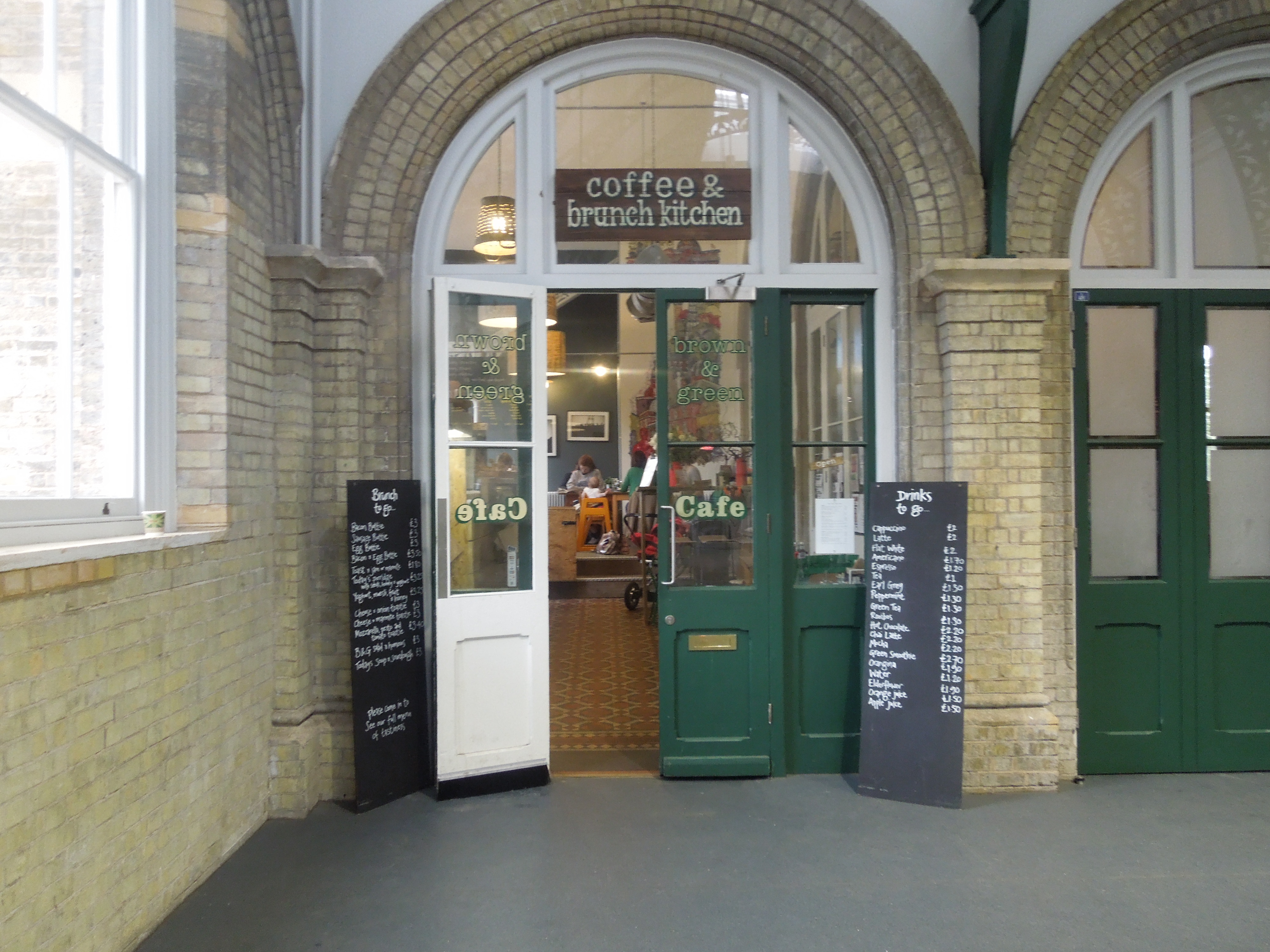
The picture shows some the internal detail of the refurbished Grade II Listed Crystal Palace station. The cafe was created in an area of the station, that few realised existed.
There is also work going on at Peckham Rye station, where an enormous Victorian waiting room has been discovered. An architect called Benedict O’Looney seems to be on a mission to restore the station to its former glory.
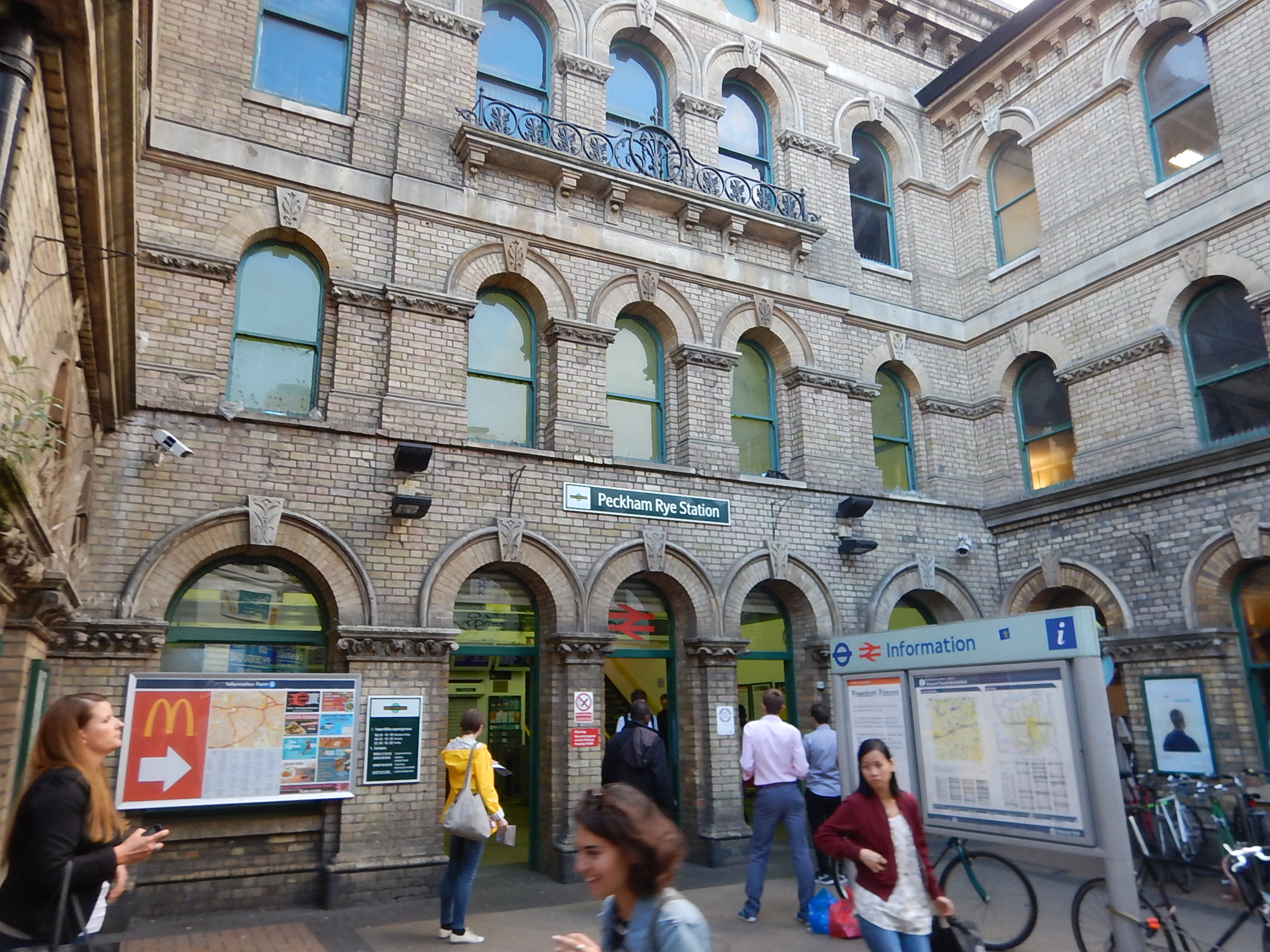
Peckham Rye station could be step-free as early as 2019, so I suspect that the station could become more important in the grand scheme of things.
What would Del Boy have thought?
There is also Camden Road station, which is in pretty-good nick.
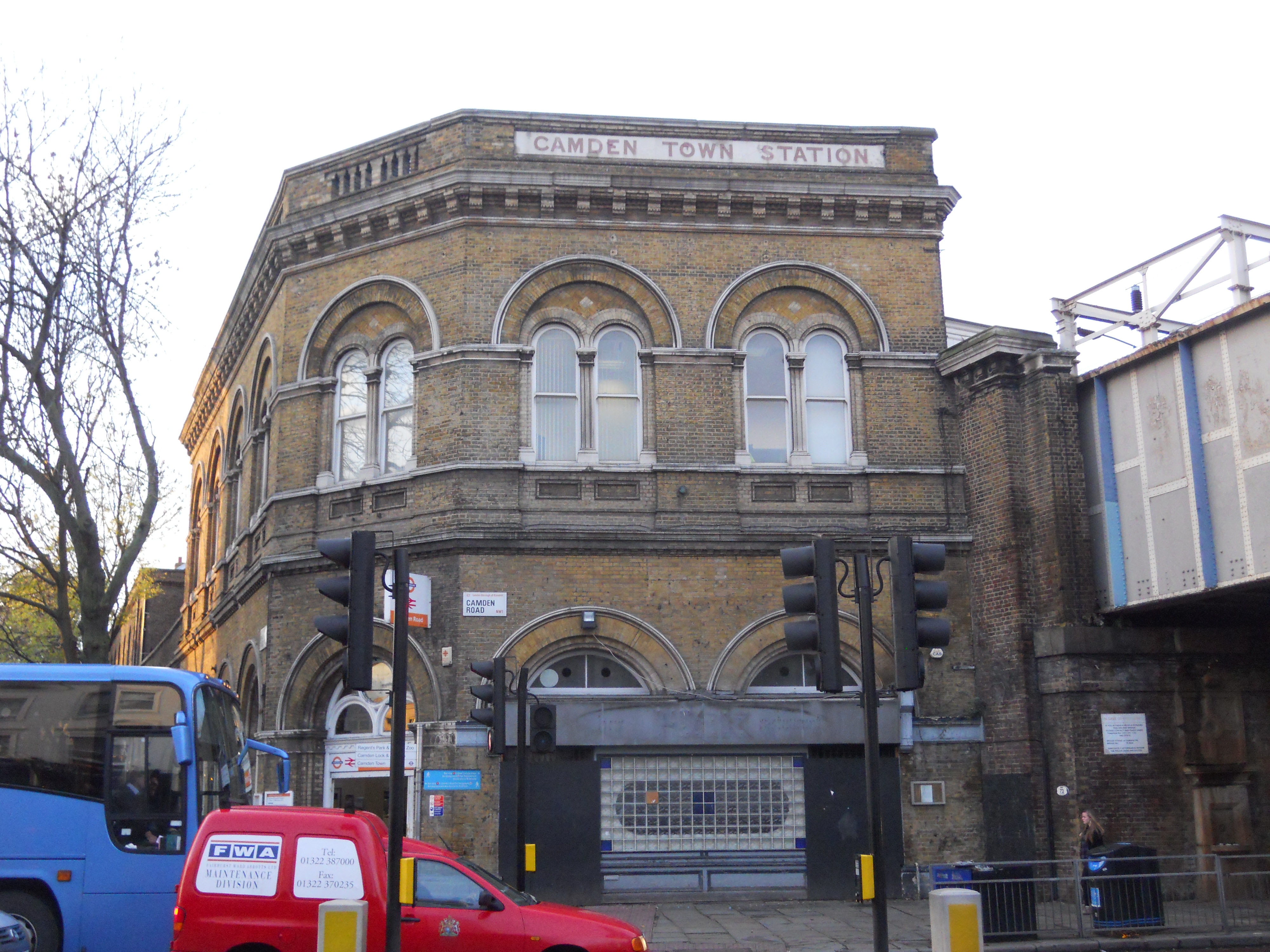
If Camden Road station has a problem, it is that the station possibly needs more passenger capacity and perhaps one of the closed platforms to be reopened.
I’d love to know what is behind those windows on the top floor.
Hackney Central station has a similar building to Camden Road station.
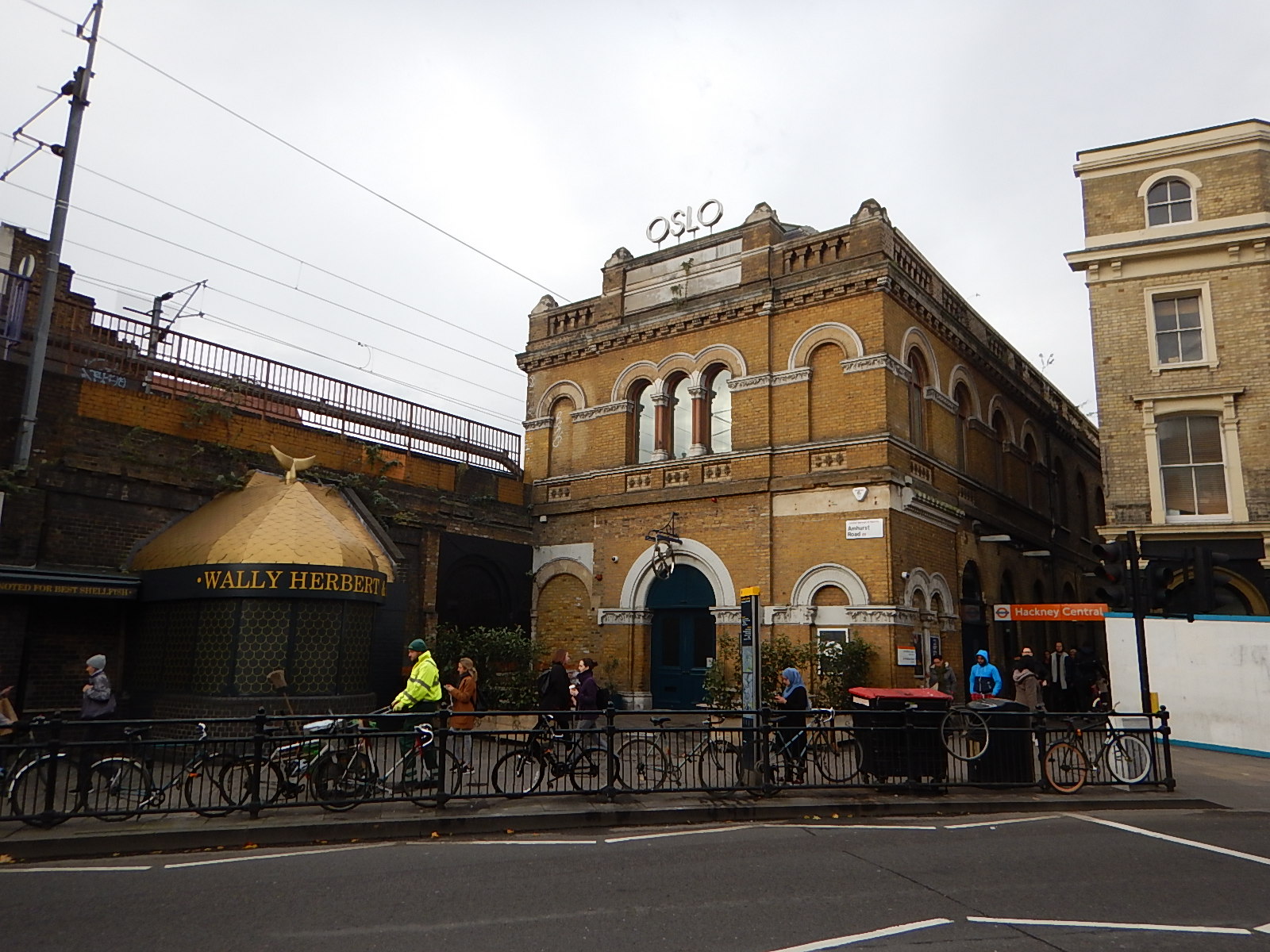
It looks like Hackney Central will get a modern station building to go with the step-free footbridge. But I suspect everything is on hold until the plan for Crossrail 2 is finally decided.
Yesterday, I was in Hackney Downs station and I was told that the bland station building abandoned by British Rail, might be worth restoring.

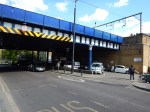
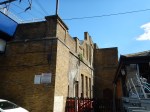
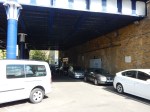
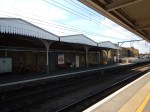
Who knows what lies behind the brick walls and lurks in the dark spaces under the tracks in the old station building?
Knowing the way, many of these railway stations were built, I wonder if London Overground could come up with an imaginative scheme to create a Victorian counterbalance to the more modern Hackney Central, in what will inevitably be Hackney Interchange.
The Sun God Has Blessed Hackney Wick
If you look at my pictures over the weekend of the Hackney Wick Station Subway Installation, there’s two common factors – The sun and no rain.
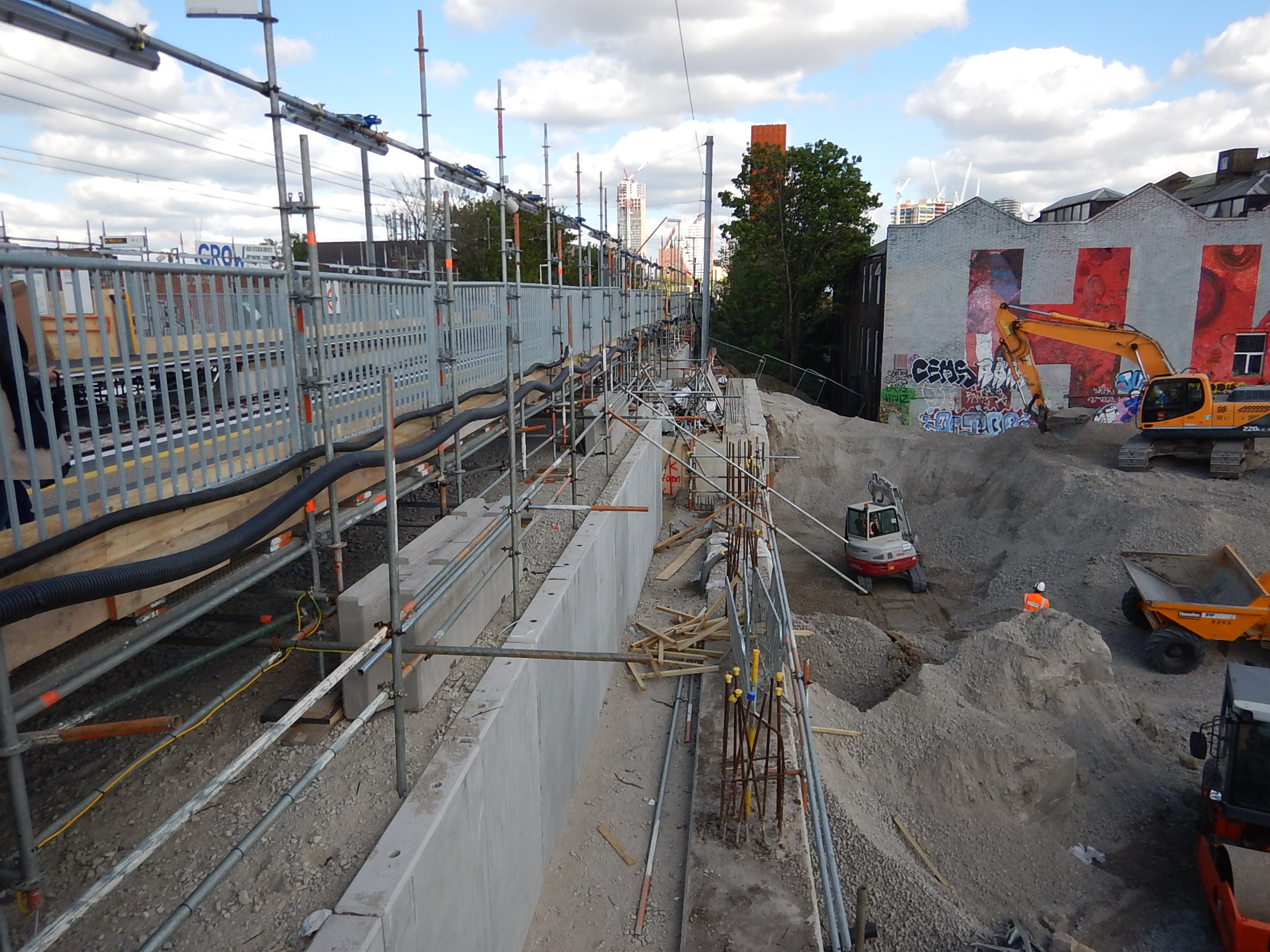
Imagine having to do all that heavy work in an intense storm named Jeremy or Nigel.
Obviously, the Queen too, hasn’t been near Hackney Wick.
The Mammoths Are Leaving
I went back to Hackney Wick station in the afternoon and the mammoths were lined up, with the 2,000 tonne subway standing on its own feet.


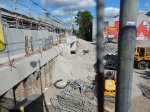
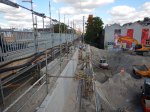
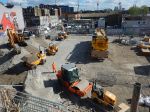
The mammoths really are impressive beasts.
The New Hackney Wick Station Opened On Time
This morning and I was up early to catch the first train train from Dalston Kingsland station to the new Hackney Wick station.


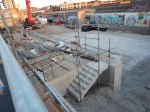




The train was precisely on time at 06:23.
Note that the herd of mammoths, that I photographed on Thursday are still underneath the new embankment.
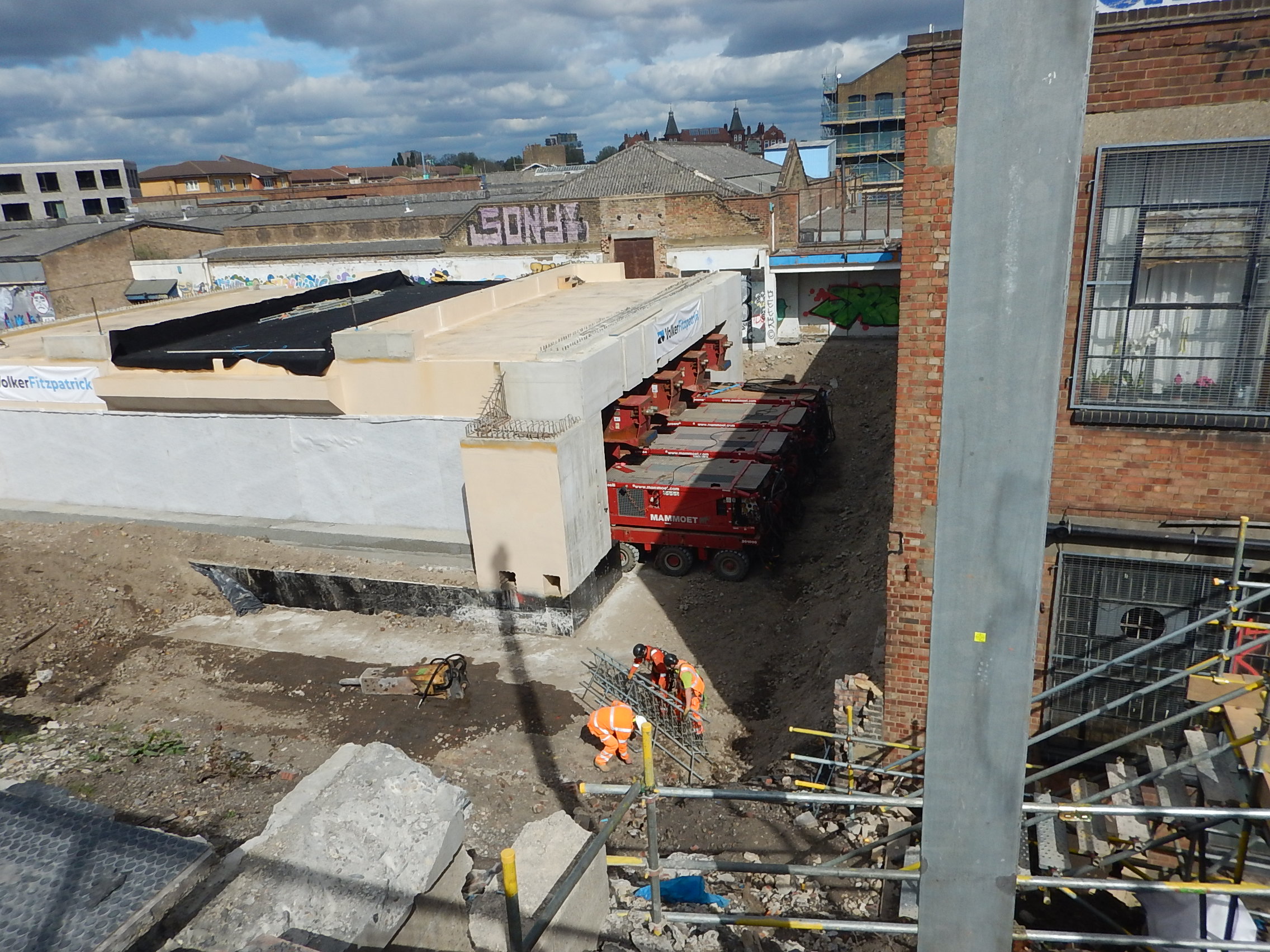
This is a previous picture from Thursday.
From the pictures it would appear that they have picked up the station subway and given it a twirl.
It has certainly been an impressive project to demolish a railway on an embankment, insert a new subway and then rebuild and reopen the embankment, all in four working days.
I feel that they got the project nmanagement spot-on for this project, witn not a minute of wasted time.
But the biggest factor was surely, that the only work they did with the electrification was switch it off at the start and switch it on and test it, at the finish. They also probably used the most careful digger and crane operators they could find!
I wonder, if we’ll be seeing similar robust construction techniques to create and rebuild stations in double-quick time!
Could Third-Rail Tram-Trains Work The Epsom Downs Branch?
The Epsom Downs Branch is a single-track branch line from Sutton to Epsom Downs station.
Currently, it has a service to Victoria of around two trains per hour (tph), but it doesn’t seem to generate much business.
In 2015-16, Epsom Downs station had 112,000 passengers, whereas Sutton station had 7,111,000.
As the three stations on the branch are all single-platform stations with few facilities, can it be viable to run Class 377 and Class 455 trains on the branch?
When the London Tramlink arrives in Sutton, I wonder if the branch would be more suited to be running by trams.
But as the line is electrified with the standard 750 VDC third-rail system, is it one of those places, that could it be served by a third-rail tram-train, as I proposed in The Third-Rail Tram-Train?
I think the answer is in the affirmative.
Consider.
- The tram service could terminate at the proposed Streatham Common Interchange station.
- It takes less than ten minutes to go between Sutton and Epsom Downs
- In the Peak or when more capacity is needed, Class 377 trains could still run the service.
- The tram-trains could provide a step-free service.
Running the service with tram-trains, would give one big advantage; the ability to run a service to the Royal Marsden Hospital, which according to this document from the hospital is not the best, when it comes to public transport.
A single-track branch from the Epsom Downs Branch could start South of Belmont station and tram-trains running on batteries could serve both the Royal Marsden Hospital and the Institute of Cancer Research.
This Google Map shows Belmont station and the hospital.
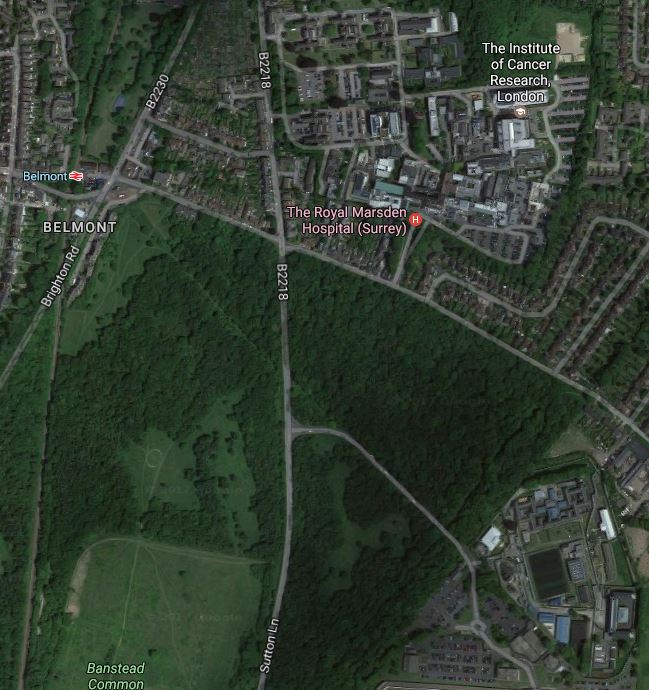
Note.
- The rail line from Belmont station to Epsom Downs station running down the West side of the map.
- There are two prisons in the South East corner of the map.
- The road from Belmont to the Hospital may only be half a mile, but it is up a steep hill.
- Why is every train arriving at Belmont station, not met by a shuttle bus to the Royal Marsden Hospital?
- There is one train per hour through Belmont station in both directions.
A silent battery tram-train without any overhead wires, climbing up on the railway line and then turning East across Banstead Common calling at the prisons en route to the Hospital, might be acceptable to the Planning Authorities. It would surely be less intrusive than some of cars and vans, I saw rushing through the Downs.
I would think that the hospital needs a frequency of four trains per hour to Sutton, in addition to the current sewrvices between Sutton and Epsom Downs.
A charging station, like a Railbaar, at the end of the short branch might be needed, to make sure that the gradients were conquered.
These pictures show Belmont station and the walk to the Royal Marsden Hospital.
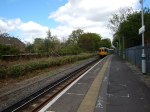
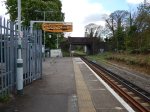
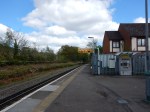
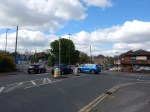
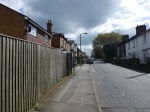
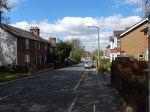
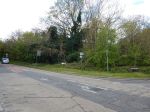
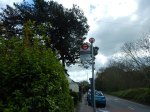
Knowing, what I now know of the Royal Masrsden Hospital, it wouldn’t be my choice of hospital.
I don’t think, I’vw seen a hospital with such terrible access by public transport!
Could Third-Rail Tram-Trains Be Used To Increase Services In South London?
I ask this question, as some of the frequencies on suburban lines in South London aren’t up to their equivalent in the North.
Sutton Loop Line
As an example, Sutton Common station on the Sutton Loop Line of Thameslink, has this Off Peak service according to Wikipedia.
The typical off-peak service from the station is 2 trains per hour to Wimbledon (clockwise around the loop) and 2 trains per hour to Sutton (anticlockwise).
Other stations on the loop with this level of service include Haydons Road, Morden South, St. Helier, South Merton, Tooting, West Sutton and Wimbledon Chase.
On the other side of the loop via Mitcham Junction station, the service is augmented by London Victoria to Epsom services, running at two trains per hour (tph).
People might say, that the solution to the poor service at stations on the Sutton Loop Line is just to run four tph in both directions round the loop.
But that would probably mean the Snow Hill Tunnel with its capacity of 24 tph, will become overloaded.
Thameslink’s Route To Sevenoaks
Crofton Park station on Thameslink’s route to Sevenoaks station has this Off Peak service according to Wikipedia.
Two trains per hour to West Hampstead Thameslink and Sevenoaks.
The passengers moan about it as I wrote in The Natives Are Getting Restless In Crofton Park.
They want four tph now!
But again they can’t have them, as it’s the capacity of the Snow Hill Tunnel.
Transport For London’s Philosophy
Transport for London, have released a report on the Bakerloo Line Extension that they call the Option Selection Summary Report.
It is one of those worthy documents, you get from analysing the data from consultations.
But it is full of several nuggets, which although not directly associated with the Bakerloo Line could be very important for passengers coming from or venturing to South London.
They have also provided this helpful map, which lays out possible actions and improvements.
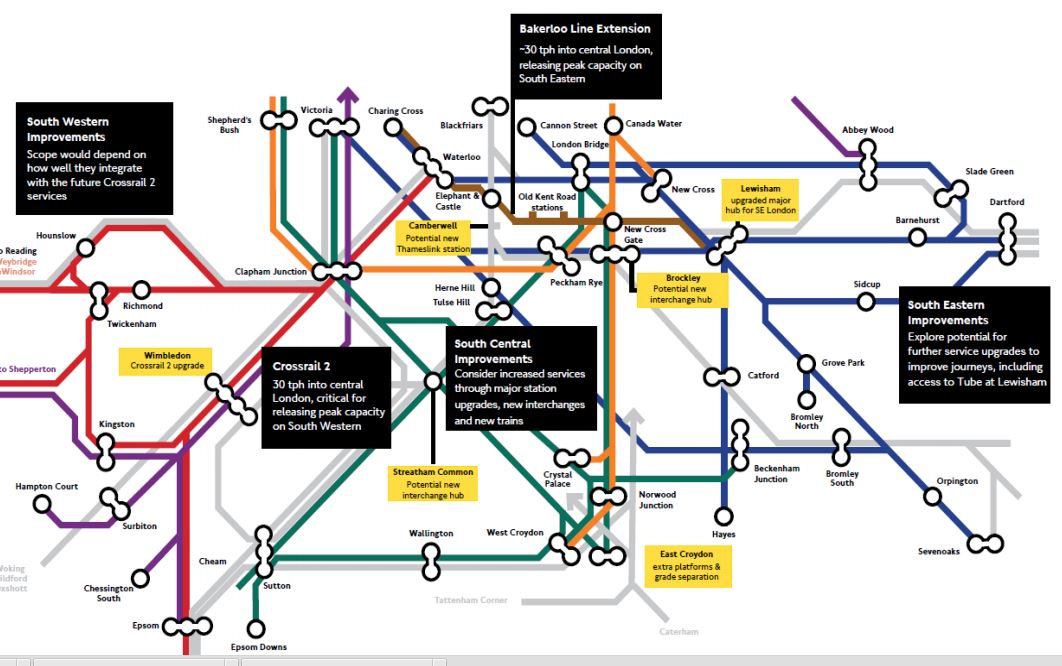
It seems to me that TfL are following a plan to add more transport hubs to their network South of the Thames.
Currently, the following are important interchanges between Underground, Overground, trains, Tramlink and buses.
- Bromley South
- Clapham Junction
- East Croydon
- Greenwich
- Lewisham
- Wimbledon
- Woolwich
Note.
- East Croydon will benefit in a large way from Thameslink, but so will Greenwich and Woolwich in a smaller way.
- Clamham Junction and Wimbledon will be stations on from Crossrail 2, if it’s ever built.
- Lewisham will become the terminus of the Bakerloo Line.
The map and other sources also show other stations becoming important transport hubs or connections.
- Brixton, where all the lines in the area are in a single station.
- Brockley
- Catford, where the current Catford and Catford Bridge stations become one station.
- Crystal Palace, which will soon get extra services from Whitechapel and Highbury and Islington stations.
- Orpington
- Penge
- Streatham Common
- Sutton
London Bridge station shouldn’t be ignored, as after Thameslink is completed, it will be an efficient interchange between the North-South Thameslink services and the Southeastern services between Charing Cross/Cannon Street and the wider South-East.
Put all of these proposals together and could third-rail tram-trains be a useful addition to transport in South London?
I will detail a few possible routes.
Onward From Beckenham Junction To Bromley South or Orpington
In Could Beckenham Junction To Birkbeck Be Run Using Third-Rail Tram-Trains?, I detailed how third-rail tram-trains could be used between Harrington Lane tram stop and Beckenham Junction station to create more capacity.
If run by tram-trains, this service could be extended to Bromley South or Orpington.
Orpington station has four bay platforms facing towards London and Beckenham Junction.
This map from carto.metro.free.fr shows the track layout at the station.
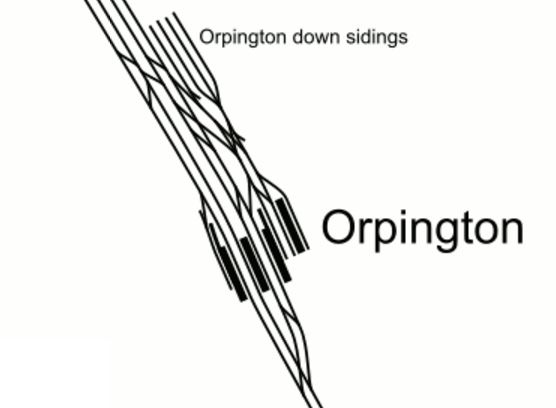
The tracks reduce from four to two at Orpington station, which probably means that tram-trains should probably not go further than Orpington station.
Bromley South station is another possibility for a terminus for tram-trains and this map from carto.metro.free.fr, shows the station layout.
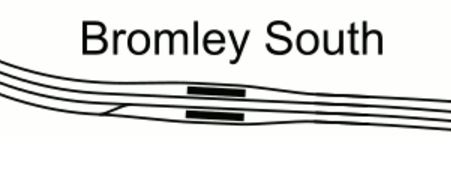
The tram-trains would probably use the two Northern tracks.
At present there are the following services between Birkbeck and Beckenham Junction stations.
- 2 trains per hour between London Bridge and Beckenham Junction
- 6 trams per hour between East Croydon and Beckenham Junction
Looking at the frequencies, I suspect that if two of the trams per hour, were tram-trains and ran to Bromley South and Orpington, this could be accommodated in the timetable.
I think that this route would have the following advantages.
- Bromley South and Orpington stations would be valuable interchanges to Southeastern’s and Thameslink’s Kentish destinations.
- Running tram-trains between Birkbeck and Beckenham Junction stations as tram-trains on a double-track line, must improve capacity and reliability.
- Bromley town centre has been touted as an extension to Tramlink.
Bromley South station, might not be Bromley town centre, but it is only a short walk.
However, if it were needed, I suspect that a single-track spur to serve the town centre could be created to the West of Bromley South station.
This Google Map shows the Southern end of Bromley High Street and Bromley South station.
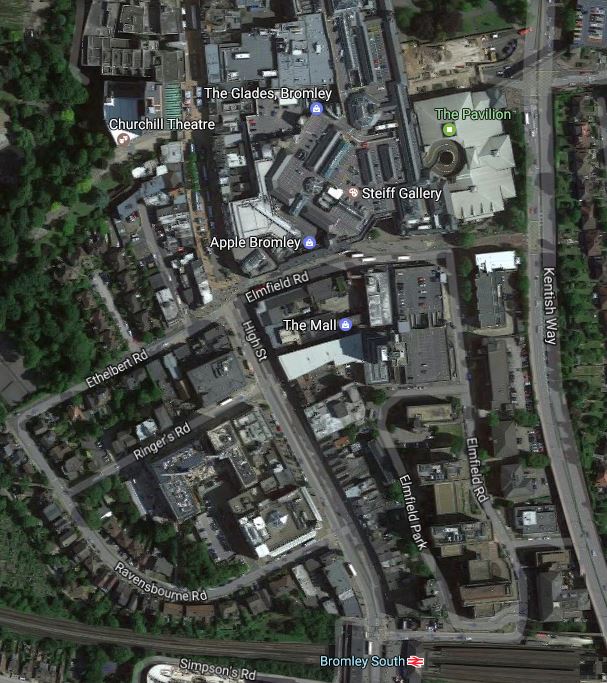
It could probably use battery power to pull up the short hill to Bromley town centre.
- The terminal tram stop could be at the South end of the pedestrianised area.
- The on-street route would be single-track, bi-directional and electrically dead.
- A second tram stop could be provided by Bromley South station.
- The maximum frequency to a single platform would probably be two trams per hour.
In some ways, the town centre tram stop is a bay platform for Bromley South station, that can only be used by tram-trains with a battery capability.
Onward From Harrington Road To Crystal Palace
It was always hoped that Tramlink could be extended to Crystal Palace station and this has been developed as Route 5.
The Wikipedia entry for Harrington Road tram-stop says this.
Transport for London once had plans to extend the Tramlink system to Crystal Palace. These plans were known as Extension D or Tramlink route 4, and would have involved a junction to the north of Harrington Road, with the extension joining the existing railway in the opposite direction to the current line 2.
The planned extension to Crystal Palace was formally dropped by Transport for London in 2008.
But using tram-trains could make this a more flexible low-cost option.
- Battery power could be used to go to the terminus at Crystal Palace Parade.
- Battery trams would be very easy to install in a park, if required.
- A charging station, like a Railbaar, could be provided at the terminus, if the battery running looked like needing assistance.
- Tram-trains could go past Crystal Palace to a station with a suitable bay platform.
This Google Map shows the route.
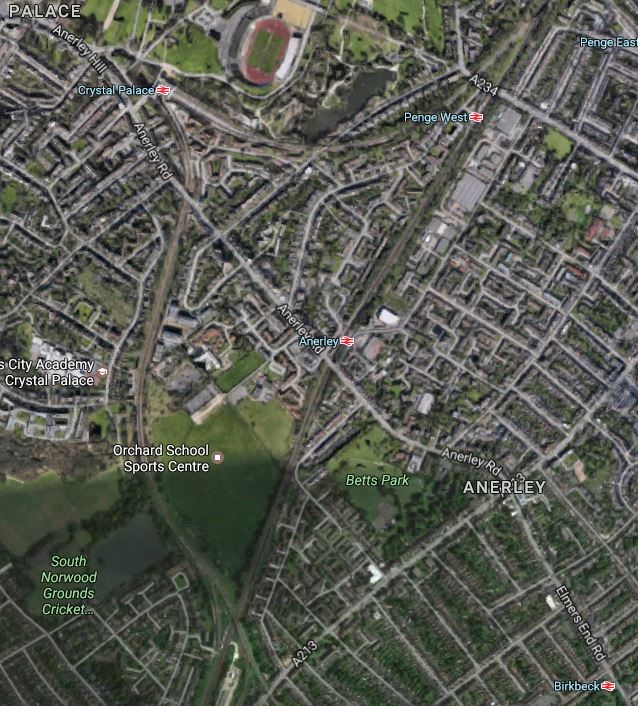
Note Crystal Palace in the North West corner, by the running track and Birkbeck station in the South East.
New tram stops have been proposed at Penge Road and Anerley Road and as the lroute will be run by tram-trains, I suspect that an innovative island station design could serve both tram-trains and trains.
Crystal Palace station, which in a couple of years will have six tph from the well-connected Whitechapel, would benefit from a Tramlink connection.
Onward From Elmers End To Catford
Elmers End station has six trams per house from East Croydon.
This Google Map shows the station.
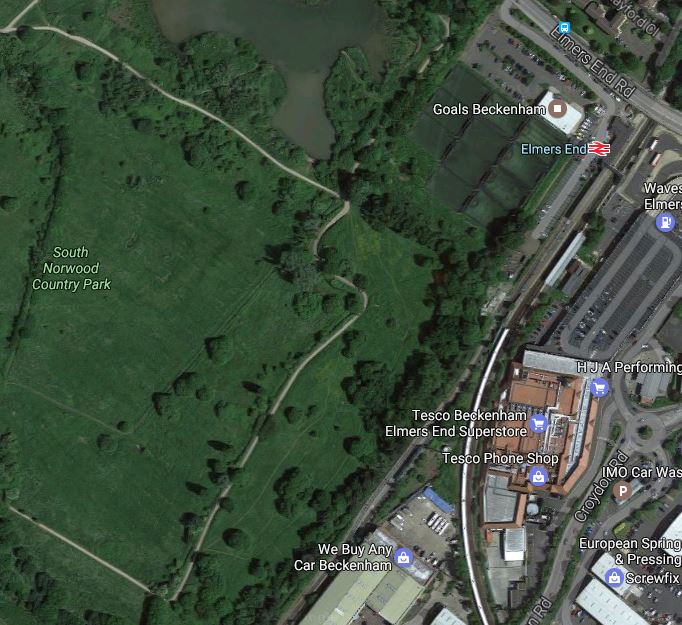
Note how it connects to the Hayes Line and I doubt if it would be difficult to allow through running of tram-trains between East Croydon and stations to the North on the Hayes Line.
The logical Northern terminus would probably be in a new Catford Interchange, which Transport for London have talked about to combine Catford and Catford Bridge stations.
This Google Map shows the two stations and Catford town centre.
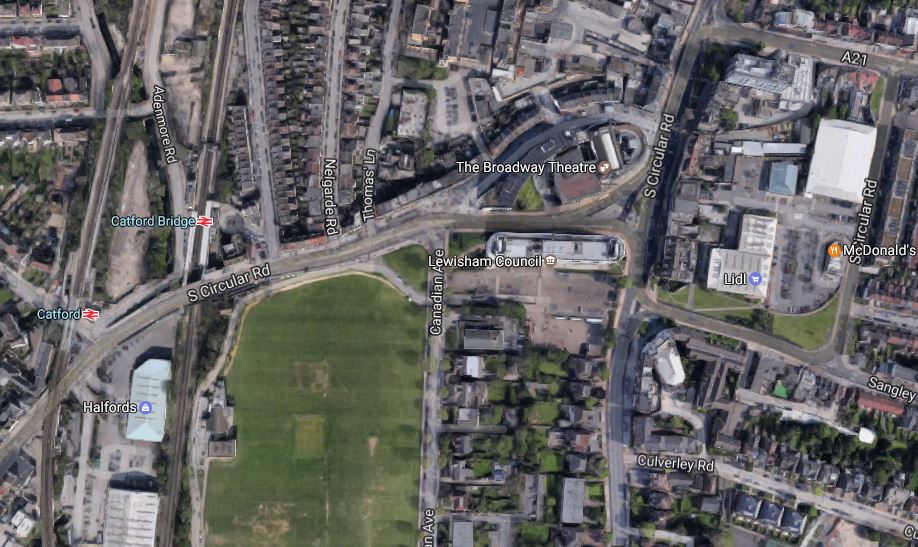
A tram-train could probably run on batteries to the town centre, perhaps with a terminus at Catford Broadway by Lewisham Town Hall and the Broadway Theatre.
But with the right design of the new interchange, the tram-train could go further North to a station with a handy bay platform, if that was deemed necessary.
Increasing The Frequency On The Sutton Loop Line
As I said earlier stations on the Western side of the loop, generally get about two tph in both directions, but those on the Eastern side get an extra two tph going between Victoria and Epsom.
The trains on the line are typically eight-car trains of a variety of types. Capacity may be a problem, but a line like this needs at least four tph all day.
There could also be a case for an extra station to serve St. George’s Hospital and perhaps another as part of the development at Hackbridge.
There is a Hackbridge Masterplan on Wikipedia. This is the first paragraph.
The London Borough of Sutton is working to make Hackbridge the ‘UK’s first truly sustainable suburb’. There has been a regeneration scheme in Hackbridge which has a number of developments on many sites. These are mentioned as part of the Hackbridge Regeneration. Detailed plans include proposals for new eco-friendly homes, more shops, leisure and community facilities, jobs, sustainable transport and pedestrian/ cycle initiatives, improved networks and open spaces.
It all sounds good to me. This is a Google Map of the area.
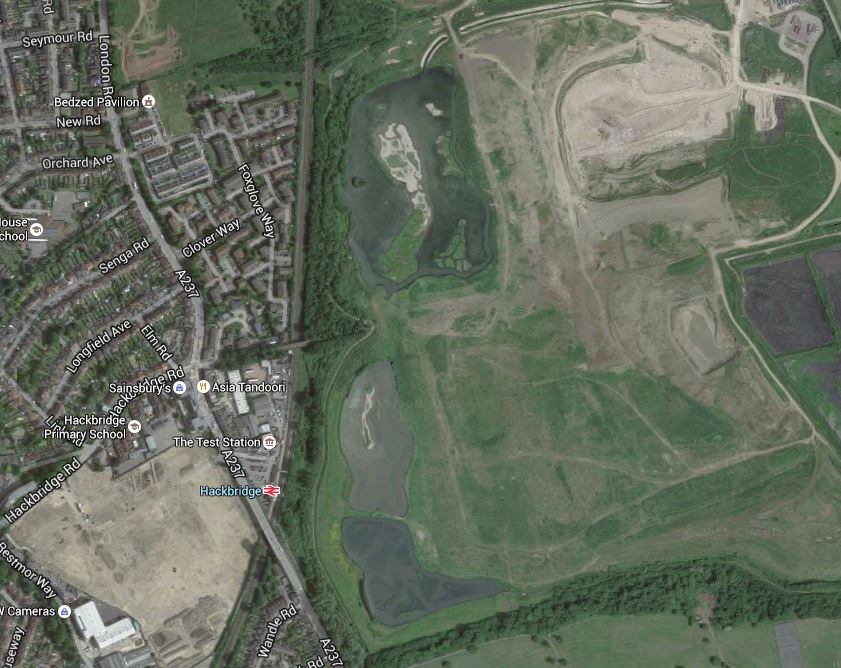
Hackbridge
Note the rail line going up the map with Hackbridge station about a quarter of the way up.At the top of the map, is an icon indicating the BedZed Pavilion.
If they are truly into green transport, it strikes me, that there needs to be another station between Hackbridge station and Mitcham Junction station, which is the next one to the North. As the Tramlink through Mitcham Junction runs down the eastern side of the site and has a stop at Beddington Lane on the north east corner, I would also feel that there scope for extensions to the through Hackbridge.
So for frequency and environmental reasons, I think there is a strong case to improve the Sutton Loop Line.
The obvious way to increase the service would be to have two tph start and finish in a bay platform, at the proposed Streatham Common transport interchange. Not only would it provide four tph on the whole loop, but if the trains were scheduled correctly, all stations on the loop would have the following services to Blackfriars.
- 2 tph direct.
- 2 tph with a change at Streatham Common.
- 2 tph direct via Sutton
- 2 tph via Sutton with a change at Streatham Common.
With good design the change at Streatham Common could be a walk across the platform.
I don’t think that the extra services would need to be eight-car trains, but why use tram-trains?
The tram-trains major advantage is that they could go walkabout to perhaps serve some of the new developments or hospitals like St. Helier or the Royal Marsden.
Using The Sutton Loop Line As A Reversing Loop For Trams From Croydon
This Google Map shows Mitcham Junction station.
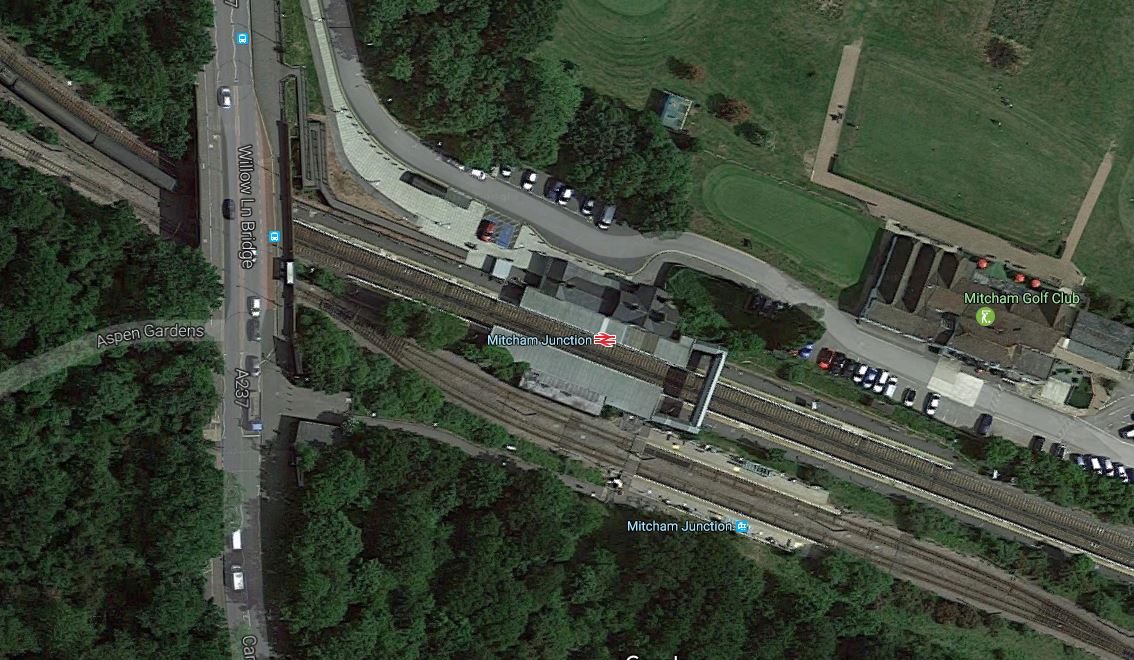
I don’t think it would be too difficult to add chords to the junction, so that a tram-train coming from Croydon could transfer from Tramlink to the Sutton Loop Line. The tram-train would then go round the loop including passing through Wimbledon station on the opposite face of the Tramlink platform.
After returning to Mitcham Junction, the tram-train would return to Croydon.
It may seem a long way round, but there’s probably only a couple of minutes in it.
But it would need a chord at Streatham Common for the tram-trains to by-pass the station.
This Google Map shows the location of the proposed Streatham Common interchange.
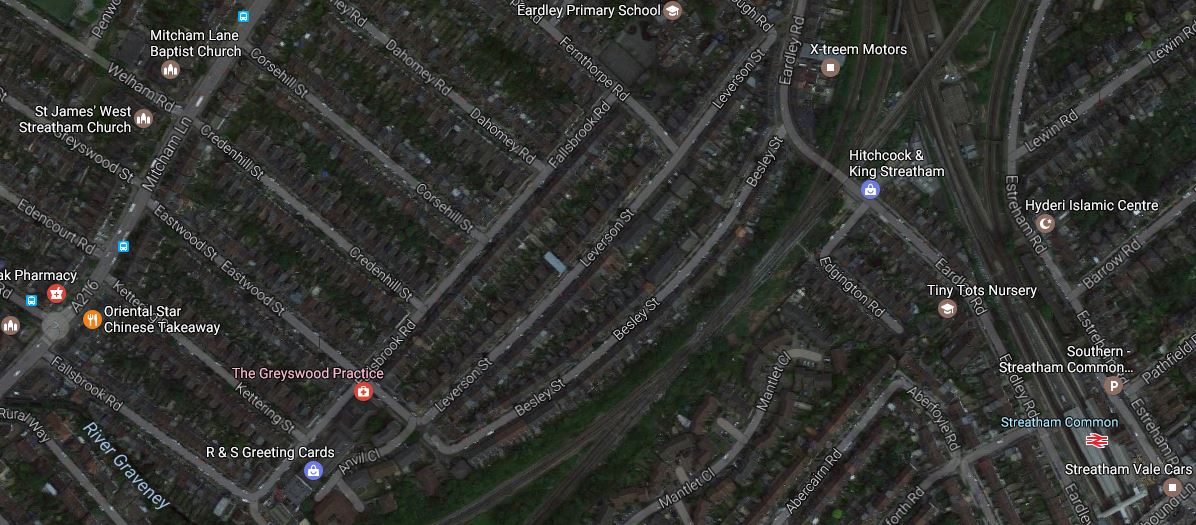
The current Streatham Common station is in the East, The interchange would be built, where the lines cross.
The chord would be built to the South of where the two lines of the Sutton Loop meet, at the bottom of the map.
The track could be adjusted, so that tram-trains could go round the loop both ways.
Will The Victoria-Epsom Service Call At Streatham Common Interchange?
Stops with modern trains are much quicker than they used to be only a few years ago.
So If the design of Streatham Common station and the timetable could allow a fast interchange, it might improve journey times for those living on the Wimbledon side of the Sutton Loop Line, which don’t get direct services from Victoria.
The Proposed Tramlink Extension To Sutton
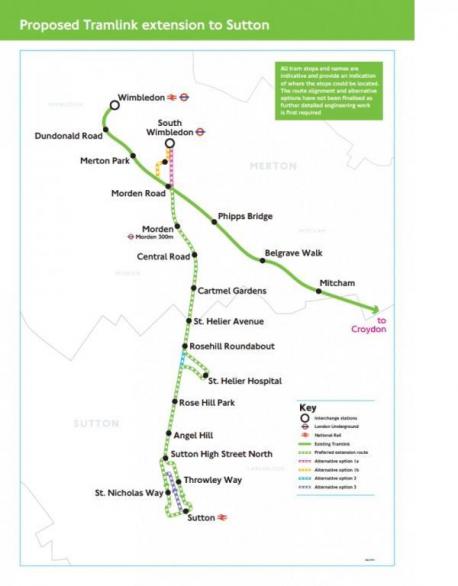
The proposed Tramlink route Between South Wimbledon And Sutton is possibly a worthwhile extra public transport link to throw into the mix. It is described under Extension A in the Wikipedia entry for Tramlink. This is said.
In July 2013, Mayor Boris Johnson affirmed that there is a reasonable business case for Tramlink to cover the Wimbledon – Sutton corridor. A map has been released showing the planned route. It would leave the existing route just to the east of Morden Road and head along the A24 and A297 to Rosehill Roundabout, then the B2230 through Sutton town centre, ending at the station. A loop via St Helier Hospital and a possible extension to Royal Marsden Hospital also are shown.
This is a map of the route.
So how would third-rail tram-trains using the Sutton Loop Line affect the proposed Tranlink Extension to Sutton?
- There are at least four tph in both directions on the Sutton Loop Line.
- The trams will reach Sutton, but only running as trains.
- St. Helier Hospital is not served.
- Tram-trains could possibly serve the Epsom Downs Branch, in addition to the direct services to Victoria.
I describe how third-rail tram-trains could serve the Epsom Downs Branch and the Royal Marsden Hospital in Could Third-Rail Tram-Trains Work The Epsom Downs Branch?
Hackney Does A Bicester
Hackney is developing a name for being a centre of designer outlet stores.


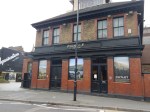
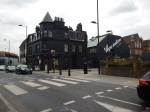


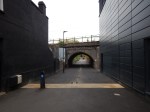
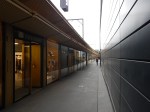

It’s certainly a lot closer than Bicester Village.
There’s also quite a few railway arches leading towards Hackney Central/Hackney Downs station complex, which could make a whole lot more designer outlets or fashion workshops.
But at least the Council has its finger on the pulse and are consulting about what to do with the area.
Let’s hope they get it right!
Forget Drones, Flying Diggers Are More Fun!
I took these pictures at Hackney Wick this morning.station
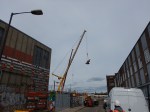
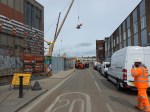


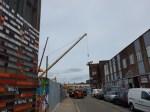
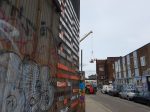
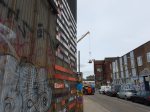
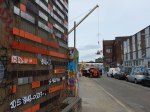
As to progress, it appears that the subway has been slotted into the gap in the embankment created yesterday
This picture gives a distant view of the site on the North side of the tracks.

The subway appears not to be there anymore and it could actually be in position.
This must be good progress.
Could Beckenham Junction To Birkbeck Be Run Using Third-Rail Tram-Trains?
Look at this map from carto.metro.free.fr, which shows the lines to the west of Beckenham Junction station.
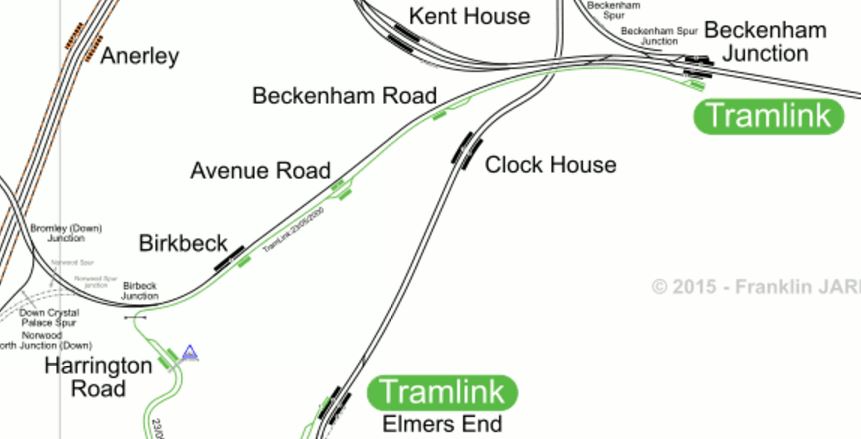
Lines To The West Of Beckhenham Junction Station
At Beckenham Junction station, there are the following platforms.
- Two through platforms.
- Two Westward-facing bay platforms for trains.
- Two Westward-facing bay platforms for the Tramlink.
But the real problem of operation of the section of line through Beckenham Junction station is that, both the main line and tram line to Birkbeck station are bi-directional, which must limit capacity.
Running Using Third-Rail Tram-Trains
Suppose that the trams going to Beckenham Junction were tram-trains capable of running on both 750 VDC overhead and third-rail electrification, with a limited range of perhaps 2 km. on batteries.
The following would be done.
- The current Tramlink line would be for all Westbound tram-trains and trains.
- The current heavy rail line would be for all Eastbound tram-trains and trains.
- Both tracks betweeen Birkbeck and Beckenham Junction would have third rail electrification.
- There would be no electrification of any sort between Harrington Road tram stop and Birkbeck station.
- All trams using the line would have a tram-train capability, dual 750 VDC pick-up and batteries.
- All trains using the line would be as now.
- Birkbeck, Avenue Road and Beckenham Road stations would revert to traditional stations.
- All platforms would need to be adjusted to give step-free access to the two types of vehicles.
I suspect that Beckenham Junction station could also be remodelled to have bay platforms, that could accept both trains and tram-trains.
The Current Services
The typical off-peak service frequency is:
- 4tph (trains per hour) to London Victoria (Southeastern)
- 2tph to London Bridge via Crystal Palace (Southern)
- 4tph to Orpington (Southeastern)
These train services would be unaffected, except that they could stop in Birkbeck, Avenue Road and Beckenham Road stations, if required.
The tram services would be generally unaffected, although they would need to cross over from the Eastbound line into Beckenham Junction, as trains do now.
Tram-Train Operation
Consider how a third-rail tram-train would operate between Croydon and Beckenham Junction.
- It would run as a normal tram using the overhead electrification to Harrington Road tram stop.
- At Harrington Road tram stop, the pantograph would be lowered and the tram-train would run to Birkbeck station on battery power.
- The tram-train would then lower the third-rail shoe and run to Beckenham Junction on the third rail electrification.
This Google Map shows Harrington Road tram stop and Birkbeck station.
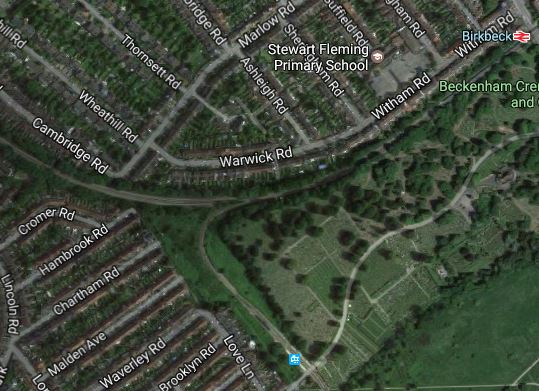
The distance between the two is probably under a kilometre.
Advantages
I can’t believe that creating a double-track railway, that can be used by both tram-trains and say Class 377 trains, doesn’t have advantages.
- The passing loops on the tram line would not be needed, as Eastbound and Westbound trams would be on different lines.
- The double-tracking should reduce train delays.
- It would allow the tram frequency to Beckenham Junction to be increased., which might enable a whole lot of possibilities.
- Tram-train services could be extended to Bromley South station.
I do feel though that the biggest advantages might be enabled, if Birkbeck, Avenue Road and Beckenham Road became single island platforms between the tracks. This would enable.
- Same platform interchange.
- Train passengers going East could change to a tram-train going West and vice-versa.
- A single lift could be installed at Birkbeck, Avenue Road and Beckenham Road stations for step-free access.
There are certainly possibilities to improve the line.
The Bakerloo Line Extension To Hayes and Beckenham Junction Stations
If this happens, which is looking inreasingly likely, there may be advantages in using tram-trains to Beckhenham Junction and Bromley.
Conclusion
By replacing the trams to Beckenham Junction station with tram-trains, capable of running on both 750 VDC types of electrification and with a limited battery capabilty, would simplify operation at Beckhenham Junction and enable Tramlink services to be extended to Bromley South station.
The Third-Rail Tram-Train
I’ve never seen anybody propose a third-rail powered tram-train, but that is probably because everybody has assumed quite rightly, that you couldn’t power a tram by using third-rail electrification. It’s just too dangerous! But is it so dangerous on a segregated track?
In February 2016 I wrote Brummies Go For Battery Trams and it is now ienvisaged that Midland Metro‘s trams will be running services under battery power in 2019.
Battery power is used for trams in several places around Europe and the rest of the World and is becoming a proven technology. Is there any reason why a battery tram-train, can’t be powered by third-rail electrification, when it is running as a train?
The Class 399 Tram-Train
The Class 399 tram-train is under test in Sheffield, to prove that it can run passenger services in the UK.
These tram-trains can handle either 25 KVAC or 750 VDC from overhead wiring. I also think, they are also clever enough to work out what voltage they are getting and configure themselves accordingly.
Since, I originally wrote this post, KeolisAmey Wales have ordered thirty-six tram-trains from the same Citylink family as the Class 399 trains.
Stadler, whose Valemcia factory built the Class 399 tram-trains, will also be building trains for Merseyrail’s network, which will run using 750 VDC third-rail electrification.
Would it be reasonable to assume, that Stadler will be able to design an appropriate pick-up shoe for the Class 399 tram-train, so that it can run on a 750 VDC third-rail network?
Batteries
A battery system would also be needed, but I believe that this will be generally offered by all tram and tram-train manufacturers, as trams and tram-trains will be running increasingly in heritage or sensitive areas.
Charging The Batteries
Batteries would normally be charged, when the tram-train is running on an electrified line, under power from the third-rail system.
The MetroCentro in Seville, works without catenary and has a fast charging system at the two end stops.
There is no reason to believe that a Class 399 tram-train with batteries, couldn’t work with a fast charging station like a Railbaar.
Tram-Trains For The South Wales Metro
Since, I originally wrote this post, KeolisAmey Wales have ordered thirty-six tram-trains from the same Citylink family as the Class 399 trains, for running on the South Wales Metro.
These tram-trains will be fitted with batteries.
Would A Third-Rail Tram-Train Have A Pantograph?
This would be a matter for the operator.
But there is one UK tram network; the London Tramlink in Croydon, which is surrounded by an extensive third-rail electrified network.
The ability to run on both types of 750 VDC systems might be an asset and enable new services to be created without any extra electrification, by using a small amount of battery power to change from one system to another.
Changing Between Third-Rail And Overhead Electrification
This map from carto.metro.free.fr shows the track layout at Mitcham Junction station.
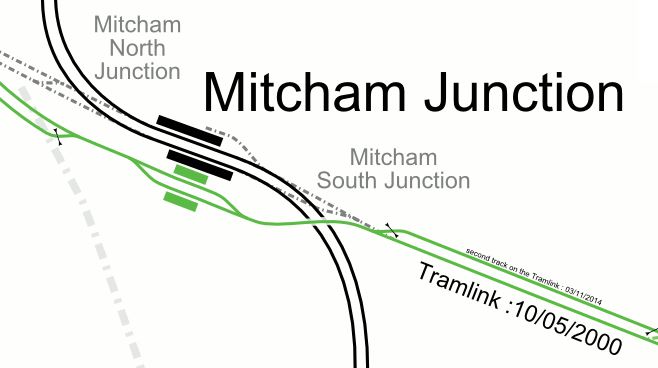
Suppose a link were to be provided, so that tram-trains could come from the South, pass through Mitcham Junction station and then cross over to the tram tracks for Wimbledon.
These pictures show the area.
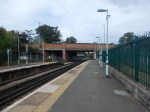
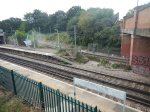


As the link would have no electrification, the power changeover would be as follows.
- Arrive in Mitcham Junction station, using third-rail power.
- Raise and isolate the third-rail shoe.
- Switch to battery power.
- Proceed using the link to Mitcham tram stop.
- Raise the pantograph and switch to overhead power.
A reversed procedure would be used in the opposite direction.
Range On Third-Rail Power
The range of a Class 399 tram-train running on third-rail power, would be more limited by the train-tram’s speed of 100 kph and interaction with other services, rather than any electrification issues.
The range will probably be the same as the German cousins of the Class 399 tram-trains on the Karlsruhe Stadtbahn. These trams run on both 750 VDC and 15 KVAC, to places up to fifty kilometres from the Centre of Karlsruhe.
As a simple example, a third-rail tram-train running on the London Tramlink, could certainly use third-rail lines to access Gatwick Airport.
Range On Battery Power
In Out Of The Mouths Of Brummies, which describes an interview with those involved in the Midland Metro battery train project, I published this quote about battery trams.
Since then there has been lots of work and we’re now comfortable that battery technology has advanced sufficiently for it to be viable.
Under test conditions with plain straight track a tram could travel 20 km catenary-free. In practice, this would be rather less for a fully laden tram ascending the 9% gradient on Penfold Street. The longest catenary-free run we’ve envisaged is around 2 km, and we’re comfortable we can achieve that.
I think until Birmingham proves otherwise, 2 km. would be a sensible range for a tram or tram-train running on a full battery.
Compatibility Issues With Other Rail Vehicles And Platforms
This to me is a matter of design, but after the Sheffield tram-train trial and the analysis of platform solutions in Europe, I suspect that we’ll come up with a solution that works.
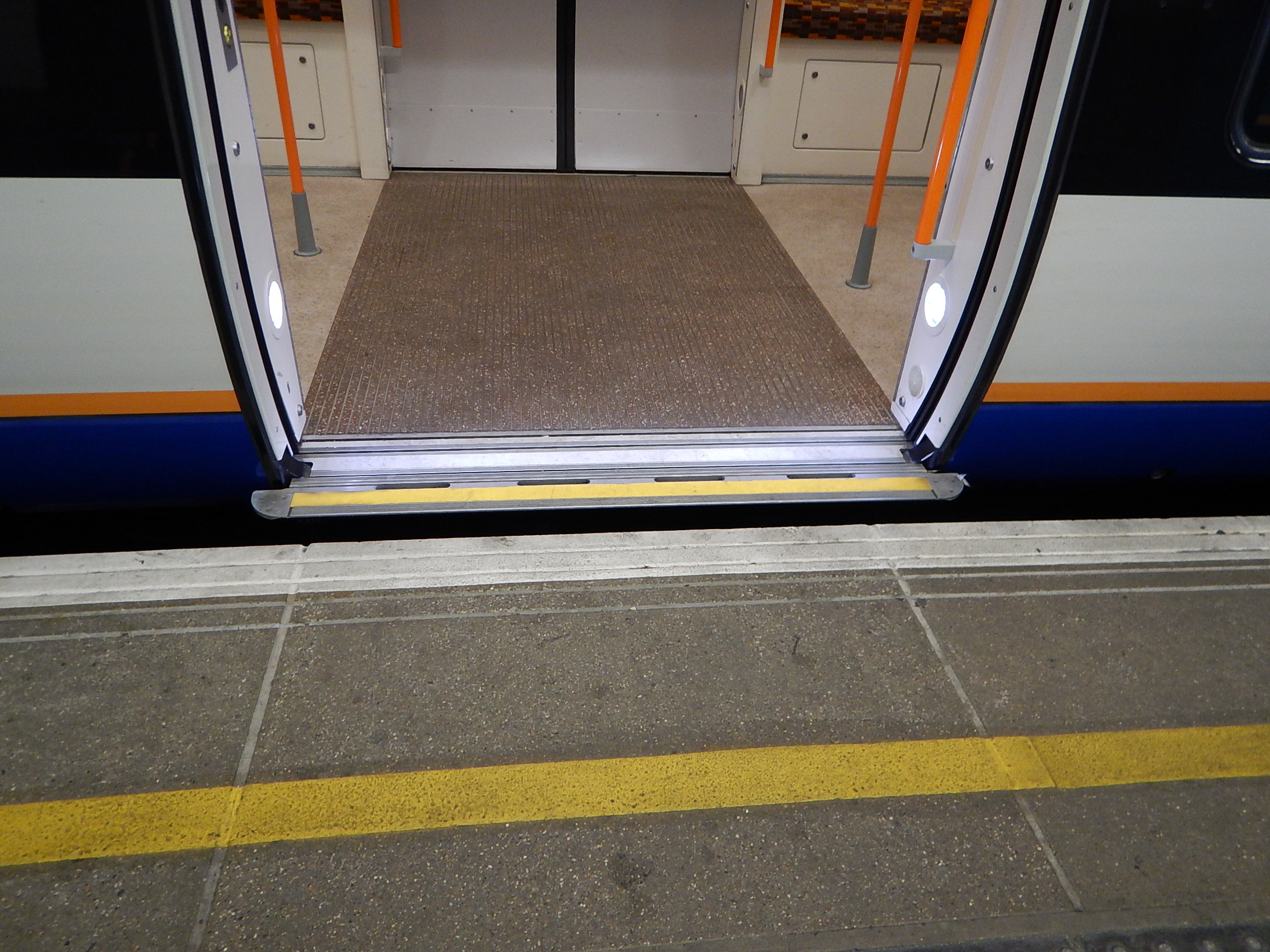
I think it is true to say, that many of our trains are badly matched to the platforms, but as this picture of a Class 378 train on the London Overground shows, the gap is becoming easier to mind.
I think too, we have an advantage over Europe, in that our loading gauge is smaller and our trains are closer in size to a modern tram or tram-train.
We are also good at innovative access solutions, as this picture from Canonbury station shows.
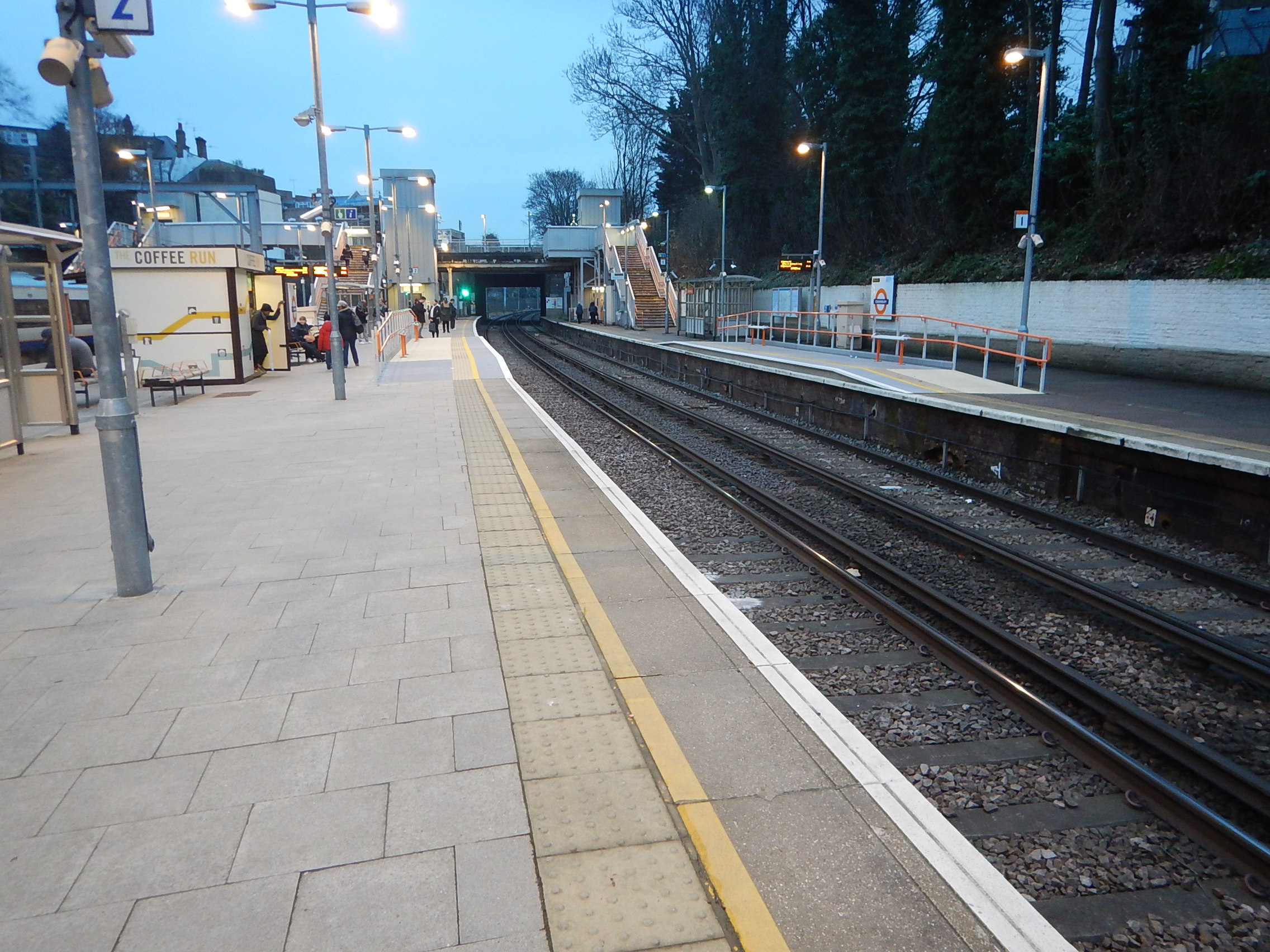
We may have a problem with using double-deck trains, but I believe that good design can minimise the problems of good access to both trains and tram-trains at the same platform.
Applications
The applications will be limited by battery range and by the gradients of the line.
In Southampton – A City Built For Cars, I describe how if they built their proposed Solent Metro around third-rail tram-train technology, they could transform the city.
In Could Beckenham Junction To Birkbeck Be Run Using Third-Rail Tram-Trains?, I show how third-rail tram train-technology , could be used to create more capacity at Beckenham Junction station.
In Could Third-Rail Tram-Trains Be Used To Increase Services In South London?, I show how third-rail tram-train technology, could be used to expand the London Tramlink.
In Could Third-Rail Tram-Trains Work The Epsom Downs Branch?, I show how third-rail tram-train technology, could serve the Royal Marsden Hospital.
In The Cranleigh Line, I suggest that third-rail tram-train technology could be used on this route.
Conclusion
Technically, I feel that a Class 399 tram-train capable of running on third-rail electrified lines is possible.
But it would have to run on battery power or 750 VDC overhead, when running as a tram.
 The Anonymous Widower