The South Wales Mountain Railway
South Wales might not have the reputation of beautiful mountains, of say Snowdonian, the Cairngorms or Switzerland, but some of the Valley Lines that go up to places like Merthyr Tydfil and Ebbw Vale Town stations have spectacular views.
I was looking for a possible station at a village called Nelson and found a single-track railway passing to the North of the village.
I followed the track with my helicopter up the mountain and this is a Google Map of what I found.
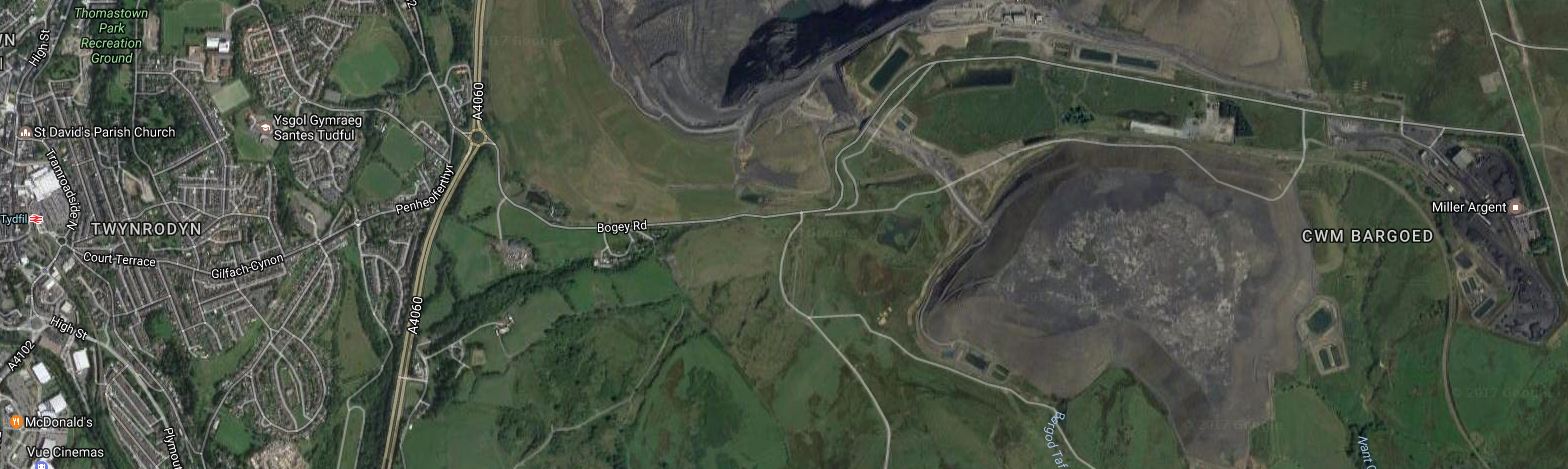
Merthyr Tydfil And The Ffos-y-fran Land Reclamation Scheme
The station on the left is Merthyr Tydfil and on the right is the massive Ffos-y-fran Land Reclamation Scheme. This is opening paragraph in the Wikipedia entry.
The Ffos-y-fran Land Reclamation Scheme is a major opencast coaling operation to the north-east of Merthyr Tydfil in South Wales. Miller Argent is owned by Gwent Investments Limited, which is based in South Wales and is a privately owned family business. The scheme development is the last part of the East Merthyr Reclamation scheme, and will extract 10 million tonnes of coal over 15 years, the revenues from which will redevelop the current former industrial workings into residential and recreational use.
It is a controversial scheme and I am usually against using coal for combustion purposes, but some of these Welsh landscapes are dotted with dangerous mine workings and slag heaps, so they certainly need cleaning up.
There is a Transport section in the Wikipedia entry for the scheme. This is said.
Under agreed planning rules, the site is not allowed to transport coal from the site via road. All extract is therefore moved to the rear (East) of the site where the coal is separated and washed at the Cwmbargoed Washery. Built in 1959 on land to the north and east of the railway connection to Fochriw Colliery, the coal washery was refurbished by Celtic Energy in 1992. DB Schenker trains then move the washed coal from site to Aberthaw Power Station, along the former route of the Rhymney Railway. Joining the modern Rhymney Line just south of Ystrad Mynach railway station, the trains then travel onwards via Cardiff and the Vale of Glamorgan Line to Aberthaw, enabling Ffos-y-fran to supply 40% of the coal to Aberthaw power station.
It must be challenging driving a Class 66 locomotive with a train of full coal wagons down the mountain.
It was this railway I had followed up the mountain.
Before I leave Merthyr Tydfil, look at this Google Map of the town.
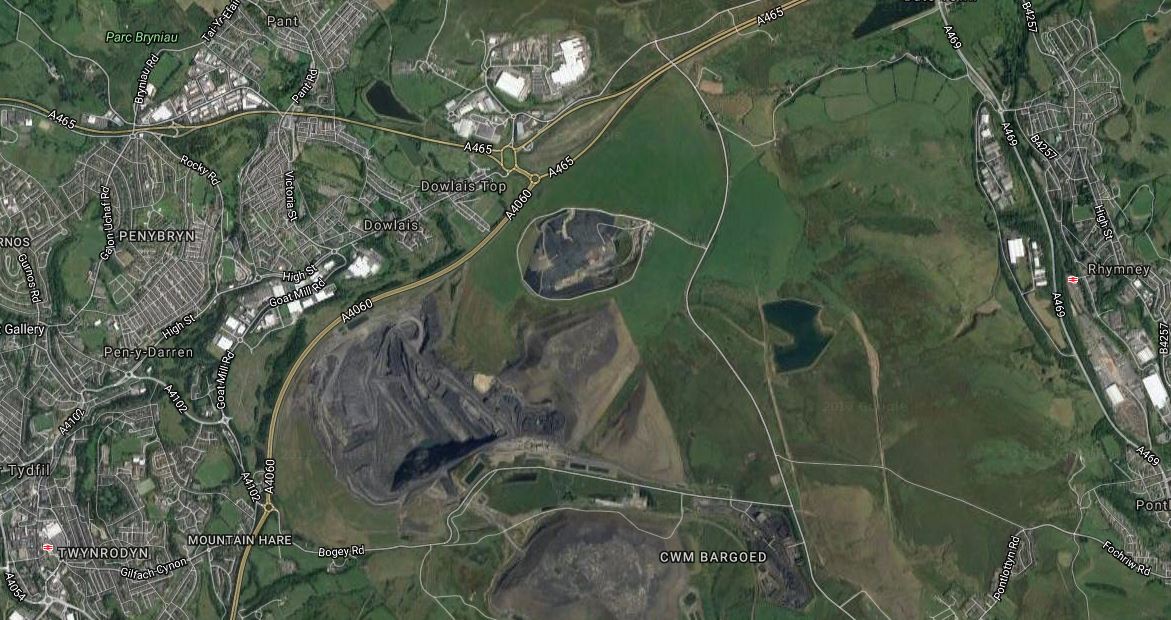
Merthyr Tydfil And Rhymney
The East Merthyr Reclamation Scheme is in the middle, flanked by Merthyr Tydfil in the West and Rhymney in the East.
So if the Authorities in South Wales are thinking of building a station on this line at Nelson, are they thinking of reopening this line after the scheme has finished extracting coal, as a second rail route to Merthyr Tydfil?
Coming back down the mountain from Merthyr, the first possible station from my list of possible stations is Bedlinog.
This Google Map shows the rail line going through the village.
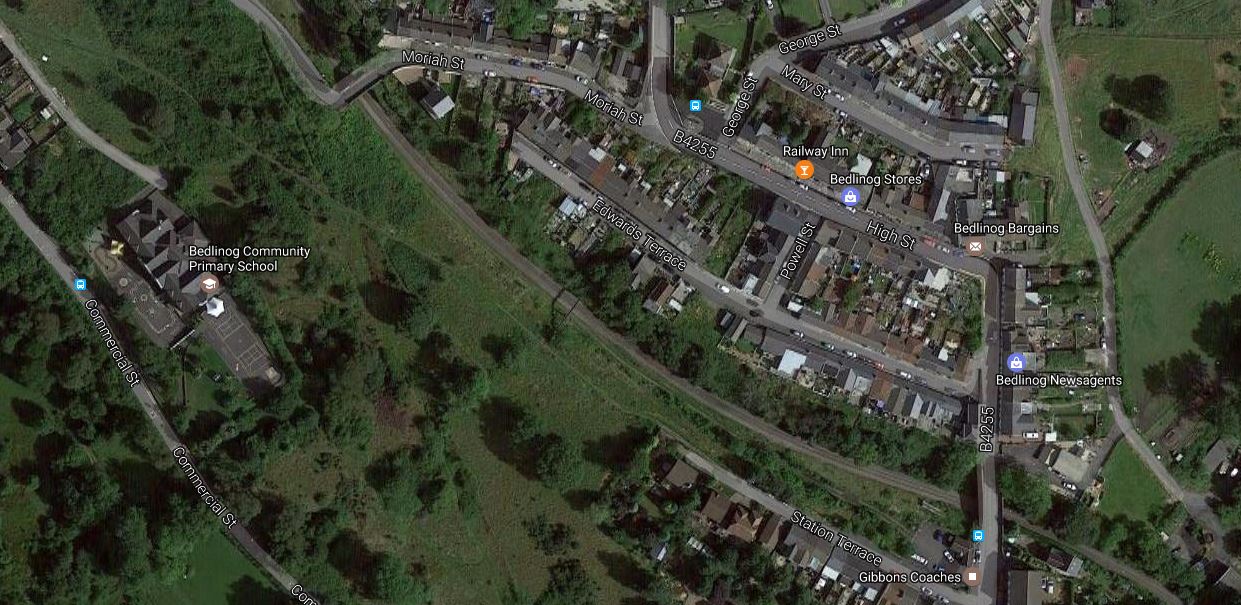
Bedlinog And The Railway
Note that Bedlinog already has a Railway Inn.
After Bedlinog, the next one on the list is Trelewis. This is the Google Map
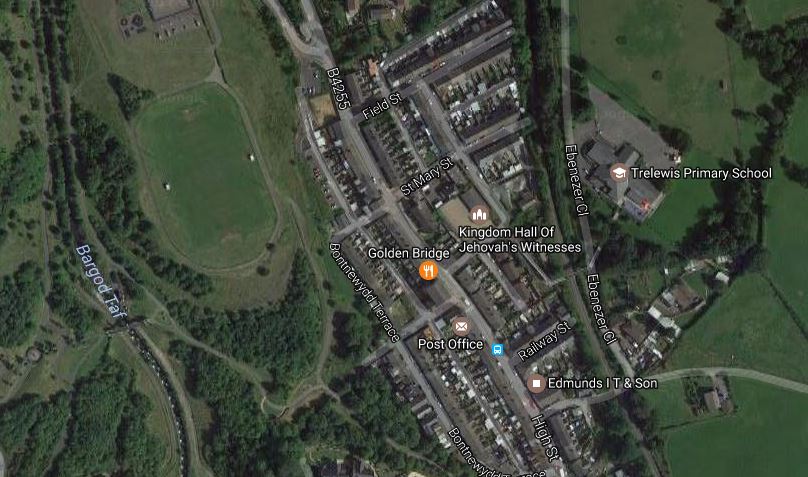
Trelewis And The Railway
The railway goes between the Primary School and the Kigdom Hall.
And then it’s back to where I started this quest at Nelson, of which this is the Google Map.
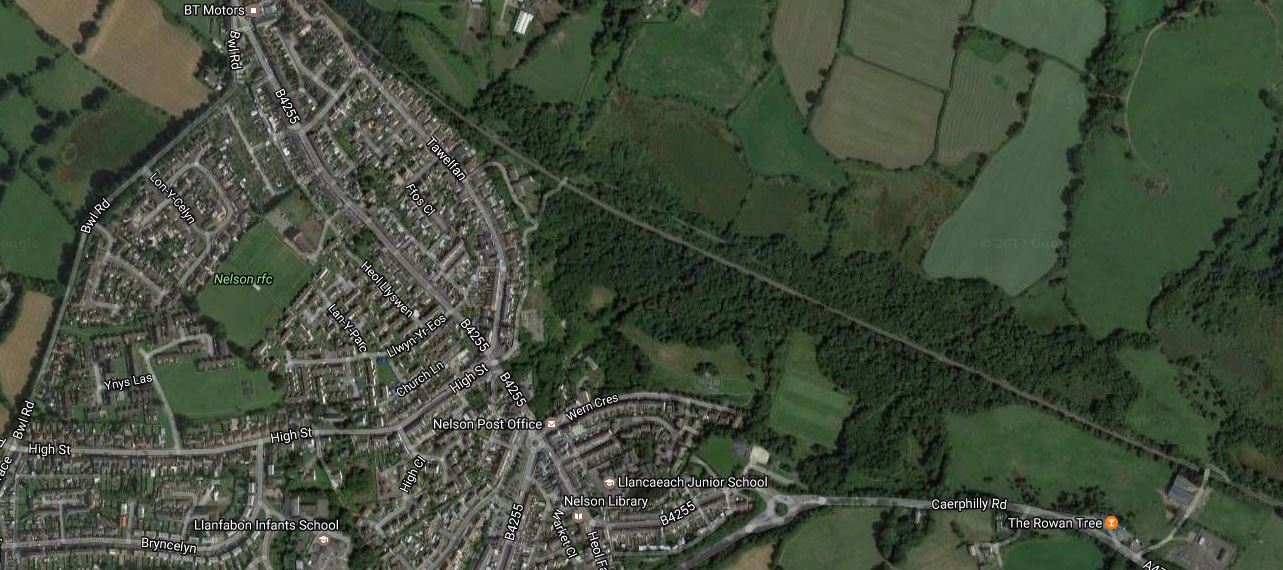
Nelson And The Railway
The railway then goes South-East to join the Rymney Line at Ystrad Mynach station.
Trains For The Route
The task of hauling empty wagons up the mountain is not to much for a Class 66 locomotive, so I suspect that a multiple unit could be designed to handle a route like this, of which there are several in the Cardiff Valley Lines.
Either electric or diesel multiple units could probably manage the climbs, if they were designed for it, but would electreifying these routes be a feasible undertaking, given the difficulties of working on these busy lines.
But train technology is moving on and with the Class 319 Flex, we are getting close to having a true tri-mode train, with diesel, electric and battery power.
The Welsh Government have said they want new trains for these routes and I suspect engineers are working on a product tailored to run these routes efficiently.
So could we see a quad-mode train for the Valleys?
- Four-car electrical multiple unit.
- Onboard energy storage.
- Perhaps even a small diesel generator for the difficult bits.
- Gravity power, which the lines have in abundance, to use with regenerative braking to charge the batteries on the descent.
- As modern trains can deploy pantographs automatically, some selective electrification could be added as the project develops.
I would also commit the ultimate heresy and use third-rail electrification on the steep parts at the heads of the valleys.
Consider.
- Bombardier, Siemens and others make reliable dual-voltage trains.
- Both electrification systems have their good and bad points.
- It must be less intrusive and disruptive to install third-rail electrification.
- Is overhead electrification more prone to weather damage?
- Network Rail seem to be terribly accident-prone when it comes to overhead electrification.
In the end costs and overall reliability will decide.
But I do think sometimes, that Network Rail always chooses overhead electrification, even if third rail will be more reliable, less intrusive and more affordable.
But I’m sure that all the technology has now been proven to create a very efficient modern electric train to work the Valley Lines, which have been electrified using a great deal of innovation and common sense.
A Station For Morriston Hospital
Morriston Hospital is in Swansea or to be more precise it appears to be up the hill and a fair way from Swansea station. I could probably just walk it.
It would appear that there are plans to reopen Cockett station, which would only be ten minutes by train from the main station and close enough to Morriston Hospital for a shuttle bus.
It would also mean that to get between the Hospital and East Wales, you wouldn’t have to go into Swansea and change trains.
It looks like the Welsh are finally getting access to the hospital acceptable, but so many hospitals don’t have a decent transport connection.
At too many places in the UK, the only reliable way to get from the main station to the local hospital is by hiring a taxi.
Is that acceptable?
Derby To Manchester The Midland Way
I was trying to find out about two stations; Miler’s Dale and Monsal Dale, which are both on the Manchester, Buxton, Matlock and Midland Junction Railway.
I found this article in the Derby Telegraph, which is entitled 50 years on, as passengers return to railways, in a few quiet corners, Beeching’s cuts are being reversed.
It says a lot about the Midland’s spectacular route from Derby to Manchester.
As a result, some of the lines and stations axed in the Beeching Report are being brought back to life. One of these is the Midland Railway, a route which once linked Derby and Manchester.
It is regarded as one of the most spectacular lines ever built. Cutting through the Peak District, numerous tunnels and other impressive civil engineering features, including magnificent viaducts at Millers Dale and Monsal Dale, had to be constructed because of the terrain.
In 1967, the Beeching Report brought about the end of passenger services on the line with the closure of stations at Millers Dale, Bakewell, Rowsley, Darley Dale and Matlock Bath. Now a three-and-a-half-mile section of the line has since been reopened and brought back into use by Peak Rail.
Today, the company operates both a steam and heritage diesel service for tourists and visitors to both the Peak District and the Derbyshire Dales. The preserved railway line operates trains from Matlock station via Matlock Riverside and Darley Dale to Rowsley South.
Peak Rail has ambitions to reopen more of the line in the future. The first stage would be to relay track to the site of Rowsley station, extending to a total of 4.25 miles. There are also plans to extend the line all the way to Bakewell, which would involve the restoration of both the Haddon tunnel and Coombs Road viaduct as well as the reinstatement of numerous bridges along the way.
It certainly seems to be worth a visit.
It sounds to me though to get trains running all the way will need a friendly billionaire.
Two Stations For Guildford
Guildford station is one of those stations that is very crowded.
So the Borough of Guildford is promoting two stations, one in the East and one in the West.
Merrow Station
A station at Merrow is proposed in the East on the New Guildford Line between London Road and Clandon stations.
This Google Map shows the location.
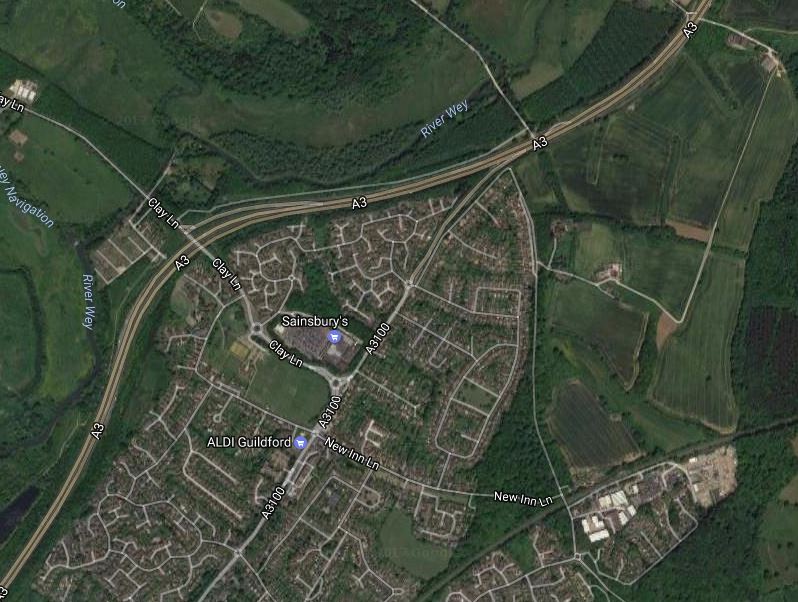
The station is proposed to be on the site of Merrow Depot, which is in the South-East corner of the map, with the railway line conveniently across the North of the site.
Guildford West Station
A station in the West of Guildford is proposed on the Ascot-Guildford Line between Guildford and Wanbotough stations, close to the Royal Surrey Coumty Hospital.
This Google Map shows the location.
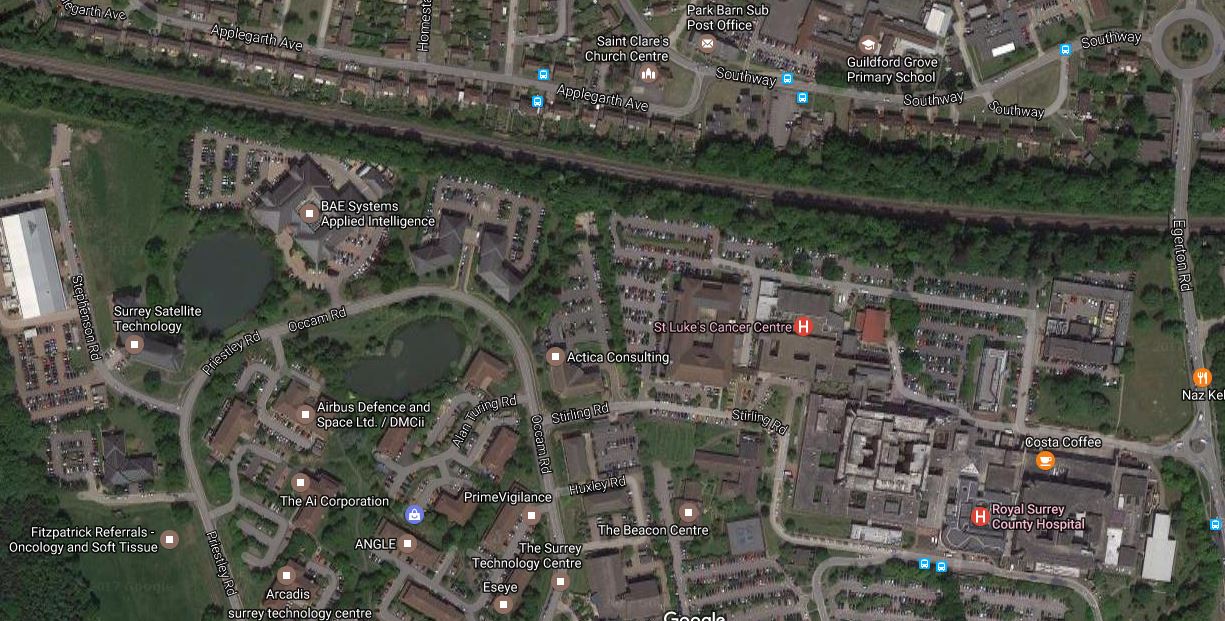
It is certainly a very convenient station for the hospital and the technology park.
There must be scope given that the railway is in a wide cutting, to do some development over the station and the railway.
A Plea For A Shropshire Metro
Shrewsbury station is not one of the best stations, as I remarked in Passing Through Shrewsbury Station.
Clean toilets and a Starbucks doth not a station make!
I was drawn to this letter in the Shropshire Star, which was entitled Better rail investment would reduce problems on the roads.
The writer details some of the problems on the five rail lines that meet at Shrewsbury, which they start with this paragraph about the lack of parkway stations.
Shropshire, in particular, could benefit enormously from reopening old stations in the form of parkways or even parkways near to where stations used to be. Thus the five lines running into Shrewsbury are badly serving the public except the one from Crewe which does still have small stations, utilised occasionally but could be improved by upgrading to parkways and additions.
The writer also says that Hereford is just as bad.
This map shows the lines meeting at Shresbury.
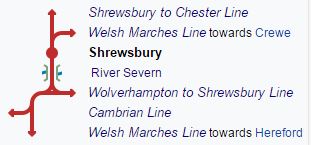
The lines meeting at Shrewsbury station are as follows.
- Shrewsbury to Chester Line with 4 open and 14 closed stations before Chester.
- Welsh Marches Line to Crewe, with 6 open and 4 closed stations before Crewe.
- Wolverhampton to Shrewsbury Line, with 8 open and 5 closed stations before Wolverhampton
- Cambrian Line, with no open and 6 closed stations before Welshpool.
- Welsh Marches Line to Hereford, with 4 open and 15 closed stations before Hereford.
There certainly were a lot more stations in the past.
But it does appear that some new stations are in the pipeline.
Adnaston
Admaston is a possible reopened station on the Shrewsbury to Wolverhampton Line.
Baschurch
Baschurch is a possible reopened station on the Chester to Shrewsbury Line.
Cefn
Cefn is a possible reopened station on the Shrewsbury to Chester Line.
Hadnall is a possible reopened station on the Welsh Marches Line.
Johnstown
Johnstown is a possible reopened station on the Shrewsbury to Chester Line.
Meole Brace
Meole Brace is a possible new station in Shrewsbury.
Conclusion
It looks like the letter writer’s plea has been answered.
Putting four trains per hour on all of the routes from the centre at Shrewsbury would probably create a more than acceptable system.
It looks like the trains would have to be diesels, as I can’t see much electrification in this area.
But who knows what will happen, if someone develops a fast charge system for a hybrid/battery train, that could be implemented at Chester, Hereford, Shrewsbury and Wolverhampton?
The No Frills Station
I’m always putting in the same picture of Zwickau Zentrum station on the Vogtlandbahn in Germany into posts, so I thought I should give the picture a post of its own.
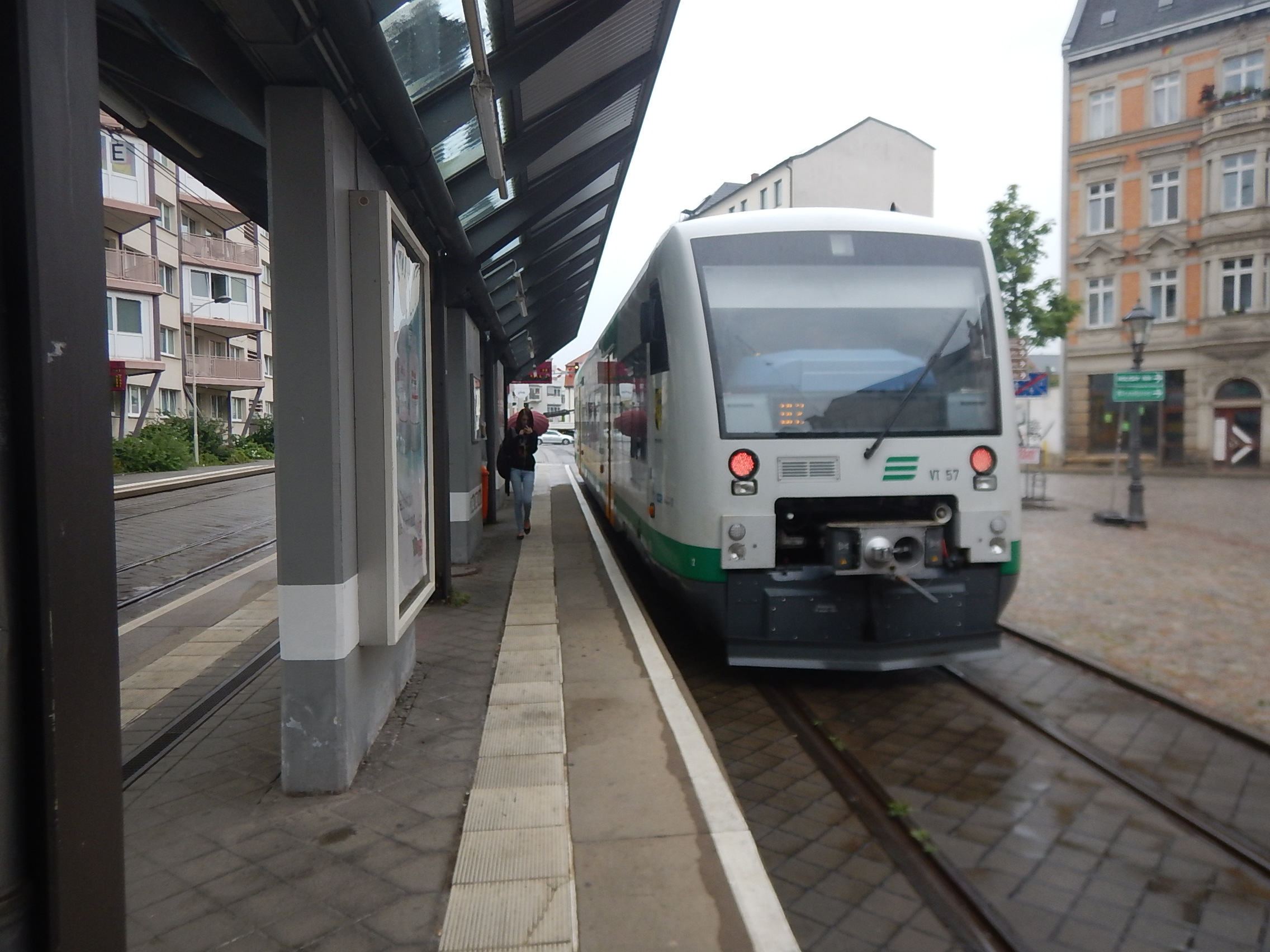
The station is one of the simplest I’ve ever seen and it has been designed very much like a tram stop.
- There is no footbridge, as if travellers need to cross the line, they just walk round.
- The access is as step-free as it gets in Germany.
- The other side of the platform is a stop for Zwickau’s trams.
- There is no electrification, which must improve safety.
- The station could be made long enough for any train that might call.
- The station has been landscaped into the local environment.
But we’re starting to see simple stations like this in the UK.
These pictures show Galashiels station on the recently opening Borders Railway.
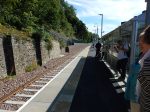
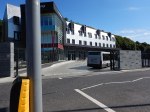
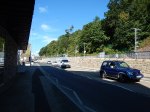
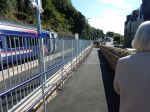
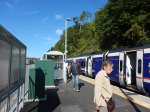
Galashiels is an interesting solution, as there is a single-platform step-free railway station on one side of the road and a comprehensive bus interchange on the other with seats, cafes, shops and warm shelter.
Both Zwickau Zentrum and Galashiels are served exclusively by diesel trains and as electrification can be a hazard to some passengers and is expensive, I would feel that most stations like this, would be better served by trains that are self-powered.
We shall be seeing more simple station designs like these, as architects and designers get very innovative.
A Station For Marlborough
Marlborough once had a pair of stations, as this map of the railways in the town shows.

Note the various stations in an area, where Marlborough the largest town has a population of 8,395.
This railway map shows the important Reading to Taunton Line that passes to the South of Marlborough. This Google Map shows that line as it crosses the A346 road.
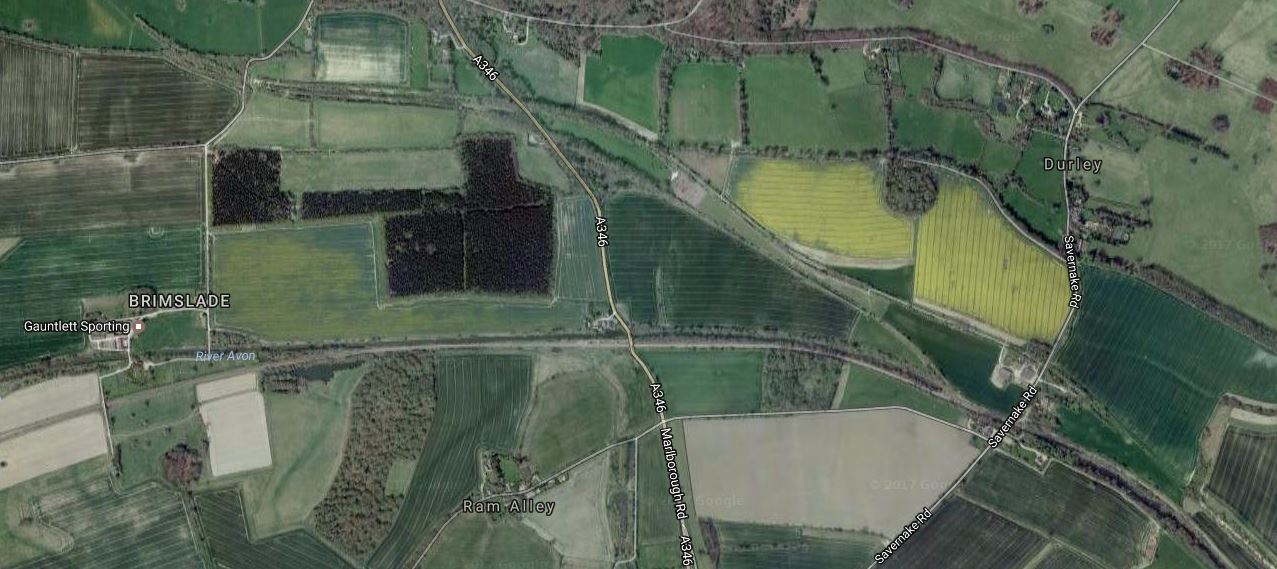
The Reading to Raunton Line South Of Marlborough
Note.
- The Reading to Taunton Line crossing the map in an East-West direction, generally following the Kennett and Avon Canal.
- Marlborough is to the North
- Pewsey station is to the West.
- Bedwyn station is to the East.
- Savenake Low Level station used to be somewhere to the South of what look like yellow field of Rape.
- The small town of Biurbage is to the South.
There would also appear to be tracks of disused railways leading North-Westerly from Bedwyn towards Marlborough.
If Marlborough and the surrounding area were to be given a better rail connection, I would think that a possible solution would be a parkway station, perhaps where the A346 crosses the railway and the canal.
It should be born in mind, that modern trains are designed to perform fast stops at stations, so the extra station at Marlborough would not be the time penalty, it was a few years ago.
Transition Marlborough’s Proposal
But a local action group called Transition Marlborough have their own plans for a Marlborough Rail Link, which as this graphic shows are more ambitious.
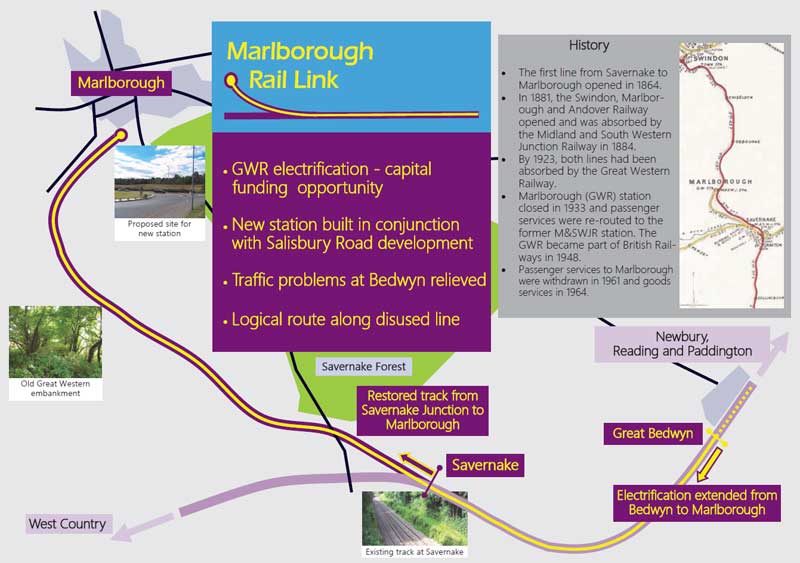
Their plans would involve restoring and electrifying the line to Marlborough, where a well-positioned station will be built.
These are my initial thoughts.
- The route of the line appears feasible.
- Electrification may be a problem given Network Rail’s expertise in this area.
- Bedwyn would not appear to be the best terminus for a line to London.
- I’ve not been to Bedwyn station, but I suspect it could be a bleak place in some kinds of weather.
After I wrote this list, a kind soul in the area sent me this message.
You’ll find that Bedwyn station is a pretty bleak place, especially in Winter. To reach it by road from Marlborough involves a 7.5 mile road trip, at least 3 miles of which is on an unmarked road through a forest. Bedwyn station is almost inaccessible for people without cars, as the connecting bus service is poor and unreliable.
My Version Of The Proposal
I think the best solution could be to create a single-track railway without electrification to a simple station with adequate parking at the proposed Salisbury Road Business Park location.
I would put the station in the car park of the Tesco supermarket in this Business Park.
The distance between Reading and Marlborough by train would be about 37 miles. Network Rail’s plans to electrify the line between Reading and Bedwyn are probably best described as fluid, but I suspect that electrification to Newbury could be possible, which would mean that only twenty miles between Paddington and Marlborough would be unwired.
So this would mean that when inevitably an electric train with onboard energy storage has a range of forty miles, Marlborough could get a modern electric service to and from Paddington.
The advantages of this strategy are as follows.
- No ugly overhead catenary marching across the country.
- Work would only include restoring a single track railway and building a simple no-frills station at Marlborough.
- Marlborough station would not have any electrification and could be designed like a tram stop.
- Fast Environmentally-friendly electric trains to and from Reading and Paddington.
- The route would be designed for six-car trains in case Marlborough College put on a free concert featuring the Rolling Stones.
- The route could be designed to allow two trains per hour (tph), as opposed to the current one tph service to and from Bedwyn.
- Marlborough to Paddington would have a maximum time of around 80 minutes.
But the biggest advantage is that the scheme is that it could be affordable.
This article on the BBC is entitled Marlborough £30m railway line restoration plan.
If this branch line is developed as I believe Network Rail are now thinking, there could be money left over for a good launch party!
Conclusion
With the next generation of electric train with onboard energy storage or IPEMUs, a Marlborough station on a new Marlborough Branch Line can be used to create a two tph service to and from Paddington to replace the current one tph service from Bedwyn.
So a new Marlborough station would be a win for all those using stations on the Reading to Taunton Line to the East of Pewsey.
I also wonder how many other similar services can be developed by extending a service past a main line terminal to a new or reopened branch line, which is built without electrification and run using trains with onboard energy storage.
Reopening The Fawley Branch Line
The Fawley Branch Line is a freight-only branch line alongside Southampton Water in Hampshire.
Under Future in the Wikipedia entry for the Line, this is said.
On 16 June 2009 the Association of Train Operating Companies announced it was looking into the reopening of the railway as far as Hythe, with a possibility of a further extension to Fawley if agreement could be reached with Esso, which owns the land where Fawley railway station once stood.
A lot more detail is also given, which has these major points.
- Reopening of all former stations along the line.
- A new station in Totton called Totton West, sited just west of the junction with the main line.
- A new train service from Fawley or Hythe to Totton and on via Southampton Central, Southampton Airport Parkway, Eastleigh, Chandlers Ford and Romsey before returning to Southampton Central, Totton and Fawley or Hythe, also serving other intermediate stations.
- Hourly train service.
- Possible future electrification
The section to be reopened would be about seven miles in length.
This Google Map shows the area of the branch line.
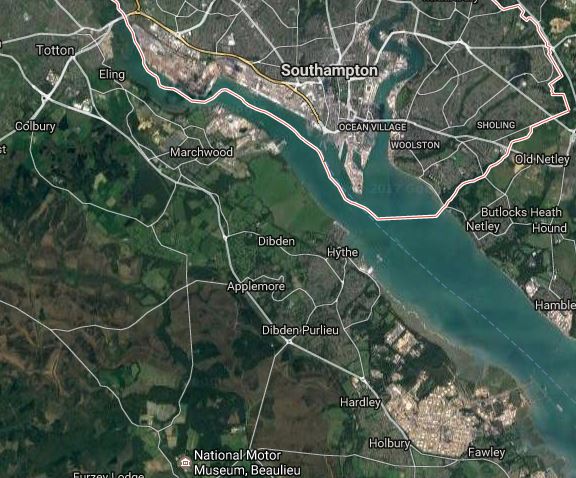
Fawley Branch Line
It starts at Totton and there used to be stations at Marchwood, Hythe, Hsardley and Fawley.
Rolling Stock
The current proposals talk about using diesel trains, which would probably be Class 158 or Class 159 trains.
Given that Totton station is on the electrified South Western Main Line, other trains that can work on partly electrified lines may be able to work services on the Fawley Branch Line.
A Class 319 Flex train could use electric power on the main line and diesel power on the branch.
Battery trains like an Aventra with onboard energy storage, could use electric power on the main line, where they would also charge the batteries. Batteries would then be used on the branch, with a possible top-up charge from something like a Railbaar at Hythe station.
A Trip To Hythe
To look at the Fawley Branch Line, whilst I was in Southampton, I took a trip on the ferry to Hythe and had a look round.
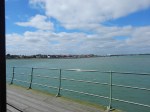
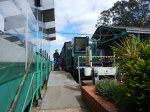
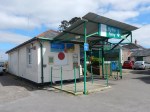
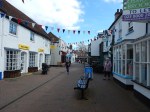
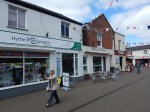
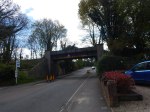


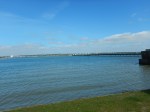
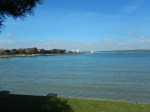

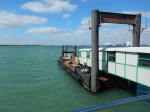
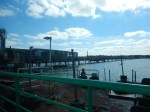
The Fawley Branch Line passes through Hythe about two hundred metres from the water.
This Google Map shows Hythe.
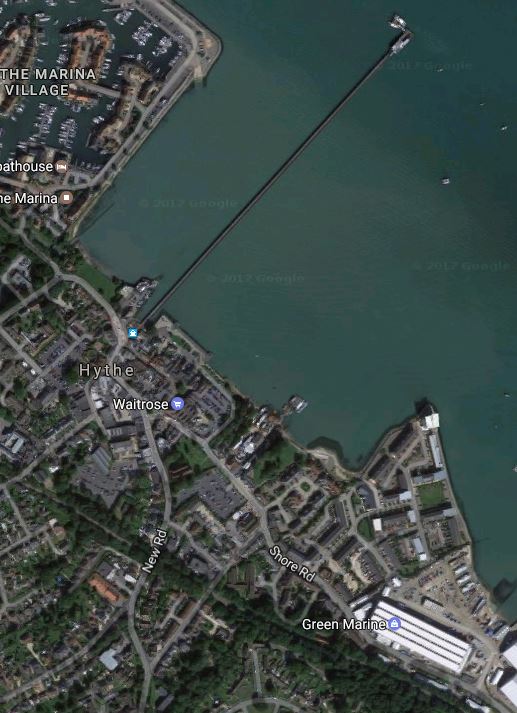
The railway can be picked out as the green scar going across the bottom of the map.
I’m not sure, where the new Hythe station would go.
The Design Of The Line
This picture shows where the Fawley Branch Line joins the main line.
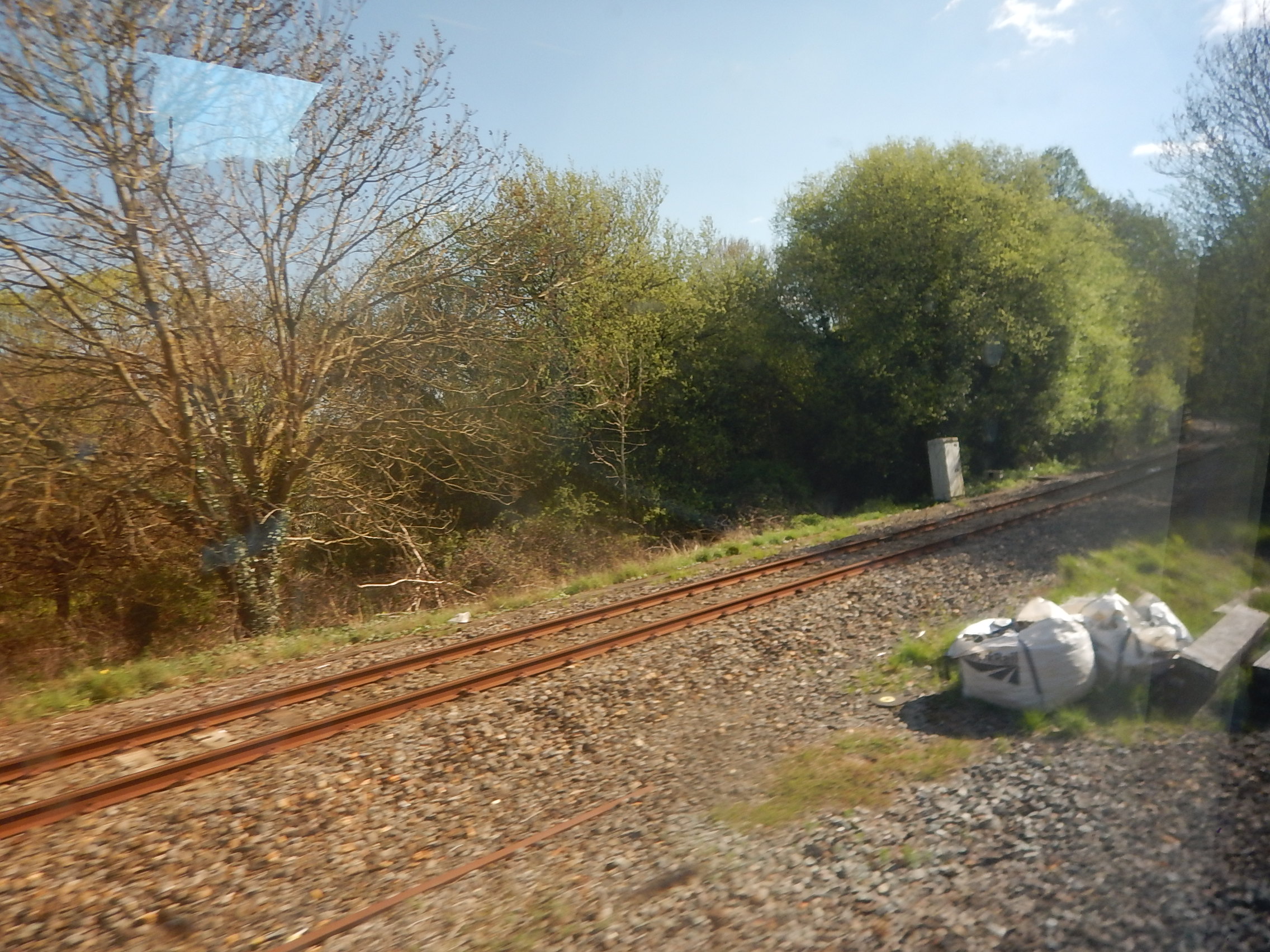
It all looks pretty tidy and in good condition, so making the connection to the main line wouldn’t be too difficult.
The quoted route from Fawley or Hythe via Totton, Southampton Central, Southampton Airport Parkway, Eastleigh, Chandlers Ford to Romsey is only electrified between Totton and Eastleigh, as the Fawley Branch Line and the Eastleigh to Romsey Line are not electrified.
But it is an interesting route, as one of its effects will be to double the frequency of services between Eastleigh and Romsey, where it is probably needed to serve new housing.
I reckon that it would take about forty-five minutes to go from Fawley to Romsey or vice-versa.
It would also be a route for using some form of train with new technology.
- A bi-mode train able to use third-rail electrification would be a possibility.
- A Class 319 Flex train would manage the route with ease.
- Perhaps, a battery train based on a third-rail multiple unit could make the route.
The battery train could be very suitable for the route, as an hourly service would need two trains, which would have around fifteen minutes to charge their batteries at either end of the route.
Current Status
Currently, the project is on hold, but given the location, where some very nice waterfront housing might be built, circumstances could change.
Reopening Newcastle To Ashington
In No-Frills Mini Trains Offer Route To Reopening Lines That Beeching Shut, one of the lines mentioned in the original Times article that might be suitable for reopening is the Blyth and Tyne Line between Newcastle station and a new Ashington station in the North East.
- More details of this route are given on the South East Northumberland Rail User Group web site.
This map is taken from their web site.

The East Coast Main Line is shown in red, with the proposed reopened line in orange.
Reopening the line would be a lot simpler than many others.
- Most if not all of the track is intact and used by freight trains.
- Some of the route is only single-track.
- Stations would need to be rebuilt or built from scratch.
- To work the desired frequency of two tph would probably need two units.
- Digital signalling would be needed, as there are freight trains on the same lines.
As there are electrified lines in the area, it might be an ideal line for a pair of Class 319 Flex trains, which could run on diesel, where there was no electrification.
Judging by the map, the service could call at the following stations coming North from Newcastle
- Manors
- Seghill
- Seaton Delaval
- Newsham for Blyth
- Bebside
- Bedlington
- Ashington
- Cambois
- Woodhorn
- Choppington
There would be two terminals at Newbiggin-by-the-Sea and Morpeth.
I also think that there is scope for more routes and stations.
Conclusion
It all looks very feasible.
Extending The Docklands Light Railway West From Bank Station
Two possible routes have been proposed foe extending the Docklands Light Railway to the West
Whether either is worth developing, I don’t know.
But consider.
- The Thameslink Programme will improve access between London Bridge and Charing Cross stations, which could take pressure off the Jubilee Line.
- The Thameslink Programme will improve Southeastern services into Cannon Street and Charing Cross stations.
- Charing Cross station has a couple of spare platforms, that some would like to re-use.
- Euston and St. Pancras stations have bad access to Canary Wharf and South East London.
- The Bakerloo Line Extension has been given the green light.
- Crossrail connects Canary Wharf to Bond Strreet, Heathrow, Liverpool Street and Paddington.
But the big issue, is what happens about Crossrail 2.
I feel that the more likely extension to the West is to go from Bank to Euston via City Thameslink and Holborn and/or Tottenham Court Road stations and finish by going on to St. Pancras.
It could link HS2 at Euston and European services at St. Pancras to the following.
- Thameslink at City Thameslink station.
- Crossrail at Tottenham Court Road station.
- Bank and Canary Wharf stations.
It would also provide a decent link between the long distance services at Euston, Kings Cross and St. Pancras.
These factors would also influence the design of the DLR Extension.
- The DLR has all the agility of a mountain coat to climb hills and turn sharply, so it might be possible to squeeze it through places impossible for a Crossrail or an Underground line.
- 3D-design techniques are getting better every year.
- Tunnel boring machines are getting more accurate.
- Escalators are getting longer.
So could we see the extension going from Bank to City Thameslink as a traditional extension and then going in a long double-track loop via some or all of the following stations.
- Holborn
- Tottenham Court Road
- Oxford Circus
- Regents Park
- Euston
- St. Pancras
- Covent Garden
It would all depend on where they could squeeze the tracks through.
- Stations could be island platforms between the tracks.
- Platform edge doors could be fitted.
- Escalators and lifts could link the platforms to existing station.
There’s no reason why the line should be designed traditionally for the DLR.
 The Anonymous Widower