Crossrail And The Flying Scotsman
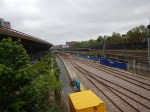
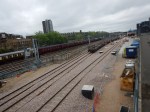
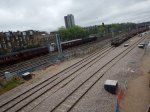
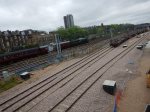
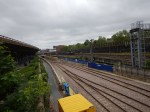
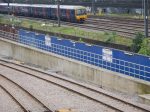
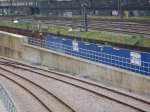
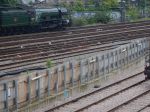
I went to Royal Oak today to takr pictures of the Crossrail portal and the Flying Scotsman.
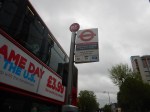


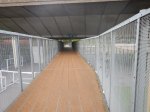
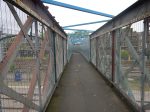
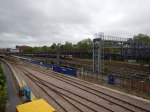
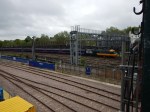
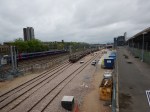
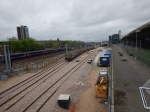
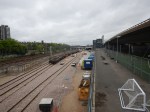




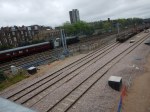
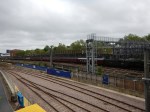
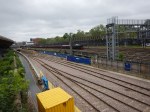
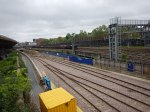
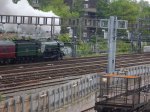
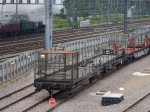
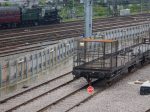
Note.
- Sir Kenneth Grange is an engine named after the HST designer to celebrate forty years service of the trains. There’s more in this article in Rail Magazine.
- The Flying Scotsman went in backwards to Paddington first.
- Crossrail will have reversing sidings to the west of the bridge, with an extension to Westbourne Park bus garage built over the top.
- The Crossrail portal at Royal Oak is probably the one with the best view of the tunnel entrance.
Due to my difficult position, the pictures of the train were rather bad.
The Curse On My Family
Something has dripped through the genes and behaviour in my family, that could well explain, factors that contributed to the early death of my paternal grandfather and my youngest son; George.
I have known six of my relatives well; my father and mother, my father’s mother and my three sons.
I will ignore my mother and grandmother, as both lived to their eighties, which is probably good by any standards.
I shall also ignore my eldest son, as I am not in contact with him.
I believe that my coeliac disease, which must be inherited, came from my father and both my late wife and myself believed that if any of our three children were coeliac, it would have been George. But neither my father or George were ever properly tested.
As a child, I was sickly and I was always being taken to the doctor and I had endless tonics and potions.
It only gradually improved when I got to about ten or so and why it did has never been successfully explained. But I can remember being off-school for large parts of the Spring term several times.
I can remember a couple of times in summers, when I was about eight or so, suddenly giving up playing with friends and going home to watch television or play with my Meccano. I think I just found it too hot or perhaps my eyes didn’t like the sun.
In some ways, I was just following my father’s behaviour, which generally involved tinkering with his car in the garage or working in his print works. He would occasionally sit in the sun to smoke his pipe, but I never ever saw him strip off on a beach say.
From about seven, he always took me to work at the weekend and I enjoyed myself doing real jobs, like setting type, collating paper and pulling proofs.
If it left me with any psychological traits, it was that hard work is good for you!
But it kept me out of the sun.
I got married to C at twenty-one and within four years we had three sons. In some ways this got me out in the sun more and perhaps in my late twenties, when we were living in the Barbican, I started to experience better health. I was probably getting more sun, as in those days, I tended to cycle across to Great Portland Street regularly. But C used to drag me out in the sun.
Over the next thirty years or so, my health often tended to deteriorate in the winter, but I think it is true to say, it improved marginally, when the boys grew up, as we started to take more holidays in the sun.
Then in 1997, when I was fifty, I had a particularly bad winter and a very elderly locum decided I needed a blood test to see if I lacked anything. It was the first time my blood had been tested and I was found to be totally lacking in vitamin B12.
I struggled on, with nurses injecting me with B12 every month or so, until my GP sent me to Addenbrooke’s. After another set of blood tests, they said, I was probably coeliac and this was confirmed by endoscopy.
I certainly felt a lot better on a gluten-free diet.
I was also now able to walk and work in the sun and sunbathe without getting burnt. Although, avoiding the sun was still burned into my behaviour, so I often retreated under an umbrella.
Another change was that whereas before going gluten-free I was always bitten and C never was, after going gluten-free, the reverse was true.
I only remember one bad winter from that period and that was when C had breast cancer in 2003-2004, which I think was a sunless winter. We didn’t have our long winter holiday in the sun and I paid the consequence with plantar faciitis, which some reports claim is linked to vitamin D deficiency.
After she died, my problems to a certain extent returned and my GP actually suggested I wasn’t getting enough sun. So in all weathers, I drove around in my Lotus Elan with the top down, to make sure that I got the sun.
I felt a lot better.
If I look at George, he also had my father’s and my behaviour of avoiding the sun. As he smoked heavily, whilst he wrote his music in the dark, was it any wonder he got the pancreatic cancer that killed him?
The curse on my family is of course coeliac disease, which before diagnosis, seems to make us avoid the sun. My father and George certainly did and I would have done before diagnosis without C’s constant persuasion. Now though as I showed in An Excursion To Lokrum, I have no problems in the sun and rarely use any sun screen.
We’ve had some miserably weather over the last few months in London and I come to the conclusion, that I just haven’t got enough vitamin D.
I’ve also only recently found out, that gluten-free foods are not fortified, as regular ones are. So I don’t get any vitamin D through my food.
The Great Sheffield Tram-Train Mystery
An article on the BBC web site is entitled Sheffield to Rotherham tram-train pilot delayed further.
The article says that a full review is taking place and a new start date will be announced in the summer.
On my recent trip to Karlsruhe, I rode the German version of the Class 399 tram-train and wrote The Latest Citylink Tram-Trains In Karlsruhe. I said this.
Note that the trams I photographed are only some of the latest batch of twenty-five tram-trains of this type in Karlsruhe. So the basis of the Class 399 tram-train, must surely be well-proven on the streets of a city about the same size as Sheffield.
Incidentally, all of the new tram-trains that I saw, were running on tram routes, just as the first Class 399 tram-trains will in Sheffield, when they start running in a few months.
If the second paragraph is right and all the Sheffield-style trams in Karlsruhe are running as trams, could there be a problem with operating them as trains?
I have no idea and this is just pure speculation.
However this page on a German web-site has pictures of the tram-trains of Karlsruhe. There are twenty-five of the latest Sheffield-style tram-trains delivered from 2014-2016.
But according to this article in Global Rail News, Karlsruhe has just ordered twelve additional Flexity tram-trains from Bombardier.
Is this that some routes can’t be worked by the Citylink and need the other type? Or is it because of a problem with the Citylink?
I don’t know!
But somebody, somewhere must know the truth!
As an engineer, it all puzzles me.
Karlsruhe have been running tram-trains for some years now and surely, the track design rules are pretty well-established. They’ve also been running the Sheffield-style trams for at least several months.
Surely, Network Rail’s engineers must have been to Karlsruhe and just copied, what the Germans are doing.
So why haven’t they got it right first time?
- Not Invented Here?
- Someone in the Department for Transport giving a new twist to EU regulations?
- Refusal to talk to the Germans?
It could of course be sheer incompetence!
Another related mystery, is why are there no reports of the lone Class 399 tram-train in Sheffield testing on the existing track as a tram?
At great expense, all track in Sheffield has been changed to accept the wheel profile of a tram-train, so surely this new tram could at least be testing in the middle of the night!
Could it be that the tram-spotters of Sheffield, are lazy and don’t like getting up in the middle of the night to photograph tram movements? But then there were pictures of night-time tram testing in Birmingham and Nottingham, so I have to conclude testing is not happening.
Summing Up Karlsruhe’s Tram-Trains
Karlsruhe invented the tram-train and running them under the Karlsruhe model.
It’s a bit like having a vehicle that can go anywhere in your city carrying a couple of hundred people, where there is a railway or tram track.
The only other vehicle that offers a similar flexibility is a bus, but buses are less eco-friendly and they are difficult to make all electric.
Karlsruhe incidentally, only seems to have a few buses and you will notice in Building A Tram-Train Tunnel In Karlruhe, how few cars and taxis there are. So are all the people on foot or in the tram-trains?
Surely, the great thing about a tram-train network like Karlsruhe, is that once the main tracks are laid and electrified, as they will be in Karlsruhe, once the tunnel is open, your biggest improvements come by adding more and better vehicles to the routes.
I went to Karlsruhe to see The Latest Citylink Tram-Trains In Karlsruhe, as they are similar to those being introduced in Sheffield.
According to this article in the Internation Railway Journal, the city has just ordered another twenty five of these tram-trains.
On return from Dubrovnik I found this article on Global Rail News, which says that they’ve also ordered another twelve Flexity Swift tram-trains from Bombardier.
If you want to see what a low-floor Flexity-Swift looks like, go to Croydon. I don’t think that the London Tramlink could use tram-trains, as all the rail lines in South London are third-rail, but don’t underestimate engineers. You probably couldn’t have the automatic voltage changeover that you get with overhead wires.
Both these batches are low-floor, so expect one of the developments over the next few years in Karlsruhe is that more trams become low-floor. Obviously, some stations won’t be able to be modified, so the network probably won’t become 100% low-floor.
Are Karlsruhe playing this network expansion in a very canny way?
They now have a specification for a vehicle than can work all lines in its network.
- Dual voltage of 750 VDC and 15 kVAC.
- Low floor or adapted to railway and tram stations.
- A defined loading gauge.
- A preferred seating layout.
It strikes me that there will be several manufacturers, who would like to supply Karlsruhe, as they obviously know what works, as they invented the standard.
Karlsruhe also has the advantage in that the tram-trains they don’t want probably have a good residual value, as if say a city wants to built a tram-train network, provided that they obey Karlsruhe’s rules, then the tram-trains can be delivered and after testing, start a service.
The only problem is that Germany’s non-standard 15 kVAC may need to be changed to perhaps 25 KVAC. But that would probably be more affordable than buying a whole fleet of new tram-trains.
Are Thameslink Doing Their Publicity Right?
In A Trip To Tattenham Corner, I wrote about the station and how when Thameslink is expanded, that it will have a two trains per hour service to Cambridge. I said this.
I do wonder if the team that decided that Cambridge would be the other end of the Thameslink service from Tattenham Corner were racing enthusiasts, but it will certainly come in handy for racing, as driving from Newmarket to Epsom is not that easy.
So it surprised me yesterday, that a friend, who lives near Tattenham Corner station, and has a cottage near Kings Lynn station, didn’t know about the upgrading of Thameslink.
He was rather pleased to learn that he could go between Tattenham Corner and Kings Lynn stations with the single change at Cambridge.
I suspect that Thameslink haven’t started publicising their new routes yet!
Would A Sleeper Train Work Between London And Cologne?
In Disappointing Cologne, I said that if there was a sleeper train between London and Cologne, I’d use it.
- Many passengers like quality sleeper trains.
- Those like me, who do long journeys across Europe, often break the trip in as hotel. A sleeper would be a good alternative.
- More and more people are avoiding flying.
I have used sleeper trains down from Scotland a few times. The Caledonian Sleeper is a civilised way to travel, which leaves late evening to come south, where you can get a decent snack and a good night’s sleep.
I last used a sleeper during the Commonwealth Games in Glasgow, as it meant I arrived in London early in the morning and I didn’t have to spend a night in Glasgow, where hotel rooms were in short supply.
In the end, the cost of the First Class sleeper ticket, was less than I would have paid for something like a Premium Inn in Edinburgh, which was all that was available.
Sleeper trains in those circumstances are good value for money and you don’t waste time travelling during the day.
The Caledonian Sleeper is being given new carriages and a lot of promotion and I suspect in a few years time, it will be a thriving service.
On the other hand, I once took a sleeper from Munich to Paris, which was run by Deutsche Bahn. I wrote about it in The Sleeper From Munich To Paris.
Deutsche Bahn have decided to discontinue their sleeper trains, as they are not profitable. But given their legendary customer service, passengers have probably chosen other methods of travel.
I believe that if a sleeper was setup between London and Cologne, that run on similar principles to the Caledonian Sleeper or the Night Riviera, that it could work.
Consider.
- Cologne is a city of a million people in a region of three million.
- Passengers arriving in Cologne could be in Frankfurt around 1000, Munich around 1100 and Berlin around 1200.
- Passengers arriving in London could be in Birmingham before 0900, Cardiff before 1000 and Liverpool/Manchester before 1000.
- Leaving late at night, must give a greater time to work or play.
- If the new rolling stock for the Caledonian Sleeper is a success, I’m sure CAF would be happy to build some more!
The original plan for sleeper trains through the Channel Tunnel was too ambitious and relied on getting the regional business. I think that what is needed is a core route like London-Cologne, where the sleeper trains run, that uses the excellent high-speed services from the two end cities to connect onwards.
Surely, providing Customs and Immigration for a sleeper train would be a lot easier.
It would probably be easiest if they were done in London.
- Outward to Cologne, changing to an onward service would be very easy in that station, after perhaps a passport check.
- Inward to London, how many undesirables would use a sleeper train as a means of smuggling themselves or illicit goods into the UK.
- A decent passport check by the Germans at Cologne would probably sort out the more blatant abuses.
- After the atrocities in Brussels and Paris, I can’t believe that International travel checks won’t be tightened.
If London-Cologne could be made to work, would other core routes be viable?
They would probably need.
- A destination station with lots of connections.
- A journey time that would enable arrival in the destination early enough to catch important onward connections.
- The city/area away from London must be able to provide good core business.
If we assume that passengers would want to be on their way from the destination at seven, then this would probably mean an arrival at five, so probably a six or seven hour journey time would be the maximum before it isn’t a viable option for passengers.
This would probably mean that Amsterdam, Frankfurt and Paris could be possible as destinations, but Munich and Geneva probably wouldn’t. Brussels would probably be ruled out, as Cologne would serve the same onward destinations better.
I think it is going to be interesting to see if and how this market develops.
Is A Big Row Developing Over The Northern Line Extension?
I have just read this article in the Evening Standard, which is entitled Northern line extension: Battersea Power Station’s Tube bill ‘to rise by £240m’. This is said.
The Standard understands that the changes relate to a section of the 39-acre site known as Prospect Place, a dramatic cluster of apartment buildings designed by the Californian “starchitect” Frank Gehry.
The new plans envisage more ambitious “over station development” (OSD) than in the original Battersea Power Station masterplan from Uruguayan architect Rafael Viñoly.
Obviously, the more you put on top of a station, the stronger the box that encloses the station needs to be.
Hence the redesign of the box and the greater cost.
I do think that some architects are a bit precious and over-ambitious, whereas others create spectacular buildings, that seem to cost a fraction of those by the so-called architectural superstars.
Some schemes only seem to be capable of being built at enormous cost.
Architects never learnt from the fiasco of building the Sydney Opera House.
And it’s usually the poor taxpayer who picks up the bill for bad design.
Optimism For The Brders Railway To Hawick
This article in the Southern Reporter is entitled New Hope For Railway Extension.
It describes how politicians are getting together to extend the Borders Railway to Hawick. This was said.
In a speech in Edinburgh on Monday, Scottish Secretary David Mundell pledged to work with the Scottish Government on connecting the Borders with the national rail network to the south, saying it was a “realistic prospect”.
He said: “Scotland needs good transport links to thrive.”
It is my view, that the railway was not fully thought out in the first place.
The big thing that was missed was the Overground effect!
This was demonstrated so well here in London, when the transforming of the North and East London Lines from a set of travelling scrapyard-ready urinals into a modern railway, brought so many new passengers out of the woodwork, that trains soon became overcrowded and more and longer trains had to be ordered. Last week, it was announced that there will be more late trains, which I wrote about in The London Overground Grows Without Fuss.
The Overground just keeps on growing, so why won’t the Borders Railway?
My friends in the Borders tell me the trains don’t have enough capacity and there is not enough parking at Tweedbank. Anybody working on or living by the London Overground could have told the good people of the Borders this would happen.
The solution is probably to extend to a Galashiels-style transport interchange at Hawick, stop at Melrose and the Borders Hospital and procure some new four-car trains to work the line.
I also believe strongly, that Bombardier and Network Rail by the use of some intelligent design could enable the line to be served by Aventra IPEMUs, that would avoid the need to have electrification gantries marching all over the hills.
I’ll Go Along With This Quote
With a memorial service for Sir Nicholas Winton today, I make no apologies for publishing one of his quotes.
I believe in ethics, and if everybody believed in ethics we’d have no problems at all. That’s the only way out; forget the religious side.
I doubt I can live long enough to see religion, become something you read about in history books.
But the world would be a better place, if everyone followed Sir Nicholas’s advice.
 The Anonymous Widower