Breakfast By Cromwell Tower
I had breakfast in the Cote Brasserie by Cromwell Tower in the Barbican, where I used to live with C in the 1970s.
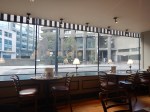
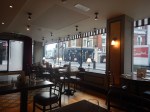
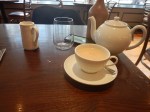
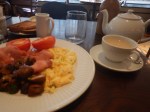
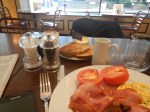
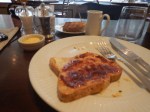
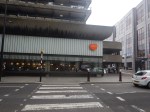
It was an excellent breakfast, well-served by a charming young lady.
The only problem was that they don’t have a gluten-free sausage.
Gluten-Free In Virgin First Class From Carlisle!
Crisps and a banana!
That is just not good enough!
But it was aerved with a smile!
Killing Time In Carlisle
I miscalculated my journey back from Glasgow and have a lot of time to kill in Carlisle.
So I’m in the Costa outside the station, charging my phone and writing these posts.
It’s a convenient place to recharge.
Walking Between Glasgow Queen Street And Central Stations
I arranged my trip through Glasgow so that I arrived in Glasgow Queen Street station around lunchtime, so that I could have lunch at a restaurant on my way to Glasgow Central station.
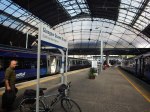
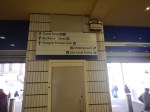
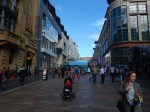
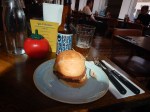
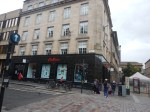
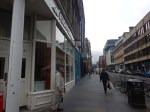
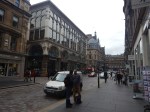
I took the side entrance to Queen Street station and walked to West Nile Street, where I had lunch in Gourmet Burger Kitchen.
From the restaurant, I continued down West Nile Street, before turning right for Glasgow Central station.
This Google Map shows the two stations and the area in between.
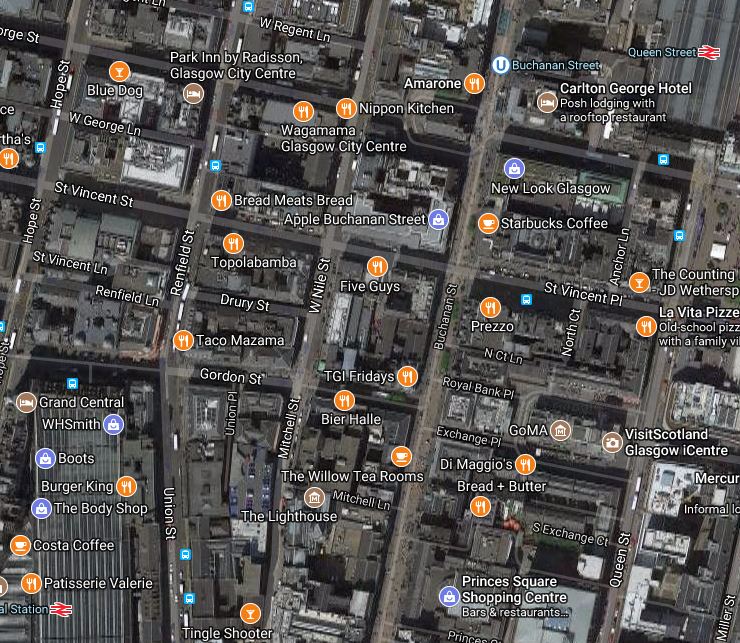
There’s probably a cafe or restaurant to suit everybody on the walking route.
Walking the way I did was slightly down hill and parts were in pedestrianised streets.
I know Glasgow’s two main stations fairly well, but there should be a signposted walking route.
The Ultimate Gluten-Free Product
This morning, I bought a new gluten-free product from Marks and Spencer.

It may only be a humble seeded brown roll, but I think they have pitched it right for the market.
I ate one for lunch with one of their smoked salmon parcels.

I have tasted other gluten-free rolls that were slightly better, but none came anywhere near the 50 pence, I paid at The Angel.
I suspect, I’ll regularly use one for my lunch with an appropriate filling.
I called it the ultimate gluten-free product, as it is precisely targeted at the market.
- I would expect, that the taste is acceptable to most people; coeliacs or not!
- It is in a sealed packet with a Use-By Date of the 1st of September, which is four days from today.
- You don’t have the waste of a loaf, which gets thrown away half eaten after a few days.
- It would be ideal to buy, if you’re going to a party, in case the host doesn’t have a clue about gluten-free bread.
- It would also be ideal, if you’re hosting the party and know that perhaps two out of twenty are gluten-free.
- You could even pack a couple in hand-baggage, if you’re going abroad for a weekend and aren’t sure of the hotel.
- I’ve stayed in a couple of excellent B&Bs, who would have found this product very useful.
At just fifty pence a time, you could even feed them to the birds or make breadcrumbs , if some are left over.
I’m certain at that price, M&S won’t make much direct money out of the product.
But if it takes off, how many will the product attract to the gluten-free section, who will then buy other products?
A Low-Alcohol Beer With Flavour
I was buying my usual gluten-free IPA in Marks and Spencer in Islington, when I saw this beer next to it.

This beer is just 0.25 units for a half litre bottle.
It also has flavour, as it is brewed by Adnams.
But the amazing thing was I had no adverse to the beer despite being coeliac, although I’ve never claimed to be a serious one.
Waterloo Upgrade August 2017 – Walking Between Wandsworth Common And Clapham Junction Stations
These pictures show my walk this morning.
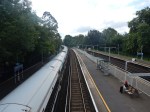
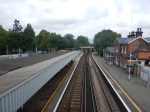
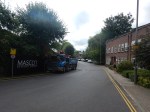
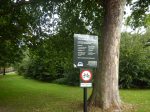
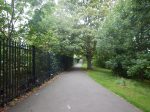
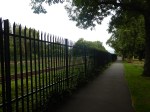
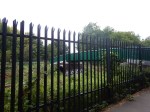
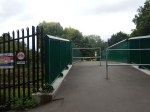
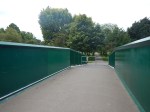
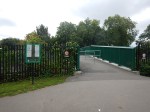
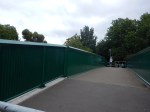
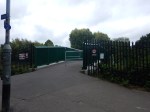
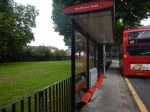
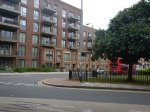
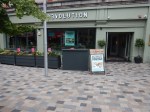
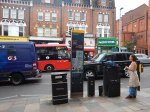
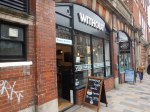
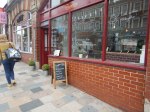
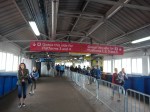
These are my thoughts on the various things I saw! Or in some cases didn’t!
Wandsworth Common Station
Wandsworth Common station is a curious station in some ways, as it certainly wouldn’t be built in the middle of Wandsworth Common in these conservation-minded days.
It also has an eleven trains per hour (tph) frequency to the next stations; Balham and Clapham Junction. Some trains take as little as two or three minutes.
Passenger numbers in 2015-16 at the three stations are as follows.
- Balham – 10,115,000
- Wandsworth Common – 1,690,000
- Clapham Junction – 32,282,000
Wandsworth Common station would appear to be just an overflow station to take pressure from the other two much busier stations.
In the Gibbs Report, one of the things that Chris Gibbs says is that there are too many Off Peak services.
Surely four or six tph stopping at Wandsworth Common station is enough, given that there’s only 24 parking spaces and bus stops are 450 yards away.
Currently, there are six tph between Victoria and West Croydon stations and all stop at Wandsworth Common station, with the fastest journeys taking thirty two minutes.
There are also six tph between Wandsworth Common and Norbury.
Surely on both these services stops can be eliminated, which would save a couple of minutes per stop.
Timing the trains for something like a Class 377 train and using a more efficient stopping pattern, might reduce timings between Victoria and West Croydon to under thirty minutes, which must help Southern to run a better service.
But would the good burghers of Wandsworth allow the simplification, even if it became a faster service?
The Cat’s Back Bridge
The Cat’s Back Bridge is a pedestrian bridge across the railway to the North of Wandsworth Common station.
The replacement of this bridge is described in this article on Rail Engineer, which is entitled A Trio Of Southern Bridges.
The article has some clear before and after pictures taken from the railway.
Wandsworth Seems An Information-Free Borough
Walking from the bridge to Clapham Junction station might have been quicker, if there had been some maps or information.
Perhaps, Wandsworth doesn’t welcome walkers!
At least I found a couple of helpful policemen!
Breakfast At Revolution
I had a hearty gluten-free breakfast at a bar-restaurant called Revolution in Clapham.
Incidentally, Clapham surprised me with the quality of the shops.
There were also a couple of interesting cafes, including one that was gluten-free and vegan called Without.
Clapham Junction Station And The Waterloo Upgrade
Again there was a lack of information.
Plenty of helpful Customer Service personnel were in attendance at the station, but some better signage was needed, for those unfamiliar with the station.
Conclusion
Wandsworth Council need to get their act together with regard to information.
I live in Hackney and the maps are so much better!
Do We Spend An Average Price On Food Items?
This may seem a silly question to ask, but I tend to do most of my food shopping in Marks and Spencer and like the convenience of using contactless payment.
But I have found on average, that my average payment is just a few pence over a couple of pounds.
So when I get to fourteen items, unless there is something I have to get, like supper, I stop shopping.
I was surprised how similar the average item cost was each time.
But then I don’t buy much, as I live alone and I’m coeliac. And I do shop elsewhere as well!
One thing I do wonder, is that since I’ve been counting, I seem to be throwing away less food, so perhaps it’s stopped me buying too much!
The Americans Reinvent The Sausage Roll
This article on the BBC, describes a row about the American’s reinvention of the sausage roll.
The sausage roll is ours, so to paraphrase The Sun.
“Hop Off, You Yanks!”
The Beer In Spain Makes Up For The Lack Of Rain
Before I was diagnosed as a coeliac, I used to like my beer. For a few years afterwards, I could drink bottles of Guinness from Park Royal, but like the brewery they are now history.
But in this trip to Spain, I have drunk four different gluten-free beers and as I post this, I’m seinking a bottle of Estrella Damm Daura and very reasonable it is too!
I used to get it from Waitrose, but her upstairs got it replaced with the aptly named Celia.
One day, I intend to share a bed with a Celia, whilst we drink appropriately bamed bottles.
I’ll add that to my bucket list!
By the way Cecelias need not apply!
I
 The Anonymous Widower