Scottish Government Is Considering Plans To Electrify The Borders Railway
The title of this post is the same as that of this article in The Scotsman.
These reasons are given for the electrification, of the Borders Railway.
- Electric trains would shorten journey times.
- New Class 385 trains would be more reliable than the current elderly diesel trains.
- It would be an easy line to electrify, as the line was built so that overhead electrification could be added without any gauge enhancement.
I would add a few reasons of my own.
- The route is already electrified as far as Newcraighall station. This would probably ease the grid connection to the new electrification.
- I believe that electrification of a new railway, where everything is known an well-documented has a higher change of being delivered on time and on budget.
- Running Class 385 trains may also produce operating and maintenance savings.
- The Class 385 trains are serviced at the convenient Millerhill Depot.
- Electrification might help running trains across Edinburgh.
If and when the Borders Railway is extended to Carlisle, there could be very good reasons to electrify the whole route.
I will answer a few questions.
How Much Time Would a Class 385 Train Save?
Currently, trains between Edinburgh and Tweedbank currently take fifty-five minutes with seven stops.
The Class 385 trains will probably save a few minutes at each stop, so this will make the journey time a bit shorter and turnround at each end of the route will be more relaxed.
How Long Is The Section Without Electrification Of The Borders Railway?
The distance between Newcraighall and Tweedbank stations is 30.75 miles.
How Challenging Is The Borders Railway?
It is not the easiest of routes, but it is not the most difficult either. It also has a high summit.
The current diesel trains don’t seem to be working that hard, when I’ve used the railway.
Would Electrification Be Difficult?
If I look at electrification projects over the last few years in the UK, they have been delayed and suffered cost increases because of the following.
- Difficulty of raising bridges over the route.
- Connecting to the electricity grid.
- Surprises like unexpected sewers and mine workings, when installing the electrification.
Hopefully, as the Borders Railway is new railway, that is already partially electrified, this will not be a difficult electrification.
Could the Current Route Be Served By A Battery-Electric Train?
This is the big question, as it were possible, then the current Borders Railway may not need to be electrified.
In Hitachi Plans To Run ScotRail Class 385 EMUs Beyond The Wires, I talked about Class 385 trains with batteries, that #Hitachi are proposing.
Hitachi have said this.
- It would be straightforward to add batteries to give a range of twenty miles on batteries.
- Sixty miles would be possible but more difficult.
I believe that a safety-first way to run a battery-electric Class 385 train on the Borders Railway would be to do the following.
- Procure a sin-fleet of Class 385 trains, with a range of forty miles on onboard batteries.
- The trains would handle regenerative braking to the onboard batteries.
- A charging station would be provided at Tweedbank station.
The only new infrastructure would be the charging station, which I believe should be based on Vivarail’s design, which I wrote about in Vivarail Unveils Fast Charging System For Class 230 Battery Trains
- Currently, trains take just under ten minutes to turn round at Tweedbank station, which would be time enough to charge the battery.
- Vivarail’s system is fully automatic, after the driver stops the train over a length of third-rail electrified track, which is only live, when a train is connected.
Hitachi would need to fit third-rail shoes to the trains, but then they could use the design from their Class 395 trains.
Conclusion
There is currently no need to electrify the Borders Railway, if Hitachi can do the following.
- Fit batteries to a Class 385 train, to give a range of forty miles.
- Design a fast charging system and install it at Tweedbank station.
I also believe that if and when the Borders Railway is extended to Carlisle, that there could be a strong case for electrification of the whole route.
Running battery-electric Class 385 trains on the Borders Railway would be a project with a lot of winners.
- Hitachi would have a scenic demonstration route, close to a major well-connected international city.
- The Borders would get a better and more environmentally – friendly train service to Edinburgh.
- Scotrail would have a higher proportion of one class of electric trains.
But the biggest advantage could be the possibility of terminating Borders Railway services on the other side of Edinburgh, at perhaps Stirling or Dunblane.
First Stadler FLIRT Train Receives Approval To Enter UK Service
The title of this post is the same as that of this article on Global Railway Review.
This is the first paragraph.
The British railway regulatory authority, the Office of Rail and Road (ORR), has granted Stadler approval for the 24 four-car bimodal FLIRT (BMU) for Greater Anglia. For Stadler, this is an important milestone in the project. It is the first FLIRT in the UK to receive an authorisation for placing the train into service (APIS). The test runs with the train for use in the UK only began at the beginning of 2019. Thanks to the excellent cooperation between Greater Anglia, Abellio, Rock Rail, Stadler and the authorities, the approval was obtained in record time.
It does make a change for a train to be able to enter service without too much trouble.
I do think that Stadler, Abellio and Greater Anglia have had a few advantages.
- These are the second fleet of Stadler bi-more FLIRTs, but could be the first to enter service.
- The electrified route between Norwich and Diss has been able to be used as a dedicated 100 mph test rtrack during the night, when no scheduled services are running.
- The trains are based at Crown Point depot, close to the Northern end of the test route.
- Abellio run fleets of FLIRTs in The Netherlands.
There also doesn’t appear to have been any major problems to delay the testing.
From reports in the local daily newspapers, it also appears that staff are fully behind these new trains and enthusiastic about their arrival.
‘Walkway’ Rail Station Plan For Magor As M4 Relief Road Scrapped
The title of this post is the same as that of this article on the BBC.
These are the introductory paragraphs.
A village heavily affected by the decision to scrap the planned M4 relief road is bidding for help to build a £7m railway station there.
Residents of Magor in Monmouthshire have the mainline rail service to London running through the village, but no station.
They want to create a “walkway” station – one with no car parking that travellers will walk or cycle to.
The original Magor station was shut in the Beeching cuts.
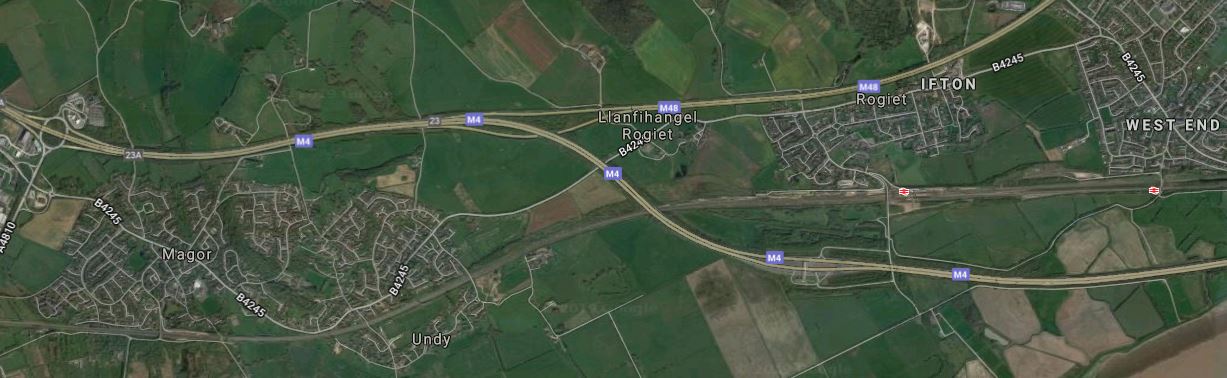
This Google Map shows the location of the villages of Magor and Undy.
Note.
- Newport is to the West.
- Magor is at the Western end of the map, with to its South-East.
- The M4 and M50motorways joining to the North of the villages.
- Severn Tunnel Junxction and Caldicot stations indicate the South Wales Main Line.
I have also flown my helicopter from Severn Tunnel Junction station and Magor village and it is a quadruple track railway with lots of space on either side.
I certainly think, that a station could be built and a stopping train with a frequency of four trains per hour (tph), could probably be incorporated into the timetable.
- But would a station without car parking be viable?
- Perhaps the area needs a few electric shuttle buses?
But the station if it is built needs to be linked in with the South Wales Metro.
In an ideal world, there probably needs to be a Turn-Up-And-Go four tph stopping train from Caldicot all the way to Fishguard and Swansea.
Left In A Siding: The Rail Link That Could Make Heathrow Greener
The title of this post is the same as that of this article on the Guardian.
The article makes a powerful case forvthe building of the Heathrow Southern Railway.
It is a must read.
I can never understand, why the government hasn’t backed this scheme.
- It creates a four trains per hour service between Heathrow and Waterloo via Staines and Clapham Junction
- It creates an extension of Heathrow Express to Basingstoke, Guildford and Woking.
- The extended Hethrow Express creates a much needed commuter route into Paddington.
- Few properties would be affected by the new railway.
But above all, it will be built with private money.
Speculation Increases Over Use Of HSTs
The title of this post, is the same as that of this article on Rail Magazine
This is the second paragraph.
GWR and ScotRail are both introducing modified four and five-coach HSTs on various duties, with GWR’s operating regional services and ScotRail’s Inter7City sets to be used on its core inter-city routes.
I’ve yet to take a ride in either of the GWR oe Scotrail version of the trains and I shall be looking forward to riding both, later in the year.
I’ve only seem one close-up once at Dundee.
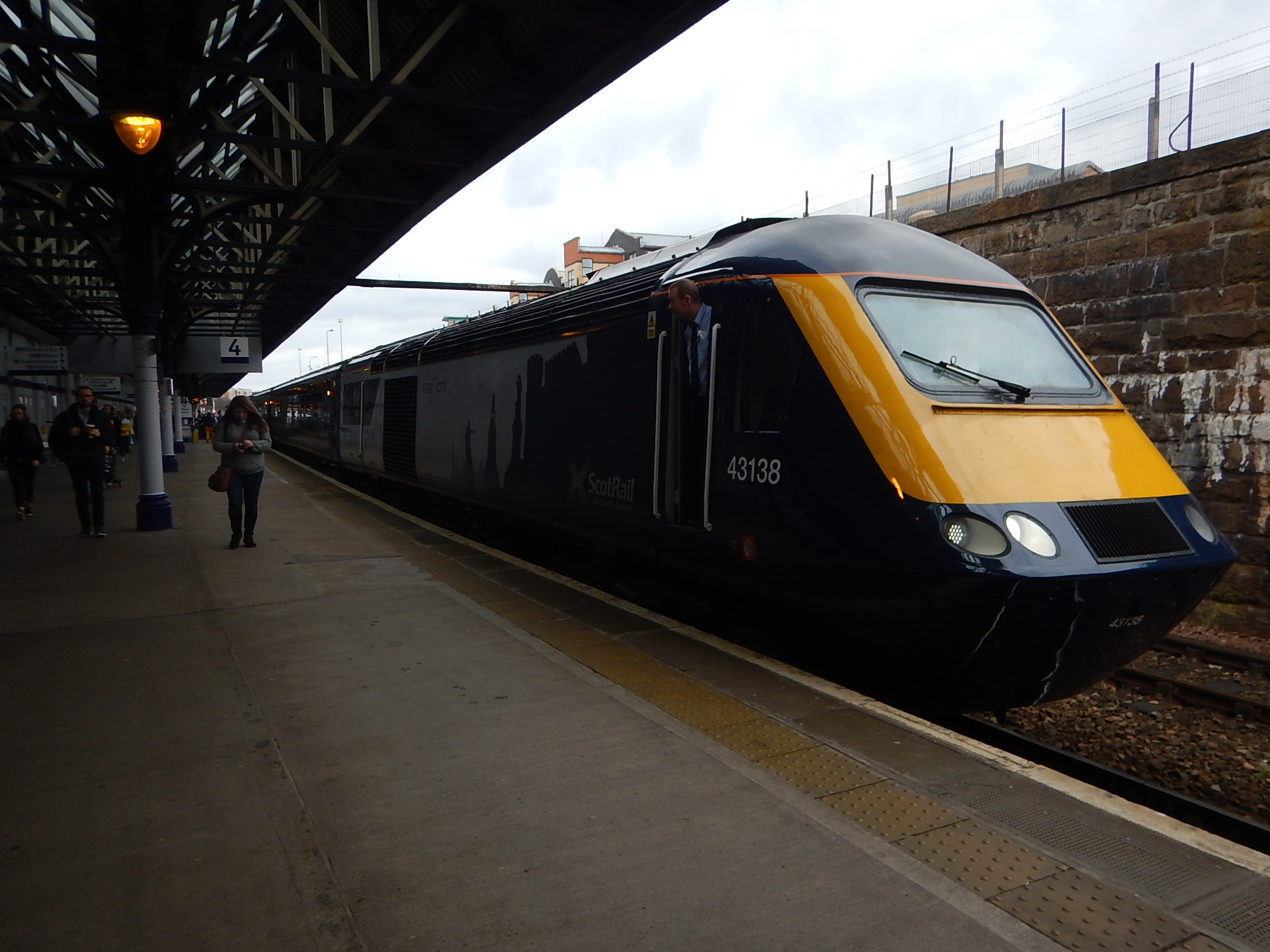
But they seem to be very slow in coming in to service.
Abellio Scotrail’s Proposed Fleet
Abellio Scotrail seem to have 54 Class 43 locomotives and 121 Mark 3 coaches, which according to Wikipedia, will be formed into 26 sets: 17 five-car and 9 four-car trains.
Routes include connecting Scotland’s seven cities.
GWR’s Proposed Fleet
Great Western Railway seem to have retained 24 Class 43 locomotives and 48 Mark 3 coaches, which will be formed into 11 four-car trains.
Routes include between Cardiff and Penzance.
Will These Short HSTs Be Successful?
A number of factors will come into play.
- The trains are liked by passengers and drivers.
- They are an ideal size for a lot of routes.
- They have an excellent ride.
- They have a lot of capacity for oversized baggage, like bicycles, surf boards, sporting equipment and even some urgent or perishable freight.
Only time will tell, but it is my view, they have a good chance of being a success.
Do Short HSTs Have Any Problems?
The two big problems are their age and that they are diesel-powered I wouldn’t be surprised to see some of the new franchises in the next few years, deciding to go all electric, with only a small number of diesel or hybrid trains.
Would Short HSTs be able to get an exception on heritage grounds?
The technology now is at a level, that by 2030, the UK railways could be diesel-free, with all trains electric, battery or zero-carbon hybrid.
Are There Any Other Routes Where Short HSTs Could Be Used?
I will break them down by franchis, in this incomplete list.
East Midlands Railway – Norwich And Derby
This new route for East Midlands Railway will be created by splitting the current service between Norwich and Liverpool Lime Street stations.
- The route is 152 miles long.
- I estimate that current trains will take three hours.
- The service needs four-car trains at certain times.
Would it be possible for Short HSTs to do a Norwich and Derby round trip in six hours?
GWR – Cardiff And Portsmouth
If the Castles can work Cardiff and Penzance, could they work Cardiff and Portsmouth?
Scotrail – Far North Line
What has surprised me is that Abellio Scotrail are not going to use their Inter7City trains between Inverness and Wick stations on the Far North Line.
- The distance is 174 miles
- The current trip takes four and a quarter hours
- The round trip is nine hours.
So could a short HST do the round trip in eight hours?
A single train could then run to the following schedule.
- Leave Inverness at 0600.
- Return from Wick at 1000.
- Leave Inverness at 1400
- Return from Wick at 1800
The train would arrive back in Inverness at 2200.
In Is This The Most Unusual Idea For A New Railway Service in The UK?, I wrote about a proposal to introduce Class 230 trains between Wick and Thurso at the far north of Scotland.
This Far North Metro, would sit well with a two train per day service to Inverness.
- Mark 3 carriages have large windows for sightseeing.
- A buffet and small bar could be provided.
- The trains have space for parcels, urgent and perishable freight.
- The service could link with the ferries to the Orkneys.
A subsidiary objective would be to bring some prosperity to a remote region.
Scotrail – Kyle Of Lochalsh Line
If Short HSTs can work their magic on the Far North Line, I just wonder if they could provide services on the Kyle Of Lochalsh Line.
- The distance is 83 miles
- The current trip takes two hours and forty minutes.
So could a short HST do the round trip in six hours?
As with the Far North Line, there would be a much improved service for both those that live along the line and the many visitors.
Transport for Wales – Cardiff And Holyhead
Transport for Wales run a two-hourly service between Cardiff and Holyhead stations. The rolling stock for some services will be a rake of four Mark 4 carriages, a Class 67 locomotive and a driving van trailer.
Isn’t this in effect a train with a similar purpose to a Short HST?
Obviously, Transport for Wales have got good reasons for not running Short HSTs on this route, but the choice of rolling stock does show similar thinking that led to the creation of the Short HST.
Transport for Wales – Heart Of Wales Line
The Heart Of Wales Line runs between Llanelli in West Wales and Craven Arms in England.
- It is around 150 miles long.
- Trains take a few minutes over four hours between Swansea and Shrewsbury stations.
It is one of those rail lines, that could be a serious tourism asset.
Would Short HSTs add to the experience?
Transport for Wales -North Wales Main Line
The North Wales Main Line is another line, where iconic Short HSTs might attract passengers.
Conclusion On Routes
There are certainly several places where Short HSTs could be gainfully employed.
Could Any Other Trains Be Used?
The specification could be something like this.
- Four or five carriages.
- Diesel, diesel bi-mode or hydrogen bi-mode.
- Quality interior
- 100, 110 or 125 mph top-speed.
Trains could be either new build or a rebuilt and/or refurbished older train.
Class 802 Train
Hitachi’s Class 802 train is in service.
- It meets the specification.
- It can seat somewhere between 326-342 passengers.
- It can use electrification if it exists.
It would do a good job.
Class 755 Train
Stadler’s Class 755 train will soon be in service.
- It meets the specification.
- It is only a 100 mph train, but I suspect it can be uprated to 125 mph, as the electric version can handle this speed.
- A four-car train can seat 227 passengers.
- It can use electrification if it exists.
It should do a good job.
Could HSTs Have Any Parcel Or Freight Applications?
This is always being suggested, but anything concerning freight or parcels must have the following characteristics.
- They must be reliable.
- They must be able to stick to a timetable.
- They must have a hard-wearing interior, as they will have a hard life.
- The small single doors would need to be replaced.
- They must be able to accept standard freight pallets.
- They must be quick and easy to load.
My biggest worry would be over the last two points. Would the trains just need three much modification to make them suitable for freight and parcels.
Could HSTs Have Heritage Applications?
Already a rake of Mark 3 coaches is going to be used with the 60163 steam locomotive.
But could HSTs in their own right find use in the heritage sector?
I think, that there could be space in the market for a few HSTs, which may have the sort of appeal to the younger generation, that steam trains had to my generation.
After all, I’ve had some of the best meals in my life in an HST.
Conclusion
They may be applications, but each will only use small numbers of trains.
So I’m afraid that some of these trains will go to scrap.
But then no-one can say, that they haven’t done well!
Green Mini-Trains To Reverse Beeching’s Cuts
The title of this post is the same as an article in Saturday’s copy of The Times.
This is a paragraph.
The government is funding trials of an “ultra-light”, environmentally friendly train powered by gas from organic waste in place of a conventional diesel engine.
Members of the consortium developing the concept include Birmingham City University and Parry People Movers.
I wrote about the Parry People Mover in Stourbridge And The Parry People Mover.

It did the shuttling of people between Stourbridge Junction and Stourbridge Town stations in a professional manner and it can’t have done much wrong, as it still is.
The technology that drives the train is based on a flywheel and is innovative to say the least. This section in the Wikipedia entry for Parry People Movers is called Technology.
This is the first two paragraphs of the section.
PPMs utilise a rotating flywheel as a store of kinetic energy which is then used to power the vehicle. A typical PPM flywheel is made from steel laminates, approximately 1 m (39 in) in diameter and 500 kg (1,100 lb) in mass, designed to rotate at a maximum speed of 2,500 rpm.[8] The flywheel is mounted horizontally at the centre of the unit, beneath the seating area. The flywheel is driven by an internal combustion engine or an electric motor. The flywheel is connected to the rail wheels via a hydrostatic variable transmission system.
The flywheel allows the direct capture of brake energy (when slowing down or descending gradients) and its re-use for acceleration (called regenerative braking). When the vehicle brakes, the hydrostatic transmission feeds the energy back into the flywheel. Since the short-term power demand for acceleration is provided by the energy stored in the flywheel, there is no need for a large engine. A variety of small engine types can be used including LPG, diesel or electric traction.
I have done a calculation of the kinetic energy in the flywheel and it is surprisingly low at 0.6 kWh if it is a disc and 1.2 kWh if it is a ring.
A capacitor of the same mass would hold about the same amount of energy, but would probably need a more complicated transmission.
 The Anonymous Widower